It is so wonderful to be back in our old home town of Park City. It has been two weeks since the last blog posting – and you might wonder what in the heck has been going on for all that time. Well – there have been 6 days of golf, 2 Fourth of July celebrations, A Full Moon concert and a DV concert with Big Bad VooDoo Daddy, dinner and women’s soccer finals with friends the Campbell’s, a book club meeting, 4 hikes and several dinners with friends, including new RV Park friends Julie and Allen – –
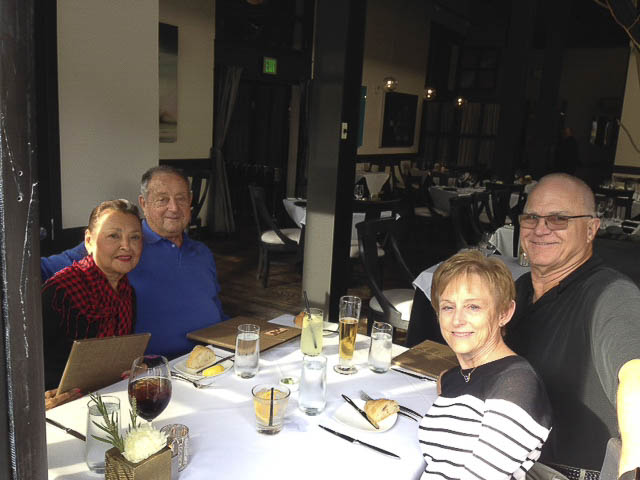
Early Dinner at the Riverhorse to take advantage of the 2-4-1
There are soooo many hiking trails in the Park City area, the two days a week allocated for hiking will not put a dent in them. AND – the most interesting thing is that even on the hiking trails there is construction!!!
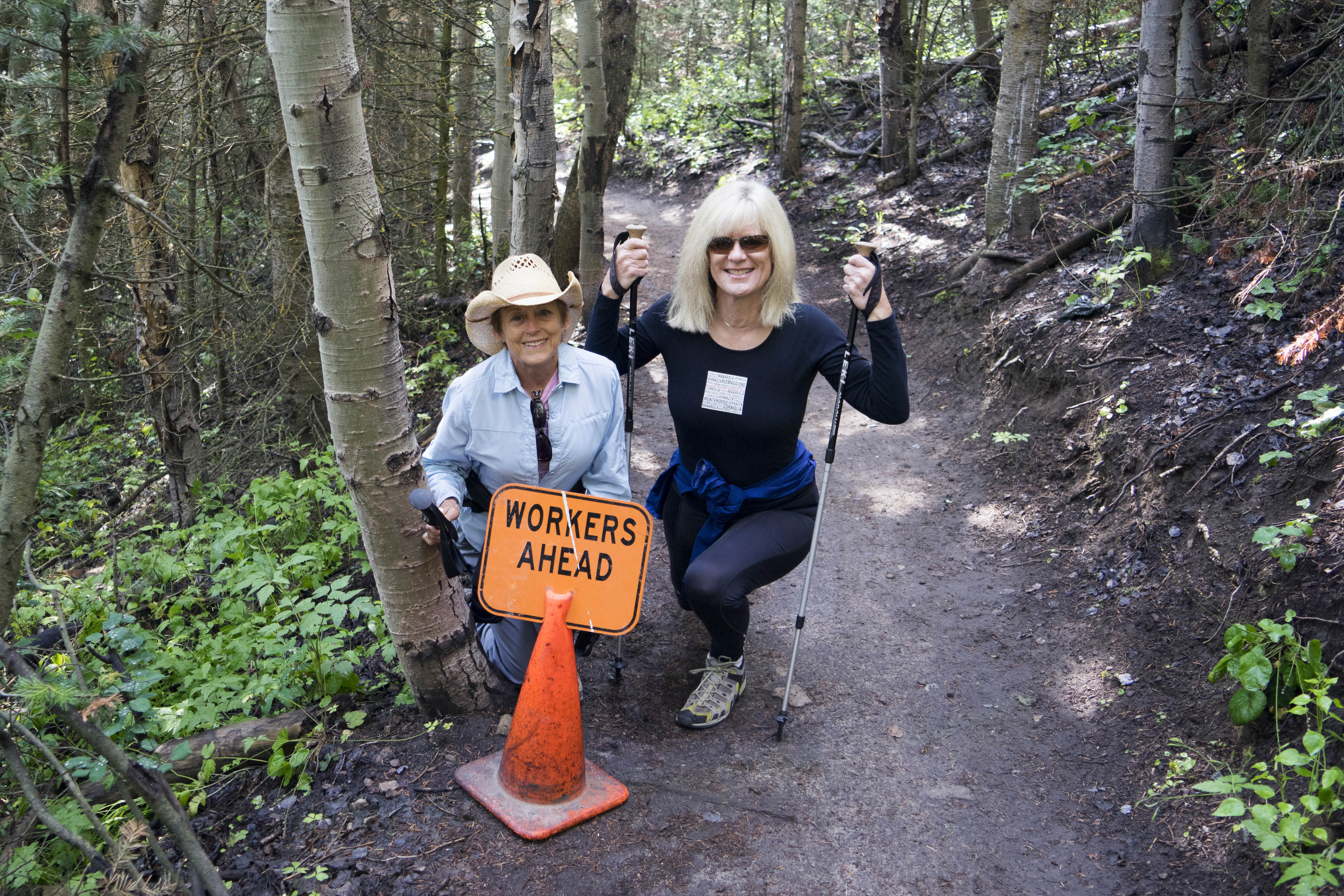
At least there was not a flag person required here.
This year our objective is to learn even more about this town that was our home for 18 years. It seems everyone knows that Park City was a mining town – which is true. Coming alive in the 1860’s when the government sent troops to comb the hills and see what they could find. As they surveyed the area, they found signs of potential minerals and planted the US flag on a staff atop one of the mountain tops so they could find the spot on their return. This mountain – Flagstaff, is now a part of the Deer Valley Ski Resort. It was not long before the word spread and Park City became a mining boom town. The first major producer was the Ontario mine – discovered by Herman Buden in 1872 and later purchased by George Hearst (this provided Hearst with his fortune!). The mines kept Park City alive through the first and second world wars with the production of silver and iron. By the 1950’s, however, when the price of silver finally dropped the city nearly became a ghost town. Then in the early 1960’s, President Kennedy saw to the awarding of an economic development loan to the area to develop a ski area. And as they say – “The Rest is History”.
Several of our hikes this year are to some of the mining remnants around Park City. First stop is the old Armstrong cabin on the Armstrong trail at Park City Mountain Resort.
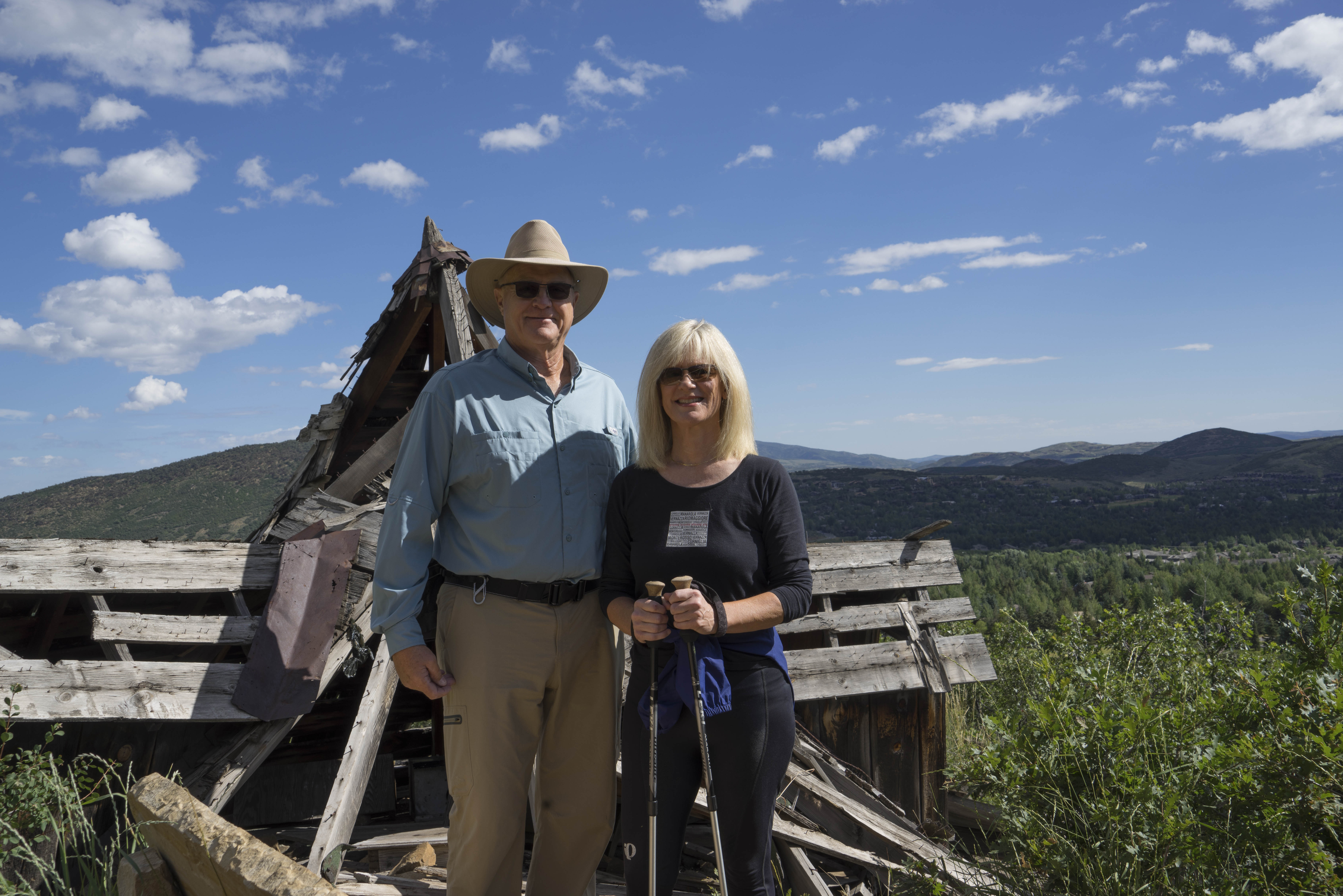
Gary and Sally in front of the Armstrong cabin – a real fixer upper.
Friend Sally is our hiking companion – always urging us on. This past Sunday she managed to talk E into a NINE mile ‘death hike’ to the Western Monitor mine shaft with the PC Historical Museum. The sites on the way were beautiful – when E could catch her breath and actually take in the views. In the picture below in the open green area to the right lower portion of the picture you might see a small building. This is an ore bin, which was used to store ore brought to the surface until some means of transportation could pick it up and get it to the train that came through PC. Remember that these mines were at 7,000 to 8,000 feet in elevation and were mined throughout the year. In the winter, getting the ore to the town was quite an effort for a team of horses and wagons. So, the ore would be stored in the ore bins until it could be accessed and taken to town.
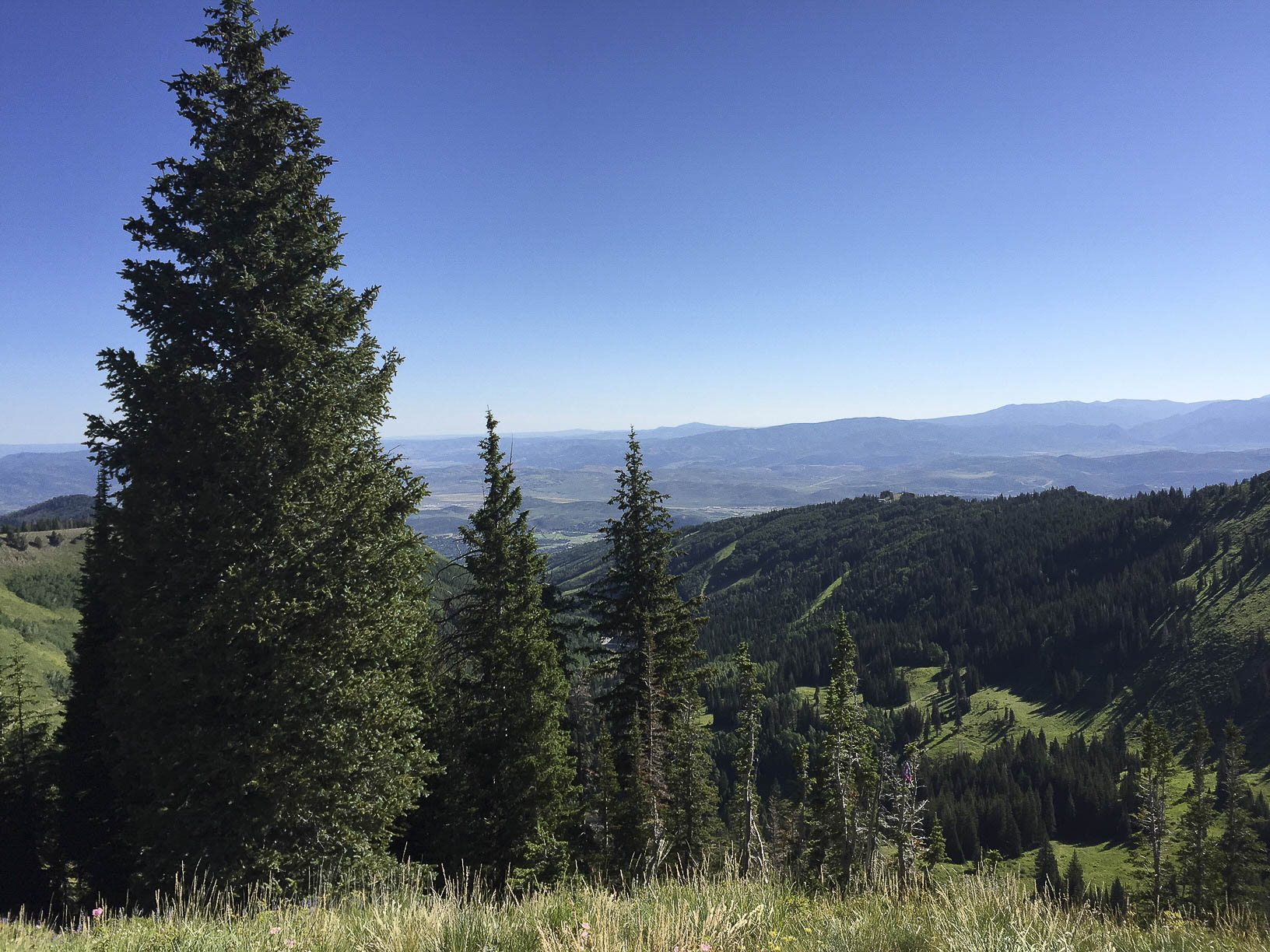
Hard to picture lots of mining activity when looking at this serene setting of Thanes Canyon.
Finally reaching the Western Monitor mine – this is what we saw —
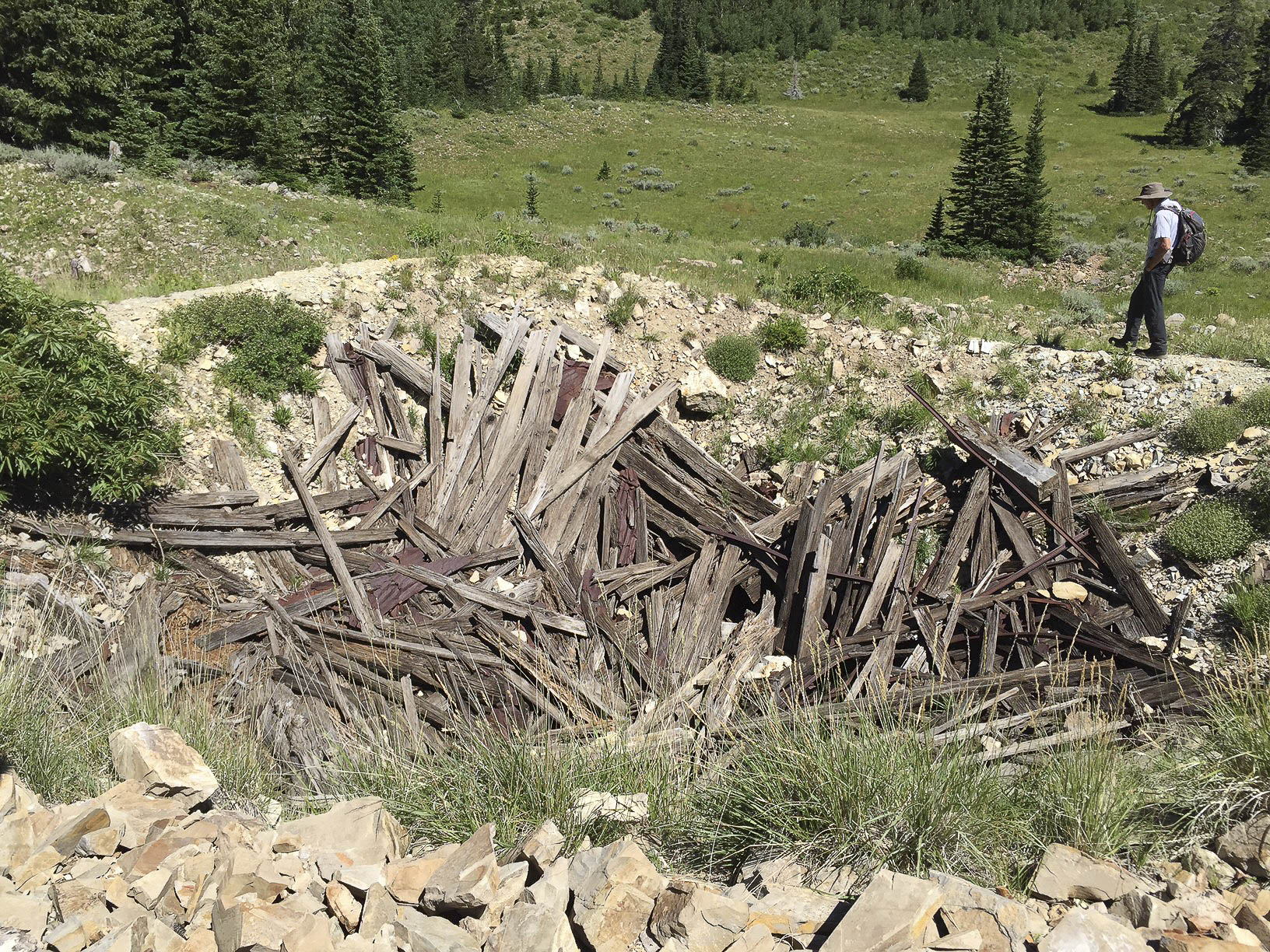
Lax building codes?
As Sally said – “we hiked 9 miles to see this??” The Western Monitor shaft dates to circa 1910 and, sadly, did not ever produce any ore. The area also contained the remnants of a cistern and several buildings, including a bunk house complete with rusted bed frames.
All the ski areas in PC contain many similar mine shafts with collapsed caps, ore bins, miners shacks and other artifacts. There are also a few shafts that can be found that have not been sealed.
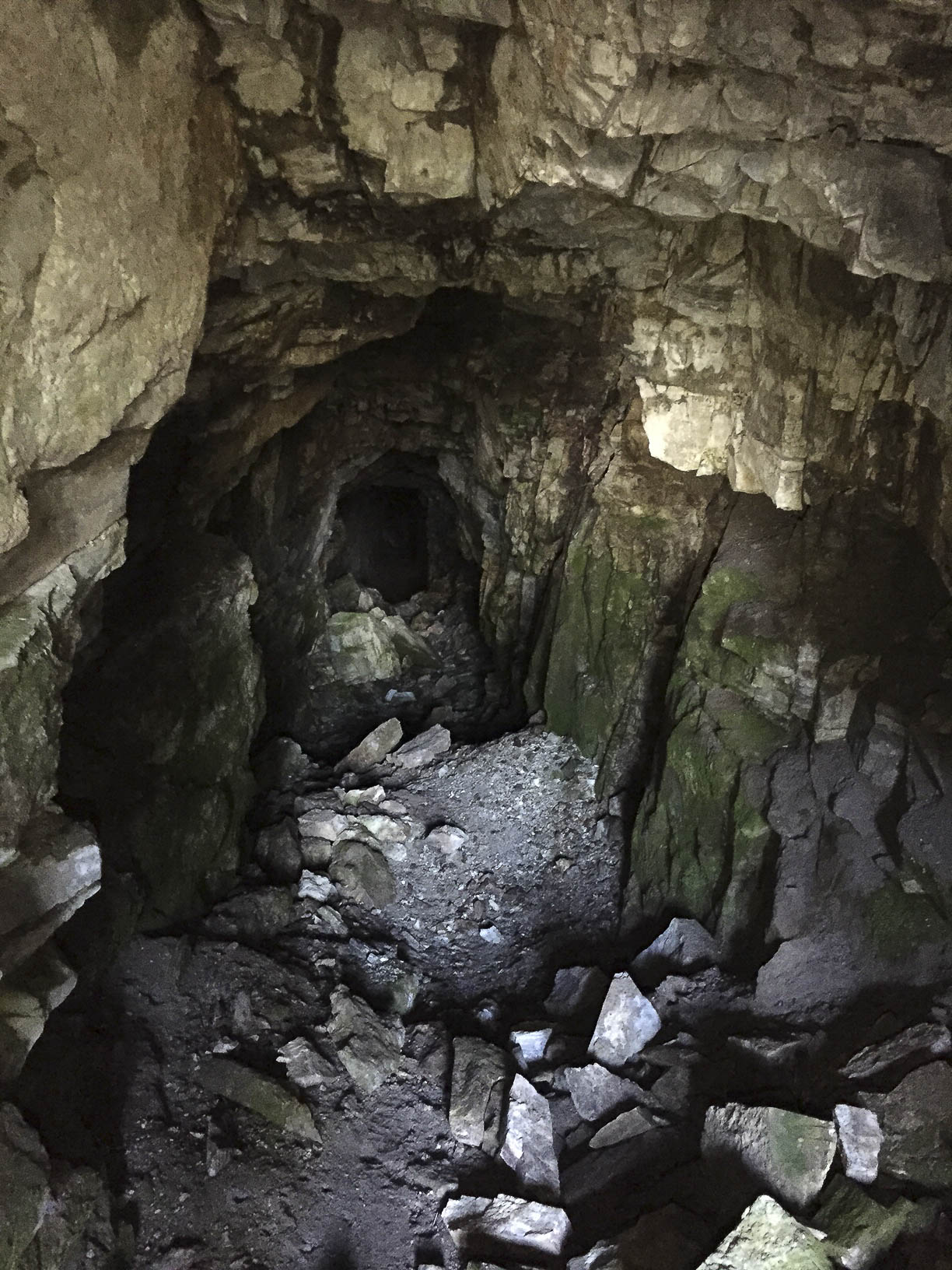
Not for the claustrophobic!
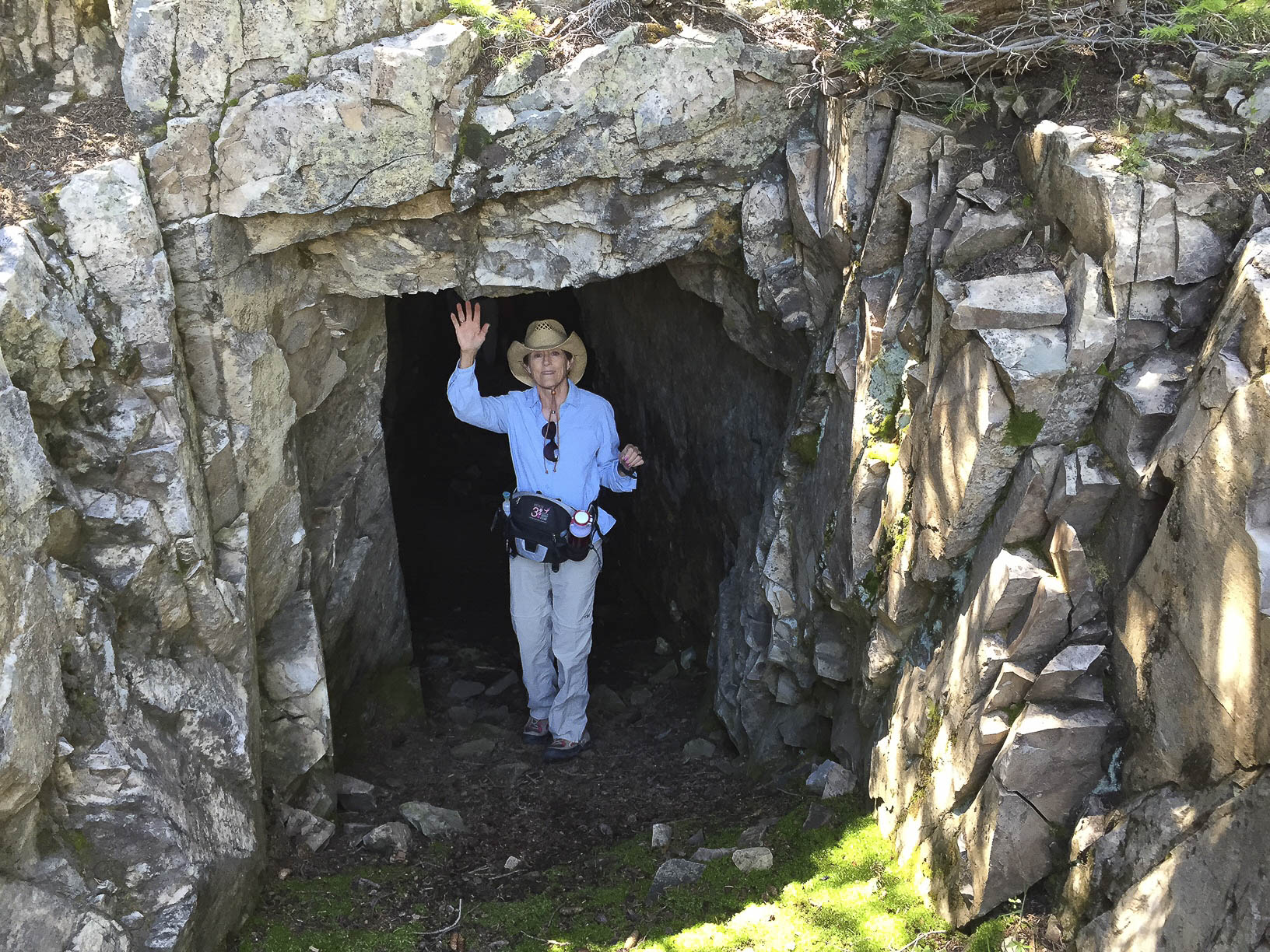
It has been an active couple of weeks and don’t think it will slow down any time soon.
Having fun – learning and enjoying – E & G
 Elizabeth & Gary's Magic Bus Tour
E&G – very interesting story and beautiful photos as always!! Soul Man
LikeLike