North America and O Canada

 A nice leisurely trip across the Atlantic on a ship sure makes those FIVE time zones easier to take;-) It is kind of nice, though, to finally set foot on dry land – even if it is Fenway Park for a Yankee fan! If one is a base ball fan, Fenway Park is the granddaddy of them all as the oldest park and possessing that ‘green monster’. Be sure to take a tour of the stadium so you can see the mound that the Babe pitched from and sit in the seats above the green monster for nothing instead of the minimum $500 per game!
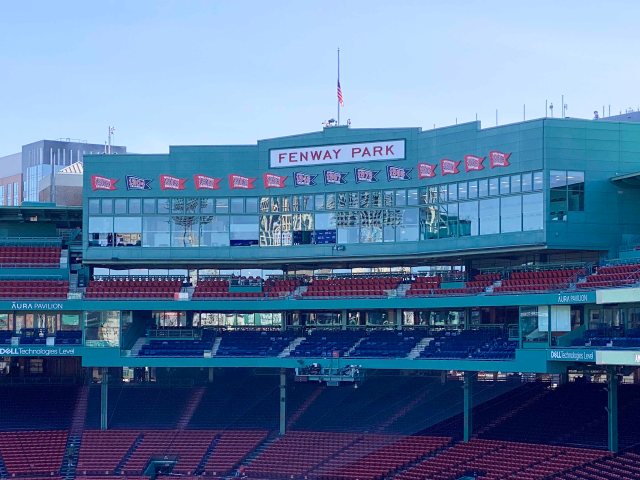
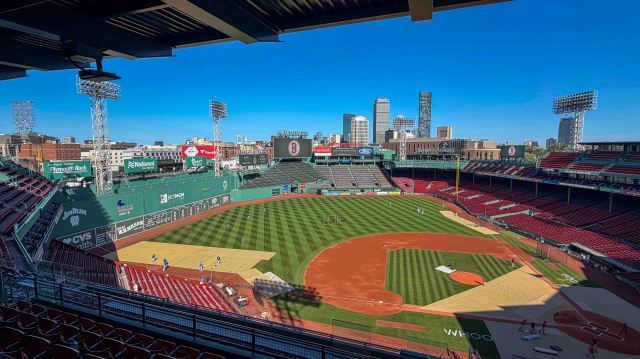
Tiers have been added but the lower section is original – including the seats!
Babe’s pitching mound and the green monster on the left;-)

Finally back to where it all began – New York, New York. Coming in early morning gives NY a different, clean, magical look.
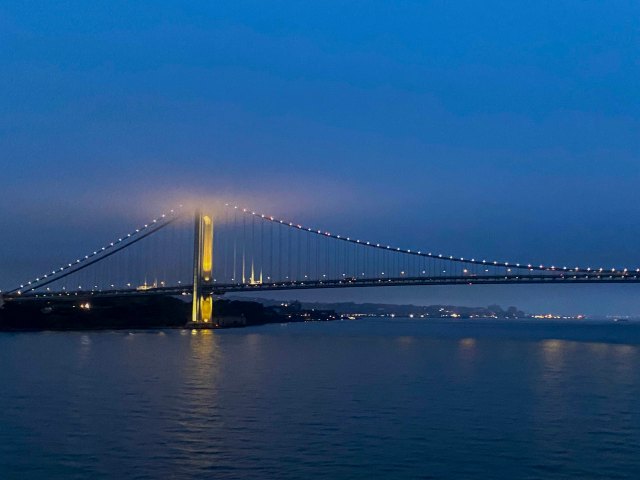
Passing under Bridge.

NY was the end of a segment and the beginning of another – NY to Montreal. Friends Linda May and Bill joined for this part of the journey and a night on the town was enjoyed before embarking on the last 11 days – –
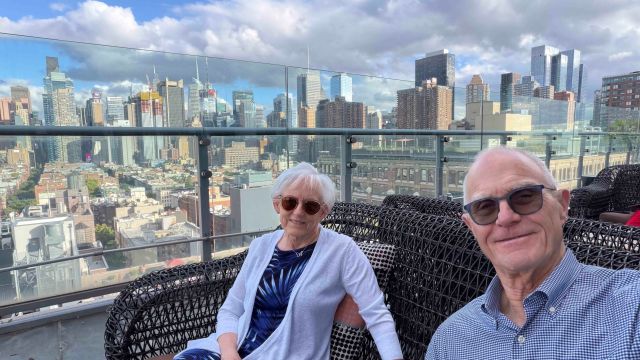
A rooftop view of the city before dinner.

The last trip out provided one more look at that beautiful lady in the river. The scene never gets old –
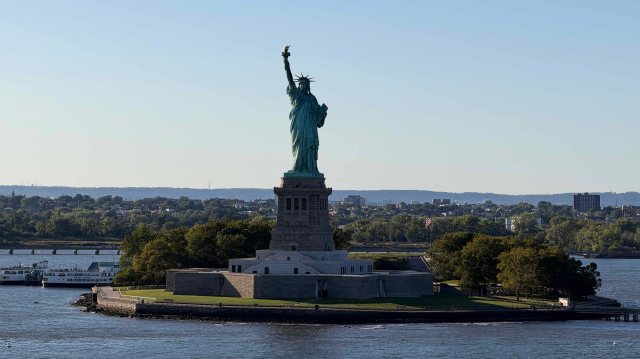
A beautiful Lady Liberty.

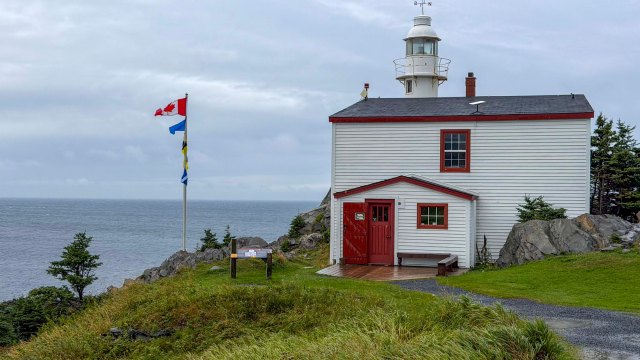
The next 11 days would explore everything Canada including many of her NP’s. First up was Gros Morne NP in Newfoundland with another dramatic example of the continental drift – so much so declared a UNESCO World Heritage site. Unfortunately, the day visited included such bad weather the true drama of the landscape could not be seen;-( So – on to Lobster Cove Head and a cute little lighthouse that has been a landmark since 1898 – –
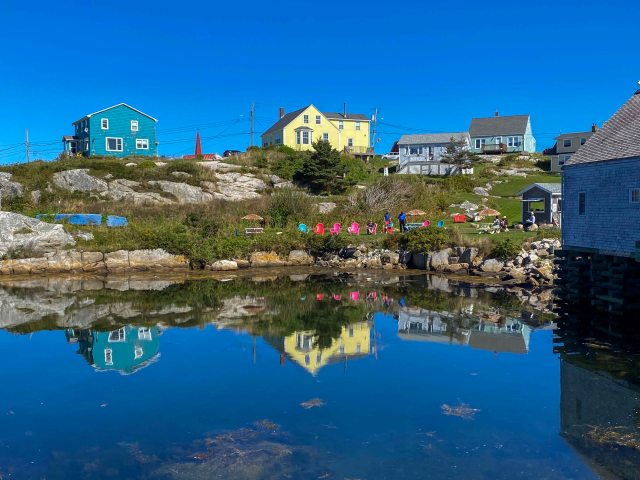
From one lighthouse to another. Just outside of Halifax is perhaps one of the most famous and most photographed lighthouses in Canada at Peggy’s Cove. This quaint little village is now overrun by tourists wanting a picture of this icon and the surrounds. Even with the crowds this is a must see. The many little shops with local merchandise are delightful to visit. AND – the gingerbread at the cafe located in the gift shop is pretty good as are the good old hot dogs at the kiosk by the cove!!
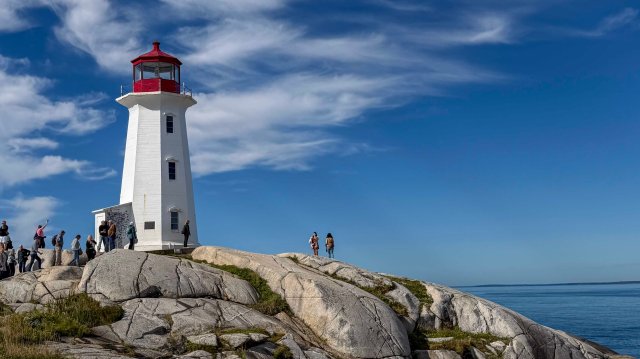
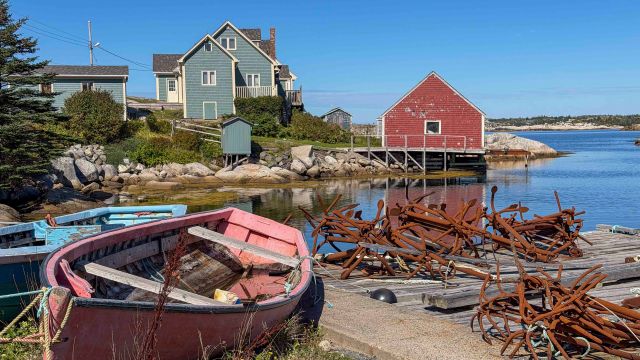
The iconic lighthouse at Peggy’s Cove.
A glimpse of the fishing village at Peggy’s Cove.
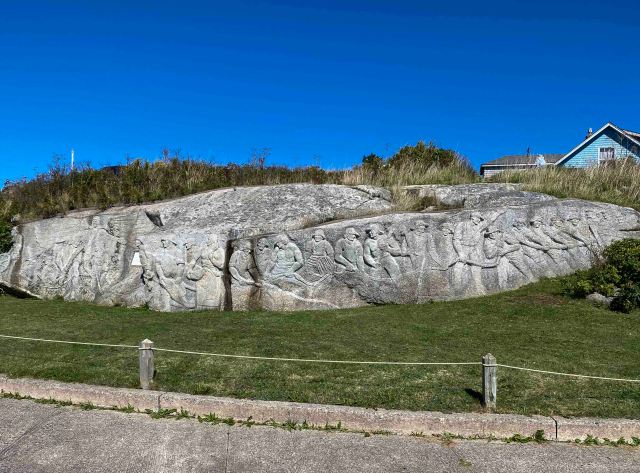
Memorial to the fishermen.

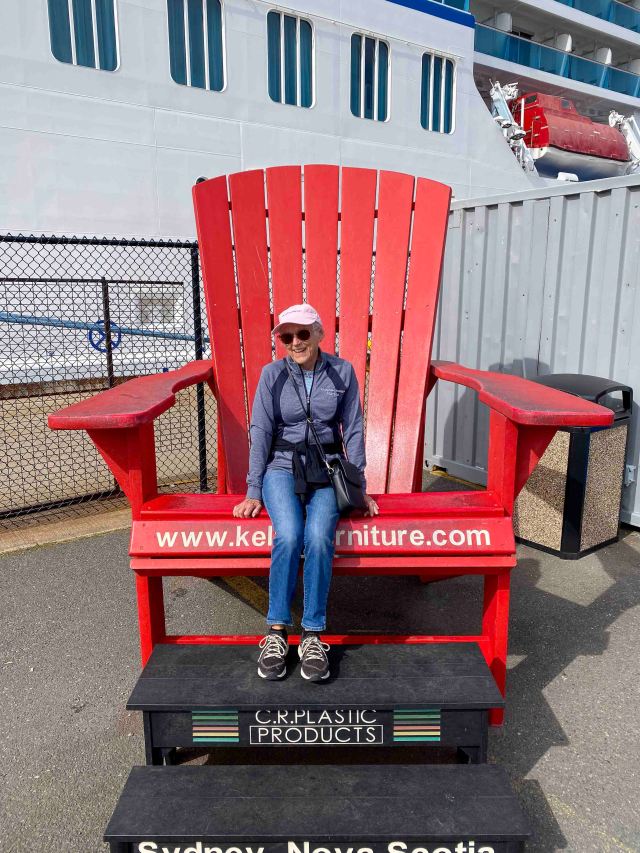
One more stop in Sydney – this time with friends;-)
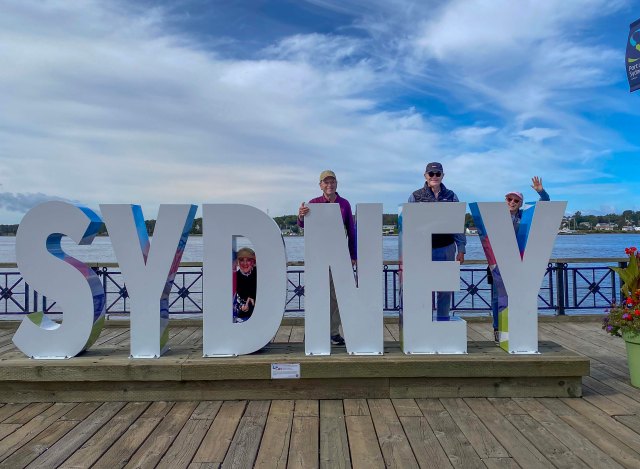
What a motley crew.
Edith Ann?!?

Next stop is Gaspe in eastern Quebec province and another NP – Forillon. Take an invigorating walk along the coast to the lighthouse at lands end and observe the mountains inland, which are the northern beginnings of the Appalachians. Like so many of the small villages in this eastern edge of Canada, Gaspe began as a fishing village attracting those from as far away as Ireland, Scotland and France to fish for cod until the seas were fished out. Today – it is just beautiful.
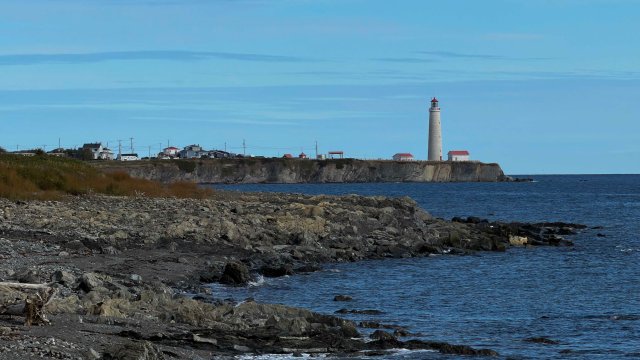
Lands End.

On to interesting Baie-Comeau and its Parc Nature Pointe-Aux-Outardes, as well as the first Hudson Bay Company small department store in Quebec. The Nature Park is a protected coastal nature reserve featuring 9 distinct environments, including sandy beaches, dunes, boreal forest, salt marshes and peat bogs. With one two mile boardwalk (constructed to preserve the dunes) you can walk through all of these environments! Absolutely amazing. If you are on a guided walk with a ranger, you might even get a taste of tea made from leaves within the Park;-) Enjoy these amazing sights.
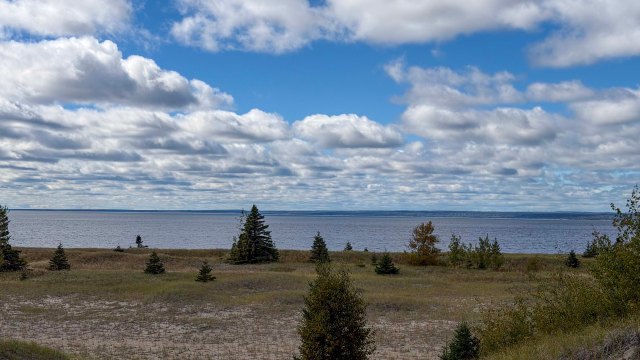
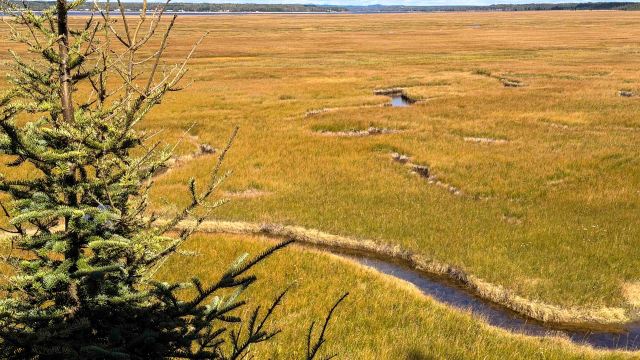
Sandy areas – –
– – and marshes.

One more – Saguenay NP and this writers personal favorite. The village of Saguenay sits on a majestic fjord – one-of-a-kind in North America and one of the longest in the world. Thus, the sail in was magnificent! The Saguenay NP protects over 60 miles of this dramatic, glacier carved fjord and its stunning beauty. This area is definitely on our road trip itinerary for next summer.
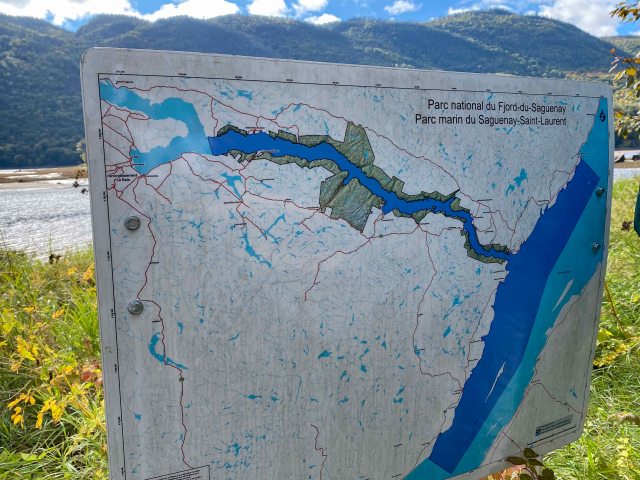
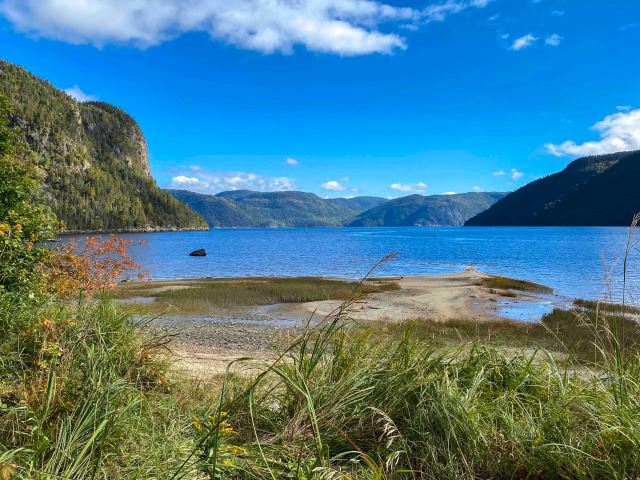
Its just beautiful everywhere you look.
A guided hike gives lots of info on the geology.

This park was hard to leave, but the ship doesn’t wait. So on to Quebec City, sitting right on the banks of the St. Lawrence River. The Old city is a UNESCO World Heritage site and the only fortified city remaining in North America. The old Upper Town is dominated by the majestic Fairmont Le Chateau Frontenac hotel, which is a wonderful place to have lunch or tea;-)
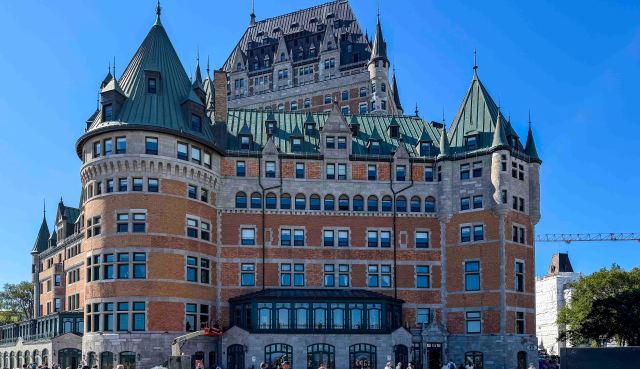
Le Chateau Frontenac.

Being French, the catholic churches are in abundance here. Stop and peek in.
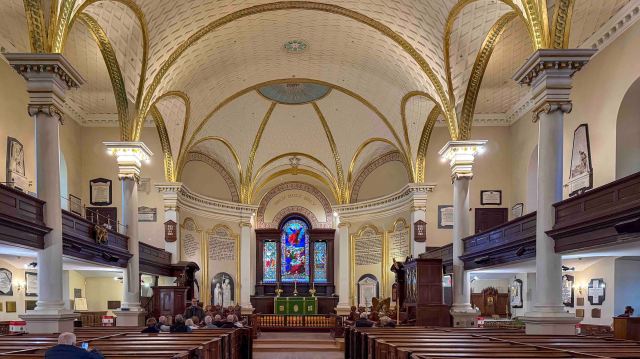
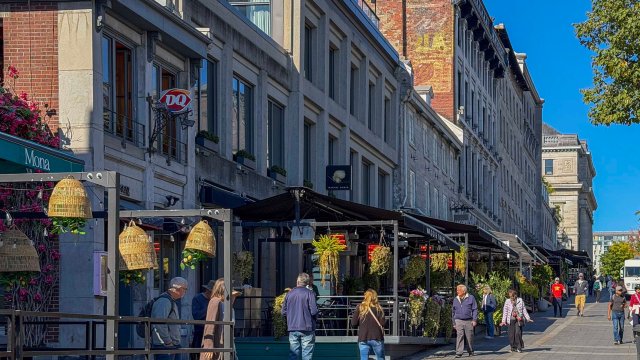
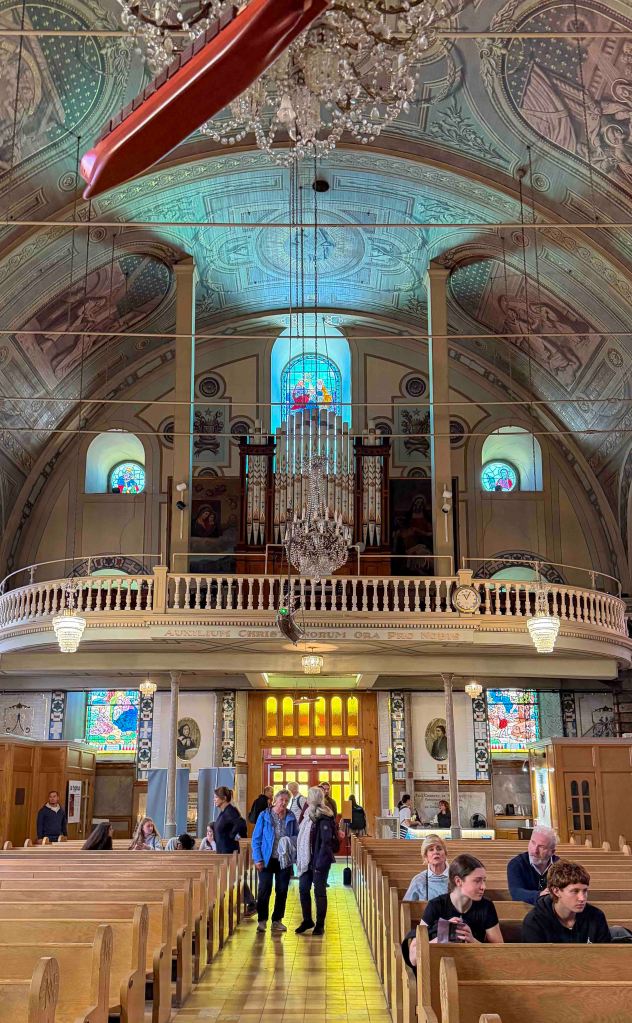
Last, but not least, was Montreal and a stroll through its ‘old section’ – DQ and all – and one more church.
After almost three months on the ship, many of the people who took care of us day in and day out had become like family and it was hard to say goodbye. Here’s hoping they will be part of our lives again on a future cruise.


Tanja took care of us several times a week in our favorite restaurant.
Rosa was not only in Toscana but also at Baristas every morning;-)
Laura and Esmee entertained us dancing in the shows most nights as well as at all the games during the days (and a dinner or two).
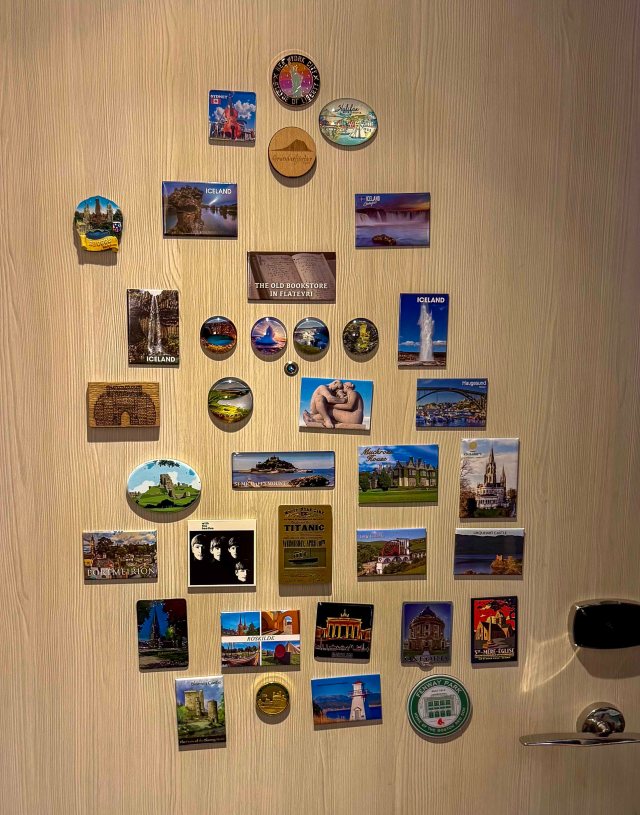
Reminders of our trip;-)

A fantastic trip on Oceania all around the northern hemisphere. It was definitely cooler than Phoenix for the summer. It was also enlightening, educational and often eye opening. Can’t wait for the next one!!

E & G – delighted to be able to travel and enjoy the world around us. Wishing you the same;-)
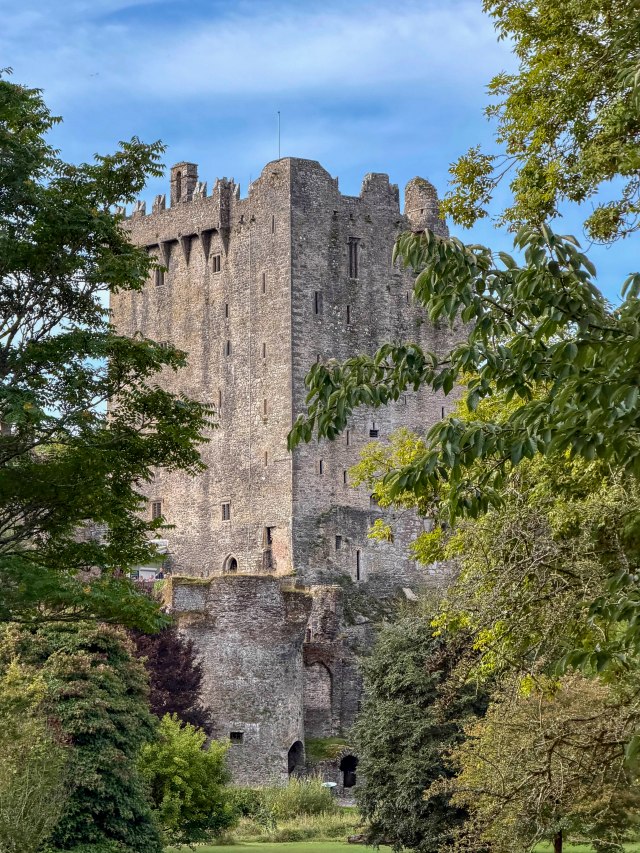


Castles Galore

 The title is NOT a misnomer! And, if you come from the US there is a bit of an infatuation as there just aren’t castles in North America?!?! So – before leaving the greater UK and Ireland it is fun to take in just a couple more. Especially Blarney Castle where one has the opportunity to kiss that Blarney Stone and attain “the gift of gab”!

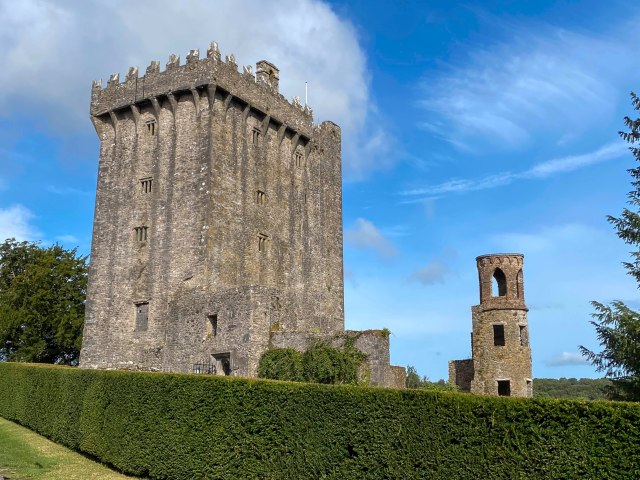
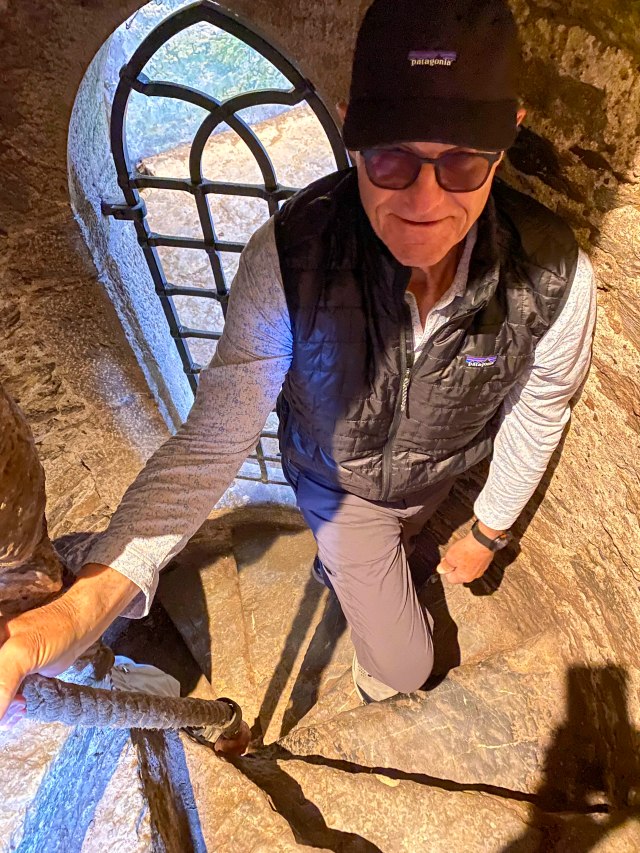
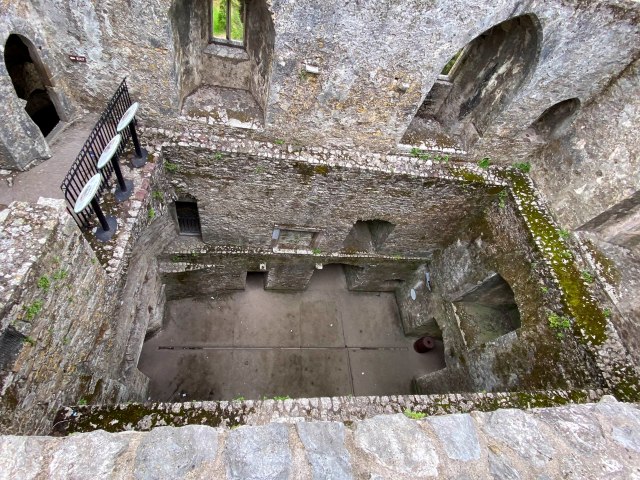
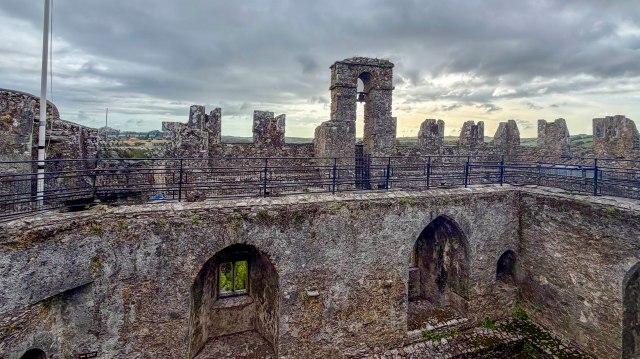
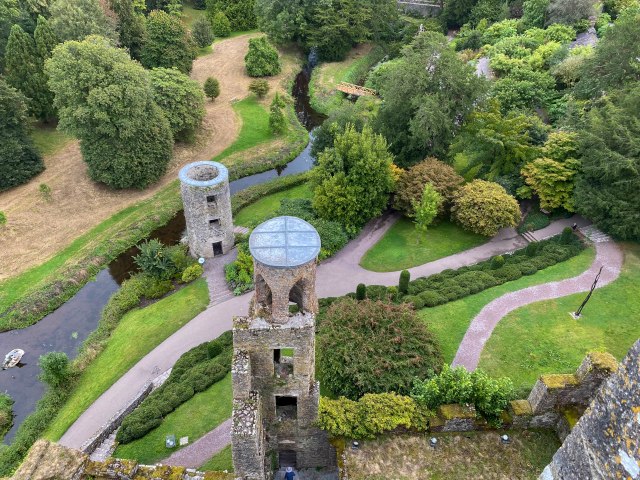
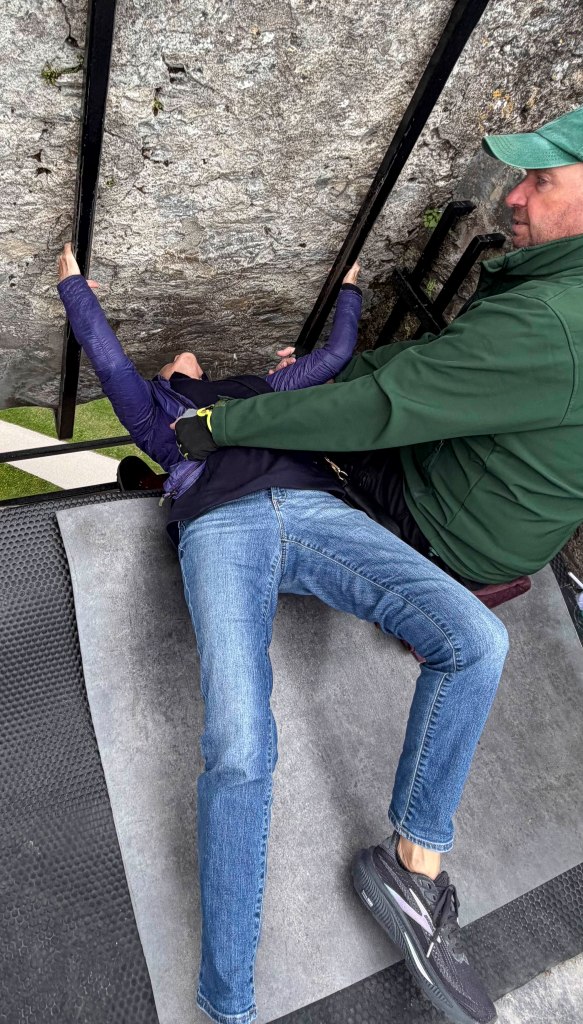
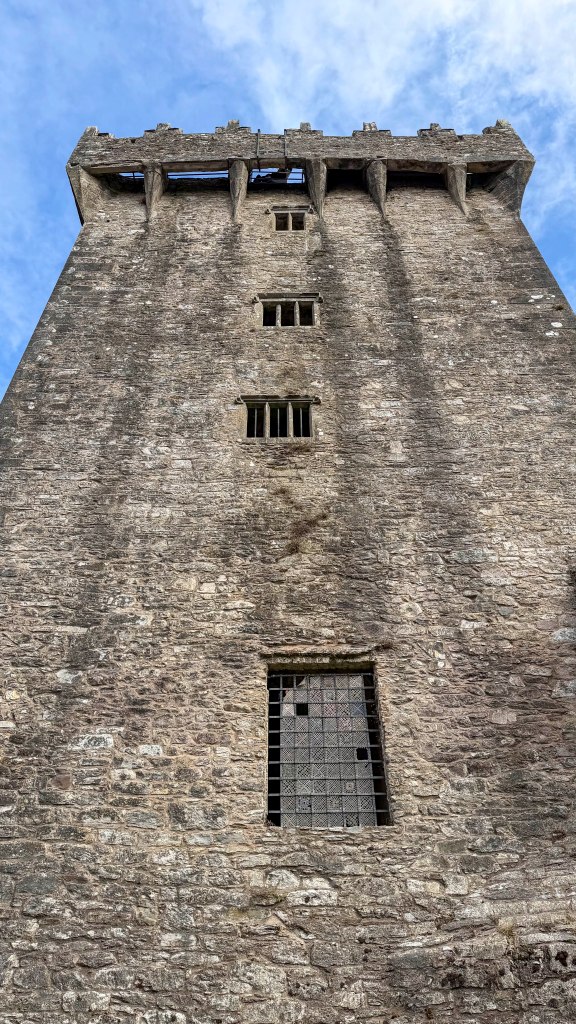
Travel just 5 miles north of Cork to the 500 year old Blarney Castle and the beautiful surrounding grounds. Try to get there as early as possible or you are standing in one of those ‘Disneyland lines’ to climb four stories of narrow, twisting, dark stairwells. The line up the stairs moves slowly so you don’t need to worry about holding things up if you no longer move at the speed of a 20 something;-) Once at the top, there are 360 degree views of the surrounding area, where again you snake around to lie on your back over a sheer drop of 120′ and kiss ‘the Stone’ that is believed to have made its way here in 1314 from Scotland! Don’t worry, today they have installed iron handgrips and there is a LARGE, handsome man to hold on to you while performing this daring act. Don’t miss it – it’s something to say “I DID IT”.

Welcome to Blarney.
Yep – the Blarney Stone is up on the top.
Not kidding about lots of tiny steps up a spiral staircase.
Don’t look down.
Okay, made it to the top.
Enjoy the views.
Again – don’t look down and hold on tight!
That little ‘grate’ at the top of the three windows is the stone;-)

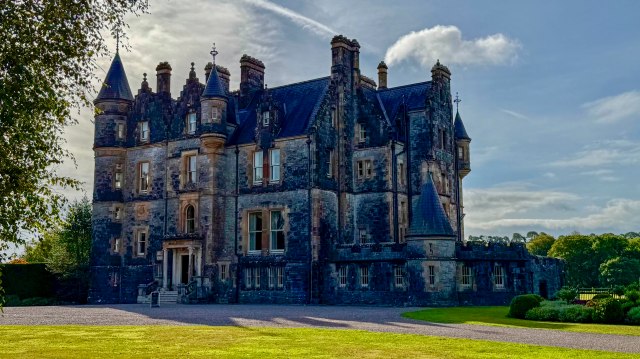
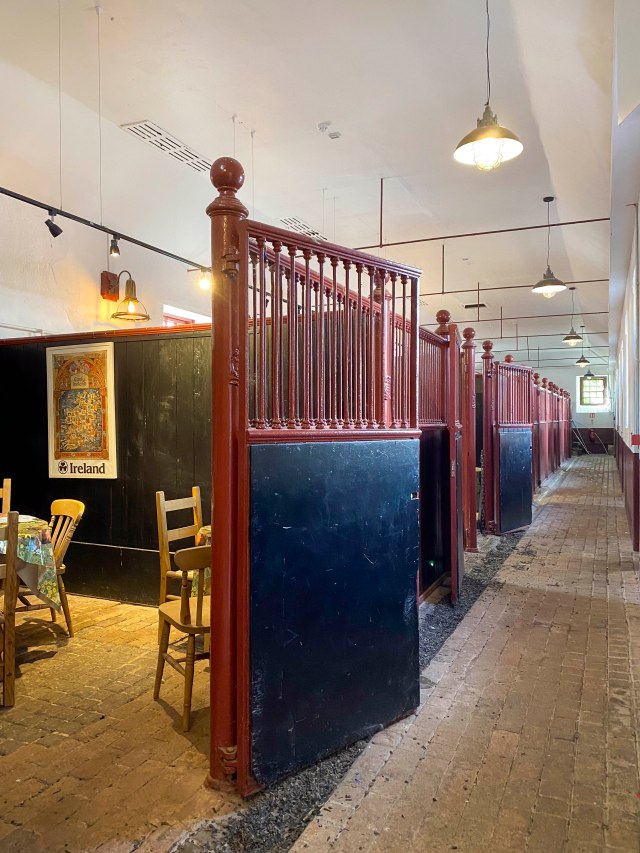
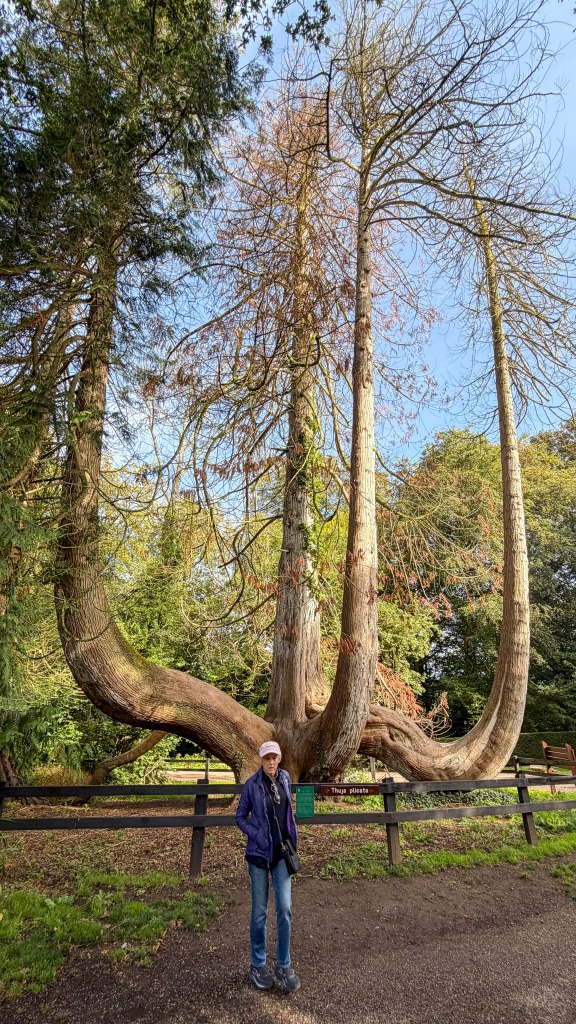
After that exhilarating experience, wander the beautiful grounds. They include a new Blarney House built in 1874 (a private residence still resided in), old stables turned into a cafe, the many gardens and grand ‘climbing trees’.

the Blarney House.
The historic stables have been repurposed.
Frustration at not being able to climb this beauty;-(

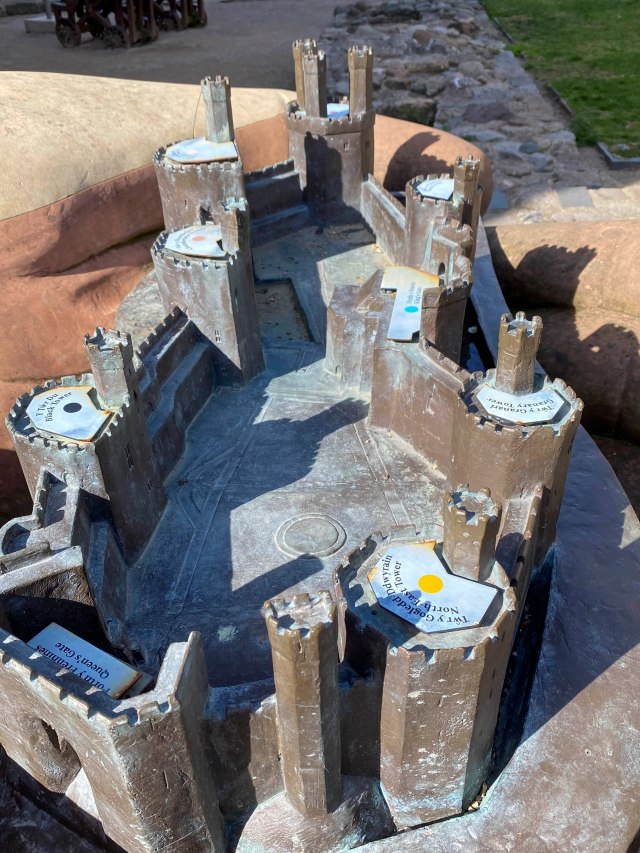
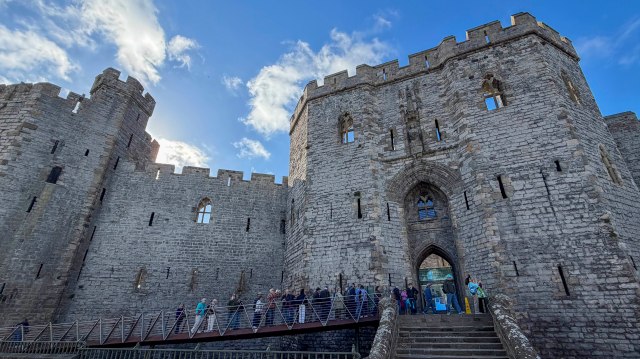
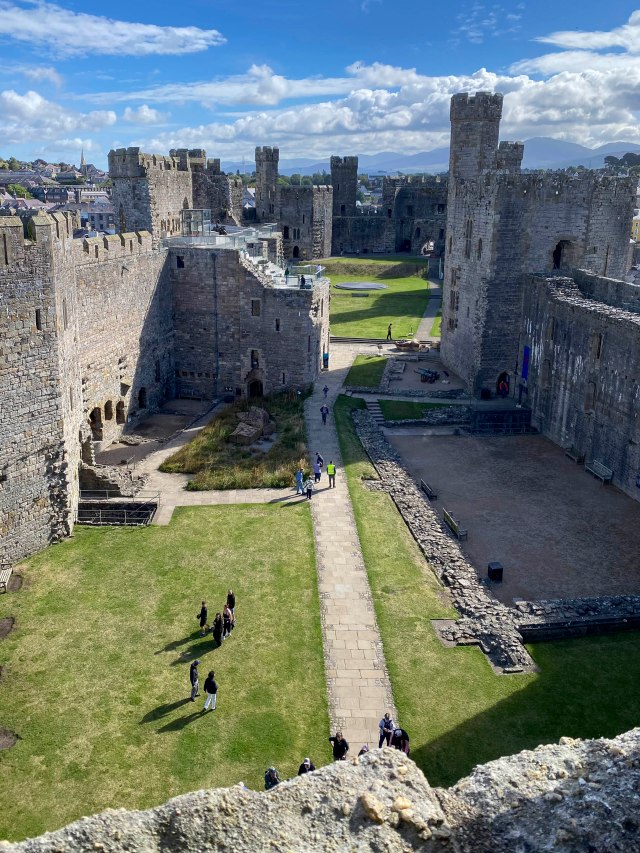
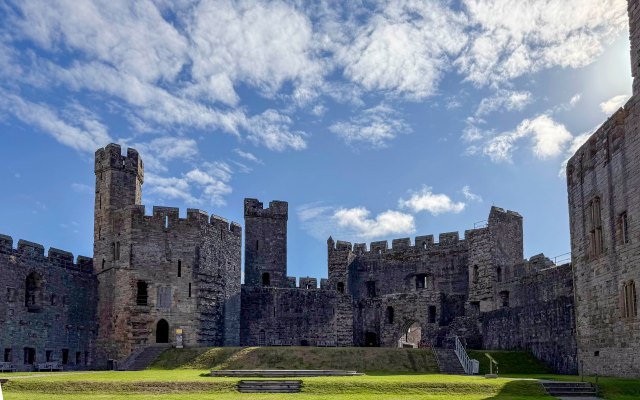
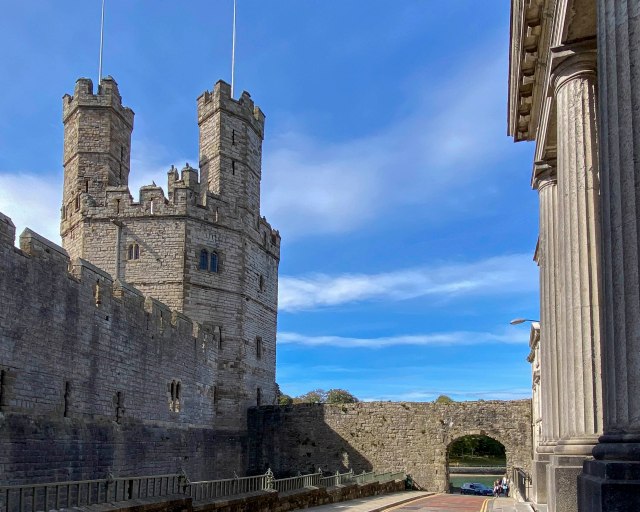
Back across the Irish Sea to North Wales, where there was an earlier visit to Portmeirion in the Snowdonia NP. Thankfully, there was another visit to Holyhead to allow the visit to Caernarfon Castle with its distinctive octagonal towers. This place is HUGE! It’s no wonder the locals had a fit as it was being built as a display of the king’s force. It dates back to 1284 and is the site of Edward II’s birth, who was the first given the title of Prince of Wales. This was the King of England’s clear symbol that the English were in charge here. To this day this is the title conferred on the eldest son of the reigning British monarch and the investiture of then Prince Charles took place right here in 1969!

Scale model mock up of what Caernarfon Castle looked like.
Current view outside the main gate.
A view of the grounds from the Eagle Tower, the private quarters of the Royal family. The round platform in the grass at the far end was used for the Investiture of Charles as the Prince of Wales.
The entry at the far end on the right was the original Queen’s entrance.
Exterior view of the Eagle Tower and entrance gate to the city.

Back to reality leaving all the castles and kissing of the Blarney Stone behind – it is time to head the ship west across the Atlantic back to North America. In five days we will have gone through five time zones at a nice leisurely pace and be ready for another land excursion;-) See you all there!

E & G – headed west saying goodbye to Europe (for now)


Returning to Normandy

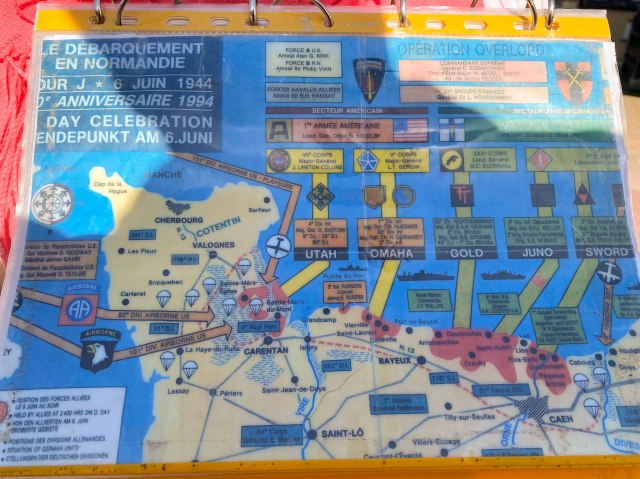
After several years, it was time to make a return visit to the D-Day Beaches in Normandy, France. (The earlier visit can be found at https://egmagicbustour.com/2022/10/02/normandy-d-day-beaches/). Wanting to focus on an area not explored before, the US Airborne sector centered at Sainte-Mere-Eglise was targeted. This is where the 82nd and 101st Airborne Divisions made their landing in order to clear the area for the troops to land at Utah Beach.

The far left peninsula (with all the parachutes) is the Airborne sector.

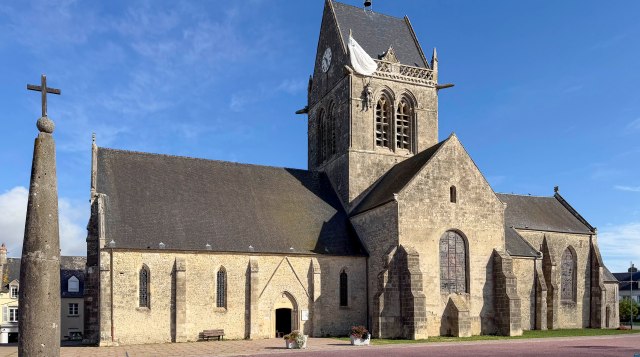
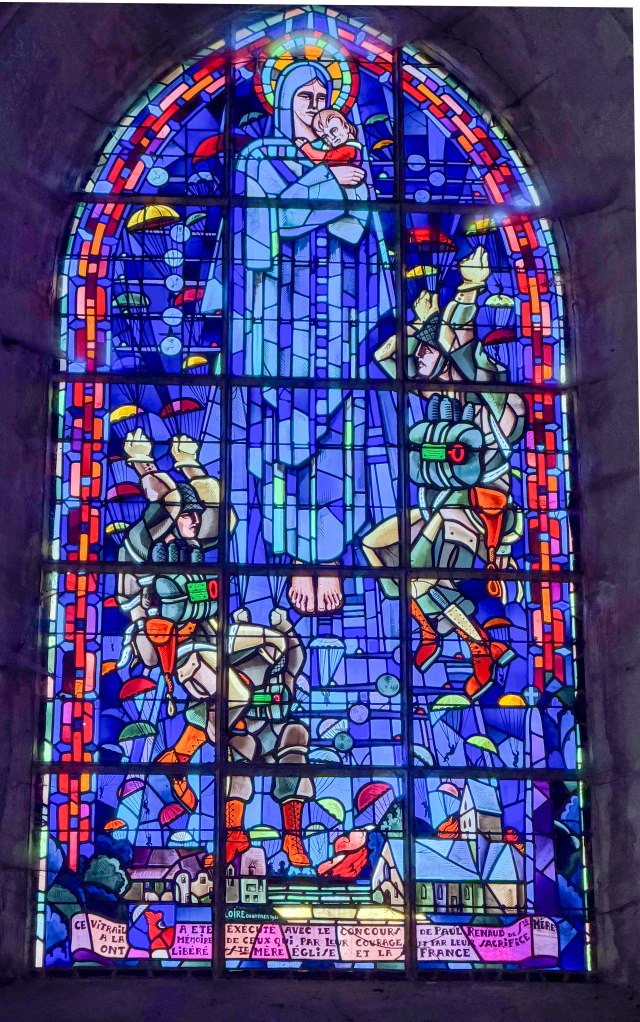
The Church of Our Lady of the Assumption in Sainte-Mère-Église, played a prominent role in the landing and, as such, was highlighted in the 1962 film The Longest Day.  The parachute and figure hanging from the bell tower of the church  commemorates American paratrooper Pvt. John Steele of the 82nd Airborne Division, who was actually ‘hung-up’ on the church spire during his landing attempt and was made ‘famous’ by the film – much of which was shot here on location. It is quite amazing how grateful the French are to this day for what the Americans did for them. Over and over again there are tributes to the Americans’ acts of bravery such as this tribute to Pvt. Steele and the remaking of stained glass windows in their churches to honor their acts. Truly humbling and gratifying.

The Church of Our Lady of the Assumption in Sainte-Mère-Église, Normandy. 
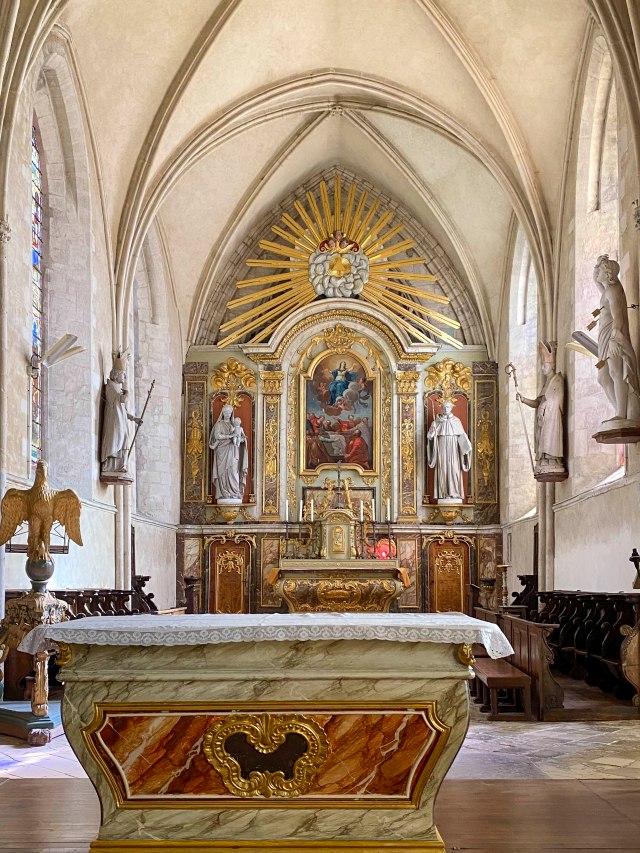
The church is small but beautiful.
A stained-glass window depicting the Virgin and Child surrounded by descending American paratroopers.

The Airborne Museum sits just across the square from the church and is devoted primarily to the American 82nd and 101st Airborne Divisions and their preparation for, and operations during, the night of June 5–6, 1944. For those interested in the airborne operations around Utah Beach, this museum is particularly worthwhile because its focus is quite specific rather than trying to tell the entire D-Day story.

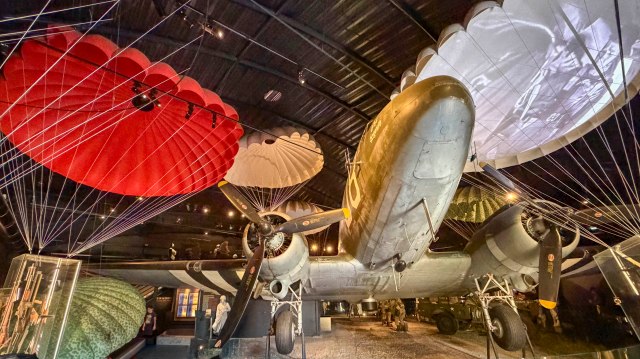
This Douglas C-47 Skytrain participated in the D-Day airborne operations.
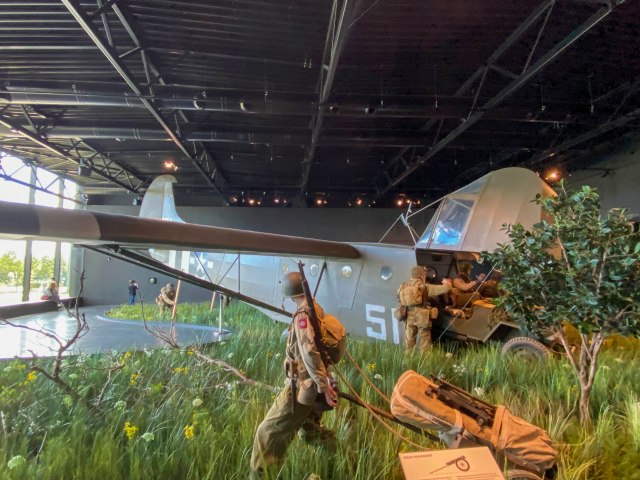
An extremely rare Waco CG-4A glider used to land troops and supplies into the area.

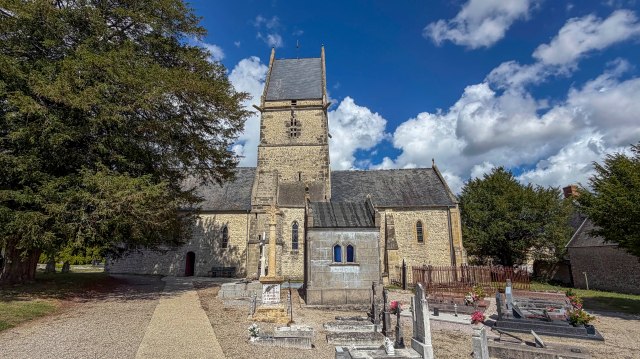
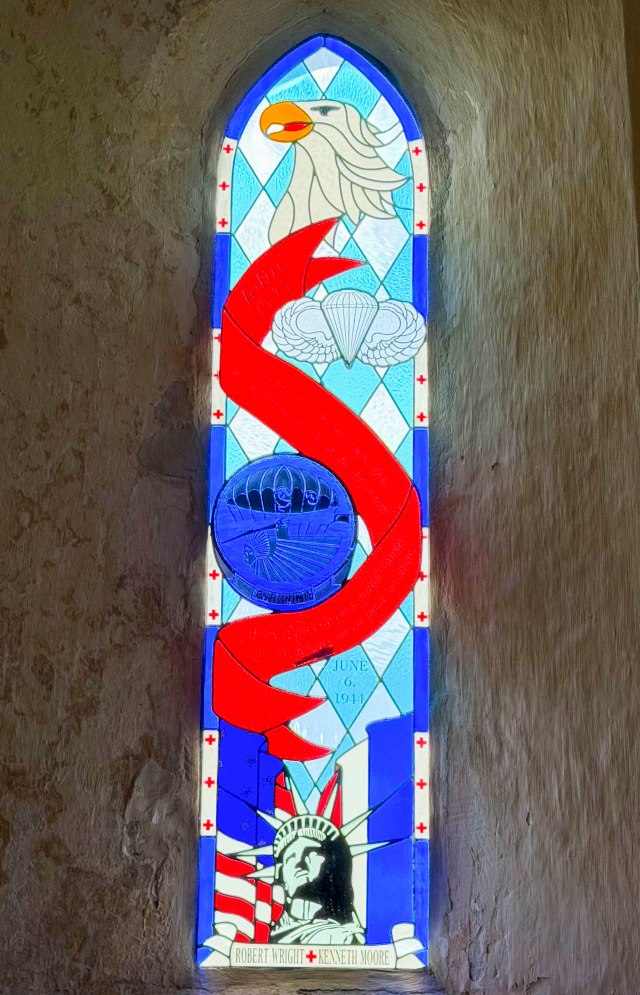
The Eglise Saint-Côme et Saint-Damien d’Angoville au Plain is a small medieval church not far from Sainte-Mere-Eglise. On D-Day, Pvts. Robert E. Wright and Kenneth J. Moore, medics with the 2nd Battalion, 501st Parachute Infantry Regiment, 101st Airborne Division, established an improvised aid station inside the church. They brought casualties into the church and laid many of them directly on the still blood stained wooden pews – American and German alike, as well as local children. Contemporary commemorations generally credit them with caring for about 80 combatants. At different points the village changed hands with German soldiers entering the church. When it was discovered that German wounded were being cared for alongside Americans heads were turned and the aid station was allowed to continue operating.

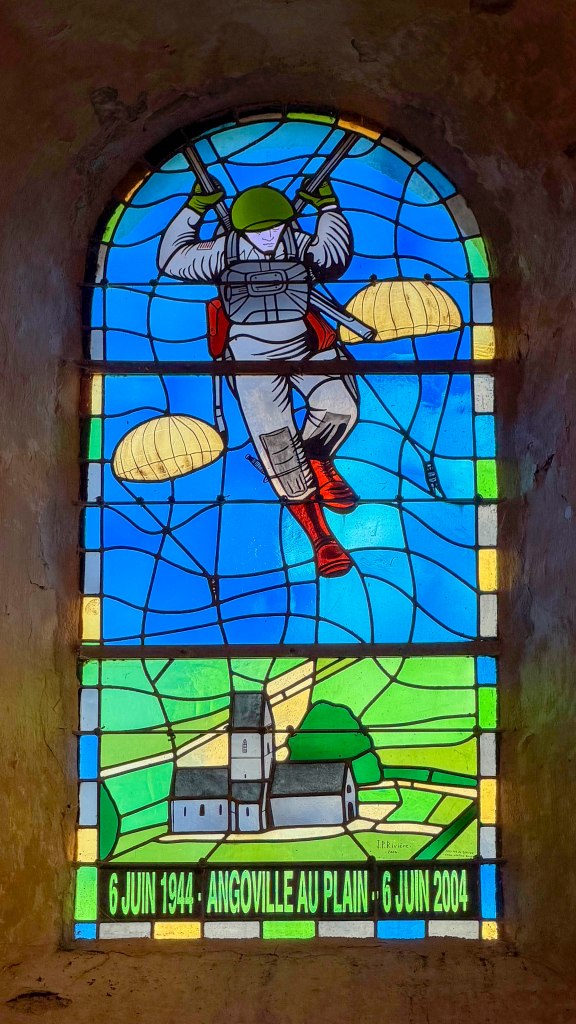
The modern stained glass is particularly unusual for a medieval French church and once again honors the Americans.

This window commemorates Wright and Moore and their medical work.
Honoring the American paratroopers of the 101st Airborne, this window incorporates airborne imagery into a traditional church window.

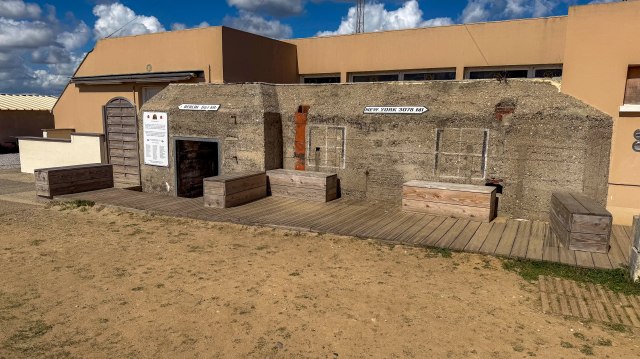
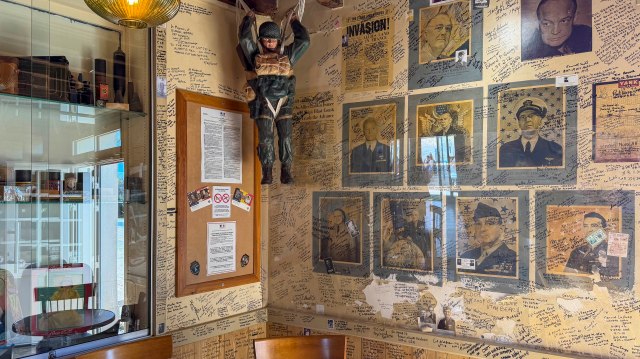
Part of the German Atlantic Wall defenses at La Madeleine/La Grande Dune (Utah Beach) on June 6, 1944 was a concrete bunker built right next to an establishment now known as Le Roosevelt Café. The cafe existed at the time of the landings and was operated by the Théodore family. Following the capture of Utah Beach, American troops used the building, and it became closely associated with the U.S. forces operating from the beachhead. The café has subsequently become a small piece of living D-Day history. Its interior contains signatures, photographs, insignia and messages left by American veterans who returned to Utah Beach since the war. 

The German personnel bunker.
Inside Le Roosevelt Café.

Although a prior visit had been made to the American cemetery at Omaha Beach, it didn’t seem right to leave the area without another visit.

Before heading back to the ship…
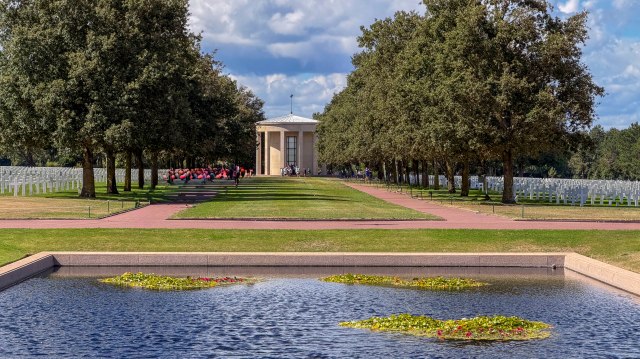
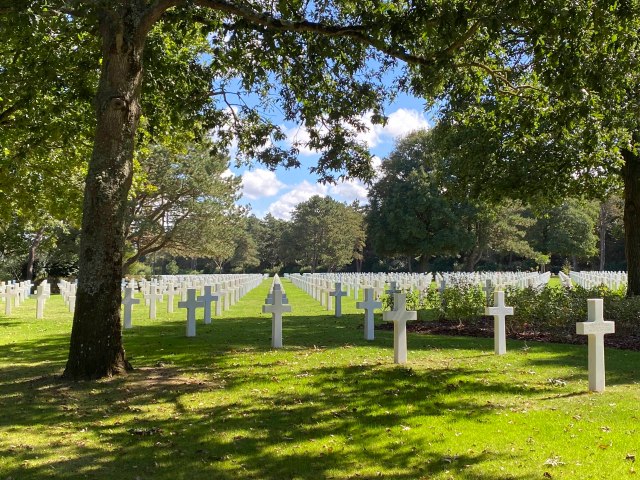
…a brief visit to the American cemetery at Omaha Beach to pay respects to the fallen.

Another enlightening visit and reminder of what those before us fought for and how much they sacrificed.

E & G – wishing peace to all


A Whole New Education – Oxford

If you are looking for a side trip from London or Southampton, Oxford is a mere 57 miles northwest of London. In fact – bag the side trip and plan to spend about a week or more exploring Oxford and venture from there to the Cotswolds and Cambridge. This is another addition to the wish list along with the NC 500 in Northern Scotland!

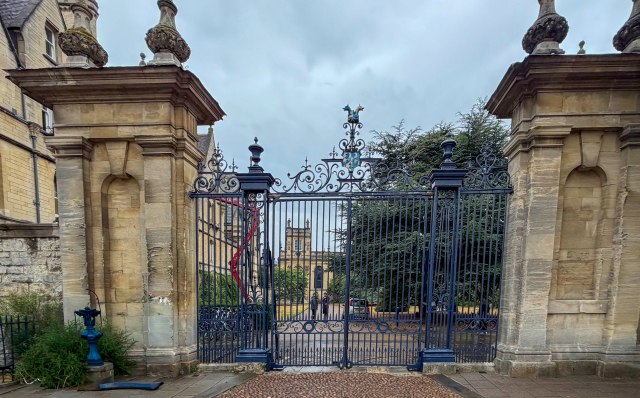
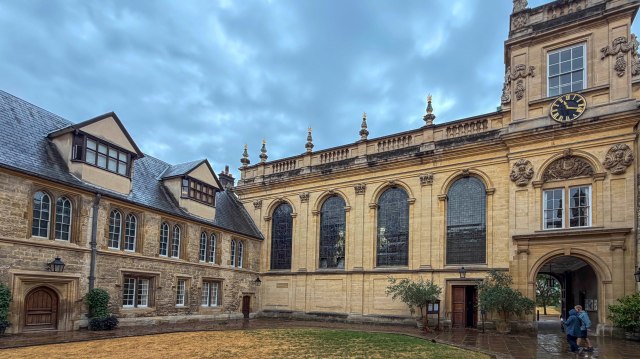
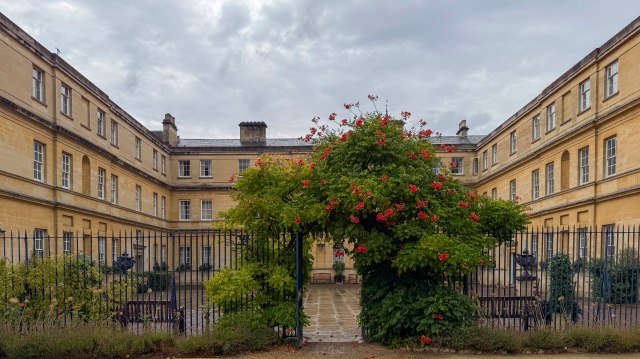
 Unfortunately, this trip only allowed for that quick day trip from Southampton to Oxford but did a great job of whetting the appetite. The city of Oxford dates back to the 12th century but it is the university that has given the city its identity since it first opened its doors in 1263. And the university is actually a collection of 38 colleges, all acting on their own with their own support/financial arrangements and contributing to many shared university properties. Many of the colleges do NOT open to the public or only do so on a limited basis. A walking tour of the city is a fantastic way to get the lay of the land and to learn about the composition of the University. It may also provide a glimpse into one or more of the colleges as the “Oxford Walking Tours” adventure did on this particular day. Come on in to the Trinity College grounds – –

The gates of Trinity college.

Every college has its own chapel, as it is the center of the college and showiest for all the world to see;-) It also has dorms, a library and eating facility. There really aren’t classrooms as students receive syllabi and it is up to them to complete the studies reporting to their advisor as required. Significantly different from US universities.

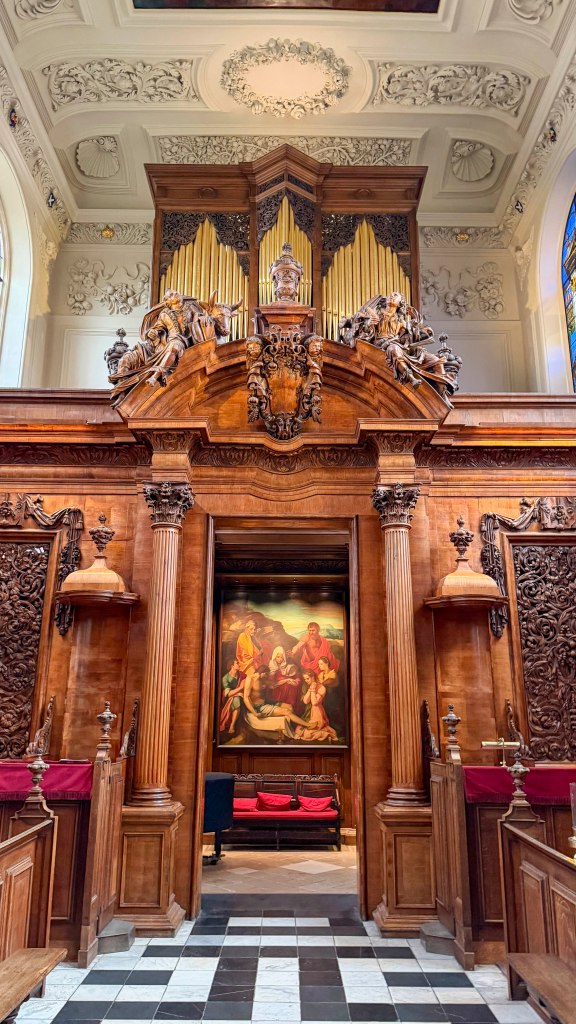
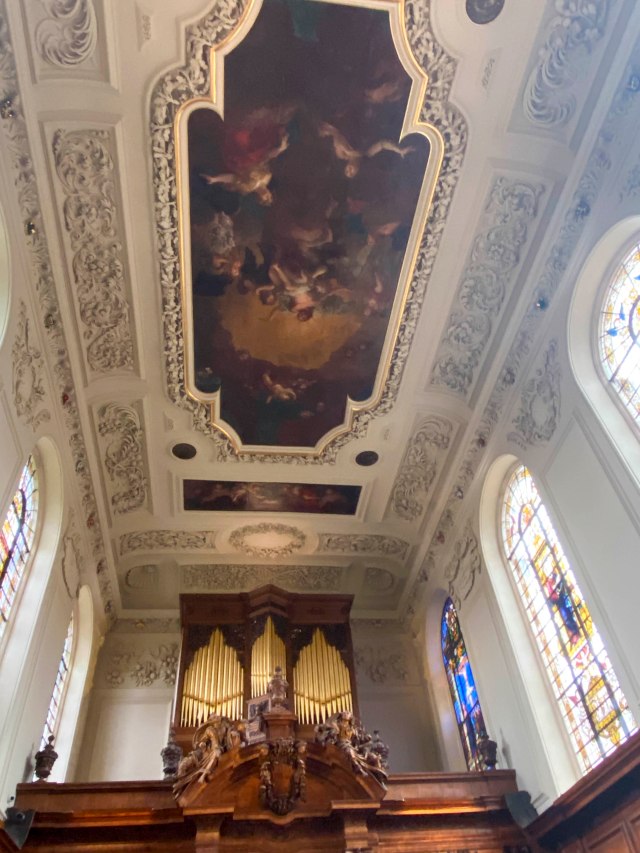
Trinity College Chapel.
Beautiful inside with incredible wood carvings.
Some of the Trinity student housing.

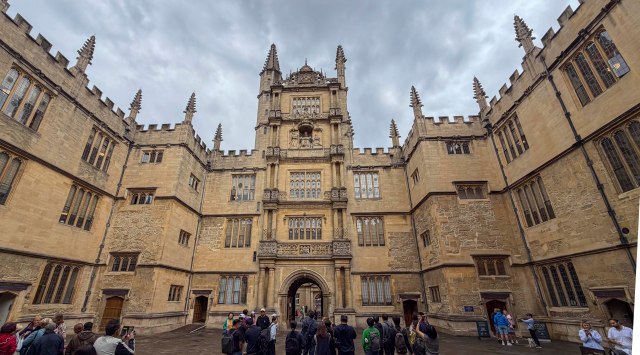
Not far from Trinity is The Bodleian Library, one of the oldest libraries in Europe and a member of the Bodleian Libraries group. This group of libraries hold over 13 million printed items and includes major research libraries, and libraries attached to faculties, departments and other institutions of the University. The Bodleian Library is known by Oxford scholars simply as ‘the Bod’ and is used by students and scholars from all over the world.

The Old Schools Quadrangle of the Bodleian Library

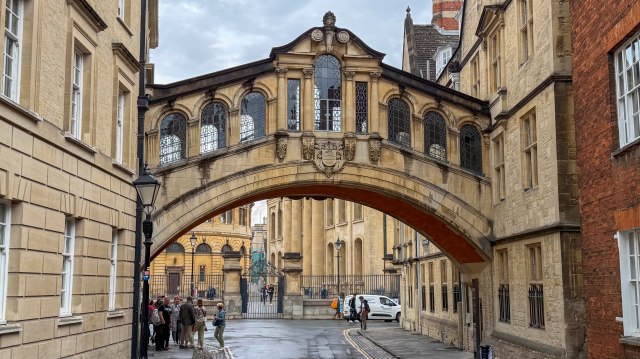
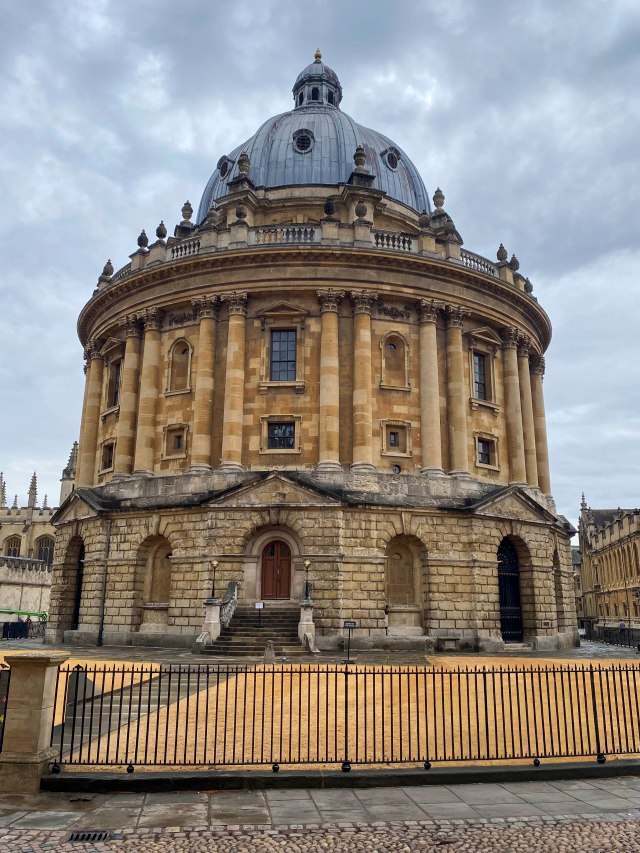
Walking from ‘the Bod’ to the true center of the University – the Radcliffe Camera – one passes under Oxford’s ‘Bridge of Sighs’. The Radcliffe Camera is a working library and part of the central Bodleian Library complex.

The Hertford Bridge, better known as Oxford’s “Bridge of Sighs.”
The Radcliffe Camera, designed by James Gibbs and built 1737–1748, opening in 1749.

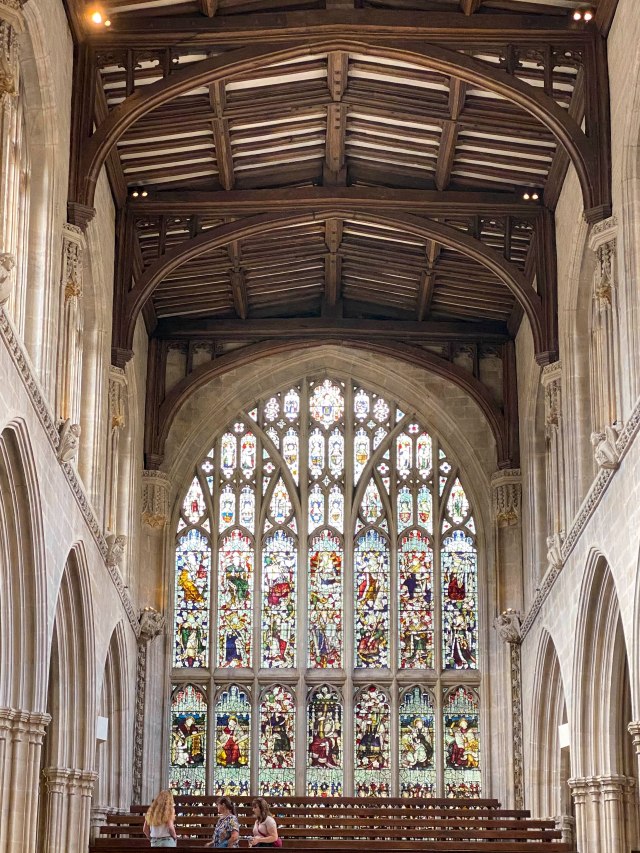
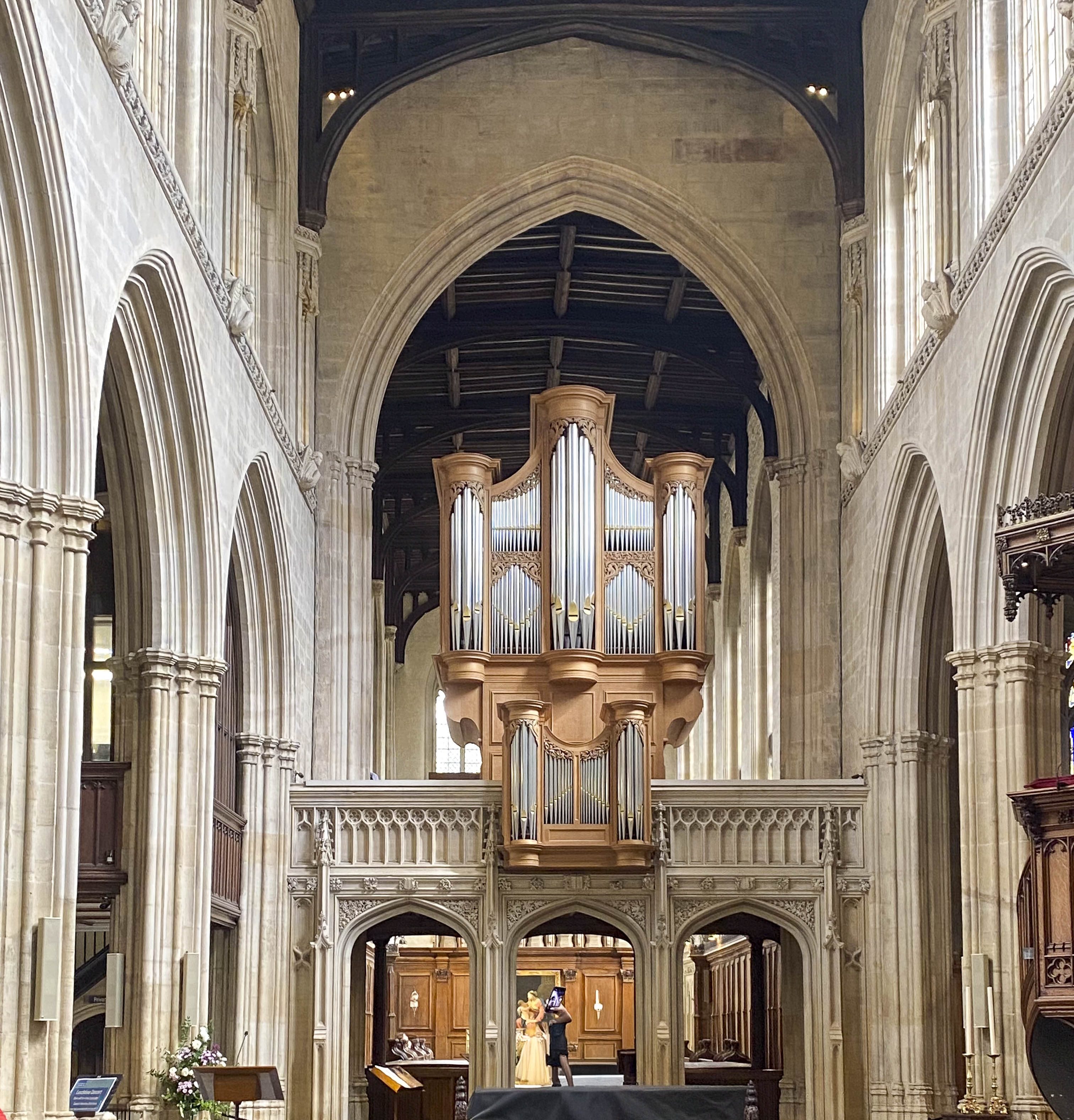
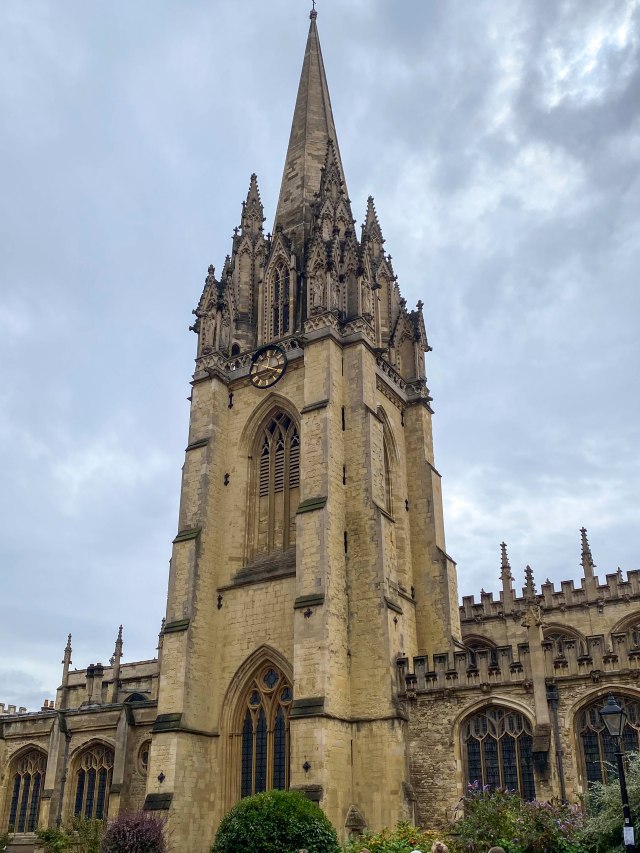
Across from the Radcliffe Camera is the University Church of St. Mary the Virgin, the official church of the University of Oxford since the 1200’s. Of course, the interior is exquisite!

The University Church of St Mary the Virgin.

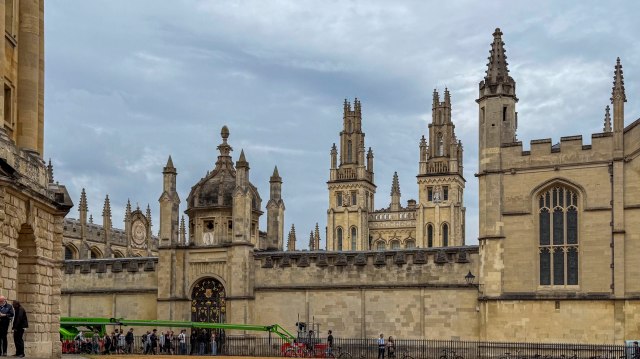
On another side of the quad around Radcliffe Camera resides All Souls College. Founded in the 1430’s, this college is dedicated to advanced study and research bringing together Fellows engaged in world-leading research and supports them with an outstanding library and archive.

All Souls College – very enclosed and private.

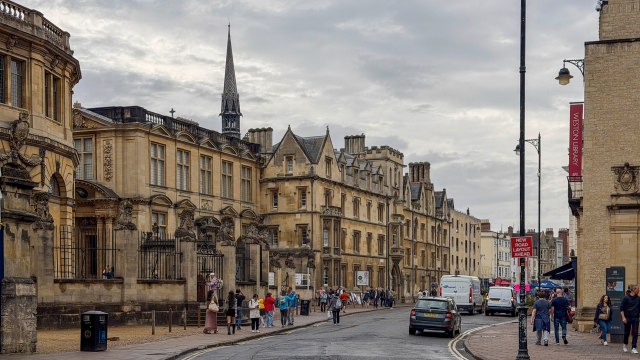
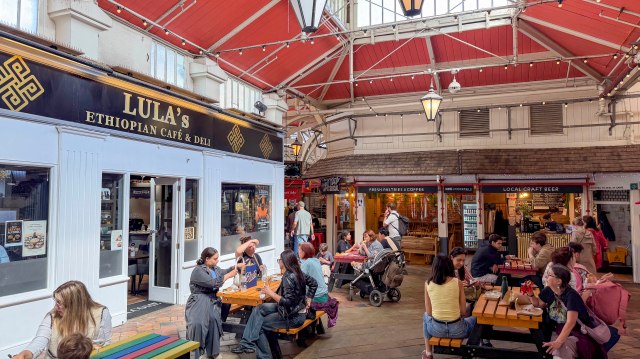
Wandering the streets of a town provides wonderful sights and Oxford is no exception. Its streets are quite lively. There is a bustling Oxford Market and a delightful restaurant called The Ivy for a lovely, quiet lunch retreat;-)

Broad Street, one of the principal historic streets in central Oxford.
A small part of the Oxford Market.

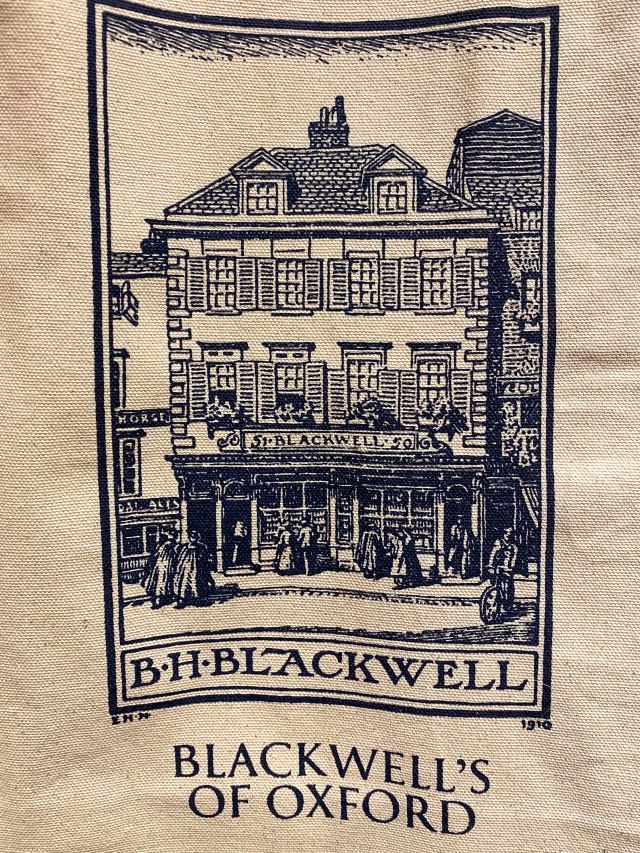
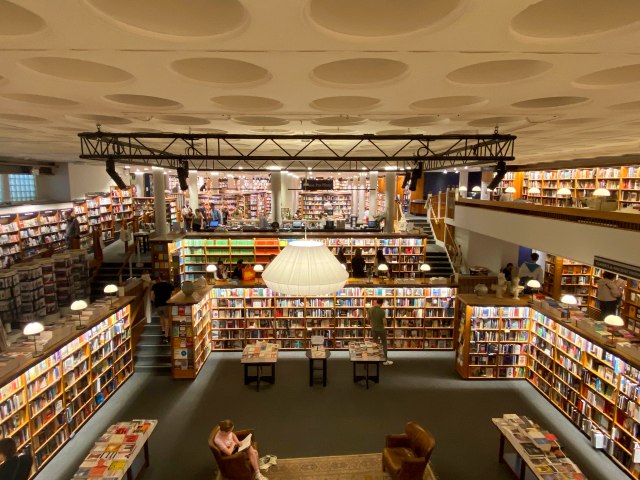
And then there is Blackwell’s – Oxford’s oldest, largest and best bookshop. It is spread over four floors and has FIVE miles of shelving!! You can get lost in here – –

This is only one section of the basement level of the bookstore.

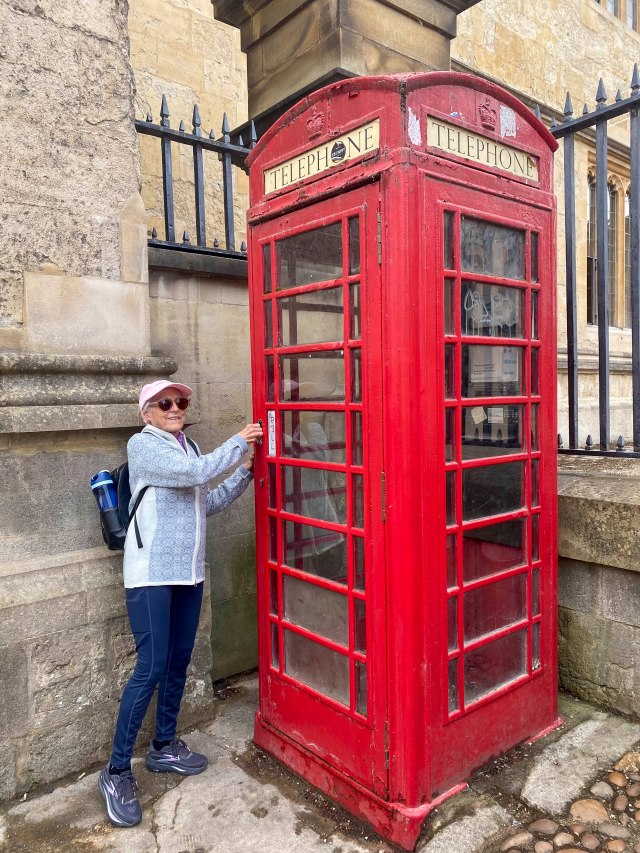
Time to head back to the ship and end the day here in Oxford. But, one last call before heading out;-)

This phone booth style was created by Sir Giles Gilbert Scott (1880–1960) who also designed the Liverpool Anglican Cathedral discussed in an earlier post.

A fascinating day in Oxford but only a tiny glimpse of what is there to investigate. Have to come back on that ‘wish list’ trip sometime in the future.

E & G – In awe of a fantastic city and institution!


Before We Say Goodby to Denmark – –

Denmark is the birthplace of the Vikings, and their legacy is everywhere. Two more stops are on the itinerary before we say goodby to them.

First up is the sunny little island of Bornholm in the Baltic. The Vikings landed here a millennium ago and their legacy is still here. That good old book – “1,000 Places to see Before You Die” – suggests you see/do four things here and you can accomplish that in a morning. So – lets go.

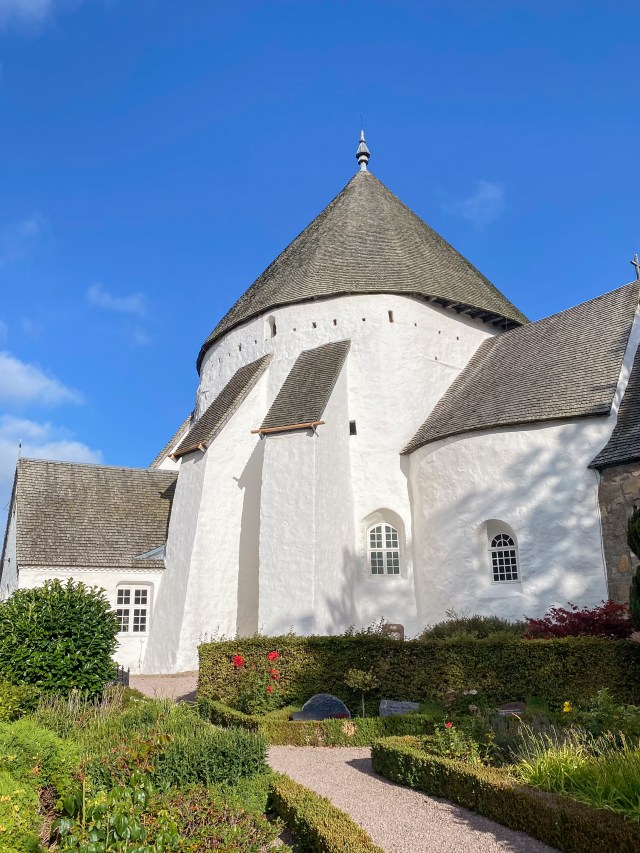
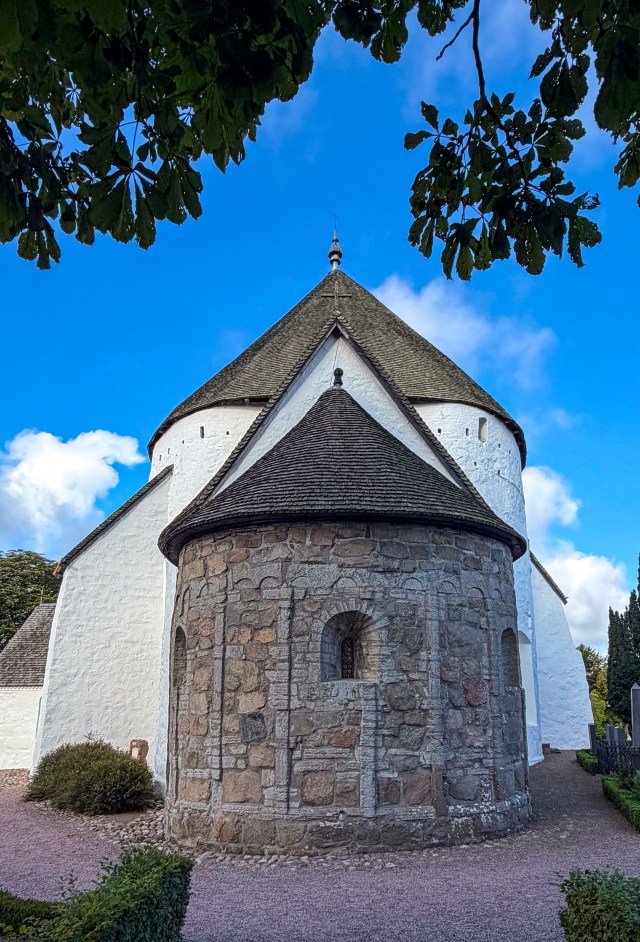
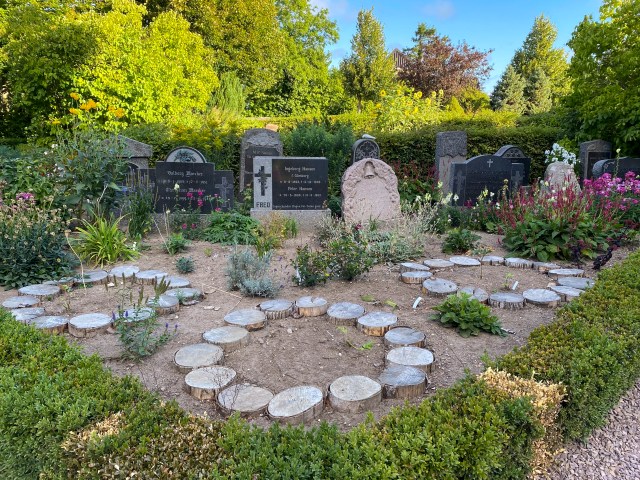
Very distinct sights on the island are its whitewashed 12th century rundkirkem, or round churches. They are capped with ink-black conical roofs and are quite a vision throughout the rolling green countryside. Well maintained grave sites are also part of the grounds around the church, creating a beautiful, serene parklike atmosphere. It is said that they also contain wonderful frescos – unable to be seen on this visit, as it was Sunday and the churches were closed for worship.

One of four historic medieval churches on Bornholm.
Very well maintained.
Sculpted cemetery gardens.

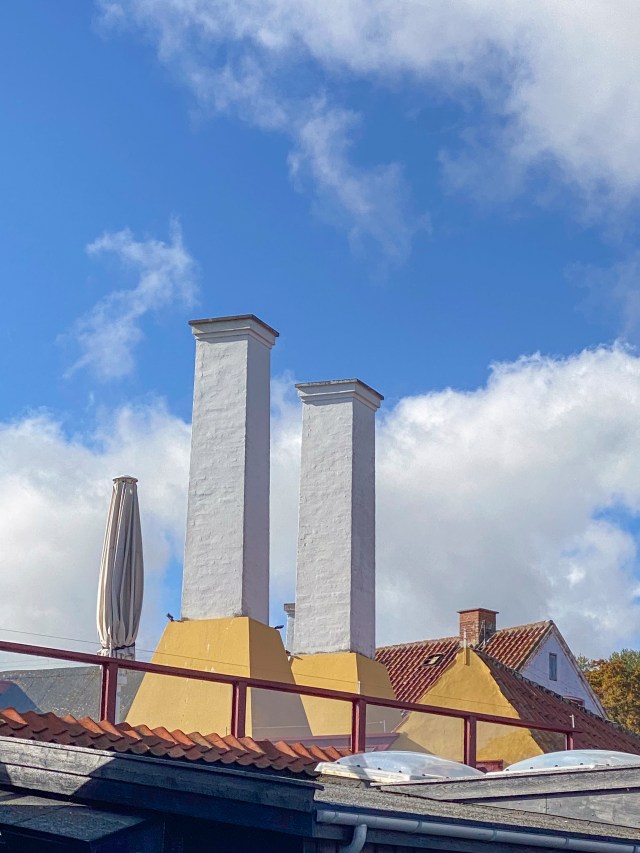
Next up the little village of Gudhjem (God’s Home). This is Bornholm’s best preserved fishing village with winding cobblestone streets, half-timbered houses and a spinning windmill. Its claim to fame is smoked fish and you can see the chimneys of the smoking ovens everywhere!

Must be smoking herring in there, a large part of the islands economy.
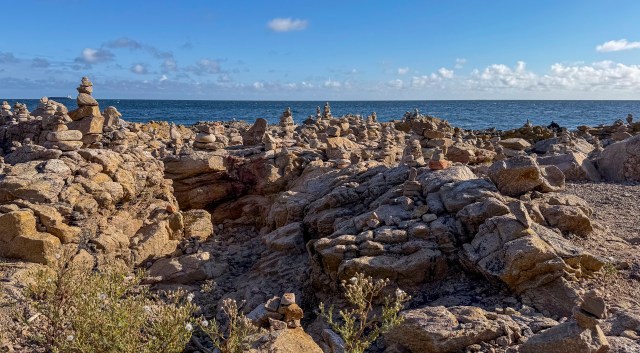
Hundreds of cairns built by visitors and locals to the small village of Gudhjem.
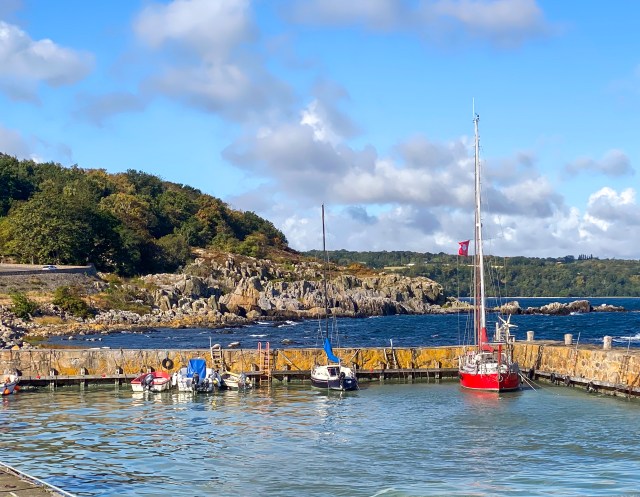
The all important ‘little’ port for the fishing village.

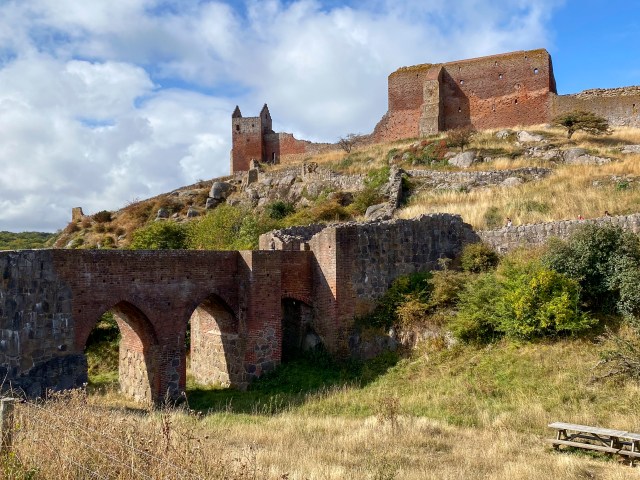
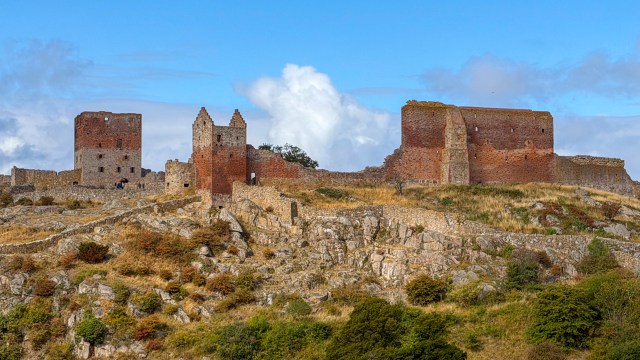
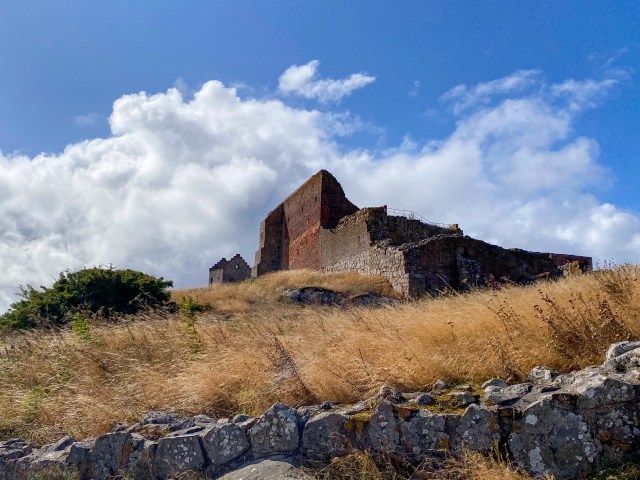
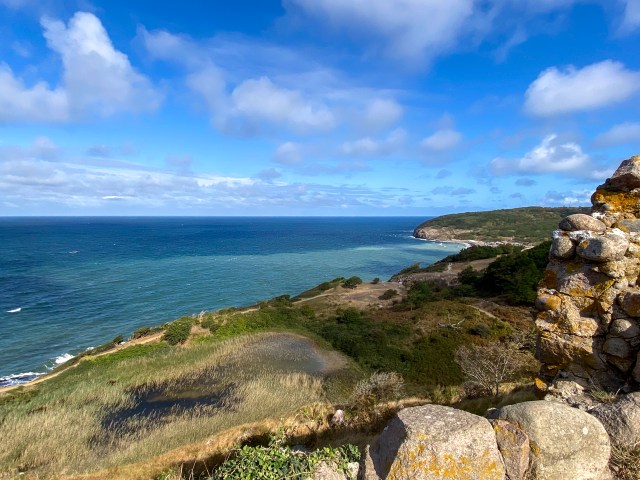
Number three is castle Hammershus Slot. This is the remains of the 13th century clifftop castle, the largest such remains in Northern Europe. Leading to the Hammershus castle is a well-preserved fortified bridge spanning a 20′ deep ravine, which previously would have had a wooden drawbridge. When one climbs to the top of the ruins it is evident why this position was sought after for protection. The views show activity in all directions.

The fortified bridge leading to the Hammershus Fortress.
View from the fort’s location with a broad defensive view of the sea.

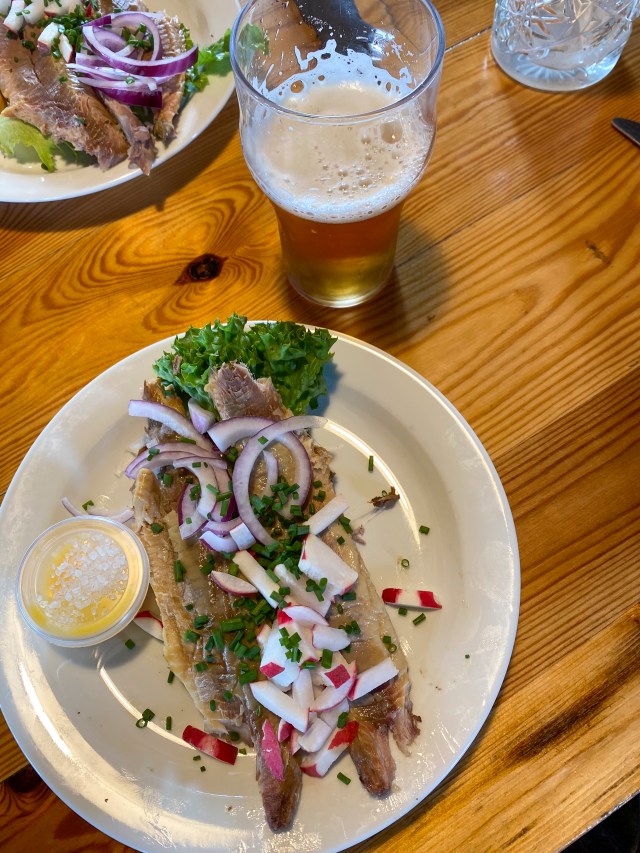
OK – the fourth must do is sample the local specialty of “Sun over Gudhjem”, which is smoked herring on dark bread topped with a raw egg and raw onions washed down with a chilled Tuborg. And yes – this finicky writer tried it all!!!

They were nice enough to leave the raw egg on the side:-)

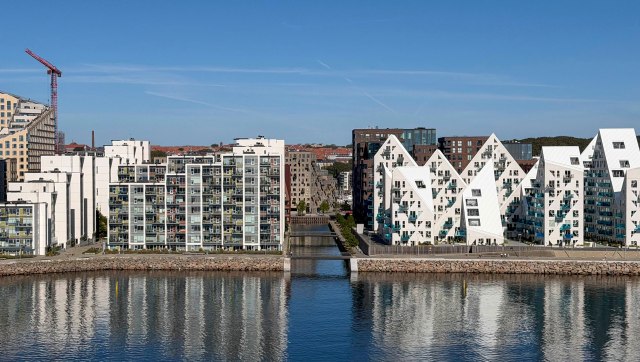
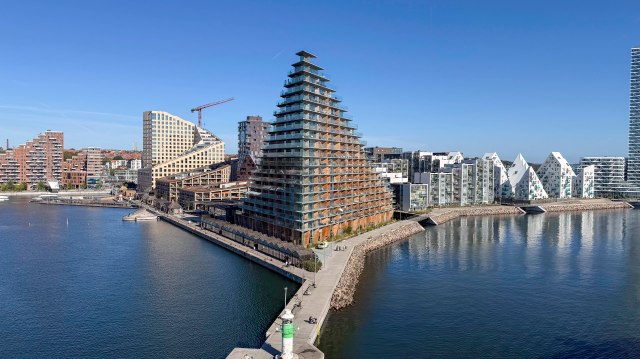
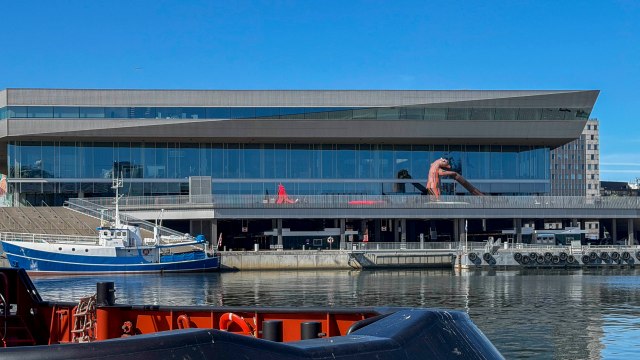
Having had a “fill” of Bornholm, it was time to move on to Aarhus, where the Danish royals summer. Founded in the 10th century as a Viking settlement, today it is a vibrant university town. And – Danish design and architecture are on full display when cruising into the harbor – –

Great views entering the Aarhus harbor.
Aarhus Public Library.

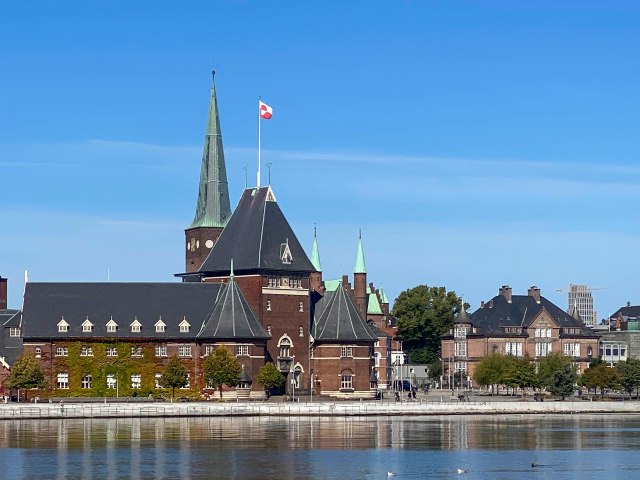
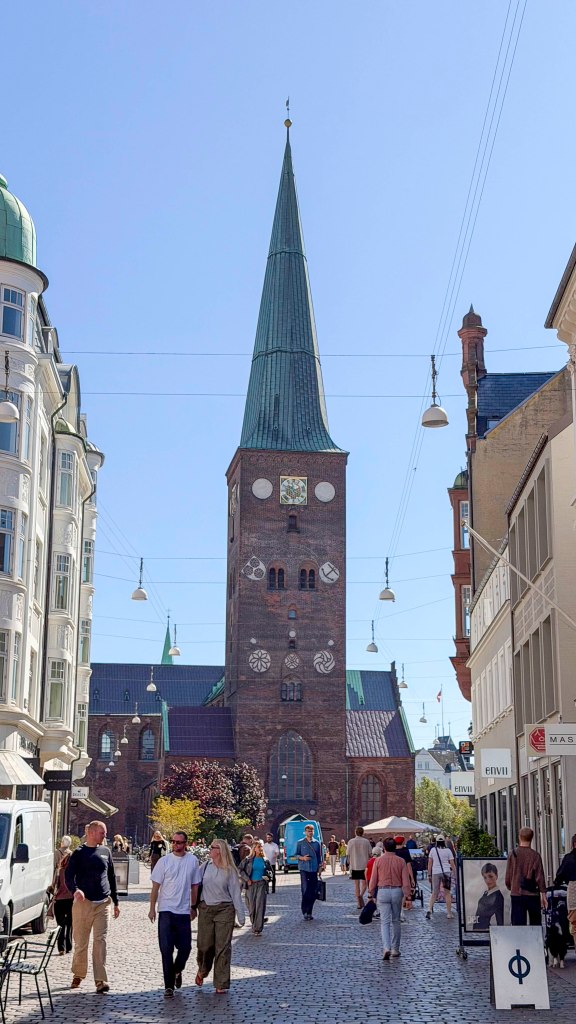
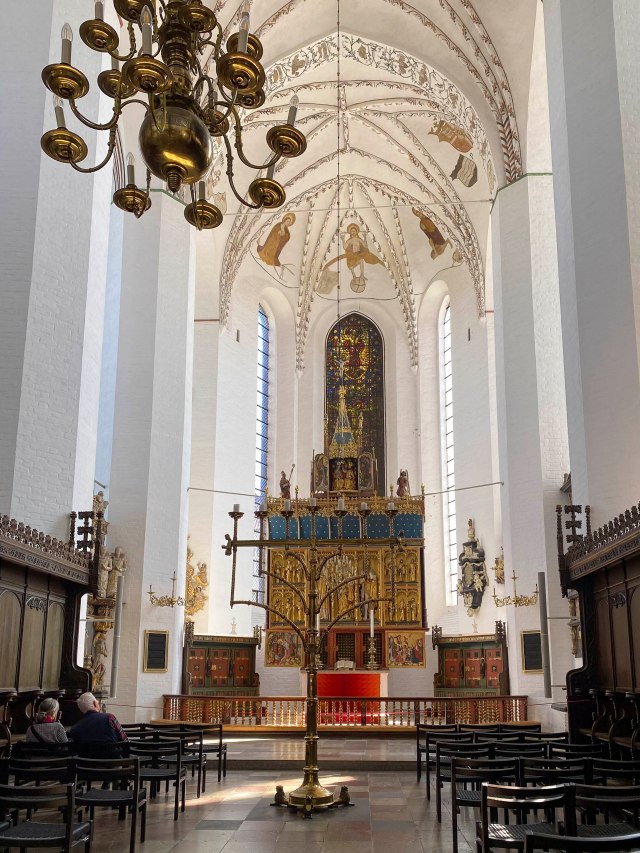
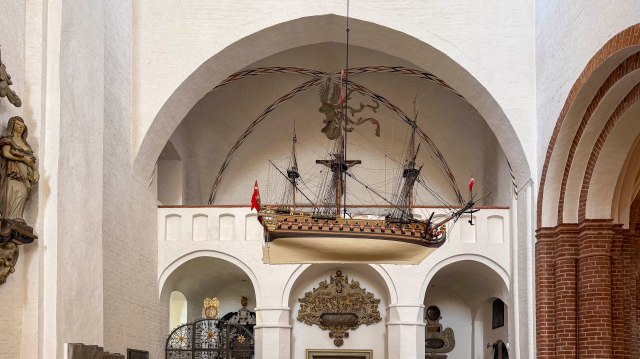
The Aarhus Domkirke (cathedral) in the center of town dates to the 12th century. It is dedicated to St. Clemens, the patron saint of sailors, and contains that obligatory ship in the sanctuary. It also contains unique painted – not stained – glass windows behind the altar.

In the foreground is Toldboden — the former Aarhus Royal Customs House with the steeple of Aarhus Cathedral rising above it.
The Aarhus Cathedral.
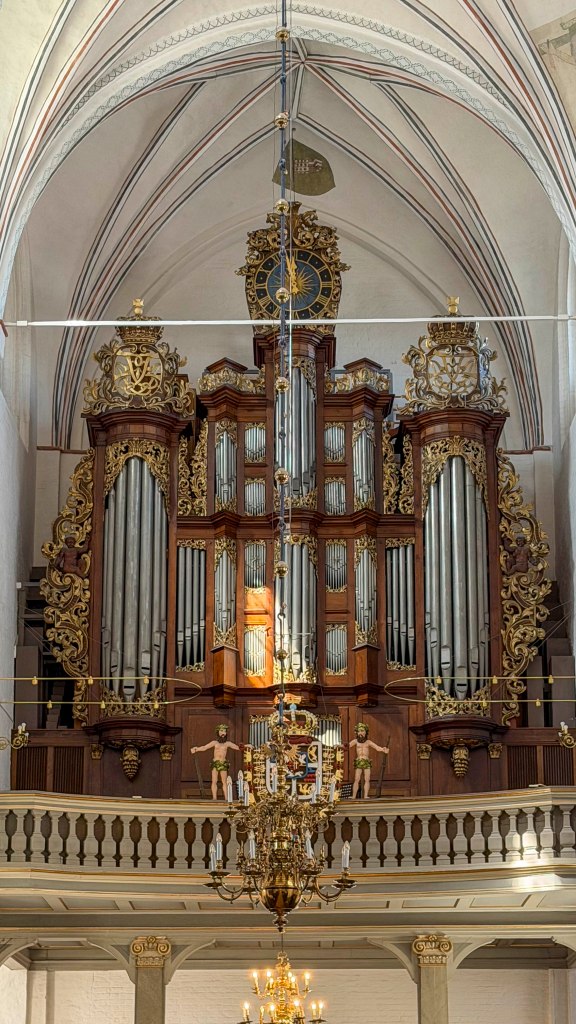
More organs!
Aarhus Cathedral describes the ship as symbolizing a person’s voyage from cradle to grave.
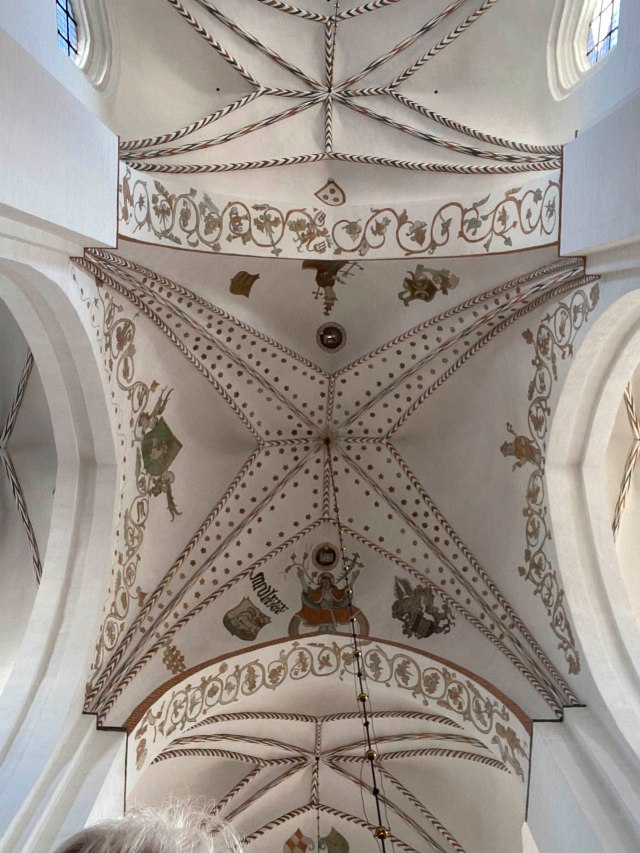
Stunning ceilings.
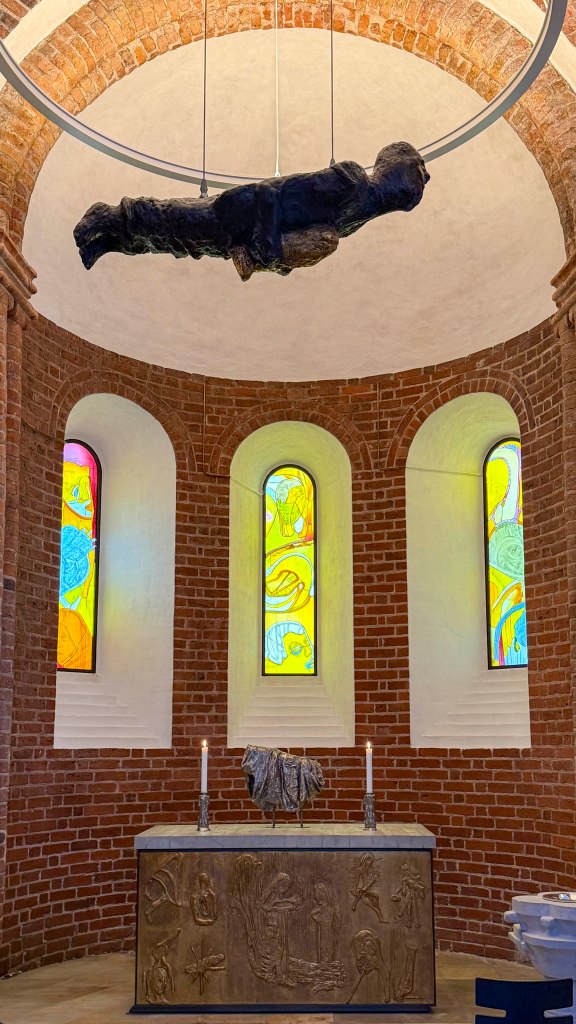
The chapel’s 2023 installation, by Danish artist Peter Brandes, includes the suspended Lazarus sculpture, the three vividly colored glass windows, baptismal font and alter.
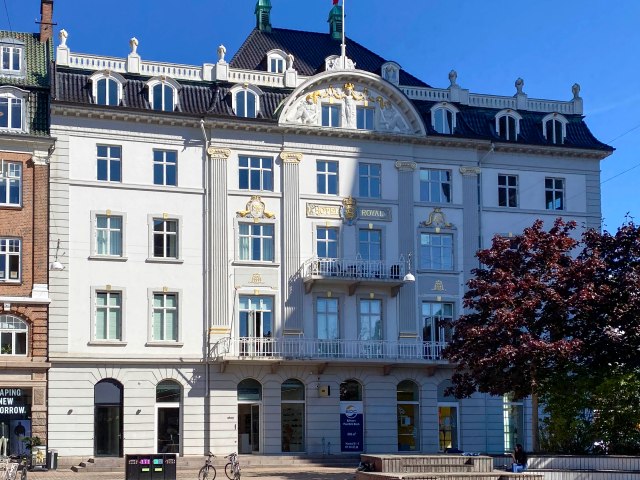
The Hotel Royal, built in 1838, is said to be the oldest hotel in Aarhus.

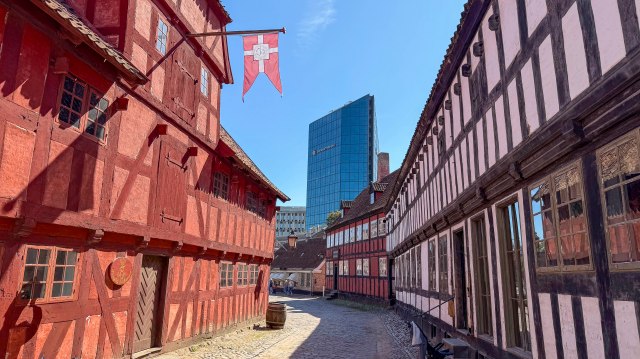
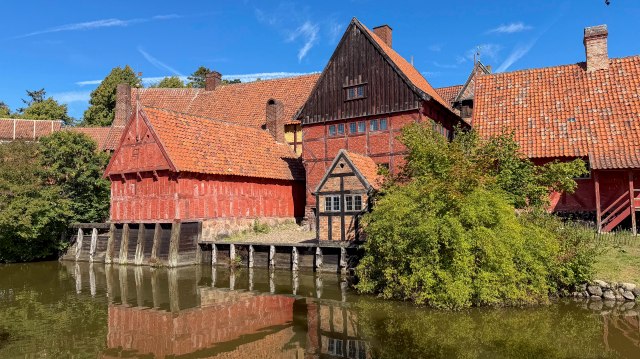
Den Gamle By (the Old Town) is an open-air museum of 75 traditional half-timbered houses dating from the 17th to the 19th centuries. The houses were disassembled at their original locations and reconstructed on the ‘museum’ site. This was a bit of a contrived, Disneylandesque experience and could have been done without;-( But, it was a nice day and provided a nice walk.

The reconstructed “Old Town” sits amidst the modern buildings of the city.
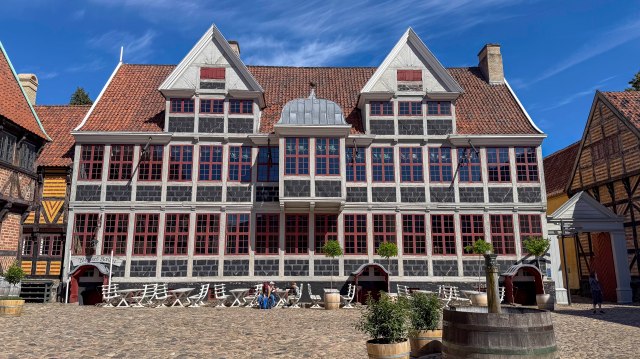
Built in 1683, this was the home of the Royal Mintmaster.

There are always those fun sights in the walk about town –

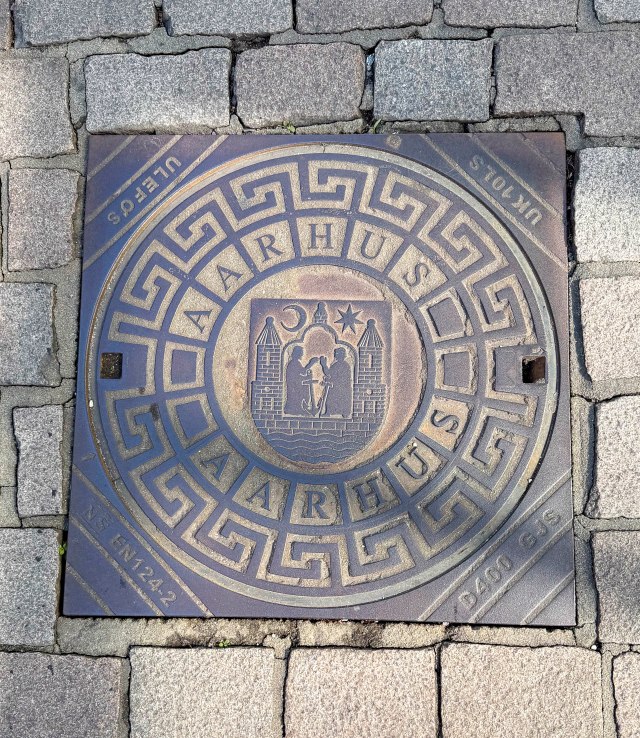
The center of the city’s manhole cover is a version of the historic coat of arms of Aarhus derived from the city’s medieval seal dating to about 1250.
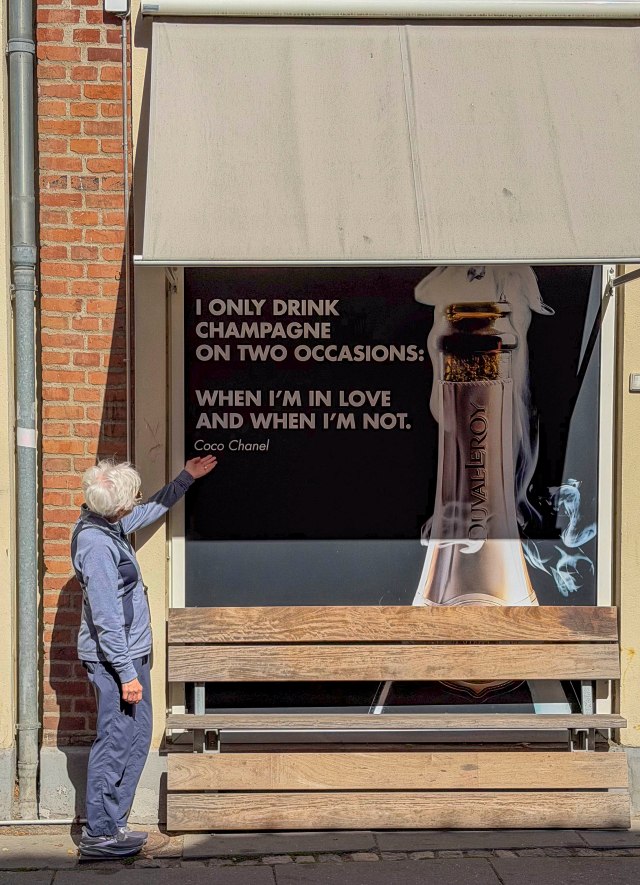
Well said, Coco!

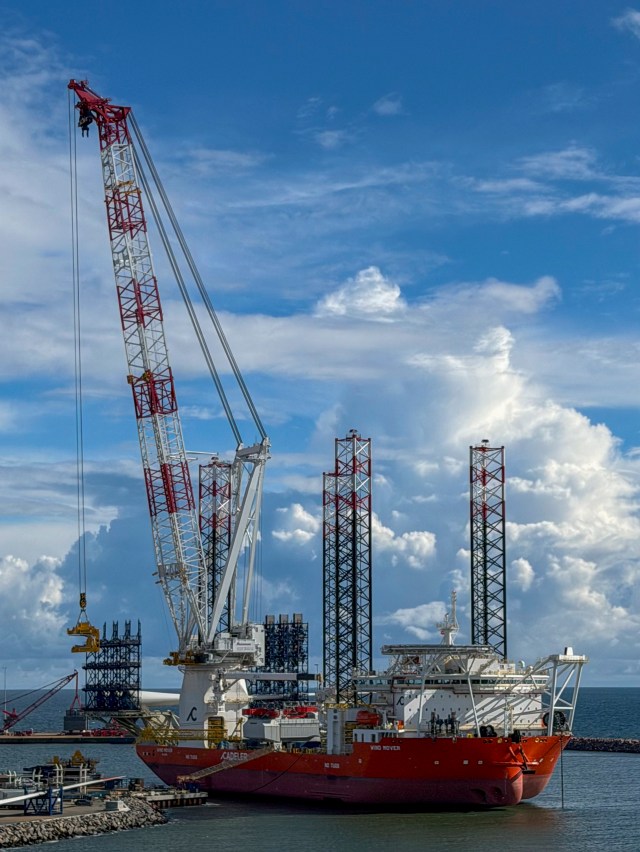
Then there is the educational sight, which one has to ask AI about as it just looks weird! This ship is a ‘jack-up vessel’, as it can lower the four tallest towers to the seabed in order to raise the ship and create a stable platform. Then the cranes can lift the windmill pieces (seen on the far left of the ship) into place to build the off-shore wind farms.

One can find the most interesting sights in a city’s harbor.

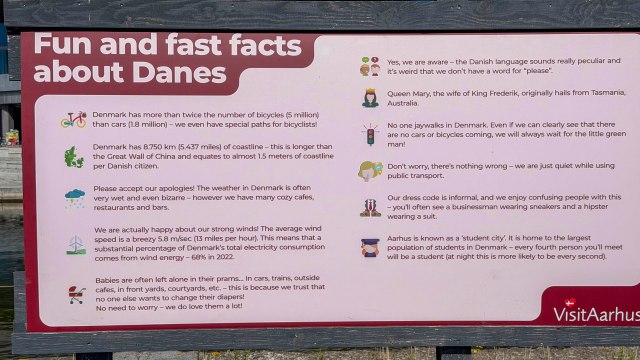
One last item from Denmark – –

This should leave you smiling or laughing out loud..

This segment of the cruise was a whirlwind of sights. It was 16 days with 7 countries – Northern Ireland (1 stop), Ireland (2), Scotland (3), Norway (1), Denmark (4), Germany (1), England (1) and just 3 sea days. Enjoyed every minute of it – but a few sea days in the next leg will be welcome.

E & G weary and exhilarated all at the same time;-)
Berlin – A History Lesson

Are you surprised that our cruise ship took us to Berlin? Well, it didn’t exactly. The port is Warnemunde and the transportation (bus) to Berlin is 2 1/2 to 3 hours each way. On previous trips this has been an ‘opt out’ decision but, the time had come to bite the bullet and check out what had been heard and read about as youths and try to make some sense of it all. There is NO sense to it – but here is the experience.

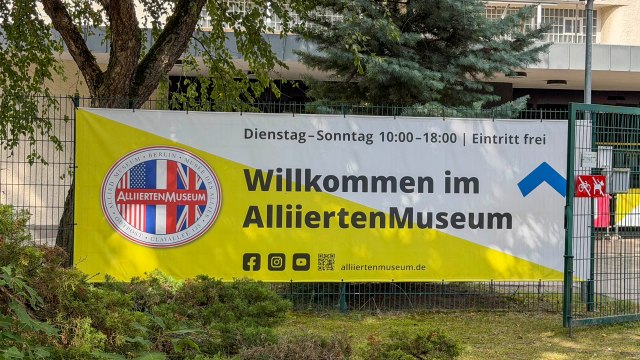
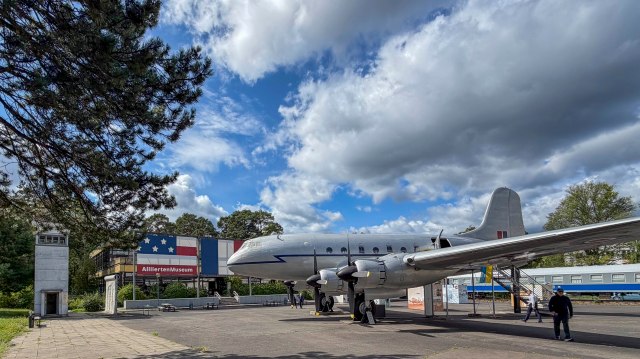
The Allied Museum is a great place to start for a good foundation. An excellent guide will also help the process especially if they are Berliners and lived through it all.

Let’s get started.

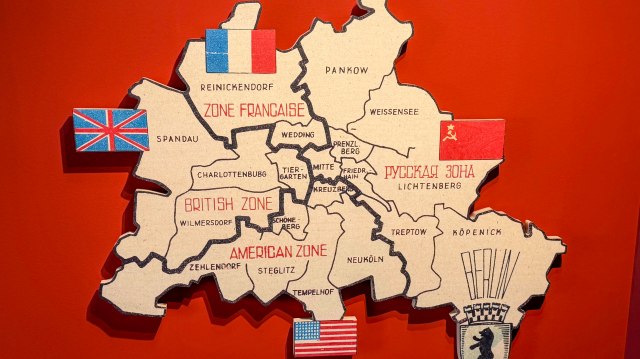
It has always been hard to understand how a city in the middle of an area occupied/run by ONE country (Russia) could be split amongst FOUR countries?!? And yet – that’s what the ‘powers that were’ did. Apparently without much thought of how the infrastructure of things like trains that ran underground through the various areas would be accommodated. Almost 15 years after the end of the war and East Berliners leaving in droves, Russia decided a good way to keep them from leaving was to build a wall around the ‘free’ portions of the city that sat in the middle of the Russian controlled country. Seems the answer is always – Build A Wall?!?

A map of the city of Berlin-sitting in the middle of Russian occupied East Germany-split up amongst France, Britain, US and Russia.

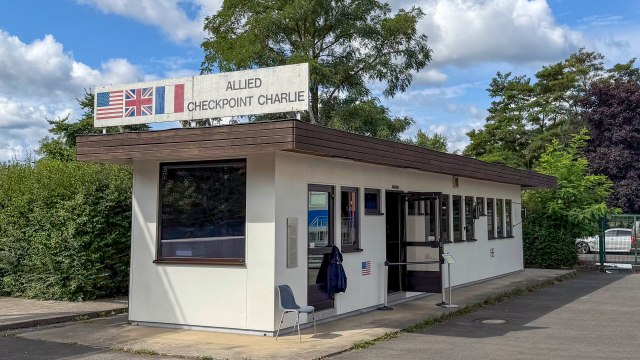
Now – in order to pass into the ‘free’ areas of the city, one had to pass through checkpoints with appropriate documentation. To gain access to the US portion of the city one came through Checkpoint Charlie (Britain=Alpha, France=Beta and US=Charlie). The Checkpoint Charlie building looks much like an early passport control facility and now resides on the Allied Museum grounds with a small replica at the original location.

The original checkpoint building.
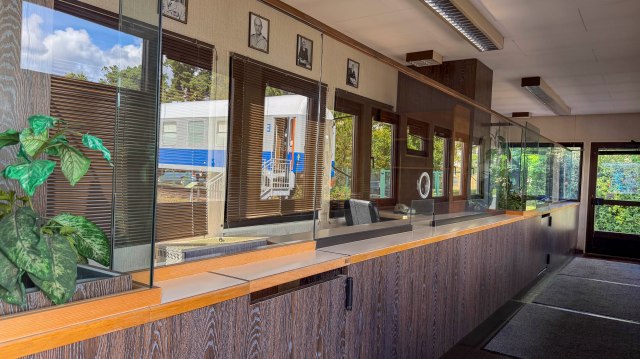
Passport please.

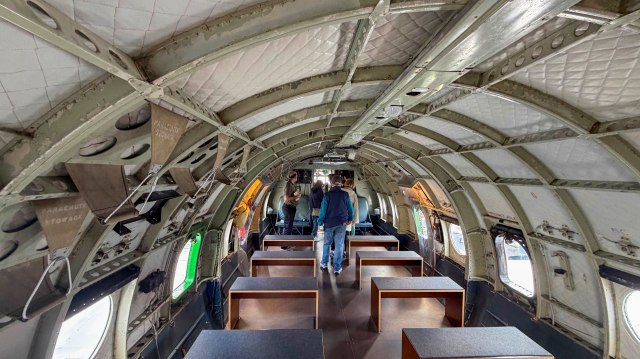
One way for Russia to eliminate these pesky three countries from ‘residing’ in the middle of their country was to not allow supply trucks to cross the rest of East Germany to the the city or not let Allied planes land at the airport, which was in East Berlin. Sooner or later the Allied’s would get frustrated and leave – right?? NO! Airlifts began to drop supplies into the three allied quadrants of the city and sometimes they would drop chocolates. One of the planes utilized for this purpose is also at the Allied Museum.

One of the British planes used in the Berlin Airlift in 1948-1949. Similar to the American DC 3’s used at the same time.
Used to shuttle in all essentials for West Berlin including food, coal, etc.

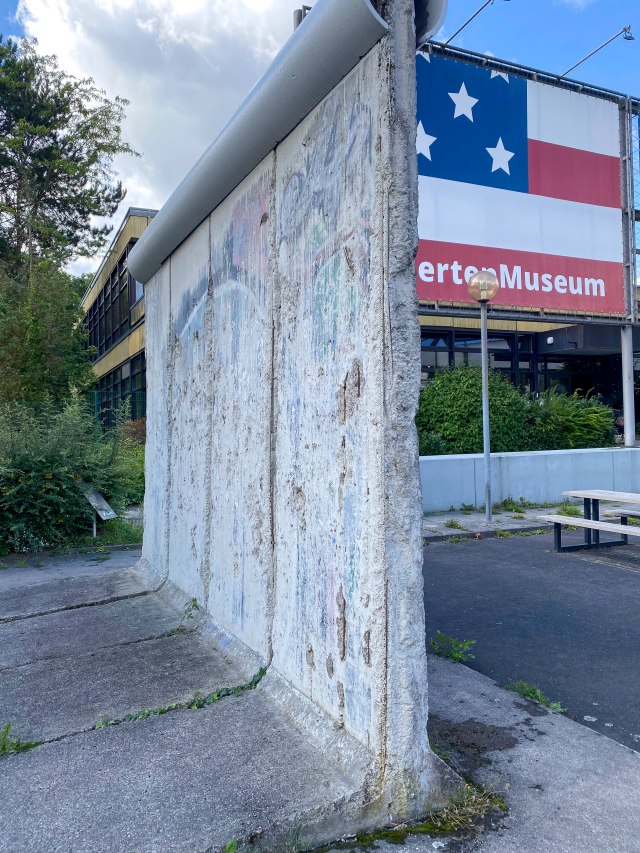
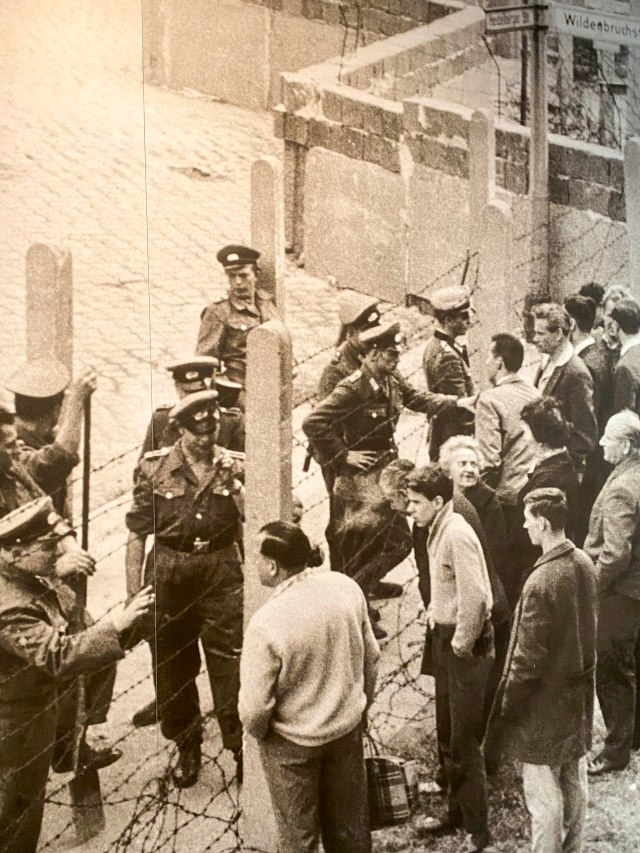
And then there is the wall. As noted before, the wall was built long after the war ended and was constructed around the Allied portion of the city. It first went up as chain link, which was done almost overnight. East Berliners were shocked when they woke up the next morning and could no longer move as freely. The more secure block wall was constructed over years and there were actually two walls with the section between the two called ‘No Man’s Land’ or ‘Death Strip’. Many were shot trying to climb over the wall into the Allied territory of West Berlin.

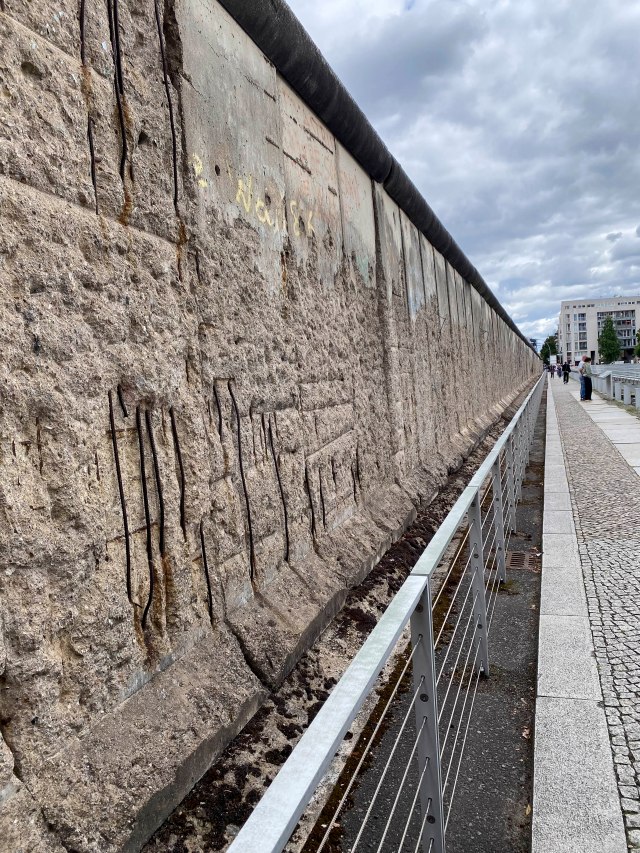
A small portion of the Berlin Wall on the Museum’s property.
Beginning stage of the wall in 1961 and shocked East Berliners.
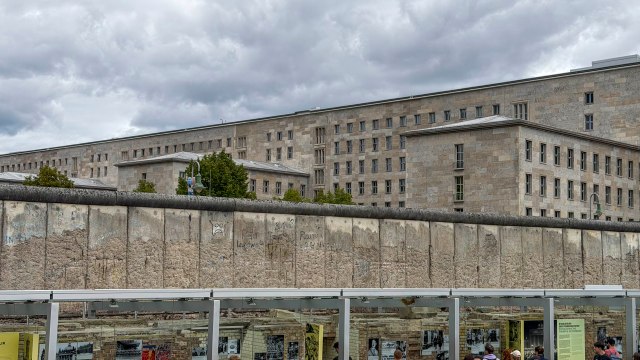
A segment of the Berlin Wall still stands at its original location as a reminder – Sobering!
The large building behind the wall, built in 1935-36, was the Reich Air Ministry, headed by Hermann Göring. It was one of the largest government office buildings constructed in Nazi Berlin. It currently houses the Ministry of Finance.

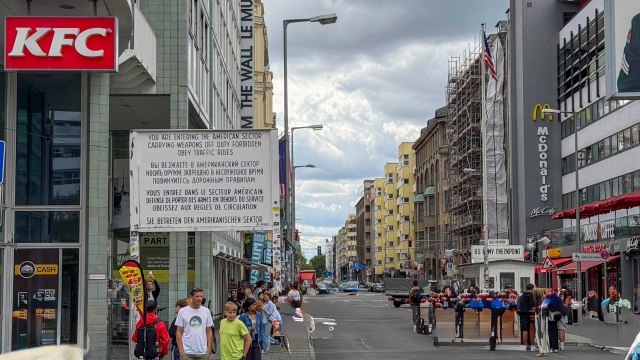
Not far from the remaining portion of the wall is the original location of Checkpoint Charlie and everything American – KFC and McDonalds;-)

A smaller Checkpoint Charlie sits in the original location for tourist photo ops.

Because so much happened in this country and this city, there are many reminders, tributes and memorials around Berlin to those who served in many different ways, to those who lost loved ones and to remember horrific acts in the hopes they never happen again.

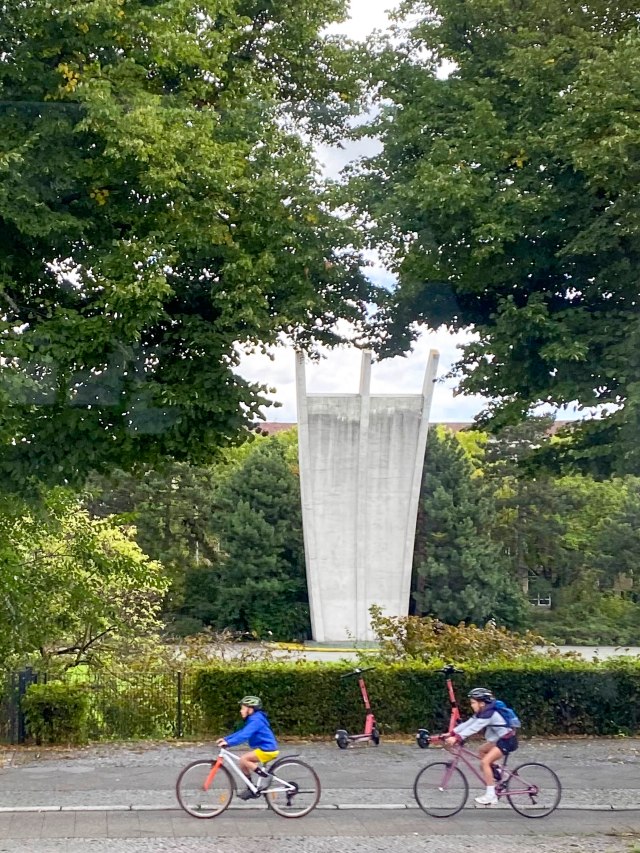
Memorial to the men who flew the planes during the Berlin Airlift.
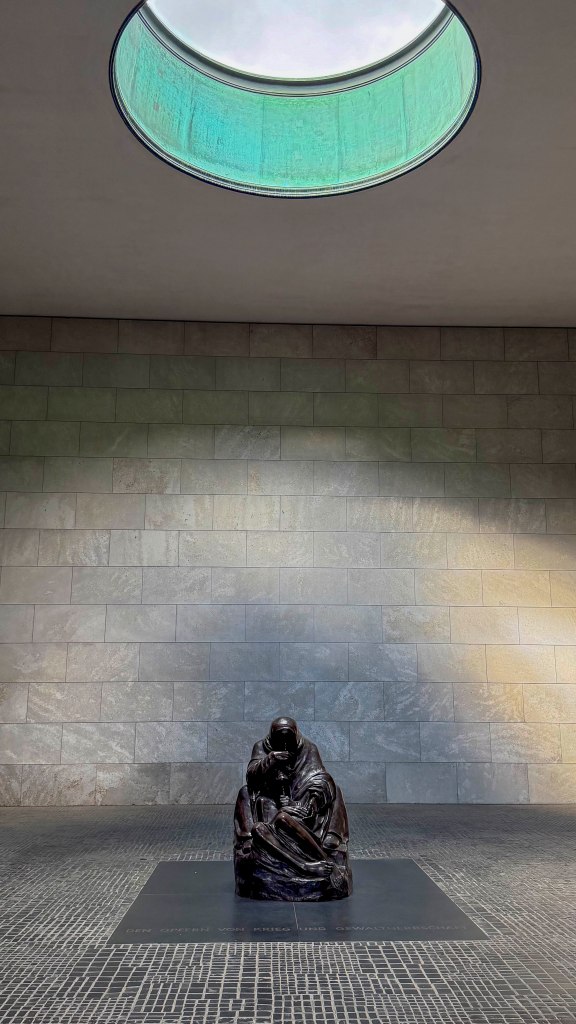
Käthe Kollwitz’s Mother with Her Dead Son stands inside Germany’s Central Memorial to the Victims of War and Tyranny.
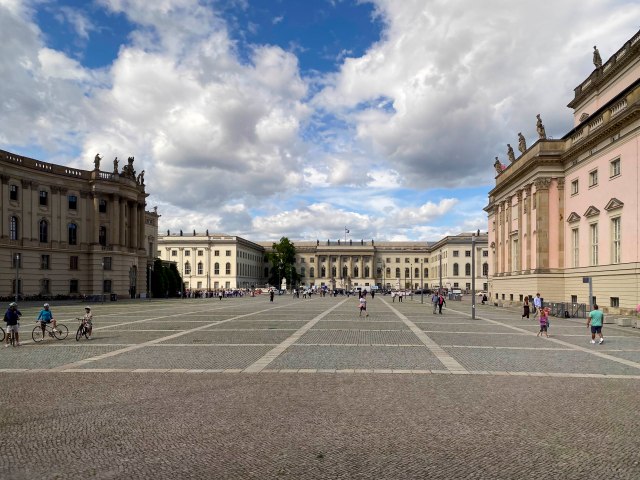
The Bebelplatz. The open paved area is the actual location of the Nazi book burning of May 10, 1933, when more than 20,000 books were burned.
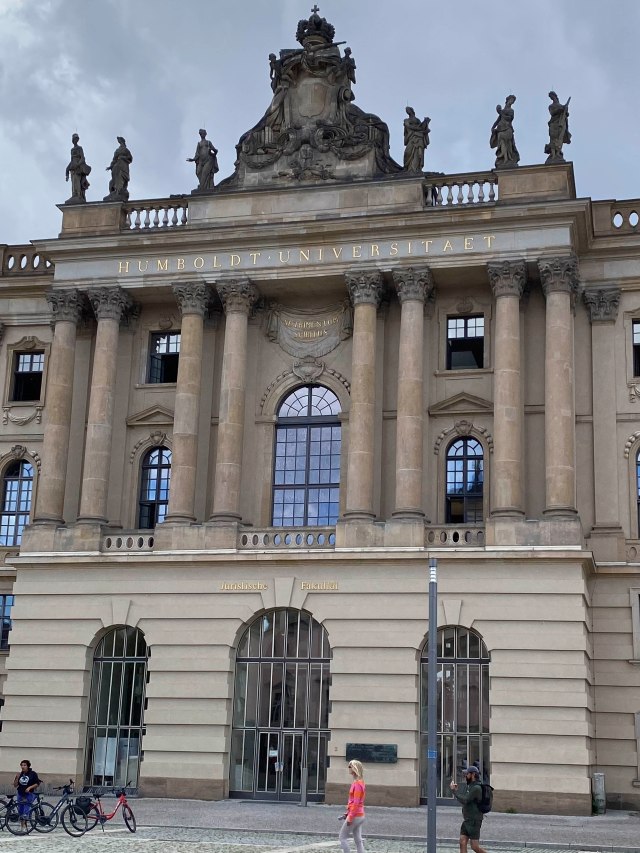
Previously the library – now part of the University. The words on the inscription above the door are “feed the spirit with words”
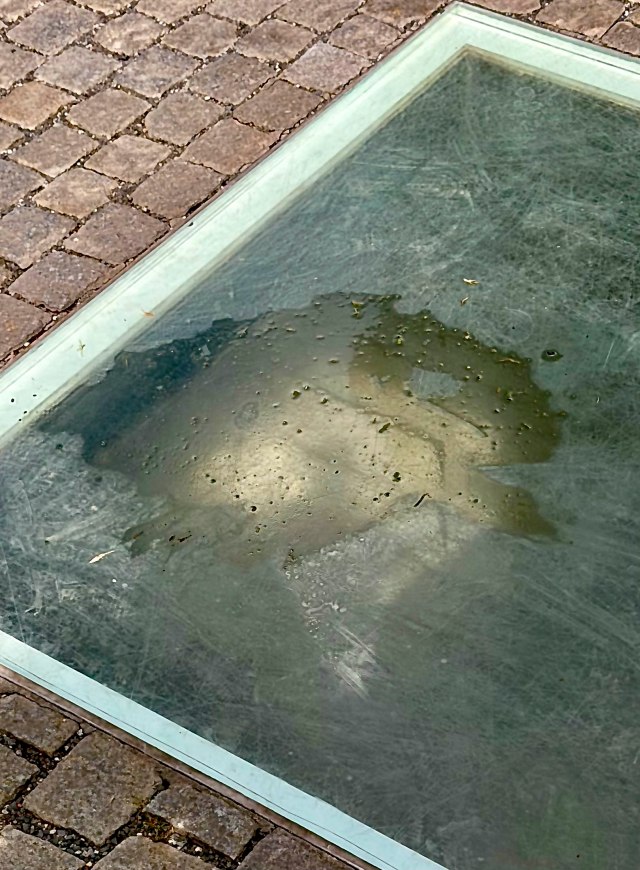
In front of the Library is Micha Ullman’s “Empty Library” memorial—a stark white underground room of empty bookshelves with enough shelf space for the roughly 20,000 volumes burned here.
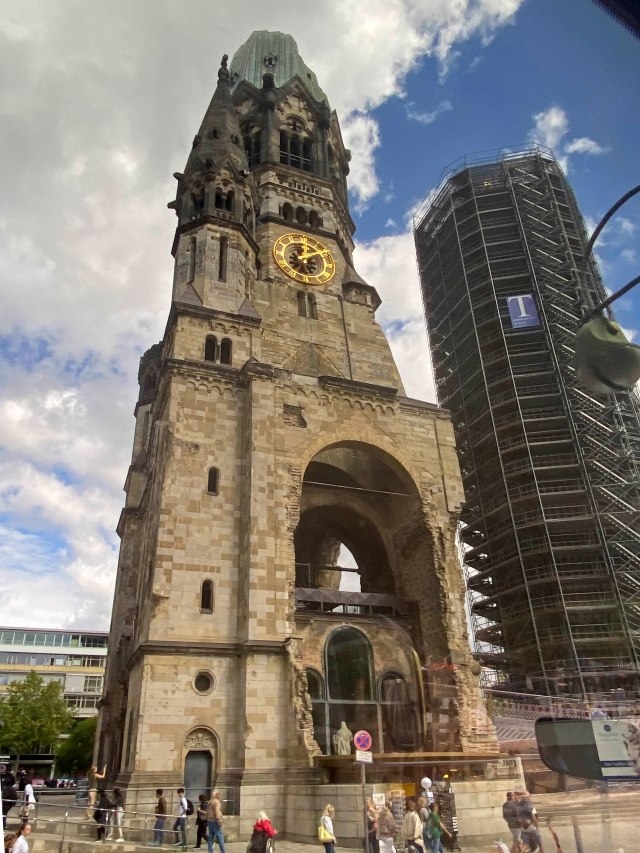
The deliberately preserved ruin of the Kaiser Wilhelm Memorial Church which was devastated during air raids in 1943. Retained as a memorial against war and destruction.

Along with the reminders is some peace and tranquility.

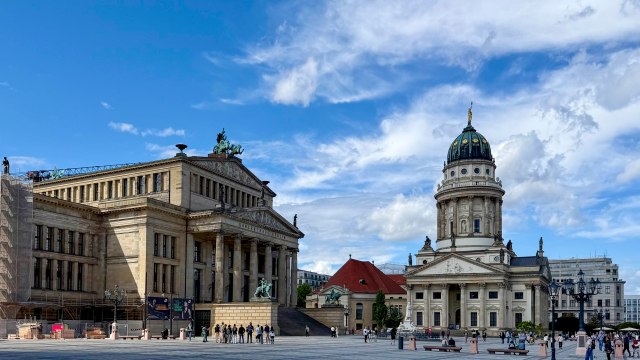
In Berlin’s Mitte district – the French Cathedral facing the German church (not in photo) with the performing arts building in the middle.
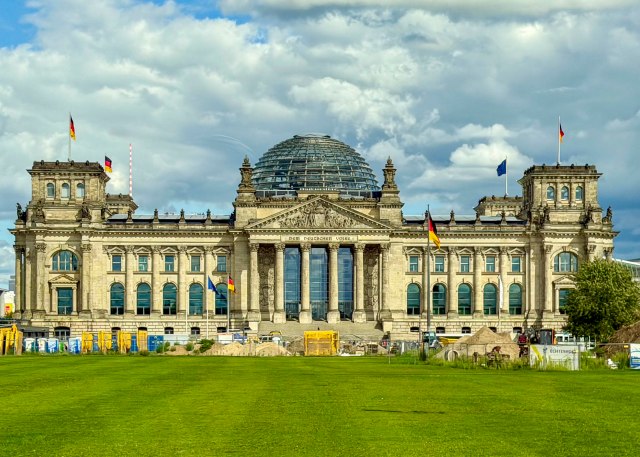
The Reichstag Building is the home of Germany’s federal parliament, the Bundestag.

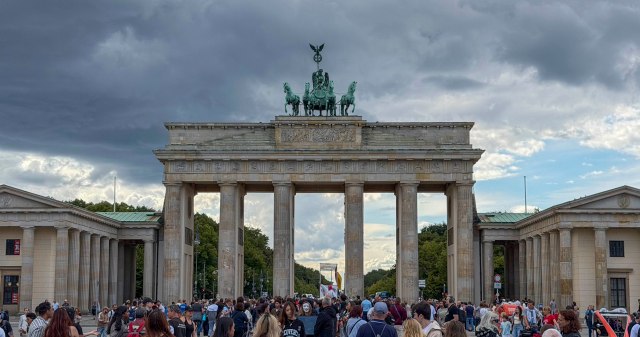
A fitting end to the day is a stop at the Brandenburg Gate, which sat on the dividing line between East and West Berlin. Originally built in the late 1700’s to symbolize peace’ this is where Reagan delivered those famous words – “Mr. Gorbachev, tear down this wall!” Thankfully just a little more than two years later, the Berlin wall was torn down and the path was cleared for the reunification of Germany.

The Brandenburg Gate.

This day was overwhelming but incredibly educational and emotional in many ways. War is an incredible waste of lives, money, resources and so much more. Yet it seems the answer is always fight, build a wall, contain THOSE people. I have yet to figure out the reasoning for this thought and hope some day those making the decisions will see the light and there might be peace on this earth.

E & G – with many lessons learned as we travel this earth


Roskilde, Denmark – A Great Alternative to Copenhagen

Many cruises utilize the Copenhagen port in any cruise of northern Europe or the Baltics. So, if one finds this a repeat stop and not fond of the Copenhagen crowds, hop on a train, head west about 30 minutes and visit the cute little town of Roskilde. It is a charming, quiet location with two fabulous sights – its twin spired cathedral and the nation’s best Viking Ship Museum. From the train station head to the twin spires and along the way you’ll find a pedestrian street with several bustling cafes. If it is lunch time – as it was for these hungry travelers – stop at any one of these and have some regional fare with great views.

Quickly found a lovely spot for lunch on the plaza.

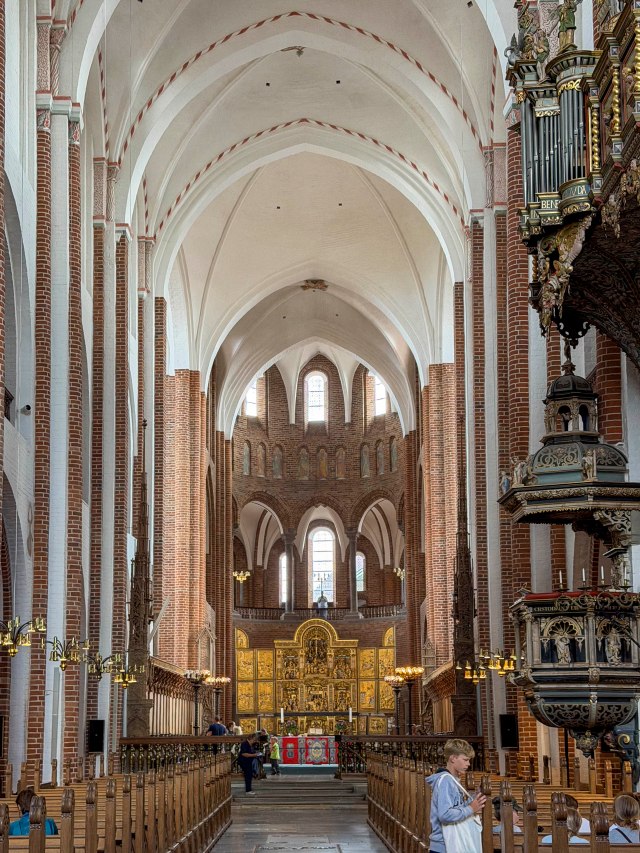
Once ready to move on, head for those twin spires again. The original church built on the same spot was built in the early 1000’s. The current Gothic cathedral was built in the 1200’s and was catholic until the Reformation in 1536 when Christian III forbad the catholic church and it became Lutheran with the King as its head (ala England and Henry VIII)! This cathedral is Denmark’s Westminster Abbey as 40 kings and queens are thought to rest here with 37 known with certainty. They are ensconced in royal marble, alabaster and draperies of every ornate description. Altogether, there are more than 1000 graves in the church, many so worn no identifying marks can be seen. The paintings, frescos and statuary are something to be seen.

A small portion of the cathedral complex.
The baroque organ, circa 1654, has been rebuilt and restored on several occasions, most recently 1988-91.
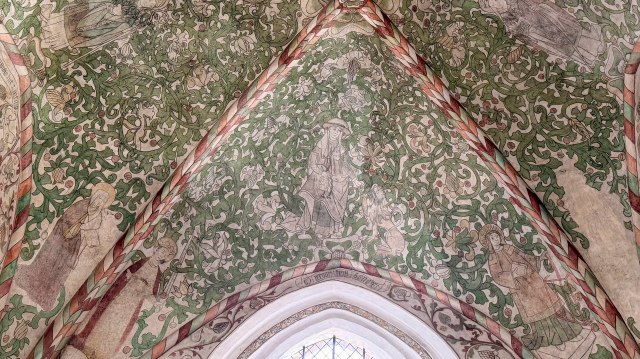
The art on the ceilings is beautiful.
Incredible frescos everywhere.

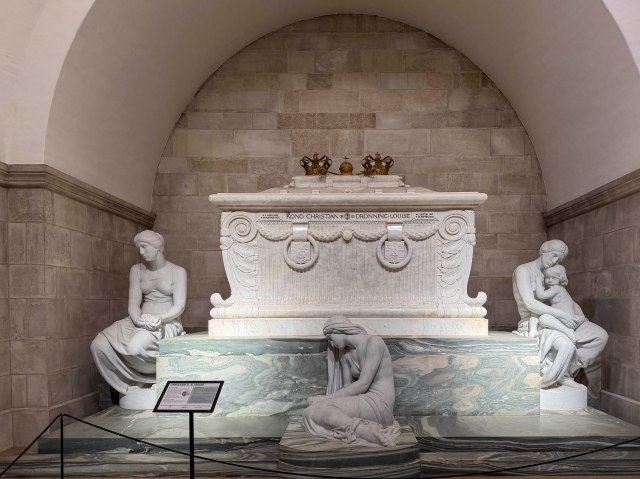
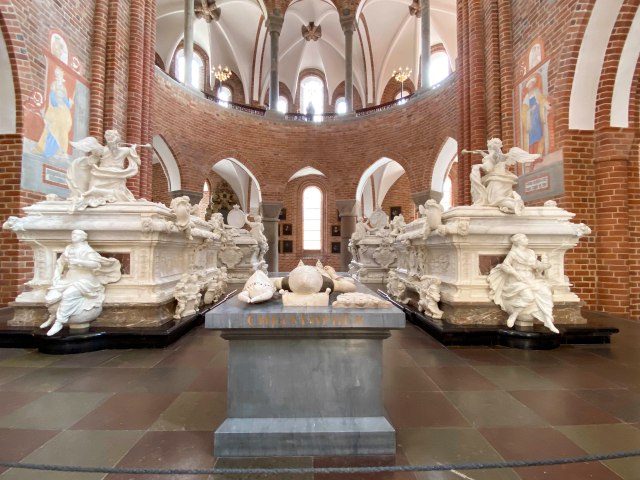
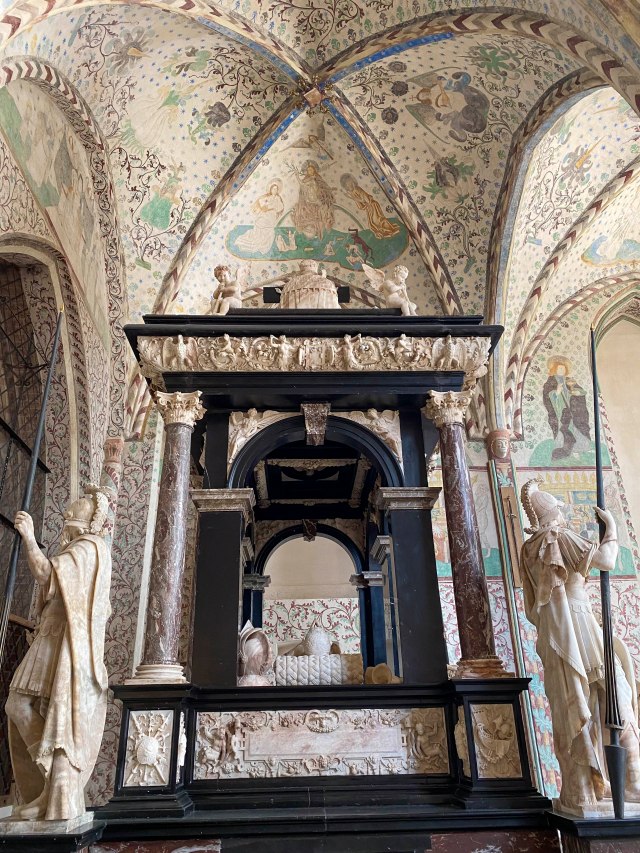
And then the elaborate tombs – – –

Christian IX and Queen Luise’s sarcophagus. The female figures are known as the Little Mermaid’s sisters, as the same sculptor made all three with his wife posing for all.
Frederick IV and Queen Louise with the Duke of Lolland in the foreground.
The Chapel of the Three Kings.

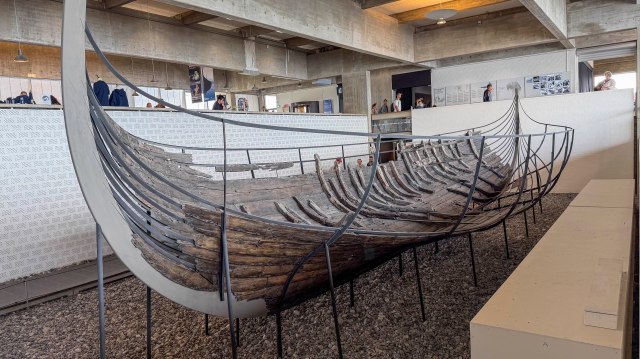
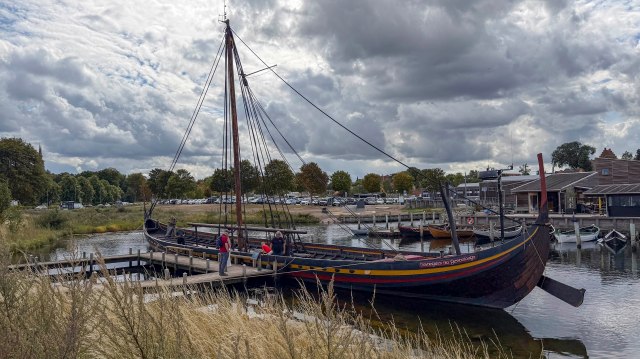
When totally overwhelmed with the cathedral sights, continue the walk down a lovely treed lane past a park and part of the university grounds to Vikingeskibsmuseet Roskilde, the Viking Ship Museum. This is not one building but several with a workshop, where they are building replicas of the Viking ships, a shipbuilding area for guests, a boatyard with replicas of the rebuilt ships and a building housing the remains of five Viking longships found at the bottom of the fjord. These five longships date from approximately 1000 AD (according to tree ring dating of the wood utilized in the hulls) and are thought to have been sunk intentionally to prevent enemy ships from entering the harbor. While these five were rebuilt in 1957, they are the subjects of current rebuilds with greater accuracy based on involving craftsmen and seamen and includes the reconstruction of full-scale ships and their testing under realistic conditions.

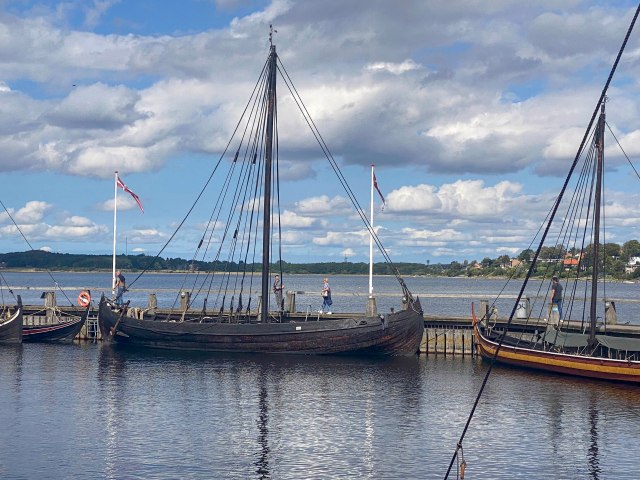
Small harbor containing some of the replications of Viking ships.

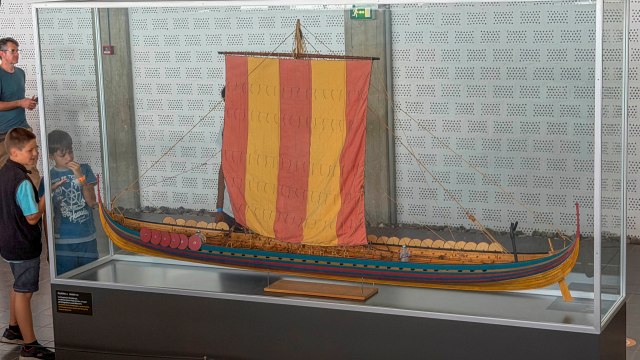
The first step in the reconstruction is to create a 1:10 ratio of a wooden model based on a cardboard model. This wooden model reflects the possible appearance of the original ship when new and forms the starting point for the full-scale reconstruction of the ship.

A 1/10th scale replica of…
…this ship…

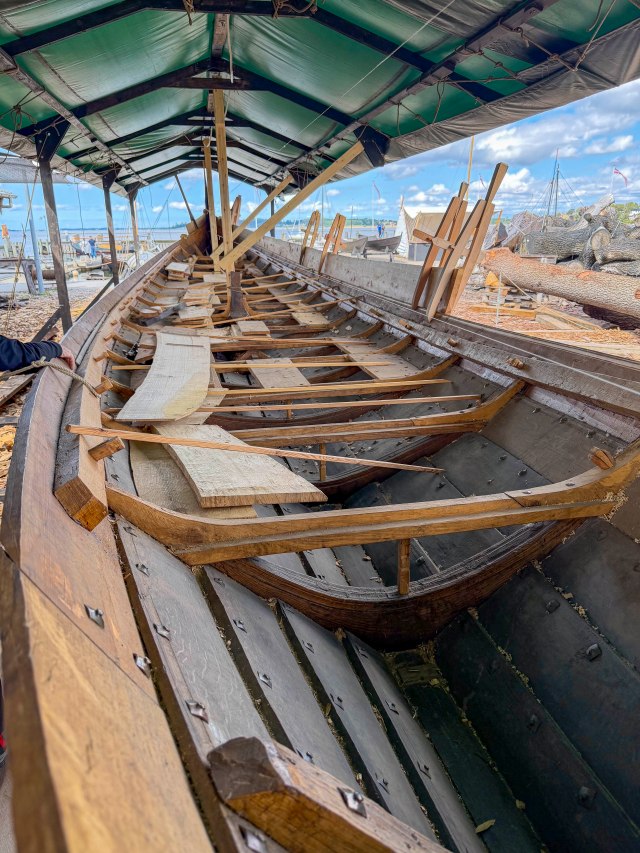
Several details in the reconstruction are adapted to fit this ship based on various depictions from the Viking Age to the extent they can not be specifically determined from the information derived from the remains of the ship. With all of this information, skilled craftsmen begin the process of recreating just as the Vikings would have completed their construction. This is done in the workshop.

…which is currently being replicated in the boat works…

After all this work you wind up with something like this – –

…and a 1991 replication of the same boat.
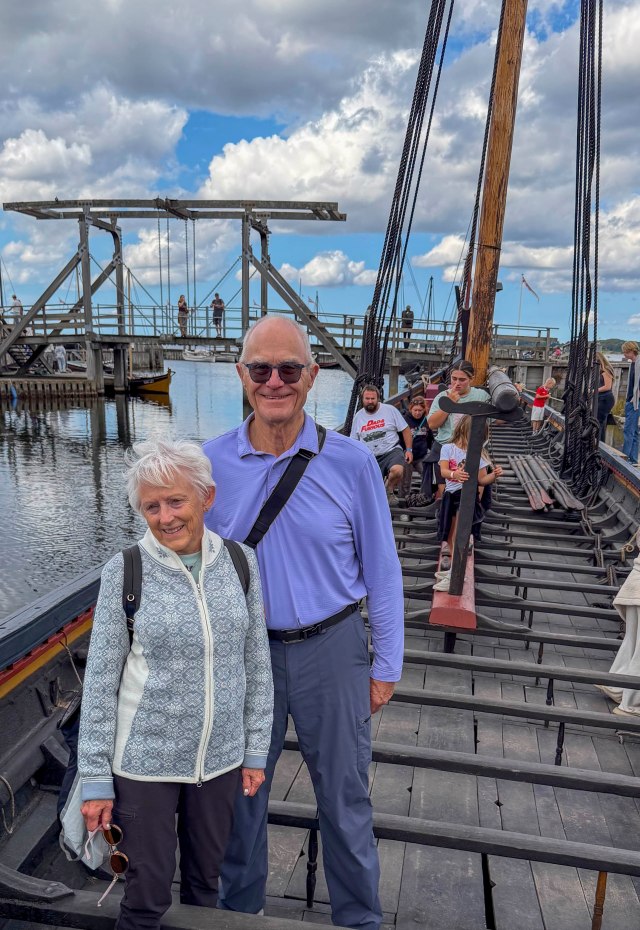
On board the 1991 replica.

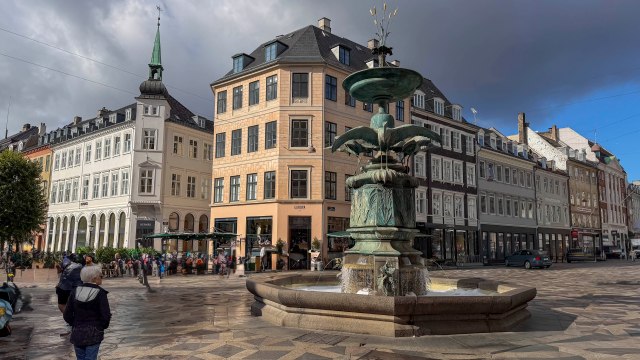
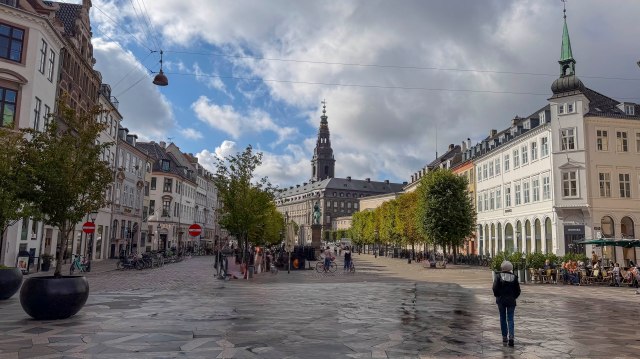
If one has a little extra time back in Copenhagen, early in the morning before the crowds hit, a stroll and a coffee in the pedestrian section can be quite nice.

Our morning walk along the Stroget shopping area…
…took us to the very nice cafe on the right with lovely sights.
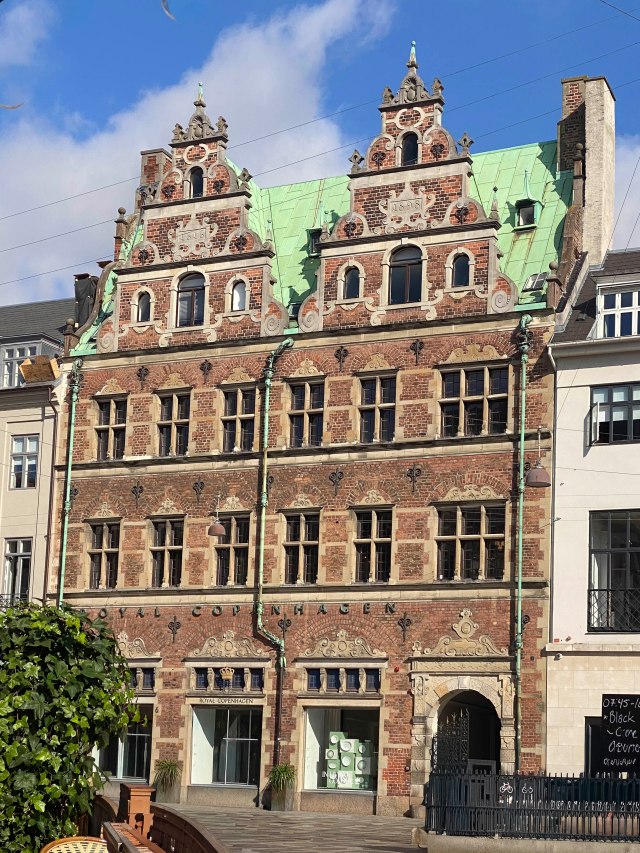
Royal Copenhagen moved its flagship shop into this building in 1911, where it has remained.

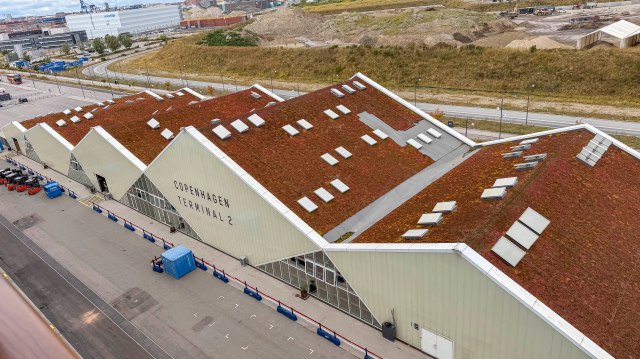
In the category of odd notations yet again – interesting sights are seen from the ship. Copenhagen is revitalizing the entire port area with apartments, condos and office buildings. It seems that they are really looking to the future with concerns of ecology since many of the buildings have plant/sod roofs! Interesting look – but who else sees them than cruisers on higher decks of the ships?!?

Do these have to be watered or mowed?

This stop in Copenhagen provided the opportunity to check out something off the beaten path – Roskilde and all it has to offer. It is highly recommended for anyone in the neighborhood looking for an escape from the crowds. Enjoy.

E & G – enjoying every minute;-)


Kristiansand, Norway

What a lovely little town. One would never know the area has been settled since 400 AD! King Christian IV formally founded the town in 1641 – thus the name. Because of location, it was useful for defense which allowed it to grow into a major port. Today, the town is redeveloping the port area into a walkable ‘seaport village’ to attract all those cruise ships to help the economy. Just hope it doesn’t lose its charm. 

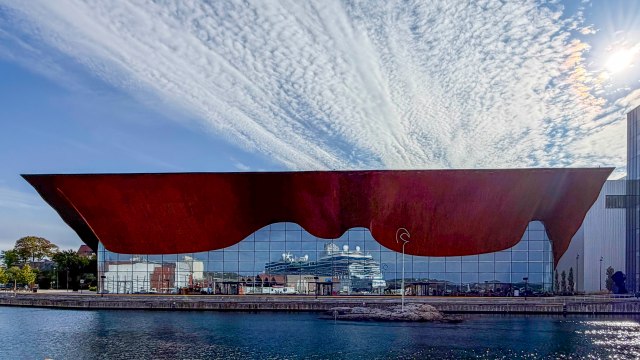
The Kristiansand Performing Arts Center welcomes cruise ship passengers.

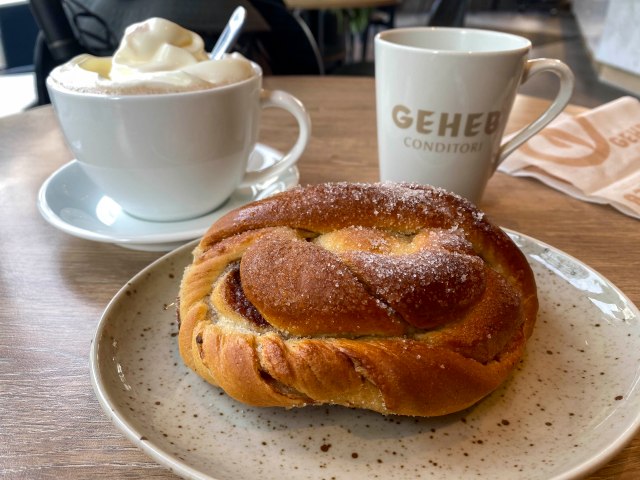
The ‘must sees’ in Kristiansand include the un-congested pedestrian street of lovely cafes and shops, Posebyen (the old town with its white wood houses), the cathedral at the city center and the Fiskebrygga (fish market). ALL walkable from the cruise dock. So – off we go. First stop is one of those lovely little cafes on the pedestrian street. This is Norway’s version of Starbucks and a repeat of a similar pic you might remember from the Alesund post. That is because they have the BEST hot chocolate and this wonderful cinnamon roll – not too sweet with just the right amount of cinnamon;-)
Ahh – what a great way to start the morning!

After that great nourishment, continue down the pedestrian way and be amazed and the sights – –

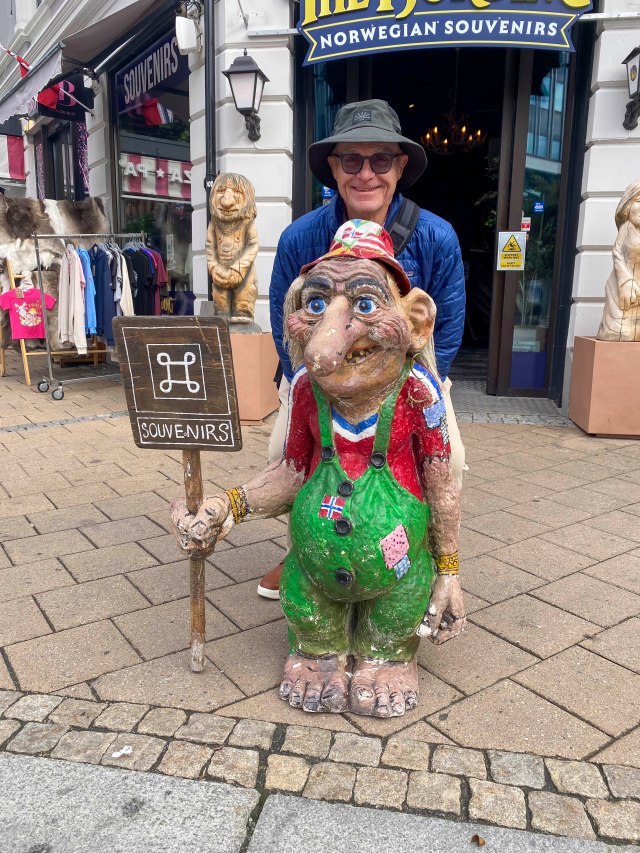
Family resemblance?
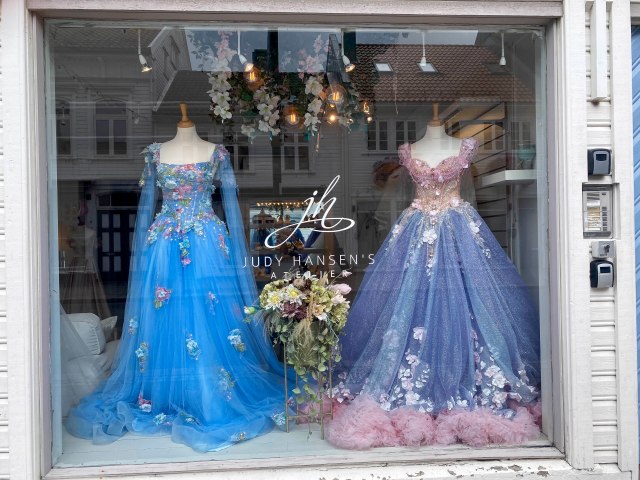
Cinderella must be getting ready for the ball.
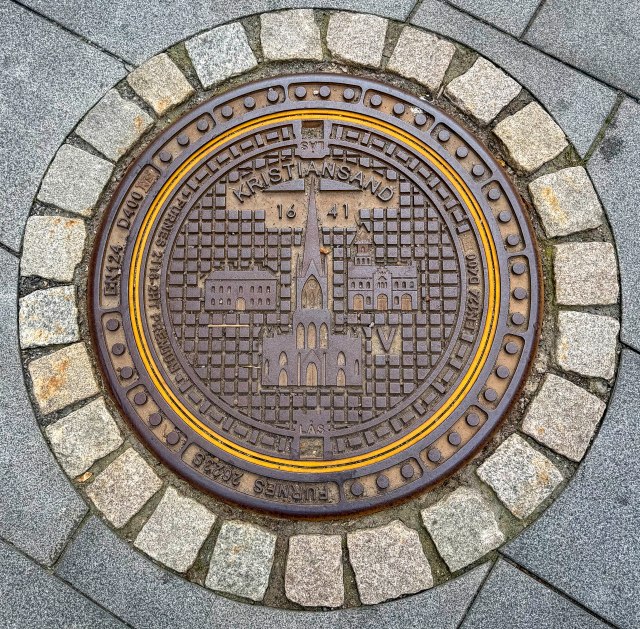
Even the City’s manhole covers are interesting – depicting the central square.

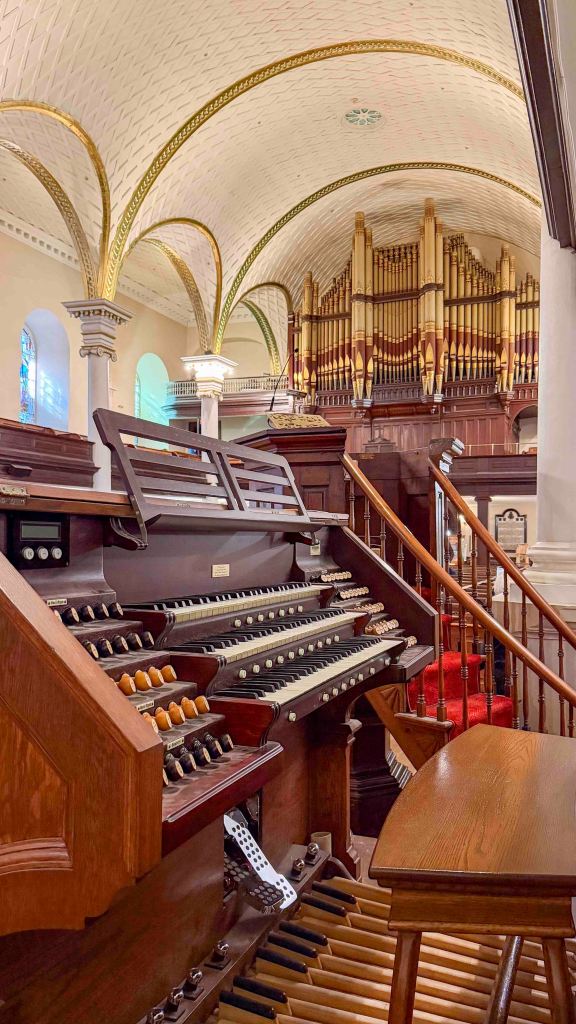
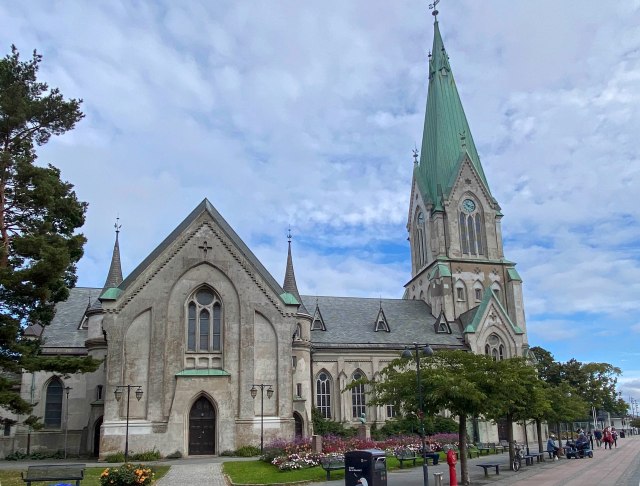
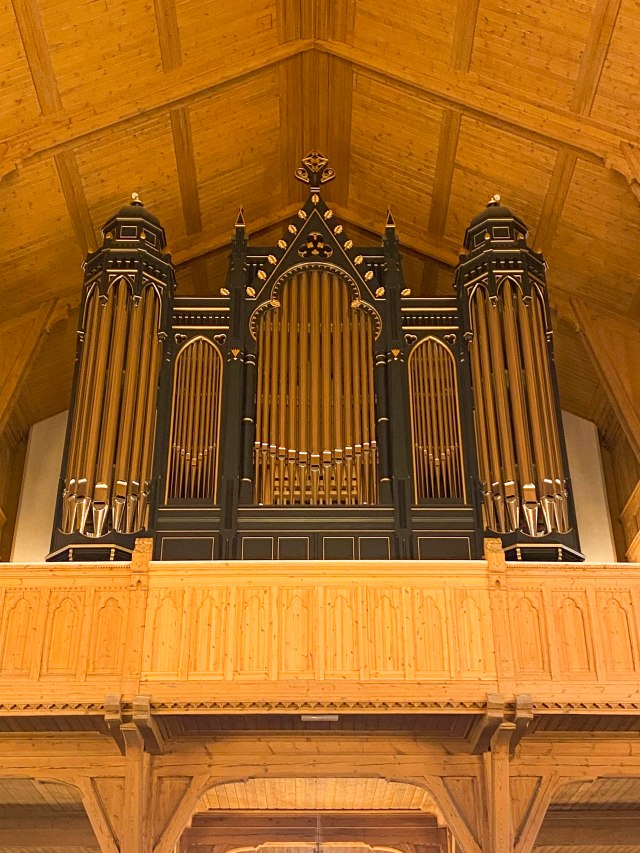
As one can see, the centerpiece of the central square is the Cathedral with its elegant simplicity. This Neo-Gothic cathedral built in 1884 contains beautiful wood ceilings and along with wood framed organ pipes. AND – they were having an organ recital within minutes to provide a great respite with outstanding music. The organist was fabulous and very informative introducing each piece played and discussing the fiber optic connectivity of the organ to the pipes, which allowed the console to be in the middle of the floor. What a treat!

Kristiansand Cathedral.
Ready for the recital.
The model ship hanging in the Cathedral is a model of the Danish steam frigate Jylland, and it commemorates the Danish sailors who died following a major naval battle in 1864. 
Spectacular organ pipes in the balcony.
Let’s go.

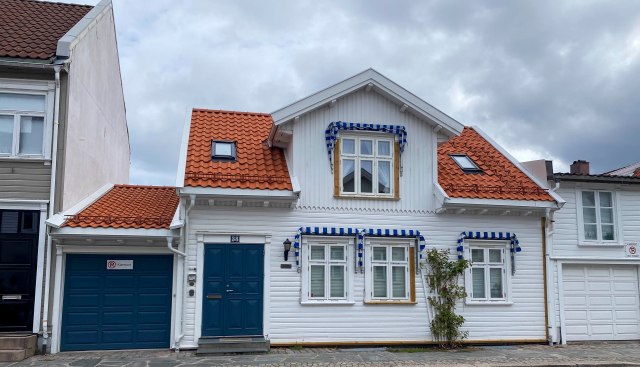
Energized from the beautiful concert, it was time for a brisk two block walk to Old Town with all its white, wood houses lined up side by side. This old town is one of Northern Europe’s largest collections of charming timber houses. Interesting – but a bit monotonous – until you find a few cute little places with a little color or a few plants outside.

One of many charming houses in the downtown area.

Now – a little diversion you might find odd. But, a very interesting discovery in this old part of town. The garbage system! As one looks up and down the street, there are NO apparent garbage cans or those large ugly bins that are always overflowing;;-( That’s because they have this unique system of vertical ‘bins’ in the ground that housing units are assigned to and must have a key fob to gain access. Never know what one might find when wandering these little towns.

Novel neighborhood trash cans that look small – right?!?
Well – they are huge under ground containers lifted out to dump into trash trucks.

All of these discoveries may have created an appetite. So, off to the Fiskebrygga (fish market) for the best fish and chips you’ll ever have!

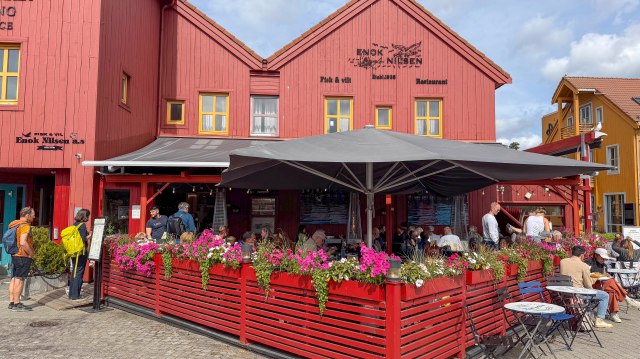
Visited the portside fish market…
…and enjoyed best ever fish & chips for lunch.

The town of Kristiansand might be small but it is mighty when it comes to hospitality. Come and enjoy;-)
E & G – quite happy with our day full of surprises!

Searching for Nessie

There is a 60-million year old fault line in Northern Scotland that contains a beautiful glacier-gouged lake – the famed Loch Ness;-) Measuring 24 miles long and 755 feet deep, it is one of the largest ‘lochs’ in Scotland AND more importantly, home to Nessie! So – off to spot her.
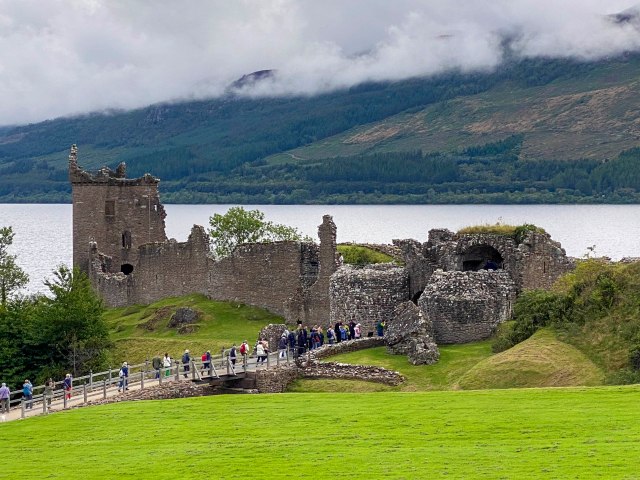
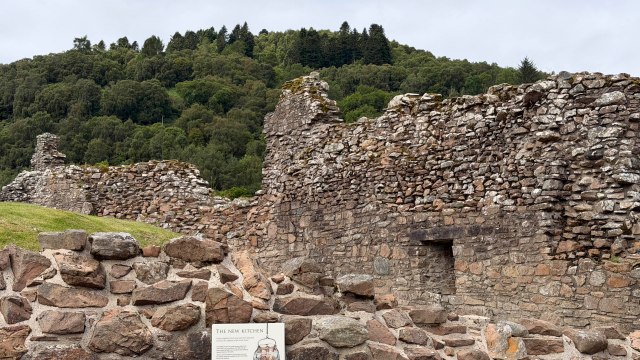
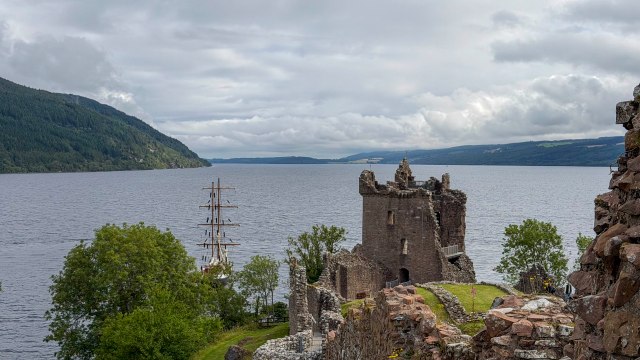
The 1,500 year old Urquhart Castle ruins is a good place to search from as it sits atop a small promontory with great views of the lake. This unfortunate property passed from Scottish hands to the English and back again many times. Locals plundered the castle for building materials during its lifetime and wooden portions rotted away leaving little for historians to piece together to attain its history and usage. Between 1912 and 1922, after the castle passed into State care, it was tidied up, unintentionally removing important clues to its past.

Cross the bridge, where a drawbridge once stood, and explore the castle.

It has been determined that the Grant Tower, which housed the Grant family, was built some time after King James IV gave Urquhart to John Grant in 1509. The property was rewarded to Grant for his support of the monarch in his struggle against the MacDonald Lords of the Isles. Climb as high as you like for wonderful views of the loch – and perhaps a sighting of Nessie;-)
This tower housed the family in earlier years.
Reconstructed portions of the castle.
The view from the Citadel, where ancient walls repulsed attackers.

Sadly, there was no spotting of Nessie. Perhaps there was not enough of that prevalent Scotch Whisky taken in to aide in the spotting;-) So, she was safely hidden for another time.

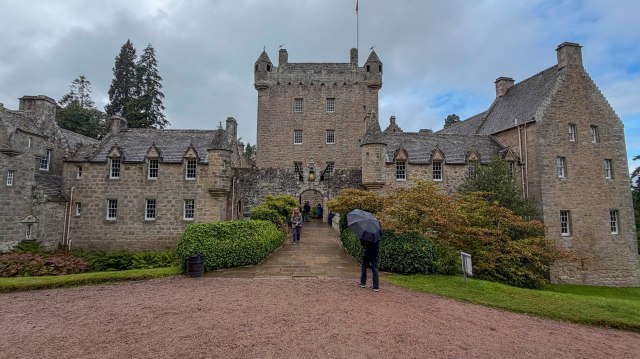
Not too far down the road was another castle. This one in much better condition although it was originally constructed over 600 years ago and is still home to the latest of 23 generations of the Cawdor family – Cawdor Castle. The rectangular tower-house (the original portion of the castle) consisted of four stories and a garret with only one entrance to the outside. It was built around a holly tree (still in the basement – now petrified – and has been dated to 1372) and had a secret dungeon only recently discovered!

Cawdor Castle – a perfect picture of that center tower-house.
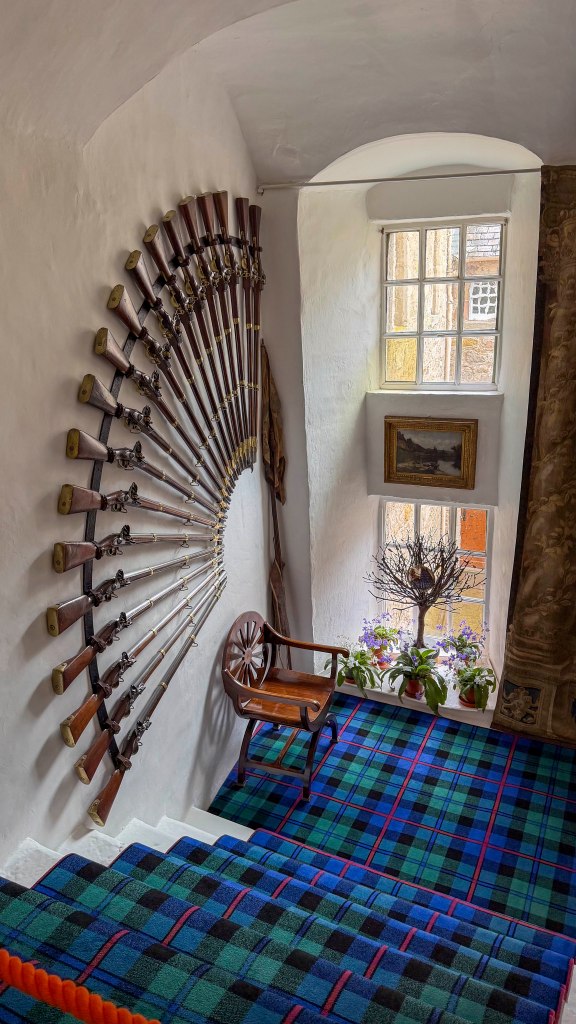
Nicely maintained displays.
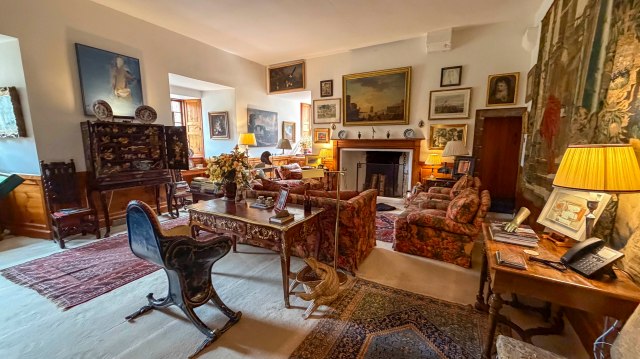
This living room is a mix of styles and historical artifacts.

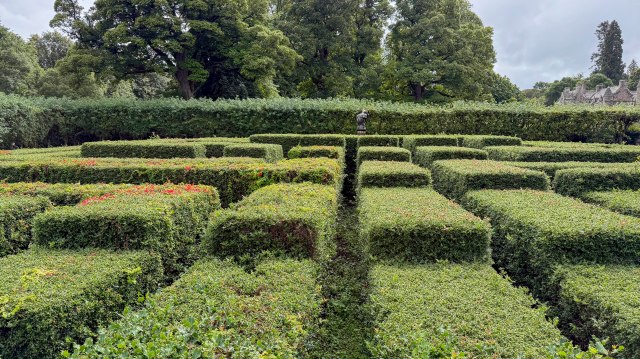
The Gardens of the Cawdor Castle are quite special. The Walled Garden is the original kitchen garden and the oldest at Cawdor. It was remodeled in 1981 by the current owner, the Dowager Countess of Cawdor, and contains Symbolic gardens and a sculpted maze containing over 1200 holly plants.

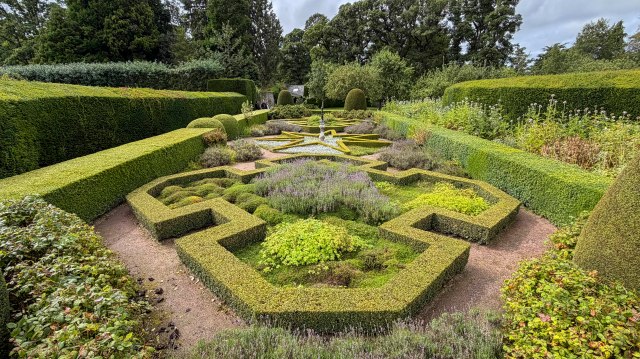
The formal gardens are elegantly maintained.
A great example of the Symbolic garden.

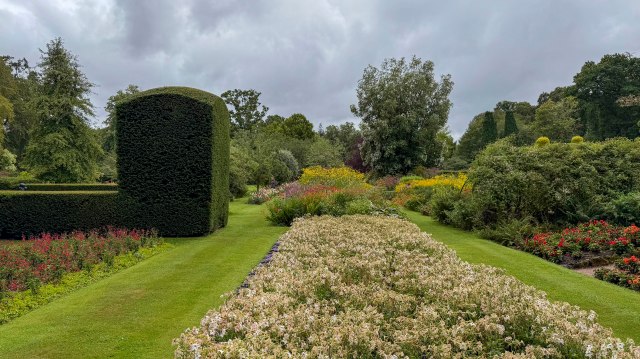
The Flower Garden was laid out around 1710 – most likely influenced by travels to Poitiers, Blois and Paris, France.

While it is time to leave the beauty and myths associated with Northern Scotland behind, it would be remiss not to mention the major influences that the Vikings had on the entire northern region, including the UK and Iceland. They ruled many of the sea lanes around the northern isles and were responsible for establishing and settling ports that developed into many of the villages, towns and cities visited on this cruise. They also contributed to the language and verbiage used by many of the countries visited. These prior two sentences condense down the hundreds of years of Viking influence. Every tour taken during the past couple of weeks mentioned the Viking influence in the area. Raiders or settlers they had profound effects on the world they left behind.

Now it is time to leave Northern Scotland and all its beauty behind. Perhaps we’ll be back another day – to complete that NC-500;-)
E & G – Loved Scotland and all its GREEN


Unbelievable Scottish Highlands


 A taste of the Scottish Highlands through visits to quaint little towns like Ullapool and Scrabster will quickly put this region on a bucket list for further adventures and exploration! Especially a drive on the North Coast 500 (NC500), which is a 516 mile scenic route looping around the north of Scotland from Inverness – probably with a slight diversion to investigate the Hebrides with its Isle of Skye;-) The scenery from our little sampling is stunning, the people are incredible friendly and the fish and chips (with the fish straight out of the water) are the best! So – here is a sample.

Ullapool is a wonderful little town with incredibly large significance. Just 30 minutes out of town is the Knockan Crag National Nature Reserve, with enormous geological significance. The low cliff of Knockan exposes rocks that set the scientific world ablaze in the 19th century as it proved prior thought wrong. The Moine Thrust was created by the force of two continents crashing together many millions of years ago causing old lower layers of the earth to rise up vertically and fall back on top of the newer layers of earth. Thus upending the previous theory that the oldest layers of earth were always on the bottom of any layers with newer periods of earth on top. It was only because of the exposed rock in this area that this was able to be determined. Unfortunately, the weather did not cooperate this particular day for a hike to the top of the crag, but the substitute hike was a good one.

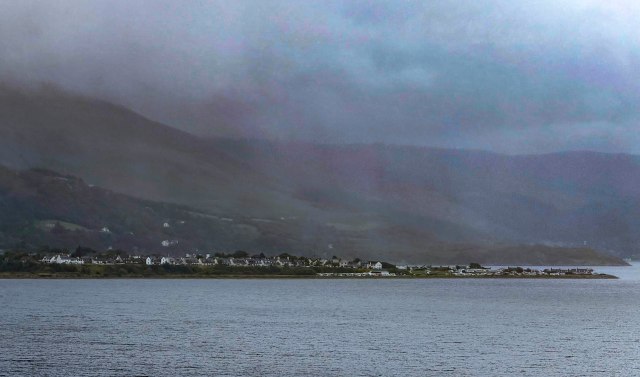
Good morning Ullapool.
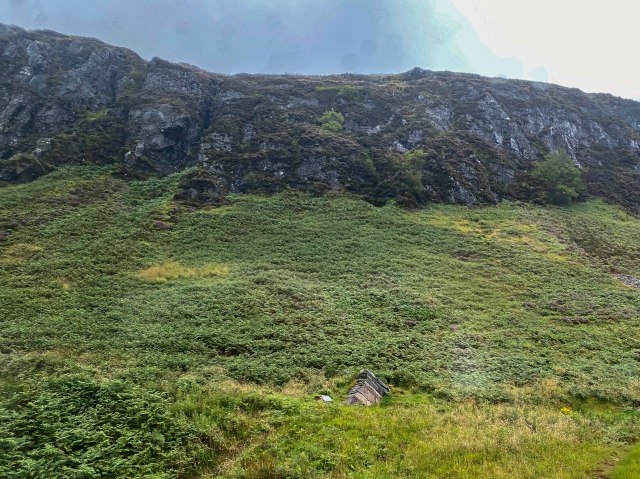
The Knockan Crag with much older ‘earth’ on upper layers.

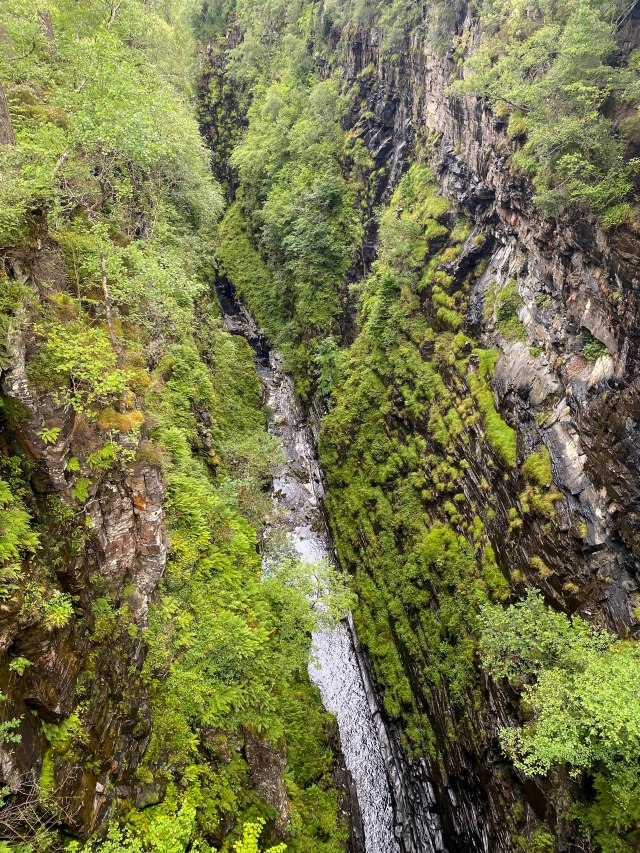
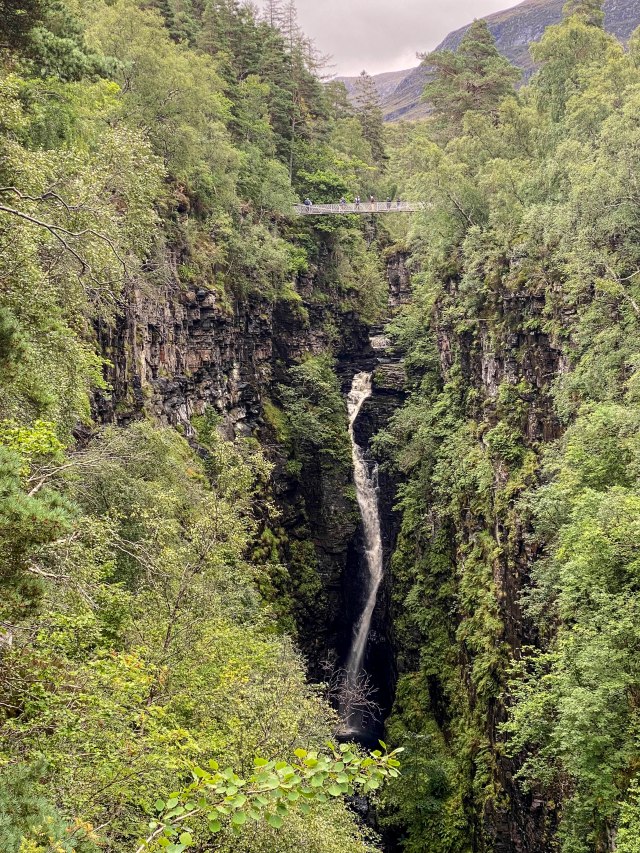
Off to Corrieshalloch Gorge — a hike not to miss. One can take a myriad of trails to discover the gorge winding up at a Victorian suspension bridge that transports you over the 200′ drop to the River Droma. Further on a cantilevered viewing platform provides great pictures of the falls and the suspension bridge. Exposed rock here contributes to the Moine Thrust theory. Enjoy the walk, the greenery and the peace.

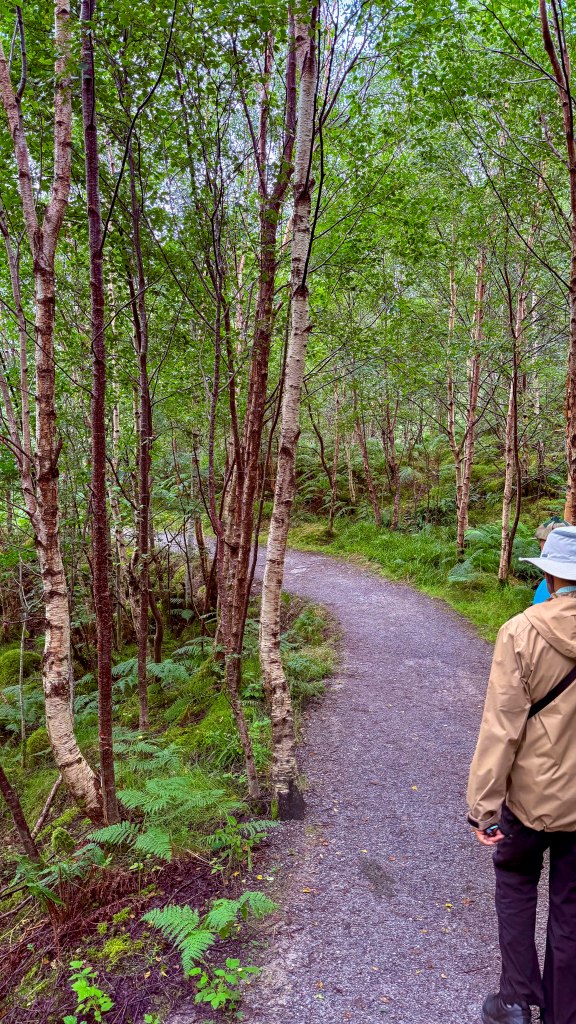
Beautiful trail in the Corrieshalloch Gorge.
Looking down from the suspension foot bridge – its a loooong way down!
YES – that’s the bridge and a beautiful waterfall.

After all this exhilaration, it was time to head back to town and have some delicious fish and chips. Where else – Chipy’s!

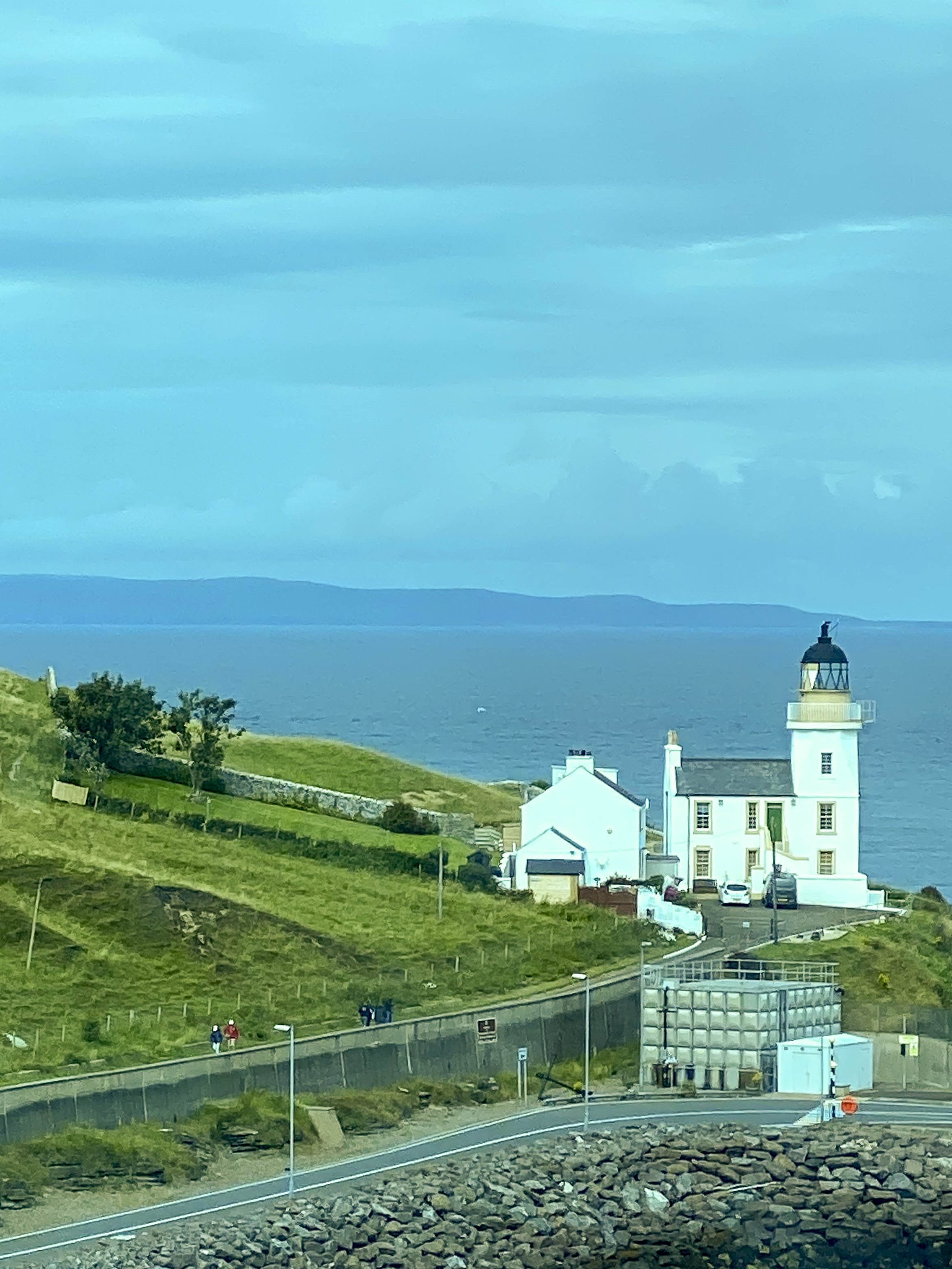
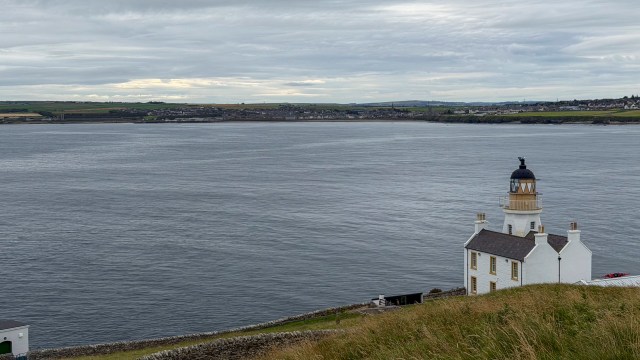
How could Scrabster possibly top Ullapool? Well – just pass the lighthouse at the edge of town, go through the gate to the sheep pasture and follow the trail. You will have the best 1.5 mile walk with sights you wouldn’t imagine. The pictures will tell the tale.

Turn left just before the lighthouse.
Passing the light house on a damp morning hike in Scrabster.
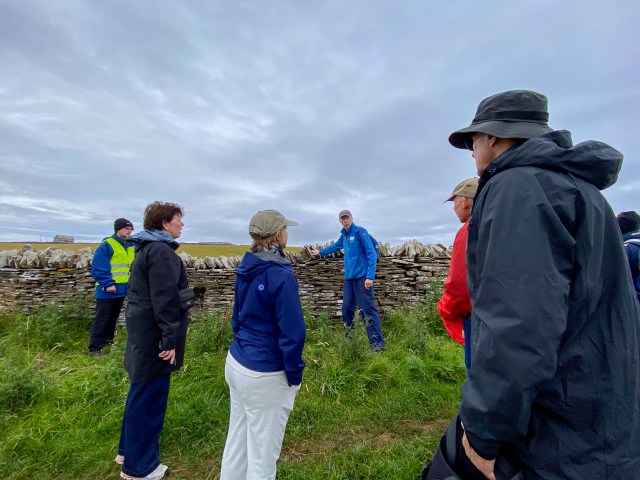
Very knowledgeable guide, John, led the way.
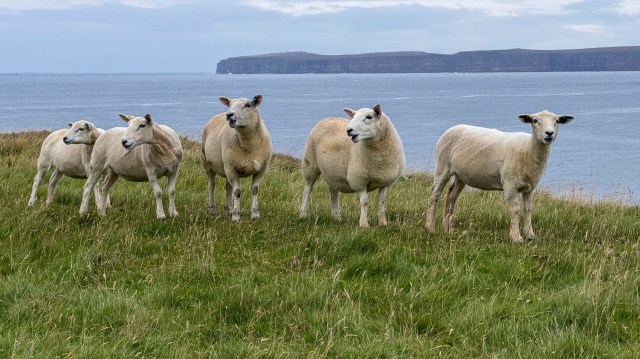
A choir of sheep. Dunnet Head, the point of land in the distance, is the northern most tip of the Scottish mainland.
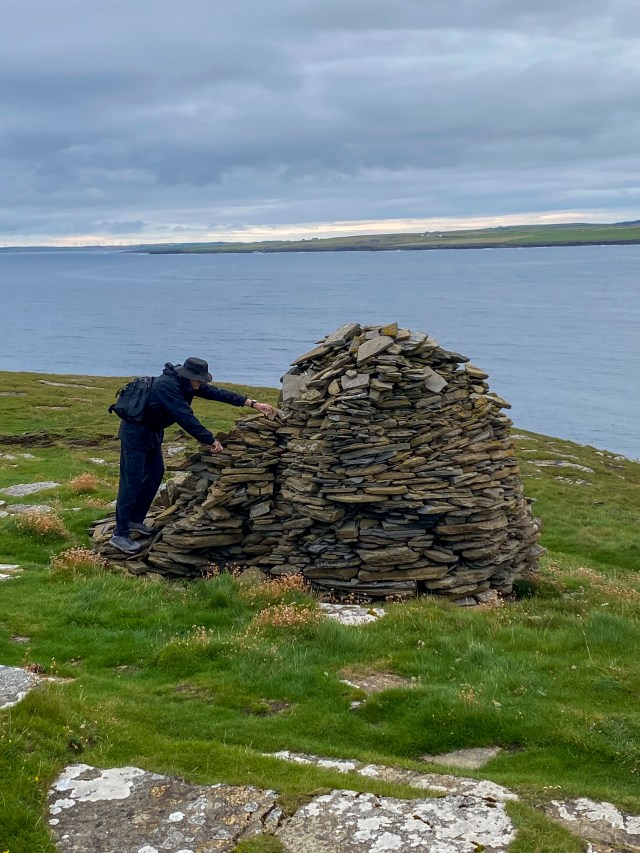
A shale cairn created by hikers – everyone must add a piece.
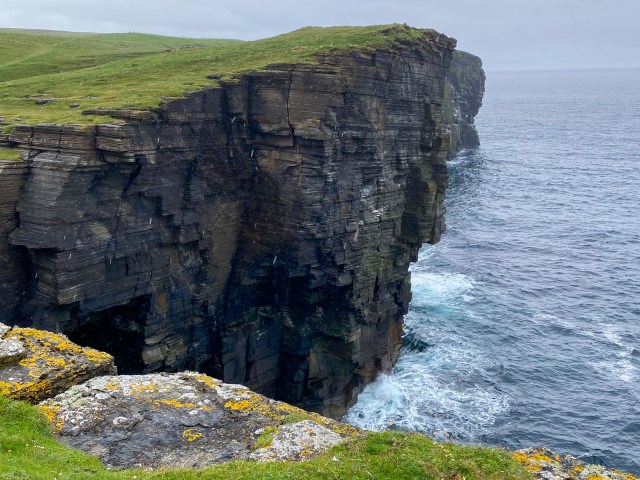
These sheer cliffs fall into the North Sea.
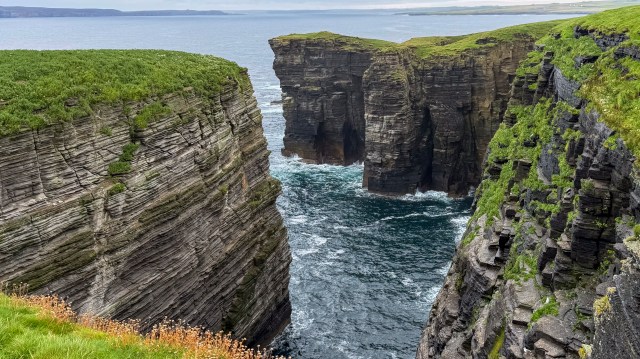
The sea over time will erode the shale creating ‘windows’ – – –
Until the shale stands alone forming a ‘stack’.
Spectacular views.

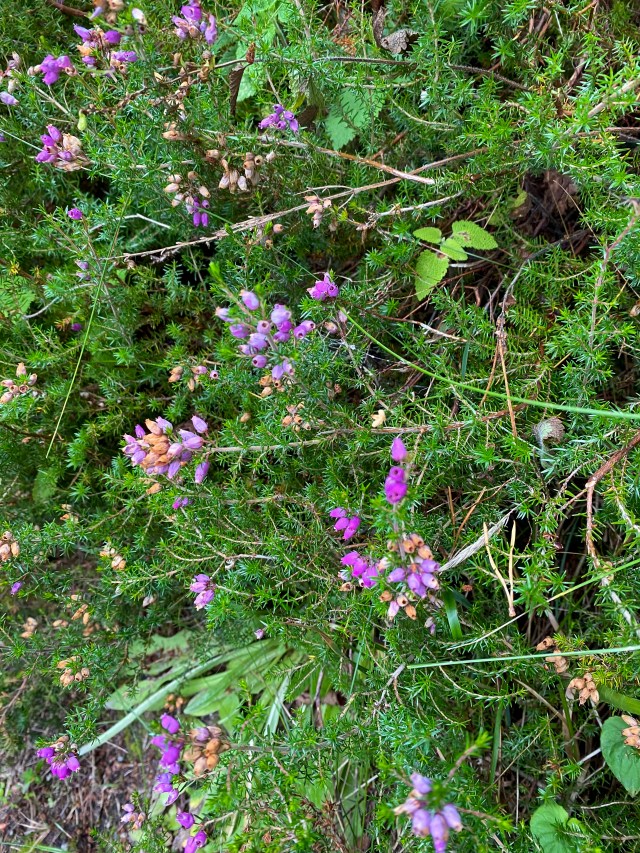
The green, the sheer rock cliffs, the pounding sea and all the little white specks in the green pastures (the sheep) make this area of the world so inviting. One last item – the heather, which is in bloom.

An ode to daughter;-)

How fun were these last two days. Incredible scenery, friendly people and very knowledgeable guides. Even though Donald made us sing ‘Old McDonald Had a Farm’ on the Gorge hike;-)

E & G – totally enthralled with the Scottish Highlands