The leaves are turning and the temperature on the thermometer is falling —

34 degrees – YIKES!!
It must be time to pack up and head for warmer climates. BUT – first there are several more Nine and Dines to be played with friends, several more dinners with friends at the Bus, more dinners out with friends followed by game night, a couple more Ladies Days, more golf to be played – –

A tall cool one after golf with Sally – Yes, even got Sally out on the course (blisters and all)!
–and a couple more hikes! Finally got to do the Mid-Mountain trail from Deer Valley Silver Lake to the top of Park City. Unfortunately this is a favorite of the bikers and we did this on a Saturday. Not a good choice of days;-( But, even though there was a lot of bike traffic, the hike was great and the day was beautiful!!

Even though Gary quit skiing – he can still ‘do’ his favorite run at Deer Valley;-)

And E can do the bumps in Lady Morgan Bowl – just a little light in the snow cover;-(
Also had one last animal sighting. Lucy the Moose did not come back to say good-bye, but this BIG elk showed his agility crossing highways and jumping fences.

This guy had ONE BIG RACK;-)!
And so – our summer in Park City came to an end. Magic was cleaned, our gear was stored and we were ready to roll. Oh yes – gadget geek G has taken a few lessons from Ted the skier. The latest is to have a GoPro attached to the front of the car AND TO MAGIC so no picture on the highway is missed. (Don’t you just want to see the center line go by???)

A new toy…the GoPro camera mounted on the Jeep – –
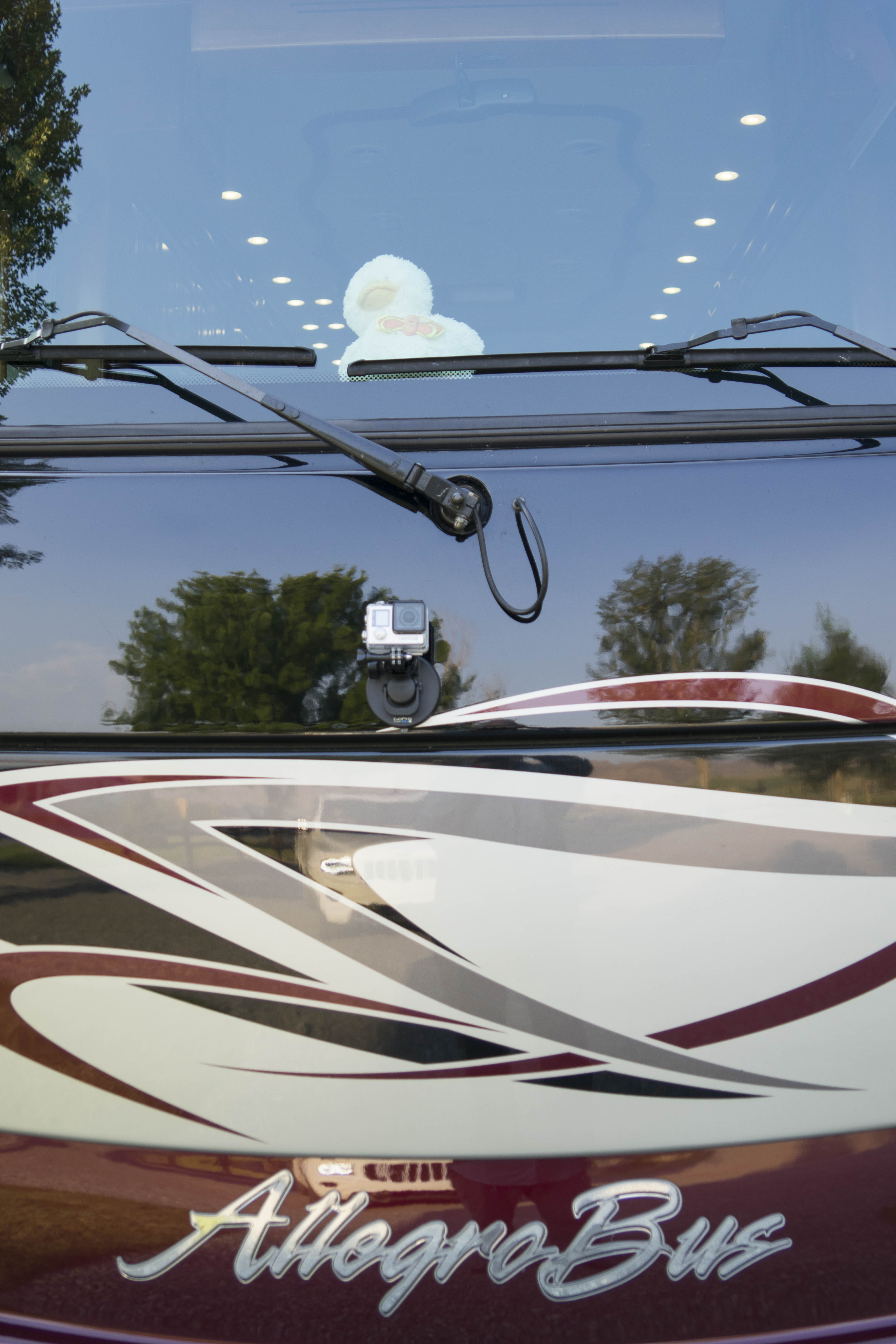
– – And on the Bus. Perhaps we should call it the Quacker Cam.
Our first destination on this portion of our trip would be Hells Canyon. A little far for one day’s drive – so a stop just outside of Boise was in order. This provided an opportunity to visit the World Center for Birds of Prey and to gather information on the Snake River Birds of Prey National Conservation Area. The World Center for Birds of Prey is the headquarters for the Peregrine Fund, founded in 1970 to conserve endangered raptors around the world. The Center overlooks Boise and the campus includes breeding facilities for endangered raptors and a large research library and the Archives of Falconry along with various offices.
The propagation program of the Center played a critical role in the successful recovery of the peregrine falcon and the Center is currently breeding the endangered California condor and aplomado falcon. Each year the Center releases the year old Condors from their breeding program into the wild at the Grand Canyon and in southern Utah. We were particularly interested to find out where and when the Condors were released at the Grand Canyon so that we might include that in our travels in 2016 as well as checking out the mating/migration of the eagle, which is best observed at the Snake River Conservation Area near Boise in the spring. Since our trip to Alaska, the Eagle has become a favorite of ours and learning more about birds of prey in general has become quite an interest.
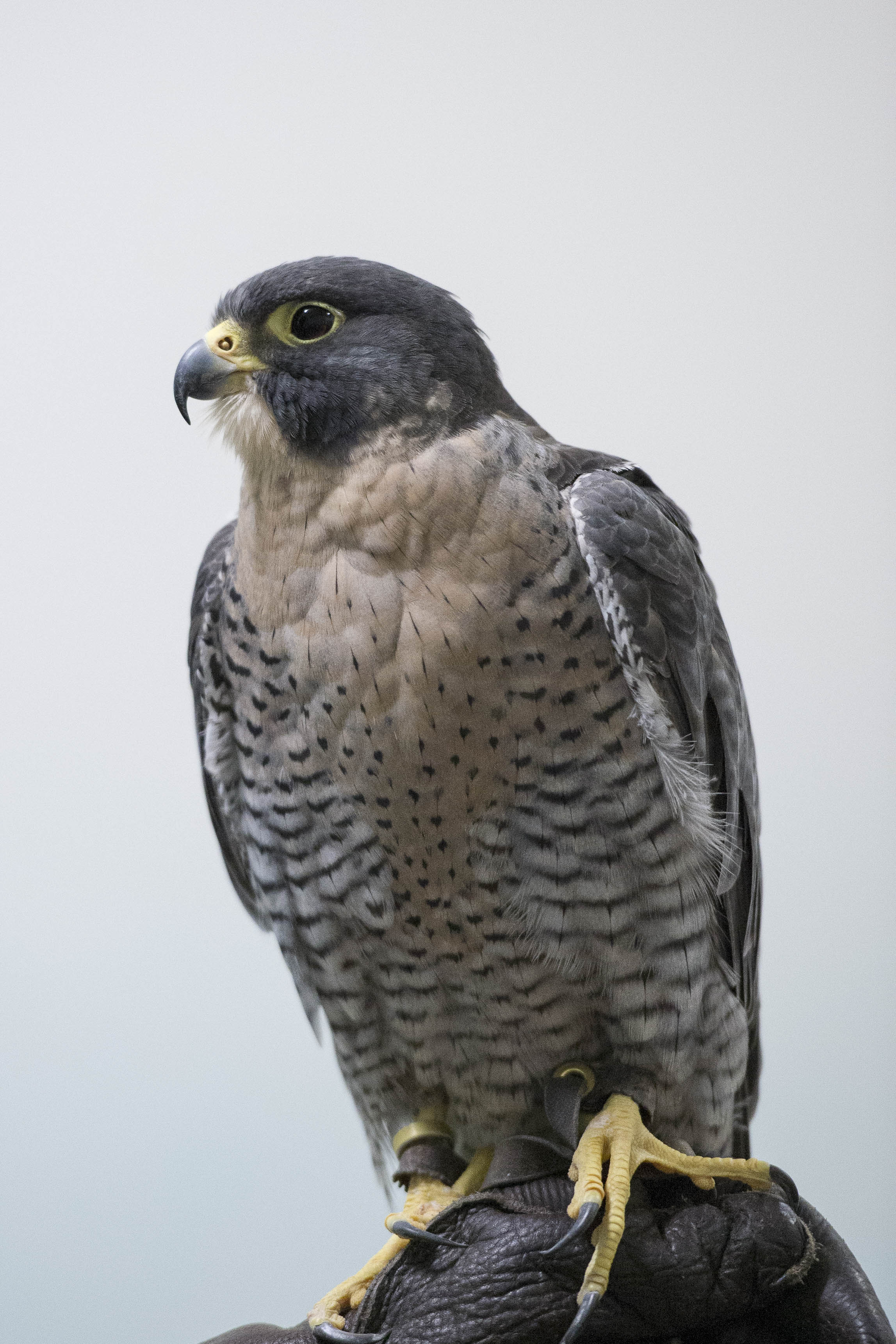
A Peregrin falcon was THE topic of discussion at the Center’s presentation.
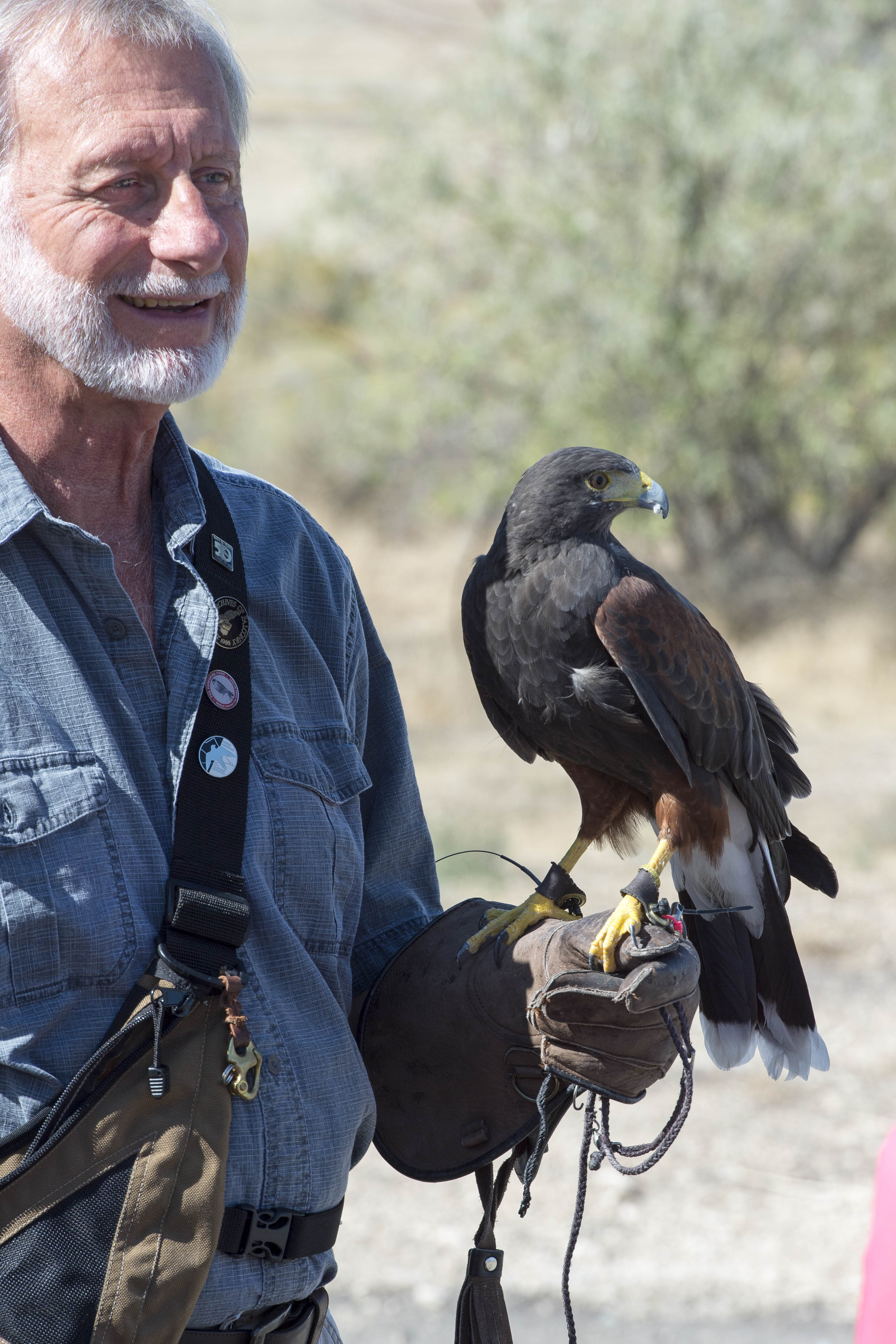
This Harris falcon was being trained for ‘flight shows’ that take place at the Center in October.
The morning at the Center was VERY interesting and has provided a beginning for our 2016 summer plans;-)
Hells Canyon was calling and it was time to head that way. So – we were off to the northeast corner of Oregon by way of Baker City. The small town of Richland would be Magic’s home for a few days, where our parking spot was in the middle of lush green fields with wonderful views of the Wallowa Mountains to the north —

The view from Magic’s spot in Richland, OR is quite pastoral.
The next two days would be filled investigating the area in and around Hells Canyon National Recreation Area. First would be the 208 mile driving loop that encircles the Wallowa Mountains, the Eagle Cap Wilderness, the Snake River and the deepest river gorge in America – Hells Canyon.

We are off to enjoy the Hells Canyon Scenic Byway.
Millions of years ago, the Wallowa Mountains sat at the bottom of the ocean. It’s uplifted limestone layers evidence this fact with its fossilized shells. Eons of volcanic action and faulting pushed the mass of rock upward and to the east while new land formed to the west. Raging rivers and gigantic glaciers carved the peaks and canyons that are seen today along the Byway.
In more recent history, the Grande Ronde Valley (on the north side of the Wallowa Mountains) was used seasonally by Native Americans – the Nez Perce, Umatilla, Yakima, Shoshone, Cayuse and Bannock Nations. This area was lush with grass and filled with game. Explorers, trappers and gold miners found the area beginning in the early 1800’s (many via the Oregon Trail). Today – farms and ranches retain the wide open spaces.
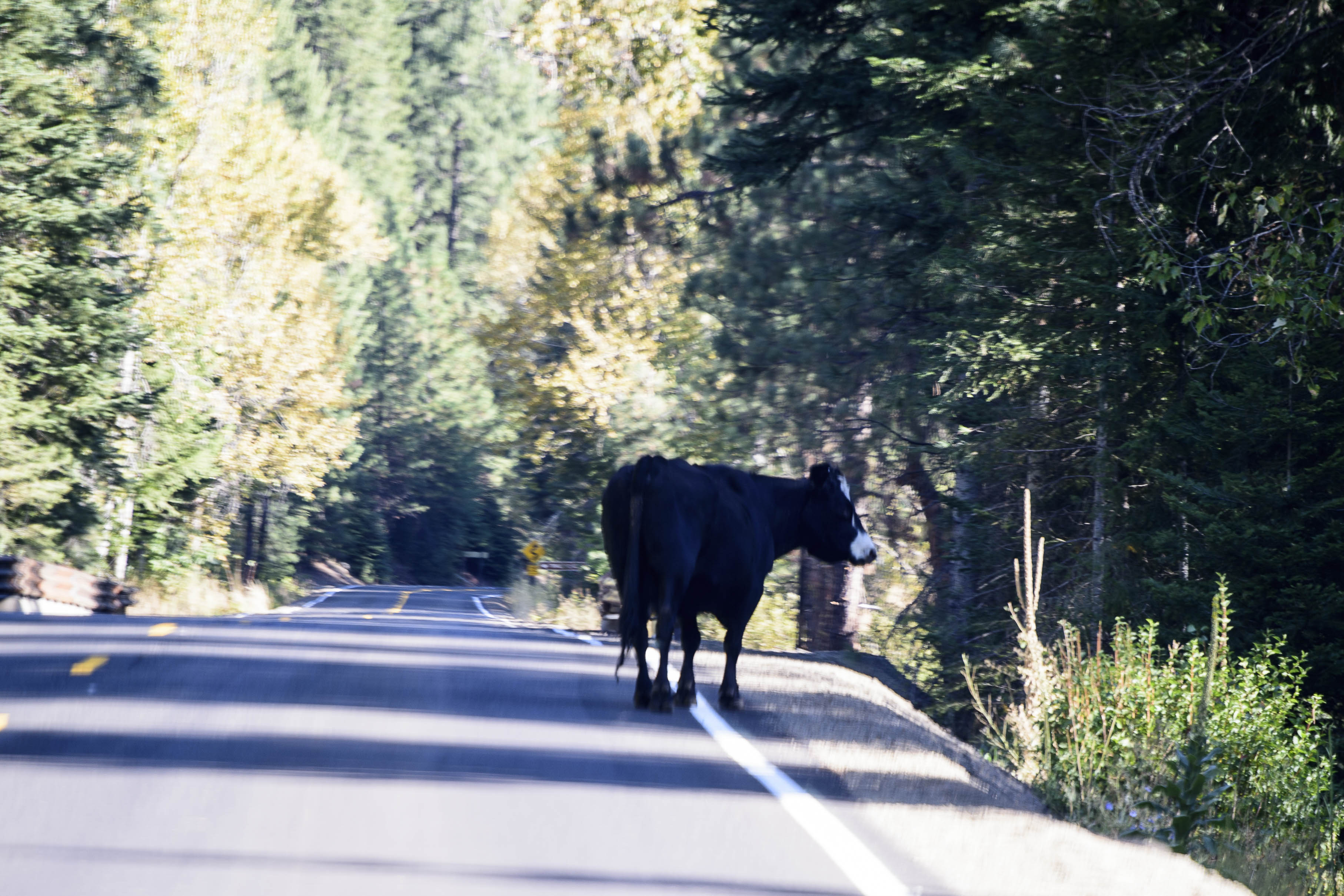
Open ranges prevail – and the cows own the road;-)
The Scenic Byway took us through the Wallowa Mountains (above) to the north side of the mountains and into the Grande Ronde Valley. For us, the highlight of this north side was the town of Joseph and nearby Wallowa Lake. The lake was shaped by glaciers which covered this region three to seven times. The 2,000 foot thick Bennett Glacier scoured the land for almost 20 miles, creating the lake and leaving nearly perfect examples of lateral and terminal moraines around the lake.
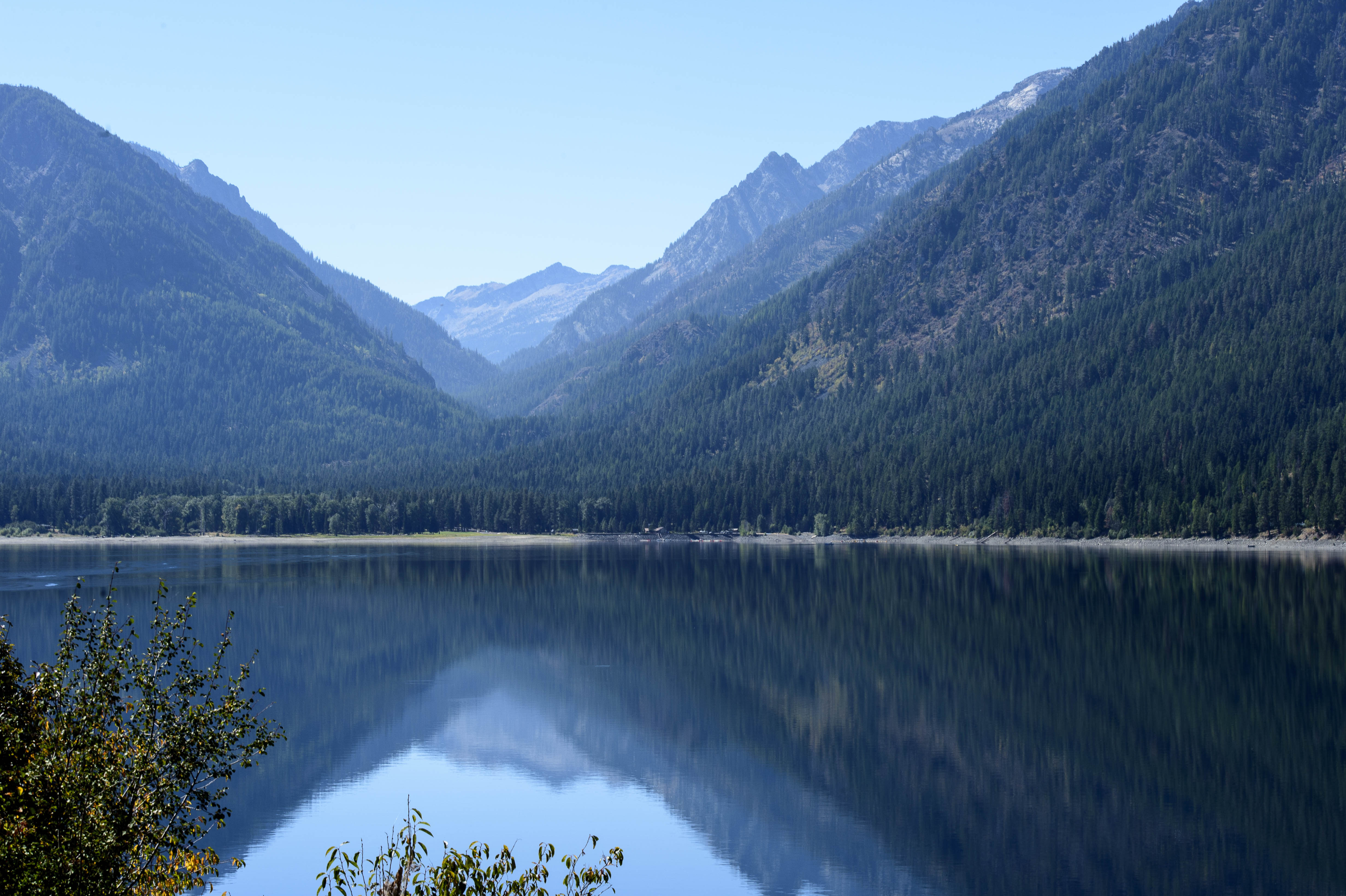
Wallowa Lake on a perfect day for ‘reflecting’ pictures.
At the southern end of the lake is a wonderful little village (complete with campground) and a tramway to the 8,300 foot summit of Mt. Howard on the edge of the Eagle Cap Wilderness. Two miles of hiking trails at the top of the tram provide incredible views into three states —
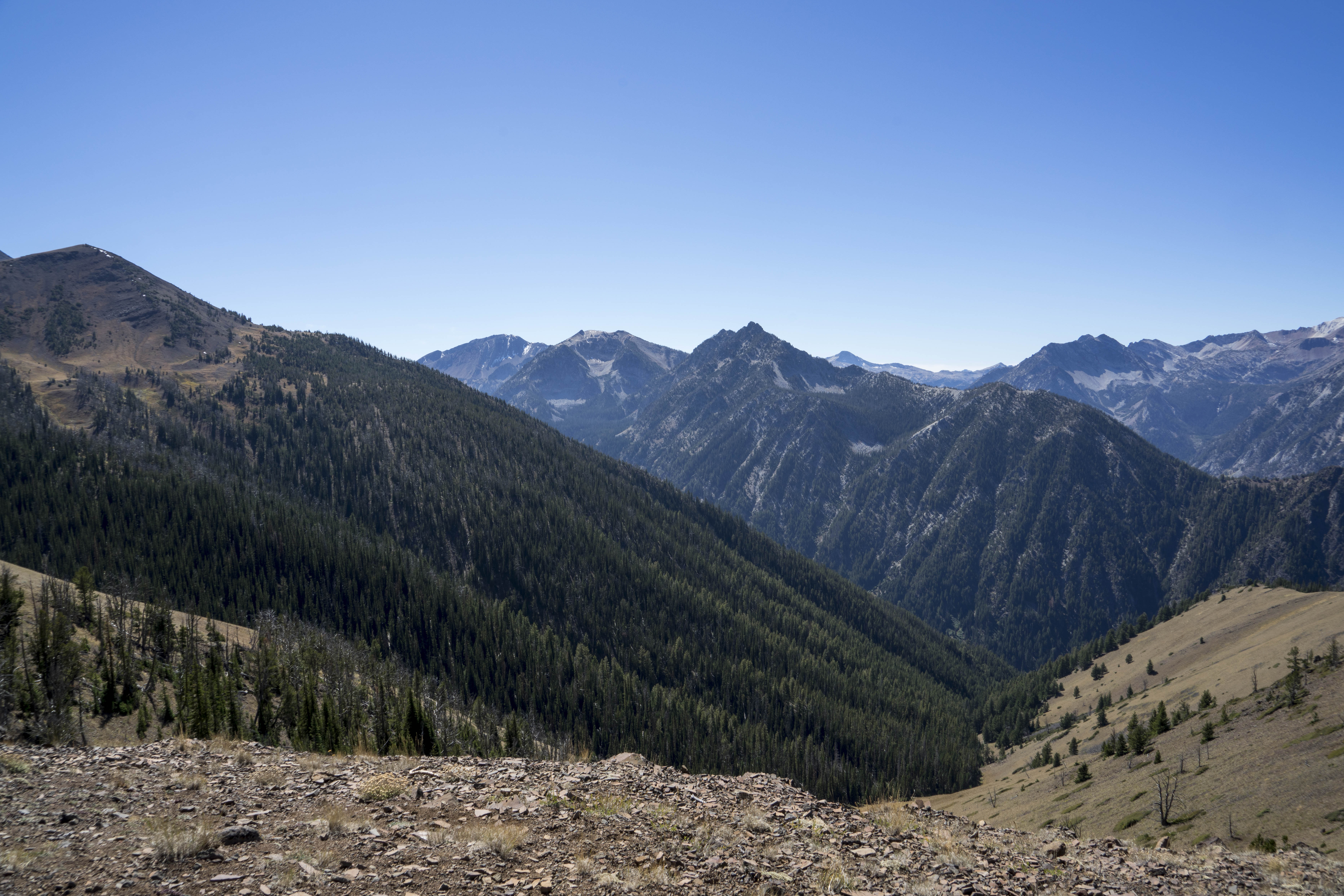
Views from the top of the Wallowa Tram — Oregon and the Eagle Cap Wilderness.
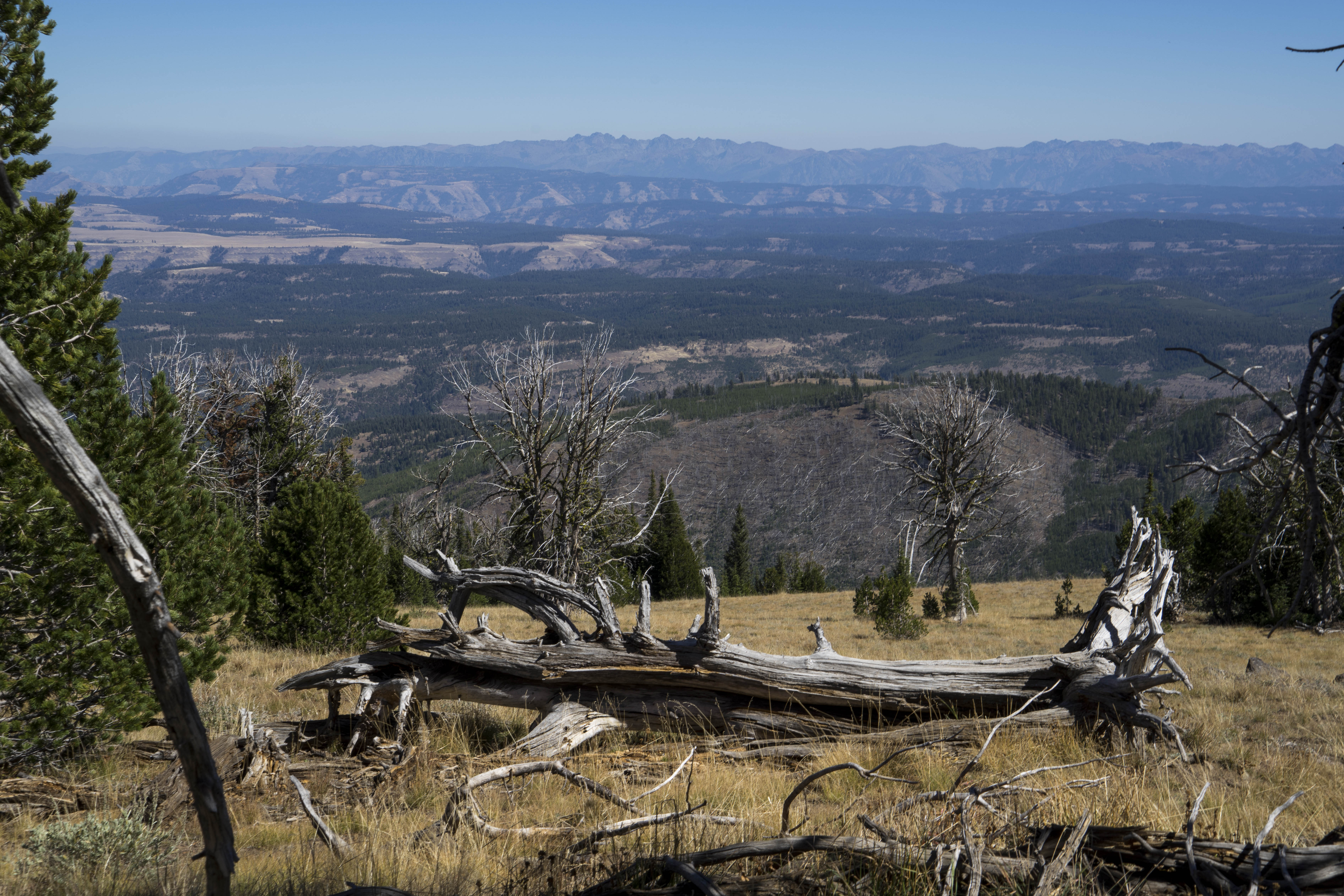
Looking East to the distant mountains is the Seven Devils on the Idaho side of the Snake River.

Looking north to Washington – hang gliders launching themselves to the valley below.

Soaring off into the Grande Ronde Valley.
The town of Joseph was the entry point to Wallowa Lake and was a charming little town. Named for young Chief Joseph of the Nez Perce Tribe, it is now an art community with a national reputation for its top quality bronze foundries and galleries. It also has a wonderful chocolate shop;-)!!
After the scenic loop byway, one must venture up Hells Canyon along the Snake river. While the loop drive gives views from the top down, the drive along the Snake allows one to look up the sheer cliff walls that have been pushed up from the canyon that has been eroded.
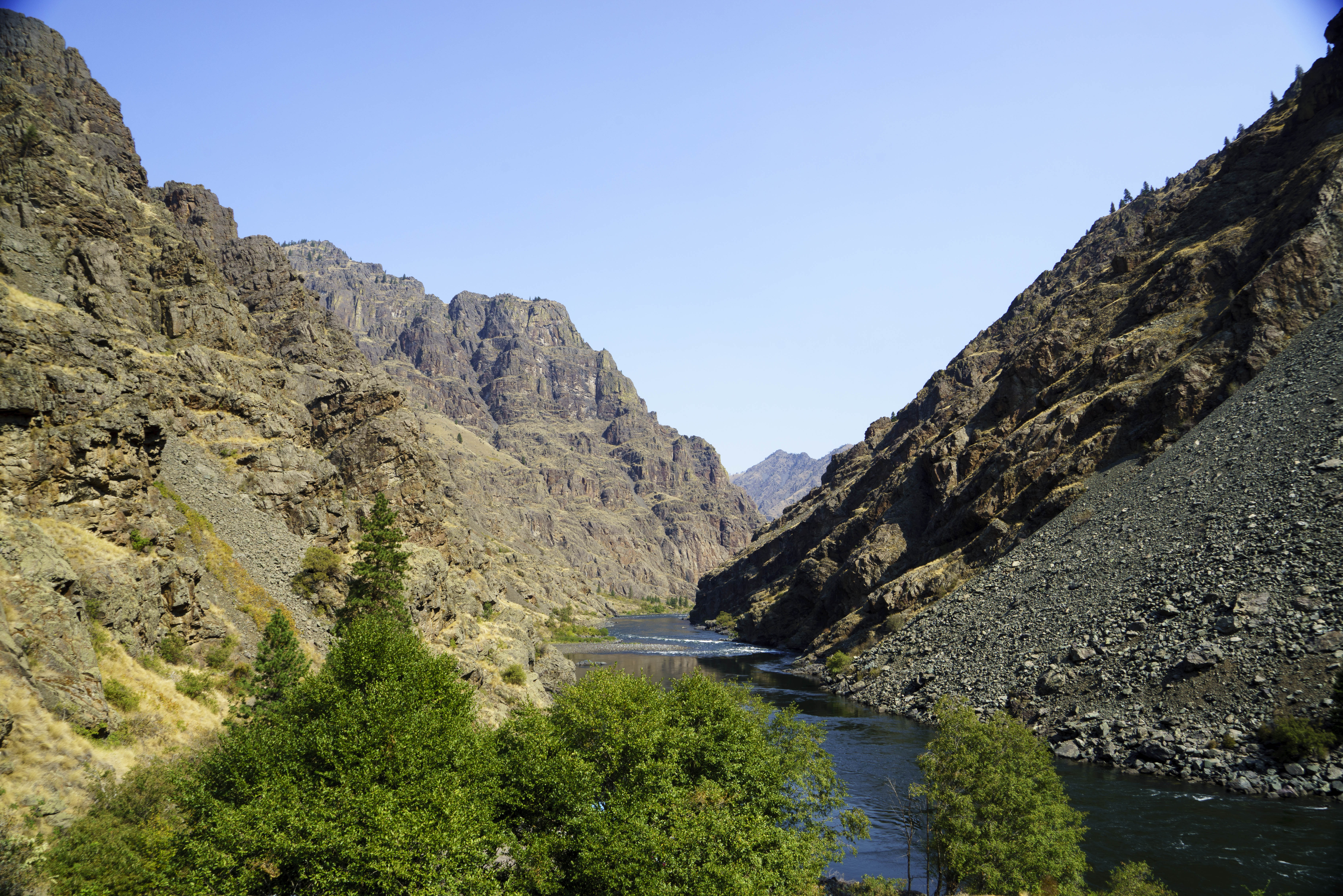
The Snake River heading into Hells Canyon.
Eagles were present to do their fishing along the portion of the Snake that was a little more peaceful between the two dams. As said earlier – we have developed a real interest in these majestic birds.

We spotted this bald eagle along the Snake River.

Headed out looking for lunch.
The trip home from the Canyon provided a look at a few more of the small towns along the way – and whimsical roadside humor – –
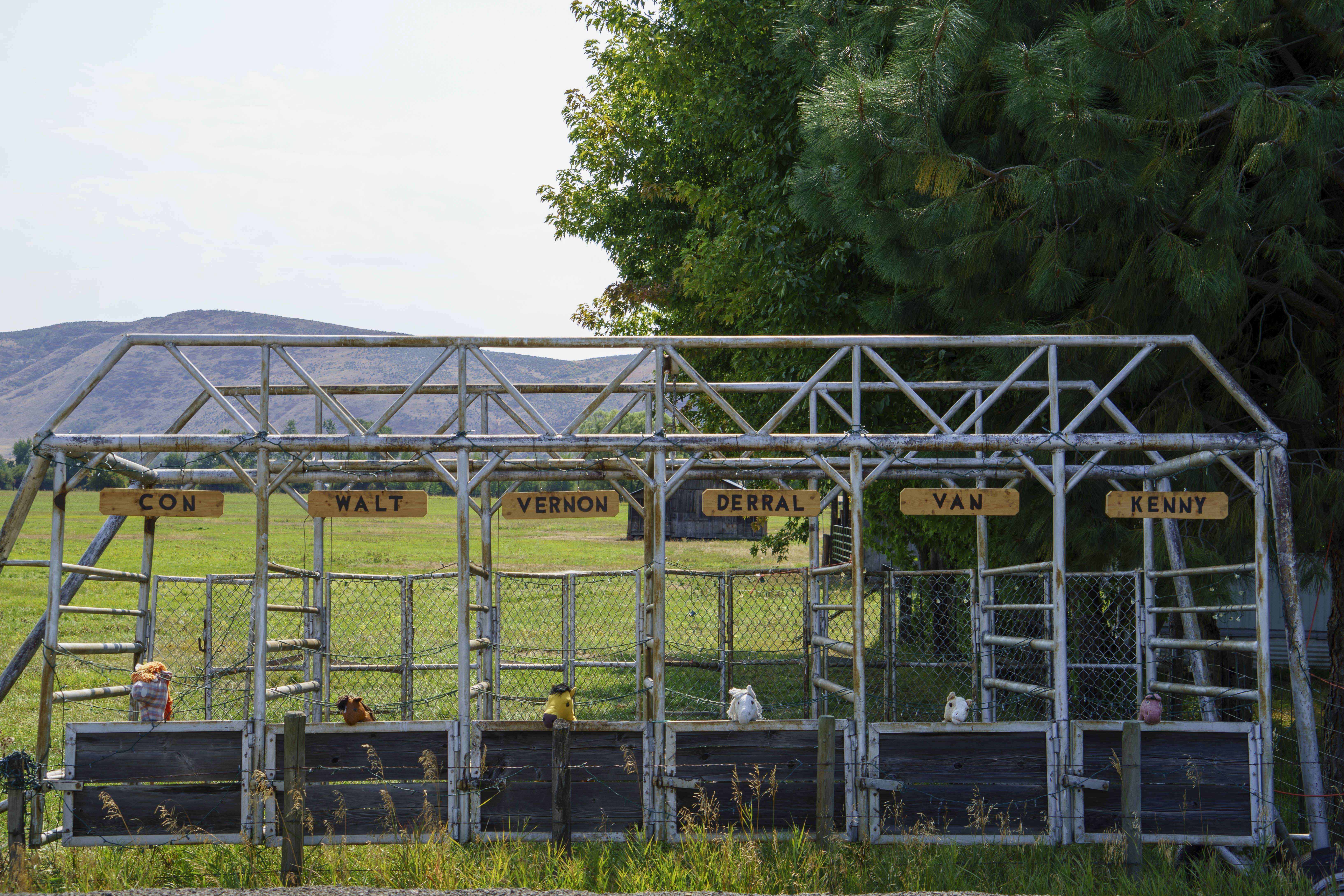
The horses are in the starting gate.
Not far from our campground is the National Historic Oregon Trail Interpretive Center. The Oregon Trail – it began with a crude network of rutted traces (some of these rutted traces can be seen at the Center) across the land from the Missouri River to the Willamette River that was used by nearly 400,000 people. It was created, though, from the West as trappers, maritime explorers and Europeans inhabited the west coast coming by boat around the tip of South America. John Jacob Astor established Astoria at the mouth of the Columbia in 1812 and sent Robert Stuart overland to carry dispatches east. Stuart found South Pass, only 7,000 feet above sea level with easy gradients, which became a determining factor for the Oregon Trail. Economic depressions in 1837 and 1841, the collapse of the international fur trade and eastern churches seeing the American Indians as ready candidates for ideas of civilization contributed to groups with serious intent to emigrate to the west. The trip from the Missouri River took approximately 6 months – if one actually made it. The travel day was 8-10 hours covering 20-30 miles (on a good day) – mostly walking as the oxen had a large enough load in the wagon without the extra weight of people. ALL supplies had to be carried so personal possessions were few. Timing was very important, as the trek needed to be completed before the snow flew. The trip was not for the faint of heart as the following plaques at the Interpretive Center indicate —
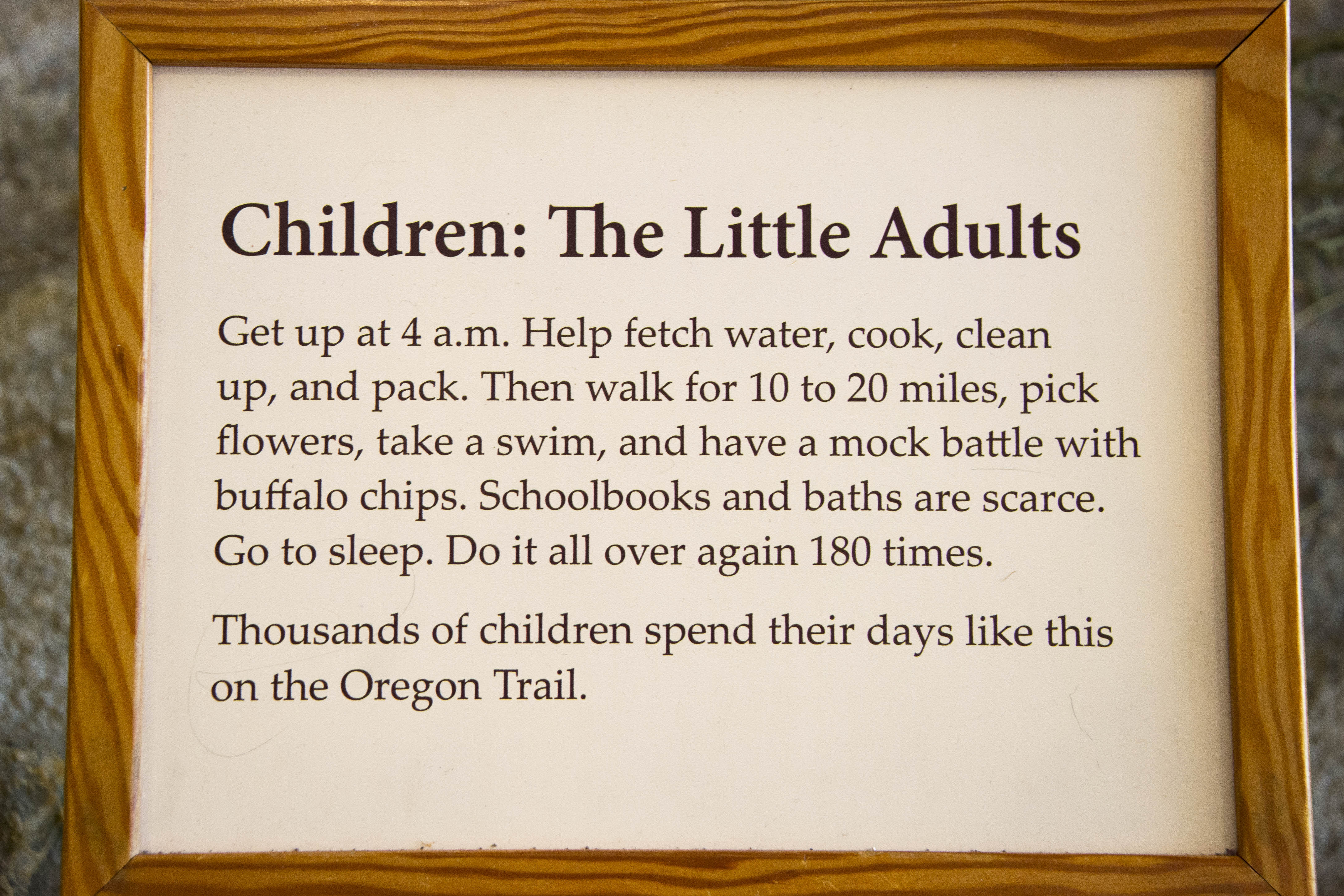
And Gary thought his paper route when he was a kid was work.
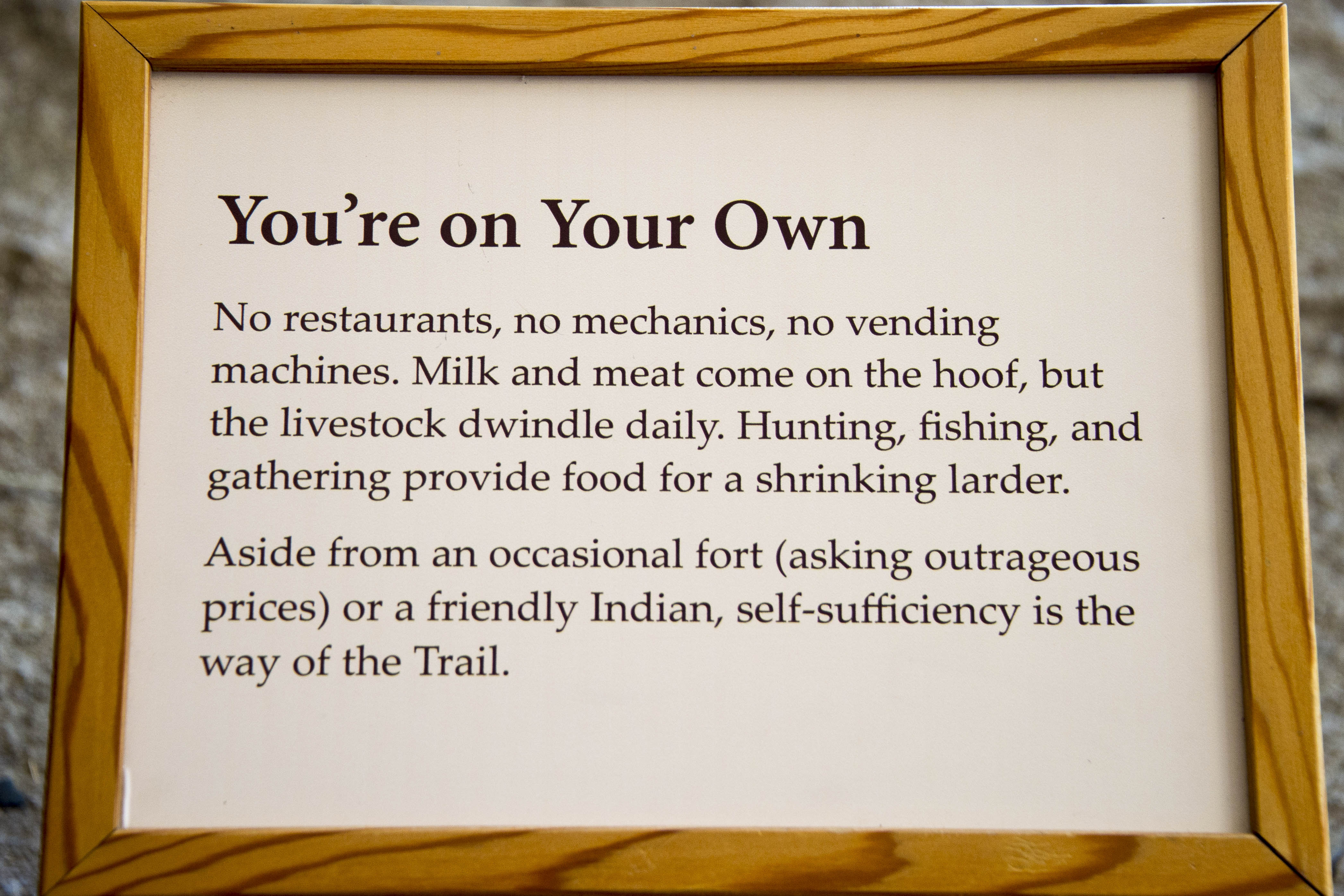
What no wagon drive through window?
The stay in this northeast corner of Oregon was brief but full of information, beautiful sights and lots of activity.
E & G – Off tomorrow in our cushy coach full of supplies traveling about 280 miles in 6 hours.
 Elizabeth & Gary's Magic Bus Tour