It was time to move on as the last of the North Cascades Volcanoes were waiting for us in Northern California. BUT – before Magic pulled out we took one last look at the Punch Bowl at Bandon on another beautiful day – –
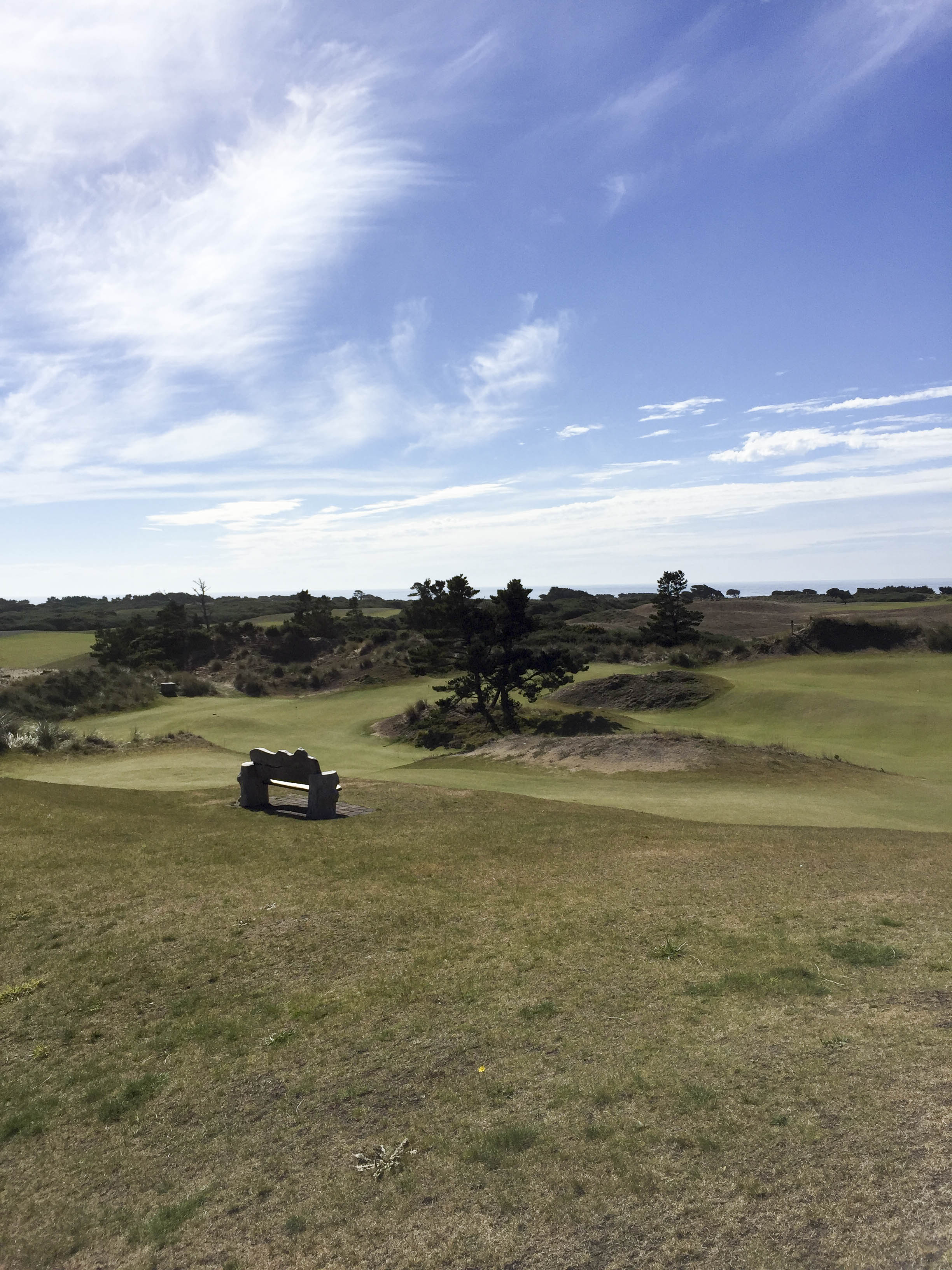
Farewell Bandon Dunes.
Perhaps you will remember from the June posts of our visits to the Washington State National Parks, this summer’s quest was to visit the volcanoes in the North Cascades chain that extends from southern British Columbia to northern California – Mount Baker, Mount Rainier, Mount Adams, Mount St. Helens and into California are Mount Shasta and Mount Lassen. The first four were on the agenda as we covered the state of Washington – with a promise that the last two would be covered at the end of this summer’s trip. AND – here we are.
Mt. Shasta, at 14,179 feet, is the second highest peak in the Cascades and the most voluminous of the Cascade Volcanic Arc. It is classified as a dormant volcano, but geologists expect that it will erupt within the next several hundred years (probably won’t be around to see it;-) ) It does reign over the northern half of California’s great central valley and provided a beautiful backdrop for our round of golf.
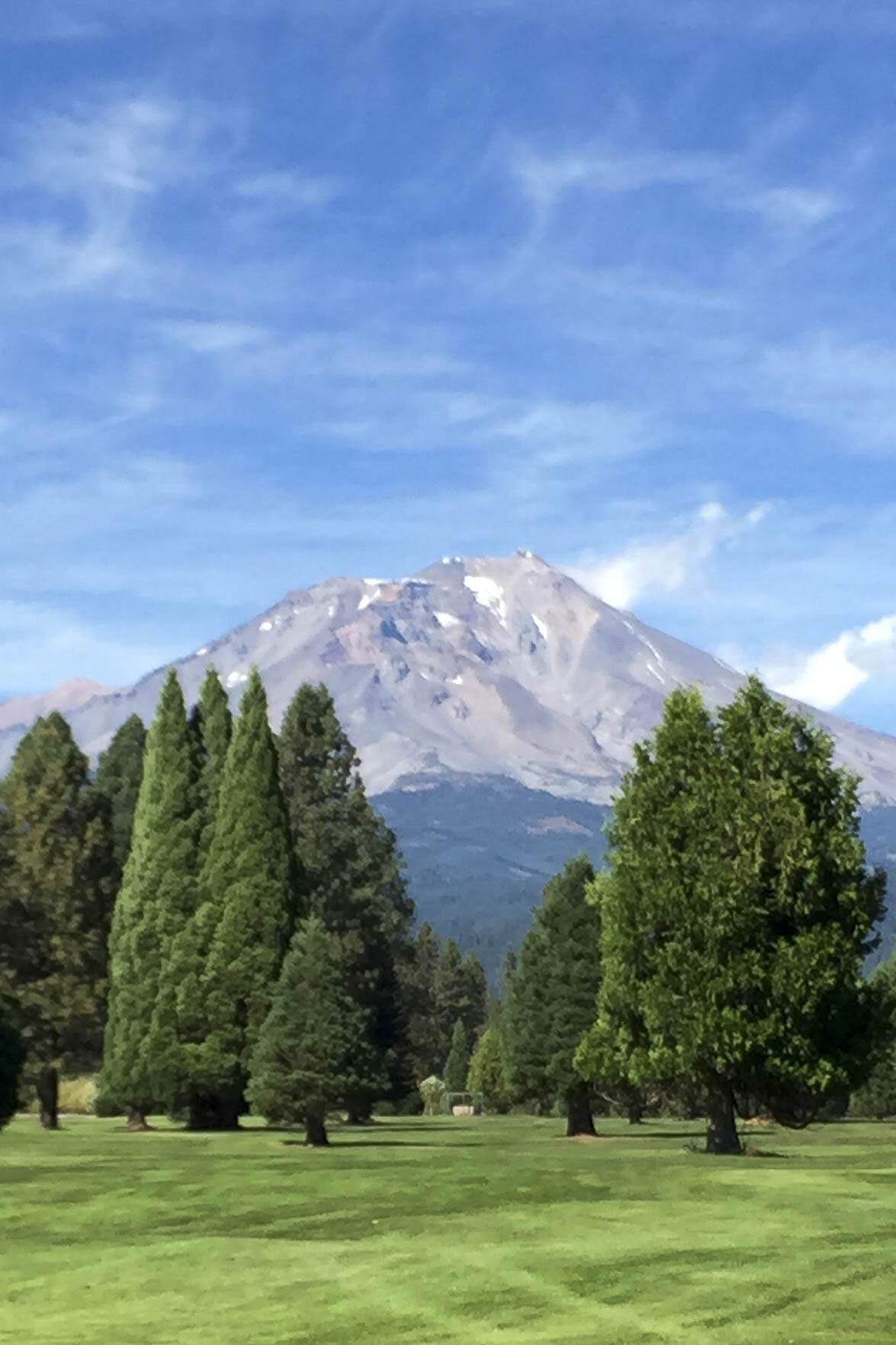
Mt. Shasta towers over McCloud Golf Course.
It really was even more beautiful with its many layers of snow in June, which have long since melted – –
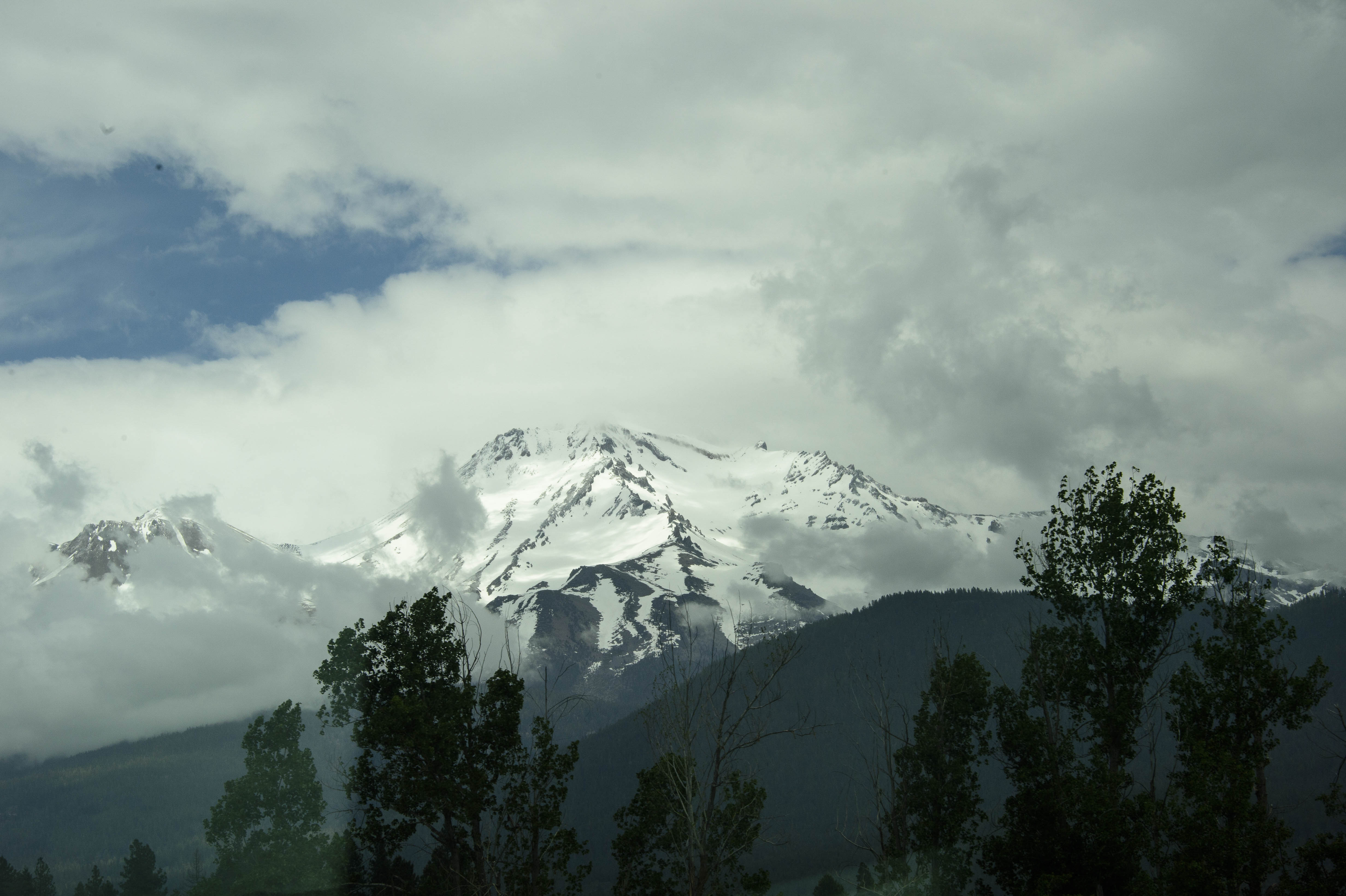
View of Mt. Shasta as we passed by the area in June.
(BTW – Shasta Beverages DID get their start near Mt. Shasta in 1889!! Originally called Shasta Mineral Springs Company, the firm first sold naturally carbonated spring water. SO – G’s comment “It hasta be Shasta” back in our June post was appropriate.)
No matter how old or how young, waterfalls are always FUN! Just down the road from the McCloud GC were the McCloud Falls with a perfect little interpretive hiking path from the Lower Falls to the Middle Falls – a perfect afternoon activity.
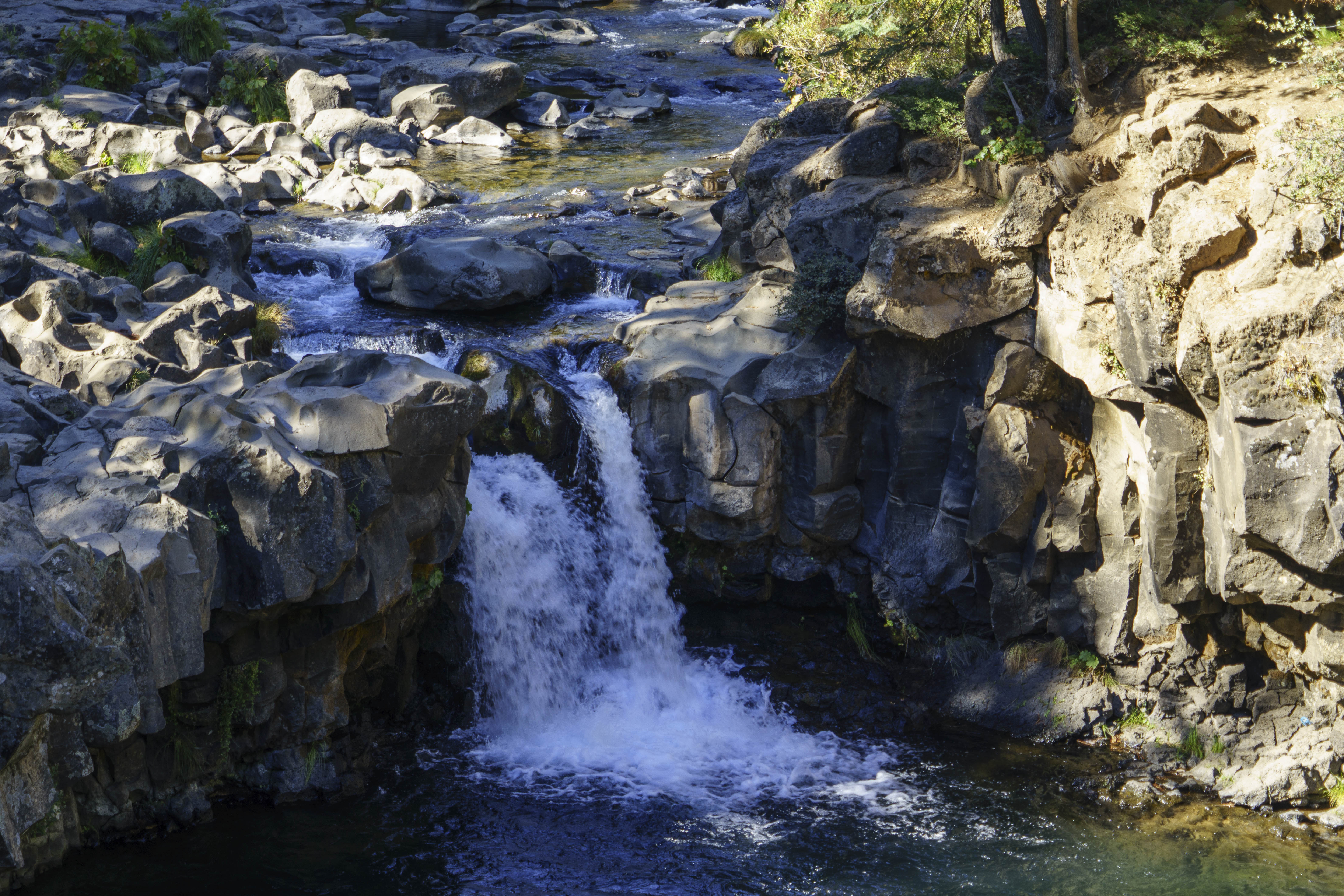
Lower McCloud Falls.
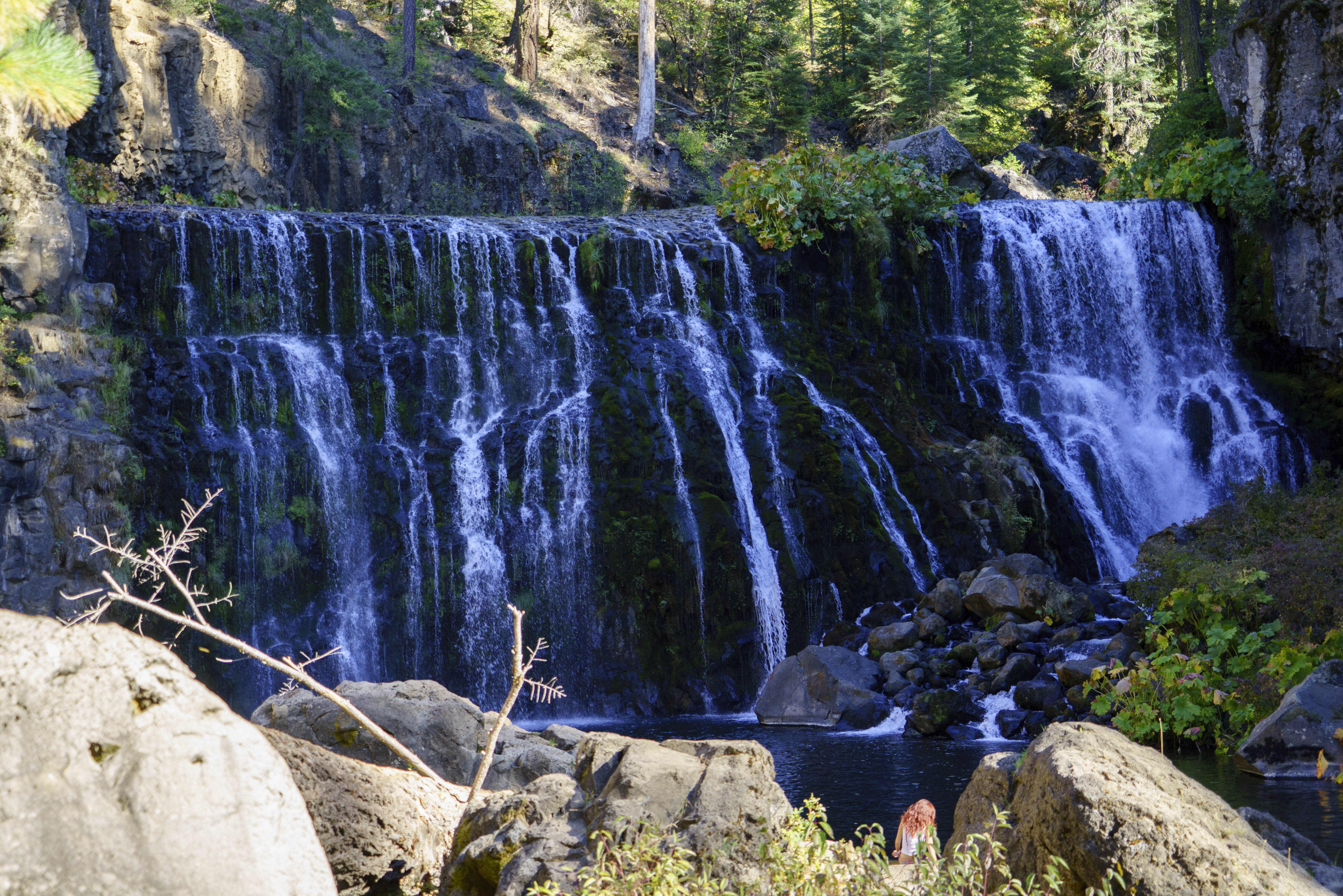
Middle McCloud Falls, where ‘crazies’ were actually jumping from the top into the pool below!
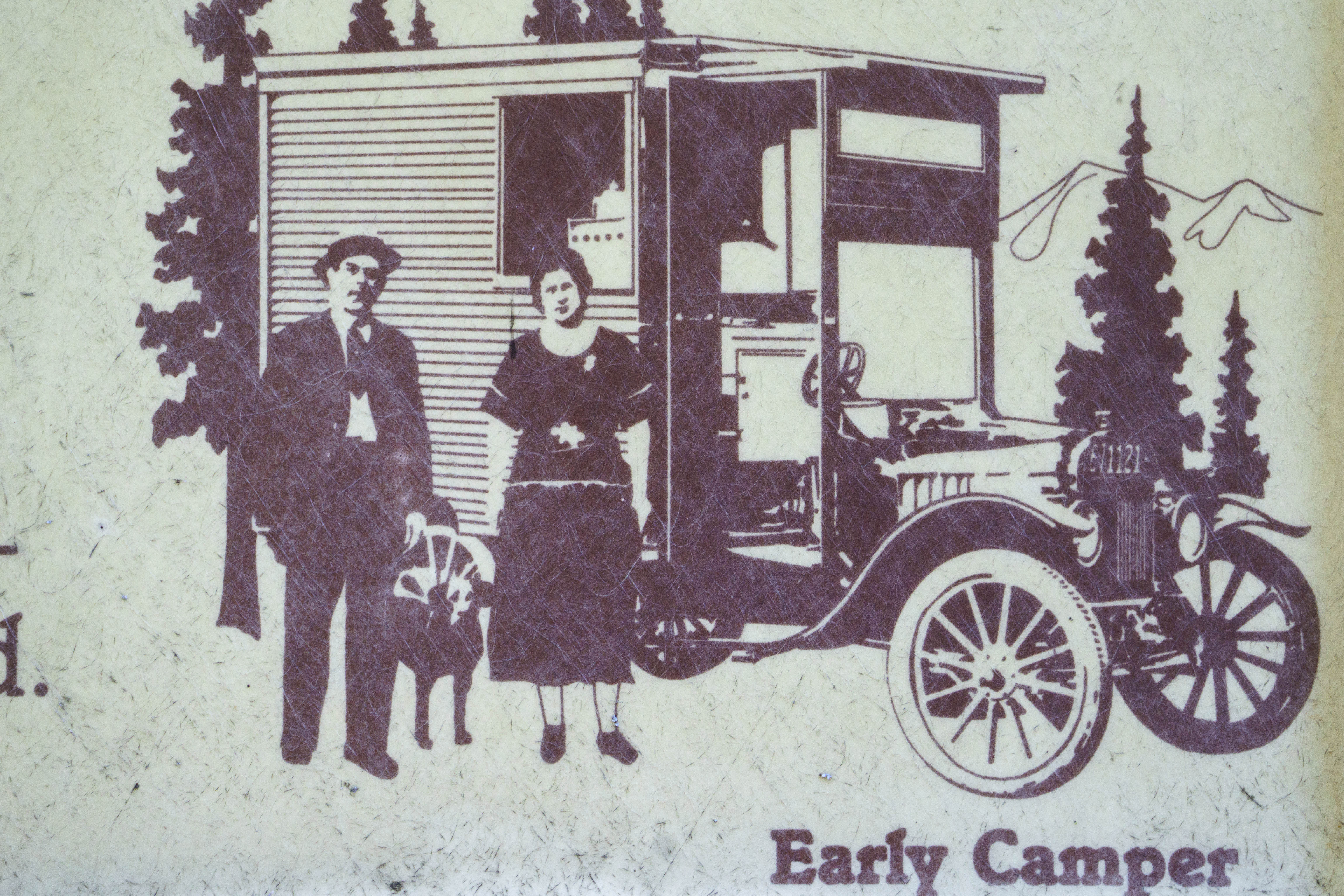
Early “Magic Bus”??
For the few nights at the base of Mt. Shasta, we were in an ‘interesting’ area – clearly seasonal and the season was over. The Klondike was touted as “The Best Dive on I-5” and the local hangout – so it was also our dining spot after our golf and hiking excursions this particular day. Since it was an early dinner for us, only one other group came in while we were there. AND – who would be in that group but E’s first husband of 40 years ago!!! What are the odds?!?!?!
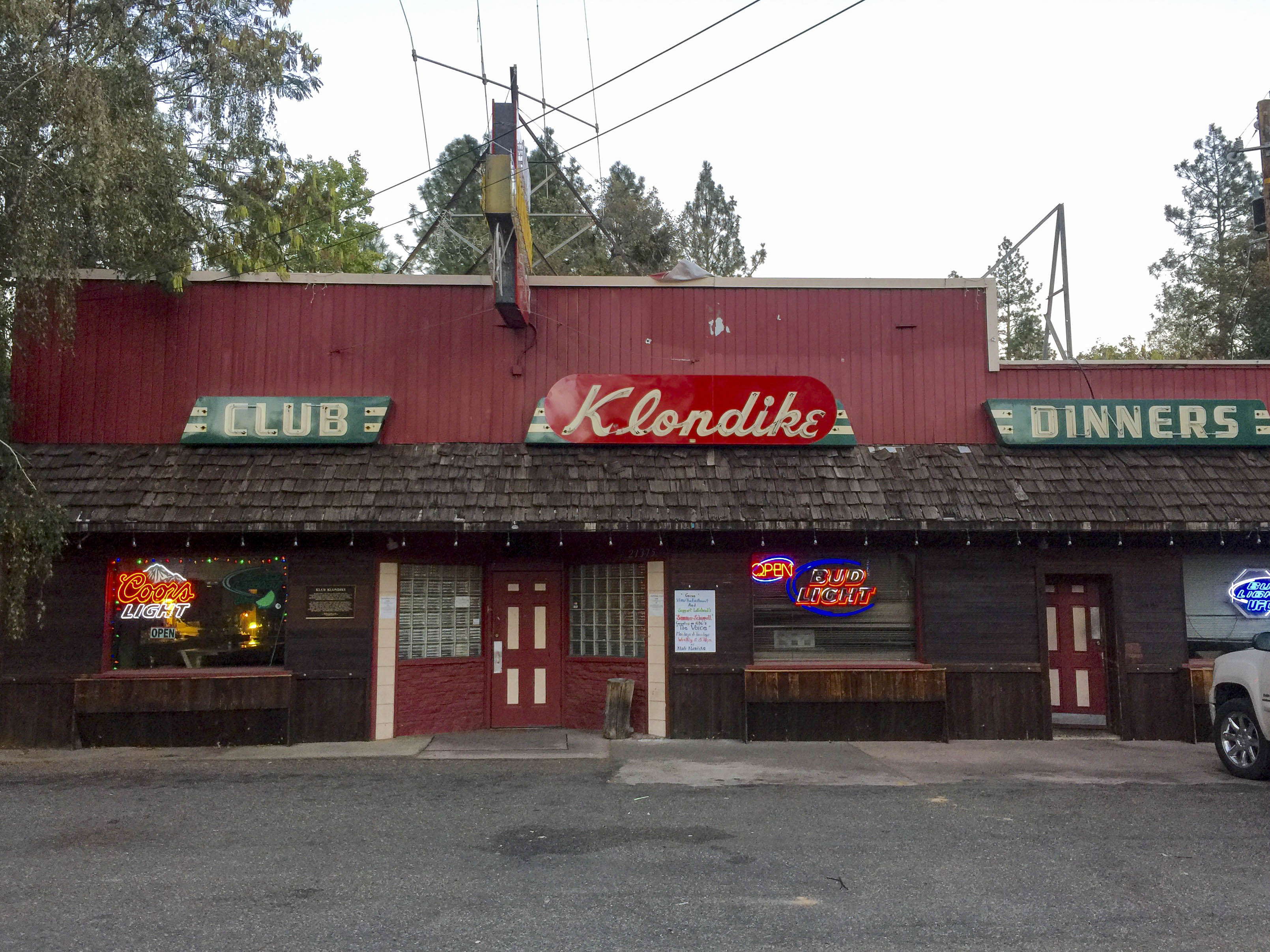
“The Best Dive on I-5”. Imagine our surprise when E ran into her first husband as we were leaving the joint.
Next up – the last of the Cascade chain, Lassen Volcanic NP. Lassen Peak was named for Peter Lassen, a Danish blacksmith who settled here in the mid-1800’s. He developed trails and led expeditions throughout the area – thus it became known. However, the powerful forces of the earth impacted this area. Particularly the last eruption – May 22, 1915 (slightly older than the Mt. St. Helens eruption). After this eruption, officials recognized the need to protect the area and in 1916 Lassen Volcanic National Park was born. It is an unusual volcanic area as all four types of volcanoes can be found here – shield, composite, cinder cone and plug dome.
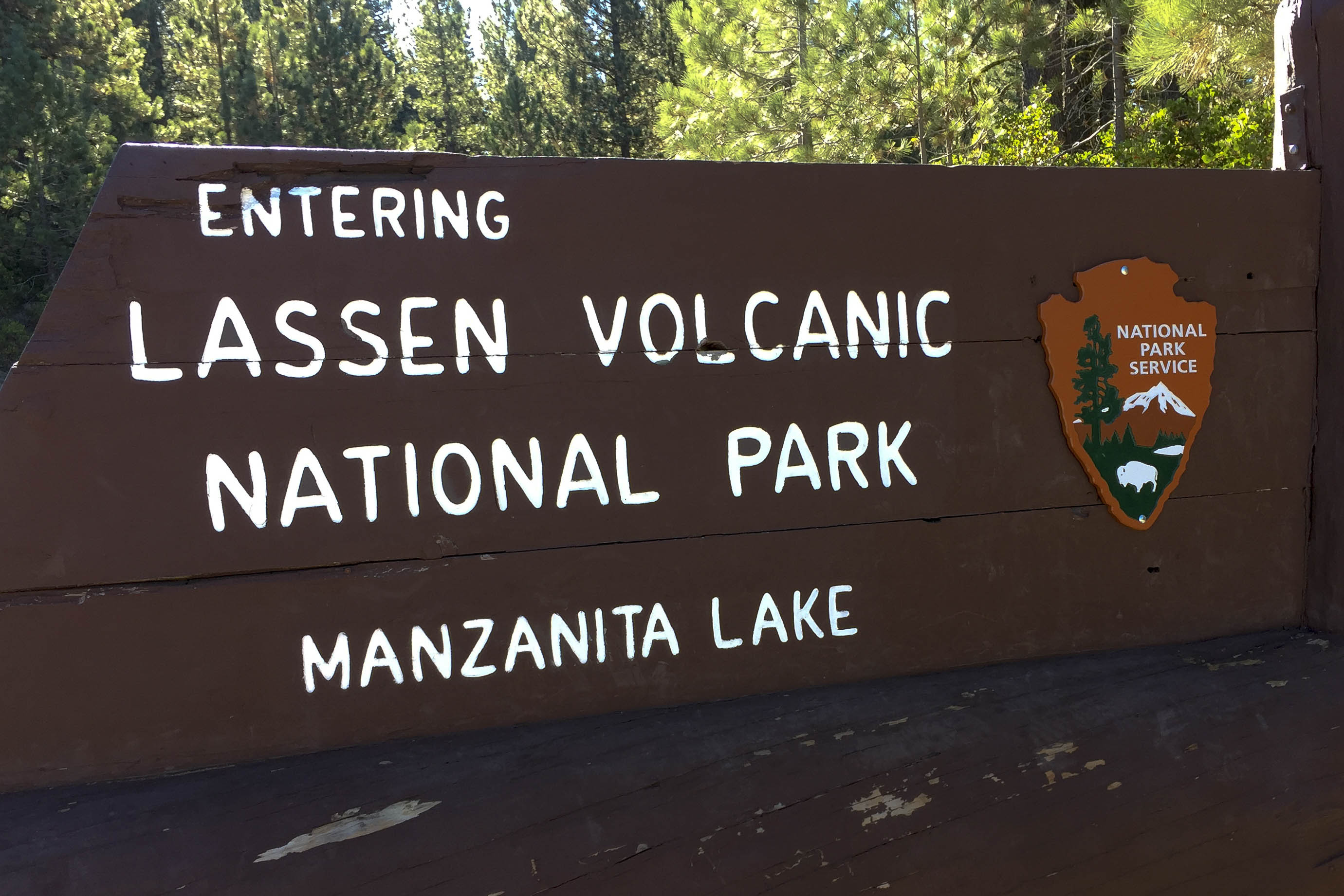
Let’s check it out!
Beyond the Volcanic sights – there are also wonderful examples of Park architecture, including this Loomis Museum building at the entrance to the park.
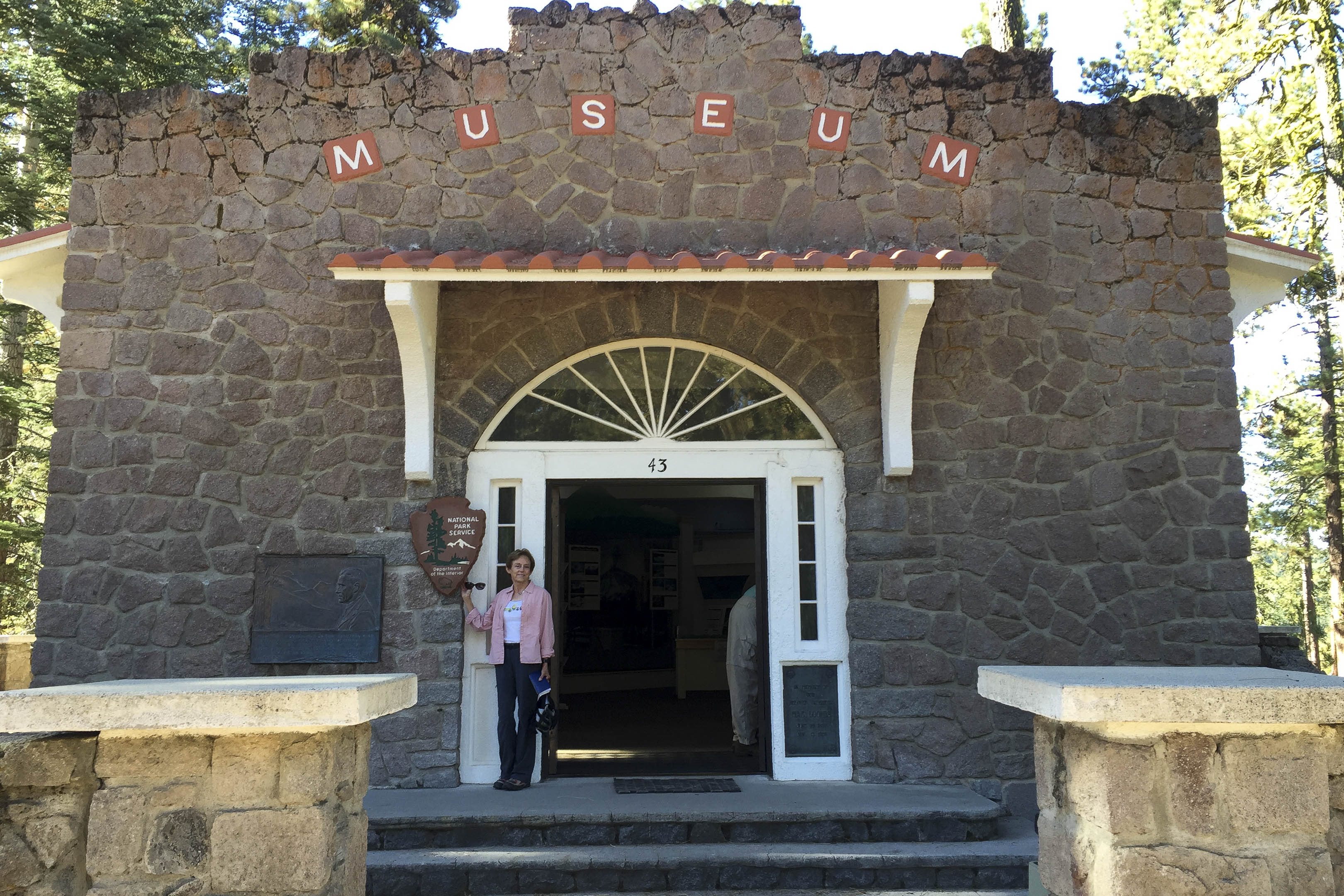
Built in the 1920’s this building is now used by the National Park Service.
There are so many ways to see this park – the highway through the park, hiking on the 150 miles of park trails including 17 miles of the Pacific Crest Trail or backpacking into the back country. We opted for the auto tour and a couple of hikes. First up was an awesome view of Lassen Peak – a plug dome volcano. This type forms when lava is too thick to flow great distances. A steam blast shattered Lassen’s plug, creating an avalanche of melted snow and rock down the east side.
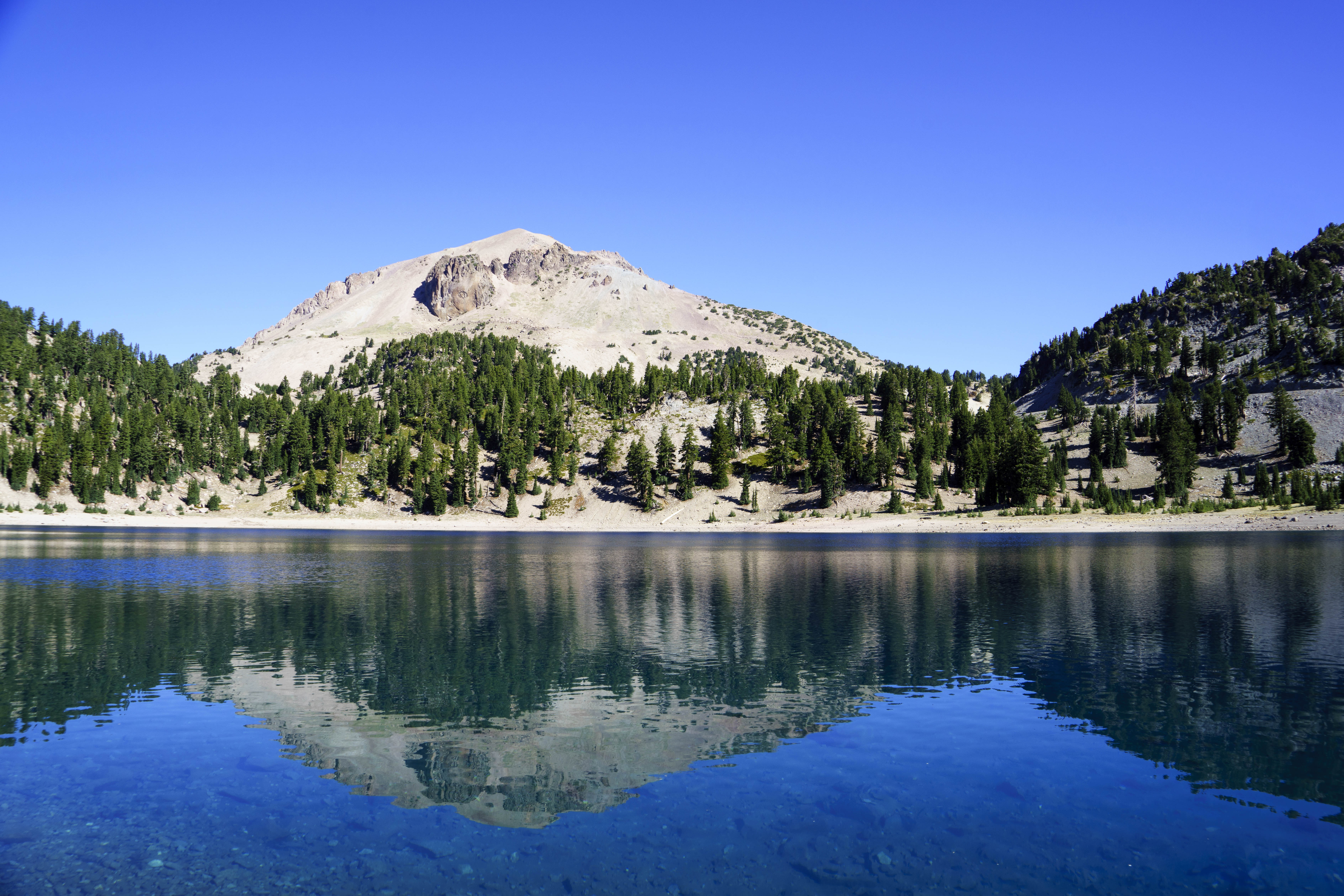
The view of Mt. Lassen from Lake Helen.
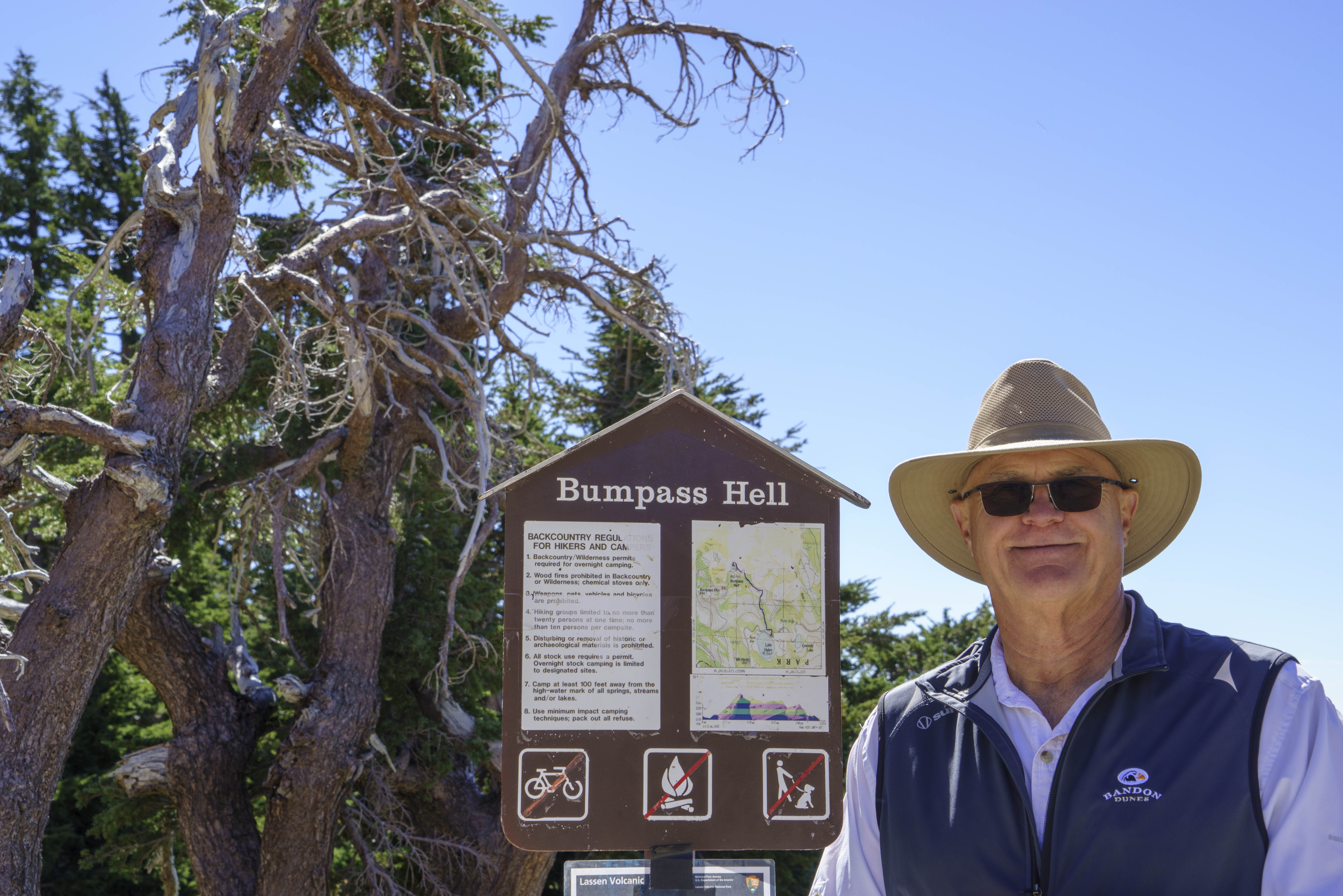
Hmmm. Interesting name.
YES – we did the Bumpass Hell hike, which really provided beautiful vistas on the way to the valley of boiling mudpots, steaming ground, roaring fumaroles, and sulfurous gases. These are all examples reminding one of the hydrothermal system that lies below the ground – just waiting for the time to erupt again.
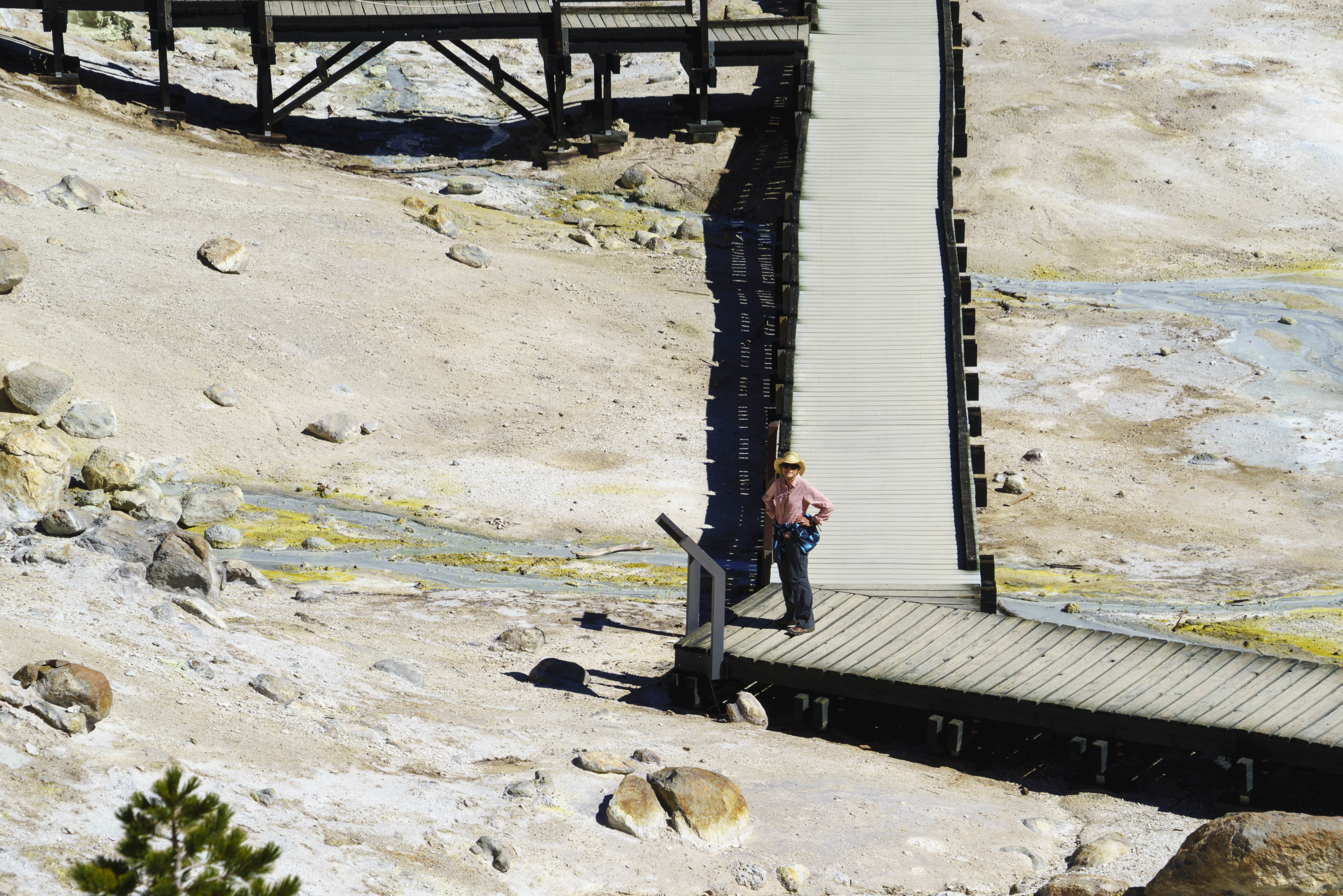
The Bumpass Hell trail led to this sulfur fragranced area of hot pools.
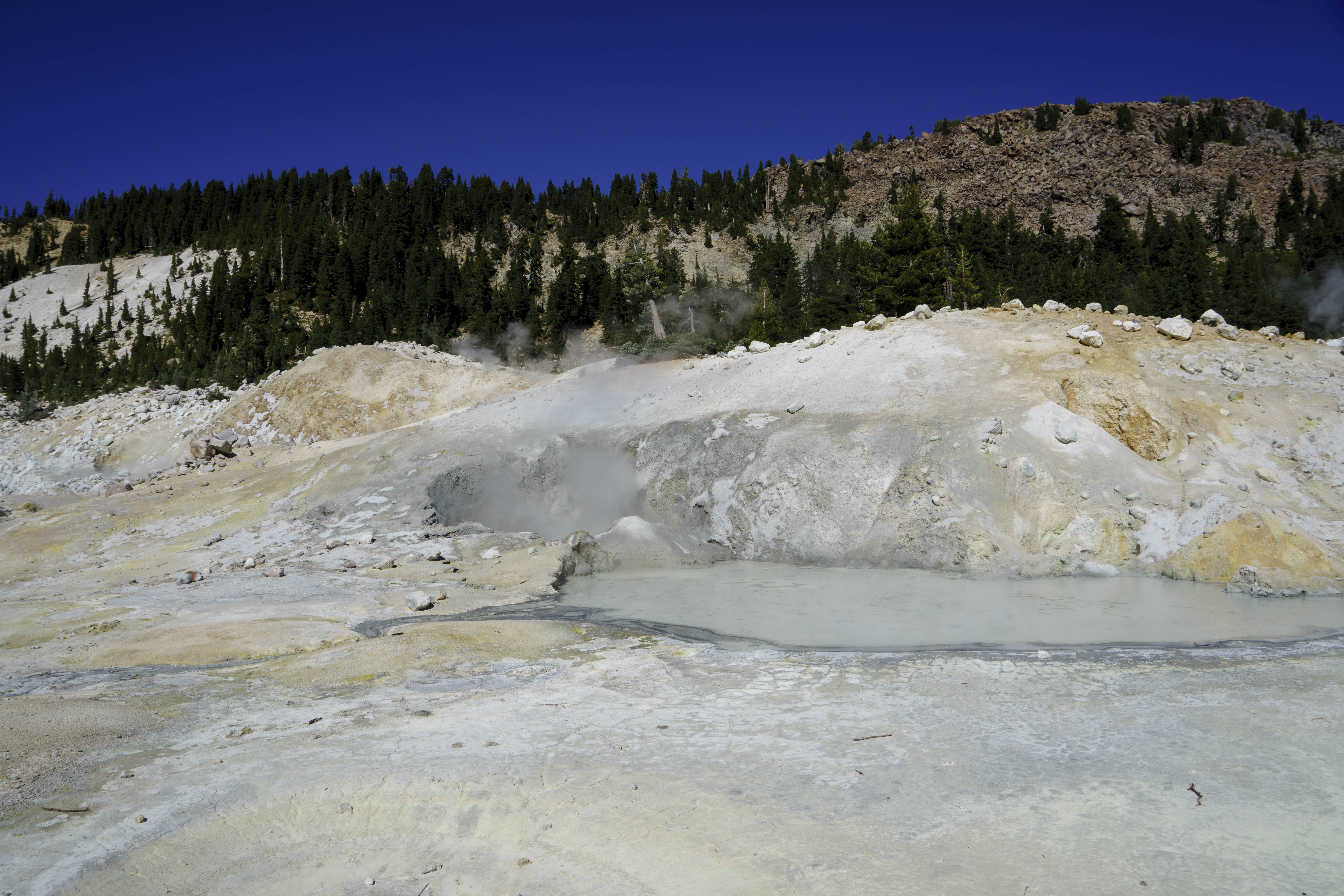
These hot springs can get as hot as 200 degrees.
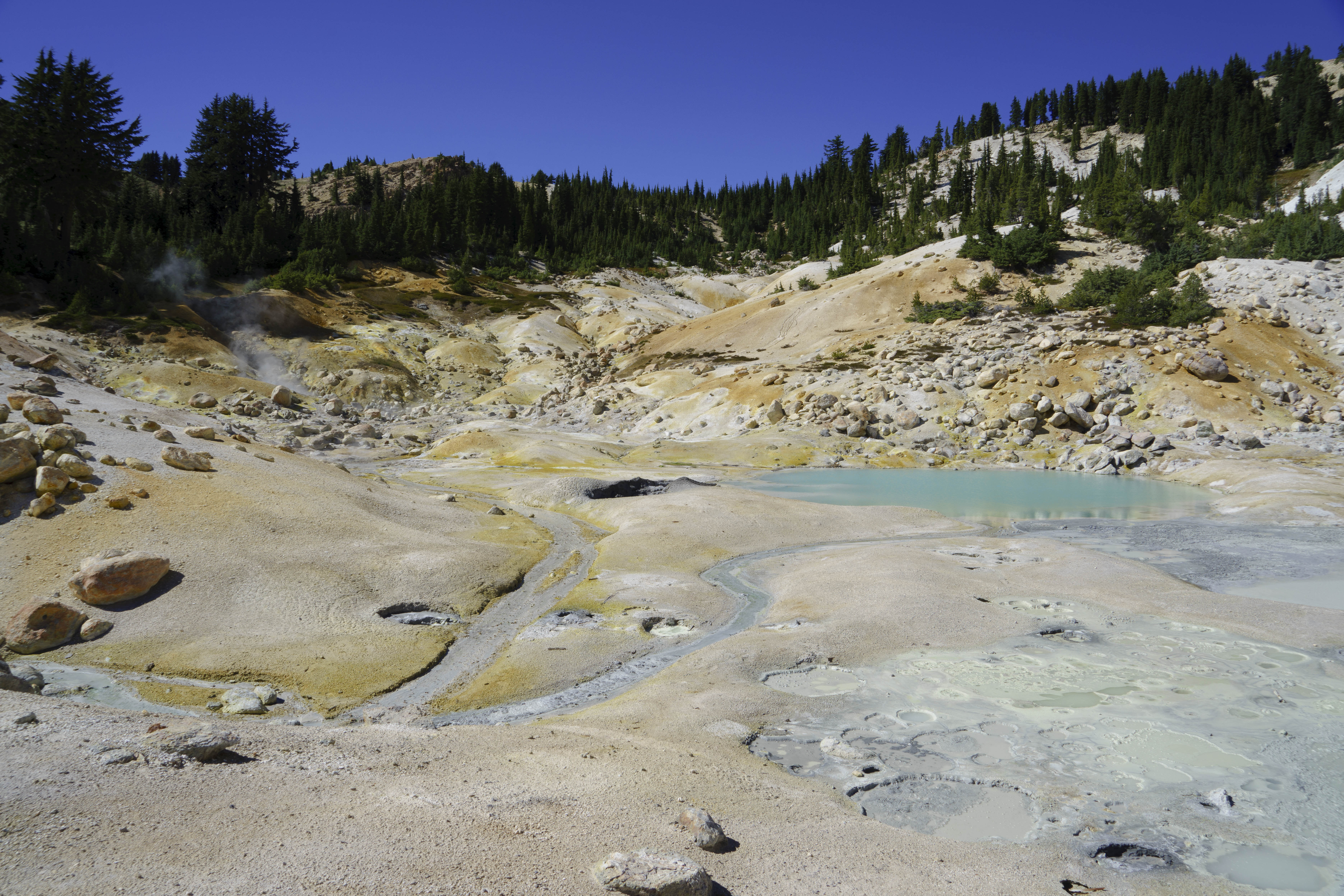
It was a little eerie here.
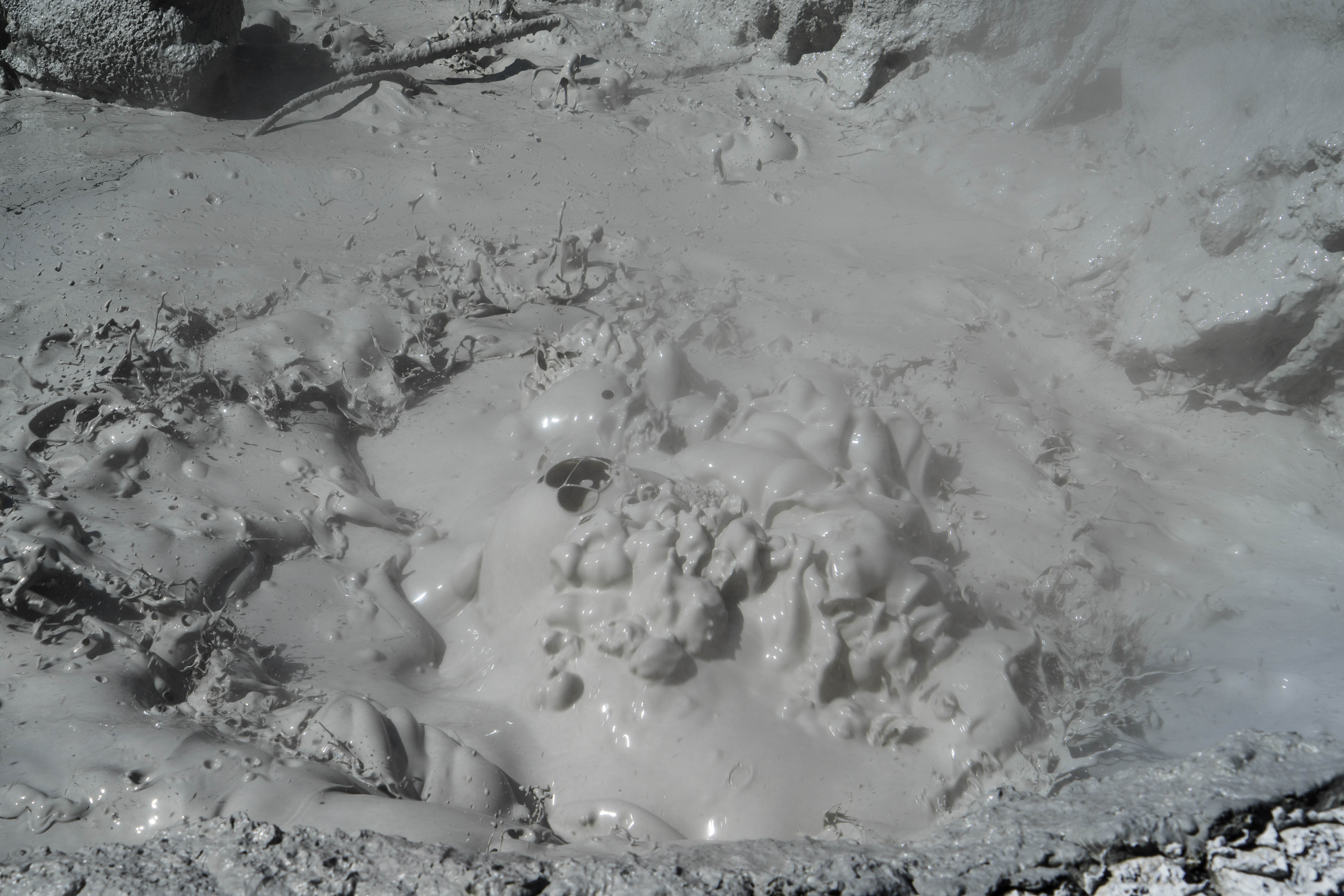
This muddy cauldron was found at the Sulfur Works a few miles from Bumpass Hell.
Another day – a few more hikes. Today was a nice little hike around Butte Lake with views of the Cinder Cone, the second type of volcano. A cinder cone volcano is made up of loose volcanic rock, cinders, and ash that accumulate around a single vent. This Cinder Cone volcano formed during eruptions around 1650. The loose volcanic rock from Cinder Cone encircles Butte Lake.
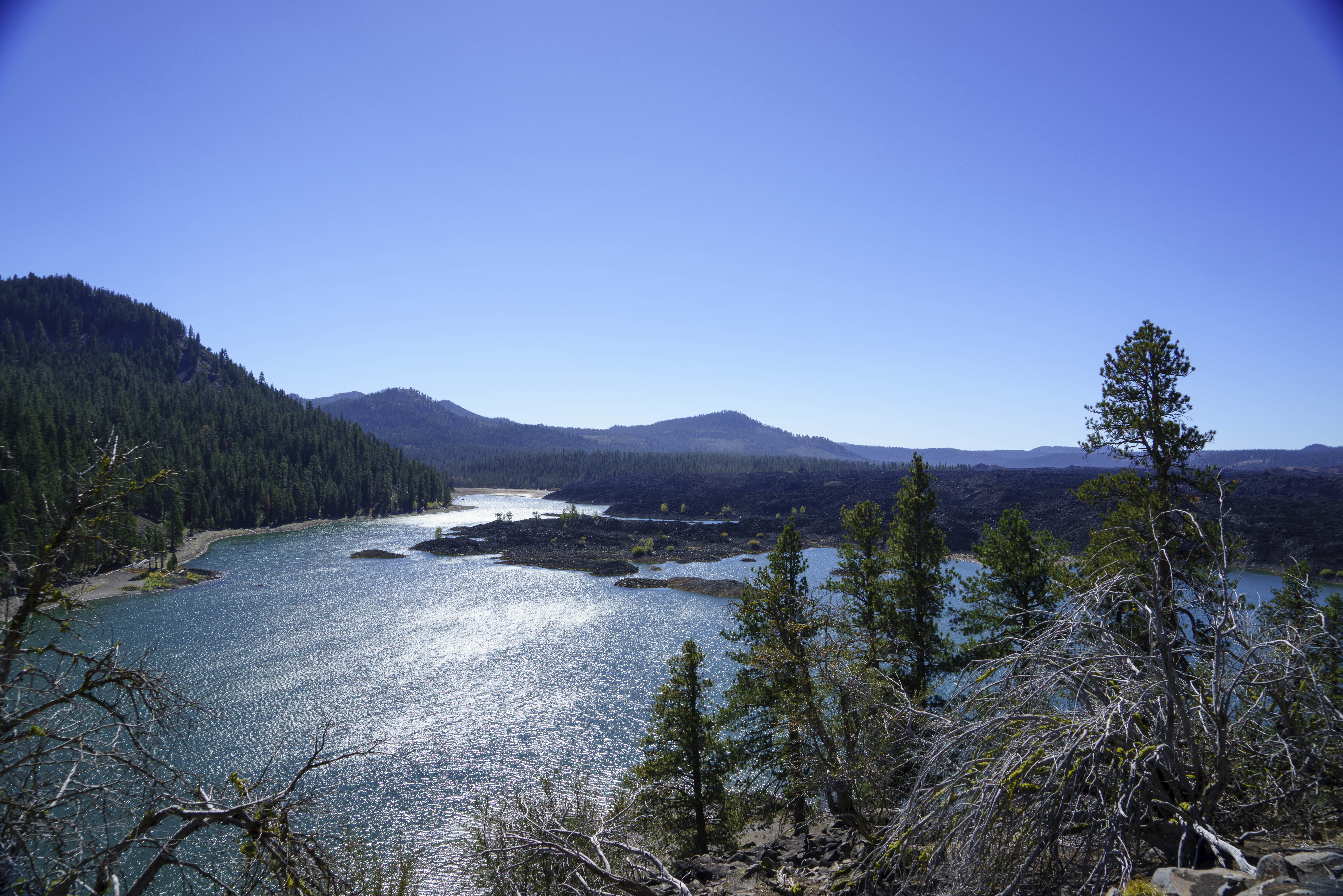
Our hike at Butte Lake provided views of this very unusual lava terrain – –
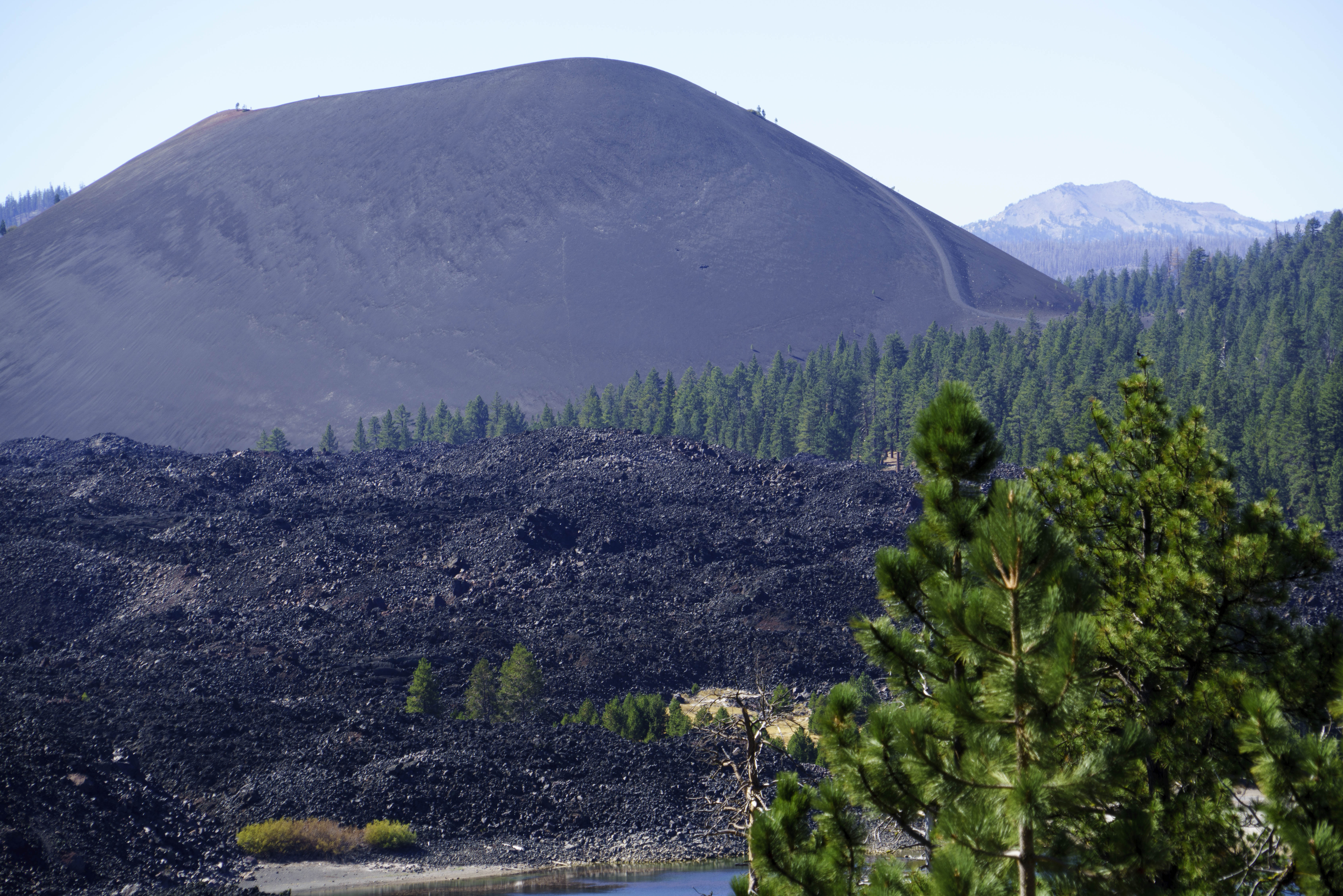
And of Cinder Cone.
Not far from the NP is a beautiful little CA State Park – McArthur-Burney Falls. More falls to entertain us.
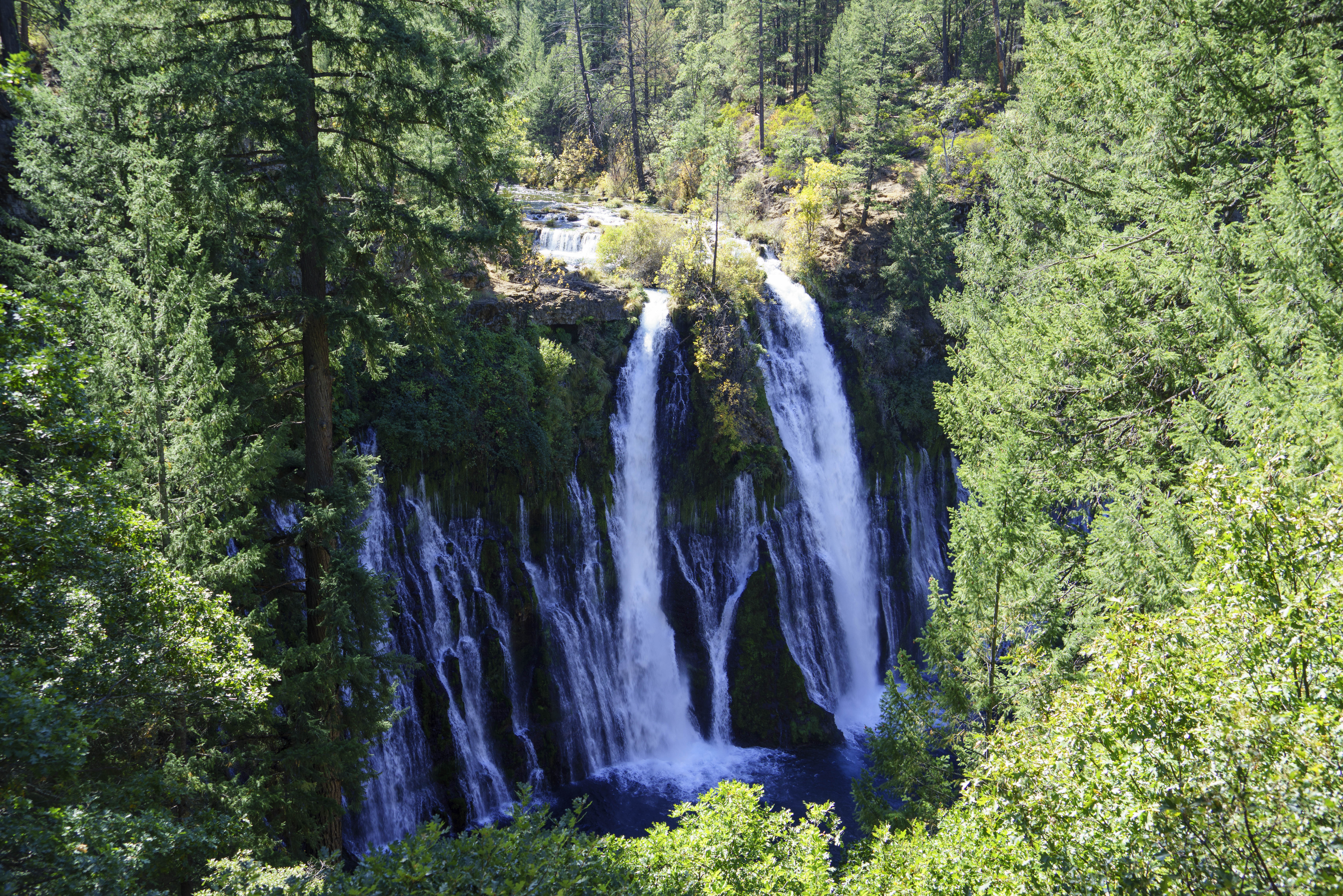
Burney Falls doesn’t seem to be effected by the California drought.
Well – this was the last of our NP’s for this season and the last of the volcanoes in the Cascade Range. It was nice that this farewell was said from a wonderful campground (a KOA that we would recommend) and with the unusual event of the Blood Moon Eclipse;-)
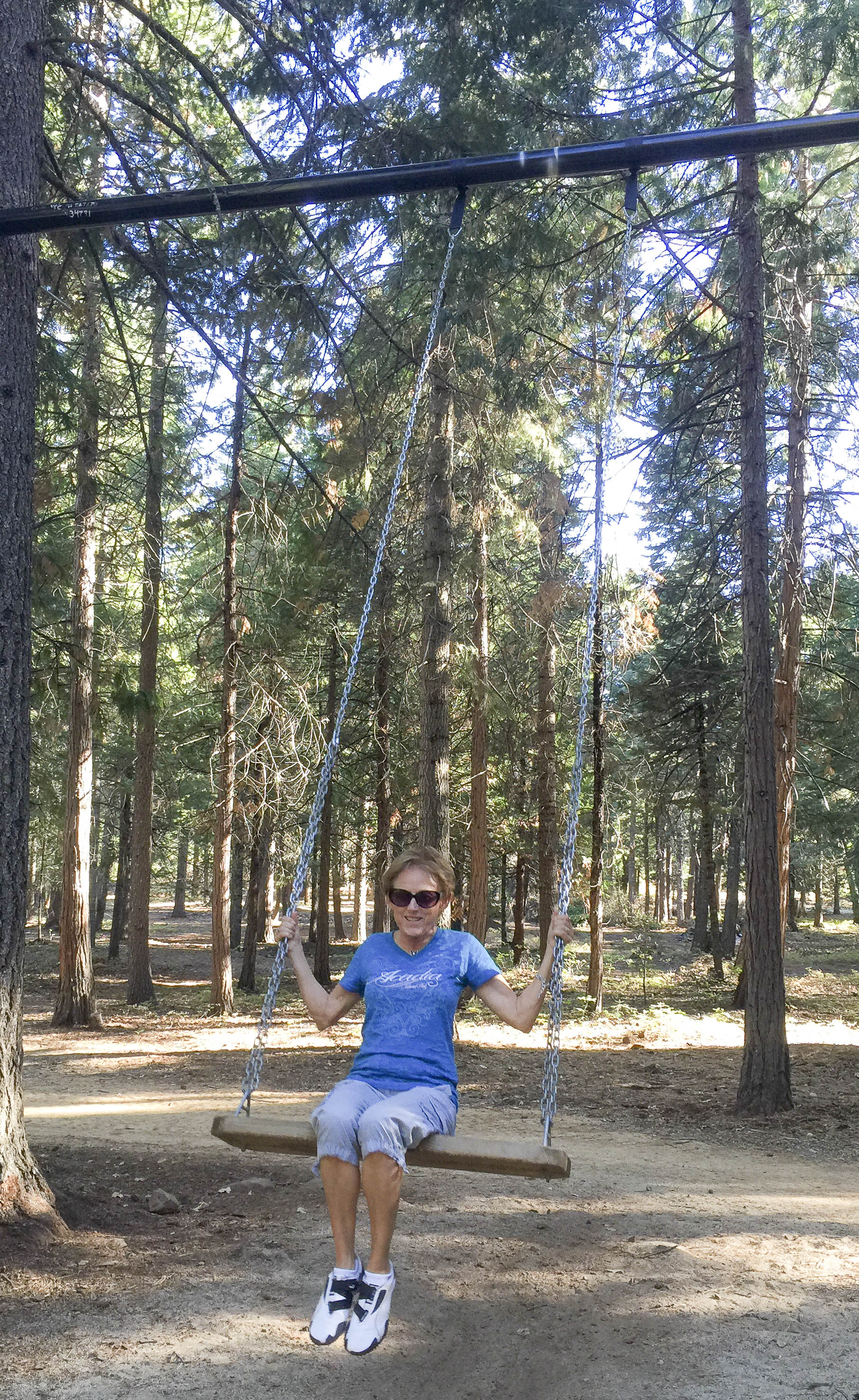
Relaxing on a great big swing near Magic’s parking spot.
Now we are off to spend several days with friends in the Santa Rosa area.
Happily educated on the Cascade Range Volcanoes – E&G
 Elizabeth & Gary's Magic Bus Tour
You and Gary are quite the travelers..”I think I’m going to hire you for our next trip of The Man and His Bus” You can start a business called Magic Travels
Miss you
Julie & Allen
LikeLike