One more exploration adventure between friends and family – Gold Country in Calaveras County. Yes, THAT Calaveras County – home of the Celebrated Jumping Frog of Mark Twain fame;-) Here one has the California Gold Rush history, Giant Sequoias at Calaveras Big Trees State Park, historic gold rush towns which are now funky ‘wandering’ areas and, of course, golf.

Mark Twain slept here – REALLY!
Magic had one last very comfortable parking spot amongst the trees in a wonderful setting. Weather was perfect also – so we enjoyed lots of time in our outdoor living room while here.
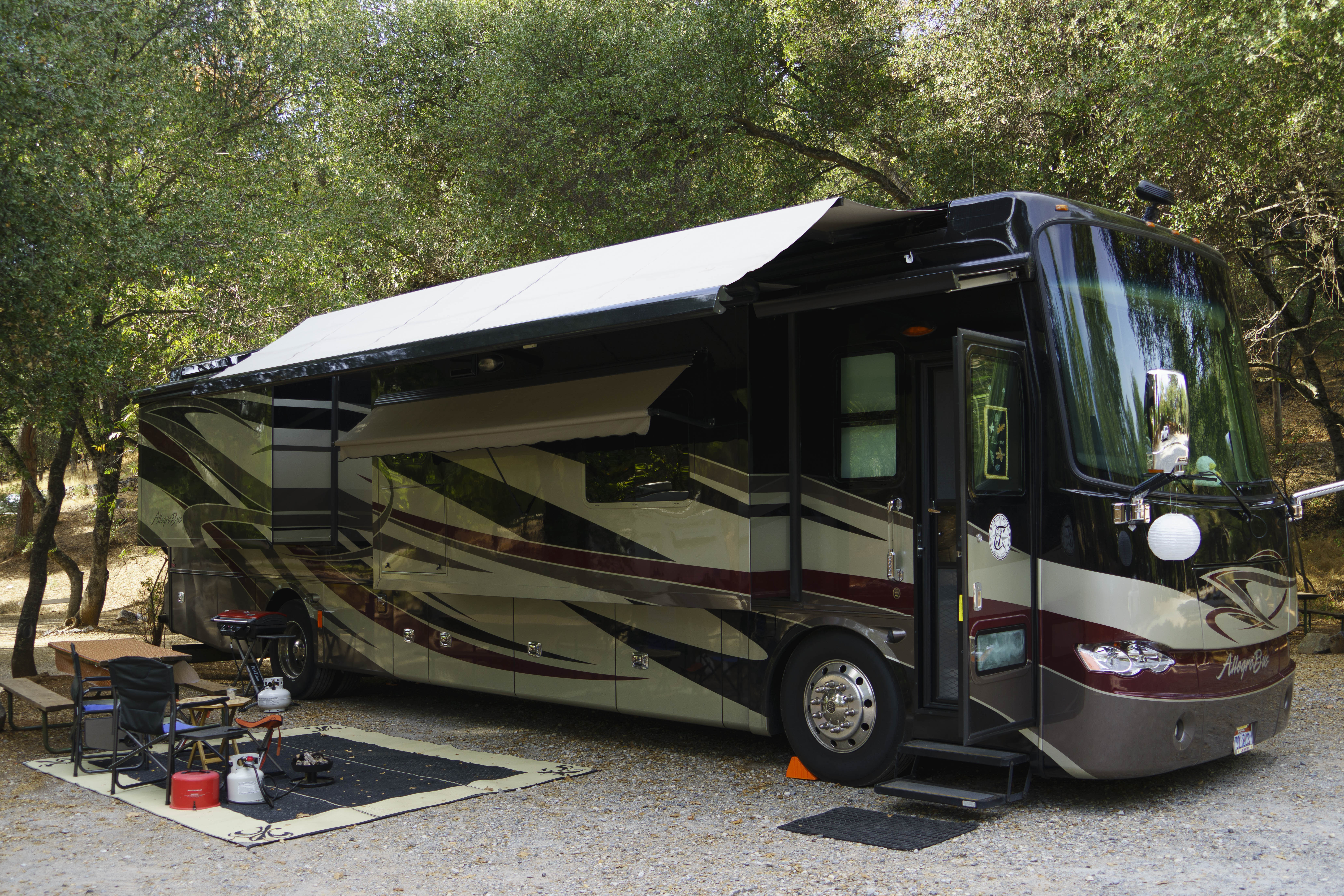
Magic’s spot in 49’er gold country.
Amidst the rugged oak woodlands of the Sierra Nevada foothills lies Columbia State Historic Park. On March 27, 1850, a group of prospectors discovered gold here. Within six weeks their findings attracted thousands of miners and “Columbia” was born. Two-thirds of the original miners were Mexican, but by the summer of 1850 many had left due to the exclusionary Foreign Miner’s Tax, which required foreign-born miners to pay the state $20 a month for the privilege of mining. By 1852 more than 150 stores, saloons and other business enterprises were operating. By 1853, Columbia was one of the largest cities in California with an estimated population of 25,000 to 30,000. But, as mining dwindled in the late 1860’s, Columbia began to decline. By the 1940’s the buildings of Columbia had deteriorated to the point that many were considered unsafe. During that period, the state of California bought the town and it became a State Park. Restoration efforts began on the 150 year old structures to preserve their historic value. Today Columbia State Historic Park contains the state’s largest collection of gold rush era structures.

The old Main Street of Columbia, California – a little quiet this time of year.
Water was important to the mining operations in the area. Several ‘water’ companies were formed to build complex systems of wooden flumes, pipes and ditches to convey river water from the Stanislaus to Columbia. With water available the miners would remove dirt and wash it through a system of sluices to remove the gold.
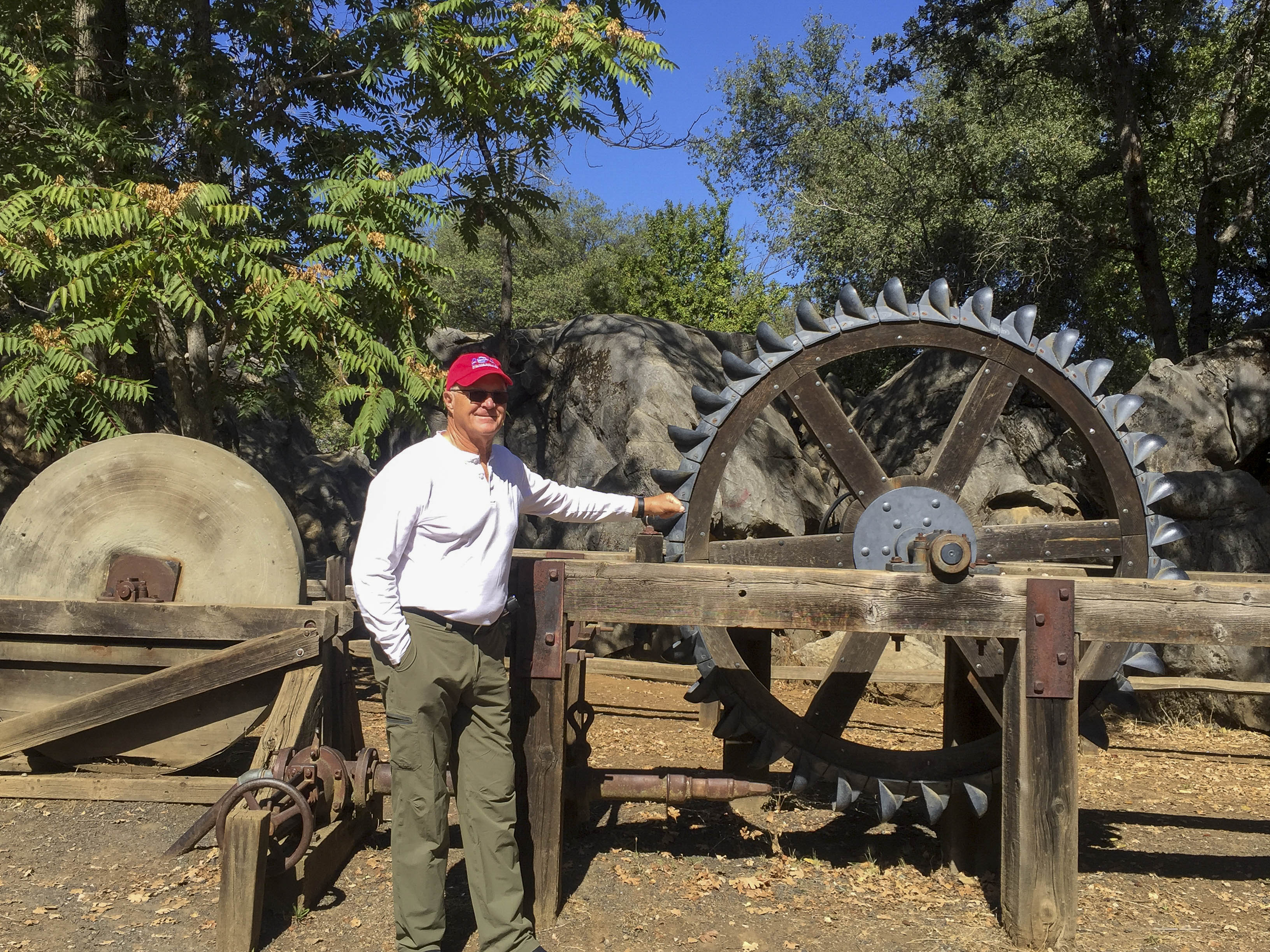
Lots of gold mining equipment was on display.
They also used the water shooting it through high pressure hoses to wash away the dirt around the limestone to expose the gold. This process has left large limestone boulders in the landscape – looking very misplaced.
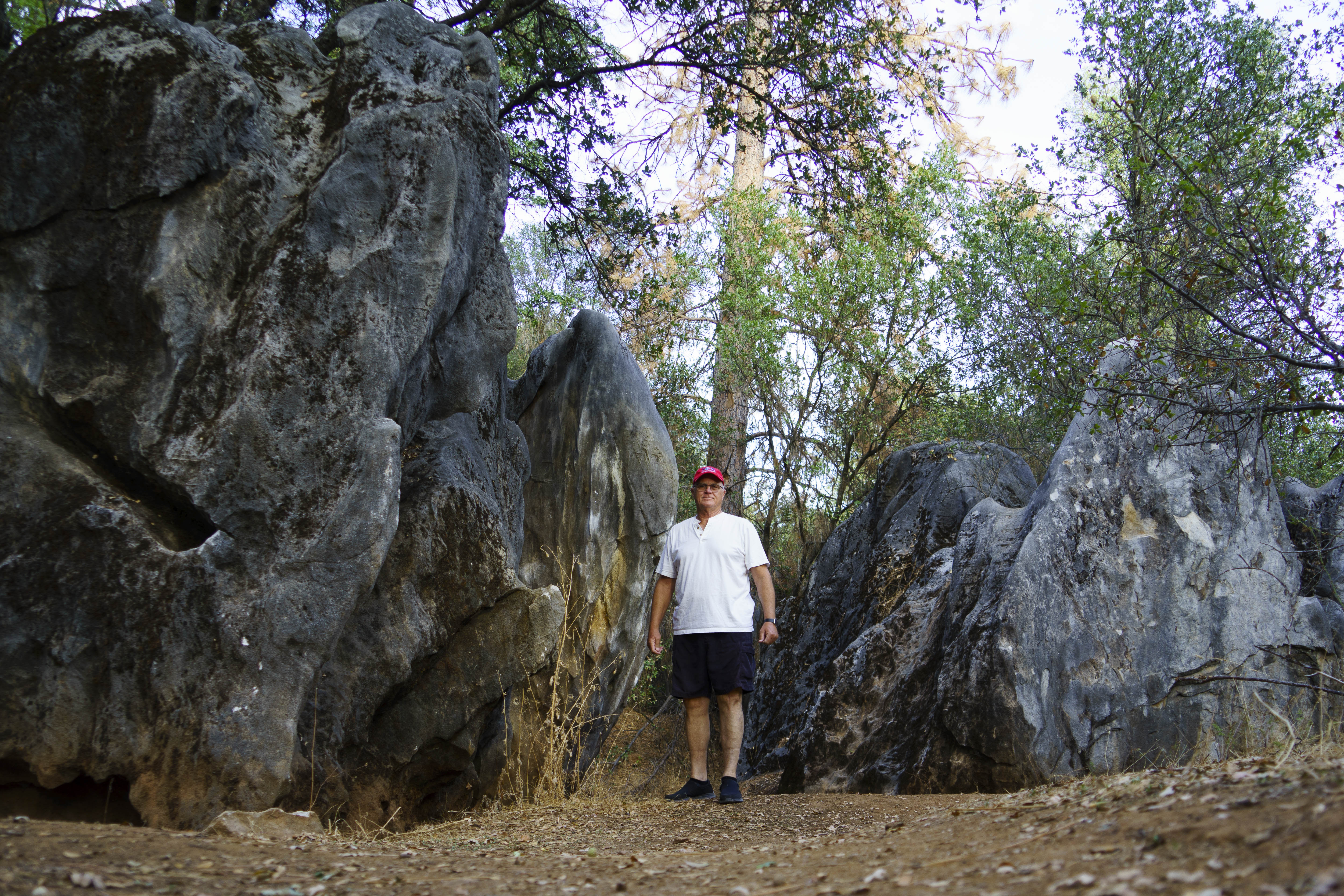
These rocks were underground before the mining operations used highly pressurized water techniques that blew all of the surrounding dirt (and gold) into processing flumes.
The second of the mining towns in the area was Sonora – Queen of the Southern Mines. Unlike Columbia, Sonora has thrived through the years – possibly because it is the County seat. But, there is still much history here, as exemplified in many of its buildings. We especially loved the Old Red Church, built in 1859 and sets at the top of Main Street watching over the town – –
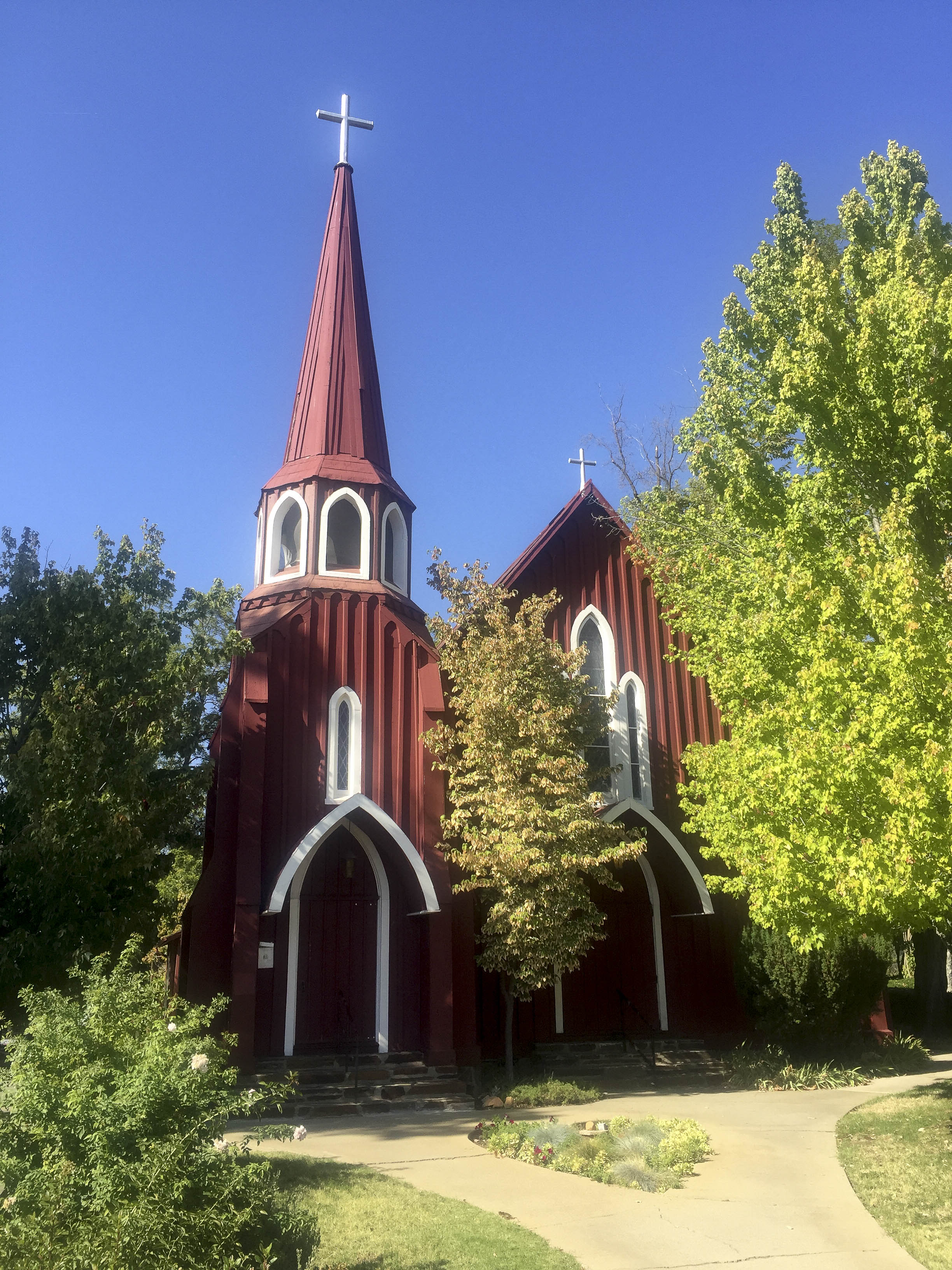
The Old Red Church in Sonora, California.
Natural beauty also abounds in the area. Not far away is the Calaveras Big Trees State Park – home to two magnificent groves of Giant Sequoias. We will NEVER miss an opportunity to visit these sage old trees and to walk among their old souls. They DO speak to you if you stop and listen. AND – they are HUGE!!!
The first of these large trees found back in 1852 created quite a stir. A year after its discovery, the tree – sadly – was felled by ambitious speculators. Since no saw was large enough, the tree was felled with long-handled pump augers and wedges. It took five men 22 days to drill all the holes and even then the tree did not fall for several days. The tree was so large that the remaining stump was planed smooth to serve as a dance floor and a two-lane bowling alley and bar were built on the fallen trunk!!

G on the stump of “the Discovery Tree” that is 30+ feet in diameter (and over 1,244 years old).
These Giant Sequoias (also known as sierra redwoods) are the largest living things ever to exist on the earth – Some living over 3,000 years. AND – they are very tall. The best way to look up at them is to sit on the special benches built for just that – –

Benches for easier viewing of the Giant Redwoods.
From the beauty of the Sequoias to the reality of the water shortage in CA. Several times we crossed what is now a river but used to be New Malones Lake. One can very plainly see the water mark of the water level just a short four years ago.
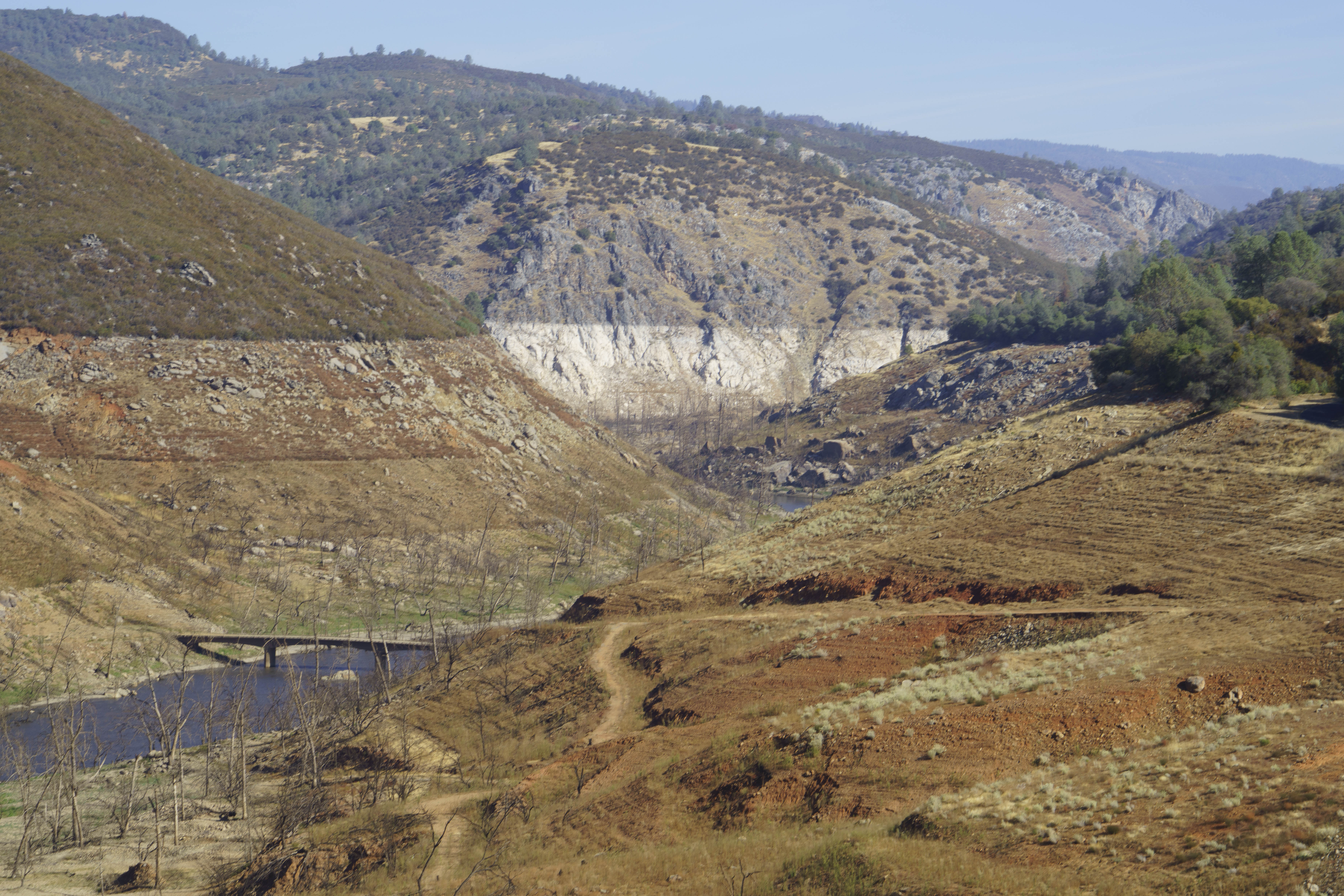
Graphic example of the effects of the California drought. The bridge in the bottom of the picture was left from long ago before the dam created New Malones Lake.
Well – our last little adventure was complete and we were off to one last family visit – daughter Heather and family (Christian, Haley, Kira & Olivia) in Lemoore. There were several wonderfully fun days with dinners, playground visits, football games, movies AND a sleepover in the Bus;-)
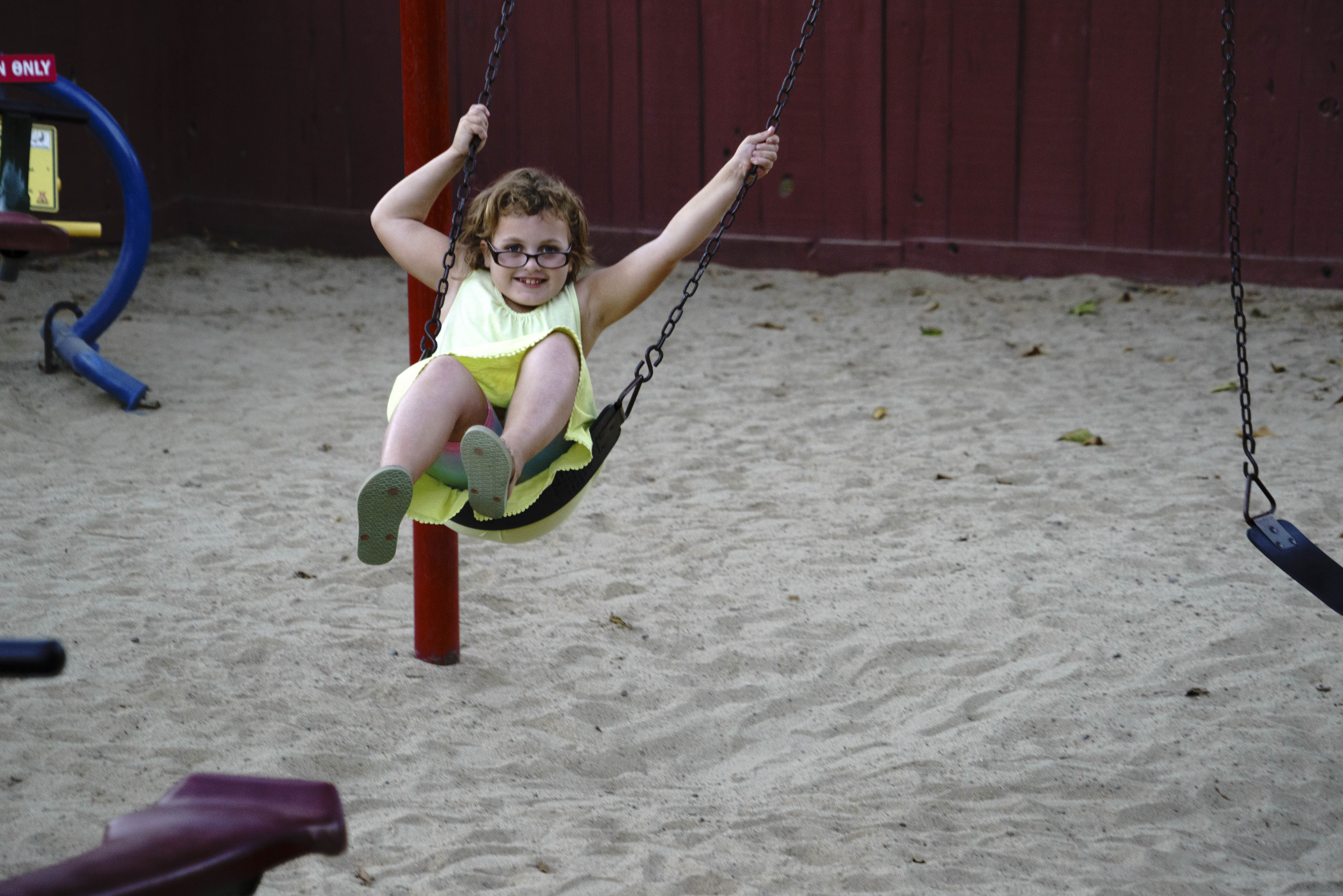
Haley swang…
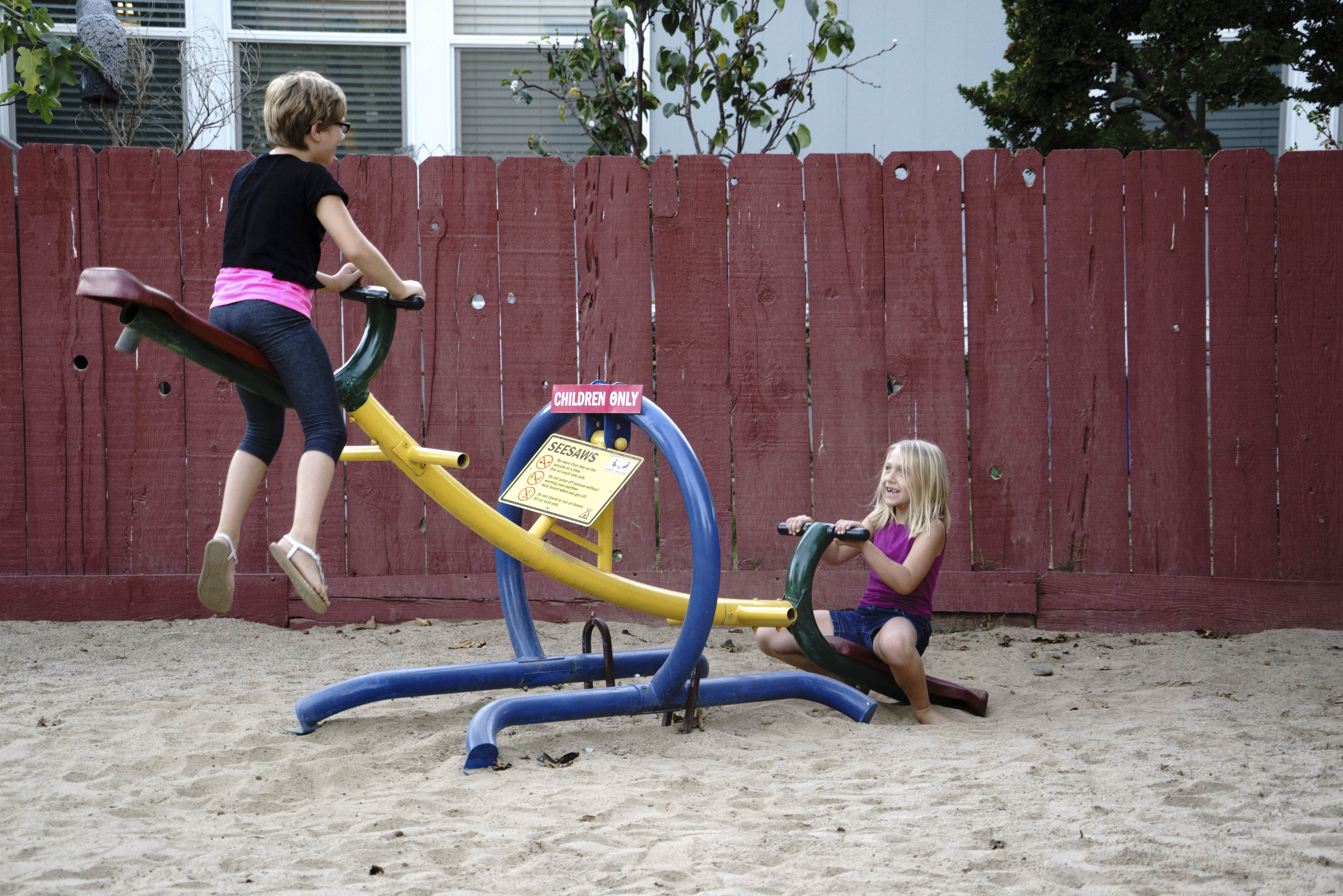
Olivia and Kira seesawed…

and Kira, well, you get it. We were having so much fun that Gramps forgot to take many pictures.
Hard to believe – but, we were just a few days short of being on the road for 5 months! So – it was finally time to close up Magic and to head home.

All good things must come to an end. Magic, please take us home.
E & G – On our way – ‘home again, home again, jiggity jig’
 Elizabeth & Gary's Magic Bus Tour