So – do you remember any of your American history from – probably grade school?? If so, you probably remember that we learned that not much ‘life’ existed in the area now known as Arizona until the Spanish rode in during the 1500’s!
Wrong! Actually the earliest evidence of humans in the Southwest has been radiocarbondated at about 11,500 years ago – the Paleo Indians. Now, I don’t intend to go through 12,000 years of ‘Arizona’ history, BUT – we can fast forward to the 1100 – 1200’s. Several hundred years before the Spanish.
The dominant prehistoric cultures in Arizona and the region hit their developmental peak in the 1200’s, but were largely gone within 250 – 300 years. There were five different groups of these cultures, but the ones we were ‘visiting’ in our travels this month included the Ancestral Puebloans of the Four Corners Area (in the prior post of the Navajo National Monument and the So. Utah sites) and the Sinagua (Seen-awa) – the ‘people without water’ from the area between Flagstaff and the Verde River, which are the subject of this post.
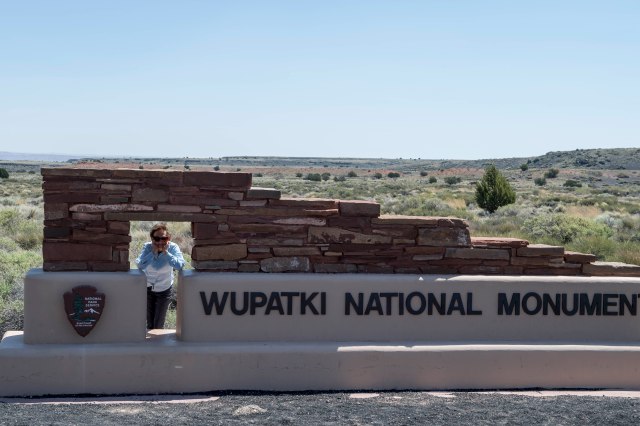
Our first stop is the Wupatki (Woo-pot-ki) National Monument, a 56 square mile area of several ancient pueblos populated by the ancestral Sinaguans but bearing elements of the Ancestral Puebloan traditions.
The Wupatki ruin was heavily populated during the 1100s and grew into a three-story, 100 room pueblo with a ball court, kiva and a nearby spring.
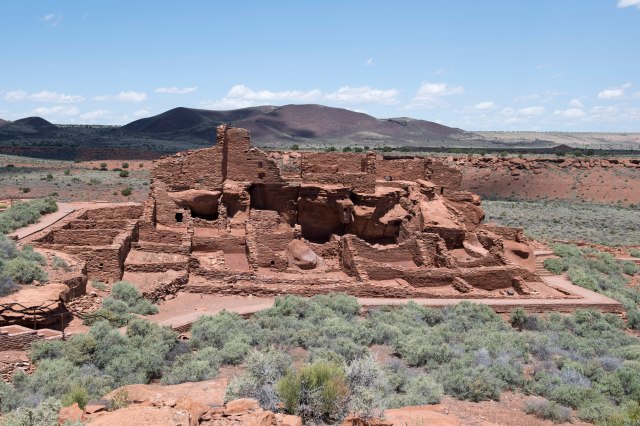
The residences.
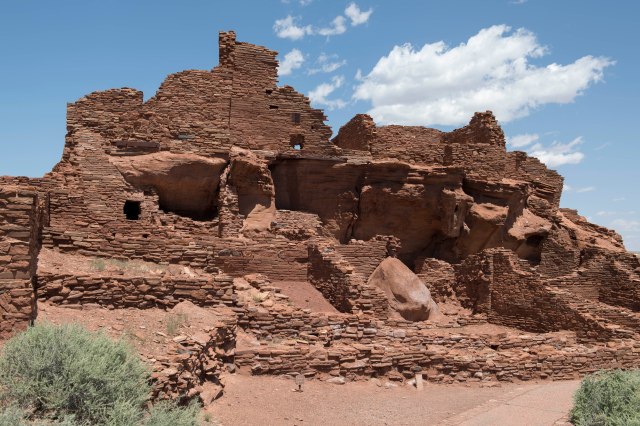

Security guard?
This ball court showed influences of the Hohokam from the southern part of the state, which highlights the travel and trading among the groups. It is believed that Wupatki was a regional center for trade and is validated by the various types of artifacts found in the pueblo.

The Ballfield
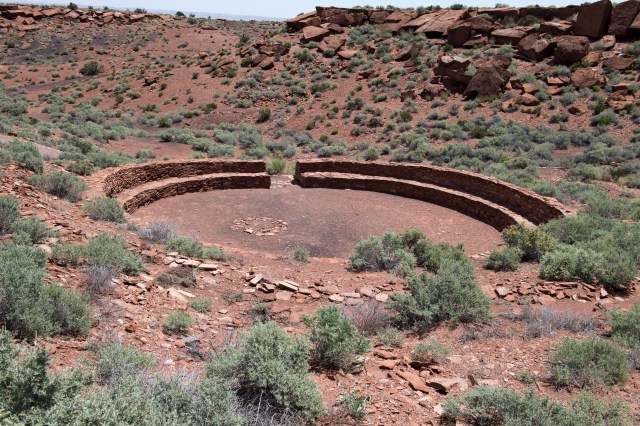
The Kiva.
We found several ‘details’ of the Pueblo VERY interesting – –

Notice the decorative tile work on the back wall.

Frank Lloyd Wrightish built-in “couches”?!?
Another one of the Pueblo ruins in the Wupatki complex – the Wukoki pueblo was built on a rock outcropping and was quite a building marvel.
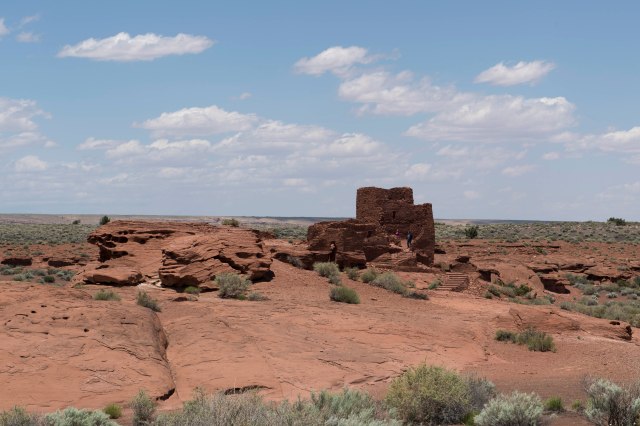
The Wukoki Ruins were small but interesting.

Just a bit to the south of the Wupatki complex is Walnut Canyon NM (We just love taking the pictures of these monument signs and comparing them from one Park or NM to the next. We just can’t help ourselves;-)! ) – –
Unlike the large, above-ground village at Wupatki – Walnut Canyon was made up of cliff dwellings. The inhabitants here took advantage of natural recesses in the limestone walls to build their homes. The Canyon is huge with approximately a 500′ vertical from the rim to the Walnut Creek on the canyon floor (thankfully the trail only descends about 185′) . This allowed for many levels of dwellings in the canyon walls.

This was a ‘high rise, multi-level’ development!


These Sinagua homes remained largely undisturbed until the 19th century. In the 1880’s the railroad brought souvenir hunters to the ancient dwellings, which lead to theft and destruction;-( This was one of the better preserved/reconstructed ‘homes’.

These cliff dwellings were occupied for little more than 100 years. Again, why these people left is not clear, but by 1250 they moved to new villages a few miles southeast along Anderson Mesa.
Investigating the Flagstaff area proved to be quite a bit of fun for the two of us – as E had not spent any time here for 45 years (since graduating from NAU) and Gary had never spent much time here. We loved the Pueblos – but, for those not into such things there is lots more to see.
Sunset Crater Volcano NM for example. Sunset Crater is a 1,000 foot volcanic cinder cone – the most recent volcanic creation in the 6 million years of volcanic activity in the 2,200 sq. mile region called the San Francisco Volcanic Field. The ancient people we have been talking about above would have seen this last eruption which took place in about 1064.
The Lava Flow Trail took us across the lava flows and gave great looks at the cinder cone, which even today – 900+ years later – has no growth on it – –

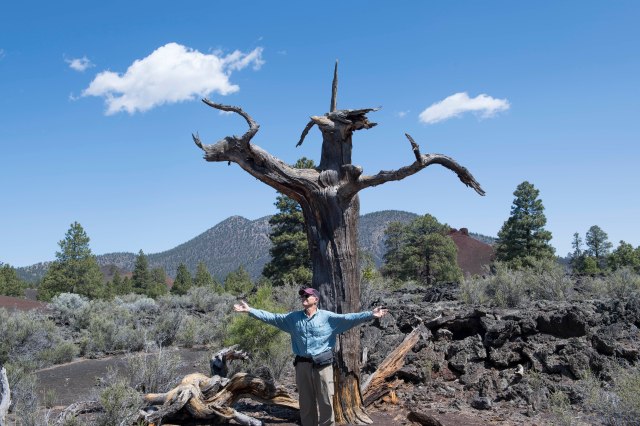
Which one is the oldest?
There is also the Old Town area of Flagstaff, which includes the Northern Arizona Campus – E’s alma mater. Every old campus has that “Old Main” building which defines the University.

Old Main
Even the County Courthouse has that same ‘look’ – –
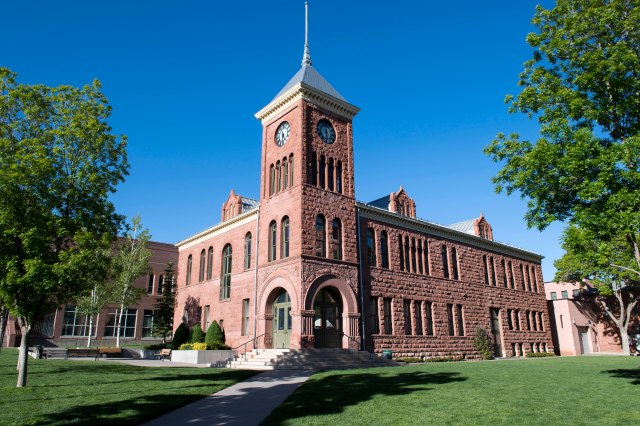
Coconino County Courthouse
The Historic walking tour took us past the 1889 Santa Fe Depot, Saloon Row, The Weatherford Hotel (1898), the Monte Vista Hotel (1926) and the Babbitt Brothers Building (1888), which helped us find the best Thai restaurant around directly across from Babbitt’s Sporting Goods;-)
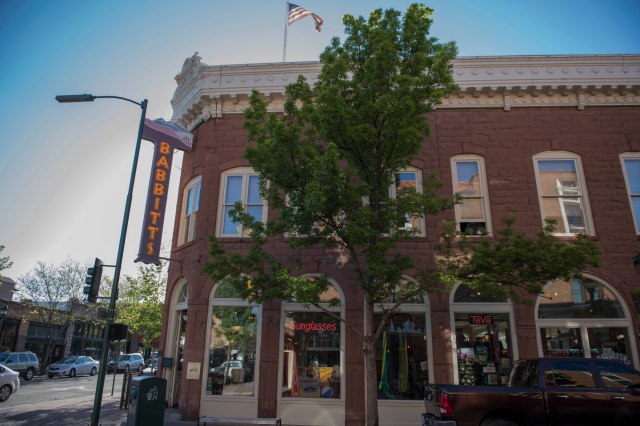
Babbitts..a well known name in Arizona.
Riordan Mansion State Historic Park is also in the old part of Flagstaff adjacent to the NAU campus. This house was built in 1904 for two Riordan families – brothers who owned the logging business and developed many of the other businesses in town as well as many services such as the hospital. The house is approximately 13,000 sq. ft. – 6,000 on each side for each family with a 1,000 sq. ft. common living room in the middle.
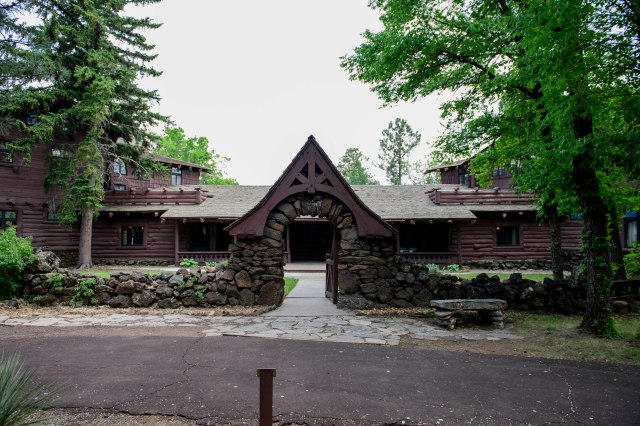
The Riordan Mansion
Perhaps the most interesting and educational outing was the Lowell Observatory. Percival Lowell established this observatory in 1894 with the intent of searching for evidence of life on Mars. He ordered the telescope from Alvan Clark & Sons in Massachusetts. The telescope was built in 1896 and moved to the Observatory. Not only was it utilized to study Mars, but it was used extensively to map the Moon during the 60’s. Representatives from NASA and the astronauts who landed on the Moon spent a lot of time at the Lowell Observatory studying this mapping and the Moon before the moon landing, as the mapping completed here determined where the Rover landed.
This dome houses the Clark Telescope and is the oldest standing building at the observatory.

The Clark Telescope at the Lowell Observatory is more than 100 years old.
Can you believe that the dome is NOT attached to this building in any way. It rests on 1954 Ford tires, which were determined to be the best ‘fit’ for the job!
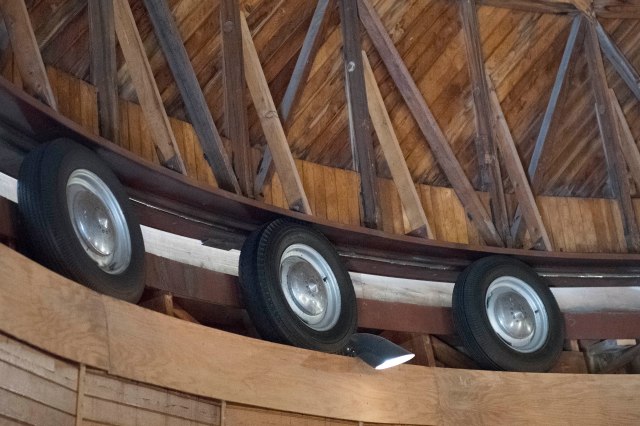
The dome rotates on 1954 Ford truck tires. They even have the original Ford hub caps.
While we didn’t help with any mapping of the Moon or searching for life on Mars, we did check out Jupiter with this bad boy;-)
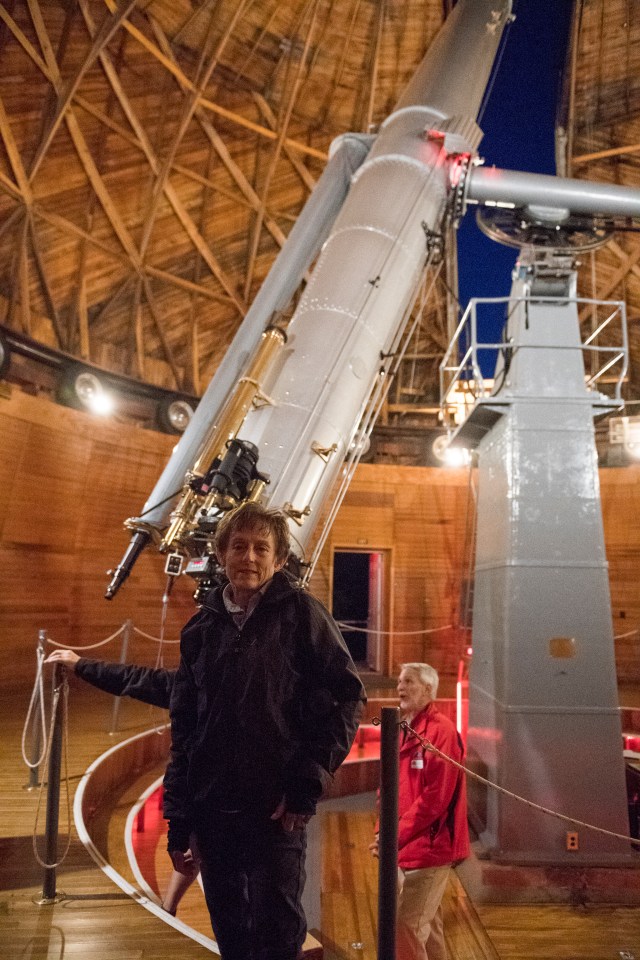
We went back after dark and were able to view Jupiter and 3 of its moons.

The Lowell Observatory also houses the Pluto Telescope, which is a 13 inch astrograph used to discover Pluto in 1930!
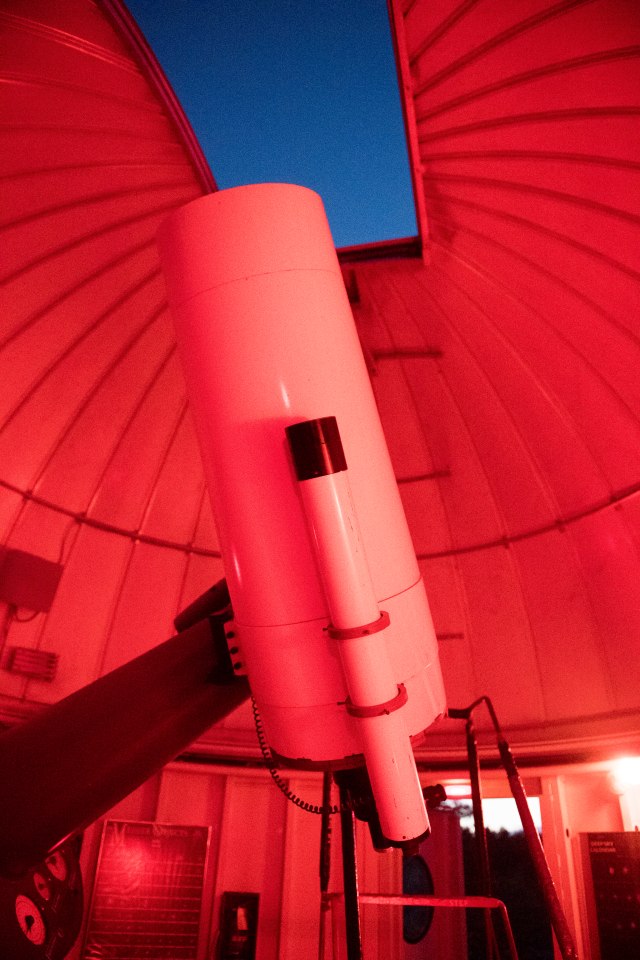
McCallister Telescope.
Flagstaff is much like Park City when it comes to hiking. There are way more trails than we could ever investigate. The Kachina Peaks trail had a lot of appeal as it is thru the trees and at about 9,000′, quite cool and with stunning views. So – we were off – –
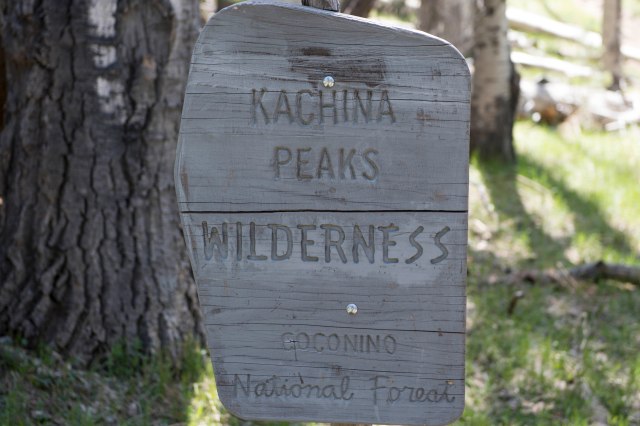
The Kachina Trail – near the Snow Bowl on Mt. Humphries (the highest point in AZ).
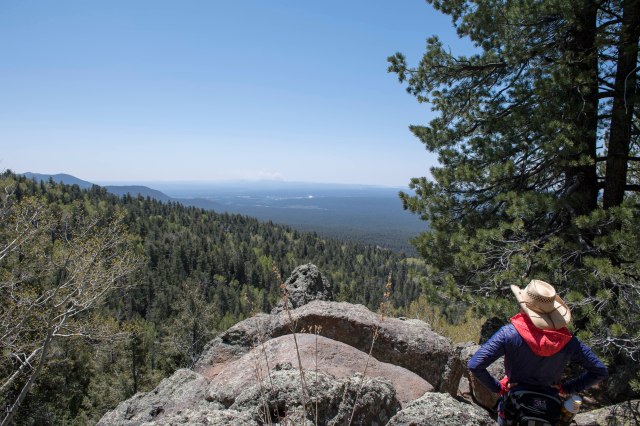
That is the domed stadium on the campus of NAU in the center of the photograph.

We almost didn’t find this part of the trail. Gary took a wrong turn. Thank goodness the gadget head had downloaded the trail map
After two weeks of exploring, a return trip to Phoenix was in order. The timing was set to coincide with the closing of the Stradivarius exhibit at the Musical Instrument Museum and all the special activities set for the closing week-end. Even Mom, Dorthy, enjoyed the exhibit.

Dorthy and E with the 1789 Stradivarius.
Our return trip also coincided with the hottest days so far in Phoenix!!!!!!

Holy Crap!!!!!!!
It was a short stay – we got the heck out of town and back to a little cooler weather in Flagstaff as fast as we could;-)
WOW – that was a lot to cover! Hope you aren’t all worn out reading this.
E & G – will try to be shorter next time.
 Elizabeth & Gary's Magic Bus Tour