Our “Tale of Canterbury” of September 28, 2022 goes like this —
The entry into Canterbury took us back in time – to 597 AD and the Romans who founded the city. By the 1100’s, as Christianity had become more established in England, Canterbury was its religious center. The new medieval city walls had been built on top of the original Roman wall and we’re still there to remind one of the city’s history.


In the center of historic Canterbury is the enormous Canterbury Cathedral, still today the headquarters of the Anglican Church. Although not always in its present form, a church has been on this site since St. Augustine, the cathedral’s first archbishop, broke ground in 597!

With one’s back to the Nave, the beautiful West Window awes. The bottom two rows are mostly original, 12th century stained glass.

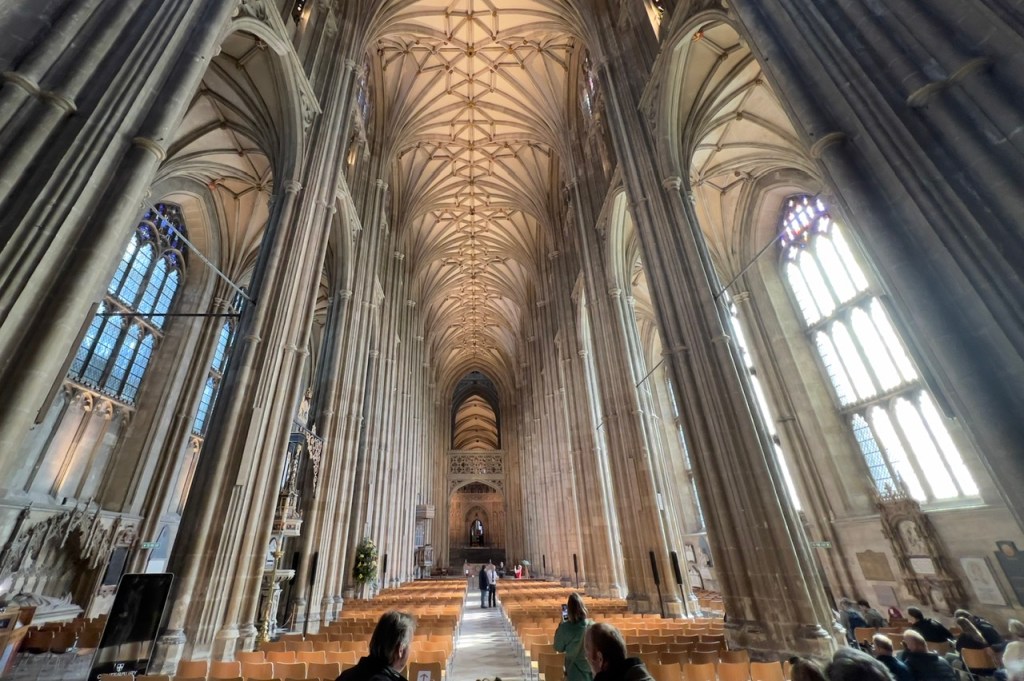
The Nave was the Gothic part of the church – for the common people. Beyond the beautiful carved “screen” was the “quire” reserved exclusively for the community of Benedictine monks and church VIP’s. It is amazing that all of this was not lost in World War II, as the city was heavily bombed on several occasions.
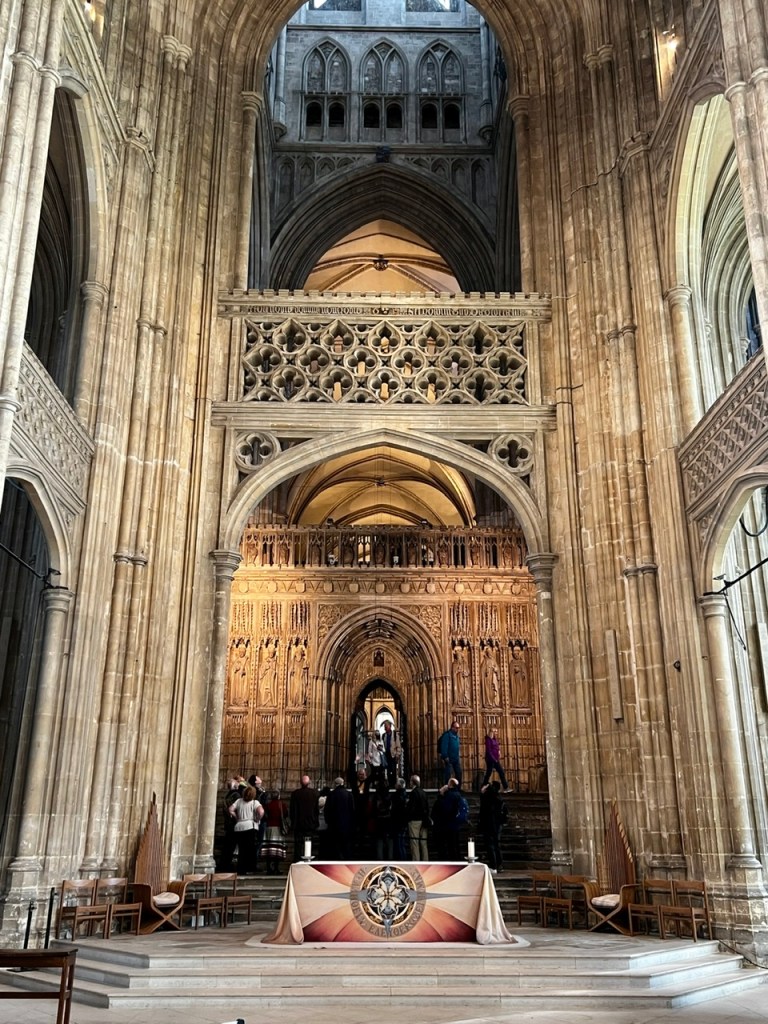
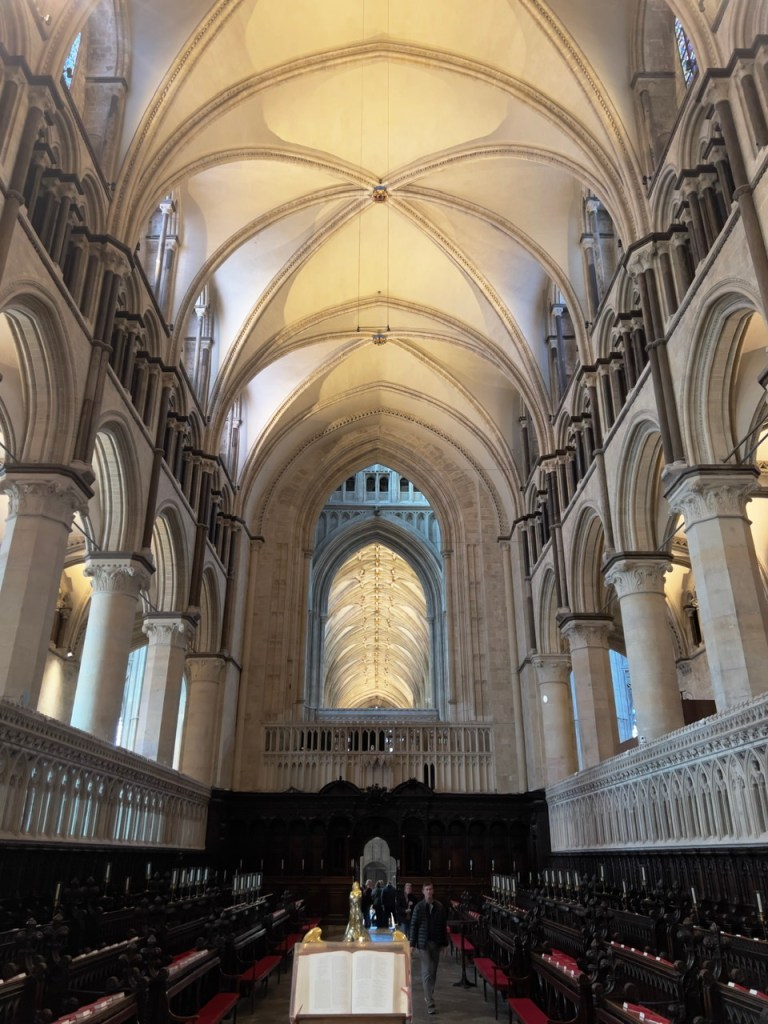
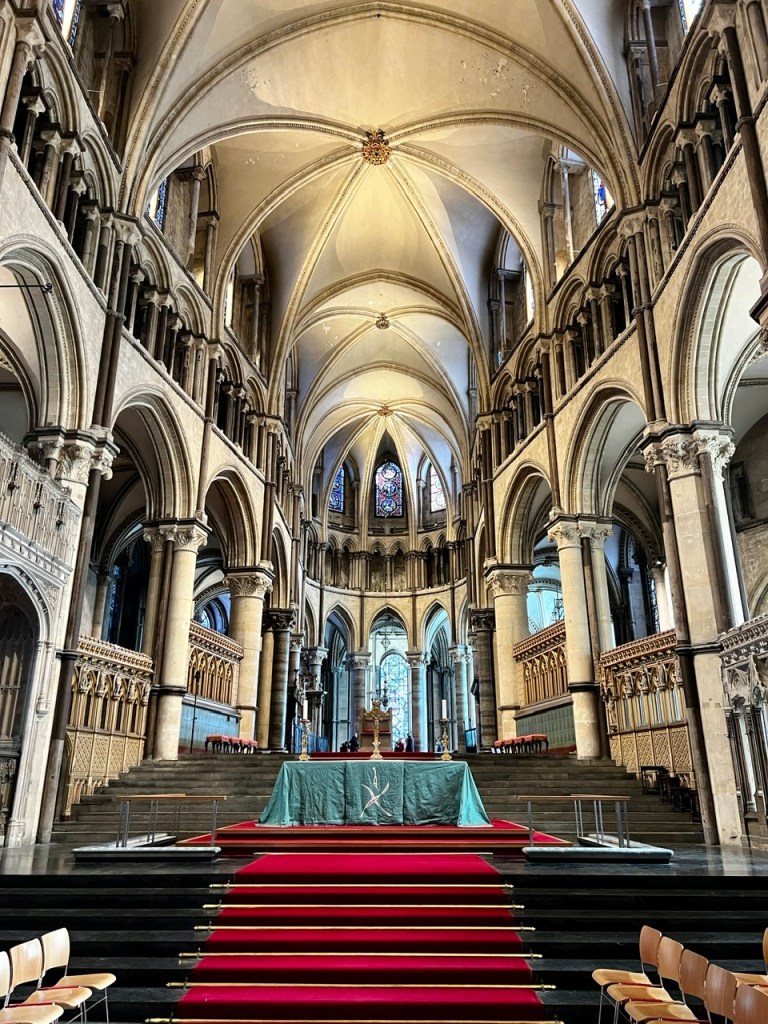
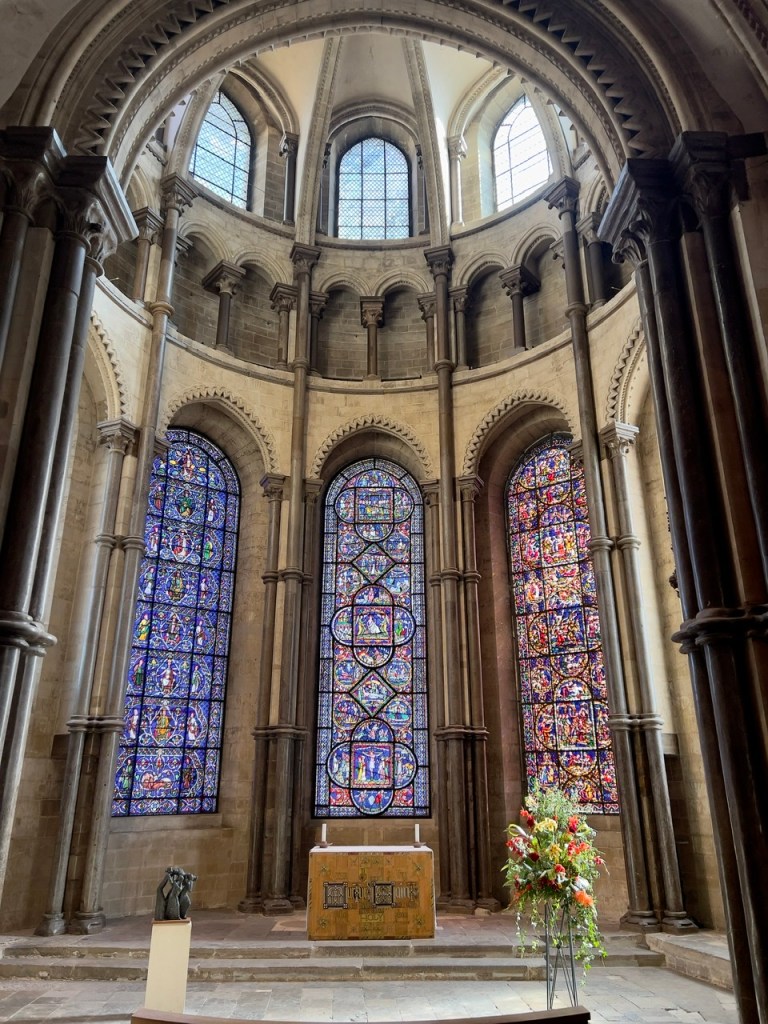
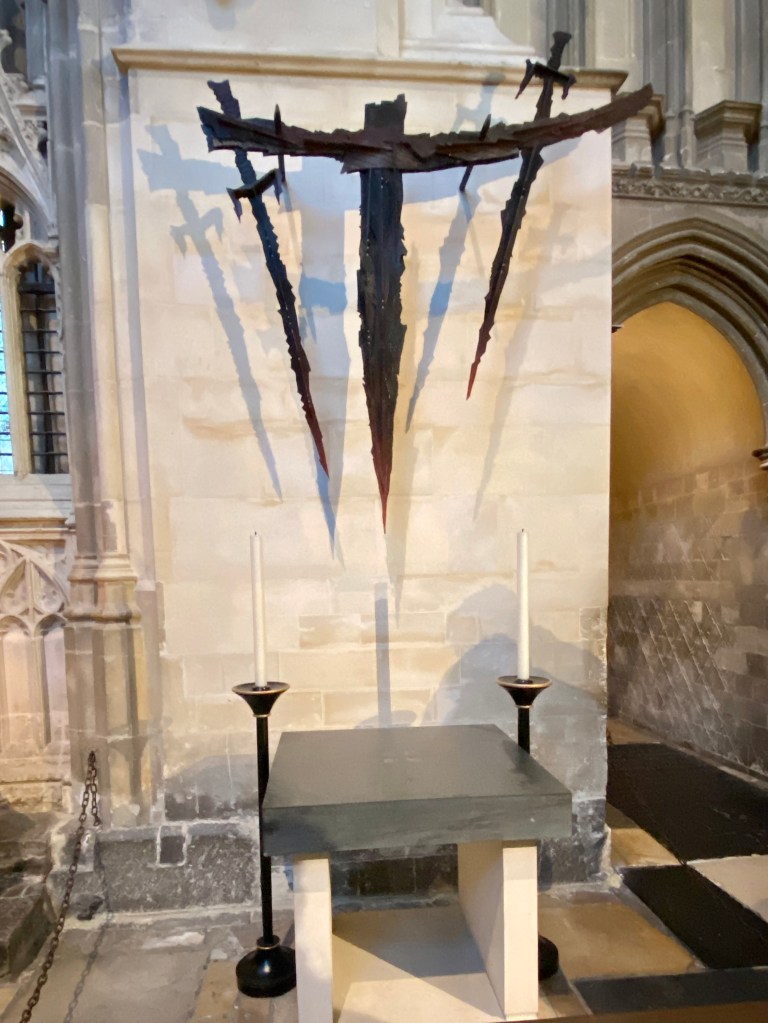
In 1162, King Henry II was looking for a new archbishop, someone who would act as a yes-man and allow him to gain control of the church. One day he appointed his drinking buddy, Thomas Becket, a priest and consecrated him as archbishop the next day. Much to King Henry’s surprise, his old buddy took his holy office with a great deal of dedication. As tensions grew with the King – he wondered aloud one day “will no one rid me of this turbulent priest?” Four of his knights took his words as an order and assassinated Becket with their swords during vespers. The place of his death is marked in the church —
The Trinity Chapel also had a shrine honoring St Thomas (Becket) from 1220 until 1538, when it was demolished and removed by another Henry – King Henry VIII – who had another break with the church and started his own Anglican Church.

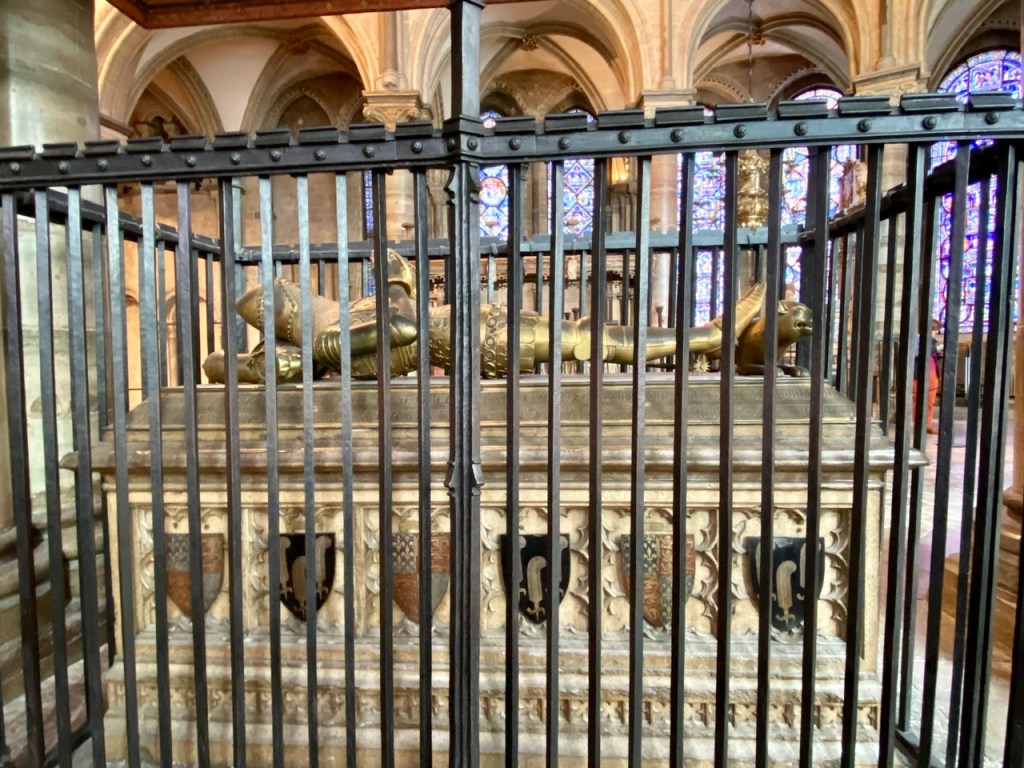
Also housed in the Trinity Chapel are the royal tombs of King Henry IV and Edward, Prince of Wales known as The Black Prince (watch A Knights Tale😂).
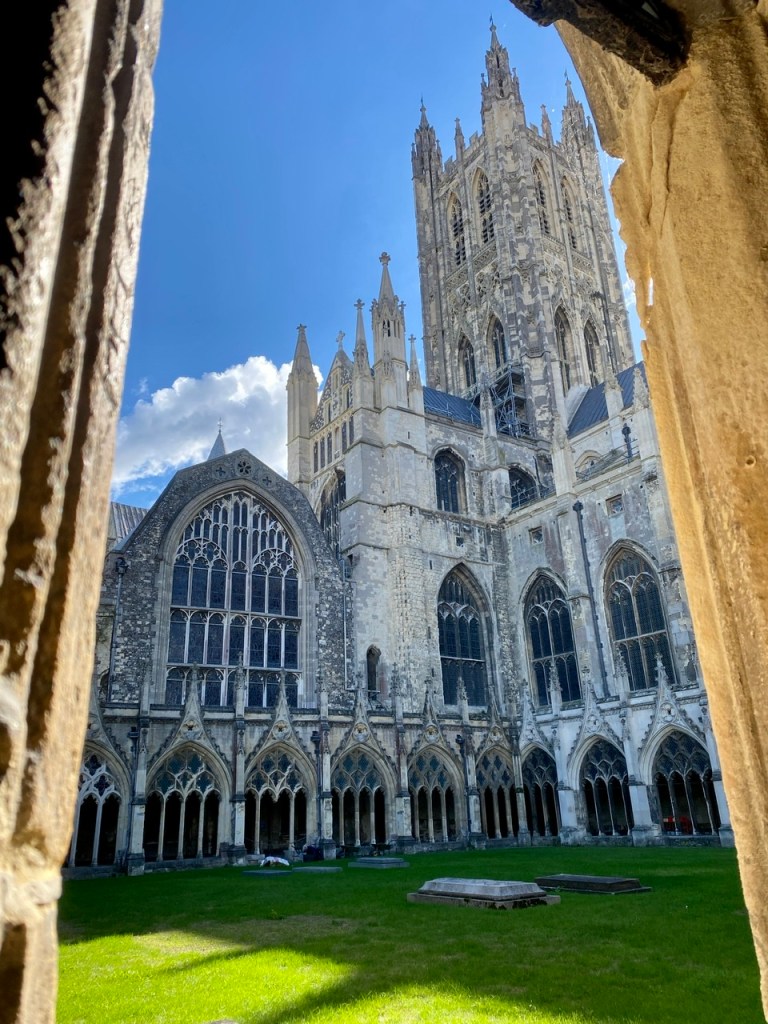
Last, but not least, is the peaceful Cloister. It was the center of monastic life and connected the various parts of the monastery.
Our Canterbury Tale took us from 597AD to the 1100’s, 1500’s and today. What a trip!
E & G awed by splendor!
 Elizabeth & Gary's Magic Bus Tour