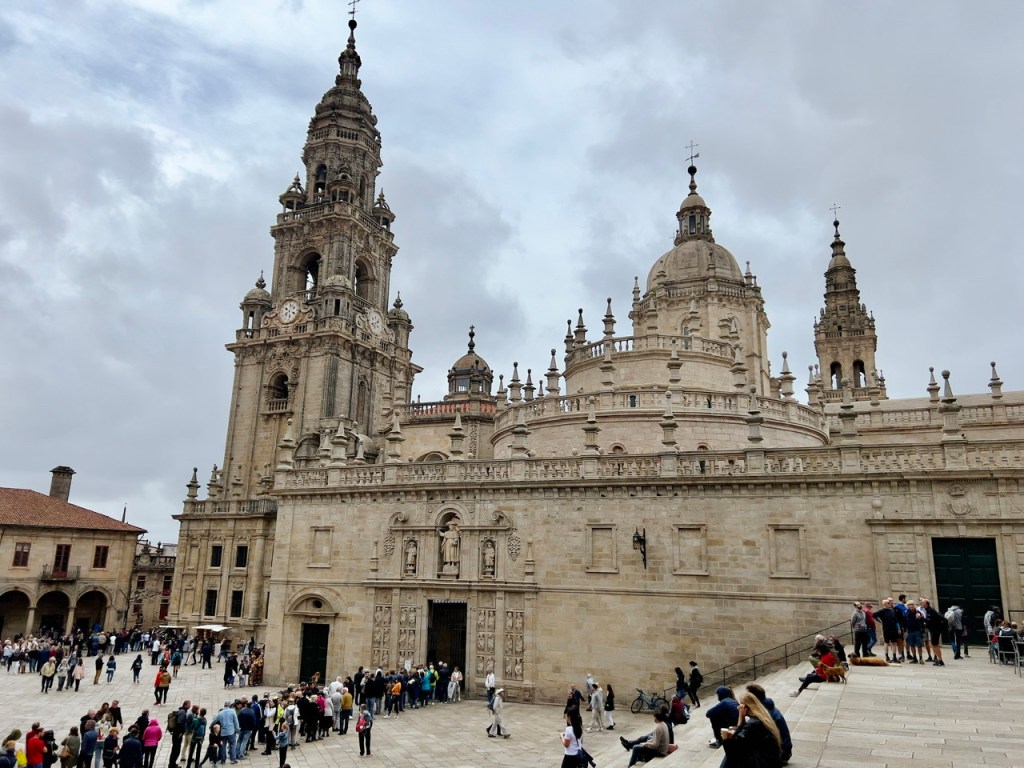
This capital of northwest Spain’s Galicia region is known as the culmination of the Camino de Santiago pilgrimage route and the alleged burial site of the apostle St. James. This UNESCO World Heritage site houses the Catedral de Santiago de Compostela, consecrated in 1211, with elaborately carved stone facades which open onto grand plazas within the medieval walls of the old town.
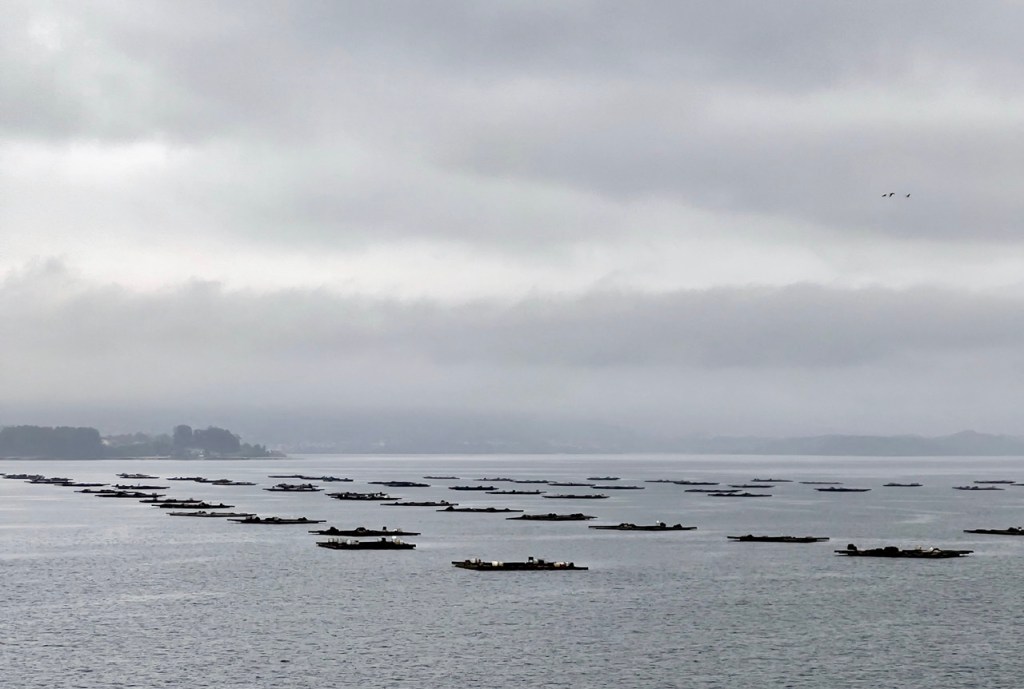
Before getting to the walls of the old city, one might pass hundreds of mussel harvesting platforms. These licensed platforms have become so lucrative (each platform producing as much as 500,000 euros in revenue annually) that they are passed from family member to family member. Today, they are the second largest producer of mussels! These platforms look like their own floating army – and quite ominous coming into the port.
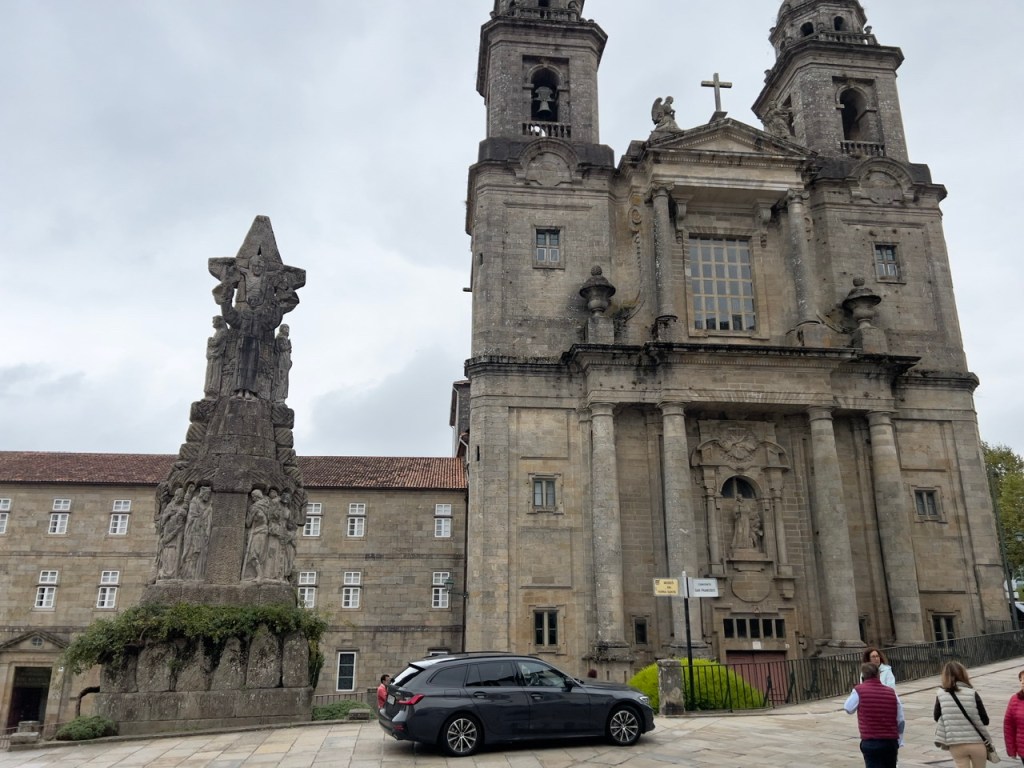
Before arriving at Plaza del Obradoiro and Catedral de Santiago, one passes into the old medieval part of the city and past the Convent de San Francisco and many of the University buildings.
And then – before you is the HUGE Catedral de Santiago and the celebrating pilgrims who have just completed their 500 mile walk on the Camino de Santiago.
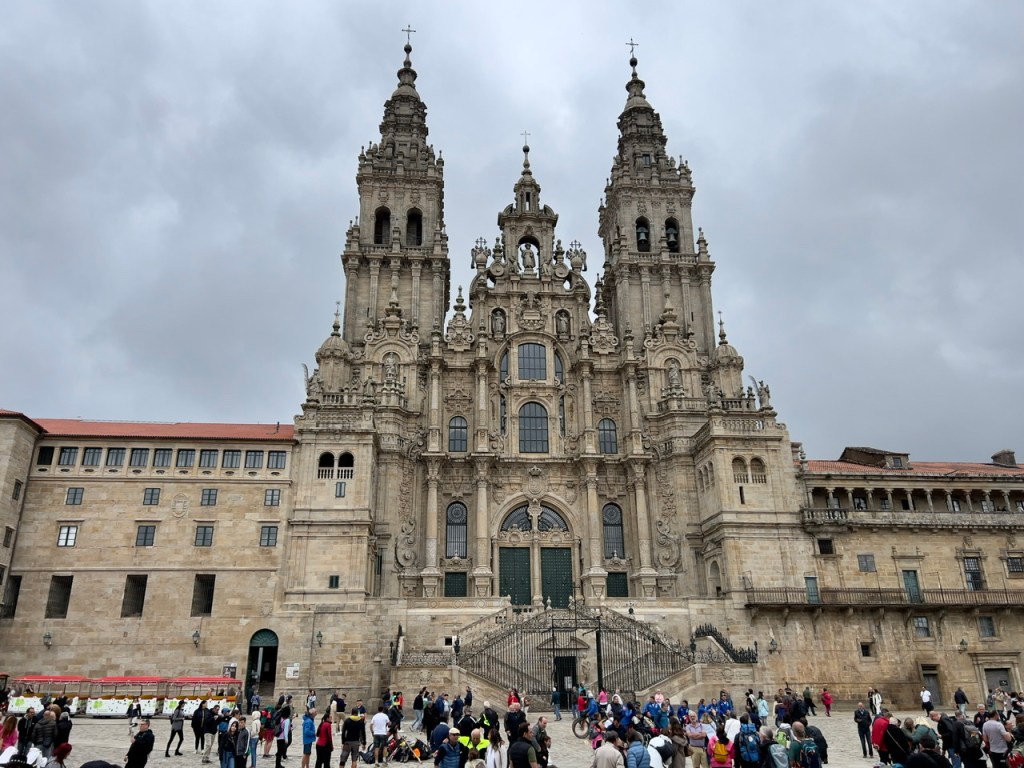
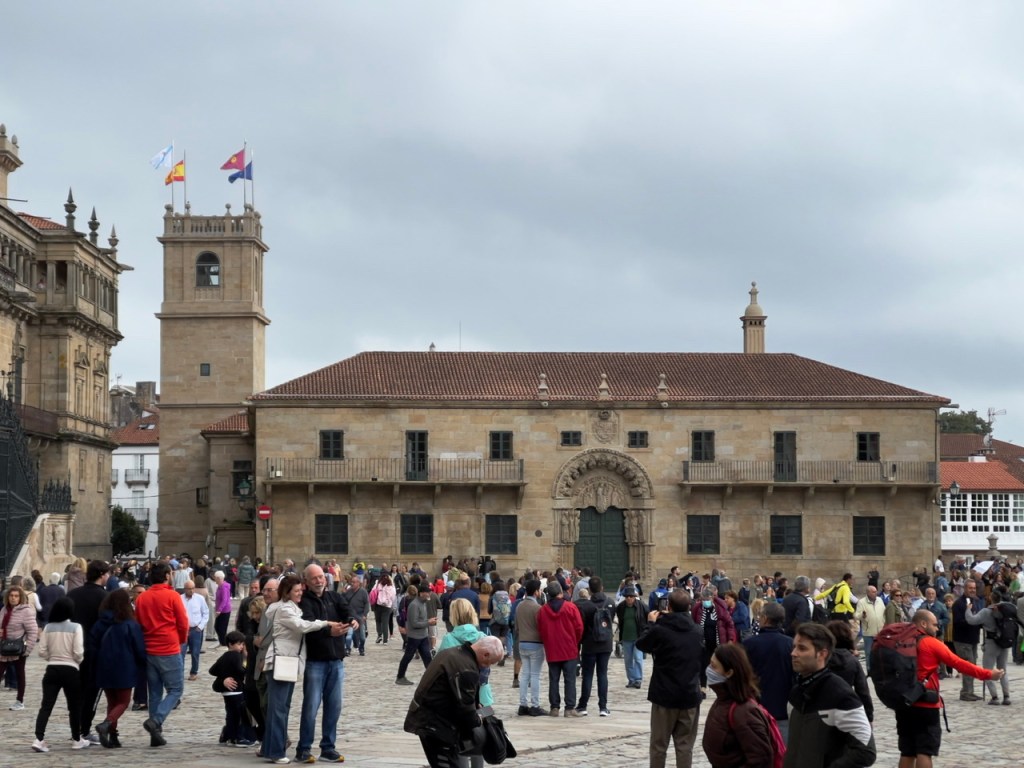
The pilgrims objective after reaching this destination is to enter the cathedral to observe the remains of St. James. AND – if one is lucky enough to arrive to Santiago de Compostela while the ‘Holy Door’ is open, it is an added plus to the experience. The Holy Door is only open in a Holy Year, which occurs when the 25th of July (feast of the Apostle) falls on a Sunday. On December 31st, the Door closes until the next Holy Year (2027). Because of Covid, the Door was not open when the previous requirement occurred but was postponed by the Pope until this year. According to Jacobean tradition, entering thru this special Door will forgive all ones sins. So – through this door we were able to enter!
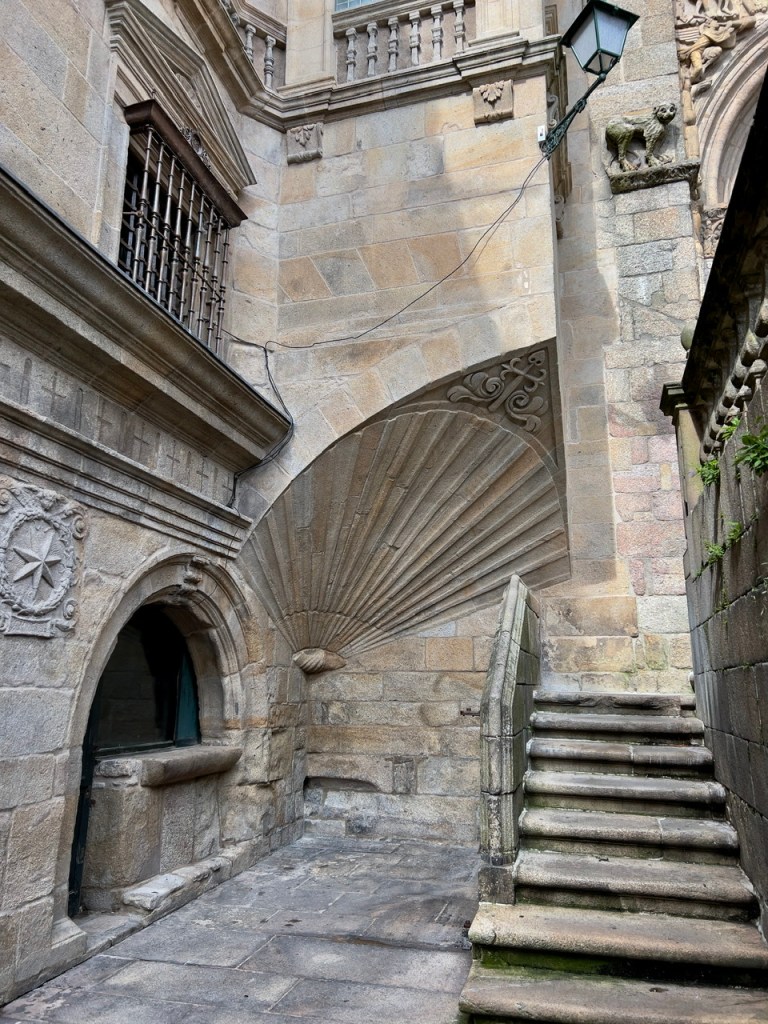
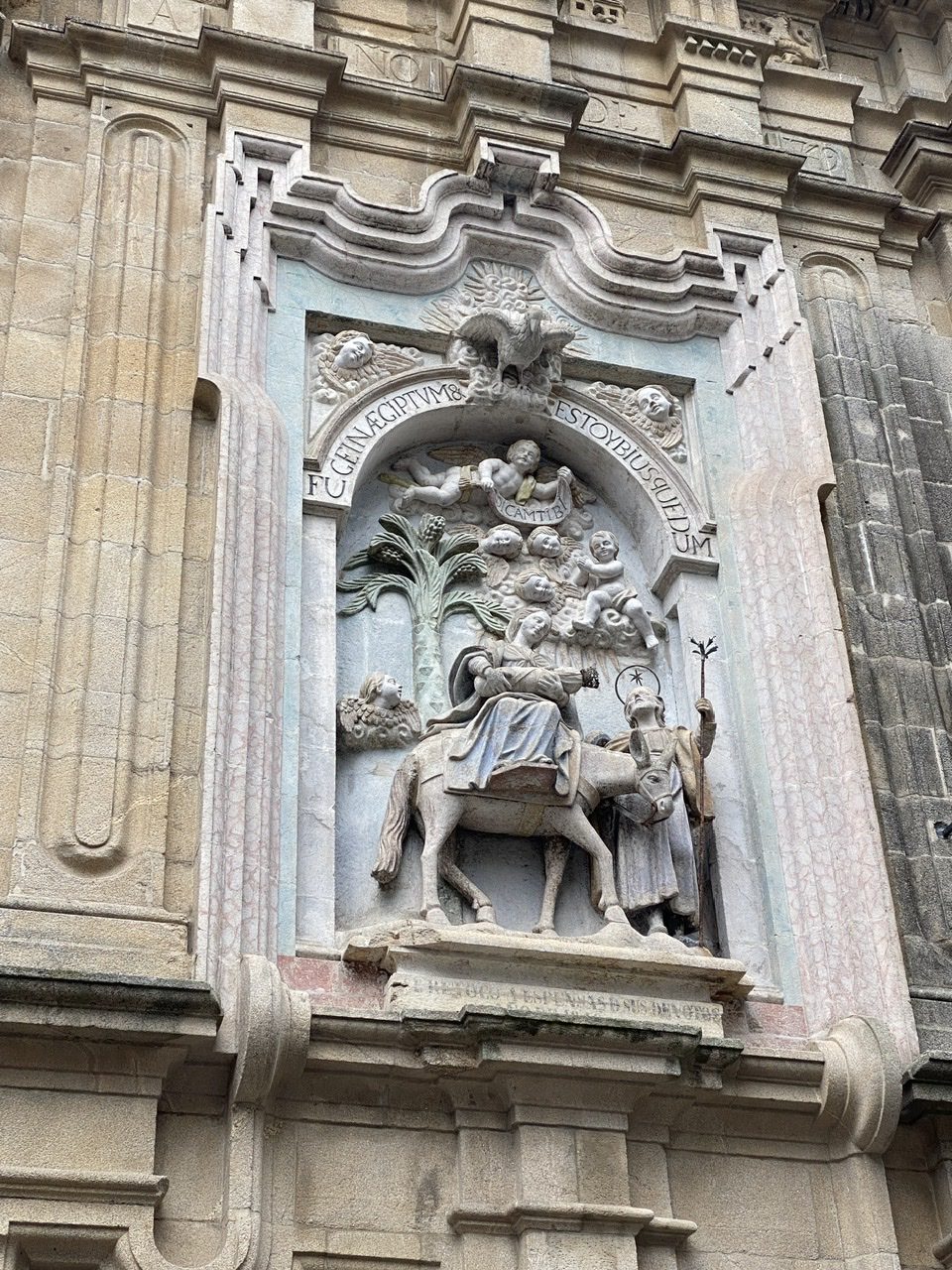
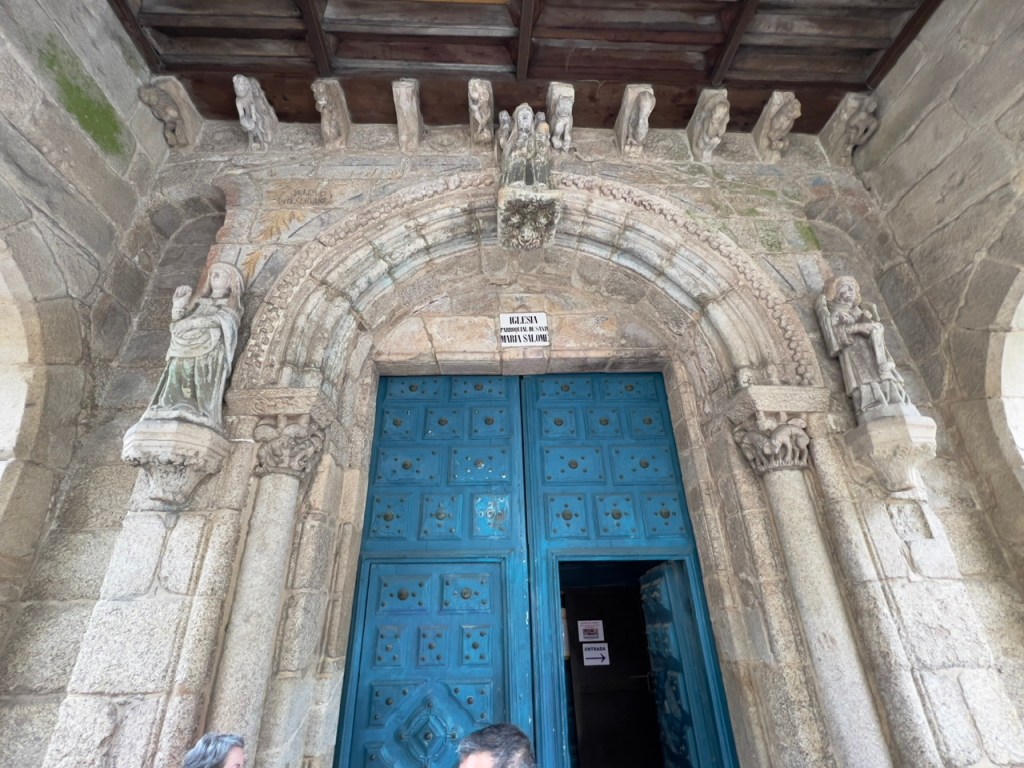
The ‘perfect’ shell is the symbol associated with the church and, therefore, with the Camino. A beautiful specimen is carved into the front entry of the church as are many other symbolic carvings. Remember – these all date back 700 years!
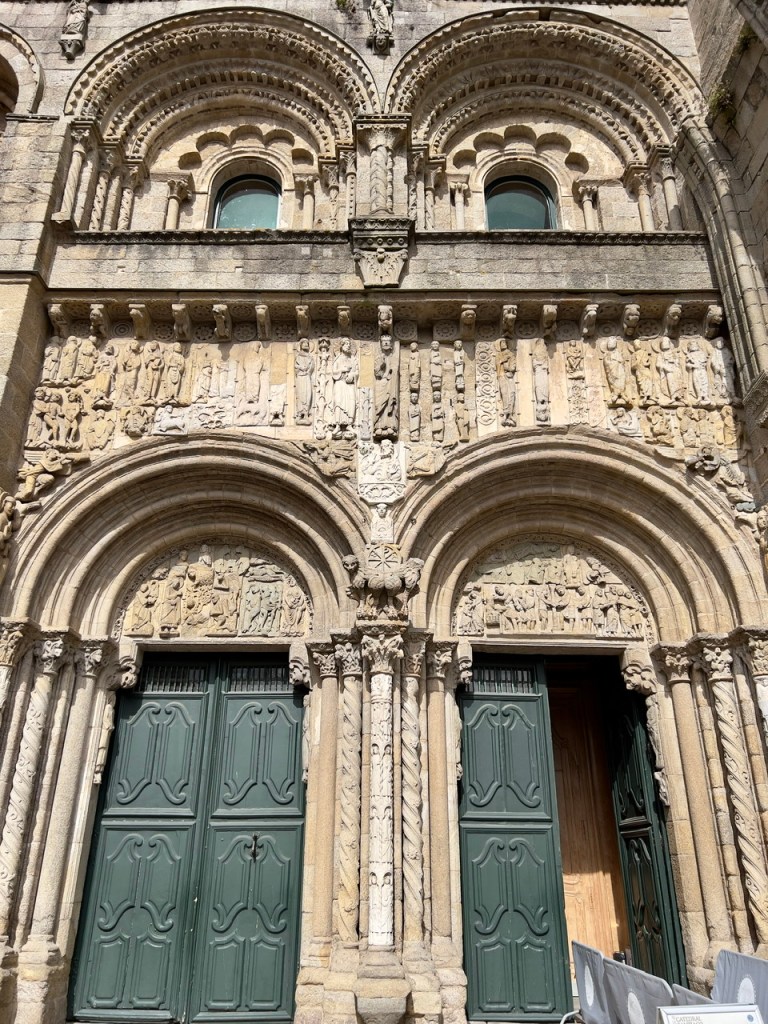
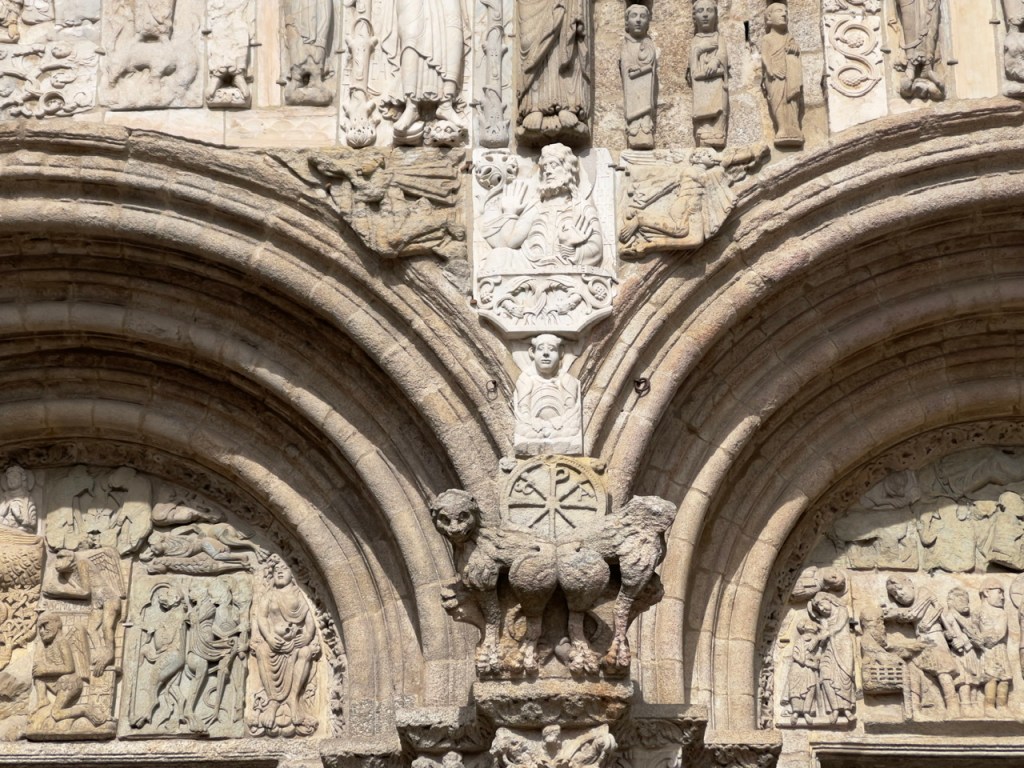
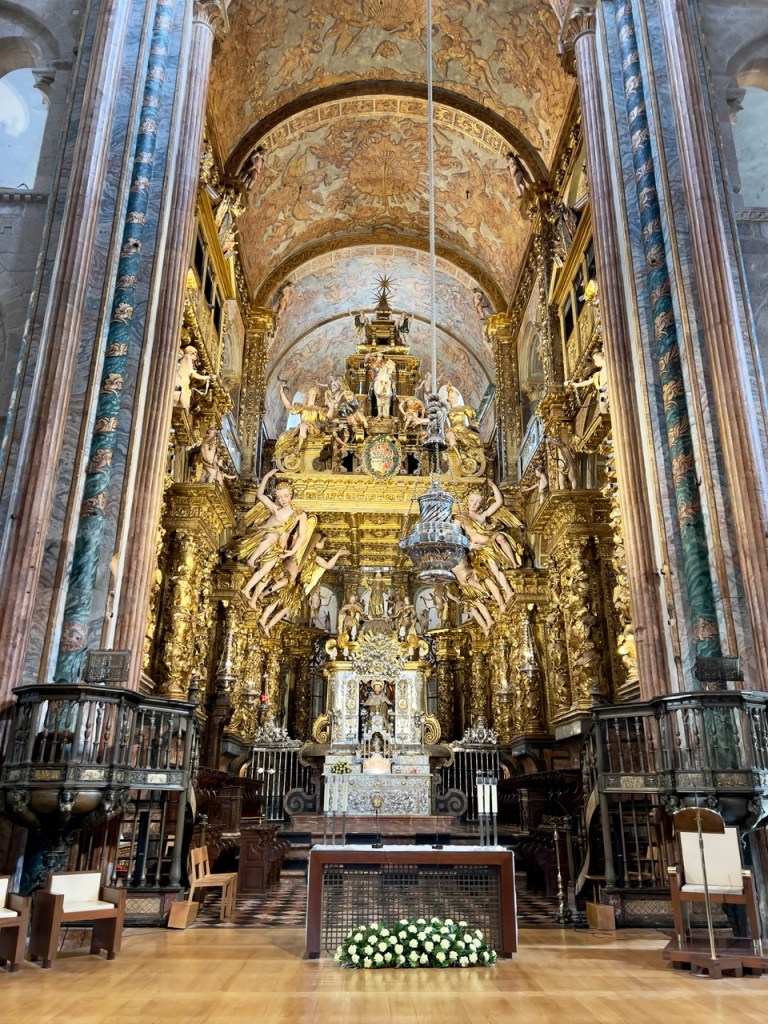
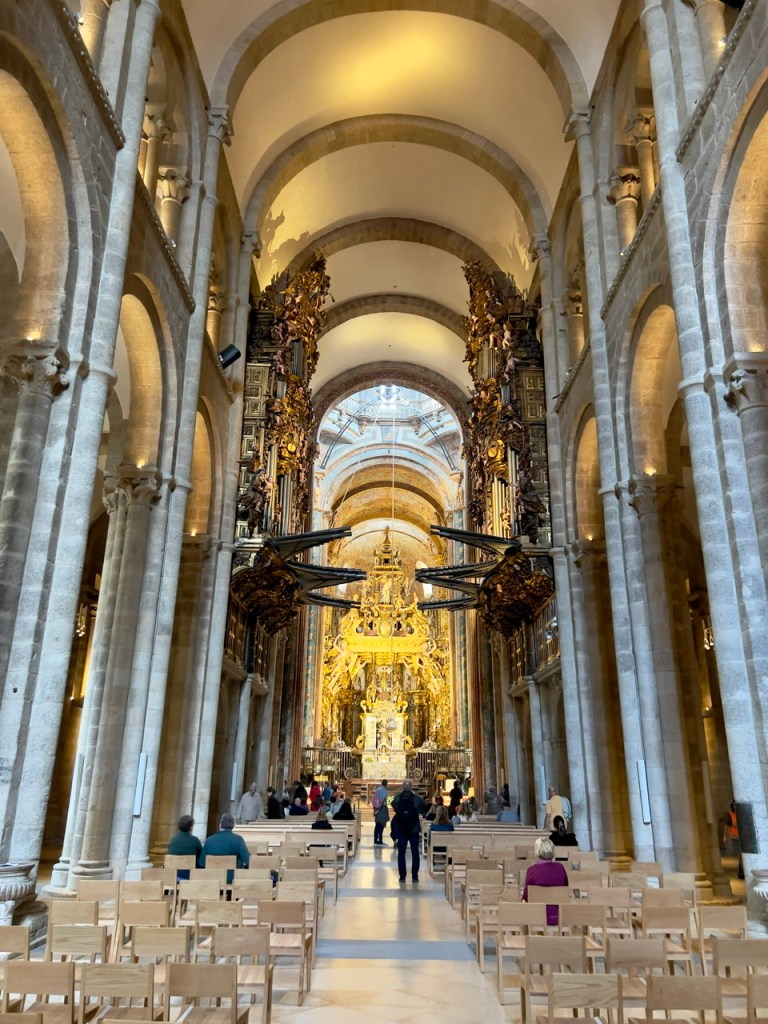
The interior of the cathedral takes ones breath away. Its height, size and opulence can not be adequately described. Neither do pictures do it justice – –
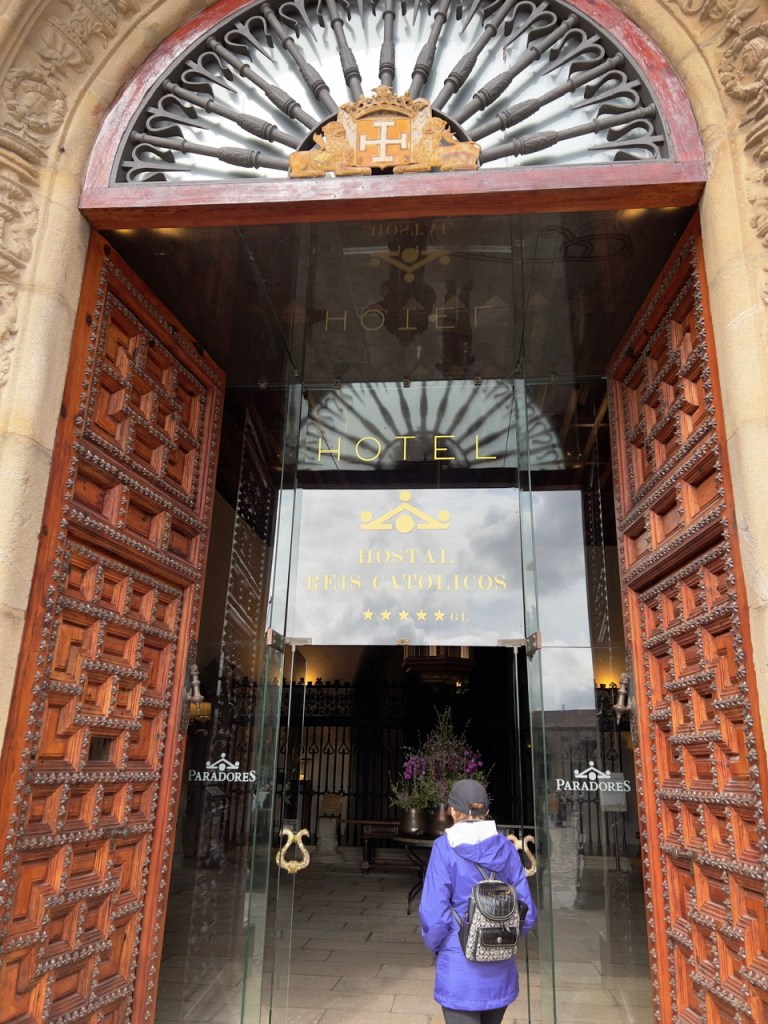
When standing in front of the Catedral in Plaza del Obradoiro, to the left is Hospital Real de Santiago de Compostela. Originally built by Ferdinand and Isabella as a refuge for pilgrims who had walked miles to the Catedral and upon arrival were worn out, tired and often sick – and had no place to go once they arrived. Attached to the Hospital is the Convent de San Francisco. Today this is a luxury hotel and the site of our lunch.
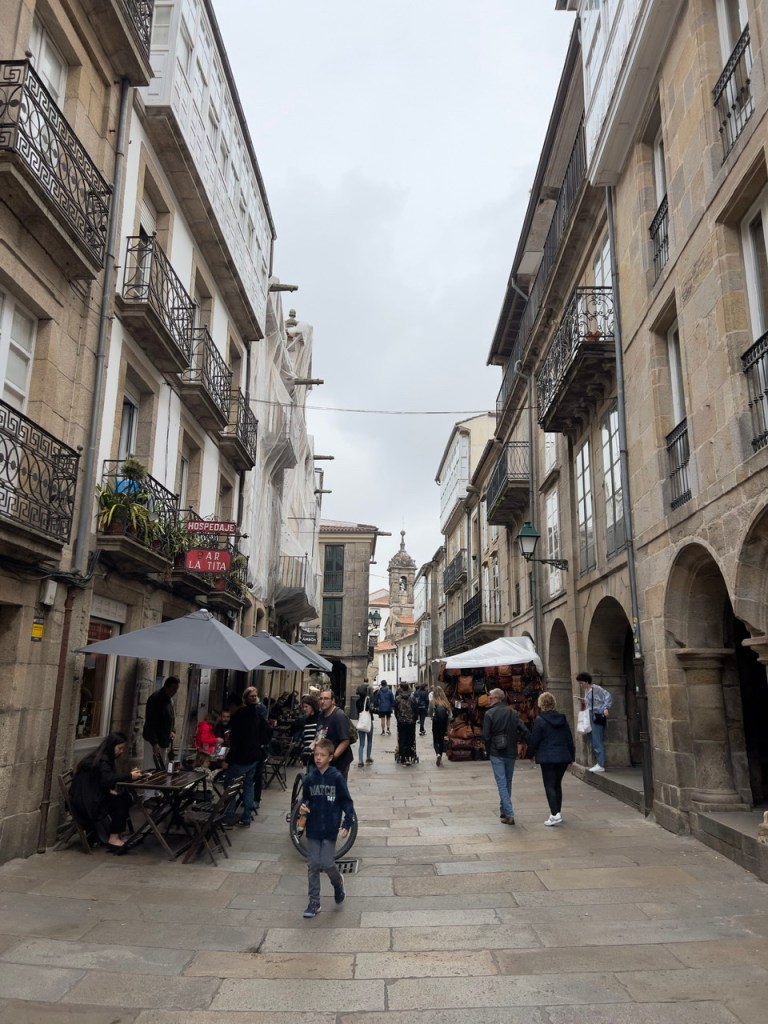
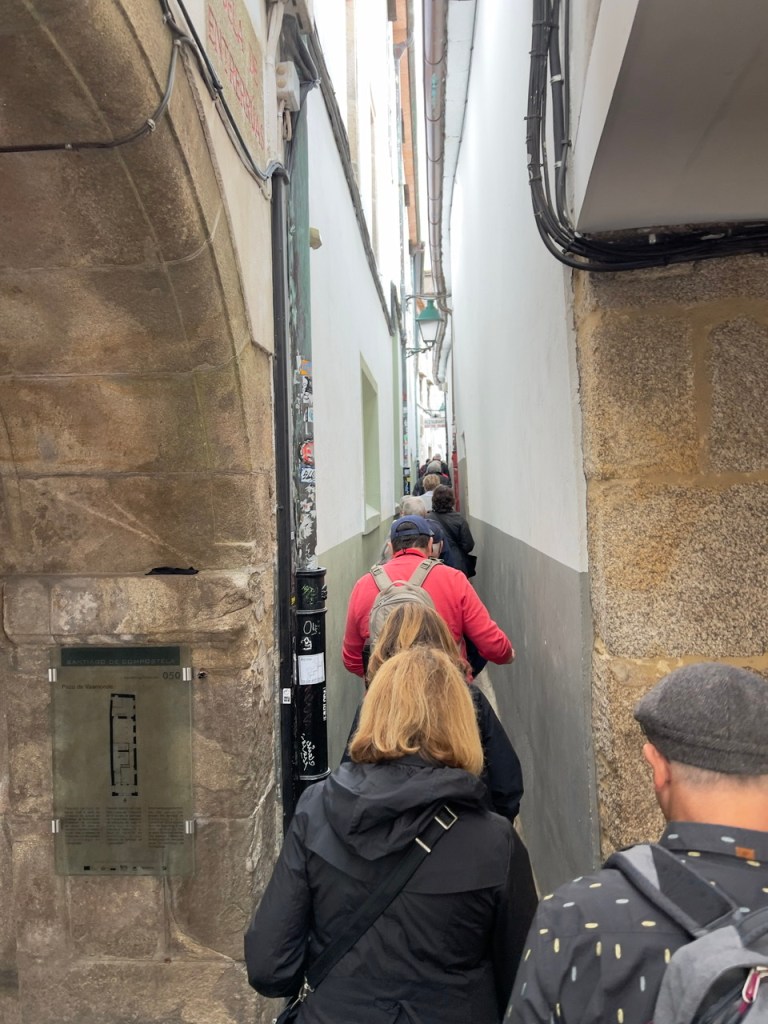
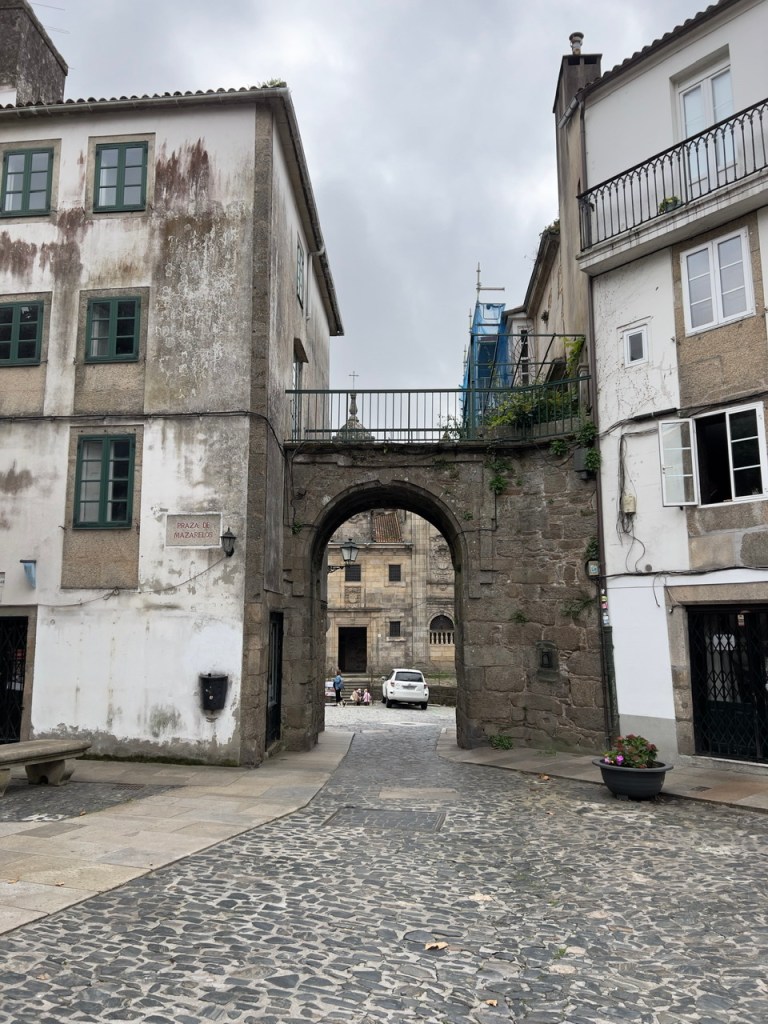
Wandering gives one an opportunity to admire the 700 years of architecture and the sights and sounds of the city – –
A very spiritual day! E & G
 Elizabeth & Gary's Magic Bus Tour
You are truly Blessed 🙏🏻🍷
LikeLike