What a way to finish this trip! Think of any positive adjective and it will probably apply to Lisbon. Finally having good weather (and NO rain) helped a lot – but, Lisbon is historical, medieval, beautiful, lively, chic, vibrant, fun, etc. etc. etc.! Its building walls are tiled and its streets are paved with pavers. Wonders everywhere one looks.
Hotel My Story Rossio was home base for two days. So convenient – and with a spectacular view of Castelo de Sao Jorge, which is the number 1 sight in Lisbon!

Early history here (going back to the 7th century BC) was created by the Phoenicians, Romans and Visigoths. Then came the Arabs from northern Africa, who built the Castelo de Sao Jorge (Castle of St. George) as a walled city fortress surrounding the castle on the highest of Lisbon’s hills. Its purpose was to withstand prolonged sieges and to intimidate approaching enemies by its location and grandiosity. It was completed with a moat, curtain walls (defensive walls between towers), 11 towers, fortified gateways and many other structural elements for protection. How much more could anyone ask for than a real live castle complete with walls to climb in all directions?
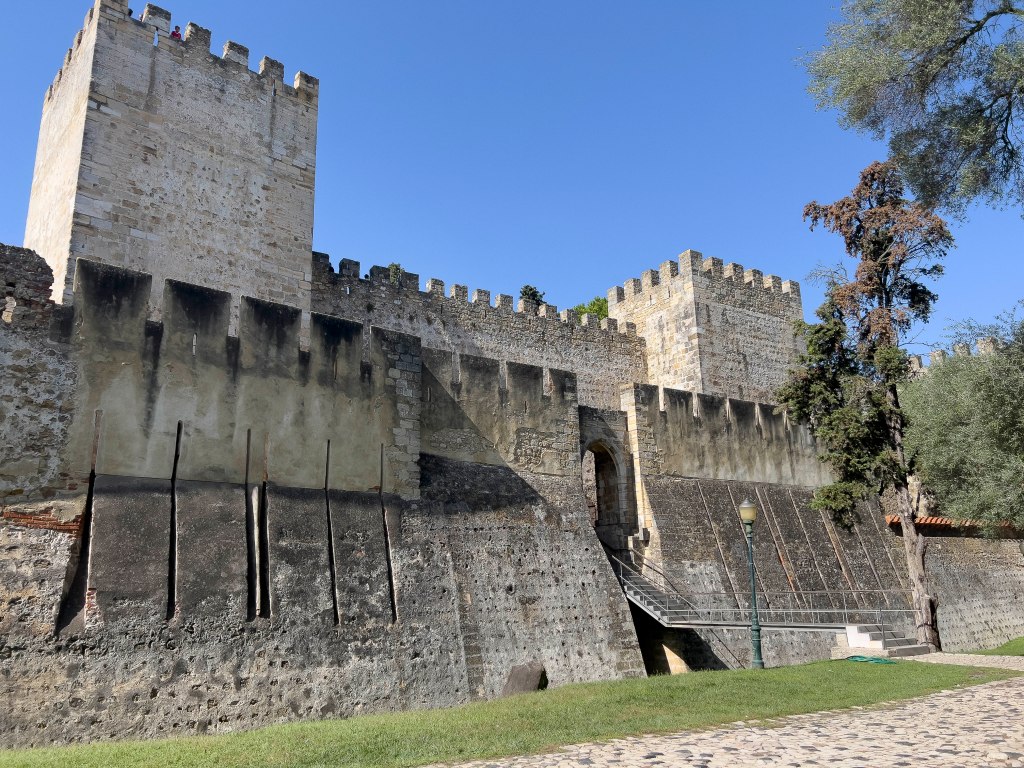

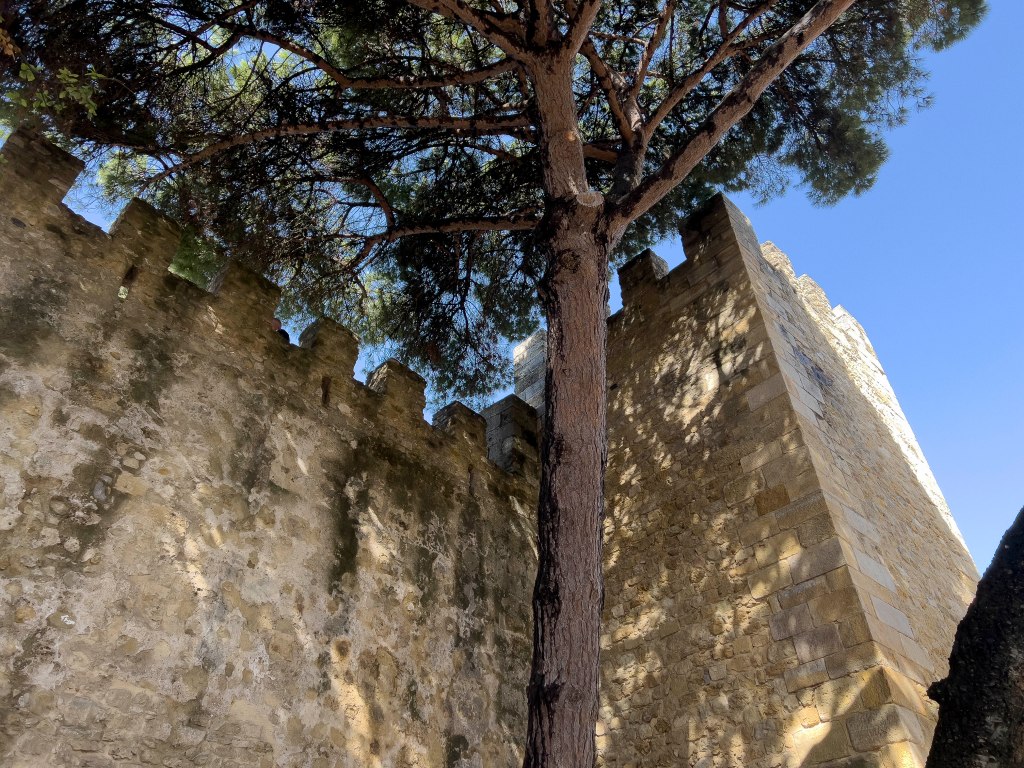
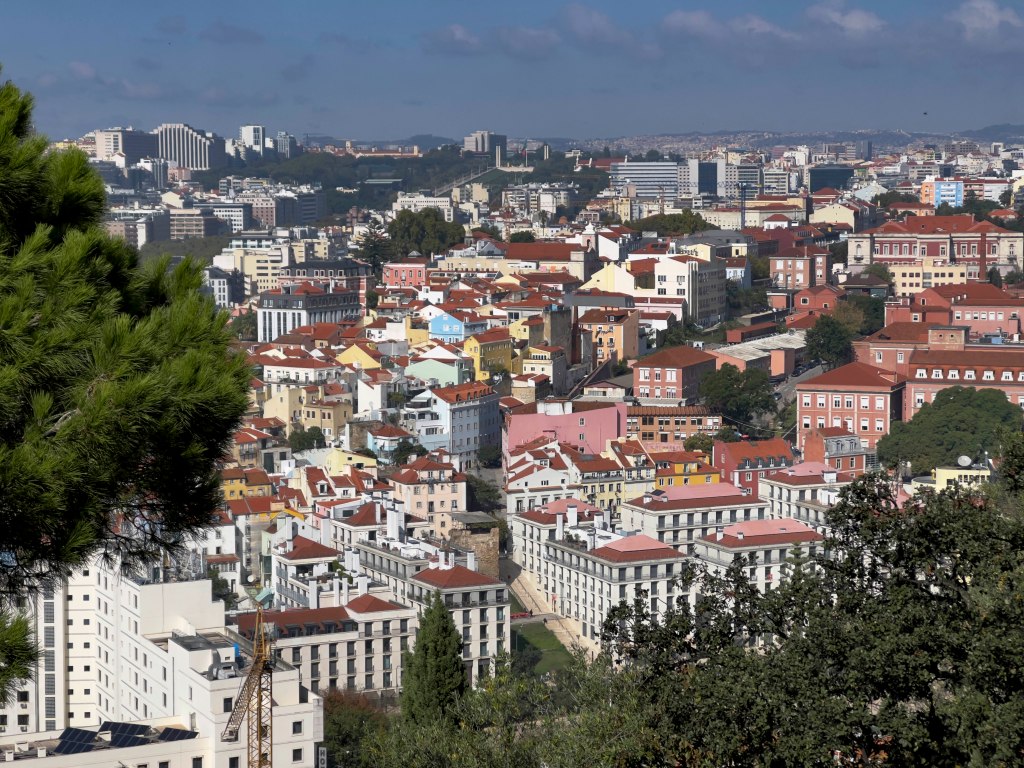

More than 4 centuries of Muslim rule came to an end in 1147 when Portugal’s first king, Afonso Henriques, enlisted the help of northern European crusaders to besiege the city. Today, the Castle is a peaceful retreat where one can spend the better part of the day investigating archeological remains from Roman and Medieval times, climbing or just taking in the views of the city and the Tagus River.
It is great fun to wander the narrow, meandering, tree-lined streets below the Castle in the Alfama area on the way to Se Cathedral. It is here that one will see the many tiled walls of buildings and granite paved streets. You might also find a wonderful little cafe to relax and have lunch.


All one has to do is walk downhill from the Castle and Cathedral Se will appear. This has been Lisbon’s cathedral since the 1100’s and is an impressive example of the Romanesque style with its barrel-vaulted ceiling and arched upper gallery.

Another day – another area of Lisbon. Belem is the historic riverside neighborhood along the Tagus and holds monuments associated with Portugal’s Age of Discovery. Beginning in 1415, a prince who would be known as Henry the Navigator started this Age of Discovery by capturing the North African port of Ceuta. Portuguese sailors then set out to the Cape of Good Hope, to find a sea route to India and founding of trading posts in Japan, China, Indonesia and the Persian Gulf. Unfortunately, Portugal also initiated the Atlantic slave trade, delivering 6 million Africans into bondage. All of this made Portugal a very wealthy country, and this area has monuments associated with the age.
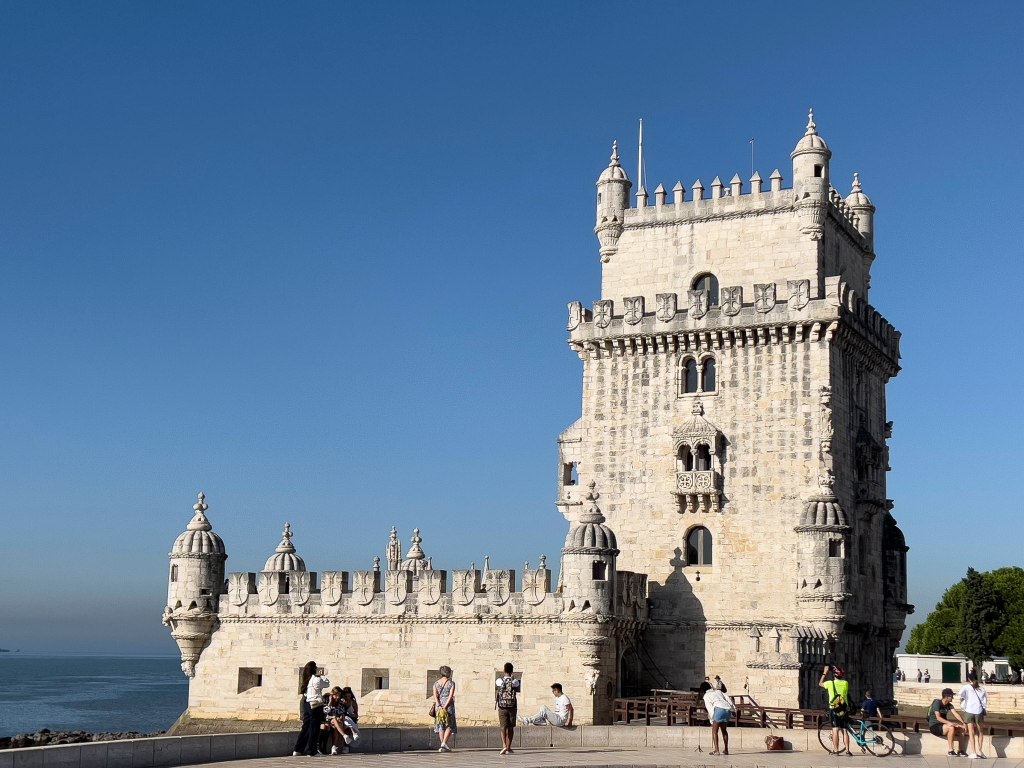
Torre de Belem (Belem Tower) is a UNESCO World Heritage site and a recognizable symbol of Lisbon. It displays a uniquely Portuguese style, Manueline, named after a king who drove the discoveries and inspired maritime motives. It was built in the 16th century to defend the entrance to the Lisbon harbor and saw action in the 1830’s when its cannons opened fire on French ships. It is an impressive structure – unfortunately overrun by tourists this particular morning;-(
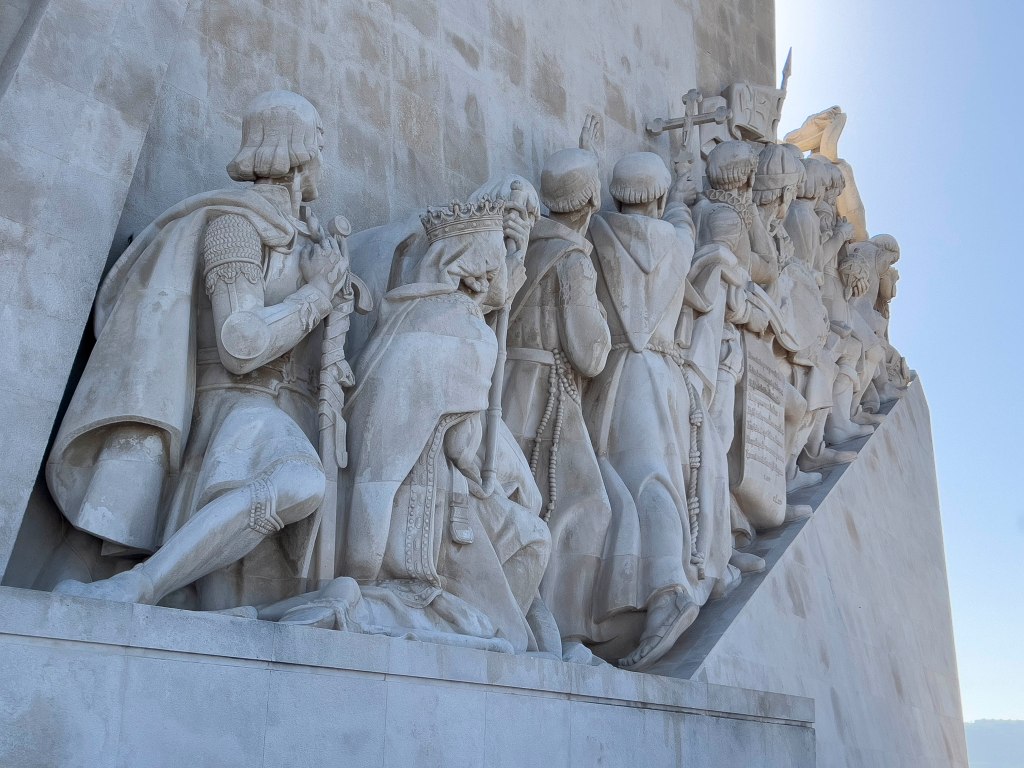
A nice walk along the Tagus takes one to the Padrao dos Descobrimentos (monument to the Age of Discovery). This 165′ high monument was erected in 1960 and is a striking landmark jutting like the prow of a sailing boat over the waters of the river. From the bow to the stern, the pure white monument is lined with outsized statues of Discoveries-era heroes including Henry the Navigator.

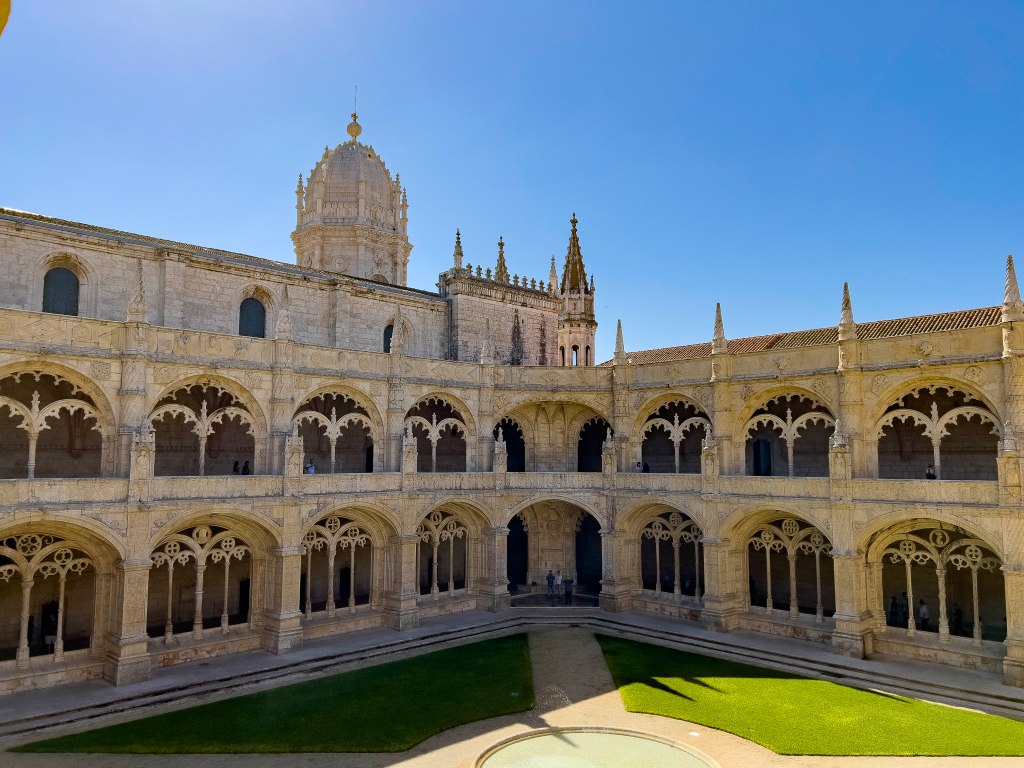
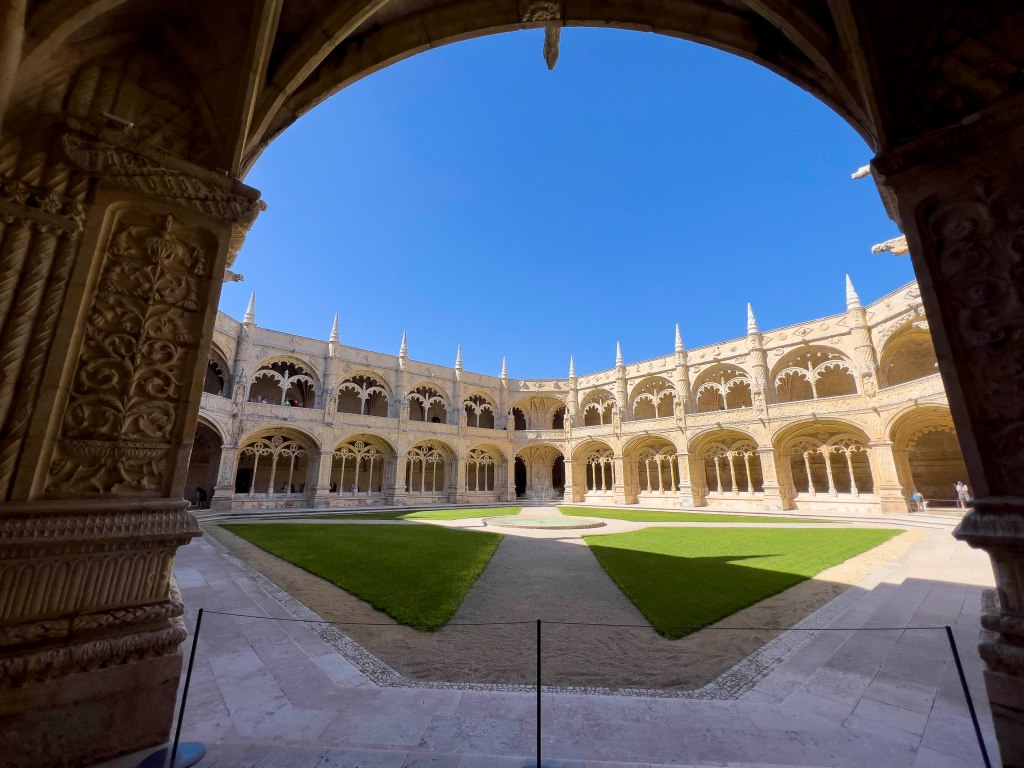
Just across the boulevard is the Mosteiro dos Jeronimos – a monastery built on the orders of King Manuel I in the 16th century and now a UNESCO World Heritage Site. Also, a showcase of the architectural style that takes Manuel’s name and a display of the wealth that came with Portugal’s maritime expansion.
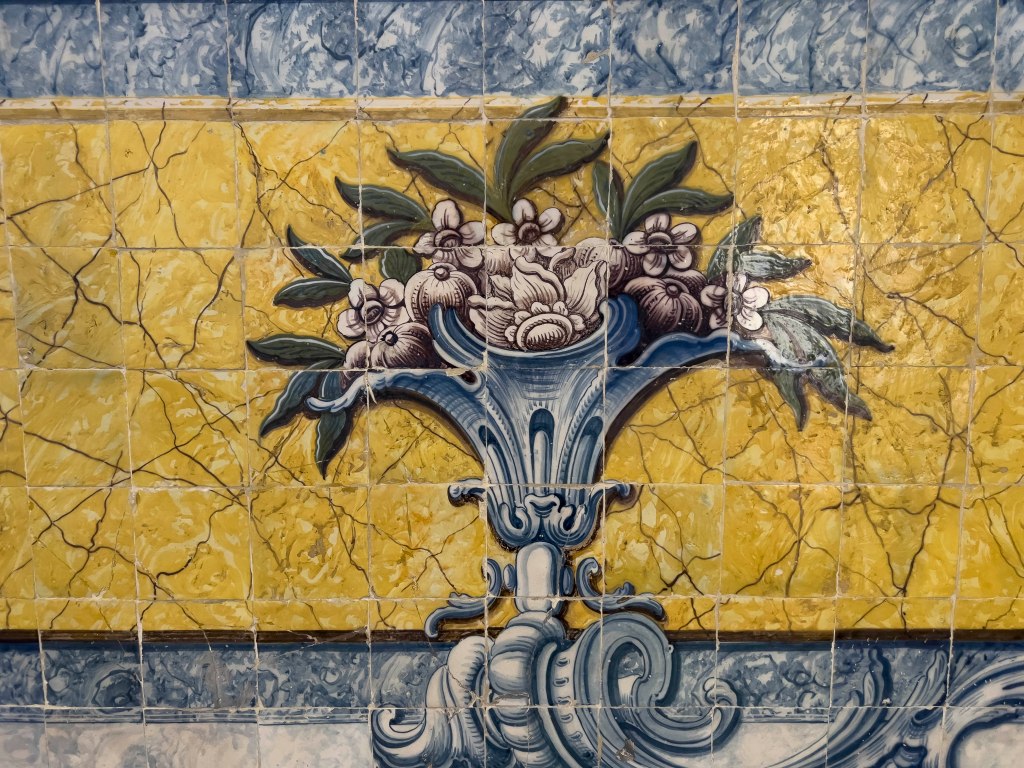
The cloisters are elaborately decorated with Manueline carvings and the refectory walls are lined with 17th-century tiles. In 1985, the leaders of Spain and Portugal signed the treaty taking their countries into the EU upstairs in the cloisters!

The refectory was built in 1517-1518. Under thick stone ropes, the walls are paneled in tiles, which was done 1780-1785.


The Cathedral is beautiful, but not as ornate as the Cloisters. Well – maybe except for the slender columns that grace the nave. They rise from the floor like ship’s masts that bloom into flowerlike supports for the vaulted ceiling.


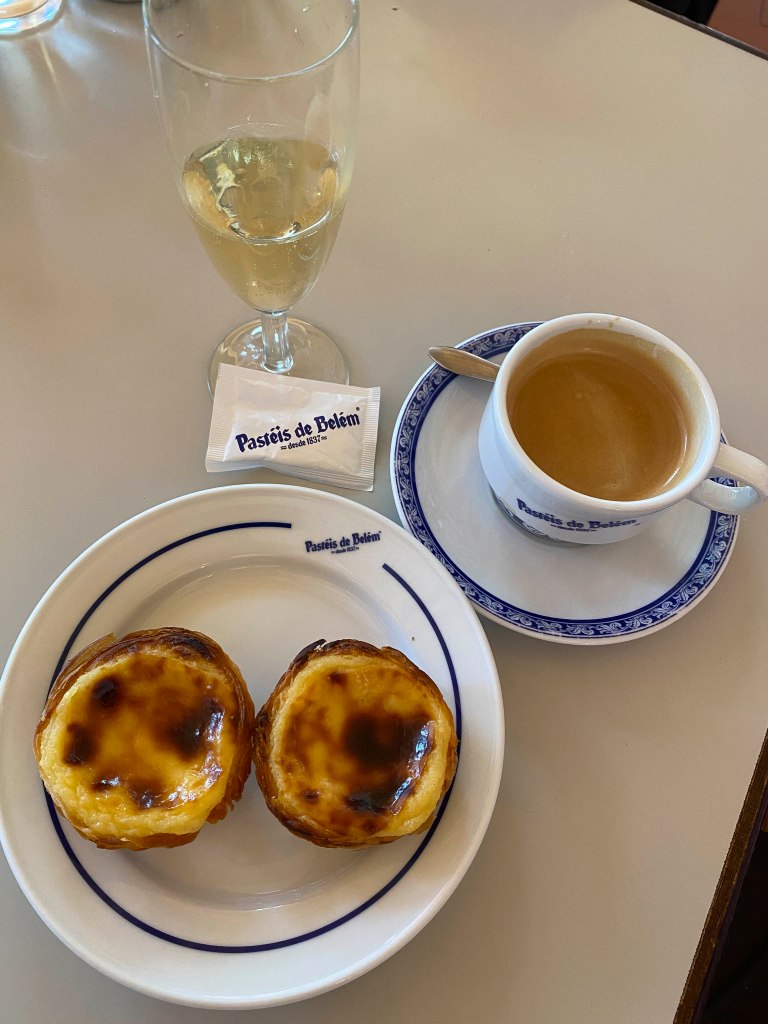
Well – one might now need a respite. And, just the answer is right down the street at the Antiga Confeitaria de Belem. Founded in 1837 it is famed for the little custard tarts that have become one of Portugal’s best-known culinary exports. Throughout Portugal these delicious little pastries are known as pasteis de nata – but here they are pastes de Belem! Of course we indulged;-)
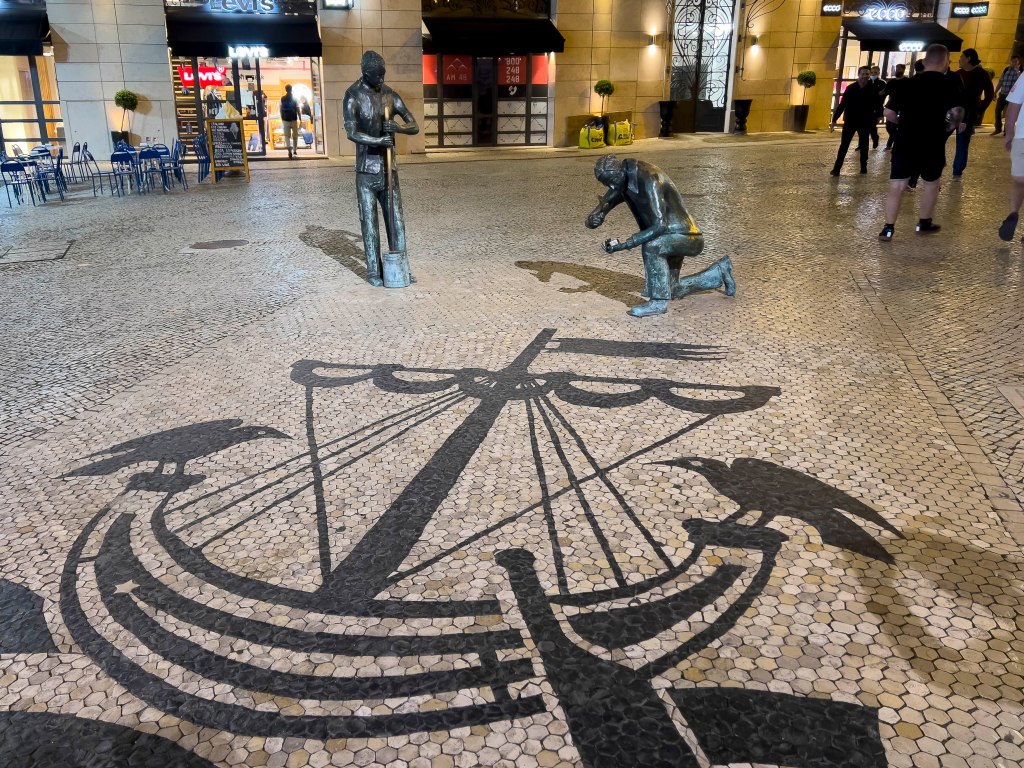
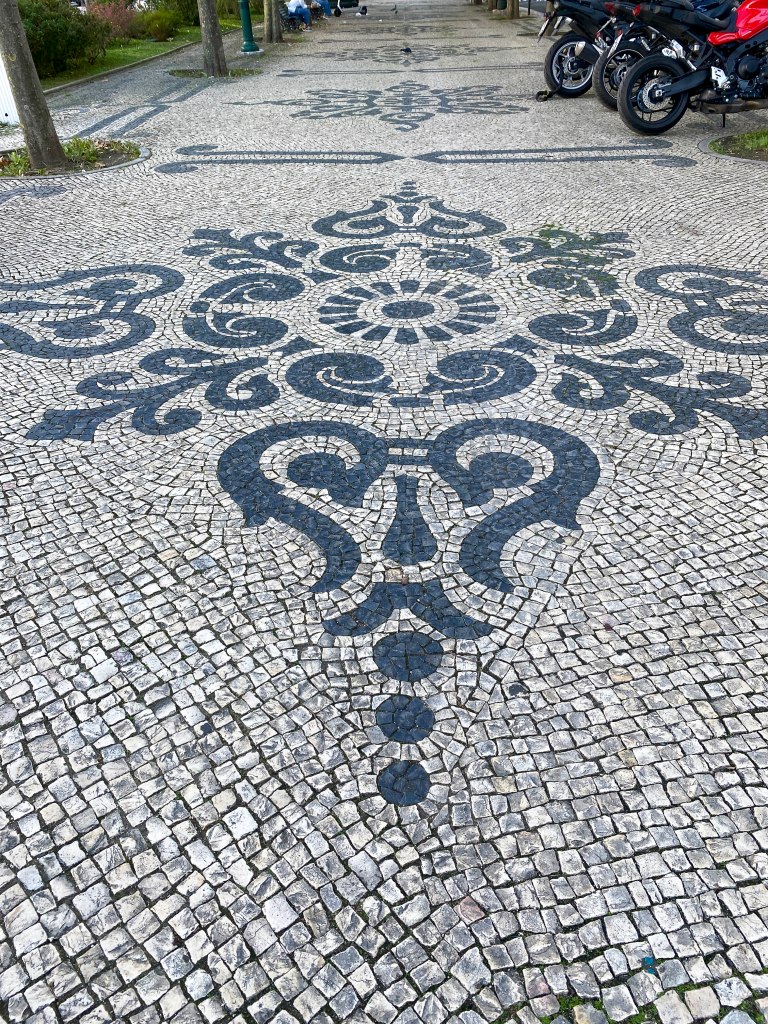
At the very beginning of this posting the paved streets were mentioned. The sidewalks are also done with pavers. So much so there is a sculpture tribute “to the Pavers who build the ground we tread”. The walks and roads are beautiful – –

Lisbon is built on many hills – so there are many ups and downs. Luckily there are trams to assist on some of those walks and might just take one to very vibrant sections of the city.

A perfect ending to quite a trip. Hope to return to Lisbon sometime for several more days of adventure – there is a lot to see.
E & G – Thankful for a wonderful trip, sad that it is ending, happy to be going home;-)
 Elizabeth & Gary's Magic Bus Tour
Unbelievable! Such beautiful monuments!
LikeLike