Another day – more UNESCO World Heritage sites;-)
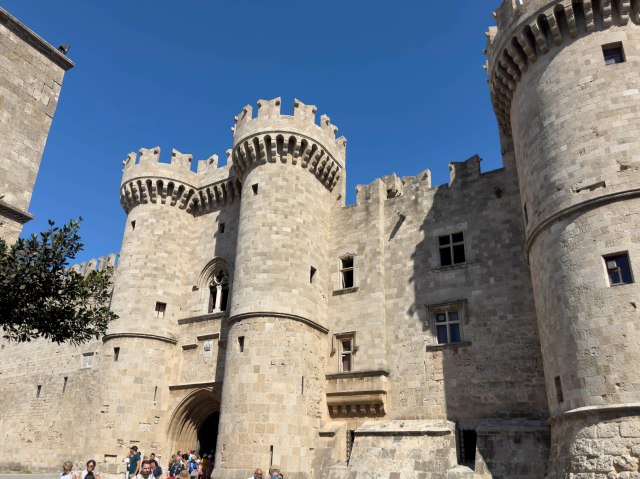
Rhodes is the eastern point of Greece and, therefore, where the sun first shines on the Greek world. This led them to the belief that Rhodes was the home of the sun god – Helios – to whom they built the famous Colossus of Rhodes. This was a 100′ tall statue that took 12 years to build AND lasted just 56 years until destroyed by an earthquake. So – no Colossus of Rhodes to see. Instead, a fortress started during the Byzantine ages and modified throughout Rhodes’ varied history. In the 14th century, the Knights of St. John added on creating a residence and political headquarters for their leader, the Grand Master (thus the name). The Ottomans made their mark and the Italians in the early 20th century elaborately restored it as an island retreat for their king and later for Mussolini. One must wander the main shopping street – Sokratous – in order to get to the Palace. It is very similar to the Turkish bazaar in Kusadasi but without the harassment of the vendors;-(
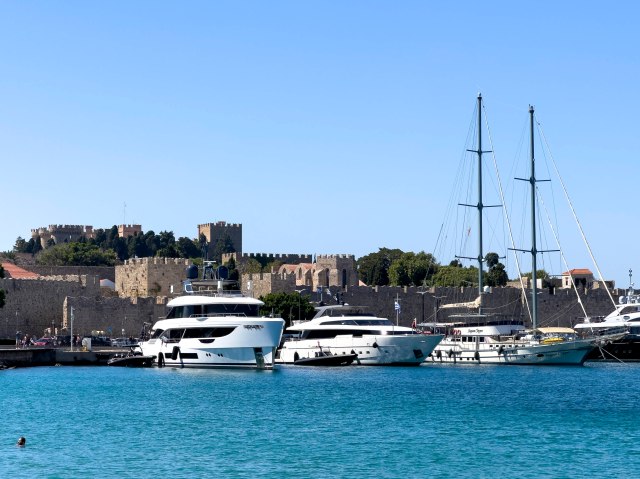
Welcome to Rhodes. Just enter the walled city through St. Mary’s Gate!
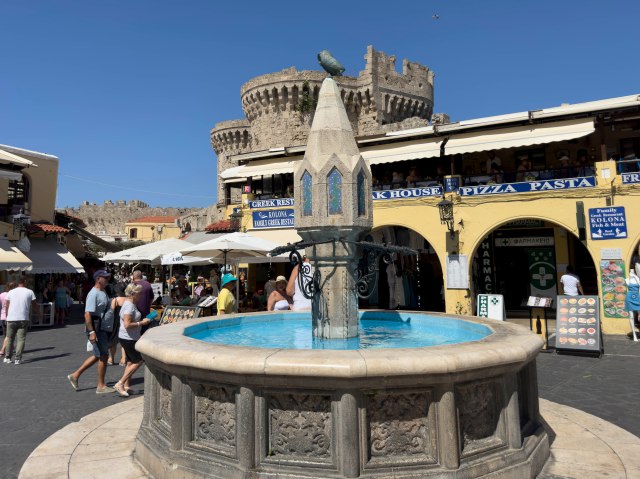
Owl of Greece atop the fountain with the Castle of the Master in the background.
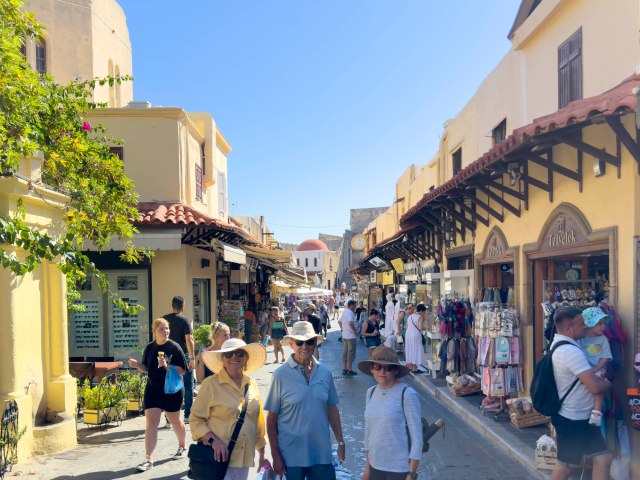
Quaint, actually fun shopping streets with fabulous places for lunch!
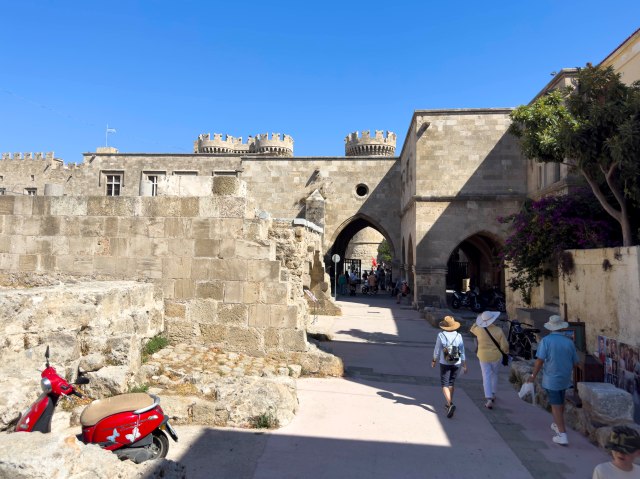
Approaching the Palace of the Grand Master of the Knights of Rhodes.
.
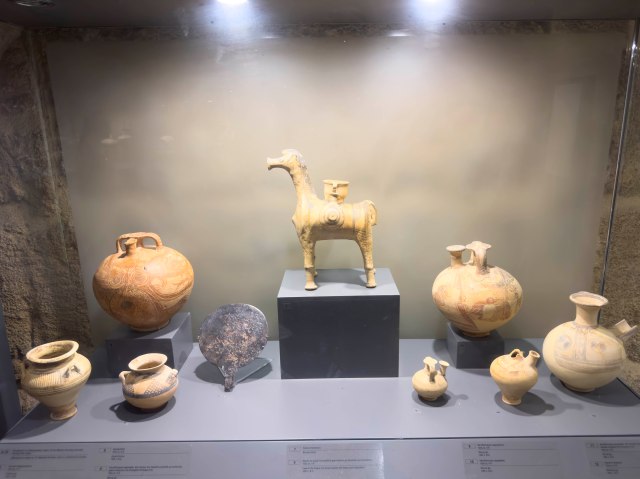
Artifacts from 1200 BC.
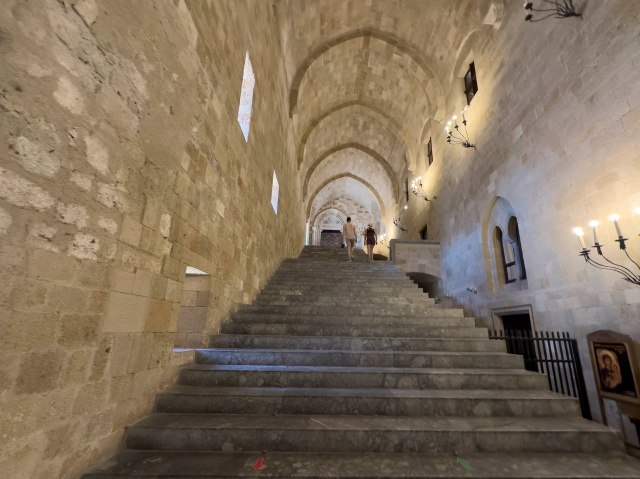
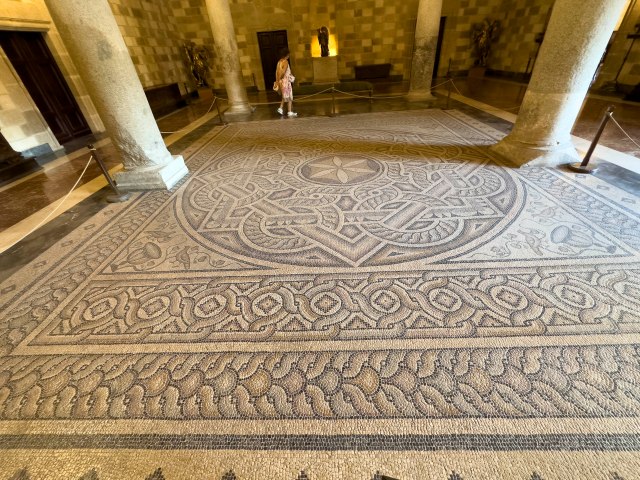
The Turkish/Ottoman influence, as well as the Italian is seen throughout the Palace. While the first floor houses many antiquity treasures found in the area, the second floor houses fantastically detailed floor mosaics. These tiles were actually discovered not too far away on the isle of Kos where they were put together like a jigsaw puzzle and somewhat recently transported to this Palace and reconstructed (again) here. There were rooms and rooms of these mosaics – just a couple here – –
.
.
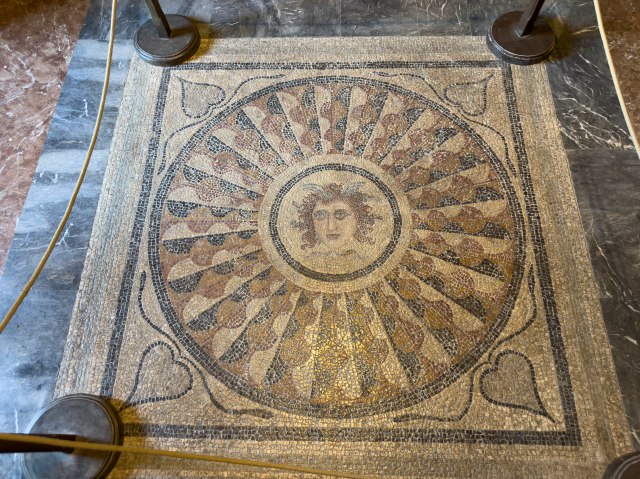
Medusa is the centerpiece here.
Exiting the Palace, one finds themselves on the Avenue of the Knights. This is a VERY cobbled lane displaying a microcosm of medieval Europe. The Knights of St. John were divided into seven separate language groups, each one assigned to defending a different section of the town wall. Each group lived in an inn that re-created the home they’d left behind. Many still look like a slice of Spain or a German fort, etc!
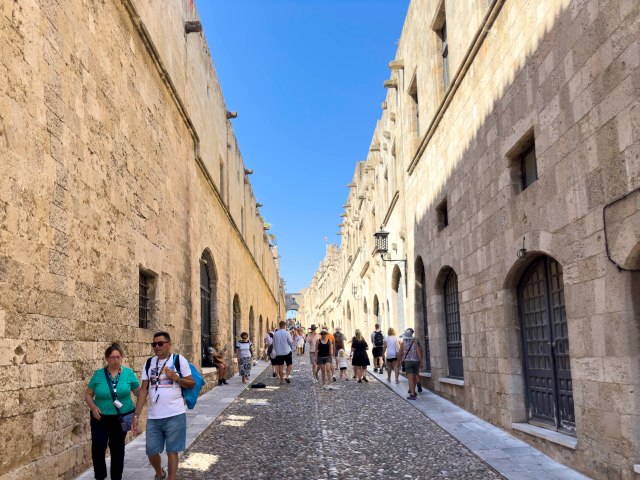
The Avenue of the Knights.
A little lunch, a little shopping and time to return to the ship. Because – another fascinating tale awaits.
Crete is Greece’s biggest, most populous island and the southernmost point in Europe. Historically, Crete was home to the Minoans – Europe’s first advanced civilization peaking around 1950 BC!!! Knossos Palace (more like a ‘development’ or city) was the main ‘home’ of the Minoans. It was a vast maze like series of interconnected rooms – likely the inspiration for the tales of the labyrinth. Labyrinth comes from the Greek ‘labrys’, a double-headed axe, which is seen throughout the ruins and in artifacts found there.
The Minoans were peaceful, entrepreneurs and very advanced. There were NO fortified walls around their cities, they had impressively advanced terra-cotta pipes that carried drinking water into Knossos from a spring miles away and they had canals that carried sewage away from the palace/city!! 1950BC! They were very sports minded, as exemplified by their detailed frescoes, and there was relative equality between rich and poor as well as between the sexes. Unfortunately, about 1450BC, the Minoan civilization suddenly collapsed and their progress lost. Thankfully, some of their civilization survived – –
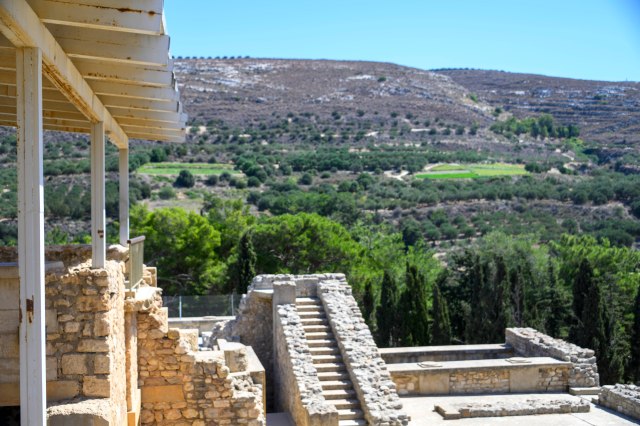
The Knossos Palace (Labyrinth) looking across where the ‘town’ would have been. It remains buried.
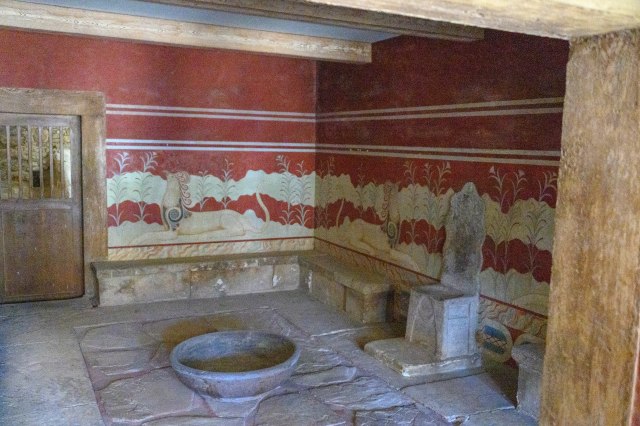
The Throne Room with an ergonomically correct ‘throne’ – out of stone!
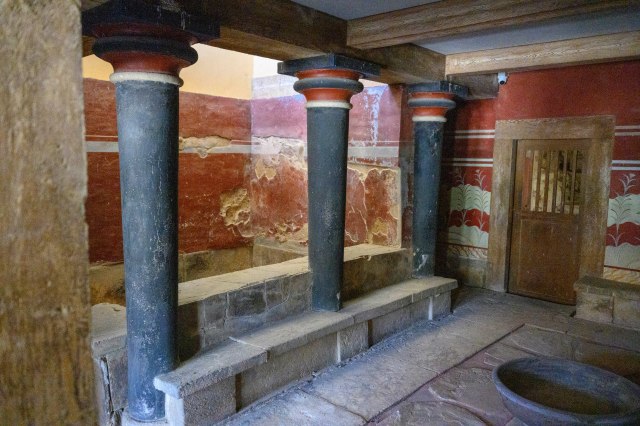
The bath area of the Throne Room.
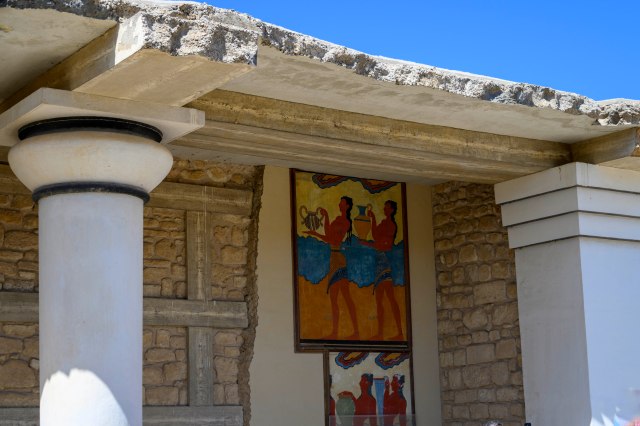
Recreations of the 4000+ year old wall friezes. The originals are in the Archaeological Museum.
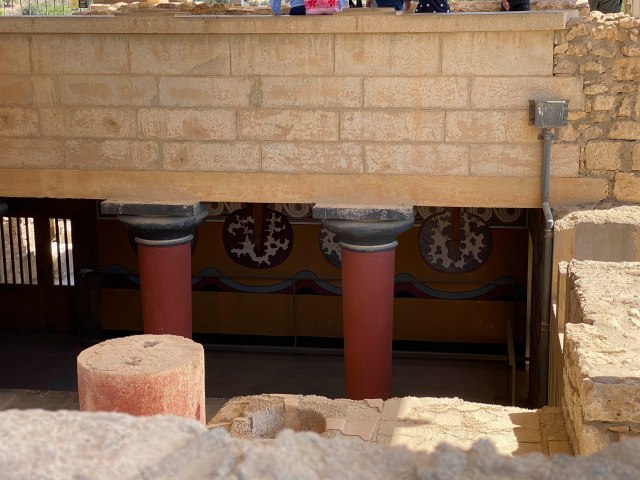
The Kings room (with recreated paintings).
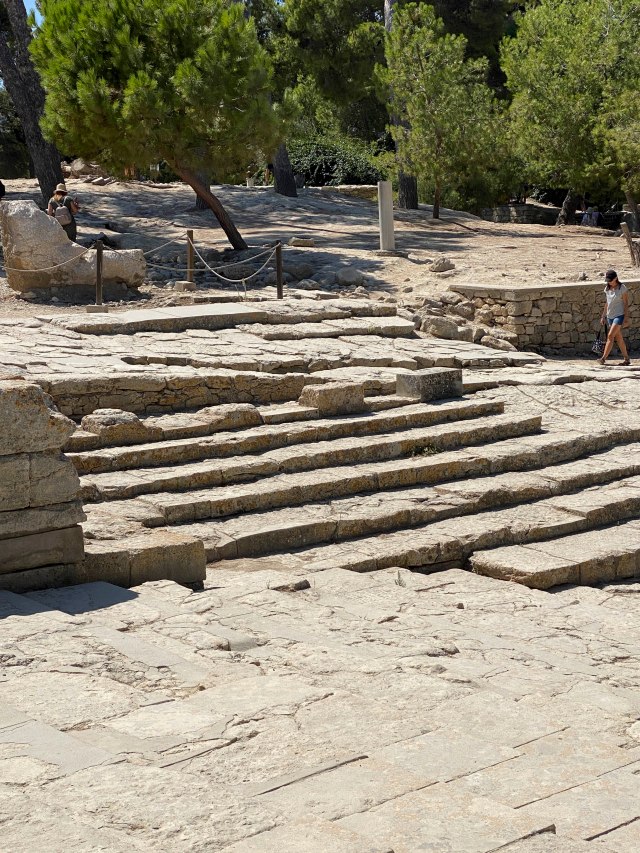
The first known theatre!
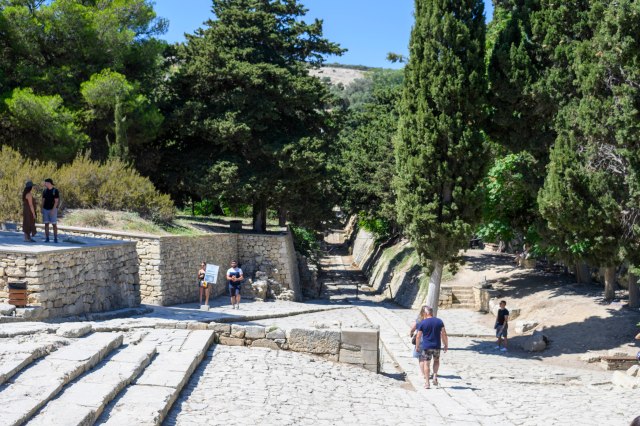
The original main road into the castle. Purportedly the oldest paved road (2500 BC) in the world.
To think that we were walking on stones trod by sandal-clad feet 4,000 years ago was mind blowing (in a good way). Back to the present day and the town of Heraklion. This is a typical big city, where one does not need to spend a lot of time except for lunch and the Heraklion Archaeological Museum. As is true of the other museums of ancient sites, the original antiquities found are housed here and replicas/reconstructions are at the site themselves. And some of the findings and what they say about this civilization and their life 4,000 years ago is truly amazing!
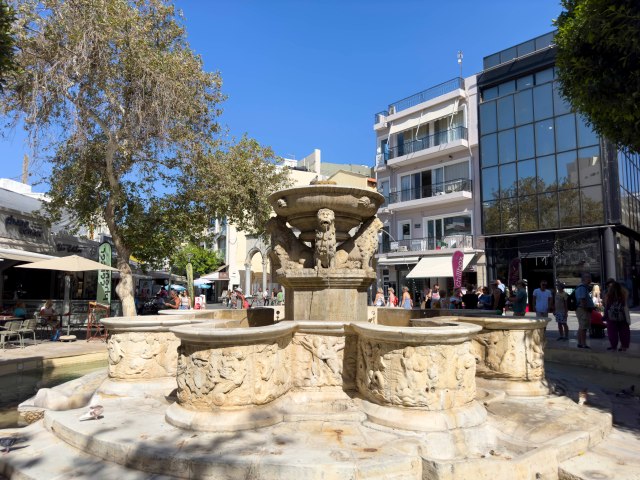
The Moronzoni Fountain (1629).
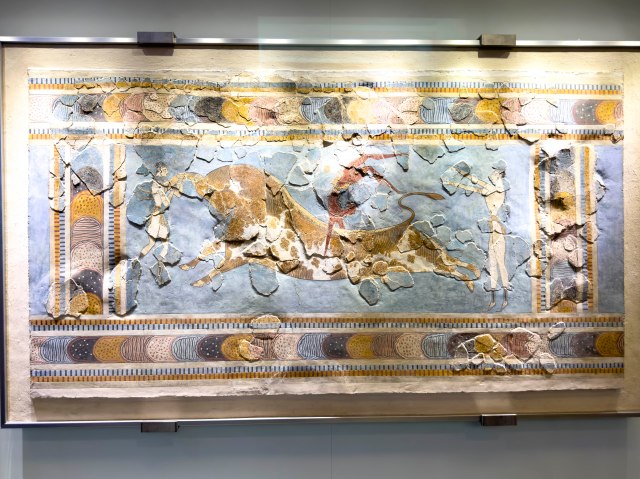
The Bull Leaper (17-15 century BC) illustrating the popular pastime of vaulting over a bull! (What appears to be ‘elevated’ pieces are pieces of the found fresco displayed on a drawing of the full piece.
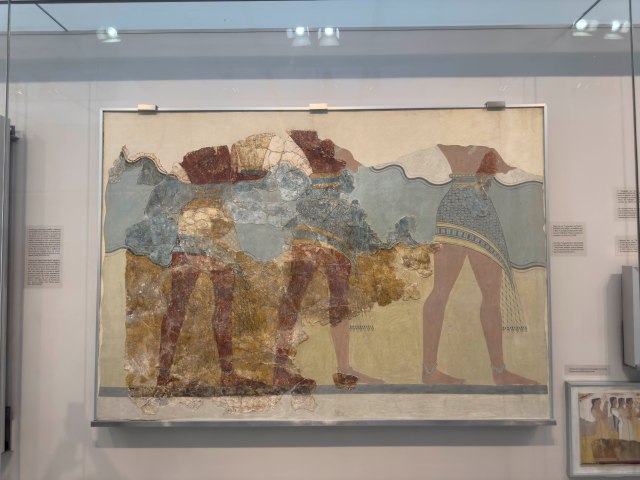
.
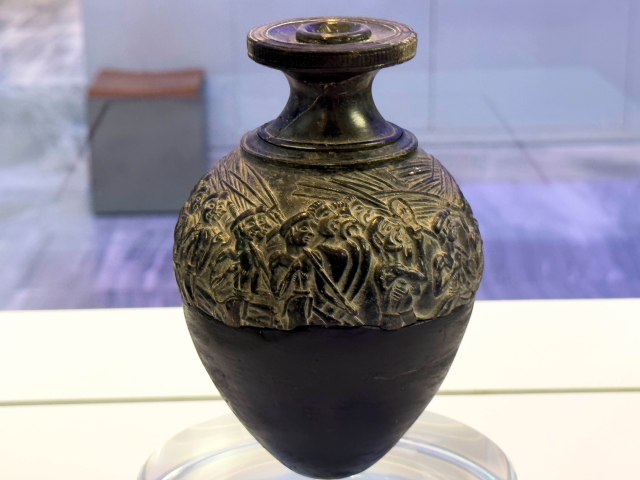
The intricacies of the carving on this stone vase were amazing for 4000 years ago.
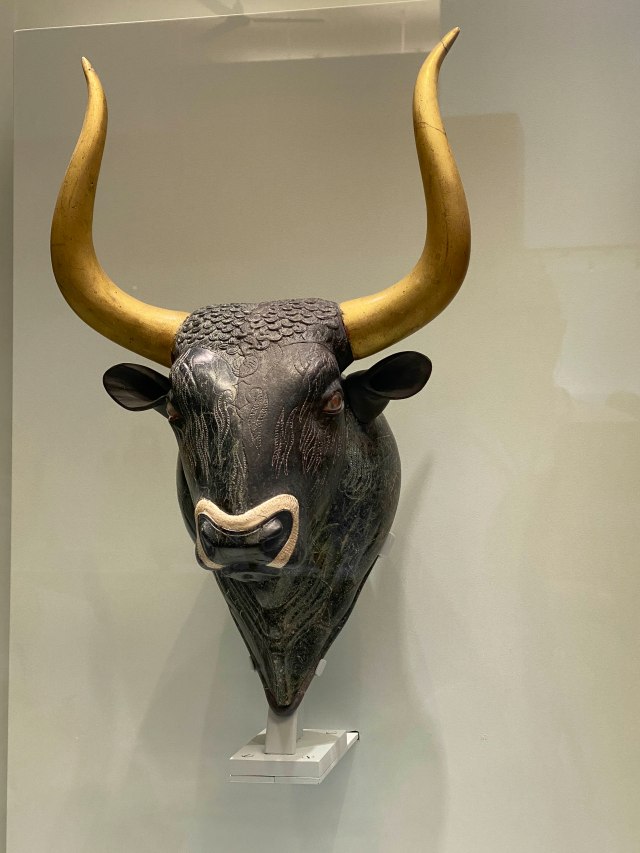
The right side of this bull’s head are original – the left reconstructed. The snout is outlined in white shell, the eyes are jeweled and the horns are golden. The bull was revered.
Discovering this civilization was an enlightenment and we walked away in awe that such knowledge existed so long ago. One wonders – where did it go through the years???
Back to the little port city of Agios Nikolaos (St. Nicholas) for a quick bite (and maybe a little drink) before a stroll through the pedestrian only streets and a return to the ship.
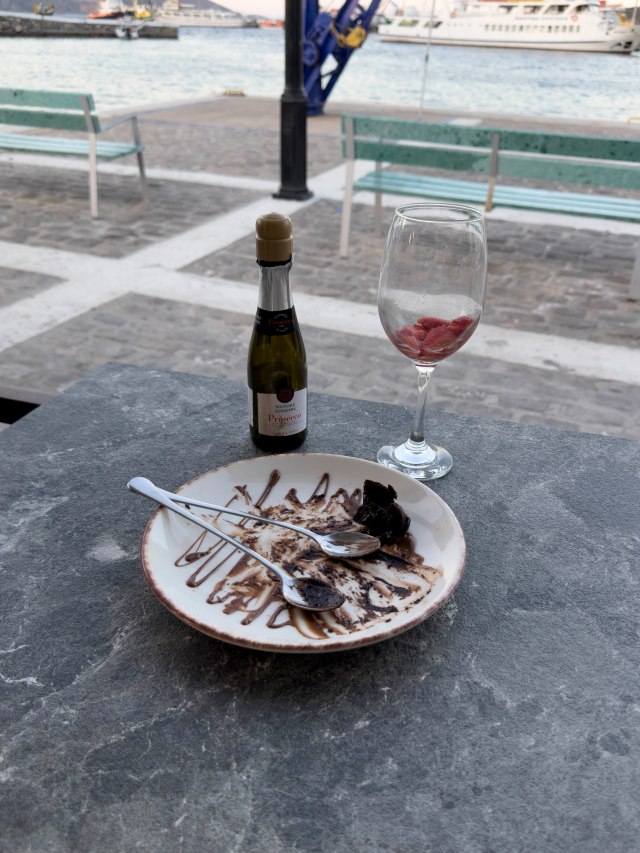
What a great way to end such an enlightening day – good food, good drink and great view!
Another couple of very interesting days with lots of learning about civilizations and places unknown.
Newly enlightened E & G
 Elizabeth & Gary's Magic Bus Tour