Wanting to experience the High Atlas Mountains in Morocco (perhaps to compare them to the Rockies and Park City) the car headed 1 1/2 hours south from Marrakech to Imlil. The Atlas Mountain range stretches across Tunisia, Algeria and Morocco with its highest peak in Morocco at 13,671′ – Mount Toubkal. The destination of Imlil sits at the foot of Mt. Toubkal and is a starting point for trekking expeditions.
The drive to Imlil is like the drive to any other mountain town – through the valleys between the peaks with the obligatory mountain stream alongside the road. However, most roads in the US are not as narrow and many times unpaved due to washouts and generally scary!! Very glad to have a driver to maneuver.

Beautiful scenery kept our eyes off the road;-(
One arrives at the small mountain village of Imlil at the head of the Ait Mizane Valley after navigating through the Ait Bouguemez Valley. Most people come here to tackle Jbel Toubkal – we would be tackling a 2 mile hike to an adjacent village for lunch! But, first one must get to accommodations.
A great suggestion here is Kasbah du Toubkal – an imposing fort (Kasbah) on the slopes below the peak. “Check-in” at the village reception in town in order to get a mule to carry your luggage and to be sure the gate is unlocked when you arrive. Then – start your trek – –
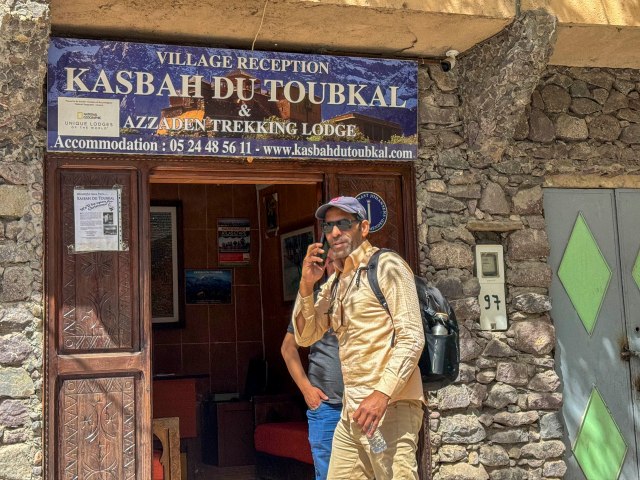
Our guide, Abdou, checking in for us.
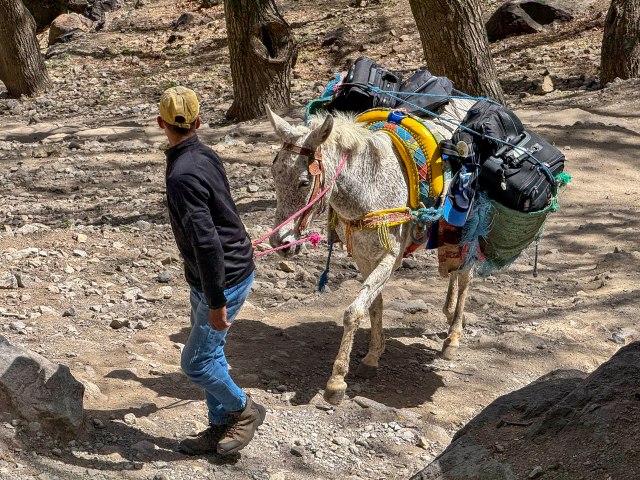
Yep – those are our bags;-)
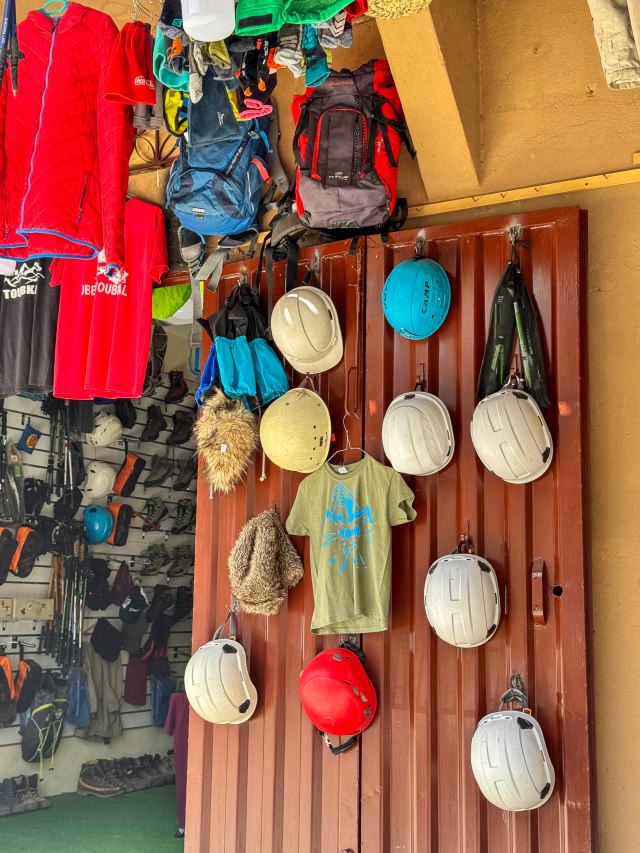
Lots of color and buying opportunities to distract one from the climb!


First sighting of the Kasbah – on the left through the trees.

About to see what is behind this gate.
As the sign indicates – this complex was resurrected from the Kasbah of old and completed in 1995. However, a good portion was destroyed in the earthquake less than a year ago. The dining room and some guest rooms are gone so a terrace is used as a makeshift dining room and the guest rooms that have been restored are now available. Tourism is basically the only source of income to this area, so getting any portion usable again was very important.

The beautiful grounds inside with the dining area on the right upstairs with the windows.
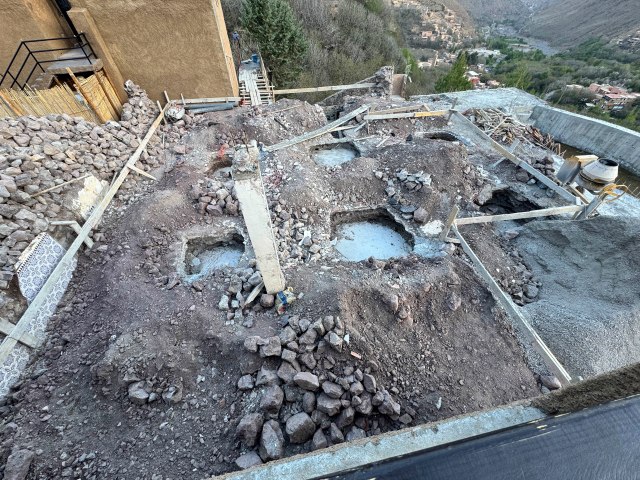
The remains of the dining room. Thankfully when the earthquake occurred everyone had just finished dinner and left.

Photos of earthquake cleanup activities on sight.
It is possible to arrange to take a short hike to an adjacent village and have lunch prepared by a Berber woman (a local of the area) and be a guest in her home. This is an excellent thing to do in order to understand how these families live, how difficult their lives are and to appreciate every little thing one has in the US!!!! It also helps to understand how significant tourism is for these people and how much the earthquake hurt them without it. The tale here and the pictures will not begin to tell the story.
Off we go on a good, sturdy walk through the ‘forest’. This is actually groves of various types of trees and terraced land that produce goods for food or for sale. The trees are walnut, apple, quince, olives and cherries to name a few. The crops include wheat, various spices, onions, asparagus and many others.

A rather narrow trail above the terraced crop areas and water duct.
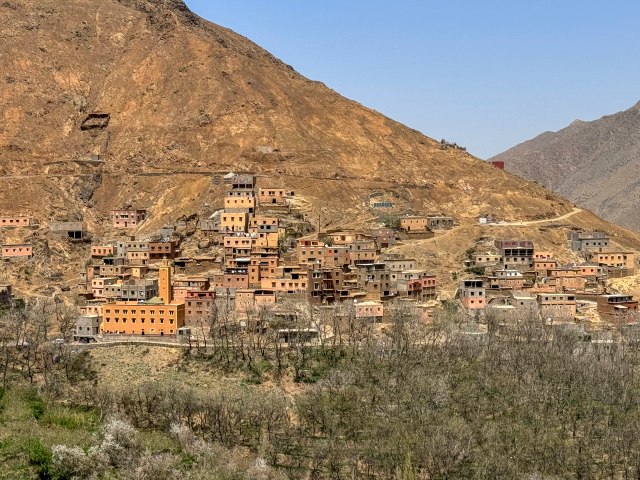
A view of the village where lunch will be prepared and served.

Just to the right of the aluminum roof below the laundry is a tiny dark slit of a window behind the fan unit. That is the destination!

Through the village.

The home of the visit.
Upon arrival, guests meet the hostess and are escorted into a lovely little area set up for eating. Of course, you are welcomed with Moroccan tea and appetizers. Although the hostess does not join, she does a wonderful job of preparation including making the fresh bread. This she invites us for a demonstration.

The very festive eating area.

Our hostess making fresh bread placing the dough around the walls of the ‘oven’.
The making of this bread – in this traditional manner – is NOT done just for us. The women in this and surrounding villages do this daily making enough for their family for all three meals every morning. It is done in these ‘ovens’ with wood fires as electricity is too expensive. Almost all cooking is done with similar fires – as all tajines, etc.

A beautiful, delicious lunch with that fabulous warm bread’-)
After filling the stomach, it is time to head back to the Kasbah. Beware – our guide did not want us to be bored with the same path back so he made us into goats;-)

Treacherous but beautiful!
If you haven’t had enough walking yet for the day, head up to the waterfall just beyond the Kasbah. This is only about ten minutes of flat walking and is really quite fun;-)
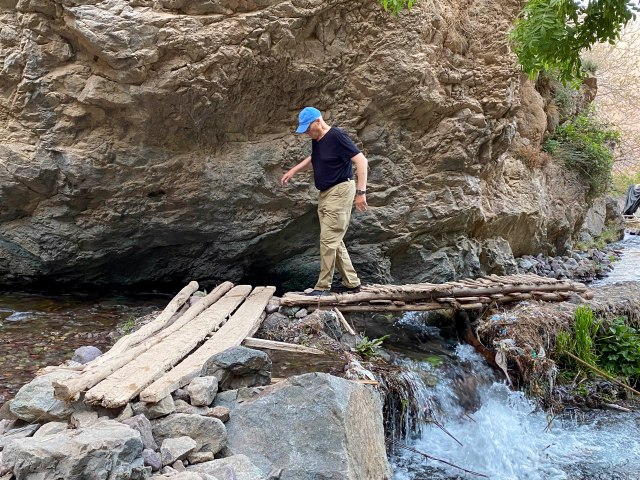

Several restaurants are adjacent to enjoy the falls.
Morning comes and the sun just begins to light up the peaks of Mt. Toubkal. So – one last look, breakfast and the hike down to Imlil. As another day means much more to see on the way to the desert camp a couple of days away.
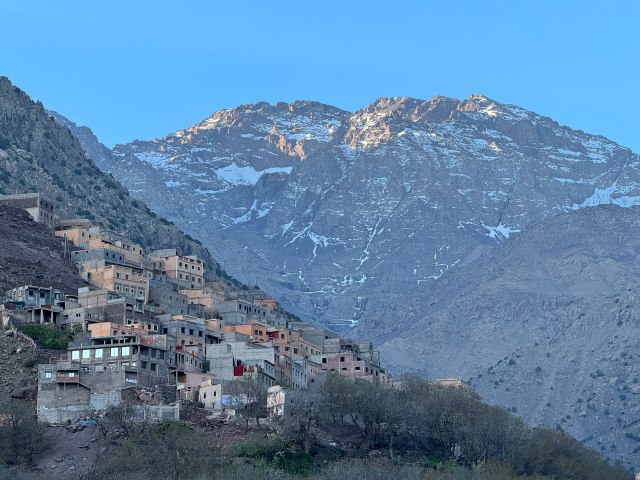
The view from our room. Goodbye!
Next stop is Skoura, a sleepy little town surrounded by a palm grove. But in order to get there, one must go over the Tizi-n-Tichka Pass. At an altitude of 7,400′ it is the highest road pass in Morocco and goes from one side of the Atlas Mts to the other. And, from fertile valleys to sandy desert.

Scary road. Built by the French in the 1920’s.
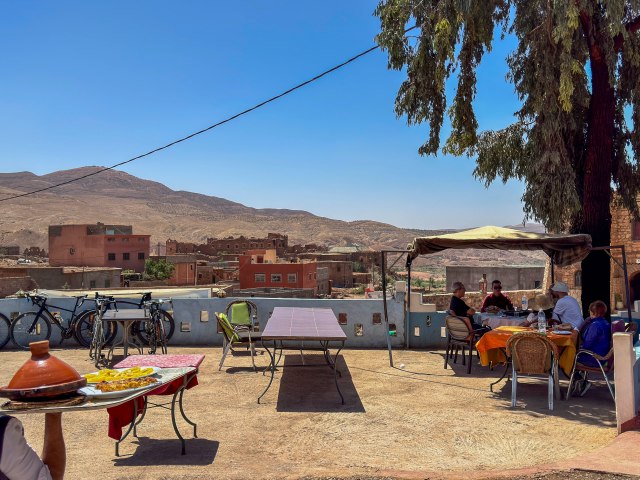
Awesome little lunch spot with the cyclists and bikers!
Coming out of the High Atlas area into the southern oases, one travels the Route of 1,000 Kasbahs. One of the most striking and best preserved in the country is Ait Ben Haddou. It is reached on foot from the newer village on the opposite bank of the river by crossing a well constructed bridge and then climbing LOTS of stairs through the ksar. The ksar was once heavily fortified and inhabited by hundreds but now houses fewer than 10 families. It is now a UNESCO World Heritage Site but is best known for its appearances in many films including Game of Thrones, Gladiator and The Mummy.
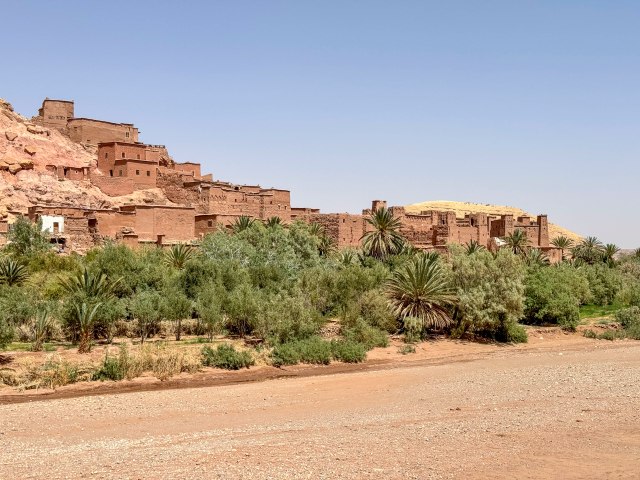
Ait Ben Haddou!
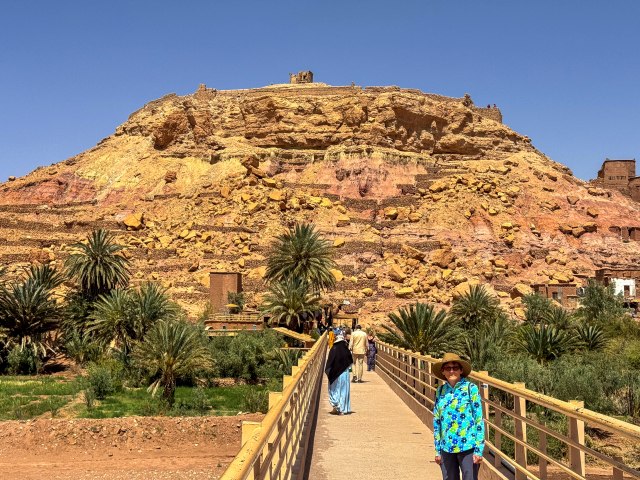
Yep! We are going up to the top where the grain and food was stored.
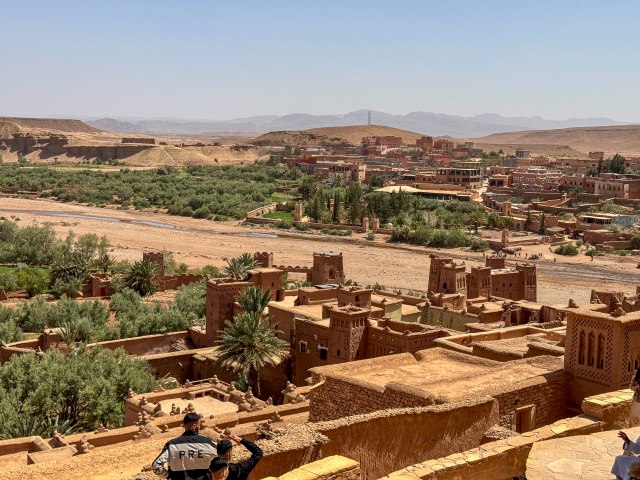
A view from the top – the defense of the ksar.
Continuing along the Road of Kasbahs, the place of refuge for the night in Skoura is finally reached. The Ksar el Kabbaba was truly a welcome, peaceful retreat for the afternoon and evening. Beautiful surrounding gardens (in which breakfast may be eaten), exquisite rooms, delicious food (with alcohol if desired) and a magnificent spa. But first – – you guessed it, welcoming tea – –


Very welcoming room.

Peaceful grounds.
While this would make a restful stop for a few days, one night is all that is on the agenda. Next up is Erfoud and the entry point to the desert camp.
E & G with continuing new adventures
 Elizabeth & Gary's Magic Bus Tour