Fes is the oldest of Morocco’s imperial cities (there have been four!) and it is the spiritual and religious capital. Therefore, it was declared a UNESCO World Heritage Site in 1981. The city was founded on the right bank of the River Fes in 789 by Idriss I. Shortly after, his son built an establishment on the left bank. In the mid-11th century, the two towns were finally united and mid-12th century Fes became this cultural and economic metropolis. It was elevated to an Imperial capital in 1250, although only for a short time.
Fes is the location of the most venerated shrine in Morocco, the oldest continuously operated university in the world and a fabulous, wandering Medina and souks. All to be explored shortly.
But, a bit of a repeat, as it was wonderful to have a nice, relaxing retreat at the end of daily explorations. And Riad Fes, a Relais & Chateau property, was just the place. The redone Riad was beautiful, the service was superb and the food was elegant and tasty! From the entry, to the main ‘lobby’ to the rooms and service areas, all were very inviting- – –

Welcome to Riad Fes.

Relax a spell.
With so much to see, one must hit the ground running. So, off to the North Borj, where there is a view of the city much like that from the hotel roof top bar (which became a favorite spot to relax at the end of the day!). Except from here, the South Borj across the city can be seen as well as the green hillsides to the east.

The South Borj sits across the city (just above the barren strip) and matches the North Borj. Great security for the city!

Hard to believe there is so much green and farmland so close to such congestion.
Heading down into all that congestion – first stop is Fes El-Jedid or New Fes. Built in 1276 as a stronghold, it was the administrative center of Morocco up until 1912. Today, Fes El-Jedid consists of several distinct areas/districts – the royal palace, the mellah or Jewish quarter and the Muslim quarters.
The vast palatial complex of Dar el-Makhzen was the main residence of the sultan, together with his guards and servants. Part of the palace is still used today by the king of Morocco when he stays in Fes. The main entrance to the complex has a richly ornamented Moorish gateway with huge engraved bronze doors. The walled grounds house the palace and various administrative and official offices as well as military buildings.
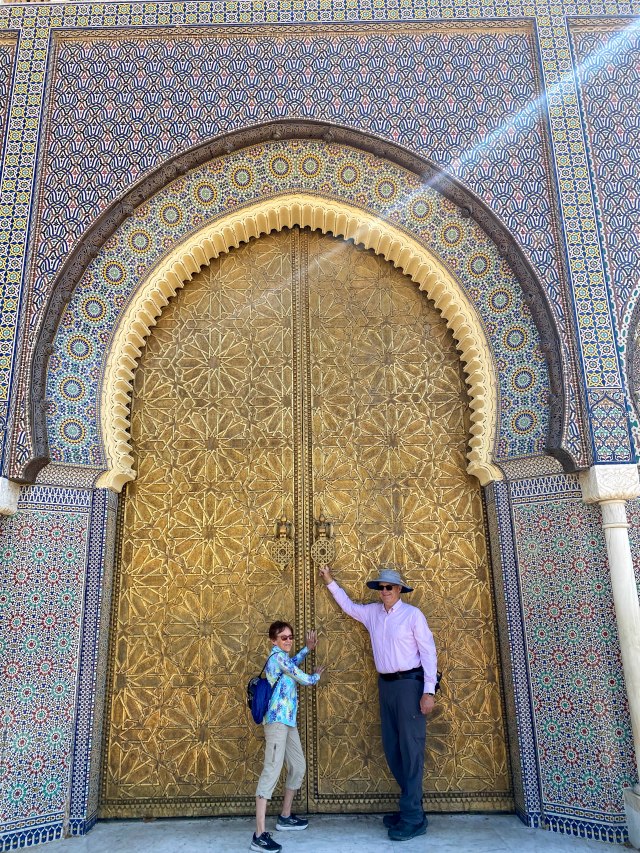
Main gateway to the Palace complex. Couldn’t get these things open no matter how hard we pushed!!

Beautiful plaza outside the gate.
The Mellah here is thought to be the first Jewish enclave in Morocco. (Many Jews escaped particularly from Spain during different times in history and settled in Morocco.) The rulers of Fes had undertaken to protect the Jewish community in return for an annual levy collected by the state treasury. So the quarter was moved adjacent to the Palace to afford greater security. The Jewish cemetery is a large part of the quarter today —
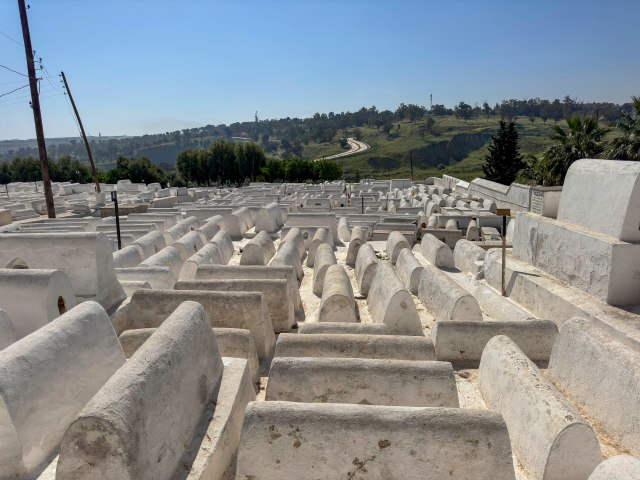
The Jewish cemetery.
After exploring New Fes, it is time to enter the walls of the old city via one of its many gates and wander the great old medina – a personal favorite of all the cities🙂 There is lots to see and observe from the Spanish architecture brought by the Jews from Spain, to the wandering, narrow alleyways and souks with all that is needed in the daily life.

Old walls of the center city.
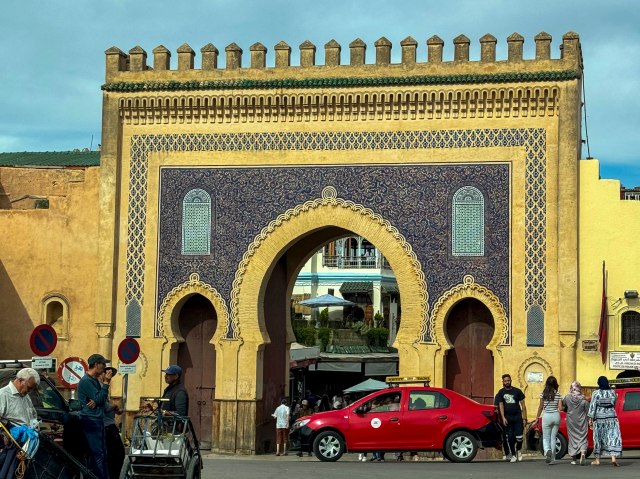
The Blue Gate – one of many into the Medina and a short walk from our hotel.

Rare balconies looking very Spanish.
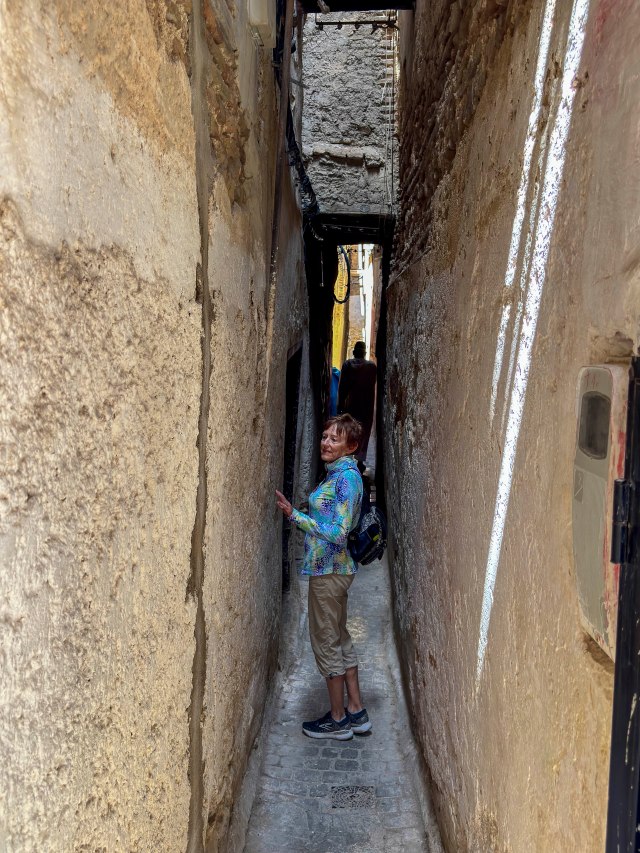
Very narrow alleyways. E size NOT G size😂

Meat for tonight’s dinner. Nothing on the hoof here, though.

A textile section with threads and yarns —

.
All this wandering can build up an appetite. Palais Tijani was just the quiet, relaxing, colorful restaurant that was needed. Family owned with the cooking done by the mother – everything was delicious, but there was way too much food (as always)!

Great spot for lunch.


For some reason, colorful chairs caught my eye.
Now it was time to get serious. Bou Inania Medersa is a very large, sumptuously decorated medersa constructed between 1350 and 1355 by the Sultan Abou Inan. It is a mosque, school and students’ residence. The fact that it has a minbar (pulpit) and minaret indicates that the sultan wanted this to be more than just a theological college – he wanted it to rival the most important mosque in the city. While the plan of the building is simple – a square courtyard flanked by two halls and a large prayer hall – every surface is covered with decoration. The floor is marble and the walls have three decorative bands always in the same order around the entire floor – geometric tile work below, script carved into tiles and then carved stucco work to the ceiling. The ceiling is carved cedar wood and/or mosaics.
The students’ residences were upstairs and are as basic as the ground floor is opulent. There were great views from what windows they had, though.
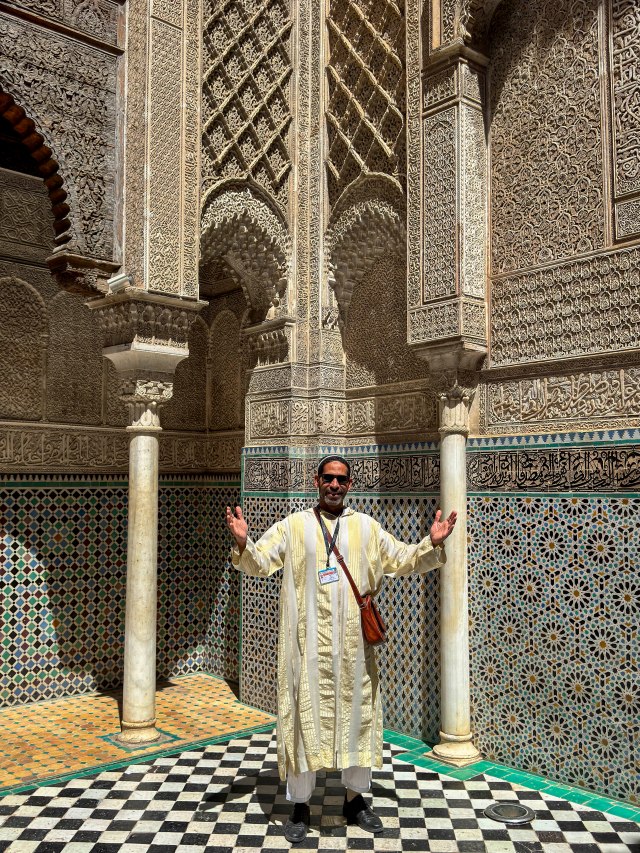
Our guide, Abdou, in the courtyard of the Medersa.

No bare walls here.

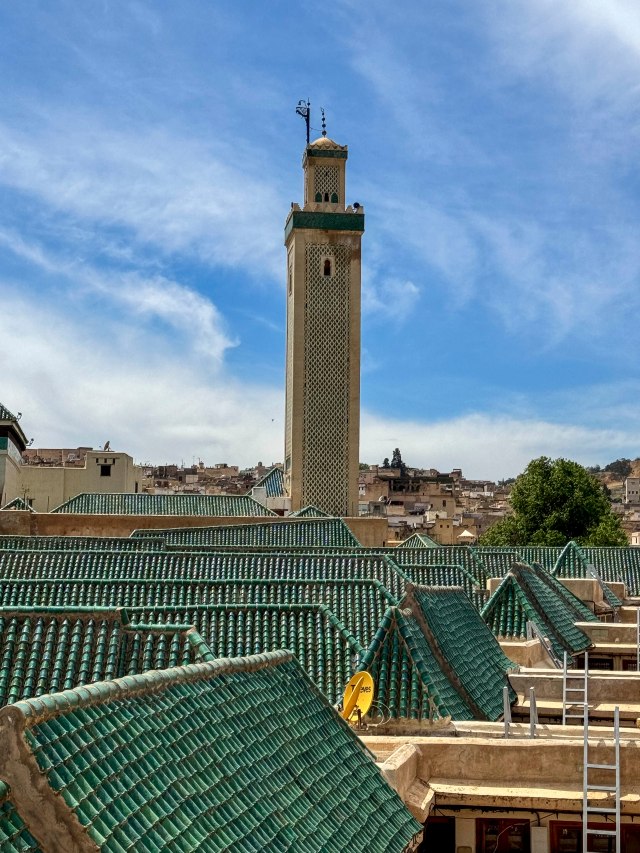
Views from upstairs in the student section.
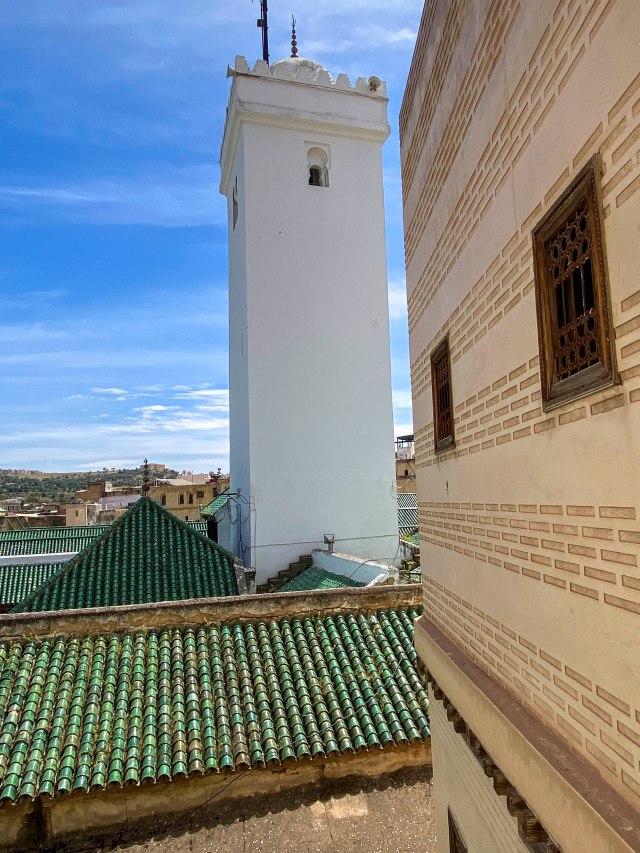
Mineret at the Karaouiyine Mosque from the students quarters.
.
Now to that most venerated shrine promised in the introduction. The tomb of Moulay Idriss II (thought to be the founder of Fes) is that shrine. It was built in the center of the city at the beginning of the 18th century. It’s pyramid green dome that covers the tomb and its polychrome minaret give it a majestic silhouette and is quite noticeable in the skyline. Like the Medersa, every square inch is decorated. Unfortunately, this is closed to non-Muslims but photos from the door are allowed.
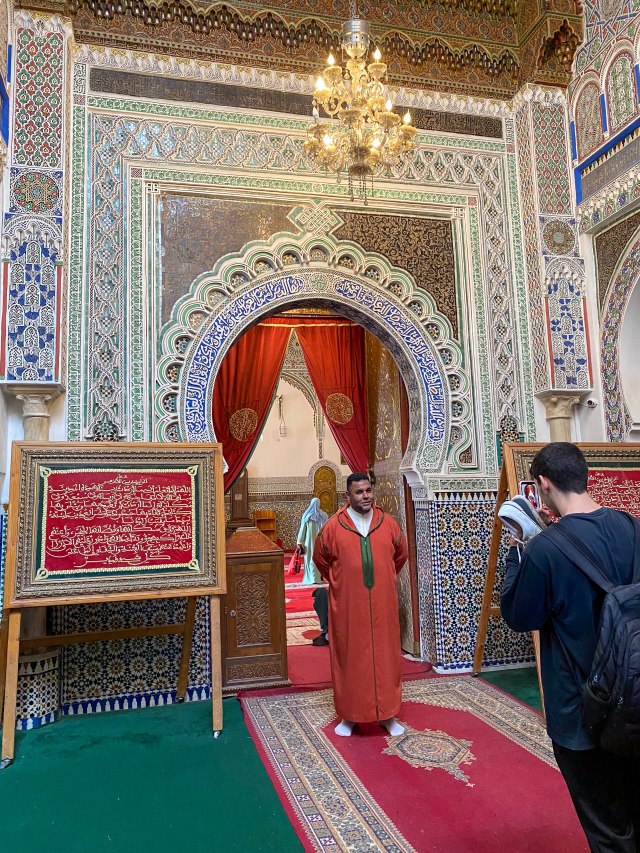
The richly decorated walls can be seen even from the doorway.
The oldest continually operating university in the world (established in 859) is just around the corner – the Karaouiyine Mosque. It was founded by Fatima bint Mohammed el-Fihri, a religious WOMAN who donated her worldly riches for its construction. Its prayer hall can hold up to 20,000 people but it is so wedged into the Medina it is impossible to tell its size. And, since it is a mosque, it is closed to non-Muslims so a picture of the doors and a very little glimpse of the interior is all one gets😢

Had to be quick with the shutter finger even for this glimpse.

All the mosques were quite stunning.
Leaving the serious behind, it is now time for lessons of another kind. In Fes one can learn to make pottery, mosaic tables and fountains, weave rugs, tan and dye leather and make bread! Let’s go —

Not the Trevi fountain, but the same make a wish concept. Going to need all the luck I can get to make all the stuff coming up!

Making the pot for a tajine.

The light purple dye turns blue when heated in the kiln.
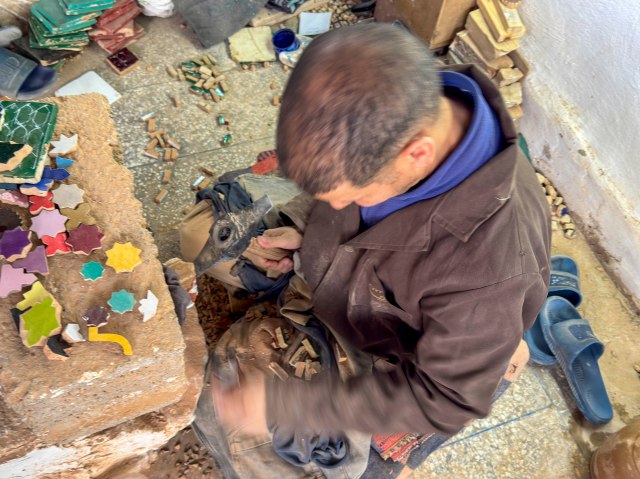
The detailed hammering and chiseling to create these very small shapes was amazing.

This mosaic fountain is assembled upside down.

Finished product. Fountains on the left.

Rug weaving loom and artist.

Lots of choices.
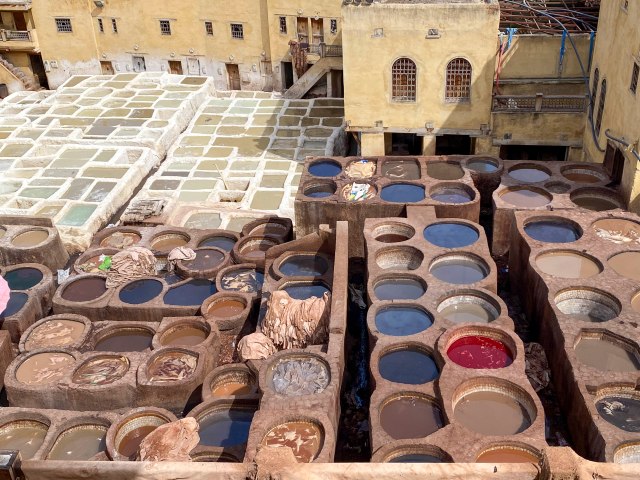
Vats at the leather tannery. Upper left white vats are pigeon s&$@t to ‘strip’ the hides of hair, etc.
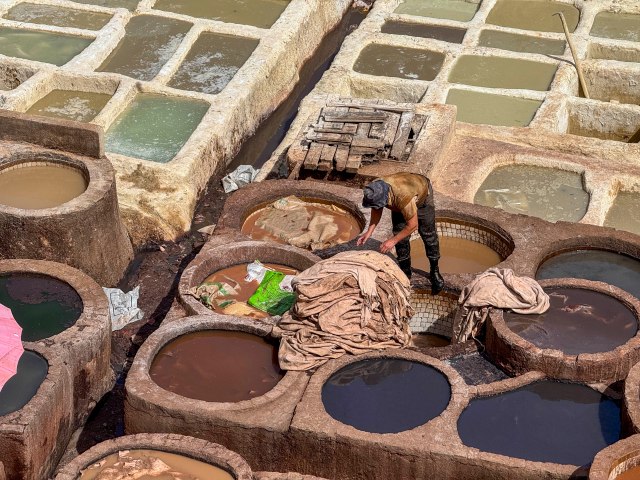
The workers are paid on a piece work basis.

Drying hides.

More buying opportunities of all things leather.


Neighborhood oven in the medina. Residents bring their dough to be baked in the ovens.
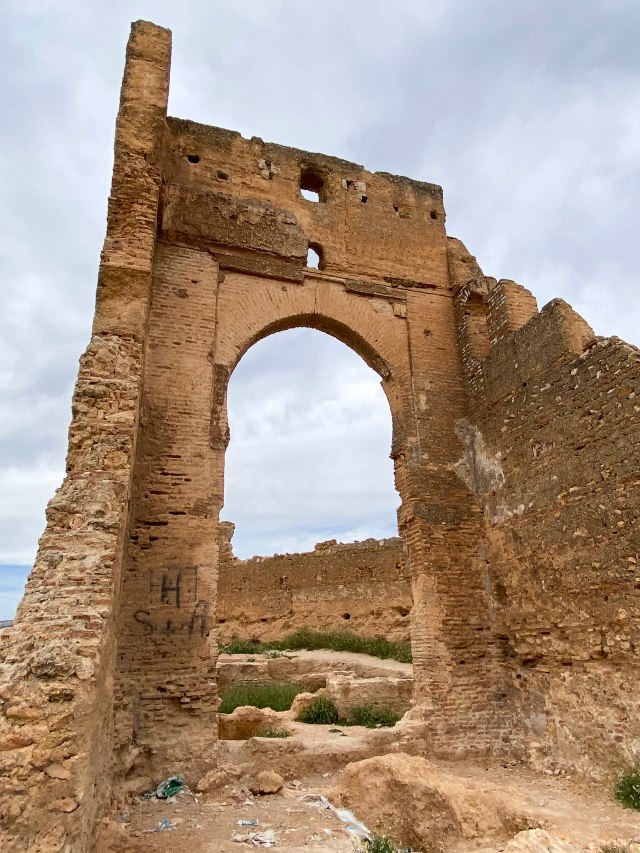
One last stop before the days end and dinner. Overlooking the city are old ruins from the 14th century, which again had great views of the Medina.

Strategically placed “mobile Starbucks”. These WERE the Starbucks in Morocco😂😂!!

Old ruins on the hilltop overlooking Fes.

The green minaret is the Bou Inania Medersa, the green dome top is the tomb of Moulay Idriss and the white minaret is the oldest university!
All of this can wear one out, so a nice dinner is called for at Riad Kassr Annoujoum. The Riad was purchased by an Italian and in conjunction with Morocco refurbished the facility. It now provides cultural events, such as the concert during dinner this evening.
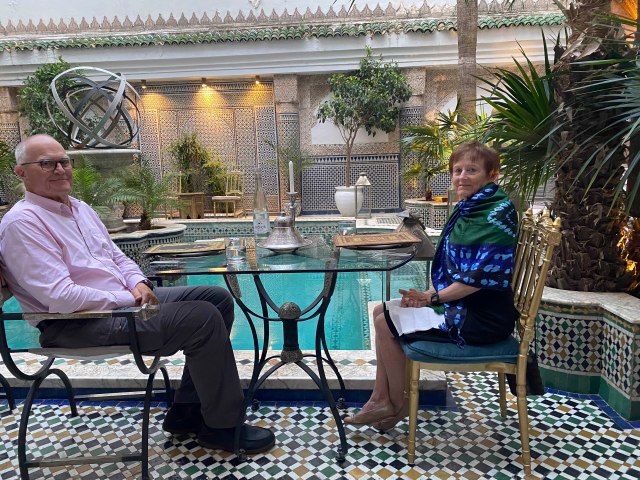
Beautiful setting for a delicious Italian dinner.

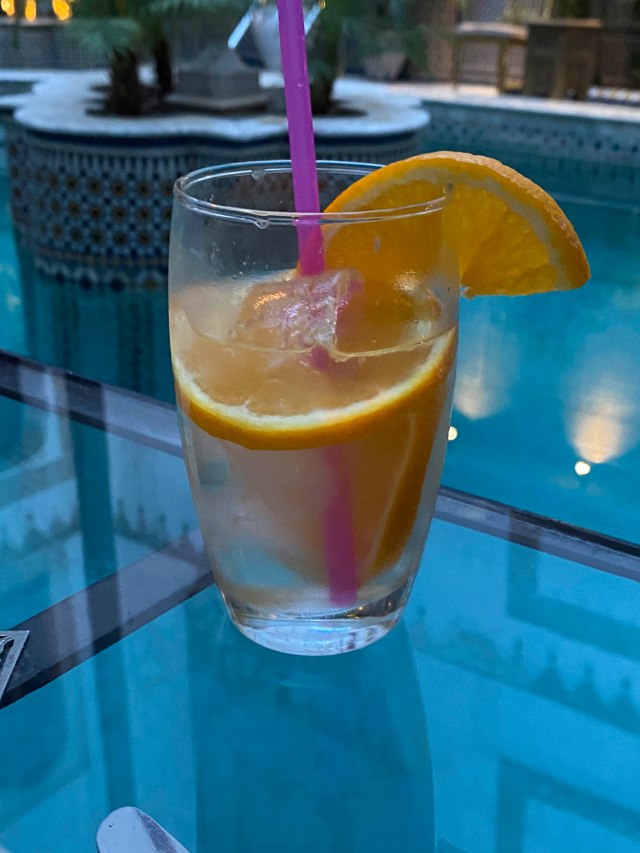
E’s turn for boatdrinks!
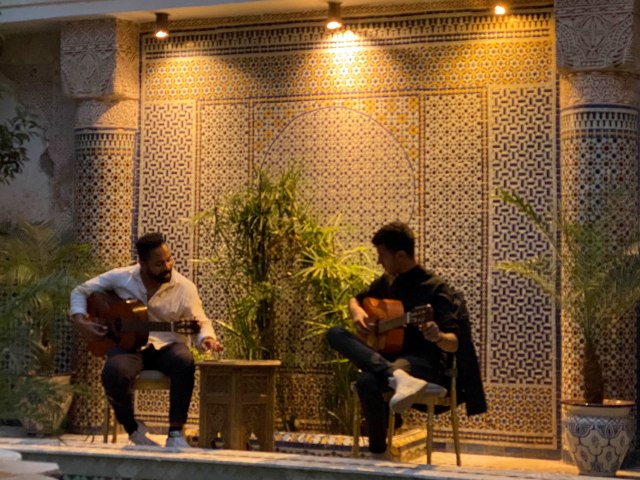
Good live music.

Our dinner companion;-)
And so ends another day. Lots of interesting sights, exchanges of knowledge and good food.
An overwhelmed E & G
 Elizabeth & Gary's Magic Bus Tour