Volubilis was founded in the 3rd century BC, but really became an important city in the province when the area was annexed by the Romans in 45AD. During its heyday under the Romans, it was a very affluent city as can be seen by the forum and sophisticated townhouses paved with mosaics. The site also features baths, oil presses, bakeries, aqueducts and shops. All part of the everyday life.
The drive to Volubilis from Fes is about 3 hours if one stops to enjoy the fabulous scenery of green fields and wildflowers and boys on decorated donkeys!

Beautiful fields filled with crops and a dammed lake in the distance.

Loved all the purple flowers on the hillsides.
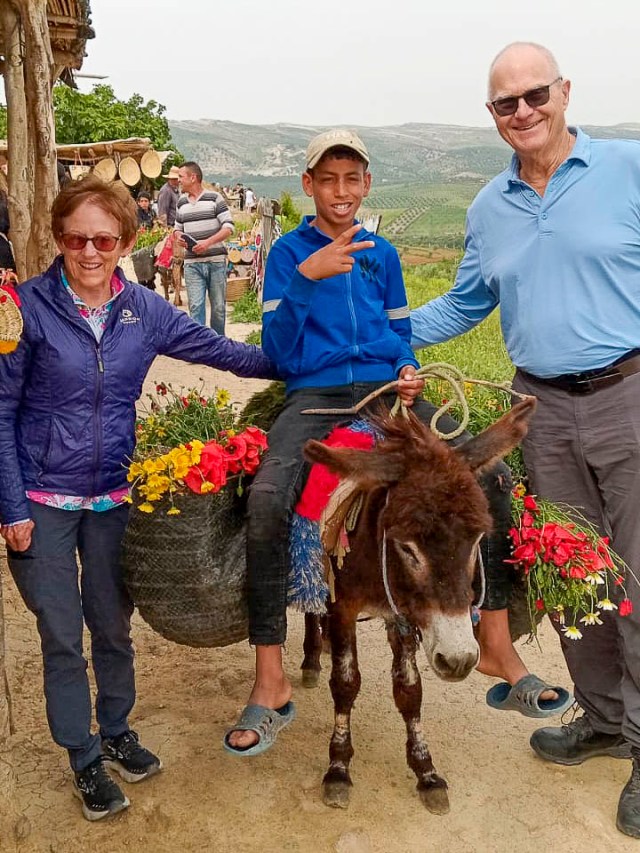
This enterprising youngster is looking to make a few bucks for a photo op with his trusty, festively decorated donkey. Who could resist?

The destination is in sight. Volubilis ruins from a distance.
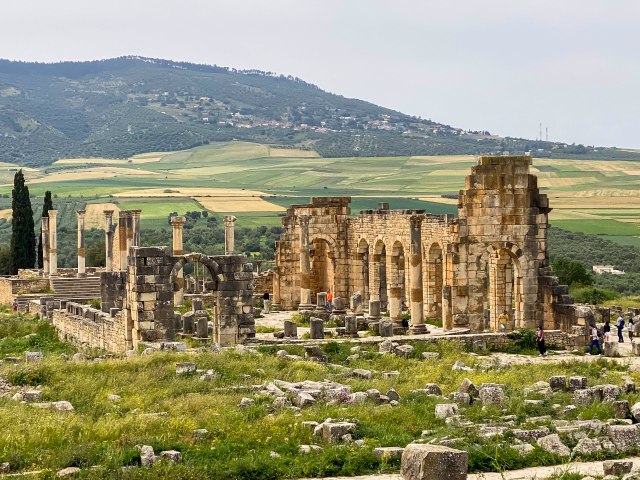
Their equivalent of City Hall.
The Decumanus Maximus is the main road through the city running from the Tangier Gate to the Triumphal Arch. The Triumphal Arch was erected in 217AD and stands 26’ high. It was reconstructed in 1933, currently without the frieze and chariot drawn by 6 horses which were an original part of the arch. It overlooks the fertile plantations of wheats and olive trees, emphasizing how important these crops were to the city.

The Arch of Caracalla, named in honor of a Roman General, with beautiful views.

Mosaic in the House of the Acrobat.
The forum, Basilica and Capitol were the major public buildings in the heart of the city.
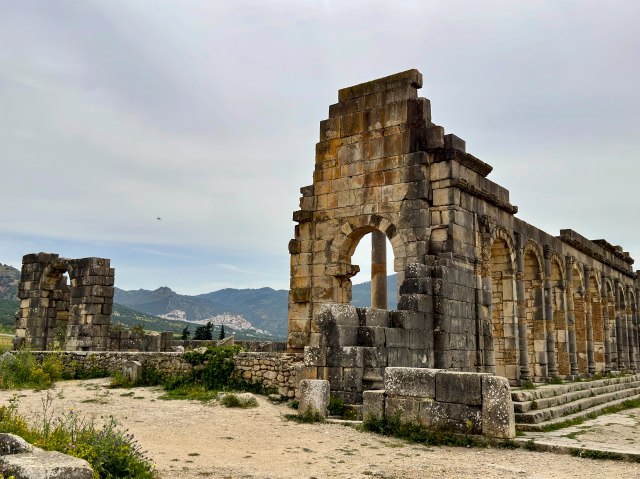
Walls of the Forum with the market to the right.
Olive oil was extremely important to the commerce of the area. There were public presses for all to use and private presses in the more affluent homes. There were several steps to the processing of the olives – 1)first they were crushed in a cylindrical vat, 2)then the pulp was emptied into flat baskets that were stacked on top of each other, 3)then the stacked baskets were placed beneath planks of wood that squashed the baskets making the oil run out and into channels in the rock slabs. The channels took the oil to purification tanks where water was added forcing the oil to the top. It was then skimmed and poured into large earthenware pots for sale. Fascinating!
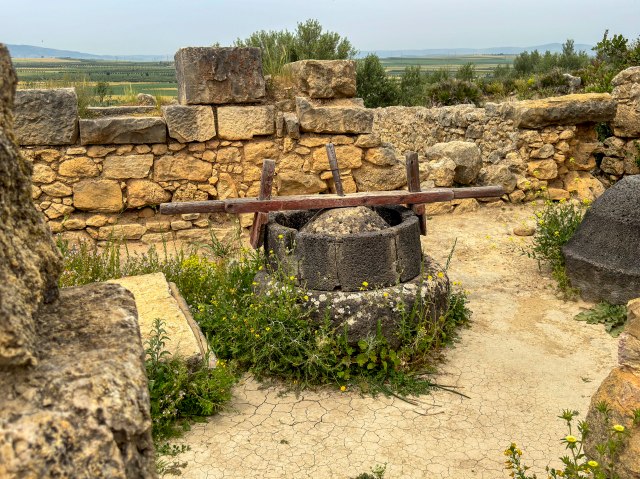
Olive oil press.


Where the baskets were squashed and the oil ran into the grooves.
The House of Orpheus is the only large, upper class house located in the south neighborhood. It is remarkable for its size and number of rooms it contains – large courtyard, reception room, oil press, bath suites and other private areas. It derives its name from the large circular mosaic located in the main reception room which depicts Orpheus playing the lyre charming a lion, an elephant and many other animals.

The opulent main reception room, which would have had magnificent views.
History lesson engraved on the brain, it might be time for lunch. Today’s BBQ would be in Zerhoun. Funny sights getting there —
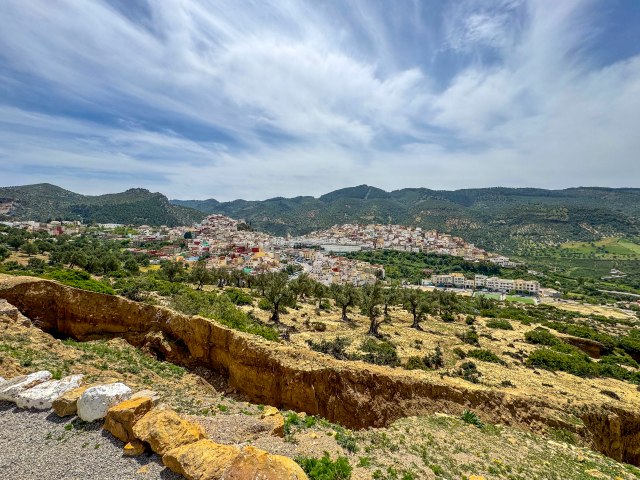
A city developed looking like a camel😂
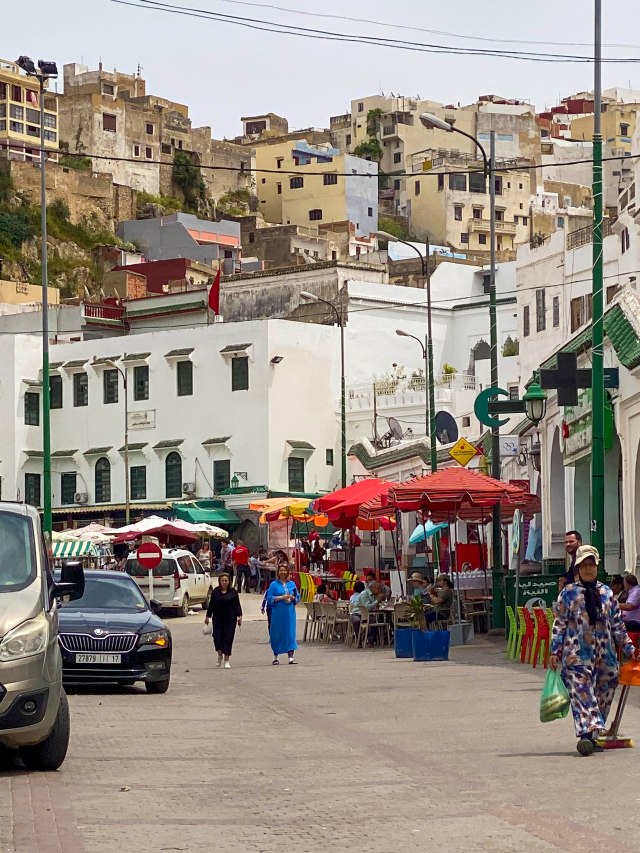
A stroll and lunch in Zerhoun.
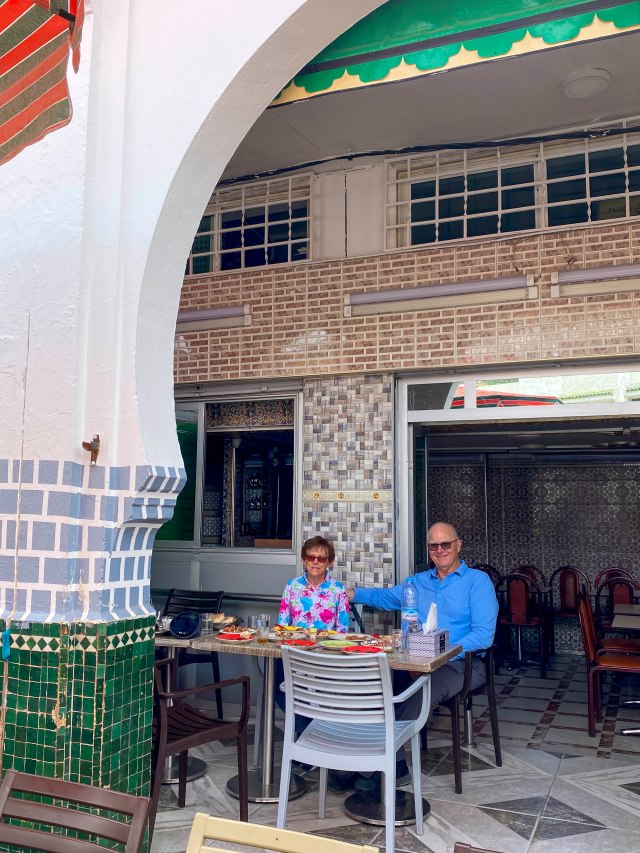
Good BBQ here under the red umbrellas.
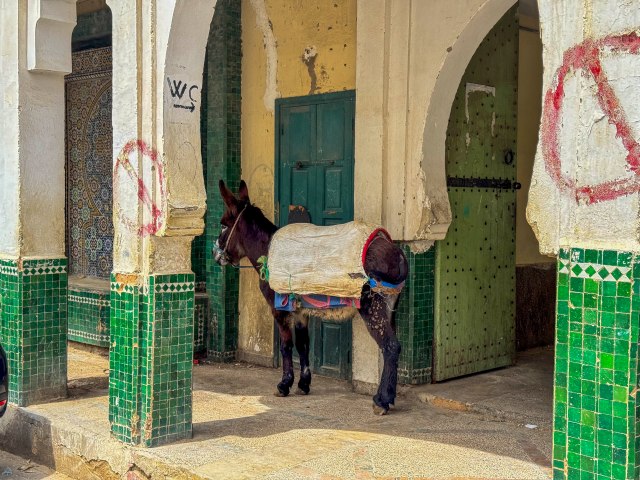
Waiting in line for the WC?!?
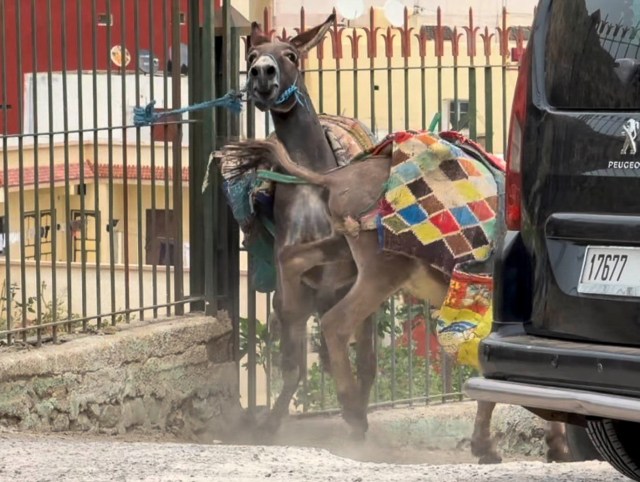
Punctuated by a donkey brawl as we were leaving.
Today was a fun day with a little learning, a little history, a good lunch, beautiful scenery coming and going AND HILARIOUS DONKEYS! If only the video could be posted😂😂😂
E & G – Only one day left in Morocco.
 Elizabeth & Gary's Magic Bus Tour