Ronda was one of the last Moorish bastions to fall in the Inquisition primarily due to its location. It sits atop a rocky landscape looking down on the El Tajo Gorge! It has housed outlaws and rebels through the ages – even including more recents like Ernest Hemingway and Orson Wells. (Wells is even buried here.) Ronda is composed of an old town (several centuries old) and a new town (a couple of centuries old😂). Each is connected by an old bridge and a new bridge (the 18th century Puente Nuevo). Ronda is truly a welcoming, charming town —

Welcome to Ronda

The recently renovated Alameda del Tajo.

View of the surrounding farm lands from the park at “Oh My God” view spot.

Our group of travelers enjoying the beautiful day and beautiful views from the bridge.

The new bridge (18th Cent). The picture does NOT provide the sense of the height!

This gives a little sense of the perspective! Definitely kept enemies at bay.

A view from the backside. BTW – that little black door in the middle of the bridge was a prison – YIKES!

The old bridge is in the center of the shot.
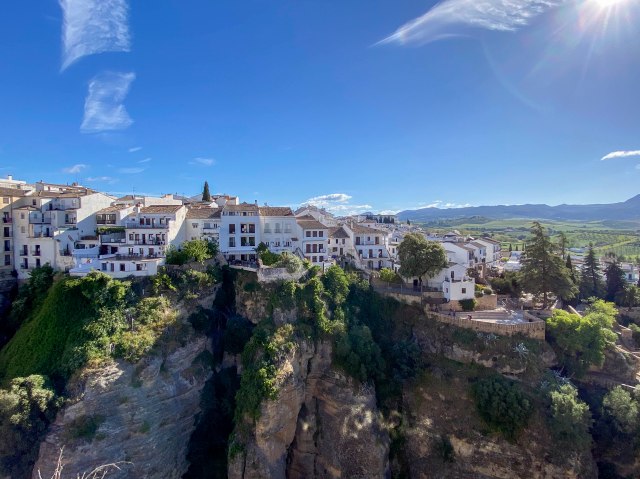
La Ciudad – a classic Pueblo blanco, whitewashed with cobbled alleys.
Besides being the last bastion of the Moors, Ronda is the home of bullfighting. Pedro Romero Martinez was born into the Romero family in Ronda in 1754 and became a legendary bullfighter. He established the rules of bullfighting that are still followed to this day. In 1785 the Plaza de Toros in El Mercadillo was inaugurated and remains one of the oldest and most important bullrings in Spain and the spiritual home of bullfighting. Today, the sport is a controversial one but each September aficionados from all over the country travel to the Corrida Goyesca held here in Ronda.

A statue Pedro Romero in the new park. It was a 200 year celebration – he did not live 200 years😂😂

Welcome to the Plaza de Toros.


A rooftop taverna provided a welcome caffe/chocolate and a view.
Of the several museums of note, one might visit the Casa De San Juan Bosco. This is Ronda’s quiet retreat in a bustling tourist town. A palatial house built at the beginning of the 20th century, it was given to a congregation to be used as a house of rest, healing and care for the ill and elderly of the congregation. Today it is a museum with beautiful tile work and walnut wood furniture?

Casa Museo Don Bosco.
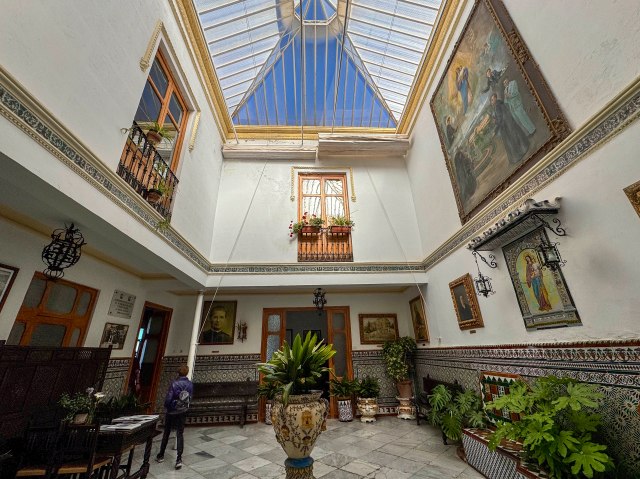
Beautiful tile work similar to what was seen in Morocco.

The carved woodwork on the chairs is beautiful.
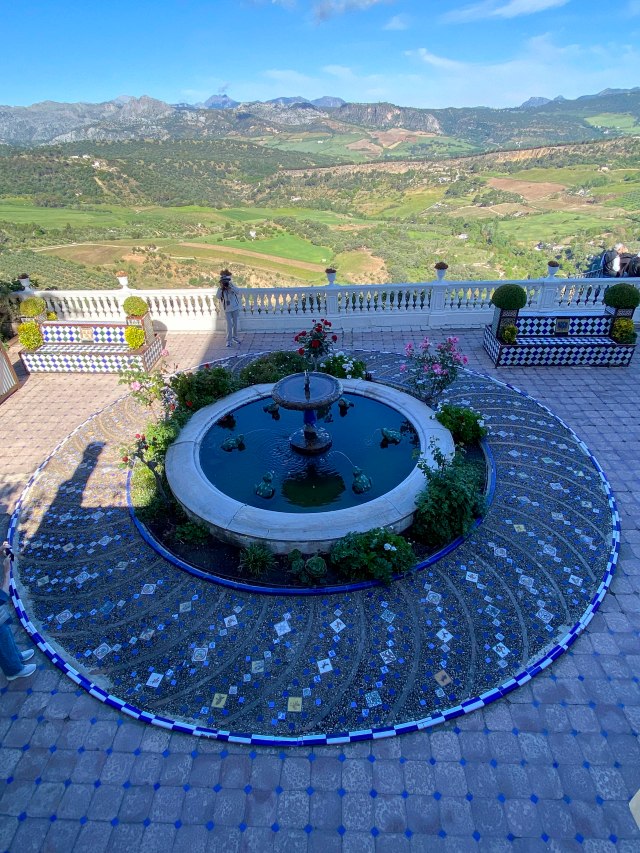
The rear patio of the museum ..
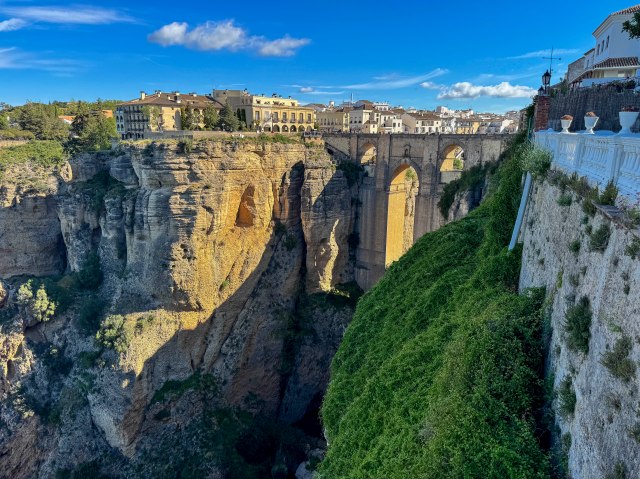
…has a great vantage point to see the new bridge from a different angle.
Wandering about the town there are many sights of old churches, cafes and stores.
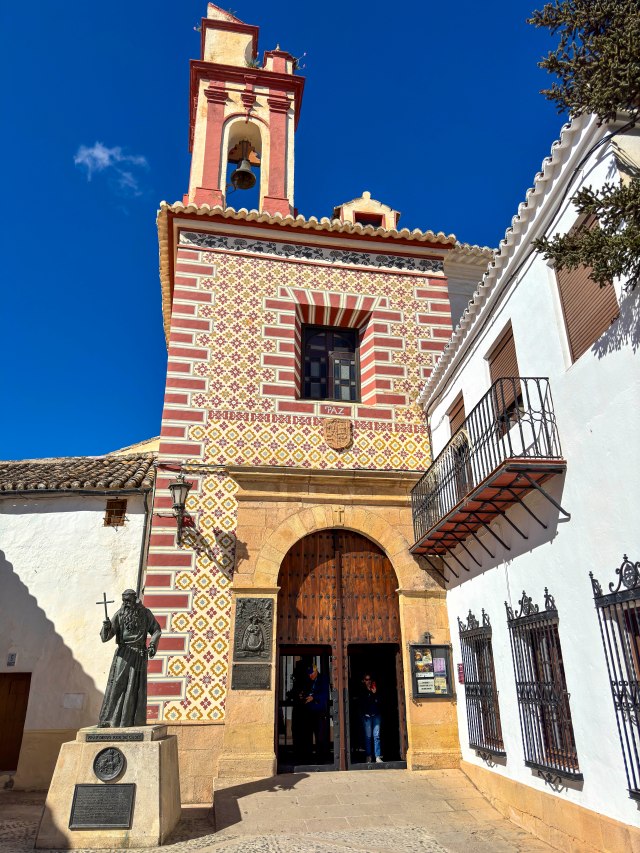
Very moorish looking on the outside —-

—- very catholic on the inside.
A wonderful way to end this visit is to find a family owned winery, have a tour and enjoy an incredible lunch provided by them.

Our spot for a tour of the winery and a wonderful lunch.

Proprietor and tour guide.

When do we get to taste?
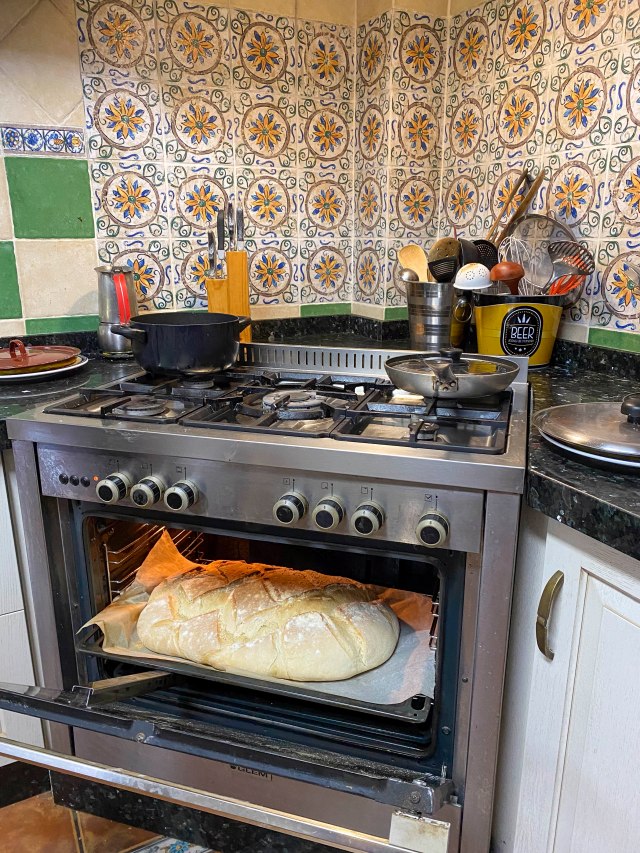
OMG!! This bread, as well as the rest of the lunch, prepared by Mrs Hidalgo was unbelievable.
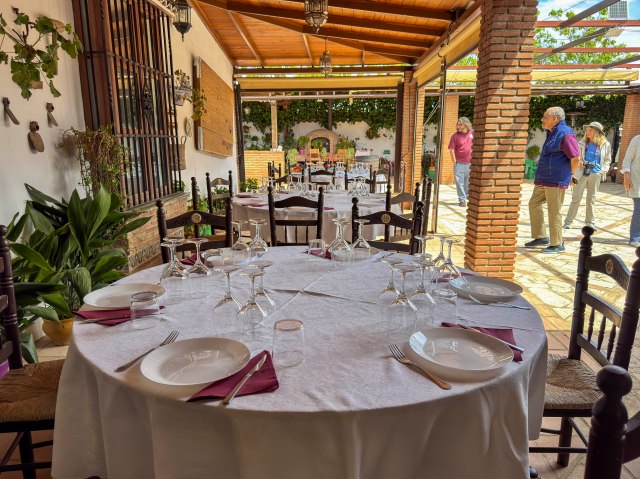
The best was yet to come.
As if there wasn’t enough eating, our group often had dinners about town tasting local preparations of tapas – and of course wines🍷🥂🍷

Look out Old Town Marbella – here we come!
Another delightful day of exploring Andalucia and getting to know our travel mates. Lots more to come.
E & G – looking forward to a day of rest
 Elizabeth & Gary's Magic Bus Tour