One day is not enough to enjoy and experience Seville. But – it is better than not seeing it at all and makes one want to return.
First stop was Plaza de Espana in the Parque Maria Luisa. Princess Maria Luisa donated the grounds for this park in 1893, and it became the setting for the 1929 Iberia-American Exposition. One enters the building fronting the semicircular plaza and the breath is taken away when the plaza is seen! In the middle of the plaza is a canal that follows the curve of the building facade and is crossed by ornate bridges. At either end of the plaza are north and south towers which are city landmarks. As is true for most of the day here in Seville, pictures do not do justice to the magnitude and beauty —

View of the Plaza de España as one enters.

Our obligatory shadow picture. We like them..please bear with us.
The portion of the colonnade facing the plaza is a series of alcoves representing the Spanish provinces each decorated with stunning, elaborate tiles depicting an event in that province’s history. Barcelona, for example, depicts Columbus being greeted by Ferdnando and Isabel upon his return from the Americas.


Each Region had a tiled display on the wall of the Plaza.
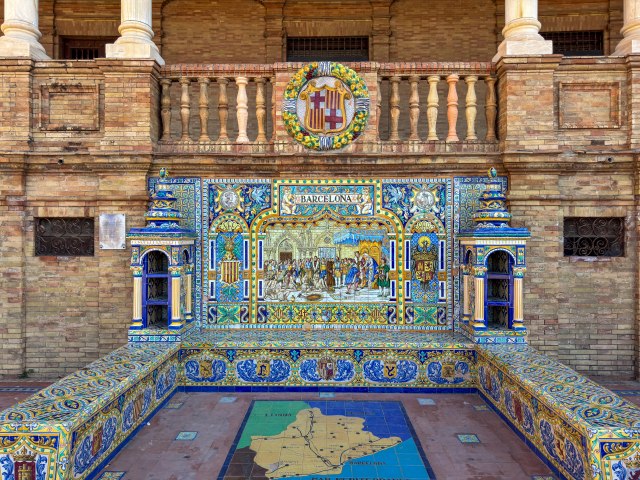
Barcelona with Fernando & Isabel.
This Plaza may look familiar to some as it has been used in many films. Recently as the royal plaza on planet Naboo in Star Wars II and many years ago in Lawrence of Arabia.
When one can finally tear themselves away from the Plaza, the Jardines de Murillo are not far away. Rising above the palm trees in the gardens is the Monumento a Colon, which is a monument to Columbus and incorporates a bronze of his ship the Santa Maria!
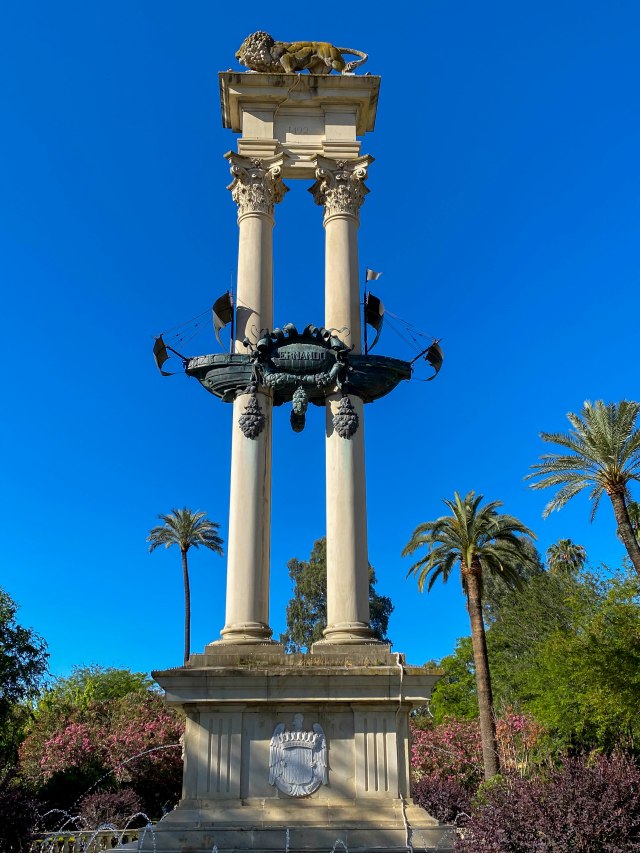
.
From the gardens a short walk through the Jewish quarter will take you to Real Alcazar.

Pleasant view down an alleyway.
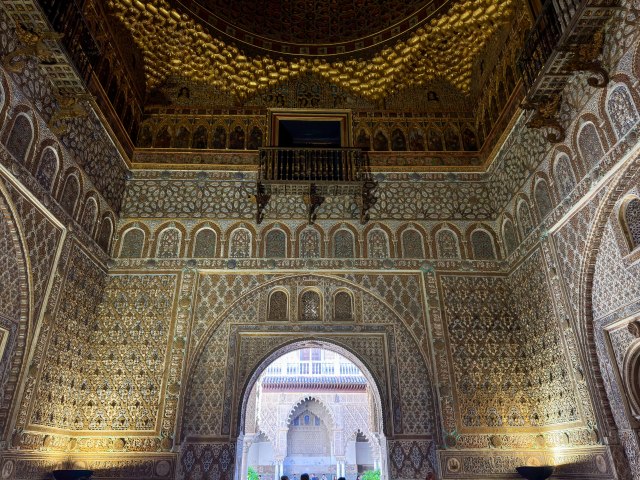
Real Alcazar was ordered constructed by Pedro I (Christian) in 1364 within existing palaces. At this time, the Moors, Christians and Jews were living in unity in various parts of what is now Spain. Pedro I did not have the tradesmen to build and decorate what he wanted so he contacted the caliphs (Moors) who built the Alhambra during the Nasrid dynasty. They sent their craftsmen who created patios and halls in the Moorish Mudejar style and you will see from the pictures that there is great similarity to the Alhambra!
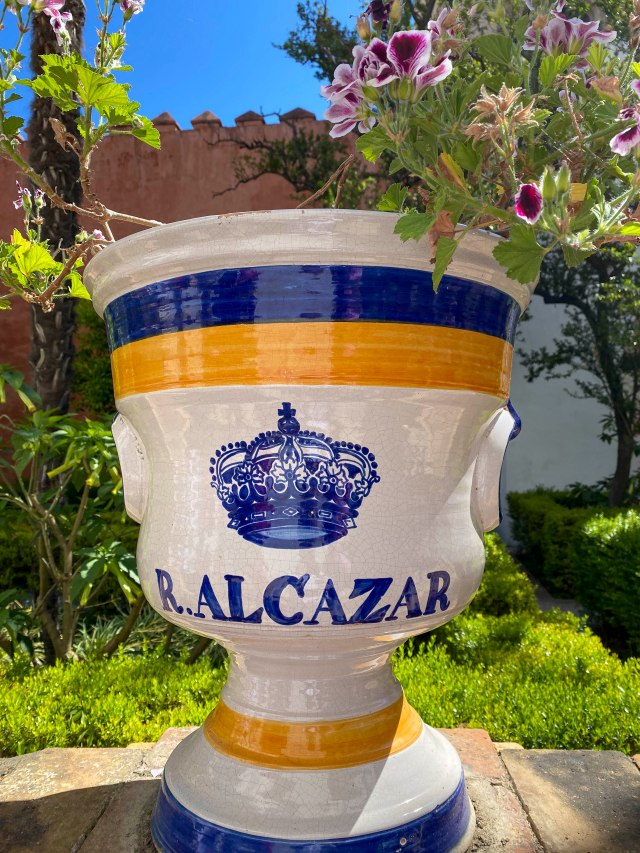
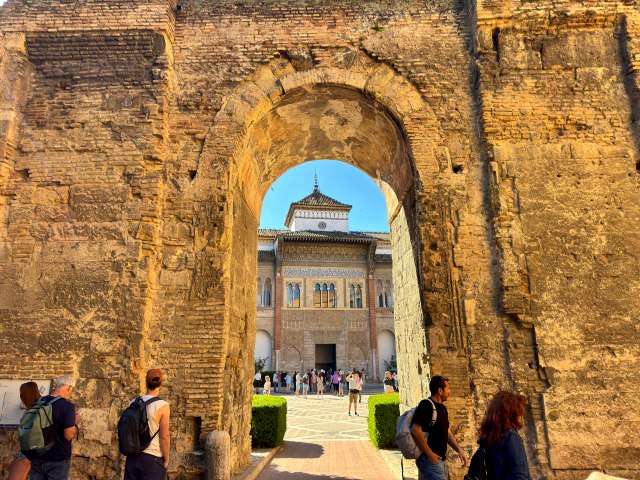
An entry to Real Alcazar.

Blues and greens and same tile motif as seen in the Alhambra and throughout Morocco.
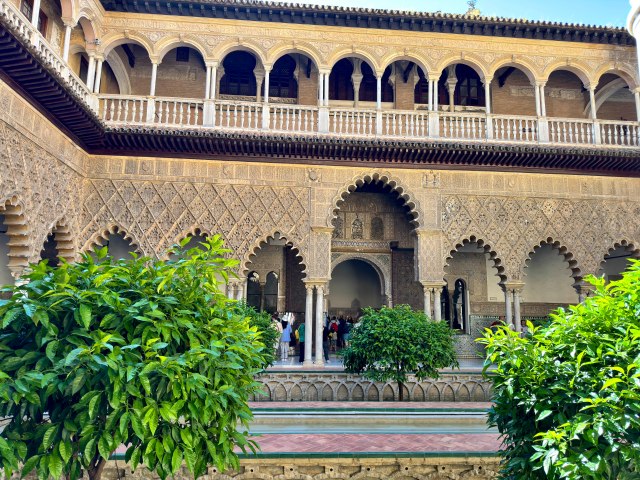

Have an almost identical picture at the Alhambra.

The very ornate, moorish reception room.

A very small part of the Palace Gardens.
There is soooo much more in Seville! Next up is the Seville Cathedral and La Giralda. This is the world’s largest Gothic cathedral with a huge Moorish bell tower – La Giralda. A great mosque was built here in the 12th century by the Almohads based on the great mosque in Marrakech. In 1401 work on the second largest cathedral in Europe began on the site of the mosque. A century later the cathedral was complete and the only remnants of the mosque were the minaret and the ‘patio’ where ablution was performed by the Muslims going to prayer. Of course, the minaret was added to at the top to remove the Moors bronze spheres and add Christian symbols and belfry. A bronze weathervane was also added at the top, which is giraldillo – giving it its name of La Giraldo.

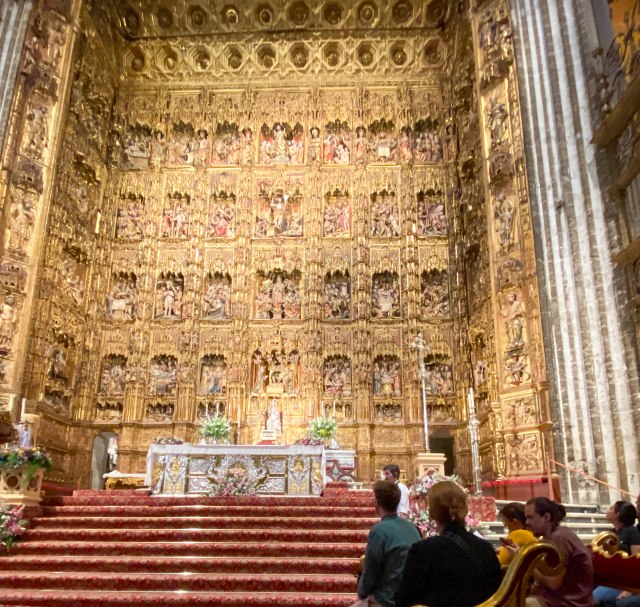
Inside the Cathedral of Seville, the main alter – huge and astonishing.

Lots of art specifically made for the cathedral, as one can tell by the exact surrounding ornamentation.
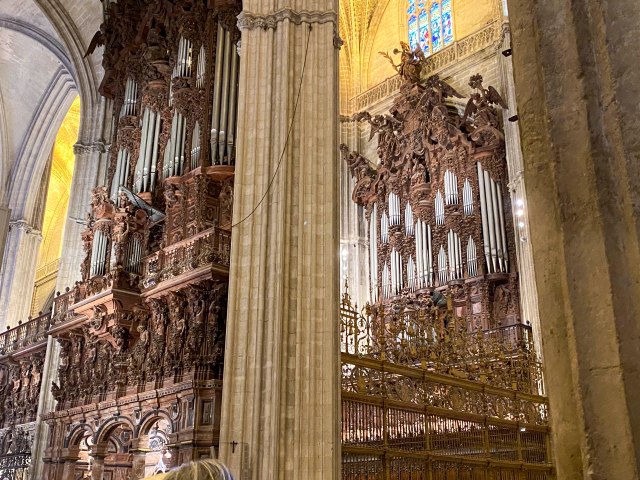
Massive double pipe organ.

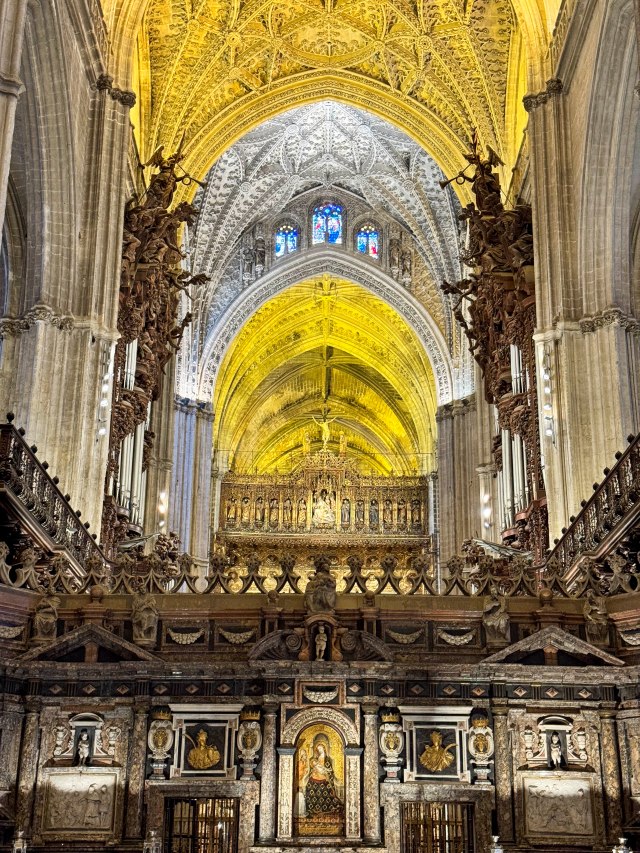
View from behind the choir toward the main alter (not visible).
What a wonderful day of exploration in Seville! Nothing could be better than to cap it off with a great dinner with friends at a very pleasant family restaurant —

Salute.
While this post describes a bit of the top two things to see in Seville, there is so much more. Perhaps another trip?!?
E & G – overwhelmed!
 Elizabeth & Gary's Magic Bus Tour