Oops! One more bit of that ancient history of Japan that is a quick ferry ride from Hiroshima – Miyajima Island where the Itsukushima Shinto Shrine resides. First built in 593, it was rebuilt in 1168 and designated a UNESCO World Heritage Site in 1996.
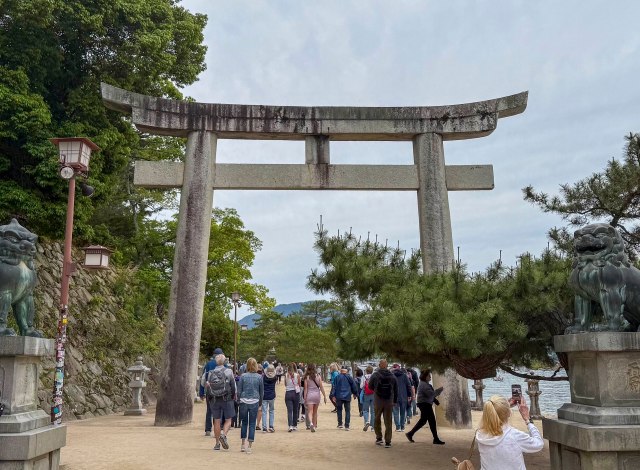
Torii gate indicating the entrance to the Itsukushima Shinto Shrine.
The torii gate that everyone comes to see, though, is the majestic orange torii in the bay, that appears to be floating on the water. It was originally erected in 1168 – the current version dates from 1875.
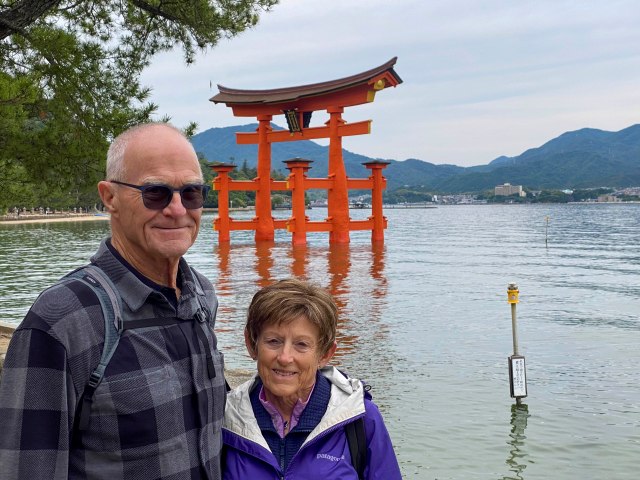
Behind the dynamic duo is the historic torii gate marking the water entrance to the shrine.
The shrine is dedicated to three goddesses worshiped as deities of the seas, traffic safety, good fortune and fulfillment of wishes. It is built on the water, beautifully framed by the mountains in a perfect setting. Its vermilion color is considered to keep evil spirits away.
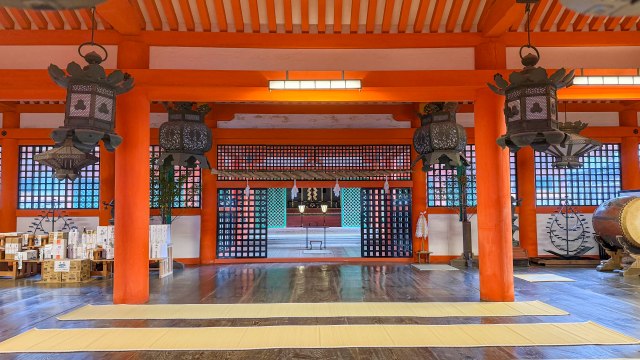
A view inside the Itsukushima shrine.
As most know, the real draw to Hiroshima is the Peace Memorial Park and its surrounding area. Devastated by an atomic bomb on August 6, 1945, parts of the area are quite vibrant but there are reminders of that fateful day. The old Industrial Hall – now known a the A-Bomb Dome – has been left as the twisted and charred shell from that day as a reminder of humankind’s self-destructiveness.
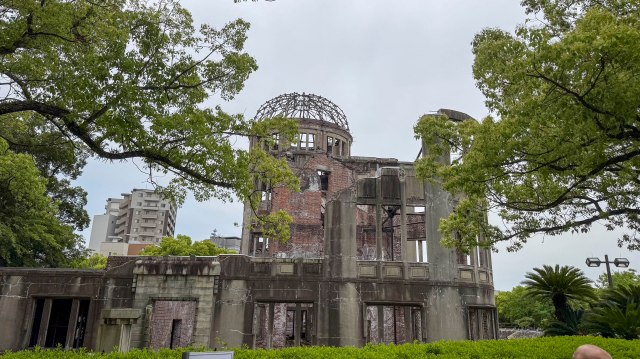
The A-Bomb Dome, a symbol of Hiroshima.
The Peace Memorial Park contains several monuments to the victims of the attack and a very sobering museum with displays reliving that horrible day in history. The Children’s Peace Monument is an elongated dome featuring a statue of a girl holding a giant origami crane, the symbol of happiness and longevity in Japan. Around the monument are cases of the garlands of origami cranes made and left in honor of a young girl exposed to radiation as a toddler, who succumbed to leukemia at the age of 12.
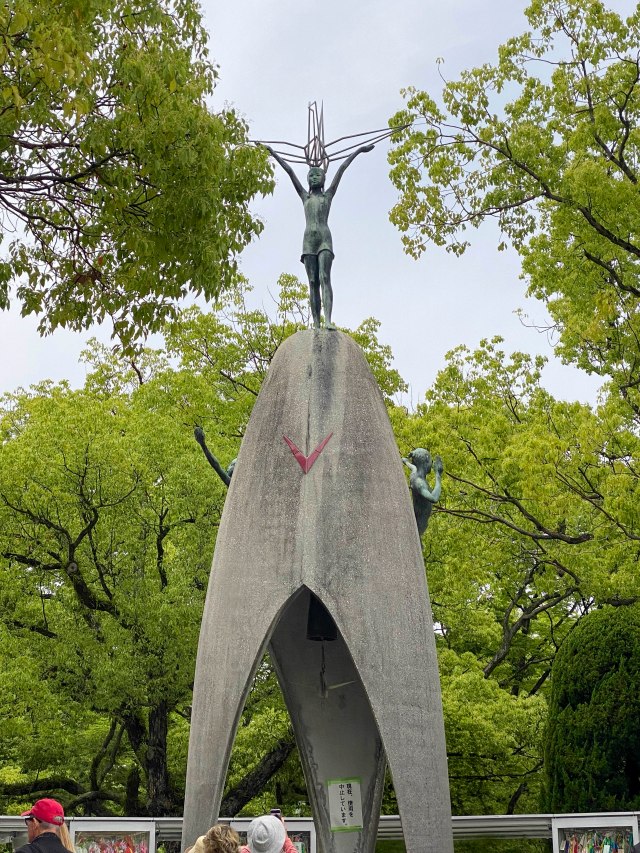
The Children’s Memorial in the Peace Memorial Park.
There is also a Flame of Peace that will burn until the last nuclear weapon has been banished that can be seen through the monument to those who have died.
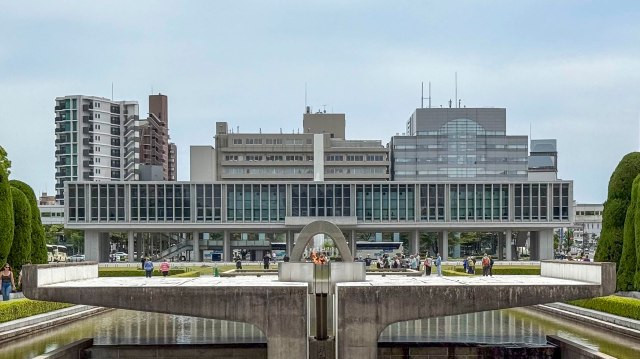
The Flame of Peace and the museum in the background.
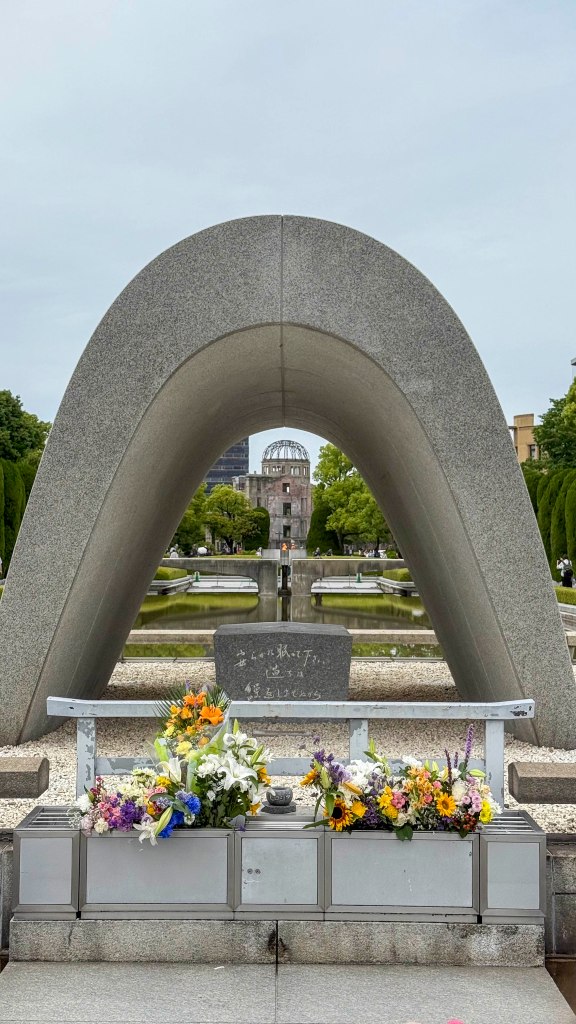
Memorial to the lives lost.
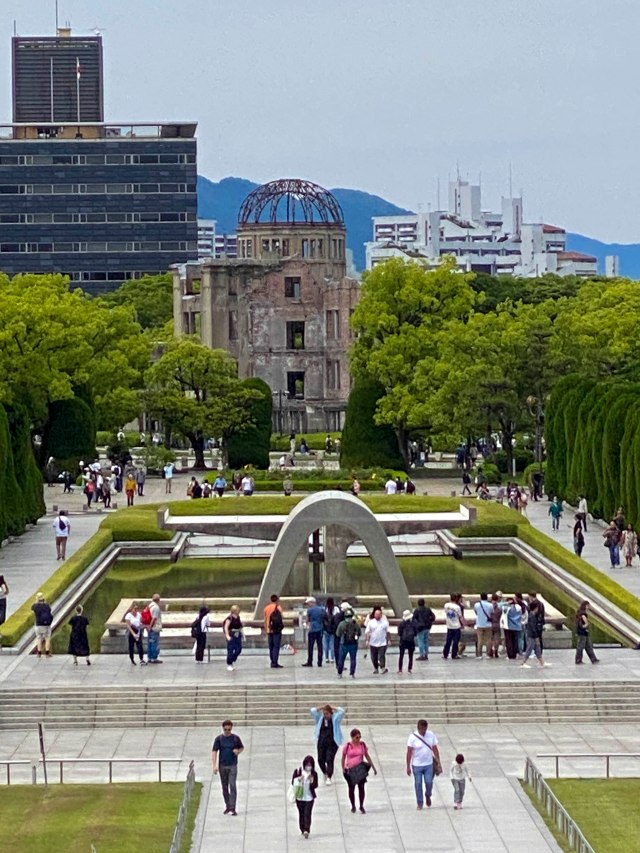
View from the museum to the A-Bomb Dome.
Nagasaki was also the target of an atomic bomb – the second and hopefully the last – on August 9, 1945. It also has its Peace Park with memorials to those who died and many memorials of peace contributed by countries around the world.
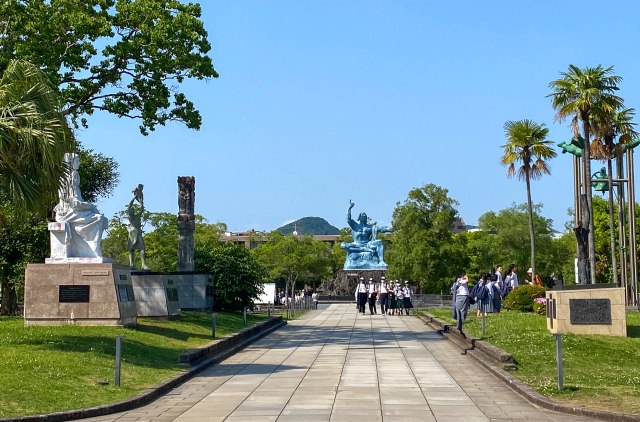
View across the Peace Memorial Park with sculptures donated by countries around the world.
Nagasaki is, and always was, a port city. During Japan’s isolation from the world from 1639 to 1853, this was the only access point into the country and only the Portuguese and Dutch were allowed to bring goods in or out. The city is beautifully set around that port off the East China Sea surrounded by mountains – –
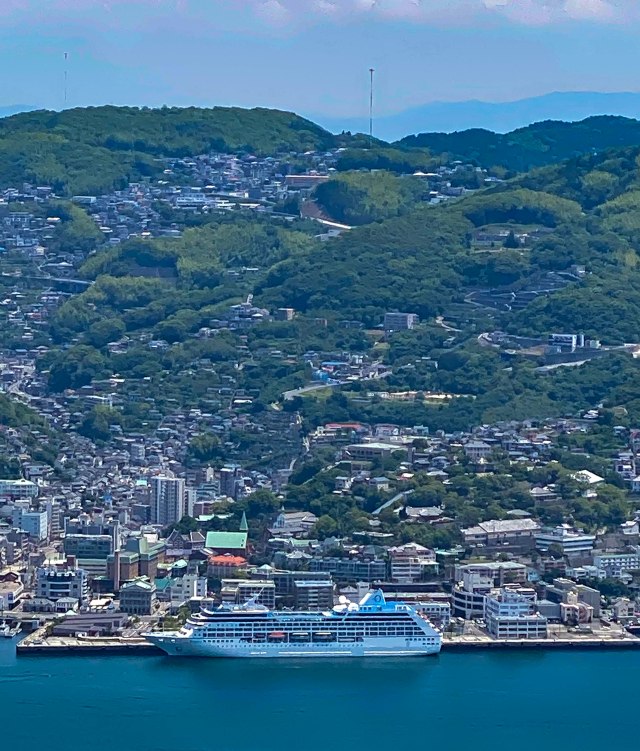
Our ship in the beautiful Nagasaki port as viewed from atop Mount Inasa.

These were just cute!
After lots of shrines, temples, castles and memorial parks – it is finally time to leave Japan and head for China. And the best send off is Taiko drummers – –
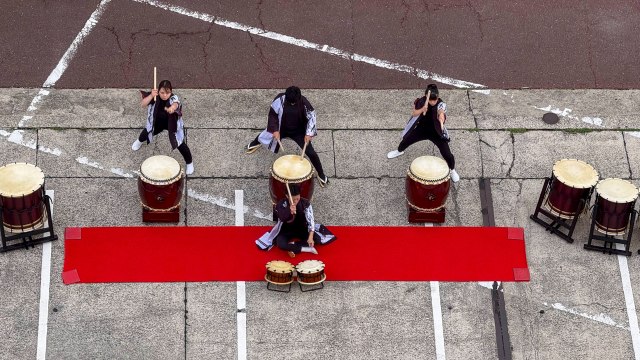
The Taiko Drum group provided a terrific departure.
The people of Japan are VERY polite, respectful and welcoming. They have a country rich with history – and are quite proud of it. It was a pleasure to spend a couple of weeks learning and enjoying Japan. But, as always, one must move on.
E & G – Arigato Japan
 Elizabeth & Gary's Magic Bus Tour