Halfway between Hanoi and Ho Chi Minh City (Saigon) sits the Imperial City of Hue (pronounced ‘way’). Modeled after Beijing’s Forbidden City, this 1300 acre citadel is surrounded by 6′ thick walls and a 65′ wide moat and served as the political and religious center during the rule of 19 emperors of the Nguyen Dynasty (from 1802 to 1945). At the Dynasty’s height, the complex contained hundreds of rooms in dozens of ornately decorated buildings. After all, one of these Emperors had 500 wives, which required a lot of housing!!!! However, the walls and moats could not protect the historical buildings from destruction during the French occupation or the Vietnam war. Thanks to the designation as a UNESCO site, many of the most important buildings and gardens are being reconstructed. A walk through one of the gates will get you to the inside of the Main Gate, which has not been opened since the last Emperor went through.
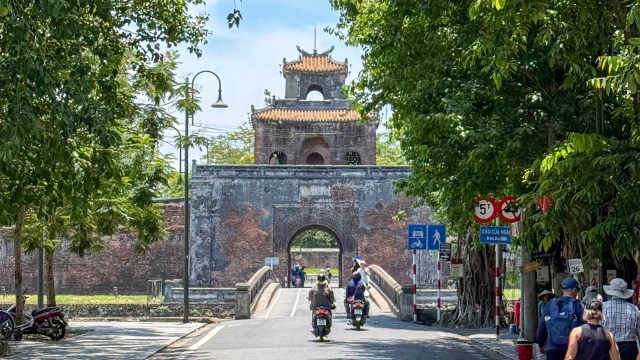
Come on into the Citadel grounds.
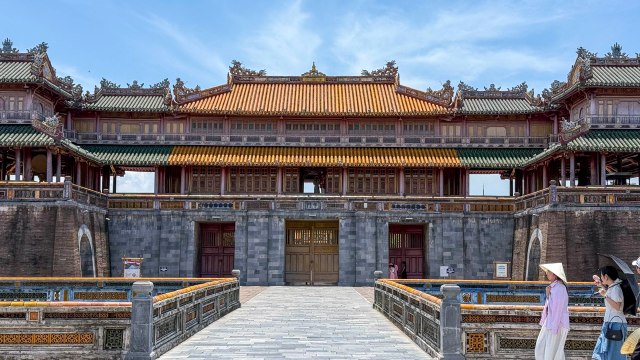
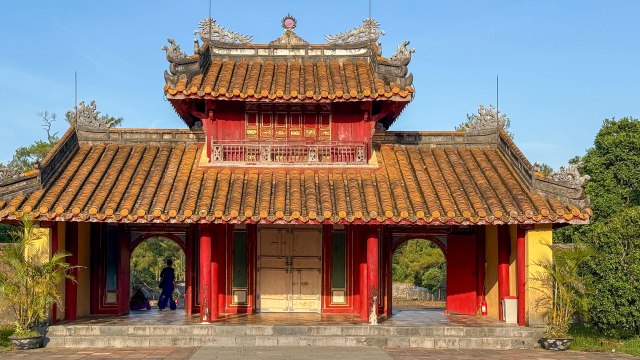
The Main Gate – Only the Emperor walked through the middle, which has the gold color roof. All others walked through the green colored portions.
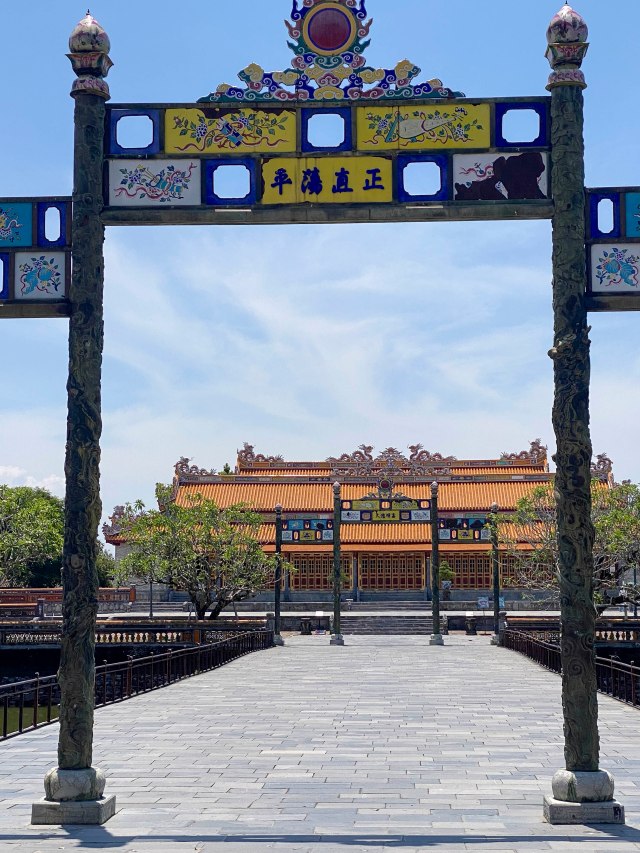
Into the Reception Room
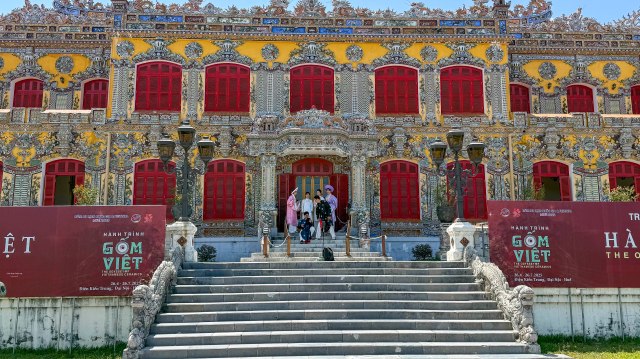
The Palace of one of the last Emperors (pretty much restored). The ceramic work is incredible!!
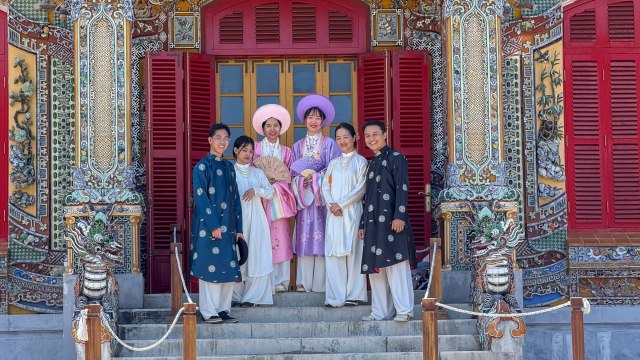
A soon-to-be Tic Tok post;-)
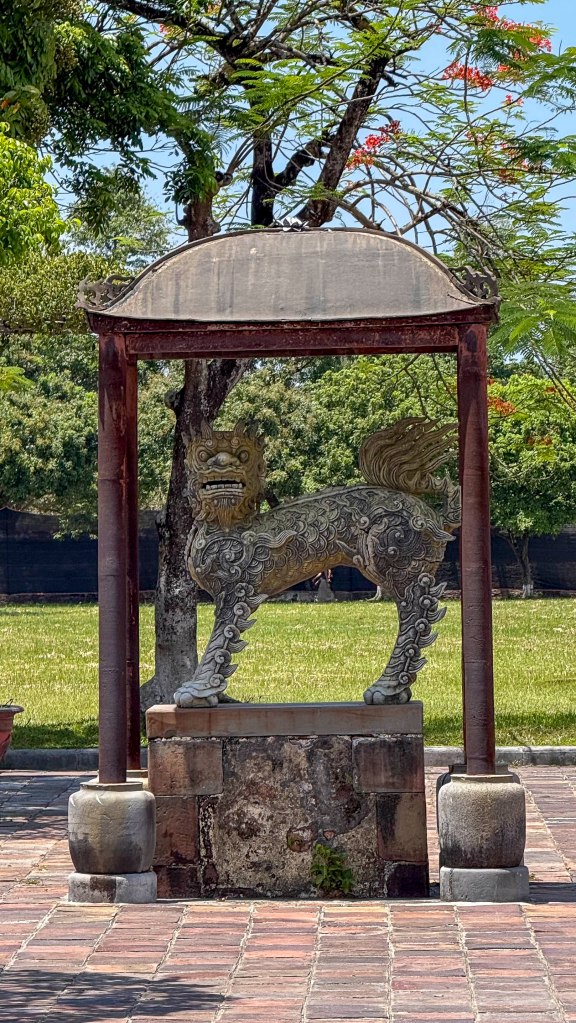
The Vietnamese version of a Unicorn.
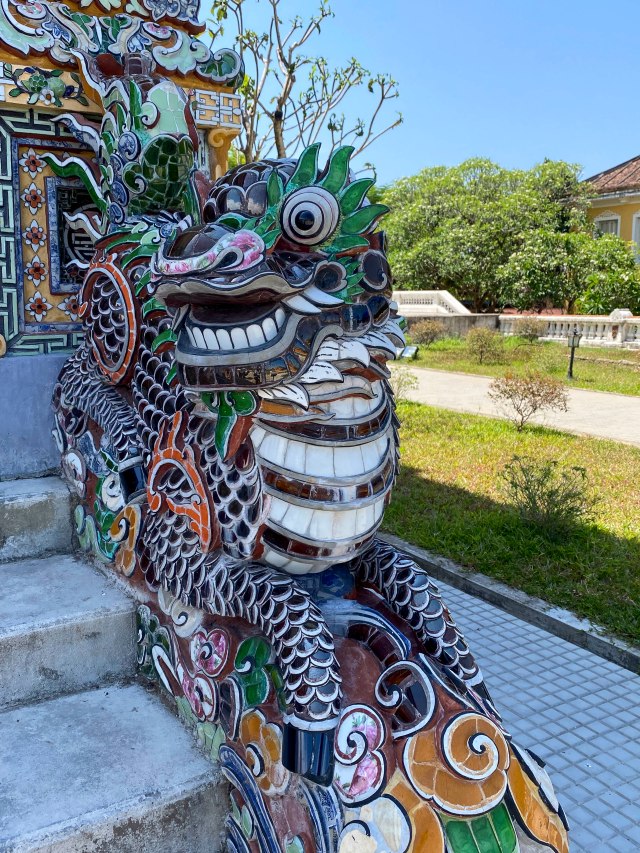
Dragons signify power and are associated with the Emperor.
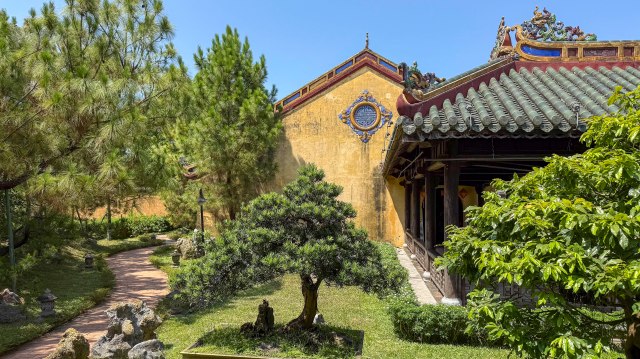
Incredibly beautiful gardens – only for the emperor.
The citadel sits on the banks of the Perfume River, where one can also find extravagant mausoleums of the various rulers of the Nguyen Dynasty. Today the Perfume River can be travelled by the likes of any of us – –
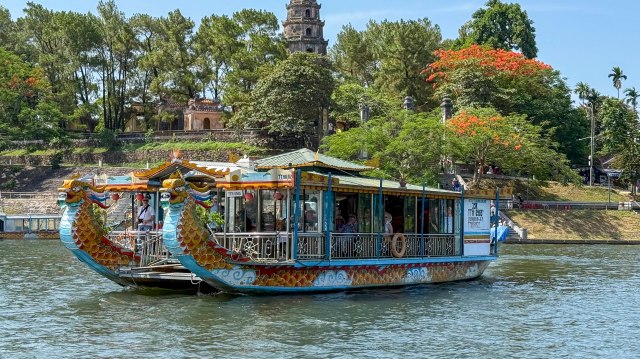
Cruising the Perfume with dragons leading the way.
Also sitting on the Perfume River is the Thien Mu Pagoda – also known as the Heavenly Lady Pagoda. It is one of the oldest and most iconic religious sites in the country, and is part of a functioning monastery. Perhaps one might remember the monk, Thich Quang Duc’, who set himself on fire in Saigon protesting against the then current regime’s policies of discrimination against Buddhists. That monk came from this area and his car, that he drove to Saigon, was returned to this monastery to be preserved.
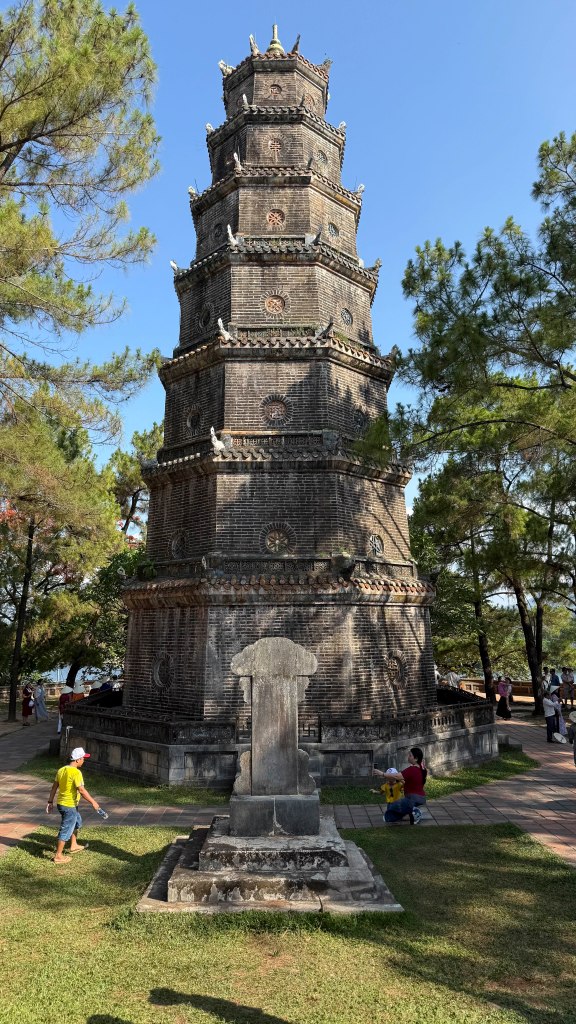
Heavenly Lady Pagoda – always with 7 tiers.
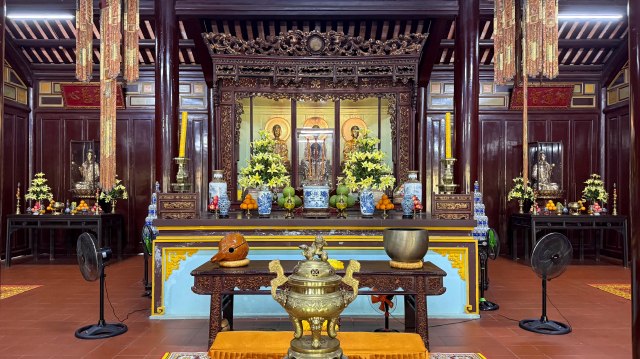
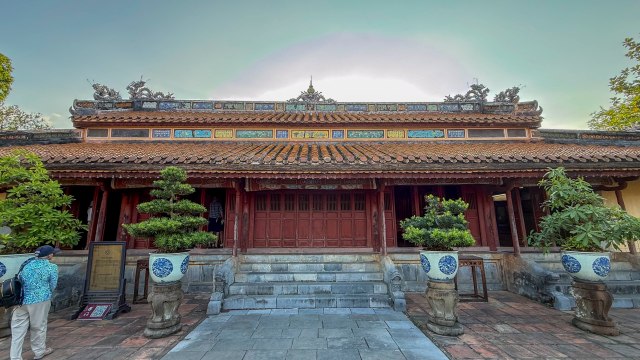
The monastery temple.
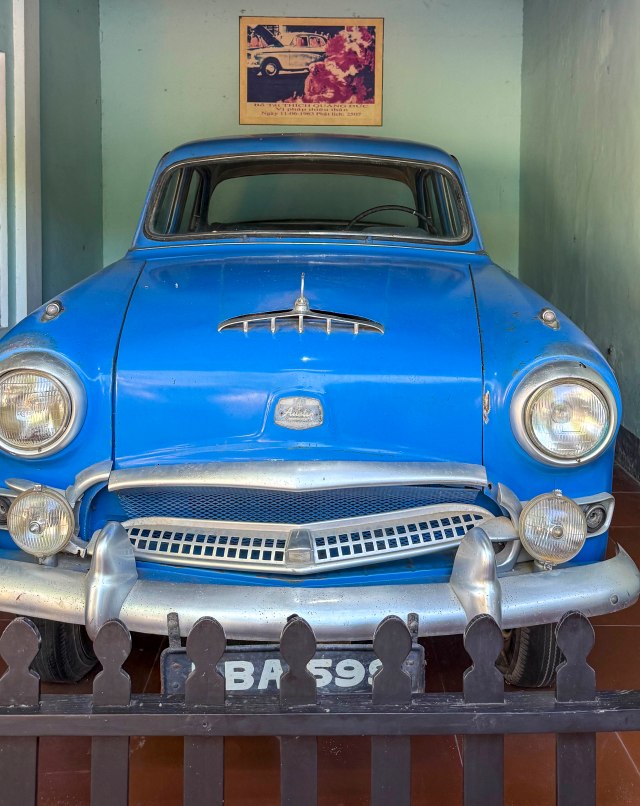
The Most Venerable Thich Quang Duc’s car as seen in the newspaper clipping on the wall reporting on his protest.
A very interesting excursion on a VERY hot day in the central portion of Viet Nam. On to Ho Chi Minh City (Saigon) and a couple more days reliving the Viet Nam war.
E & G revisiting the history of the US’s 60’s and 70’s.
 Elizabeth & Gary's Magic Bus Tour