Shanghai

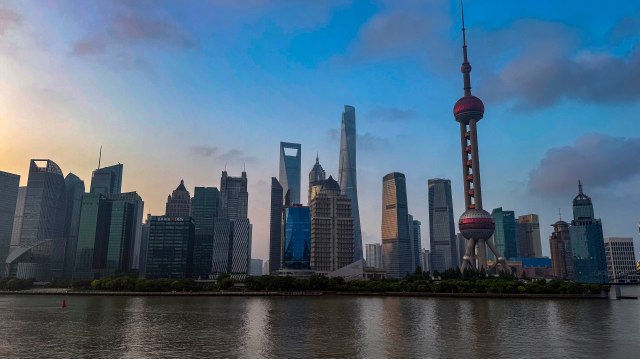
Shanghai sits way up the Huangpu River from the East China Sea and is a bustling thoroughfare of barges and ships.  It has always been an important trading and shipping port but only became a financial center for China within the last 30 years.  Just since the 1990’s the West Bank of the Huangpu River has been filled in, built up and has become a great juxtaposition to the much older east bank.  A walk along the waterfront boulevard, known as The Bund, in the Pudong area is a great place to look in both directions and see the two different versions of Shanghai.  An early morning – first glimpse of Shanghai – is impressive – –

Sunrise arrival in Shanghai looking toward Pudong and the ‘new’ part of town.

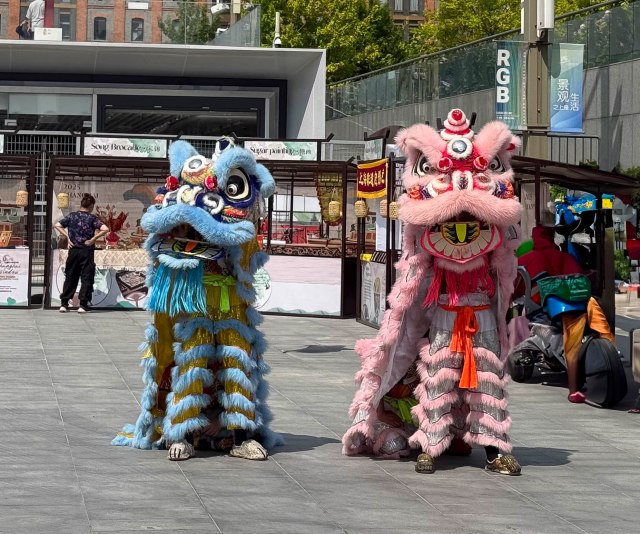
The welcoming committee. How fun!

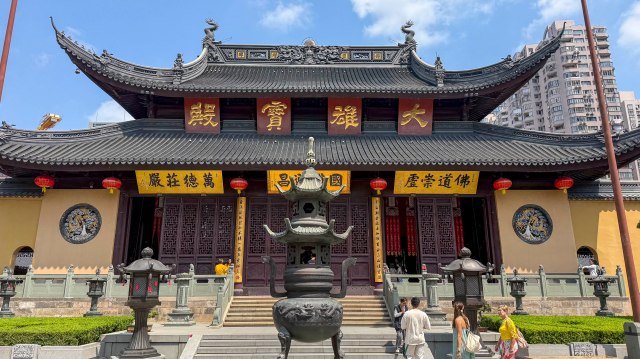
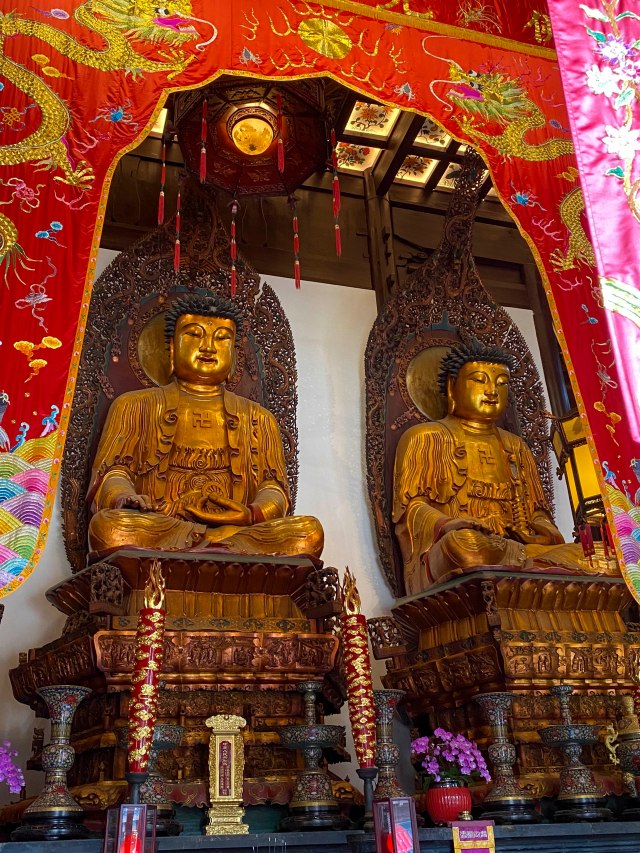
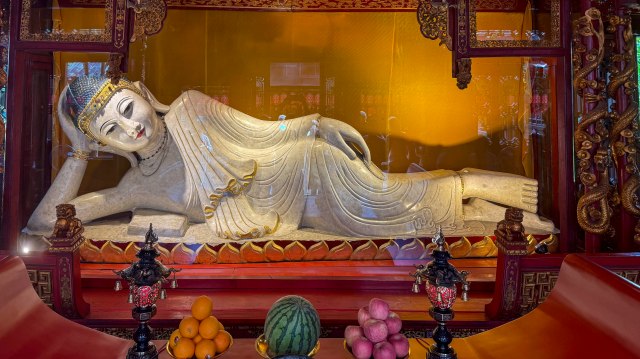
The older part of Shanghai contains several temples housing absolutely stunning Buddha ‘displays’.  Not to be missed is the Jade Buddha Temple.  In the middle of the old part of town surrounded by high rise apartment buildings, is an active monastery originally built in 1882, lost to the revolution in 1911 and rebuilt in 1928 to house two precious Buddhas, which luckily survived destruction in the revolution.  Several halls house perhaps 40-50 Buddhas with the Jade Buddha and the Recumbent Buddha (a recumbent Buddha indicates that the Buddha is dead) the highlights.

Welcome to the Jade Buddha Temple.

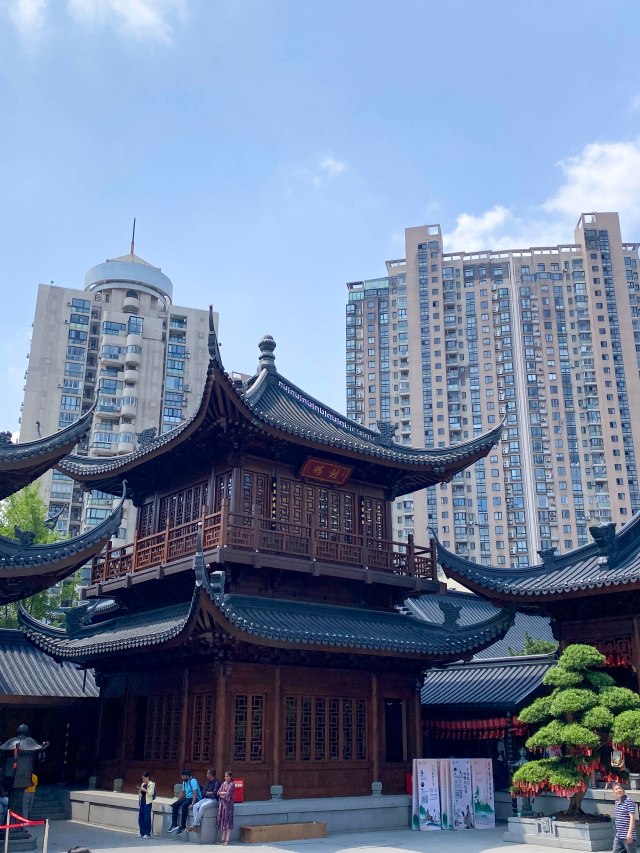
The juxtaposition of the Jade Buddha Temple to downtown Shanghai is amusing.

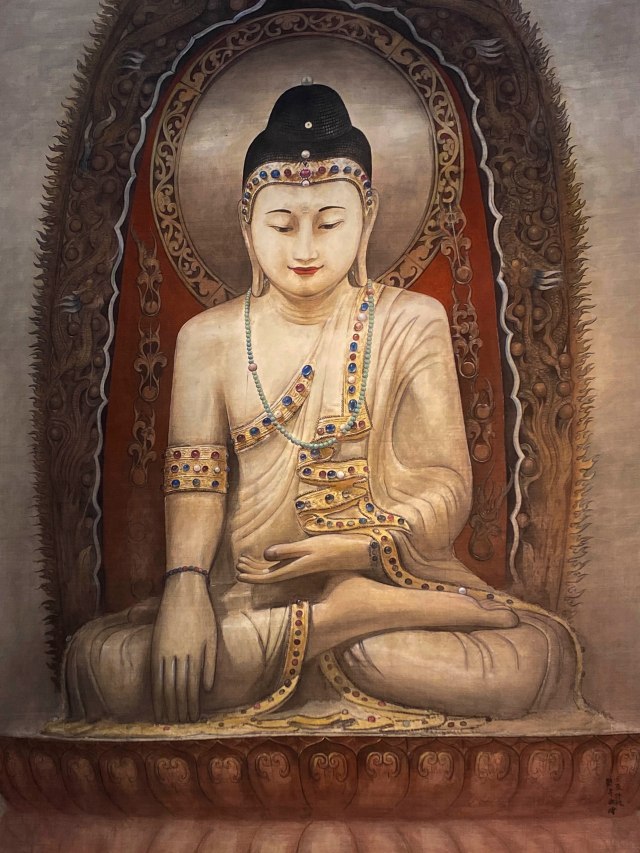
Both the Sitting Buddha and the Recumbent Buddha are carved from crystal clear white jade, giving them the beauty of sanctity.  The Sitting Buddha is over 6’ tall and portrays the Buddha at the moment of meditation and enlightenment.

A photo of a picture as no photos are allowed.  The real thing takes your breath away.

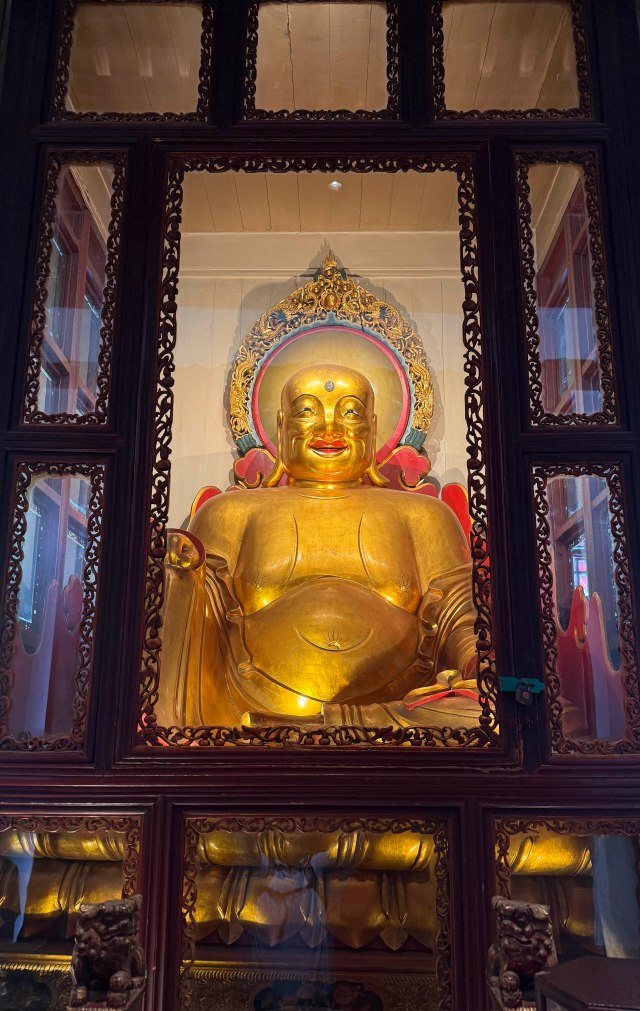
The Happy Buddha.  Doesn’t he make you laugh??

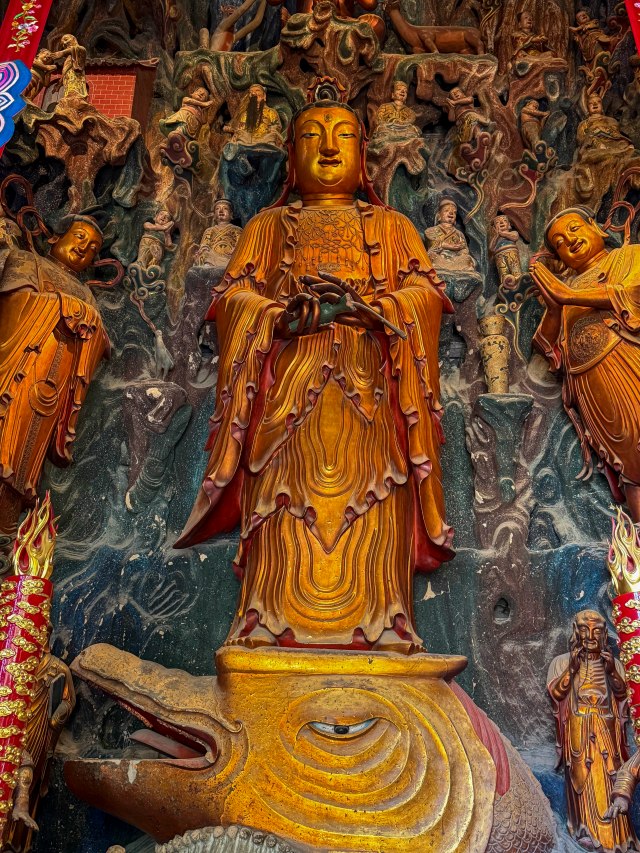
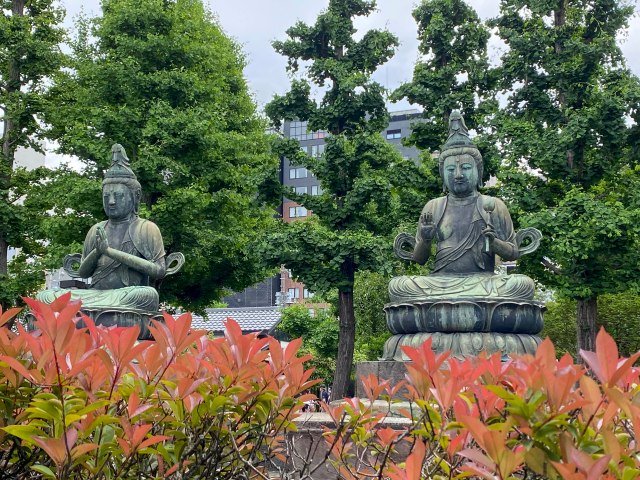
The only female Buddha.

The Reclining Buddha.

Look up and be happy.

Just outside the Temple grounds is a marketplace with anything and everything you might want from jade and pearl jewelry to Godiva ice cream cones;-)

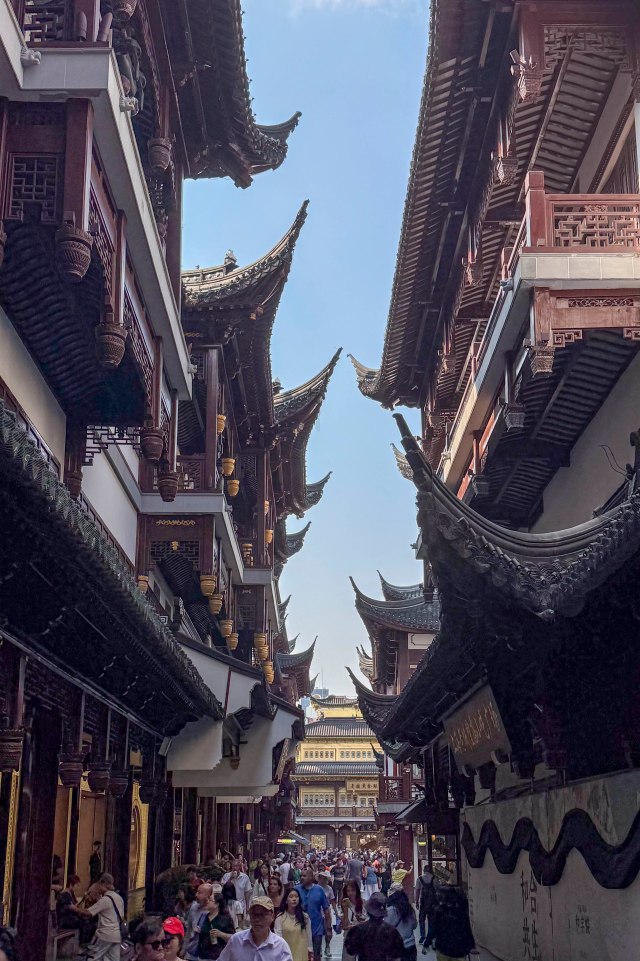
Old market street scene.

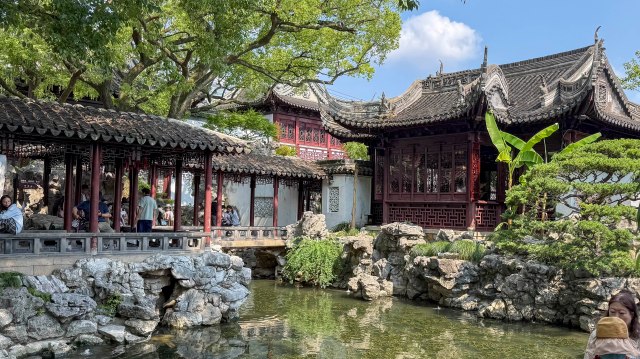
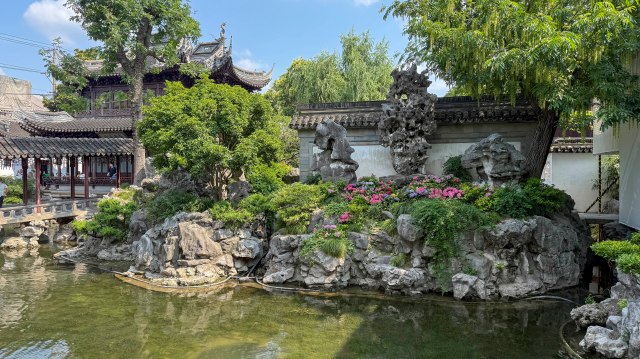
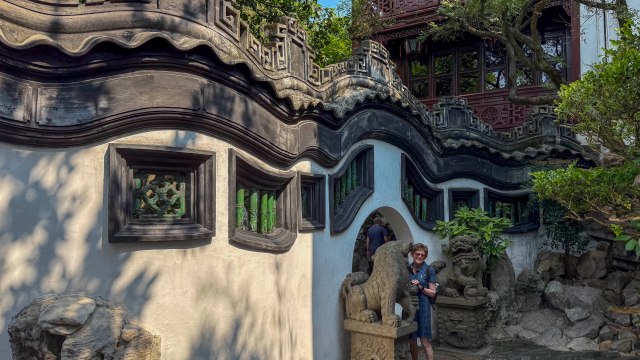
Yu Yuan Garden is another ‘scene’ of serenity in the middle of old town.  It was built over 400 years ago during the Ming Dynasty by a government official for his parents as a place for them to enjoy a tranquil and happy time in their old age.  It is small in size but includes pavilions, halls, rockeries, ponds and cloisters.

Pavilions of  Yu Yuan Garden.

Exquisite Jade Rock – almost 11’ tall with 72 holes that water can fall through or incense smoke can emanate through. 

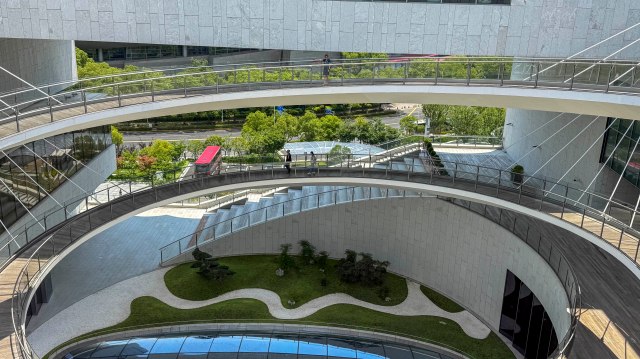
Venture across the river to Pudong where the brand new Shanghai Museum sits. This beautifully designed, high-tech space resembles undulating sea waves.  Large windows, terraces and an open air, winding ramp from the 4th to the 2nd floors bring light and brightness into the museum.  It’s 13 permanent exhibition galleries include 5,000 years of China’s history in bronze, sculpture, ceramics, jade and painting.

Circular pathway between floors at the New Shanghai Museum.

Pudong is an area of glass skyscrapers, metal bridges and elevated roadways AND lots of green and flowers – –

Centerpiece of the traffic circle in the Financial District.

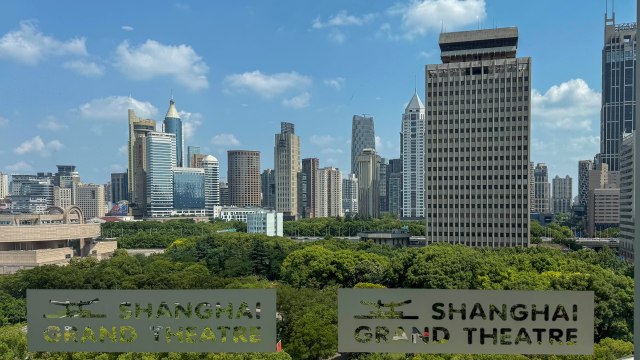
View from our lunch at the Grand Theatre.

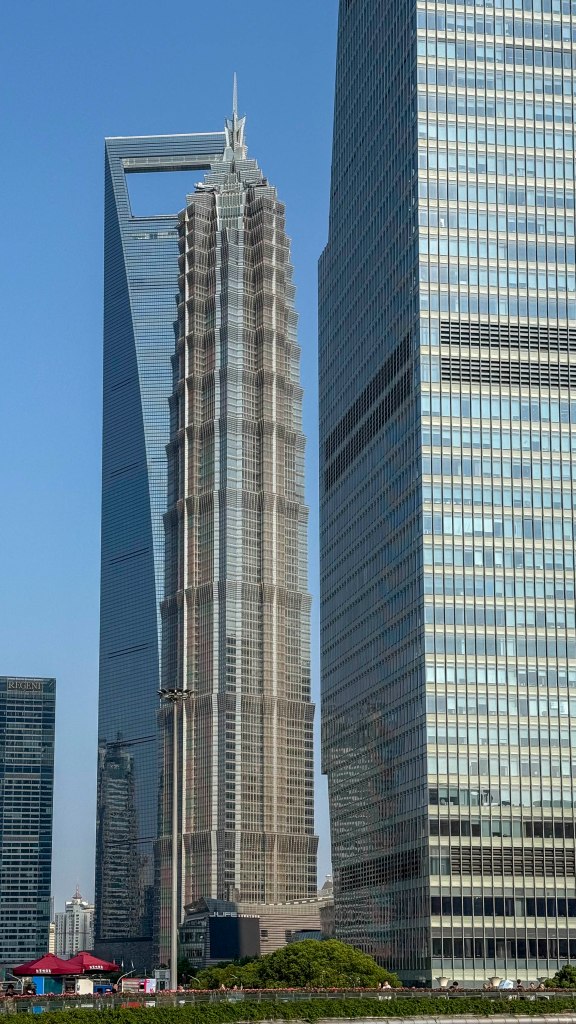
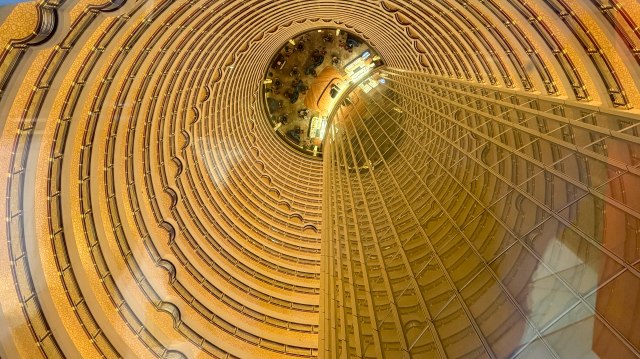
Take the time to head up to the Observation Deck on the 88th floor of the Jin Mao Building (the one with the spire on top below) in the middle of the financial district.  This building also houses the Hyatt Regency on its upper floors and you know that means a spectacular look at the 33 floor atrium inside as well as the sights of Shanghai outside!!

Up we go.

View from the top down 33 floors of atrium;-)

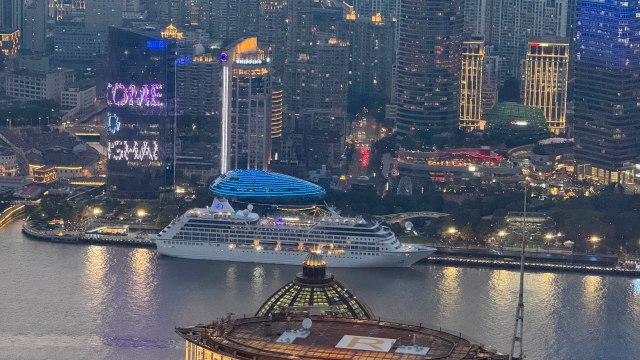
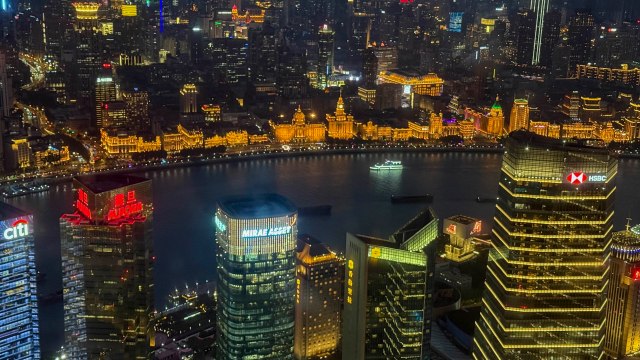
Daytime views are great – but night time is MUCH better. (Yes – that’s our ship.)

Shanghai at night;-)

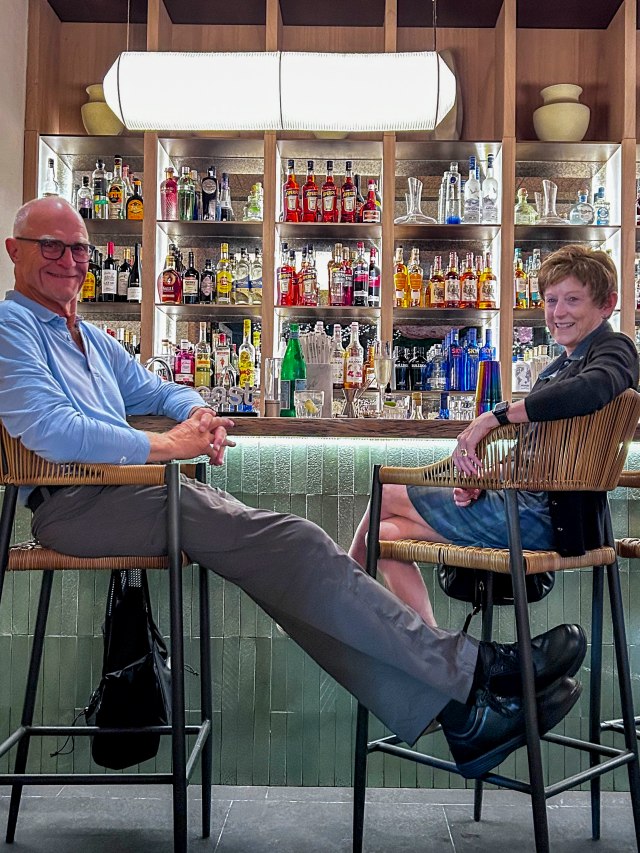
A fantastic area to check out for shopping or night life is the Xin Tian Di area.  It is billed as the most fashionable and affluent shopping, eating and entertainment district in Shanghai.  We stayed away from the shops but enjoyed a glass – –

Great people watching!!

Still awake and enjoying Shanghai at 10PM;-)

And with that – it is good night and goodbye to Shanghai.

E & G – Amazed and impressed by Shanghai

Hiroshima & Nagasaki

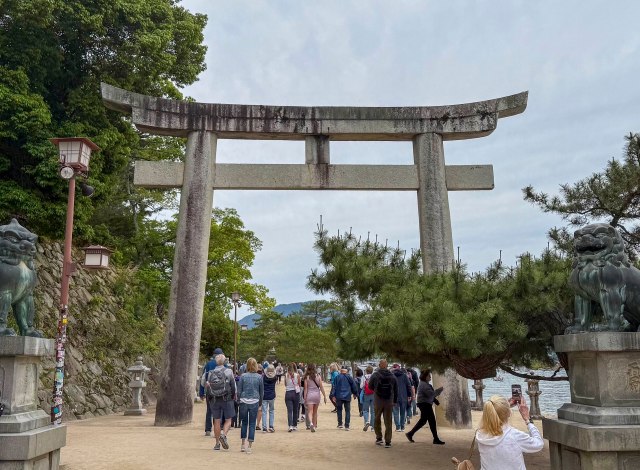
Oops!  One more bit of that ancient history of Japan that is a quick ferry ride from Hiroshima – Miyajima Island where the Itsukushima Shinto Shrine resides.  First built in 593, it was rebuilt in 1168 and designated a UNESCO World Heritage Site in 1996.

Torii gate indicating the entrance to the Itsukushima Shinto Shrine.

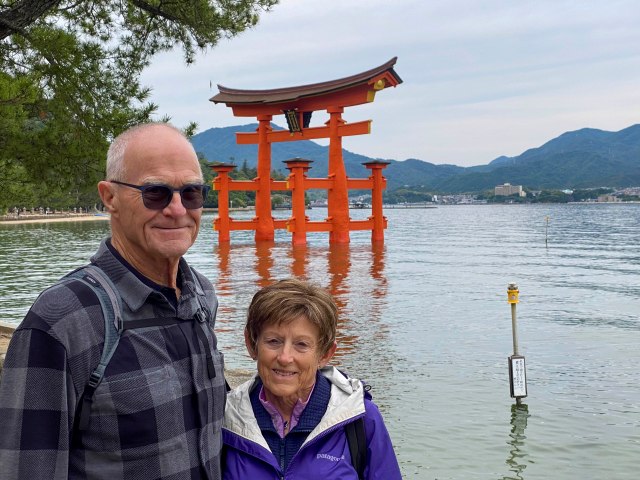
The torii gate that everyone comes to see, though, is the majestic orange torii in the bay, that appears to be floating on the water.  It was originally erected in 1168 – the current version dates from 1875.

Behind the dynamic duo is the historic torii gate marking the water entrance to the shrine.

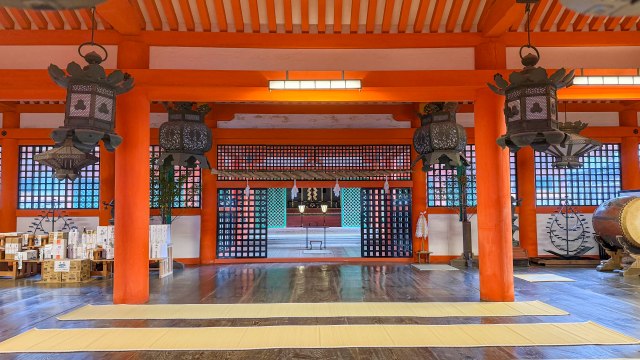
The shrine is dedicated to three goddesses worshiped as deities of the seas, traffic safety, good fortune and fulfillment of wishes.  It is built on the water, beautifully framed by the mountains in a perfect setting.  Its vermilion color is considered to keep evil spirits away.

A view inside the Itsukushima shrine.

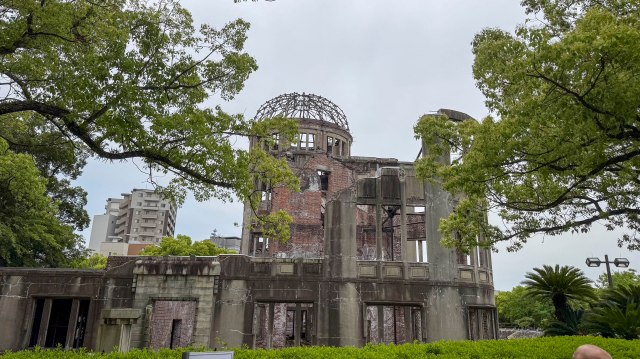
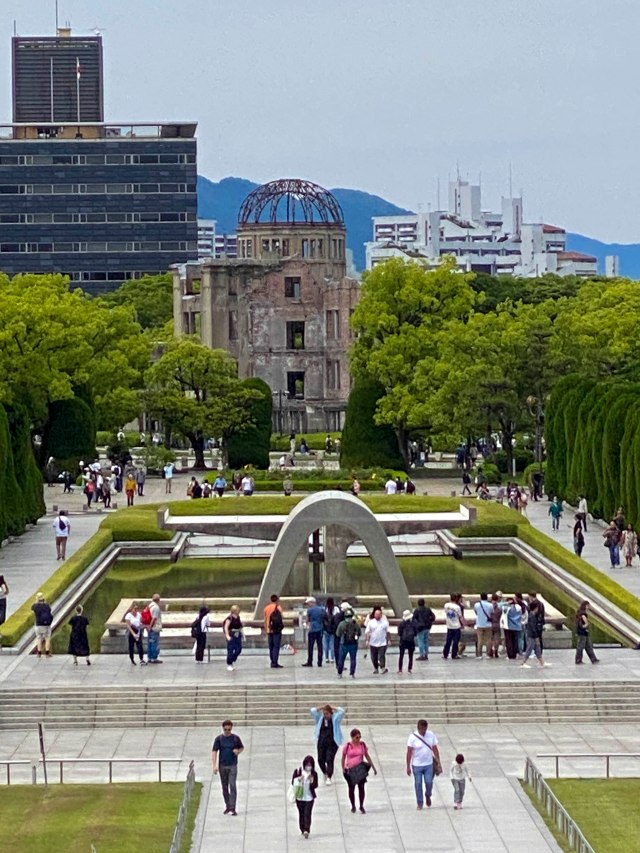
As most know, the real draw to Hiroshima is the Peace Memorial Park and its surrounding area.  Devastated by an atomic bomb on August 6, 1945, parts of the area are quite vibrant but there are reminders of that fateful day.  The old Industrial Hall – now known a the A-Bomb Dome – has been left as the twisted and charred shell from that day as a reminder of humankind’s self-destructiveness.

The A-Bomb Dome, a symbol of Hiroshima.

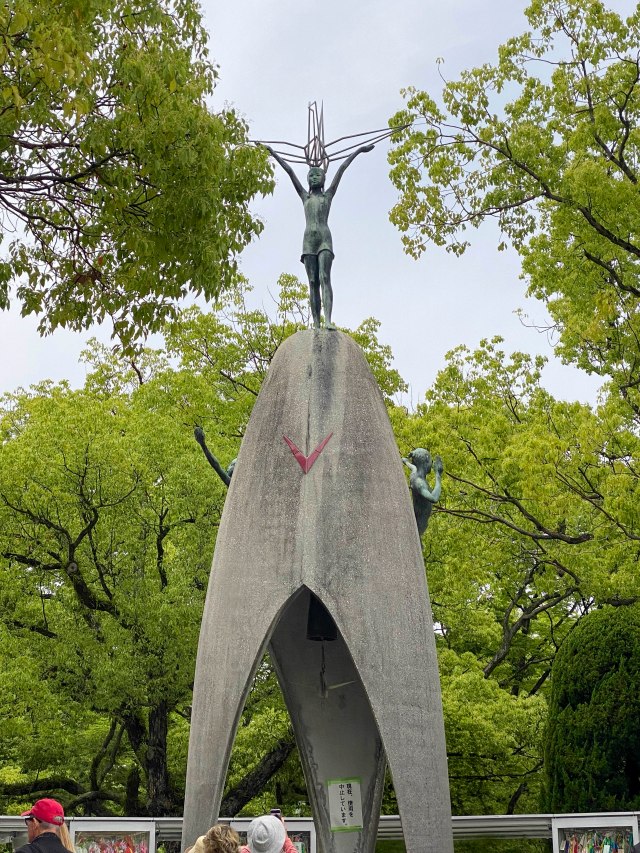
The Peace Memorial Park contains several monuments to the victims of the attack and a very sobering museum with displays reliving that horrible day in history.  The Children’s Peace Monument is an elongated dome featuring a statue of a girl holding a giant origami crane, the  symbol of happiness and longevity in Japan.  Around the monument are cases of the garlands of origami cranes made and left in honor of a young girl exposed to radiation as a toddler, who succumbed to leukemia at the age of 12.

The Children’s Memorial in the Peace Memorial Park.

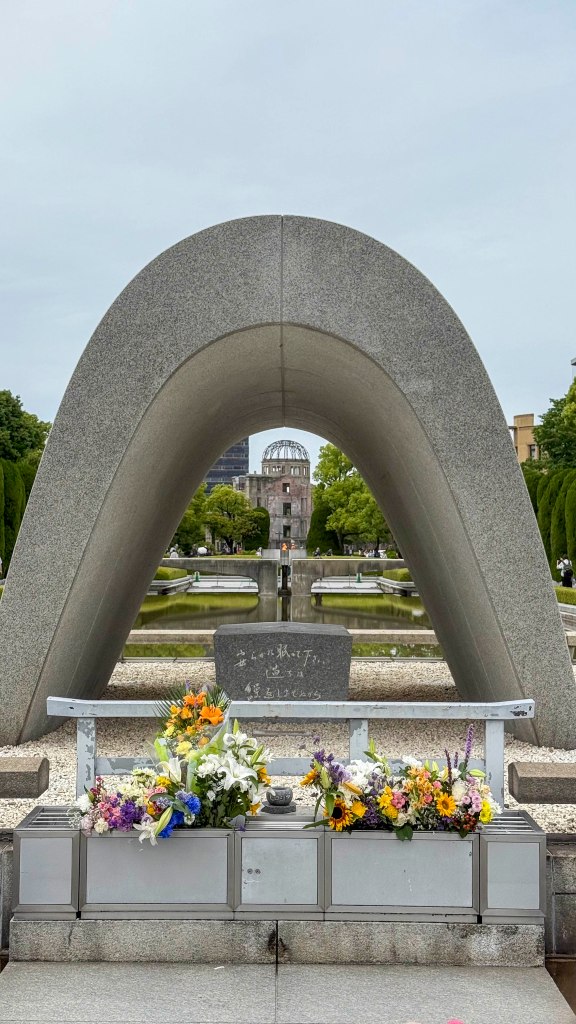
There is also a Flame of Peace that will burn until the last nuclear weapon has been banished that can be seen through the monument to those who have died.

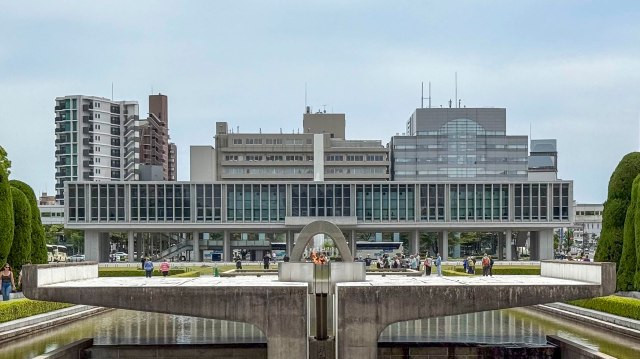
The Flame of Peace and the museum in the background.

Memorial to the lives lost.

View from the museum to the A-Bomb Dome.

Nagasaki was also the target of an atomic bomb – the second and hopefully the last – on August 9, 1945. It also has its Peace Park with memorials to those who died and many memorials of peace contributed by countries around the world.

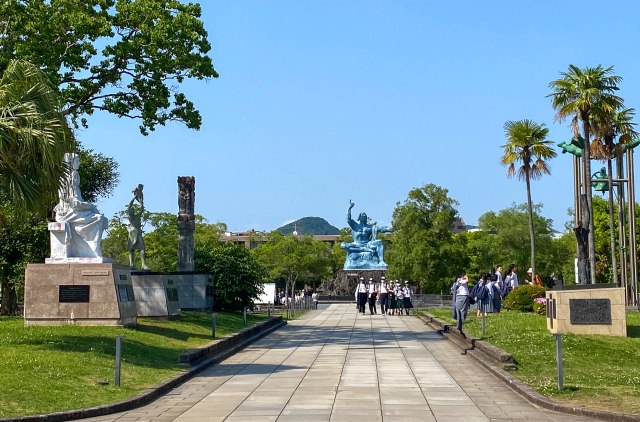
View across the Peace Memorial Park with sculptures donated by countries around the world.

Nagasaki is, and always was, a port city.  During Japan’s isolation from the world from 1639 to 1853, this was the only access point into the country and only the Portuguese and Dutch were allowed to bring goods in or out.  The city is beautifully set around that port off the East China Sea surrounded by mountains – –

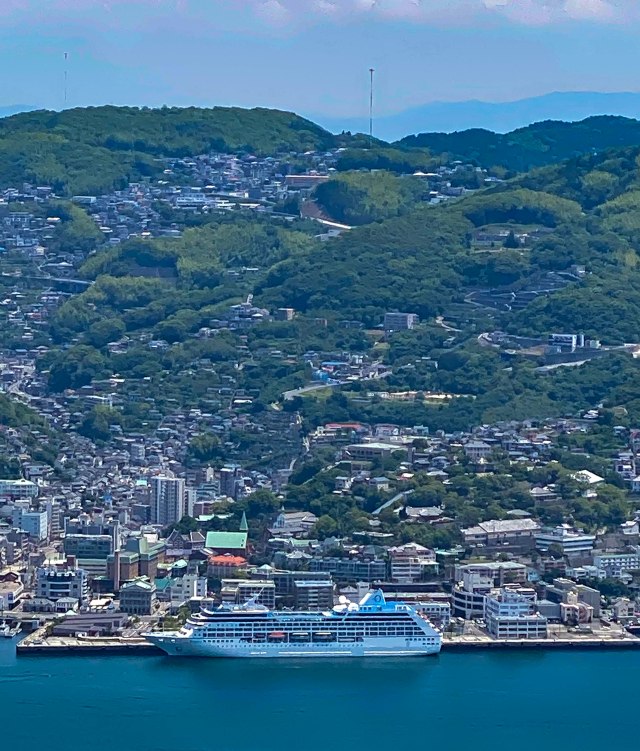
Our ship in the beautiful Nagasaki port as viewed from atop Mount Inasa.

These were just cute!

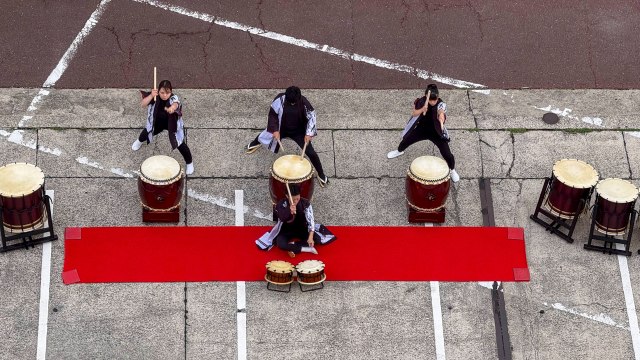
After lots of shrines, temples, castles and memorial parks – it is finally time to leave Japan and head for China.  And the best send off is Taiko drummers – –

The Taiko Drum group provided a terrific departure.

The people of Japan are VERY polite, respectful and welcoming.  They have a country rich with history – and are quite proud of it.  It was a pleasure to spend a couple of weeks learning and enjoying Japan.  But, as always, one must move on.

E & G – Arigato Japan

The Tokugawa Shogunate

The Shogunate is the historical period of time when the shogun (a title given to a Japanese military commander) held the military might and therefore ruled.  This significant historical period lasted from 1185 to 1868 and was made up of three different eras.  The last of these eras was the Tokugawa Shogunate – also referred to as the Edo Period in Japan –  which ran from 1603 to 1868 and always included some member of the Tokugawa family as the ruling Shogun.  Make no mistake, there was always an Emperor during this entire period but, he was a symbolic figurehead since the shogun held the actual power.  (Perhaps the best depiction of this time period is the series “Shogun” on Hulu.)

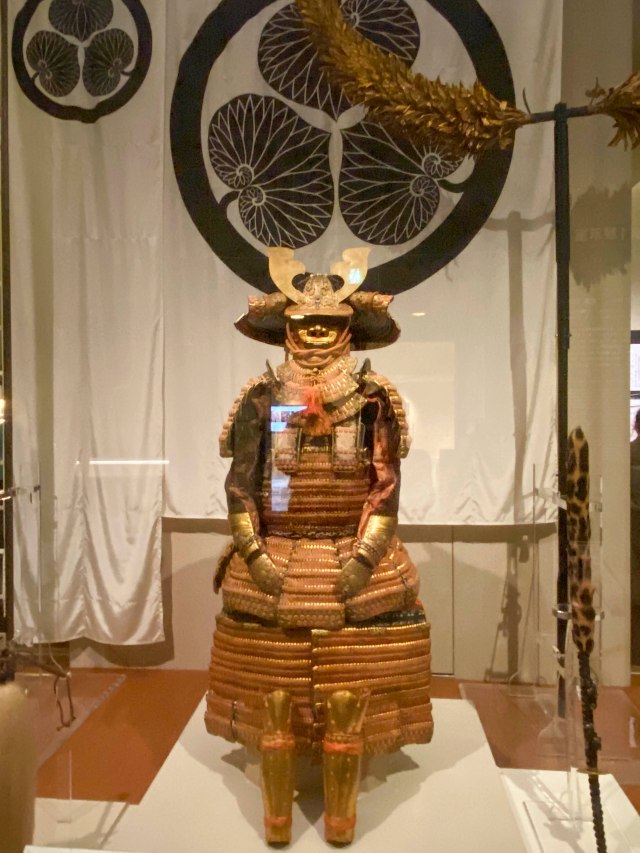
A Tokugawa Samurai Warrior’s armor with the Tokugawa family crest of the three aoi leaves (mistakenly called hollyhock).

The first Tokugawa Shogun was Ieyasu, who came into power in 1603.  He moved the capital of Japan to Edo (Tokyo) and built Edo Castle there, which became the Tokugawa home for 260 years (as described in the “Welcome to Tokyo” post).   He also nurtured commerce there and had the Nihombashi Bridge built.  But, like many wealthy heads of state, the Tokugawa’s had many castles and palaces.

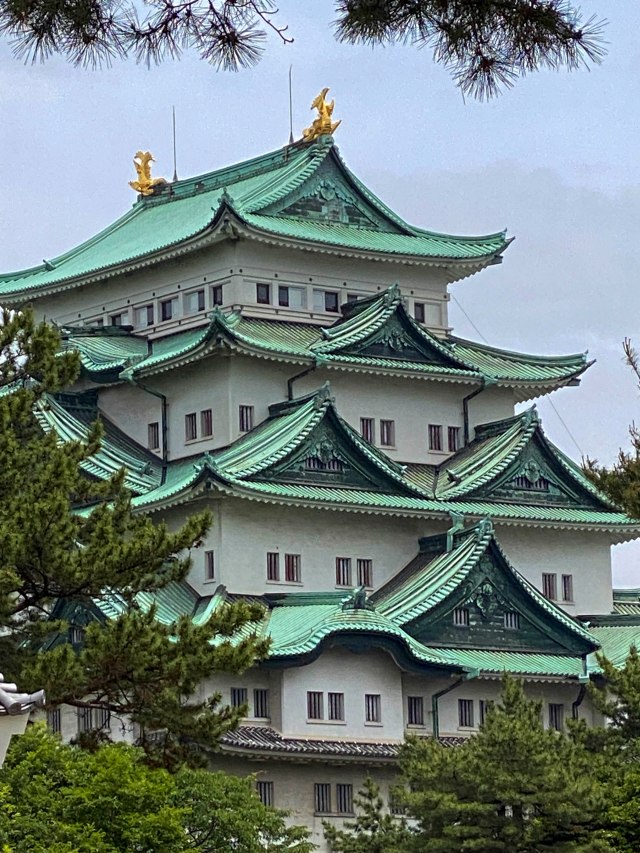
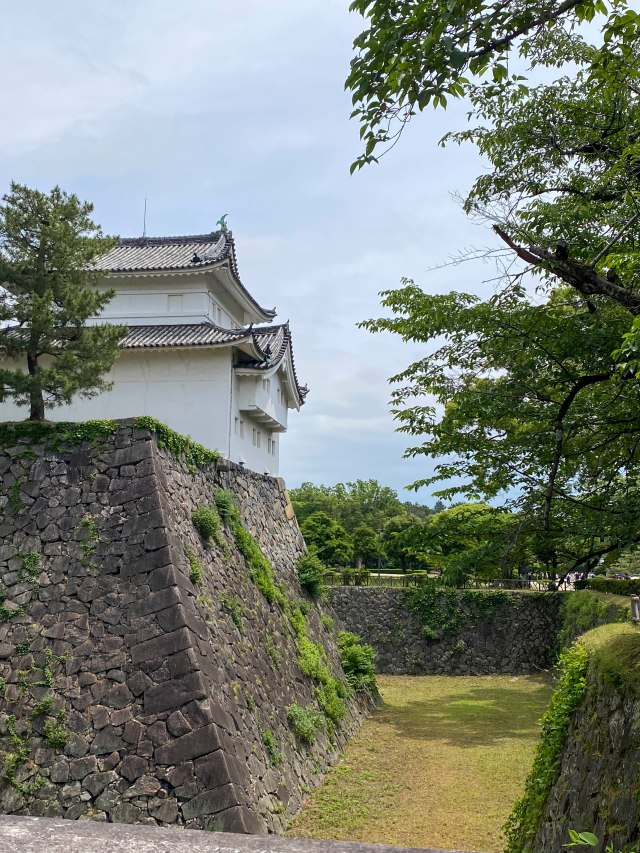
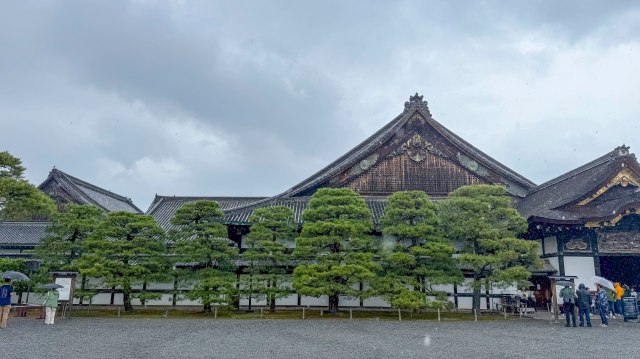
In 1610, Tokugawa Ieyasu ordered the construction of Nagoya Castle, which included stone walls and moat for protection as well as Hommaru Palace.  All was completed by about 1615 and became the home of Tokugawa Ieyasu’s ninth son.  Today this entire complex is designated a National Treasure even though most of the structures are replicas.

The Main Castle Tower – destroyed in WWII – was rebuilt in 1959.

A corner tower and the only original building left standing at Nagoya Castle after WWII.

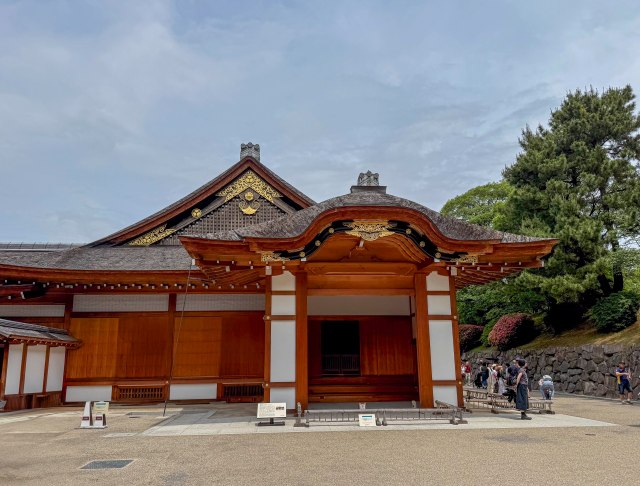
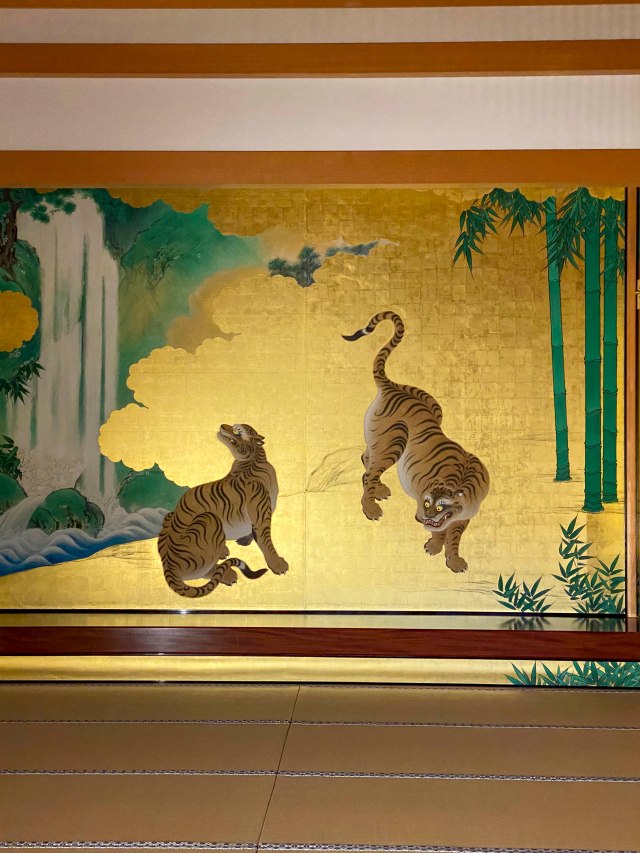
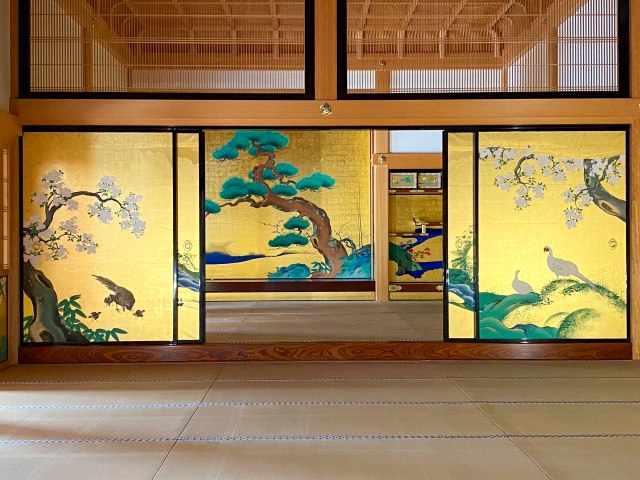
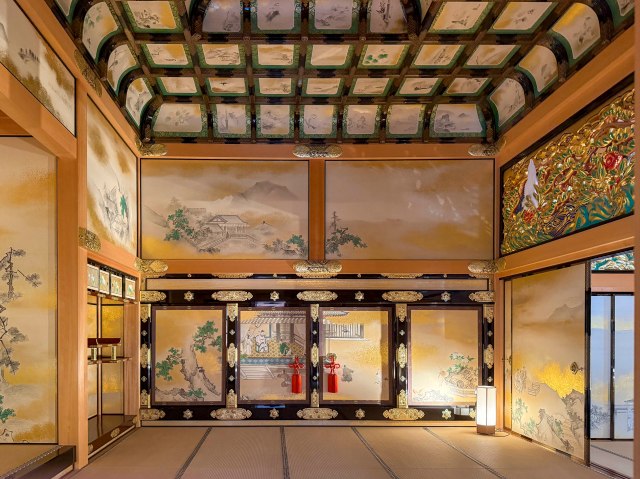
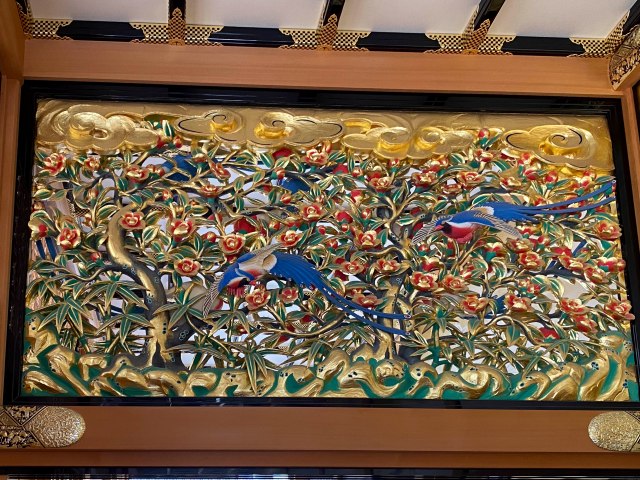
Hommaru Palace was built as the residence for part of the Tokugawa clan and provincial government offices.  It was destroyed in WWII, restored and reopened to the public in 2018.  Because it is not original, pictures may be taken of the intricate screens and artwork inside.  This was quite fortuitous, as the Nijo-jo Castle in Kyoto (another Tokugawa residence which is up next) was NOT destroyed, is all original – and therefore no pictures of the interior are allowed;-).  The rooms and scenes are so similar, one can’t tell which Palace they are in!!

The rebuilt Hommaru Palace inside Nagoya Castle grounds.

The entrance hall where one would wait for an audience.  All rooms, walls and furnishings were rebuilt in their original splendor.

The most spacious hall in the Palace (made up of five rooms) was used for official audiences.

.

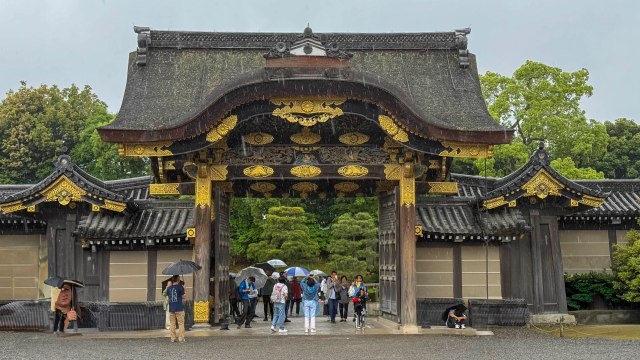
Before the Nagoya Castle, Tokugawa Ieyasu ordered the building of Nijo-jo Castle in the then capital of Kyoto and it was completed in 1603.  That year the Emperor appointed Ieyasu to Shogun and Ieyasu came to Nijo-jo Castle to announce his appointment.  Therefore, this Castle was the site of the beginning of one of the most important periods in Japanese history – the Edo Period.  It was also his residence on those rare occasions when he visited the Imperial Capital from Edo.  264 years later, in 1867, a subsequent Tokugawa Shogun gathered seniors of various clans in this same Castle and announced his intention to restore Imperial rule.  Thus, this Castle is extremely important in Japanese history, is a World Heritage Site and we are fortunate it was spared destruction during the war.

Entry gate to the Nijo-jo Castle in Kyoto.

Exterior shot of the Nijo Castle, A UNESCO World Heritage Site. No photos were permitted inside the castle, although much of the interior was very similar to Hommaru Palace.

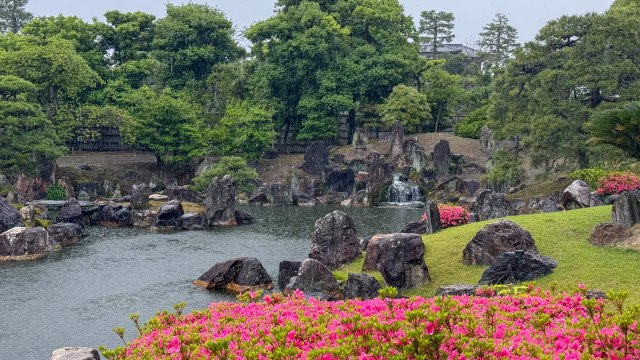
The castle’s gardens and pools were extraordinary.

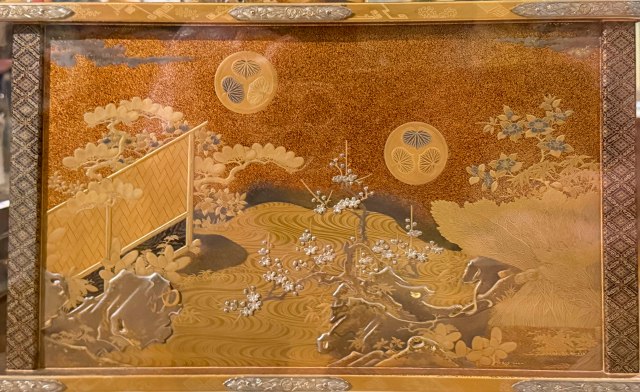
A fantastic place to get a glimpse into the personal lives of the Tokugawa clan is the Tokugawa Art Museum  in Nagoya.  This museum was opened in 1935 with a donation from a 19th generation Tokugawa family member.  Beyond the 10,000 pieces of artwork from the family, there is a current special exhibit of the personal belongings of Chiyohime – a Shogunal Princess by birth.  At the age of 2 years and 6 months, she was married to the most promising candidate for shogun in the Tokugawa family at the time.  Her husband did not become the Shogun, but she worked tirelessly to promote her husband, her children and the various concubine children and to improve various parts of society.  There were 40+ pieces of her belongings on display and a picture will not do justice to their beauty – –

Gold leaf on wood – and always the family crest of the three leaves.

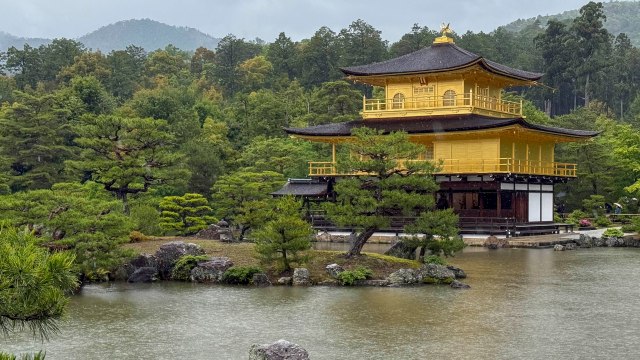
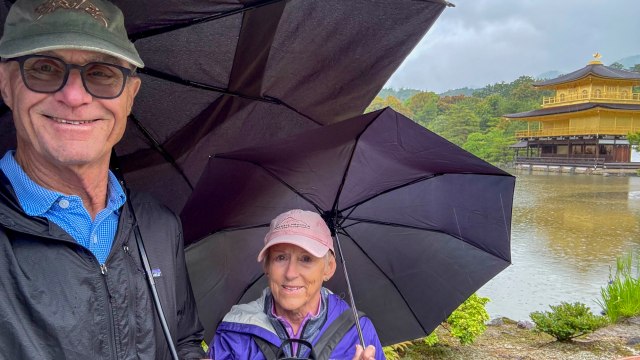
One more temple!  In the Shogunate era before the Tokugawa – The Ashikaga era – Shogun Ashikaga Yoshimitsu commissioned the 14th century Kinkaku-ji Temple (known as the Temple of the Golden Pavilion) for his retirement home.  This was to be sheathed in gold leaf and had to be finished by his son as he did not live to see it completed. It was also turned into a Zen temple in accordance with his father’s wishes.   Unfortunately a mentally impaired monk trainee burned the temple in 1950, but it was such a treasure that it was rebuilt to its original specifications by 1955.  It is thought to be the most photographed structure in Kyoto.

The reconstructed Golden Pavilion originally built by Shogun Ashikaga Yoshimitsu in 1397.

The day was a bit damp.

Yep – it rained ALL day but we still enjoyed all the sights;-)

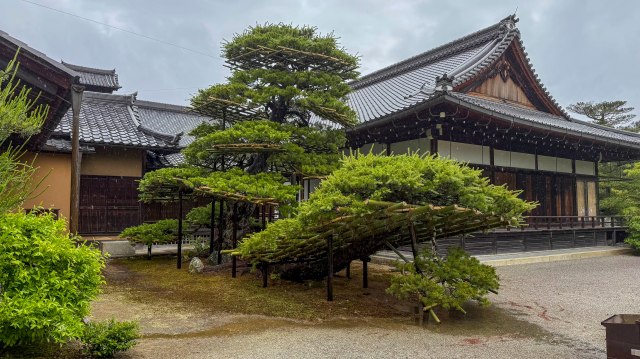
This bonsai pine tree was transplanted several hundred years ago and has grown to this size.

And so – that is a very brief account of almost 700 years of Japanese history!!  It has been quite an education provided through beautiful sights of palaces, castles, Buddhist Temples and Shinto Shrines.  The next few days will be more current history in Hiroshima and Nagasaki, with events that most Americans are a bit more familiar with.

From an overwhelmed E & G in Osaka;-)


Kyoto, Japan

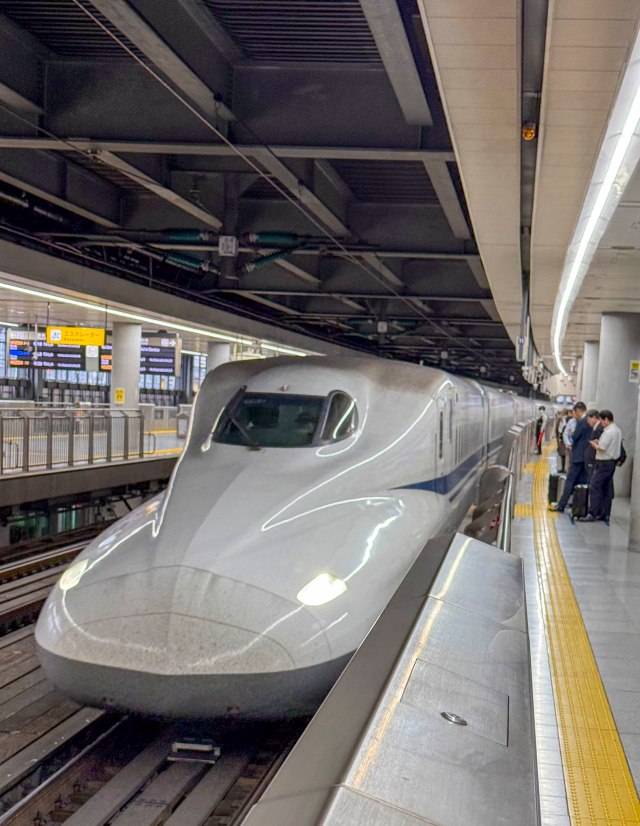
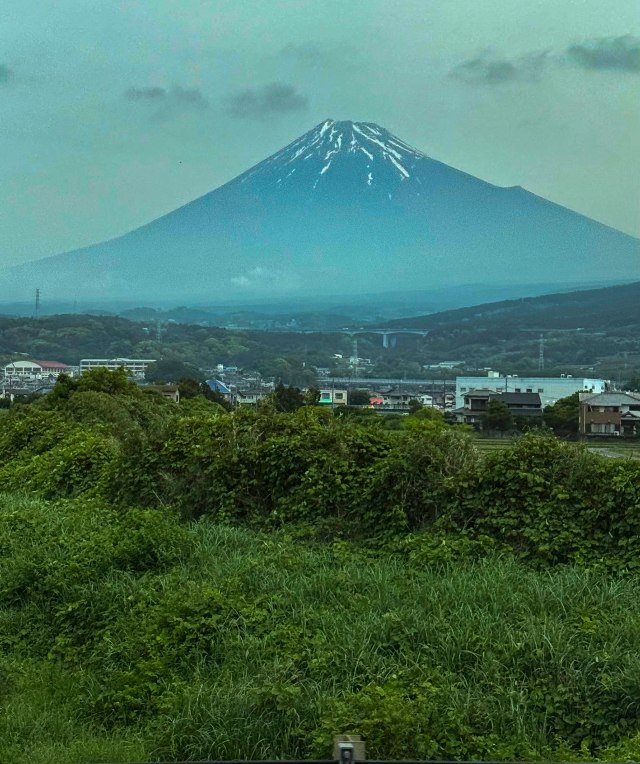
The book “1000 Places to See Before You Die” has 8 pages on Kyoto.  This seemed to say a trip there for a few days was necessary – AND, it gave a reason to try out the ‘bullet train’ from Tokyo!  The Shinkansen can travel at speeds of up to 200 miles an hour, getting you the 230 miles to Kyoto in less than two hours (with a couple of stops).  It also provides quiet, no phone usage cars (how civilized!) and wonderful views of Mt. Fuji – –

Doesn’t it look like a bullet?  Don’t be late – they are ON TIME and only stop for about two minutes.

A beautiful sighting of Mt. Fuji.

Kyoto was the capital of Japan for over 1,000 years – from 794 to 1868.  Being the home of the Imperial Court for so many years, it also became the center of Japanese religion, music, theater and dance.  Because it was spared of Allied bombing during World War II, it still contains more than 1,700 Buddhist temples and 300 Shinto shrines many of which are UNESCO World Heritage Sites.  Don’t worry – this post will only cover a few of these;-)

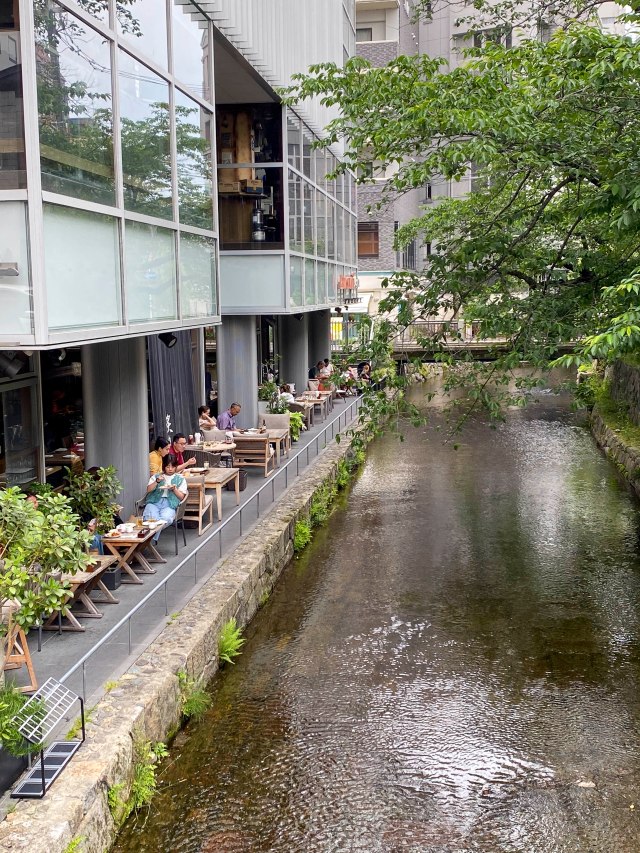
The Kamo-gawa (River) runs through Kyoto adjacent to the Gion District, and provides a fantastic walking path for 19 miles.  Just a block west of the river is the Takase-gawa canal.  Built in 1614 by two wealthy merchants, the canal carried over 100 flat-bottomed cargo boats to and from Osaka in its heyday.  The cargo activities stopped in 1920, but the scenery, clear water and beautiful cherry and willow trees made it a favorite walking (and eating) street for us.

Pizza Salvatore – the first and last lunch in Kyoto along the Takase-gawa.  Yes – Italian in Japan!!

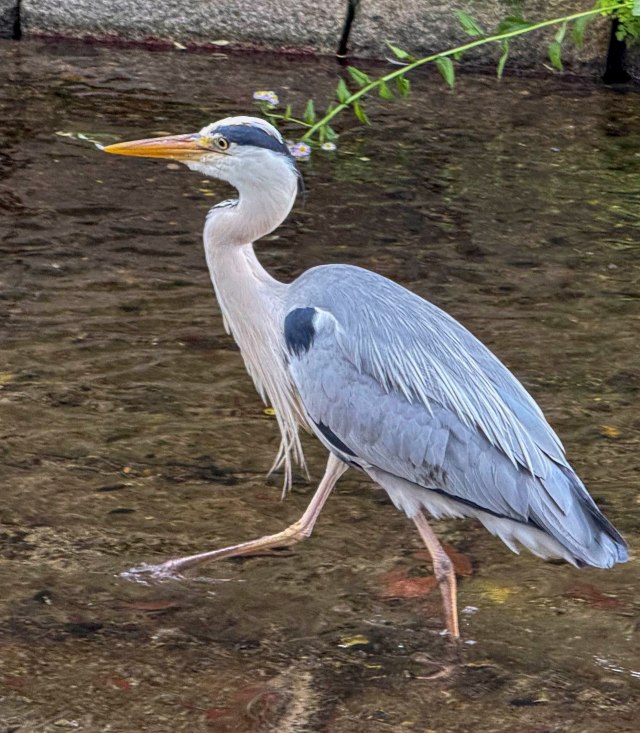
His favorite lunch spot also!

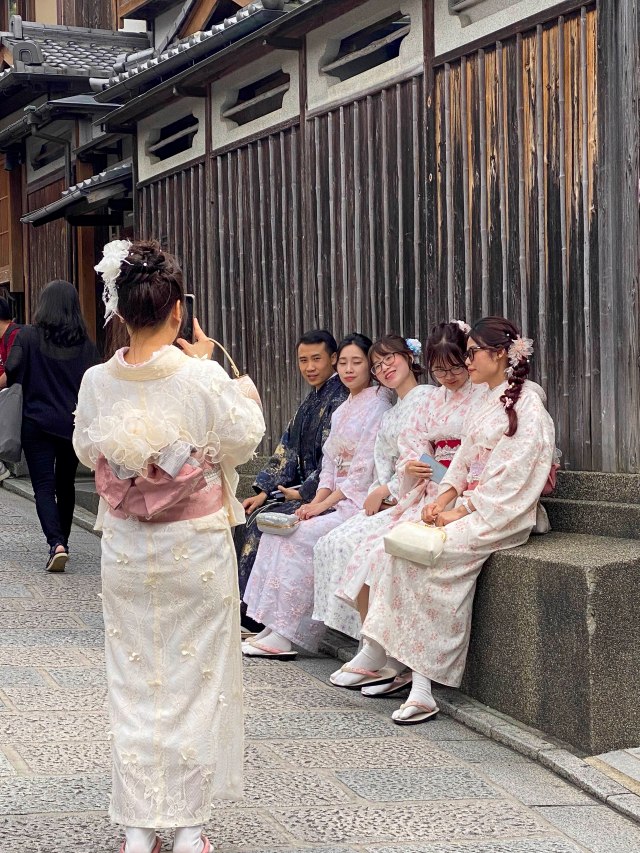
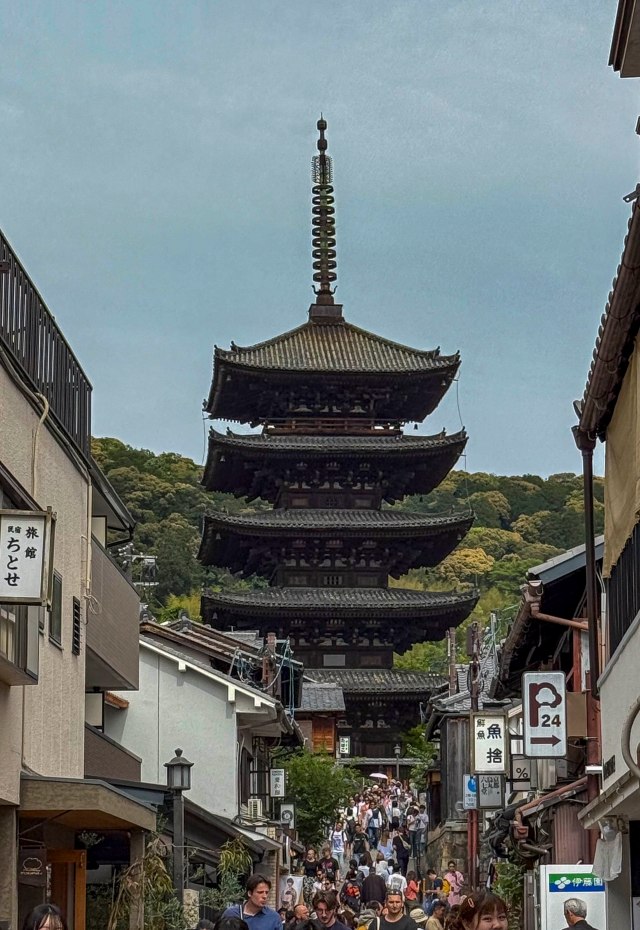
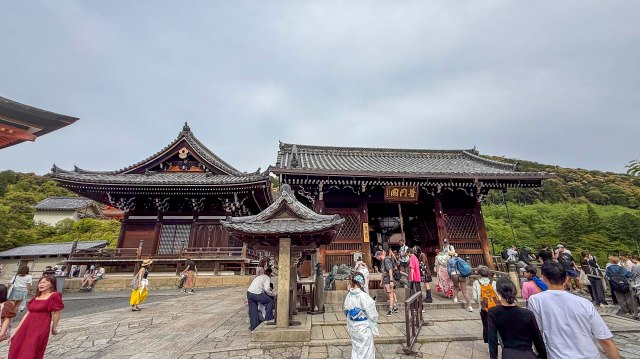
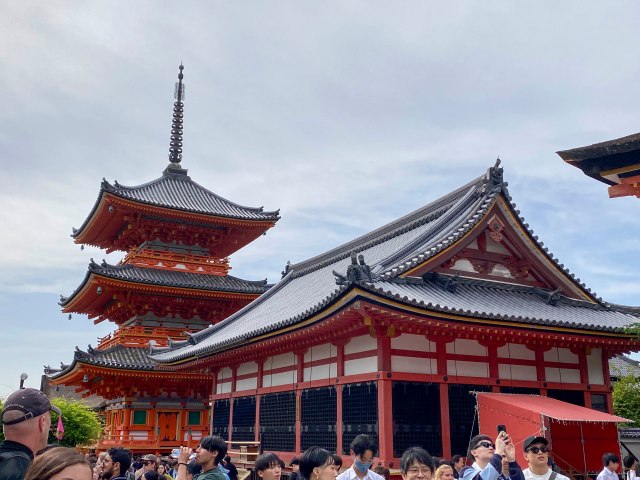
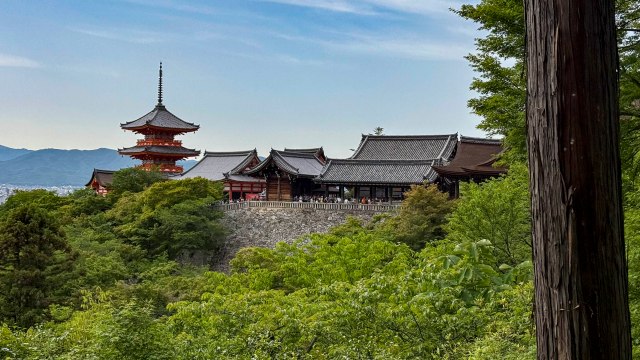
Time to get serious and head up to the Kiyomizu-Dera, one of those 1,700 Buddhist Temples and a UNESCO World Cultural Heritage Site.  The Temple was founded in 778 and is associated with one of the oldest sects of Buddhism in Japan.  The grounds include 30 Buddhist temple buildings – most of which have been destroyed by fire over 10 times throughout the years.  The current buildings were reconstructed between 1631 and 1633 – without a single nail!  The crown jewel of the complex is The Main Hall with its large wooden terrace that juts out over the valley providing beautiful views of Kyoto.  There is spring water to drink – which is said to have wish granting powers – and a Jishu Shrine dedicated to love – which may help one find their life partner.  It seems that the thing to do here is ‘the kimono experience’ – rent kimonos, have pictures taken and trek up to the various temples to obtain good luck  – or your partner!!

A very small sample of the Kimono clad headed for the Temple.

A VERY popular activity – this is Monday afternoon and packed!

Some of the 30 temple buildings on the site.

.

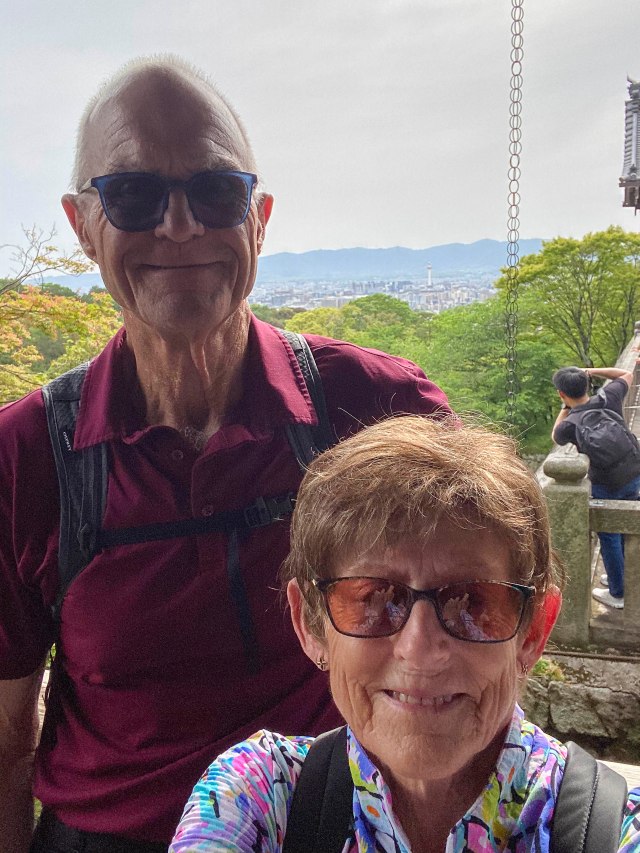
View of Kyoto from the Main Hall Terrace.

The temple complex from the trail back down to Kyoto – Main Hall to the right.

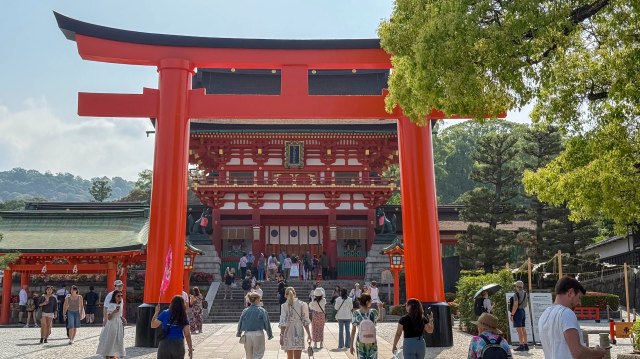
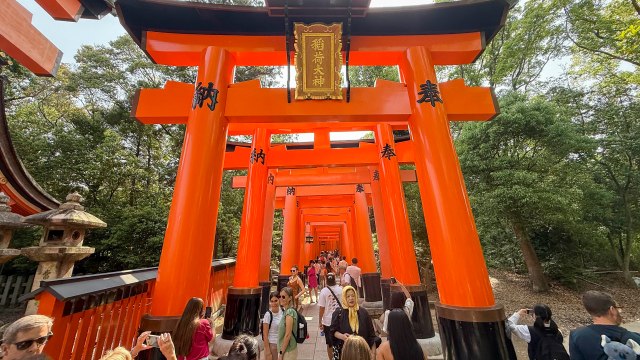
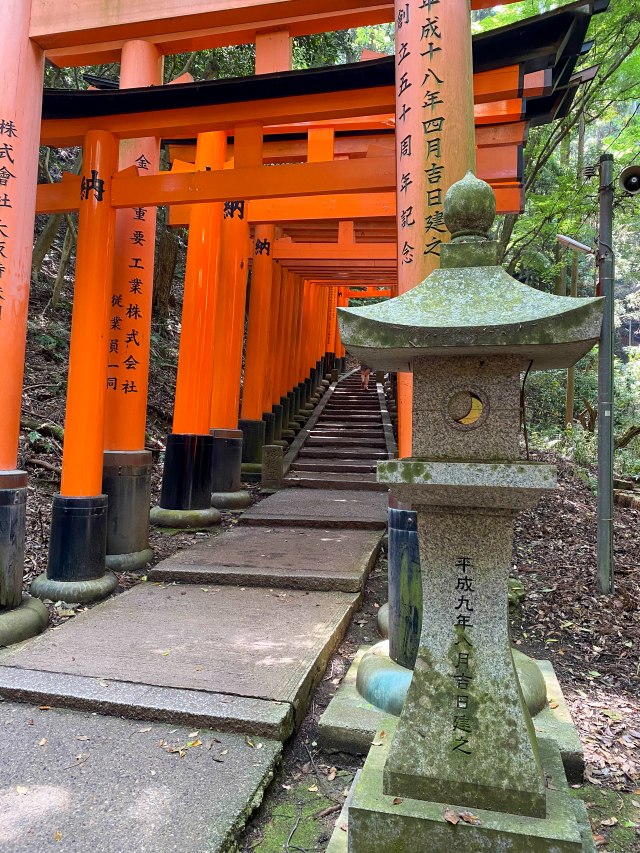
Another day – the Shinto Shrine Fushimi Inari Taisha.  This Cultural Site is actually made up of five shrines named for the great virtues of Inari, and was established in 711.  Inari is described as a deity who feeds, clothes, houses and protects so that ALL may live with abundance and pleasure.  Simply – Inari is the Shinto god of rice and prosperity and Inari’s messengers are the fox (which are seen in great numbers throughout the Shrine).  From the Shrine to the top of Inari Mountain are 10,000 vermilion (vermilion symbolizes the life force and counteracts spells) gates leading the way.

The Main Fushimi Inari Taisha Shrine.

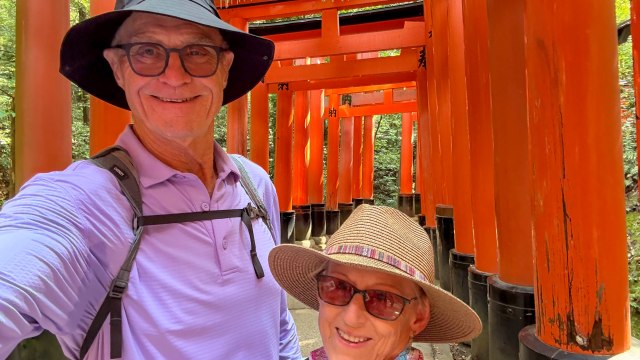
Begin the trek to the top of Mount Inari.

A small portion of the recorded (by Apple watch) 46 flights of stairs!

View from the top.

Another ‘must do’ in Kyoto is to experience the Gion District and have dinner and/or drinks with a Geisha and/or Maiko (a Geisha in training).  Since this occurs a little later in the evening, a nice dinner might precede such an event.  A great meal and wonderful experience can be had at Kobe Beef Steak Mouriya in the Gion District.  The spot for two with private chef and cooking table made for a delightful experience (and our most expensive in Japan);-)

Wonderful teppanyaki dinner around the corner from the Kabuki Theater.

The Minamiza, the primary kabuki theatre in Kyoto, was founded in 1610 as Shijō Minamiza. The current building, with a 1,086 seat capacity, was built in 1929. Unfortunately, the theater was dark while we were in town.

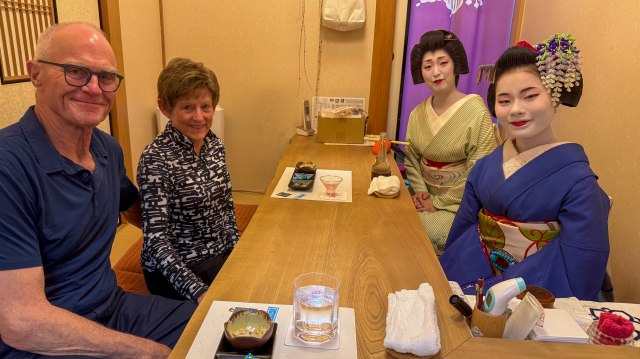
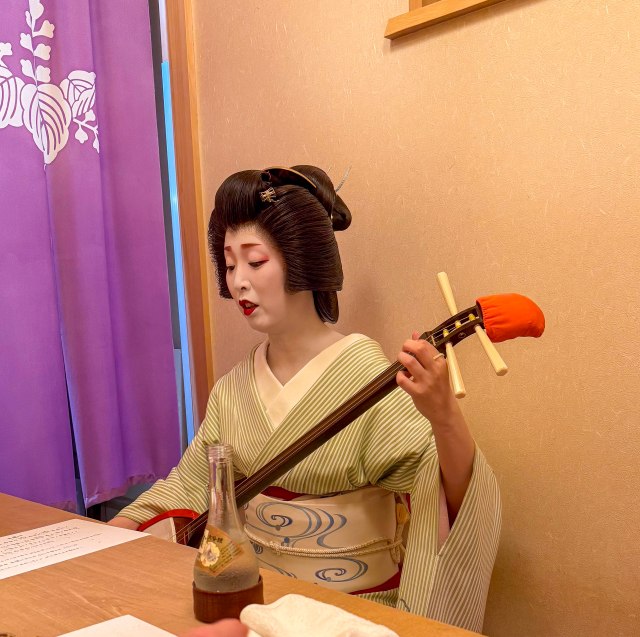
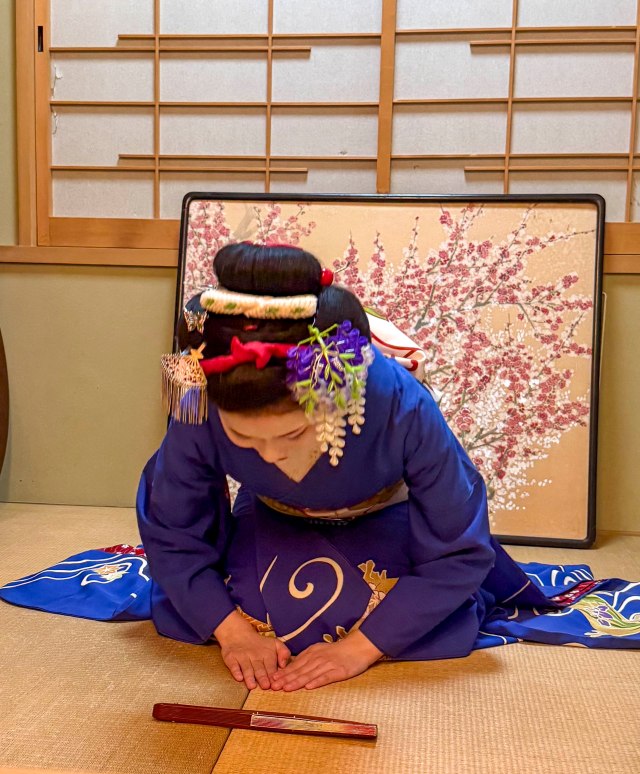
Full stomachs and a few good sights around the Gion District, and ready for a tea and saki meeting with a Maiko – and much to our surprise a Geisha.  The Maikos may begin their training as young as 14-15 years old.  If they are accepted by a ‘house’ for this, they must commit to a 7 year contract.  (At this age the parents must also agree to this training.)   The ‘house Mother’ may invest several $100,000 in a young girl between training, kimonos and housing – thus the contract.  They are trained in traditional music, dance and entertainment (nothing intimate).  This was quite a fun evening especially having a young woman in training and a very experienced Geisha to ask questions of and learn about their lifestyle.

Spent a pleasant evening with Gaiko (a Geisha) and Maiko (a Geisha in training).

The Geisha played and sang…

…while the Maiko danced.

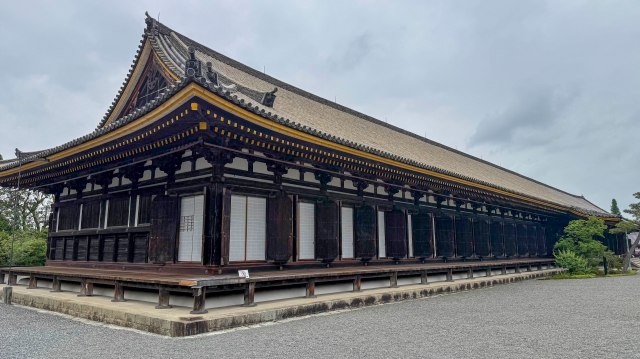
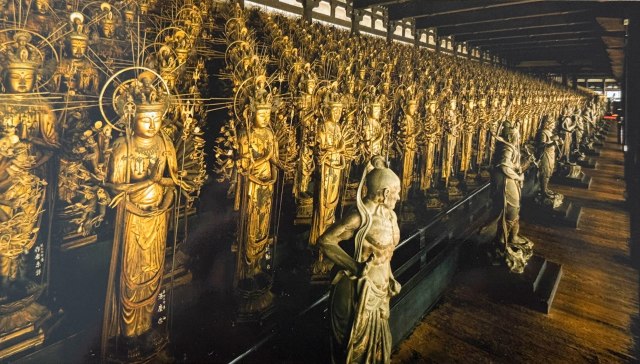
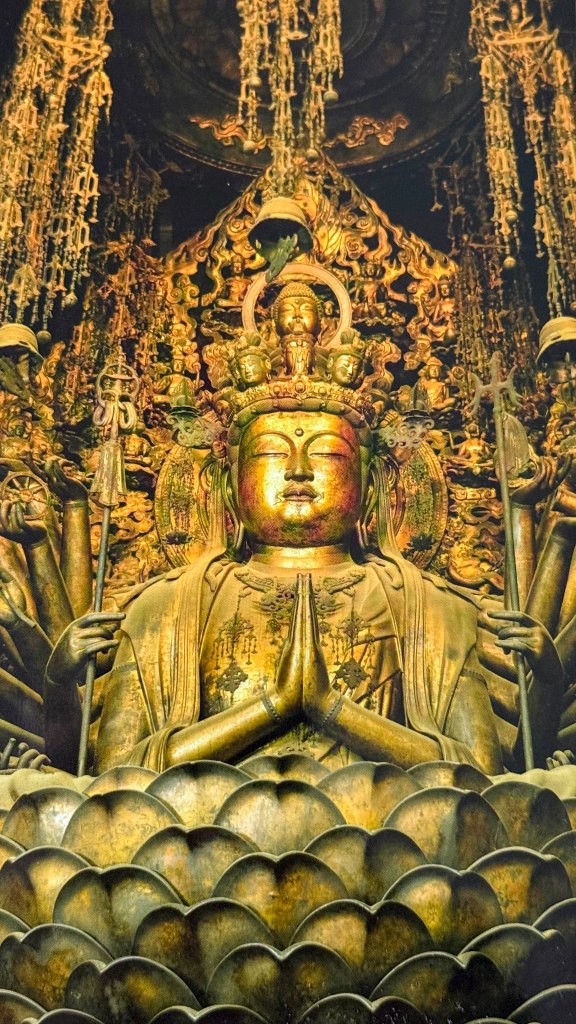
Sanjūsangen-dō temple is most famous for its 390 foot long hondō (main hall) dating from 1266 and the collection of sculptures it houses.  In the center of the interior sits the 11.5 foot image of Kannon (one of the most beloved and widely venerated deities in Japanese Buddhism) with eleven faces and one thousand arms.  On both sides of the central image stand 1,000 images of Kannon.  These are wooden statues made from Japanese Cypress and plated with gold leaves standing at human height.  At the front of the 1,000 statues are 28 Spirits who protect the universe.  The thought of the work that has gone into the creation of these sculptures is overwhelming.

The Sanjusangen-do Temple.

Postcard images as no photos are allowed in the Temple.  (This is much better as the 100’s of years of dust and dirt that have accumulated on the statues is not seen.)

11.5 foot tall Kannon at the center of the 1,000 images.

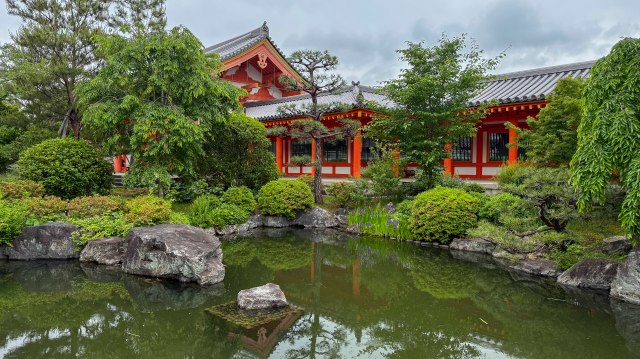
Gardens on the temple grounds.

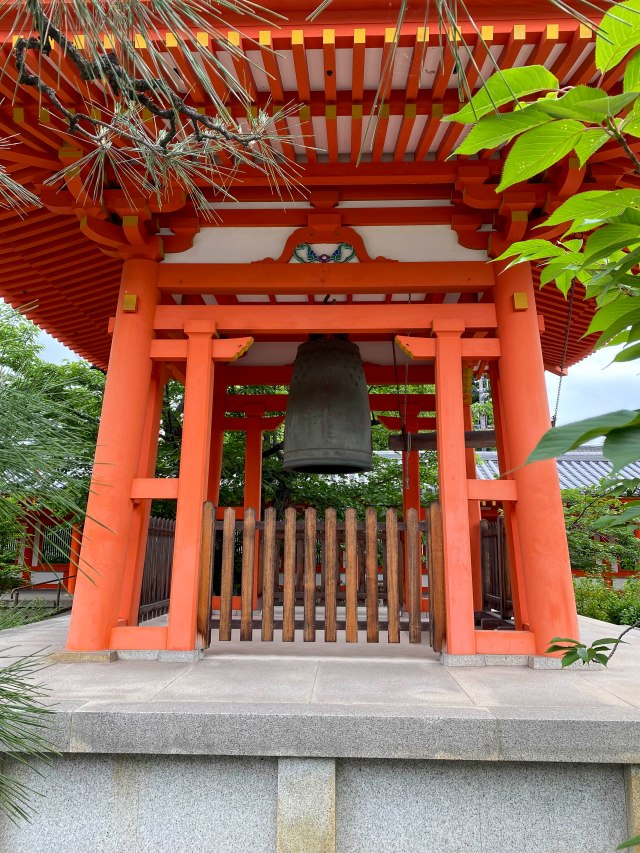
Bell tower adjacent to the temple.

So – there you have three of the most important shrines and temples in Kyoto.  Perhaps if you visit, you can add more of the remaining 1,997 to your experience.  For now –

Sayonara;-)

Kyoto was awesome!!  Could have spent several more days here – so glad to have experienced this wonderful city.


E & G – Happy in Japan


Welcome to Tokyo (Edo until 1868)

There are so many possible titles for this post – “Planes, Trains & Automobiles”, “Country of 14,250 Islands” or “Edo”.  But, plain old Tokyo won out.  Which does not mean Japan, or its capital Tokyo, are plain.  There is rich history beginning around 3000 BC, but more vibrant documentation occurs about 57 AD when a Japanese envoy visited the Chinese Han Court.  This was the beginning of the Chinese influence (Korean comes a bit later) in many facets – language, the written word, buddhism, arts, etc.  But, the most well known period (thanks perhaps to Hollywood) is the Shogunate spanning from 1185 to 1868 and refers to military dictatorships.  THIS is the history of Edo that will be explored.

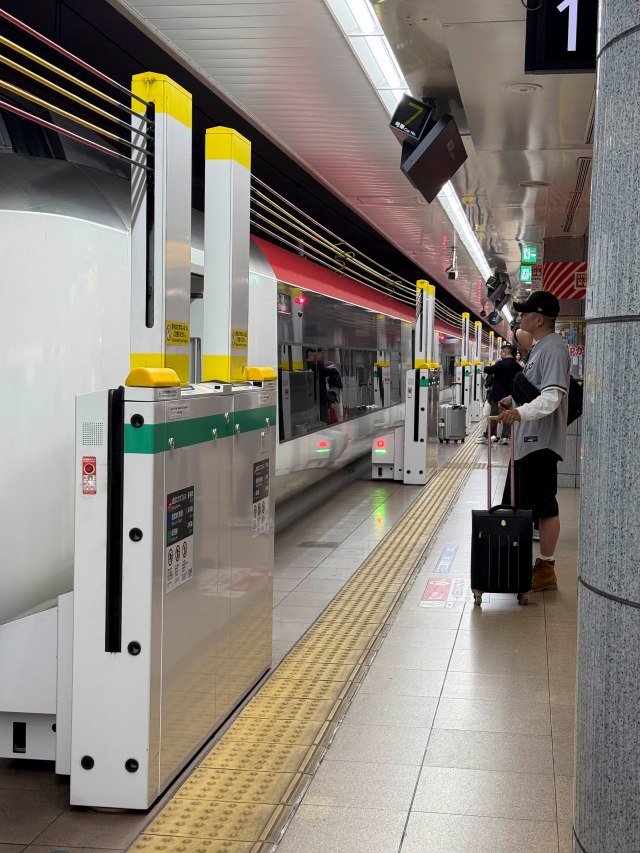
But first – getting here.  It truly takes planes, trains and automobiles to get to Tokyo.  Once on the island, trains are the transportation of the day.  Since Narita airport is about 50 miles (2 hours by car) outside of Tokyo, it is much faster and cheaper to get the express train into Tokyo station or Shinagawa station, depending on where you are staying.  These trains – and stations – are really cool – –

Unbelievably efficient.

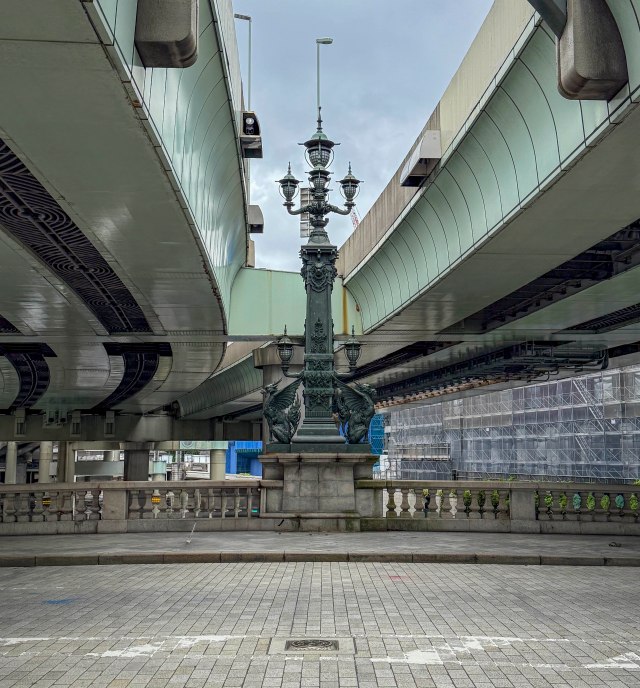
A fast forward takes one to the Edo period (approximately 1600 to 1868) and ground zero at the Nihonbashi Bridge.  This was the center of Japan in this period of time – so much so that all principal roads led here and distances to points beyond were measured from this bridge.  While the original bridge was built in 1603, the current bridge was built in 1911 with a plaque in the middle of the road designating the point from which distances were measured.

Nihombashi Bridge – where all roads led to in Japan.

Being the original ‘downtown’ area, Nihombashi became the fish market, the craftsmen neighborhood and then the merchant quarter supplying the needs of the shoguns’ court and townspeople alike.  Nothing has changed in over 400 years – it still maintains the fish markets and supplies the needs of the townspeople with restaurants, beautiful silk shops and department stores.

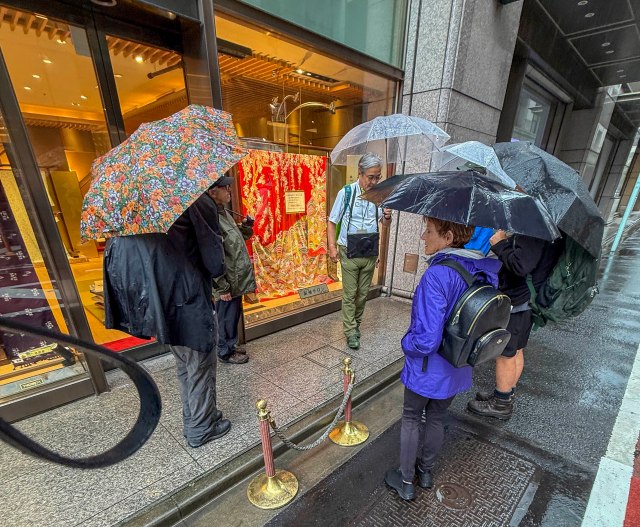
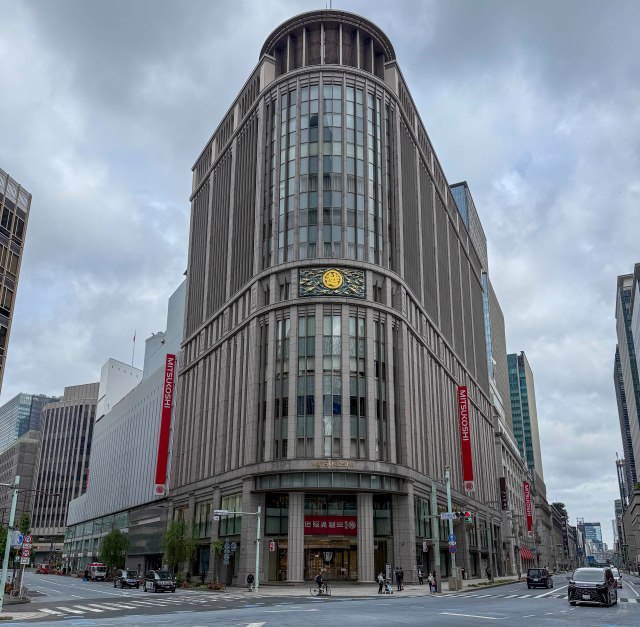
Mitsukoshi silk shop was one of the original merchants in central Edo.

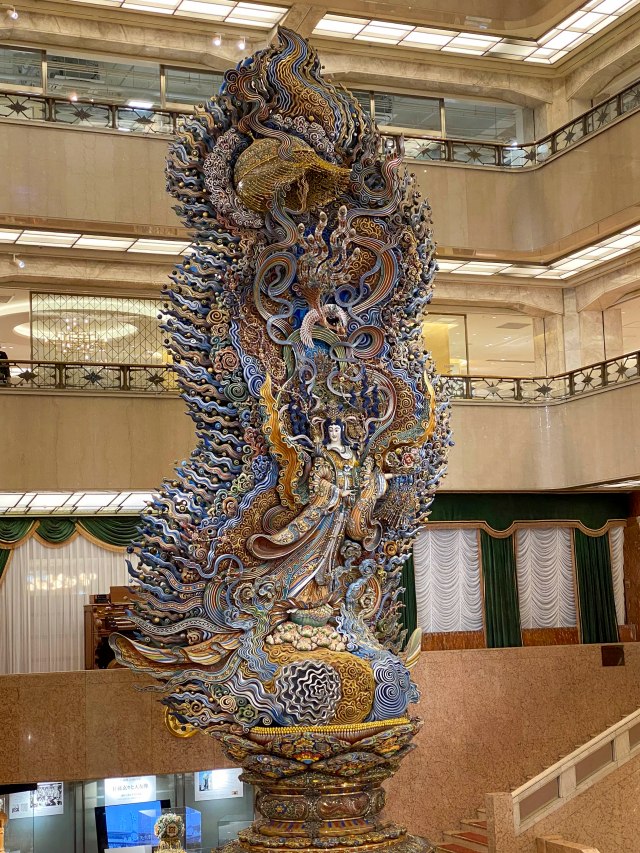
The daily opening of the Mitsukoshi Department Store is not to be missed, as it is a very formal welcoming of guests (shoppers) precisely at 10AM!  And the store itself is like a museum.

Mitsukoshi department store is the continuation of that business.

One of many hand carried floats used in annual festivals (more later).

Incredible art pieces.

Even the train station under Mitsukoshi contains amazing art pieces.  The Kidai Shoran is a work that depicts a view of the Nihombashi street in Edo in 1805 with the Nihombashi Bridge shown carrying people across the river to the bustling part of town.  Although the display piece is a replica, as the original is in a museum in Berlin, the stunning detail is not diminished.

The Kidai Shoran, which seems to mean “an excellent scene of the great city of Edo in a glorious era”.

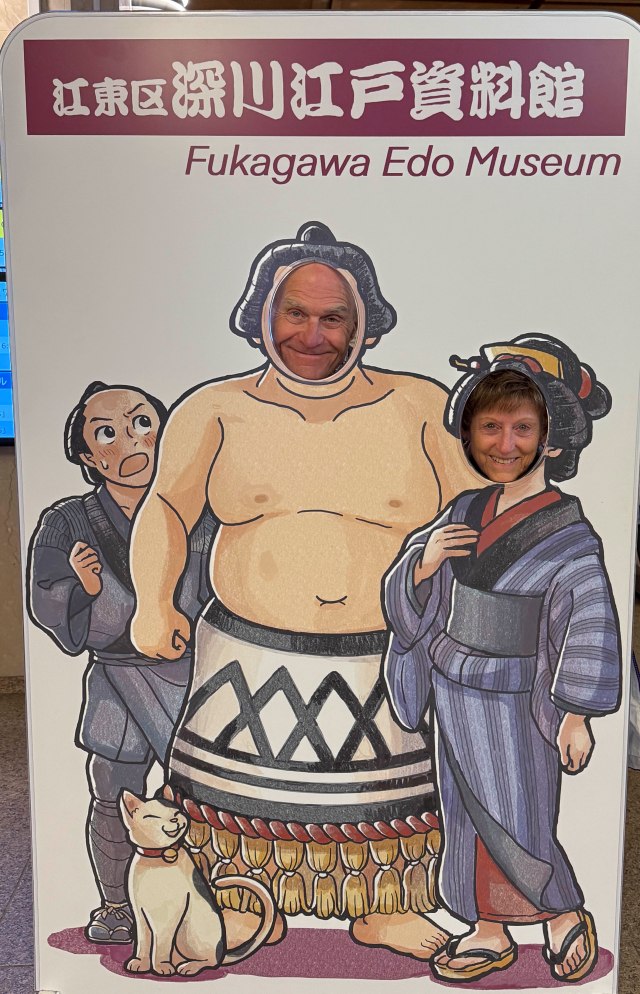
On to more serious stuff at the Fukagawa Edo Museum.  This is a fantastic recreation of the townscape of Fukagawa-Saga Town during the late Edo Period.  The sights and sounds of a block of the town are reproduced including a large merchant house, several rice stores and warehouses (a very important commodity), street vendors, a boathouse, craftsman of lumber cutting and the all important fire watchtower.  A fascinating walk thru another time – –

Museum recreation of the early downtown Edo area.

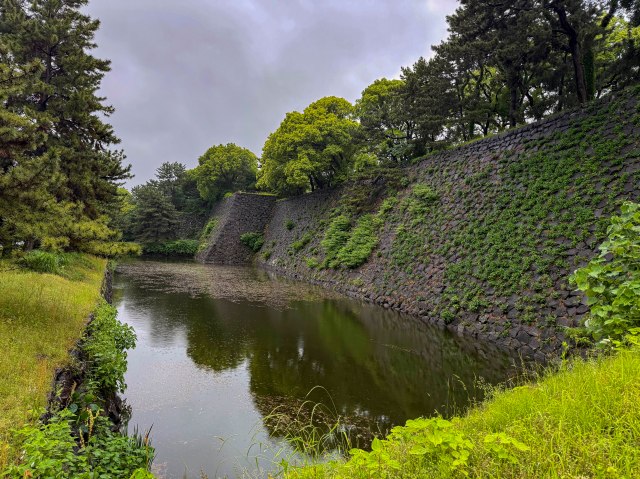
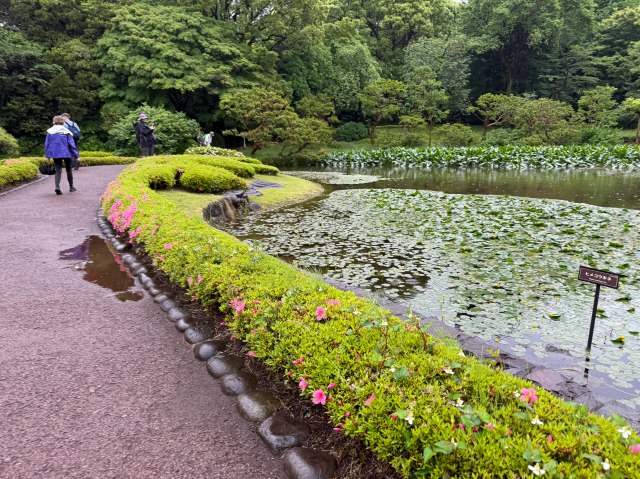
Next stop is the site of Edo Castle, which was destroyed by fire in November 1863.  However, for 260 years Edo Castle was home to the powerful Tokugawa shoguns making it the center of Japan’s politics – and much intrigue as well.  The castle site is now part of the Imperial Palace, which is the residence of the Emperor of Japan, and contains serene gardens and several museums that are all open to the public.  Even on a rainy day the walk was beautiful –

Part of the moat surrounding the original Edo Castle.

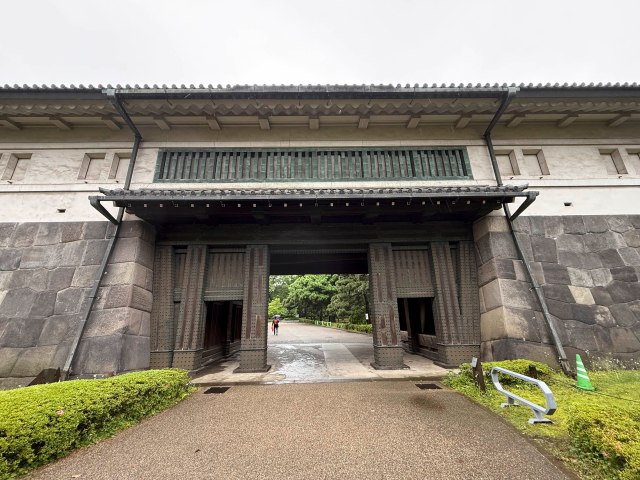
The only remaining original gatehouse – quite necessary as used by the Shogun’s ladies-in-waiting!

Beautiful Lilly Pond.

Another beautiful garden is the Koishikawa Korakuen Gardens, which is also known for its associations with the legendary Tokugawa Shogun clan.  This garden is not only designated a “Special Historic Site”, but also a “Special Place of Scenic Beauty”.  It is a very spiritual place as it sits right in the middle of the city with modern office buildings all around and the space will not be given up for further development.   A true testament to the Japanese love of plants and gardens.

Ancient grounds surrounded by modern buildings.

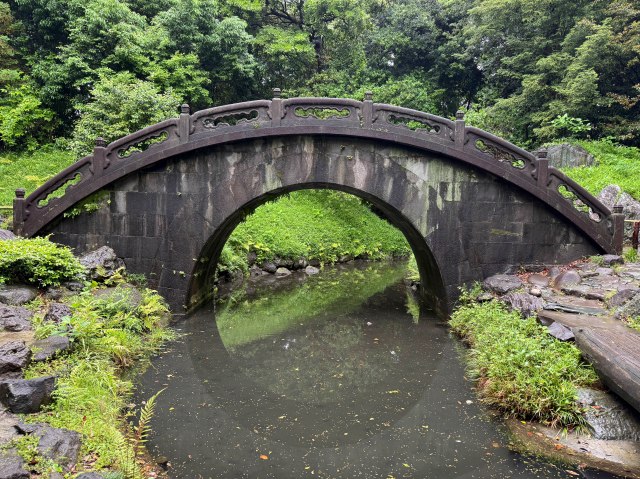
This garden was designed with the use of Chinese tastes and flavors as indicated in The Full Moon Bridge.  The name was given due to the reflection of the bridge on the water appearing like a full moon.  The design was attributed to a Chinese Confucian scholar of the 17th Century.

Full Moon Bridge in a quiet corner of the garden.

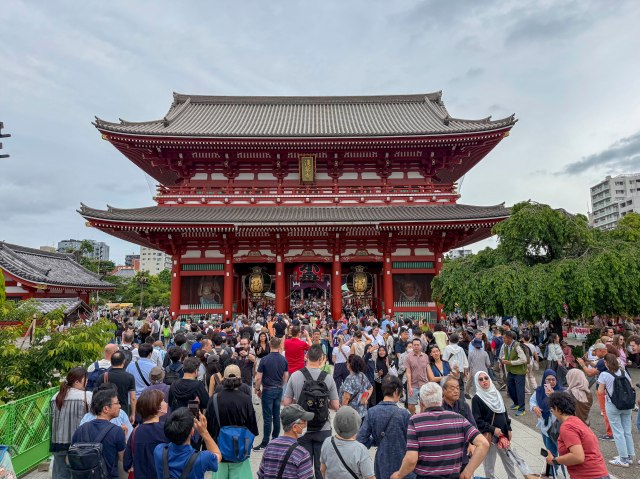
From peace and tranquility to 2 million people crammed into a four block area.  The Sanja Matsuri is a religious celebration (which takes place mid-May) dedicated to the three men who founded a Buddhist temple – Senso-ji.  The main attraction are three elaborate, black lacquered wood shrines built to act as miniature, portable versions of the Shrine (similar versions pictured above in the department store pics) carried through the streets on four long poles lashed together.  These ‘miniature’ versions weigh approximately one ton and cost about $400,000 to construct.  Throughout the day a total of about 500 people participate in carrying each shrine trading off ‘on the fly’!  Millions of locals and visitors crowd the temple square to ‘worship’ and to see the shrines carried through the streets.

An entry gate to the Senso-Ji Buiddist Temple area in Asakusa.

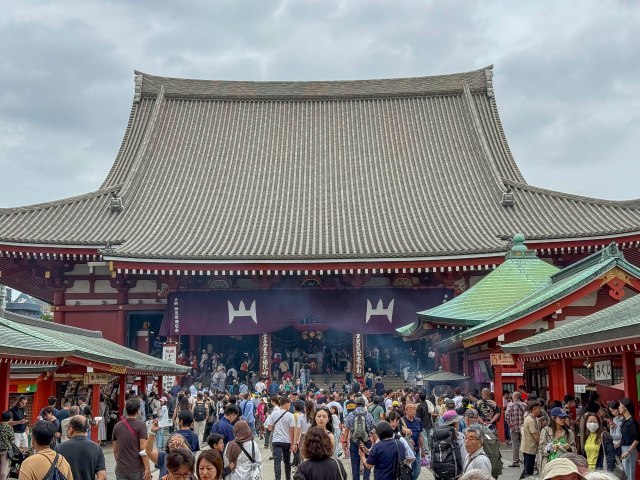
Senso-Ji Buiddist Temple in Asakusa.  The smoke on the right is to be ‘taken in’ for good luck.

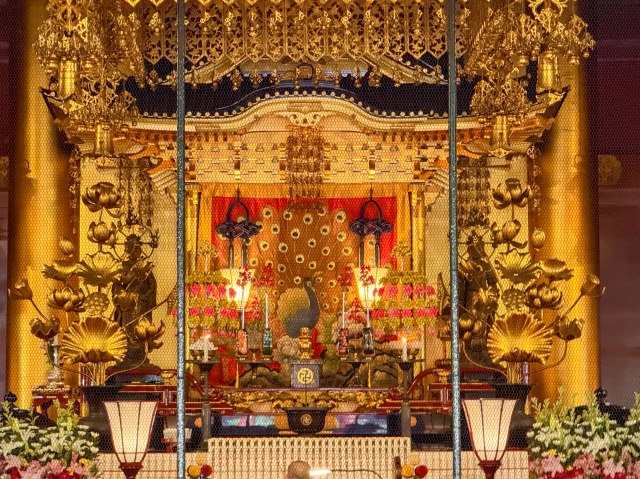
Inside the temple.

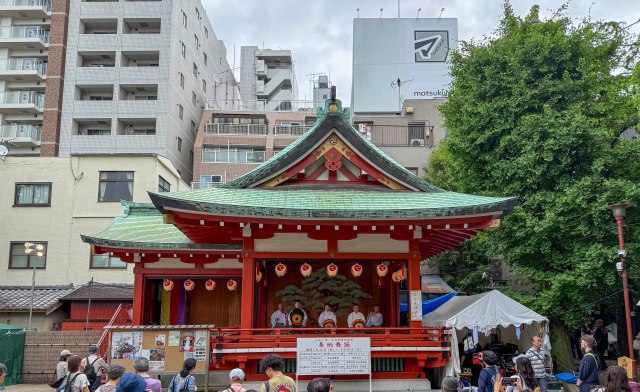
Kanda Myoujin Shinto Shrine in Asakusa, Tokyo.

Quiet in the middle of chaos.

Yet another park and shrine honoring prior Shoguns.  Getting the gist of how important Shoguns were to Japanese history?!?  After all, they were the ‘rulers’ of the country while the Emperor was the name and face.

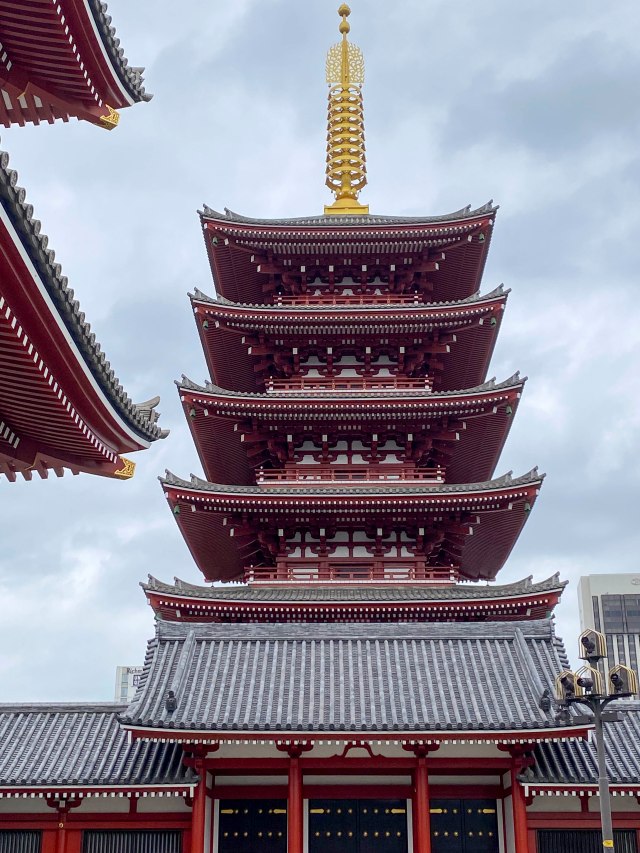
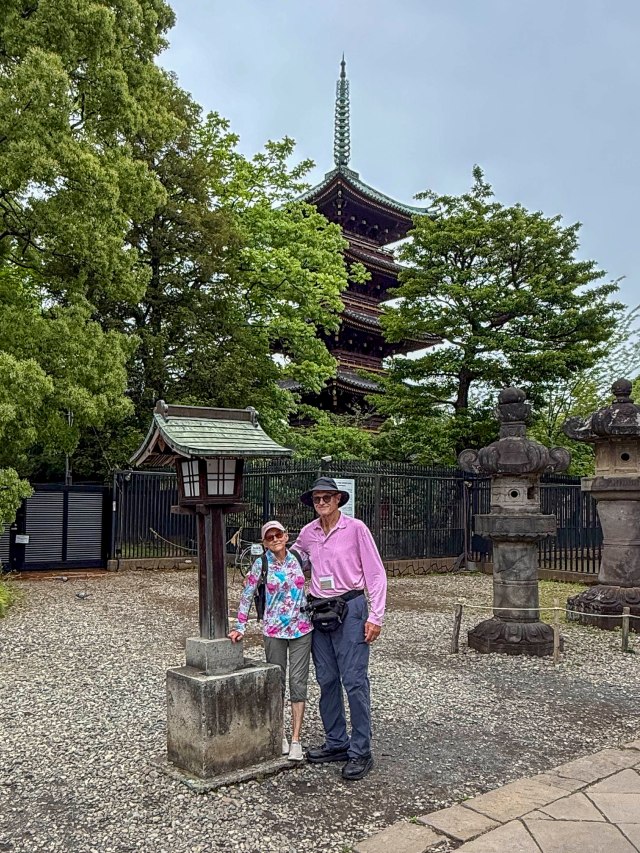
The five storied pagoda of the former Kan’ei-ji Temple and a couple of tourists.

A shrine recognizing six of the fifteen Shoguns who ruled Japan.

The above is a whirlwind tour of Edo/Tokyo.  Hope you enjoyed- and sayonara for now – –

G seems to have put on a few pounds.  E, on the other hand, is adorable!!

See you in Kyoto.

E & G having fun in Japan


WHAT?!? It’s May of 2025!!

This saying is soooo appropriate – “Life is like a roll of toilet paper, the closer to the end the faster it goes!”  If only we could stop time, but then how do we do all the things we’ve done?!?

The BIG thing the first quarter of 2025 was taking a granddaughter to horse country in KY and MO for her high school graduation (last May).  But, of course, there had to be add ons.  So – this provided a perfect opportunity to make a quick weekend trip to see niece Demi in Wilmington, NC.  She has always wanted to live at the beach and now she is just minutes from the – –

That’s actually plural – “Beaches”;-)

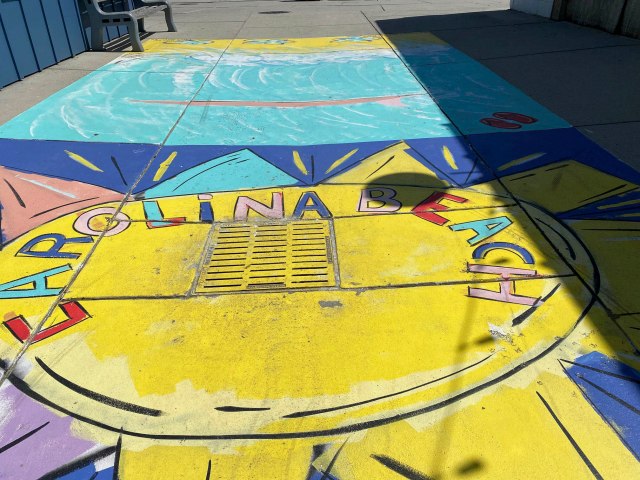
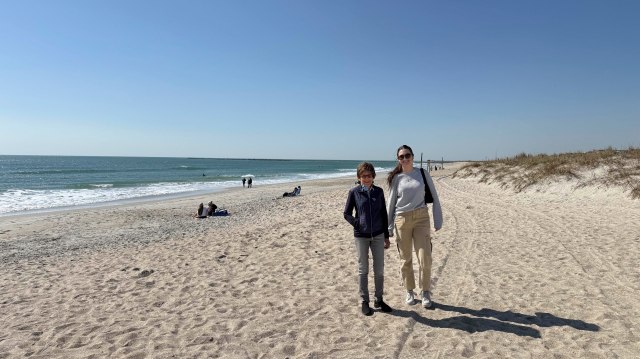
The weather may have been cool but the sky was bright blue.  Perfect for morning walks and beach strolls.  Both Wrightsville Beach and Carolina Beach were on the tour itinerary of her favorite places and only minutes from her apartment.  Sunday morning a four mile walk to her favorite coffee shop (Sun Days) adjacent to Wrightsville Beach was on the agenda.  (Actually – this coffee shop was visited both mornings in Wilmington!)

Strolling Wrightsville Beach before Sun Days.

Great morning brews at Sun Days.

Wilmington also has a University of NC campus, which Demi may attend next year for further degrees.  That campus of approximately 20,000 students was charming and another good place for a walk.

Wandering the campus of the University of North Carolina, Wilmington.

Sadly, the two days went too quickly but more adventures awaited.  Next stop – Nashville, where we had a BLAST!!  If you call yourself a country western fan, you must experience this city.

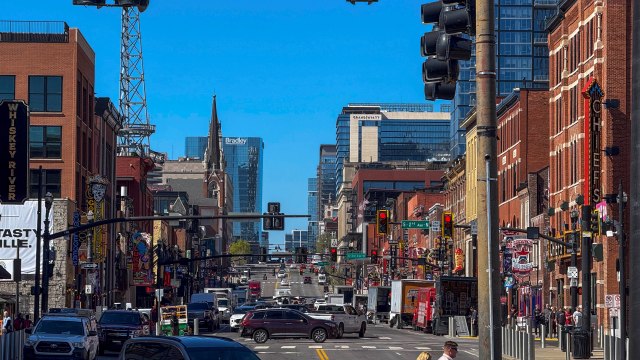
In 1925, the establishment of the Grand Ole Opry in the Ryman Auditorium marked the beginning of Nashville’s journey to become the Country Music Capital of the World.  Its many country music venues include the Grand Ole Opry House (now home to the Grand Ole Opry stage and radio show), the Country Music Hall of Fame and Museum, the historic Ryman Auditorium and the Johnny Cash Museum.  And then there is ‘the District’ up and down Broadway where one can hear country music from 10AM to 2AM!  Here we go –

Mural on the side of the Legends Corner Bar in downtown Nashville, TN. How many do you recognize?

Walking up Broadway the live music is coming from EVERY direction!

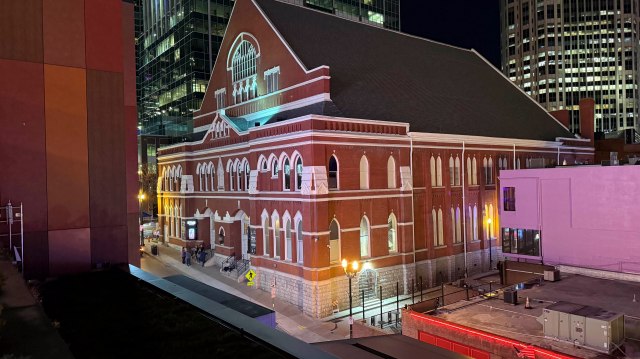
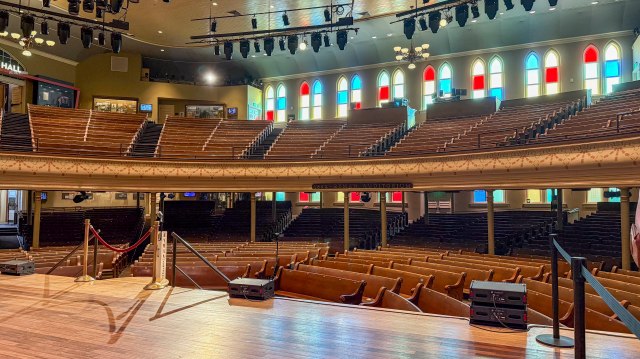
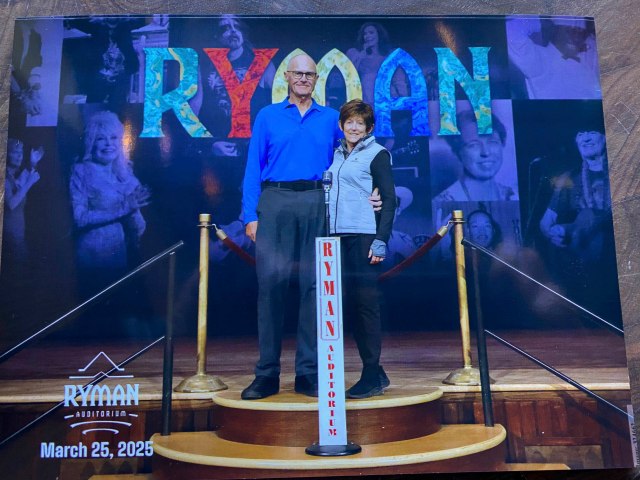
And then there is The Mother Church!  Originally built by a crude riverboat captain, Thomas Ryman, who was converted by a spirited sermon given just three blocks from the current Ryman.   Ryman wanted a grand tabernacle for religious gatherings for the city of Nashville.  With the communities help, the Tabernacle was built and its first concert occurred in 1892.  The Tabernacle became an iconic music stage and even became known as Broadway South with the likes of Katharine Hepburn, Charlie Chaplin and Houdini performing here.  The Grand Ole Opry settled into the Ryman for nearly 31 years (from 1943-1974) and it became known as The Mother Church of Country Music.  Shortly after the Opry moved out, the Ryman sat empty and narrowly escaped demolition only to obtain a renovation and new life in the early 1990’s.  It was truly magical to stand on its stage where so many of those stars have stood before.

The Ryman Auditorium – home of the Grand Ole Opry for years.

Originally the Union Gospel Tabernacle, the church pews are still being used today.

Our “star turn” on stage.

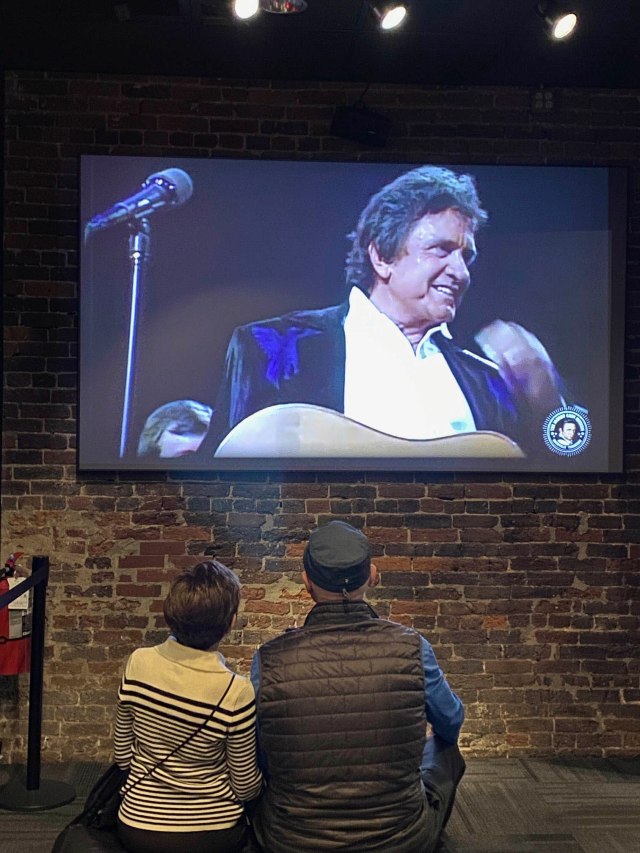
The Country Music Hall of Fame and Museum – also known as the ‘Smithsonian of country music’ – preserves the history of country music and honors giants of the genre. It is an amazing place to visit, and one could spend a couple of days here.  Just steps away is the Johnny Cash Museum, which has the largest collection of Johnny Cash artifacts and memorabilia in the world.

One of the many exhibits in the Johnny Cash Museum.

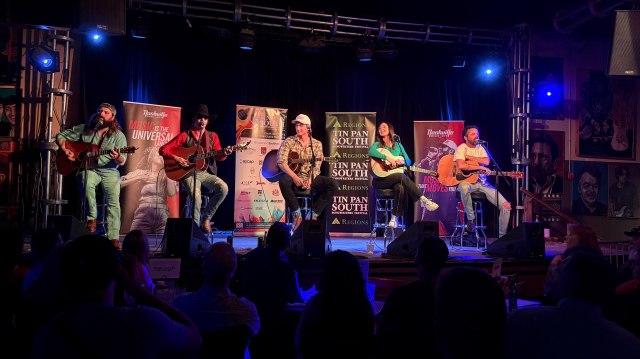
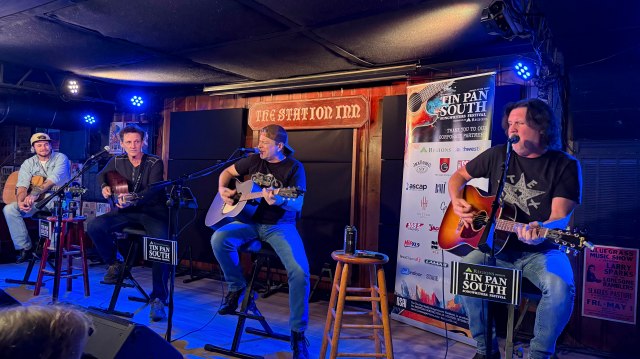
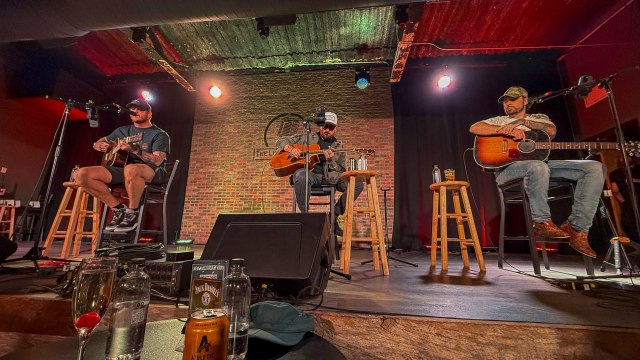
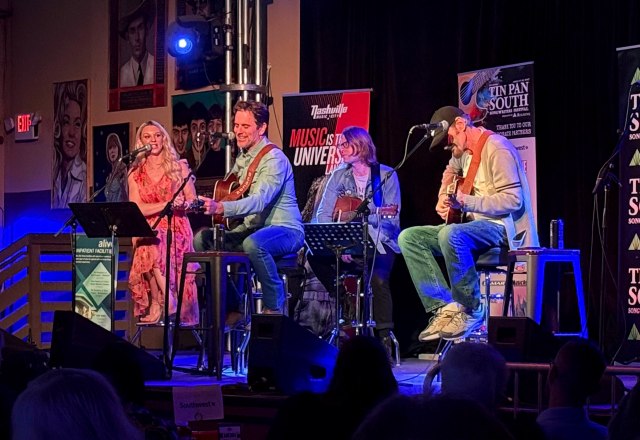
The BIG Surprise – Nashville has the Tin Pan South Singer/Songwriter Festival annually around the last week of April.  The festival is five to seven days with “songwriter in the round” shows held at 10 or so venues around the city.  This is a blast!!  Knowing nothing of this until arriving in Nashville, there was an immediate search for tickets and every night was spent at one of these shows;-)

The 3rd & Lindsley Tin Pan South show.

The Station Inn.

The Listening Room.

Back at 3rd & Lindsley, with some of the cast of Nashville.

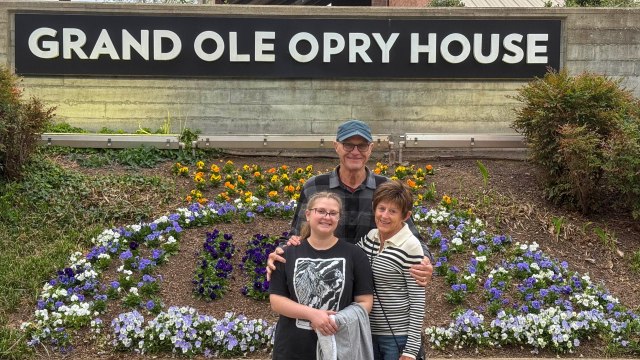
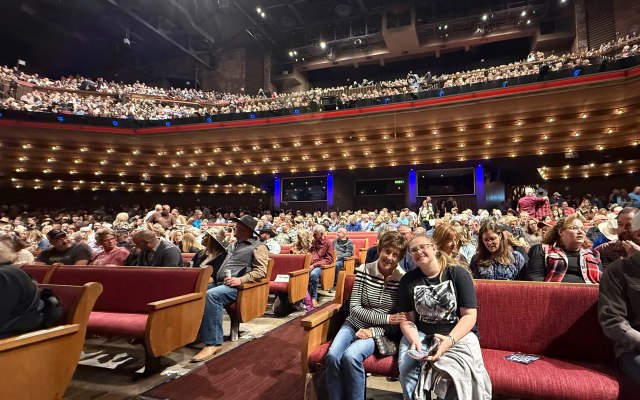
Once granddaughter Olivia joined us, the Grand Ole Opry was waiting with an incredible show.  In its ‘new’ home (for the last 50 years), the Opry is celebrating 100 years during all of 2025.  In 1925 an insurance company launched its own radio station (WSM) and hired an announcer known for his Barn Dance program.  He in turn hired a 77 year old fiddle player and the Grand Ole Opry was born.  The show went from radio to TV in 1985 but today remains a live radio a broadcast on Saturday nights – the night we were there.  An announcer is on stage to announce the acts to the radio (and live) audience and reads the commercials during breaks between acts!  A real kick –

A night at the Grand Ole Opry with granddaughter Olivia.

Vince Gill, one of our all time favorite county artists.

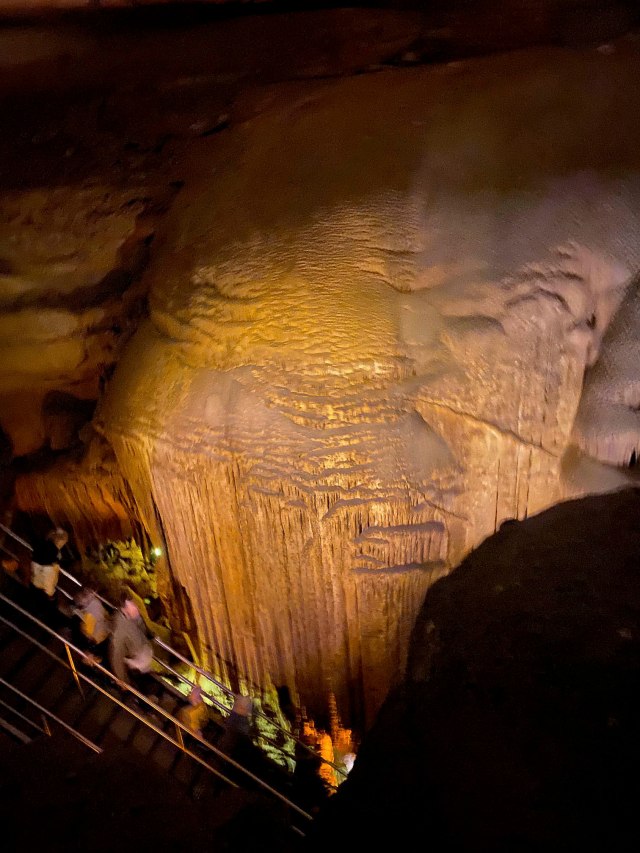
It was time to start “the graduation tour” – so it was off to Lexington, KY via Mammoth Cave NP.  This National Park includes the world’s longest known cave system as well as thousands of years of human history, earning it a UNESCO World Heritage Site designation.  The 256 steps were felt in the quads for days;-)

Deep in the Mammoth Cave.

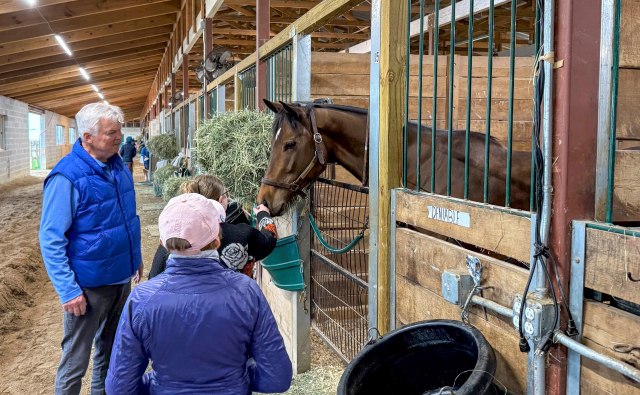
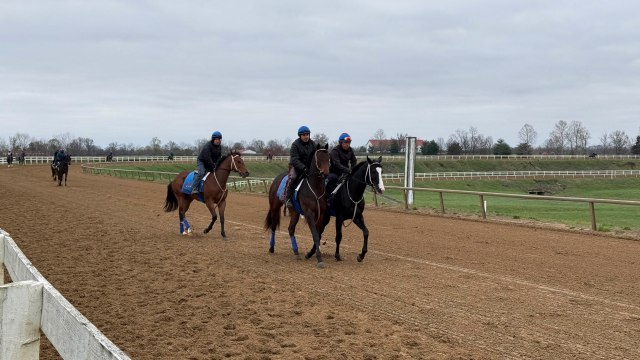
For the horse-loving granddaughter, Lexington was close to heaven and Mike Sweetman (our guide for the day) made it really awesome.  He started us at the Keeneland training track where the morning workouts were taking place.  There was access to the stables and the track where trainers were timing their horses and putting them through all the paces.

Up close and personal with the horses.

Some were working on paces – others were running side by side other horses to get the feel to the wire.

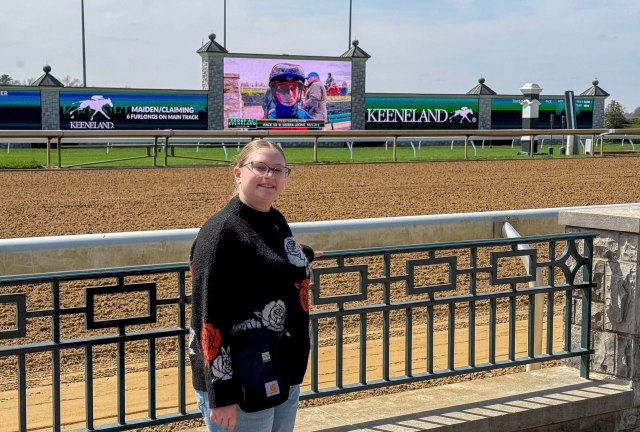
After the training track, the real thing was visited.  Keeneland Racetrack was getting all gussied up for its opening day just two days away.

Near the racetrack finish line.

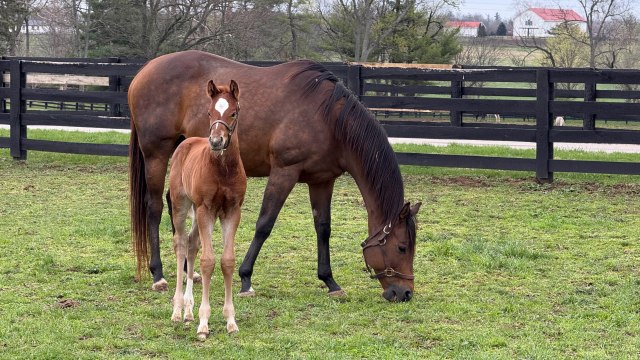
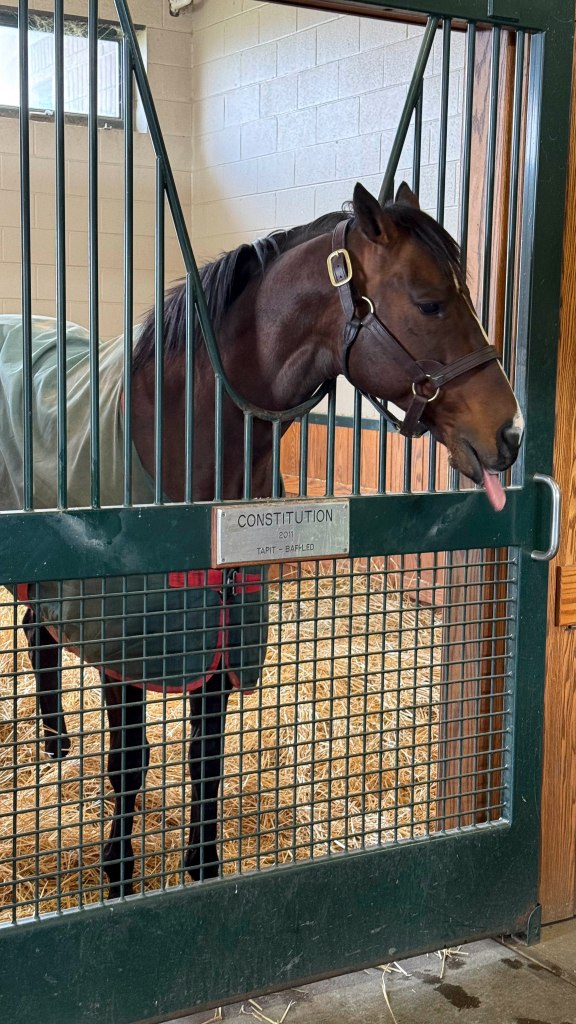
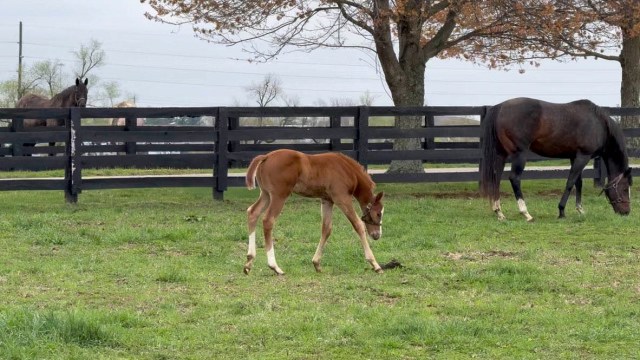
Then it was off to visit various horse farms.  And it was the correct time of year for foal watching – and they were plentiful!

The first of many – Mom and foal.

Giving us the rasberries?

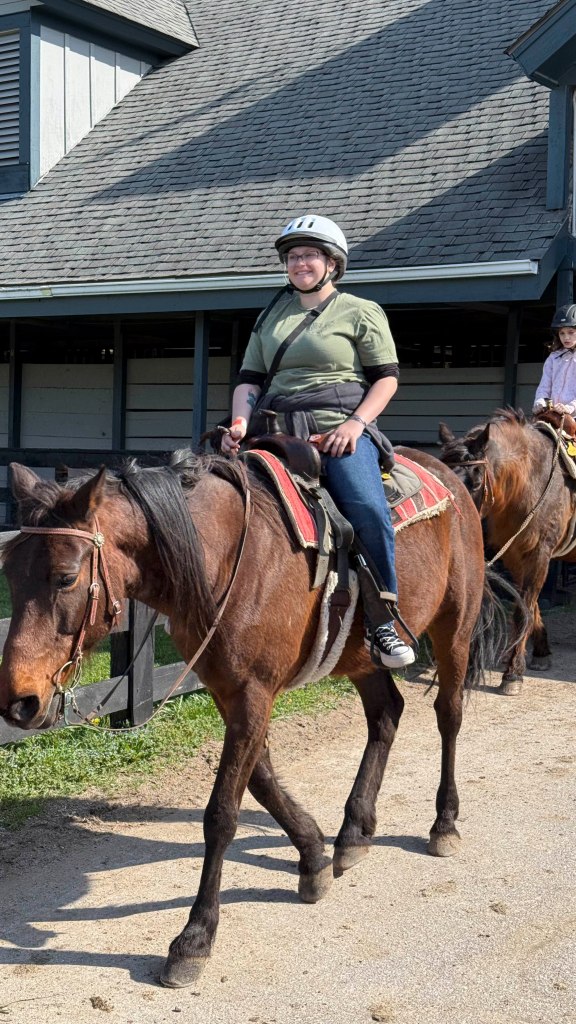
Last stop in Lexington was the Kentucky Horse Park, which opened in 1978.  It is a working horse farm, international equestrian competition venue, educational theme park and houses a museum.  It also has horseback riding, which was the only thing Olivia was interested in – –

Very happy to be on a horse.

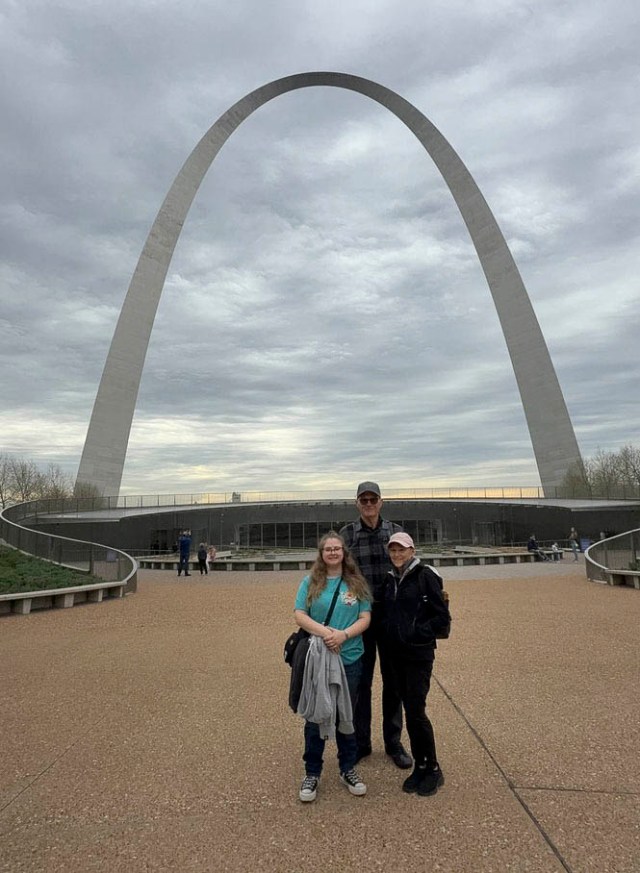
After dodging tornadoes, there was a brief stop in St. Louis to take in another NP – The Gateway Arch.  The Arch sits in a 91 acre park in St. Louis right on the Mississippi River.  One can watch an incredible documentary movie on the construction of the arch and then venture to the top in a pod barely big enough for two to three people.  So hold on – –

Learning about the building of the monument was very interesting…

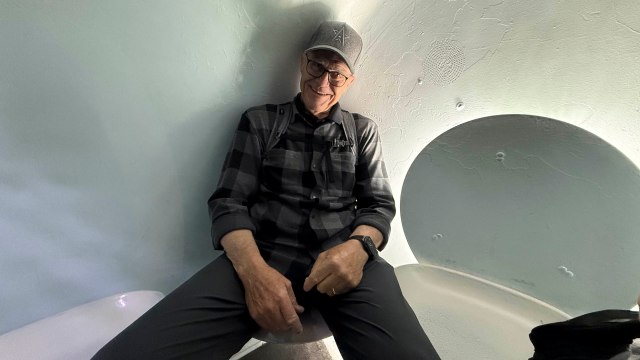
…riding up to the top in these itty bitty pods, not so much.

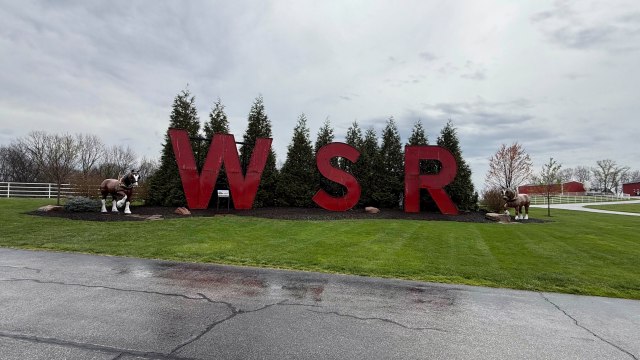
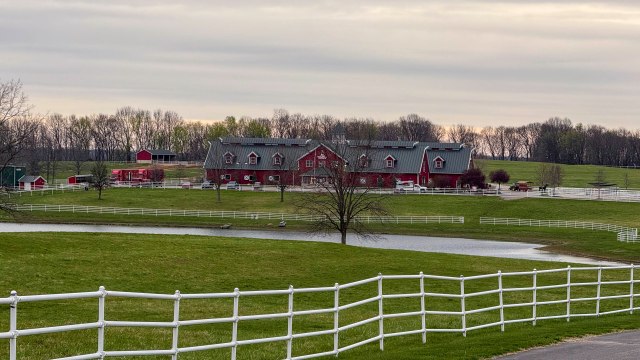
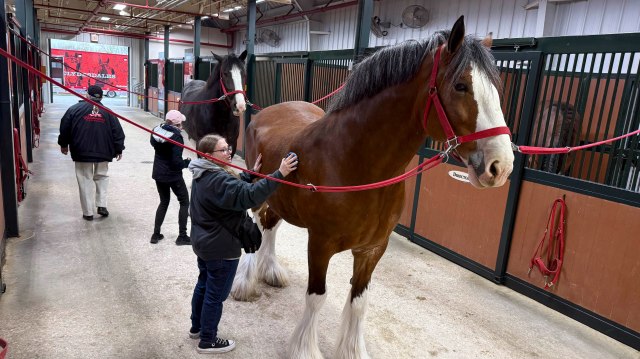
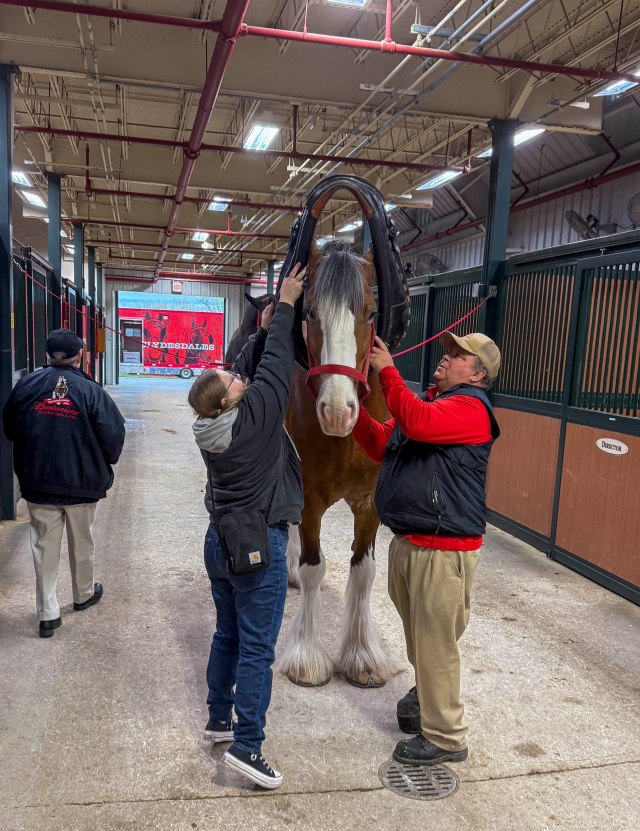
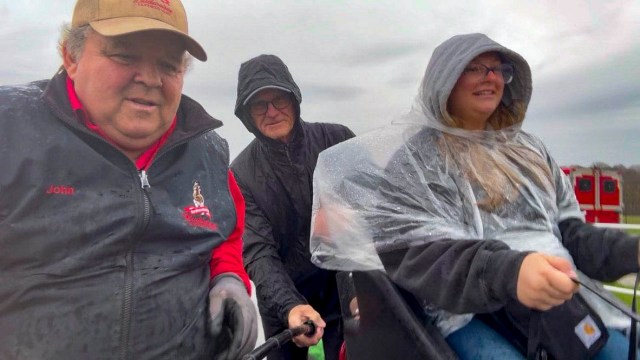
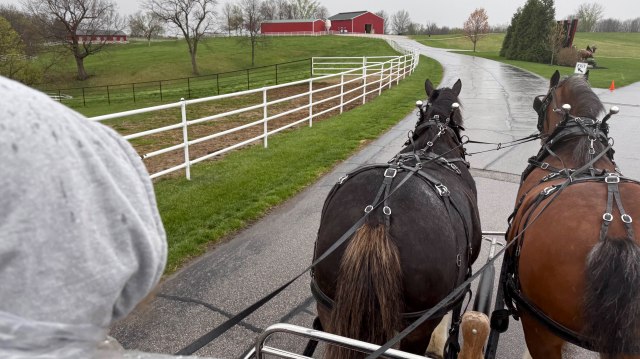
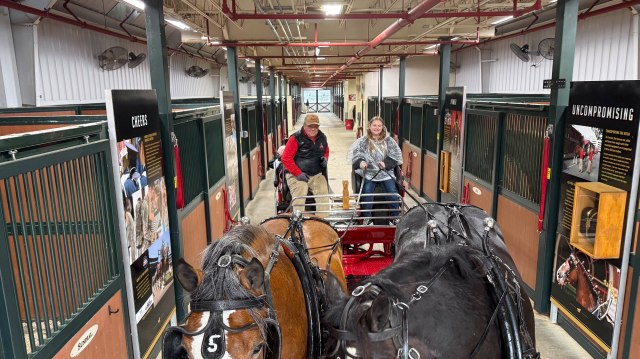
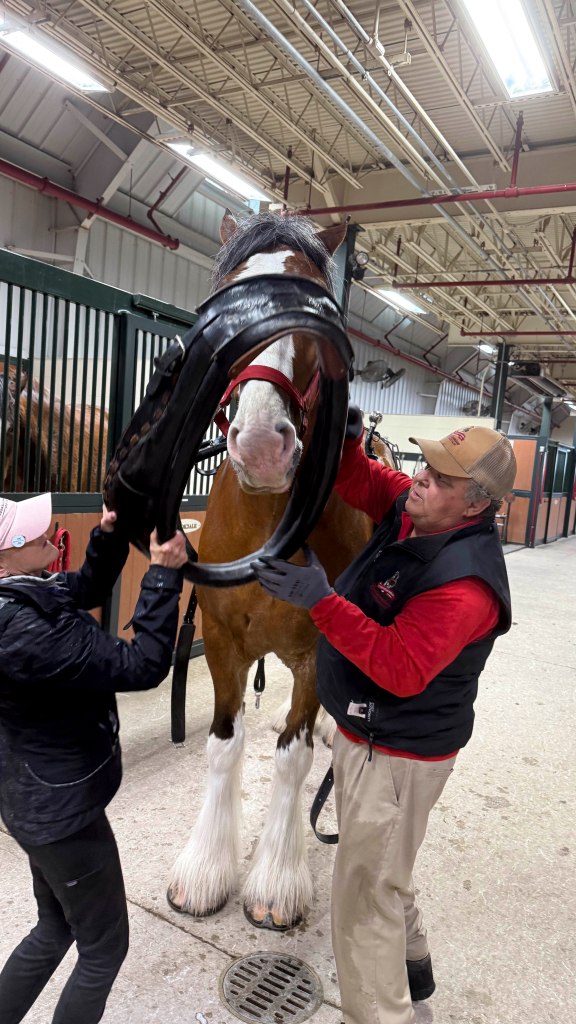
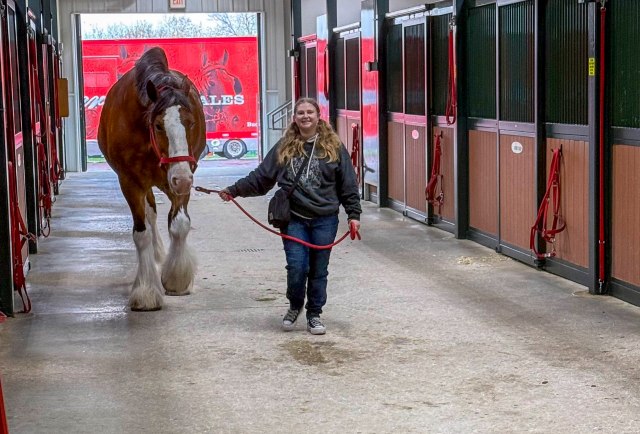
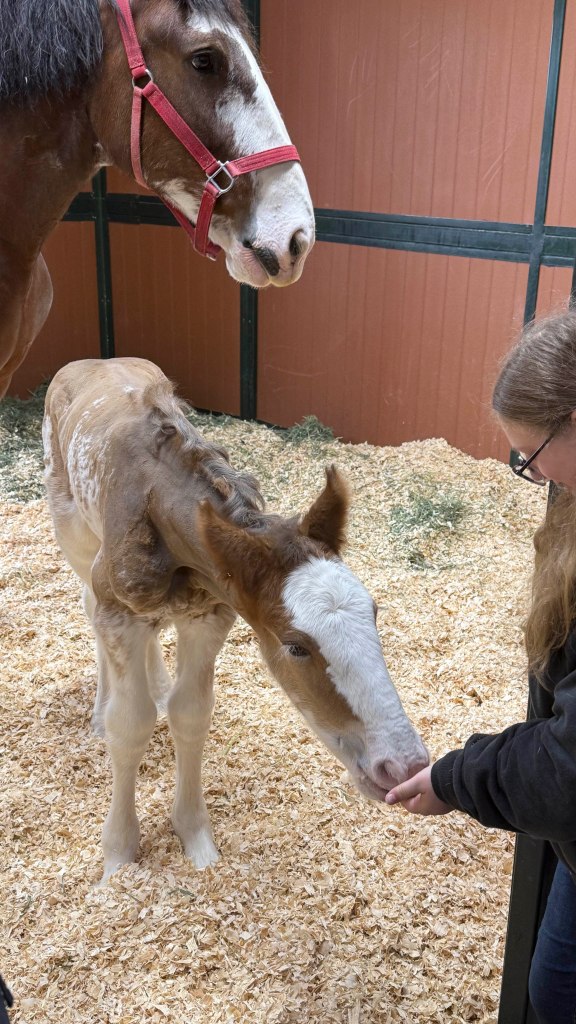
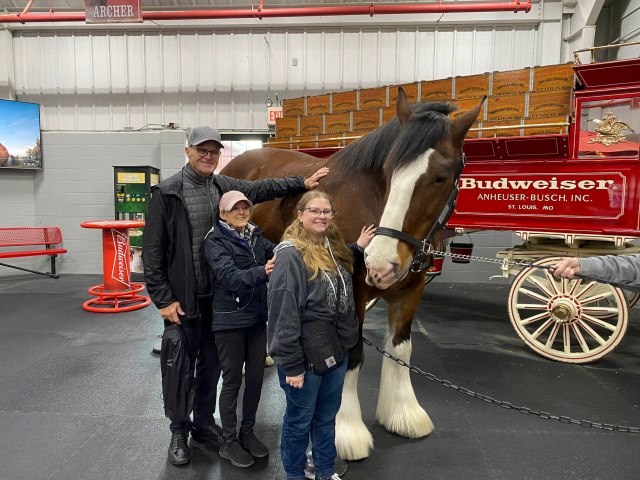
Back in the car for a trip to the grand finale – Warm Springs Ranch, the official breeding farm for the Budweiser Clydesdales.  This property includes 300 plus acres of beautiful rolling hills.  The operation was moved here in 2008 and includes mare, stallion and foaling barns, veterinary lab and 10 pastures.  This ranch is home to more than 70 Clydesdales ranging from foals to stallions.  And we saw them all on a wonderful private tour for just us with phenomenal access to the horses!!

Entry to the Budweiser Clydesdale breeding operation at Warm Springs Ranch, MO.

Incredible facility and beautiful grounds.

Lot of grooming..

..tacking up the team..

..taking the wagon out for a spin – in the rain..

..untacking..

..after grooming again, returning to their stalls.

On to the foals – this one was two days old and still pretty wobbly.

One last pic with their ‘photo horse’!

It wasn’t all trips for those first four months.  There were family events including anniversaries (Mom’s passing) and birthdays (G’s and sister Barb’s).

A little ‘heart rock’ at the site of the ashes spreading.

Happy Birthday, Barb!

Happy Birthday, Gary!

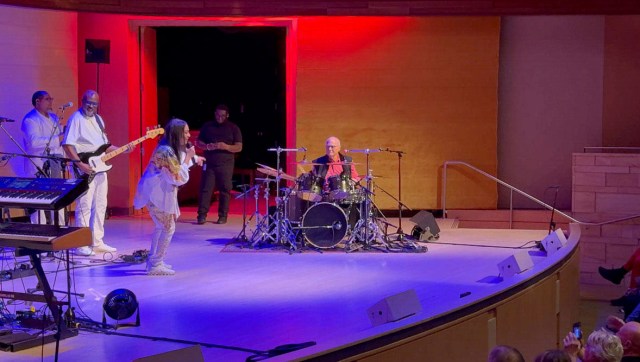
Gary was thrilled by the chance to play the drums on stage at MIM with Sheila E and the E Train.

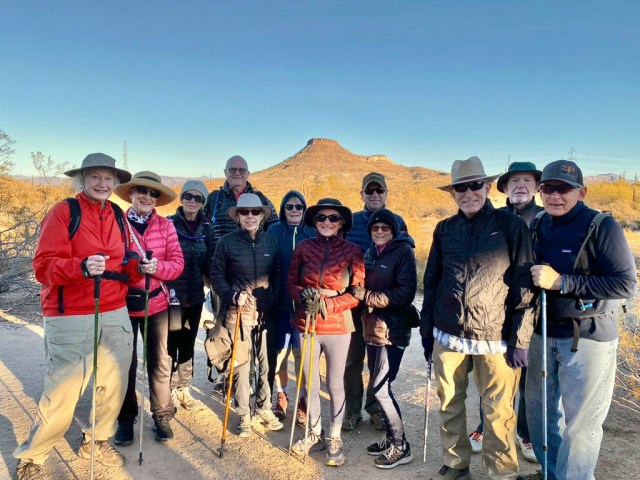
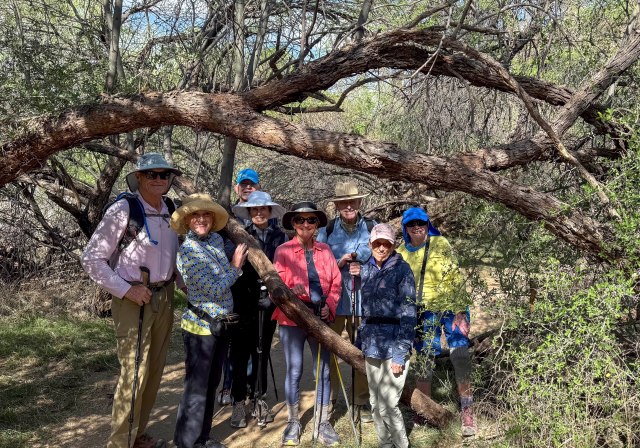
The regular Friday morning Vi hikes went on no matter the weather.  Sometimes several layers – along with the heavy jackets – were needed and other mornings were just beautiful.  The sights were always amazing in the desert – –

Lots of hiking with the Vi Trekkers (Cone Mountain in the background).

A beautiful morning on the Spur Cross trails in Cave Creek.

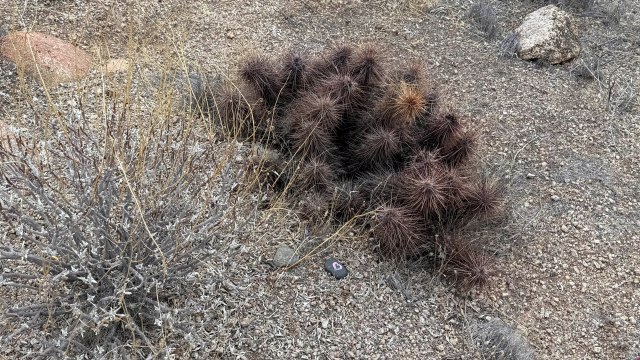
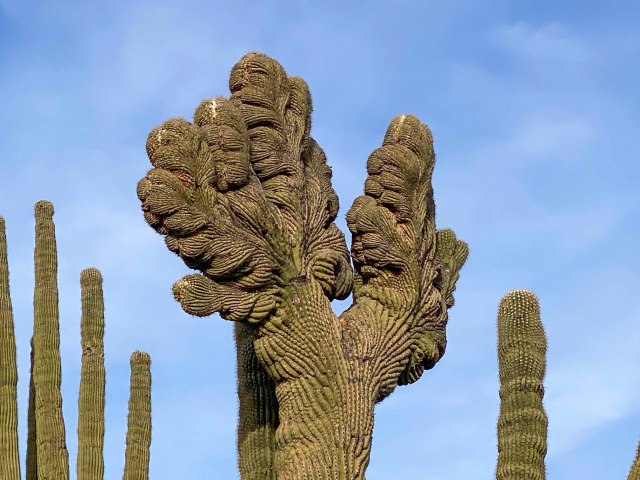
Always love the Crested Saguaros.

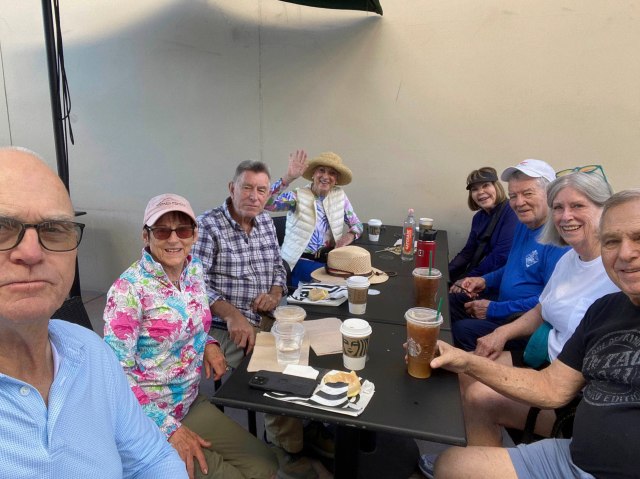
And the Saturday morning Starbucks stroll gives us all another chance to get in anywhere from 2.5-4.5 miles;-)  With a snack and great conversation in between.

Part of our Saturday morning “Starbucks Stroll” group.

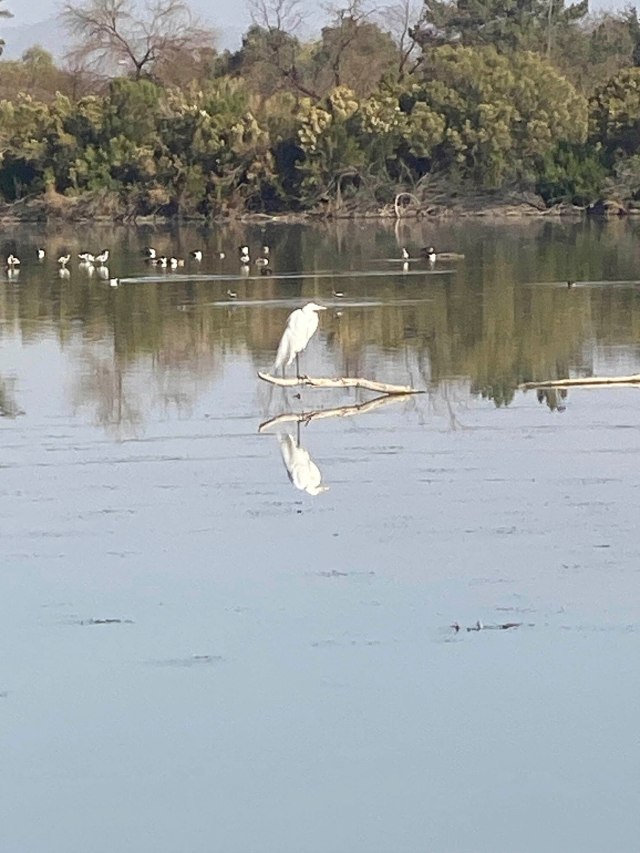
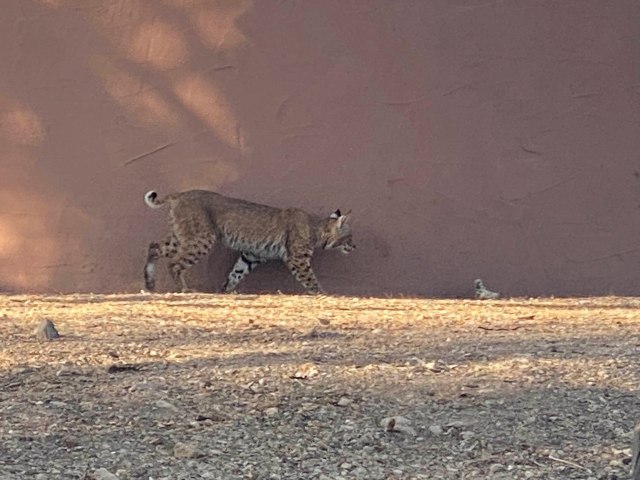
Besides the cacti in the desert, there is also a lot of wildlife to enjoy.  Especially when trips are taken to a preserve or sanctuary.  But – sometimes bobcats just appear in golf parking lots —

A trip to the Riparian Water Preserve turned up some migrating birds.

This bobcat greeted E while parking the car for a round of golf in Cave Creek, AZ.

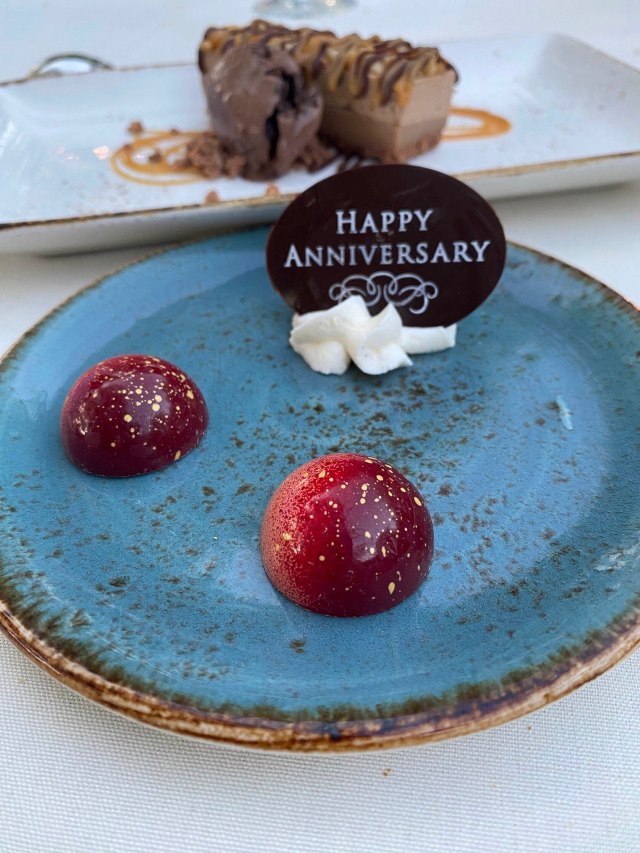
And – one last anniversary – to E&G.

Happy 31st to us!

These first four months of 2025 have sped by but many memories have still been created;-)  As always, the enjoyment of family and friends and new adventures have given lots of joy.  Now, preparations for a long journey to lands never before visited are in full swing.  The next posting you will see will be from Tokyo, Japan.  Wish us luck🤞

E & G – Hoping that 2025 is treating you well💕


Where Did You Go 2024??

With the blink of an eye, six months have passed – and you all have been left hanging;-(  It’s just that the calendar has been so full this blog has not received the attention it deserves.  So – it is catch up time before a 77 day cruise consumes us!!!

The picture below may look a lot like New Year’s Eve BUT it is really Vi at Silverstone’s Anniversary Party.  There has never been a look back (or a second guess) to the decision to move here.  It has provided carefree living and many new friends who have provided fantastic views on life;-)

Celebrating at the annual Vi Silverstone Anniversary Party.

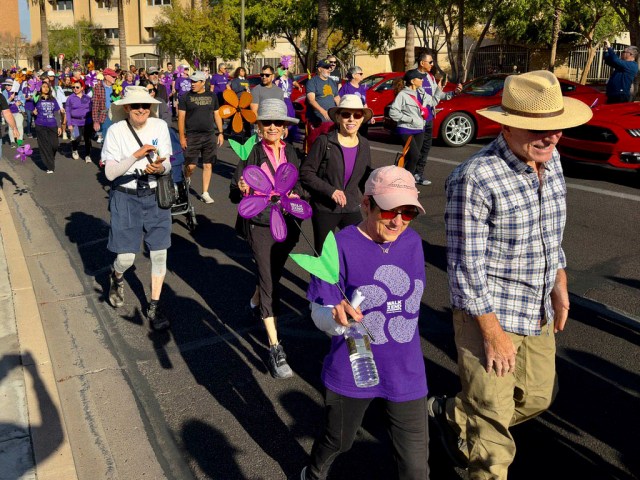
Ever the organizer, E took on the Alzheimer’s Walk the first week of November.  Various forms of dementia affect so many in our age group AND it ultimately killed Mother.  So – when the Vi staff was preparing to support this walk it seemed that the residents should join in.  A plea went out to all the Vi hikers to help E celebrate a birthday by walking in this event in memory of someone dear to them.  Almost 30 friends (and residents) responded AND helped raise almost $15,000!  It was a beautiful day all around – –

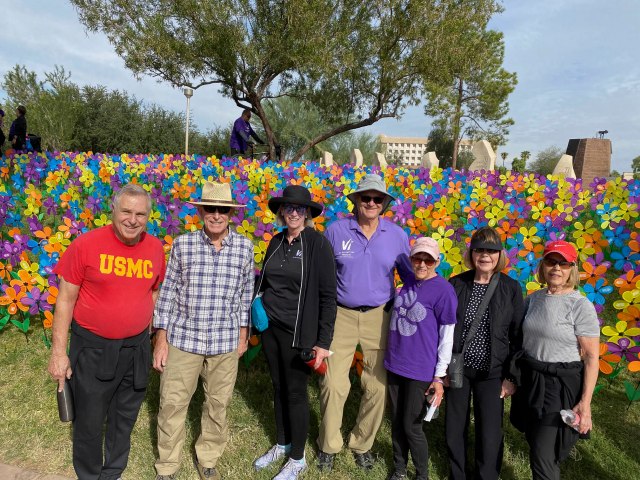
Some of our Happy Walkers!

More of our Happy group in front of one of the many memorial flower gardens.

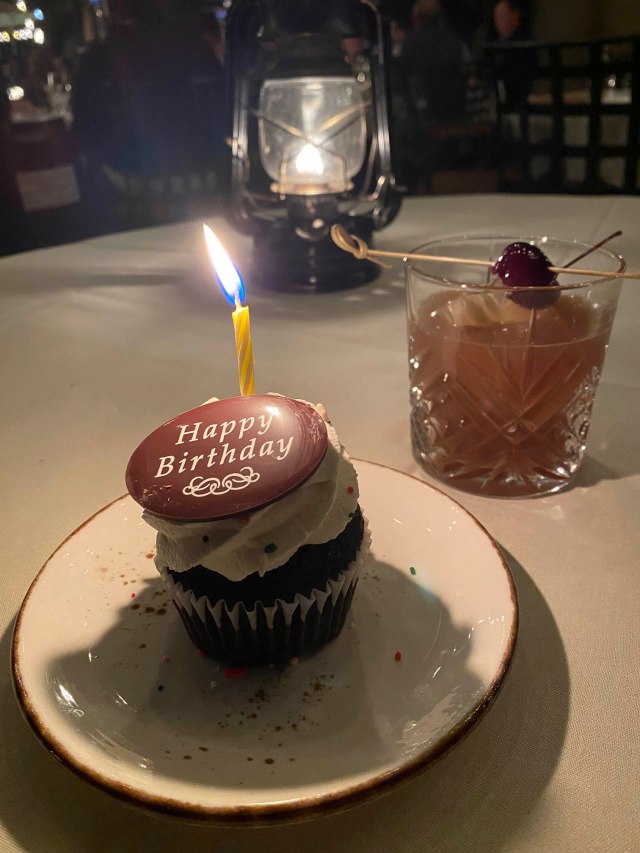
It all made for a very wonderful birthday – AND, it was capped off by an elegant dinner celebration at the romantic Lon’s patio at the Hermosa Inn.  If you ever need a special place for a celebration – this is it!

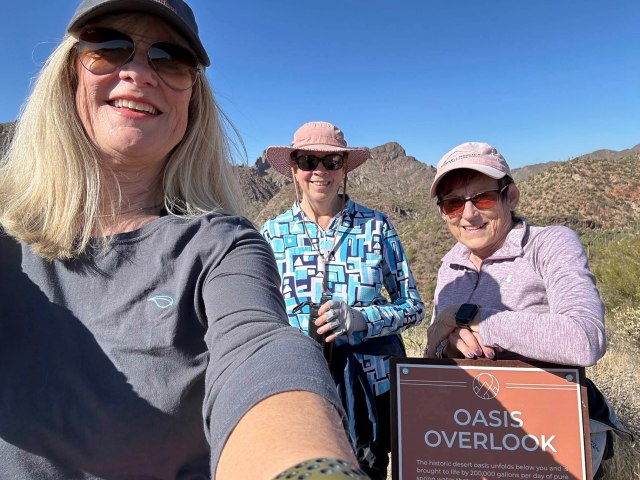
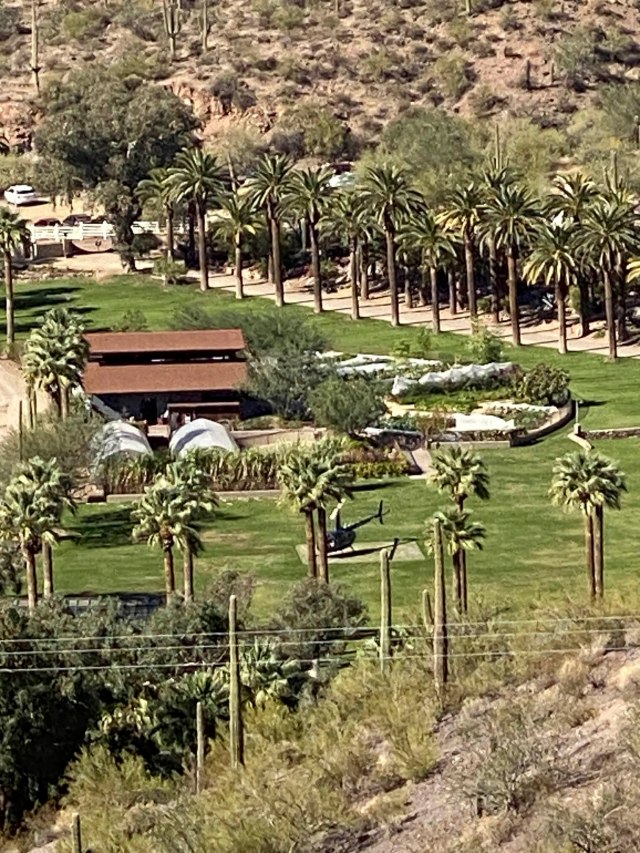
Of course, we all know at this age a birthday is not celebrated in just one day.  It goes on for maybe a week or two.  So, E was off to the historic Castle Hot Springs with girl friends for a celebratory week-end.  This all inclusive resort is an oasis in the rugged, remote desert northwest of Phoenix.  Originally the ‘hot springs’ brought indigenous people here for medicinal purposes.  After becoming a ‘resort’, guests endured a five hour stagecoach ride to reach the springs.  The arrival of the railroad in 1898 brought new interest in the springs and it wasn’t long before celebrities and dignitaries from around the world found their way to this oasis in the desert.  In the 1940’s the resort was used as a military rehabilitation center for veterans – including John F. Kennedy.  Unfortunately, in 1976 a fire destroyed the iconic building of the resort and soon it fell into disrepair and sat vacant.  In 2014 an Arizona couple purchased the property and reconstructed the property honoring its legacy.  Reopening in 2019, it is now a very special place to rest and relax and has become an annual retreat for E;-)

Hiking and relaxing at Castle Hot Springs with Sally and Jane.

The oasis in the desert.

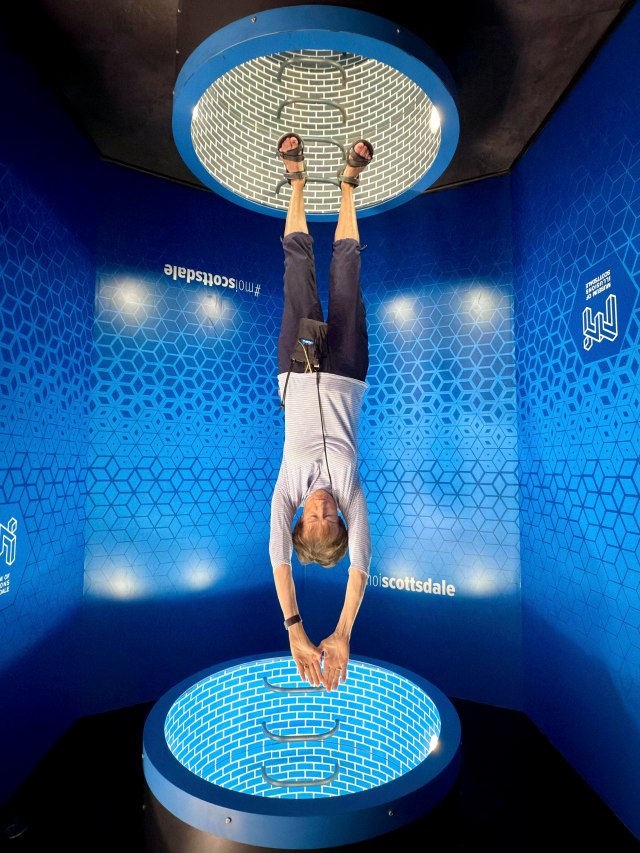
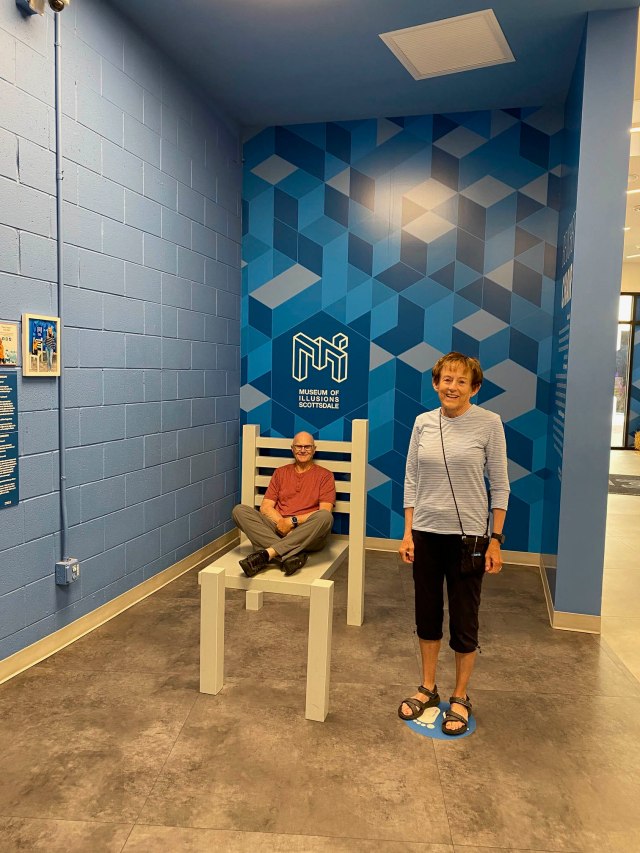
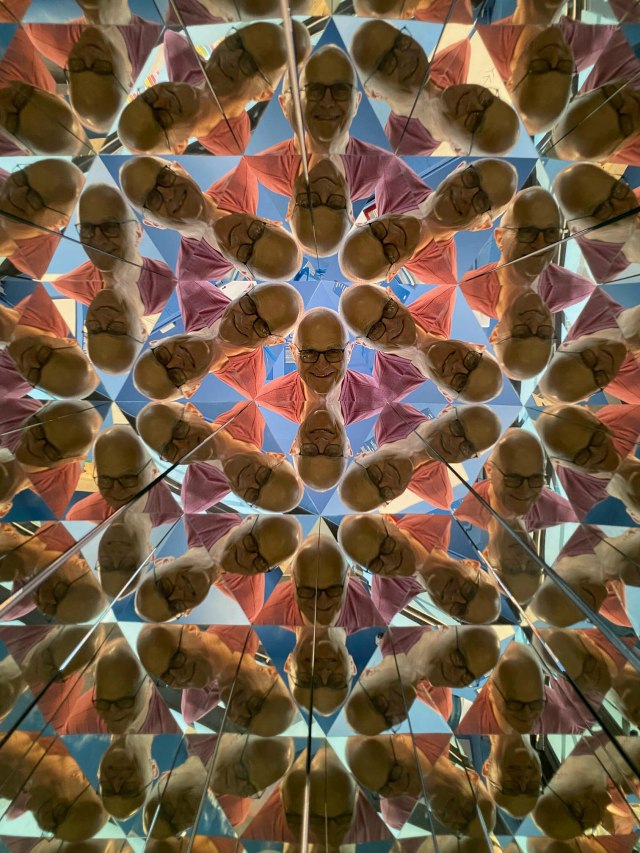
Thanksgiving was rapidly approaching and families were scheduled to visit.  Therefore, it was necessary to find things for teens to 70 year olds to do.  Many friends were consulted for suggestions.  A great one is the Museum of Illusions.  When one walks in – it doesn’t look like much.  But grab a ‘guide’ and have them get you to the right picture spots – and it is a BLAST.

G hung E upside down for this one (not really)!!

If only E could get G this small;-)

Way tooooooo many G’s!

After all that fun, the next stop was Wonderspaces in the Scottsdale Fashion Square.  Another great photo opportunity – –

Very unusual displays.

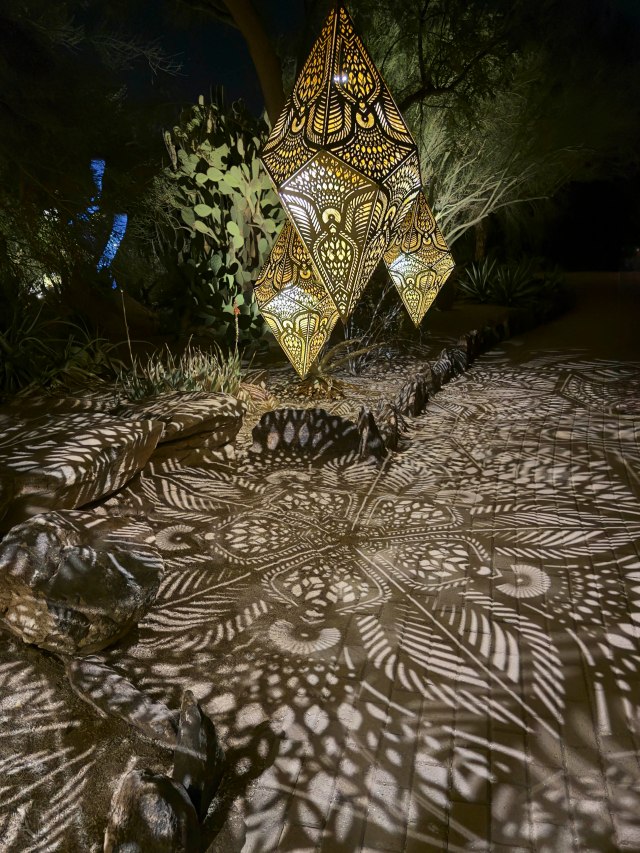
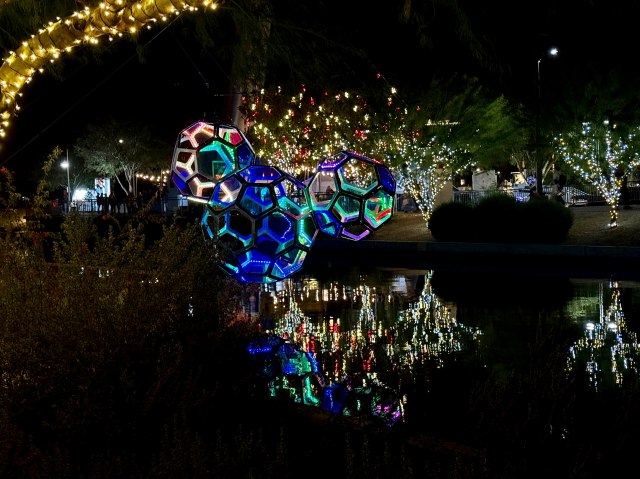
The Desert Botanical Gardens is another staple for visitors.  They began special exhibits in the garden many years ago with Chihuly in the Desert, which was lighted at night.  Now there is something new to see every year – each year trying to outdo the last.  This year metal sculptures intricately cut out and lighted provided incredible sights.

The “Light Bloom” metal sculpture exhibit by HYBYCOZO  provided spectacular sights after dark.

The reflections were as amazing as the pieces themselves.

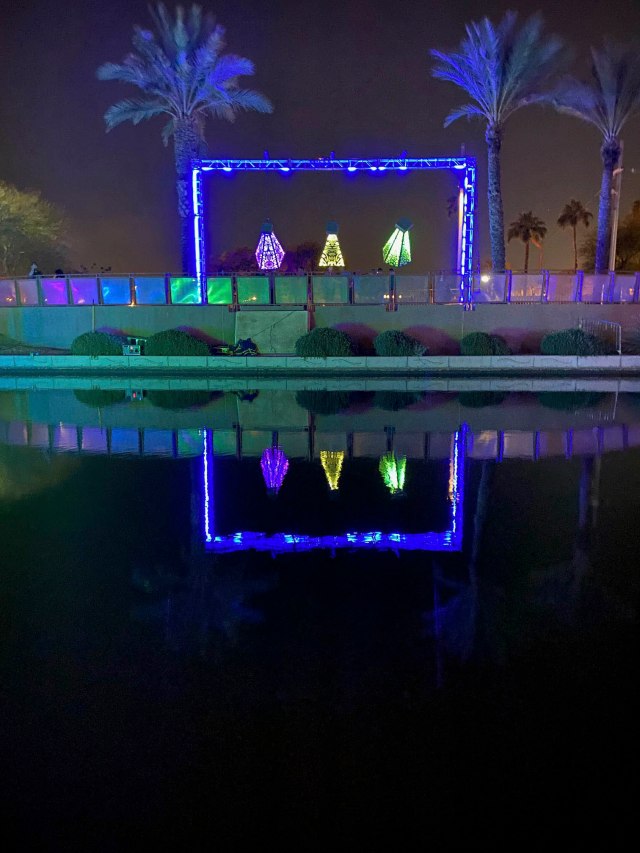
Now, an annual occurrence is to get together with the Clarke’s and check out the Canal Convergence in Scottsdale.   Again – every year is different and it provides an excellent opportunity to have dinner with friends;-)

The annual “Canal Convergence” in Old Town Scottsdale —

–with great reflections.

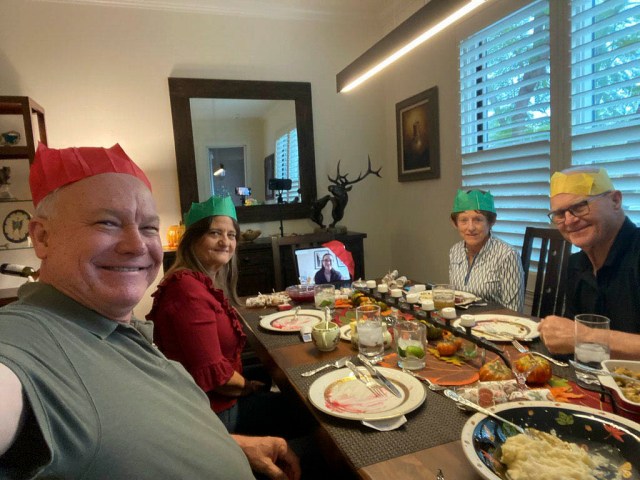
Then we get to the holidays.  This year was a little sad as niece Demi moved to Wilmington, NC the first of November.  BUT – with modern technology, she was able to have a seat at out Thanksgiving dinner;-)

Zoom brought niece Demi to the head of the table!

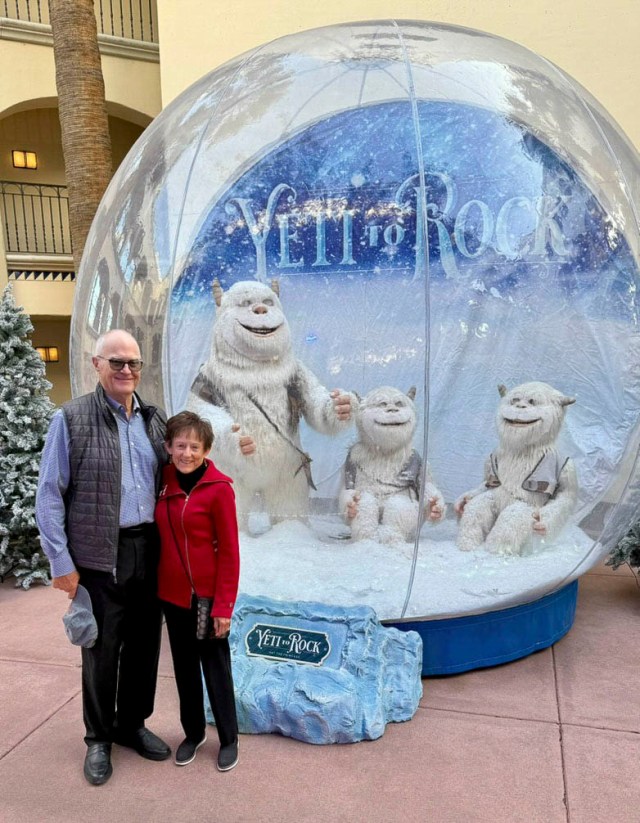
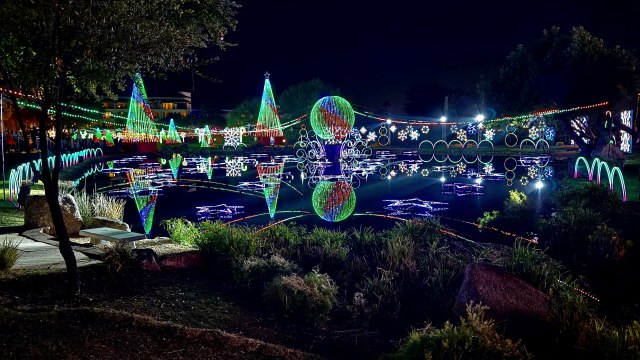
It had now been a couple of months since any travel had been done – so how about a staycation at the Princess where all the holiday lights could be enjoyed?  What a great idea as they have a veritable plethora of Christmas lights (more than 10 million!!!) to brighten the evenings.

This was only the beginning.

.

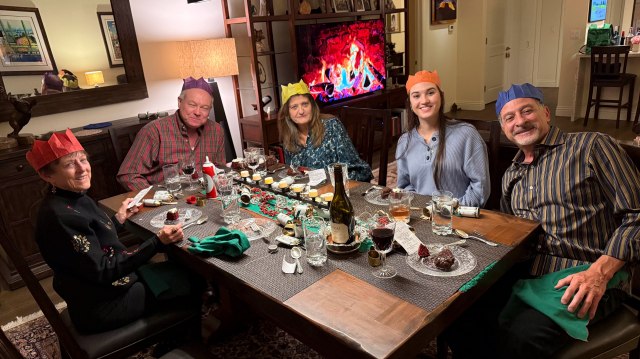
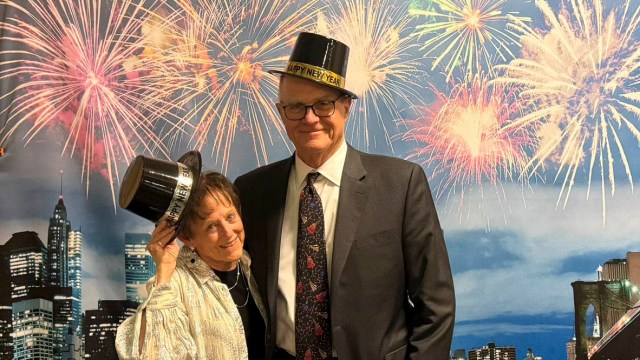
Just like that, another year was gone and Christmas and New Year’s was celebrated.  This time Demi was in Phoenix – so she actually sat at the table – –

Merry Christmas to all…

…and Happy New Year.

Our best wishes to you all for a wonderful 2025 – With Love E & G

From Seattle to Park City

The northwest part of our country is truly beautiful.  And – coming from dry, arid AZ – there is soooooo much water!!!!  Every bit of it was enjoyed in so many different locations.

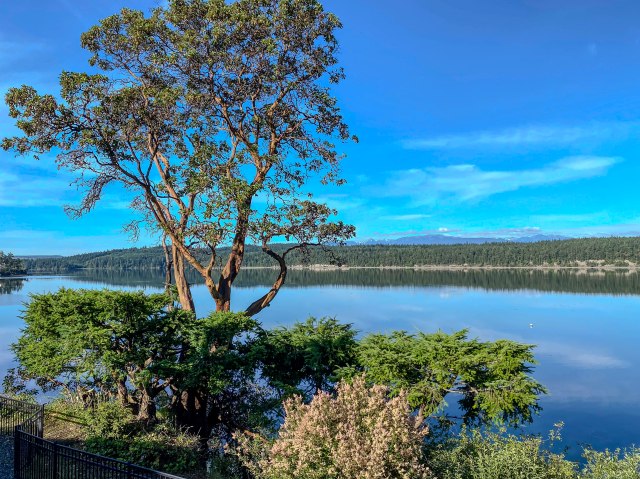
First up – invade the home of very generous friends (the Fishers) in Nordland, WA on Marrowstone Island.  One can delight in daily walks at Fort Flagler State Park or visit the local coop – Nordland General Store – for wonderful local products.  Or relish in stunning views from the guest bedroom – –

WHAT A VIEW!!!

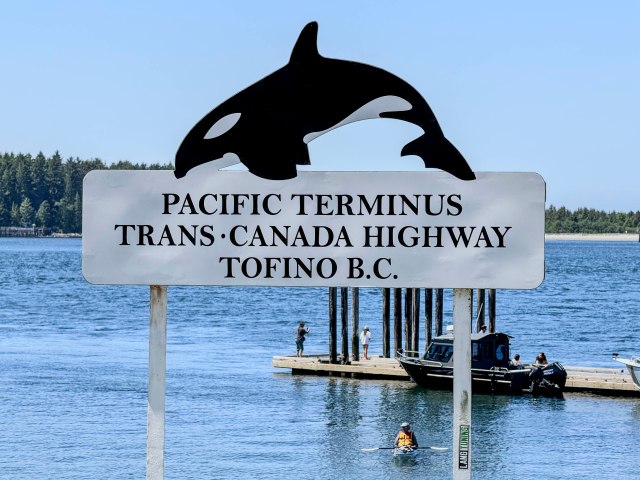
A really interesting place to visit while in the northwest is Tofino, British Columbia, Canada.  Located a quick ferry ride from Port Angeles, WA on the western side of Vancouver Island about a 4 hour drive north of Victoria, Tofino is much like the California Beach towns – BUT, much more remote and therefore much less populated.  In fact, it is so far north and west and remote that it is the end of the Trans-Canada Highway – the sign says so;-)

Finally got to the Pacific Terminus of this highway after traveling all the way from Prince Edward Island in the east (over many years😂).

Since Tofino is a resort area, there are many places to stay on the water.  The choice for this trip was Pacific Sands Resort, which provided a one bedroom with a full kitchen, fireplace, a fantastic view and hiking trails right out the door.

Welcome to our beach – – –

– – – And the view from our room👏👏

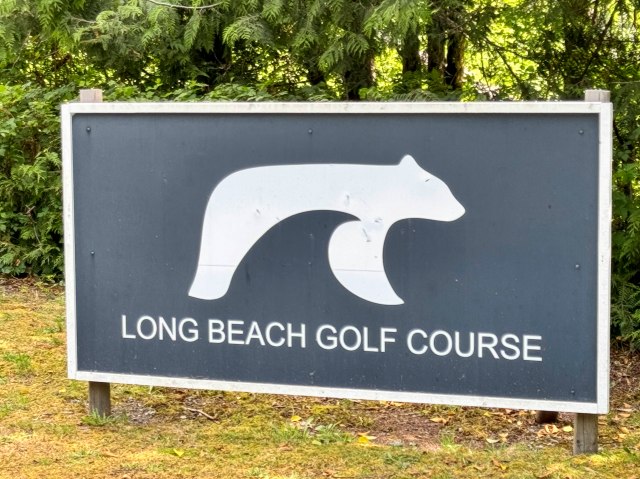
The BIG activity here is surfing.  But, spas abound and for the older crowd there is a quaint golf course.

One can lose a lot of golf balls playing this course.

It’s best NOT to plan a trip around the coasts of Washington and Oregon during a 4th of July weekend unless you make reservations far in advance.  This was learned from experience and very poor planning;-(  But, if you find yourself in such a predicament, hotels around Army and Navy bases are a good option as all the contractors that stay in them are home for the weekend and rooms are probably available.  Thus a stay in DuPont, Washington.  Making lemonade out of lemons, a day was spent at Point Defiance Park wandering the tree covered paths and having a nice dinner at Anthony’s with spectacular views of Mt. Ranier.  Mt. Ranier is one of our favorite NP’s and sitting on the deck at dinner it looked like one could reach out and touch the mountain.

View of Mt. Ranier from Point Defiance, WA.

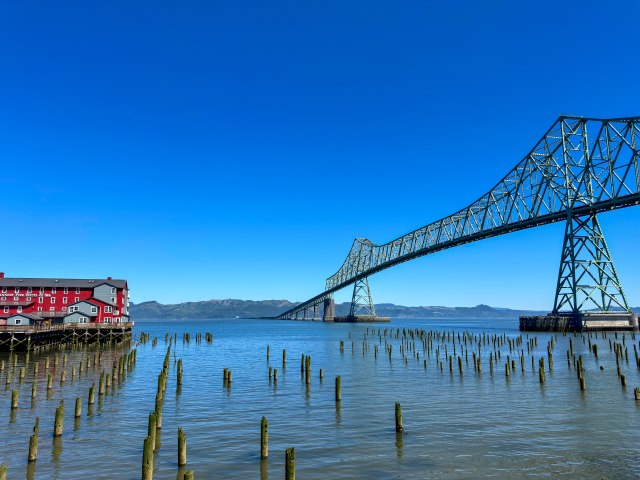
The July 4th weekend almost over, it was time to move to the next stop – Salishan, Oregon.  The adventure getting there was a bit more exciting than the place that was a pleasant memory.  Astoria, Oregon was the perfect distance for a delightful lunch stop right on the Columbia river – –

Looking north from our lunch spot in Astoria, OR

The afternoon ice cream stop was timed for Tillamook, Oregon – something that has become a tradition if anywhere in the neighborhood (and that can mean within 100 miles!!!)😂😂  As always, the parking lot was overflowing and the ice cream line was 1/4 mile long.  Since the van has a freezer, we outsmarted them all and just went into the store, bought a box of those Mudslide ice cream sandwiches that are loved and ate in the van storing the extras for later👏👏

Lots of visitors at the Tillamook plant.

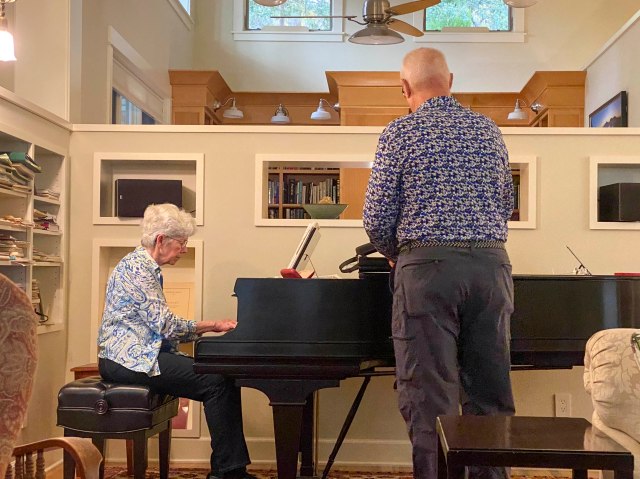
Back on the road, next stop was Jacksonville, OR where more generous friends (the Weavers) opened their home to us.  This is always a much anticipated “cultural” visit.  They are very involved with the Oregon Shakespeare Festival in Ashland, so we take in several plays while visiting and enjoy the sites and sounds of Ashland.  Priscilla is a classically trained pianist, so she and G have great fun trading classical for country during our stays.

Always enjoy spending time on the Saltmarsh Ranch with Priscilla at the piano.

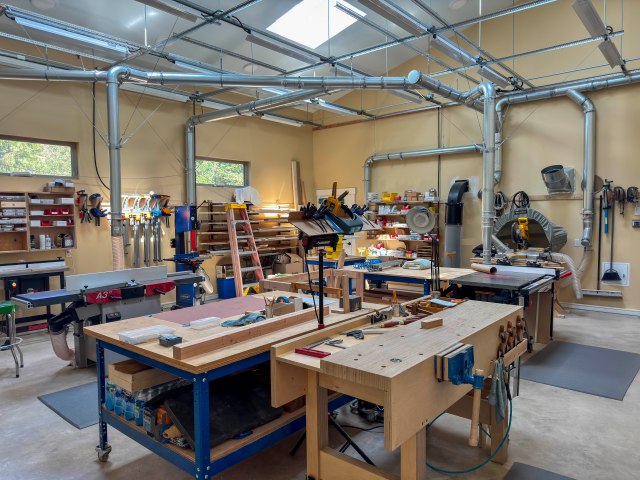
Besides taking care of their few remaining sheep and watch dogs (as well as making us omelets from fresh farm eggs every morning), Steve has built himself a magnificent work shop where he now spends his daily hours – –

Awesome workshop.

Now it is finally time to head to Park City for the remainder of the summer.  It is truly wonderful to have so many friends to spend time with and this is especially true of Park City.  Having lived there for almost 20 years every summer is a homecoming;-)  The dinners, the golf games, the theater, Starbucks meetings in the AM, afternoon cocktails on the decks/patios, hikes and walks, adventures to Sundance – there is so much to enjoy and share with so many welcoming friends.  Because of the prior travels, this year’s stay was only two months and it went by way tooooo fast.

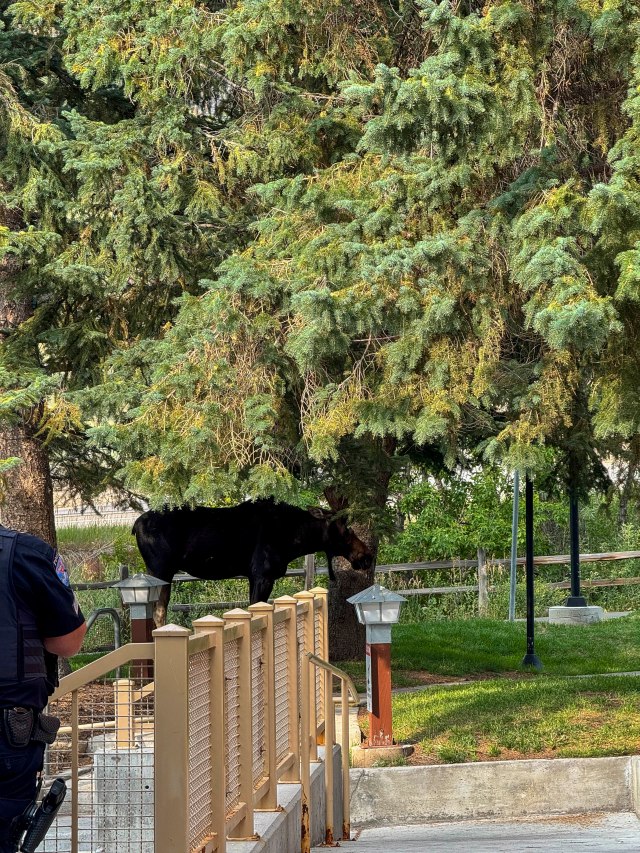
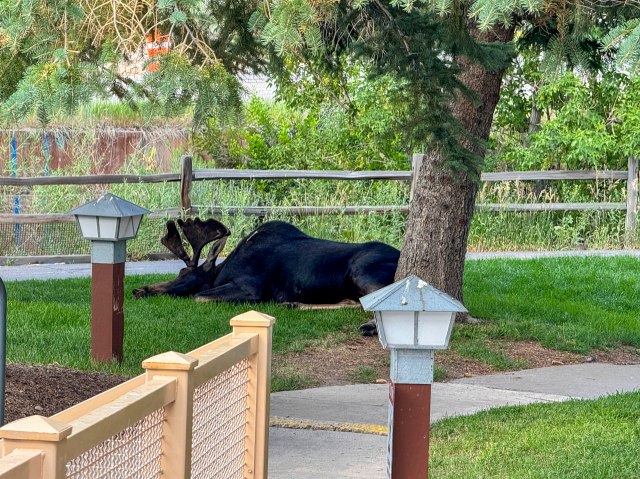
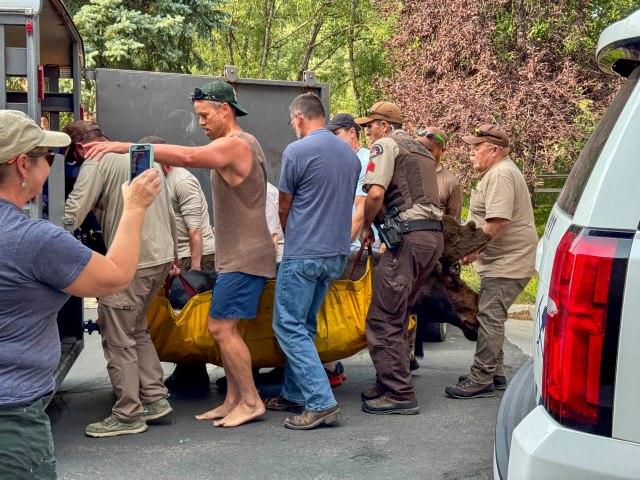
There was the annual moose sighting, though.  And this year was a real doozie – with something not seen before.  One bull moose had apparently been spending too much time in ‘our neighborhood’, which was too populated by humans for it to be safe for the moose.  So the Department of Natural Resources was called in to tranquilize him, load him into a trailer and transport him to safer/higher grounds.  The whole operation took several hours and mesmerized the entire condo complex.  Mr. Moose was not really anxious to be relocated, so he jumped up several times after tranquilizing while being loaded on the ‘sling’ – scaring those loading him enough to get out of the way!!

Get ready moose – the tranquilizer is coming.

Be sure you get this dart in the correct place.

After 15-20 minutes the tranquilizer dart had its desired effect.  Let’s load him up.

Third time is the charm – maybe we can get him in the sling this time…

..wait!  We need more help – this guy is HEAVY!

The activity with the moose was definitely a highlight on the animal front.  But, the sand hills also fascinate – especially how their color changes throughout the season.

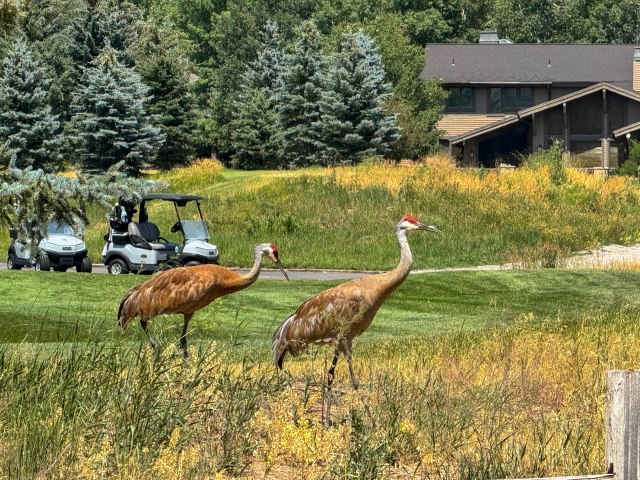
Obligatory sand hill crane shot.

After all these years, a trip was made to the Eccles Theater in Salt Lake City where a production of Hamilton was running.  This traveling cast was excellent.

The stage for Hamilton.

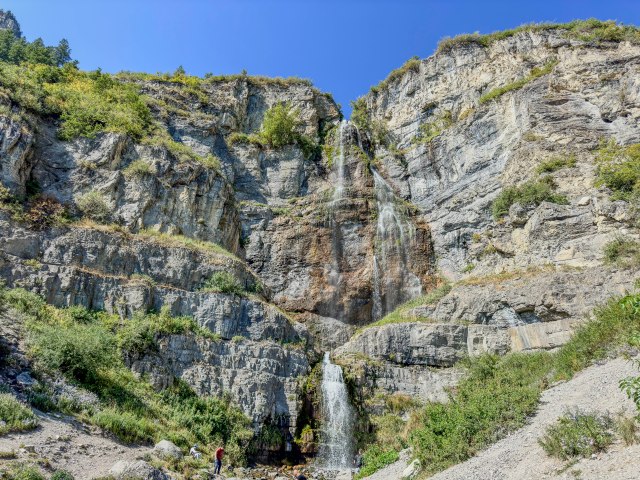
There was a lot of neighborhood walking on a daily basis, but as the weather cooled and the leaves began to change the mountain hikes called.  Another trip to Sundance called as did the hike to Stewart Falls.

The hike to Stewart Falls near the Sundance Resort was beautiful.

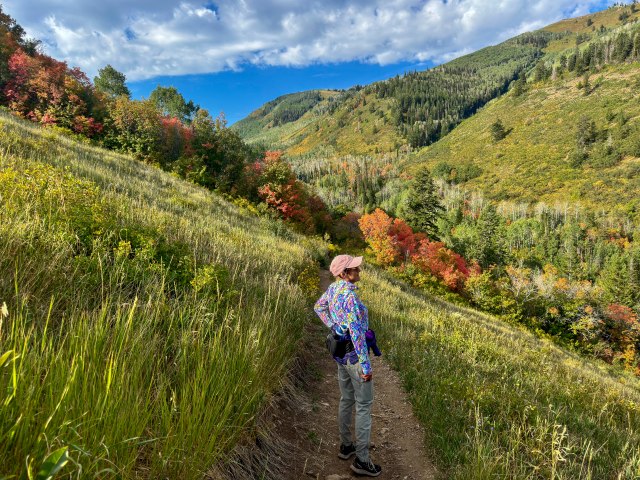
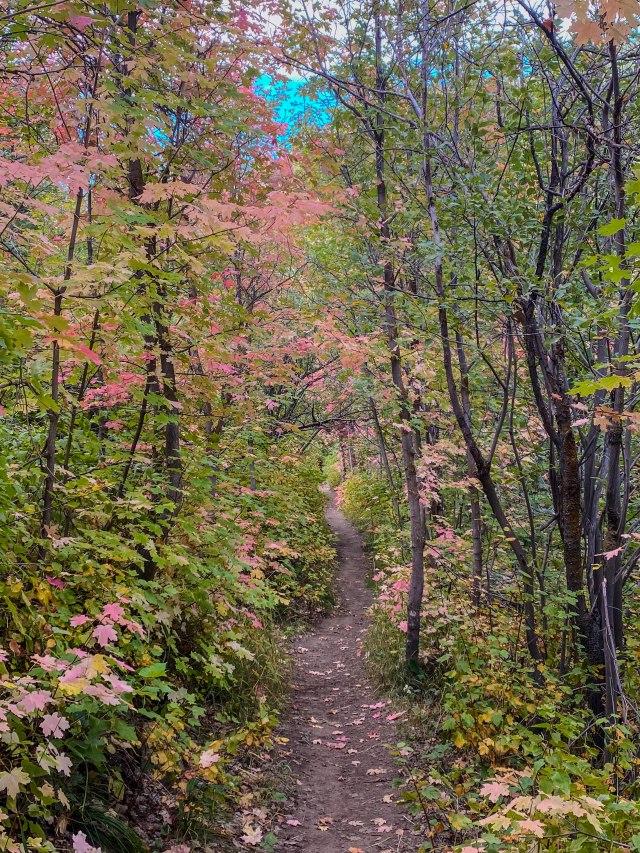
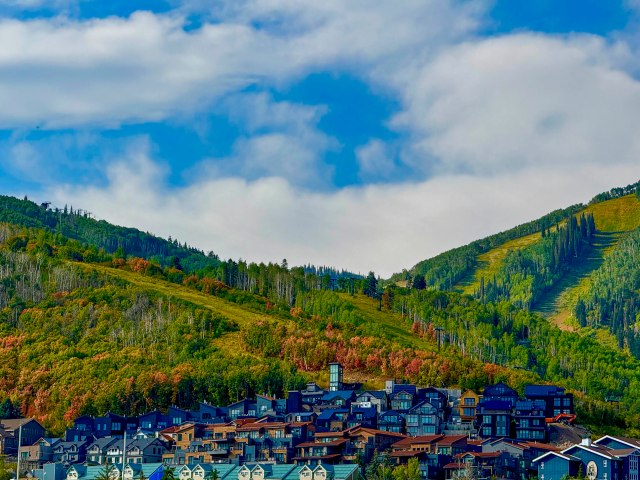
The mountains surrounding Park City really began to say “Autumn” just before leaving.  This called for the favorite hike there – Dawn’s Trail to Armstrong – starting at the Park City Mountain Resort.  This is about a 5 mile loop with 750′ elevation change taking one across some of the favorite ski runs with great views of Park City.  And this time of the year the leaves are beautiful – –

Our final mountain hike of the summer. Colors were beautiful.

Isn’t this a beautiful trail?!?

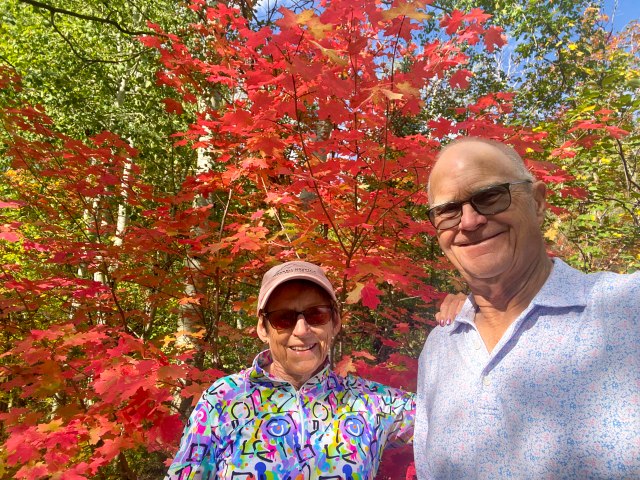
AND – a fun couple?!?

Until next year…goodbye Park City.


Think this was the cue to head home.  So – the nice, cool weather was left behind and Magic headed for 100+ degrees and home.  But, the summer travels this year gave us many fond memories of times with friends.  And that just can’t be replaced.

Grateful for friends and family – E&G

Cruising Southern Alaska

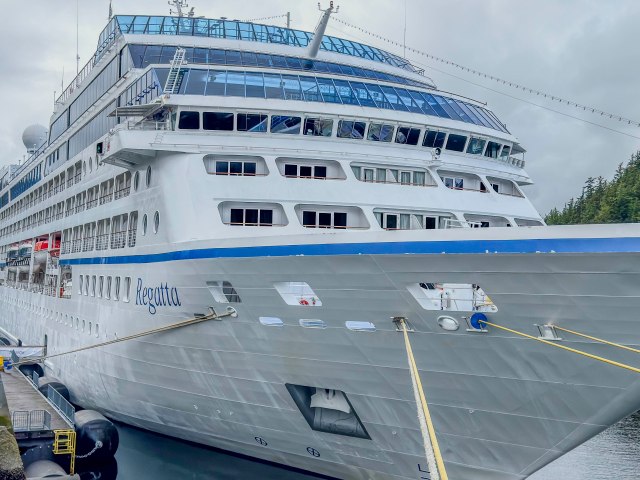
A great experience is to drive to the mainland portion of Alaska through Canada (including the Yukon Territory) and explore from Fairbanks to Seward, Homer to Valdez and beyond.  This driving trip had been done twice with several other trips flying up to specific areas.  BUT – never had the southern panhandle, accessible only by sea or air, been explored.  So, a new adventure was embarked upon with friends Linda, Chuck and Linda May via a cruise on Oceania’s Regatta.  Sailing day had finally arrived and the Regatta was waiting for us at Pier 66 in the Seattle Harbor.  Welcome Aboard – –

The Regatta – one of Oceania’s smaller ships.  (Yep!  That’s our cabin – those lower six windows.)

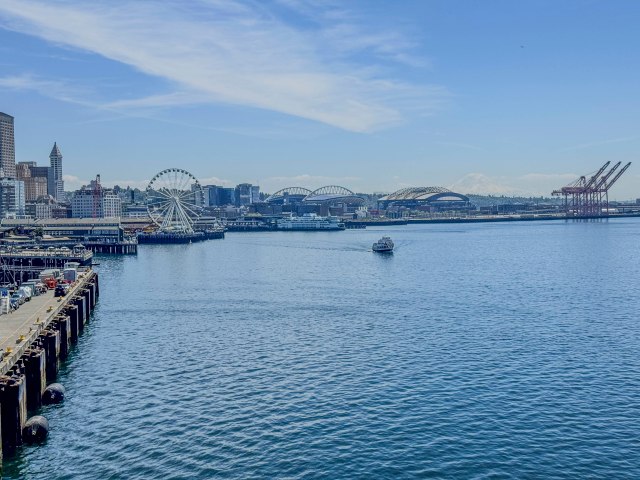
Goodbye Seattle.

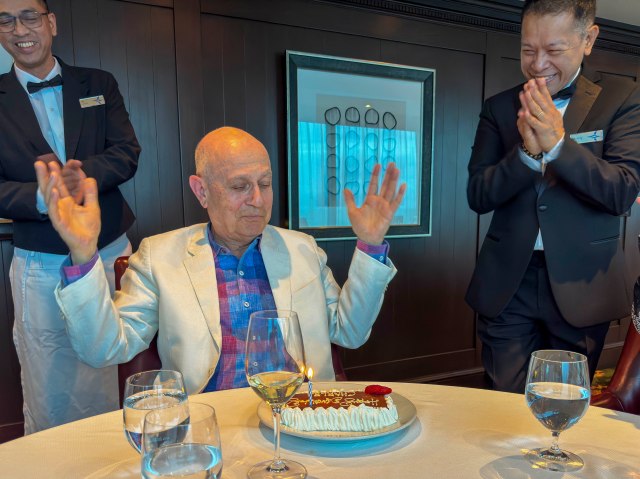
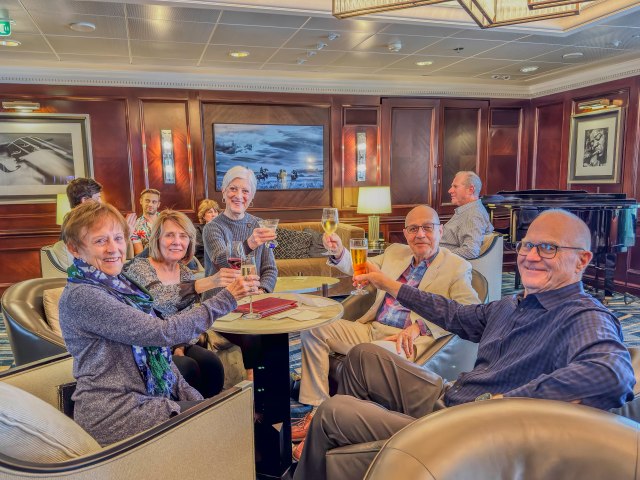
A surprise to us was that it was Chuck’s 75 birthday the day after sailing.  This was a wonderful reason to celebrate friends – –

Happy 75th birthday!

A birthday toast (E, Linda, Linda May, the Birthday Boy and G.)

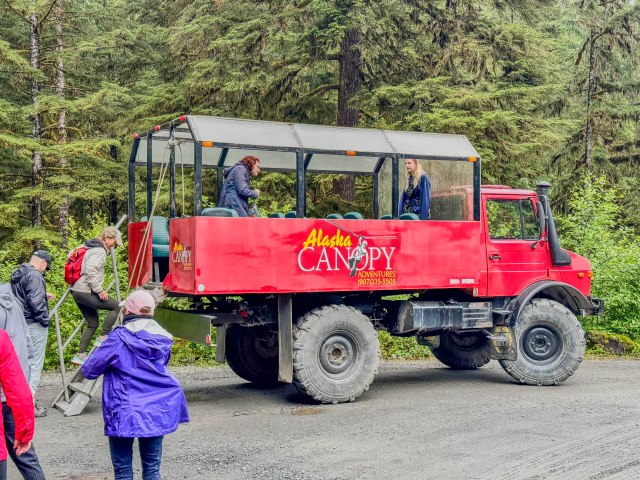
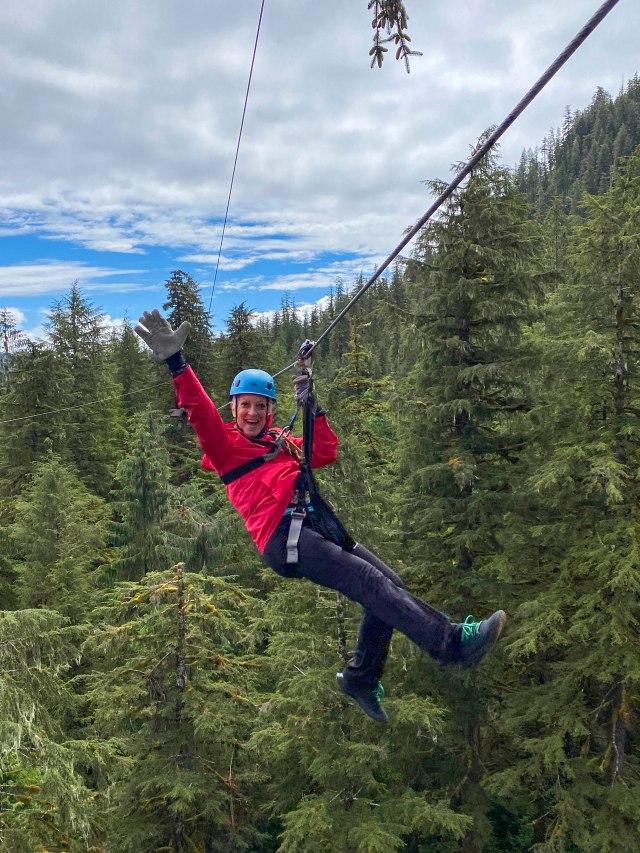
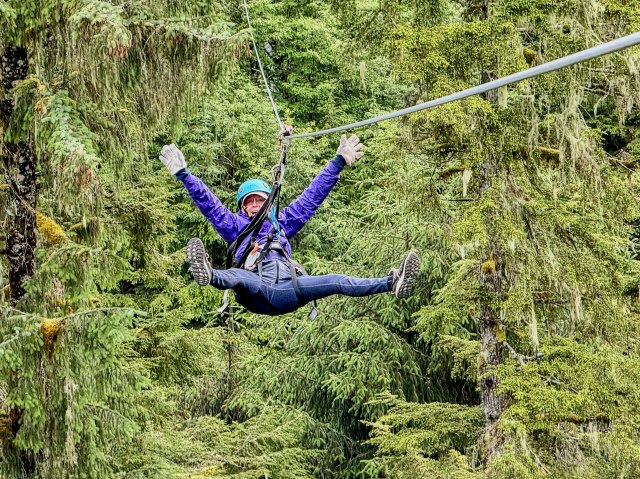
A days worth of celebrating got us all the way to Ketchikan, located at the Southern tip of the Inside Passage and the first Alaskan city reached when cruising North.  The town of Ketchikan was founded as a salmon cannery site in 1885.  However the Tlingit, Haida and Tsimshian people have lived in Southeastern Alaska for over 10,000 years and their arts and culture can be seen throughout the area.  Many excursions (or wandering on one’s own) can highlight this culture with visits to the Totem Heritage Center and other local museums.  Having explored such heritage in the past, the more radical adventure was chosen – Ziplining!!

Boarding transportation to the Zipline starting point.

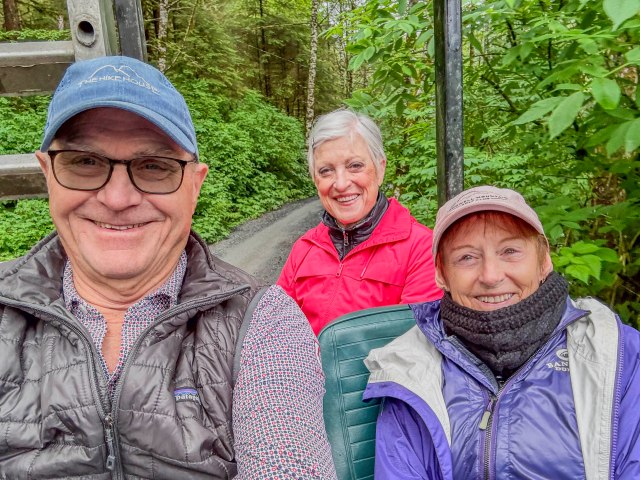
Friend Linda May joined us on this crazy experience.

Wheeeee.

Whoop whoop.

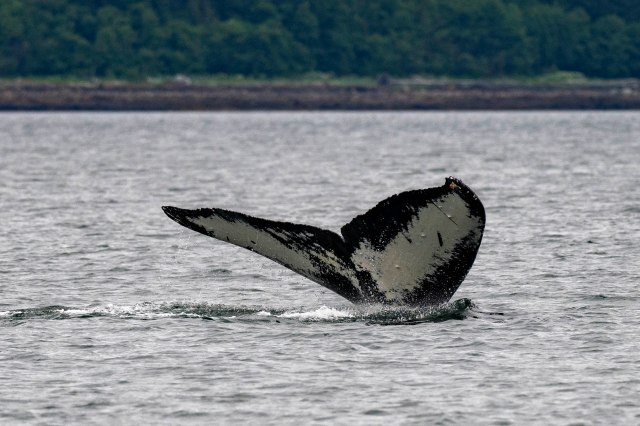
Thank goodness that was over!  Juneau, the capital of Alaska, was up next.  It is the only state capital of the United States that can only be reached by airplane or boat.  There is no road access to Juneau.  (Why we never drove here in our trips to Alaska!).  Juneau is also the first city founded after the purchase of Alaska by the United States from Russia, it became the territorial capital in 1906 and its state capital in 1959 upon statehood.  Again, less educational adventures were chosen while in this port – like whale watching and hiking to glaciers! So – off on a three hour tour – –

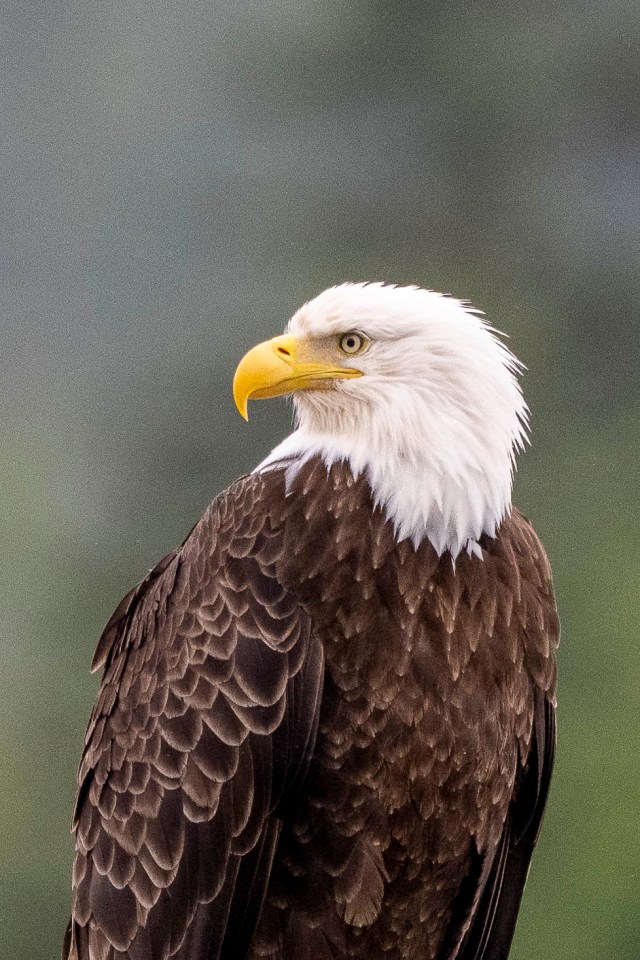
Eagles are everywhere.  This guy was the welcoming committee for whale watching.

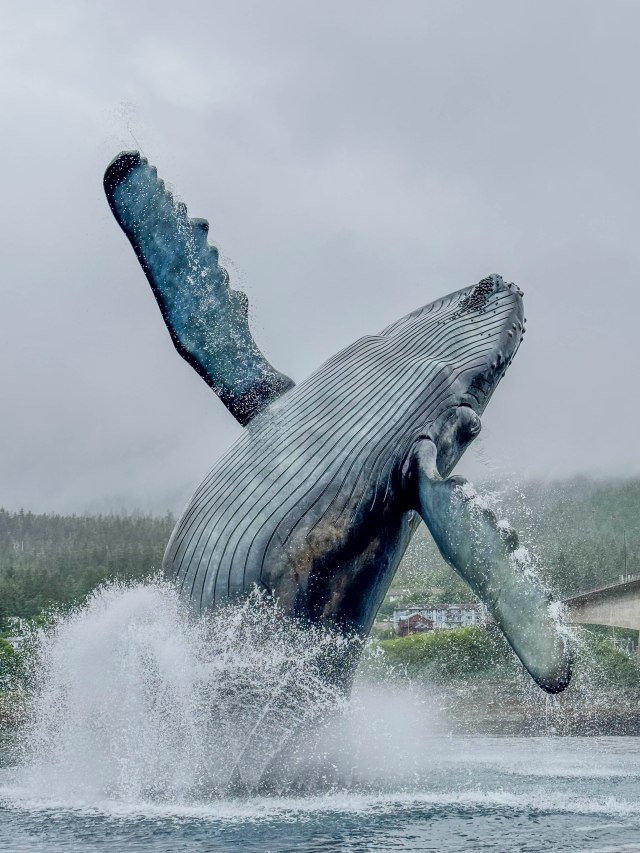
WOW..GREAT SHOT!! Oh, just Tahku – a life-size bronze sculpture of the humpback whale.

Here is the real thing..part of it at any rate.

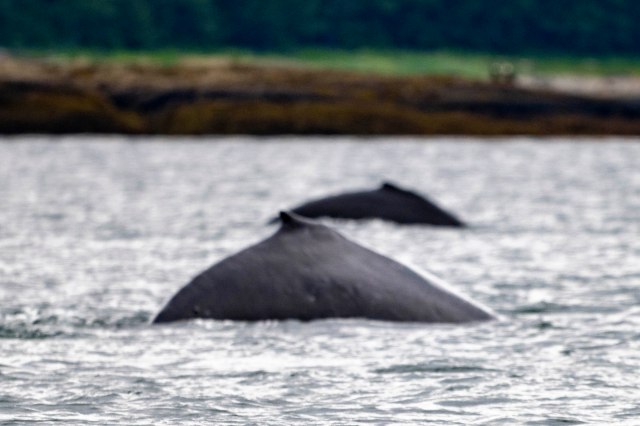
No high jumps this trip, but several pods.

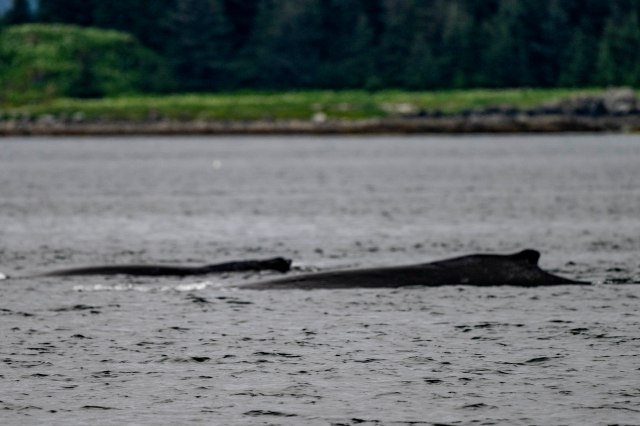
Another pair just cruising along.

Very fat and lazy sea lions sunning on a bouy.

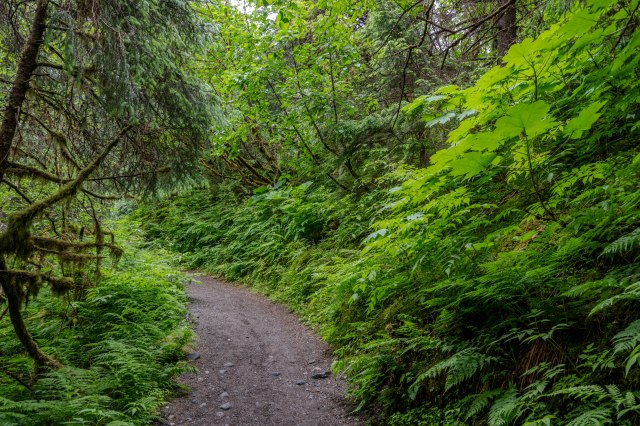
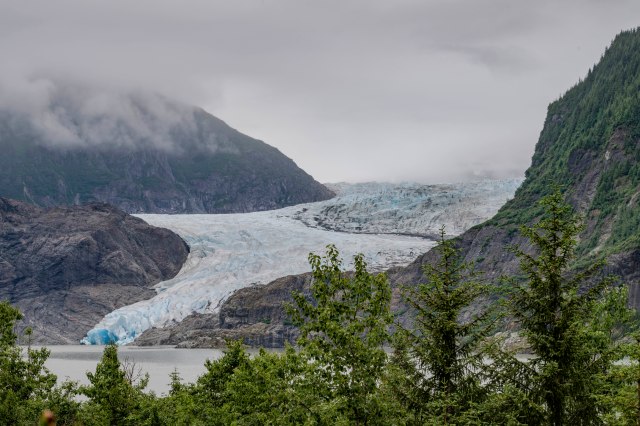
Now there was a little work involved in the next sight.  About a mile walk through the beautiful Tongass National  Forest (the largest national forest in the US) to one of Juneau’s most iconic sites – the Mendenhall Glacier.  This river of ice flows 12 miles from its source, the Juneau Icefield, and has a face that is 1.5 miles wide!  Unfortunately, it continues to recede, which is aptly demonstrated on the walk through the now existing forest.

Through the Tongass National Forest to see the Mendenhall glacier, which used to stretch this far.

And there it is!

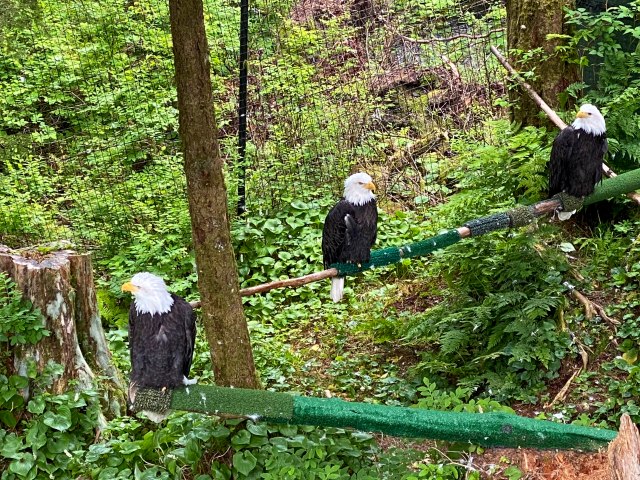
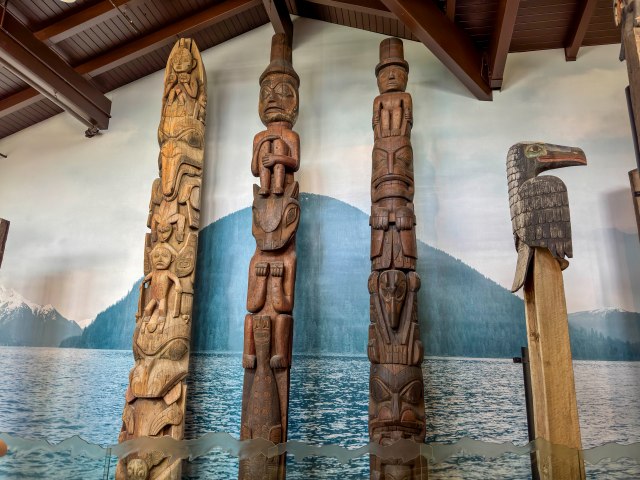
The sights in Juneau were TRUE Alaska and one could stay and see them over and over.  But, as always, ships sail away and a new port awaits.  Hello Sitka;-).  An island community – and the only Inside Passage community that fronts the Pacific Ocean – it is known for its Tlingit culture and picturesque remnants of its Russian heritage.  There was a little education here with visits to the Sitka Museum, where many historic Tlingit totem poles are exhibited, and to Saint Michael’s Russian Orthodox Cathedral.  But first, a raptor rehabilitation center where raptors that can be released back into the wild are trained to fly and hunt.  And, those that are too harmed to be released are given a wonderful habitat to live in as these are – –

Permanent resident’s of the Sitka Raptor Rescue Center. Their wings are much too damaged for them to return to the wild.

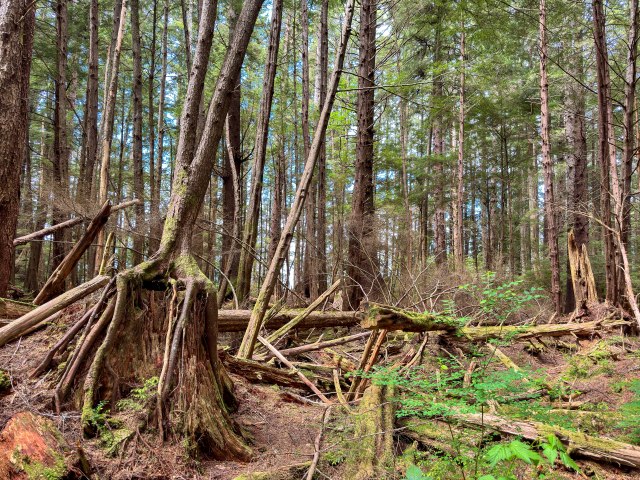
A beautiful and informative walk through the Sitka Historic National Park took us from the rehabilitation center to the Sitka Museum and Totem Poles – –

These trees in the Park were blown down by strong winds more than 100 years ago.

A few of the many 100+ year old Totems displayed in the Sitka Museum

One of several marinas in Sitka.

The walk took us right into downtown Sitka and Saint Michael’s Russian Orthodox Cathedral – –

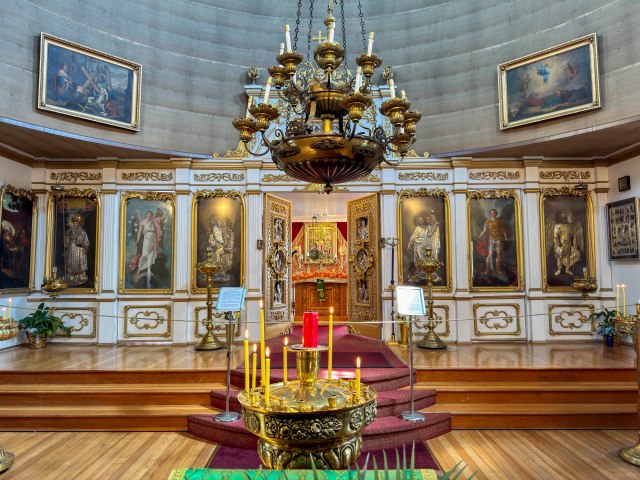
Inside the Russian Cathedral in downtown Sitka.

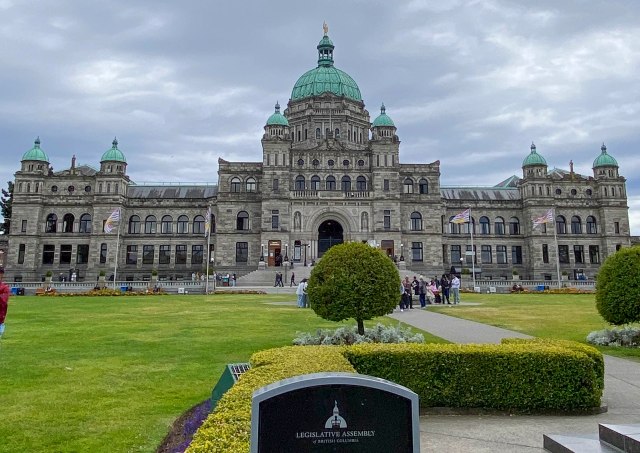
Time was winding down and only one stop remained – the capital of British Columbia, Victoria.  The city sits on the southern end of Vancouver Island with abundant parkland, several formal gardens and Victorian architecture from its British colonial past.  Two fabulous examples of this architecture are the Legislative Assembly building and the Empress Hotel (a National Historic Site of Canada).  The time here was quite short which allowed for a quick walk by the Assembly to the Empress for a little afternoon snack.  If time allows and reservations are made well in advance, high tea at the Empress is an experience.  So too, an hour or so trip out to the Butchart Gardens.

A wave to the BC Legislative Assembly building.

A seven day cruise is quite short, but it provides the ability to get a glimpse of the part of Alaska only seen from the sea.  And there is much history and typical Alaska beauty here.  For us – it was the opportunity to spend a wonderful seven days with friends and enjoy their company;-). Thank you to Linda, Chuck and Linda May for joining us and making this trip so special.  Soon its back on terra firma!

E & G – very grateful for friends and the ability to travel


Headed North with Beauty All Around

Time to head north out of Ridgecrest into some cooler weather and a few rounds of golf.  However, there was one last morning with the Grands (and Heather).  Something on our agenda with them for some time was Manzanar, a National Historic Site just north of Ridgecrest in Independence, CA (a lot of irony in that location!).

After the December attack on Pearl Harbor by the Japanese, President Franklin D. Roosevelt signed an Executive Order on February 19, 1942 allowing the Army to ’round up’ people of Japanese decent.  Ultimately, 120,000 people – US CITIZENS – were deprived of their freedom and sent to detention camps.  These citizens lost their businesses, homes, assets and at times the rest of their families due to no crime – but just because they were of Japanese decent.  10,000 of these citizens were housed at the abandoned town site of Manzanar, which the US Army turned into one of the detention camps.  Although many of those detained and their decendents support a “Let it not happen again” movement it does not seem that we ever learn;-(

After the war, the government removed most of the structures, buried gardens and removed guard stations.  The National Park Service has rebuilt several of the barracks, a mess hall, one of the women’s latrines and uncovered some of the gardens so that visitors can get a feel for some of the ‘life’ at these detention centers.  They have also created a visitor center in the main building (that was used as the center point for life during the detention period), which explains the history, creation and many of the human stories of Manzanar.  A Cemetery Monument, which was created by a Catholic stonemason and residents of Block 9, also remains.  Detainees attended religious services here during the war and today it is a focal point of an annual pilgrimage to the camp.

If one has not been to one of these detention centers, you should make one a stop in your travels.  It is truly a reminder of mistakes we have made in the past and one would hope not do so again.
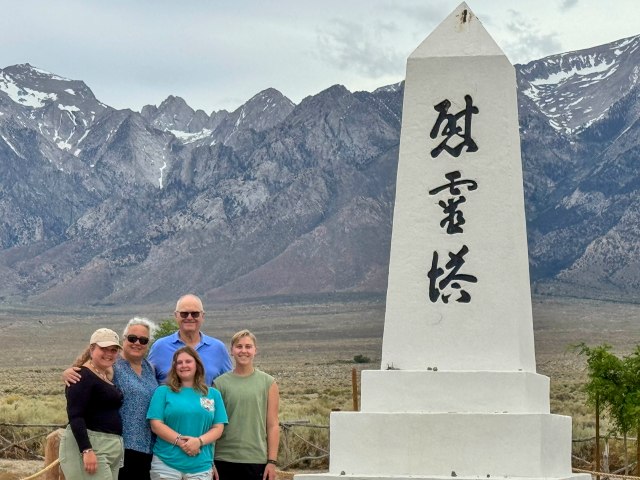
The Manzanar Cemetery Monument – the focal point of the annual pilgrimage of remembrance.

The gardens were started in 1943 by residents of the internment camp – for a little beauty.

Lone Pine is the closest town to Manzanar, and provided a good lunch stop before saying a final farewell and heading further north.
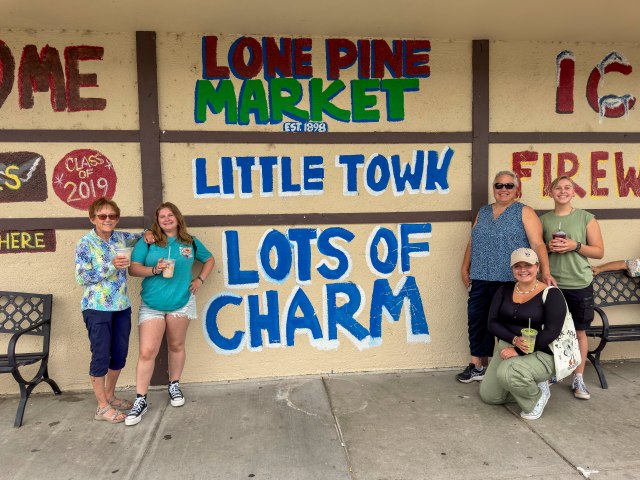
Really good ice cream at this market.

Let the summer travels begin.  Mammoth Lakes, in the Sierra Nevada mountains, provided several sunny, beautiful days beneath Mammoth Mountain.  Sierra Star Golf Course provided two great rounds of golf and a drive to Horseshoe Lake was a highlight.  Scenery was magnificent.
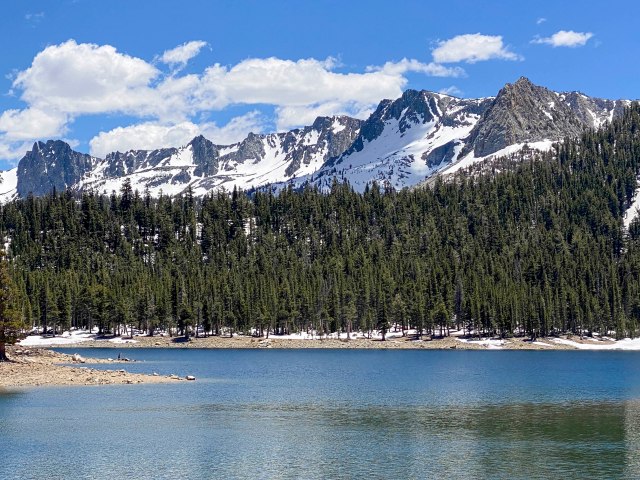
Horseshoe lake in the Mammoth Lakes area.
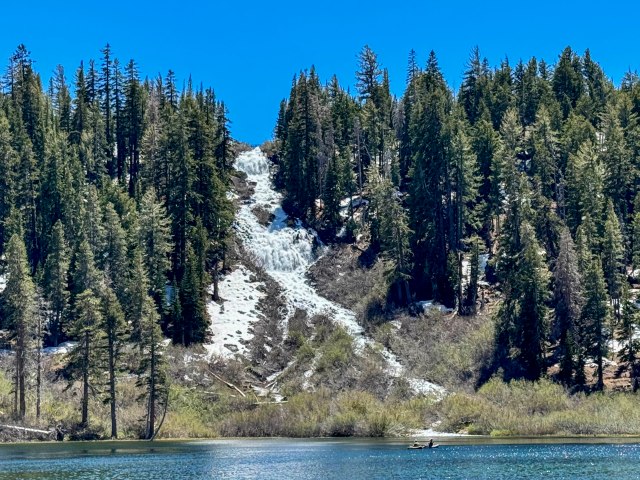
The source of this waterfall is the small dam at Horseshoe Lake.

Klamath Falls, OR was the next stop.  It is an access point to Crater Lake, NP and an easy drive from Ashland and the Oregon Shakespeare Festival.  Again the weather and scenery was hard to beat.  Running Y Ranch was to be ‘home’ for four days.  It provided a great concert in a beautiful setting the night of arrival and two great days of golf.  BUT, their only restaurant could use some help!  Thankfully, there was a delicious Thai restaurant – Oasis Thai – in Klamath Falls;-)
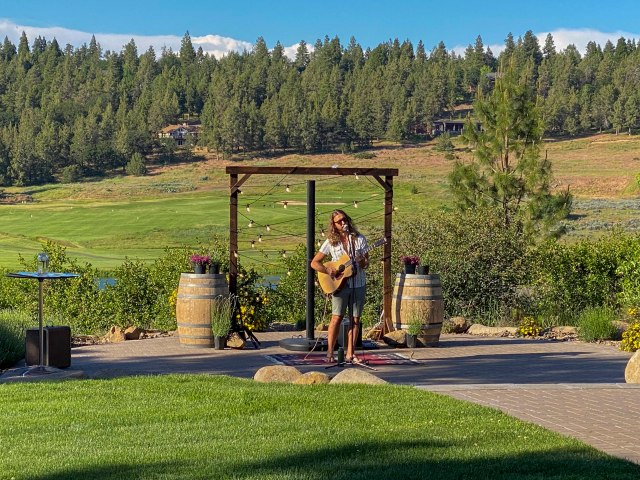
Spent our first evening at the Running Y Ranch enjoying music and barbeque.

Moore Park in Klamath Falls provided good hikes – and GOLF?!?!

Working our way north to Seattle, next stop was Sisters, OR.  Thanks to friends – Bill & Nancy – a lovely townhouse was home base for five days.  Sisters has it all for the adventurer – hiking, biking, golf, skiing in winter, good restaurants and lots of coffee shops.  And, if you want the big city – Bend is just 20 minutes away with a great Thai restaurant (Noi Thai).  But, beware – not sure if aliens also inhabit the city – –
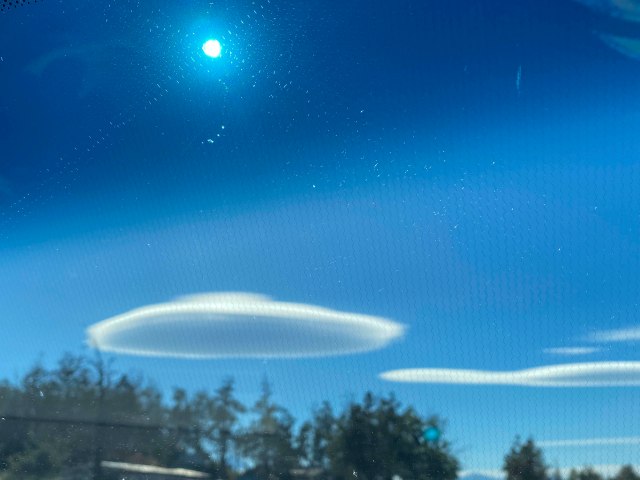
Welcome to Sisters.  Cloud or spaceship?
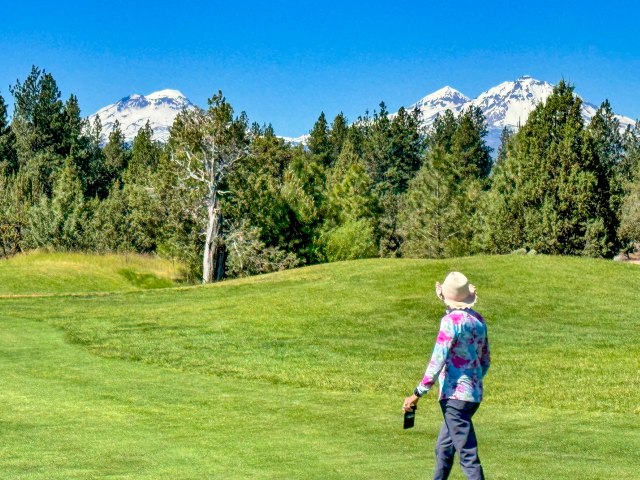
Nice view of the Three Sisters peaks (Faith, Hope and Charity) from the golf course.

This course liked E a lot as it gave her a birdie;-)

Finally Seattle.  What a beautiful city!  It is surrounded by the peaks of the Olympics, Cascades and Mt. Rainier.  There is water everywhere – Puget Sound, Elliott Bay and Lake Washington.  And the attractions are endless – the Space Needle, Chihuly Garden and Glass, Discovery Park, Museum of Pop Culture, Olympic Sculpture Park, Pike Place Market, Seattle Great Wheel, Washington Park Arboretum, Japanese Garden, Washington University campus, Microsoft campus, etc., etc., etc.  How to get to it all in four days?!?!?

Paul Allen’s Museum of Pop Culture (MoPOP) is as funky in as out!  The complex was designed by Frank Gehry and seems to be a fitting backdrop for rock memorabilia from Bob Dylan to grunge-scene heavies.  There are music, science fiction and pop artifacts.
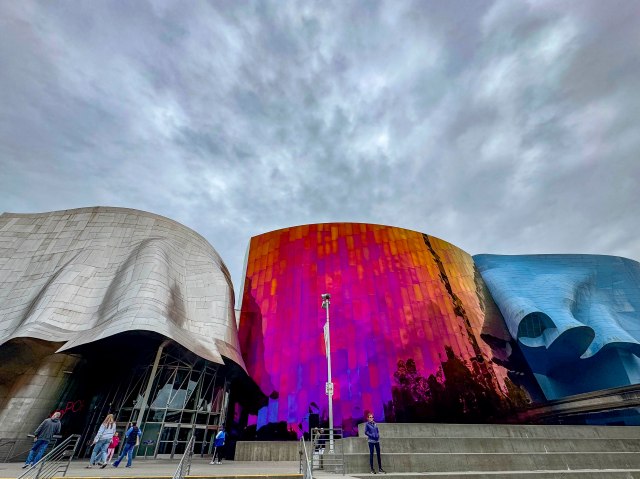
Frank Geary’s architectural creation is strange looking from ground level….
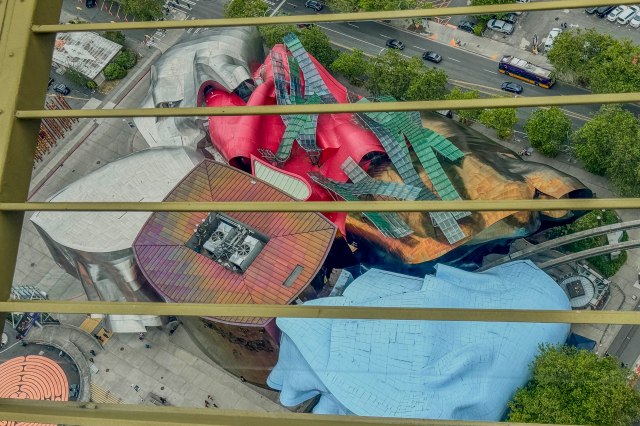
….and even stranger from atop the Space Needle – it looks like a heap of trash!
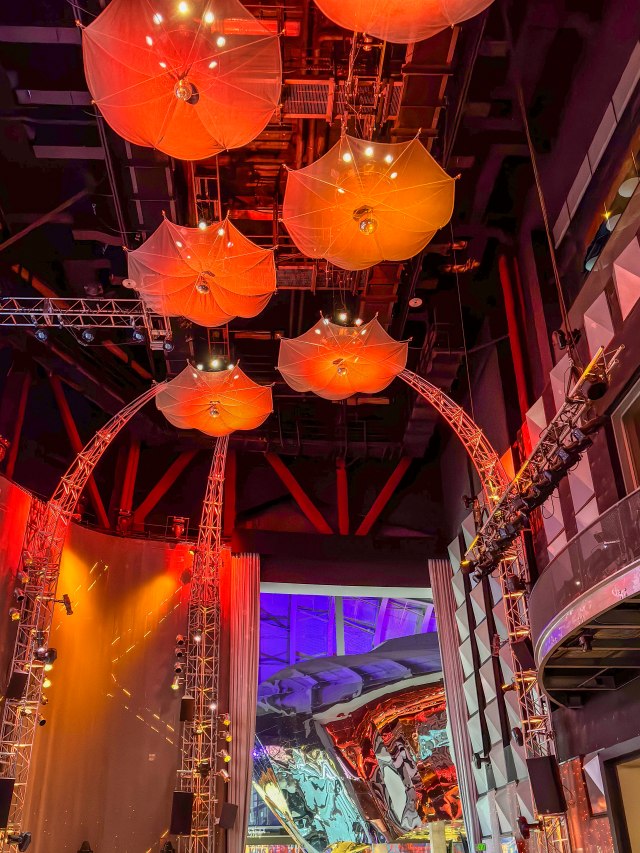
The first large gallery entered in MoPOP was quite colorful and eclectic.
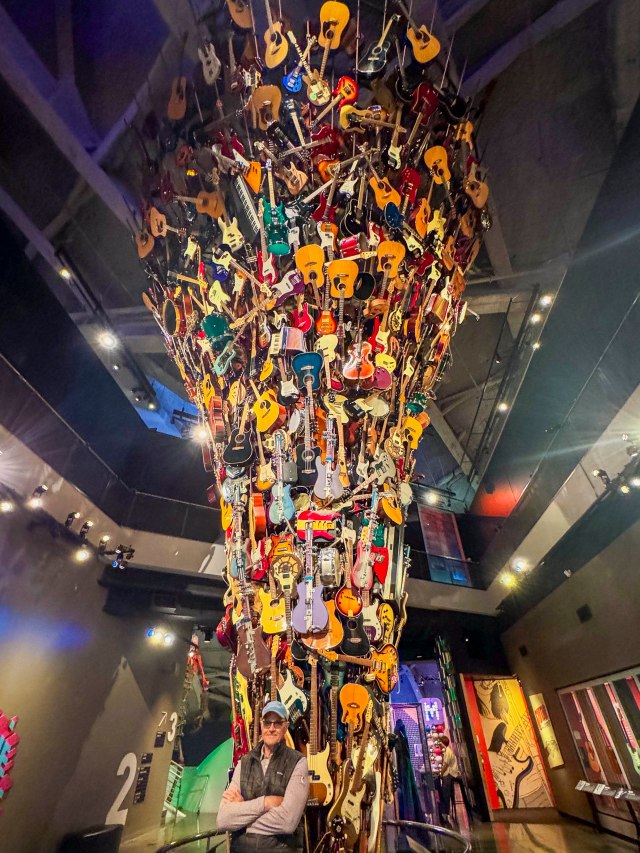
Gary is almost invisible below the large stack of guitars.

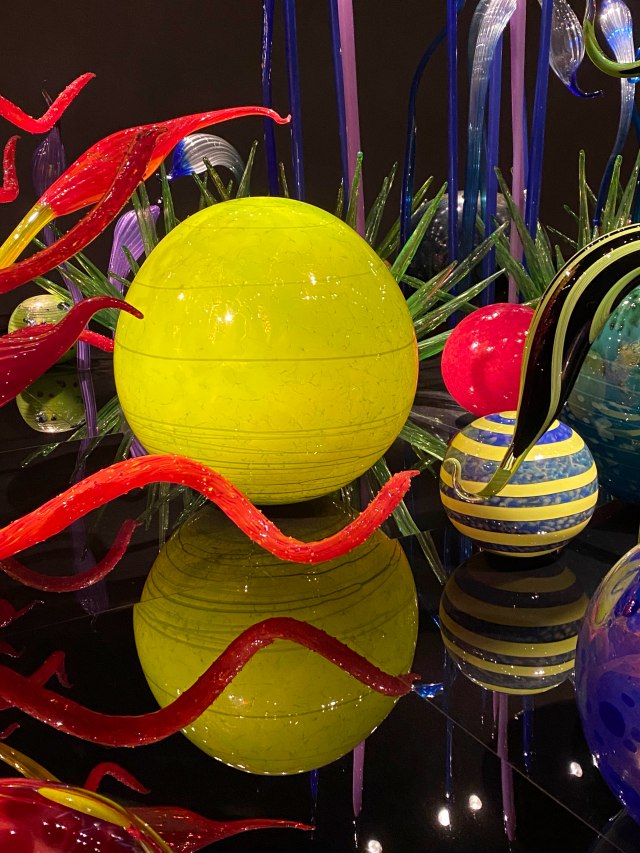
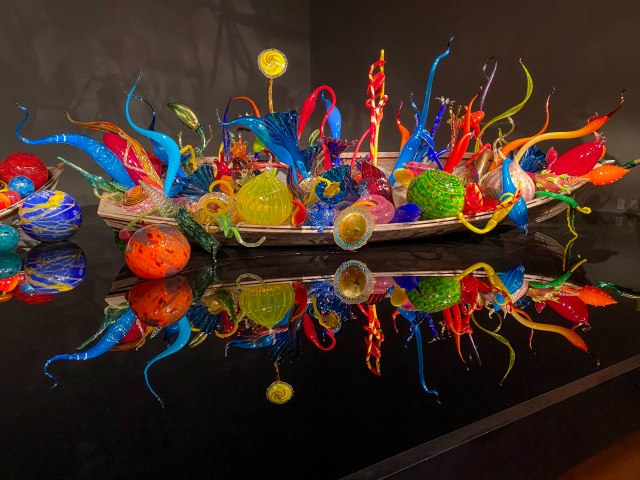
Next door is a quite different scene – Chihuly Garden and Glass.  The Museum traces the artist’s early influences of Native American Northwest Coast baskets and Pendleton blankets (exhibiting his collection of these) to the colorful towers and installations of glass he is known for today.  There are eight galleries displaying different types of installations, a 40-foot tall Glasshouse and an outdoor garden.  A true delight for the senses.
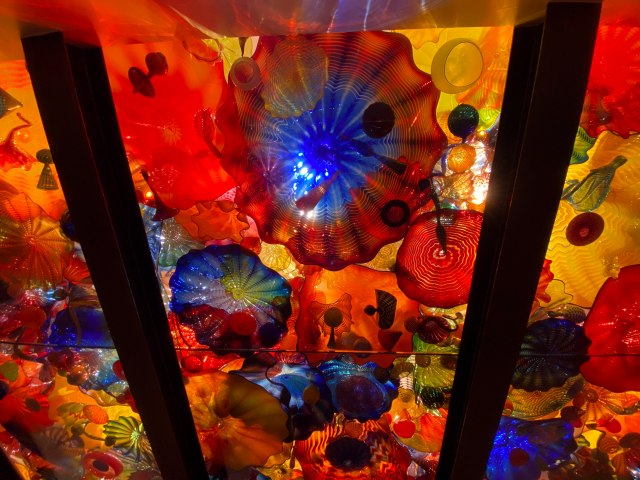
The designs and colors of Chihuly’s glass creations are spectacular – as this ceiling demonstrates.
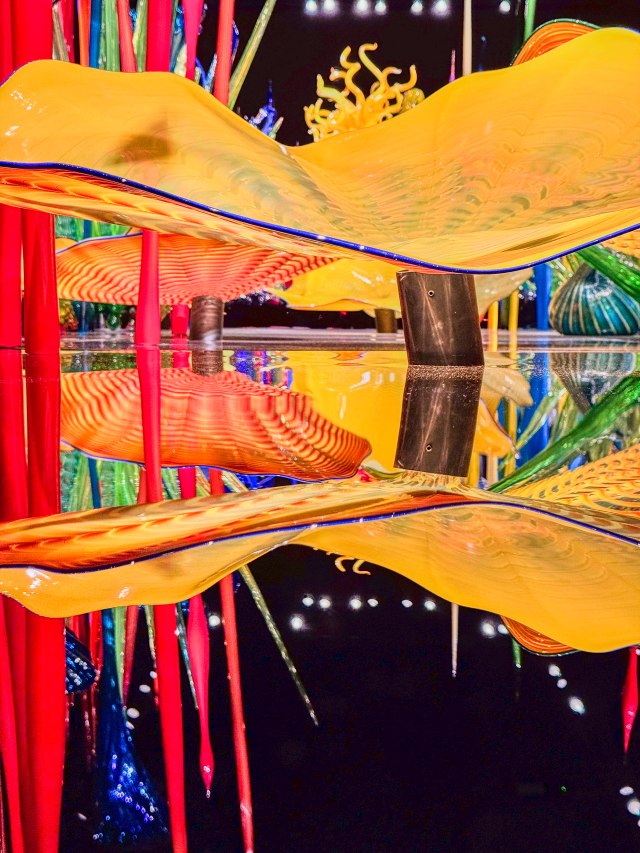
Many of the displays are set up to get incredible reflections of the pieces!
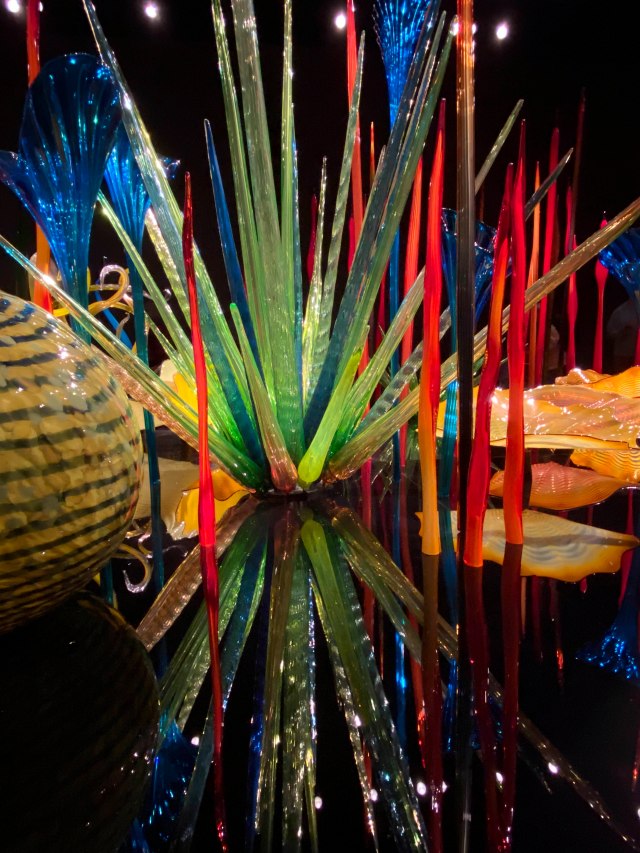
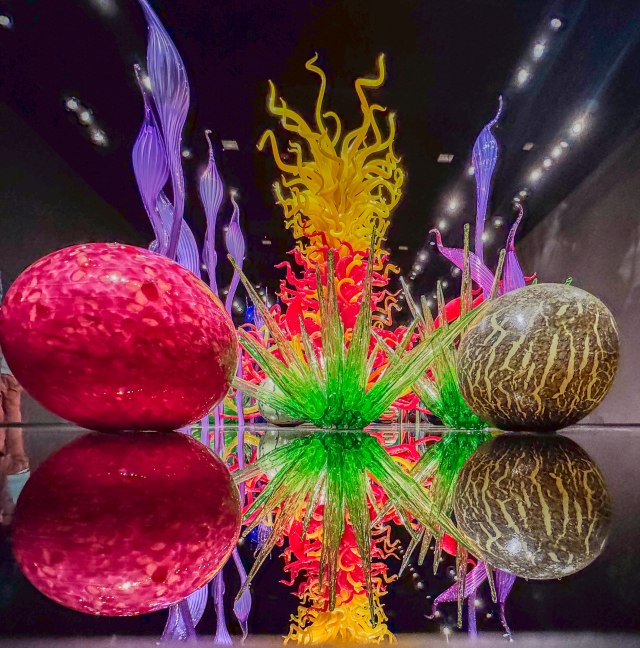
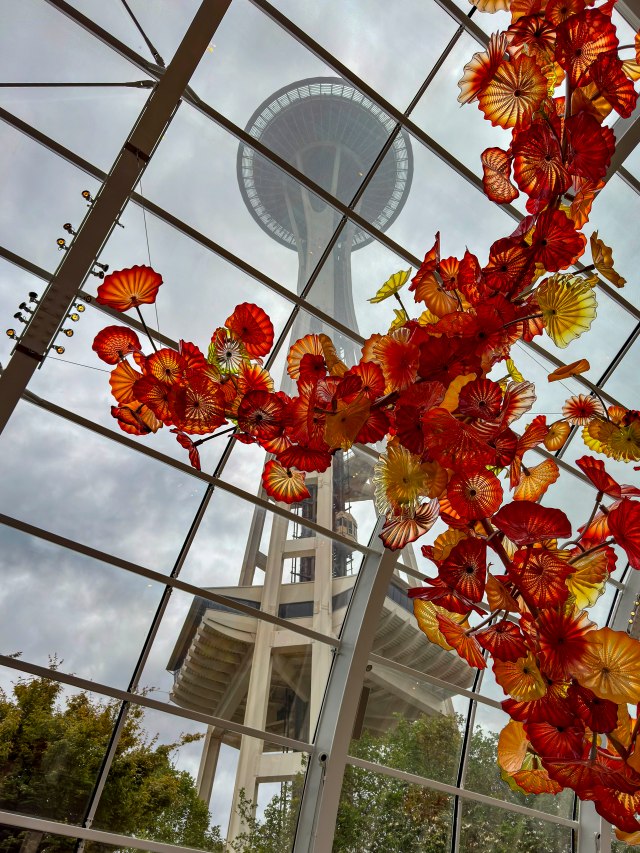
View of the Space Needle in the Glasshouse.

Maybe the next stop should be the Space Needle?!?!  S0 – up the 605′ for the 360 degree view of Seattle and the surrounding area.  Seattle’s most iconic building was built 60 years ago for the 1962 World’s Fair – and it was built in less than a year!  It takes less than a minute to get to the top – and what views one has – –
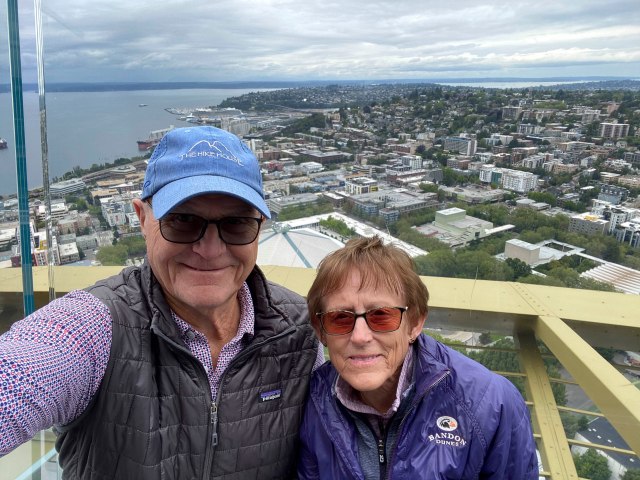
Views from the Space Needle are awesome.
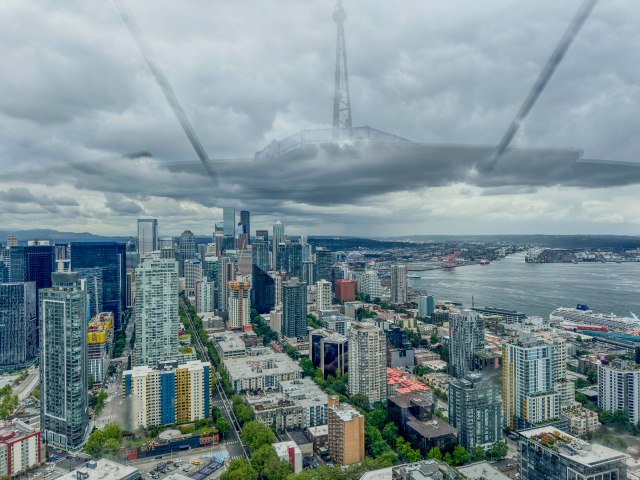
Reflections on the Space Needle’s windows make this shot seem other worldly. Reminds us of scenes from Independence Day.
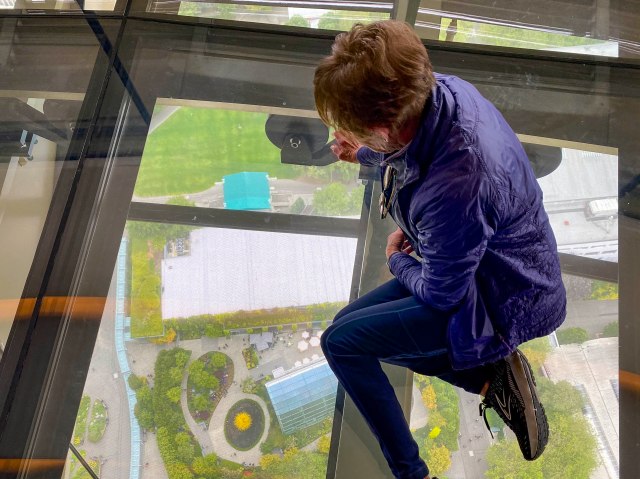
A view of the Chihuly Garden from the Space Needle glass floor.

Pike Place Market.  Dating back to 1907 when the city issued permits for farmers to sell produce from wagons parked at Pike Place in response to anger over rising food prices.  It has grown from that to more than 250 business, including 70 eateries.  It comes to life each morning at 6:30 AM with strumming street musicians, flying fish AND the very first Starbucks.
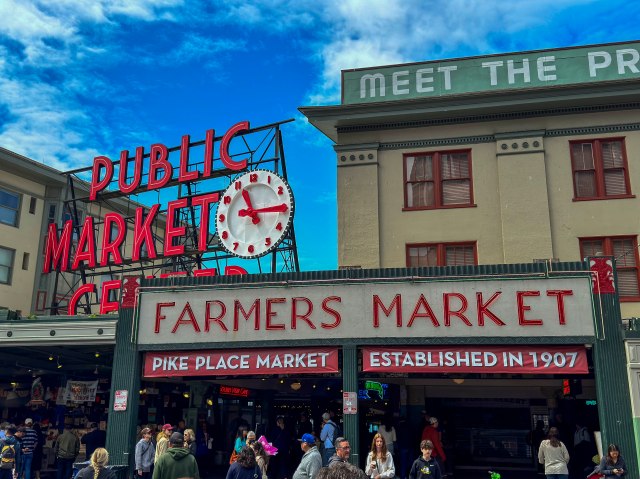
Pike Place Market is a busy, happening place. Fun to wander.
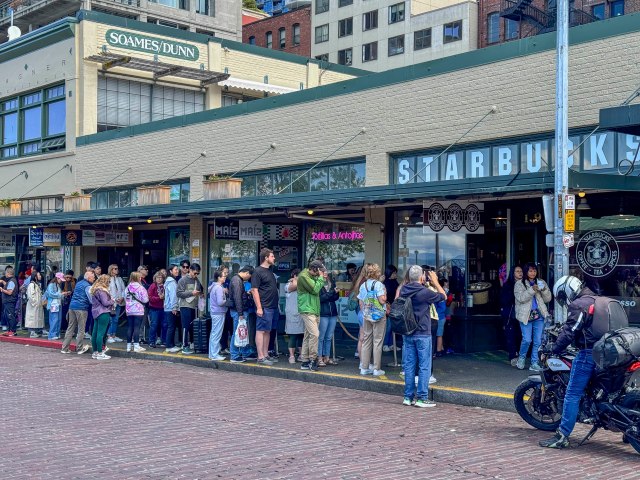
A block long line to get drinks from the original Starbucks.

Just a mile down the road is the Olympic Sculpture Park, an outdoor branch of the Seattle Art Museum.  This green space features native plants and walking paths that wind past larger-than-life public artwork.
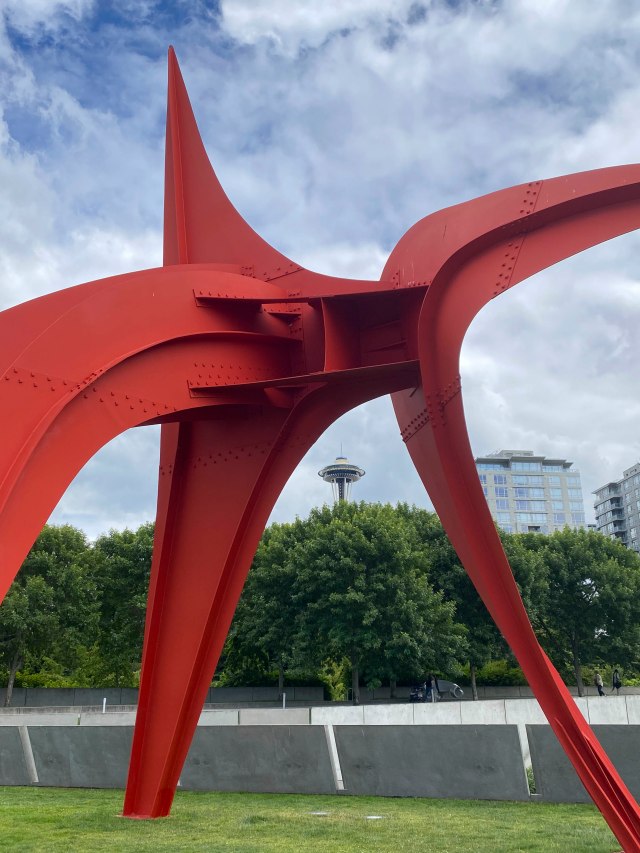
Another view of the Space Needle, this time from the Olympic Sculpture Park.

Sometimes one appreciates the quiet and serene only after the hustle and bustle has been experienced.  In the Seattle area that quiet splendor can be experienced at the Washington Park Arboretum and the adjacent Japanese Garden;-).   Although the area had several iterations, in 1924 the University of Washington and Seattle Parks reached an agreement where Seattle Parks would retain ownership of the land and the university would own the plant collections.  They collectively hired the Olmsted Brothers’ firm to create a master plan.  A proposed “Azalea Way” was to be one of the greatest displays of flowers in the world to include Japanese flowering cherry trees, dogwoods and rhododendrons.  Today’s 230 acre ‘escape’ also provides many miles of walking/hiking trails.  Visit on a clear blue sky day and nothing could be better – –
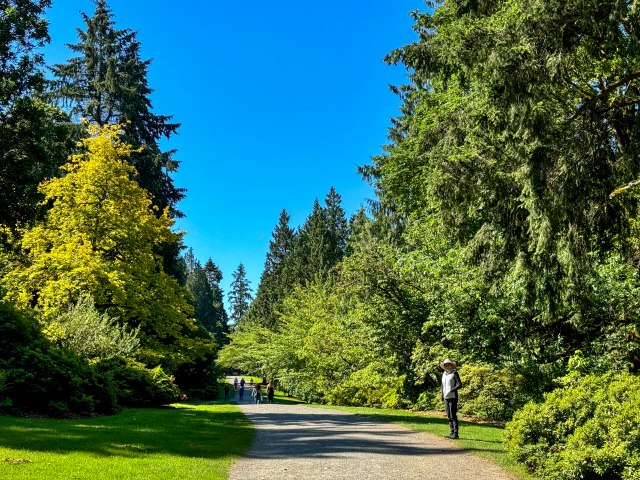
Off on Azalea Way.

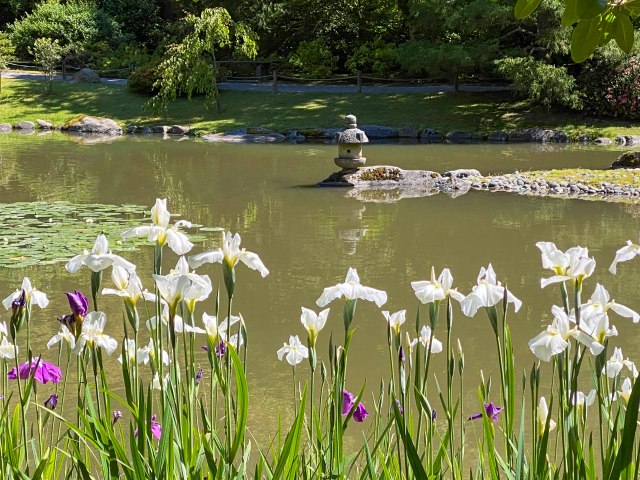
About a mile down the path, one can take a slight diversion to the Japanese Garden.  While the Arboretum is part of the Park system, and therefore free, there is a $10 admission for these Gardens.  But, this is one of the finest Japanese-style gardens outside of Japan and another tranquil sanctuary tucked within the arboretum.  Gardens in Japan have long been regarded as an important art form that’s essential to life.  (Return to the beginning of this post and revisit the gardens created by the Japanese detained at the interment camps – a bit of their ‘normal’ life.). This particular garden features a style known as a stroll garden.  Following a winding path around a central pond, the visitor journeys through the varied landscapes of Japan – mountains, forests, waterfalls, rivers and lakes.
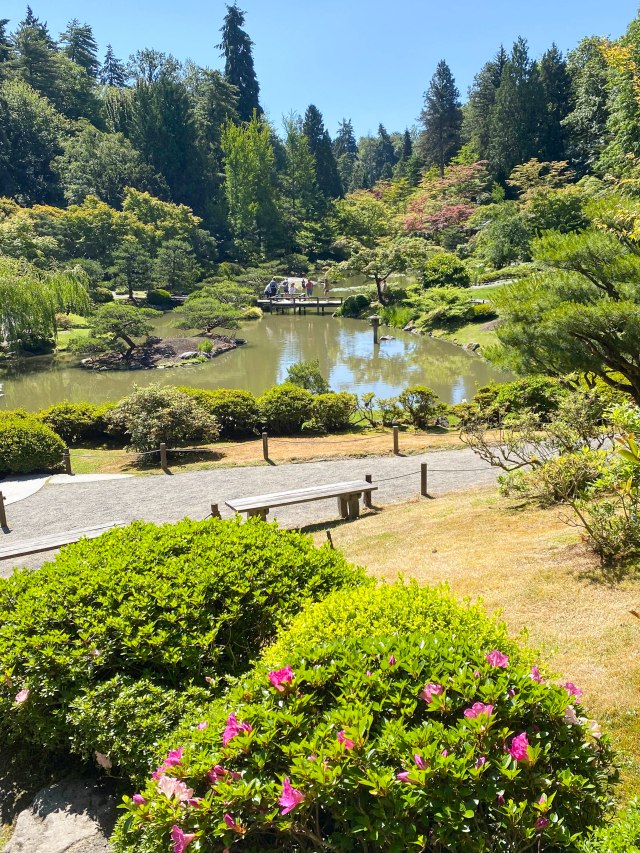
The lake at the center of the Japanese Gardens.
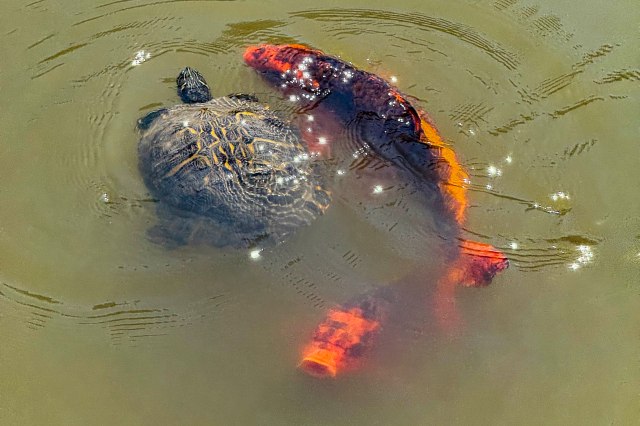
The koi were not happy about the turtle “invading” their pond.
.

After a nice, calming stroll about the Gardens and Arboretum, one can cross the 520 freeway and be back in the hustle and bustle of the University of Washington scene.  This is a stunningly beautiful campus with buildings that look like they could have been the campus for all the Harry Potter films!  And it sits just above Washington Lake with a football stadium that looks like it could be folded up like an envelope to wait for next season;-)
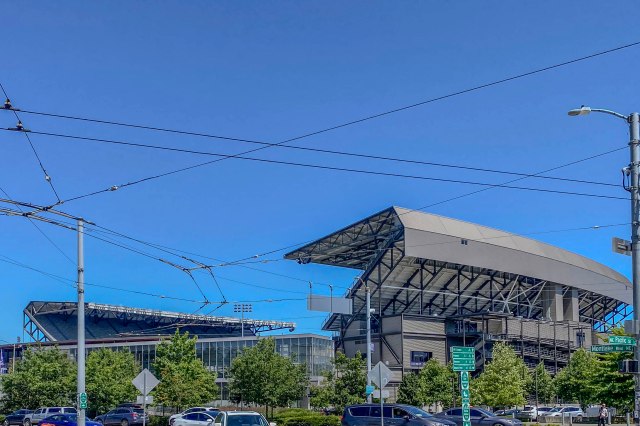
The University of Washington football field grandstands.

The Residence Inn – Bellevue has been home for the last four days (quite adequate, just aged).  The location is fabulous in a treed area close to freeway access and anything else necessary – even the Microsoft campus.  It’s 8 million square feet of office space employs 50,oo0 employees and energizes the housing market for miles around!  Also the construction industry as it continually adds office space as it grows.  The grounds were pretty interesting to wander around from the older West Campus to the newly created East Campus – accessed across the freeway via a quarter mile stunning covered bridge.   It truly is a city within a city with all types of stores, markets, service industry locations, spas, gyms and, of course, Starbucks included in the ground floors of the multitude of office buildings keyed for only employee entrance.  Oh, and there is a Visitors Center with a store and history museum.
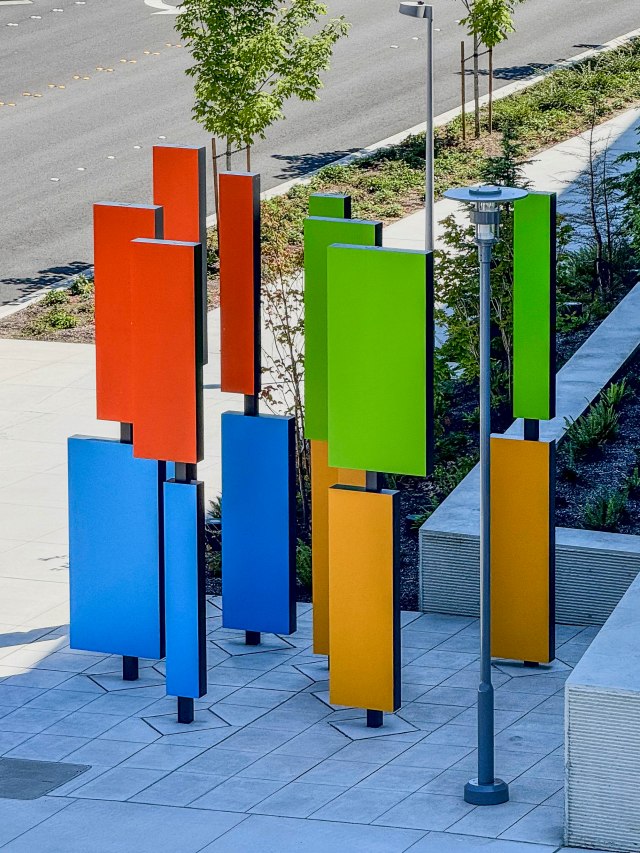
Microsoft logo everywhere on the many blocks of the HQ campus….
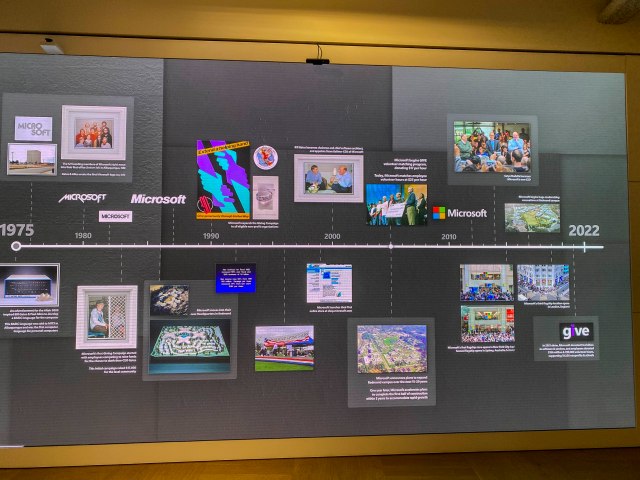
…where there was a good presentation of the company’s history in the Visitors Center.
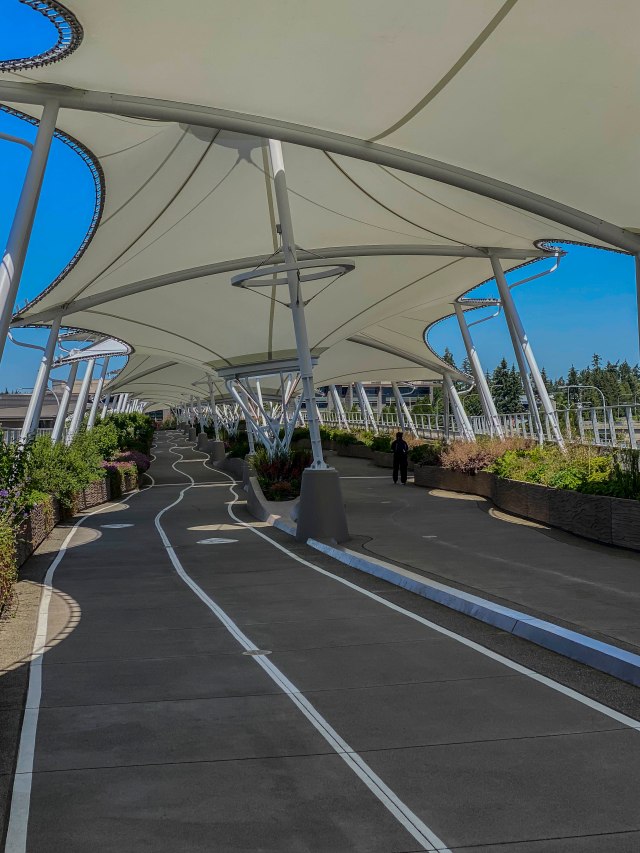
Amazing bridge connecting the West and East campuses. Beautiful design.

Clouds may frequent the Seattle skies – but several of our visit days were beautifully warm and clear blue.  This provided fantastic views of Mt. Rainier 88 miles away!
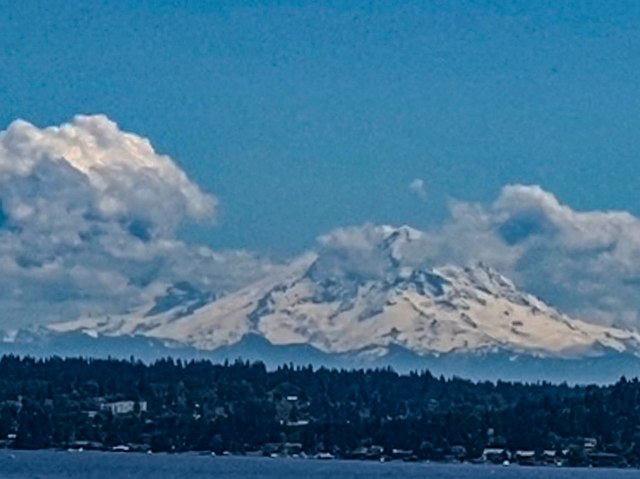
Mt Renier towers over Seattle – even from 88 miles.

And with all these adventures documented, it is time to pack up and board a ship for an Alaska cruise.  What a fun filled four days!

E & G – Happy to have finally really experienced Seattle – a great city with lots to offer;-)