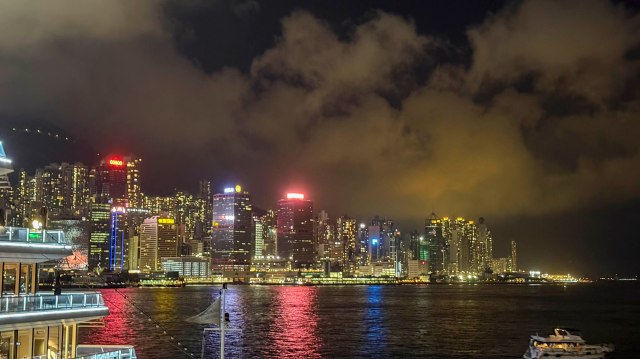
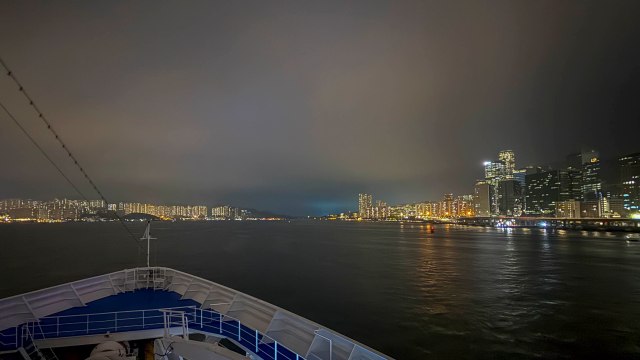
Hello Australia

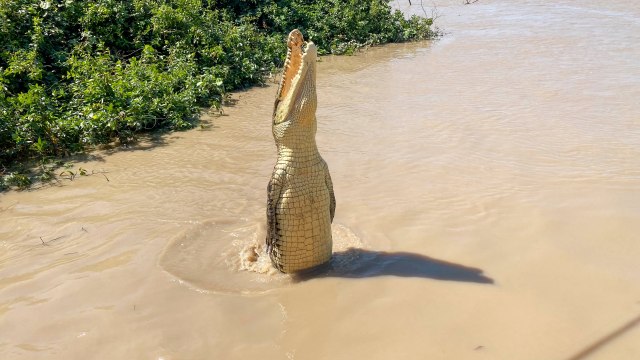
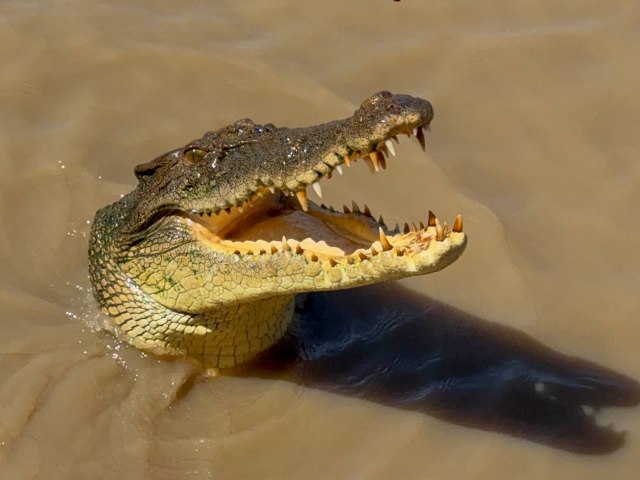
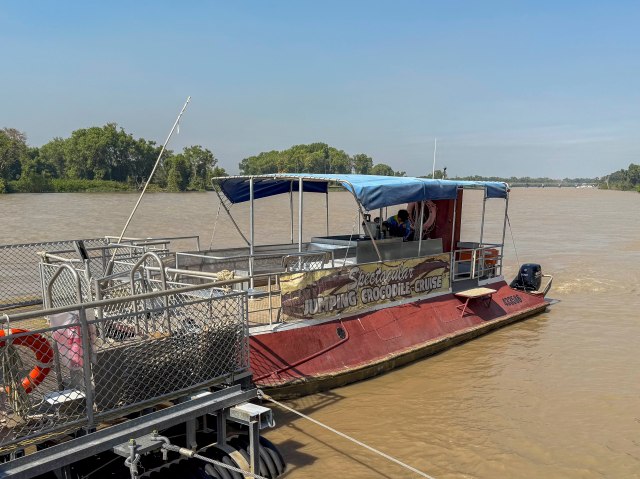
Welcome to the land of “the hard living and hard drinking” – “where men are men and women are tough” – Australia!  Darwin might be one’s introduction to this laid back country.  Named for Charles Darwin, who explored here, did research here and ultimately resided here, it is the capital of the Northern Territory and sits on the northern coast of Australia.  After the various jam-packed countries of Asia it is a welcome relief.  Darwin has a population of only about 200,000 people, no scooters, no traffic and lots of beer!  In fact – it is dubbed “the Beer Drinking Capital of the WORLD”!!  So, let’s have a brew and head up to the Adelaide River and watch 10’/2,000 pound saltwater crocs jump at us for food;-)

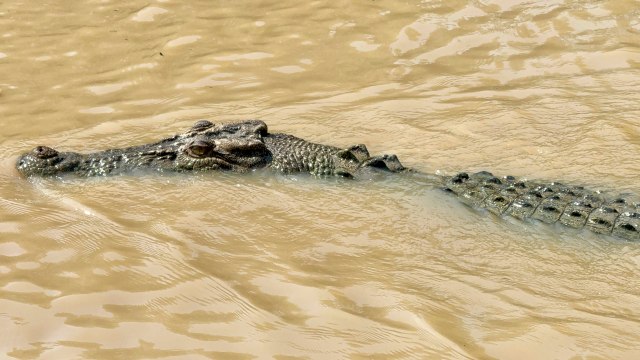
We’re going in that?!?

Keep swimming dude.

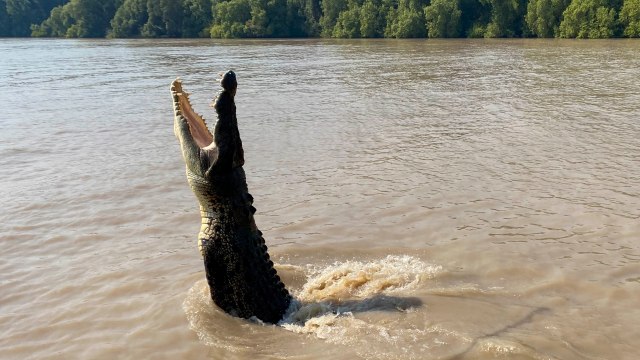
Thank goodness – the larger crocs can’t get as high out of the water…

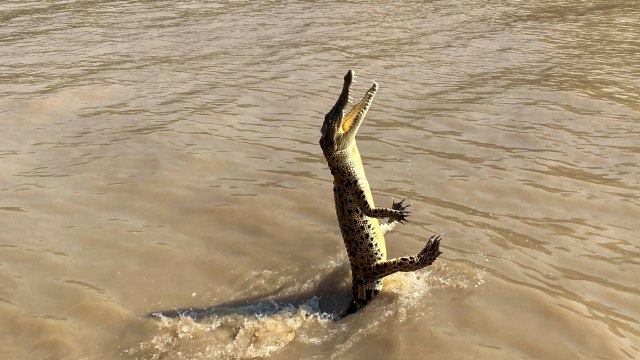
…as the younger smaller ones.  Weeeeee – this is FUN!

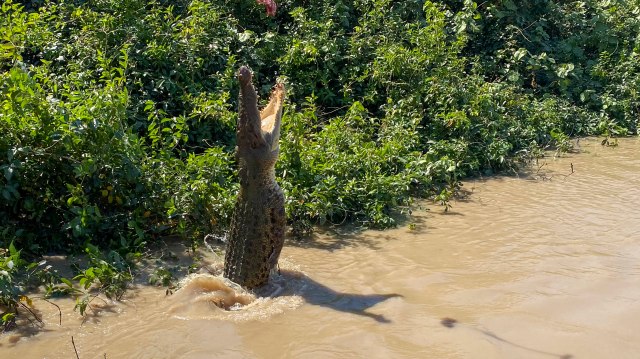
This guy was a pretty good jumper – for a BIG guy.

Guess what these teeth can do?

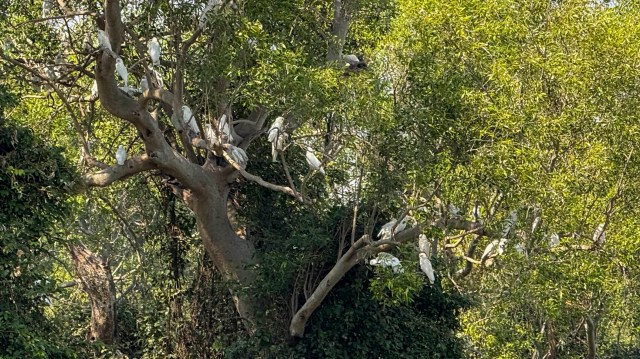
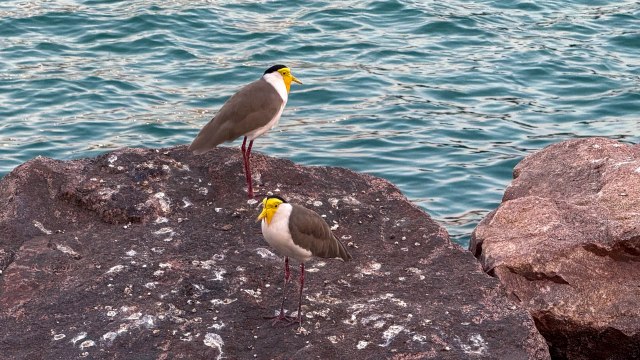
It’s not all about the crocs.  There is a lot of wildlife in the area – particularly birds.  And, lots of them.

Lots of corellas, a subgenus of the cockatoos (no yellow headdress).

These masked lapwings are native to Australia.

If on a cruise, the dock is right at the Darwin Waterfront where you can eat at one of many restaurants, catch live music, swim, shop and have delicious gelato.  It is also a very pleasant one mile walk to the center of town for galleries, more restaurants and shopping.  Most of the downtown area has been rebuilt since 1974 when cyclone Tracy completely wiped out the city.  A very quiet community but a good introduction to Australia.  However, as always, one must move on – –

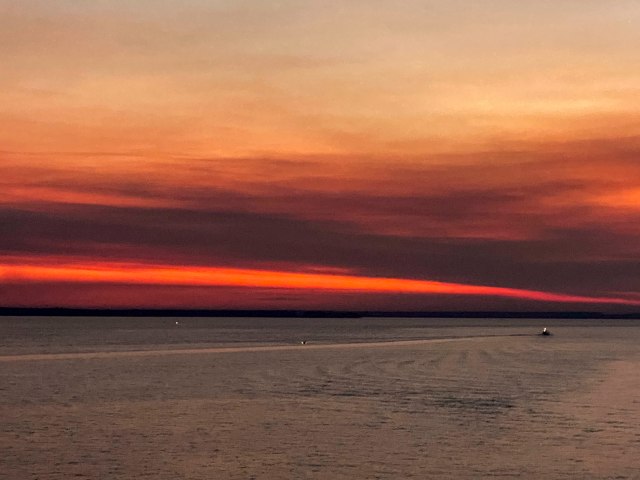
Another goodbye with a beautiful sunset (complements of the bush fires in the area).

Excited to get more glimpses of Australia!  Unfortunately, we hit Thursday Island on a Monday and they turned us away;-). (Actually, the seas were too rough for the tenders.)  So – bring on the Great Barrier Reef.

E & G – eager to check a few more sights of our list

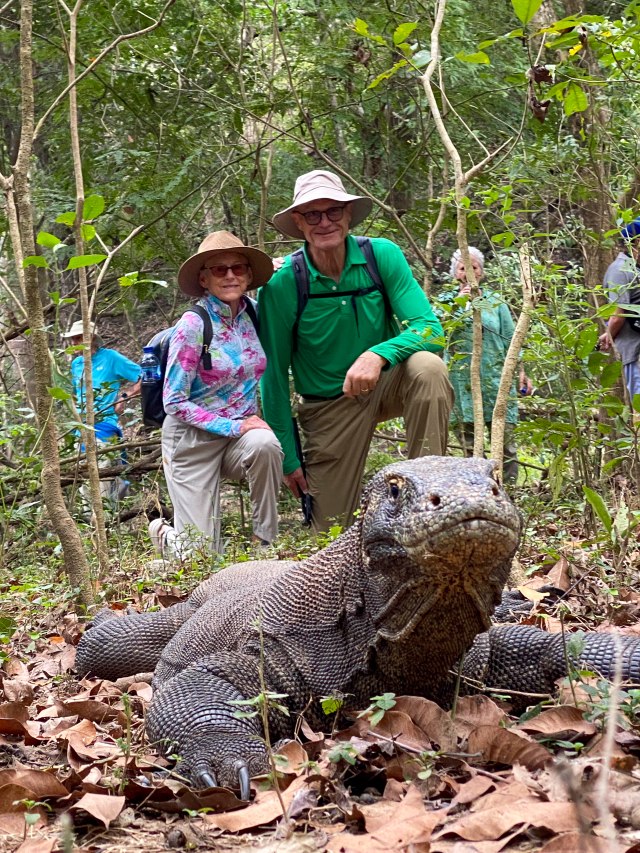
21st Century Jurassic Park Anyone???

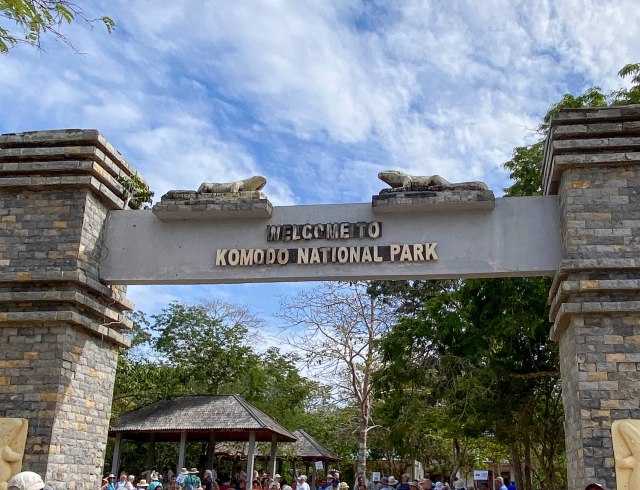
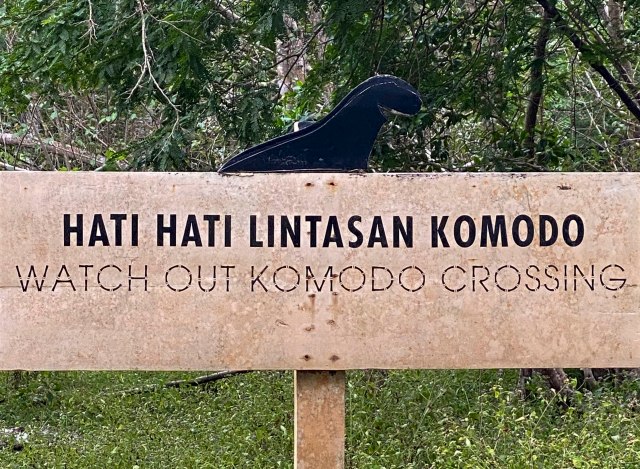
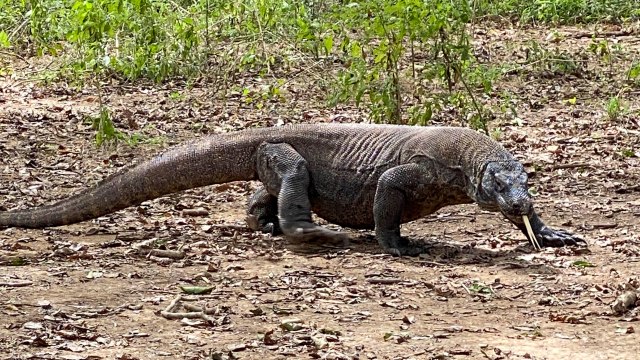
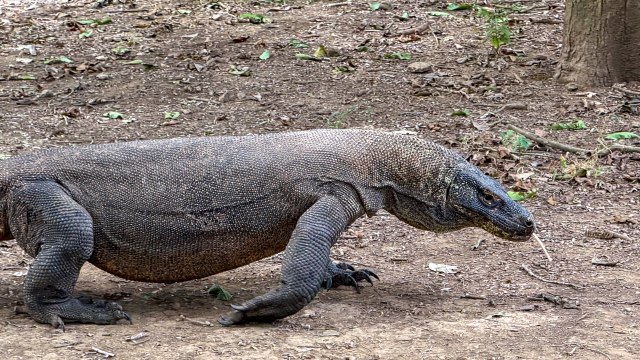
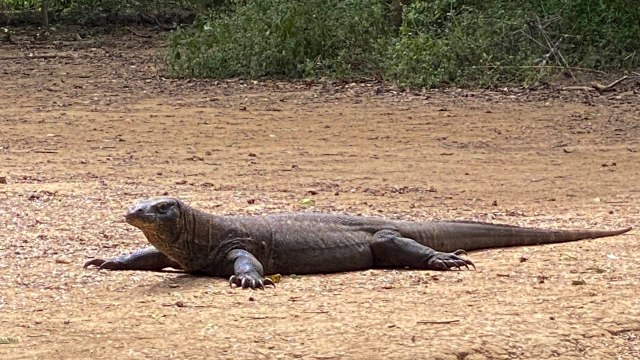
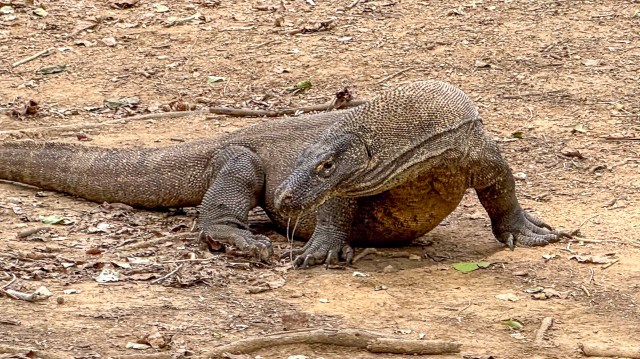
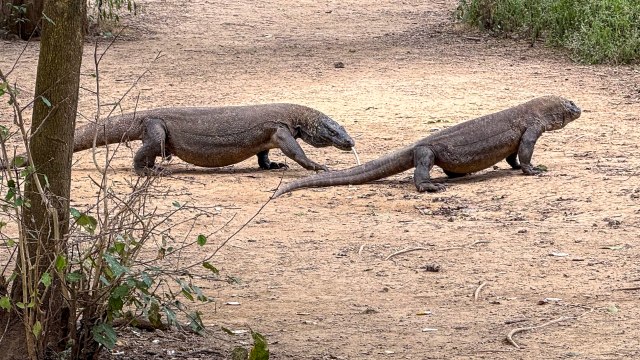
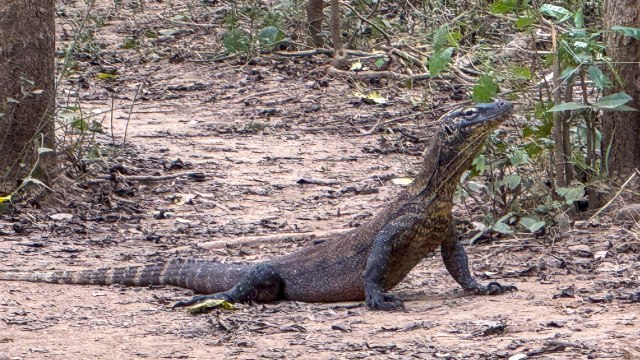
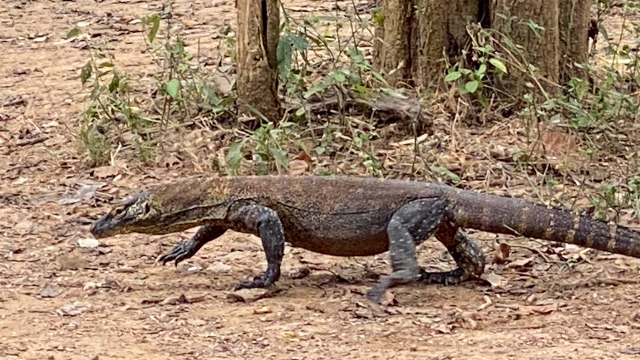
Komodo Island is only 150 square miles with a population of just 2,000 people.   It is also the only home of the largest lizard in the world – the Komodo Dragon!!  The male Komodo dragon can grow up to 10′ long and weigh over 200 pounds and live between 20 and 40 years.  The female is slightly smaller and can be quite coy during mating season;-).  They have a keen sense of smell that can detect their next meal from up to five miles away.  Much like a snake, their bite is full of deadly venom that can take down their favorite prey of wild pigs and Timor deer in an instant.  Komodo Island and two of its neighboring islands were established as a National Park in 1980 to protect this incredibly interesting species.  Therefore, the only way to see this animal today is by taking a guided tour – to protect both you and the animals of the island.  Do it!  It is quite a trip –

Komodo Island – hilly and forested.

What mysteries await?!?

These guys are big!

Don’t let them bite – or you are DEAD!

A male begging a female to ——;-)

She says – “No thanks!”

The larger male still stalking the female.

At approximately 1 1/2 years old, this sighting was said to be unusual as the young dragons live in the trees until about 3 years of age.

Another view of the youngster.

This one came down for a swim, perhaps.  These dragons are very capable swimmers.

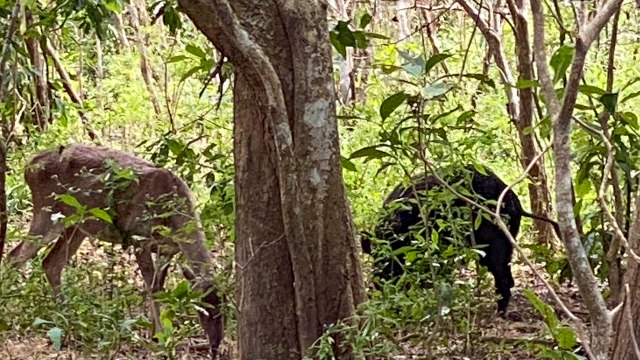
And – here is their next meal – deer and wild boar.  Yum!

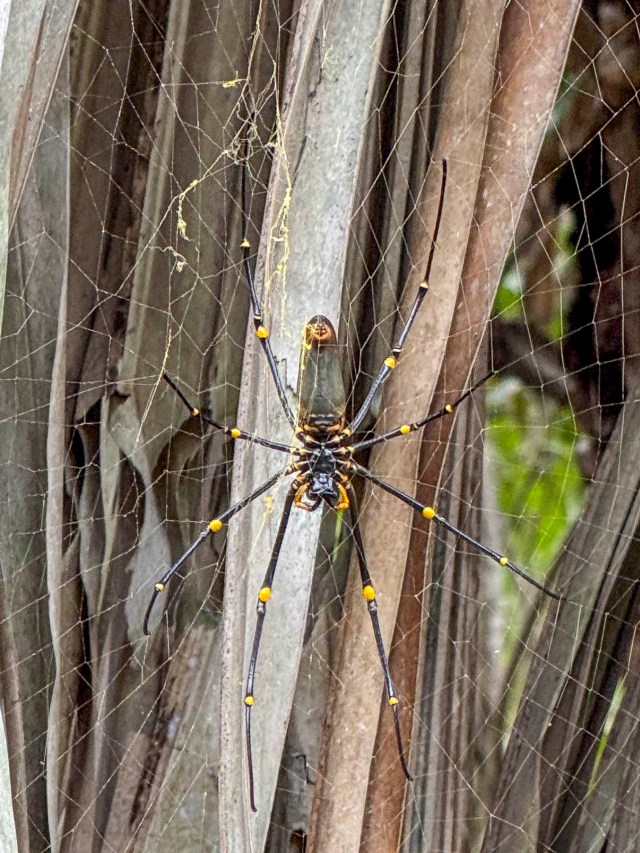
One big honkin’ spider alongside the trail.

Not as close as it looks.

What a phenomenal day!  These things are BIG, strong and ugly;-)  If you are ever in the area – don’t miss seeing them.

E & G – still alive and wowed!!


Bali, Indonesia

Think of the movie “South Pacific” and catchy songs like “I’m Gonna Wash That Man Right Out of My Hair”, “There’s Nothing Like a Dame”, “I’m In Love With a Wonderful Guy” and “Some Enchanted Evening” might come to mind.  OR – perhaps you picture a lush tropical island like Bali where you might have an enchanted evening;-)  Well – just cross the equator and there you are!
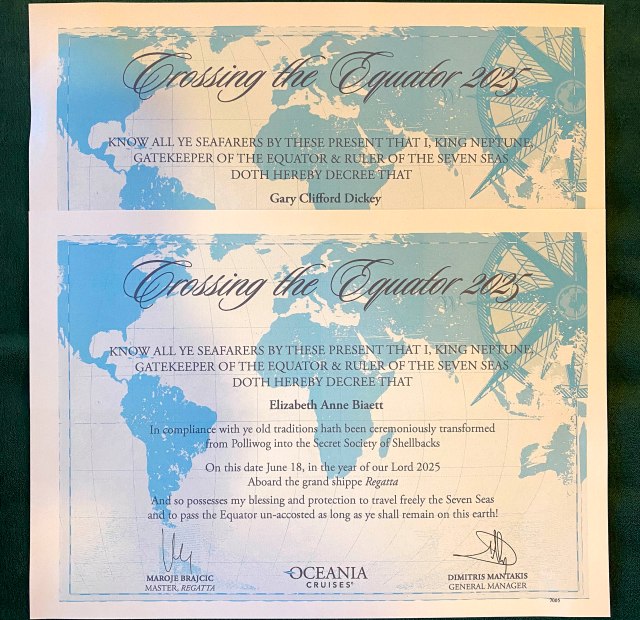
First time crossing the equator!

Bali Island sits toward the east end of the Indonesian Islands and offers a rare mix of cultural heritage, stunning natural beauty and welcoming people – –
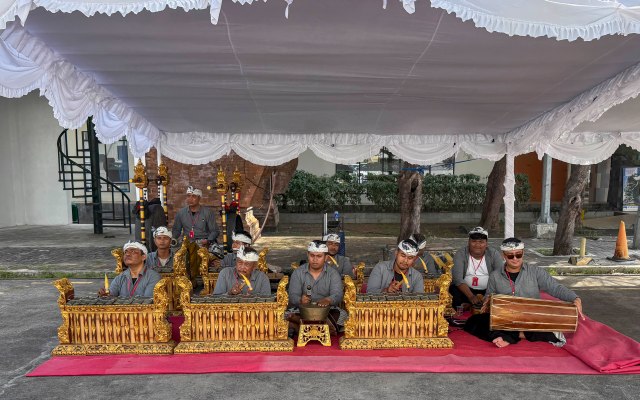
A gamelan welcome to Bali – the Island of Gods.

With only a couple of days to explore this island, one must get off and running in a hurry.  And then – come to a halt.  The traffic in the cities is horrible, quite possibly taking an hour and a half to go the equivalent of 8-10 miles!  But, when you get outside to the ‘country’ it is beautiful (you will see shortly)!

To get into the ‘feel’ of Bali explore the production of one of its most well known products – batik.  This is a technique where intricate designs are drawn or stamped on cloth followed by delicately placing wax where dye is not to be absorbed then dying and subsequently removing the wax.  A long process producing that Bali look.
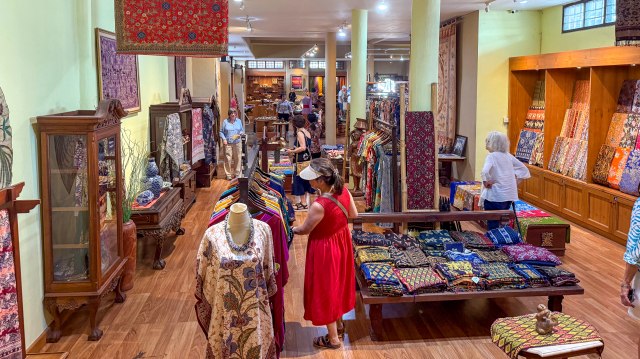
Exploring a village Batik shop…
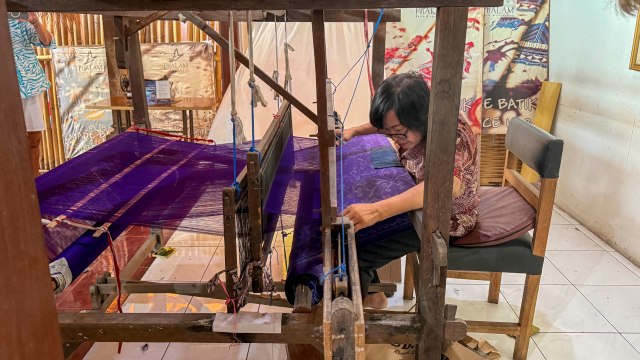
…and seeing how batik and woven products are made.

Moving on to quieter, more serene grounds – head north to the Taman Ayun Temple or Mengwi Royal Temple.  Established in the 17th century as the primary temple of the kingdom, this site is now a UNESCO cultural heritage site.  Its name – Beautiful Garden – truly blends the stunning Balinese architecture with the meticulously landscaped gardens.
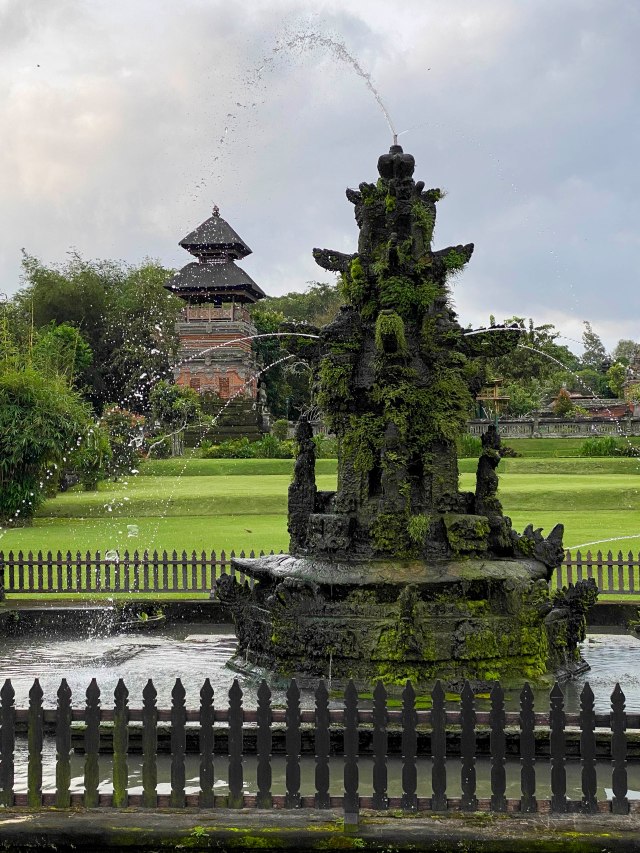
Touring the Mengwi Dynasty’s Taman Ayun family temple – beautiful grounds.

The entries to all shrines, and many other portals, are intricately carved gates, which to the Balinese signify the connection of the physical to the spiritual world.  If the gates are open and separated, they invite you to enter.  But if the gates are closed, they are the entry to the shrine area and admission is restricted to those going for worship.
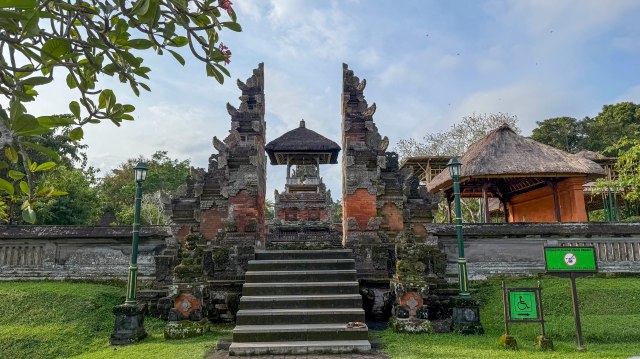
Please come in;-)
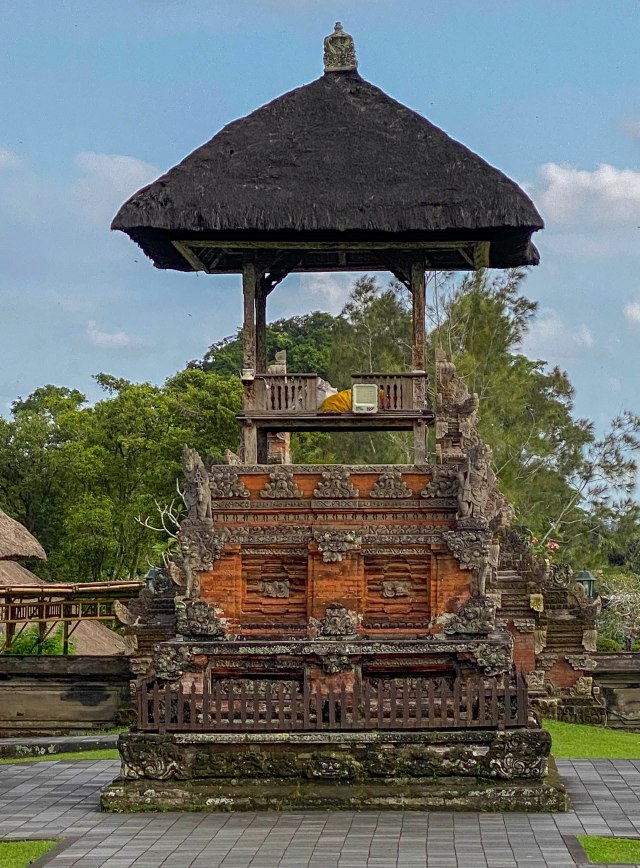
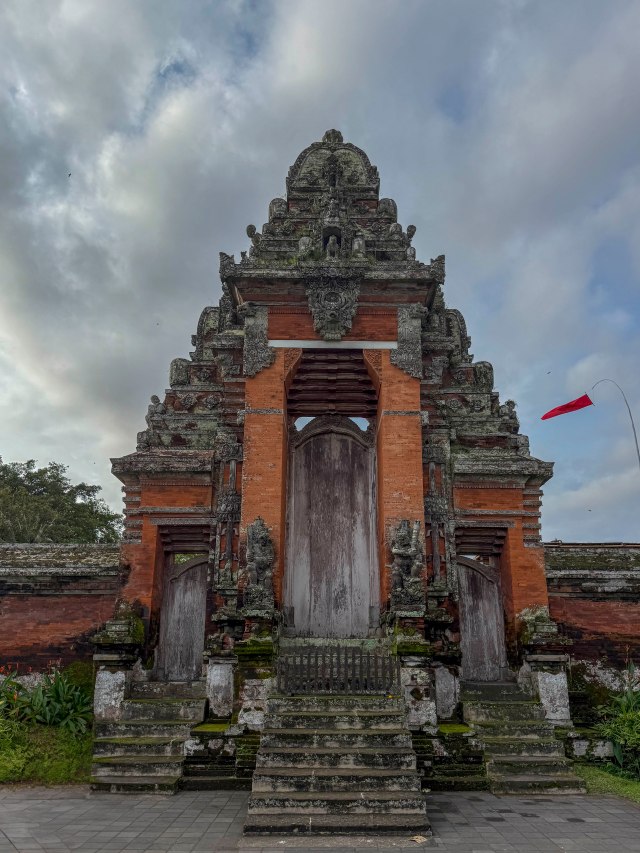
Sorry – this is entry to the worship area. 
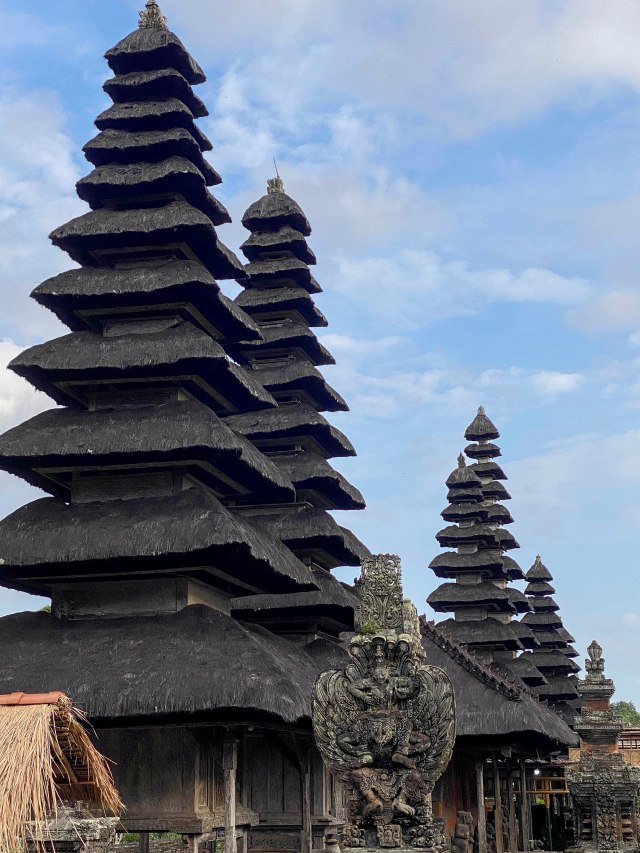
One can always get a glimpse over the fence.
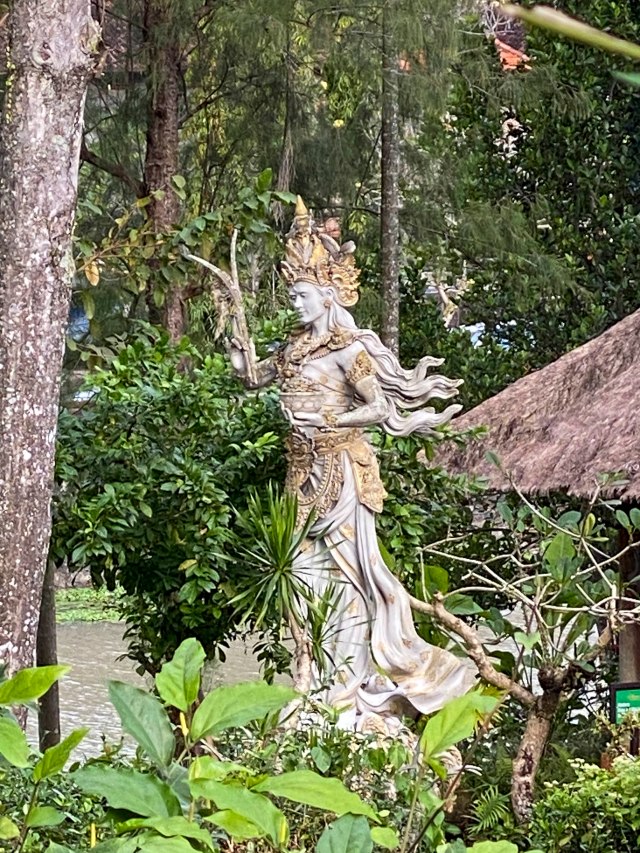
A female guardian.

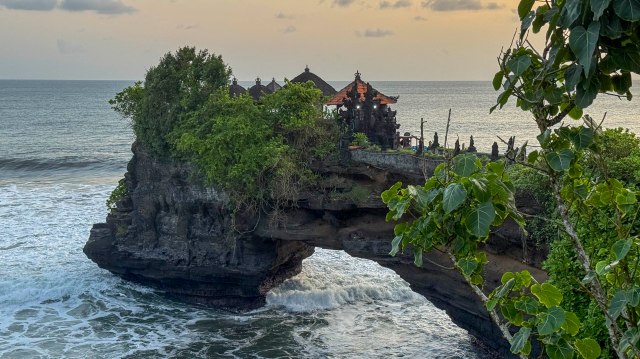
Another must see temple in Bali is the Hindu Tanah Lot Temple. Tanah Lot was built in the 15th and 16th centuries on a large coral rock separated from the mainland.  It is dedicated to the gods of the seas and appears to be floating in the sea during high tide.  This is a beautiful, unforgettable setting at sunset.
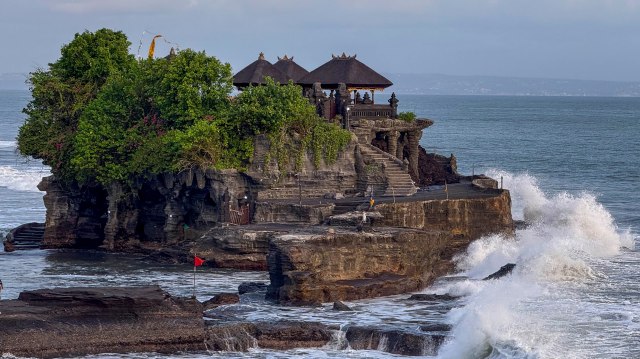
Tanah Lot Temple coming out of the sea.
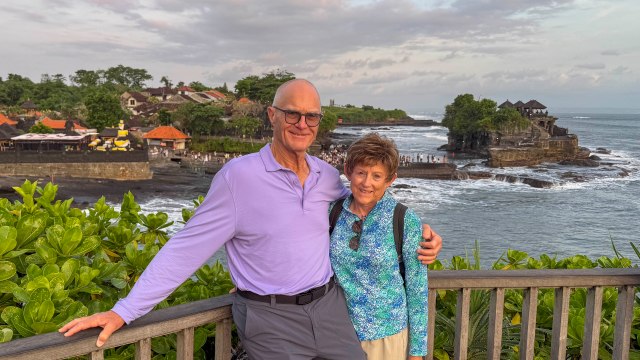
Additional shrines at Tanah Lot.
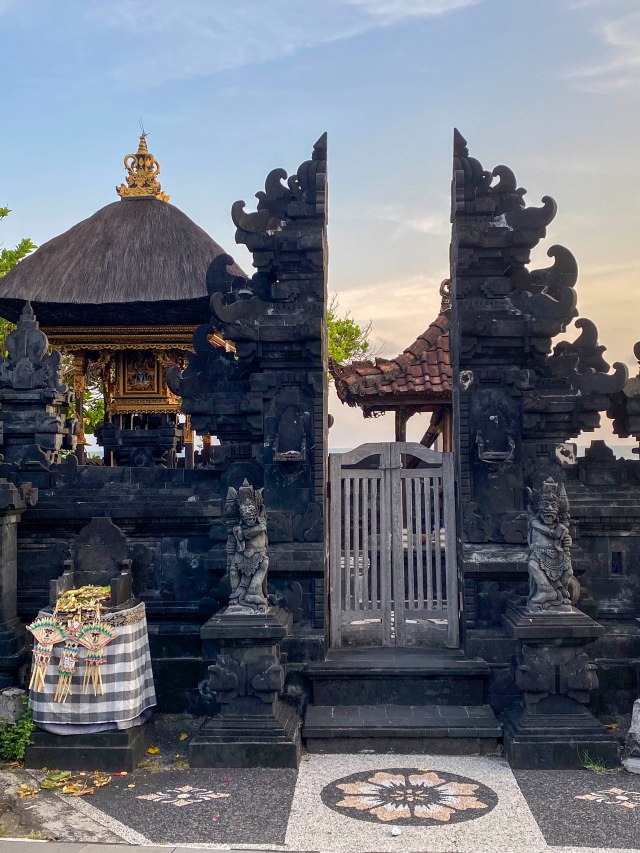
.

If you get tired of driving in all the traffic, head up to Kopi Luwak for a cup of coffee.  If you ever watched the movie – “Bucket List” – you might remember the scene where the ‘old men’ stopped for coffee only to be told they were drinking ‘poop’ coffee!!  TRUE.  It was discovered that a cat-like animal native to this area would eat the coffee beans because they liked the taste of the bean coating.  But, they could not digest the bean itself.  So, the whole bean came out in their poop;-). Because of the fermentation of the bean while in the animal, it developed a different – quite pleasing – taste for coffee.  This is now a BIG product for this area – and G tried it and bought some.  So,  beware when you come to our house for coffee!!!!
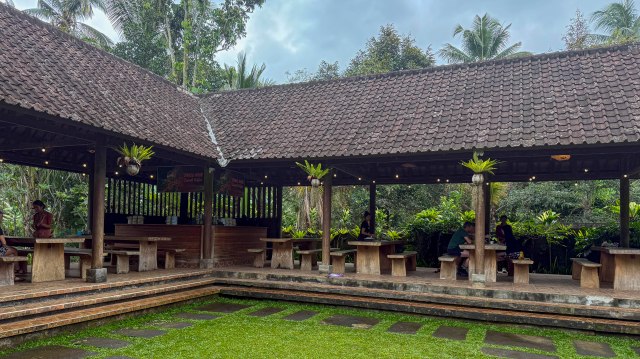
The tasting area at the Luwak Coffee plantation..
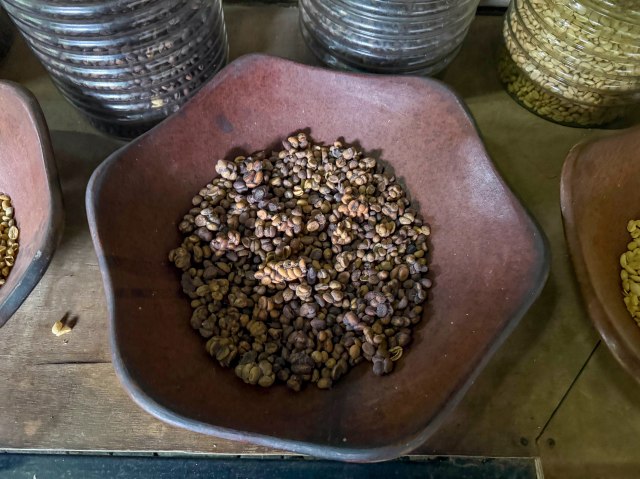
Undigested coffee beans found in the poop of a cat-like animal, Paradoxurus.
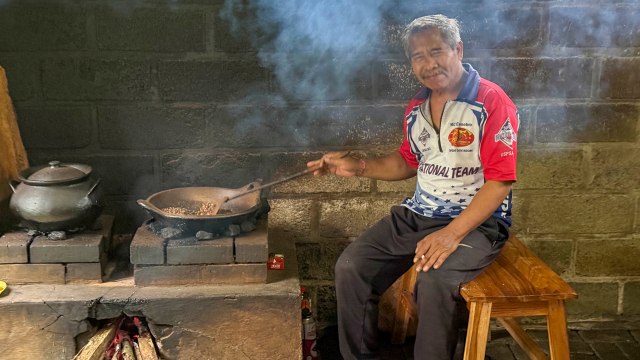
The beans are then cleaned, roasted and brewed.
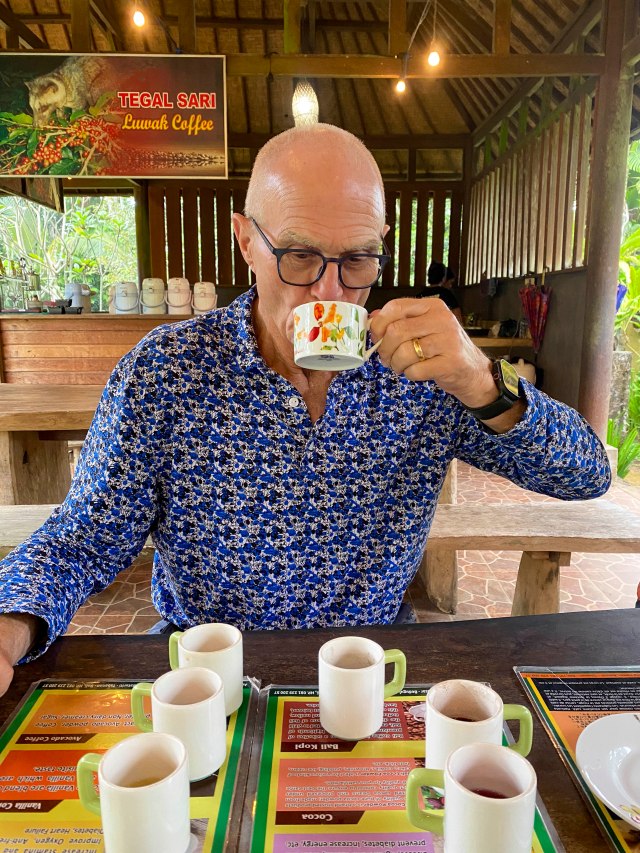
Not bad;-)

Now that you are refreshed, brace yourself for one of the most beautiful sights in Bali.  It will take your breath away and bring tears to the eyes.

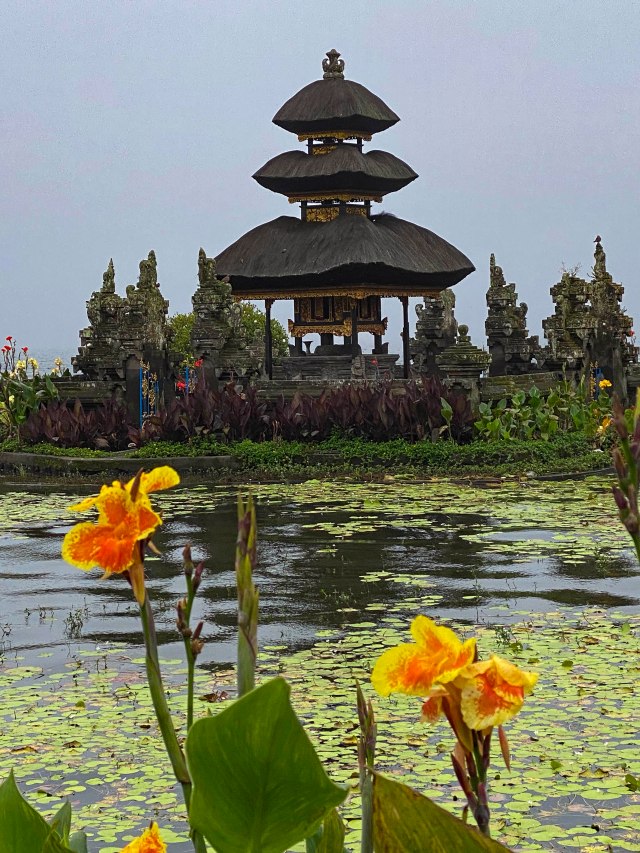
Built in 1633, Ulun Danu Temple sits on the shores of Lake Bratan in the mountains of Bedugul.  This iconic temple is one of the most picturesque and revered sites on the island.  It is perched on a small island surrounded by the tranquil waters of the lake and often shrouded in fog to give a more mystical impression.  The Temple is dedicated to Dewi Danu, the goddess of water, fertility and prosperity and is comprised of several shrines and pavilions.  When one steps through the gates and sees the shrine sitting on the water it is truly a spiritual experience and pictures can not come close to doing it justice.
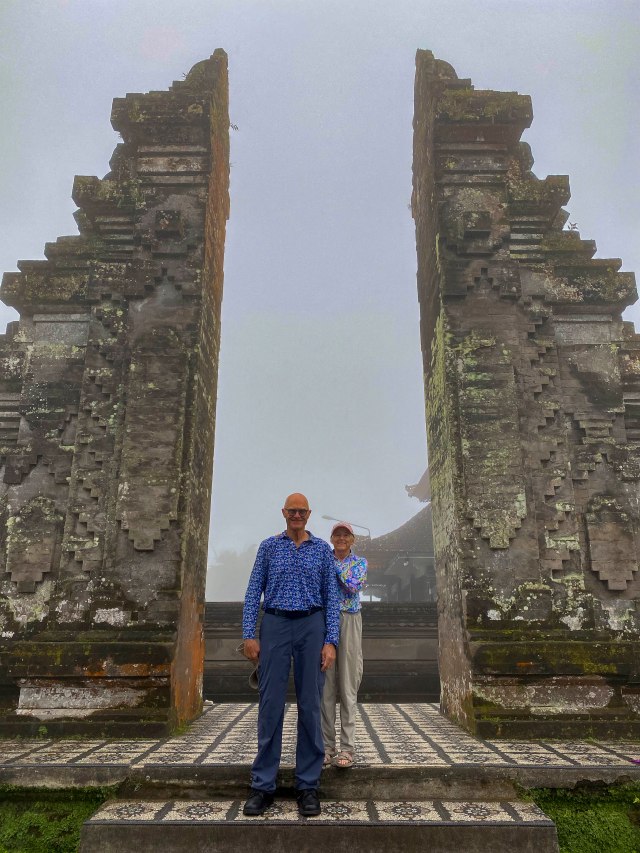
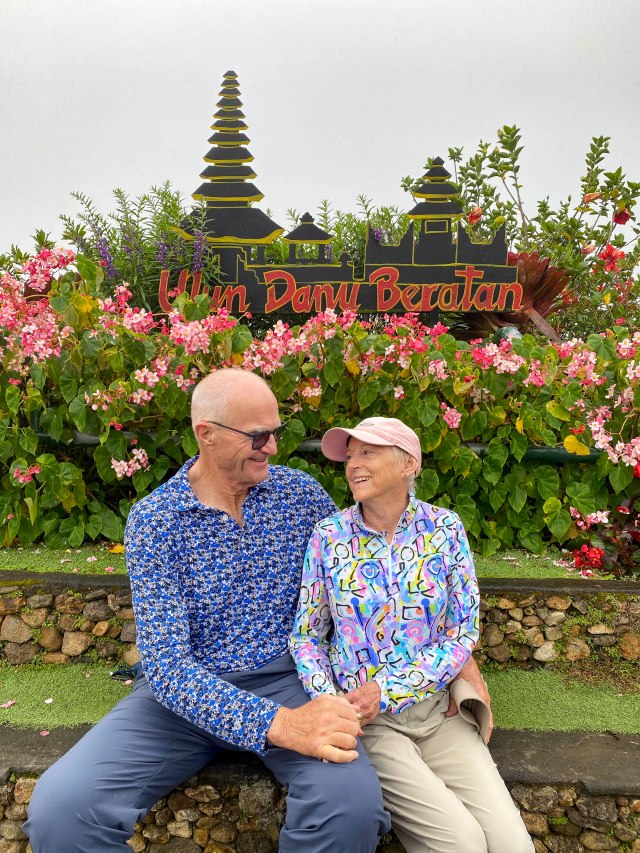
Entering the grounds of the Ulun Danu Temple.  About to go from the physical to the spiritual world!
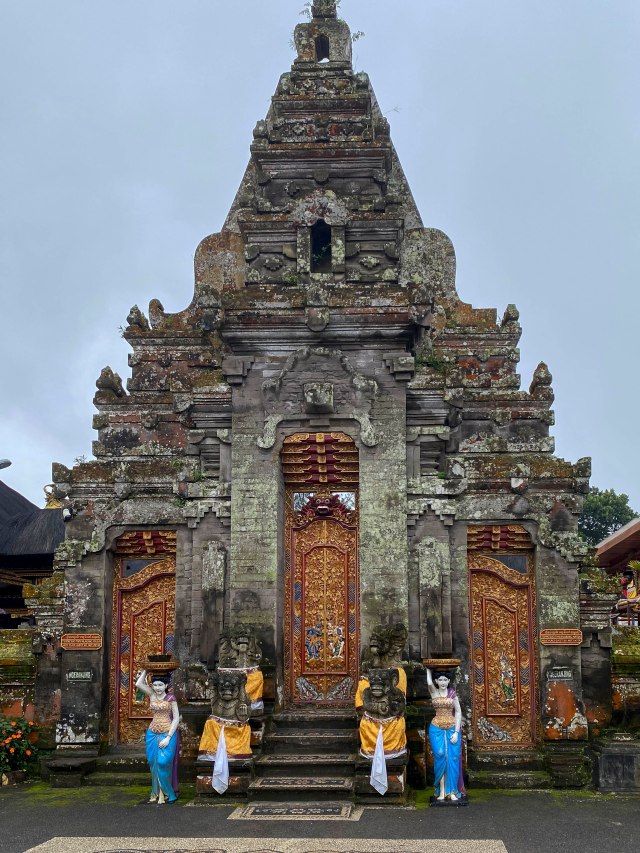
No entry here.
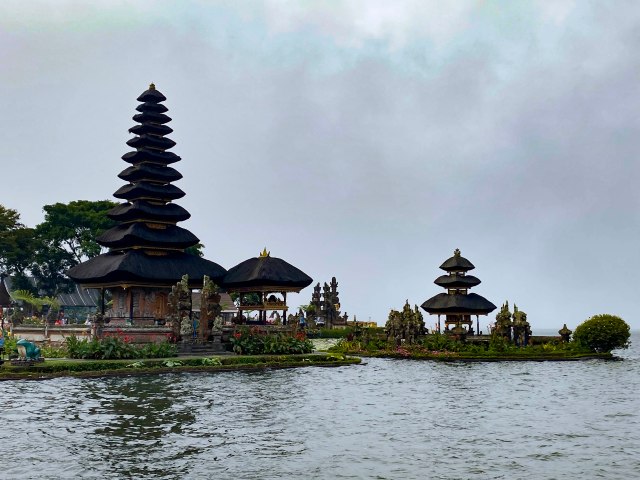
Take a breath. The fog cleared just long enough to get the pictures!
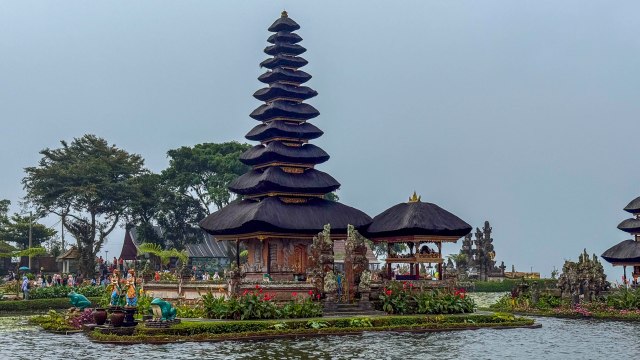
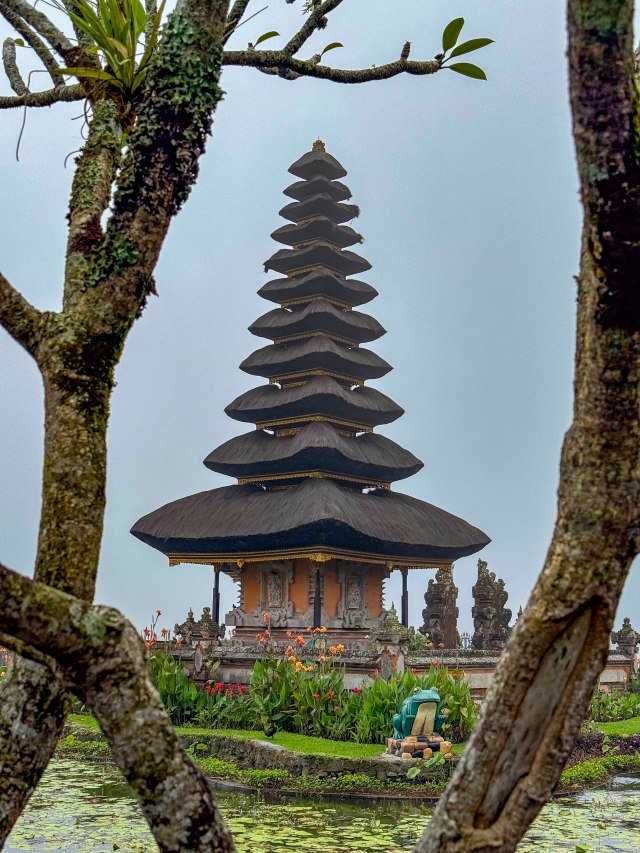
A Happy Day;-)

Thank goodness it was a bit of a drive to the Jatiluwih rice fields, as one needs some time to digest the sights of Ulun Danu.  The beauty of the surrounding mountains and lake and the tranquil atmosphere of the shrine leave one wanting for words – literally.

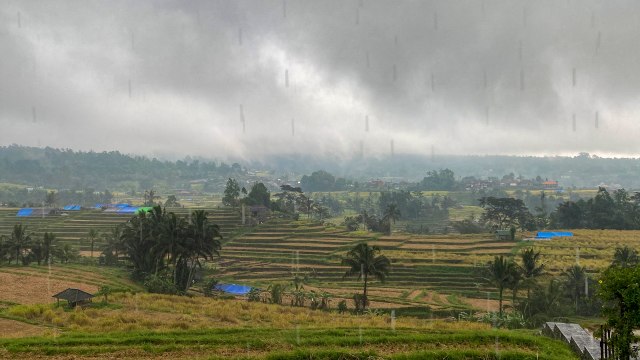
But, it was getting on to lunch time and there is this fantastic restaurant overlooking the UNESCO rice terraces where one can relax and take in the greenery of the surrounding fields.  The quiet of the farming community is just what one needs after Ulun Danu.  This time of year happened to be harvest time.  So, there were brown fields that had just been harvested, water soaked fields that were just planted and green/yellow fields ready for harvesting.  What a treat.
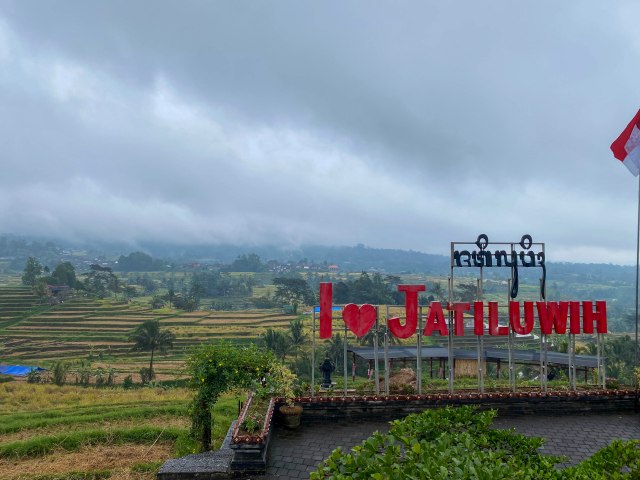
The largest rice terraces on the island.
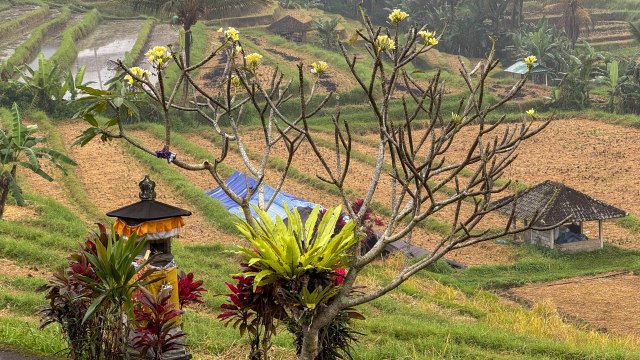
Brown fields just harvested.
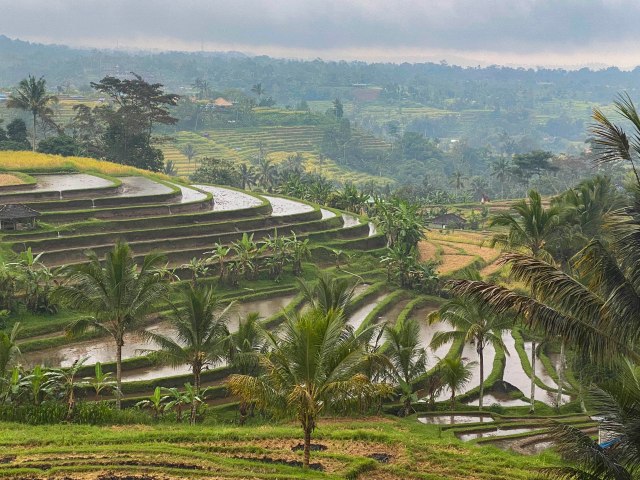
Flooded fields just planted.

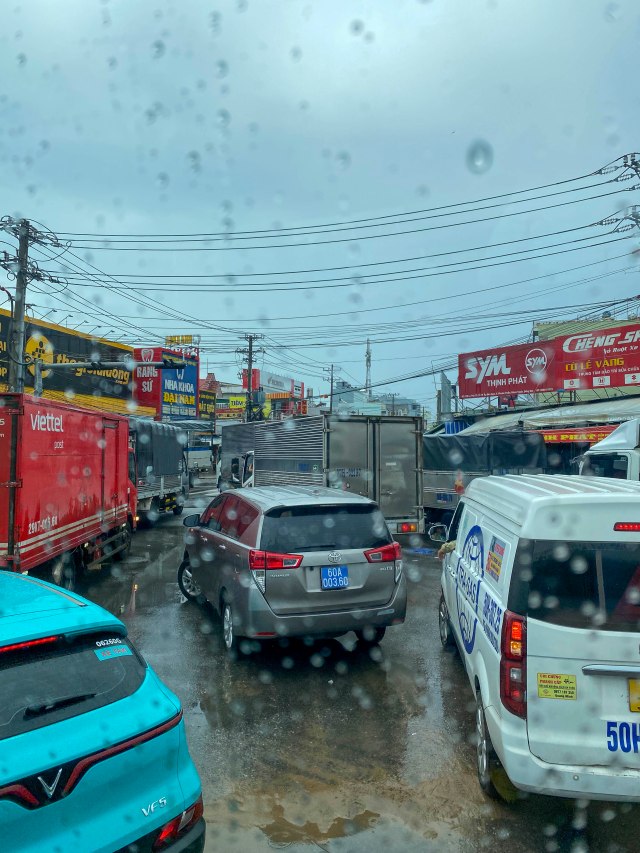
After a beautiful day in the mountains it was time to head for the port;-(. It seems that in every country visited, the scooter was the primary means of transportation.  Indonesia was no exception and no wonder given the way the streets were clogged!
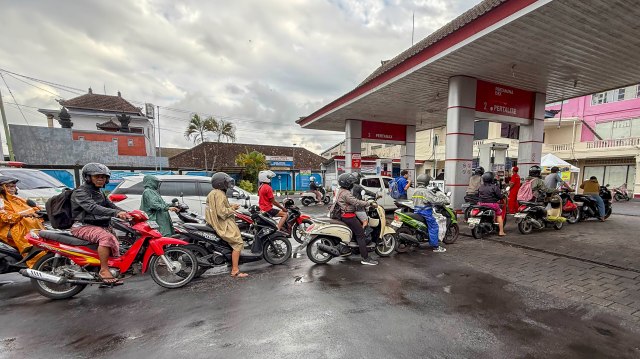
A typical scene throughout Asia.

Once out of the city and in to the rural, mountainous regions of Bali it was a dream and exactly what might be imagined of the area.  But, as always – the sun sets on our adventures and only memories are left – –
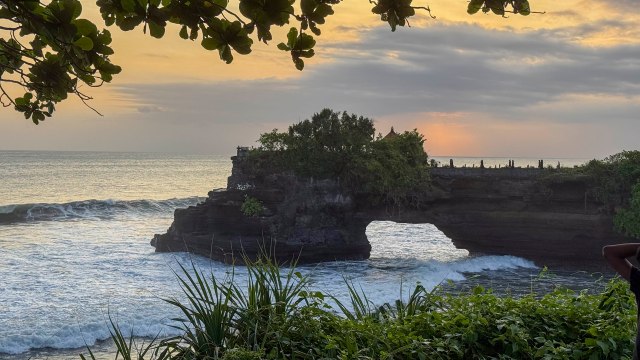
Farewell!

Indonesia has been eye opening, a real experience, serene, crowded, steamy, hot, beachy and mountainous.  Diversity was definitely on display in all aspects.

E & G – happy to experience it all!
Java, Indonesia

It is amazing that a land composed of 17,000-18,000 islands, a population of 280 million people, diverse religious beliefs and many language dialects could exist as a unified governmental country.  Indonesia not only does this but does it with warmth, graciousness, tolerance, hard work and great national pride.  The island of Java lies at the geographic center of Indonesia and is home to more than half its people and its capital – Jakarta.

For better or worse, this trip avoided Jakarta (which many said was a good thing) and headed straight to Semarang in Central Java and Surabaya in Eastern Java.

The Indonesians went out of their way to welcome visitors and to make them feel at home with a great deal of warmth, even though their economy is quite depressed.  Semarang, although predominantly Muslim, was proud to display its religious diversity and acceptance showing a mosque, Confucius shrine and a Protestant church.

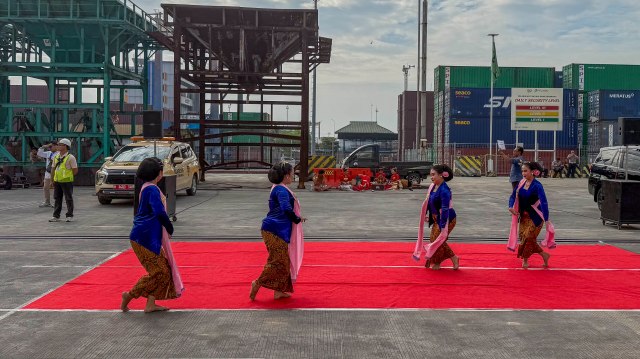
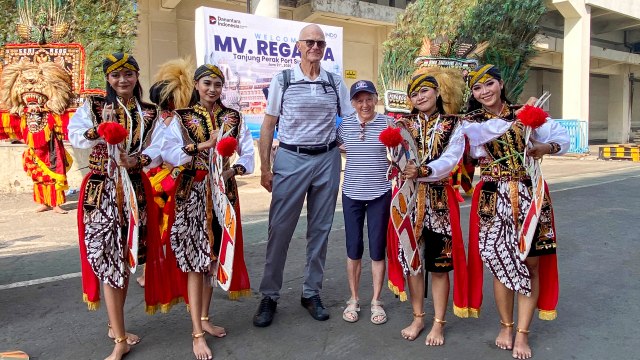
Dancers welcoming the ship in Port of Semarang.

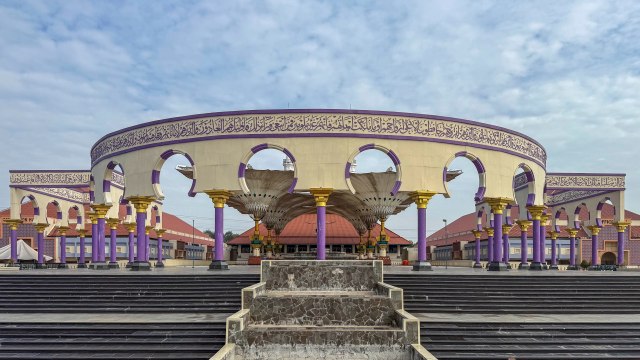
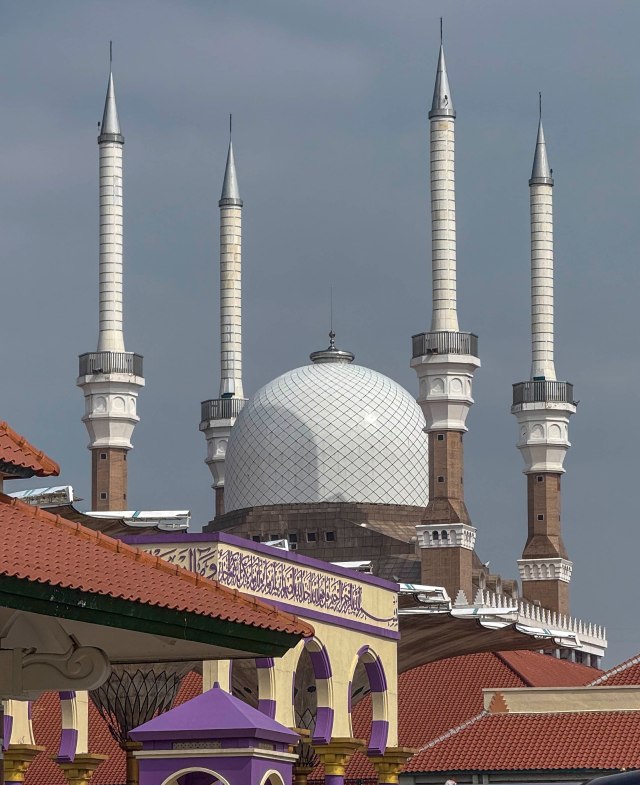
The Central Java Grand Mosque.


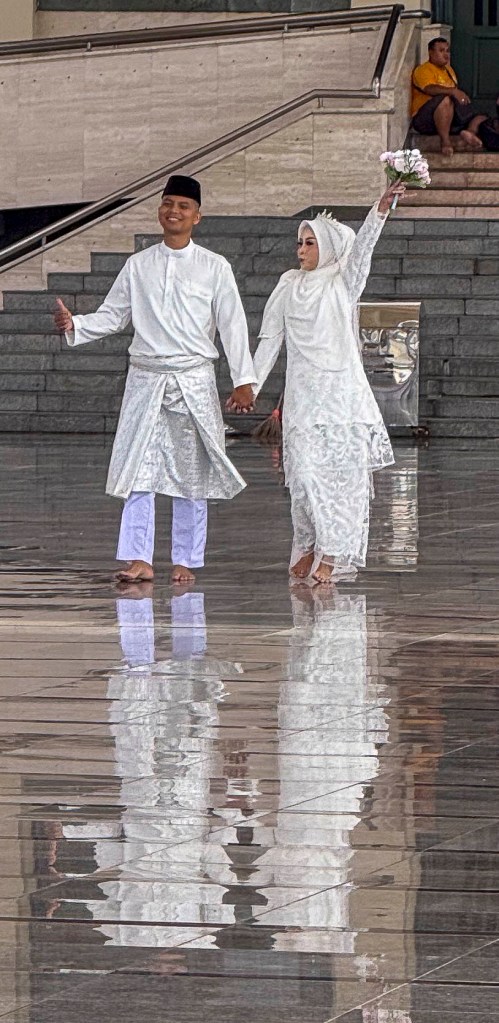
Lucky to witness a wedding photo session at the Grand Mosque.

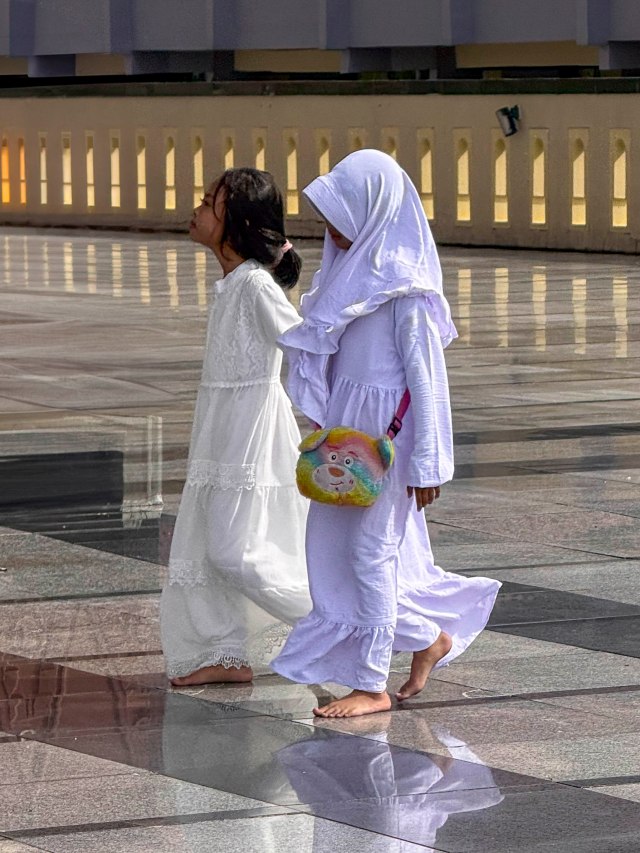
Cute kids waiting for the photo session to end.

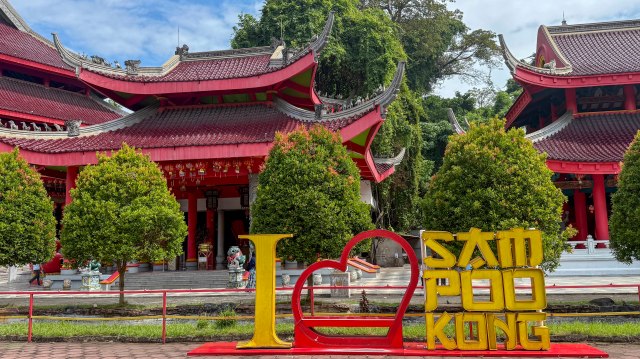
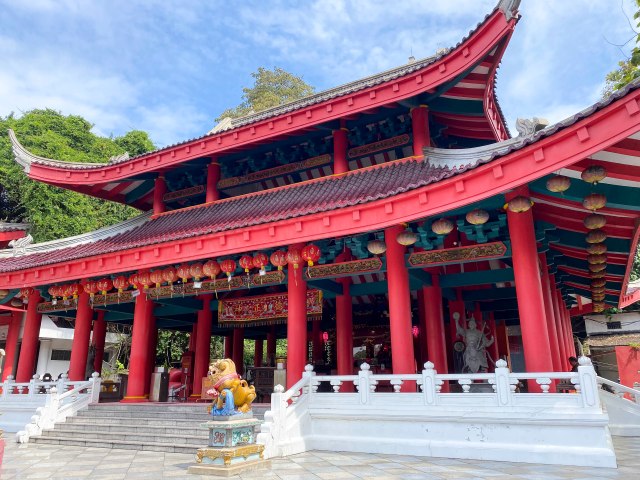
Several shots at the Confuscion Sam Poo Kong Temple.

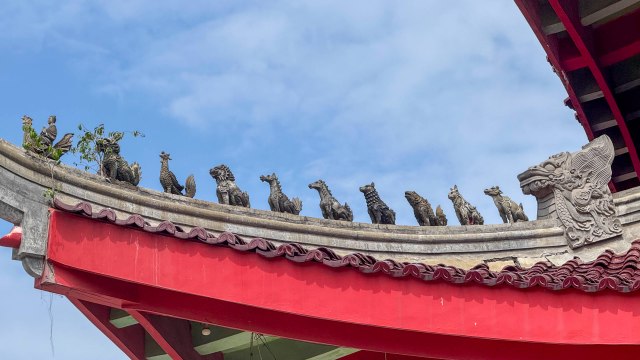
Are your ducks, dragons, roosters, etc. in a row?


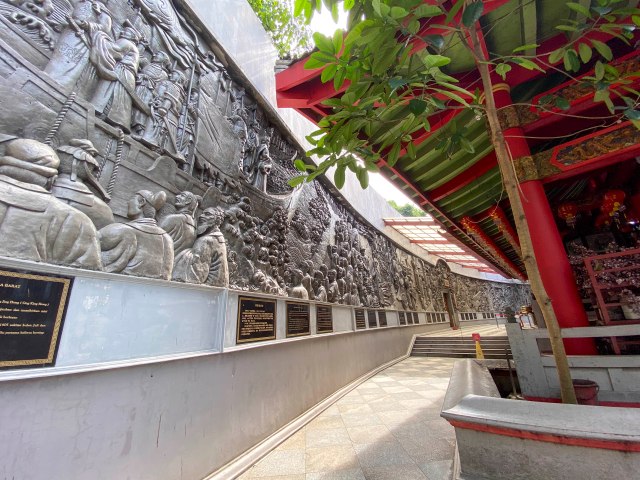
Mural at the temple depicting Java’s history.

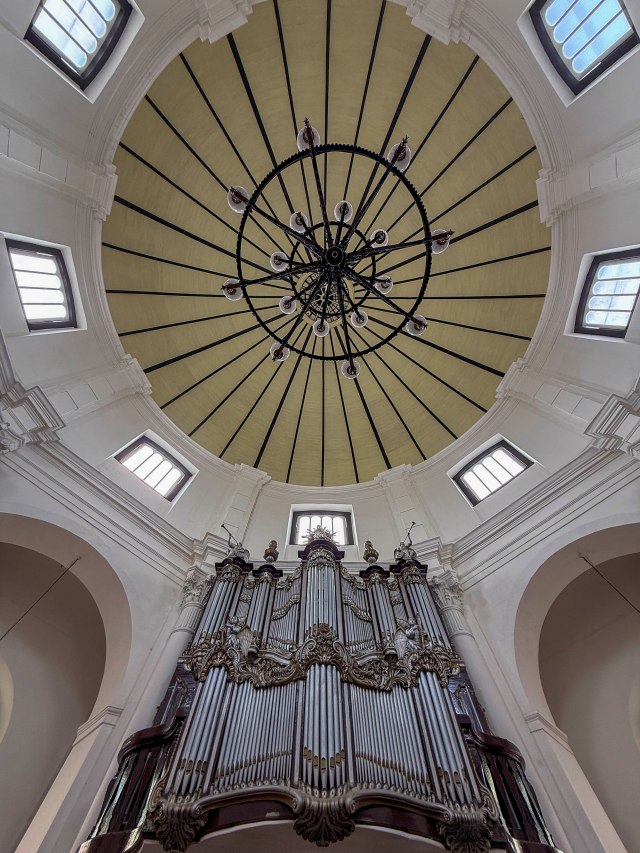
Organ and dome in a protestant church – Blenduk Church.

With great pride, snacks, drinks and wonderful entertainment were provided to make visitors feel welcome –

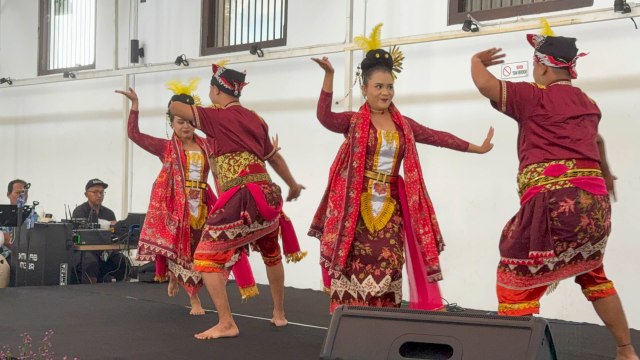
Java dance presentation.

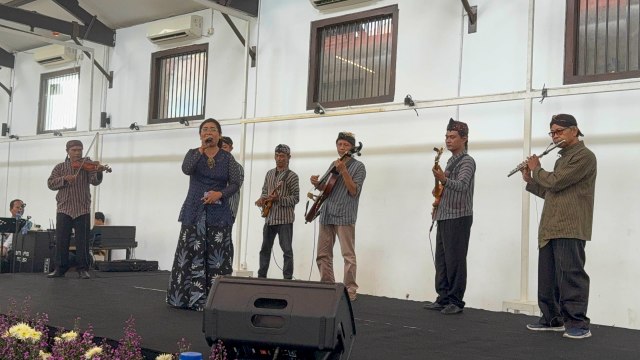
A wonderful ‘band’ with vocalist to say goodbye to Semarang.

Surabaya is located in East Java and is the second largest city in Indonesia after Jakarta.  Due to its location on the Madura Strait, it grew to be a major port and military power as early as the 15th century and, early on was a competitor to Shanghai and Hong Kong.  The city residents are very proud of their city and quite welcoming to guests no matter their individual means.

The Surabaya welcoming committee.

An excursion might take one through a ‘village’ or neighborhood where the residents band together to grow plants for eating and medical care, raise animals and fish for food and generally entertain each other.  Again – their warmth in welcoming and pride in their home was on full display.

This particular ‘village’ entered a contest to determine the best village in the city and won!  Their prize was a wide screen TV, which went into a communal room where the neighbors could go to watch together as none of the residents had a TV!!
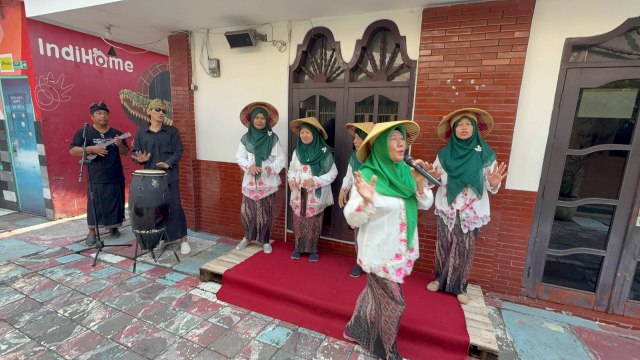
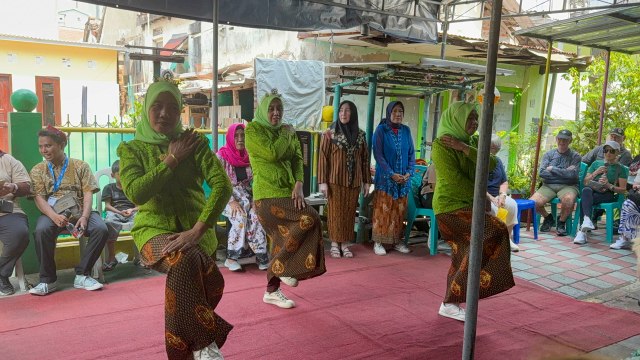
Performers in a small neighborhood cooperative.

All the residents were eager to entertain.

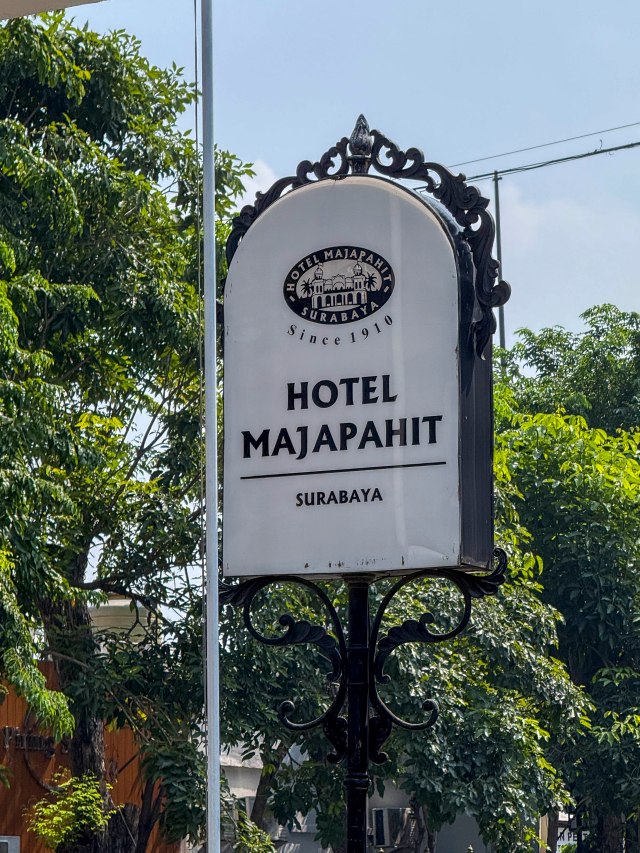
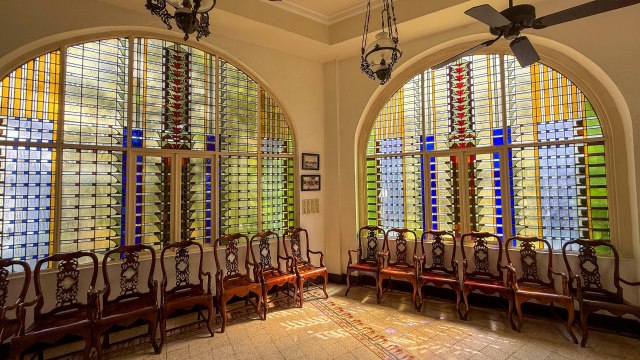
The other half lived around or near the Hotel Majapahit – owned by the same group as the Raffels Hotel in Singapore (remember the Singapore Sling??).  This group today was lucky enough to have a spot of tea and eats;-)

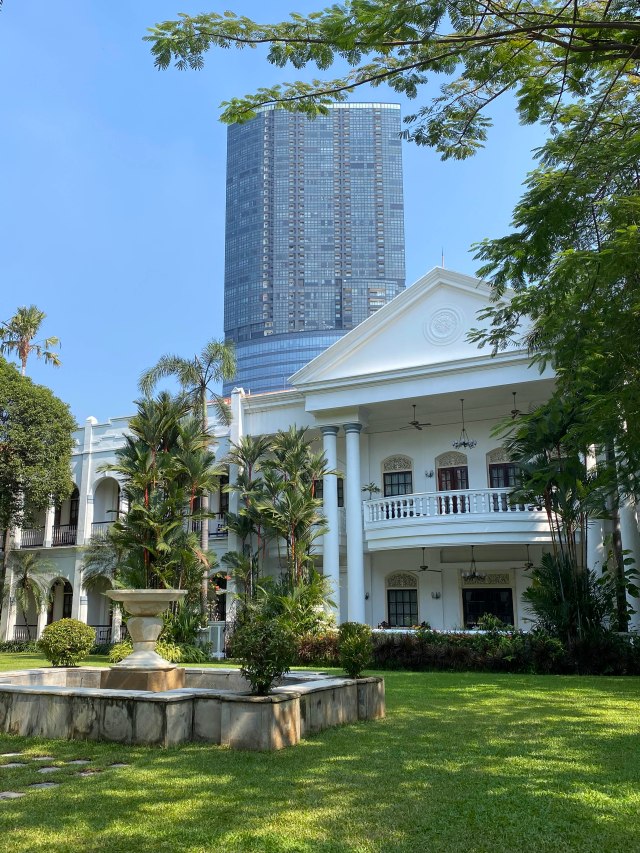
Historic Hotel built in 1910 and used as a headquarters by the Japanese during WWII.

Looked a bit like Frank Lloyd Wright – reminded us of home;-)

The old in the middle of the new.

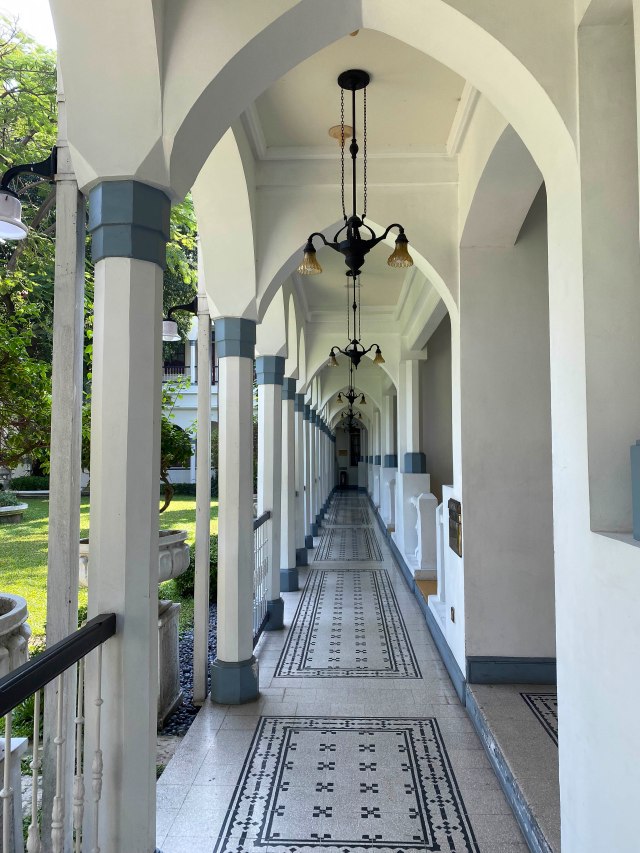
Beautiful grounds!

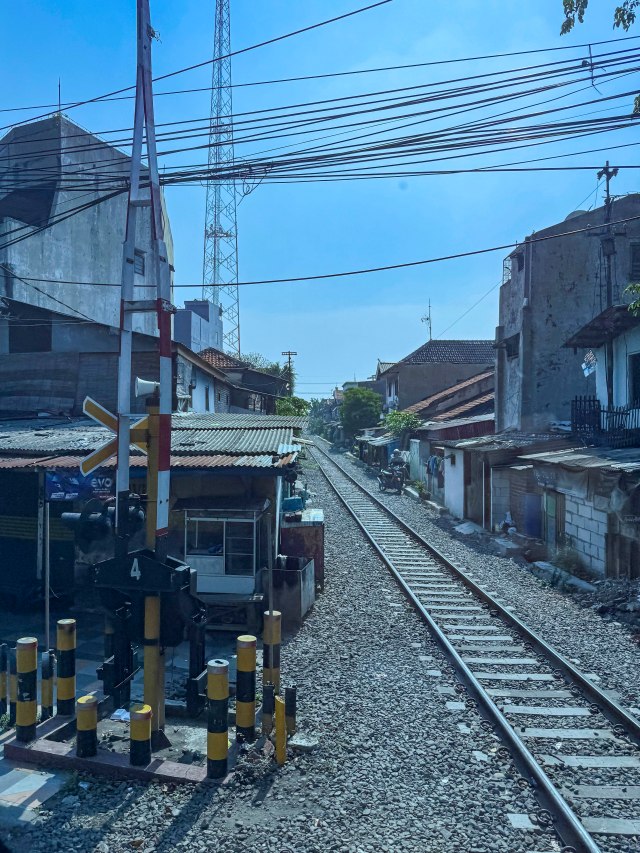
Back to the other half – railroad tracks running through the city are lined closely with homes.

Diversity was the word of the day here in Java.  Whether it was living conditions or religion.  But, always present was a welcome smile, warmth and pride!

E & G – grateful for what we have and the ability to do the travel being done;-)


Thank You Sir Raffles

We all owe a special thank you to the British government for sending Sir Stamford Raffles to find a strategic spot for Navy and shipping control in East and Southeast Asia.  By selecting Singapore, he secured control over shipping access between the Indian Ocean and the South China Sea.  Fast forward from 1819 to 1965, which takes Singapore from a British trading post to a British colony to an independent city state and perhaps the number one busiest container port in the world.  It is also the cleanest and safest economic heavyweight of Southeast Asia.

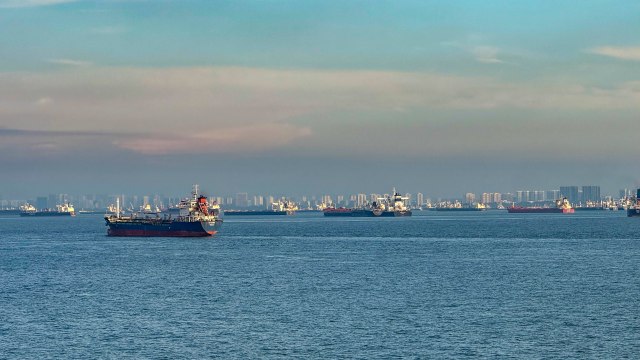
Approaching Singapore, container ships are lined up for miles to enter the port.

Singapore consists of Singapore Island and some 60 islets.  Amazingly, the city visited today has spring up on reclaimed land since 2005!

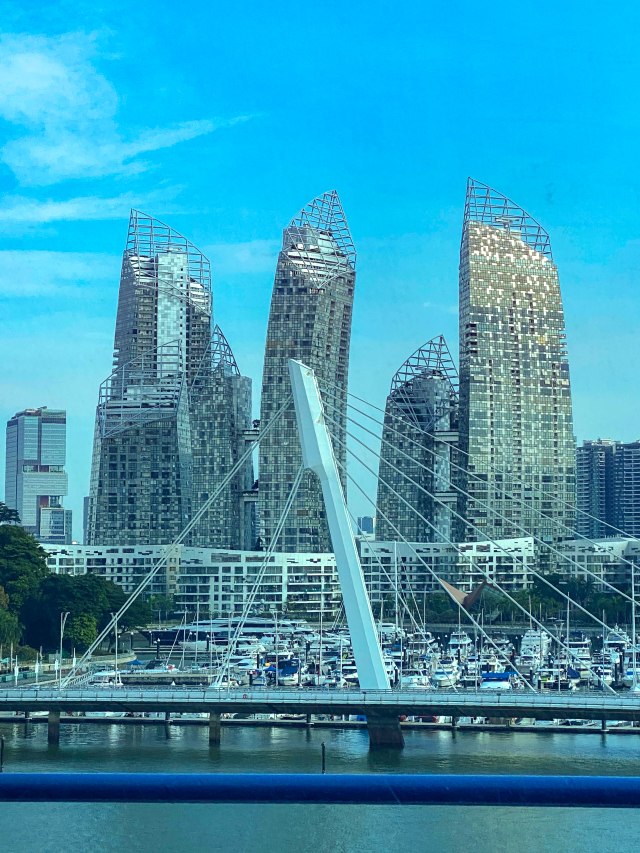
A small glimpse of the city outside our window;-)

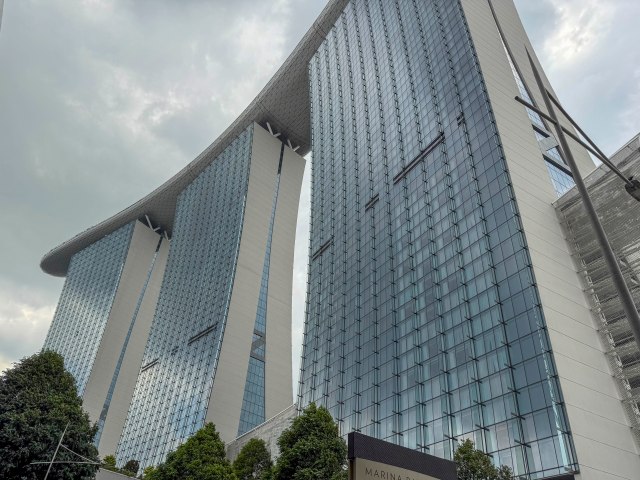
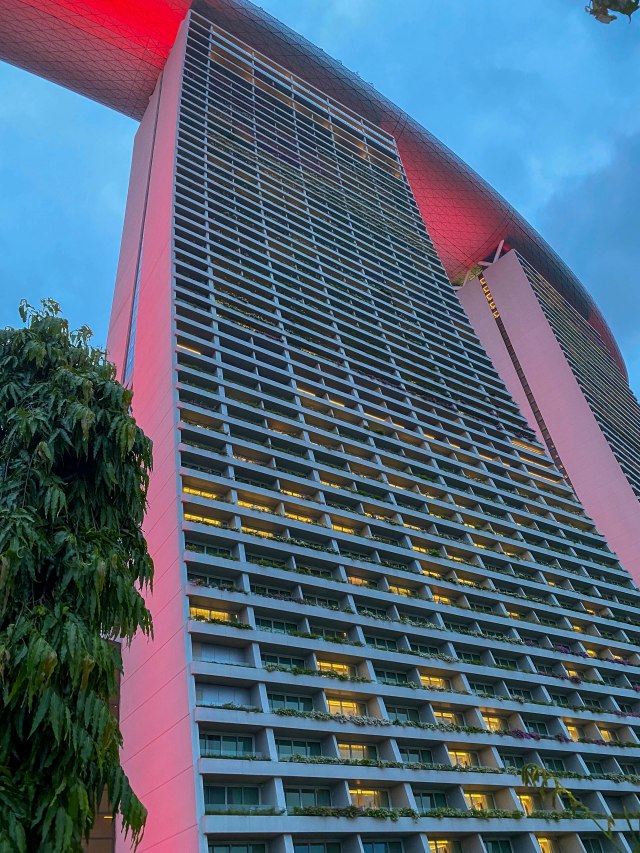
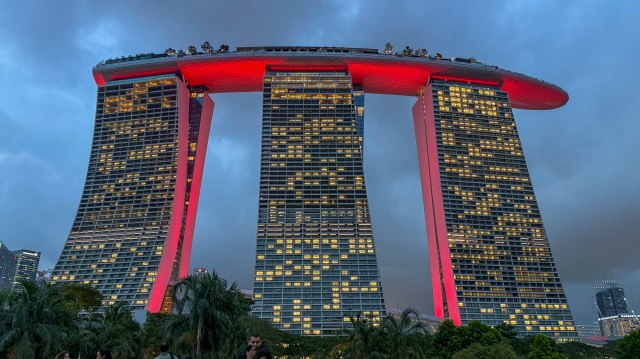
The aim was to build an equatorial Las Vegas with glamorous casinos, trendy bars, discos and outdoor restaurants.  One of the must see sights is the spectacular Marina Bay Sands soaring 57 floors into the sky with the Sands Sky Park housing several restaurants across the top.  Designed by the U.S.’s Safdie, the architecture is amazing.  The complex opened in 2010 and is something to see inside and out.

Head up to the top of the Marina Sands for lunch (its much cheaper than dinner!).

View inside – – –

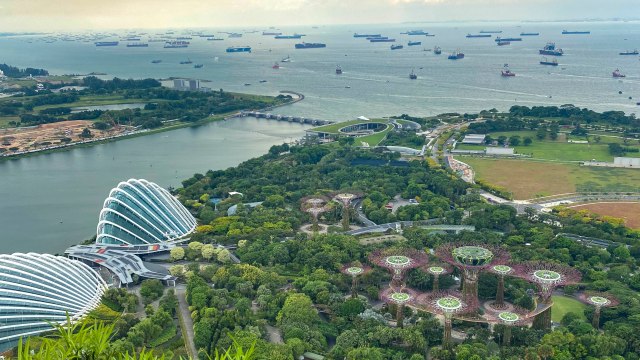
– – – And outside in all directions.  (Back to the Garden by the Bay for a light show later).

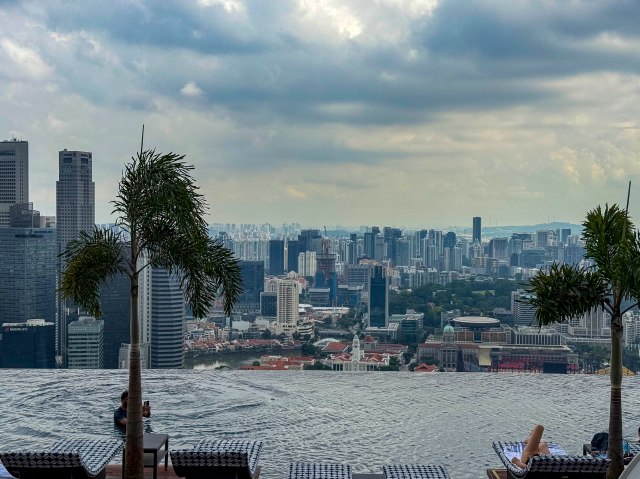
View to the city across the infinity pool.  Would you sit on that edge of the pool 57 stories up?!?!?

If you can tear yourself from that fantastic view and get your feet back on the ground, wander through the Marina Bay Center to the Marina Bay.  There you can get your shot with the Merlion statue and take in the sights of the Apple and Louis Vuitton stores sitting out on the Bay;-)

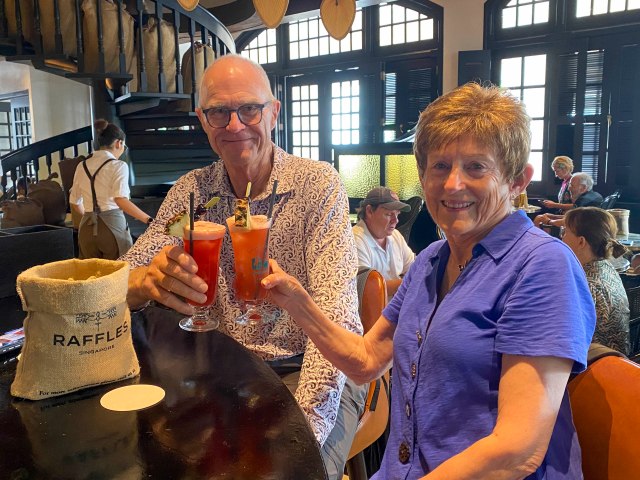
When it’s time for the afternoon refresher, head to the Raffles Hotel for a shot of colonial vintage.  Arguably the world’s best known hotel, it is one of Singapore’s most iconic sights.  It was founded in 1887 although the Singapore Sling was not invented here until 1915.  On a typical DAY, more than 2,000 of the drinks are served along with peanuts that you crack open and through the shells on the pristine floor.  The only ‘dirt’ you’ll find on the ground anywhere in Singapore.  Oh – don’t forget your wallet, as the drinks will cost more than many meals in Singapore.  But, all is worth it – –

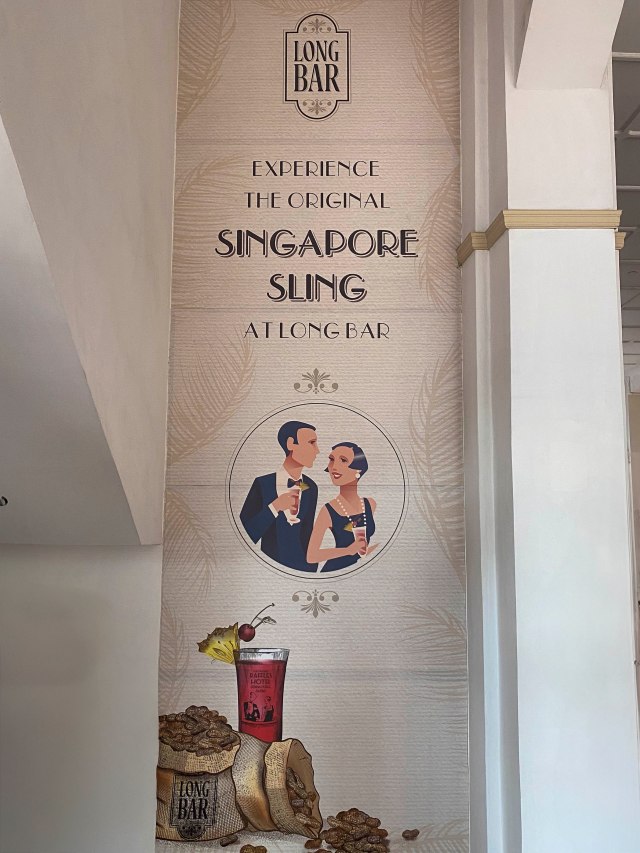
The Raffles Long Bar is where the Singapore Sling was invented!

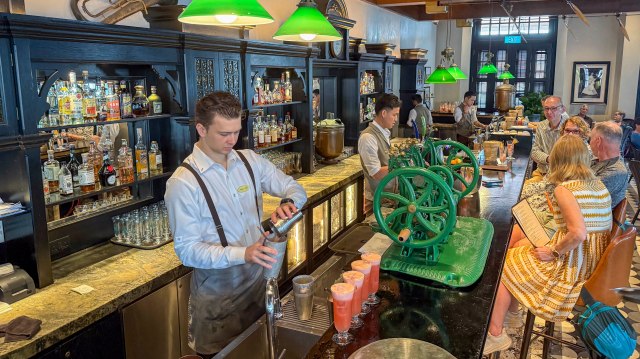
The Loooong Bar with a green hand cranked shaker that mixes four Singapore Slings at a time.

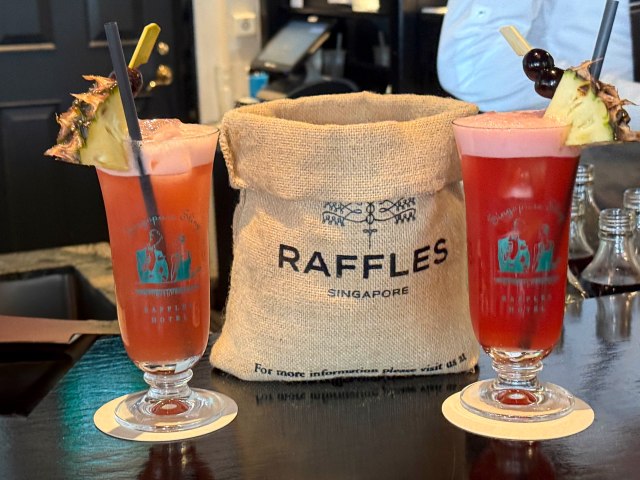
The iconic Singapore Sling – with peanuts.  (G’s is the non-A version)

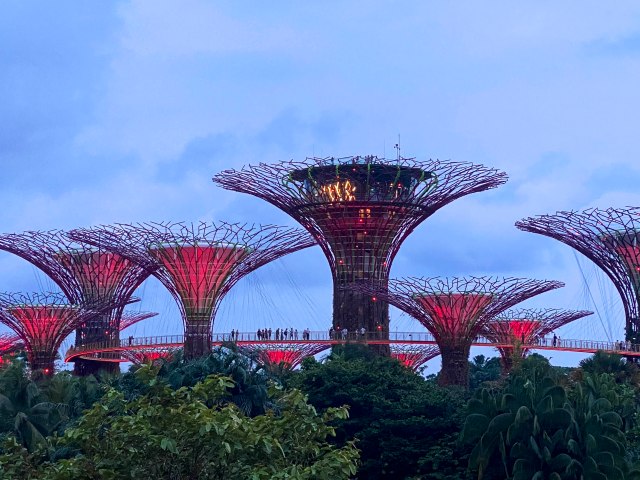
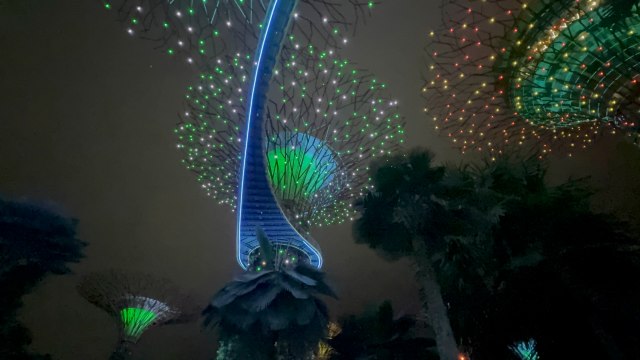
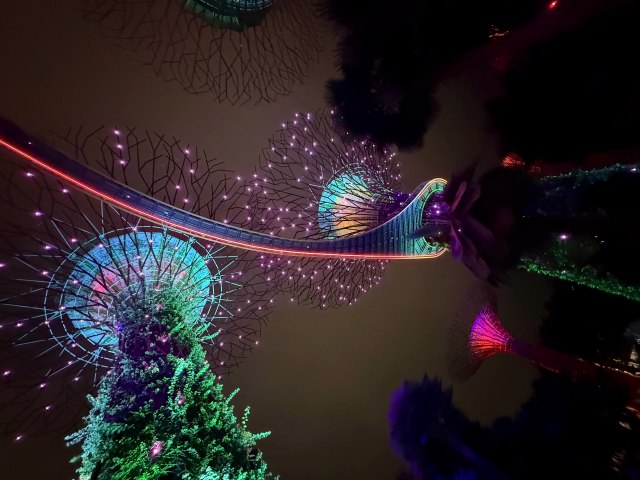
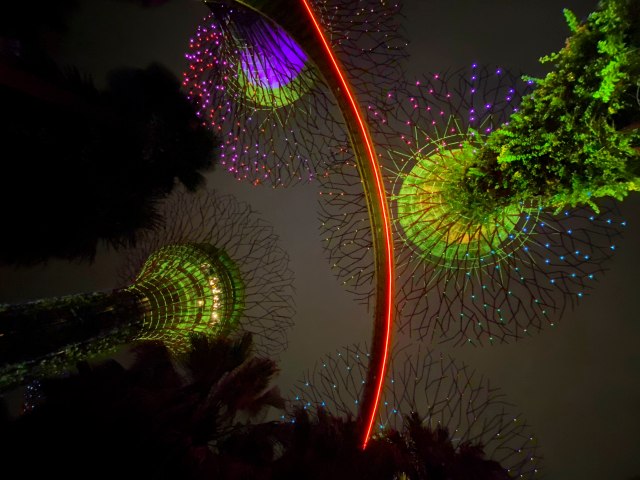
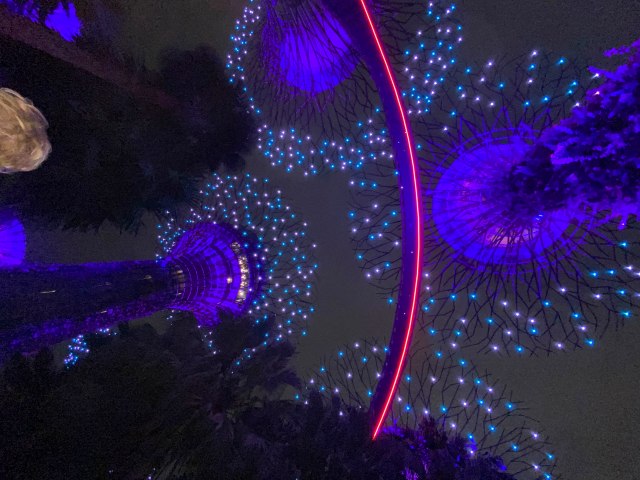
Evening entertainment abounds.  There are light shows on the Bay, across on Sentosa Island and at that Garden by the Bay (seen from atop the Marina Bay Sands).  Our pick – Garden by the Bay to see the alien like Supertrees up close and personal – AND all lit up.

Dusk time views of the Marina Bay Sands.

That top piece with all the restaurants looks like a surfboard set up there:-)

Let the show begin!

.

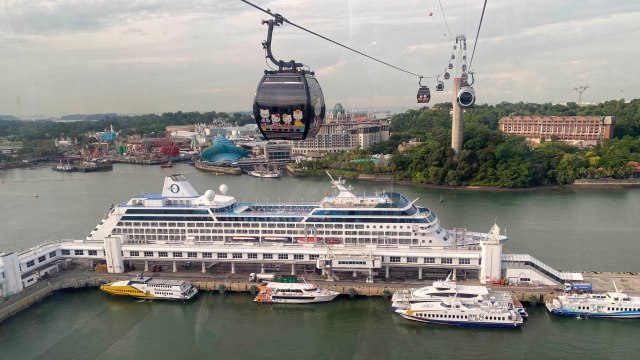
One of the 60+ isles making up Singapore is just a short hop from the cruise ship dock.  And, it is easily accessed by a cable car that will take one from Mount Faber Peak to Sentosa Island.  If you are an adventure park person, there is even a Universal Studios Park on Sentosa.  Have at it.

Cable car ride had great views of the port area – including our ship.

So many of us to make you laugh;-)

Singapore was great and it really helps to have several days here because there is so much to do.  It is safe, clean, English is the primary language, transportation is amazing and it is just plain fun!  But, as always, the time comes to move on.  So we must say – –

CHEERS!!  Here’s to Singapore.

E & G Moving on

Never Mind and OMG!!!

Siem Reap, Cambodia – home of the majestic Angkor Wat complex, a UNESCO World Cultural Heritage site as it is perhaps the largest religious complex in the world.  It was constructed in 1150 as a Hindu temple and is considered the 8th wonder of the world.  So, probably the number 1 thing to see in Cambodia.

Unfortunately, Siem Reap is approximately a 12 hour drive from Sihanoukville, Cambodia – where there is a dock for a boat if one is cruising;-(.  So – on a cruise one might get, instead, the last port evacuated by the US Army just days before the Khmer Rouge guerrillas took control in April, 1975.  A bit of a different sight – –

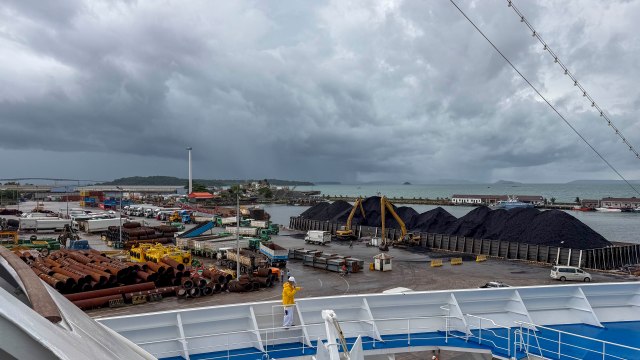
Not the most scenic of ports visited this cruise;-(

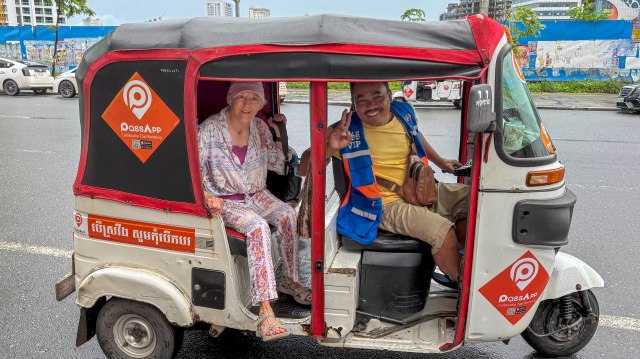
It doesn’t get a whole lot better, but a quick trip around the town by a nifty little ‘buggy’ can show you both sides of Sihanoukville – –

Yes – G got in this also!!

The perhaps more real side – –

– – and the “are you kidding me” side.

If you figure you only have one bite of this part of the world and are very disappointed you did not get to Angkor Wat – there may be an alternative;-).  Bangkok, Thailand.  Really – Bangkok, Thailand.

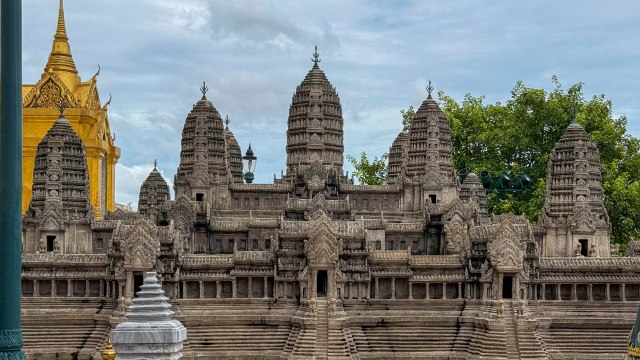
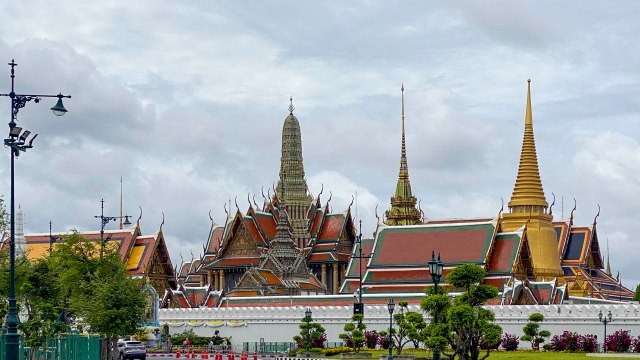
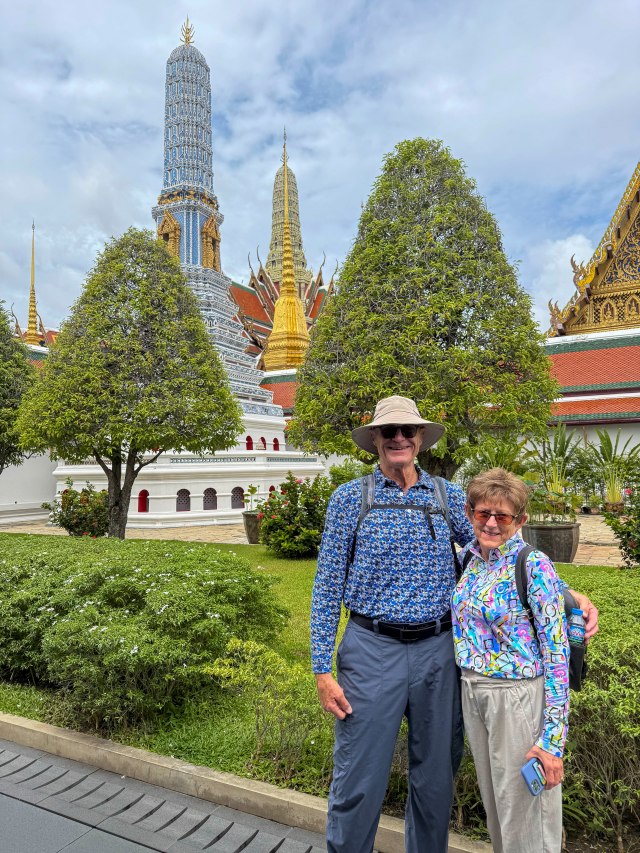
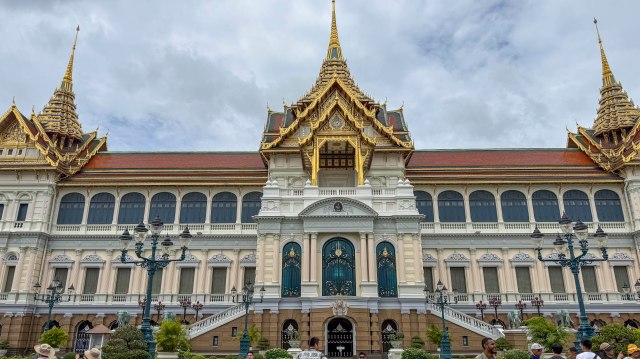
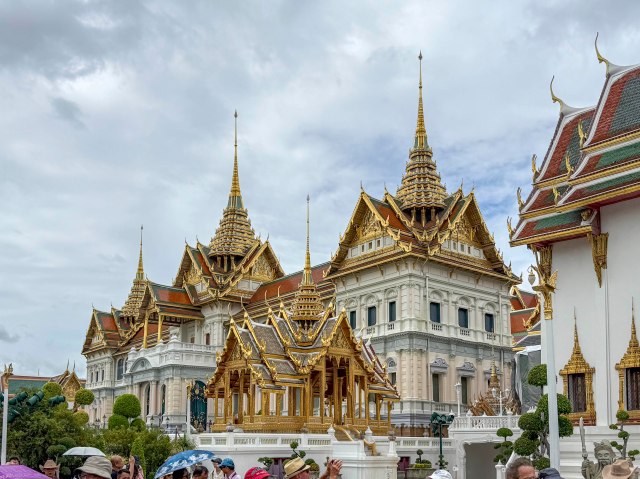
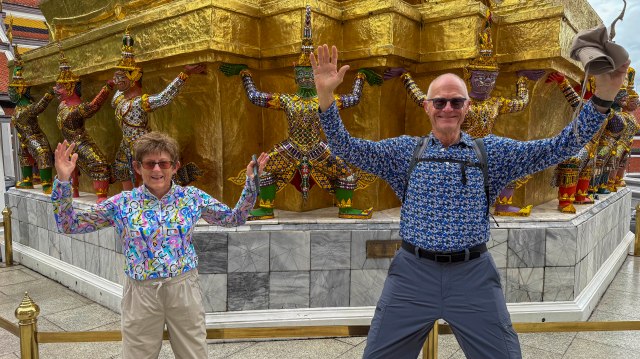
The stunning Grand Palace is a couple of hours of sensory overload.  In 1782, the new King decided to move the capital city to an area of Bangkok for strategic purposes and began constructing a palace, whose grounds now cover almost 54 square acres.  It contains several Halls of Residence, Throne Halls, administrative buildings and a temple that serves as the Chapel Royal.  AND – it contains an exact, to scale, concrete replica of Angkor Wat.  King Rama IV wanted to move one of the stone temples from Angkor Wat to the Grand Palace, but was convinced not to disrupt/dismantle the temple site.   So he instead had a replica of the entire complex built within the Grand Palace walls!

Our visit to Angkor Wat.

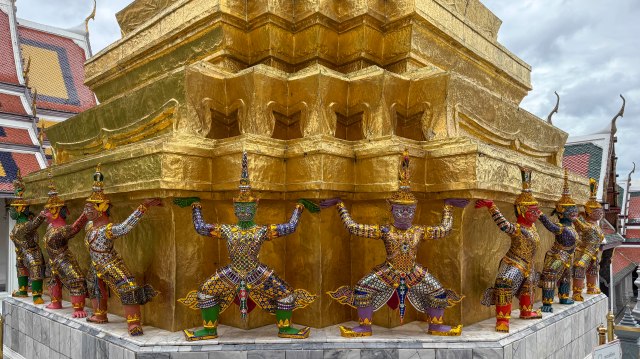
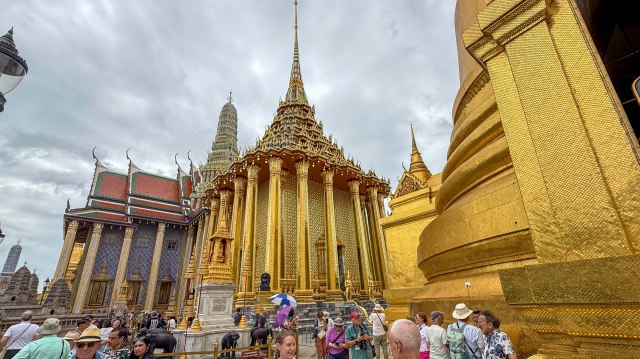
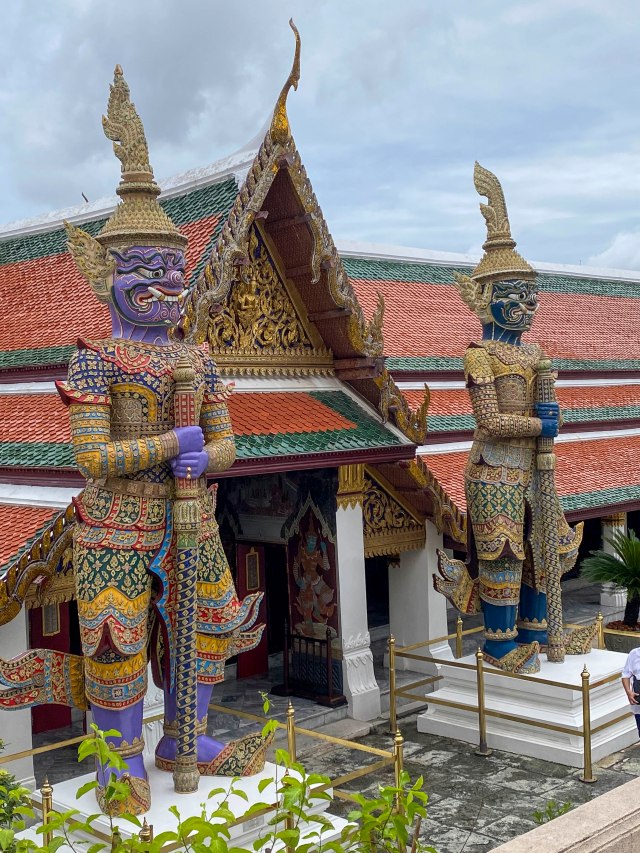
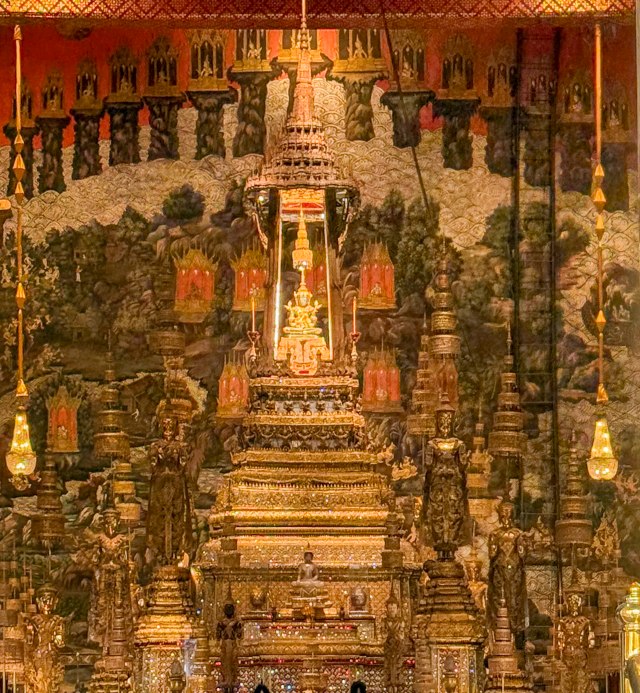
As one approaches the complex from the outside, it looks grand but there is NO idea of what all will be seen inside the walls.  The Grand Palace’s shimmering labyrinth of more than 100 buildings is a fantastically ornate maze and a study in monumental excess.  It appears that every inch of every building is gilded and/or inlaid (pictures do NOT show the depth of this!).  Perhaps the highlight is Wat Phra Kaeo – the Temple of the Emerald Buddha.  Thailand’s most venerated religious object, a delicate 26 INCH Buddha carved from jade is perched on a 34 FOOT golden throne guarded by ancient bronze lions in this Temple.  This cherished figure was lost and amazingly rediscovered in the 15th century.  Take a look – –

Here we come.

Stone and marble sculptures found buried during a construction project.  Repaired and replaced near original placements.

Not quite turned to stone;-)

Geometric patterns of glass mosaics are interspersed with ceramic tiles.

Built to hold Buddhist scriptures, the exterior walls are covered in glass mosaic with rows of gilt stucco around the base.  The doors are inlaid with mother-of-pearl.

THE Emerald Buddha carved from a block of jade.

Throne Hall which houses the crematory relics of several of the Kings and family members.

A Hall for western style meetings with tables and chairs.

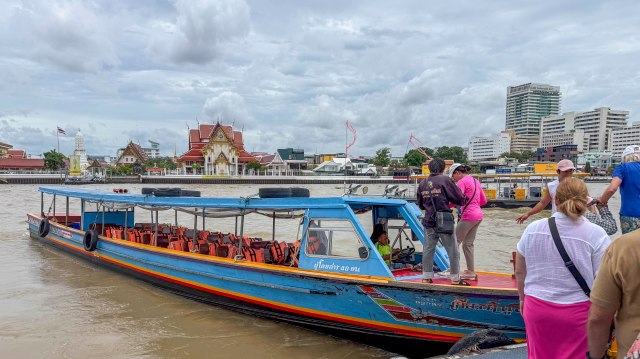
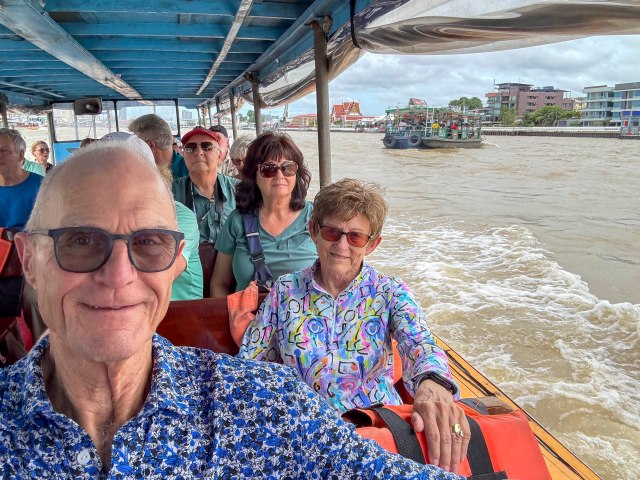
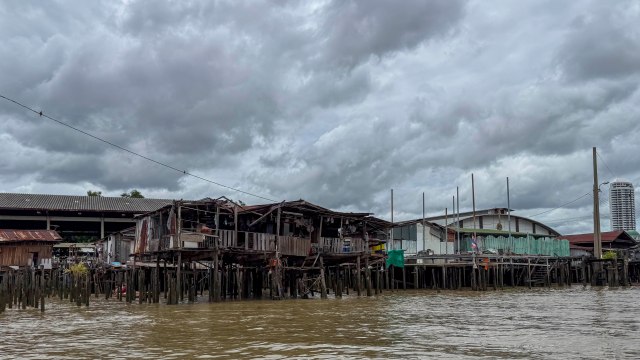
After such an overwhelming experience, a simple boat trip down the Chao Phraya River might be in order.  Like similar boat trips in other cities, it is here that one sees the much more simple lives including the stick houses of those that fish.

Loading and unloading on these ‘boats’ was a real trick.

Hang on!

Nothing like the Grand Palace.

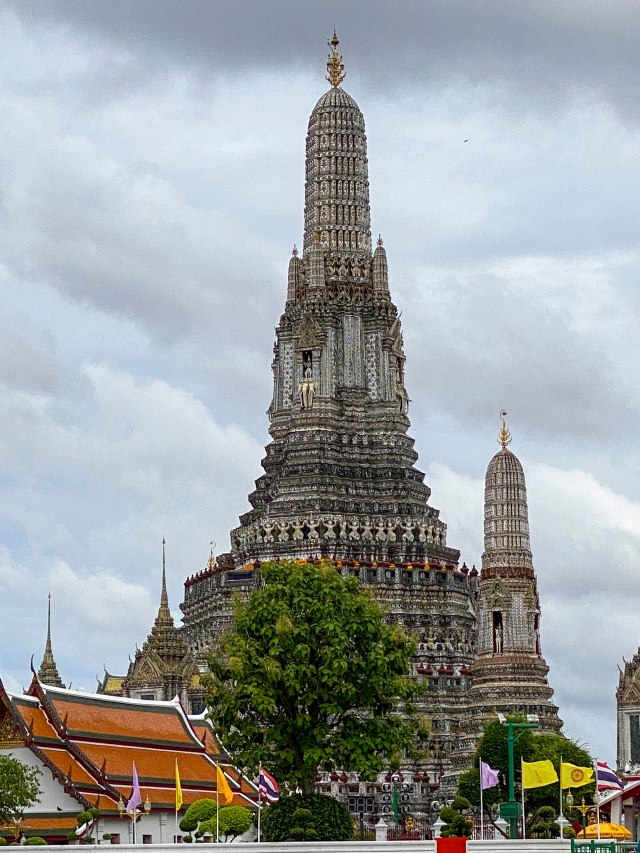
Wat Arun (The Temple of Dawn) crops up before long along the banks of Chao Phraya River.  This most elegant pagoda – a landmark of Thailand – is a Royal Temple and one of the most important Buddhist temples in Bangkok.  Due to its height, the best viewing is from the river – –

A beautiful sight.

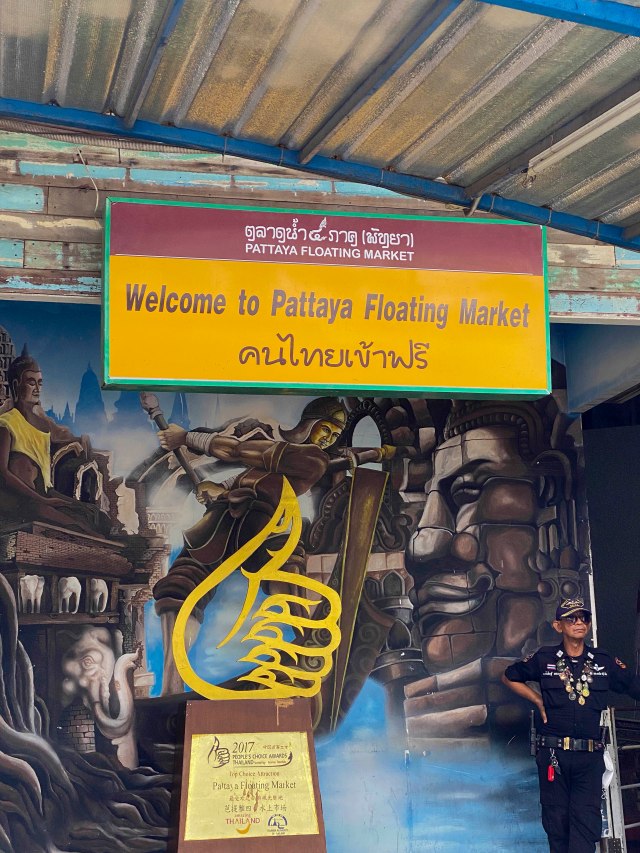
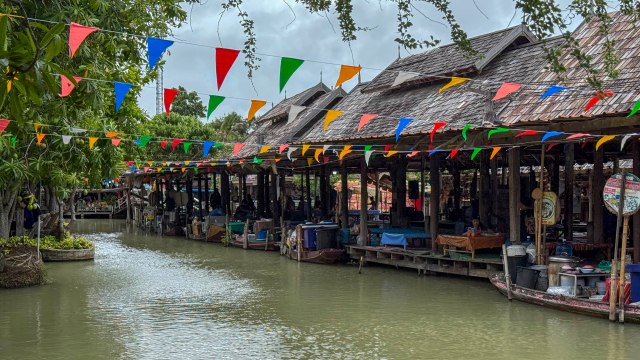
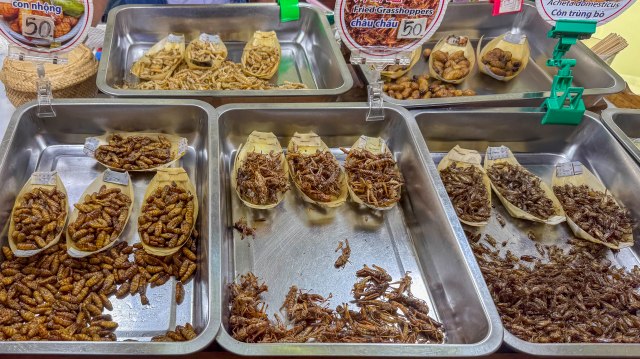
Leaving all seriousness behind, visit a floating market – perhaps the Pattaya Floating Market.  You can get almost anything you want to eat here – crocodile, any assortment of bugs and insects, squid or something more simple like ice cream.  Or you could buy a wonderful dressy top for a mere $10!!

A real experience.

Lunch anyone?!?

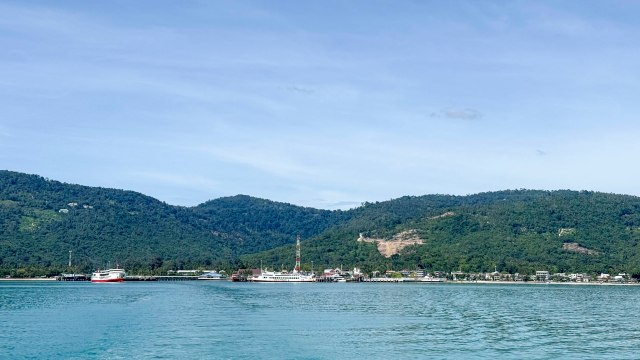
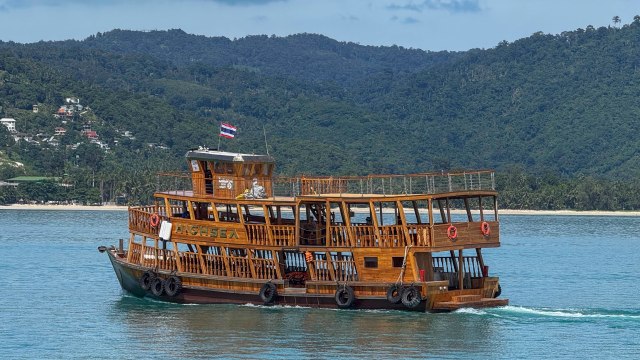
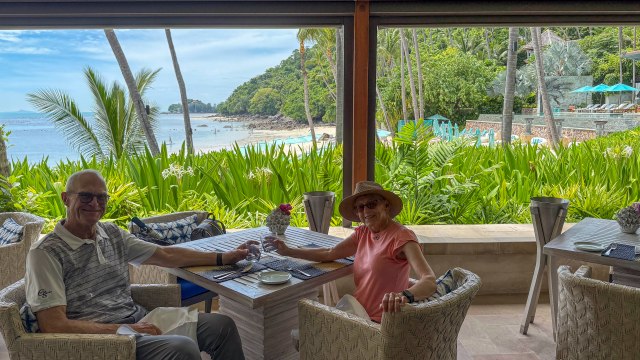
After a couple of days in the hustling, bustling Bangkok, a few hours on the island of Ko Samui may be warranted;-)  If you approach on a cruise ship, a tender will most likely be needed as the waters are quite shallow at the dock.  But, get away from the pier and venture into the middle of the island.  It is forested almost down to the water with beaches all around the island.  There also happens to be a Four Seasons Resort that looks like something out of a brochure for some deserted island.  If you want the use of the pool, an incredible lunch or, if you have the time, an overnight stay – this is your get away.

Ko Samui here we come.

Whew!  Hope this gets us there?!?

What a lunch view!

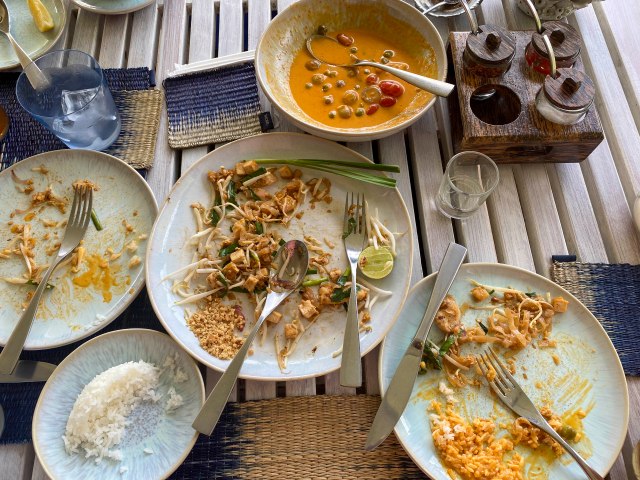
Loved this true Thai lunch;-)

Besides the lunch view in Ko Samui, Thailand had many diverse sites – –

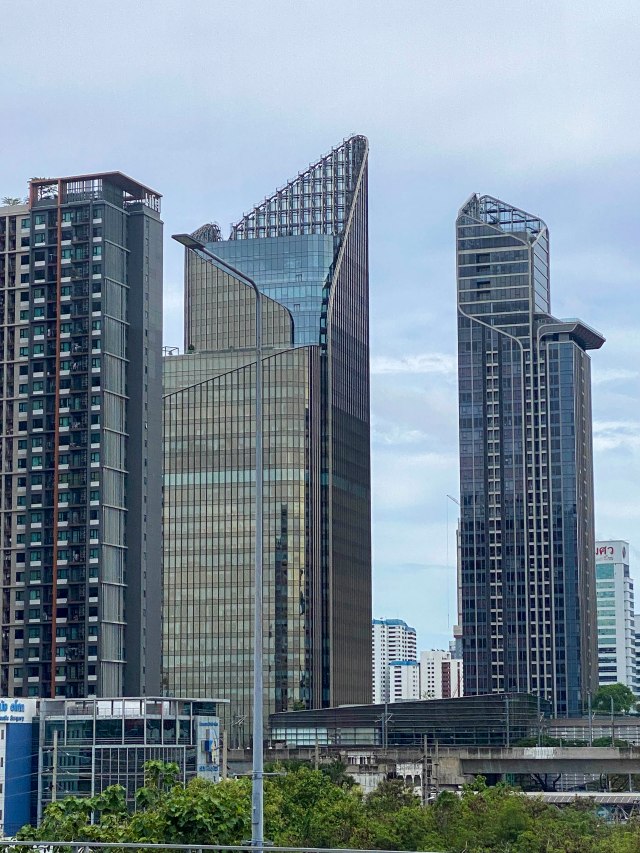
From very modern buildings among all the temples – –

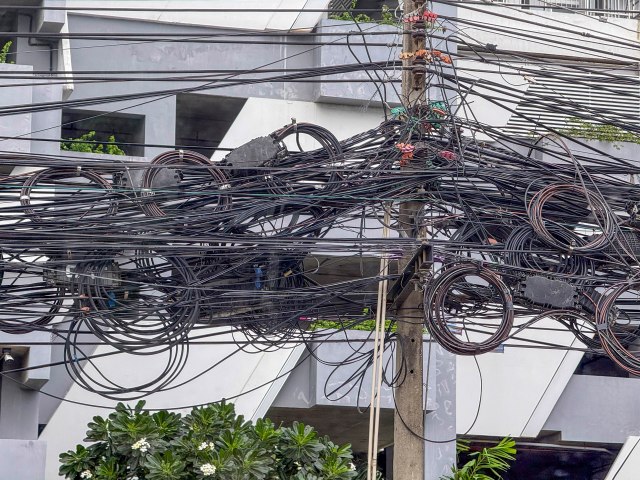
– – To this!  Typical of EVERY city in Asia visited.  Don’t know how this doesn’t erupt in fire and burn the city down as every pole looks just like this.

There is a lot to learn, wherever in this great big world one travels.  But, all cities and towns seem to have similar sights – some good, some wonderful and some not so good.  It is the history and development that make each their own.  After several days in Thailand, it is time to move on.  So we say goodbye from here – –

Still having fun!!!!

E & G – See you at the next stop


Good Morning Vietnam!

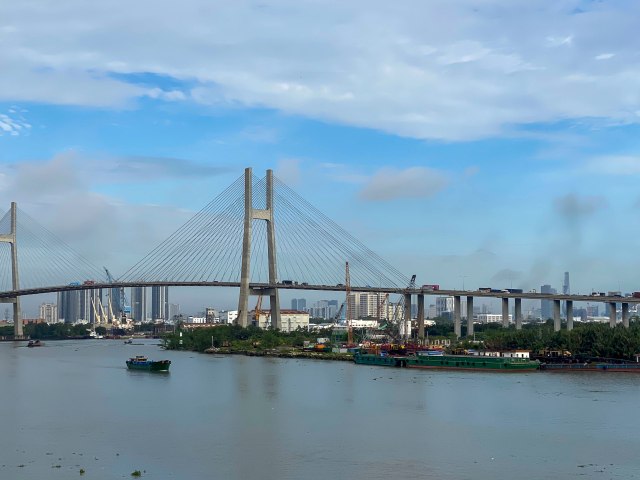
Vietnam is a Communist country, but one would never know it from the commercial activity that has exploded since the 1990’s in Ho Chi Minh City – preferably Saigon by many of the Southern Vietnamese.  Construction and luxury car showrooms are everywhere and the population has grown significantly in the last few decades.  Early morning traffic was even evident as the ship pulled into the harbor —

Rush hour on the bridge.

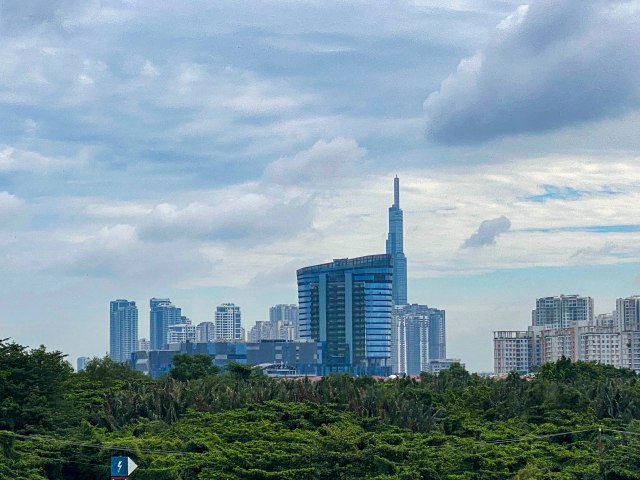
Fabulous high rises on the cityscape.

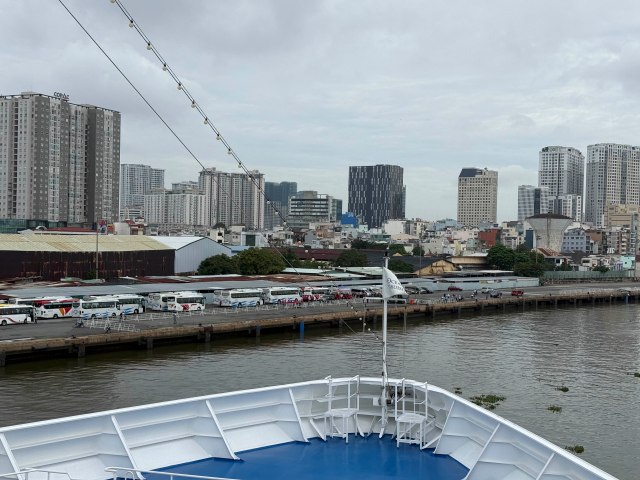
Excursion buses lined up and ready to whisk us away;-)

The highlight of a trip to this area for those remembering news stories from the war era might be an excursion to the Mekong Delta and a ride on the Mekong River.  The. Mekong River runs over 3,000 miles beginning in China and finds its way through Laos, Thailand, Cambodia and Viet Nam to the South China Sea.  It is called the River of Nine Dragons by the Vietnamese as it splits into nine distributaries forming the Delta before entering the Sea.  The Delta area is inhabited by 2/3 of Vietnam’s population and produces 2/3 of its rice.  It also supplies the country with most of its fruit and seafood.  There are floating river merchants, floating towns and villages on stilts.  And – very warm, welcoming people.

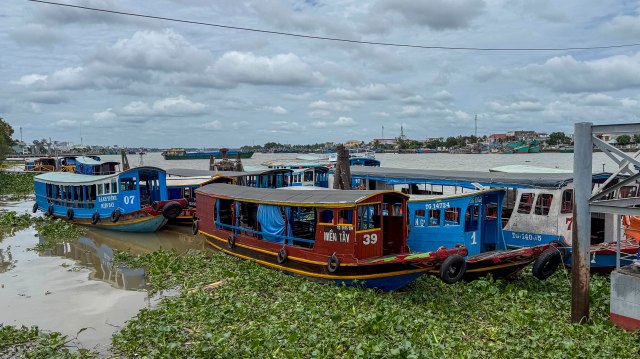
Yep! One of these is the transportation for the morning;-)

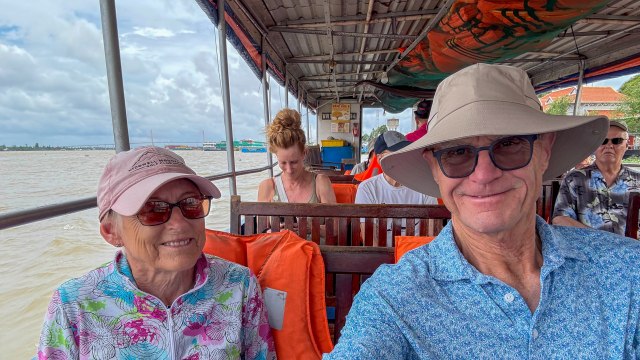
Hold on tight and cross your fingers.

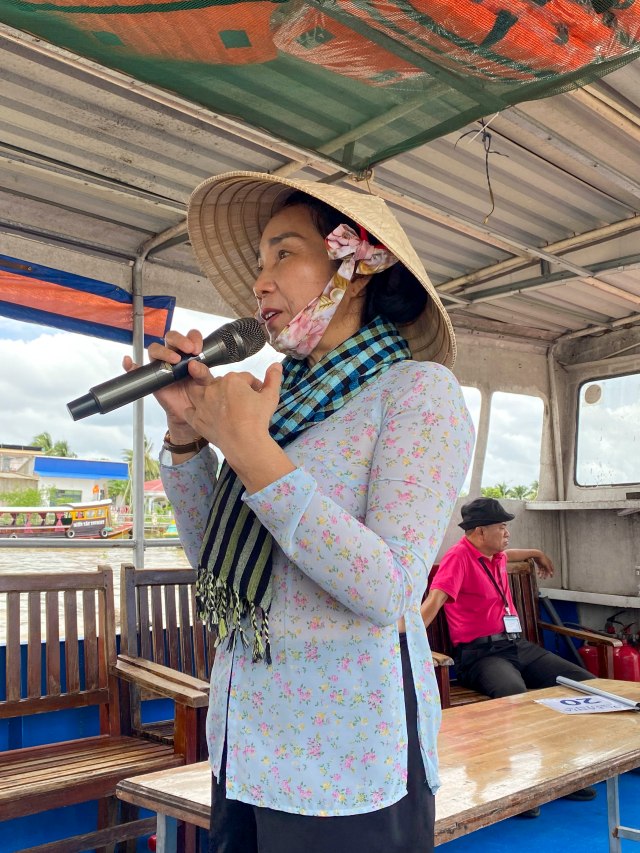
Our lovely guide for the morning on the Mekong.

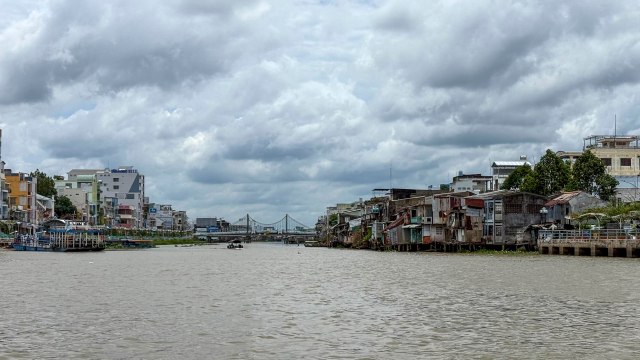
Some of those houses on stilts.

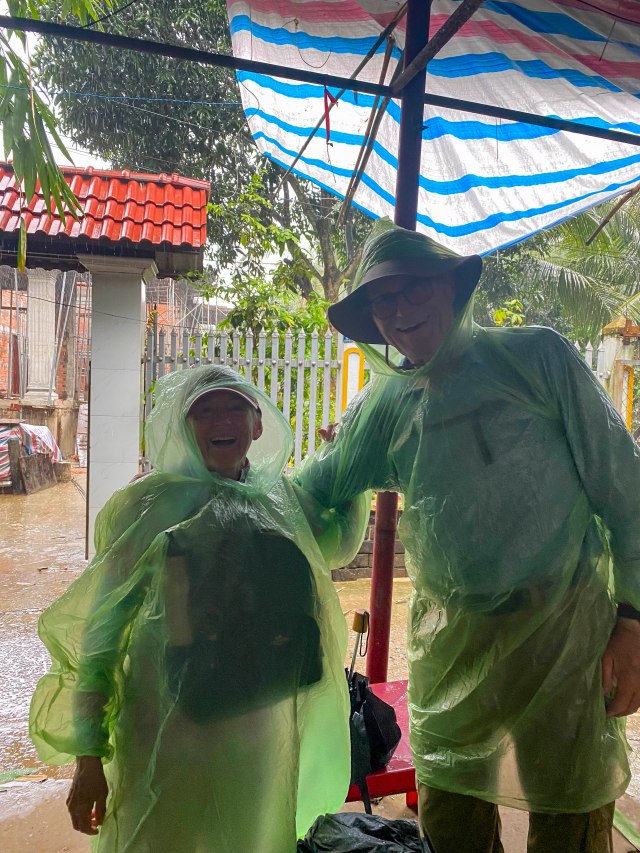
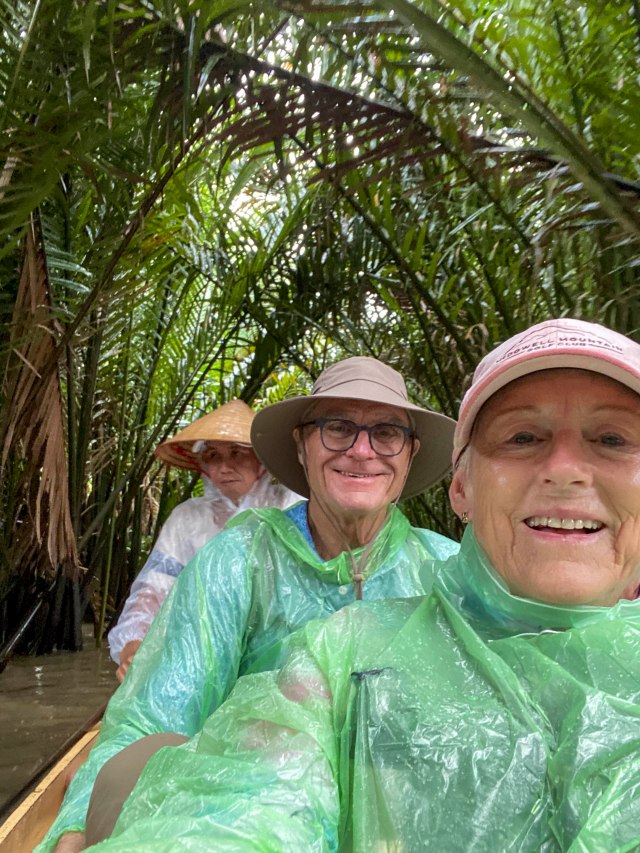
One thing you might find out, depending on the season of a visit, is that when it rains in Vietnam it doesn’t just rain – it comes down in sheets!!!  And – it can go from an OK sky to pouring with thunder and lightening.  If you are really lucky there might be some kind people to give you tea with a demonstration on honey making and the benefits of honey for your wellbeing – or tea and a fruit snack with wonderful musical entertainment.  All to keep one occupied while waiting for the rain to subside so you can get into that sampan to ride out of the jungle;-)!!!

Great ponchos – but a little late as already soaked to the bone;-)

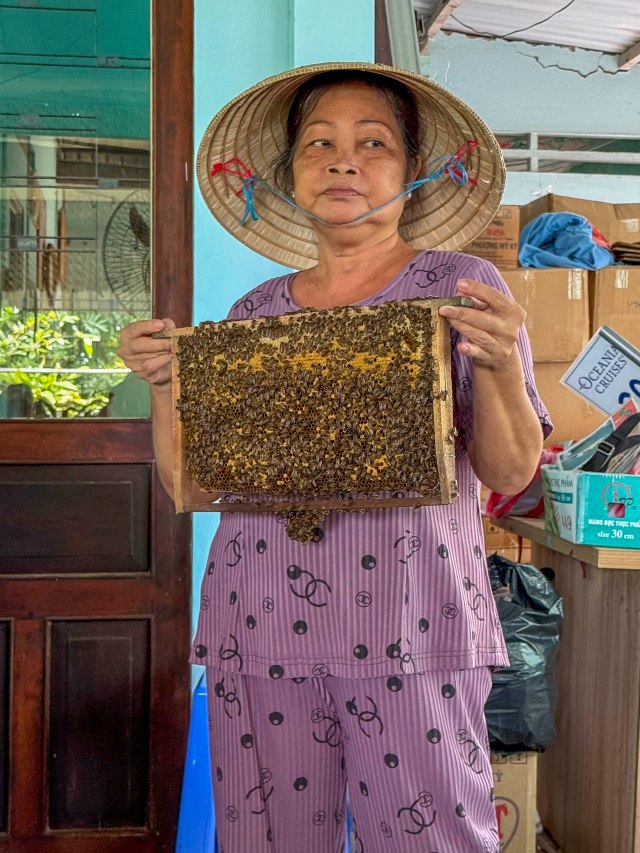
Please keep those bees away from me.

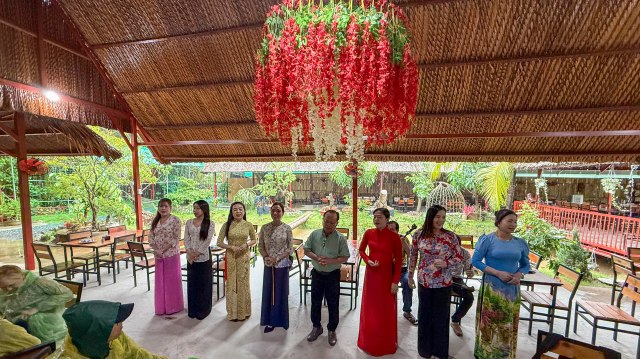
Great local entertainment.  (Much happier than the beekeeper!)

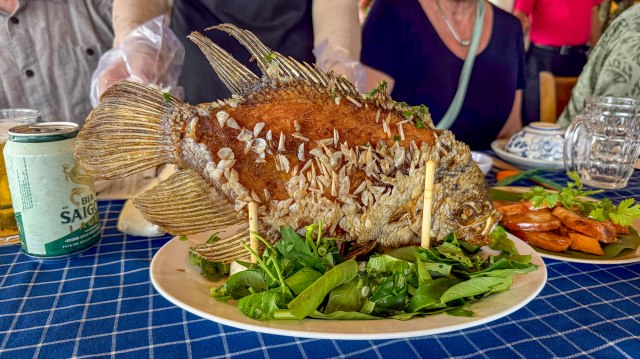
Elephant ear fish anyone?!? It really is good wrapped in rice paper with a tangy sauce.

They managed to bail all the water out of the sampan for us to get in;-)

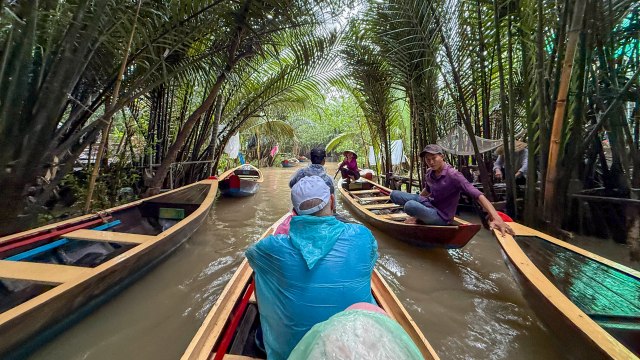
Maybe the most FUN part of the day!

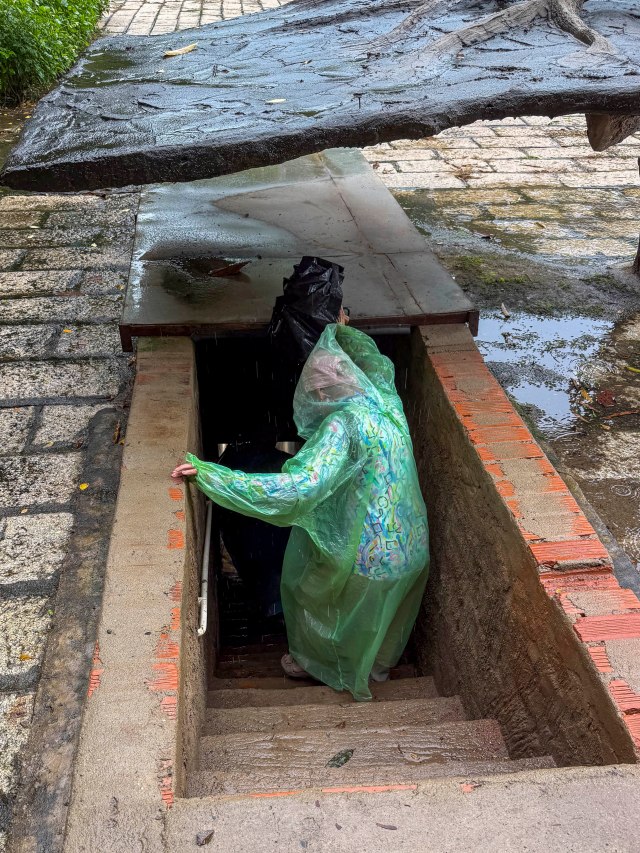
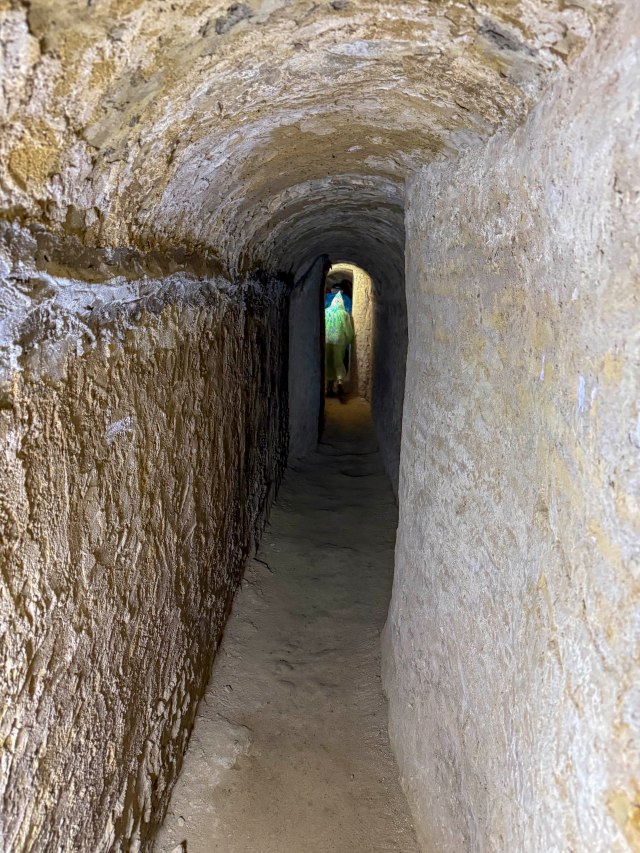
Another ‘time capsule’ item about Viet Nam was seeing the tunnels, which were used by the Viet Cong to hide and organize forces.  Unfortunately, in an effort to give an experience without the masses of tourists, today’s excursion took us to a replica of the tunnels.  Perhaps it was enough of the picture – but a disappointment not to see the real thing.

Here we go – –

Bats, mosquitoes and darkness;-(

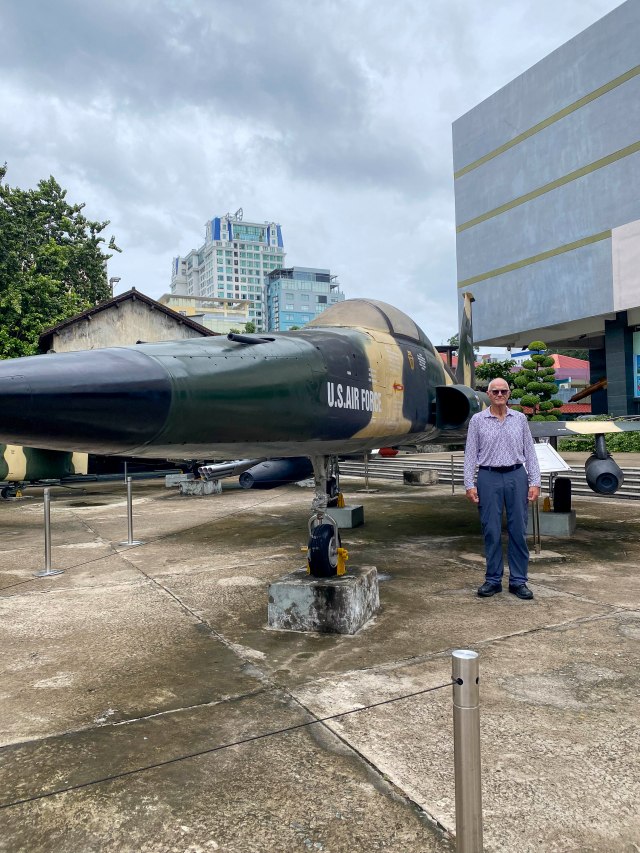
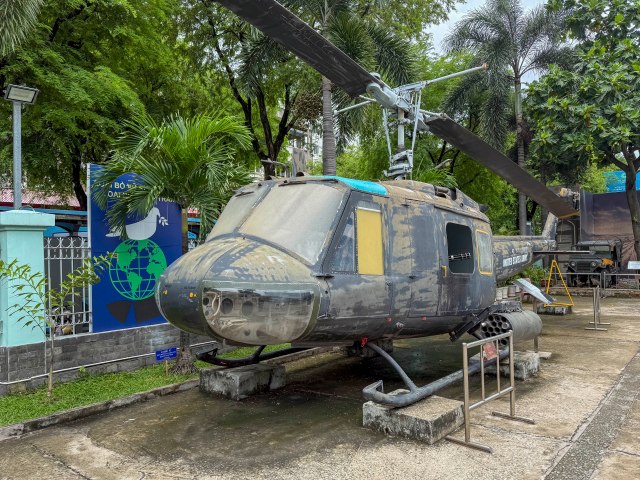
A visit to the War Remnants Museum is worth it – but one has to remember where this is and who is presenting it.  (The original name of the museum was the Museum of Chinese and American War Crimes.)  Most of the museum is photography taken by press photographers from many countries.  Outside is a collection of equipment, planes, tanks and helicopters used during the war.  G took a walk back in time – –

G guarded many of these during his ‘stay’ in Okinawa.

G’s brother flew in these during his tour of duty.

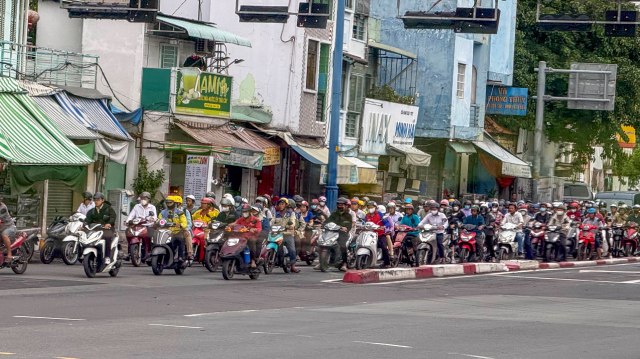
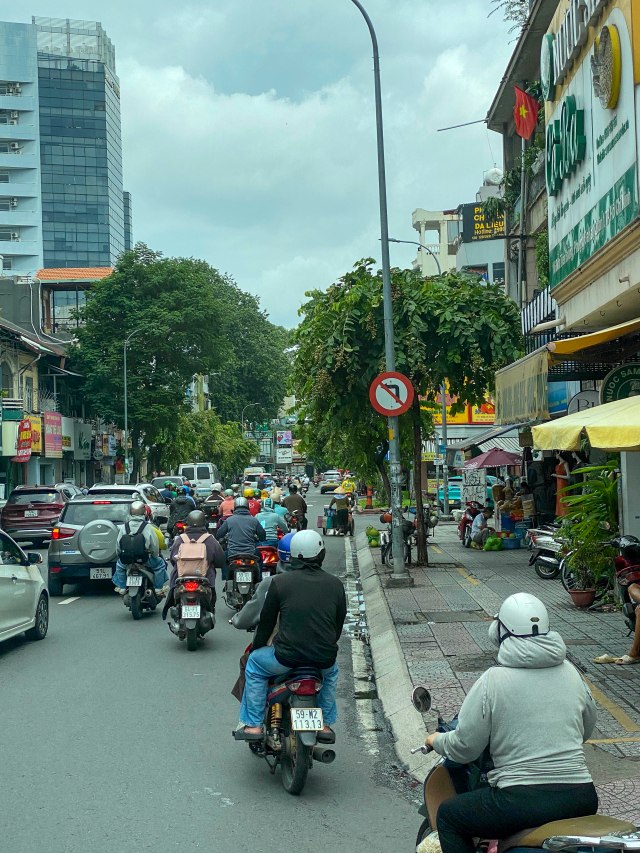
The streets of Viet Nam are crowded and hectic, especially with those scooters.  At least here there were actually lanes specifically for them – –

Ready – set – go!

Unorganized chaos!

We’re outta here;-)

As some of those who lived through some portion of the Viet Nam war and remember all the news blaring into our homes every night on the nightly news – it was important to go and see some of the sights heard about.  It IS 50 years later and the sights have changed but many of the memories are still there.  Especially for the Vietnamese who had relatives who fought in any one of the various Vietnamese factions.  It was a civil war for them and many of their veterans wound up in the same circumstances as US soldiers who fought – not recognized and even imprisoned if they were on the wrong side.

E & G from a very sobering visit through Viet Nam – Hanoi to Saigon


Hue, The Imperial City

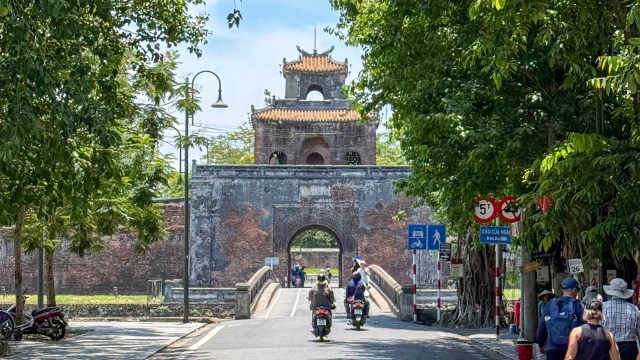
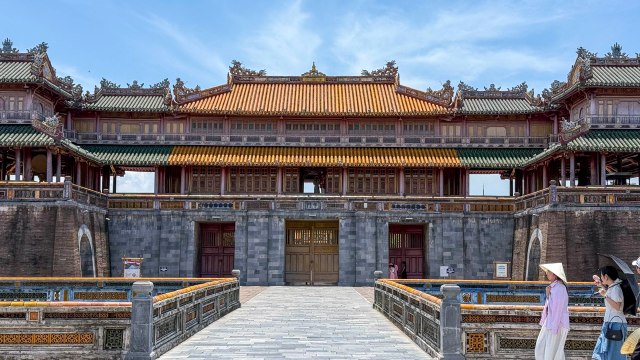
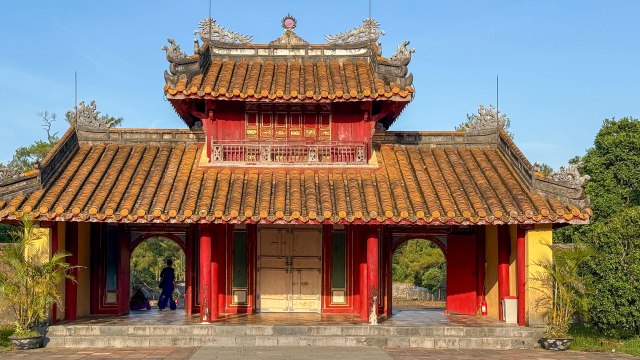
Halfway between Hanoi and Ho Chi Minh City (Saigon) sits the Imperial City of Hue (pronounced ‘way’).  Modeled after Beijing’s Forbidden City, this 1300 acre citadel is surrounded by 6′ thick walls and a 65′ wide moat and served as the political and religious center during the rule of 19 emperors of the Nguyen Dynasty (from 1802 to 1945).  At the Dynasty’s height, the complex contained hundreds of rooms in dozens of ornately decorated buildings.  After all, one of these Emperors had 500 wives, which required a lot of housing!!!!  However, the walls and moats could not protect the historical buildings from destruction during the French occupation or the Vietnam war.  Thanks to the designation as a UNESCO site, many of the most important buildings and gardens are being reconstructed.  A walk through one of the gates will get you to the inside of the Main Gate, which has not been opened since the last Emperor went through.

Come on into the Citadel grounds.

The Main Gate – Only the Emperor walked through the middle, which has the gold color roof.   All others walked through the green colored portions.

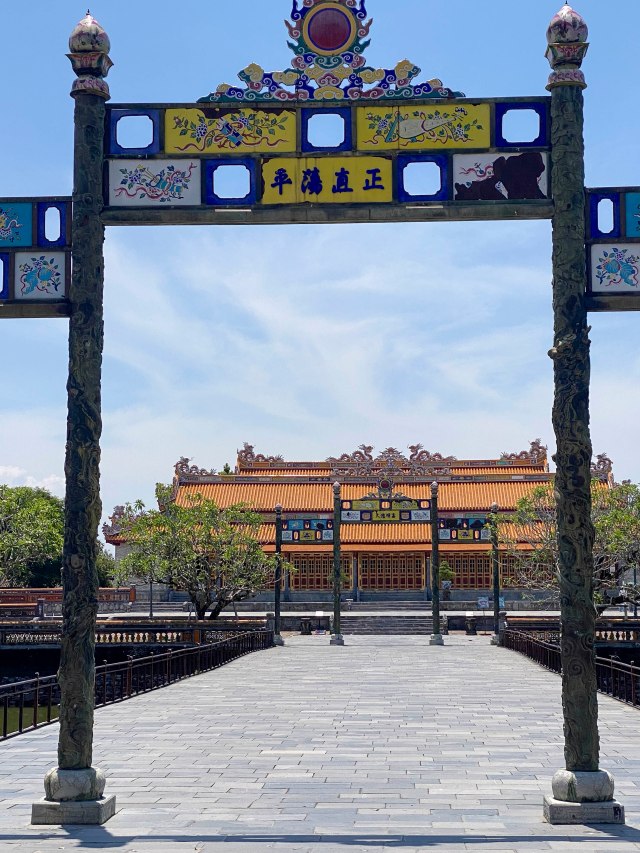
Into the Reception Room

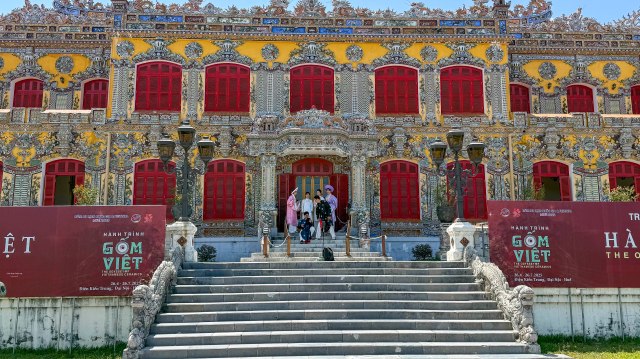
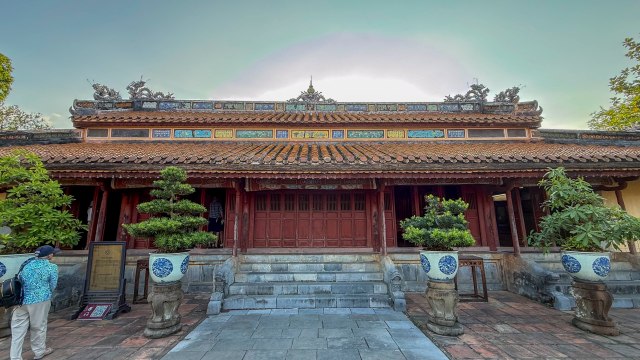
The Palace of one of the last Emperors (pretty much restored).  The ceramic work is incredible!!

A soon-to-be Tic Tok post;-)

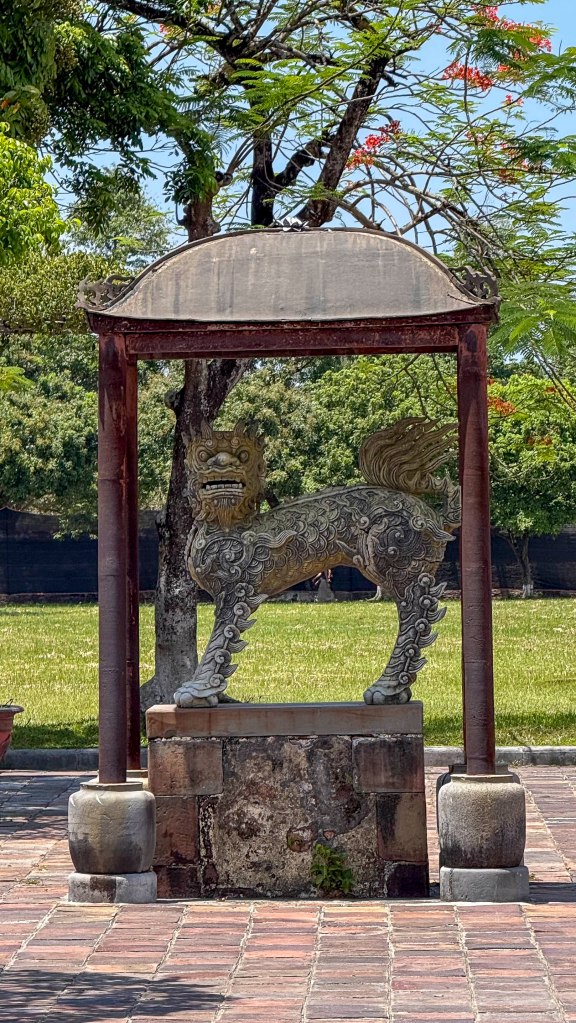
The Vietnamese version of a Unicorn.

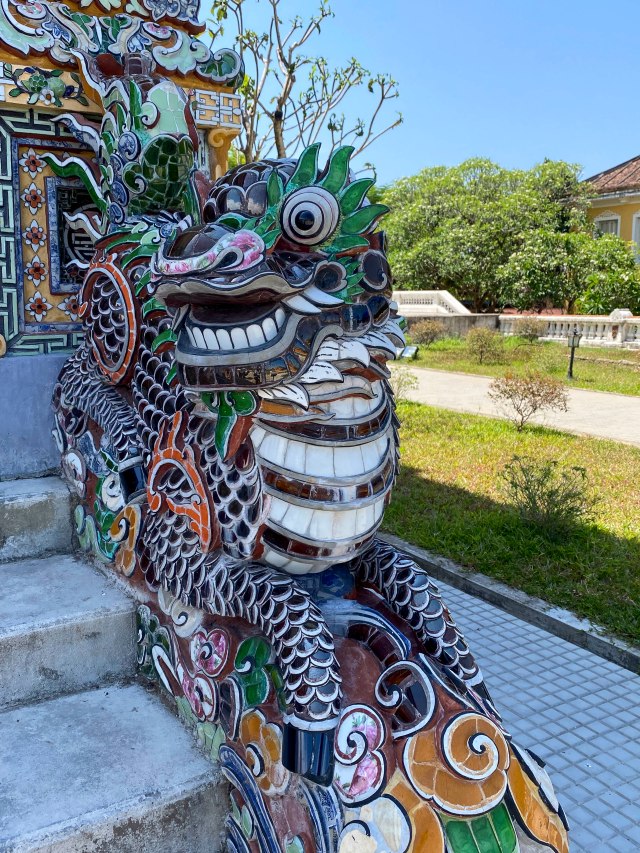
Dragons signify power and are associated with the Emperor.

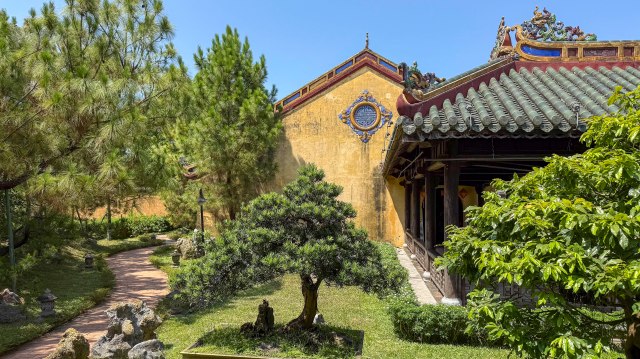
Incredibly beautiful gardens – only for the emperor.

The citadel sits on the banks of the Perfume River, where one can also find extravagant mausoleums of the various rulers of the Nguyen Dynasty.  Today the Perfume River can be travelled by the likes of any of us – –

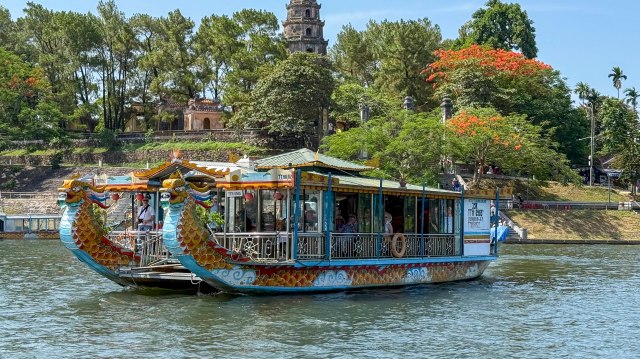
Cruising the Perfume with dragons leading the way.

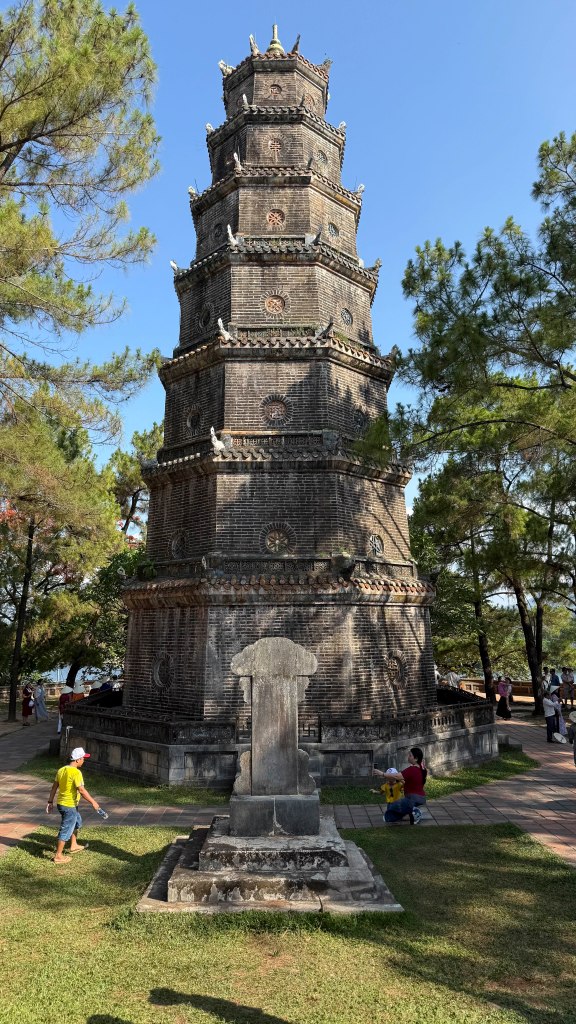
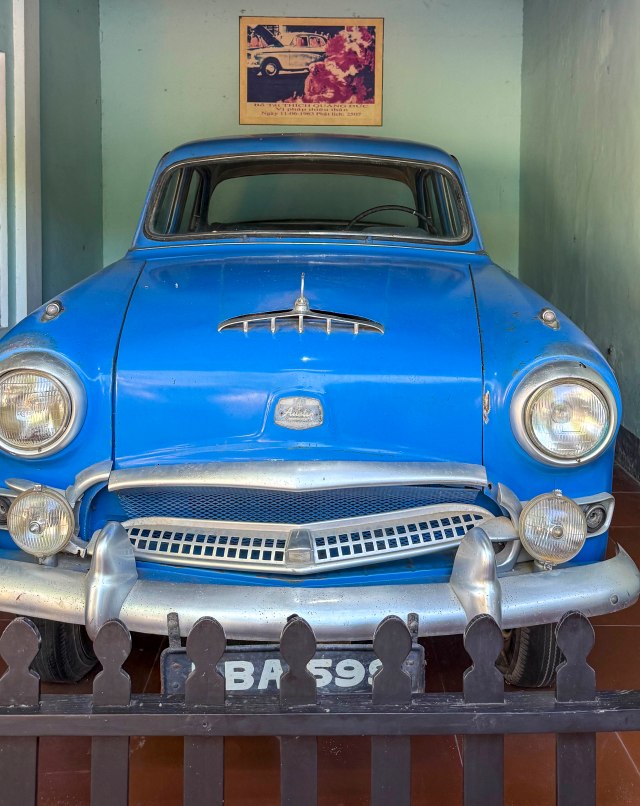
Also sitting on the Perfume River is the Thien Mu Pagoda – also known as the Heavenly Lady Pagoda.  It is one of the oldest and most iconic religious sites in the country, and is part of a functioning monastery.  Perhaps one might remember the monk, Thich Quang Duc’, who set himself on fire in Saigon protesting against the then current regime’s policies of discrimination against Buddhists.  That monk came from this area and his car, that he drove to Saigon, was returned to this monastery to be preserved.

Heavenly Lady Pagoda – always with 7 tiers.

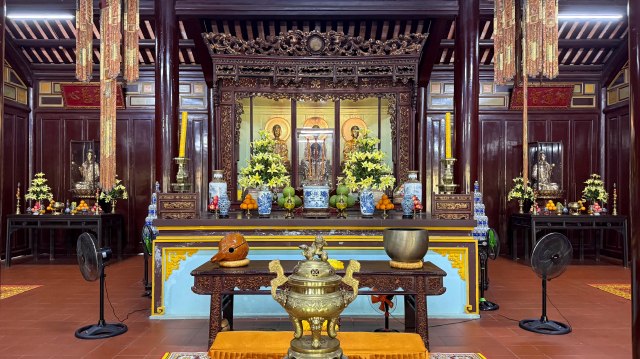
The monastery temple.

The Most Venerable Thich Quang Duc’s car as seen in the newspaper clipping on the wall reporting on his protest.

A very interesting excursion on a VERY hot day in the central portion of Viet Nam.  On to Ho Chi Minh City (Saigon) and a couple more days reliving the Viet Nam war.

E & G revisiting the history of the US’s 60’s and 70’s.


Vietnam – Its Capital and Its ‘Dragon’ Bay

Hanoi (the English version of the city) is the capital of Vietnam located in the northern part of the country.  A city of 10 million people and 6 million scooters it has a history spanning over one thousand years.  During the centuries since its founding in 1010 it has been shaped and influenced by the Chinese, French colonial rule and its own variations of rule.

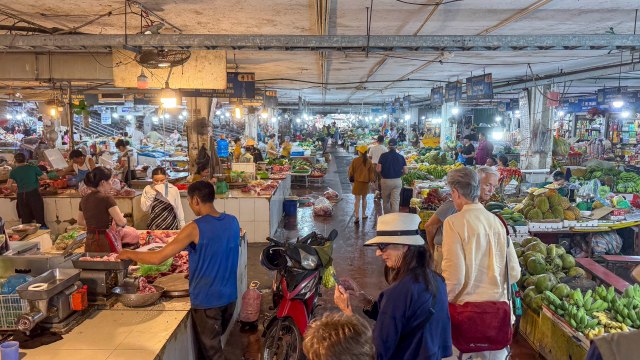
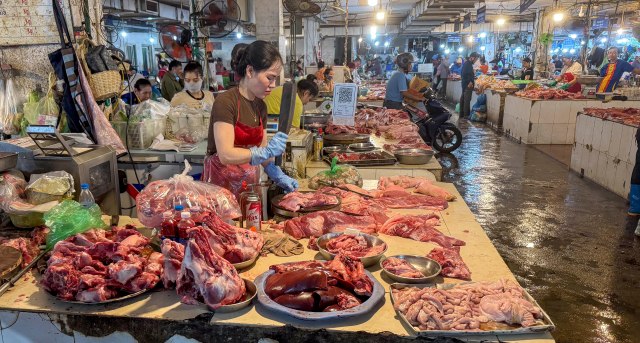
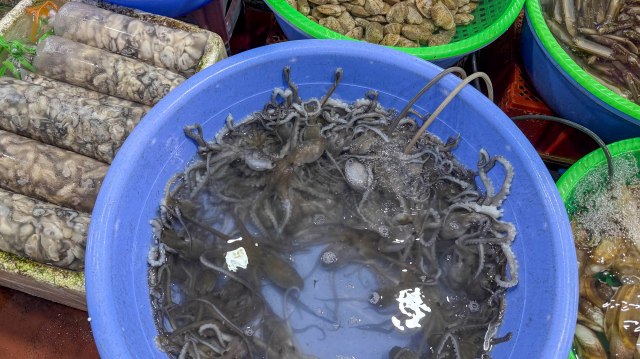
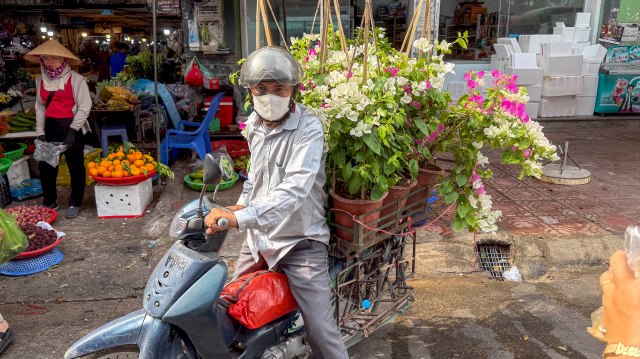
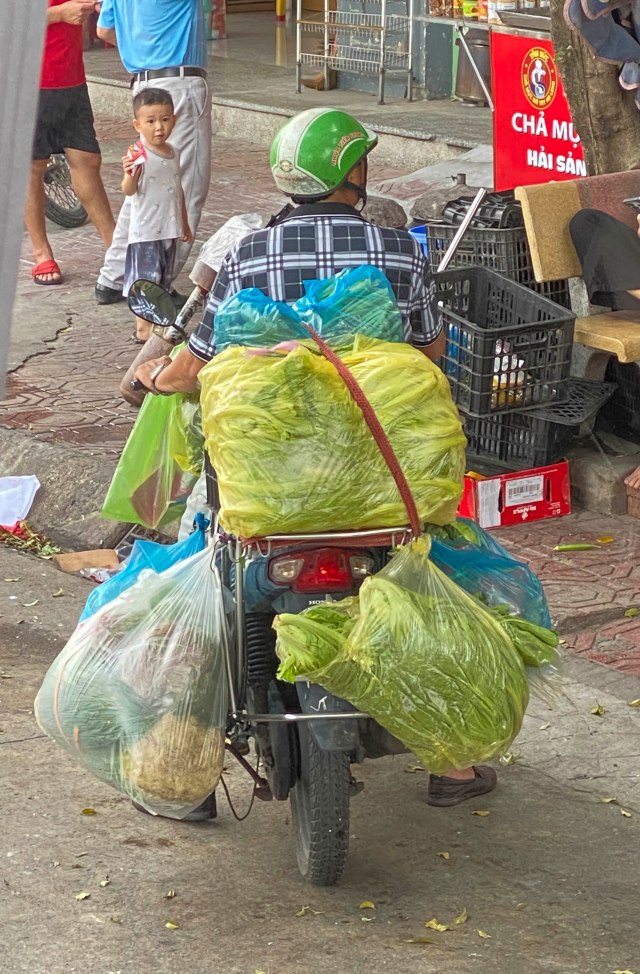
One of Hanoi’s (and the surrounding area) wonderful features is its vibrant street food scene and its markets.  Families and businesses shop at the market morning and evening for everything from fresh fish and meat to flowers and fruit – –

The Ha Long city market bustling with shoppers.  DO NOT get in the way of the scooters!!!!

Fresh meats.

Live squid.

FTD?

Door Dash?

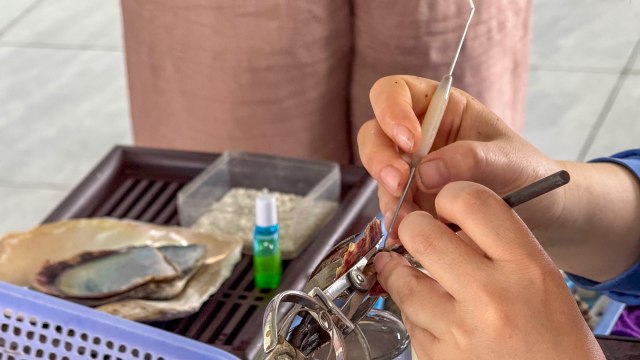
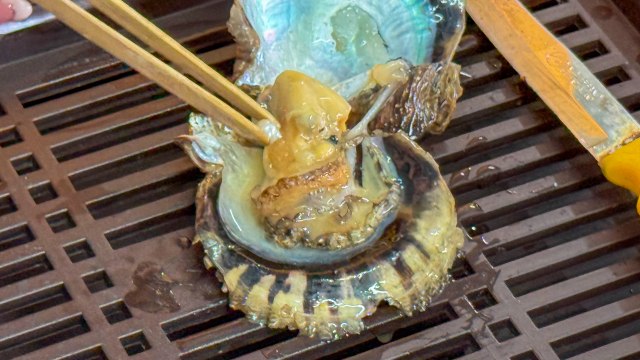
A surprise visit in Ha Long in route to Hanoi was a cultured pearl ‘production’ business – with a wonderful buying opportunity;-)  One can get quite an education in the implanting of a small particle into the oyster and the ensuing process to get a pearl, which takes approximately three years from implanting to harvesting.  And the end product is not guaranteed.  If the result is not a ‘perfect’ pearl, it may wind up a pair of earrings!

Inserting an irritant into a live oyster – very tedious business.

Finished product being harvested.  Not a perfect result – so maybe earrings for this piece.

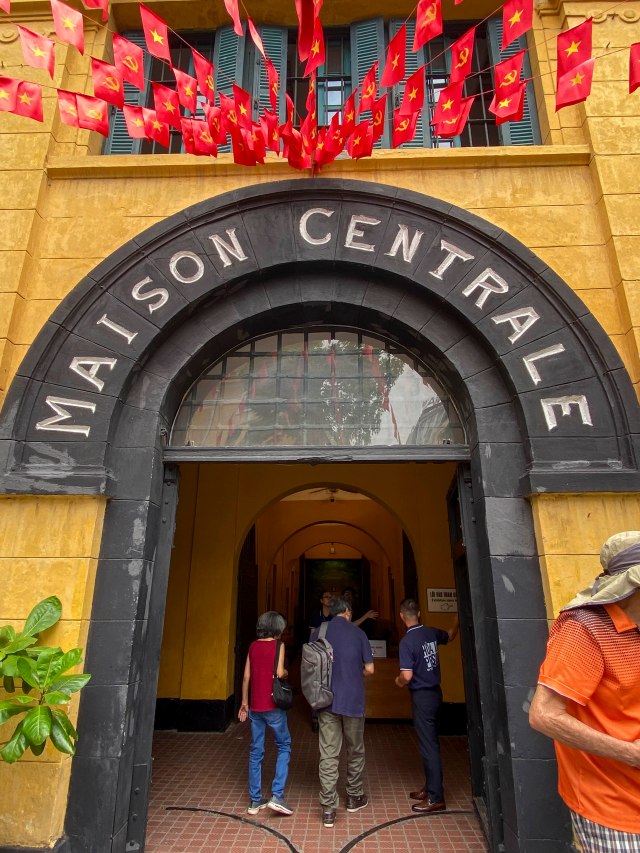
For Americans, particularly of a certain age, there might be a real desire to see what was read about or heard about in the news for the years from 1965 to 1973.  That is certainly true for these two travelers.  So, the visit to the Hoa Lo Prison, or ‘Hanoi Hilton’, was particularly gut wrenching.  Understanding that this facility is presented from the view of the Vietnamese, its focus is the construction and use of Hoa Lo  Prison as a detention place for Vietnamese political prisoners by the French from 1930 to 1945 during the French occupation.  There is no mention that similar confinements or treatment were utilized with Americans detained here.  In fact – just the opposite.  The displays of the American pilots ‘who came to stay here’ were of them playing cards with the fellow pilots, reading mail from home, opening packages from home, etc.  So – it is left to the visitor to imagine the Americans in the place of the Vietnamese in the stocks, dungeon, etc.

Entrance to the “Ha Noi Hilton”

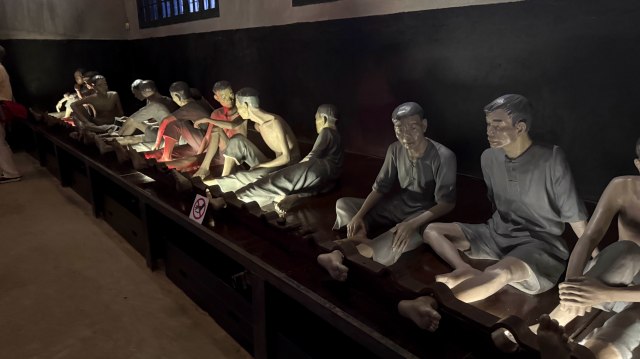
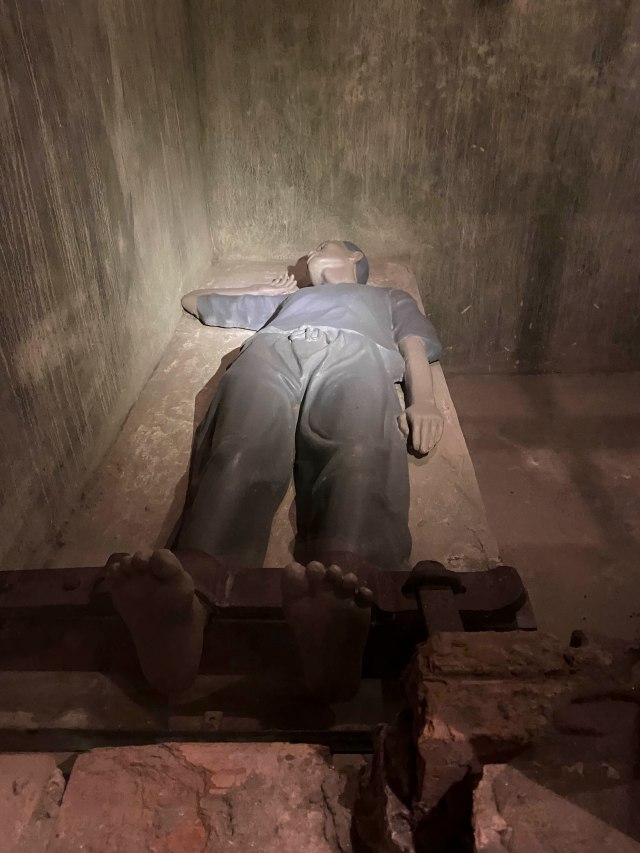
Examples of how the Vietnamese (later Americans) were jailed and tortured by the French (later Vietnamese) in the prison.

The dungeon was used to confine those who broke the rules and was the “Hell of the hell”.  It was dark and narrow and prisoners were kept separately in stocks where they had to eat and relieve themselves on the spot.

This was NOT the “Hell of hells”.  It was much worse, but too dark for pictures.

There was one notation re Americans and it read – “The US Government carried out sabotage warfare utilizing air and naval forces against the North of Vietnam. ….Thousands of planes were shot down and hundreds of US pilots were arrested ….Many were imprisoned here.  After the Peace Accords all the arrested US pilots were released to US….Pictures show details of pilots’ lives when temporarily imprisoned here.”  (This is where there were pictures of the men playing cards, opening mail and packages, etc.)  There were no pictures like those of the Vietnamese in stocks or worse.  

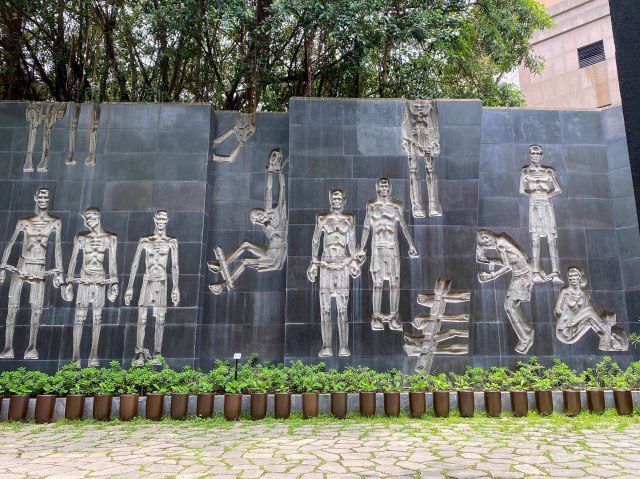
There is a memorial commemorating patriotic soldiers who sacrificed at the prison – you pick American or Vietnamese – –

Memorial to the political prisoners.

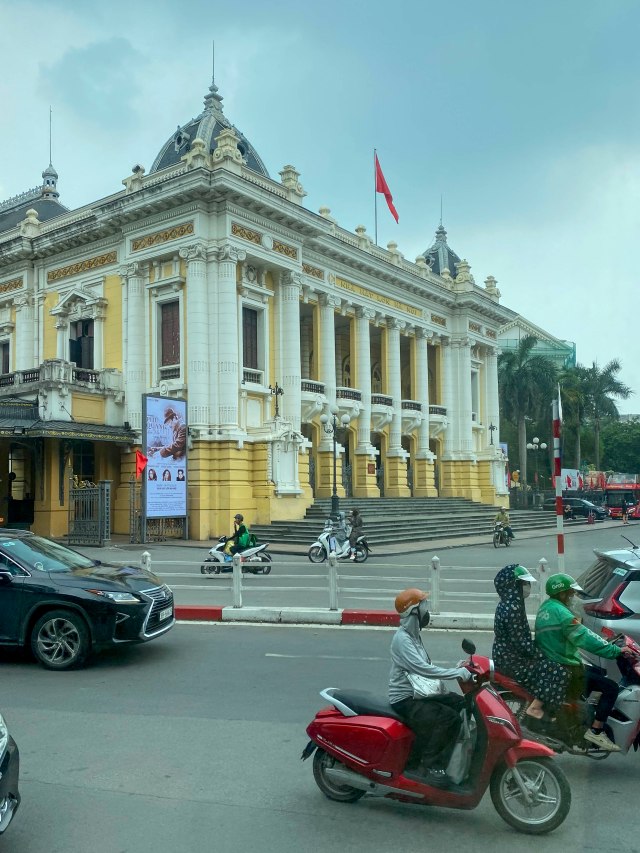
On a much lighter note – Hanoi’s cityscape diversity is quite striking.  Traveling thru the French Quarter, one might think they were in Europe with the graceful French colonial faded yellow buildings and wide boulevards – –

The Theater.

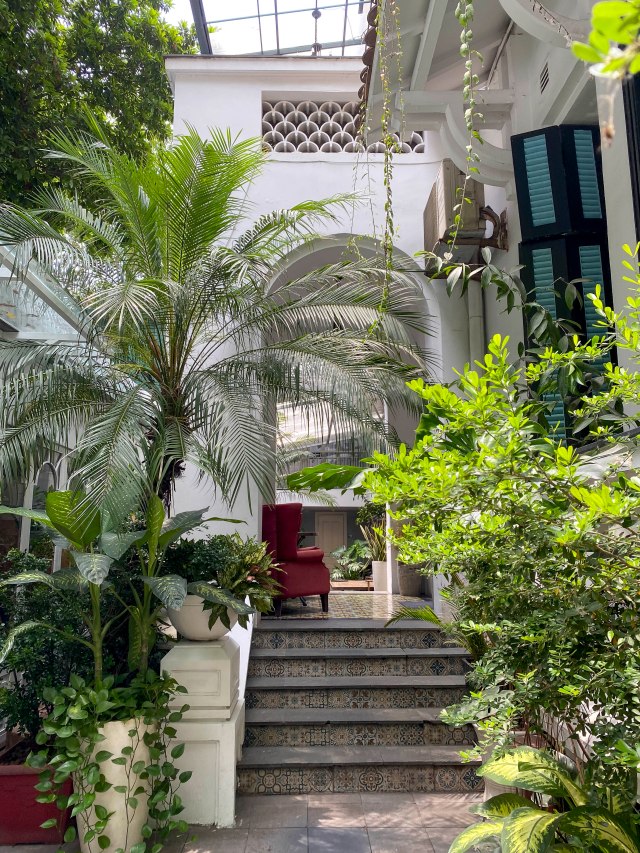
The Lý Club – a wonderful lunch spot.

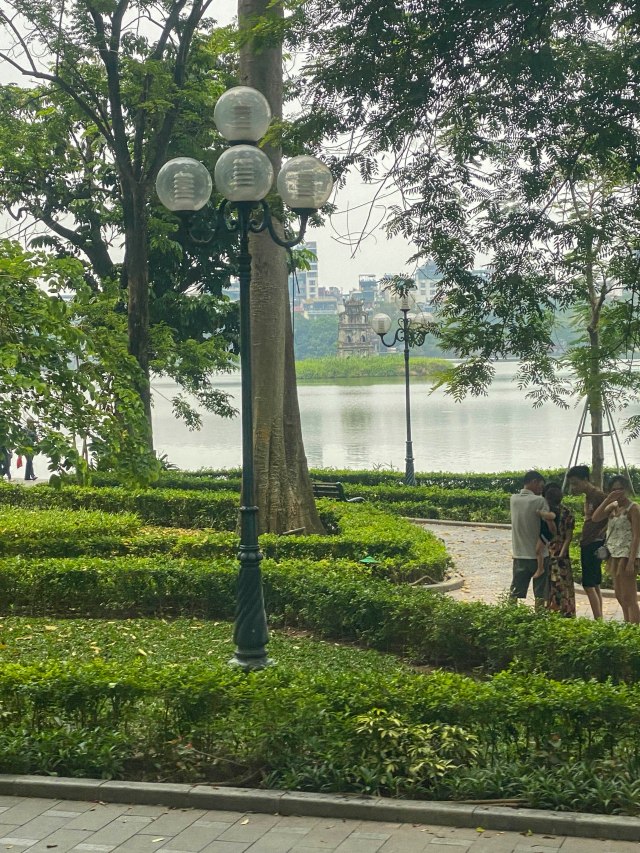
Hoan Kiem Lake – One of the 27 lakes in downtown Ha Noi.

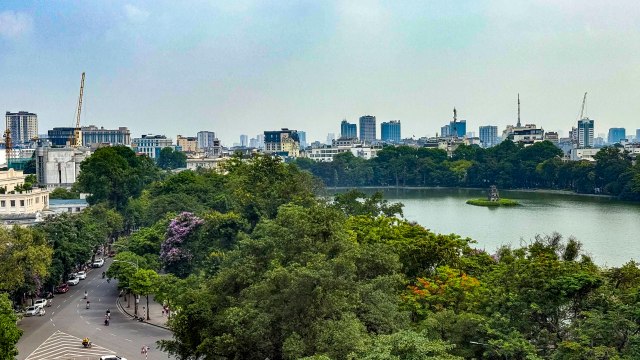
The Old Quarter is quite the opposite of the French Quarter.  It is a maze of narrow, lively streets bustling with scooters and tourist shops.  It is a great place to haggle for your wares – or find a wonderful roof top restaurant/bar with a fabulous view to avoid it all;-) 

View of Hoan Kiem Lake from atop a nearby hotel.

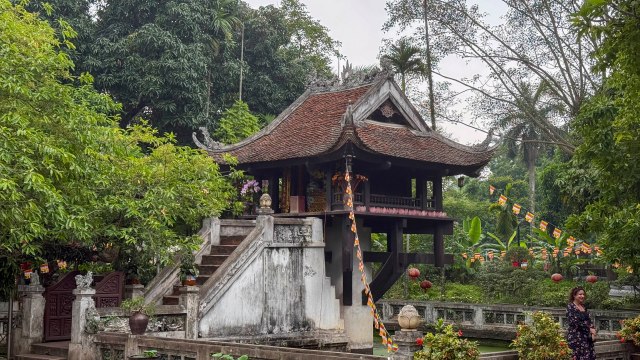
Ba Dinh Square is a huge government complex that houses cultural sights, government buildings, parade grounds, the One Pillar Pagoda and the Ho Chi Minh Mausoleum.  

A unique, charming Buddhist ‘One Pillar’ Pagoda.

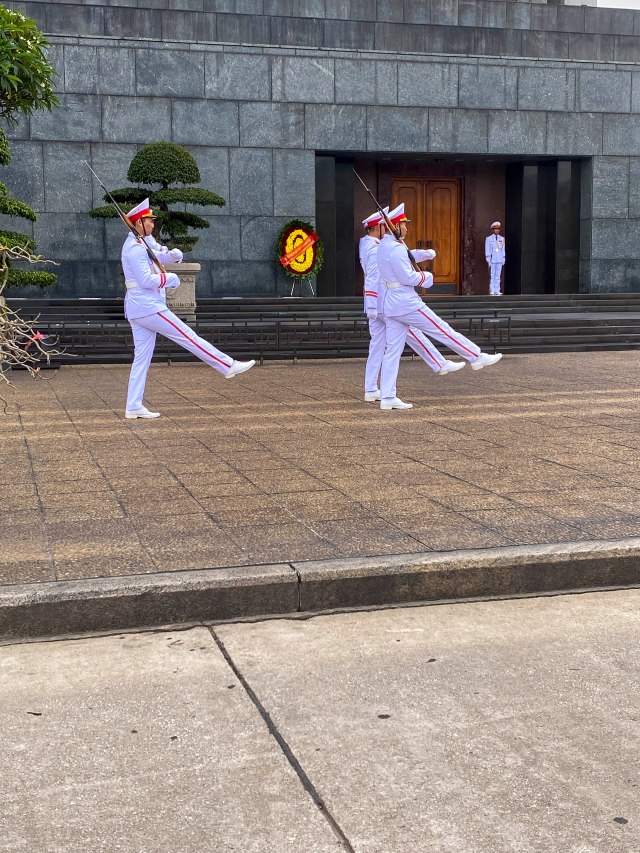
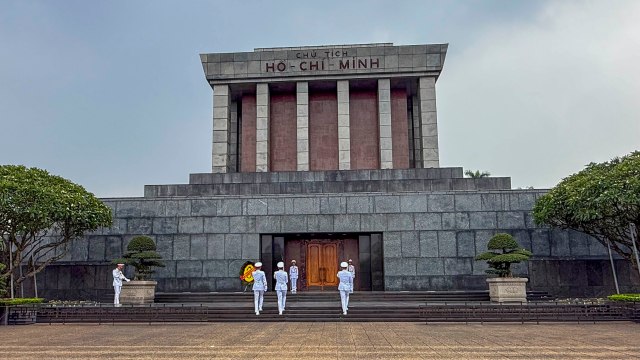
Unfortunately the interior of the Mausoleum was closed – but, if your timing is right, you may see the changing of the guard.

High stepping guard change.

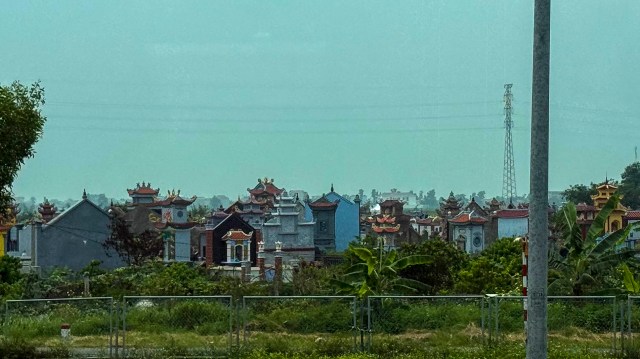
A family grave might have a very different look from Ho Chi Minh’s.  They are not necessarily in a cemetery, as the ‘bones’ of the deceased are buried near the family.  In the northern part of Viet Nam, a body is buried in a make shift grave for three years in order for ‘the meat of the body’ to go away.  After three years the bones are dug up and they are buried near the family in a more permanent, decorative grave.  These can be seen in the fields or near houses when traveling the highways.

One of many cemeteries seen along the highway.

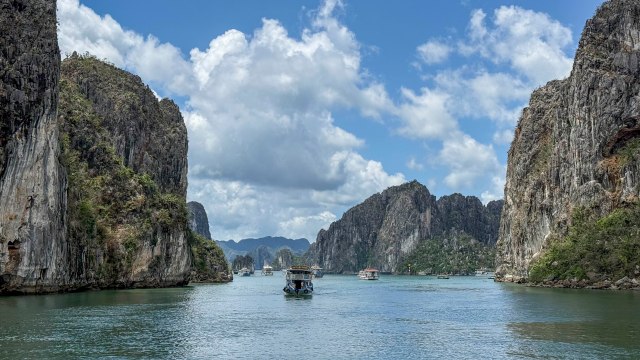
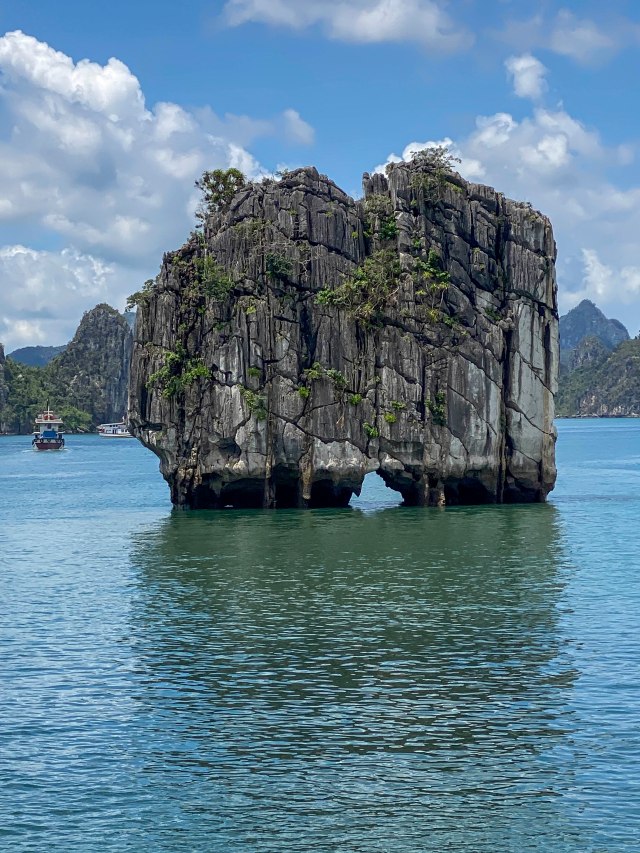
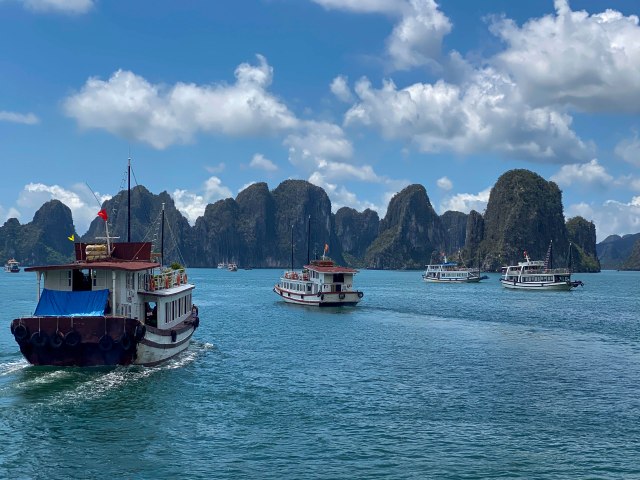
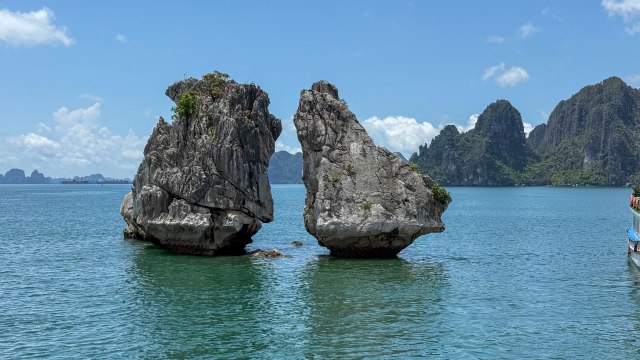
One of the must sees in “1000 Things to see Before You Die” is Ha Long Bay, a UNESCO World Heritage Site AND one of the NEW seven wonders of the world!!!  Vietnamese legend maintains that dragons once descended from heaven and spouted streams of jade droplets into waters of the Bay forming thousands of islands to protect the bay and its people from invading marauders.  These ‘jade droplets’ are today more than 2,000 limestone islands rising out of the ocean topped with thick jungle vegetation.  Some of the islands are hollow with enormous caves that can be visited and some have acquired names because of looking like birds, antelopes, monkeys and ‘fighting cocks’! 

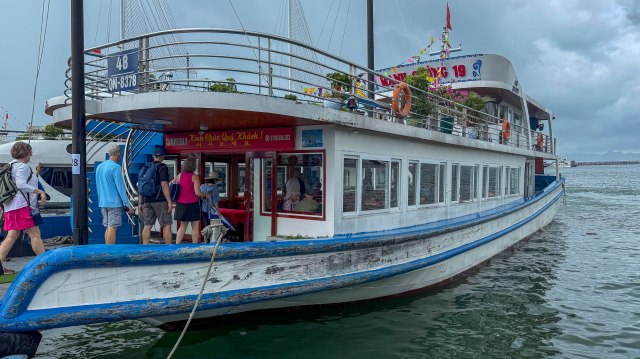
Taking a ride to explore Ha Long Bay.

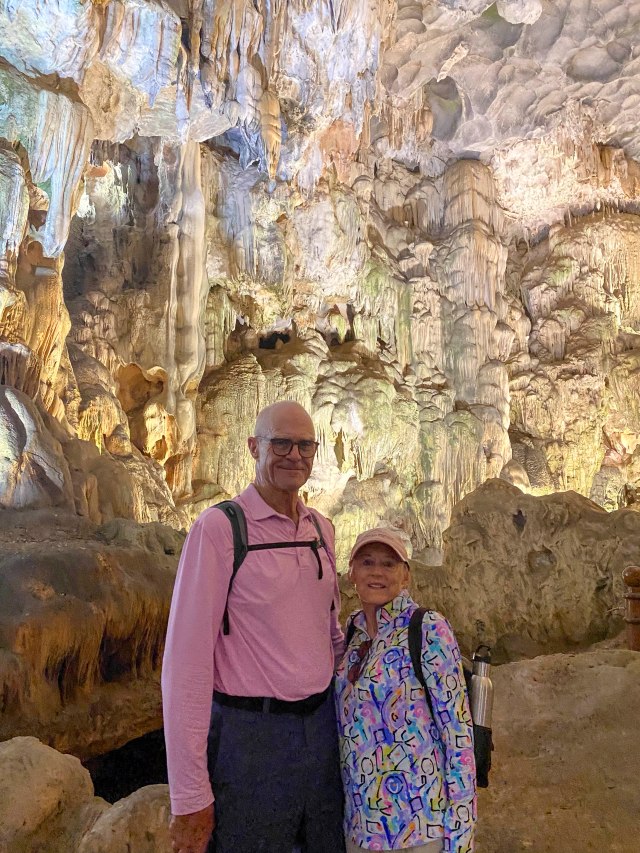
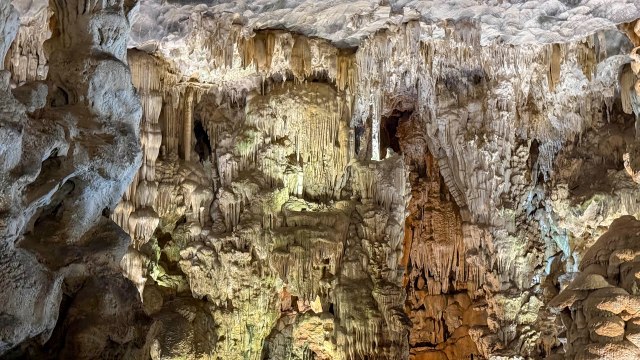
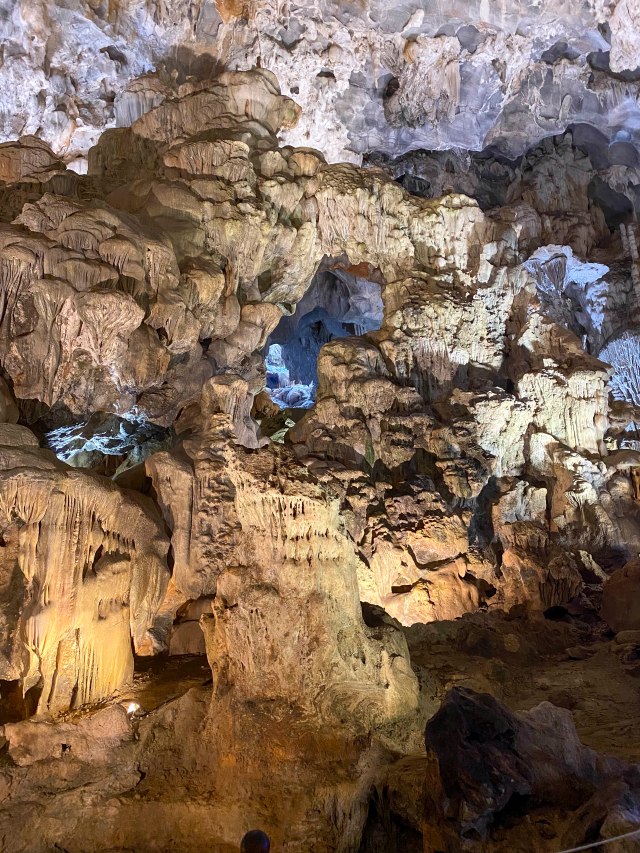
Be sure to explore one of many caves.  Be prepared for 200 steps;-)

The hundreds of small islands in Ha Long Bay were beautiful.

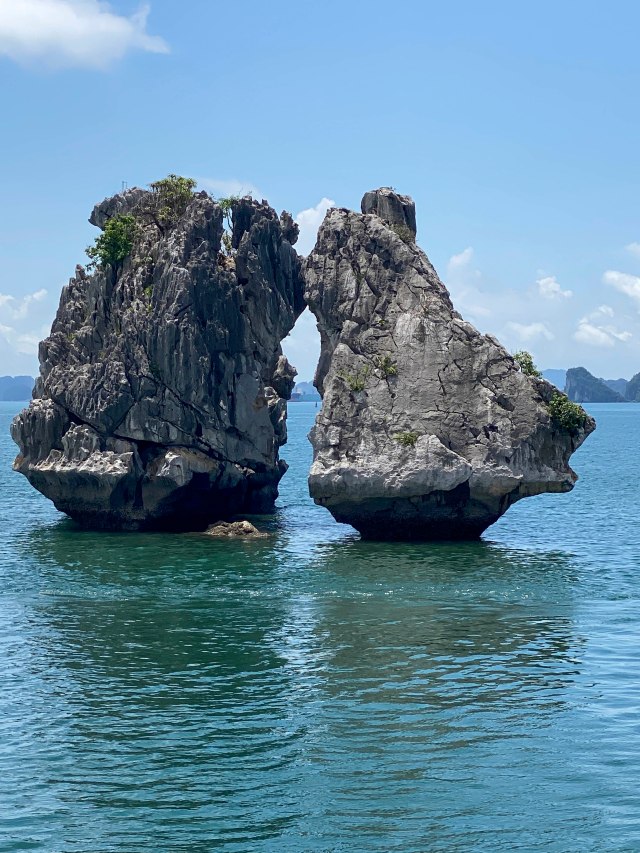
Locals call these the “fighting roosters”.

Now they are kissing and making up.

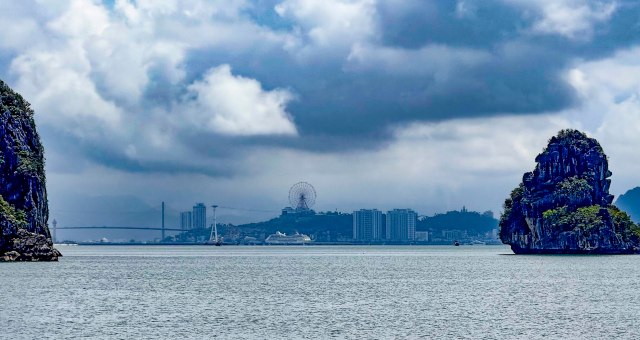
A look back at Ha Long and our ship from a Junk out in the bay.

A stay in Ha Long can be completed with the beauty and uniqueness of Ha Long Bay – but the starkness and ugliness of Hoa Lo Prison and what our servicemen endured there will not be forgotten.  

Solemnly – E & G

More Sides of China

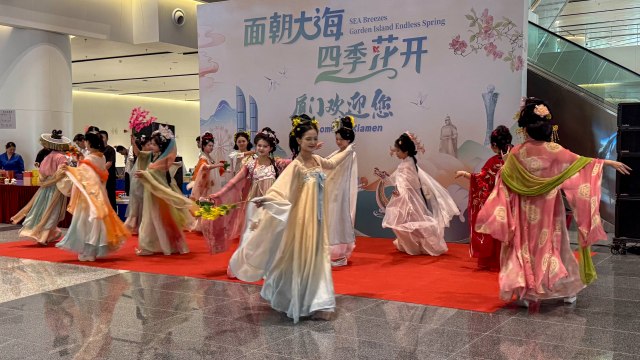
Xiamen seemed to be a convenient port between Shanghai and Hong Kong – not a destination to be sought out;-(. The city and people did their best to put out the red carpet and provide a royal welcome.  They did – and it was the best of Xiamen.

Our welcome to Xiamen

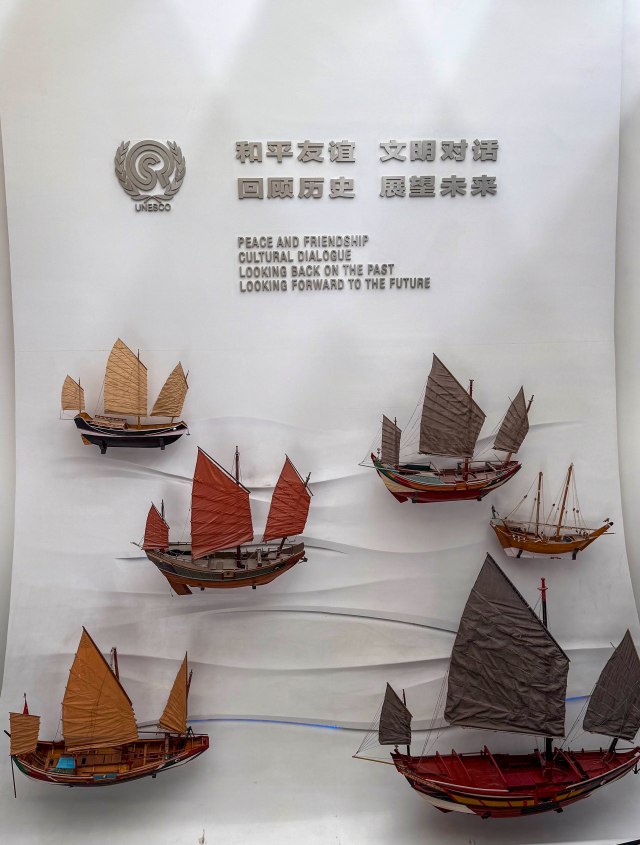
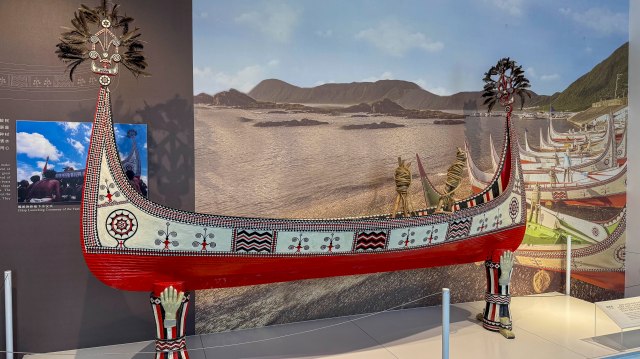
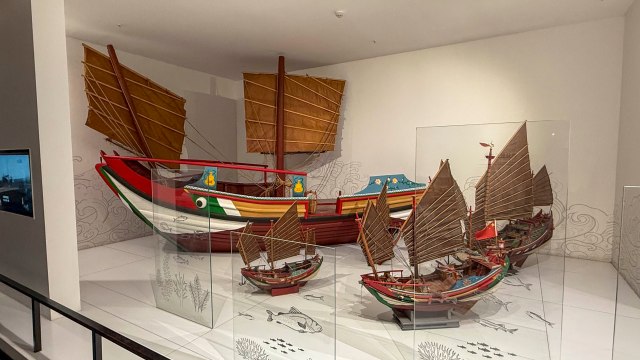
While Xiamen is a dynamic port city dating back over a thousand years, the real gem is nearby Quanzhou – an ancient city that UNESCO has recognized for its importance on the maritime silk road.  Asia’s largest port until the mid-1300’s (through several dynasties), it was visited by the famed Marco Polo and medieval Moroccan explorer Ibn Battuta.  As a result there is a fabulous Maritime Museum located here.

Welcome to the Quanzhou Maritime Museum – a UNESCO World Museum site.

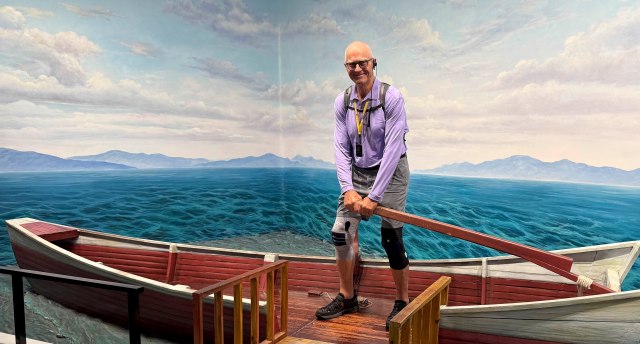
Ahoy matey;-)

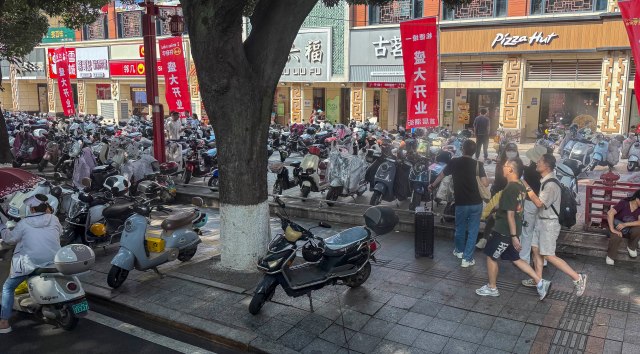
Upon leaving the serenity of the museum, one can be thrust into that mental image of China – people and scooters EVERYWHERE – –

You really have to watch out for these things – they stop for nothing!

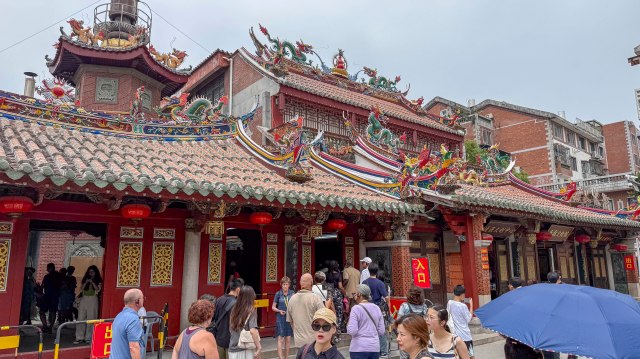
Quanshou has also been deemed a World Museum of Religions by UNESCO partially due to the Kaiyuan Temple, the province’s largest Buddhist temple.  Because it is the largest temple in the area, the locals flock to it and it was soooo crowded one could barely walk through let alone get any pictures.  So – exterior shots only.

The province’s largest Buddhist Temple, the Kaiyuan.

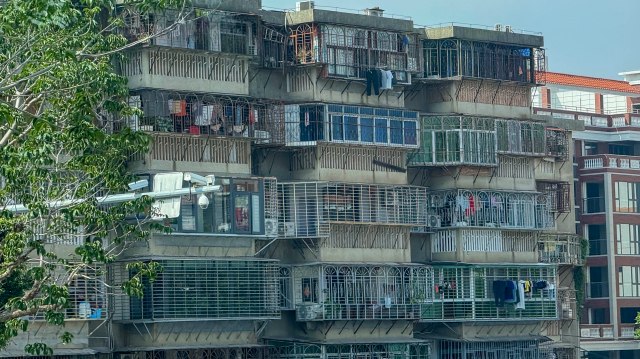
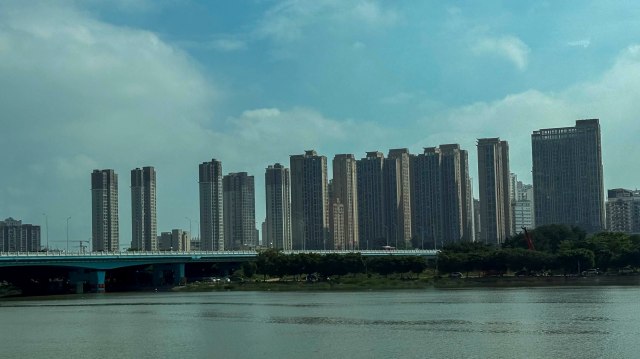
The museum was definitely the best of this day – although the sites and sounds of the ‘expected’ China were also experienced.  Approximately one third of the people in China live in public housing.  They are told what apartment they can have and probably have at least four to six people living in about 400 square feet.  Tell me which you want –

Public housing – –

– – or on your own!!

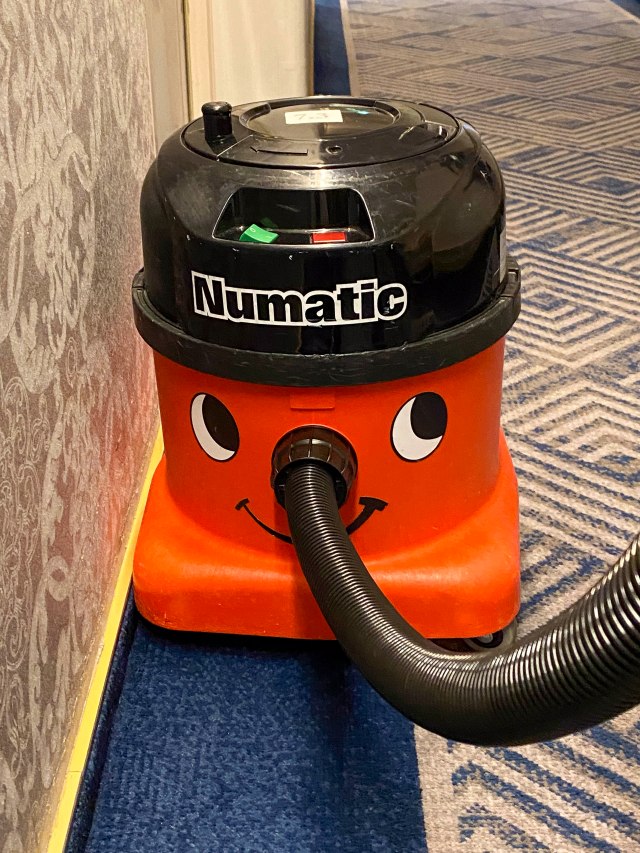
Suddenly – the temperature changed significantly and got VERY humid with about 80+ degree heat and strong breeze.  Walking the deck track became unbearable so three miles in the ship halls it was – and you saw the funniest things – –

The vacuum buddy;-)

Having left Xiamen behind – a new, much more vibrant Hong Kong awaited.  This city is a captivating blend of towering skyscrapers and surrounding natural beauty!  It is comprised of Hong Kong Island, Kowloon Peninsula, the New Territories and over 200 outlying islands.  Its strategic location on the South China Sea makes it one of the busiest ports in the world – and it is HUGE!!!!

Our welcome here was also exciting but much different than the pageantry in Xiamen – –

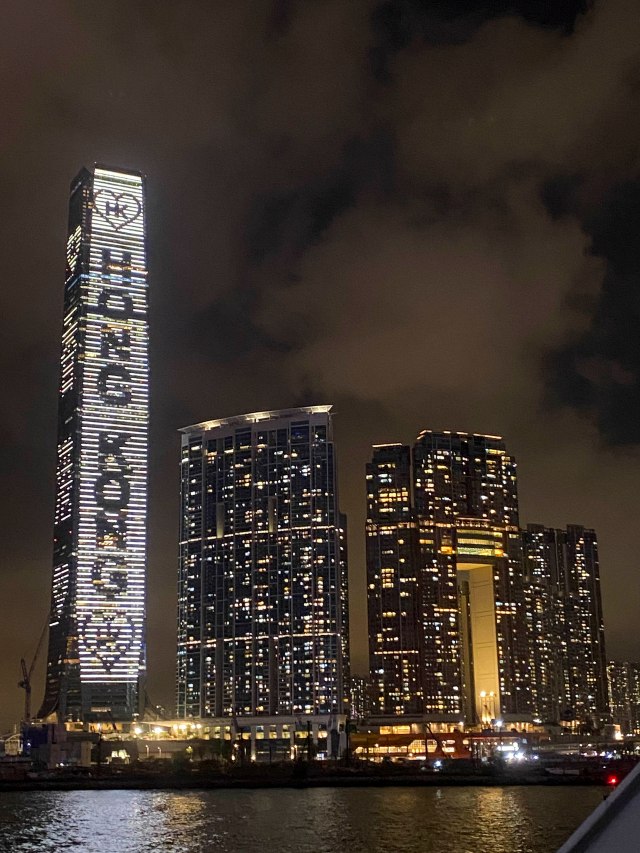
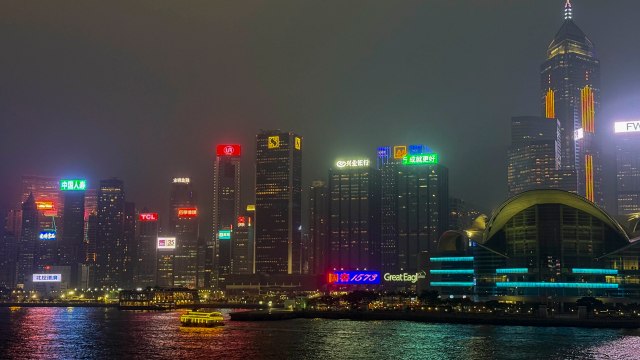
Arrival evening in Victoria Harbour – welcome to Honk Kong!

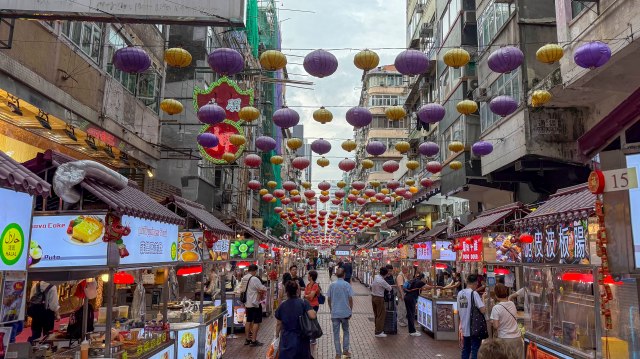
A former British colony, which by 2047 is to be completely under China control, Hong Kong is well on its way today.  After many layers of Chinese government checks (including random selections of passengers (all of whom were women including E) NOT disembarking in Hong Kong for a ‘face to face’ examination) passengers of our cruise ship were allowed to leave the ship entering into one of the largest shopping malls you will ever see!!  It was a much different scene than the Temple Street Night Market where you could find anything you wanted to eat, wear or use in the apartment – –

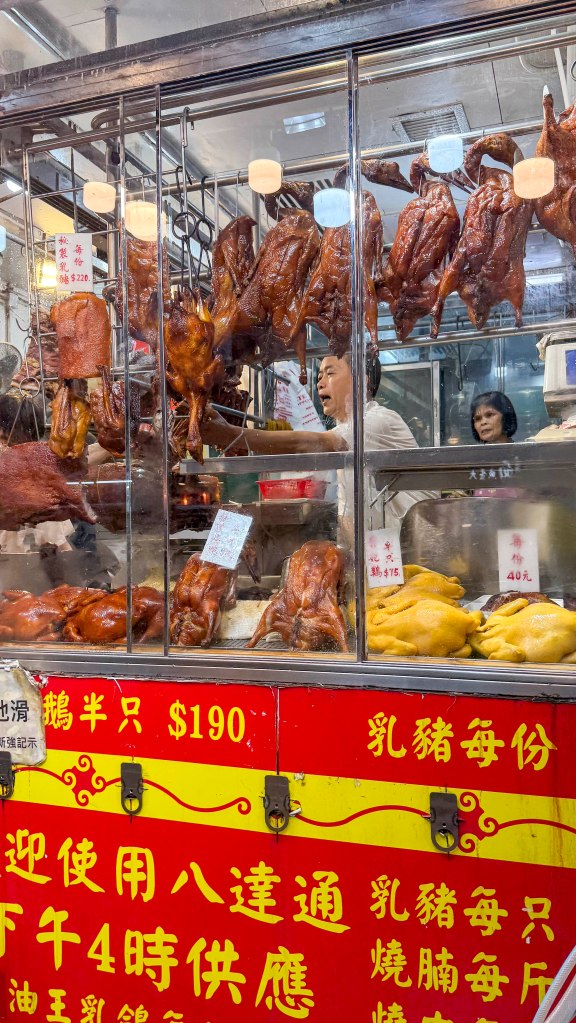
Fascinating Street Market.

What’s your pleasure?!?

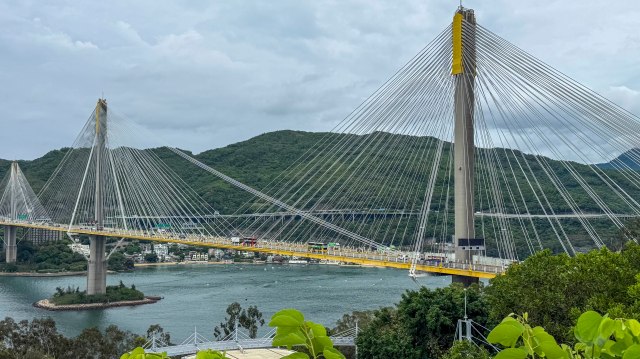
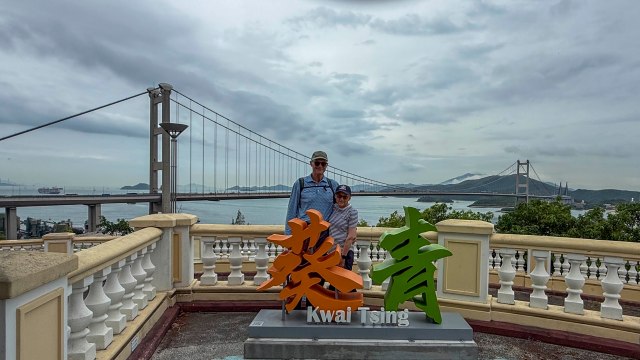
A wonderful day trip just outside of Hong Kong is to Lantau Island.  A quick drive across stunning bridges takes one to natural beauty and serenity not imagined in the bustle of the city.  There is even a wonderful viewing spot on Tsing Yi Island to gather views in all directions.

Enroute to Lantau Island.

Lantau Island is across the bridge behind us.

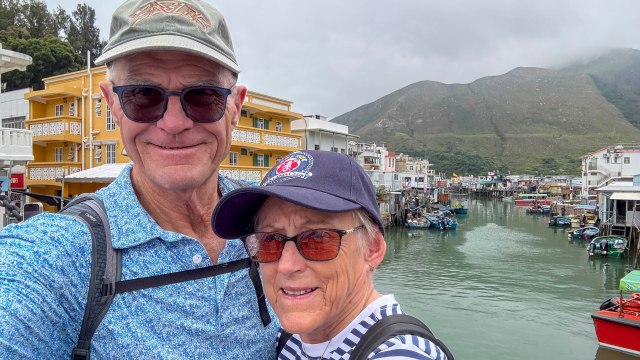
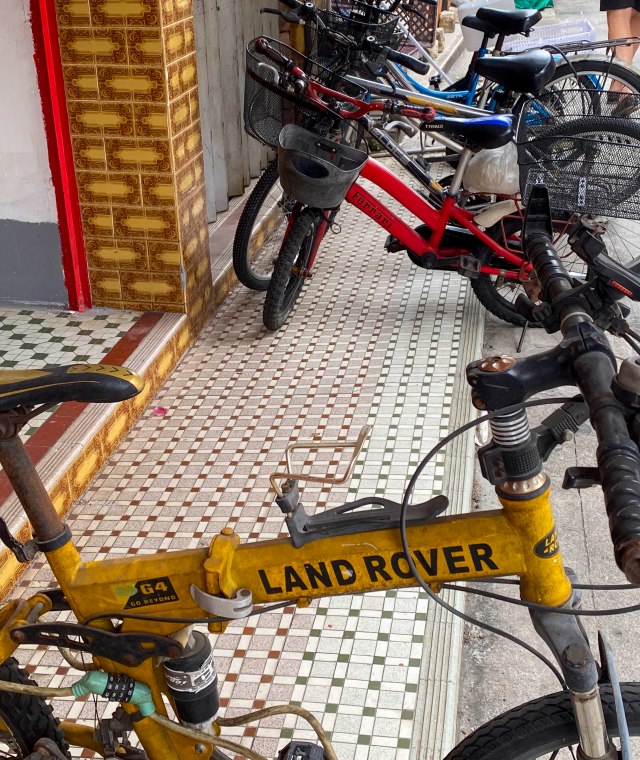
One more stop before Po Lin Monastery and The Big Buddha – the little fishing village of Tai O.  The residents here live on Junks, boats and stilt houses.  This is a walk back to a much simpler time and place.  But, you can find anything you need here – including a Land Rover and a Ferrari;-)!!!!

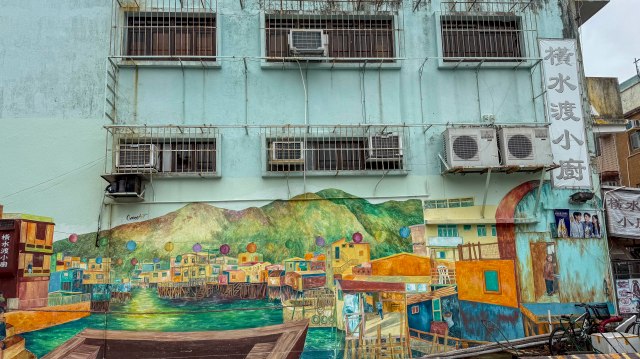
Wandering through the village of Tai O.  Every building has a boat dock!

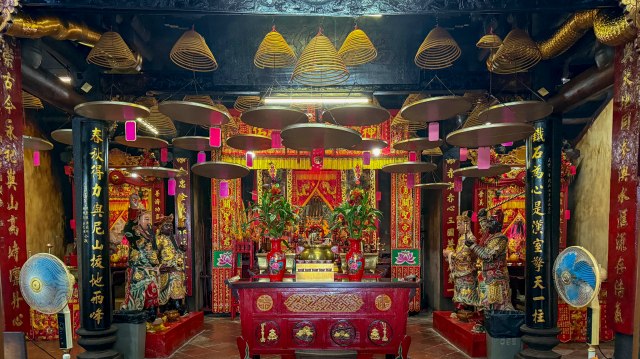
Temple of the Buddhist God of fisherman built in the 14th century.

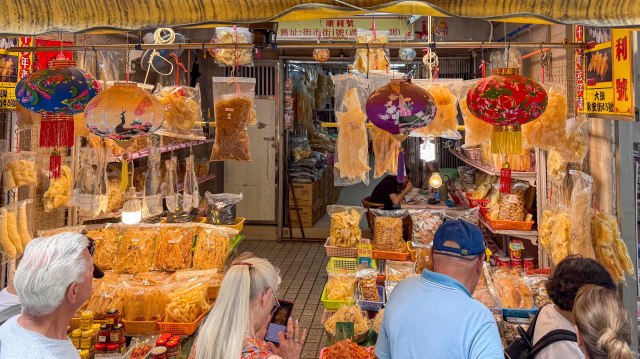
Food offerings in the village market (everything was dried).

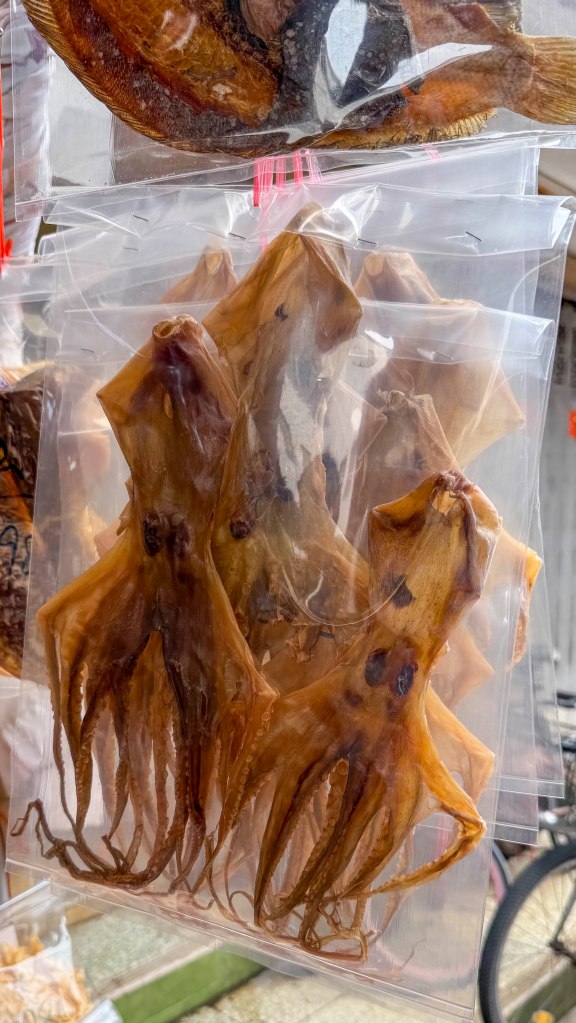
Squid?

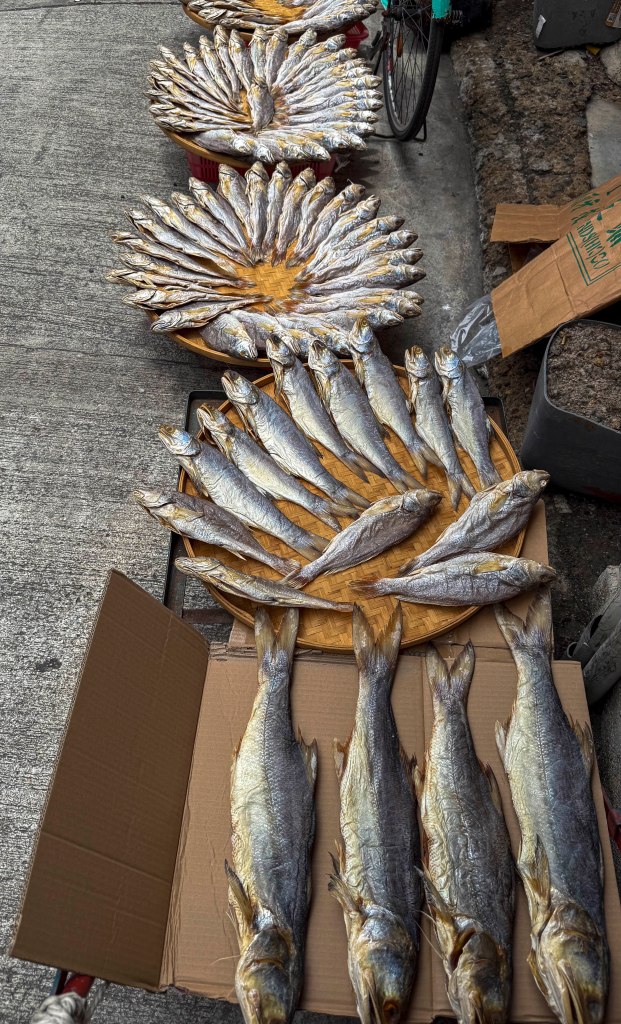
Drying fish in the sunlight.

And – a Land Rover and a Ferrari;-)!!

Village Mural.

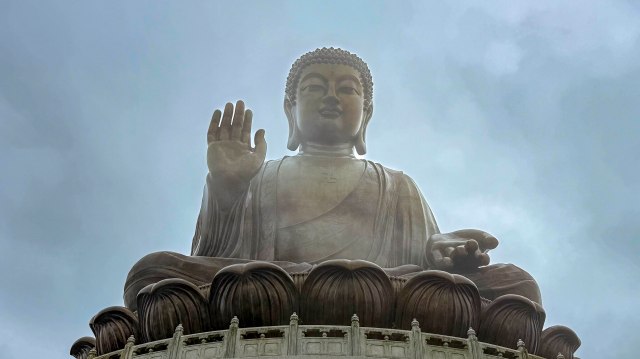
On to remote Po Lin Monastery, founded by three monks in 1906.  It was quite quiet and serene until 1993 when the largest outdoor statue of Buddha in Asia was erected here.  Tian Tan Buddha (Big Buddha) is 112′ tall and is constructed from 202 bronze pieces.  The right hand is raised representing the removal of affliction while the left rests open on his lap in a gesture of generosity.  It is surrounded by six smaller bronze images offering flowers incense, lamp ointment, fruit and music to the Buddha.  One needs to climb a mere 268 steps to reach the Buddha – meditating all the way.

A very big Buddha – shrouded in fog.

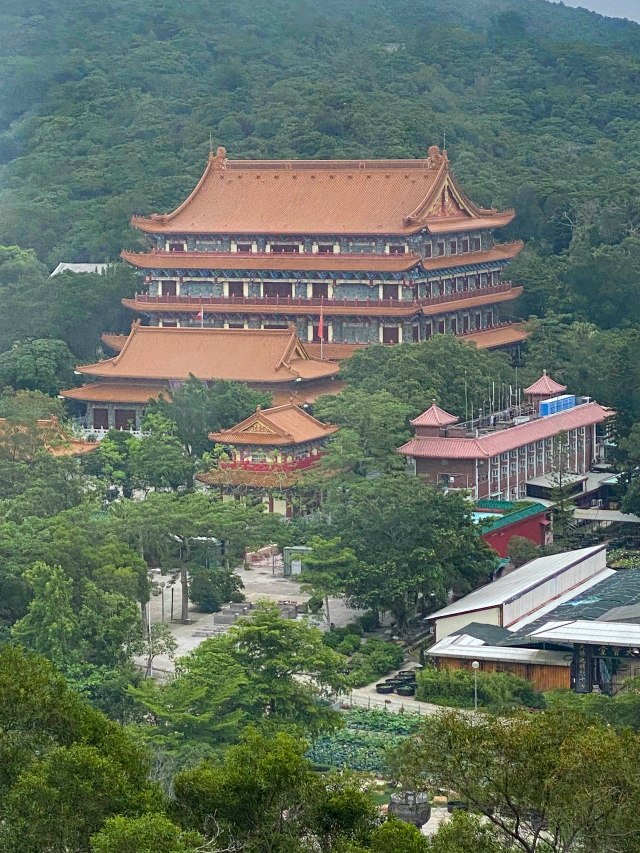
The Monastery complex from above.

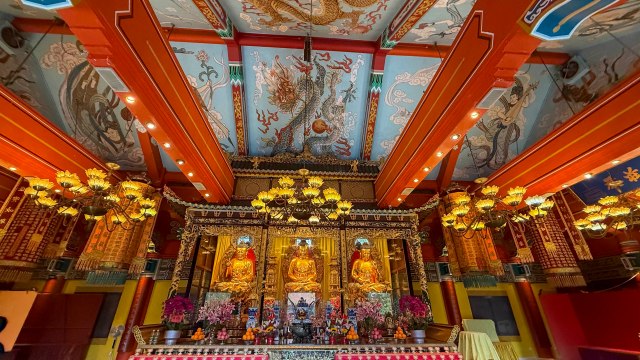
Parts of the Temple complex at the Po Lin Monastery.

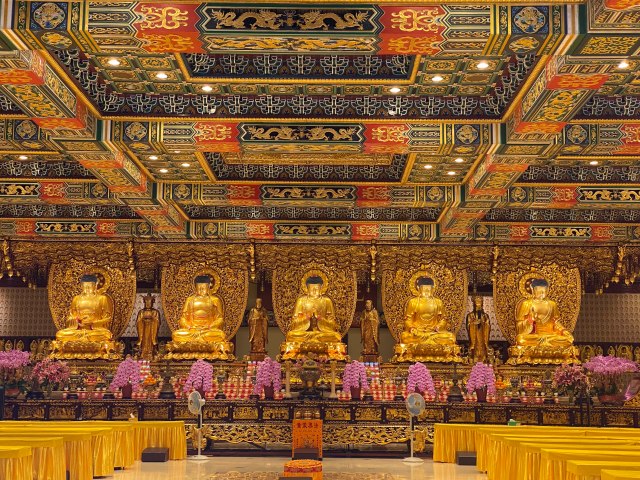
The Grand Hall of 10,000 Buddhas – stunning!

A very fun way to see the Big Buddha is to ride the Ngong Ping 360 cable car (either round trip or one way).  This provides a wonderful view of the Buddha and the remote, mountainous area surrounding it.  One of the most fun things done on this trip so far (even though the lunch was all vegetarian!!).

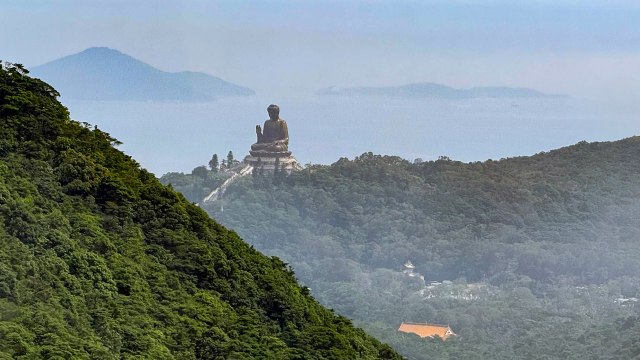
Long distance view of the Big Buddha taken from a cable car.

A wonderful, fun day and the end of the stay in Hong Kong.  A fond farewell to this intriguing city – –

Farewell Honk Kong.

Next stop, Hanoi, Vietnam.

And – goodbye to China, its cameras everywhere, drones peeking in our windows, submarines following the ship, constant taking of ones picture and comparing to the passport, etc, etc, etc.

E & G – Thankful to live in America, even with its ups and downs.