Just south of Dublin lies an area the Irish call the “Garden of Ireland”. It contains more than 30 public gardens, from small cottage plots to the sprawling 47 acres of Powerscourt. This area is normally lushly green and full of colorful flowers. Sadly – this visit displayed how affected the area is by draught;-(
Powerscourt began as a 13th century castle – then the property was given to loyal supporters of Queen Elizabeth I in the late 1500’s. It was rebuilt in the 1700’s with sweeping Italianate terraces, statuary and ironwork. The Slazenger family (think tennis) acquired the estate in 1961 and two of the family still run it today. There is a luxury hotel, 36-hole golf club and, of course, the gardens. The landscape includes formal flower beds, ornamental lakes and a Japanese garden. The disappointment this trip was the lack of green due to lack of rain in the recent weeks. The grounds still provided a nice walk and wonderful sights.
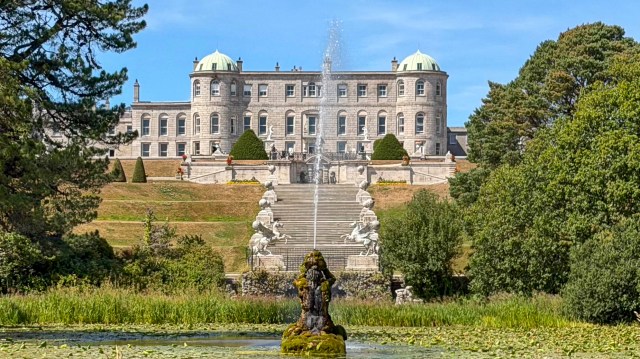
The view across the Roman influenced Triton Lake to Powerscourt House.
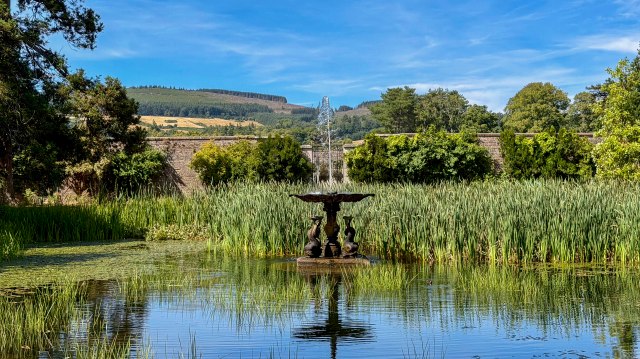
The Dolphin Pond brought from Paris in the 19th century.
Large old trees – one of the 200 varieties! (Really needs to be climbed-G said NO!)
The Japanese Garden – created in 1908 – – –
– – – and one of the greener parts of the garden with lots of moss and ivy covered stone.
Golf course turned brown;-(
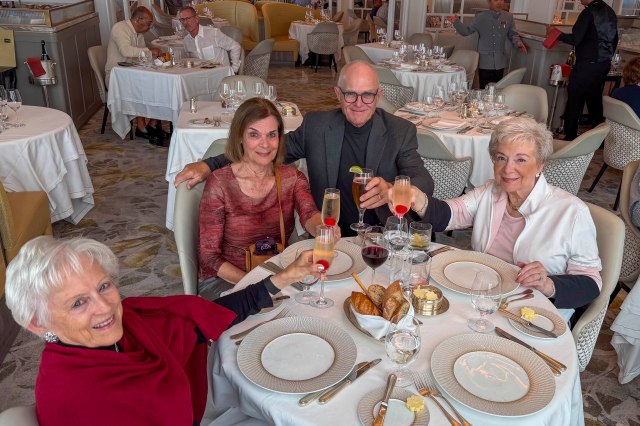
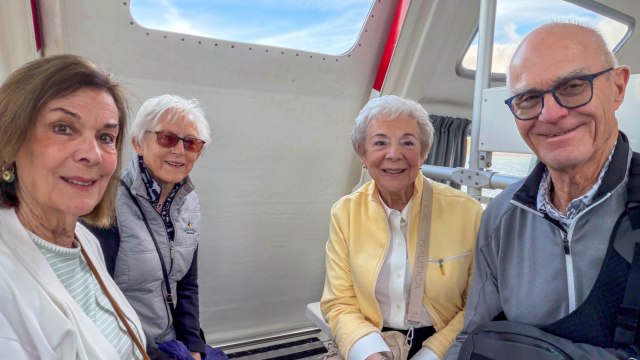
Tomorrow the sail will be into Belfast, Northern Ireland and that port will be another ‘turnover’ day as current passengers disembark and new ones board. So tonight there is a celebration with old friends – Diane & her sister Eleanor. It has been great fun sharing the last eleven days with them – and getting to share Diane’s birthday;-)
Happy Birthday Diane!
Cheers to the “birthday girl”.
Belfast – a city that grew rapidly during the Industrial Revolution. Its shipbuilding industries grew rapidly taking along with it the rope and linen industries as these were necessary supplies for the ships built.
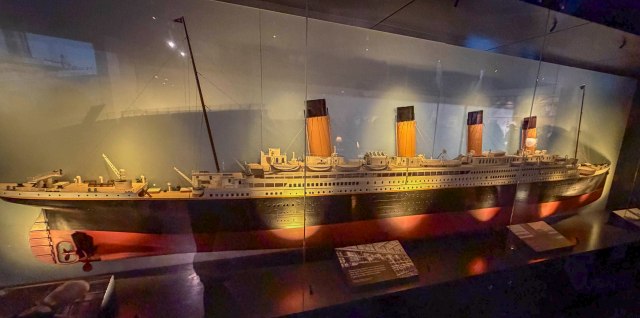
In 1861 Edward Harland acquired a shipbuilding company and then a partner in Gustav Wolff. Their company became Harland and Wolff and quickly gained a reputation for constructing high quality ships by combining new technologies with innovative naval architecture. Timing couldn’t have been better, as high levels of European emigration and the growth of American trade resulted in a soaring demand for new ships. By 1870, Harland and Wolff had established a long and profitable relationship with the White Star Line. The White Star Line (owned by J. Pierpont Morgan) and the British owned Cunard Lines were in competition to build the largest, fastest and more luxurious ships. Thus, the White Star Line planned to build three Olympic class ships – one of which was the Titanic. The Titanic Museum in Belfast brings all of this to life in a fantastic museum that should not be missed when in town.
Titanic Museum.
A very thorough and thoughtful depictions of the building and loss of the Titanic and its passengers.
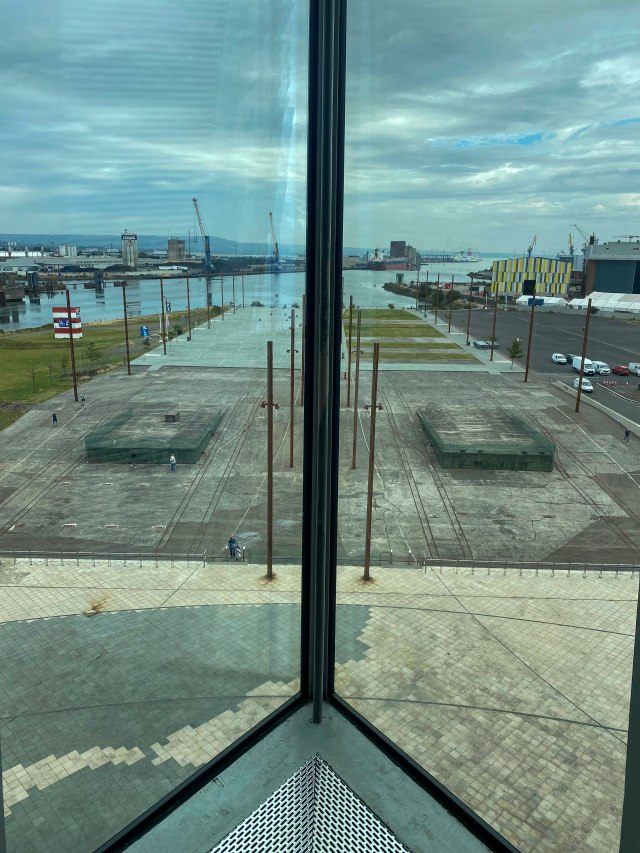
Both the Titanic and her sister ship, the Olympic, were built at the sight of the museum and the very dry dock where they were put in the water can be seen from one of the museum’s windows. When the Titanic was put in the water at this sight, it was only completed on the outside. It took another two years and 3,000 workers to outfit the interior of the ship and ready it for the beginning of its journey on April 2, 1912.
The Titanic was put into the water from the left dock and the Olympic from the right.
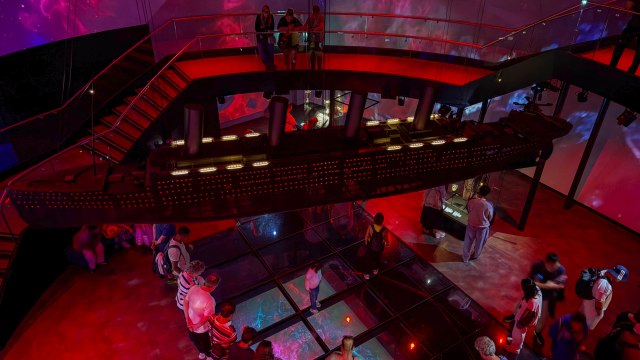
The very real displays and testimonials of survivors will give a visitor chills!
Area displaying film taken of the discovery of the sunken Titanic as well as items received from the ship or donated by some survivors or their families.
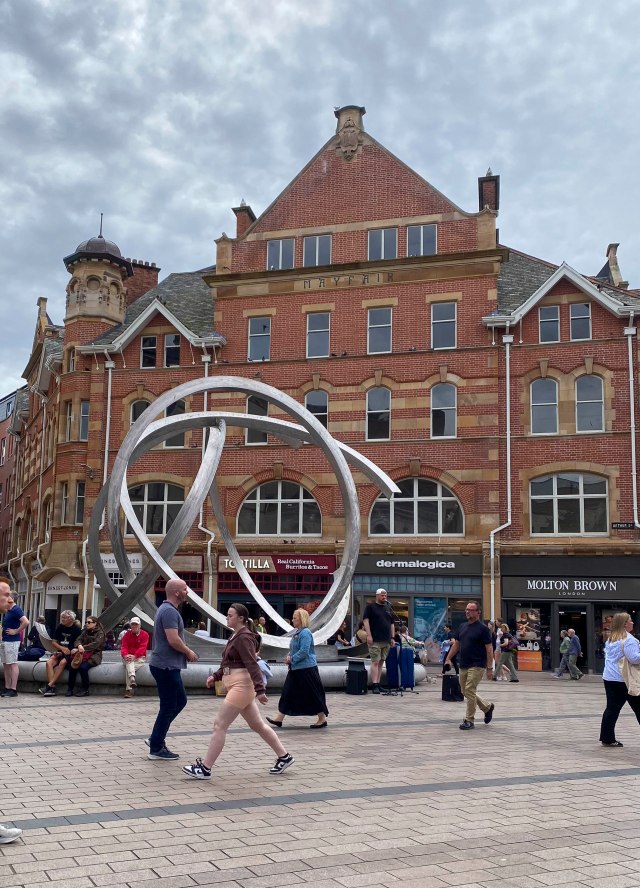
After this very somber look at Titanic’s ill fated cruise, wandering the outdoors around Belfast’s city center was a bit of a relief. A pedestrian area just off the City Hall corridor was quite lively with shops, restaurants and street performers.
A fun, busy street scene.
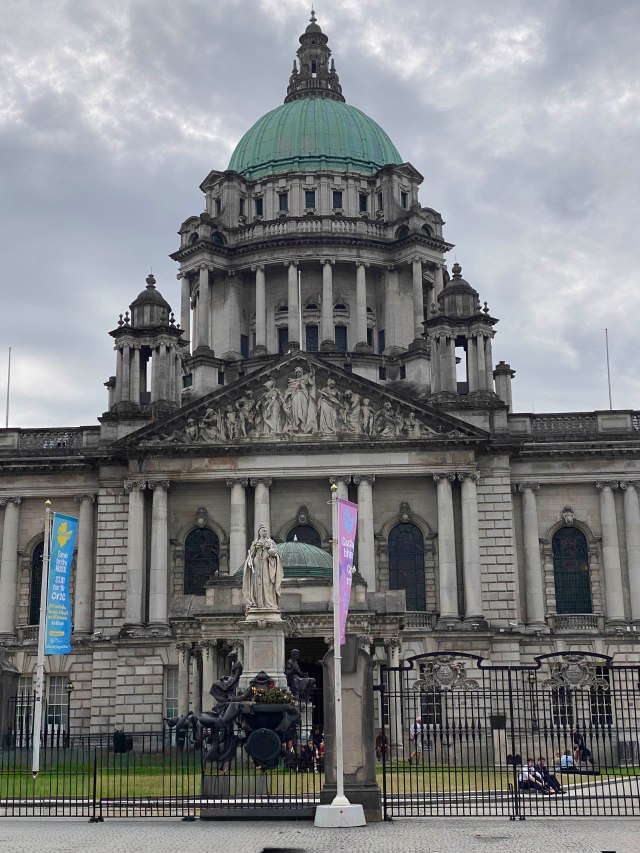
City Hall.
Two very different days – one serene and celebratory the other somber. Both incredible experiences. And, tonight our world may grow dark before night, as we are to see a 97% eclipse of the sun?!?!?! Oops – the clouds got in the way but it was a fun party;-)
E & G – fingers crossed for a more successful cruise than the Titanic
The Island of Anglesey (Wales’s largest) sits in North Wales and Holyhead (the largest town on the island) serves as a very busy ferry port between Britain and Ireland as well as todays cruise port. The Island of Anglesey has much more history than Roman garrisons, Norman strongholds, medieval forts or fanciful follies of the Victorian era. Caernarfon Castle resides here and is the site where Edward II was born in 1284 and was given the honorary title of Prince of Wales. This title, to this day, is conferred on the eldest son of the reigning British monarch. The investiture of Prince Charles as the Prince of Wales took place here in 1969. And, Will and Kate spent the first years of their marriage on this island enjoying peace and freedom that I bet they long for these days!
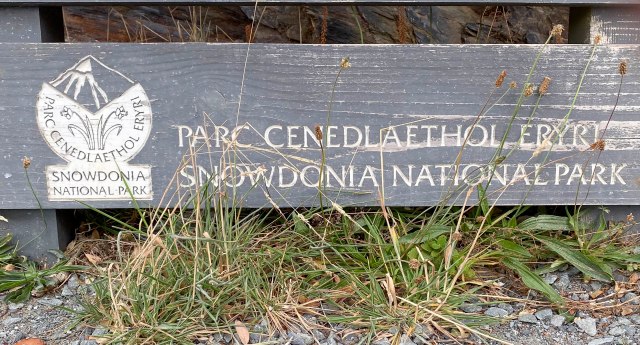
Not far away, dominating the scenery of northern Wales, is Snowdonia National Park – named for the 3,560′ Snowdon, the highest point in Wales. According to legend, this rugged peak is watched over by the spirit of King Arthur while his Knights of the Round Table lie sleeping underneath the rocky slopes!
Off to Snowdonia National Park.
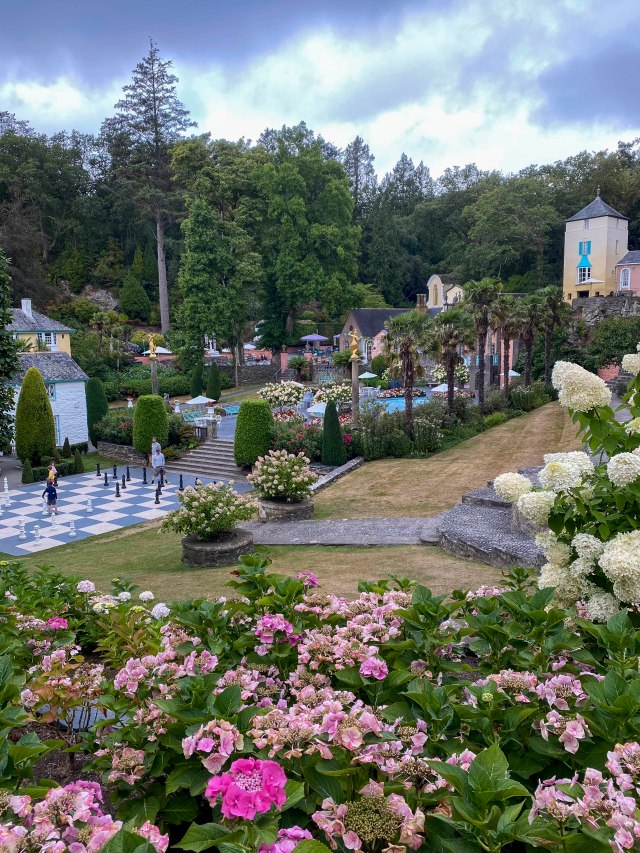
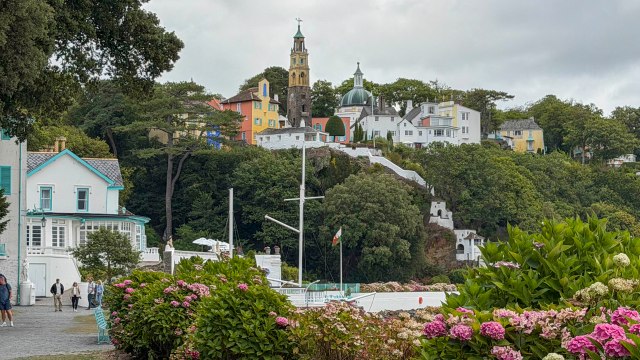
Also sitting below Snowdon in Snowdonia NP is the very interesting village of Portmeirion. A Welsh architect, Sir Bertram Clough Williams-Ellis, was inspired by a trip to Portofino, Italy and wanted to prove that development could be accomplished without ruining the scenery. He set about building this village from 1925 to 1975, completing it on his 90th birthday. Today it contains primarily shops, cafes and lodgings, including a hotel which sits at the edge of the sea. The village is a bit Disneylandesque but the scenery around is undisturbed and beautiful.
Portmeirion Village
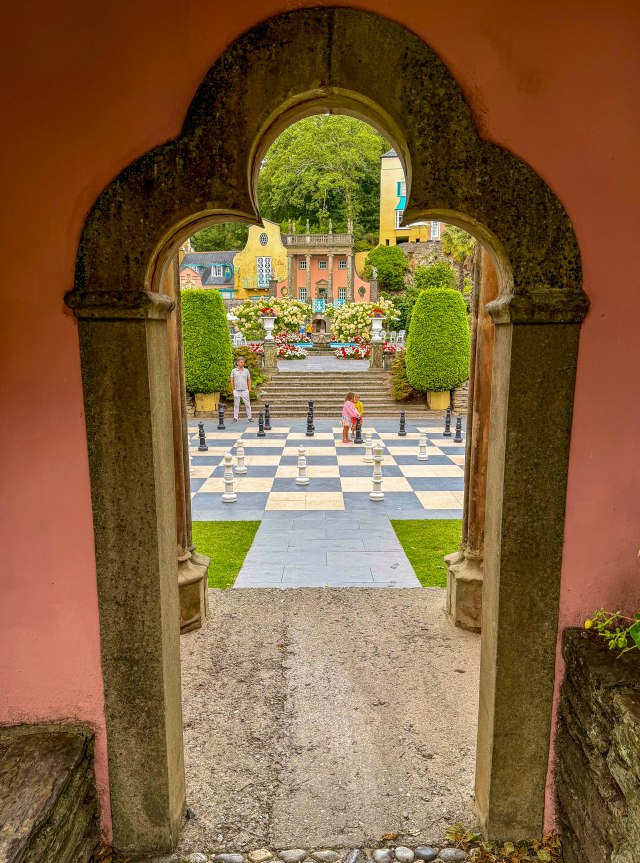
Chess anyone?
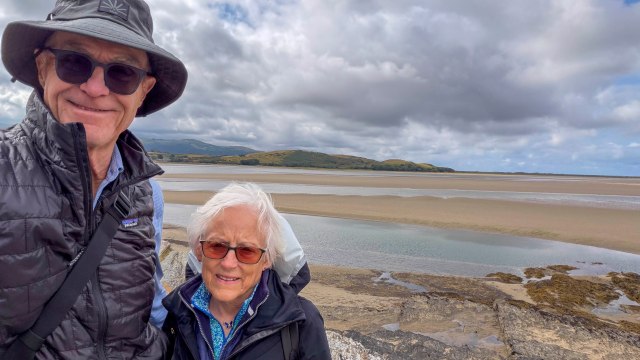
Tide is out.
The hotel grounds by the sea with the village towering above.
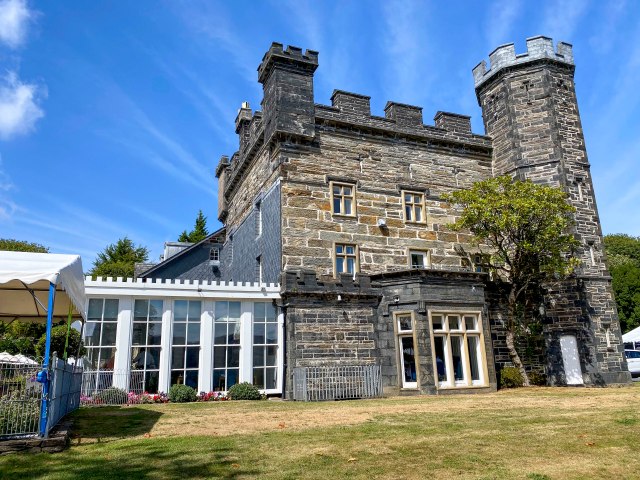
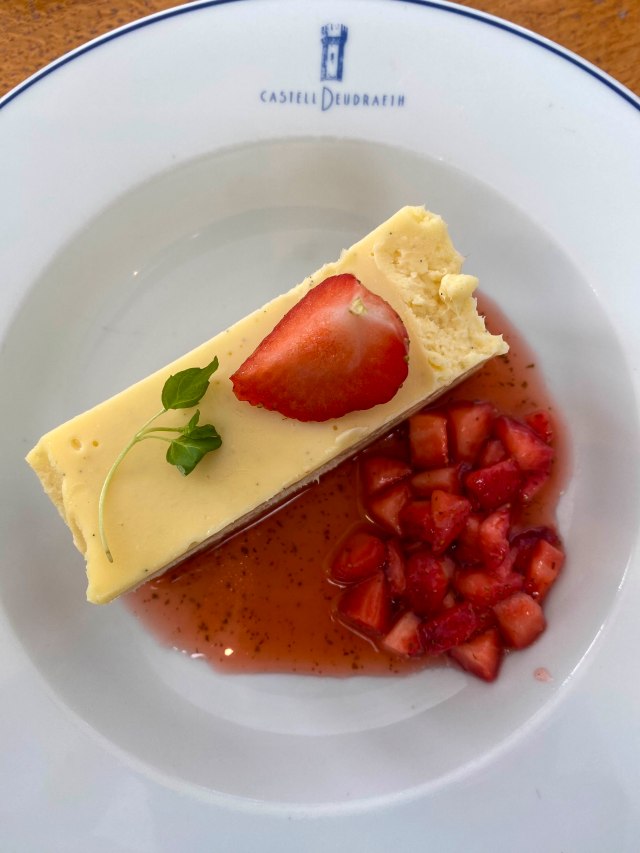
Some may recognize the name of the village as a china. One of the daughters of the builder was an artist and interested in experimenting with clays to make china. She developed the Portmeirion china which is still produced today, primarily utilizing insects and flowers in the designs. Other descendants rebuilt and manage a castle that was originally on the property. One can also stay here – or just visit the restaurant. If you eat here, be sure to ask for the cheesecake. It is the BEST ever had;-)
Castell Deudraeth’s restaurant provided a delicious lunch …
… including a marvelous cheesecake.
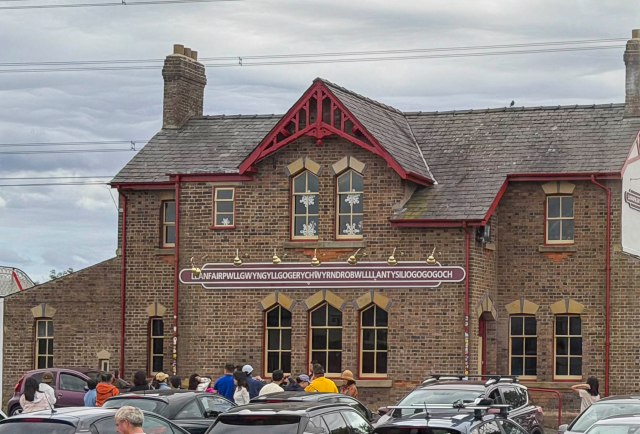
The Welsh are known for long words with few vowels – but, this lovely little village visited briefly, takes the cake. Just try to say it!
Yes, that is actually the name of the town on the train station – all one word.
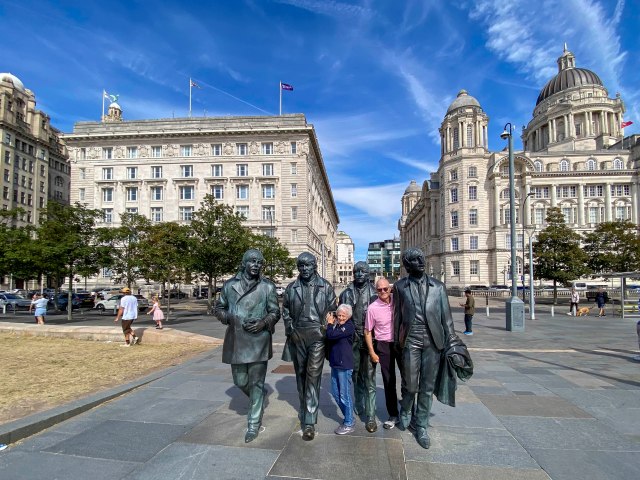
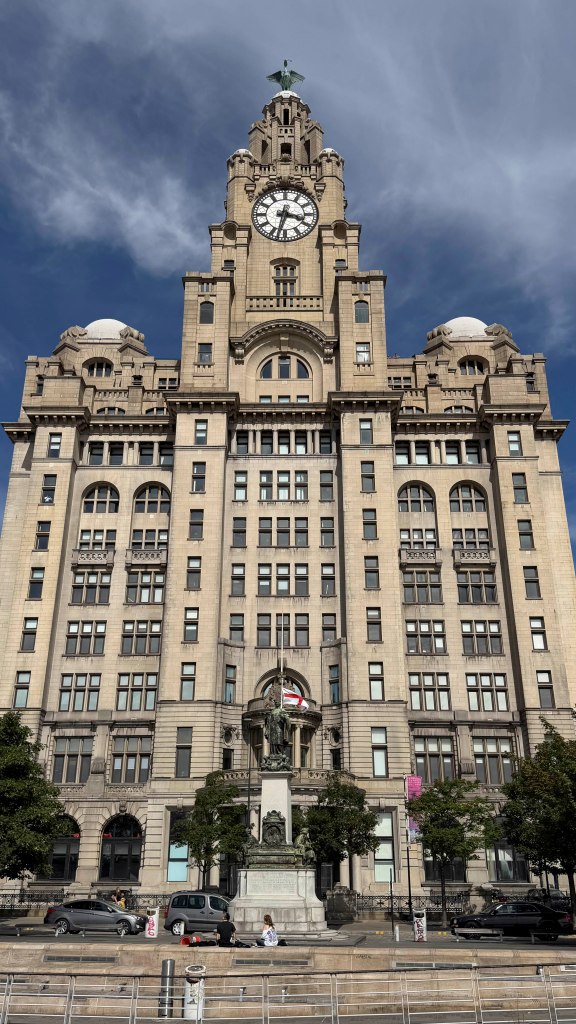
The Royal history of Wales was left behind for more current, fun, musical history of the 60’s and 70’s in Liverpool. Here everything is THE BEATLES! The best way to get all ‘the skinny’ is to engage a “Fab 4 Taxi Tour”. They will take you everywhere, tell you all the stories and play lots of Beatles music while doing it. We are off.
Time now to visit with The Beatles.
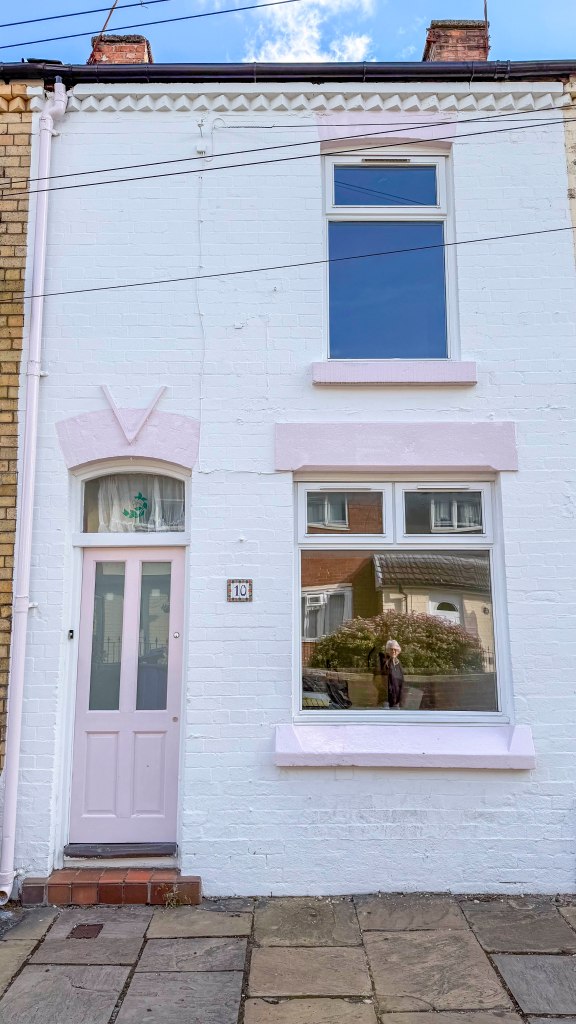
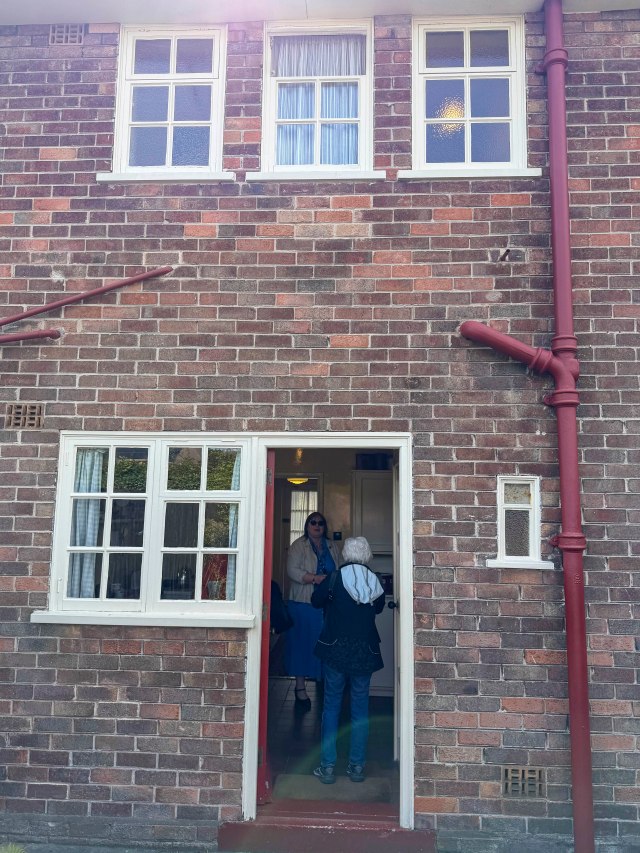
First childhood home seen was that of Ringo’s. It was just down a little lane from The Empress, where his mother worked as a waitress. He moved here before his teen years when his mother married his stepfather – the man who encouraged him to play the drums and allowed Ringo and his friends to practice in their tiny front room.
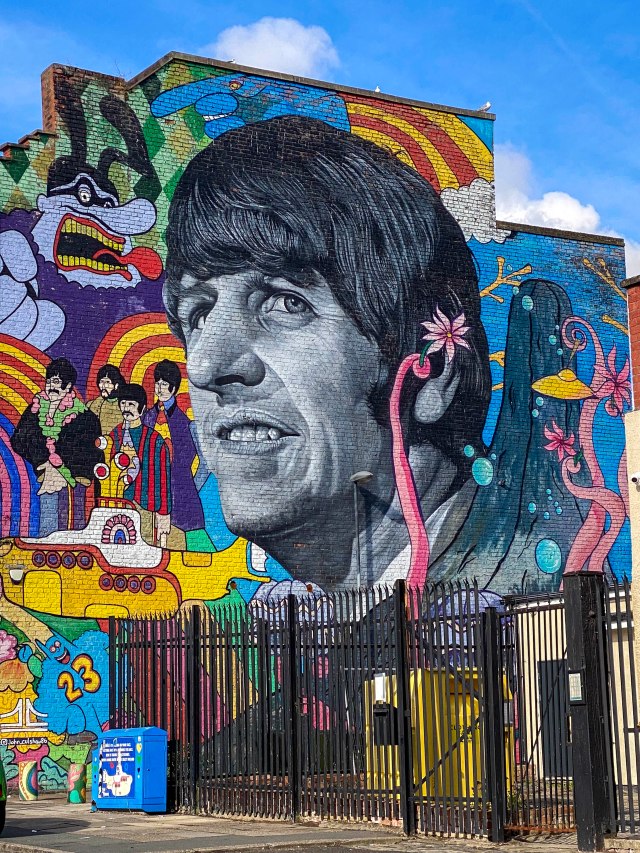
This painting is on the side of The Empress, the front of which appeared on the sleeve of Ringo Starr’s first studio album, Sentimental Journey.
Window of family living room where Ringo honed his drumming skills.
The homes where John and Paul grew up are now owned by the National Trust, who is preserving and maintaining the sites. Therefore, it is possible to actually go into these premises and is worth the extra fees to see where so much music history developed.
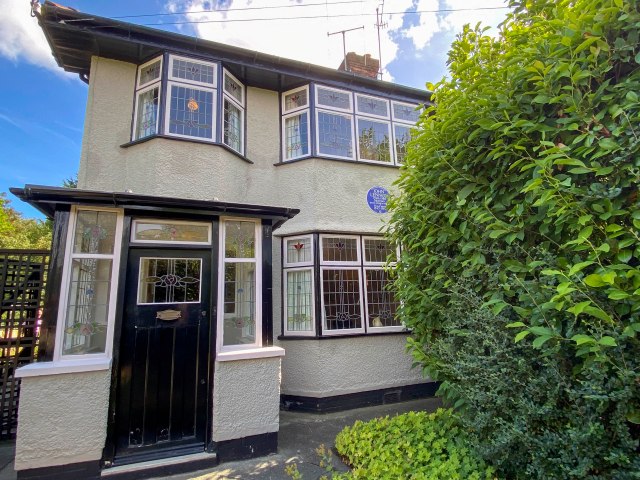
John lived most of his young years with his aunt in property that backed up to Strawberry Field. She was not crazy about this music stuff and told him he needed to get a job and be more serious. Because of this, the only place he could play his guitar was on the tiny front porch. This was probably ok as that’s where the acoustics were the best;-) The home was sold by his aunt after John bought her a new place to live. Fortunately the new owners were huge Beatles fans, so they maintained much of the integrity of the house until taken over by the National Trust.
John’s home 1945-1963. The small room behind the black door is where he could play.
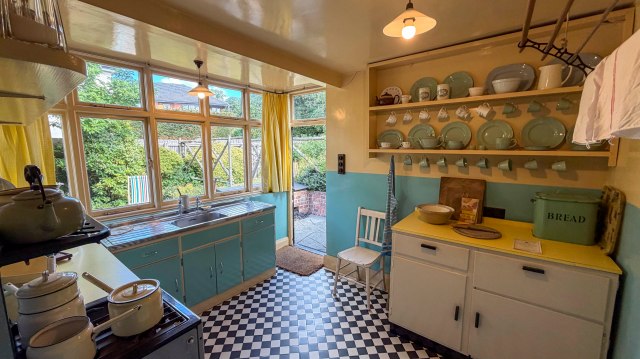
Kitchen maintained as it was back in the day.
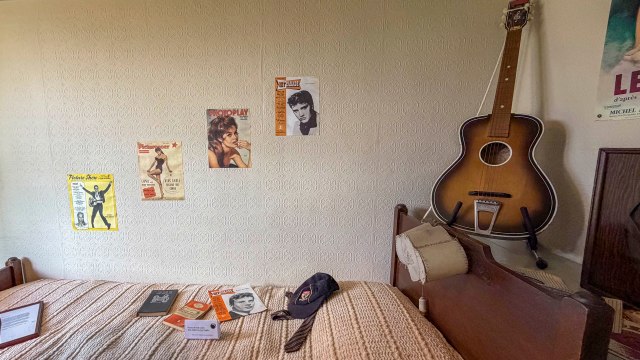
John’s bedroom with posters of Elvis and Bridgette Bardot.
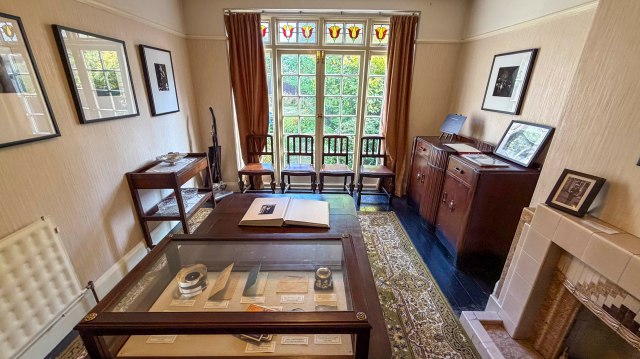
John, first wife Cynthia and son Julian lived in this room for a short time in 1963.
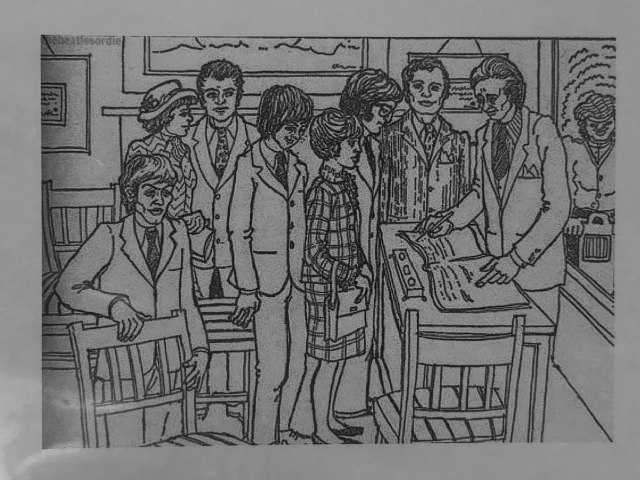
John and Cynthia married just as the Beatles were ‘making it’. This was much against the advice of their manager, who thought it would ruin John’s career if he was not single and available to all the screaming teenage girls. Therefore, he told the happy couple there could be no cameras (except Cynthia’s) and the whole affair had to be very private. Unfortunately, Cynthia forgot her camera but she was an artist and drew the only record of their wedding. One can drive by their wedding site.
Cynthia’s sketch to commemorate their wedding at Town Hall, including the jackhammer operator outside the window during the ceremony.
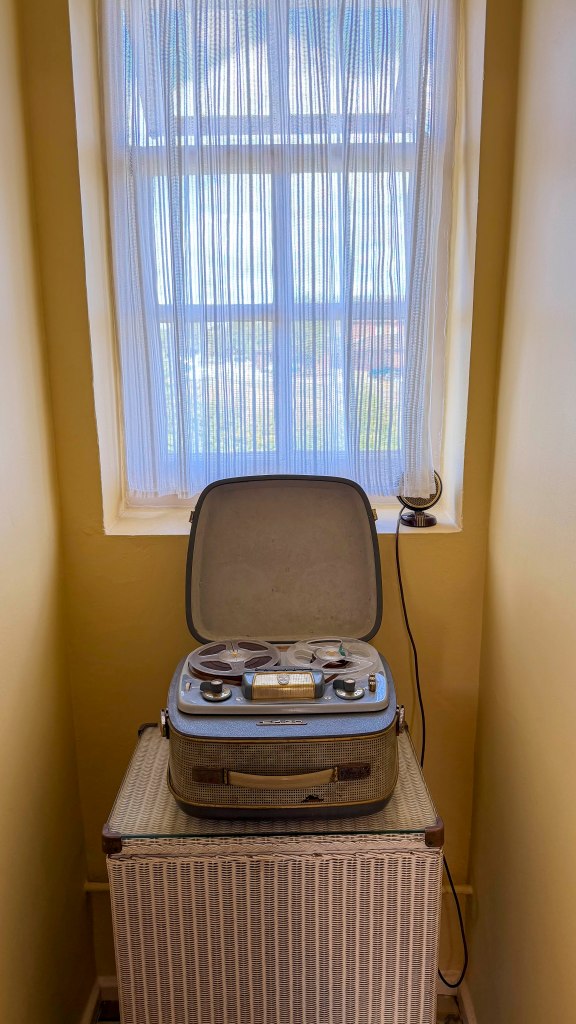
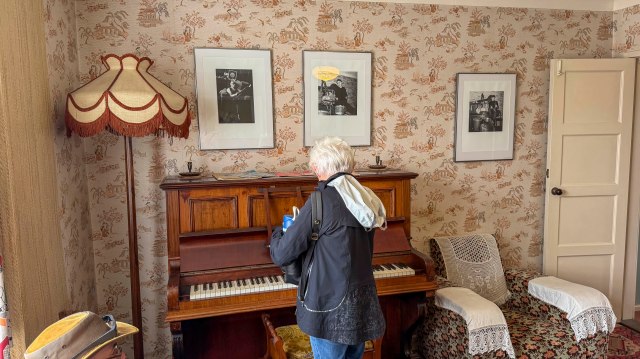
Paul’s home growing up was in an area not too far from John. It, too, was quite small – but unlike John’s aunt, Paul’s father (who was a musician) encouraged Paul’s music. Therefore, ‘the boys’ spent many hours at Paul’s writing and playing. Many of the loved Beatle’s songs were written, composed and recorded in the living room here.
Pipe at the back of the McCartney home used by Paul to sneak out of the house. His bedroom was upstairs with the light on.
Early “recording studio” adjacent to the water closet (with the best acoustics) in the McCartney home.
Many early Lennon/McCartney songs written in this living room. Had to play a few notes.
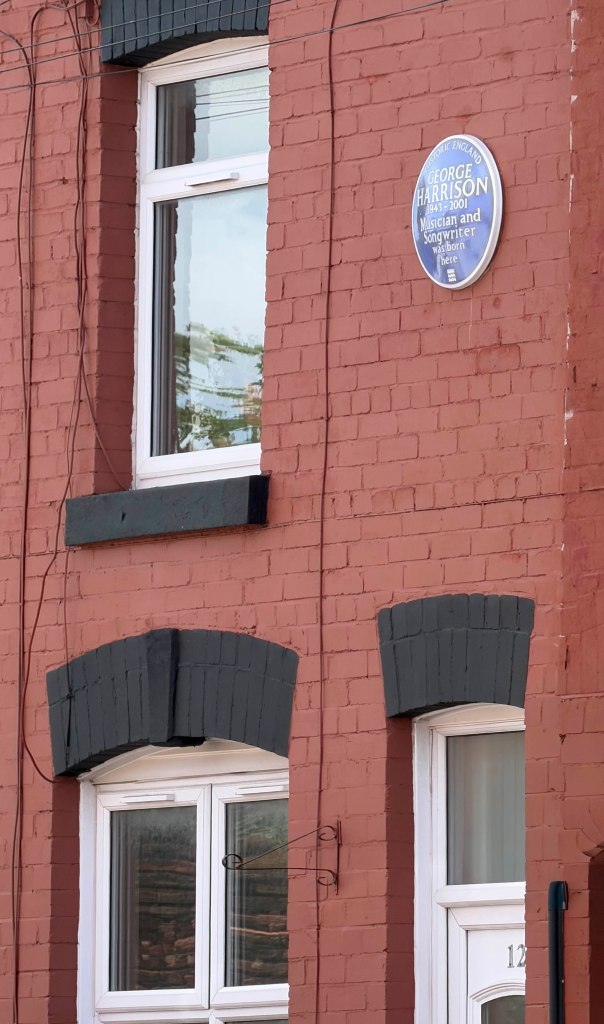
Unfortunately, George’s house (like Ringo’s) is privately owned. So, no visits there but a look at the outside.
George Harrison’s birth place.
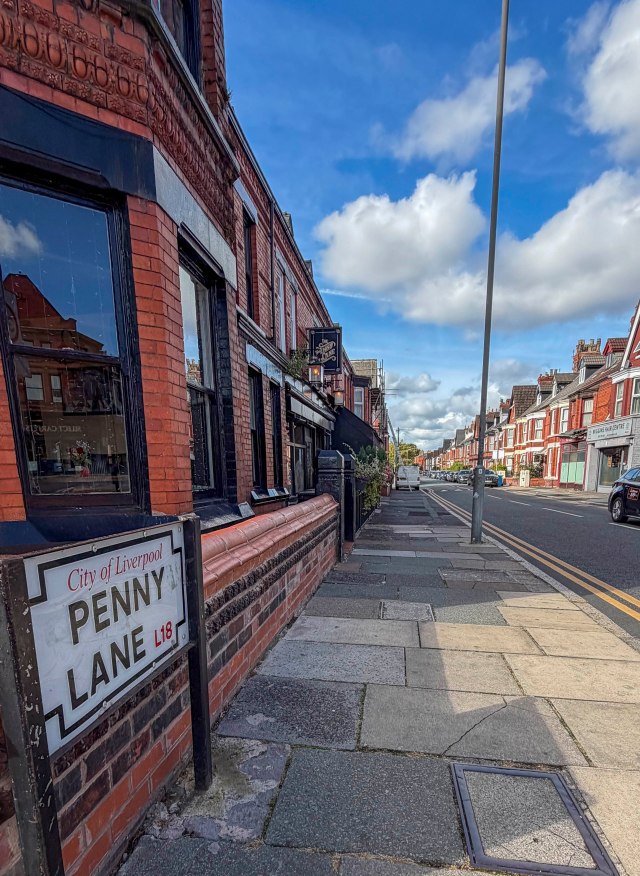
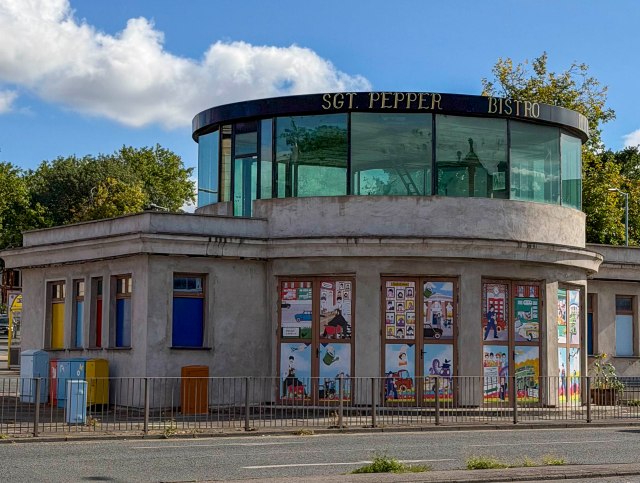
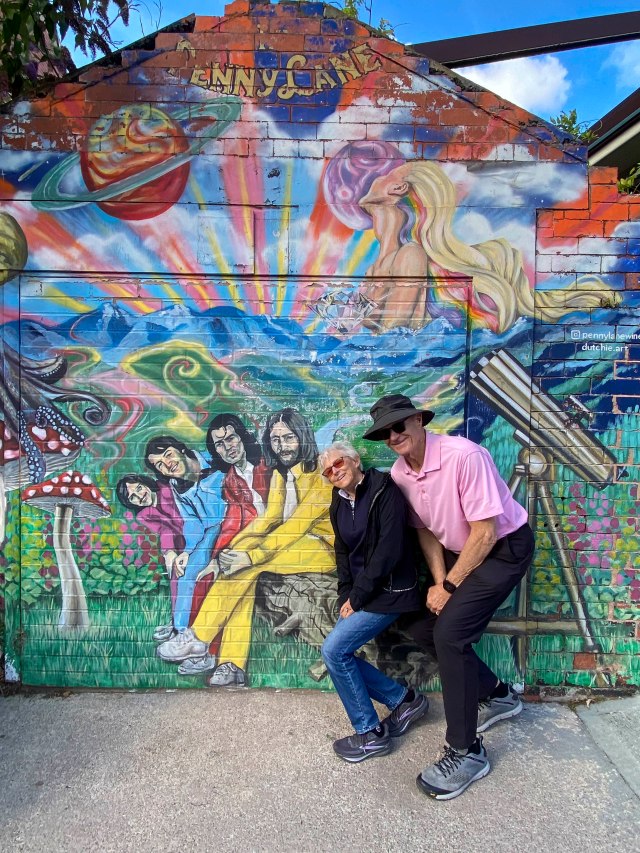
At one point, their manager told them to write about what they knew – their lives, experiences and memories. Paul used to ride the bus from his home to school every morning and it would stop at a spot along Penny Lane for a few minutes while the bus drivers changed. Perhaps Paul looked out his bus window and observed the shelter at the roundabout with a woman selling poppies – or the barber shop just beyond the roundabout that had photographs of every head the barber had the pleasure to know – as well as the bank on the corner with the banker who never wore a raincoat (Mac) even in the pouring rain. Very fun to see the inspiration.
Inspiration for the song of the same name.
“Behind the shelter in the middle of the roundabout”.
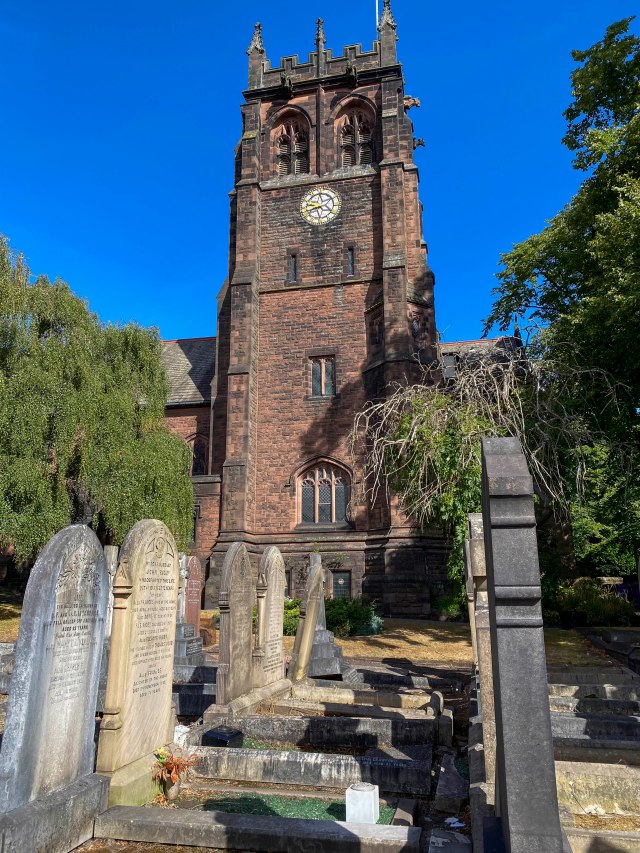
And then there is Eleanor Rigby. John and Paul used to sit on the cemetery wall close to their homes and play their instruments. Perhaps they drew a little inspiration here – –
St. Peter’s Woolton Church cemetery where Paul and John sat, smoked, talked and composed.
Perhaps the inspiration for the song? Look at all the lonely people.
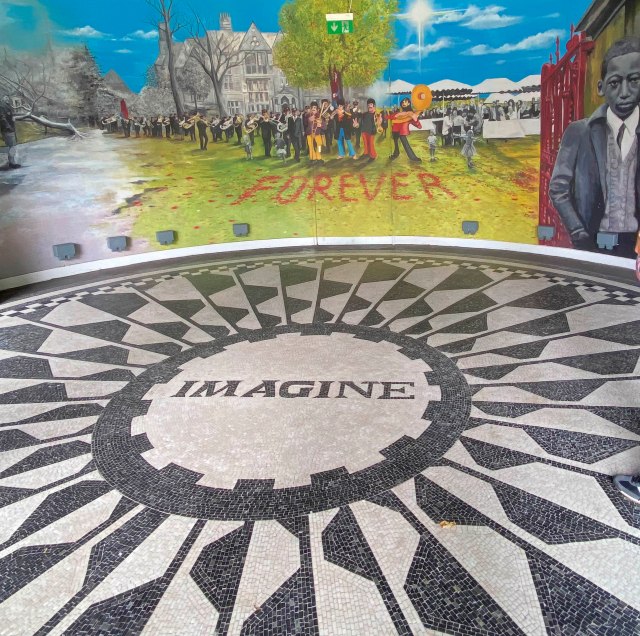
As said before, John grew up in his Aunt’s house adjacent to Strawberry Field. A private school was located there and when John was young he would jump over their fence and go play with the kids at the school. This place provided very fond memories for him. Unfortunately, the school ceased to exist and the building deteriorated. Yoko One provided money to help restore the school to be run by the Salvation Army, as well as other funds for the park, knowing how much it meant to John.
Now run by the Salvation Army.
A tribute to the Strawberry Fields boys home (in the background of the picture) where John used to climb the fence to play with other kids.
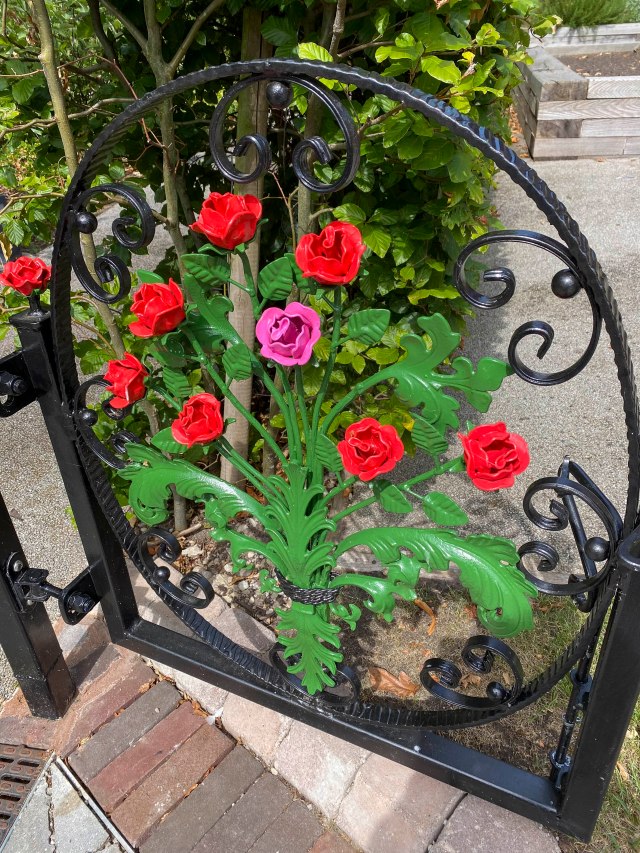
Rose Garden entrance at Strawberry Field.
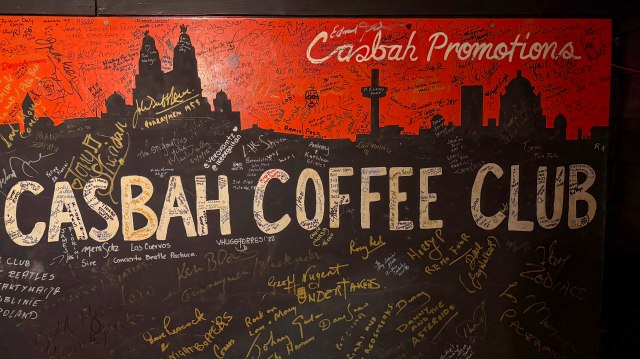
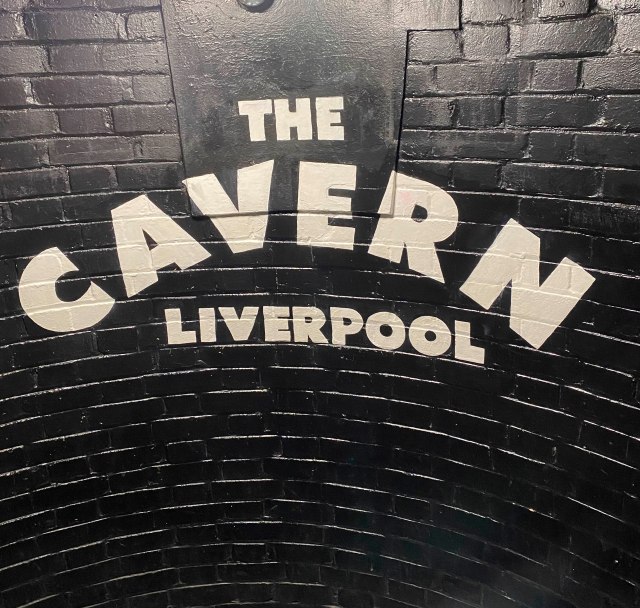
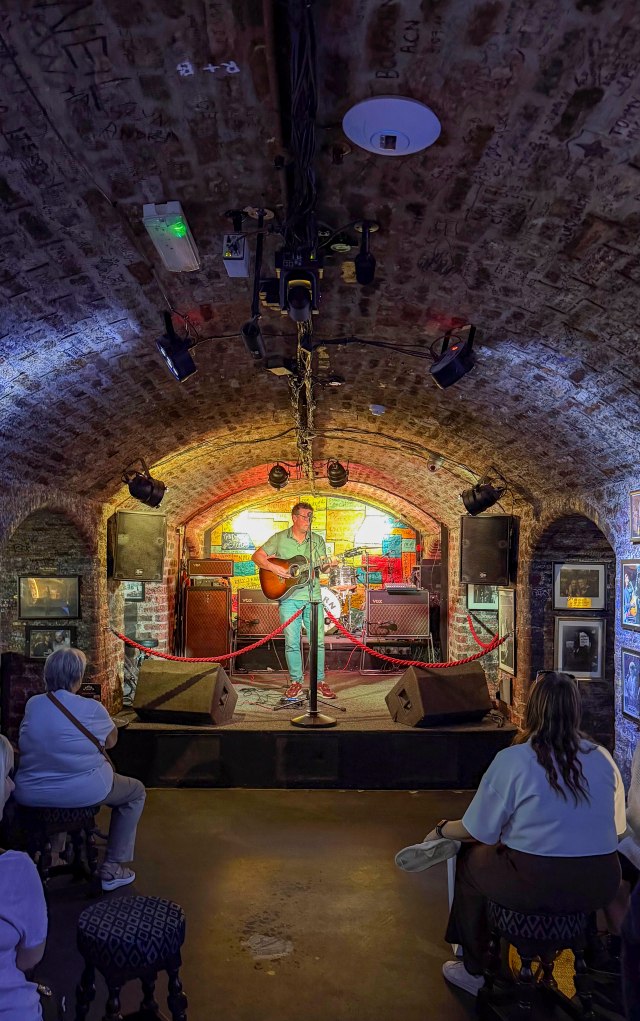
Then there are the clubs where The Beatles came to play as they were making it BIG. When they came back to Liverpool from a successful run in Germany, the first place they played was the Casbah Club. If you are in Liverpool and making the circuit, you could skip this one. A much better choice for a visit is the Cavern Club, where they played many times. It is still in operation with continual music throughout the day.
A bit of history, but a disappointing visit.
The Beatles performed here 292 times between February 1961 and August 1963.
Enjoy the live music deep underground…
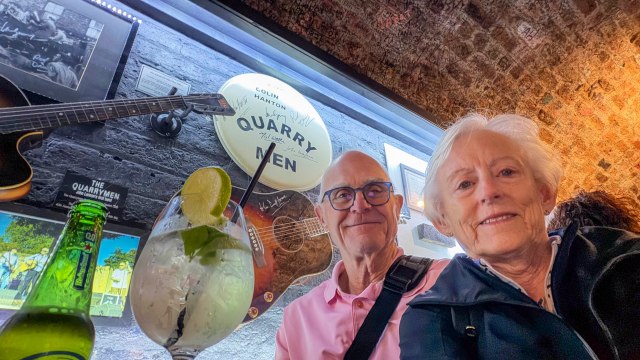
… as well as an adult beverage.
As said above, Yoko Ono has been back to Liverpool and supported areas of meaning for John. Paul has done the same. He and John first met when they were attending adjacent art and music schools. As the years passed, these schools diminished and the buildings deteriorated. Paul stepped in, renovated the building and created a Liverpool Institute for Performing Arts. He comes back every year to give the diplomas to the graduates. There is a wonderful sculpture outside the buildings depicting different artist’s instruments with name plaques. All makes for a wonderful sight.
Two art schools side by side where McCartney and Lennon attended and got to know each other.
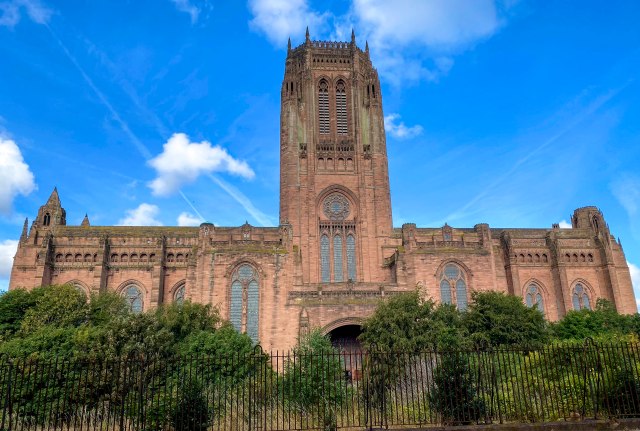
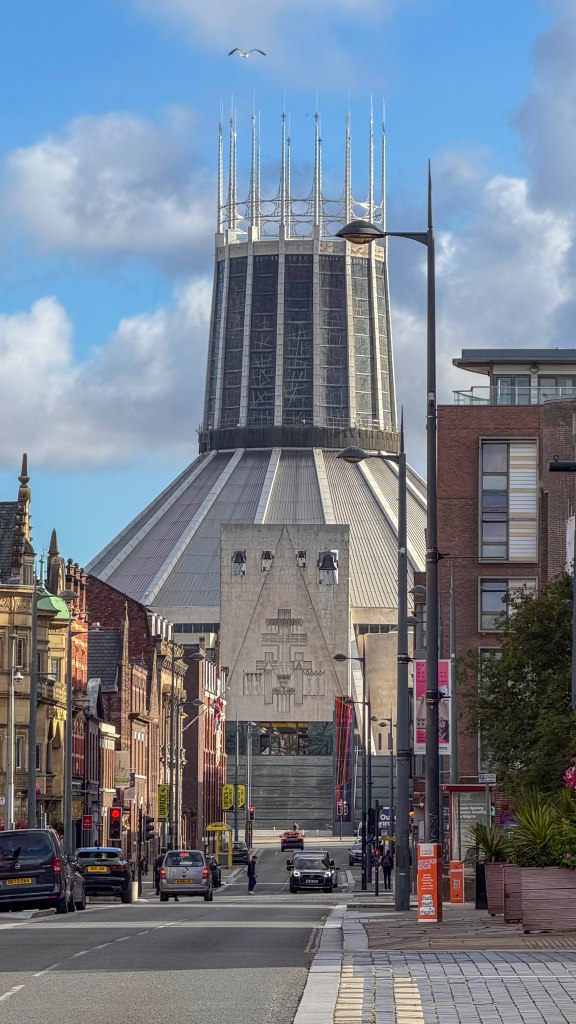
There are many other sights to see in Liverpool – which may or may not be associated with The Beatles. There are a couple of fabulous cathedrals, one of which both John and Paul tried out to be a part of the choir. Paul made it – John did not;-(
St. James Cathedral – the Anglican one.
Paddy’s Wigwam (ha ha) – the Catholic church.
Time with The Beatle’s is up and we must leave our friends behind. It has been a very fun day and would highly recommend to any music fan;-)
Saying farewell to the Fab Four.
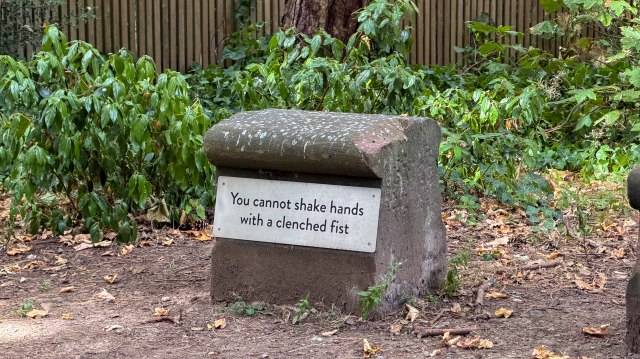
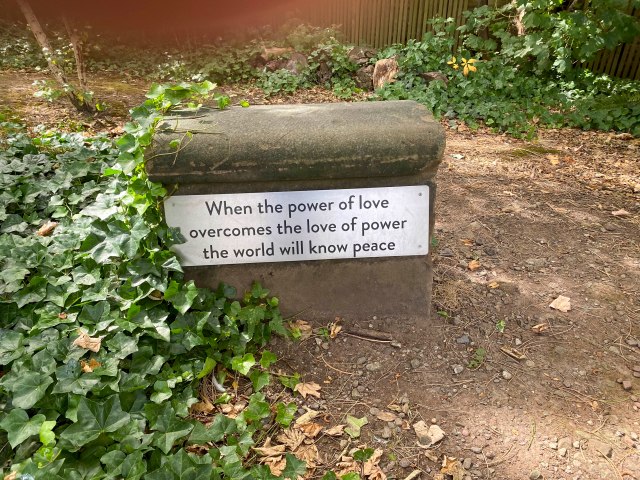
We’ll leave you with these messages scattered around Strawberry Field – –
Ireland’s oldest city, Waterford was founded by the Vikings in the 9th century. It had its ups and downs in following years until 1783, when the Penrose brothers set out to make “plain and cut flint glass, useful and ornamental”. That set in motion a glass manufacturing industry long without equal. The glassworks Waterford had its ups and downs closing after the 2008 financial crisis. A smaller, leaner version rose from the flames in 2010 with a new factory, visitor center and the largest collection of Waterford crystal in the world right in the heart of town.
Arriving in Dunmore (the port for Waterford)…
…to be tendered ashore for a bus ride into Waterford.
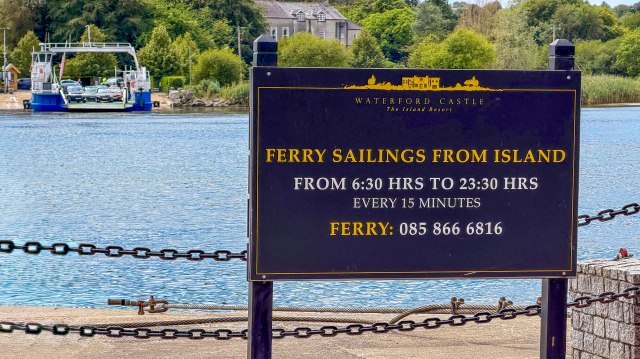
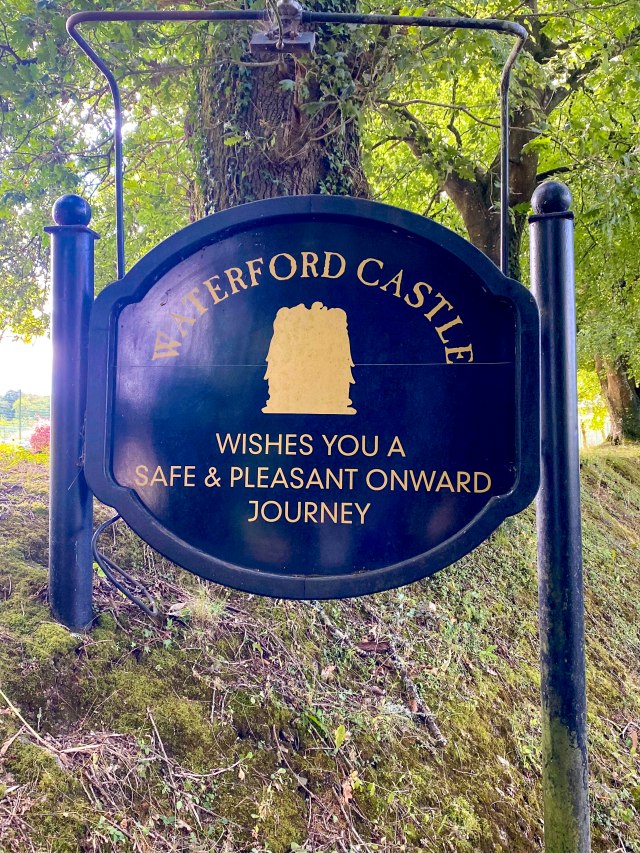
If you are not a crystal person, hop a ride on the shortest ferry ride ever across the River Suir to Waterford Castle. Built on Norman foundations that date back some 800 years, the castle was built in the 1700’s and is now a luxury hotel on its own small island.
Shortest ferry ride in memory.
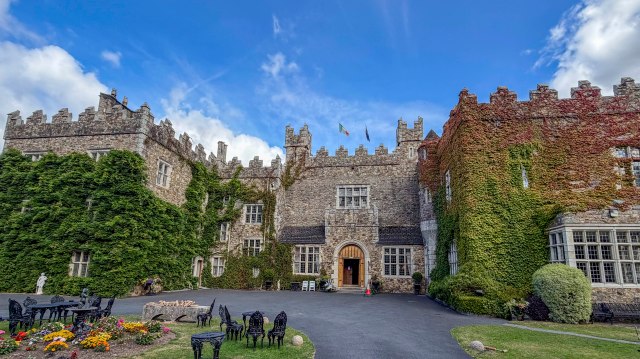
This castle is the real deal with authentic turrets, gargoyles and battlements. You can stay in one of its 19 rooms and dine – or have tea – in the grand Munster Room restaurant or play a round of golf on its 18 hole course. This particular day the hotel and restaurants were closed due to a full buy-out wedding event. (They host one almost every weekend!) So – it was a cup of tea in the grand hallway before they closed for the wedding, a walk through the lovely garden and a delicious lunch of fish and chips in the golf clubhouse. All in all – a wonderful morning and afternoon.
Waterford Castle.
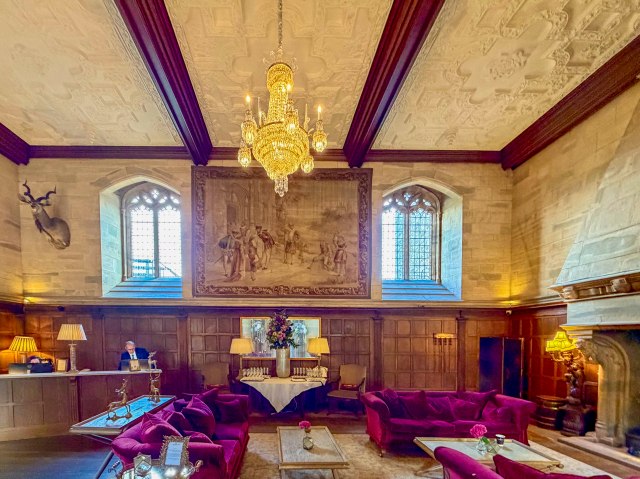
The living room is now a hotel lobby and reception area – – –
– – – Where we had a spot of tea before a wander.
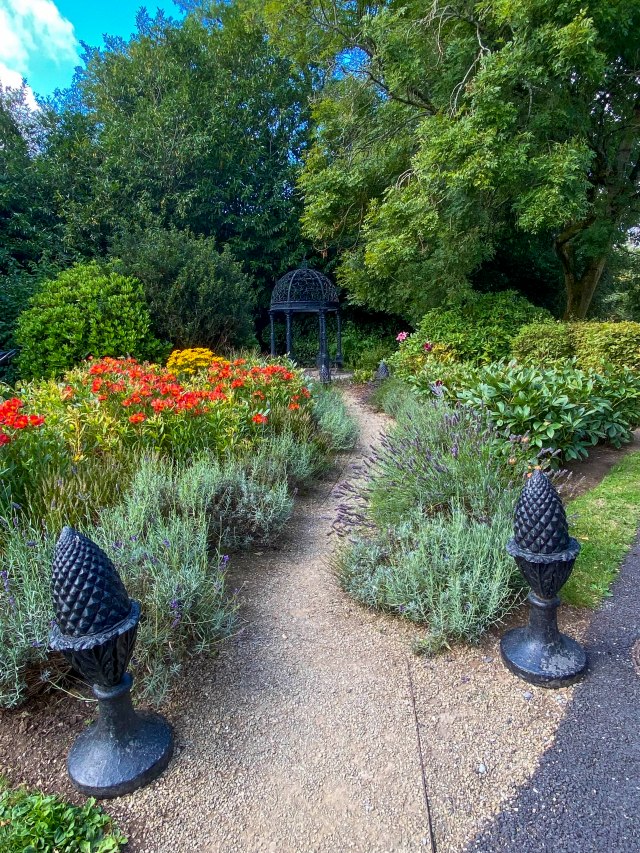
Colorful gardens.
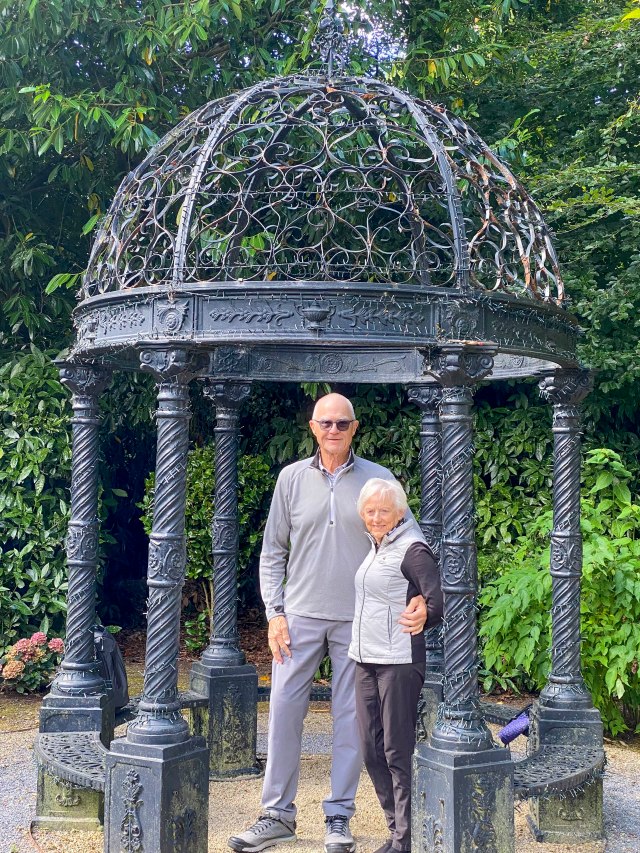
Great gazebo for a perfect picture;-)
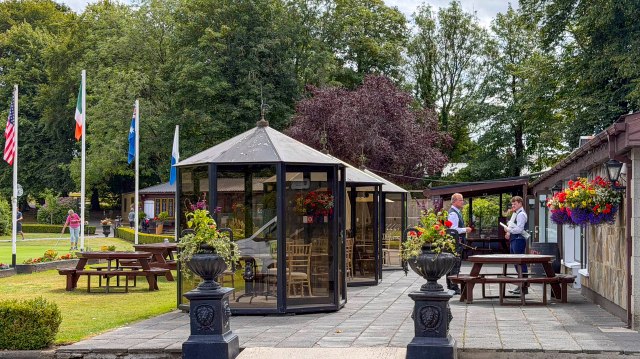
Off to the golf clubhouse for lunch.
Quiet now but very busy with golfers lunching before their tee times.
For more details check out that great reference – “1,000 Places to See Before You Die”. You’ll find it there. For now, it is time to leave Ireland behind for a few days and head to Wales. E & G leave you with this thought – –
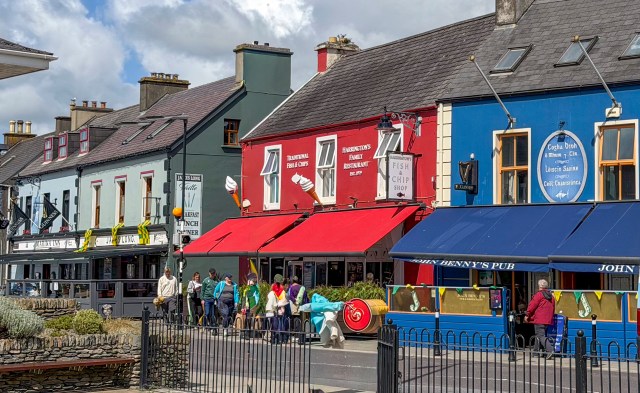
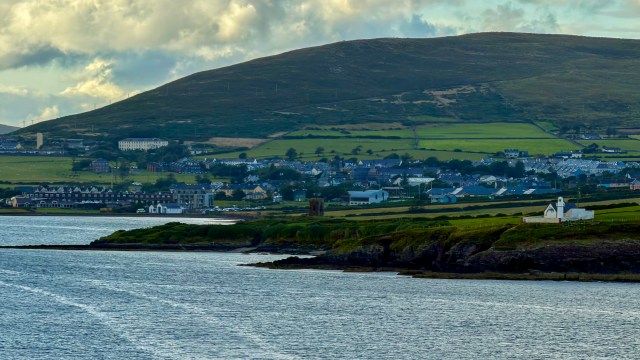
The Dingle Peninsula is the westernmost point in Europe and home to the reported prettiest town in all of County Kerry – Dingle. It is a cheerily painted town that provided the backdrop for the filming of “Ryan’s Daughter” with Robert Mitchum in 1969. It is also home to many fish and chip restaurants and the highest pub per person ratio for its 2000 residents;-) Come and make yourself at home.
Delicious fish & chips at Harrington’s in the red building.
The neighboring peninsula in County Kerry is home to Killarney, an attractive village adjacent to the ivy-covered Victorian mansion – Muckross House – and entrance to Killarney NP. Killarney is also a good starting point for ‘The Ring of Kerry’, which is a 110 mile coast-hugging road that provides breathtaking vistas of land, sea and sky! One can drive this or be really ambitious and walk the 120 mile Kerry Way. Even a portion (as done on this trip) will provide incredible views of green as far as one can see;-)
Enroute to Killarney Nat’l Park, the county’s centerpiece, and Muckross House.
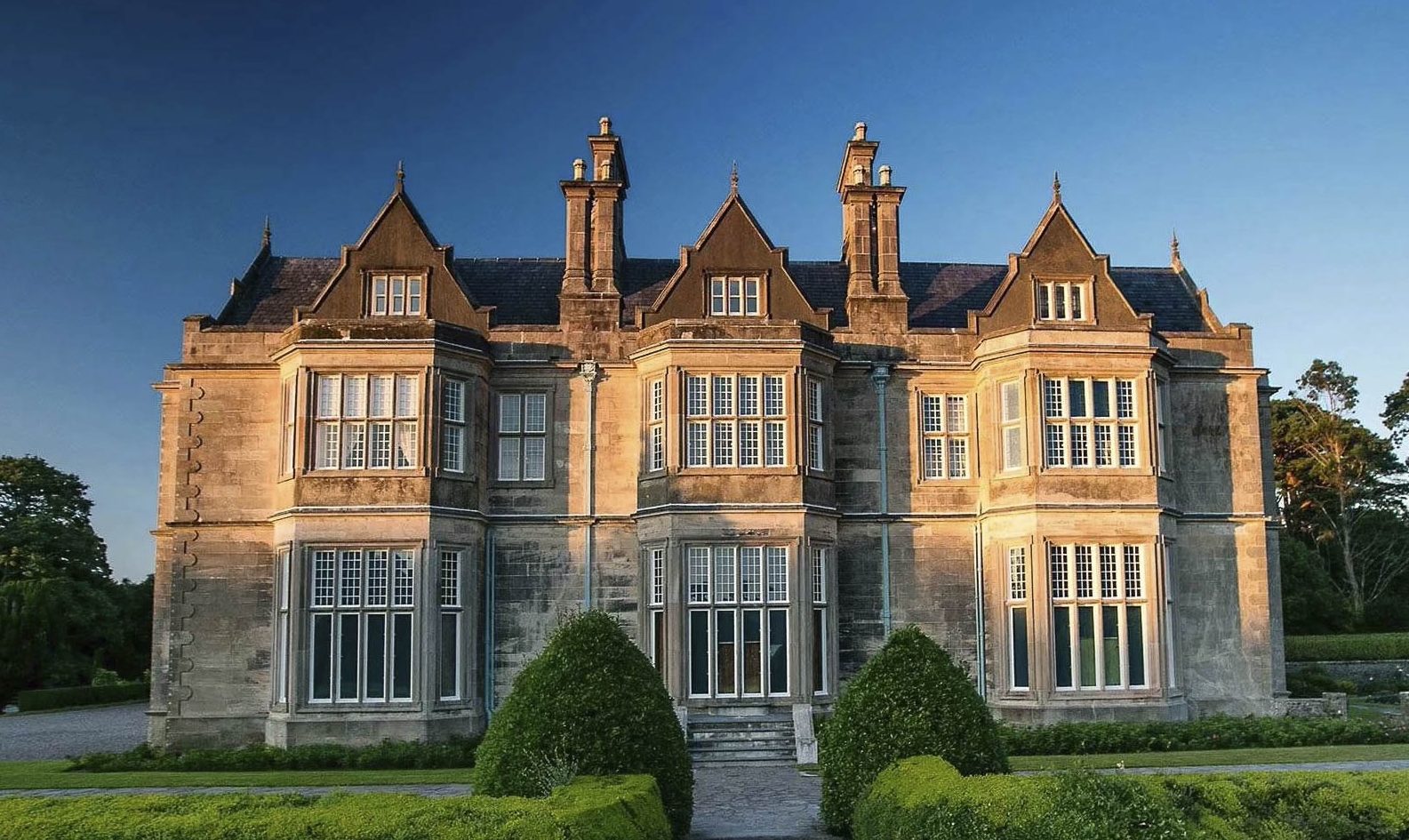
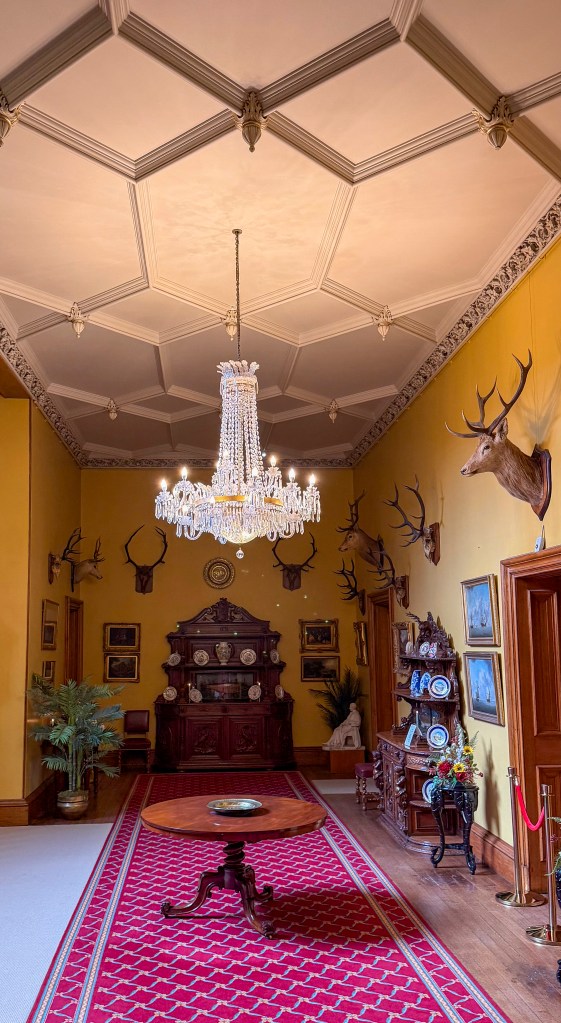
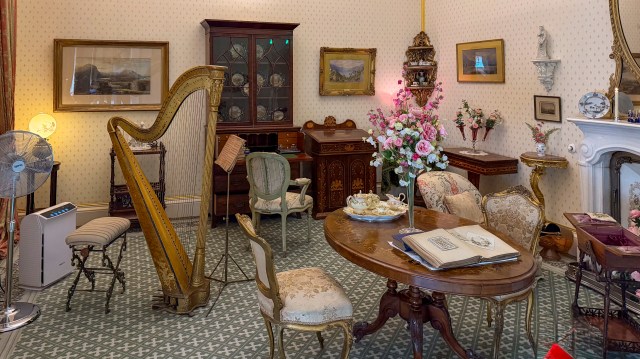
Muckross House was completed in 1843 for Henry Arthur Herbert and his Scottish wife. It sits close to the eastern shore of Muckross Lake and hosted Queen Victoria and her family in August, 1861. The additions and adornments added for the Queen’s visit basically bankrupted the Herberts and the house was sold in 1899 to a member of the Guinness brewing family. In 1911 it was purchased by an American and given to his daughter as a wedding present. The daughter died quite unexpectedly three years later and her husband was so distraught, he did not want to continue living in the house. At that time, her husband and her parents presented Muckross House and its Estate to the Irish Nation and it became Ireland’s first National Park on January 1, 1933.
Muckross House.
The grand entry hall also served as a ballroom when entertaining.
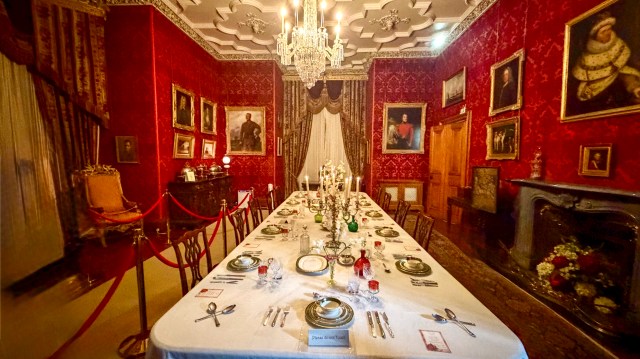
The grand dining room with curtains woven in Paris installed for the Queen’s visit.
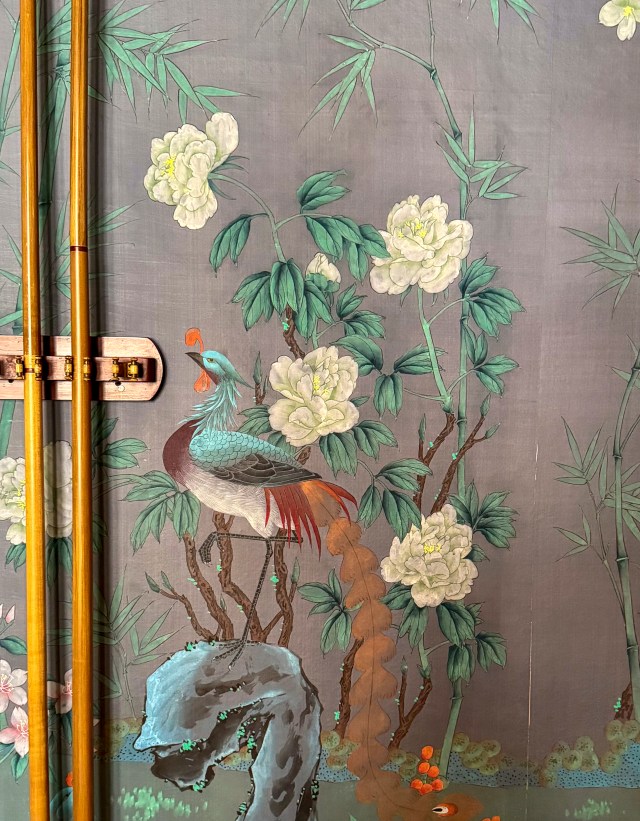
Hand-painted Chinese silk wall covering in the billiard room.
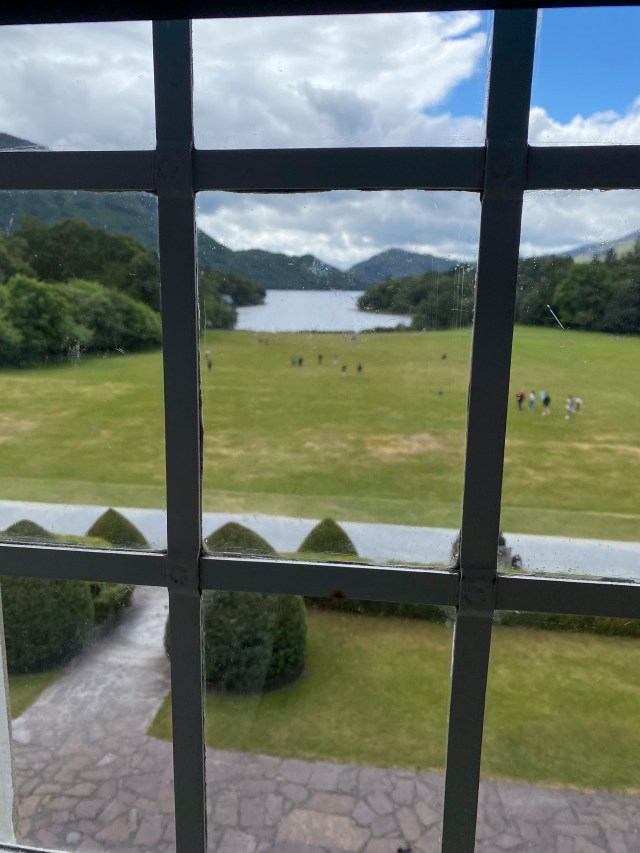
View across the garden to Muckross Lake.
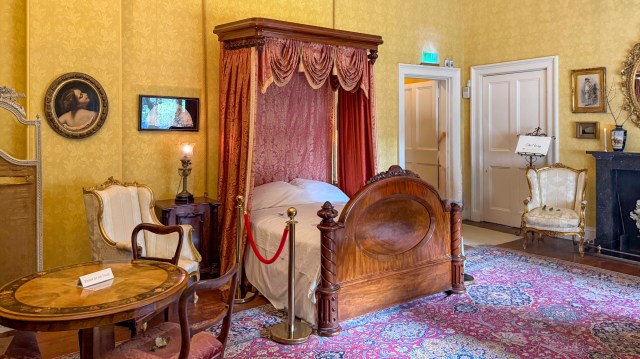
Queen Victoria’s boudoir during her stay.
The Queen’s bedroom.
Time is up for this visit! One must get back on the road and endure those incredible sights along a slight portion of that ‘Ring of Kerry’ – –
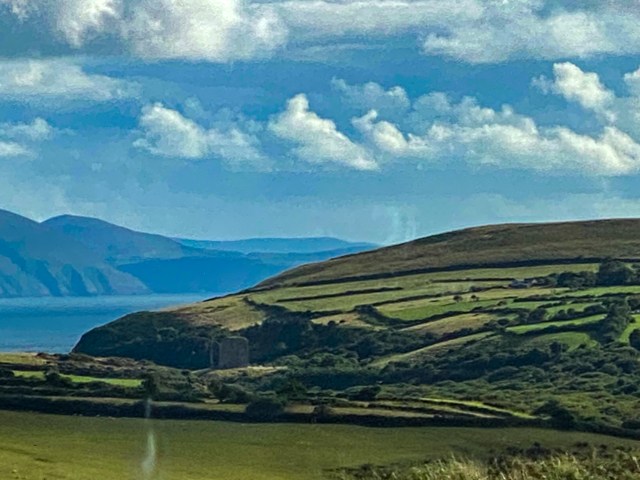
Gorgeous green farmlands with the darker green ‘hedgerows’ falling to the Atlantic.
Farewell Dingle.
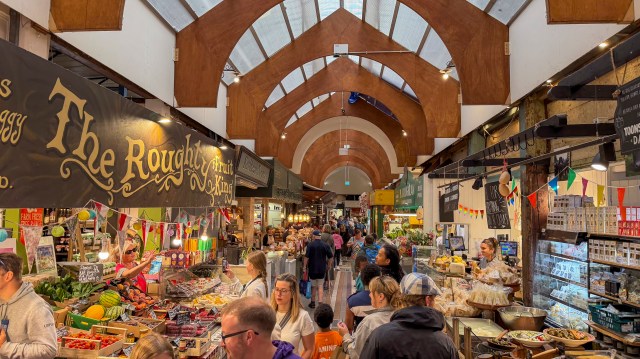
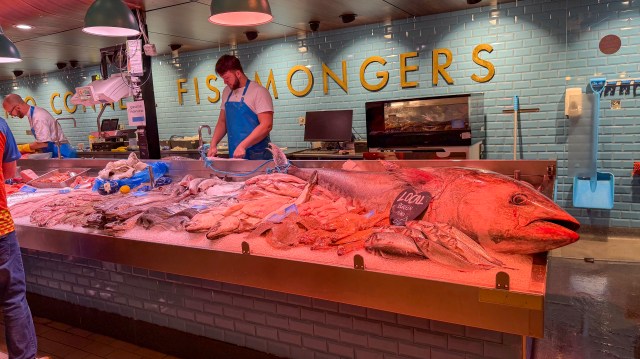
Another day – another port. Today is Cork, which hosts a great Jazz festival. Unfortunately, not this time of year;-( Having been here before (see https://egmagicbustour.com/2022/10/07/irelandbriefly/) , today would just be a wander around town kind of day. Sometimes those turn up unexpected surprises that are quite pleasing. This was one of those days as a turn to the right led us into The English Market. How fabulous with everything from fresh fish and vegetables to quite enticing bakery items.
The bustling English Market in Cork.
That’s one BIG tuna.
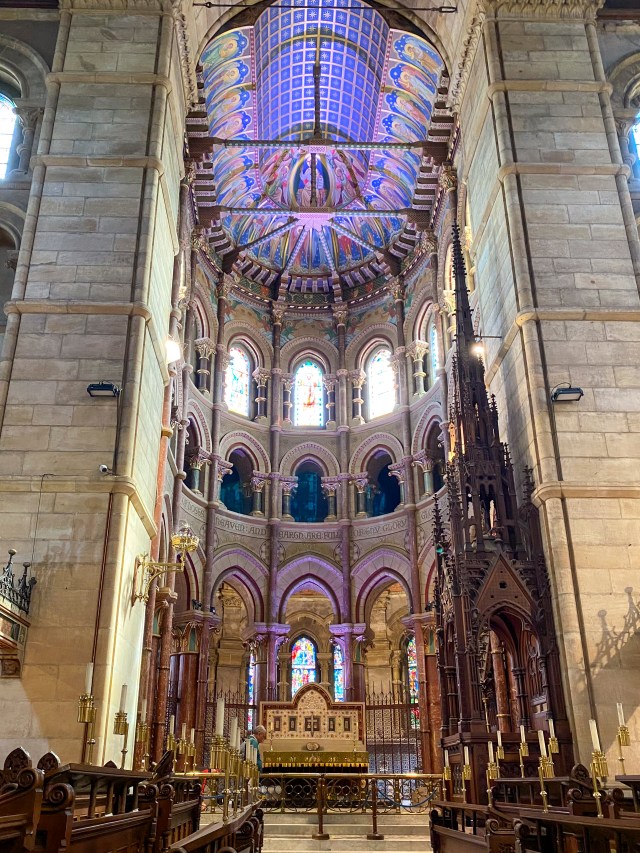
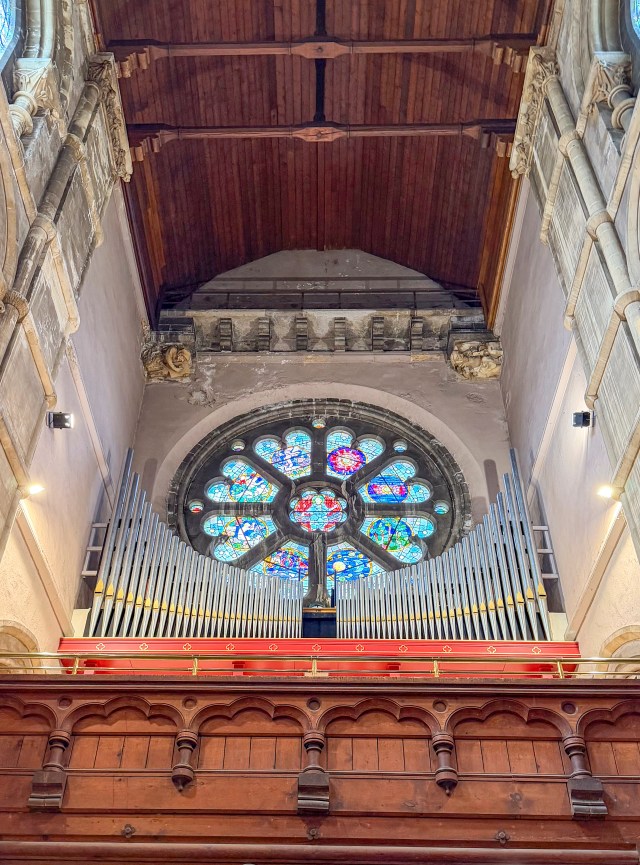
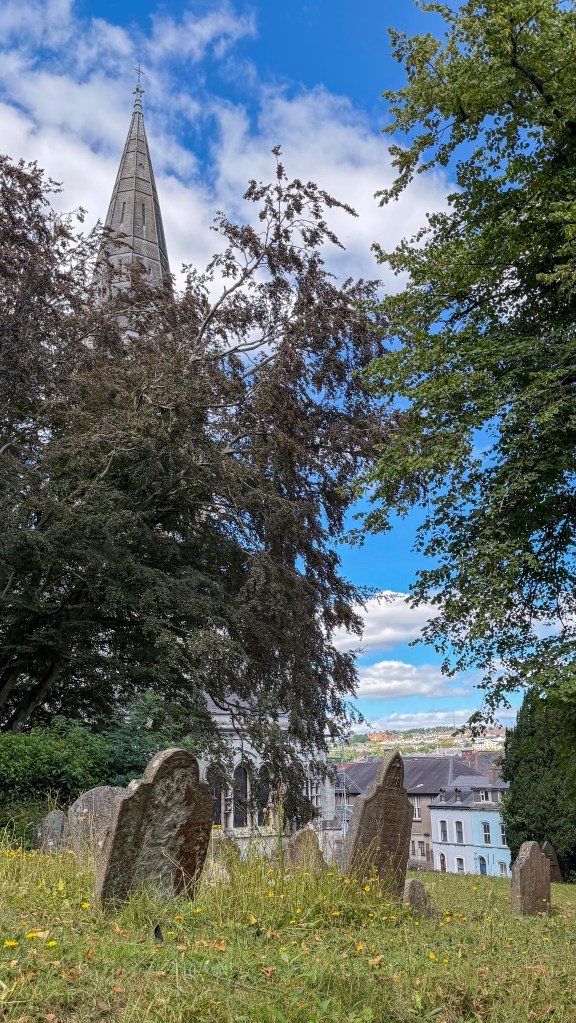
Continuing the wander, Saint Fin Barre’s Cathedral came into view. It looked so incredible from the street, it needed investigation. The site of the cathedral dates to the seventh century when a monastery was founded here. Buildings were added and the city of Cork grew around it. In 1864 the then existing cathedral was demolished and the present structure was built in its place. It just happened that an organ concert was taking place and it was fantastic!
St. Fin Barre’s Cathedral.
A small portion of the 4,000 pipes. Amazing!
In case one wants to go easy on their knees – just loved the shot;-)
View from the church cemetery.
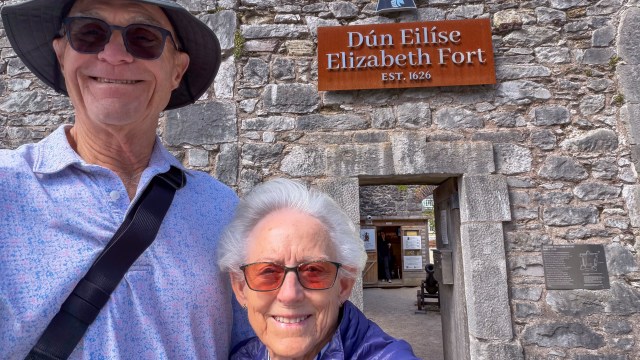
Just a block away was the Elizabeth Fort. It was built around the early 1600’s to protect the English settlement from the Gaelic chieftains still in power in parts of Ireland. Unfortunately, by the time of completion, Queen Elizabeth had died! It still stands as one of the most important and best preserved urban artillery fortifications in Ireland. How could one not go and climb around in this?
400 year old fort next to the cathedral.
What a fun, unplanned day. But, time to move on.
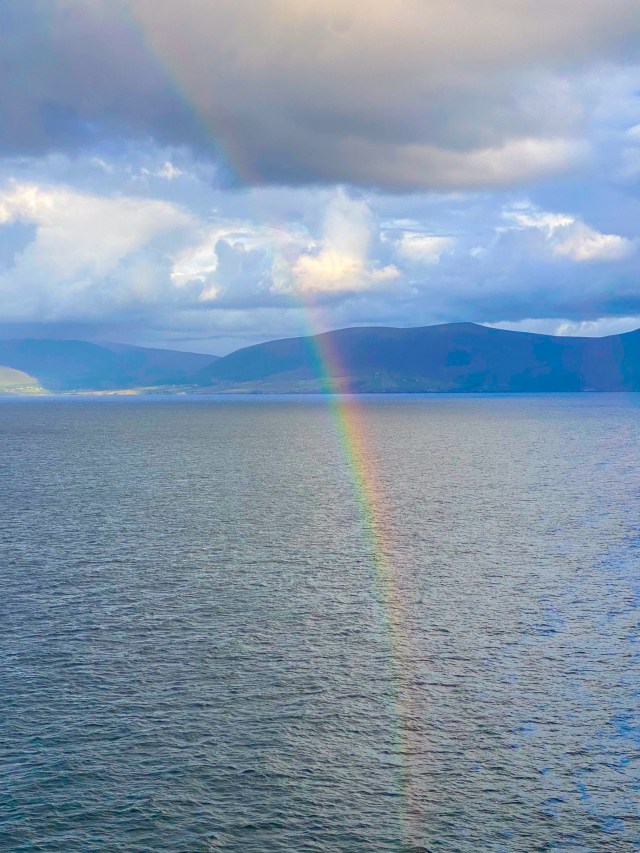
The pot of gold seemed to be at the base of the ship!
More of Ireland to see – like Waterford tomorrow;-)
E & G – enjoying the luck of the Irish everywhere we look.
At the far southwestern tip of the English mainland, where the country plunges over sheer cliffs into the Atlantic, sits the county of Cornwall and Land’s End. Just a few miles east is the fabulous castle topped island of St. Michael’s Mount. It is attached to the mainland by nothing more than a cobbled (and slippery) causeway that is covered at high tide. It was originally created in 1135 as a sister abbey to the perhaps more famous Mont St-Michel in Normandy. But, approximately 600 years ago the property came to the St. Aubyn family, who still live in a portion of the castle.
Since it is high tide – board the small 12 passenger boat and be whisked away to the island. You will need a ‘token’ (exchanged for the ticket purchased at a small stand in the parking lot) to get a seat on the boat. That token reflects the Cornish legend that St. Michael’s Mount was home to a terrifying 18 foot giant who built the island from large granite rocks stolen from the mainland along with cattle and crops. A young local farm boy rowed across the water, dug a deep pit and enticed the Giant out to the pit where the giant fell in. His heart (in the shape of a rock) is on the path on the way up to the castle – and is in each token to board the boats!
Ticket to ride.
Destination in sight.
Once on the island the fun begins. Hike up the very uneven stone steps to the castle and explore.
Looks spooky from here.
On the way up one can see a watchtower and gun batteries. Inside there is the refectory for the priory, which continued to act as the main dining room until the 1950”s, Smoking room, drawing rooms and a church.
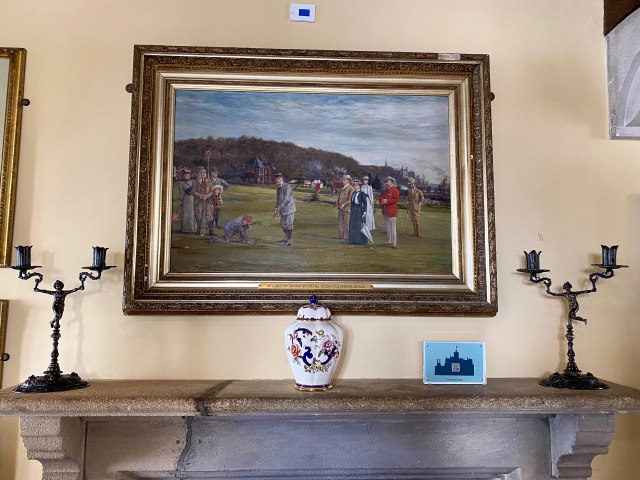
This family must have been ok – they liked golf!
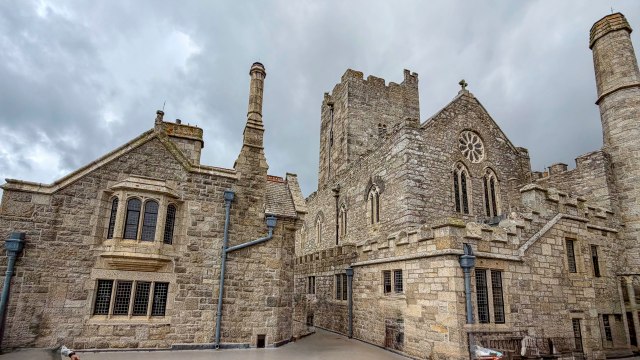
The South Terrace has been extended from its original dimension and is now the roof of the East Wing where the family still lives today. It also provides beautiful views of the surrounding area and the back of the simple medieval church that is a part of the castle.
Beautiful stonework.
Inspecting defensive positions.
Chapel exterior.
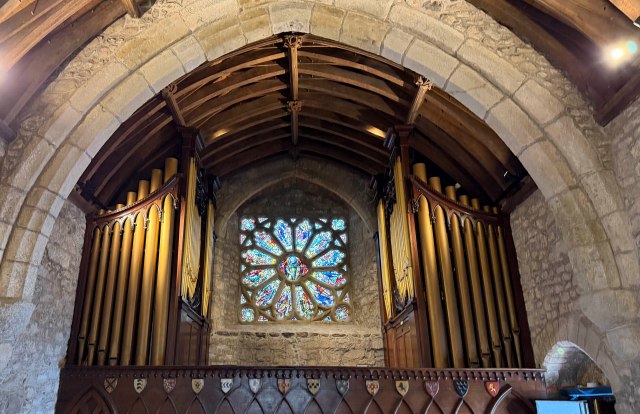
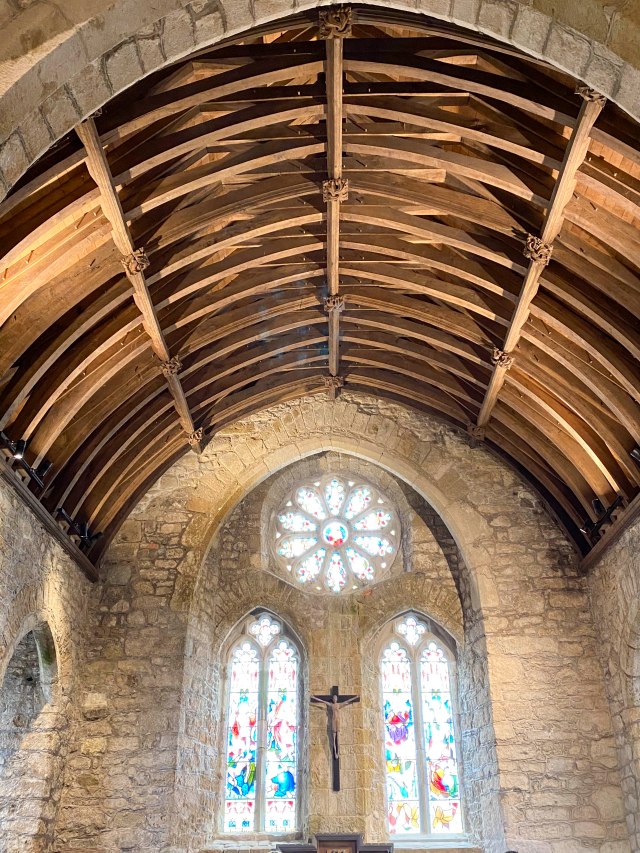
The church was dedicated to St. Michael and is still used today for Sunday services. It was first built in 1135, but largely rebuilt in the 14th century. Its simplicity is striking – even with a small, but beautiful, pipe organ.
Lovely pipe organ…
…and stained glass windows in the chapel.
If one times their visit approximately, they can walk across that cobbled causeway going out or coming back. This particular day the timing was for a nice walk back to shore. So – time to head down and wander across;-)
Low tide – hurry to walk back to the shore.
One last view before running off. The westernmost town in England sits just across the bay – Penzance, as in the Gilbert and Sullivan’s “The Pirates of …..”. Had to get this in as a line in “Pretty Woman” has become a standard of this writer’s. In the movie, after the opera that she is quite taken by, an older woman asks how she liked it and she replies – “it was so good I almost peed in my pants”. When the older woman looks flustered, Richard Gere covers by saying – “she liked it even better than Pirates of Penzance!” That has become my catch phrase for – “need to go!”
A view across the bay at Penzance.
A very fun, energizing day. Don’t miss St. Michael’s Mount if in the area. Fantastic! But, again, time is up and more ports are calling.
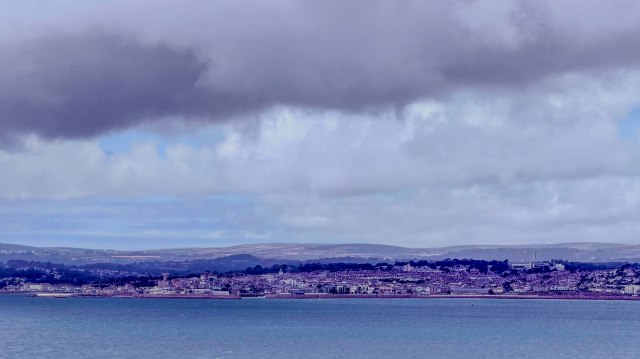
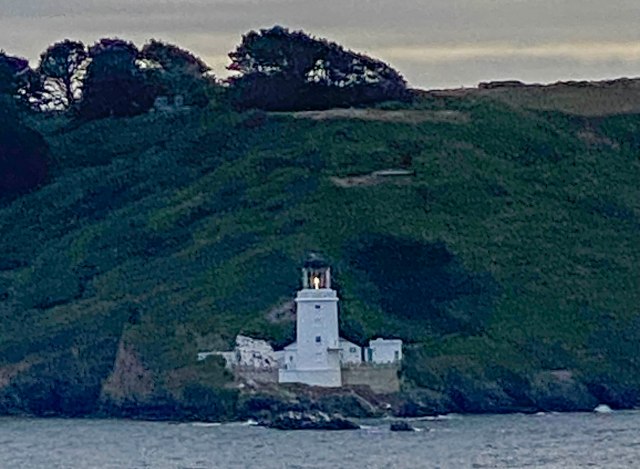
Farewell Falmouth.
E & G – still enjoying all the new sights and making lots of memories;-)
Southampton is a very large cruise port with access to London. Therefore, one might find themselves wandering the streets of the old town along the old city wall with lots of other tourists;-( Or – perhaps they have all abandoned Southampton for a day trip to London. Either way, it is an interesting little city with some very old history to see.
The historic Cunard Cruise Line, Queen Mary 2, continues the original Cunard legacy as the only ship to consistently ply the historic transatlantic route between Southampton and New York on a regular schedule. In 1840, Samuel Cunard secured the first contract to carry mail by steamship between Britain and America. This line, still bearing his name, is a most recognized as are the ships – the QE2, the Mauretania and the unfortunate Lusitania (sunk at the outset of WWI).
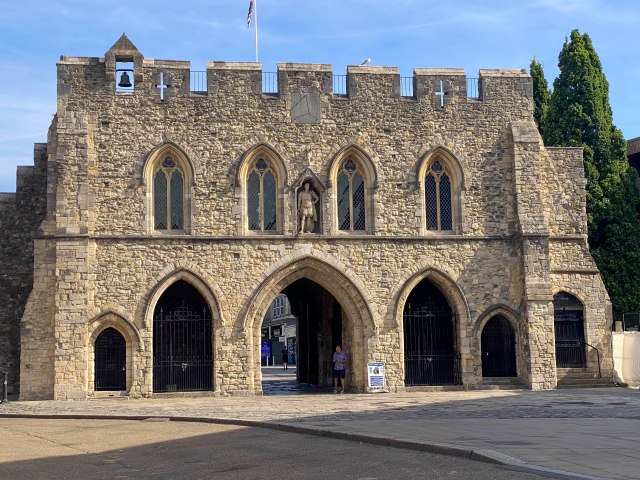
But, that is recent history! Early relics and sights stem from the 1100’s. Like the Bargate, which was built around 1180 and served as the entry to the city.
Welcome to town – and now our shopping district!
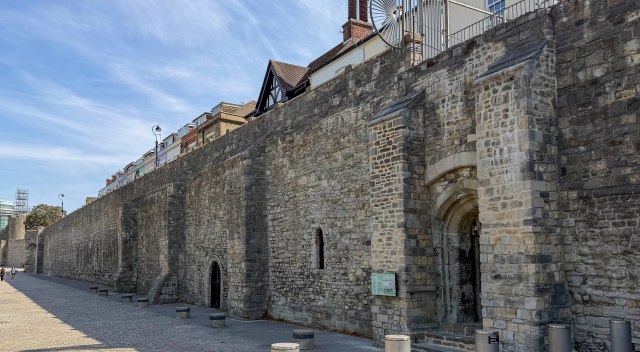
Advancing a few hundred years – One quiet morning in October, 1338, a fleet of ships silently entered the harbor and French and Genoese soldiers and mercenaries stormed the town. They attacked residents, looted their possessions and set fire to buildings. When Edward III heard about the raid and the loss of his wine and wool, he commanded a wall be built to protect against future attacks. Major portions of this wall are still evident, although the port waters are now much further away from them.
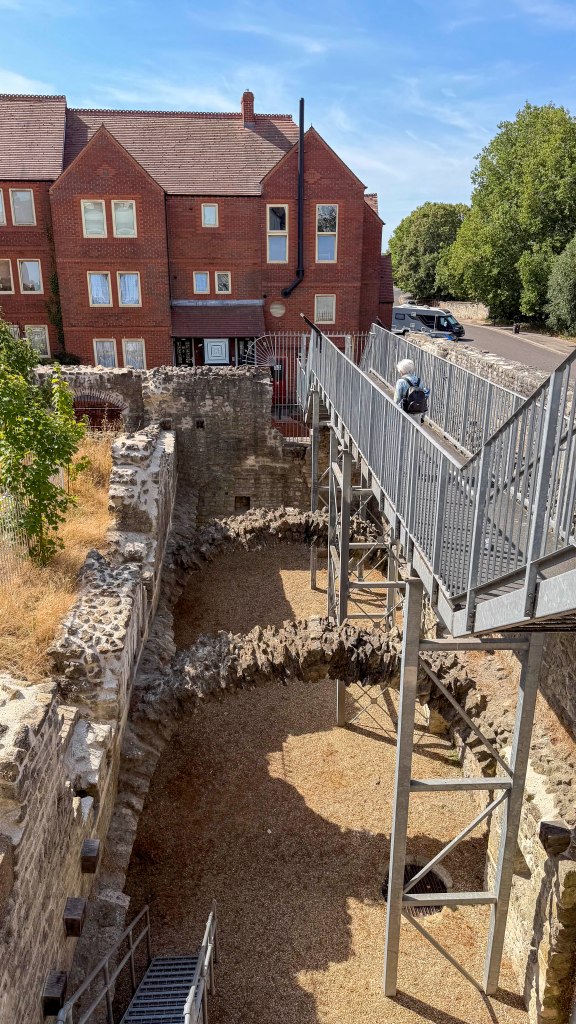
These remnants of the old walls used to be at the harbor waters edge.
Recently exposed excavation of wall construction.
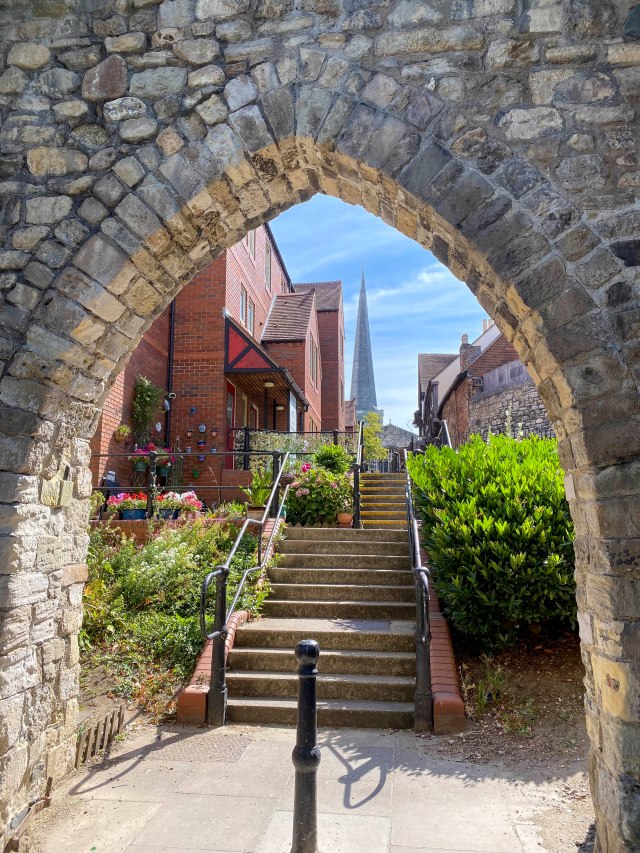
What is now a lovely little lane – Blue Anchor Lane – began at this stone arch and was used to take imported goods from the quayside into the market at St. Michael’s square in the medieval town.
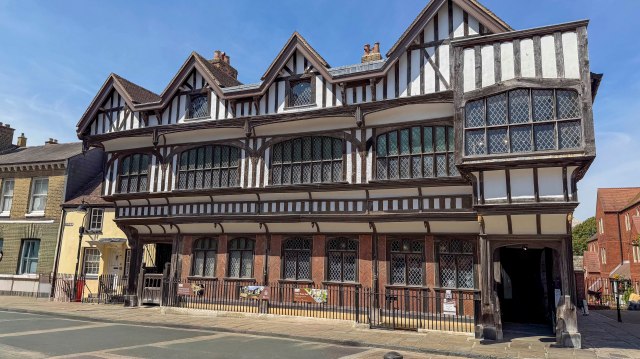
At the top of Blue Anchor Lane sits the Tudor House and Garden. This house actually began as King John’s Palace built in the 1100’s and its ruins still stand in the grounds of Tudor House, which was created on the site in 1491. At that time, Sir John Dawtrey, Controller of Customs for Henry VII, joined three smaller houses together. Over time, new owners made their own changes to the building – each making it more impressive to reflect their wealth and status. As is often the case, the house went thru bad times, fell into disrepair and was finally saved and restored. Today the building is a museum of days gone by.
Tudor House.
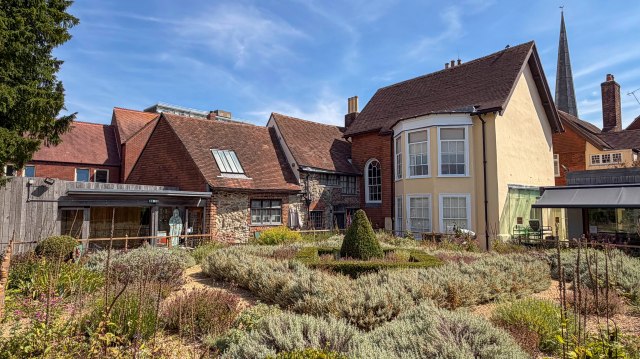
The once elegant English garden could use some spiffing up.
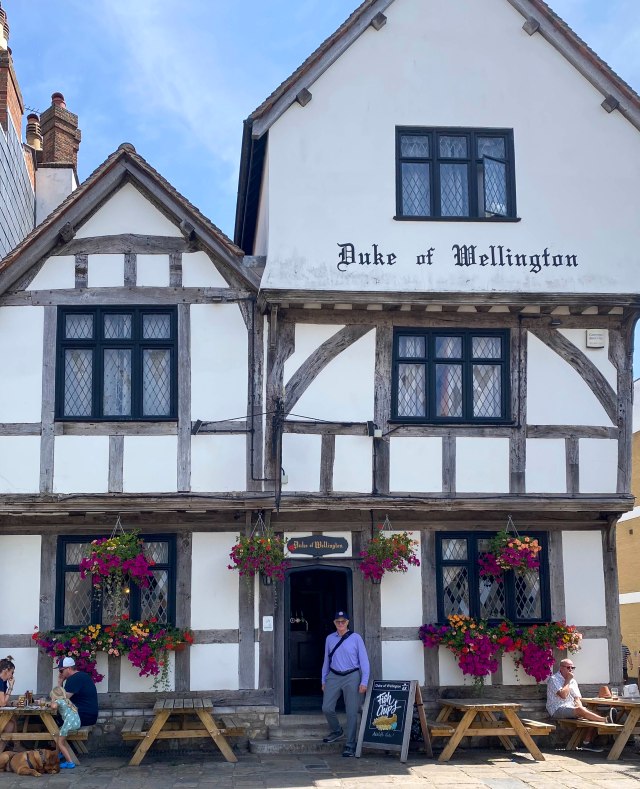
This particular visit to Southampton was on a Sunday, which apparently is “Sunday Roast” day in the restaurants. With your choice of meat (ham, beef, chicken or lamb) comes potatoes, vegetables, stuffing, yorkshire pudding and gravy! A suggestion was made to walk down the street from Tudor House to the Duke of Wellington Pub for Sunday Roast. Excellent suggestion! Don’t forget the sticky toffee pudding for dessert;-)
Amazing – still fit thru the door after all that food.
Just opposite Tudor House is St. Michael’s Church and Square, where the goods from the quay were taken to market.
St. Michael’s Church and Square.
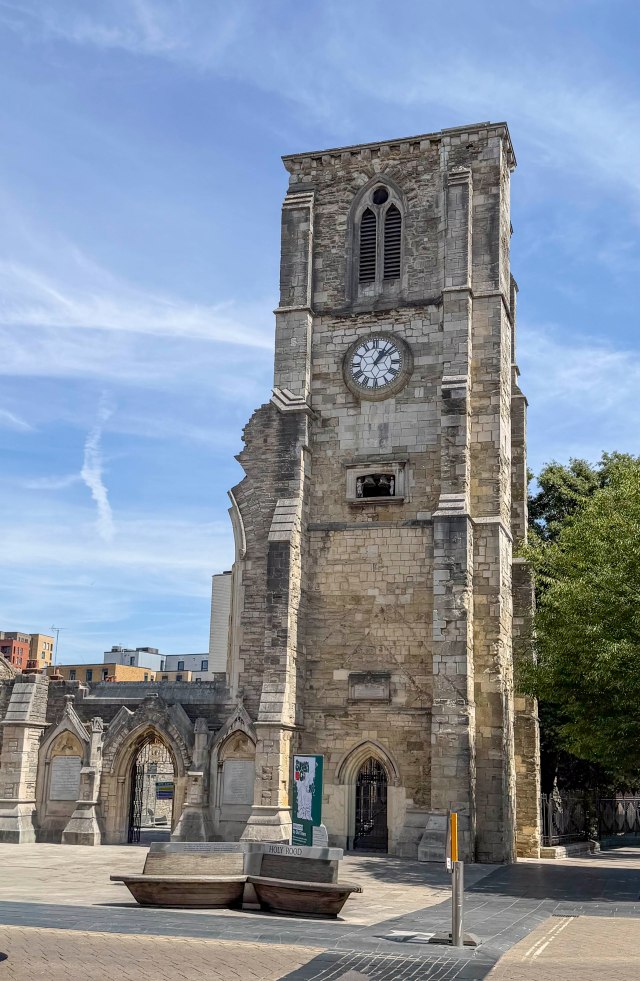
Holyrood church.
Southampton was now in the rearview mirror and Portland was in our sights. Its harbor was made between 1848 and 1905. From its inception it was a Royal Navy base and played prominent roles during the First and Second World Wars. It was a departure point for troops during the Normandy invasion and ships of the Royal Navy and NATO countries worked up and exercised in its waters until 1995.
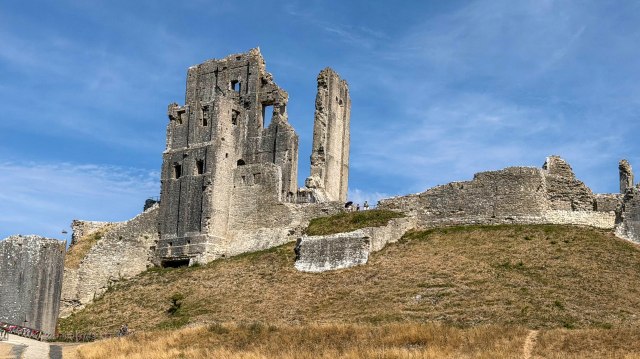
About an hours drive from Portland is Corfe Castle, impressive remains on the hillside, surrounded by a lovely little village. By 1106 Corfe Castle was one of the most fortified castles in England and a home for Henry I. But it was utilized more frequently for the imprisonment of various Kings’ relatives through the ages;-( In 1635 the castle was sold to the Lord Chief Justice, Sir John Bankes, whose family owned the property for 300 years until it was gifted to the National Trust. This now allows for visitors like us!
The ruins of Corfe Castle, an interesting day trip from Portland.
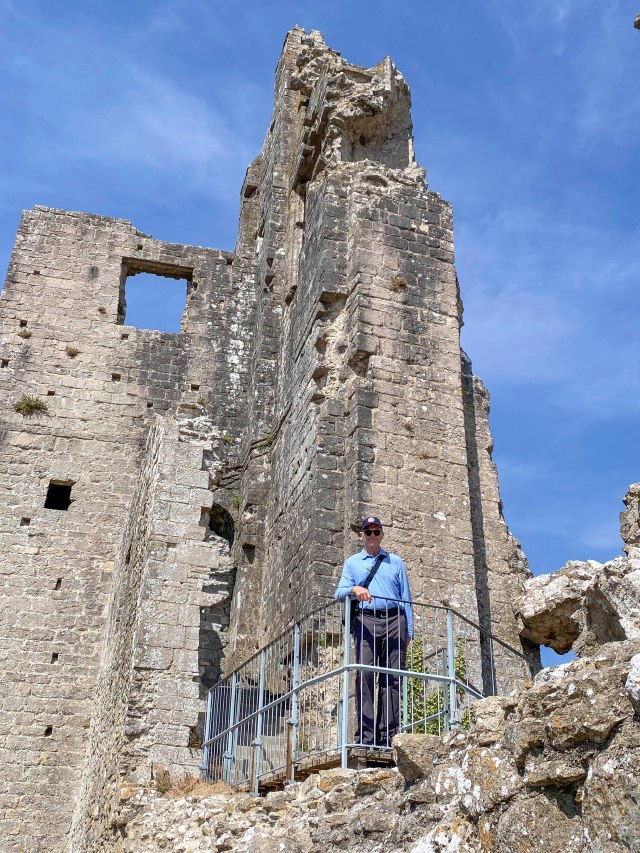
The castle IS older!!
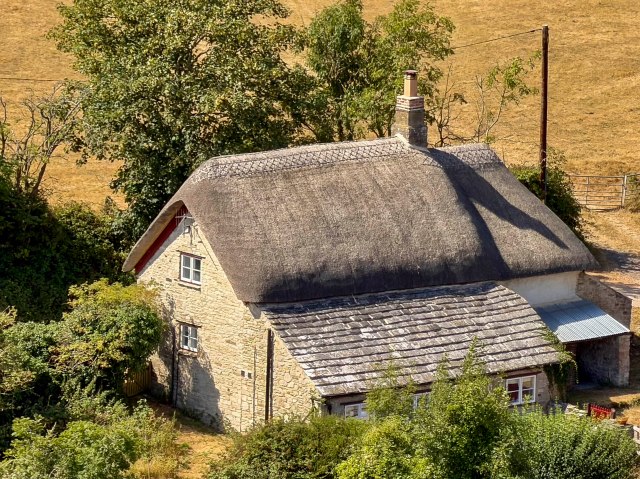
The surrounding village is quite quaint with many thatched roofed houses. An interesting story about these roofs: There are many little holes in the thatching which attract rats and mice. These in turn attract cats hunting them and dogs chasing the cats. Unfortunately, when it rains these roofs become quite slick and these animals will slide off giving the appearance from the ground that ‘it is raining cats and dogs’!
Many of these quaint, thatched roof homes in the area.
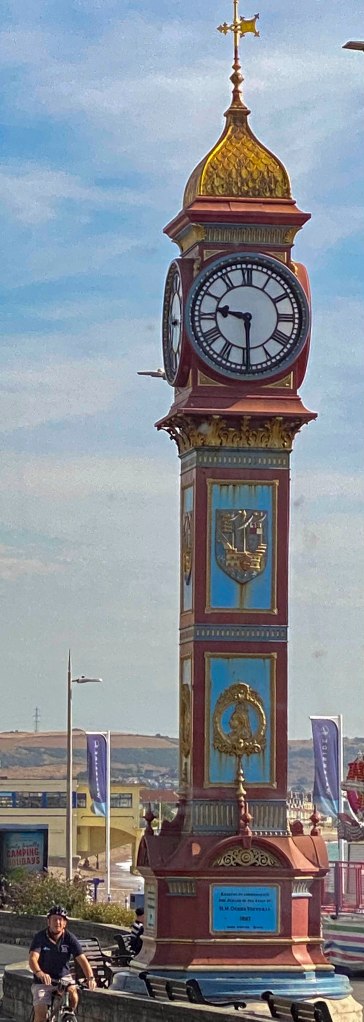
Back to Portland, a very crowded beach on this sunny day and Little Ben – –
Built in 1887–1888 to commemorate the Golden Jubilee of Queen Victoria’s 50 years on the throne.
The cruise itinerary said Amsterdam – but our calendar said Brussels. Having been to Amsterdam several times and spent a number of days there (which can be explored at https://egmagicbustour.com/2019/09/22/amsterdam-the-end-of-our-journey/), this was the perfect opportunity to hop on a train to Brussels and see something on the ‘bucket list’ for several years. The Musical Instrument Museum in Phoenix is a world class museum and the number one tourist attraction in that city. It takes up a lot of our time as volunteers when home for both the museum and ushering in the fantastic 299 seat theater with phenomenal acoustics! It is reported that the founder of the Phoenix museum, Bob Ulrich, was inspired by a Musical Instrument Museum in Brussels. Well – this needed to be checked out.
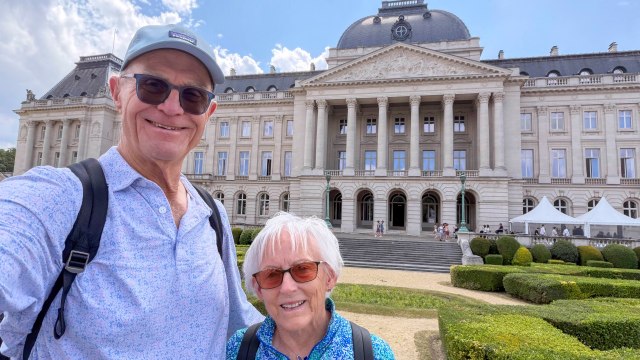
First – a need to quickly explore this capital city of Belgium AND the capital of Europe, as it serves as the main home for the European Union offices and NATO. It also houses King Philippe and Queen Mathilde in the Royal Palace – another location to put on the VRBO list for next summer;-)
The Royal Palace
Lovely view of the park across from the Royal Palace.
Brussels is a place of pilgrimage for Art Nouveau fans from all over the world. But it also displays the Gothic City Hall, which is the only building to have survived Louis XIV’s (almost) total destruction of the city center. A part of this beautiful city center is La Grand Place – the heart of town with many museums lining its sides. In August of even numbered years, a flower carpet of begonias covers La Grand Place – –
Just happened to be here for the begonia carpet.
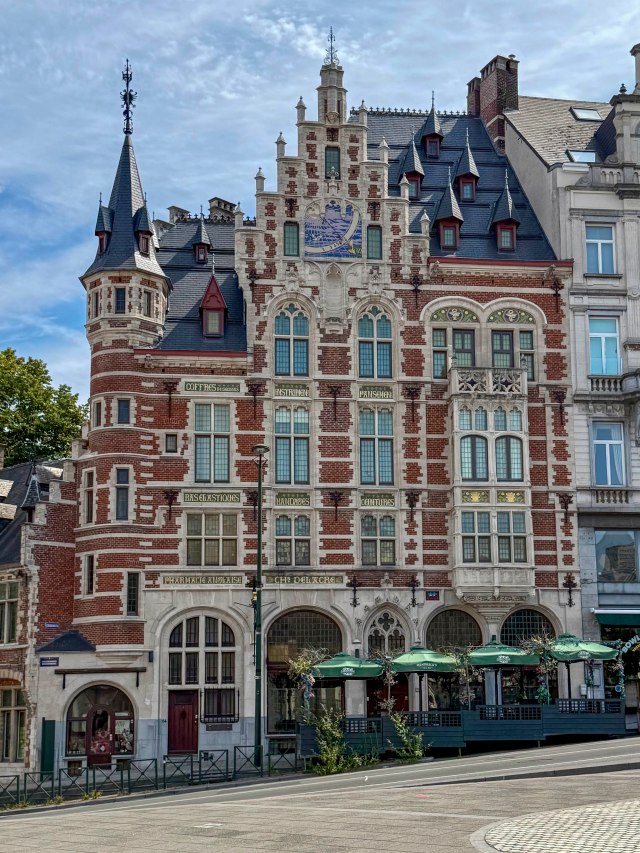
Back to Art Nouveau – A beautiful old building with a great lunch spot.
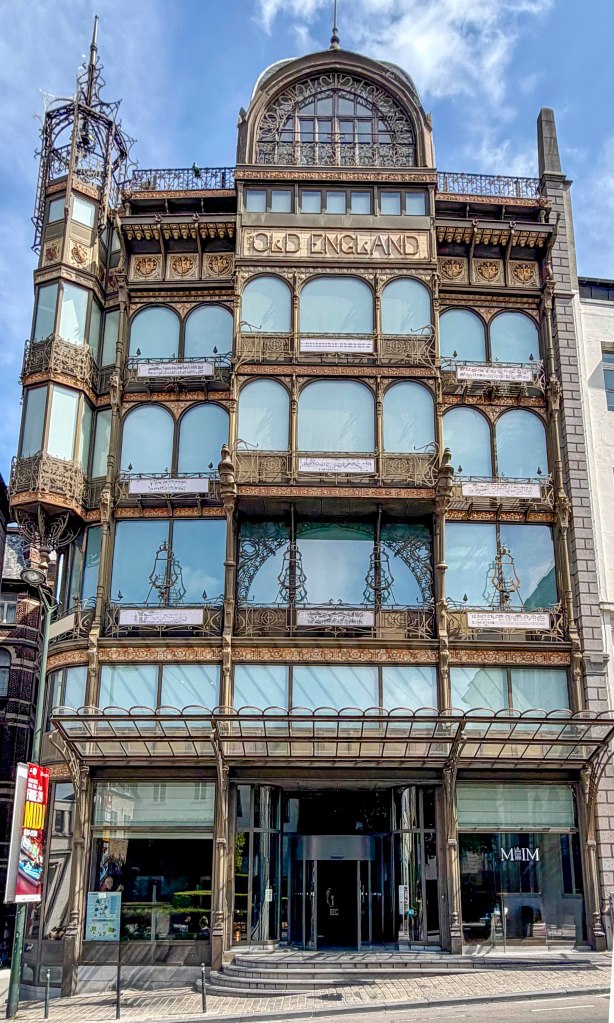
The use of Art Nouveau in commercial architecture can be admired at the iron and glass Old England department store reborn as the Musee des Instruments de Musique (le MIM – included in 1,000 Places to See Before You Die!). Yes – the destination of this little side trip. This museum holds a world class collection of more than 600 musical instruments organized primarily by type. It is certainly easy to discover how Bob got his idea, and those of use who reside in Phoenix are quite grateful.
Striking building – now the MIM’s home.
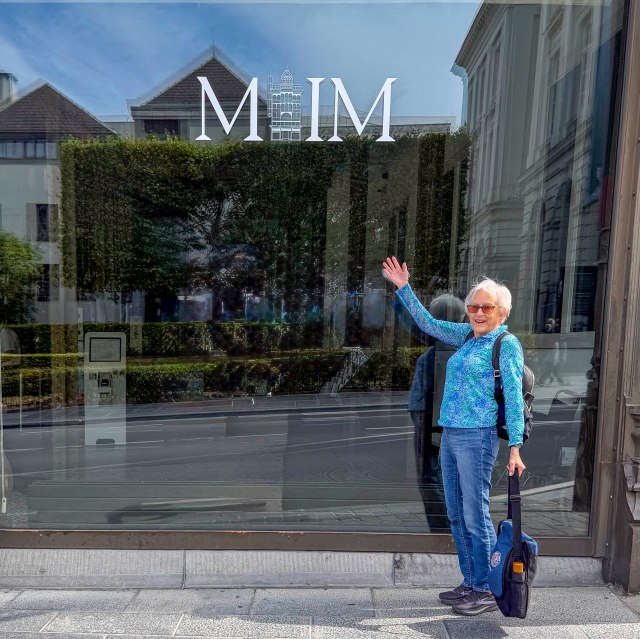
Finally here!
Pyramid Piano circa 1745.
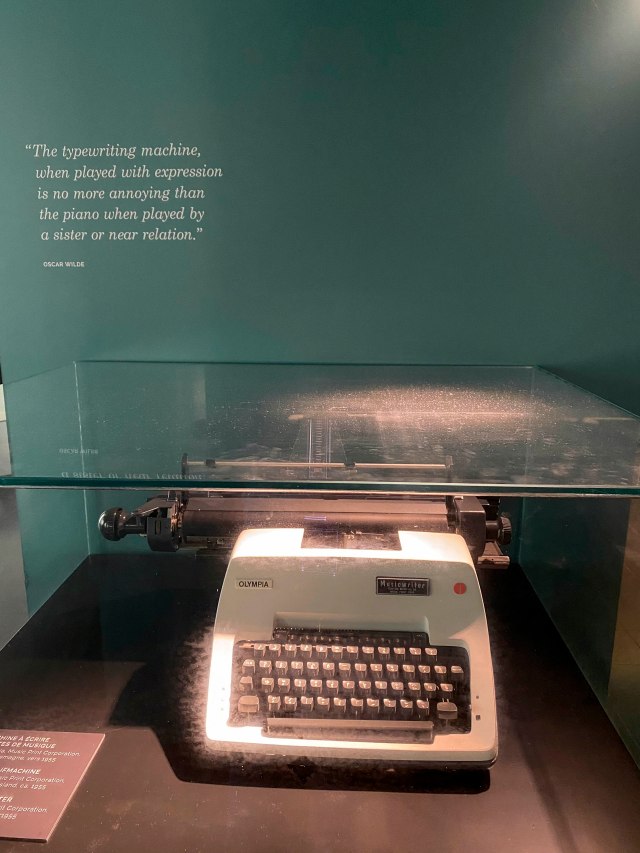
Reminds G of a Top 40 song from the early 1960’s. E just LOVED the quote;-)
It was a VERY busy day and a train to Bruges was calling – so all aboard for the next stop.
Venice of the North, as Bruges is called, was once one of Europe’s most prosperous cities. It was a busy trading hub in the 15th century where Italian Bankers rubbed shoulders with merchants from Spain, England and Scandinavia. Many medieval landmarks and pieces of art recall these ages – the towering town belfry, the 14th century Gothic Town Hall, the 13th century self-contained convent-like community that flourished for 600 years (a separate UNESCO designation) and the Church of our Lady with its marble ‘Madonna and Child’ by Michelangelo. Bruges is one of the best preserved medieval towns in Europe, and as such, the historic center of Bruges is a UNESCO World Heritage Site. It is adorable, walkable and one of the most wonderful little towns ever visited!!! LOVE this place.
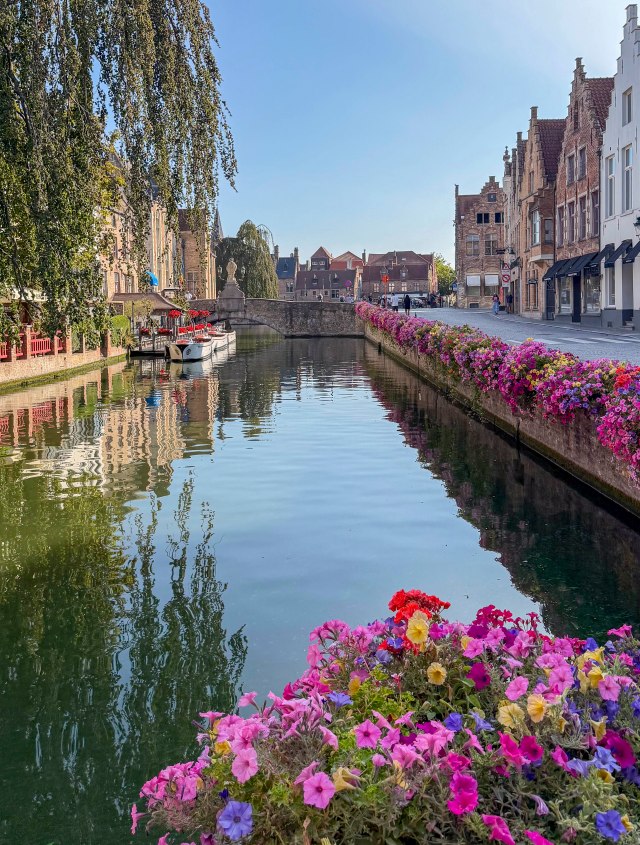
One of the canals in Bruges’ extensive canal system – earning the name “Venice of the North”.
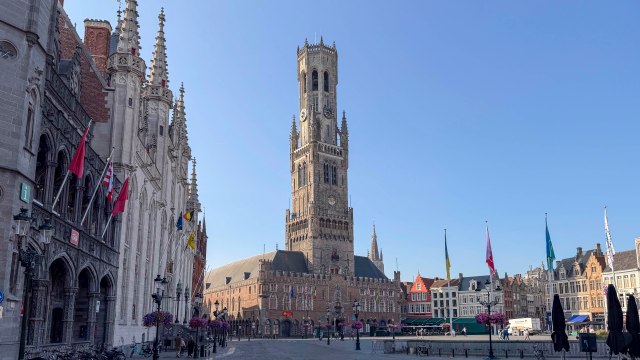
The Grand Place with the Belfry of Bruges housing a carillon comprised of 47 bells.
Notre Dame Cathedral, Bruges.
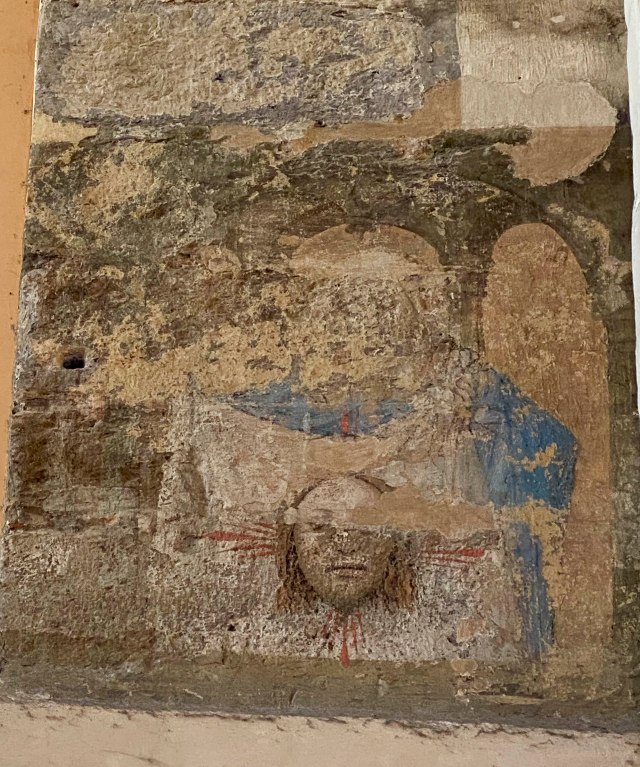
Uncovered frescos within the church.
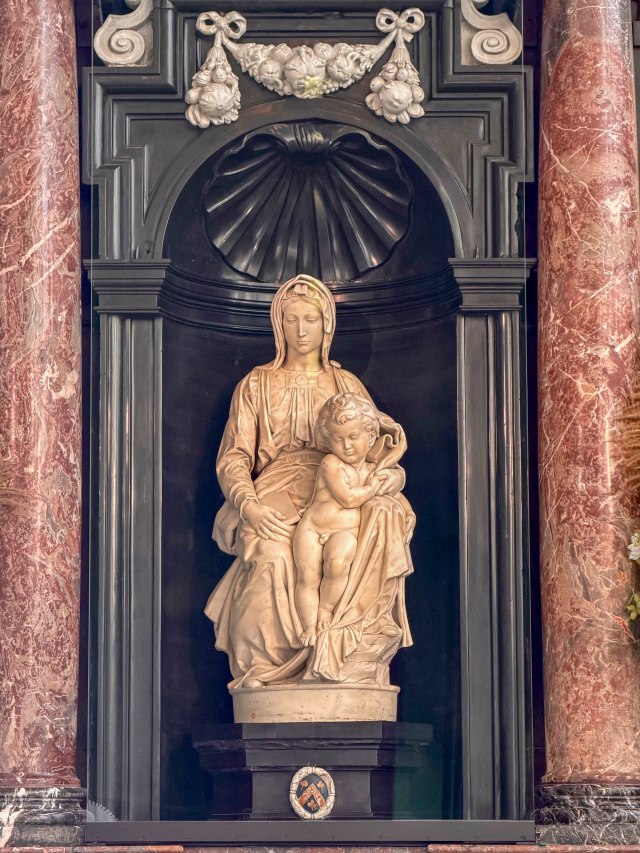
Michelangelo’s “Madonna and Child” – believed to be the only sculpture of his to leave Italy during his lifetime.
Stunning!
13th century Begijnhof – a self-contained convent like community still used today.
The Sainte of the Begijnhof;-)
Belgium is famous for two other things – beer and chocolate! They can keep their beer, but give me all the chocolate. One can get the best chocolate in the store with the best name – ELISABETH!
E’s own chocolate shop.
If you want a fabulous place to stay in Bruges – try the Hotel Heritage. It will spoil you rotten and amuse you with its ‘antique’ appointments. A good place for lunch or dinner is Brasserie Raymond just down the street from the Heritage.
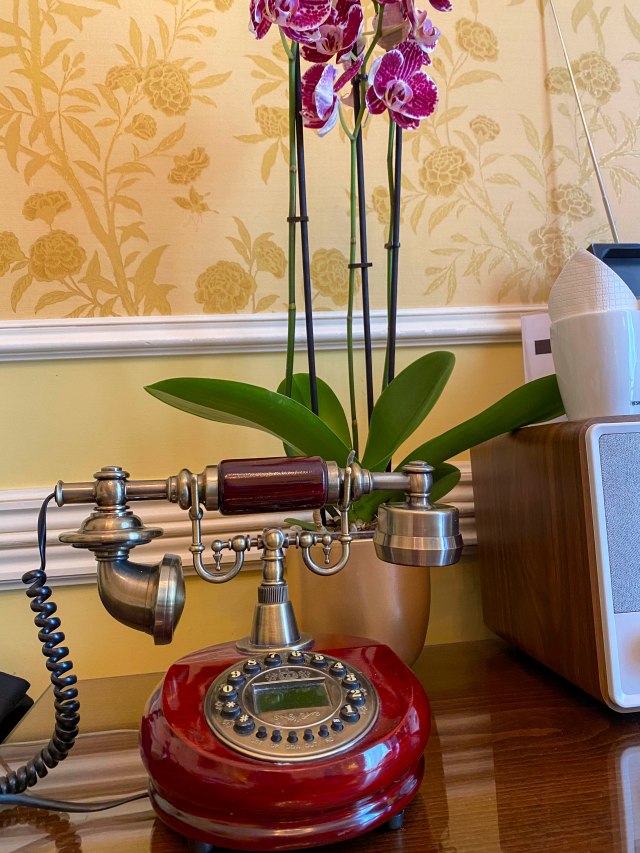
For historical purposes, a phone used to look something like this.
Loved the breakfast china – – –
– – – and the eggs were quite amusing;-)
Belgium was fantastic! It was wonderful being in the capital city and seeing their MIM and Bruges can NOT be beat. It just makes one feel happy and there is so much more to Bruges that wasn’t even discussed – the horse and carriage rides through the town, the canal boat rides, all the little fabulous cafes, the many, many chocolate shops, etc., etc., etc. One could spend days here, but a ship is waiting for us and it can’t be missed.
A cruise of 78 days is bound to have itinerary changes along the way primarily due to unpredicted weather. Sometimes this gives an extra sea day to catch up on laundry or blog postings and sometimes one gets a new, exciting port. In this case – both! The only disappointment was the elimination of Alesund, and the excursion over the much touted Trollstigen Road. But, that was mitigated by a return to Oslo and a revisit to one of this writers favorite places in the world (discussed below).
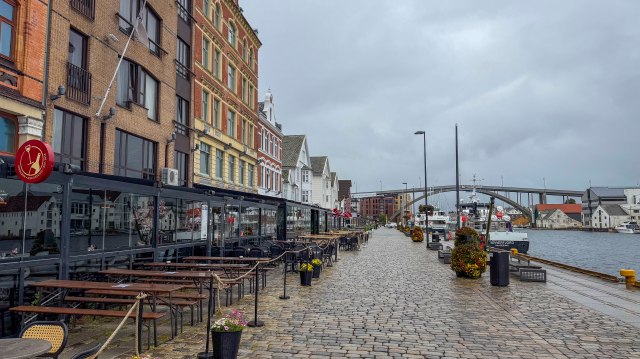
First – a quick stop in historic Haugesund. This little town of 35,000 was the Viking King Harald the Fairhaired’s base when he united Norway into one kingdom. Haugesund grew over time as a fishing village but now depends on the petroleum industry and a bit of tourism. It is a very friendly, walkable area with many, many great pastry & coffee shops.
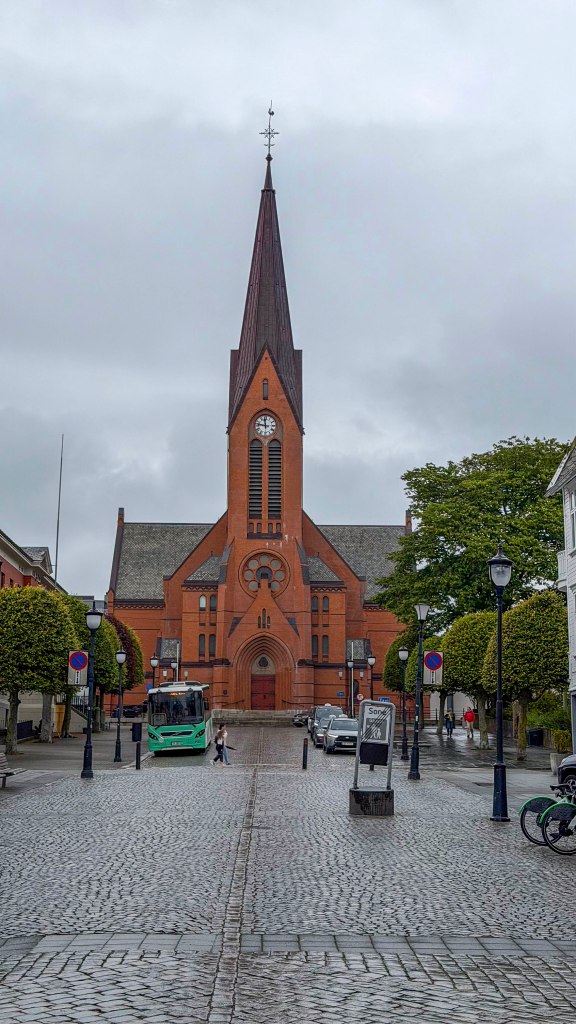
A drizzly walk into town.
An adorable pedestrian area.
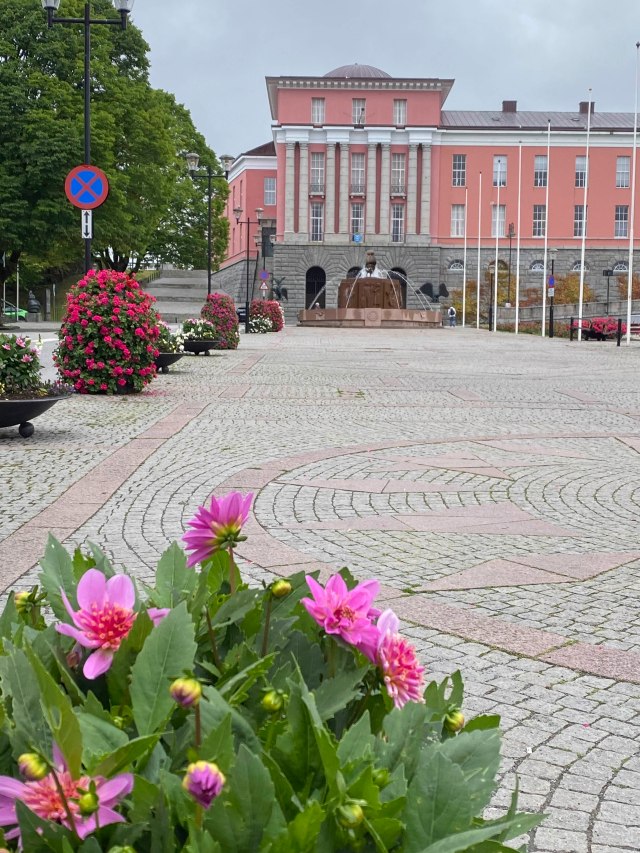
Beautiful area around Haugesund Town Hall.
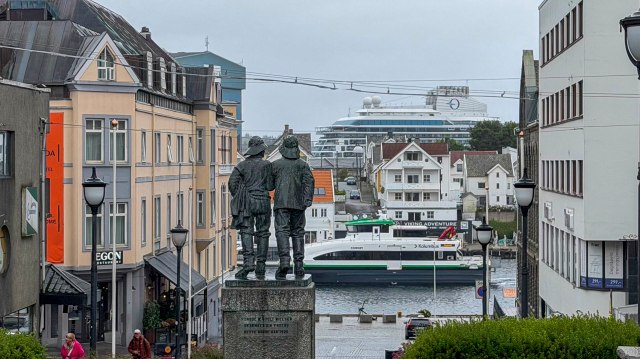
View from the pedestrian shopping street back to our ship in the Harbor.
A little too soggy for sidewalk dining today 😕.
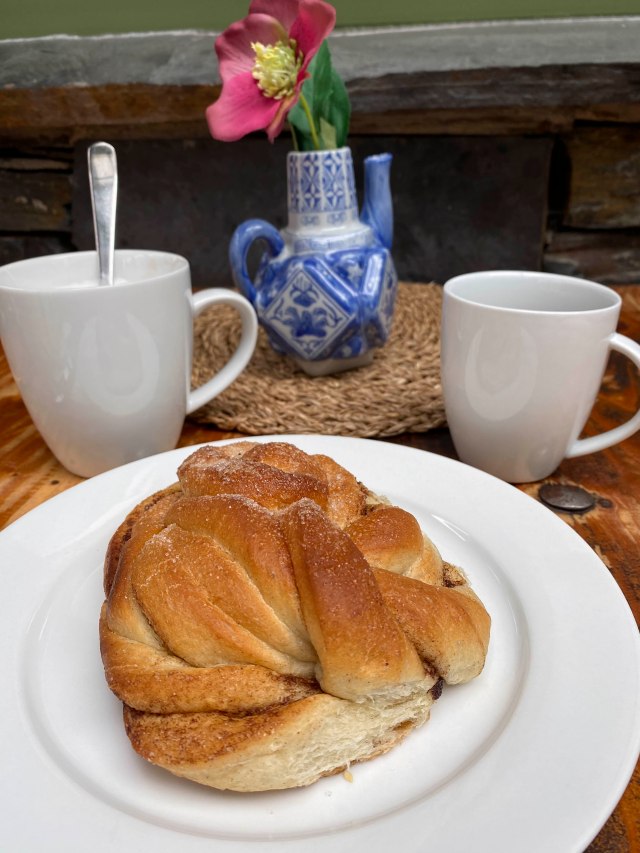
A very tasty cinnamon roll, hot chocolate & coffee from Naturbaskst. An excellent choice!
Next up – OSLO! Not on the original itinerary, but a very happy, well received addition.
An unexpected return to a beautiful city.
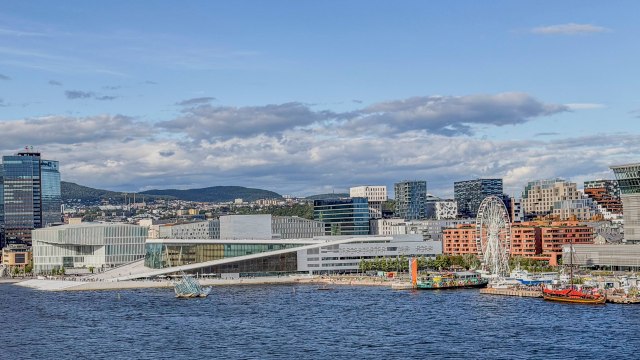
The capital city is cradled between the Oslofjord and vast forested hills. The cruise in is magnificent as the ship threads its way between all the little rock islands in the middle of the fjord for 4 hours! And then – there it is with its stunning Opera House.
Marinas galore.
The port in the middle of town.
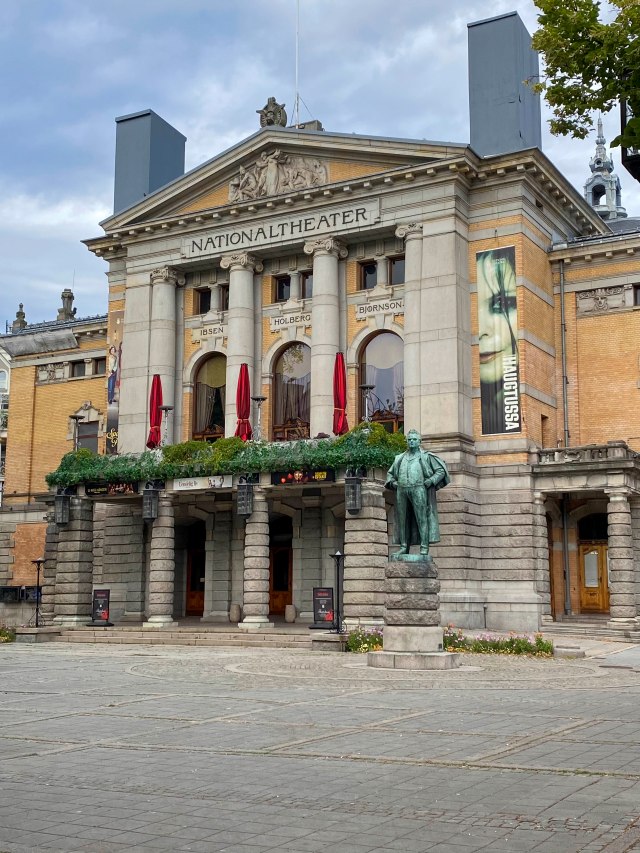
Oslo is a city of light, wood, and cutting-edge glass reflecting a modern Norwegian identity. It has world class museums and striking contemporary architecture as demonstrated by its Opera House. Its sloping white marble roof rises from the fjord like an iceberg. Designed to be walked upon, it provides panoramic views of the harbor. Almost adjacent is the Munch museum, dedicated to the life and works of Edvard Munch. This is only one of many worthy museums in this city. There is the Fram Museum, the Viking Ships Museum and the Kon-Tiki Museum, the National Gallery and the Resistance Museum. Way too much for a day.
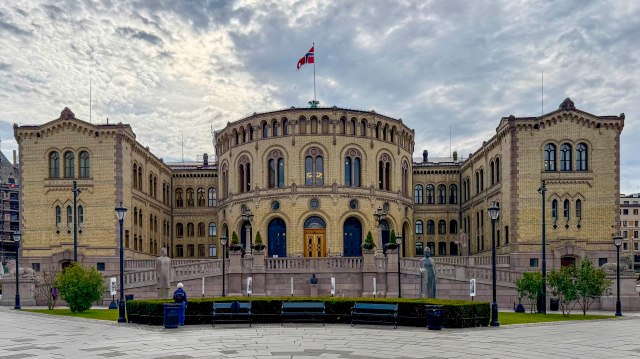
Having been to Oslo previously – one might forego the indoor museums (especially on a warm, sunny day) and choose a walk to one of the most incredible parks in the world! From the port this three mile walk is likely to take one through the late 19th century city center. This is a humming place with many of the museums, the University and dozens of lively bars, cafes and restaurants. It is also the location of the Parliament House at one end of the corridor and the Royal Palace at the other. A lovely stroll –
Norway’s Parliament meets here.
Just between Parliament House and the Royal Palace.
The Royal Palace – perhaps next summer’s VRBO?!?!
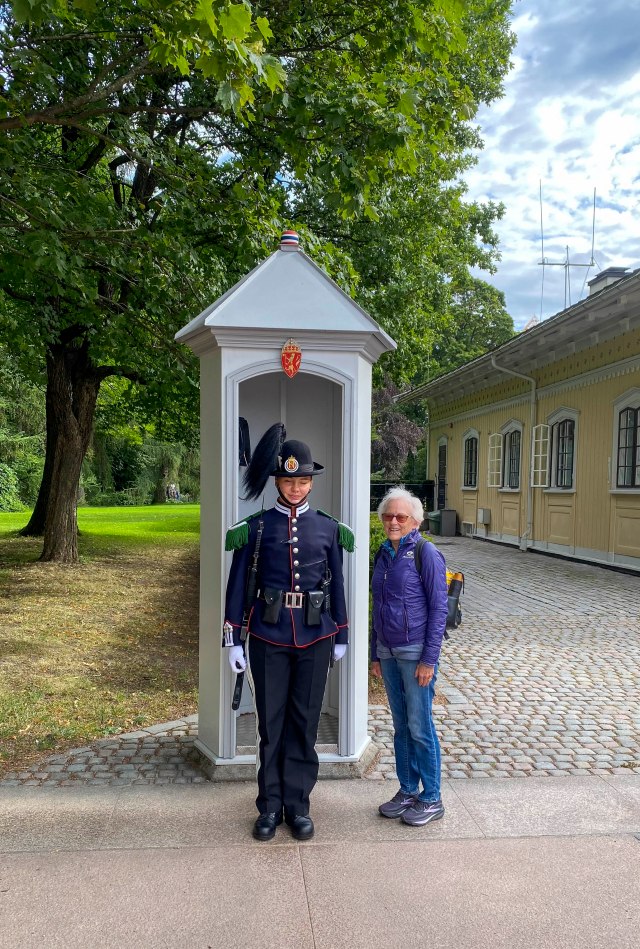
The Palace Guard(s)????
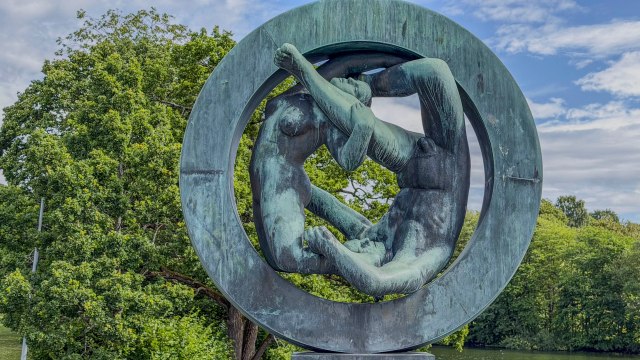
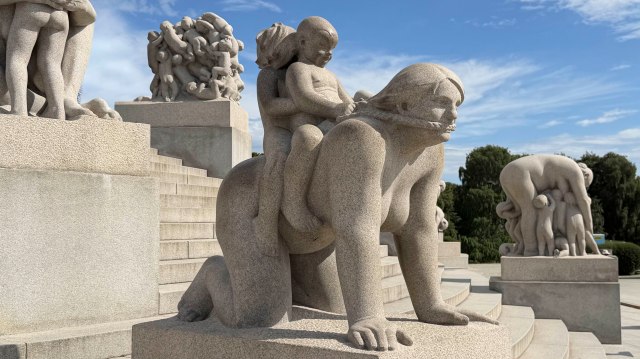
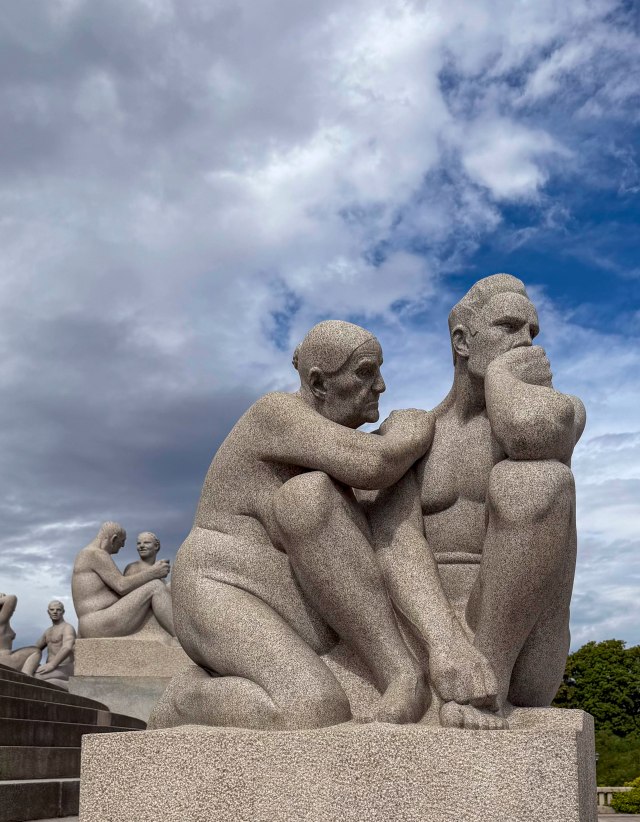
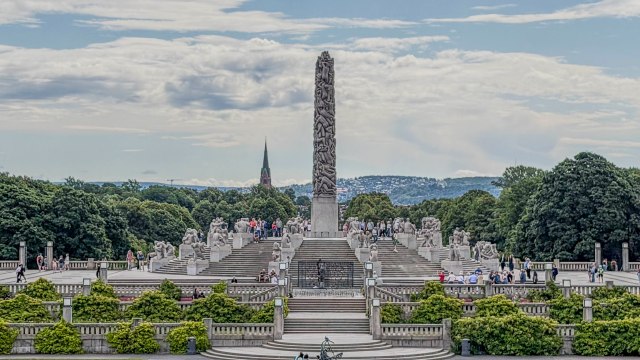
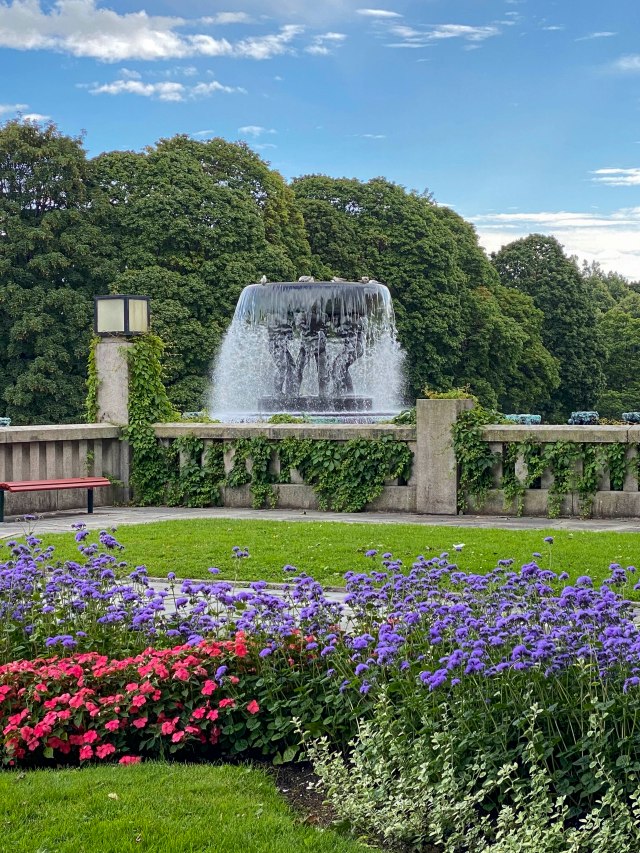
And then one reaches Vigeland Park, the world’s largest sculpture park made by a single artist – Gustav Vigeland. It represents his life’s work and is comprised of over 200 sculptures in granite, bronze and wrought iron. The many figures capture the cycle of human life – in true form. NOT just the perfect model figure. It is fantastic and one could spend a whole morning or afternoon here. On a day like this visit – a picnic basket would be in order;-)
The Amazing Vigeland Sculpture Park is a favorite.
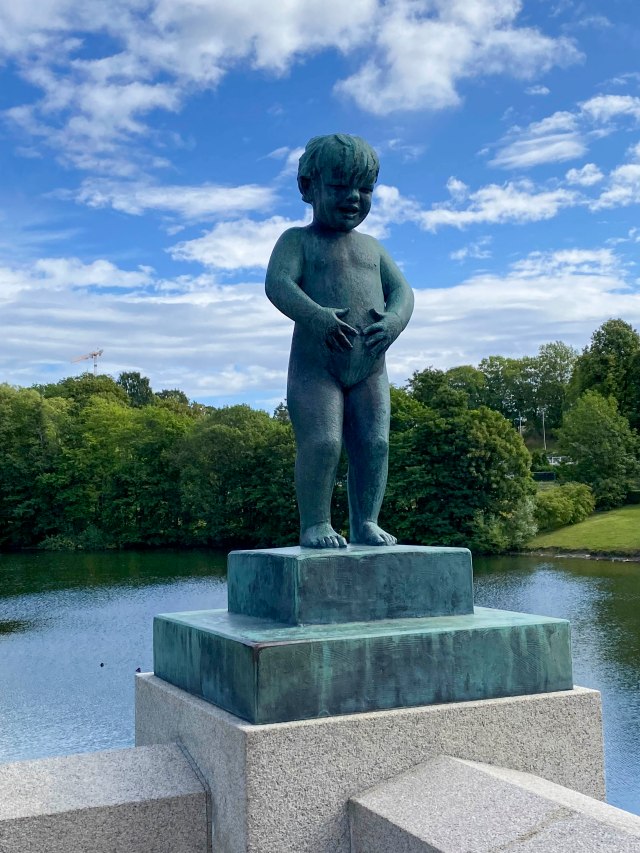
This just happens to be a favorite – Mother and son discussing ‘issues’.
What a beautiful place and a beautiful day. Time to move on – but one must always beware of obstacles!!!
No translation needed.
Norway was lots of history, stunning sites and very friendly people.
E & G – so happy for the opportunity to see Vigeland again;-)
Many people see only this capital city when visiting Iceland, the northern most capital of a sovereign nation. (In our travels it has been observed that the chamber of commerce of any area can find enough ‘modifiers’ to make their area/city/attractions the ‘most’ of anywhere else in the world! That qualifier here appears to be ‘sovereign nation’.) However, this cruise has afforded the opportunity to see the Diamond Circle outside of Akureyri as well as rural Iceland around Isafjordur and Grundarfjordur – ventures well worth the time. And now, the adventures will include the area around Reykjavik known as the Golden Circle and the South Coast along the Ring Road.
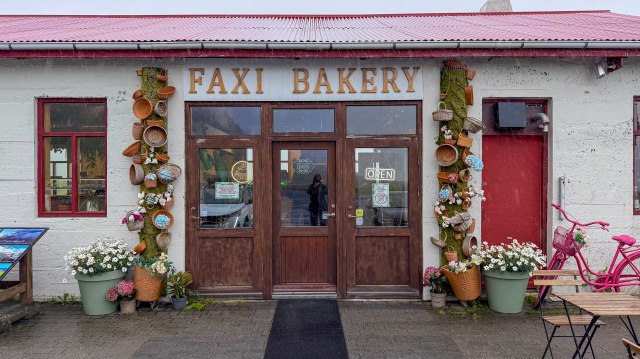
First up – the South Coast. Unfortunately, many of the sights along this Ring Road are a bit of a distance from Reykjavik. But, that is OK as there is a scrumptious little bakery in the middle of no-where to fortify one.
Great place to start the morning with cinnamon rolls and a hot beverage.
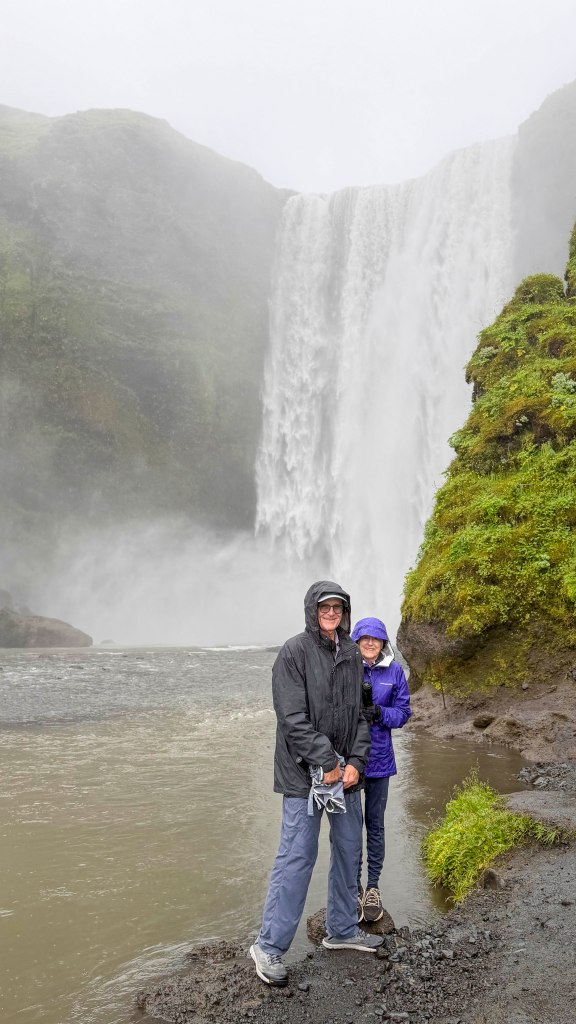
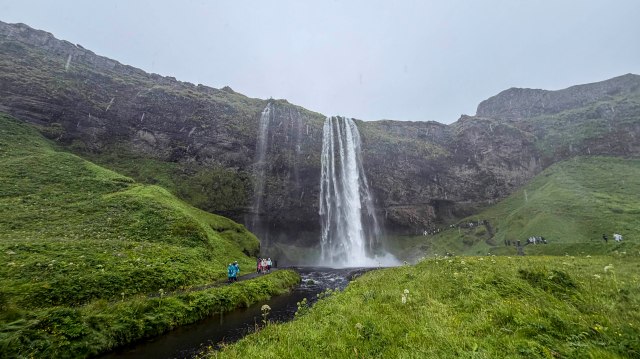
Now – on to Skogafoss, widely considered to be one of Iceland’s most beautiful waterfalls. It sits on the river Skoga, which originates from two glaciers, runs through the Skogargil canyon and descends 200′ from the edge of the moor as the Skogafoss waterfall. Legend has it a settler hid his chest of gold behind the waterfall and many have sought it out with no success;-( One can view from the front of the falls or climb 400 steps to the top of the falls for stunning views. Unfortunately, those were avoided this day due to the pouring rain.
The rain wasn’t enough moisture – so add waterfall spray.
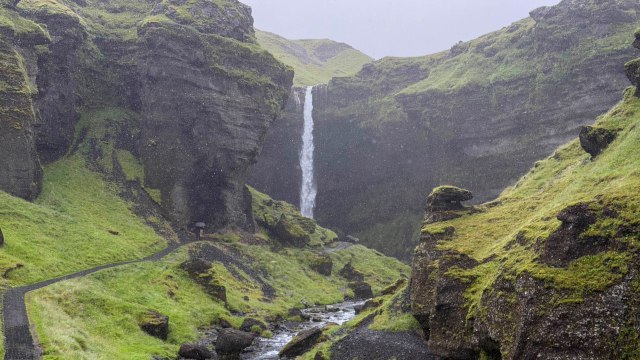
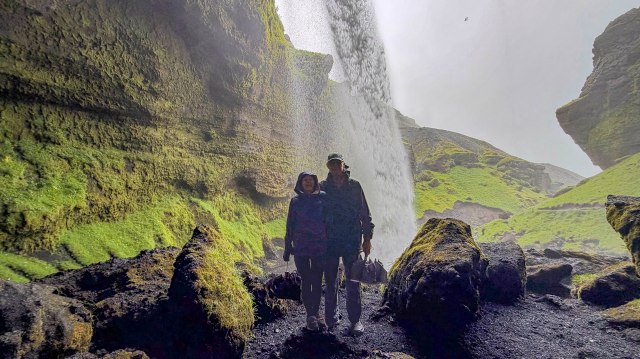
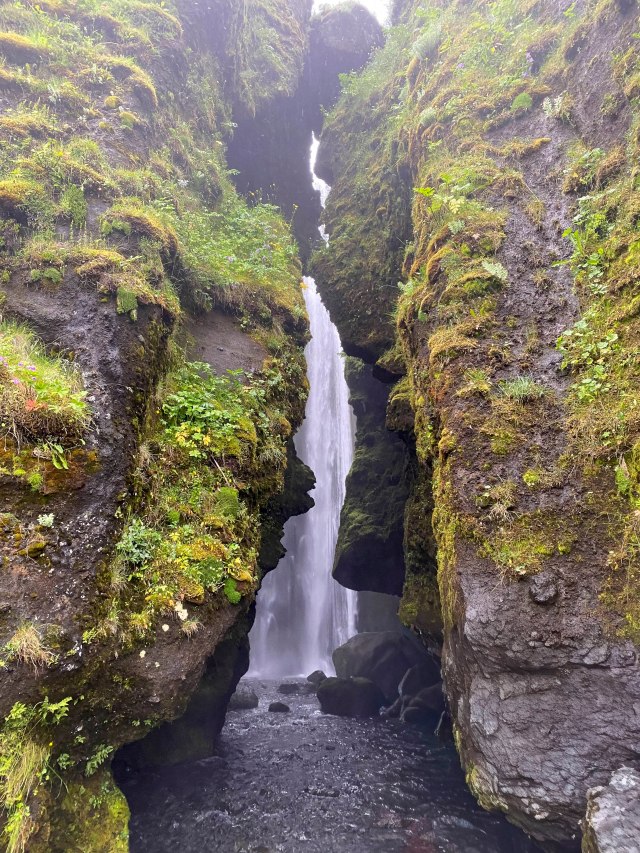
Not far away (and not necessarily a highlight on the Ring Road) was Kvernufoss waterfall. A short, beautiful hike will take one back to this gem, which rivals Skogafoss in our book. One can hike behind Kvernufoss and get wonderful shots back down the little canyon. Don’t miss it – –
Short hike back to Kvernufoss on a nice path..
..and get even closer AND WETTER!!
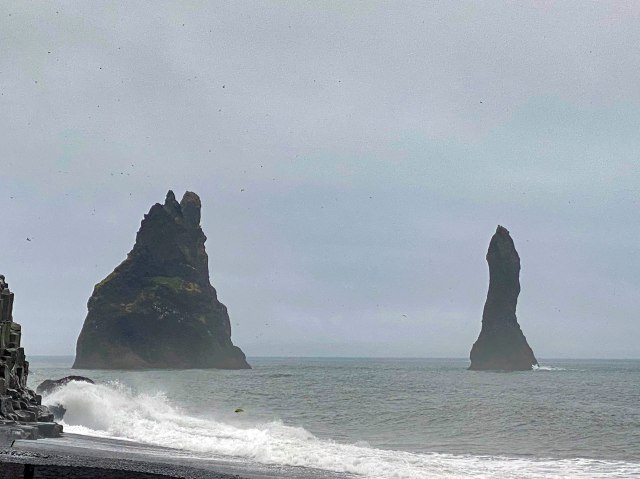
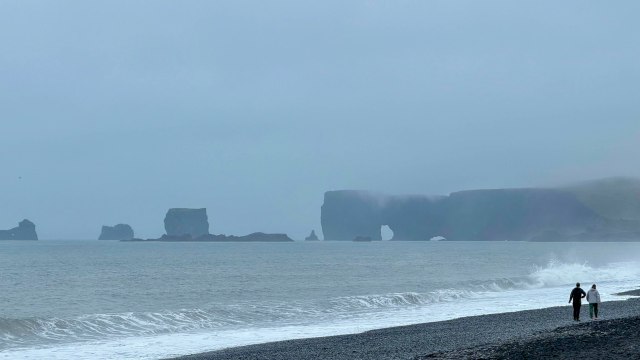
Next up – the Black Sand Beach of Reynisfjara. For any Game of Thrones fans, this may be recognized as one of the filming locations. It is a stunning beach with caves, sea pillars and ‘key holes’ – even on this cold, rainy, dreary day – –
Night trolls that did not get inside before daylight and thus turned to stone.
Lucky that the fog cleared enough to be able to see keyhole rock.
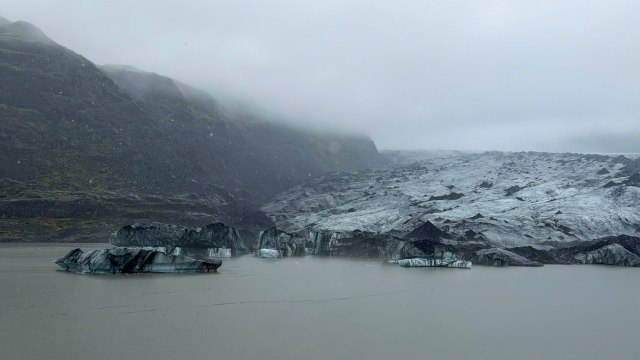
This cold, soggy day it was quite good to have travel time along the Ring Road, as it gave one time to thaw out a bit and perhaps even get a little dry. Which helped for the walk back to the Solheimajokull glacier. This glacier is an ‘outlet’ glacier originating from a larger glacier. The walk back to the face of the glacier was approximately a half mile, which is the distance it has melted in just the last few years. Very sad to see.
Rapidly disappearing glacier imbedded with black lava.
Still raining – on to another waterfall. This one is Seljalandsfoss, one of the most famous in Iceland (probably due to the drop of 180′) and also a UNESCO World Heritage Site. This is another that you can walk behind. Just down the path about a quarter mile is another hidden gem. Peek around the corner and a beautiful sight awaits – another waterfall but tucked away in a cave. On a better day one can walk into the cave to get a better look – not in the cards today;-(
This one does take your breath away when you come around the corner.
The more famous brother. Already cold and wet, no need to hike behind.
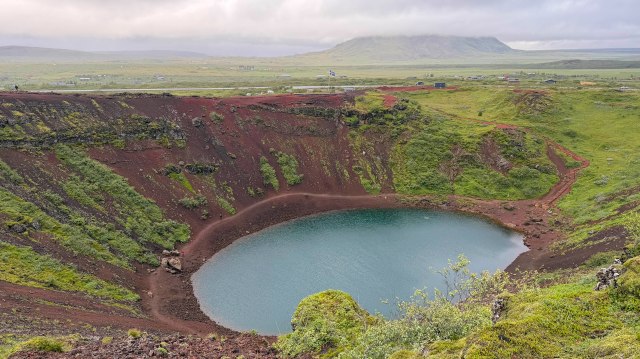
Another day and a little less rain! Time to tackle the Golden Circle – off to Kerid. This crater is believed to have been formed by a small magma chamber beneath the crater being emptied towards the end of the eruption resulting in a collapse. Beneath a certain level, cavities and fissures are filled with groundwater, the surface of which is called the water table. This makes the crater a window to the level of groundwater in this area.
Volcanic crater lake shows ground water level.
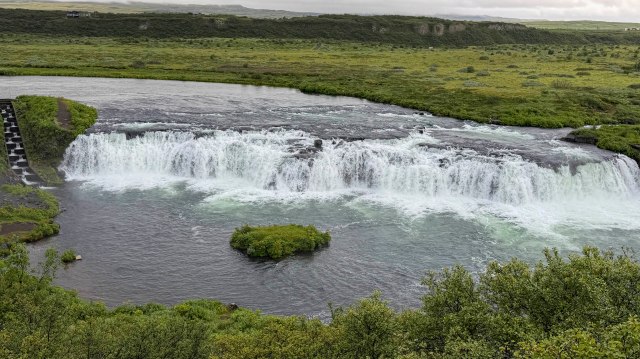
Not far, another waterfall is encountered – Faxi. It is possible this is the only waterfall with a 4-letter name!! This property is privately owned (which is not uncommon here in Iceland) and the owner raised horses. The waterfall reminded him of the mane on a horse, so he renamed the falls (from its much longer name) to Faxi, which means mane in Icelandic. A beautiful spot to own.
Another waterfall, the Faxi. Note the salmon ladder on the left.
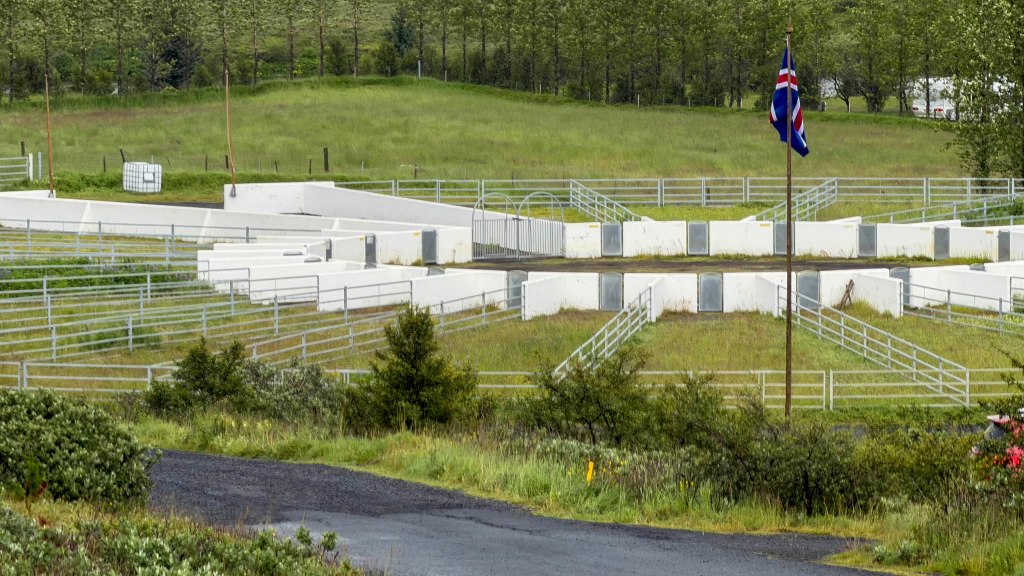
The owner also built a sheep sorting arena. It is common here for sheep of various owners to roam the fields and hillsides in the area. Once a year all the farmers go out together to round up all the sheep. They are herded into a pen with many ‘shoots’ off the sides. All the owners run the sheep into the pen then sort them into the various shoots depending on the ear tags signifying the owner. This annual event has become a social event attended by owners’ families, townspeople and visitors. In other words- a BIG PARTY!
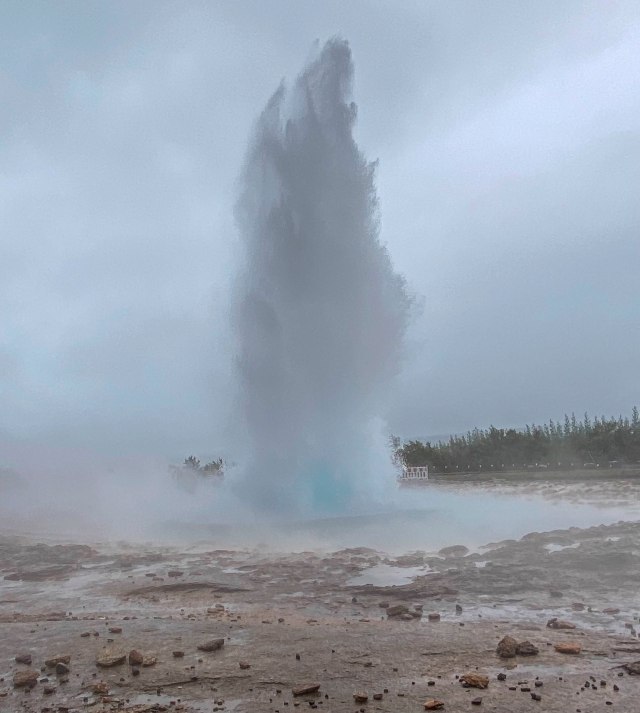
Almost the entire island of Iceland is a geothermal area. So, no surprise there would be geysers similar to those found in Yellowstone NP. And, they have their own Old Faithful – Geysir (also the origin of the term geyser!). It spouts every few minutes so there is no long wait but you have to have the camera ready. We did and here it is – –
Iceland’s Old Faithful.
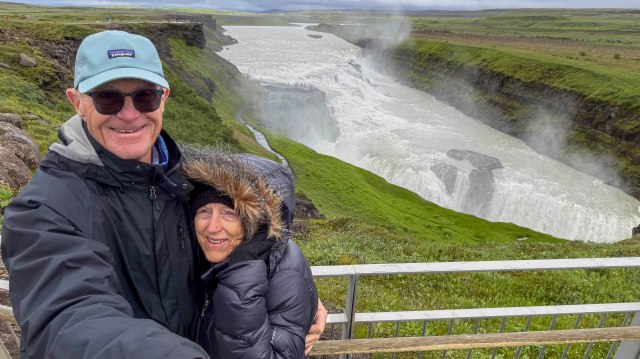
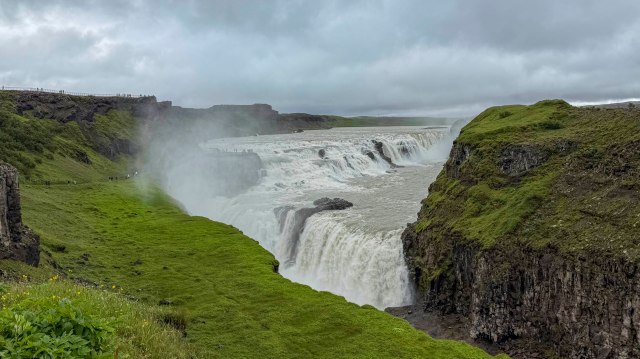
The namesake of the Golden Circle – Gullfoss Waterfall. Gull is gold and foss is fall(s) – in case you hadn’t figured that out by now;-) The evening light colors the glacial water with a gold cast, but even the daylight reflecting seems to cast a golden brown hue. Probably the reason for the name, but Iceland is a land of many stories. Thus the night trolls turning to stone, men burying gold behind a waterfall, elves not giving permission to remove ‘mounds’ when building roads so the roads zig and zag, etc. etc. etc. And so, there is a story about the ‘Gold Waterfall’ that says a local farmer had lots of gold pieces and didn’t know what would happen to them when he died. In order to keep all the pieces together and know what would happen to them he put them in a coffer and threw them into the waterfall. It has been called Gullfoss ever since. You choose your story. This is the granddaddy of all the Iceland waterfalls to us. Gigantic, forceful and beautiful. A fitting last fall – –
The Gullfoss (Golden Waterfall) and namesake of The Golden Circle.
The whole scene is stunning!
Impressive canyon carved below the falls.
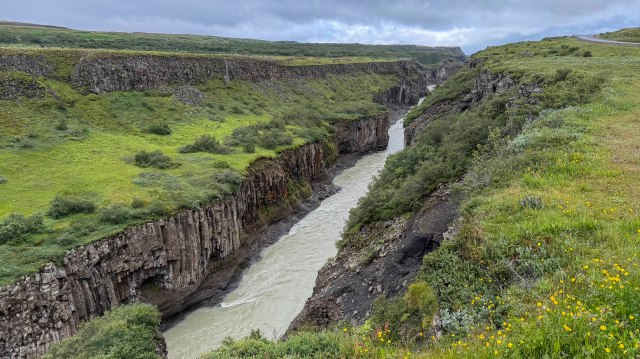
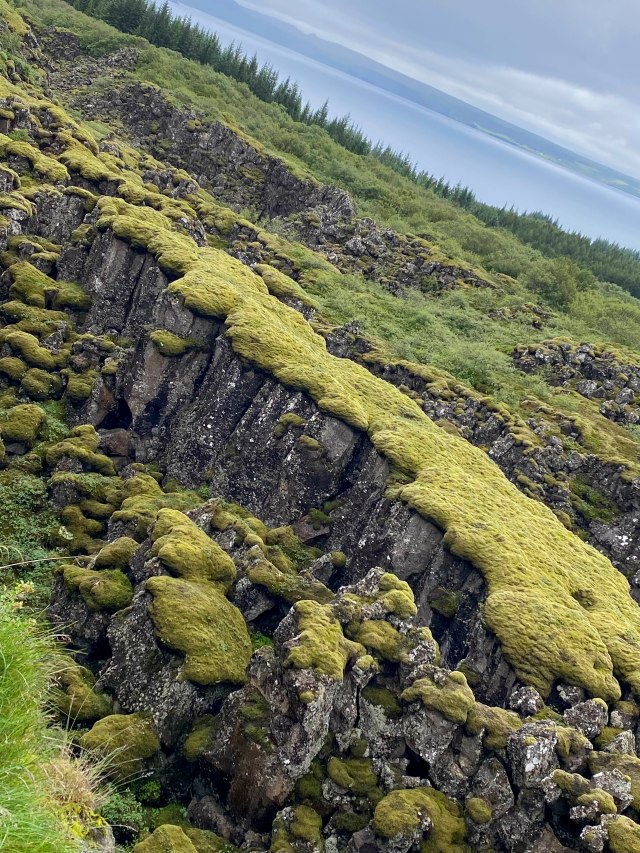
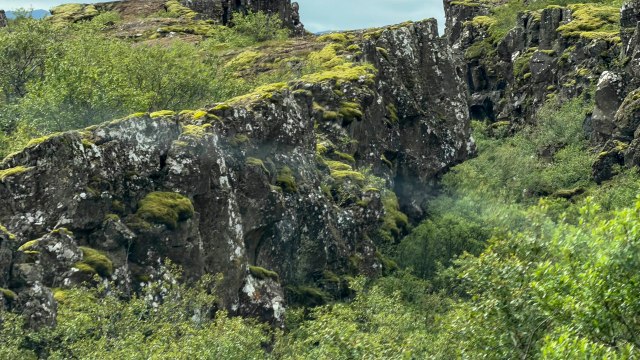
Finally, the last stop on the Golden Circle tour – Pingvellir National Park, a UNESCO World Heritage Site. This area is praised as the national shrine of Iceland. It is where the land’s first Parliament met and did so until the 18th century. In fact Pingvellir means “the fields of Parliament”. The park sits in a rift valley caused by the separation of two tectonic plates – the North American Plate and the Eurasian Plate. This is the only place in the world where this rift is above sea level and where the edges of the two plates can be seen so clearly. The land between the two plates is called ‘no man’s land’. Seems like nice scenery as long as one isn’t here during an earthquake!!
The edge of the North American Tectonic Plate.
The edge of the Eurasia tectonic plate.
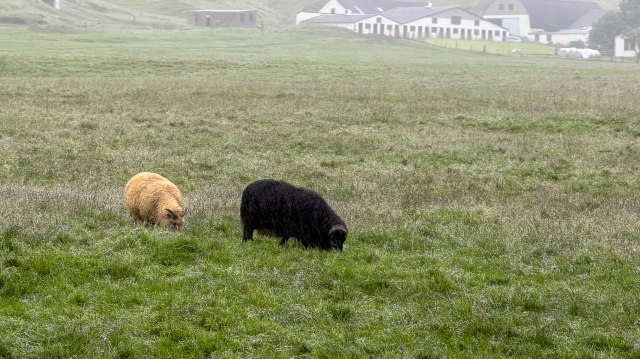
Iceland is a volcanic and otherworldly nation that is sadly misnamed. About 90 percent of the country is ice-free with incredible green fields spotted with sheep.
Icelandic sheep are everywhere on the island and are a significant source of food.
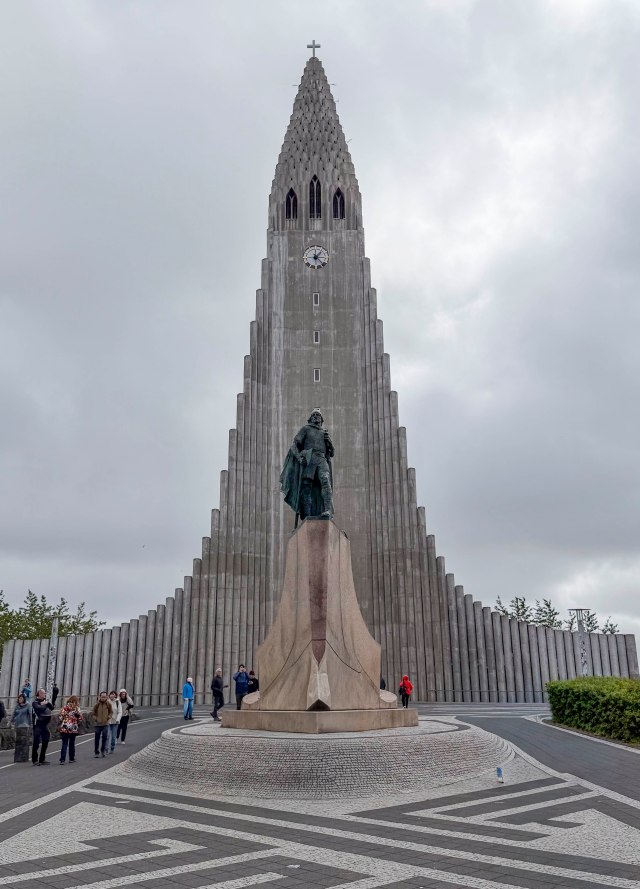
Its capital city, Reykjavik, is a modern city with a population of about 250,000 in the city area. It is the vibrant cultural, economic, and governmental heart of Iceland. It has wonderful shopping streets and restaurants galore to get any kind of food you desire. Walk the city and have fun.
The Hallgrímskirkja is the largest church in Iceland. Built between 1945 and 1986.
Iceland was a world unknown – isolated, rugged, very green and yet very desolate in places and very much a place to discover what this earth is made of and has to offer. A unique, friendly place.
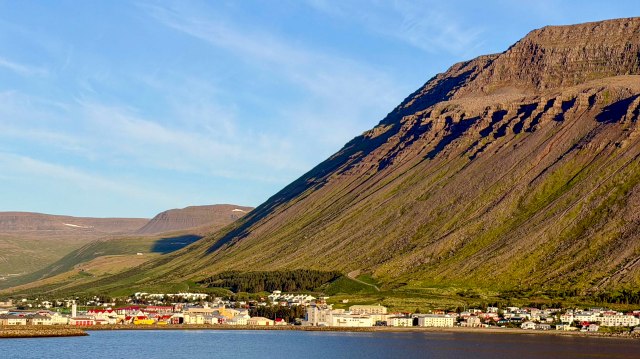
This small port is located in northwest Iceland on a remote peninsula and serves as the unofficial capital of the Westfjords region. The surrounding area continues to add beauty to the trip and allows one to explore local areas and culture. The stunning views created by the glacier carved valleys creating the fjords never ceases to impress. The good weather was an added bonus, which was really appreciated as the trip progressed;-)
Arriving on a beautiful, sunny day.
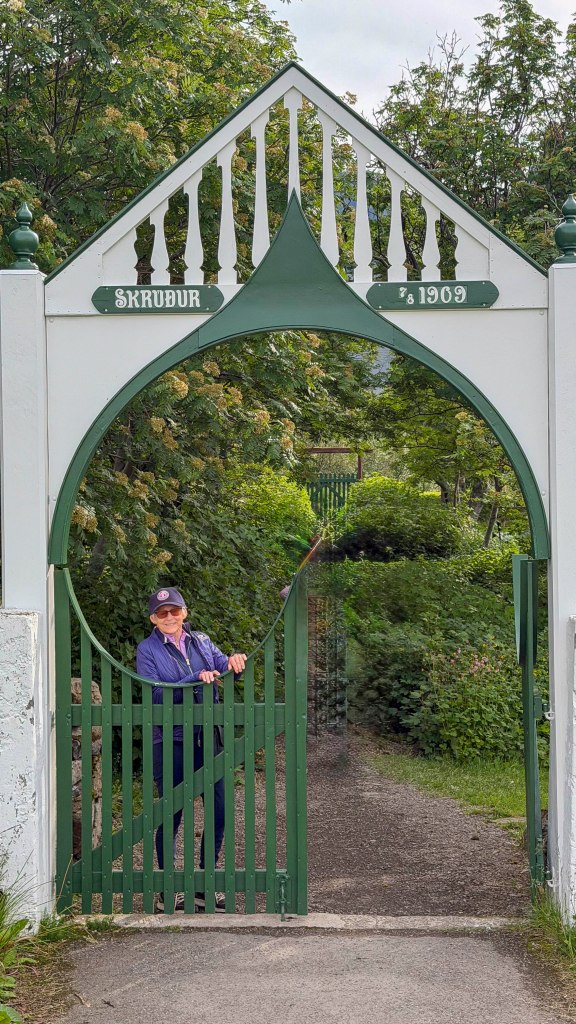
Today brought Fjords, Flowers and FOOD! So – off through the fjords to an adorable little botanical garden – Skrudur Gardyrkjusogu created in 1909. It was established by the principal of the school district and his wife to serve as a teaching garden for the local students to learn about vegetable cultivation and botany. Today it was the site of a peaceful visit.
Welcome. Please come in and enjoy.
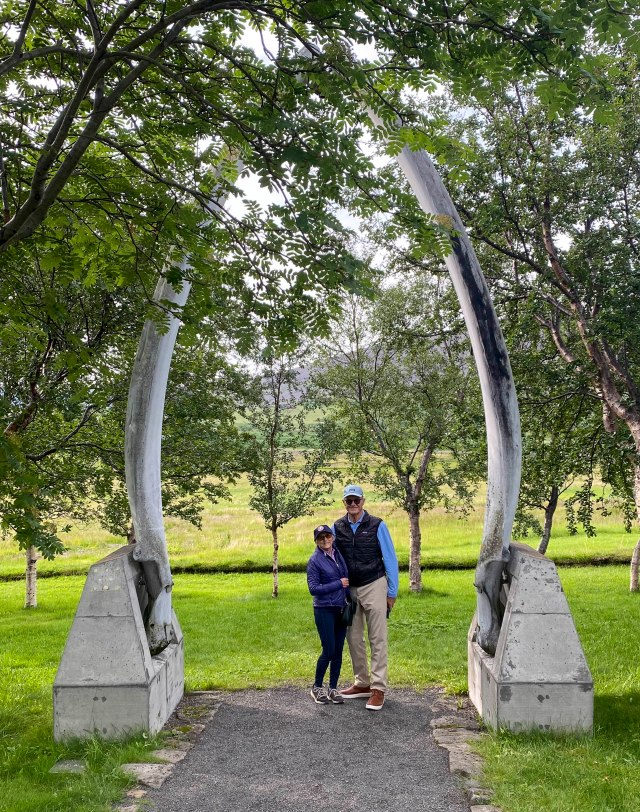
Beneath a whalebone arch.
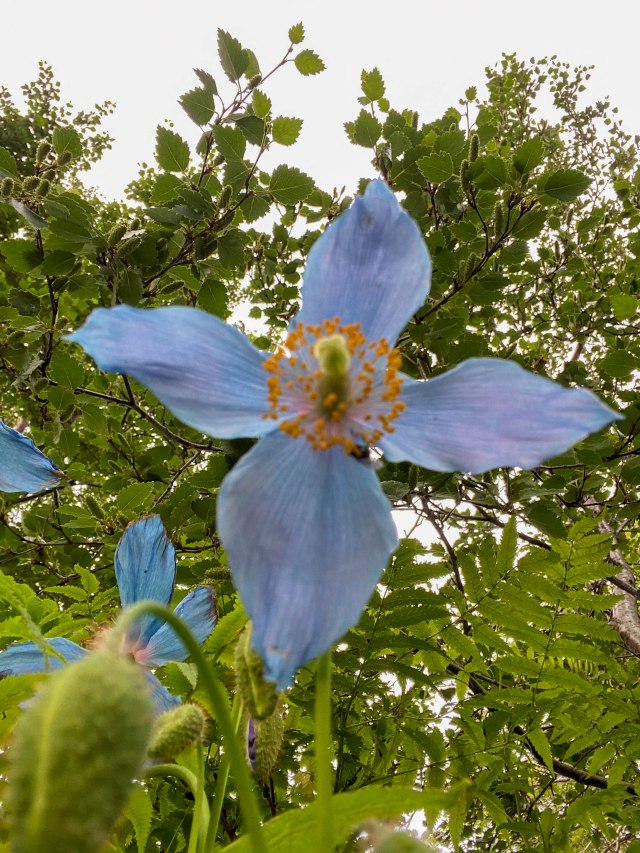
One of many species in the garden.
Next stop – the quaint little village of Flateyri. Here one can visit The Old Bookstore built in 1899 by the Brothers Eyjolfsson. Today it remains as the oldest original store in ALL of Iceland (according to local lore). Further down Main Street you can hop in to Gunnukaffi and have some delicious local pastries and kaffi or hot chocolate.
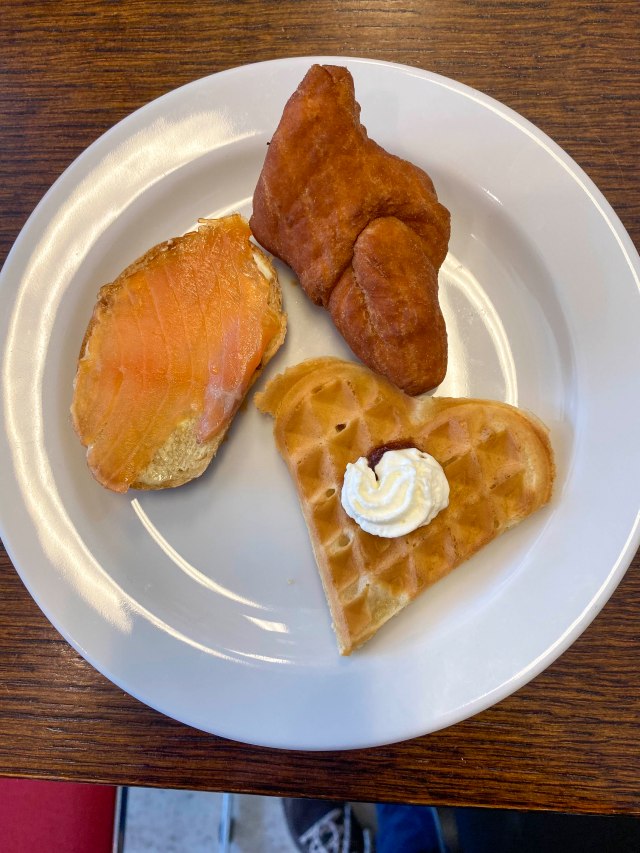
Traditional midmorning snack in the local cafe.
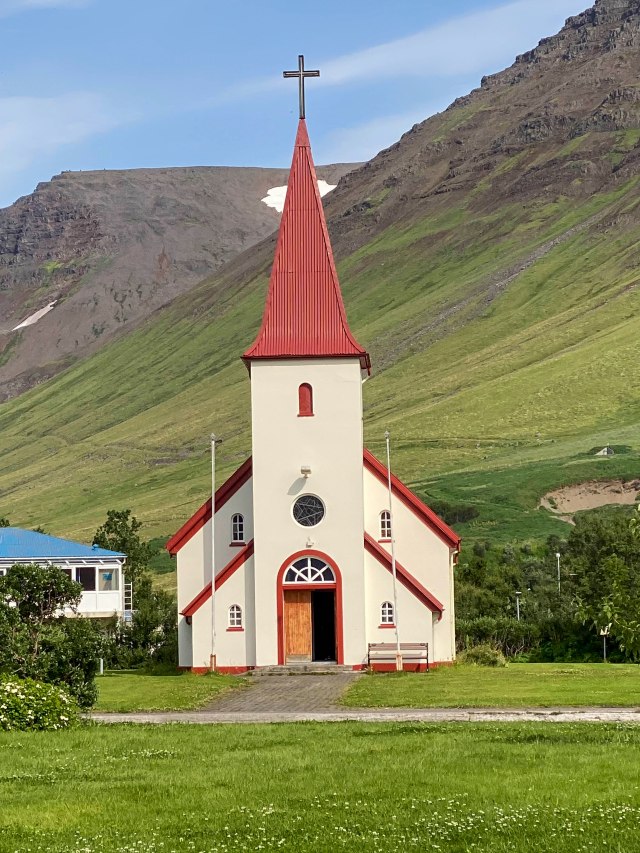
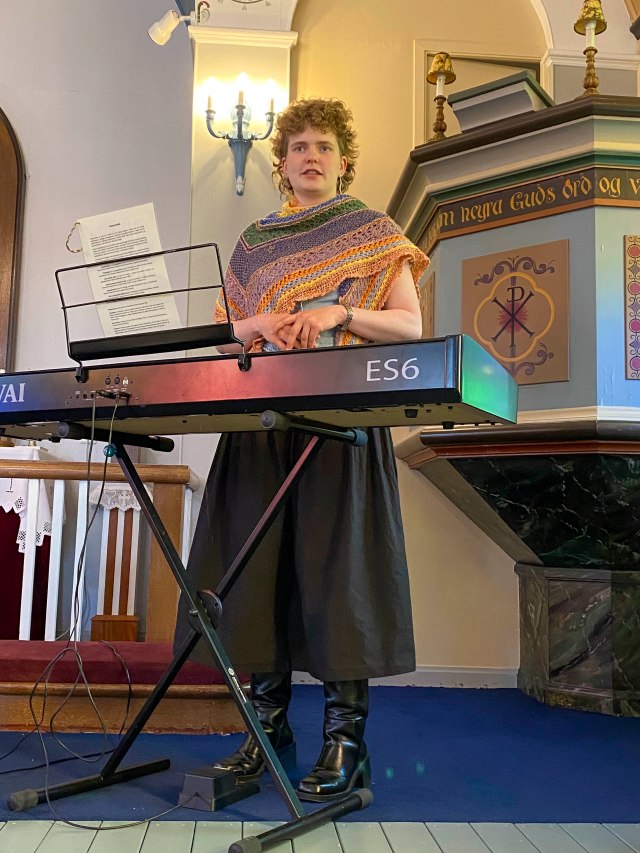
At the end of Main Street is the village church – and if lucky you might get to hear a lovely local with a beautiful voice singing just for you!
Lutheran church at the end of Main Street.
Wonderful performance of traditional Icelandic songs.
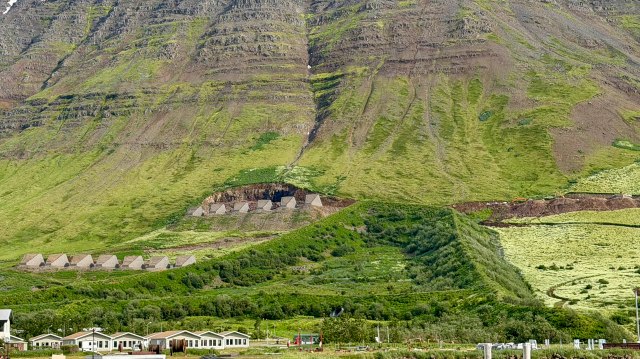
This little village was almost completely wiped out just a few years ago by an avalanche. The little harbor was destroyed as were many homes. This event resulted in the construction of avalanche mitigation and diversion structures, which are still under development today.
The ‘cement’ blocks are to mitigate avalanche damages and the large green mound is to divert the snow.
Glad this quaint little place was still here for a visit –
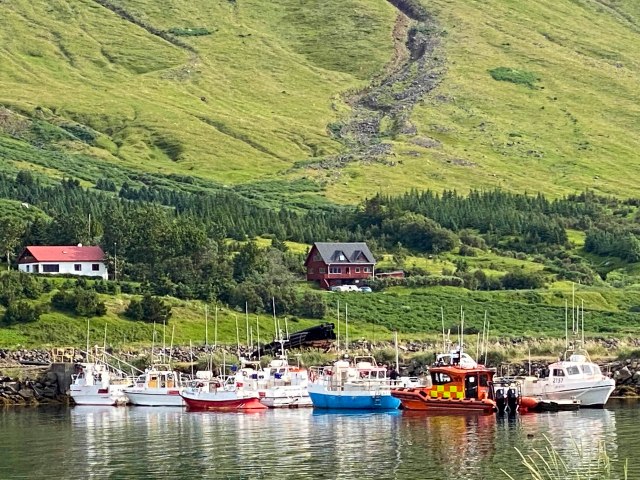
Pleasant small harbor view.
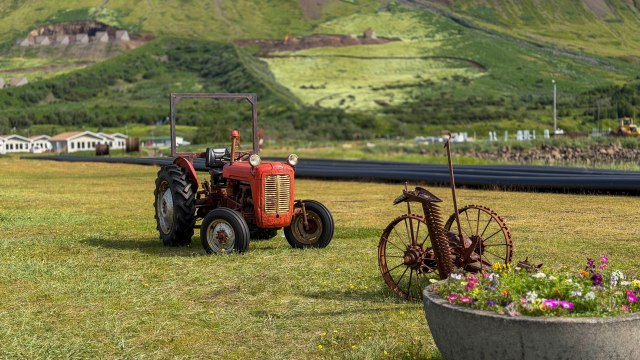
G just likes pictures of old stuff.
What a relaxing, pleasant day in Isafjordur.
E & G – Very happy to have had a concert in Iceland;-)