What a difference a day makes. The next port was Oslo – which we LOVED!! One of Europe’s most amenable capitals, it holds two fabulous sights everyone must see. One an outdoor ‘museum’ of sculptures from the early 1900’s and the other a documentation of the Arctic and Antarctic explorations in the late 1800’s to the early 1900’s.
Vigeland Park contains a lifetime of work by Norway’s greatest sculptor, Gustav Vigeland. During his youth, Vigeland frequented the studio of August Rodin and admired his naked, restless, intertwined statues. He advanced in his sculptures to capture sturdy humans with the universal themes of the cycle of life – birth, childhood, romance, struggle, child-rearing, growing old and death. In 1921 he made a deal with the city of Oslo – in return for a great studio and state support, he’d spend his creative life beautifying Oslo with this sculpture garden. From 1924 until his death in 1943 he worked on-site designing 192 bronze and granite statue groupings – 600 figures in all. Today this park is loved and respected by all. The park is open to all – free – and there are no police patrolling, no fences and no graffiti!! How amazing is all of that?!?! This is a wonderful sight and no one visiting Oslo should miss it.
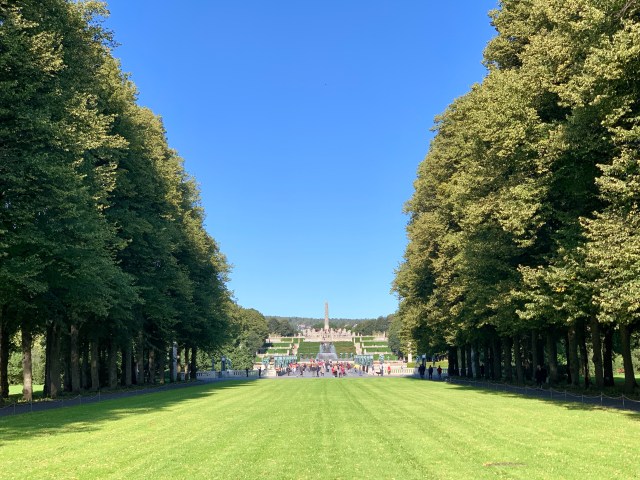
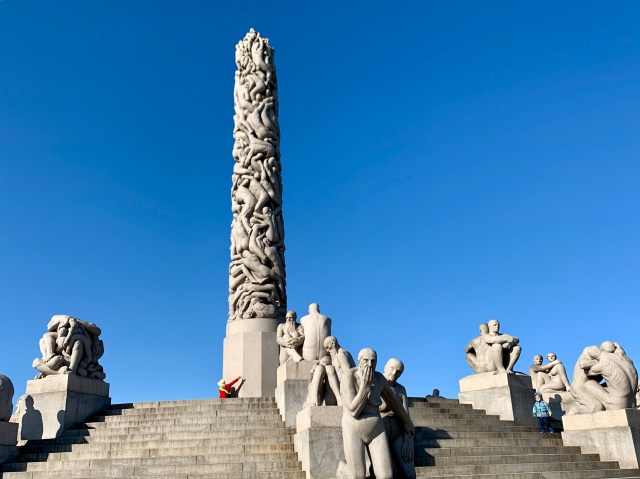
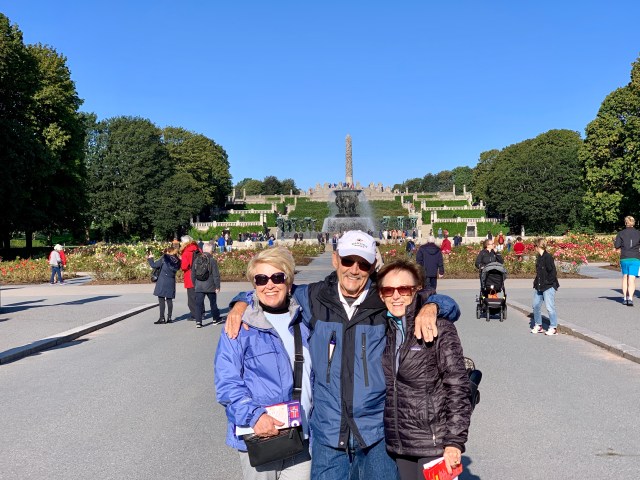
A view of the entire park leading through the sculptures to the 50 foot tall monolith of 121 figures.
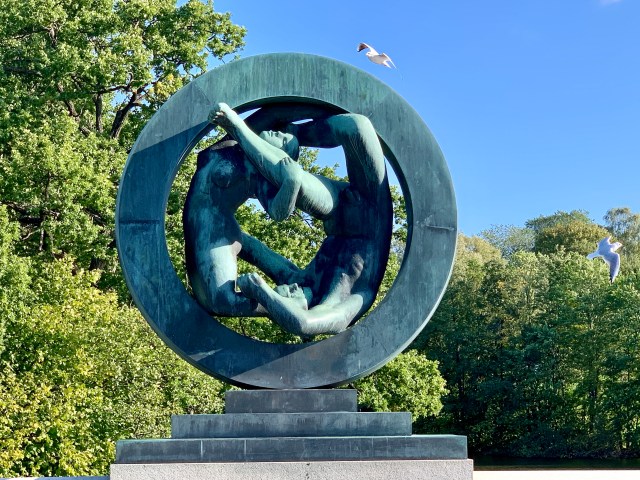
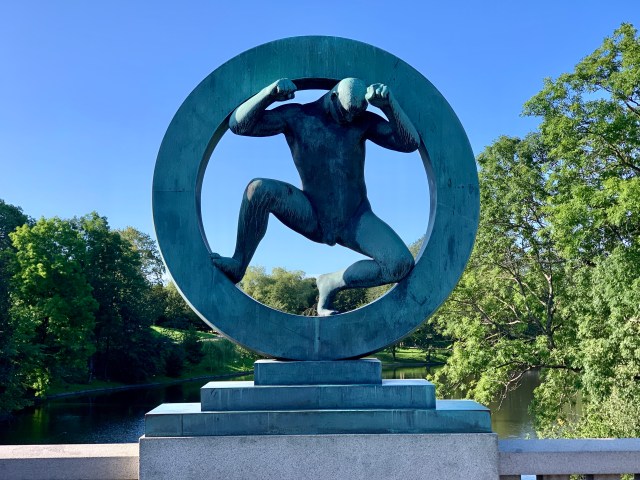
A 300 foot long bridge contains 58 bronze statues that are a general study of the human body – many dealing with relationships between people. One circular statue in particular is of a man and a woman going round and round. What else is new – right? Perhaps it signifies the eternal attraction, or the on and off again with man and woman?? Directly opposite another circle feels like a prison – man against the world attempting to break free – –
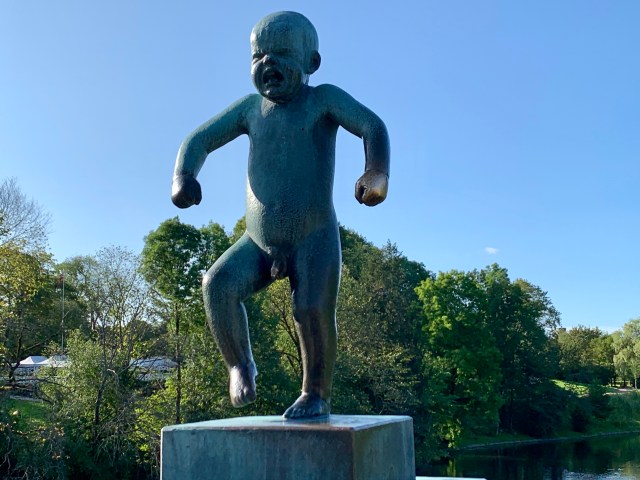
Then there is the wonderful symbol of the park – the Sinnataggen, the hot-headed little boy. It is said that Vigeland gave a boy chocolate and then took it away to get this reaction. Who wouldn’t react like this if chocolate was taken away????
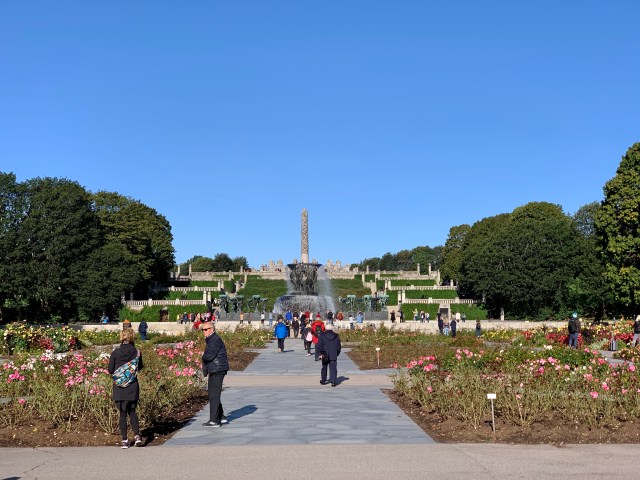
A beautiful rose garden creates a break between sculpture groups.
The Fountain – Six giants hold a fountain, symbolically toiling with the burden of life, as water – the source of life – cascades steadily around them. Twenty tree-of-life groups surround the fountain showing the seasons of life – childhood, young love, adulthood and winter – with the monolith looming over.
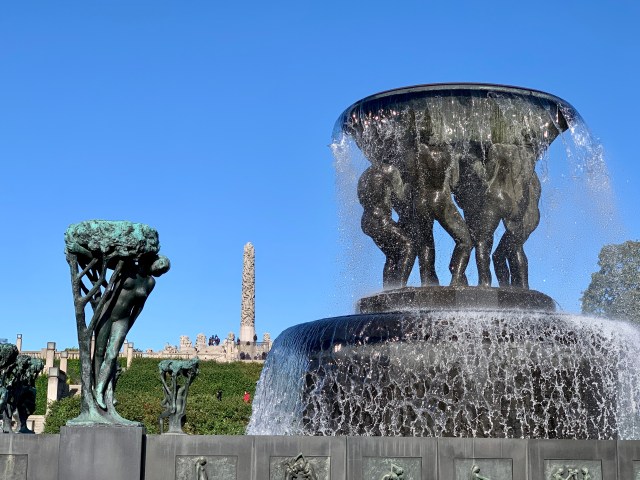
Finally one reaches the centerpiece of the park. The monolith, teeming with life, includes 121 figures carved out of a single block of stone. Three stone carvers worked daily for 14 years, cutting Vigeland’s full-size plaster model into the final 50 foot tall piece. It is surrounded by 36 groups of granite statues – again from birth/youth to old age.
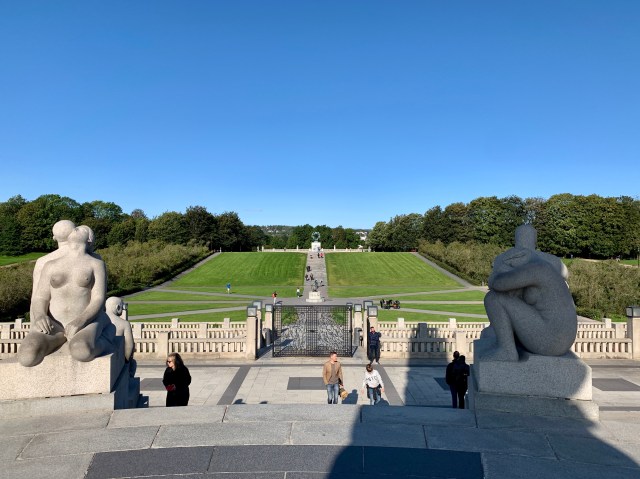
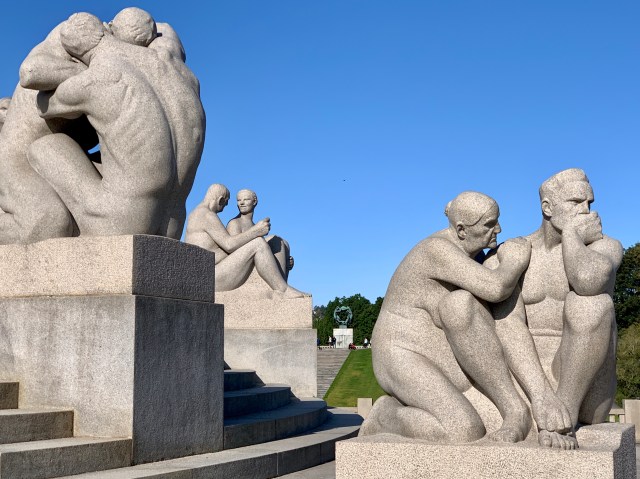
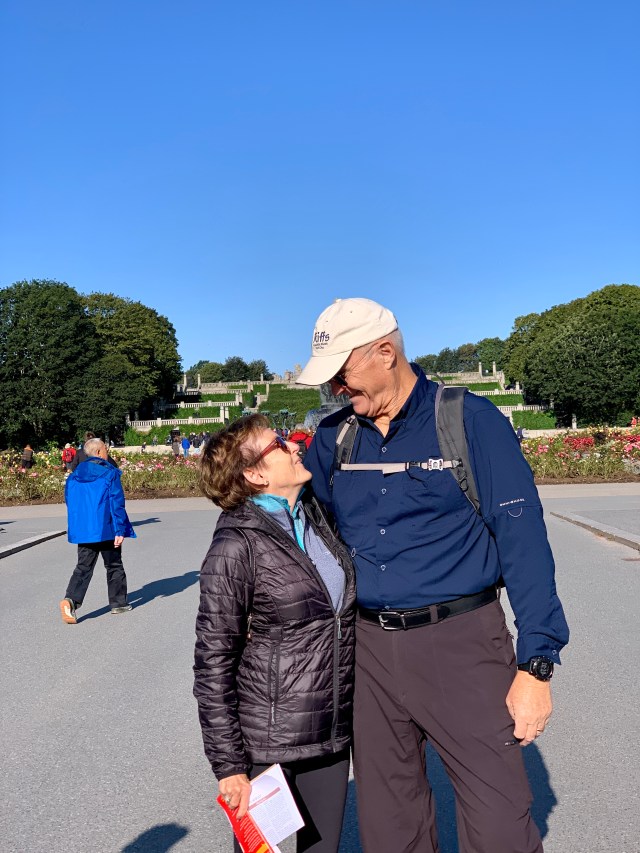
Enjoyed this Park immensely!
Stuck between to ‘beauties’ was the interesting Viking Ship Museum. Not often one gets to see two majestic oak Viking ships dating from the 9th and 10th centuries. The first was the Oseberg dating from 834 AD. Less substantial and more ornate in carving, this ship was most likely designed for sailing on calm inland waters during festivals as a royal pleasure craft. The second ship – the Gokstad – however, was a practical working boat capable of sailing the high seas. Dating from 950AD, it is likely explorers such as Eric the Red hopscotched from Norway to Iceland to Greenland to Newfoundland in such a vessel.
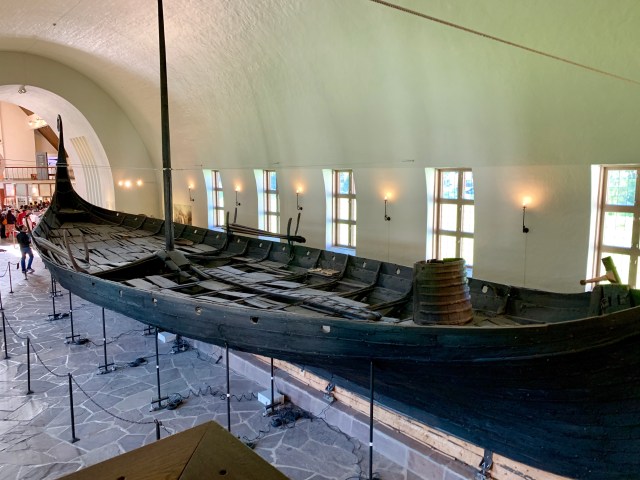
The ornate Oseberg
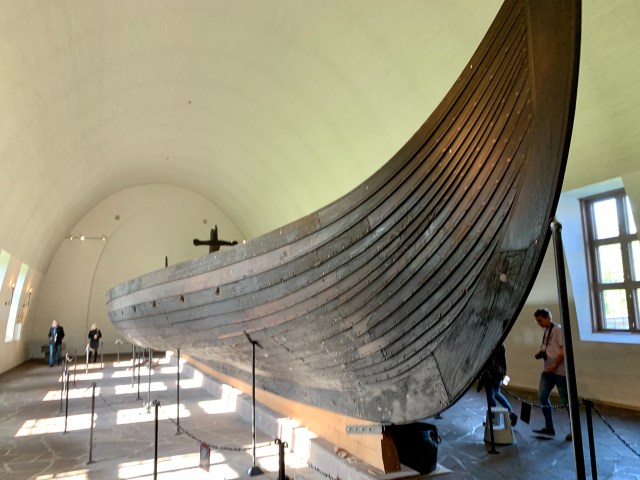
The practical, working ship – Gokstad.
The Fram Museum brought us forward in time to more modern day Vikings and was the second must see in Oslo. The Museum houses two ships – the Gjoa that was the first through the Northwest Passage (1903-1906) and the Fram that explored both the North Pole and later the South Pole.
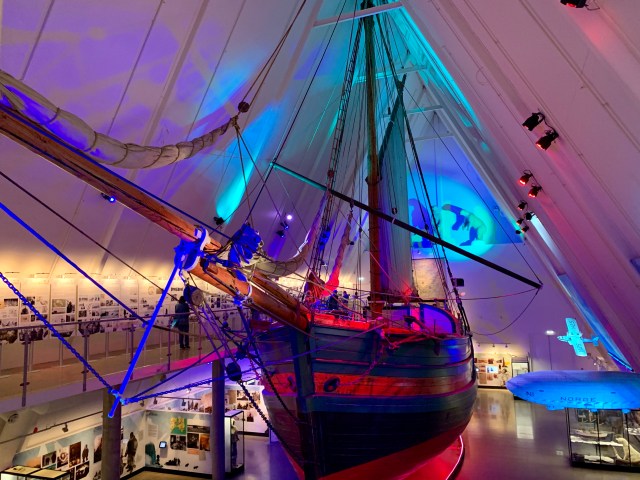
The Gjoa.
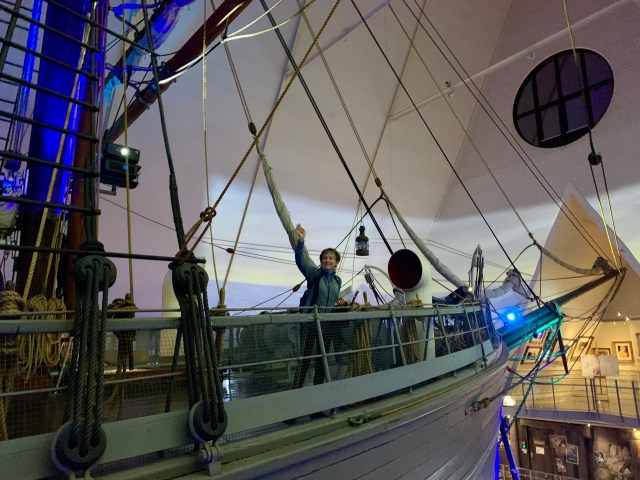
Aboard the Fram.
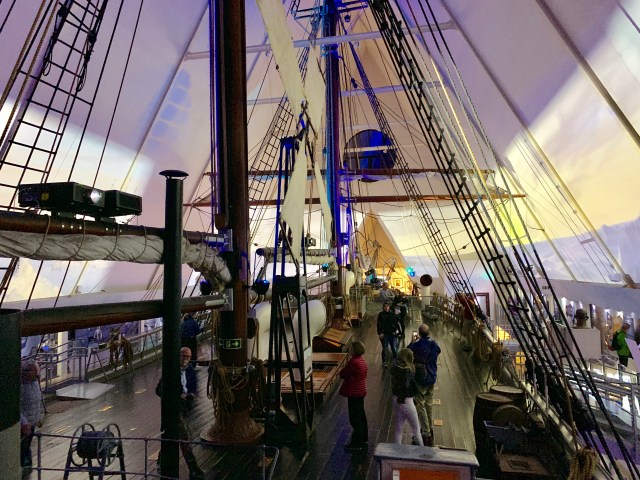
Yes – an actual windmill on board to provide power.
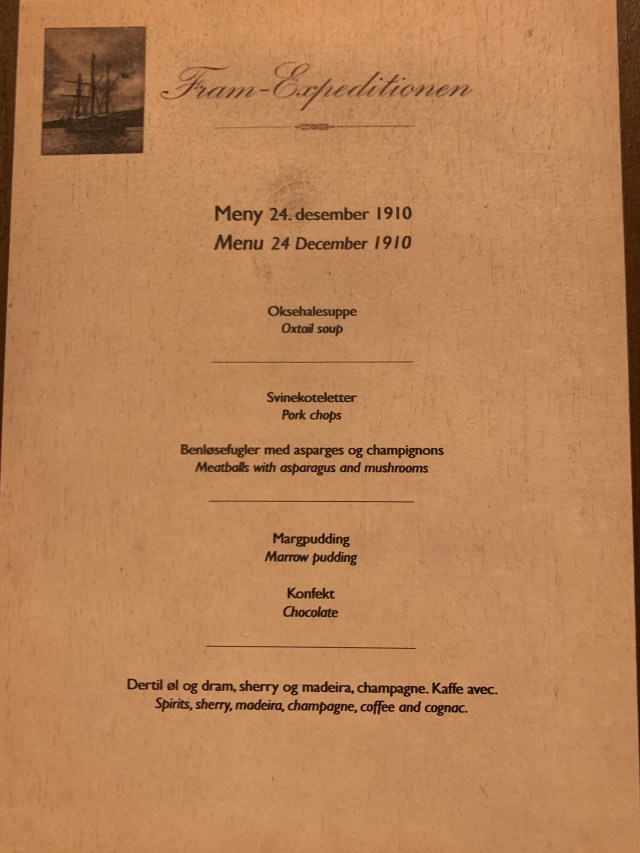
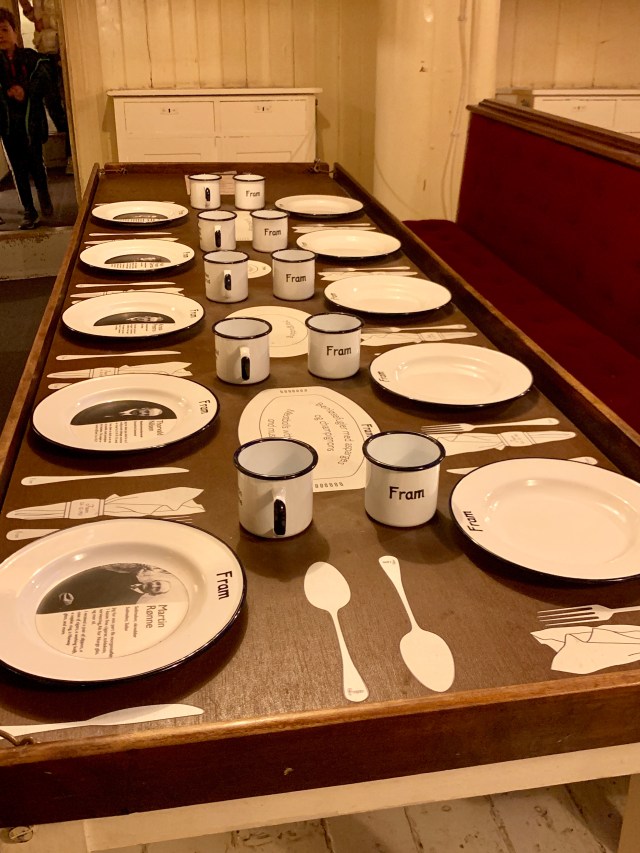
Christmas Eve dinner aboard the Fram.
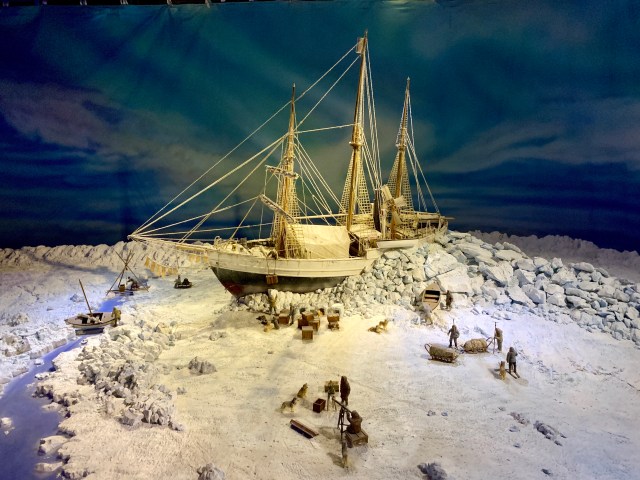
A model depicting the Fram breaking through the ice on its journey.
Interesting, but in a totally different way, was the Kon-Tiki Museum. Thor Heyerdahl and his crew used two different ‘boats’ to prove that such vehicles could have crossed the Pacific and the Atlantic to settle areas. He first created the Kon-Tiki in 1947 out of balsa wood, using only premodern tools and techniques, and set sail from Peru. They survived 101 days and 4,300 miles later arrived in Polynesia. He then took on the Atlantic in 1970 on a vessel made of reeds. This journey was 3.000 miles from Morocco to Barbados. As said – interesting and what movies are made of;-)
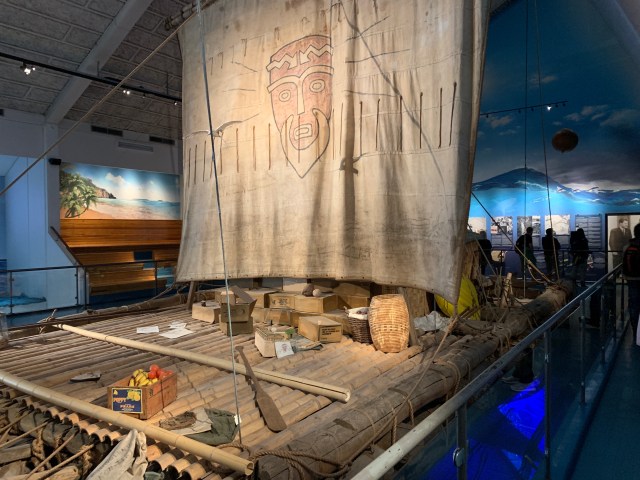
The Kon-Tiki
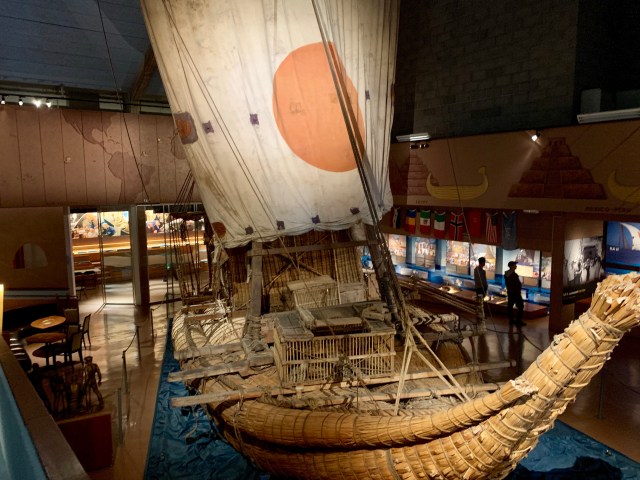
The Ra II (Ra I sank partway into its journey!)
Oslo was a winner!! Just a few more fun sights before returning to the ship.
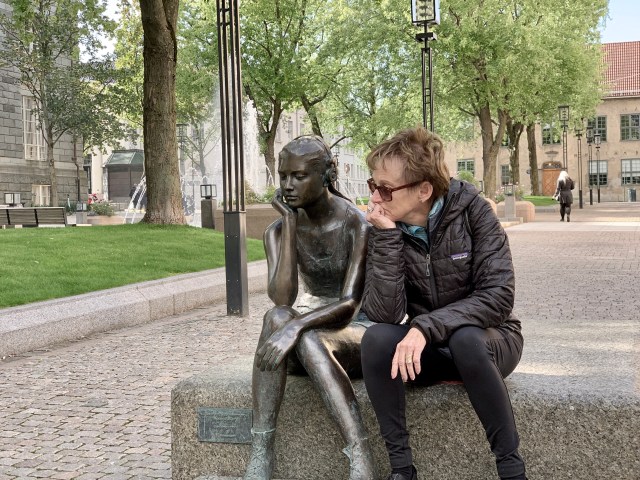
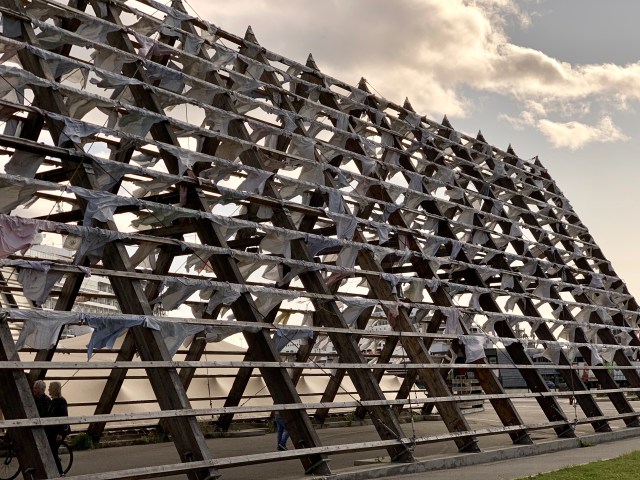
A beautiful day for a beautiful city. Oslo was fabulous – just not enough time.
E & G enjoying every bit of our cruise;-)


What incredible sculptures! My Mom used to say she wished she could be a tiny person and just sit on my shoulder (really corny). I would like hop a ride on your shoulders for your trip!
LikeLike