Yes – it’s true. The family trip to Alaska – that was planned for over a year – was not to be due to flight cancelations by DELTA!! After much sadness, anger and denial it was decided to spend a few days in Flagstaff so that at least one NP could be visited – among other sites and activities.
The first ‘adventure’ was the Northern Arizona University campus – the site of both E’s and son Keith’s graduation! Needless to say, much has changed in the 45 years (YIKES) since E walked the grounds. One constant is the Paul Bunyan size lumberjack – –

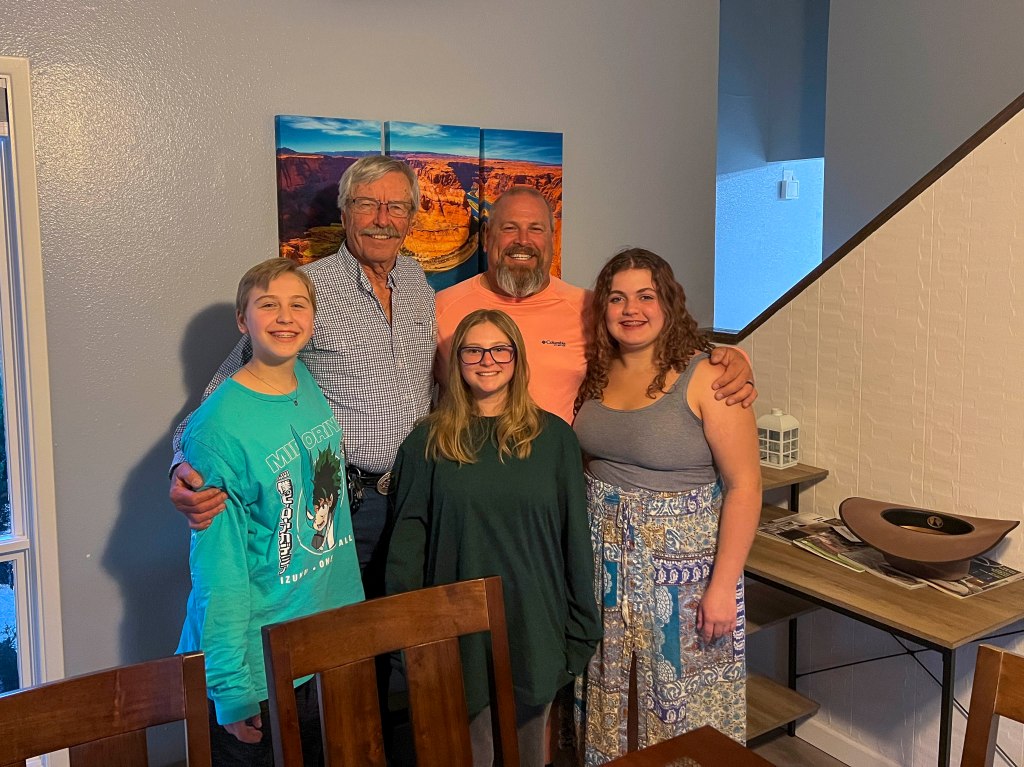
Flagstaff was close enough for Christian’s dad to be able to wander over from Heber Overgaard to celebrate Olivia’s 16th birthday AND Father’s Day. After dinner – cake was served – –

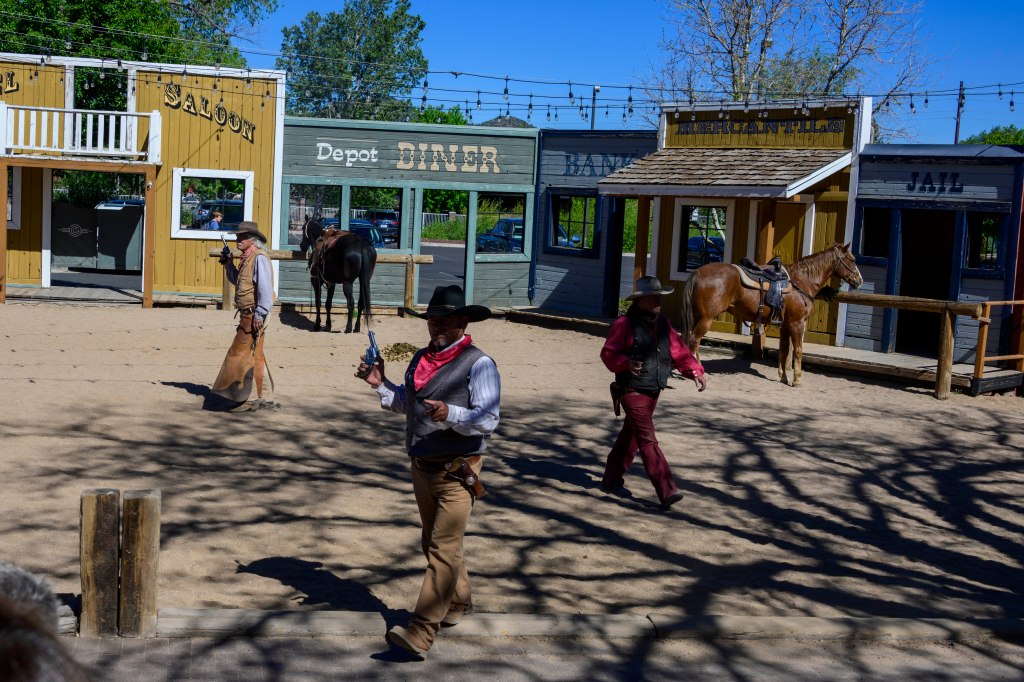
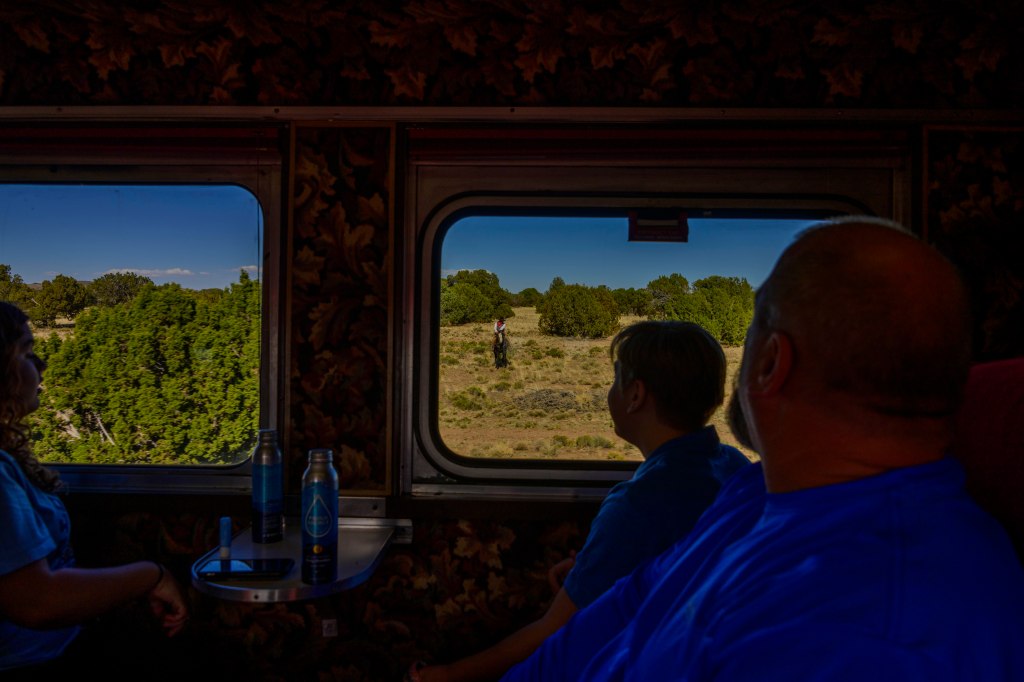
A great, fun way to get to the Grand Canyon is to take the Grand Canyon Railway out of Williams. This is a railroad built by the Atchison, Topeka and Santa Fe, completing it on September 17, 1901 and still taking passengers the 64 miles from Williams to the south rim of the Grand Canyon. Today the trip features western musicians and cowboy characters on vintage rail cars. The ‘show’ begins after one checks in while waiting for boarding time.

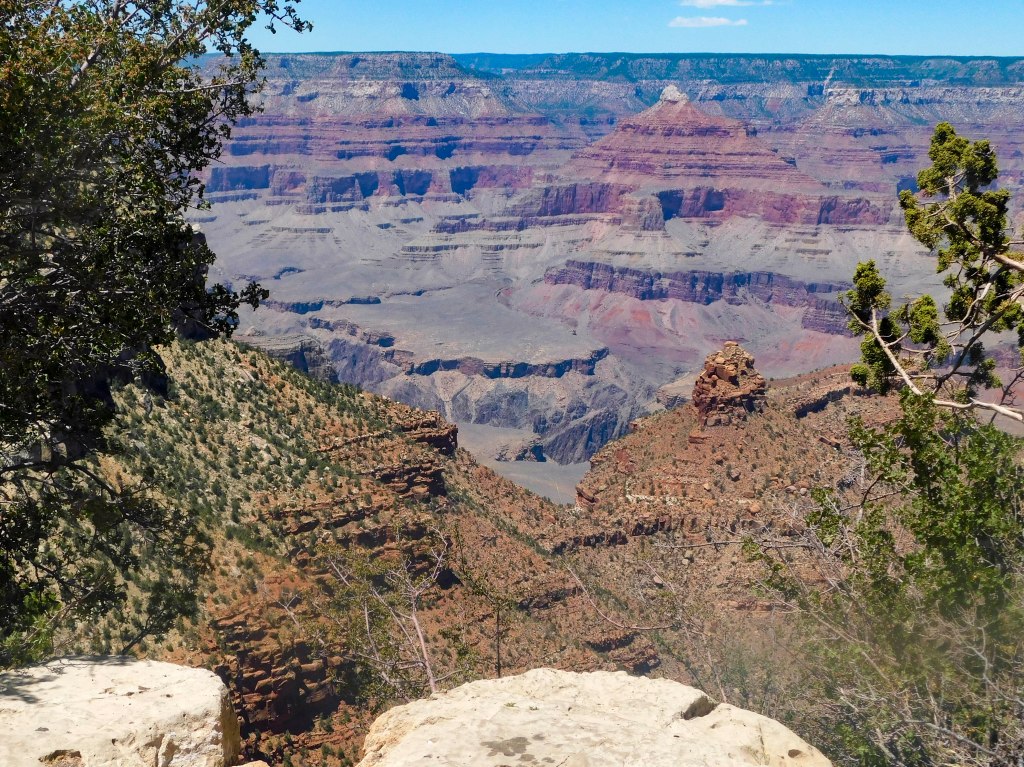
The Grand Canyon was made a NP in 1919 and receives millions of visitors every year. While the canyon is only a mile deep, it takes several hours to hike to the bottom and much longer to hike out. A rim to rim trip is an overnight experience for those who have trained are in very good shape.
The canyon is a fantastic study for geologists with its 2 billion years of history. As discussed with the granddaughters – older than us/older than dirt!!
There is much more history here besides the views of the canyon itself. The legendary El Tovar Hotel, located right on the south rim, was opened in 1905 by Fred Harvey in conjunction with the Santa Fe Railway. It was built for $250,000 and designated a National Historic Landmark in 1987. It hosted Theodore Roosevelt, Albert Einstein, Bill Clinton, Sir Paul McCartney and the Biaett/Dickey clan for lunch;-)!!
There is also a ‘Matrimony Rock’ embedded by a young gentleman where he asked his intended to marry him. This one you have to look for – –

The most popular hiking trail into the Grand Canyon is the Bright Angel Trail, where hikers can walk in the footsteps of Native Americans, canyon miners and pioneers. To get to the bottom of the canyon and the Colorado river it IS a 5,000′ elevation change! Hiker beware. Fortunately the first tunnel and pictographs of this day’s destination were only 0.1 mile one way – but still takes 15/20 minutes.


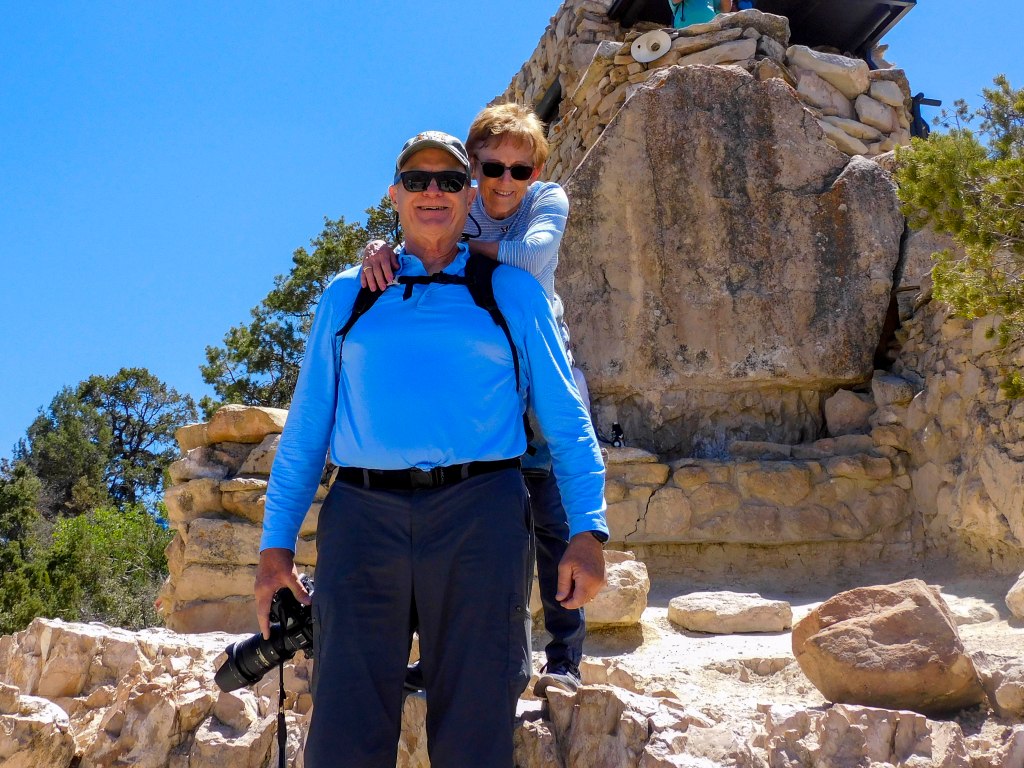
Another must stop on the south rim is Mary Colter’s Lookout Studio built in 1914 of stone and log timbers as a place where visitors could photograph the Grand Canyon from its precipitous edge. Colter (an early female architect) designed the exterior stonework to convey an indigenous American Indian structure, similar to the ruins of the Ancestral Puebloan dwellings in the region.
After several hours to lunch and explore, it is time to return to Williams. That is – if you make it back alive with the outlaws in the area – –


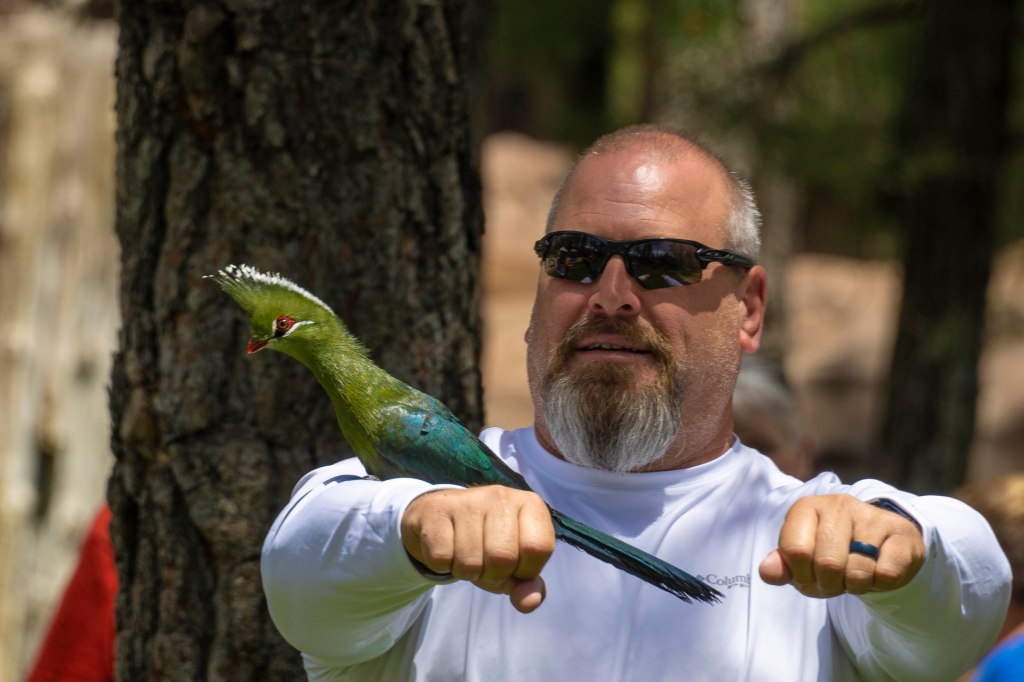
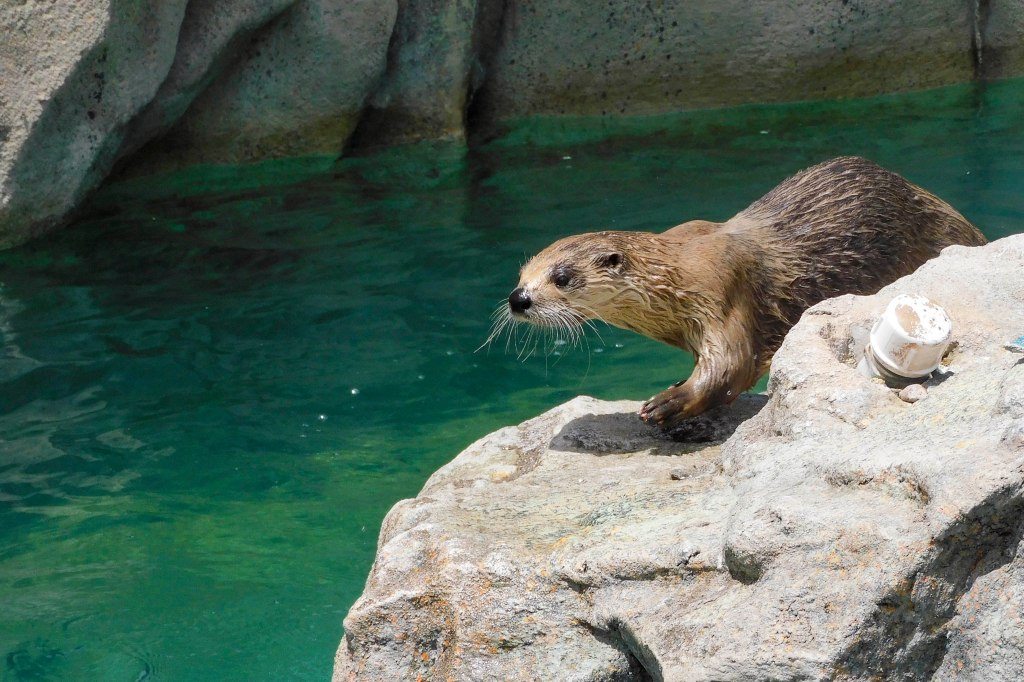
Another day – another adventure. Bearizona in Williams is interesting and fun for all. Started as a conservation effort for rescues it now houses approximately 50% rescues as offspring have enlarged the population. Most are maintained in their natural, forested environment which can be seen on the 3-mile drive through the grounds. Then many birds and smaller animals can be observed in the Fort.



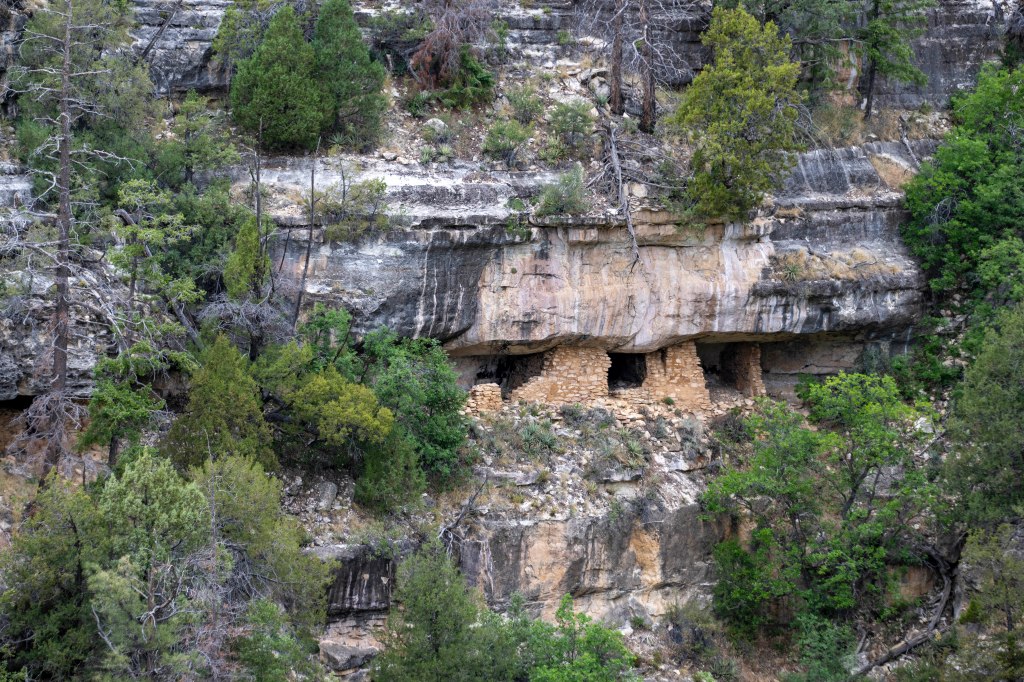
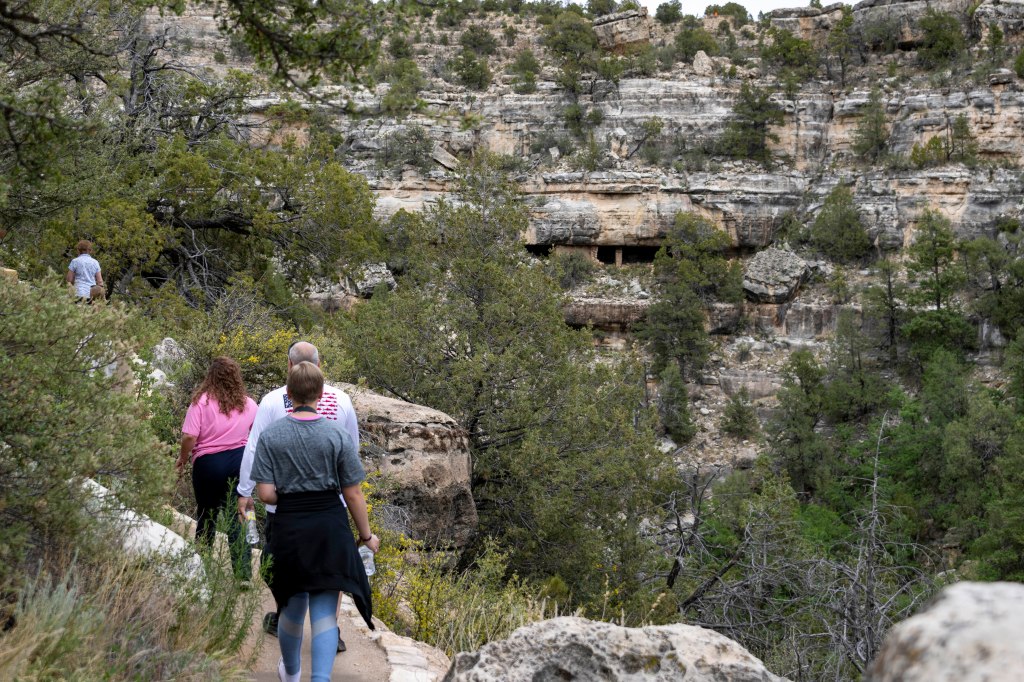
Bearizona wasn’t enough for one day – so off to Walnut Canyon National Monument (NM). Walnut Canyon was home to people today known as Sinagua – Spanish for ‘without water’. Their dwellings were sheltered by overhanging cliffs and they were the only permanent inhabitants here more than 800 years ago. They made their living by farming, hunting deer and small game, gathering useful plants and trading. These dwellings were occupied for little more than 100 years and the reason for their leaving the area is not known. The Sinagua ‘homes’ remained largely undisturbed until the railroad brought souvenir hunters in the 1880’s with theft and destruction. Thankfully, in 1915 Walnut Canyon was declared a national monument to preserve what was left. On a personal note – this is one of my favorite places to visit in Arizona!


Another favorite activity in Flagstaff is the Lowell Observatory. The Clark telescope, the largest on site has a long history. Among its successes was its use in mapping the landing areas for the Apollo moon landings. The astronauts for those missions actually spent time on site studying the surfaces of the moon that they would later encounter.
The Pluto telescope was aptly named after its use in discovering the planet Pluto. The telescope enclosure is now used as a museum.
The open deck observatory near the Pluto Telescope had several smaller telescopes that were available to visitors along with a number of very knowledgeable hosts to provide extensive discussions on the devices and what was being seen through them.
One last experience was a scientific presentation on Dark Matter by one of the scientists. Gary wished the he had a clue what it all meant.
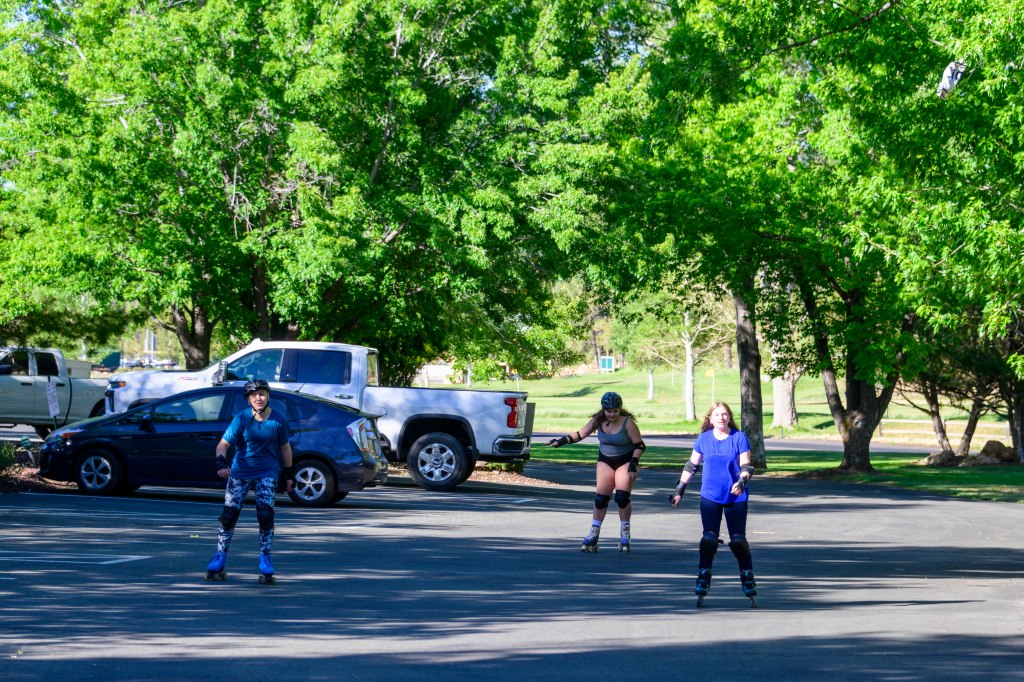
In between NP’s and NM’s – the girls used up energy skating – –
And, that was the substitute for Alaska. A FUN trip for all – –

As they say – “when given lemons make lemonade”.
E & G – beginning summer with the family;-)
 Elizabeth & Gary's Magic Bus Tour
This is so sweet! It looks like you had a blast!
LikeLike