There are so many possible titles for this post – “Planes, Trains & Automobiles”, “Country of 14,250 Islands” or “Edo”. But, plain old Tokyo won out. Which does not mean Japan, or its capital Tokyo, are plain. There is rich history beginning around 3000 BC, but more vibrant documentation occurs about 57 AD when a Japanese envoy visited the Chinese Han Court. This was the beginning of the Chinese influence (Korean comes a bit later) in many facets – language, the written word, buddhism, arts, etc. But, the most well known period (thanks perhaps to Hollywood) is the Shogunate spanning from 1185 to 1868 and refers to military dictatorships. THIS is the history of Edo that will be explored.
But first – getting here. It truly takes planes, trains and automobiles to get to Tokyo. Once on the island, trains are the transportation of the day. Since Narita airport is about 50 miles (2 hours by car) outside of Tokyo, it is much faster and cheaper to get the express train into Tokyo station or Shinagawa station, depending on where you are staying. These trains – and stations – are really cool – –
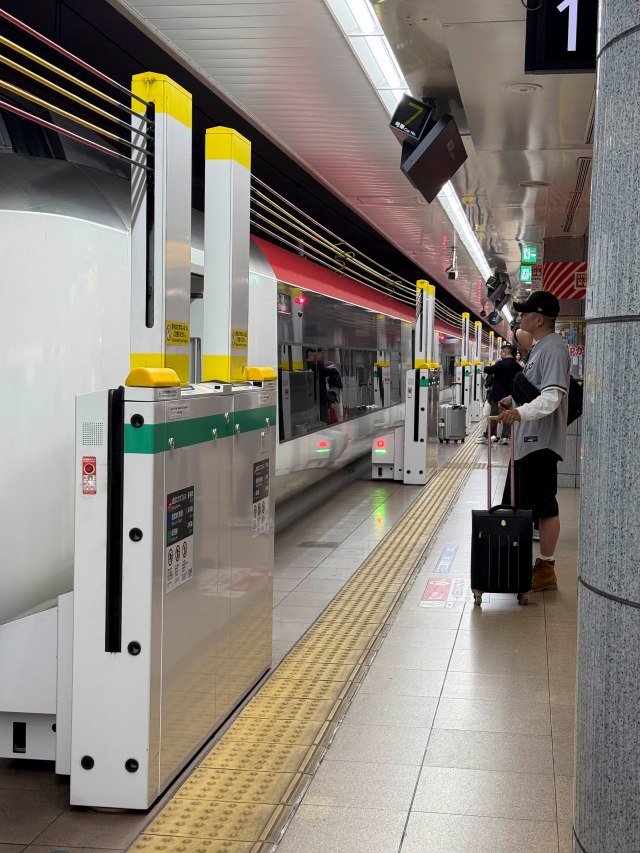
Unbelievably efficient.
A fast forward takes one to the Edo period (approximately 1600 to 1868) and ground zero at the Nihonbashi Bridge. This was the center of Japan in this period of time – so much so that all principal roads led here and distances to points beyond were measured from this bridge. While the original bridge was built in 1603, the current bridge was built in 1911 with a plaque in the middle of the road designating the point from which distances were measured.
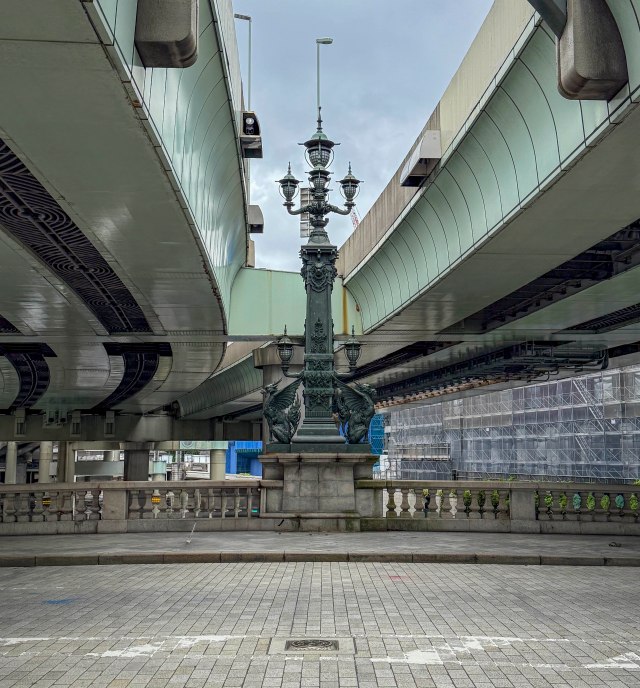
Nihombashi Bridge – where all roads led to in Japan.
Being the original ‘downtown’ area, Nihombashi became the fish market, the craftsmen neighborhood and then the merchant quarter supplying the needs of the shoguns’ court and townspeople alike. Nothing has changed in over 400 years – it still maintains the fish markets and supplies the needs of the townspeople with restaurants, beautiful silk shops and department stores.
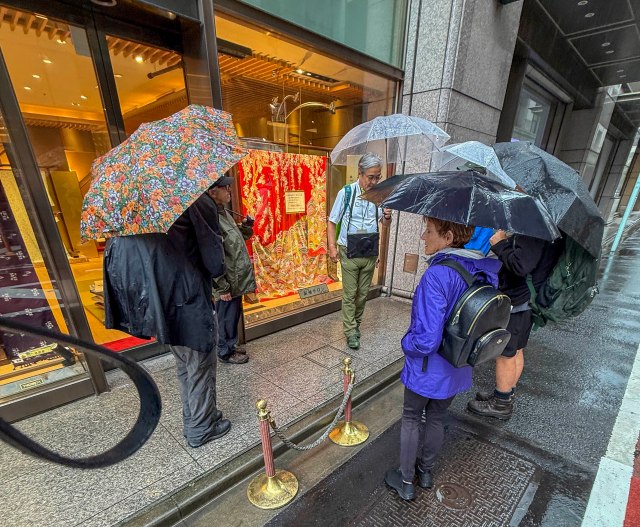
Mitsukoshi silk shop was one of the original merchants in central Edo.
The daily opening of the Mitsukoshi Department Store is not to be missed, as it is a very formal welcoming of guests (shoppers) precisely at 10AM! And the store itself is like a museum.
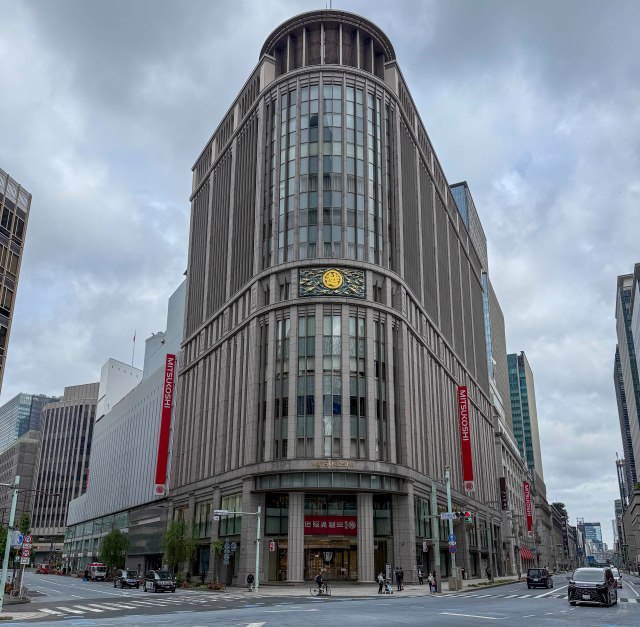
Mitsukoshi department store is the continuation of that business.

One of many hand carried floats used in annual festivals (more later).
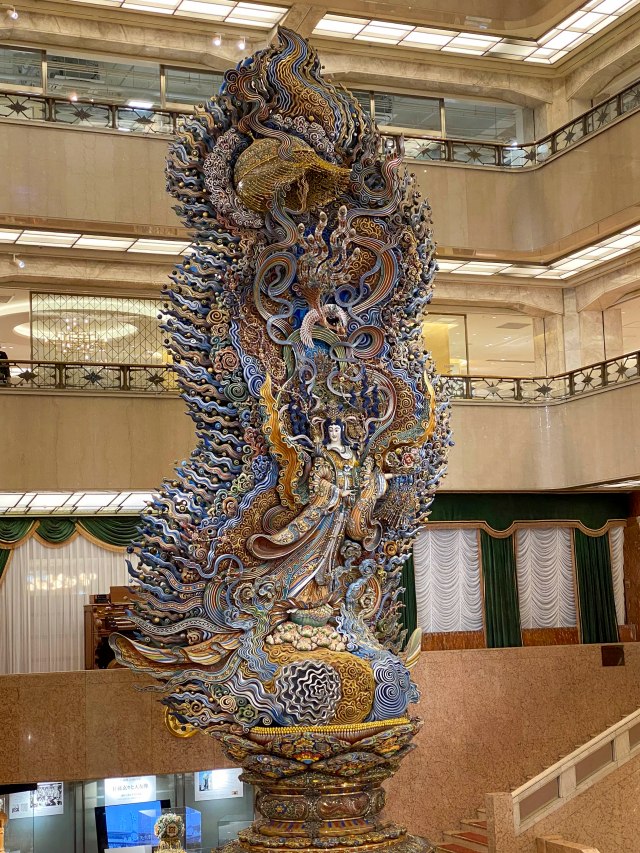
Incredible art pieces.
Even the train station under Mitsukoshi contains amazing art pieces. The Kidai Shoran is a work that depicts a view of the Nihombashi street in Edo in 1805 with the Nihombashi Bridge shown carrying people across the river to the bustling part of town. Although the display piece is a replica, as the original is in a museum in Berlin, the stunning detail is not diminished.

The Kidai Shoran, which seems to mean “an excellent scene of the great city of Edo in a glorious era”.
On to more serious stuff at the Fukagawa Edo Museum. This is a fantastic recreation of the townscape of Fukagawa-Saga Town during the late Edo Period. The sights and sounds of a block of the town are reproduced including a large merchant house, several rice stores and warehouses (a very important commodity), street vendors, a boathouse, craftsman of lumber cutting and the all important fire watchtower. A fascinating walk thru another time – –

Museum recreation of the early downtown Edo area.
Next stop is the site of Edo Castle, which was destroyed by fire in November 1863. However, for 260 years Edo Castle was home to the powerful Tokugawa shoguns making it the center of Japan’s politics – and much intrigue as well. The castle site is now part of the Imperial Palace, which is the residence of the Emperor of Japan, and contains serene gardens and several museums that are all open to the public. Even on a rainy day the walk was beautiful –
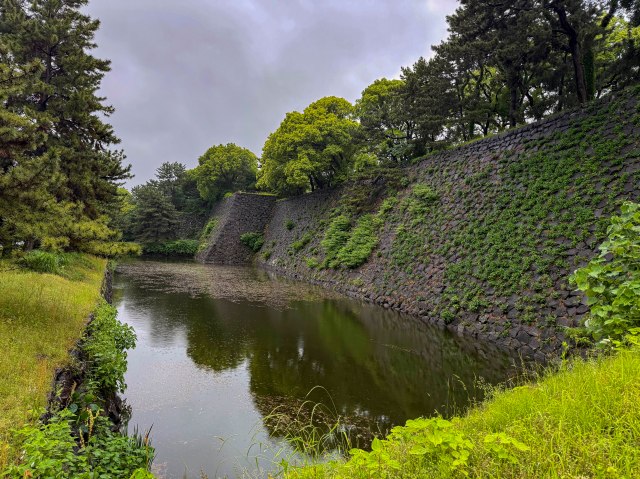
Part of the moat surrounding the original Edo Castle.
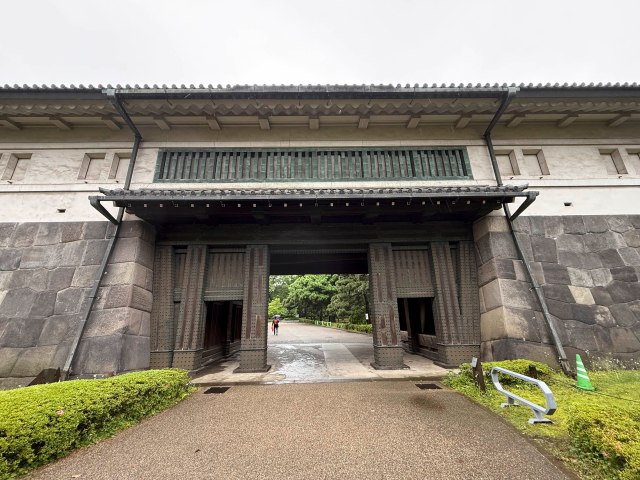
The only remaining original gatehouse – quite necessary as used by the Shogun’s ladies-in-waiting!
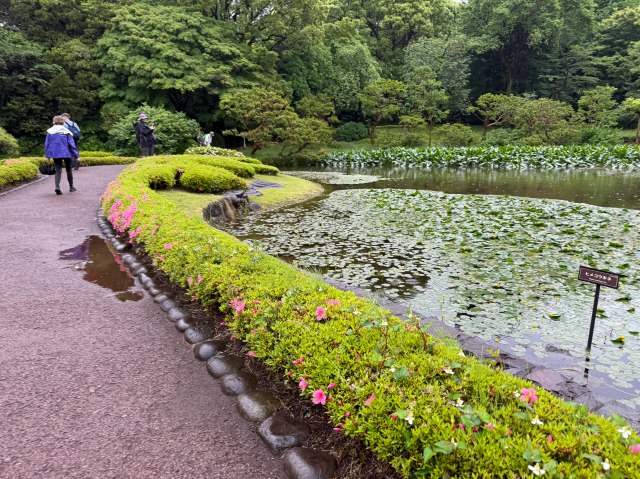
Beautiful Lilly Pond.
Another beautiful garden is the Koishikawa Korakuen Gardens, which is also known for its associations with the legendary Tokugawa Shogun clan. This garden is not only designated a “Special Historic Site”, but also a “Special Place of Scenic Beauty”. It is a very spiritual place as it sits right in the middle of the city with modern office buildings all around and the space will not be given up for further development. A true testament to the Japanese love of plants and gardens.

Ancient grounds surrounded by modern buildings.
This garden was designed with the use of Chinese tastes and flavors as indicated in The Full Moon Bridge. The name was given due to the reflection of the bridge on the water appearing like a full moon. The design was attributed to a Chinese Confucian scholar of the 17th Century.
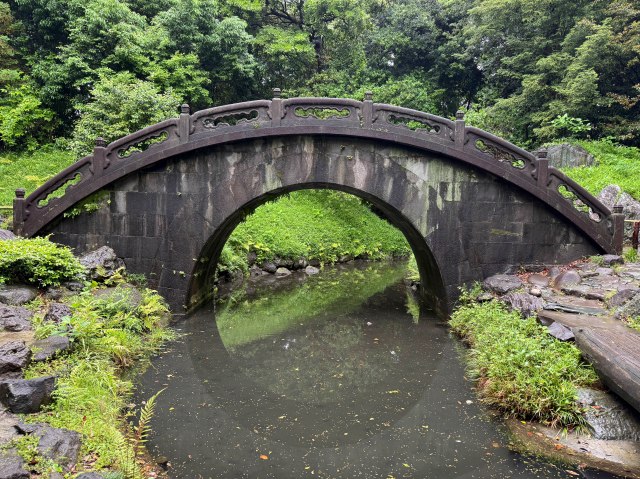
Full Moon Bridge in a quiet corner of the garden.
From peace and tranquility to 2 million people crammed into a four block area. The Sanja Matsuri is a religious celebration (which takes place mid-May) dedicated to the three men who founded a Buddhist temple – Senso-ji. The main attraction are three elaborate, black lacquered wood shrines built to act as miniature, portable versions of the Shrine (similar versions pictured above in the department store pics) carried through the streets on four long poles lashed together. These ‘miniature’ versions weigh approximately one ton and cost about $400,000 to construct. Throughout the day a total of about 500 people participate in carrying each shrine trading off ‘on the fly’! Millions of locals and visitors crowd the temple square to ‘worship’ and to see the shrines carried through the streets.
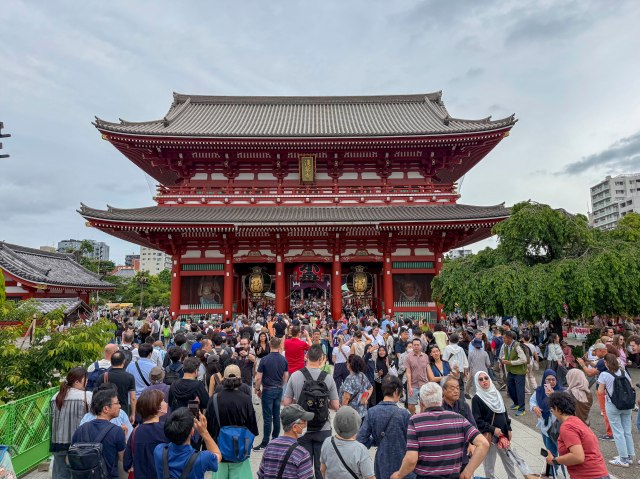
An entry gate to the Senso-Ji Buiddist Temple area in Asakusa.
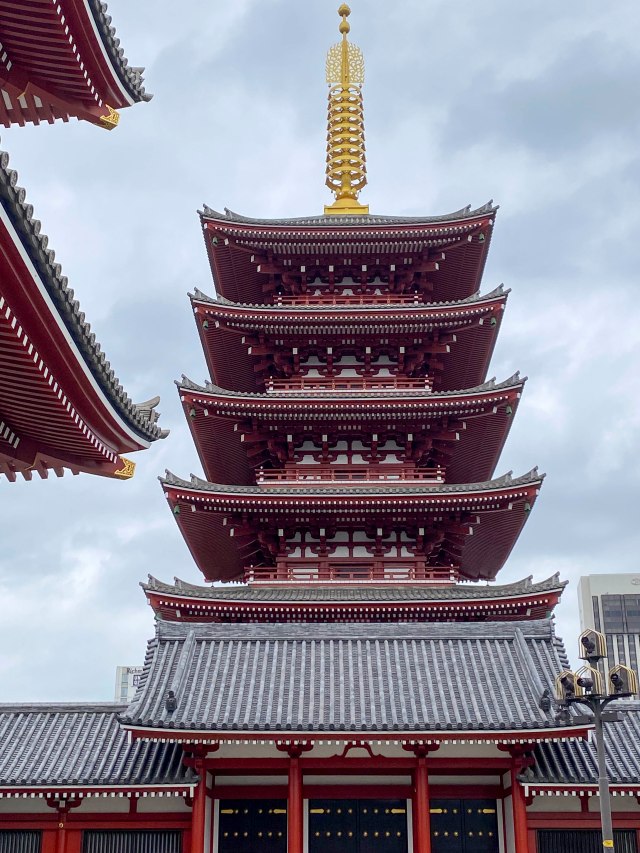
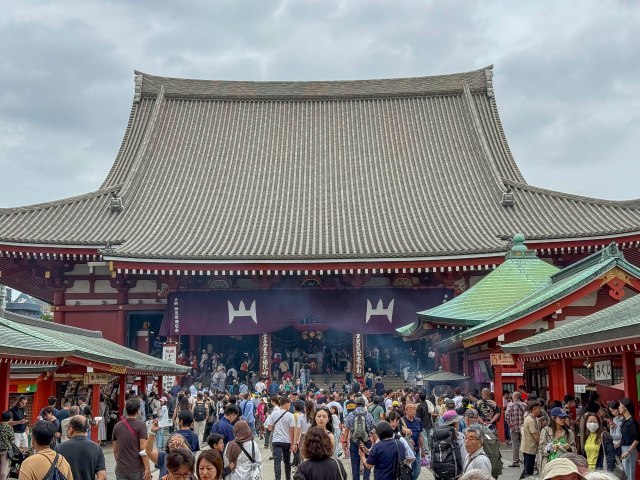
Senso-Ji Buiddist Temple in Asakusa. The smoke on the right is to be ‘taken in’ for good luck.
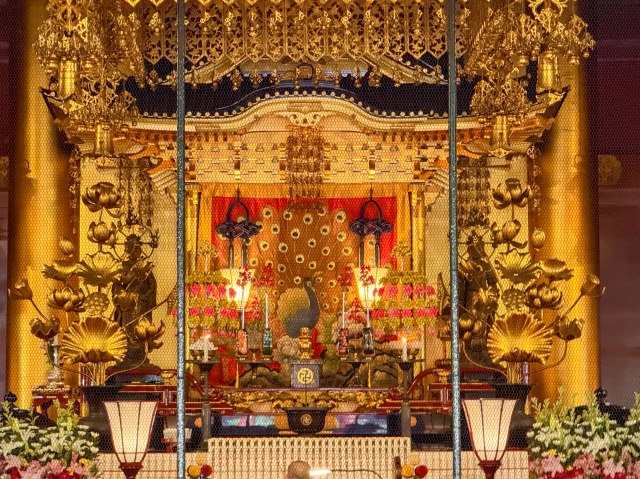
Inside the temple.
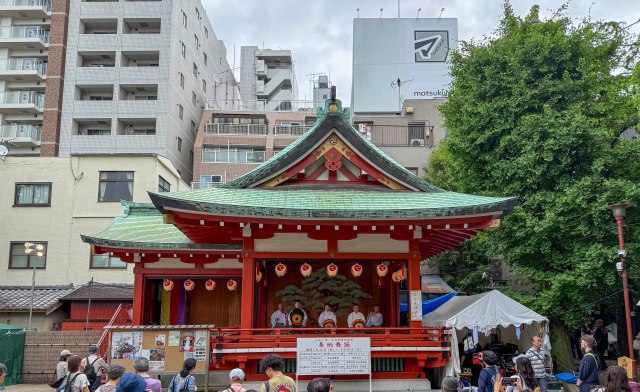
Kanda Myoujin Shinto Shrine in Asakusa, Tokyo.
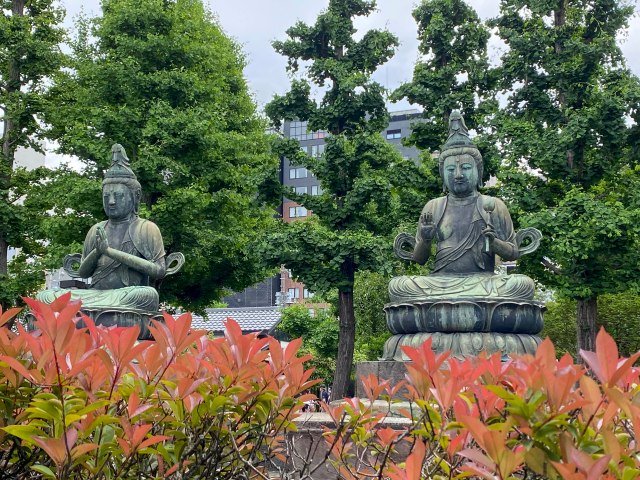
Quiet in the middle of chaos.
Yet another park and shrine honoring prior Shoguns. Getting the gist of how important Shoguns were to Japanese history?!? After all, they were the ‘rulers’ of the country while the Emperor was the name and face.
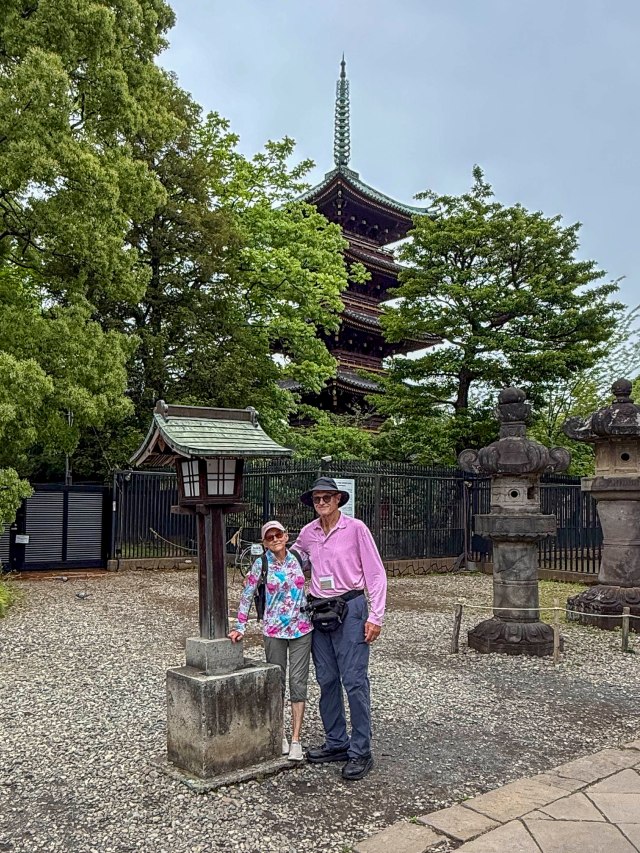
The five storied pagoda of the former Kan’ei-ji Temple and a couple of tourists.

A shrine recognizing six of the fifteen Shoguns who ruled Japan.
The above is a whirlwind tour of Edo/Tokyo. Hope you enjoyed- and sayonara for now – –
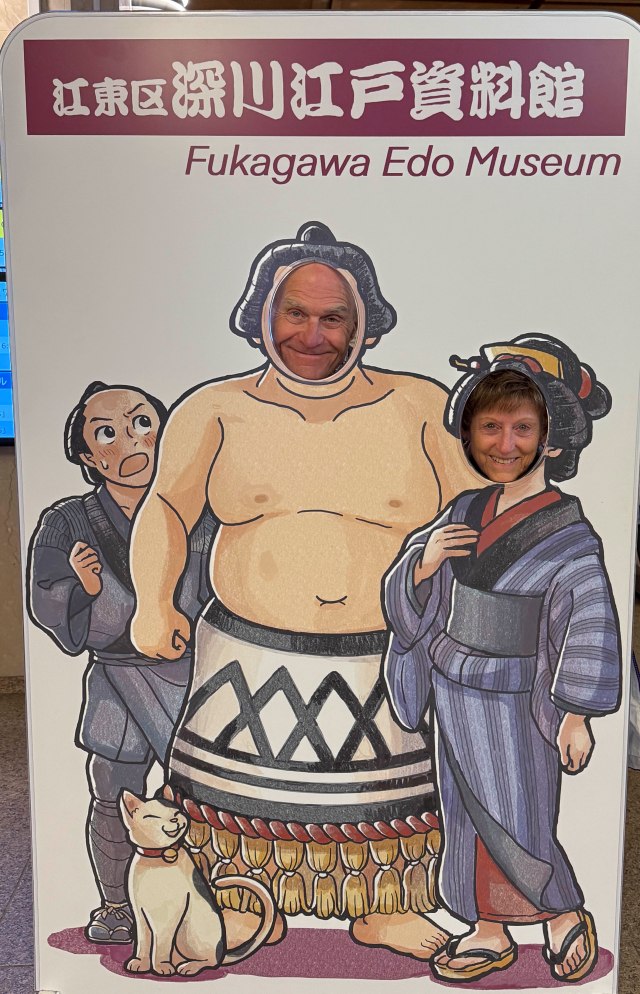
G seems to have put on a few pounds. E, on the other hand, is adorable!!
See you in Kyoto.
E & G having fun in Japan
 Elizabeth & Gary's Magic Bus Tour
Thank you for sharing your journey Most interesting the purposeful development of tranquil spaces amongst the otherwise chaotic business of the day
LikeLiked by 1 person