The Shogunate is the historical period of time when the shogun (a title given to a Japanese military commander) held the military might and therefore ruled. This significant historical period lasted from 1185 to 1868 and was made up of three different eras. The last of these eras was the Tokugawa Shogunate – also referred to as the Edo Period in Japan – which ran from 1603 to 1868 and always included some member of the Tokugawa family as the ruling Shogun. Make no mistake, there was always an Emperor during this entire period but, he was a symbolic figurehead since the shogun held the actual power. (Perhaps the best depiction of this time period is the series “Shogun” on Hulu.)
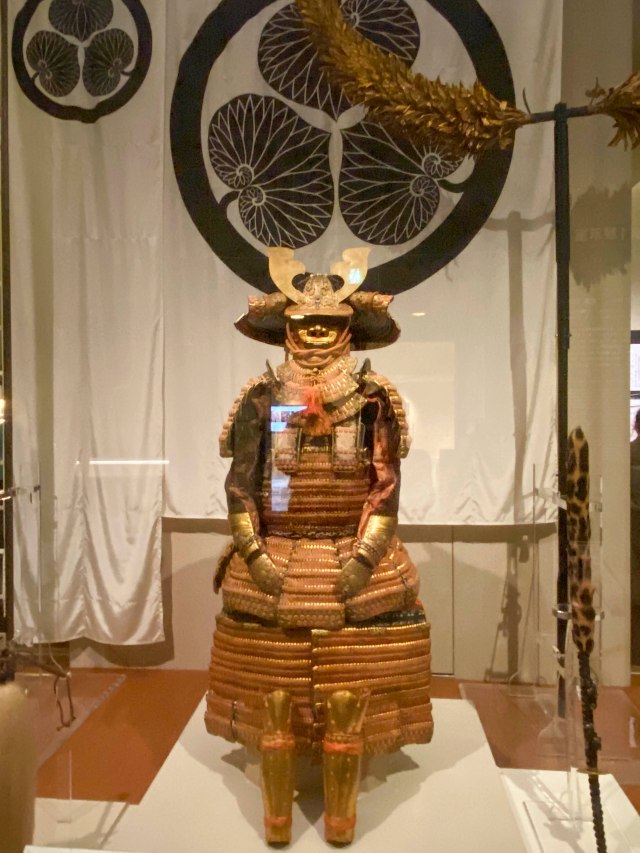
A Tokugawa Samurai Warrior’s armor with the Tokugawa family crest of the three aoi leaves (mistakenly called hollyhock).
The first Tokugawa Shogun was Ieyasu, who came into power in 1603. He moved the capital of Japan to Edo (Tokyo) and built Edo Castle there, which became the Tokugawa home for 260 years (as described in the “Welcome to Tokyo” post). He also nurtured commerce there and had the Nihombashi Bridge built. But, like many wealthy heads of state, the Tokugawa’s had many castles and palaces.
In 1610, Tokugawa Ieyasu ordered the construction of Nagoya Castle, which included stone walls and moat for protection as well as Hommaru Palace. All was completed by about 1615 and became the home of Tokugawa Ieyasu’s ninth son. Today this entire complex is designated a National Treasure even though most of the structures are replicas.
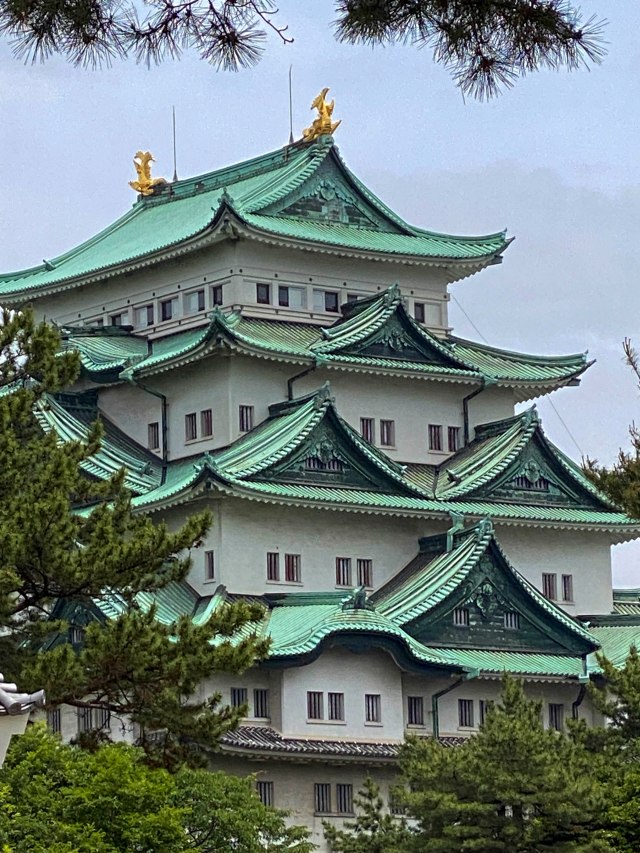
The Main Castle Tower – destroyed in WWII – was rebuilt in 1959.
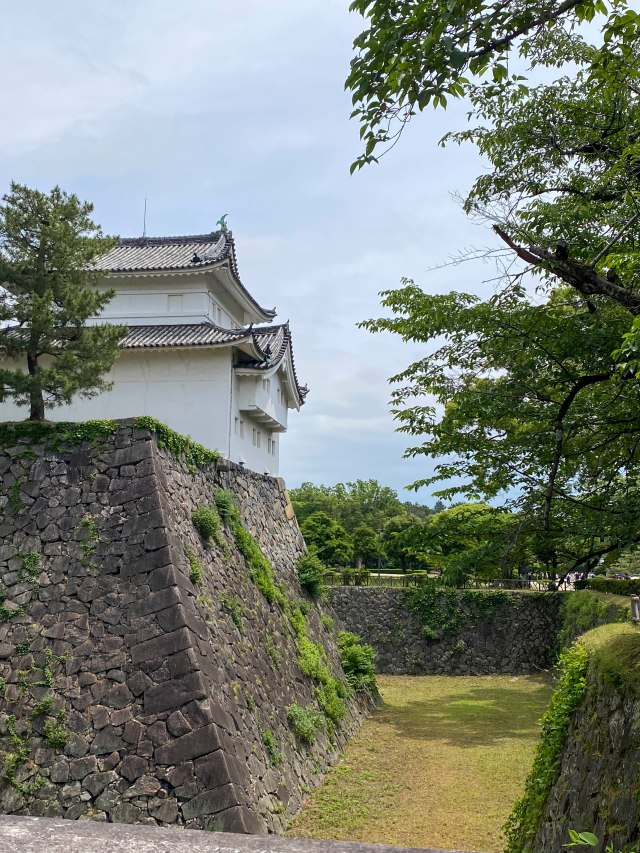
A corner tower and the only original building left standing at Nagoya Castle after WWII.
Hommaru Palace was built as the residence for part of the Tokugawa clan and provincial government offices. It was destroyed in WWII, restored and reopened to the public in 2018. Because it is not original, pictures may be taken of the intricate screens and artwork inside. This was quite fortuitous, as the Nijo-jo Castle in Kyoto (another Tokugawa residence which is up next) was NOT destroyed, is all original – and therefore no pictures of the interior are allowed;-). The rooms and scenes are so similar, one can’t tell which Palace they are in!!
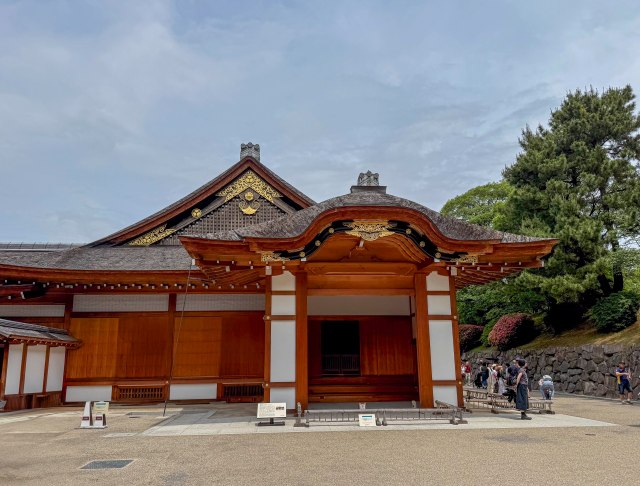
The rebuilt Hommaru Palace inside Nagoya Castle grounds.
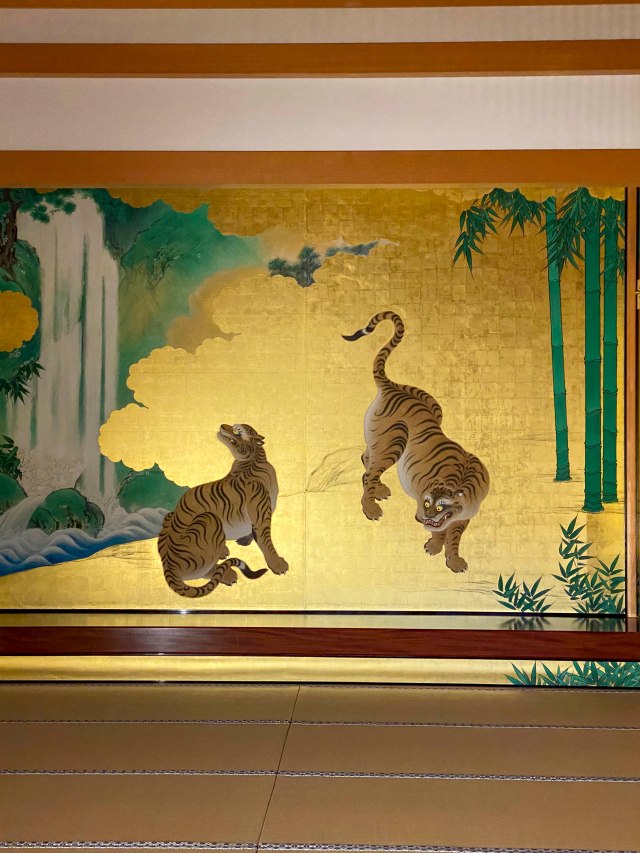
The entrance hall where one would wait for an audience. All rooms, walls and furnishings were rebuilt in their original splendor.
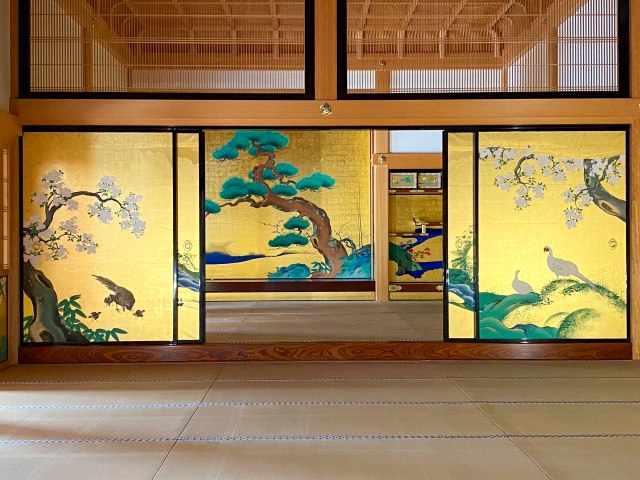
The most spacious hall in the Palace (made up of five rooms) was used for official audiences.
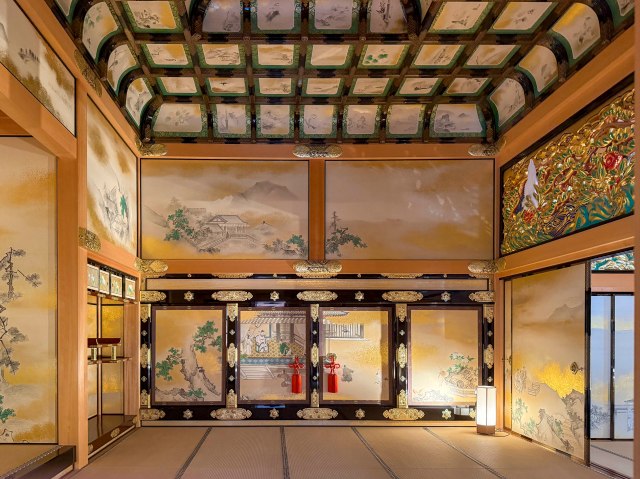
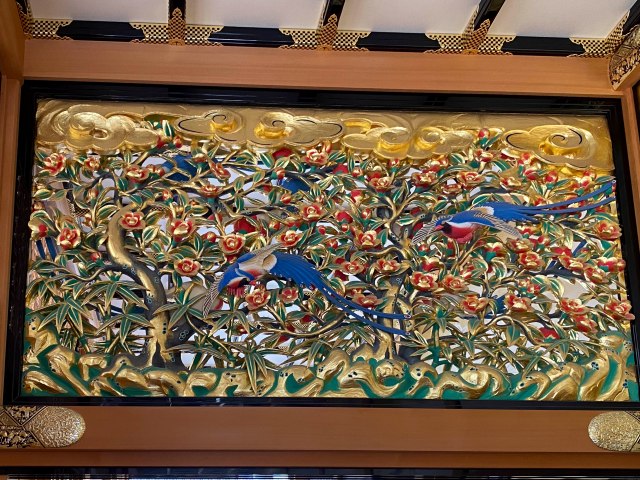
.
Before the Nagoya Castle, Tokugawa Ieyasu ordered the building of Nijo-jo Castle in the then capital of Kyoto and it was completed in 1603. That year the Emperor appointed Ieyasu to Shogun and Ieyasu came to Nijo-jo Castle to announce his appointment. Therefore, this Castle was the site of the beginning of one of the most important periods in Japanese history – the Edo Period. It was also his residence on those rare occasions when he visited the Imperial Capital from Edo. 264 years later, in 1867, a subsequent Tokugawa Shogun gathered seniors of various clans in this same Castle and announced his intention to restore Imperial rule. Thus, this Castle is extremely important in Japanese history, is a World Heritage Site and we are fortunate it was spared destruction during the war.
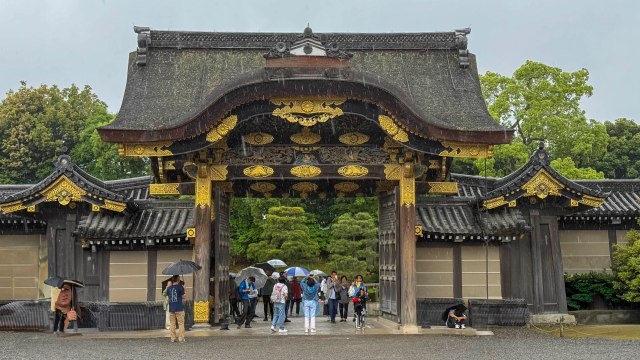
Entry gate to the Nijo-jo Castle in Kyoto.
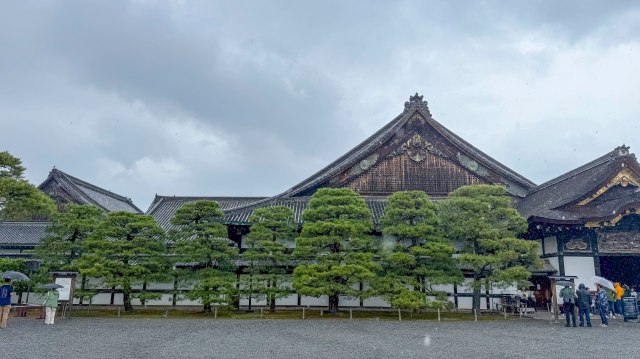
Exterior shot of the Nijo Castle, A UNESCO World Heritage Site. No photos were permitted inside the castle, although much of the interior was very similar to Hommaru Palace.
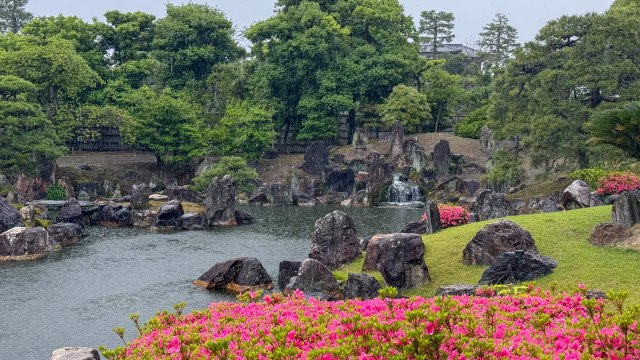
The castle’s gardens and pools were extraordinary.
A fantastic place to get a glimpse into the personal lives of the Tokugawa clan is the Tokugawa Art Museum in Nagoya. This museum was opened in 1935 with a donation from a 19th generation Tokugawa family member. Beyond the 10,000 pieces of artwork from the family, there is a current special exhibit of the personal belongings of Chiyohime – a Shogunal Princess by birth. At the age of 2 years and 6 months, she was married to the most promising candidate for shogun in the Tokugawa family at the time. Her husband did not become the Shogun, but she worked tirelessly to promote her husband, her children and the various concubine children and to improve various parts of society. There were 40+ pieces of her belongings on display and a picture will not do justice to their beauty – –
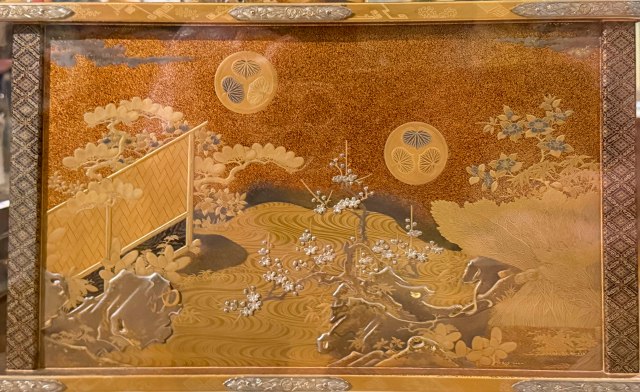
Gold leaf on wood – and always the family crest of the three leaves.
One more temple! In the Shogunate era before the Tokugawa – The Ashikaga era – Shogun Ashikaga Yoshimitsu commissioned the 14th century Kinkaku-ji Temple (known as the Temple of the Golden Pavilion) for his retirement home. This was to be sheathed in gold leaf and had to be finished by his son as he did not live to see it completed. It was also turned into a Zen temple in accordance with his father’s wishes. Unfortunately a mentally impaired monk trainee burned the temple in 1950, but it was such a treasure that it was rebuilt to its original specifications by 1955. It is thought to be the most photographed structure in Kyoto.
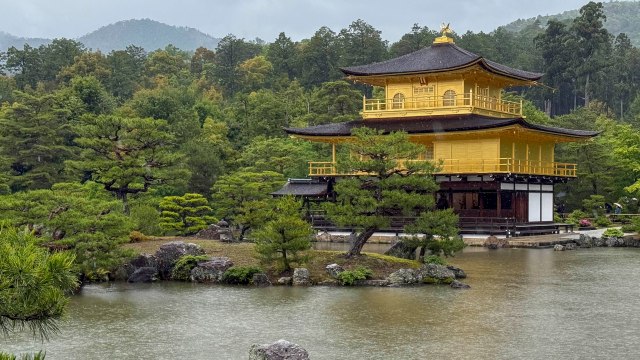
The reconstructed Golden Pavilion originally built by Shogun Ashikaga Yoshimitsu in 1397.
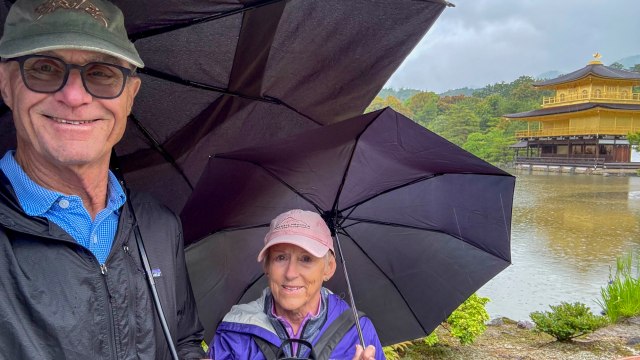
Yep – it rained ALL day but we still enjoyed all the sights;-)
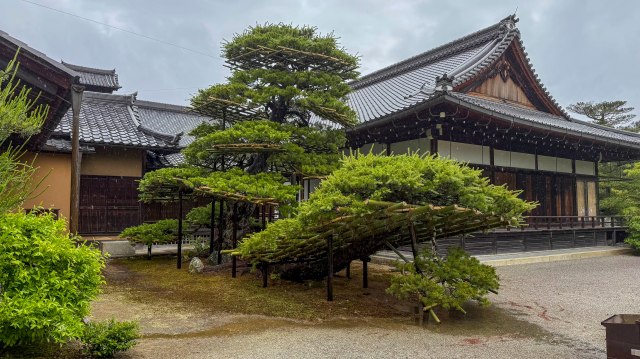
This bonsai pine tree was transplanted several hundred years ago and has grown to this size.
And so – that is a very brief account of almost 700 years of Japanese history!! It has been quite an education provided through beautiful sights of palaces, castles, Buddhist Temples and Shinto Shrines. The next few days will be more current history in Hiroshima and Nagasaki, with events that most Americans are a bit more familiar with.
From an overwhelmed E & G in Osaka;-)


We are having a wonderful time on your trip. Thanks so much for education, the amazing photos and for allowing us to “be a part of your journey”.
All is good here. We miss you. L&B
LikeLike
thank you. Always excited to see the many interesting stops along your adventurous route. So interesting how something imagined, built and still operational from 1603 remains so significant and beautiful
LikeLike