Park City Here We Come

Magic traveled from the ocean to the mountains and traded cypress for pines.  It is always fun to be reminded how much one enjoys the coolness of the higher elevations and the smell of the pines all around.  We have come to really love Truckee, CA – with its golf courses that have become some of our favorites, the BEST Ace Hardware store anywhere and a very accommodating Coachland RV Park – –

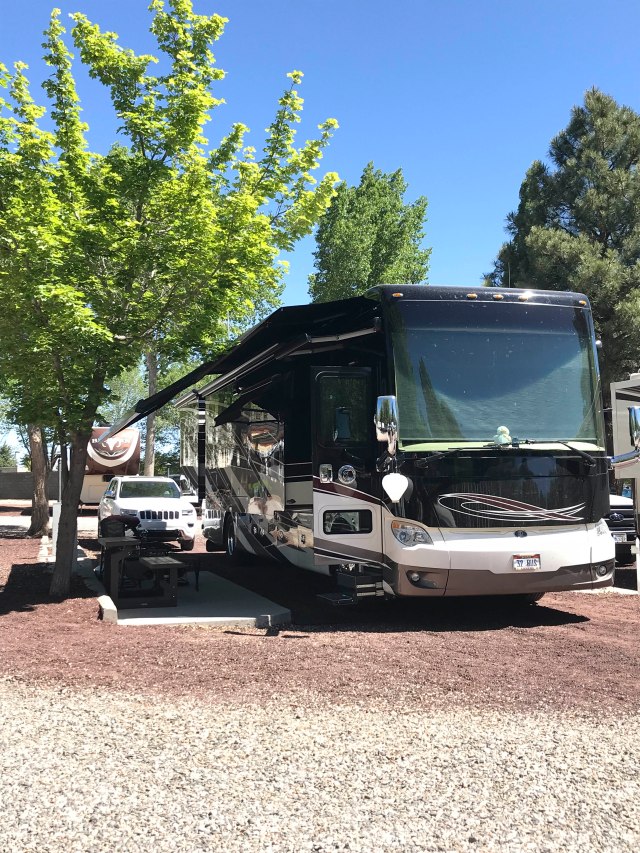
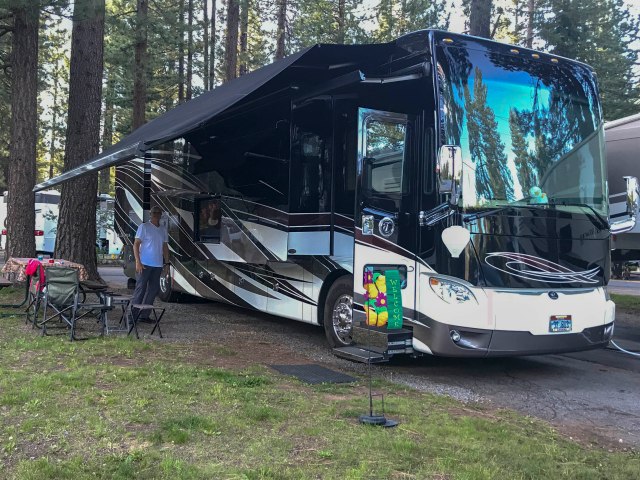
Wedged in between the pines, all set up and ready to enjoy;-)


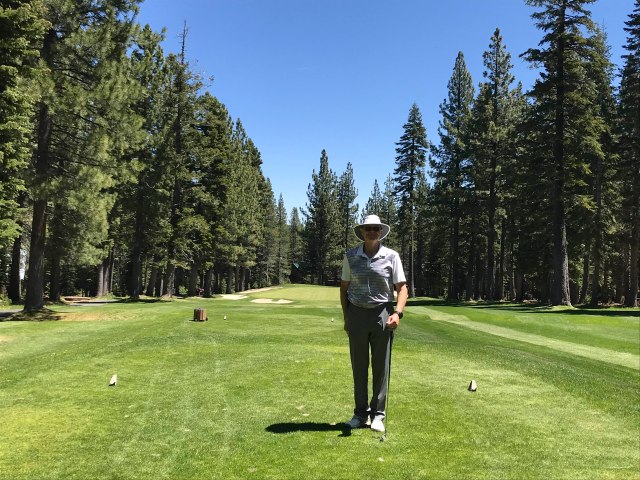
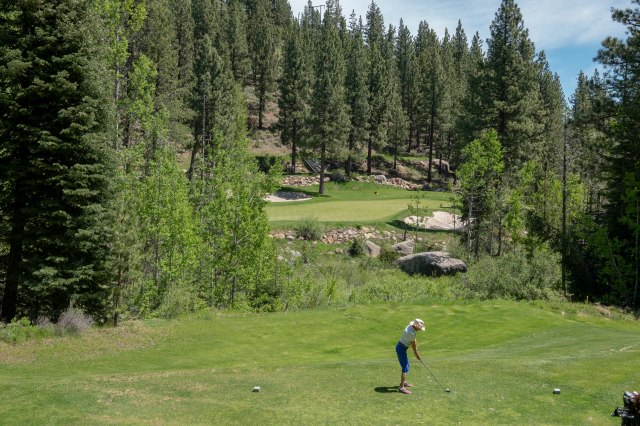
Not much rest for the weary.  So we were off to couple of days of golf – with LOTS of trees- –

We golfed at Tahoe Donner…

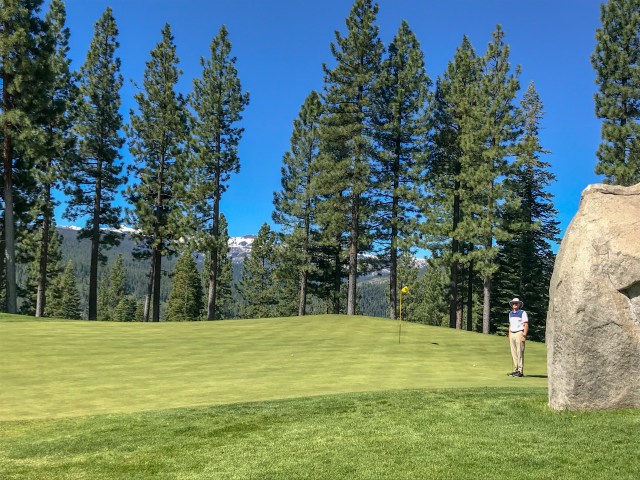
…and Coyote Moon.

018 2018 06 04 Coy Moon 007

Beautiful views of the snow capped mountains all around;-)


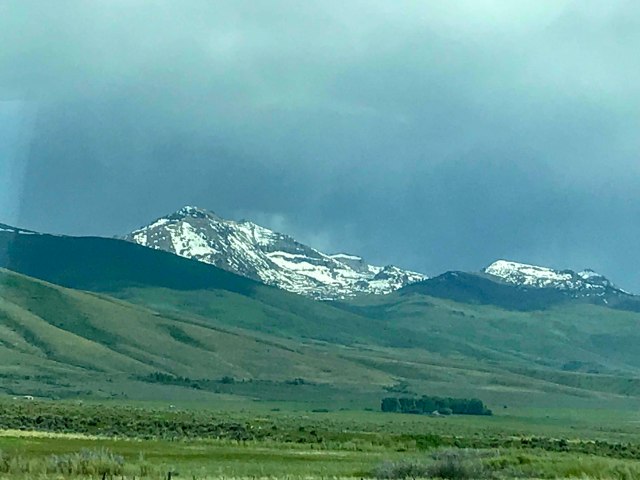
One could spend all of their time in Truckee – there is so much to do – but, we did take a drive to see Lake Tahoe and have a nice lunch with friends, the Lenzi’s.  Then it was time to move on again.  The drive across the northern Nevada desert was quite pretty and even surprised us with more snow scenes –

The snow capped mountains along I-80 in Nevada.


Then – we were back ‘home’ in our usual spot at the Park City RV Resort.  All is good!

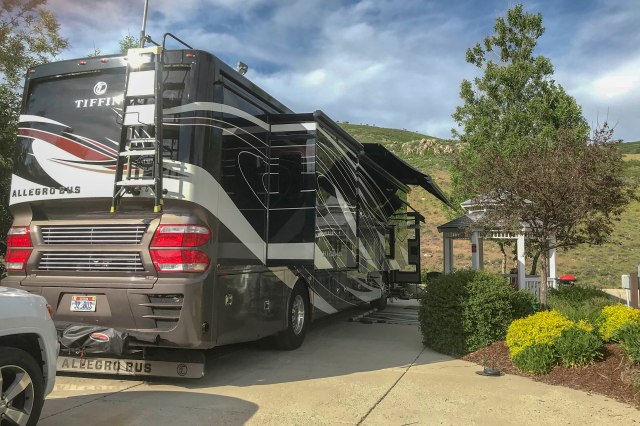
All set up and ready to enjoy Park City.


Can’t wait to begin all our visits, golf, hiking and eating with friends here;-)

All is good in Park City!

And We’re Off

With Memorial Day on the horizon and a week of 100+ degrees coming up, we set off on a long (not) 120 mile drive up the I-17 to Flagstaff and back to the good ole J&H RV Park.

Magic’s spot in Flagstaff.

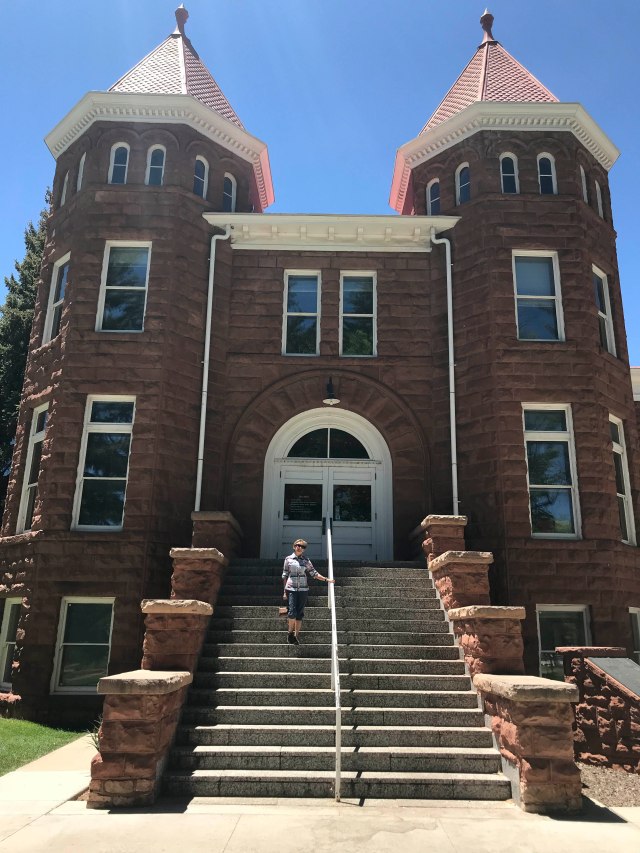
Friends, the Bolton’s, were not far behind – so we met up for a little Thai dinner and a round of golf.  NAU also beckoned for a walking tour of that campus that served as home to E many moons ago;-)

Believe it or not – the building IS older than E!!


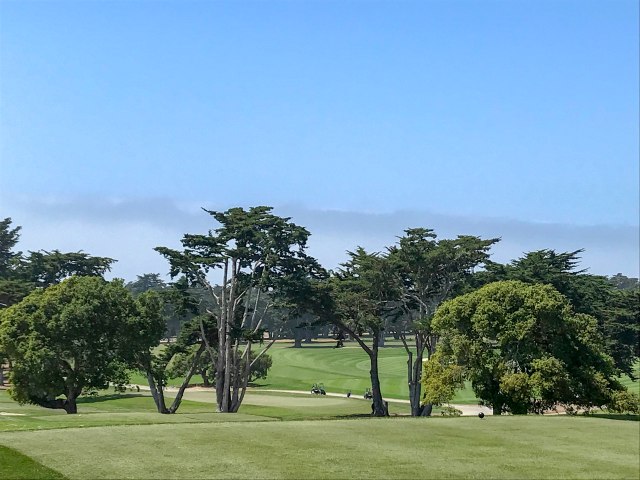
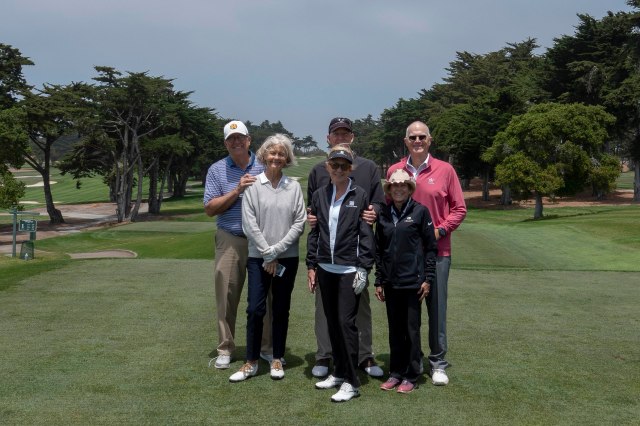
Just a few short days later, we were off to the Monterey Peninsula to meet up with our cruising mates for THREE days of golf – and dinners – and conversation;-)  Suddenly there were cypress trees lining the fairways instead of pine trees!  They truly are beautiful.  First up on the agenda was Black Horse GC at Fort Ord.

UGH!  The high scores here were made more palatable …

… by playing with good friends.


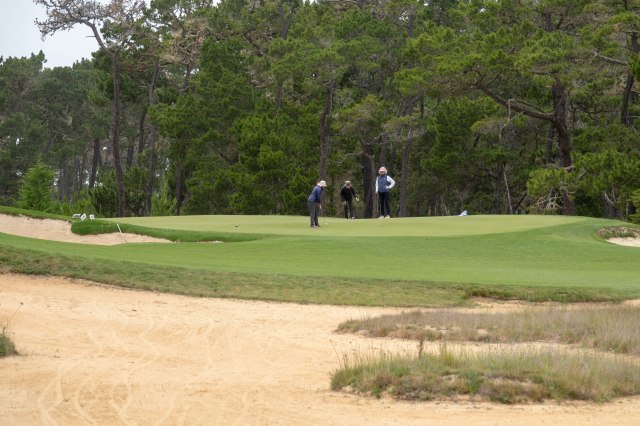
The second day brought on Poppy Hills.  We all just wanted to feel like PGA players – too bad our scores did not look the same;-(

Line this putt up well – as there is a lot riding on it!

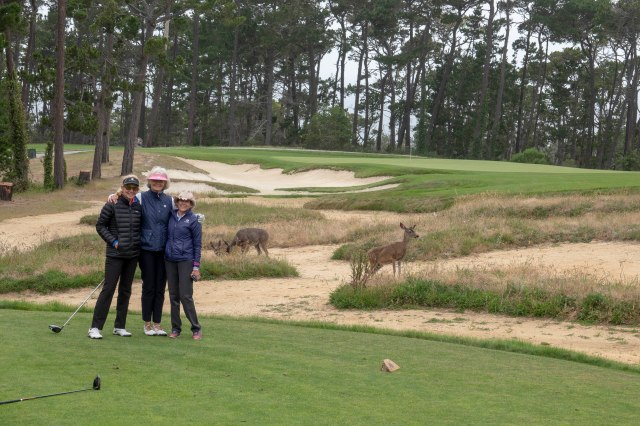
The girls and the does.


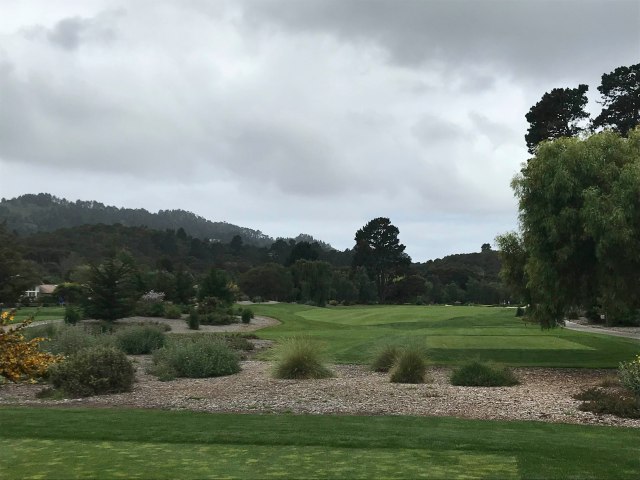
Day three was at the Quail Lodge GC – a really beautiful course.

Beautiful – BUT not friendly;-(


Magic’s parking spot in Carmel Valley had fantastic views of the surrounding canyons – but, the drive in was quite something (a VERY narrow one lane road) and the actual parking spot was a bit narrow.  We didn’t look like this when parked – –

This just made us laugh;-)!!


So begin our summer adventures – ultimately to Alaska.

E & G headed for the hills

Warming Up in Scottsdale

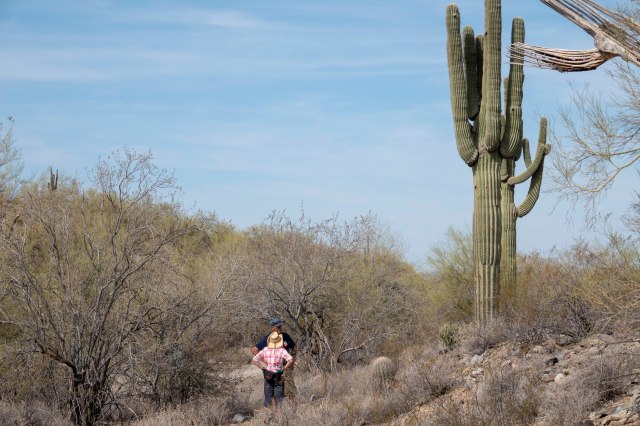
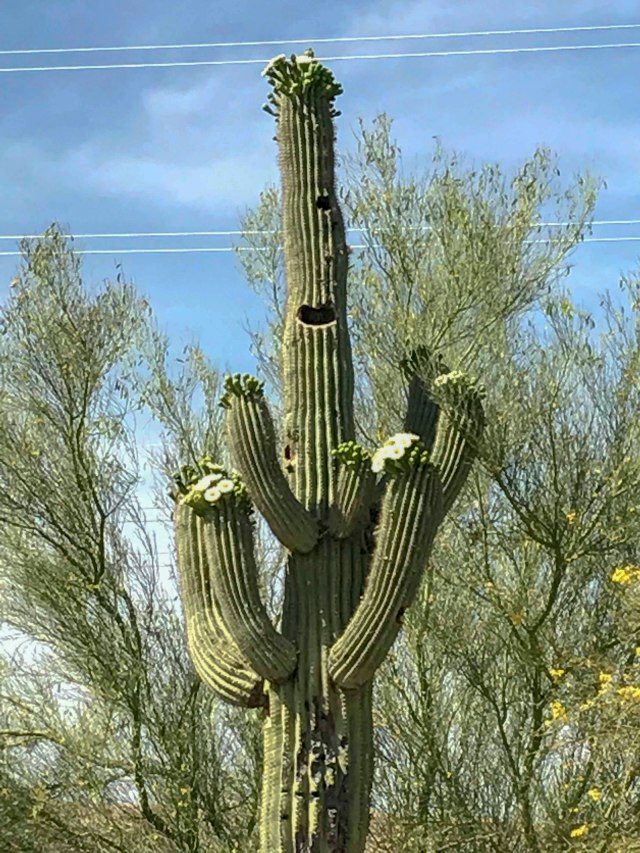
Home for the month of May – and it was a blur.  There are always lots of ‘last dinners’ with family and friends before everyone hits the road for cooler climates AND last minute to do’s on the house.  There was also the last VB game for niece Demi, the last hike in the Sonoran desert with the Clarke’s, where the saguaro and yucca were in full bloom (although for a very brief time) – –

Hiking at the foot of the McDowell Mountains.

A happy one-eyed guy with lots of arms and a halo!

Love these things.


—  — the last weekend of the Ancient Musical Treasures exhibit at MIM, along with a celebrate China day – –

Yikes, it’s a lion!!


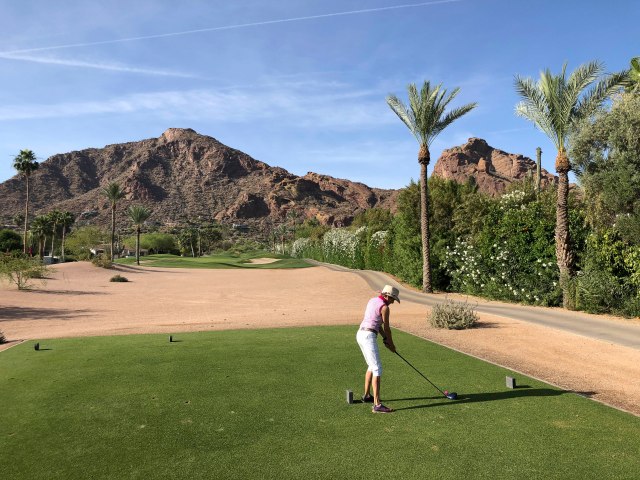
— —  AND, the last round of golf at the Mountain Shadows ‘short course’ at the base of Camelback Mountain.

Won’t see this scenery again for 4 months!

Hmmm. Been there – done those.  YEP – ALL of them;-)


After all of these “lasts”, it is time to hit the road – as the temps are in the 100’s for too many days now.  Good-bye to all in the Phoenix area and we’ll see you on the flip side;-)

E & G ready for cool weather

Grand Cayman – So British!

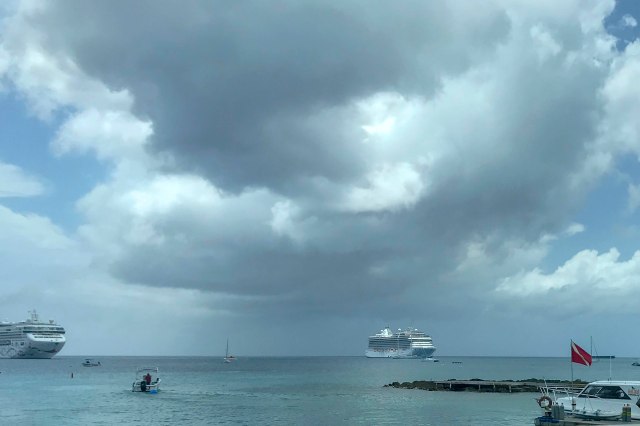
Hard to believe this trip is almost over.  The Marina anchored the last time for us at George Town, Grand Cayman – –

There she is – the Marina – anchored at George Town, Grand Cayman Island.


The Cayman Islands are made up of 3 islands – Grand, Little and Cayman Brac.  Grand Cayman is 4.5 miles wide by 22 miles long and has approximately 55,000 residents.  It, too, was discovered by Columbus in 1503 and was originally a part of Jamaica!  In 1760, the Treaty of Madrid was reached to stop fighting over Jamaica and handed Grand Cayman over to the British.  It still remains a British subject, and as such, the Queen appoints a Governor every 4 years.  The residents, however, elect a Board of 19 which actually governs the island.

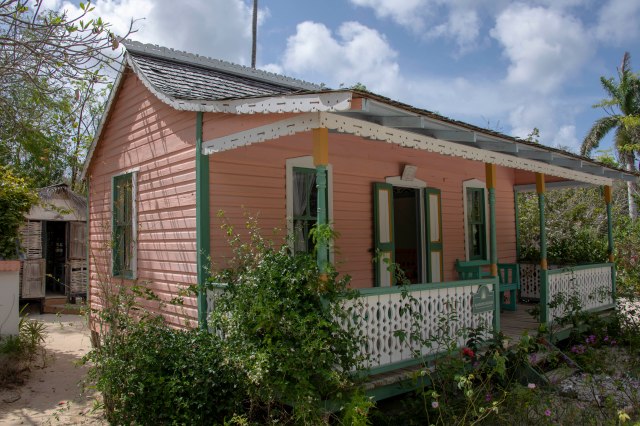
Queen Elizabeth is still a part of the island and, in fact, was there in 1994 to open a Botanic Park (named for her), whose purpose is to preserve and protect both Cayman heritage and native species.  Our visit started in the park at the Rankine House, which is an historical traditional Cayman home – including the kitchen building to the rear (separated for fire safety) completed in the typical thatch style.

The Rankine House, relocated from the east end of the island to the Botanical Garden.


The park also maintains a refuge and recovery program for the endangered Blue Iguana.

This guy was BIG!


Next stop was Pedro St. James – built using slave labor in 1780 by a wealthy Englishman, mariner and plantation owner, William Eden.   It was built of sturdy stone walls and a slate roof and included sweeping mahogany verandas that provided fabulous ocean views – and cool breezes!  All of this elicited the name of ‘Pedro Castle’ – as it is still known today.  Over the years it has been a cotton plantation, a jailhouse, a courthouse, a government assembly and a restaurant.  In 1996 the government of the Cayman Islands finally purchased the land and restored it to its 18th century grandeur – as this is where residents met to elect their first legislative assembly in 1831.  It is they birthplace of democracy.

The recently restored Pedro St. James Great House – –

– – with fabulous ocean views!!


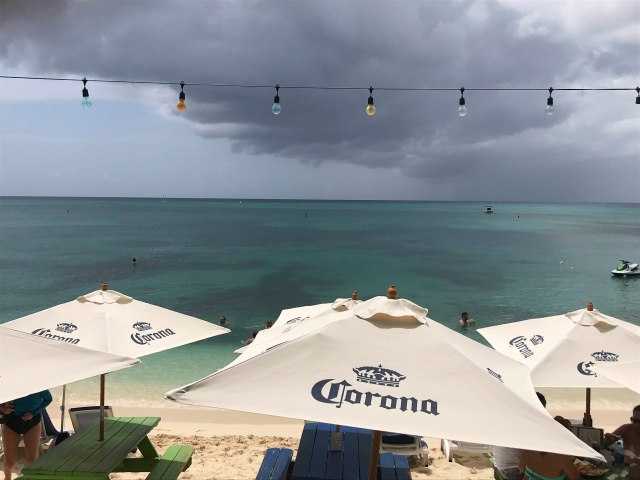
Although the tour of the day was over – it seemed imperative that a bit of the local scene was experienced on Seven Mile Beach before the Marina was boarded for the last time.   So – we were off to find some beach front property to chill on and have a bite of lunch.  Calico Jacks was just the place – –

Our view from our lunch counter at Calico Jacks;-)

E just had to test the waters.

So long Cayman Islands…


And just like that – – we were back in the good old US of A in Miami – –

Hello Miami.


Sixteen days had passed.  We had travelled nearly 5,000 miles – stopped in 8 different ports of call – and crossed from the Pacific to the Atlantic Ocean via the Panama Canal!  We crossed another item off that good old ‘bucket list’ with the company of 4 wonderful friends;-)  What more could we want from life?!?!?

E & G Home Safe and Incredibly Happy;-)!!!!

Cartagena, Colombia

Cartagena – a city on the northern coast of Colombia, whose colonial walled city and fortress were designated a UNESCO World Heritage Site in 1984.  Hard to believe as one sails into the Bay and sees the many modern high rises – 42 of them.

The Bay of Cartagena de Indias with the historic center of the city in the background.


Columbia – just like most of the Central American countries visited in the last week – was discovered by the Spanish (that good old Christopher Columbus!!) in 1503.  It is here that the Spaniards built the greatest fortress ever built in any of their colonies.  The original fort was constructed between 1639 and 1657 on top of San Lazaro Hill to protect the city from pirates.  In 1762 extensive expansion was undertaken, and the result is the current bastion.  Numerous attempts to storm the fort were mounted, but it was never penetrated.

The Castillo de San Felipe de Barajas – Come and get me if you dare!!


Lots of gun emplacements.


An extensive system of tunnels is connected underground to distribute provisions and facilitate evacuation.  They were all constructed in such a way as to make it possible to hear footsteps of an approaching enemy and some were constructed with small alcoves every few feet where they could hide and ambush the enemy as they passed through.

LET ME OUT OF HERE!!!


The ‘crew’ high above the city – thanks goodness there was a breeze. .


Weird to see the high-rises of the city over the towers at the very top of the castle.


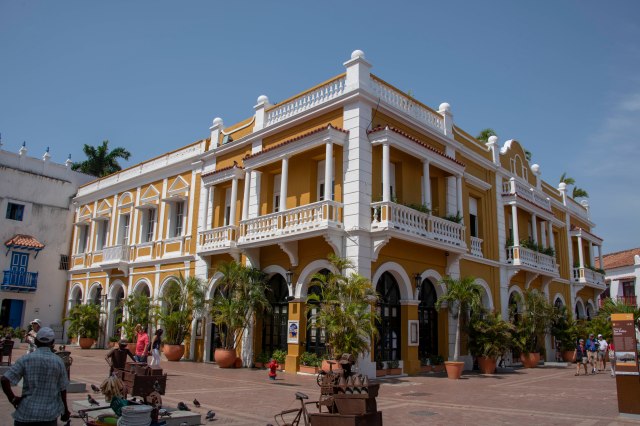
The old walled city is close by and is quite colorful with varied architecture from the colonial style to the republican and Italian style of the Cathedral’s bell tower – –

Wandering into the historic downtown area of Cartagena on colorful streets.


There are many plazas in the walled city – typically surrounded by elegant colonial buildings with lovely balconies.  Shaded outdoor cafes also line the streets.  Plaza Santo Domingo is no exception.  It is home to the Santo Domingo Church and to the sculpture Mujer Reclinada (Reclining Woman), a gift from the renowned Colombian artist Fernando Botero – –

Mixed use building with restaurants and shops on the ground level and condos above.


Reclining Woman – it is good luck to rub the breasts (HA!).


Palenquera woman with typical dress sells fruit on the streets of Cartagena, Colombia. Palenqueras are an african ethnic group in the north of South America


Cathedral of Santa Catalina – elaborate Italian style – –


— the inside is much simpler.


Examples of the different layers uncovered during the restoration.


Cartagena provided a wonderful day of sightseeing, shopping and a brief respite for a scrumptious lunch with a couple of locals – –

We stopped long enough to have a delicious lunch in the El Baron Bar.


One last cathedral – which proved to be quite moving as they hang photos of the mothers of sons and daughters slain during the drug wars of the 80’s during the month of April each year – –

Quite a moving sight.


And so ended day 13 of our cruise and a good bye was said to Cartagena, Colombia and another UNESCO World Heritage Site.

E & G – awed yet again;-)

And Then – The Panama Canal

For many, crossing the Panama Canal is a ‘bucket list’ item – and we were no exception.  So the anticipation, excitement and preparation for us was intense.

Our education and preparation began with listening to the audio version of the book by David McCullough – The Path Between the Seas.  As always, McCullough does such a complete and thorough analysis of the background and detailed recounting of events that after listening to about 6 hours of the 30 hour unabridged version it was traded in for the 8 hour abridged version!  The hours of listening were well worth it – as the beautiful and serene  environment of the canal could not possibly provide any indication of all the pain, suffering, infections from diseases and loss of lives that occurred during its creation.

The Panama Canal is the result of a saga of human ingenuity and courage that goes back to the early 16th century when the Spaniards arrived on the Isthmus.  If only a waterway could be created across this narrow expanse of land – it would save thousands of miles and many days by not having to go around the southern tip of South America.

The first serious effort to build an all-water route through the Isthmus began with the French in 1880.  Panama was not the first or ‘given’ path from ocean to ocean.  Once the route was chosen, the French spent approximately $150 million dollars and at least 20,000 lives over a period of approximately 20 years before the multiple bankruptcies of the effort and diseases made the initiative fail.  If workers were not killed by the landslides through the Culebra Cut, they were killed by yellow fever or malaria.

As President of the United States, Theodore Roosevelt revived the effort of a canal in the early 1900’s – feeling it was important to the US to be able to shorten the Navy’s path from ocean to ocean.  At that time, Panama was a part of Columbia – but wanted their independence.  So – – a Navy ship just happened to show up in the harbor as those seeking independence began to ‘rebel’.  All was over quickly – Panama was independent – and Roosevelt had an agreement with the independent Panama for the land to build a canal.  The US also negotiated with France for any rights they might have to the land, as well as all the equipment they left behind, for $40 million.

Now nothing was in the way.  EXCEPT – the same Culebra Cut that continued to ‘slide’ every time it rained (which was 3/4 of the year) and the Panama jungle full of mosquitos that carried yellow fever and malaria.  Strange as it seems now – it was not known at this time that the mosquito was the carrier of these diseases.  About the first year and a half of the US’s efforts were to determine/confirm this and eradicate the breeds of mosquito that were the carriers.  The next several years were spent creating the infrastructure to house all the workers required to build the canal and a railroad to carry out all the ‘dirt’ that had to be dug out to create the canal.  The idea of the locks to raise and lower ships also had to be accepted – instead of digging all the way to sea level all the way through the isthmus.

BECAUSE – building this canal involved digging through the mountains of the Continental Divide (The Culebra Cut), constructing the largest earthen dam ever built up to that time, building the most massive locks ever envisioned and constructing the largest lock gates ever swung.  The simplest way to describe what happens is to think of a giant water elevator that lifts ships out of one ocean, moves them through the jungles of Panama, over the mountains of the Continental Divide and sets them down in the other ocean.

This effort was completed by the US from 1904 to 1914 at a cost of $350 million and another 20,000+ lives.  August 15, 1914 the Panama Canal was opened with the passage of the SS Ancon in full transit from the Atlantic to the Pacific Ocean.
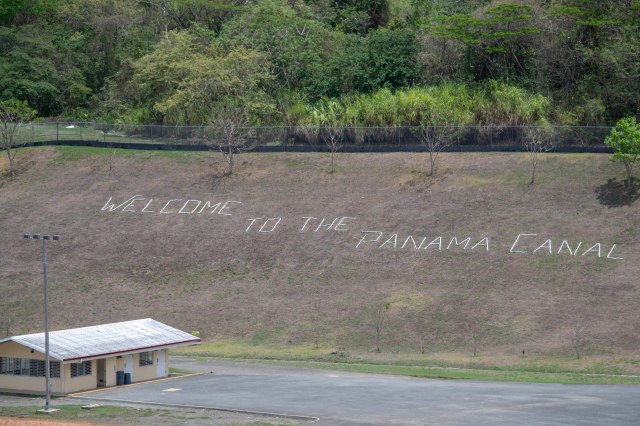
 

We lined up with other ships early in the morning ready for our 8-10 hour transit through the Panama Canal.  On a ‘normal’ day 20-30 ships would go through the original canal and 8-10 through the expansion.  However, February 29, 1968, 65 ships crossed – the most transits on a single day.
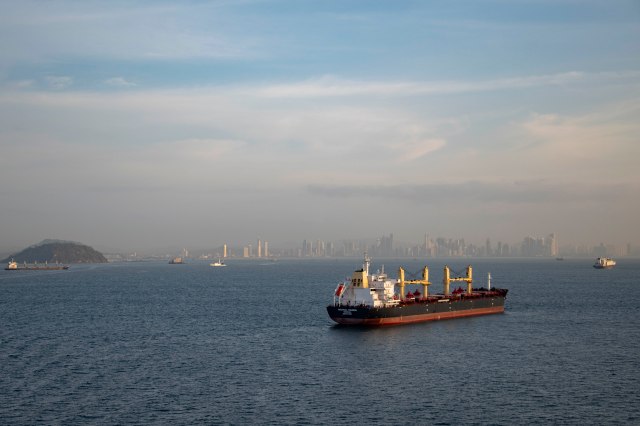
With Panama City on the horizon, the Marina gets in line for our transit through the Canal.
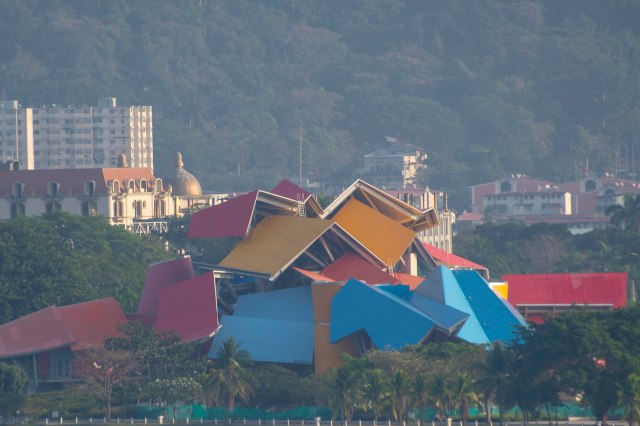
This Frank Gehry designed building sits alongside the Bay of Panama.


We are welcomed to the entry of the canal by the Bridge of the Americas, which was inaugurated October 12, 1962 and was the first bridge opened to the public over the Panama Canal – –
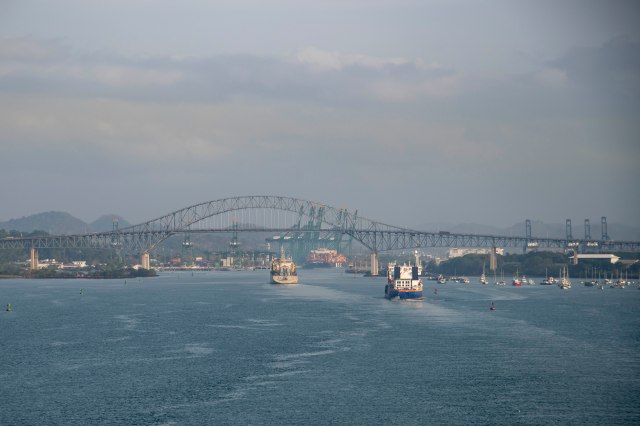
Approaching the Bridge of the Americas, the southern gateway to the canal.


Once under the Bridge, the locks of the Canal come into sight as do the locks of the Expansion (the ship on the far left of the picture is in the Expansion).  In 2007 work started to add a third lane, almost parallel to the current Canal, for the transit of larger vessels.  This required the deepening and widening of the Canal entrances on the Pacific and Atlantic sides as well as the deepening and widening of the Gatun Lake and the deepening of the Culebra Cut.  This Expansion was inaugurated in 2016.
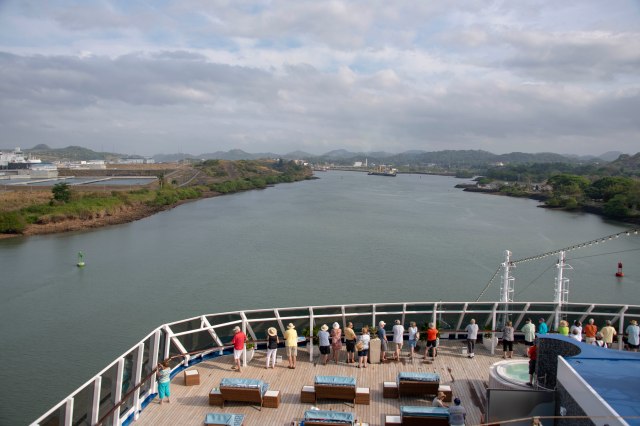
The channel continues to narrow as we approach the first set of locks.


The lock system finally agreed upon includes two sets of locks on the Pacific side – the Miraflores Locks and the Pedro Miguel Locks – and one set of locks on the Atlantic side – the Gatun Locks with the Culebra Cut and the Gatun Lake in-between.  The two sets of Miraflores Locks will raise the Marina 54 feet above the Pacific level (27 feet in each lock).  The picture below shows the tanker on our left about 13 feet above the Pacific level (its lock – the first of the two – is 1/2 full) and the Norwegian Star cruise ship in front of us is raised the full 54 feet!!  (We were really fortunate to have these two ships along side and just in front to be able to see the operations fully with them as the examples!)
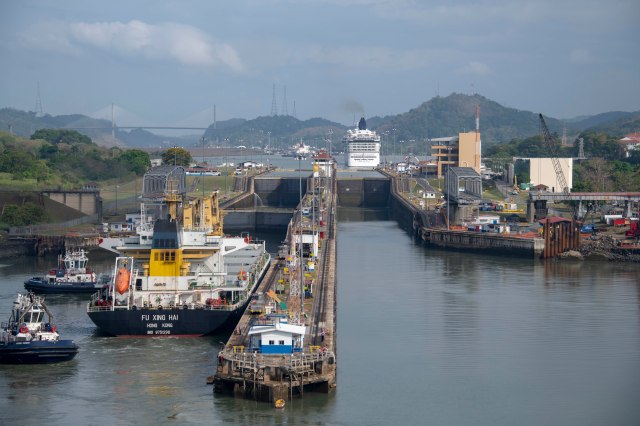
The first of the Mira Flores locks is directly ahead.  
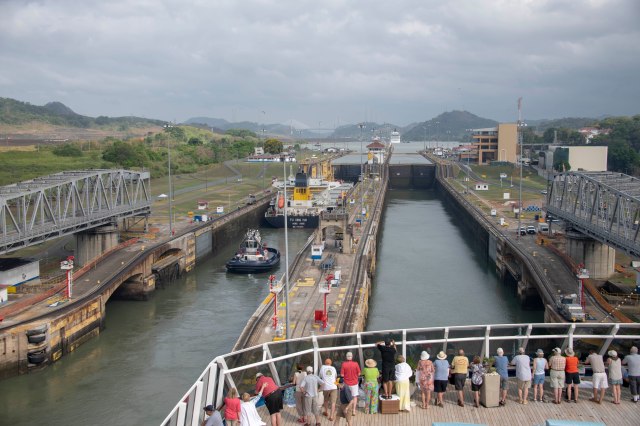
Hard to believe this big ship can fit into that little space – maybe?!?!


The tanker to our left has now been raised 27 feet and as soon as the gates are closed the water will rise in the next lock to take the tanker up another 27 feet and even with the water that can be seen at the next level.
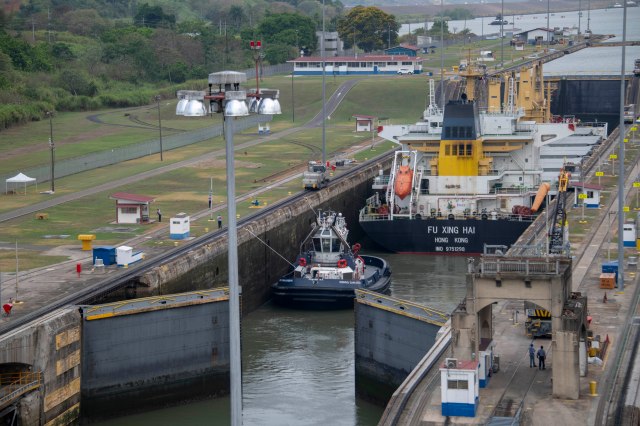
Gates are closing so that water can be pumped into the lock to equalize the water levels.
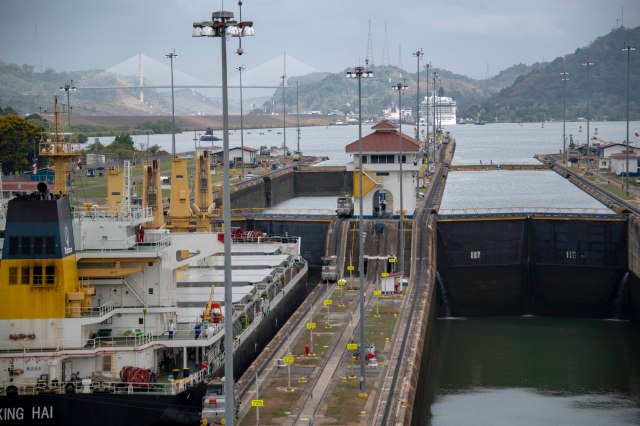
Water level almost there.
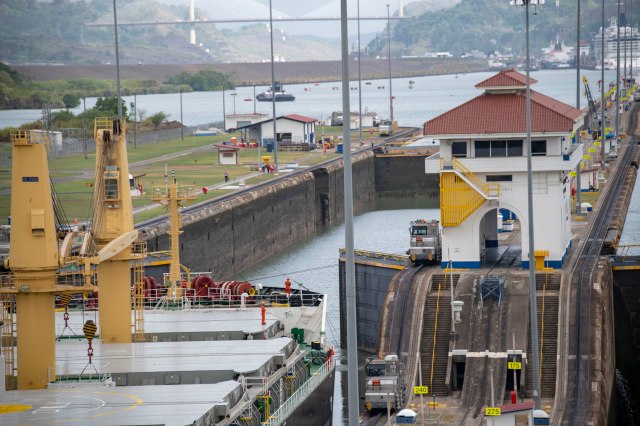
Okay, open the gates and pull into the next lock enclosure.
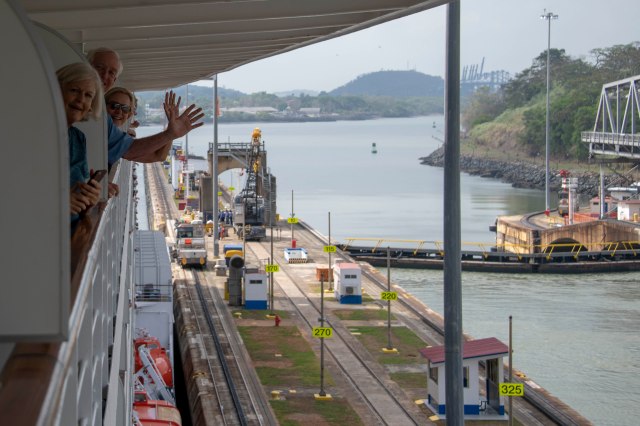
It is a very tight fit. About two feet on each side.  Fingers crossed we get through.
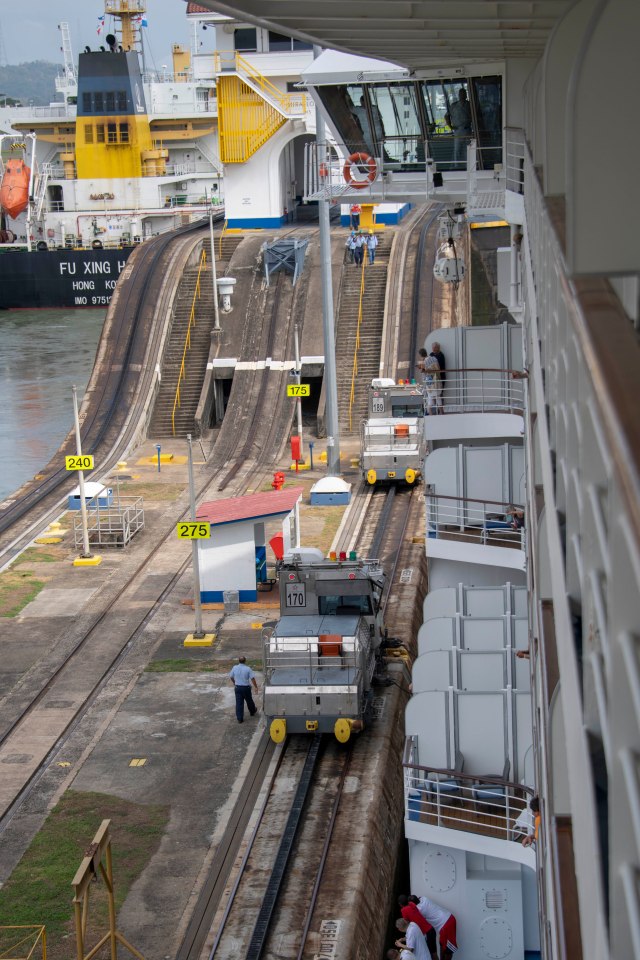
Three of these locomotives are attached to each side of the ship to stabilize side to side movement. The ship is propelled forward by its own engines.
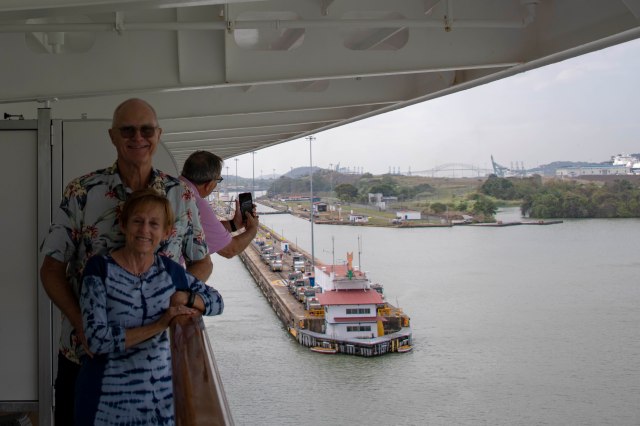
Pulling out of the Miraflores locks.


The Marina is now at the Pedro Miguel Locks, which is one lock that will raise the ship a total of 31 feet.
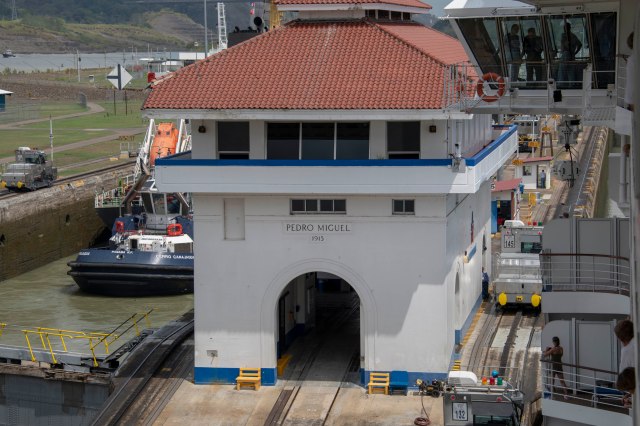
After a brief transit on Mira Flores Lake we enter the second set of locks. 


The picture below also shows the Expansion and its water level behind the tanker, as well as the top of the ship that could be seen in the first picture where we were just coming up to the locks.
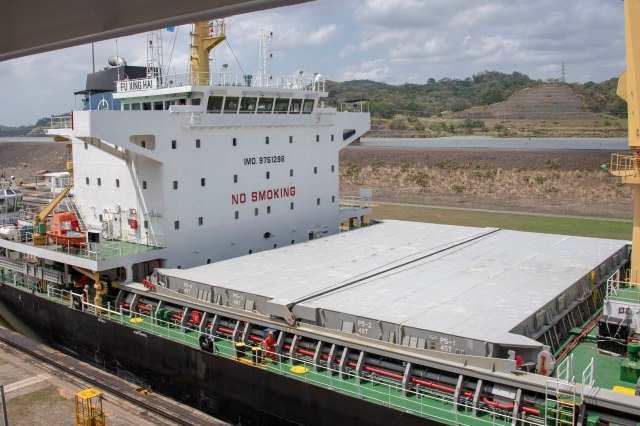
We hoped the crew on the LNG tanker were following the no smoking sign.


Once out of the Pedro Miguel Locks the Marina had been raised a total of 85 feet – the level at which it would transit the canal and go through the Culebra Cut.  It looks so beautiful.  Hard to believe it was the area responsible for so may deaths as the landslides here would bury the ditch as fast as it could be dug!
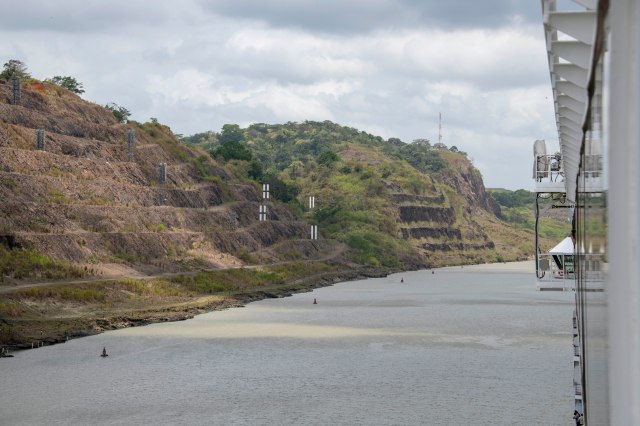
Entering the area of the canal commonly referred to as the Culebra Cut.
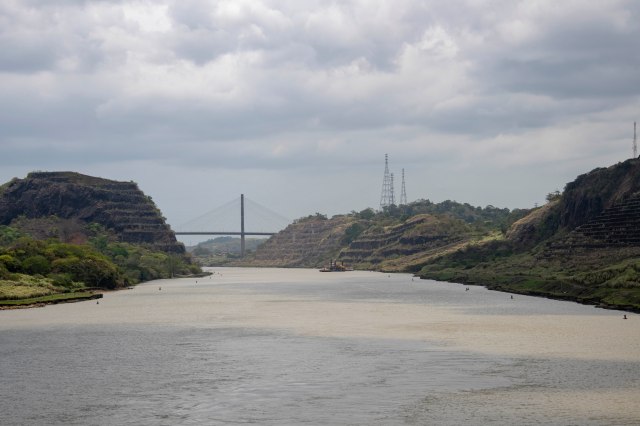
The Centennial Bridge – celebrating the anniversary of  independence from Columbia
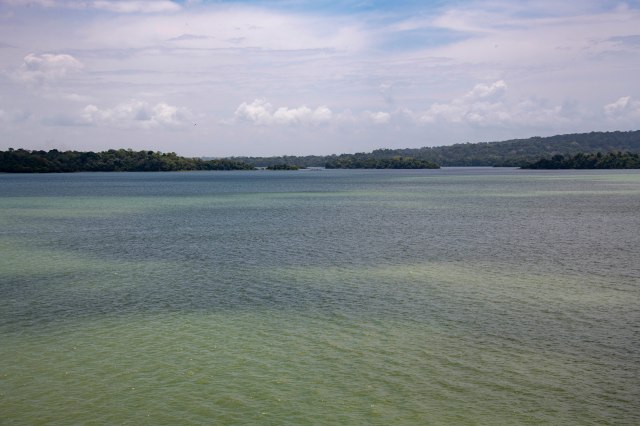
Out of the Culebra Cut – we entered Gatun Lake created by damming up the Chagres River.


After about 7-8 hours the Marina has arrived at the Gatun Locks on the Atlantic side of the Canal.  These locks will take us back down the 85 feet the ship was raised.  The Norwegian Star ahead of us now looks so small since it is much lower than before when it was so far above us!
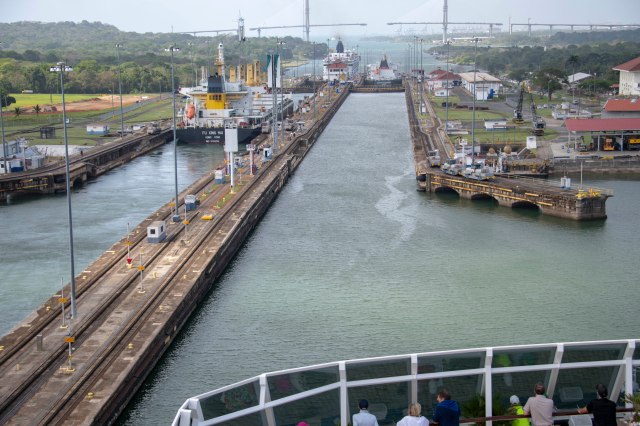
Our approach to the Gatun Locks on the northern end of the canal.
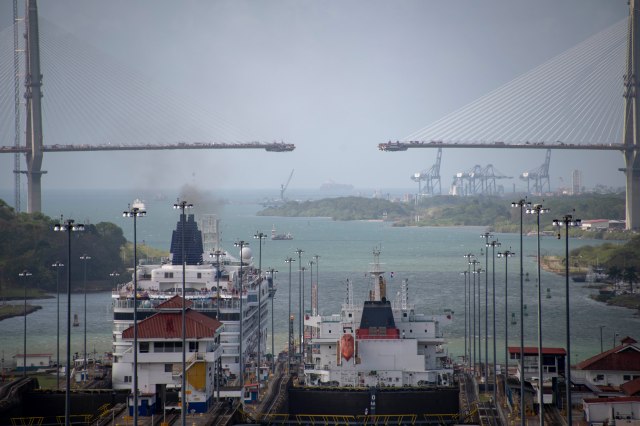
Same process, just in reverse, to get us back down to sea level. 
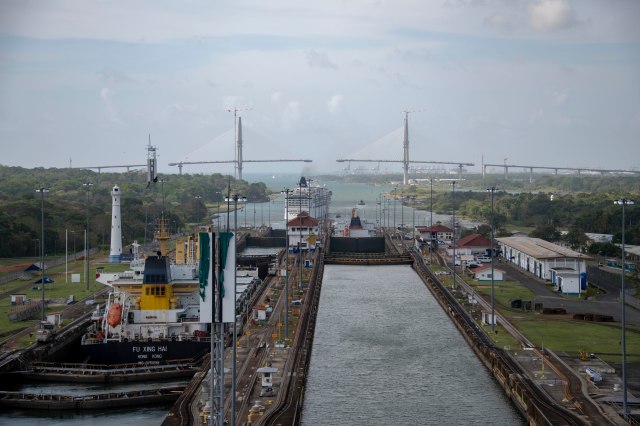
Almost there.
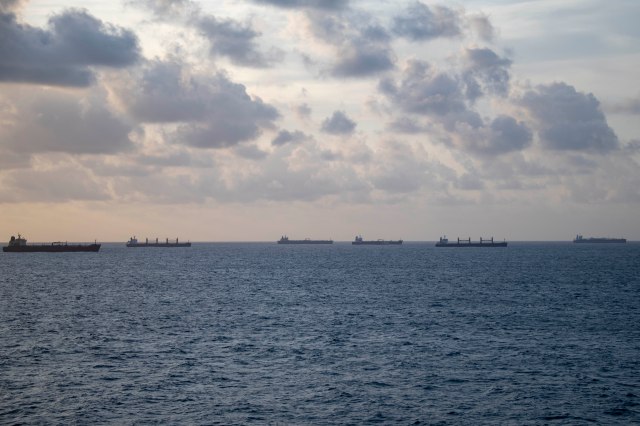
Into the Caribbean Sea where the ships are already lining up for their southbound journey tomorrow.


Each of the large ships MUST have a ‘pilot’ provided by the Canal that comes on board and guides/pilots the ship for the transit.  With all the tight fits into the locks and the very narrow Culebra Cut one can understand why this would be required.  HOWEVER – apparently they do not always get it right either!?!?

The ship did bump the side of one of the locks on our way through. As you can see it left a mark.  AND – YES we did feel it!!


The US did control both the waterway and a large section of the surrounding land (known as the Panama Canal Zone), as if they were US territories, under a 1903 treaty.  Panamanians resented this arrangement and in 1977 new treaties were signed recognizing Panama’s ownership of the canal and all the surrounding lands.  Full control of the canal was turned over to Panama on December 31, 1999.

This WAS a ‘bucket list’ experience and Oceania did an awesome job of making it fabulous.  There were lectures several sea days – laying the foundation of Spanish influences in Central America – and the showings of two documentaries on the making of the canal.  We also had a very knowledgeable historian narrating throughout the day of transit making it an A+ day;-)  Don’t know how it could have been any better.

Very impressed and grateful for the experience – E & G
The Critters of Costa Rica

Sooooo…Elizabeth was not too interested in this post as all the photos we had from Costa Rica were of the critters we saw on our “eco-river boat” float.  It was sort of like the Disneyland Adventureland Jungle Cruise with neither perky Disney cast member or any the large animals.


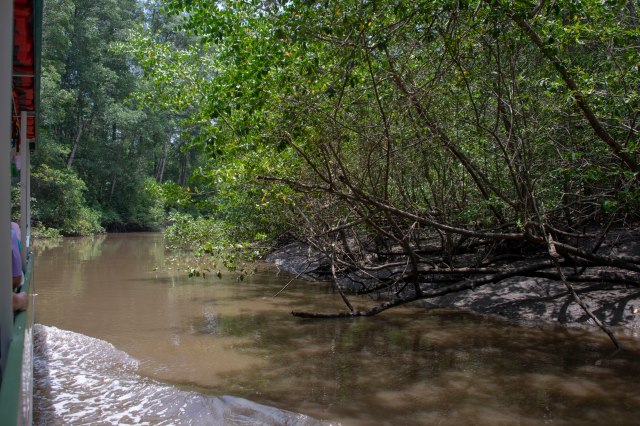
As you can see the river was not so big.

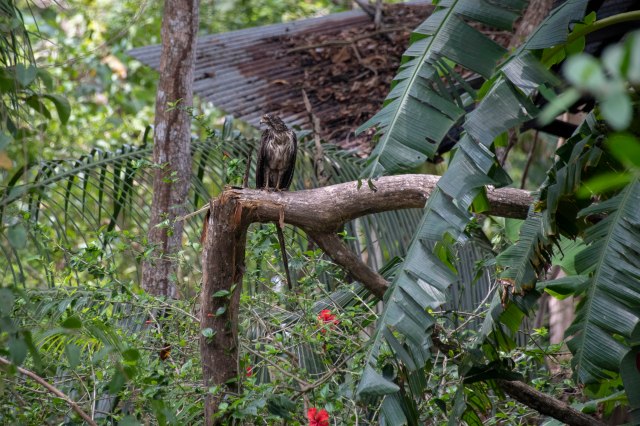
Black hawk.

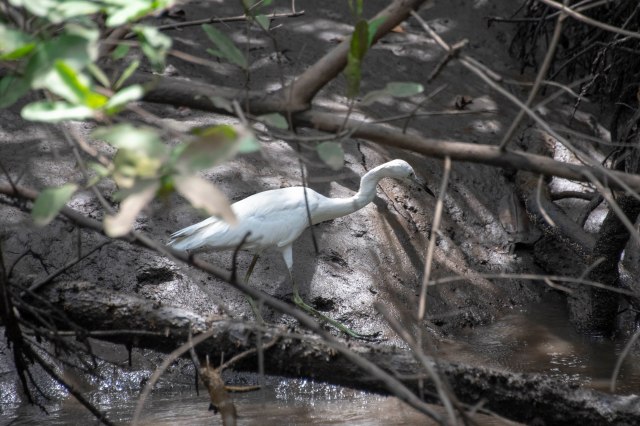
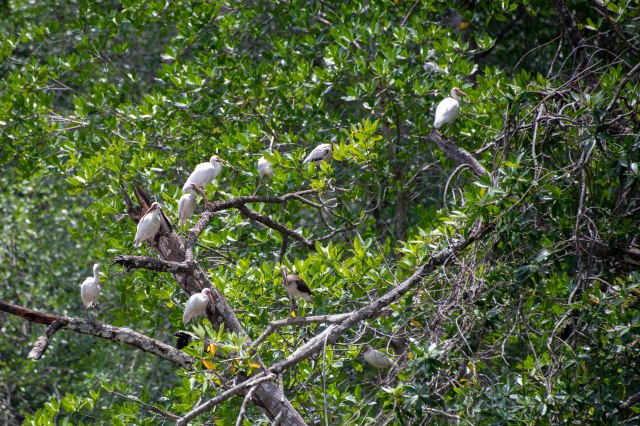
Snowy egret. Have they ever seen snow in Costa Rica?

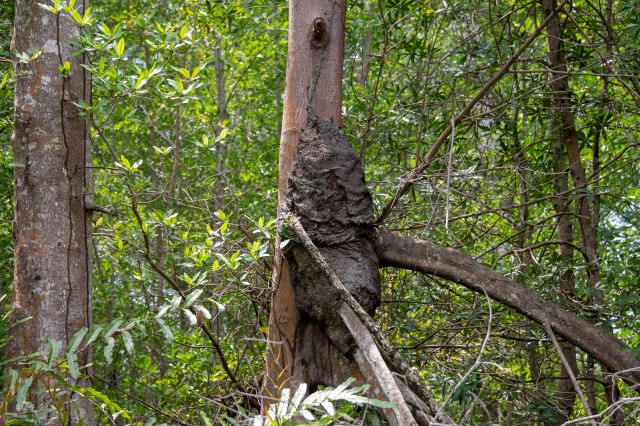
Huge termite nest built on the side of the tree.

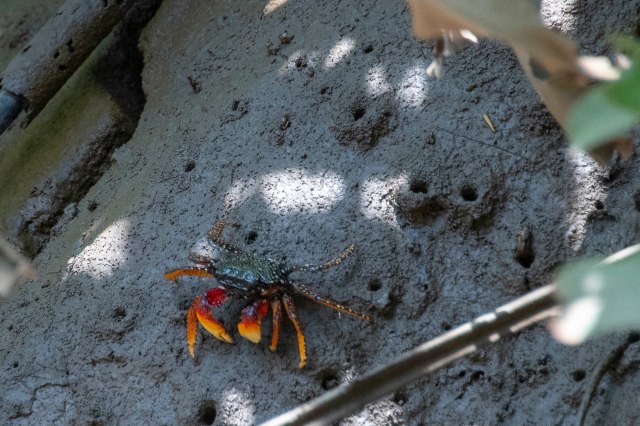
Colorful crab.

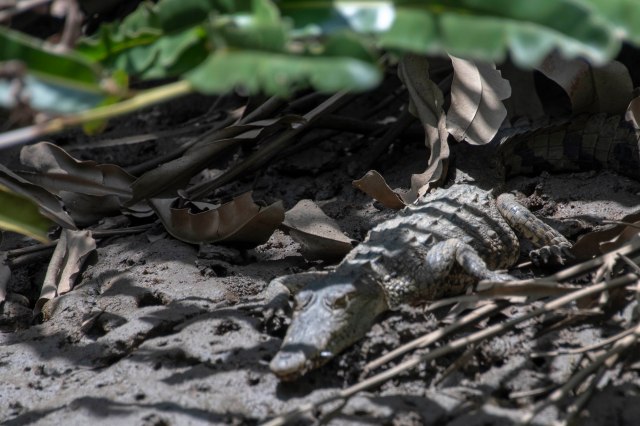
Young crocodile.

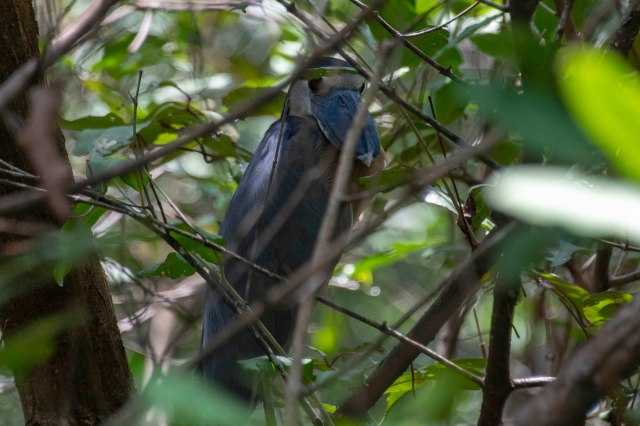
I thought this bird was pretty cool. Impossible to get a clean shot.

A large group of Ibex were along the river.

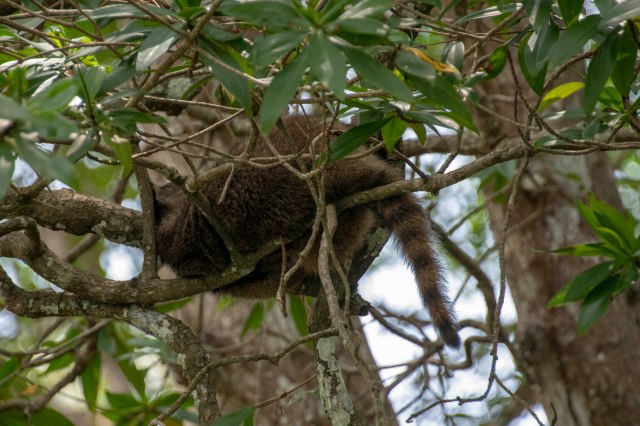
Racoon hanging out in the trees – so the crocs can’t eat him.

That’s it.  Aren’t you glad E handles our narrative almost all the time.

G signing off.


Colorful Nicaragua

Welcome to San Juan Del Sur, Nicaragua!  This city sits beside a crescent-shaped bay, which was a popular resting place for gold prospectors headed to California in the 1850’s.  Correspondingly, San Juan del Sur served as a hub for the Cornelius Vanderbilt Lines.  It has also been the focus of many historic Nicaragua Canal proposals.

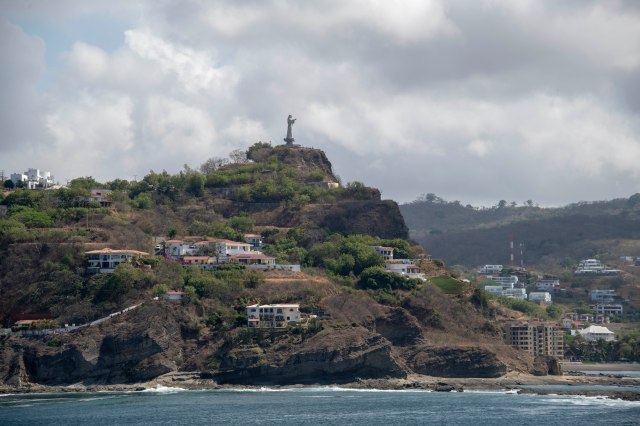
We were welcomed into the bay by Christ of the Mercy – –

Cristo de La Misericordia overlooking the bay.


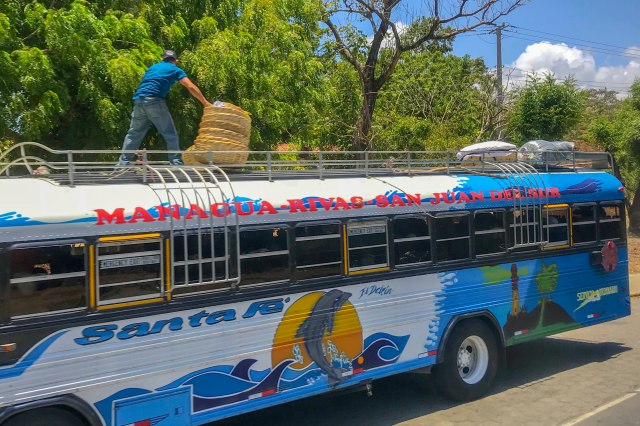
After tendering to shore, we boarded our bus to Los Altos, a private ranch where we lunched on Caballo Bayo – three meats with rice and beans.  The sights and sounds on the way were fun and provided wonderful examples of Nicaraguan life – –

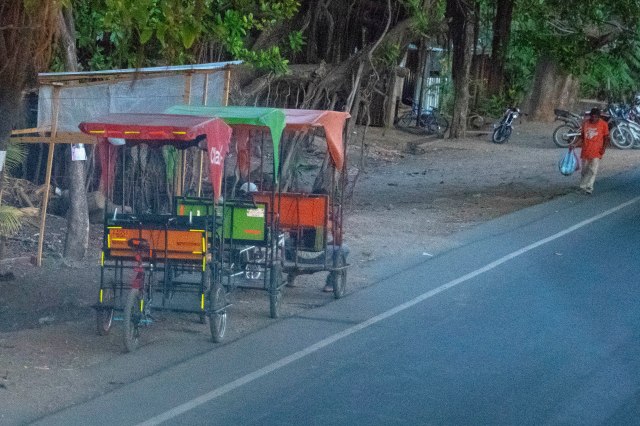
The many colorful modes of transportation – – the “chicken buses”..

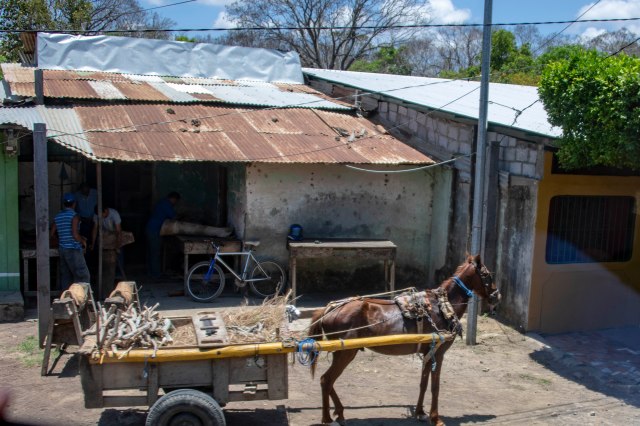
…to the horse drawn carts…

..to those powered by people.


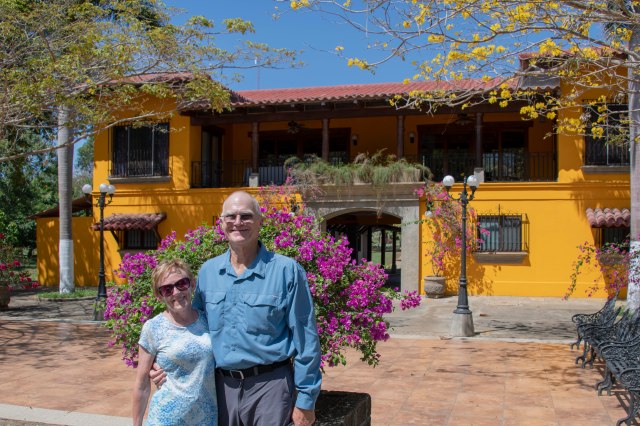
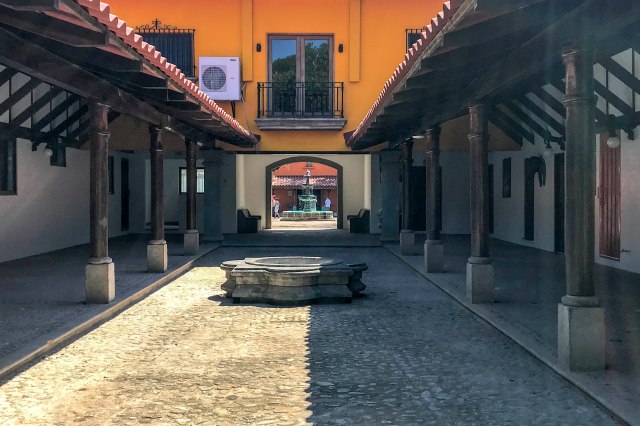
The sights and sounds at lunch were also wonderful.  Los Altos was a fabulous ranch with its own stables, church, orchards, meeting areas and beautiful grounds.  Lunch was delicious and the entertainment was great.

Los Altos.

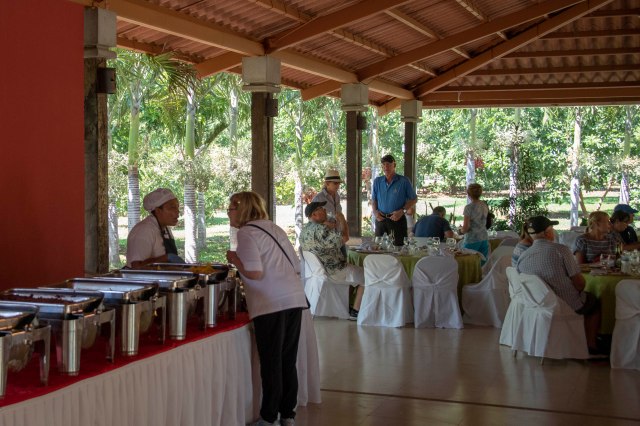
Excellent lunch of local specialities was provided…

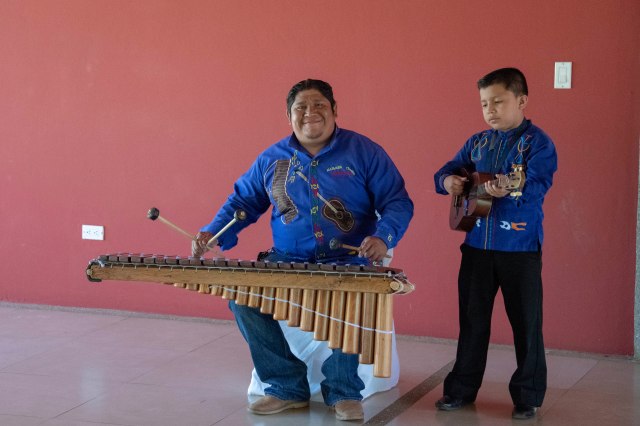
which was accompanied by traditional Nicaraguan music.

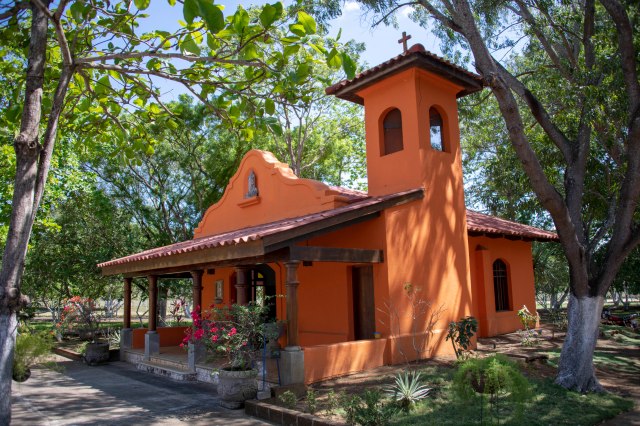
Further wanderings on the grounds provided views of this little chapel,

the horse stables and …

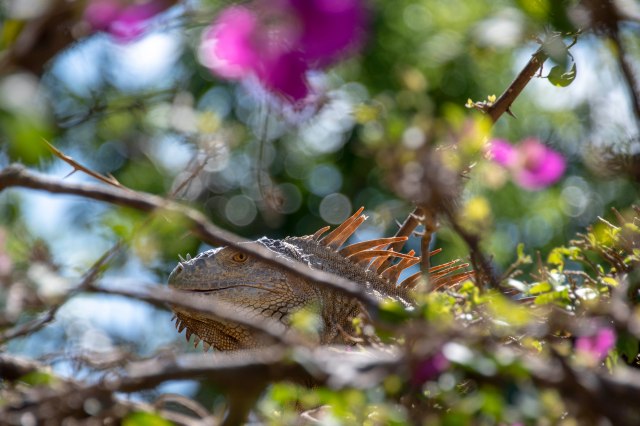
a big ugly iguana trying to hide in the bushes.


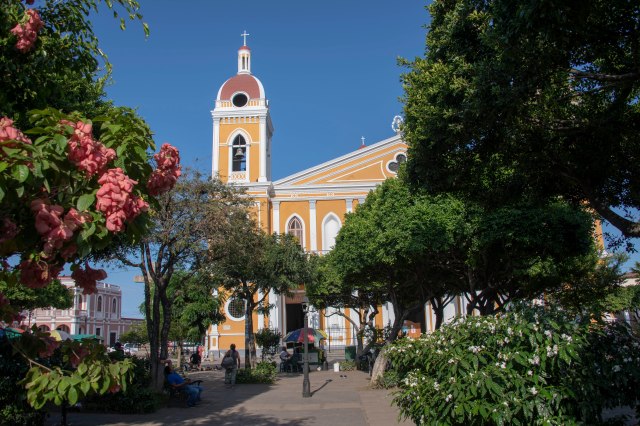
With our stomachs full, we were on to Granada, a magnificent city overlooking Lake Nicaragua.  Granada was founded as a trade center in 1524 by Spanish conquistadors.  The San Francisco Convent is its crown jewel, and the historical building now houses a cultural center with fine pre-Columbian statues.

Onward to the old colonial town of Granada.


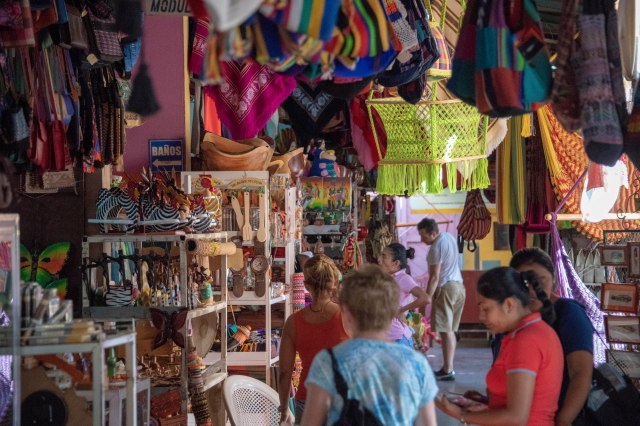
We also had a brief stop at the Masaya Market, one of the country’s foremost artisan markets.  E broke down here and acquired a pretty little shawl and a small bottle of their speciality product – RUM;-)

The vibrant colors of the marketplace are as bright and intricate as…

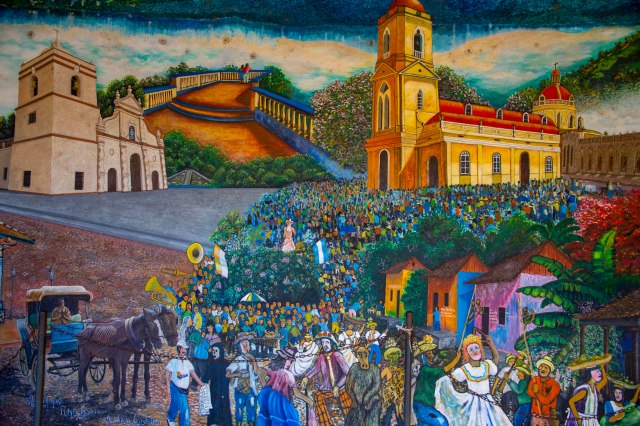
the wall art adjacent to the marketplace.

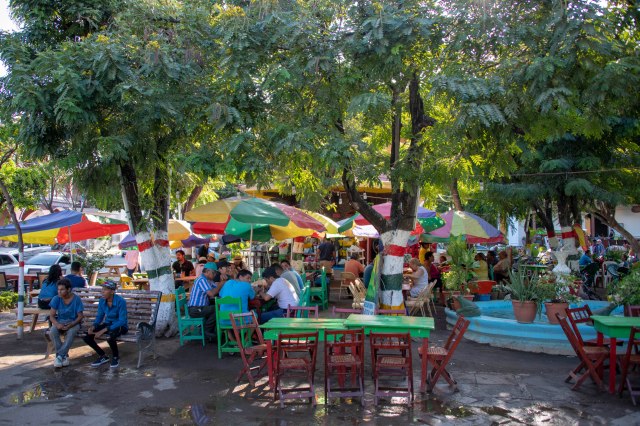
The Granada town square was colorful as well.


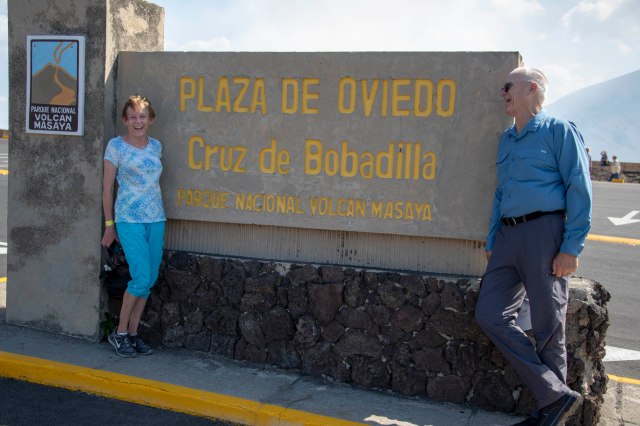
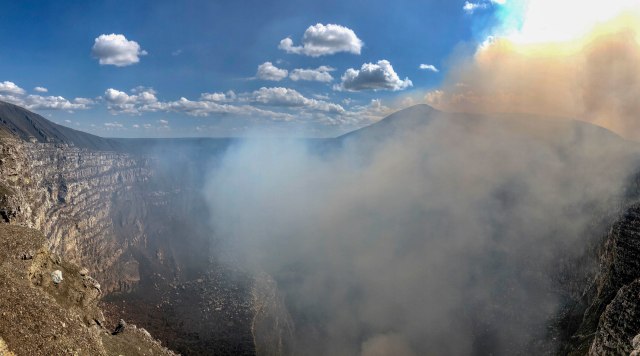
One more stop before returning to the Marina – – Masaya Volcano National Park, the first NP in Nicaragua.  Good news is the last eruption was 2008 – but it looks like it could go any minute!!

Masaya Volcano NP – just in case you weren’t sure;-)

The Mouth of Hell!!

There you have Nicaragua – the largest country in Central America.  And I have RUM;-)

See you tomorrow in Costa Rica – E & G

Antigua Guatemala

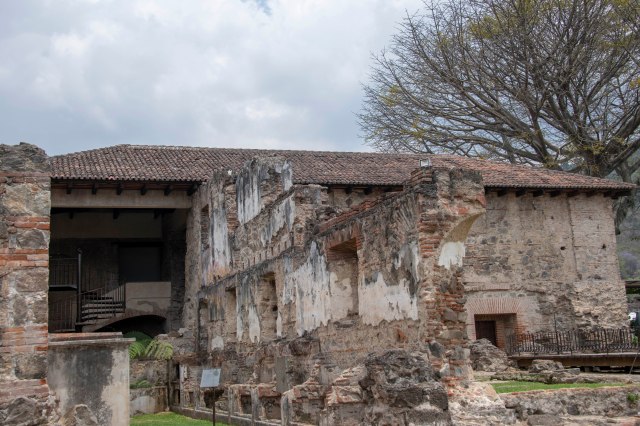
The first stop in Central America was Puerto Quetzal, Guatemala.  The tour bus ride to La Antigua, the Guatemalan capital until it was destroyed by earthquakes 300 years ago, introduced us to Guatemala and ALL its color and local ‘flavor’ – –

Welcome to Puerto Quetzal – warm and humid.

Two heads ARE better than one.


Santiago de los Caballeros de Guatemala founded in the Panchoy Valley in 1543 – today referred to as La Antigua – was the colonial capital and is today a UNESCO World Heritage Site.  This charming town sits 4,500 feet above sea level (a bit of a reprieve from the heat) and in the shadow o three volcanoes.  It is famous for both its colorful Spanish Mudejar-influenced Baroque architecture and its many ruins of colonial churches.  Cobblestone streets, colorful facades and tiled roofs, as well as restored and unrestored ruins of churches, palaces, convents and mansions covered with colorful bougainvillea make it a picture paradise!

Beautiful Color!

Downtown area was fun to explore…the entry to La Antigua.

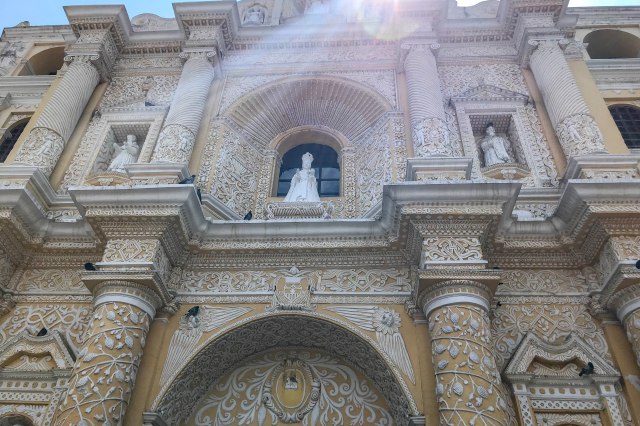
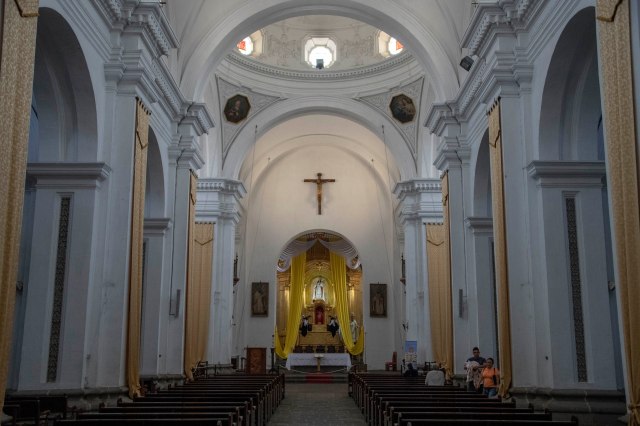
Iglesia de la Merced (1218-2018)  was elegant, both outside…

…..and in.


Construction on the Cathedral of Santiago on the east side of the Main Plaza in La Antigua was begun in 1542 and was completed around 1666.  But it had to be rebuilt after the 1691 earthquake.  A ceremony was taking place inside during our visit – perhaps with some VIP’s that required all the security (including the machine guns) outside???

Cathedral of Santiago


Hotel Casa Santo Domingo was our next stop – and our beautiful lunch spot.  This development opened in 1989.  The main goal of the project is to rescue what remains of the ancient convent and temple that were buried under tons of debris.  To reach the goal, it was necessary to sign an agreement with the National Council for the Protection of Antigua Guatemala that included the archaeological history of the monumental complex. Today there is a beautiful hotel sharing some of the property of the ruins, a portion of the temple exposed and utilized for weddings, etc (they were setting up for a wedding as we were touring) portions of the convent exposed with various portions of the renovated buildings being utilized for a Cultural Center, a Colonial Art Museum, the Carlos Merida Museum-Gallery of Modern Art and various research labs.

Some of the old church and monastery ruins. 

The partially restored temple being set up for a wedding.

This wall art in the museums is almost as colorful as…

…the many birds in the gardens.


It was time to return to the heat of sea level (from our 4,500 feet) – to leave all the brilliant color behind – and to continue our travels to Nicaragua.

La Antigua E & G saying bye for now;-)

South of the Border – Down Mexico Way

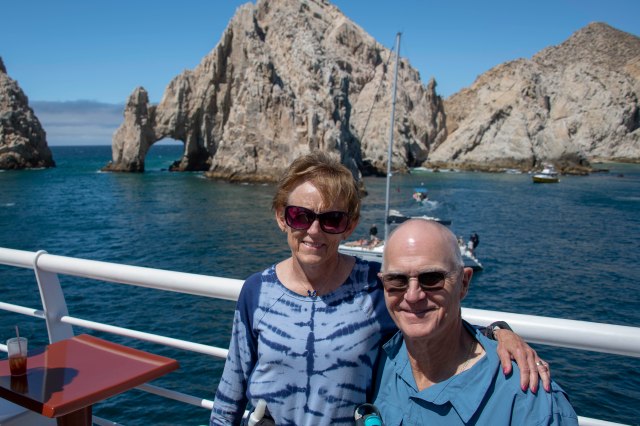
Just like that we were in Cabo San Lucas, Mexico and off to Land’s End, which lies at the southernmost tip of the 1,000 mile long Baja Peninsula – and where the Sea of Cortez joins the Pacific Ocean.  The rugged coastline of towering granite cliffs leads to El Arco, the natural rock arch that rises starkly from the sea.  We were there with all the other tourists getting our pictures of the spot – –

El Arco at Land’s End in Cabo.

Debby, Rebecca and Elizabeth enjoying the harbor sights on the way back from Land’s End.


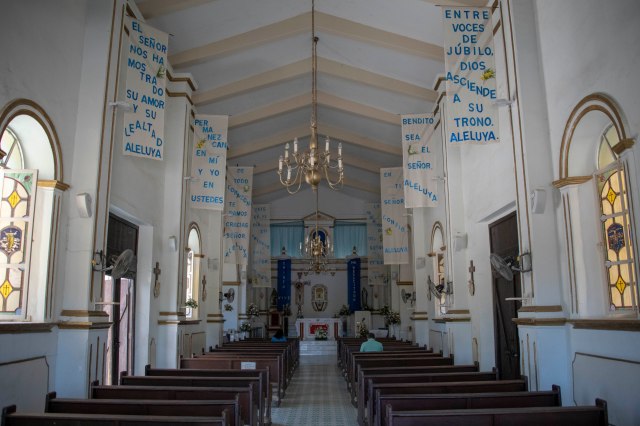
San Jose del Cabo was the next stop.  This pedestrian-friendly Old Town is the home of the Iglesia de San Lucas, which is the central church built in 1730 and still retains many of its original features.

Inglesia de San Lucas.


Acapulco, Mexico followed another hard day at sea – especially the cooking class on grilling;-)  Acapulco is a major sea port and the largest city in its state.  The views from the ship provided colorful and interesting pictures.  Unfortunately, those are the only pictures we have – as we heeded the warnings from our State Department and did not leave the Marina;-(  That was OK, though, as it provided another day for massages and a rousing game of Wizard!

Views of Acapulco from the ship.

Goodbye Mexico – on our way to Central America.

Relaxed and happy – E & G