The Rock (of Gibraltar)

What a weird, strange, funny place!  A mere 2.6 square miles jutting out into the Mediterranean Sea, surrounded by Spain, sits a bit of Great Britain with its own crest and ‘Little Ben’😂😂  —

Welcome to Gibralter.

The Rock (no..not Dwayne).

Little Ben

Looking out across the Mediterranean Sea at Europa Point, it is easy to see why this promontory has been such a sought after piece of property throughout the ages.  From all points it controls and defends the gateway from the Atlantic Ocean to the Mediterranean Sea.  Standing on the Point one can see two continents (Africa and Europe) and three countries (Spain, Morocco and England).  This property has belonged to many but was signed over to Britain “in perpetuity” by the Treaty of Utrecht in 1713.

Lighthouse and view of Morocco coastline from the Europa Point.

A mere nine miles across the Strait of Gibraltar sits Morocco and its Riff Mts.

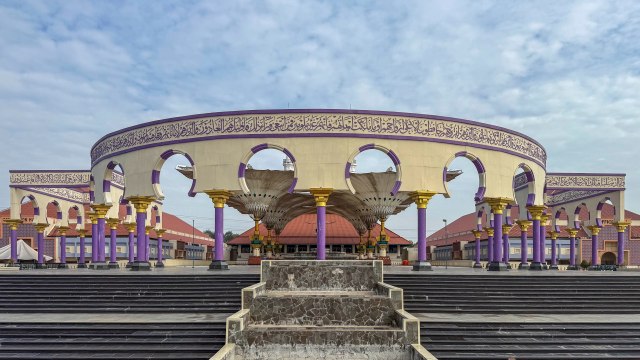
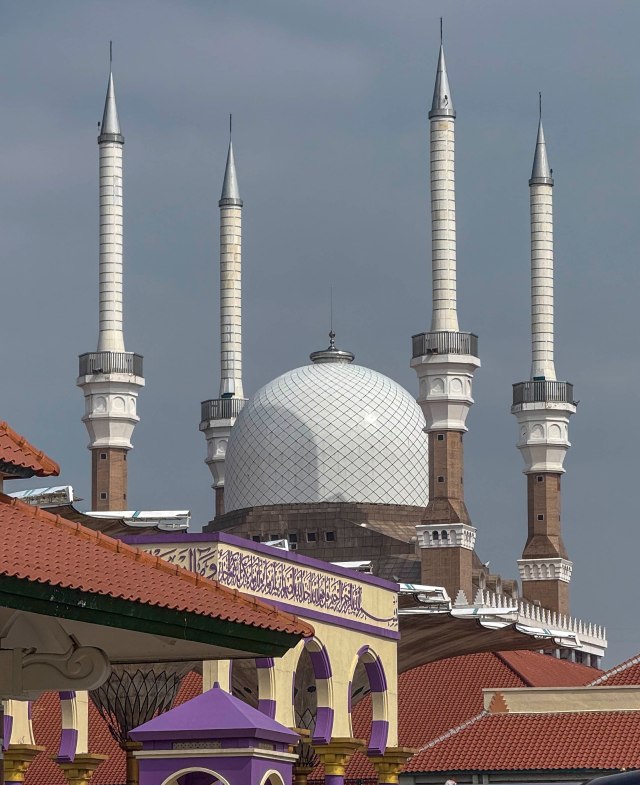
Mosque built by King Fahd of Saudi Arabia and opened in 1997 sits on the Point.  Old fortress walls are in the background.

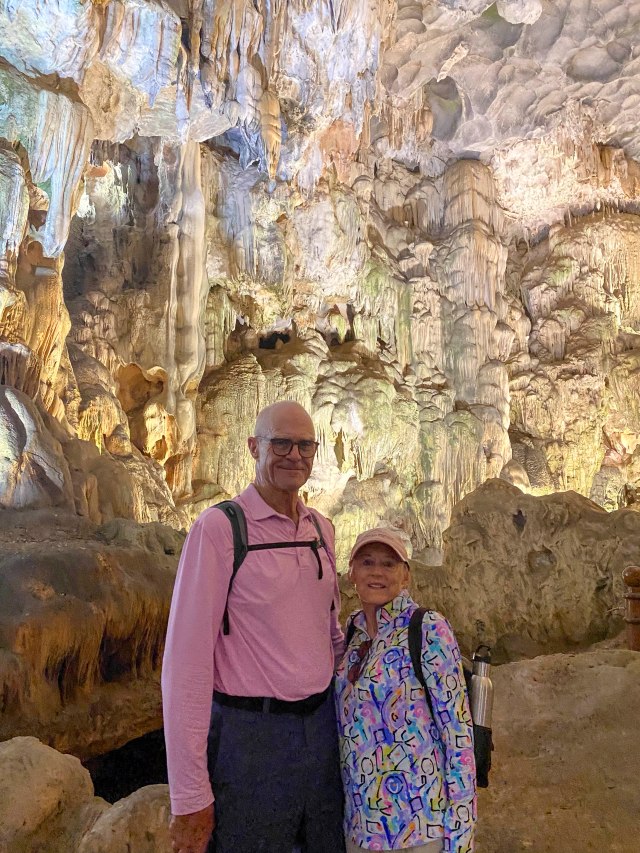
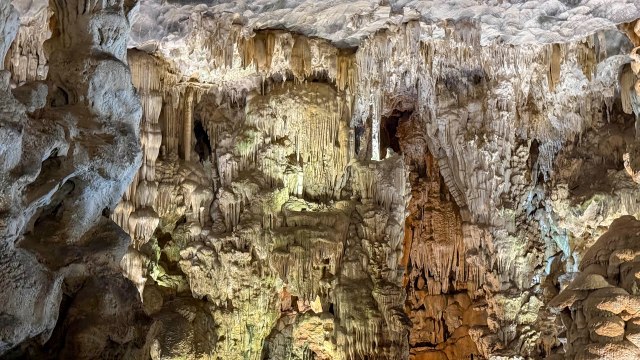
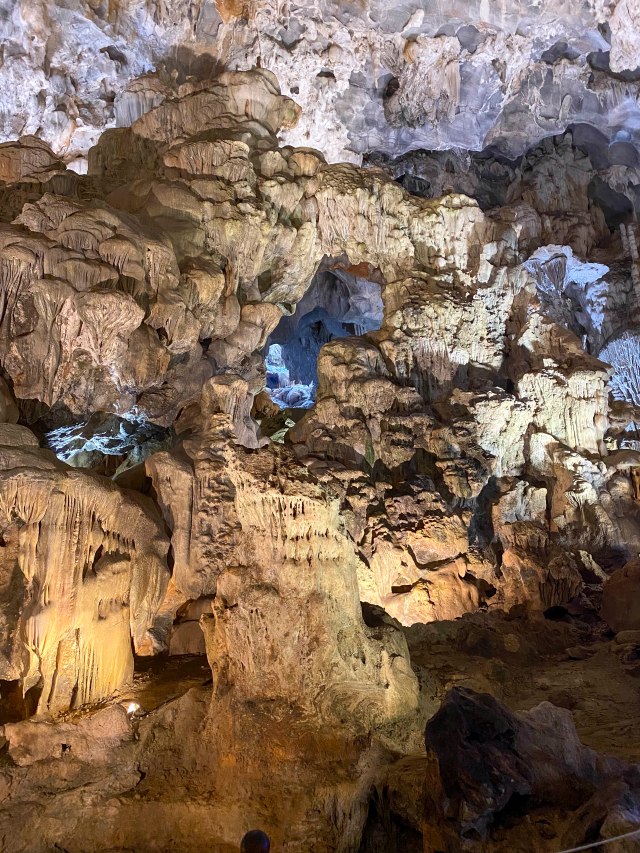
A very intriguing sight to see when visiting Gibraltar is St. Michael’s Cave, which has intrigued since Roman days.  Ancient Greeks believed this cave was the entrance to hades and some thought it was a temple to Hercules.  It has depths to 150’ leading to early beliefs that it was bottomless and had tunnels to Africa!  Today it is used for concerts, dance and drama as it seats 400 in a vast Main Cavern.  Fabulous colored lights also ‘put on a show’ – especially highlighting The Angel of St. Michael’s Cave —

St. Michael’s Archangel.

View across the Bay of Gibralter toward Algeciras from cave exit.

Caffe and chocolate break.

Just outside St. Michael’s Cave reside the Barbary Macaques, tailless monkeys perhaps introduced by the Moors from North Africa.  Legend has it that Gibraltar will remain British as long as the Barbary Macaques stay on the rock.  Perhaps that is why Churchill had them supplemented when their population declined during the Second World War?!?

Playful young macaque monkeying around.

The Siege Tunnels are most intriguing.  Fifty miles of a tunnel network large enough to house cannons, storerooms and barracks can be wandered.  Needless to say, these have been quite useful in all the periods of battle.  The views out the cannon ‘holes’ are stunning today – strategic in defense!

One of the many cannons in the siege tunnel.

View from the cannon emplacement.  Great shot at the now existing airport runway!

If one hasn’t seen enough, there are cable cars from the center of Gibraltar to the Top Of The Rock where there are nature trails, a skywalk and more great views.

Ride anybody?!?

Top Of The Rock.

Of course, there is a ‘downtown’ with a Main Street, shops and wonderful pubs for fish and chips.  It is Britain after all😂.  And after all the sightseeing the stomach begins to growl!
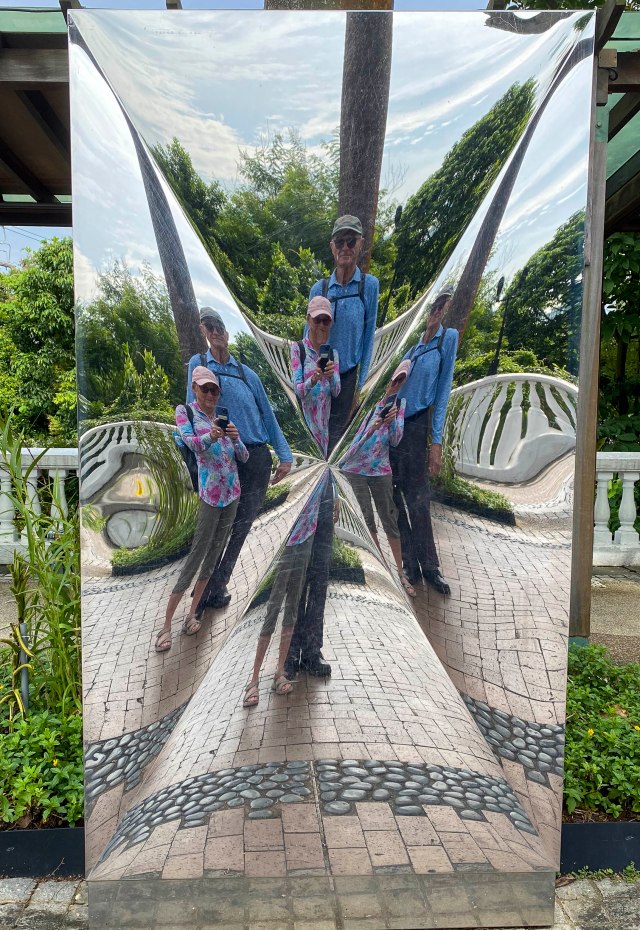
Main Street – not busy on a Sunday as many shops are closed.

An odd place – Gibraltar.  But, decided that if one really wanted to escape the rest of the world (or bury one’s head during elections), this might be the place to do it.

E & G intrigued by another world on a small rock;-)

Ronda

Ronda was one of the last Moorish bastions to fall in the Inquisition primarily due to its location.  It sits atop a rocky landscape looking down on the El Tajo Gorge!  It has housed outlaws and rebels through the ages – even including more recents like Ernest Hemingway and Orson Wells.  (Wells is even buried here.)  Ronda is composed of an old town (several centuries old) and a new town (a couple of centuries old😂).  Each is connected by an old bridge and a new bridge (the 18th century Puente Nuevo).  Ronda is truly a welcoming, charming town —
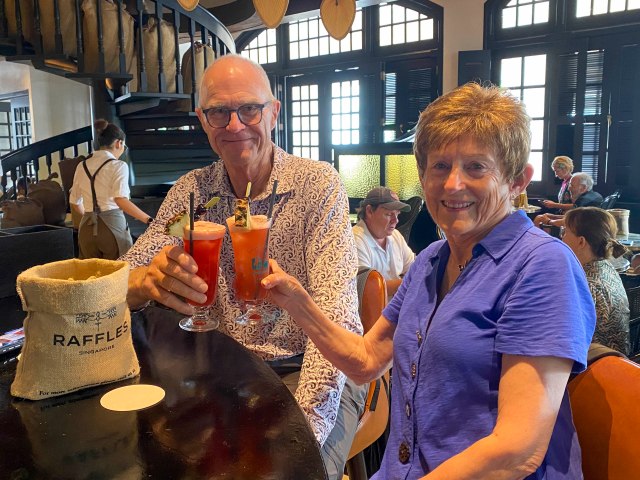
Welcome to Ronda

The recently renovated Alameda del Tajo.

View of the surrounding farm lands from the park at “Oh My God” view spot.

Our group of travelers enjoying the beautiful day and beautiful views from the bridge.

The new bridge (18th Cent).  The picture does NOT provide the sense of the height!
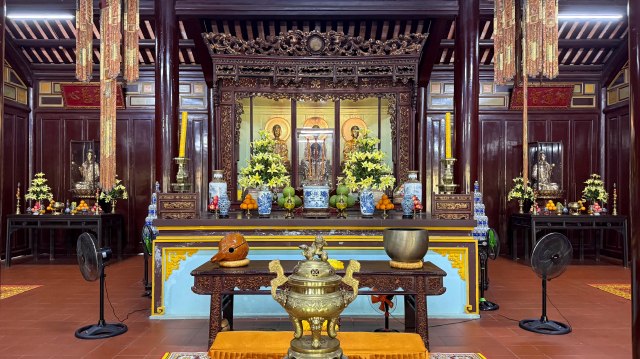
This gives a little sense of the perspective!  Definitely kept enemies at bay.

A view from the backside. BTW – that little black door in the middle of the bridge was a prison – YIKES!

The old bridge is in the center of the shot.

La Ciudad – a classic Pueblo blanco, whitewashed with cobbled alleys.

Besides being the last bastion of the Moors, Ronda is the home of bullfighting.  Pedro Romero Martinez was born into the Romero family in Ronda in 1754 and became a legendary bullfighter.  He established the rules of bullfighting that are still followed to this day.  In 1785 the Plaza de Toros in El Mercadillo was inaugurated and remains one of the oldest and most important bullrings in Spain and the spiritual home of bullfighting.  Today, the sport is a controversial one but each September aficionados from all over the country travel to the Corrida Goyesca held here in Ronda.

A statue Pedro Romero in the new park. It was a 200 year celebration – he did not live 200 years😂😂

Welcome to the Plaza de Toros.

A rooftop taverna provided a welcome caffe/chocolate and a view.

Of the several museums of note, one might visit the Casa De San Juan Bosco.  This is Ronda’s quiet retreat in a bustling tourist town.  A palatial house built at the beginning of the 20th century, it was given to a congregation to be used as a house of rest, healing and care for the ill and elderly of the congregation. Today it is a museum with beautiful tile work and walnut wood furniture?

Casa Museo Don Bosco.

Beautiful tile work similar to what was seen in Morocco.

The carved woodwork on the chairs is beautiful.

The rear patio of the museum ..

…has a great vantage point to see the new bridge from a different angle.

Wandering about the town there are many sights of old churches, cafes and stores.

Very moorish looking on the outside —-

—- very catholic on the inside.

A wonderful way to end this visit is to find a family owned winery, have a tour and enjoy an incredible lunch provided by them.

Our spot for a tour of the winery and a wonderful lunch.

Proprietor and tour guide.

When do we get to taste?

OMG!!  This bread, as well as the rest of the lunch, prepared by Mrs Hidalgo was unbelievable.

The best was yet to come.

As if there wasn’t enough eating, our group often had dinners about town tasting local preparations of tapas – and of course wines🍷🥂🍷

Look out Old Town Marbella – here we come!

Another delightful day of exploring Andalucia and getting to know our travel mates.  Lots more to come.

E & G – looking forward to a day of rest

The White Villages and the Waterfront

A wonderful sight is the mountain side littered with the Pueblos Blancos ( White House’s).  The villages are perfect wandering areas to enjoy a caffe or chocolate, browse, shop, eat and enjoy the artists in the area.

An excellent day trip takes one to Gaucin, a charming artist enclave of Pueblo Blancos.  There are many galleries, but this particular trip took us into the homes/studios/galleries of two local artists, a special exhibition of local artists and the studio of a glass artisan!  How lucky can one be?!?

Striking Gaucin.

A visit with artist – Jenny (British)…

…whose home was colorful and filled with her works.

Claudia’s (Austrian) exquisitely redone home/studio completed by her and her artist/architect husband.  Fabulous views among other things.

A third studio to learn about Sian Faber’s (Australian) new medium using small pieces of glass.

Lovely musical piece at the special exhibition.

This view from Claudia’s deck shows a faint image of the Rock of Gibraltar at the center rear of the photo.

Quick photo stop at Casares, another of the white towns..beautiful.

A lovely lunch stop outside of Casares.

A wander west from Marbella down the Costa del Sol can consume the better part of a lazy day.  So – once the sun comes up a new journey awaits.

Sunrise in Marbella.

The distance from Marbella to Puerto Banus, the most exclusive marina in Spain, is about 3 1/2 miles.  So, a one-way trip on the ferry and one-way walk back makes for a perfect excursion;-)

Ahhhh.  Relax and enjoy the sights.

With friends Judi and Don.

The Golden Mile!

Very upscale part of the Costa del Sol.

A people watching lunch in any of the seaside restaurants is very relaxing.  Just pick one, sit down, eat, drink, relax and enjoy!  If desired, there are plenty of shops – Hermes, Bulgari, Giorgio Armani, Fendi, etc, etc, etc – to spend a few euros!  When you just can’t take the fun anymore – head back to Marbella and wonder at all the sights along the way.  Perhaps sit down at a little ‘hut’ half way back and have a cold drink and a little dessert 😂🥂😂

Sights along the 3.5 mile walk back to Marbella.

Don’t these look like fun! G wouldn’t go for it😢

A new home in the background?😂😂?

Finally!!  A toe in the Mediterranean Sea👏👏

A couple of lovely, informative, relaxing days.  Pueblo Blancos, the Golden Mile and Puerto Banus.  Also, a few stops for tapas, caffe, chocolate and an Italian dinner.  Perfect!

E & G – loving Andalucia


Marbella, Spain

Marbella – nine miles across the Strait of Gibraltar from Morocco (North Africa) but 180 degrees and decades of differences!!  It is one of Europe’s most exclusive resorts sitting on the Mediterranean. So one can imagine it is well presented and constructed with clean white marble buildings surrounded by greenery of every species in beautifully maintained parks and public area.  The welcome of Moroccan tea gives way to Cava/Prosecco and great non-a beer —

Welcome to Marbella!

Our home town for two and a half weeks sits on the Costa del Sol in the southern portion of Spain known as Andalucia.  Andalucia’s history goes back to 800,000 BC – but, not to be too boring, we can move forward to 1100BC when the Phoenicians arrived.  Relatively shortly after – in 200BC – the Romans arrived and took control.  In another thousand years (711AD) the Moors took control of the peninsula and ruled until the Spanish Inquisition in the mid-1400’s.  At the height of the Moor’s occupation, their territory even included part of what is now France.  They made great strides in the fields of mathematics, science, art and architecture and, therefore, made perhaps the greatest impact on the area leaving signs of all this behind for us today!

Great architectural sights to be seen include the Alhambra in Granada and Cordoba’s Mosque La Mezquita.  The hillsides of pueblos blancos can be seen dotting the mountains from every view and the scent of orange blossoms is ever present.  The area is also home to tapas and the flamboyant Flamenco!  It is also where Christopher Columbus sailed from to ‘discover’ America😂.  Lots to explore in a short time.

But first, an investigation of Marbella since it is the home base.  A well preserved, delightful Old Town beckons with charming plazas, draping Bougainvillea plants, old mosques turned cathedrals and wandering, clean alleyways.

A hidden gem is The Hospital of the Encarnacion, constructed on the foundations of an Islamic building and designed for the hospitalization of the poor.  It has served various purposes and is now home to the Museum of Contemporary Spanish art and includes many pieces of its native – Picasso!

.

Many cathedrals exist within a very small area.  The moorish occupation for several hundred years means there is moorish influenced architecture and many mosques that have been turned into cathedrals as a result of the inquisition in the mid-1400’s.  Some completely eliminated the minaret components – other modifications turned the minaret into a bell tower.

Even the smallest cathedral is ornately decorated.

Beautiful bougainvillea everywhere;-)

A minaret modification.

Mosque modification.

A small chapel on the corner of the main square of the Old Town. It sits with a strange orientation – as originally a mosque, it faced Mecca.

Wonderful color everywhere!

Gorgeous, welcoming ‘streets’ throughout Old Town.

Europe has always been a favorite – and that feeling hasn’t changed.

E & G – loving being back in Europe and checking out Spain🙂👏

Morocco – The Sights That Were EVERYWHERE!

Two weeks of wonderful experiences in Morocco must come to an end.  There are certain sights that were repeated over and over and will be a part of the memories forever.

There were the green fields that went on forever – a sight that was a huge surprise!  Never expected to see so much green.  Along with the fields and crops were the hard working people and animals – the donkeys that carried everything from luggage to crops, the perilously loaded hay wagons, the similarly loaded three-wheeled bikes, Mercedes vans of every shape, color and condition and the school buses that seemed to be on duty in every town driven through (along with tons of school kids!).


.

In the cities, as well as in the small towns, mosques were always part of the skyline.  And all that we saw were decorated with mosaics, carved stucco and cedar wood.  The magnitude of this decoration might vary but it always seemed to be there.

.

And the food!  It was always plentiful – much to plentiful – and always delicious.  The scene was pretty much the same at every meal except breakfast.  Lots of choices!  Finished with Moroccan mint tea😋, which shall be missed!

This was just the salad. Main dishes yet to come.


The Moroccan experience is lots of things from big cities to rural villages to the Sahara desert.  All memories of a lifetime.  But, as always, there comes a time to move on and Spain awaits.

E & G glad for opportunities 👏👏


Chefchaouan – The Blue City

Welcome to Chefchaouen!  Founded in 1471 as a stronghold against the Portuguese, it takes its name from the mountains it is nestled in – ech-Chaoua (The Horns).  The distinctive blue color may have come with the Jews fleeing Spain in 1492, as they often painted buildings blue because the color mirrored the sky and reminded them of God.  There is not a lot of significant import here – but it is fun to walk the narrow, blue alleys of the town to see how many different ways blue can be used!!

Photo op (with traditional dress) entering the “Blue City”.

Lovely hotel for the evening – Dar Echaouen.

Great spot for tea in our room – with magnificent views of the town.

When the town was founded by Idrissid in 1471, he built a fortress in the center of the town of red earth and created a lovely garden in the middle of the walls.

One of ten towers of the Kasbah. The ground level of this building housed the jail.

That’s it for the history lesson.  Now just wander the town and enjoy the blue!

Five ladies of Chefchaouen.  Dress look familiar?!?

The final day in Morocco was spent with lots of fond memories and happy thoughts.  How could one not be happy with all this color?!?

E & G with a final glimpse of Morocco

Volubilis

Volubilis was founded in the 3rd century BC, but really became an important city in the province when the area was annexed by the Romans in 45AD.  During its heyday under the Romans, it was a very affluent city as can be seen by the forum and sophisticated townhouses paved with mosaics.  The site also features baths, oil presses, bakeries, aqueducts and shops.  All part of the everyday life.

The drive to Volubilis from Fes is about 3 hours if one stops to enjoy the fabulous scenery of green fields and wildflowers and boys on decorated donkeys!

Beautiful fields filled with crops and a dammed lake in the distance.

Loved all the purple flowers on the hillsides.

This enterprising youngster is looking to make a few bucks for a photo op with his trusty, festively decorated donkey.  Who could resist?

The destination is in sight.  Volubilis ruins from a distance.

Their equivalent of City Hall.

The Decumanus Maximus is the main road through the city running from the Tangier Gate to the Triumphal Arch.  The Triumphal Arch was erected in 217AD and stands 26’ high.  It was reconstructed in 1933, currently without the frieze and chariot drawn by 6 horses which were an original part of the arch.  It overlooks the fertile plantations of wheats and olive trees, emphasizing how important these crops were to the city.

The Arch of Caracalla, named in honor of a Roman General, with beautiful views.

Mosaic in the House of the Acrobat.

The forum, Basilica and Capitol were the major public buildings in the heart of the city.

Walls of the Forum with the market to the right.

Olive oil was extremely important to the commerce of the area.  There were public presses for all to use and private presses in the more affluent homes.  There were several steps to the processing of the olives – 1)first they were crushed in a cylindrical vat, 2)then the pulp was emptied into flat baskets that were stacked on top of each other, 3)then the stacked baskets were placed beneath planks of wood that squashed the baskets making the oil run out and into channels in the rock slabs.  The channels took the oil to purification tanks where water was added forcing the oil to the top.  It was then skimmed and poured into large earthenware pots for sale.  Fascinating!

Olive oil press.

Where the baskets were squashed and the oil ran into the grooves.

The House of Orpheus is the only large, upper class house located in the south neighborhood.  It is remarkable for its size and number of rooms it contains – large courtyard, reception room, oil press, bath suites and other private areas.  It derives its name from the large circular mosaic located in the main reception room which depicts Orpheus playing the lyre charming a lion, an elephant and many other animals.

The opulent main reception room, which would have had magnificent views.

History lesson engraved on the brain, it might be time for lunch.  Today’s BBQ would be in Zerhoun.  Funny sights getting there —

A city developed looking like a camel😂

A stroll and lunch in Zerhoun.

Good BBQ here under the red umbrellas.

Waiting in line for the WC?!?

Punctuated by a donkey brawl as we were leaving.

Today was a fun day with a little learning, a little history, a good lunch, beautiful scenery coming and going AND HILARIOUS DONKEYS!  If only the video could be posted😂😂😂

E & G – Only one day left in Morocco.

Fes – the spiritual and cultural capital of Morocco

Fes is the oldest of Morocco’s imperial cities (there have been four!) and it is the spiritual and religious capital.  Therefore, it was declared a UNESCO World Heritage Site in 1981.  The city was founded on the right bank of the River Fes in 789 by Idriss I.  Shortly after, his son built an establishment on the left bank.  In the mid-11th century, the two towns were finally united and mid-12th century Fes became this cultural and economic metropolis.  It was elevated to an Imperial capital in 1250, although only for a short time.

Fes is the location of the most venerated shrine in Morocco, the oldest continuously operated university in the world and a fabulous, wandering Medina and souks.  All to be explored shortly.

But, a bit of a repeat, as it was wonderful to have a nice, relaxing retreat at the end of daily explorations.  And Riad Fes, a Relais & Chateau property,  was just the place.  The redone Riad was beautiful, the service was superb and the food was elegant and tasty!  From the entry, to the main ‘lobby’ to the rooms and service areas, all were very inviting- – –

Welcome to Riad Fes.

Relax a spell.

With so much to see, one must hit the ground running.  So, off to the North Borj, where there is a view of the city much like that from the hotel roof top bar (which became a favorite spot to relax at the end of the day!).  Except from here, the South Borj across the city can be seen as well as the green hillsides to the east.

The South Borj sits across the city (just above the barren strip) and matches the North Borj.  Great security for the city!

Hard to believe there is so much green and farmland so close to such congestion.

Heading down into all that congestion – first stop is Fes El-Jedid or New Fes.  Built in 1276 as a stronghold, it was the administrative center of Morocco up until 1912.  Today, Fes El-Jedid consists of several distinct areas/districts – the royal palace, the mellah or Jewish quarter and the Muslim quarters.

The vast palatial complex of Dar el-Makhzen was the main residence of the sultan, together with his guards and servants.  Part of the palace is still used today by the king of Morocco when he stays in Fes.  The main entrance to the complex has a richly ornamented Moorish gateway with huge engraved bronze doors.  The walled grounds house the palace and various administrative and official offices as well as military buildings.

Main gateway to the Palace complex. Couldn’t get these things open no matter how hard we pushed!!

Beautiful plaza outside the gate.

The Mellah here is thought to be the first Jewish enclave in Morocco. (Many Jews escaped particularly from Spain during different times in history and settled in Morocco.) The rulers of Fes had undertaken to protect the Jewish community in return for an annual levy collected by the state treasury.  So the quarter was moved adjacent to the Palace to afford greater security.  The Jewish cemetery is a large part of the quarter today —

The Jewish cemetery.

After exploring New Fes, it is time to enter the walls of the old city via one of its many gates and wander the great old medina – a personal favorite of all the cities🙂  There is lots to see and observe from the Spanish architecture brought by the Jews from Spain, to the wandering, narrow alleyways and souks with all that is needed in the daily life.

Old walls of the center city.

The Blue Gate – one of many into the Medina and a short walk from our hotel.

Rare balconies looking very Spanish.

Very narrow alleyways.  E size NOT G size😂

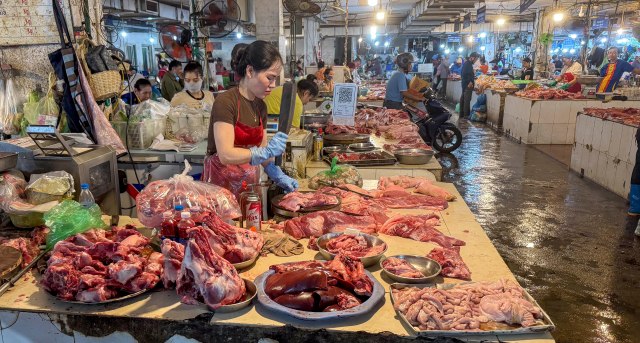
Meat for tonight’s dinner.  Nothing on the hoof here, though.

A textile section with threads and yarns —

.

All this wandering can build up an appetite.  Palais Tijani was just the quiet, relaxing, colorful restaurant that was needed.  Family owned with the cooking done by the mother – everything was delicious, but there was way too much food (as always)!

Great spot for lunch.

For some reason, colorful chairs caught my eye.

Now it was time to get serious.  Bou Inania Medersa is a very large, sumptuously decorated medersa constructed between 1350 and 1355 by the Sultan Abou Inan.  It is a mosque, school and students’ residence.  The fact that it has a minbar (pulpit) and minaret indicates that the sultan wanted this to be more than just a theological college – he wanted it to rival the most important mosque in the city.  While the plan of the building is simple – a square courtyard flanked by two halls and a large prayer hall – every surface is covered with decoration.  The floor is marble and the walls have three decorative bands always in the same order around the entire floor – geometric tile work below, script carved into tiles and then carved stucco work to the ceiling.  The ceiling is carved cedar wood and/or mosaics.

The students’ residences were upstairs and are as basic as the ground floor is opulent.  There were great views from what windows they had, though.

Our guide, Abdou, in the courtyard of the Medersa.

No bare walls here.

Views from upstairs in the student section.

Mineret at the Karaouiyine Mosque from the students quarters.

.

Now to that most venerated shrine promised in the introduction.  The tomb of Moulay Idriss II (thought to be the founder of Fes) is that shrine.  It was built in the center of the city at the beginning of the 18th century.  It’s pyramid green dome that covers the tomb and its polychrome minaret give it a majestic silhouette and is quite noticeable in the skyline. Like the Medersa, every square inch is decorated.  Unfortunately, this is closed to non-Muslims but photos from the door are allowed.

The richly decorated walls can be seen even from the doorway.

The oldest continually operating university in the world (established in 859) is just around the corner – the Karaouiyine Mosque.  It was founded by Fatima bint Mohammed el-Fihri, a religious WOMAN who donated her worldly riches for its construction.  Its prayer hall can hold up to 20,000 people but it is so wedged into the Medina it is impossible to tell its size.  And, since it is a mosque, it is closed to non-Muslims so a picture of the doors and a very little glimpse of the interior is all one gets😢

Had to be quick with the shutter finger even for this glimpse.

All the mosques were quite stunning.

Leaving the serious behind, it is now time for lessons of another kind.  In Fes one can learn to make pottery, mosaic tables and fountains, weave rugs, tan and dye leather and make bread!  Let’s go —

Not the Trevi fountain, but the same make a wish concept.  Going to need all the luck I can get to make all the stuff coming up!

Making the pot for a tajine.

The light purple dye turns blue when heated in the kiln.

The detailed hammering and chiseling to create these very small shapes was amazing.

This mosaic fountain is assembled upside down.

Finished product.  Fountains on the left.

Rug weaving loom and artist.

Lots of choices.

Vats at the leather tannery.  Upper left white vats are pigeon s&$@t to ‘strip’ the hides of hair, etc.

The workers are paid on a piece work basis.

Drying hides.

More buying opportunities of all things leather.

Neighborhood oven in the medina. Residents bring their dough to be baked in the ovens.

One last stop before the days end and dinner.  Overlooking the city are old ruins from the 14th century, which again had great views of the Medina.

Strategically placed “mobile Starbucks”.  These WERE the Starbucks in Morocco😂😂!!

Old ruins on the hilltop overlooking Fes.

The green minaret is the Bou Inania Medersa, the green dome top is the tomb of Moulay Idriss and the white minaret is the oldest university!

All of this can wear one out, so a nice dinner is called for at Riad Kassr Annoujoum.  The Riad was purchased by an Italian and in conjunction with Morocco refurbished the facility.  It now provides cultural events, such as the concert during dinner this evening.

Beautiful setting for a delicious Italian dinner.

E’s turn for boatdrinks!

Good live music.

Our dinner companion;-)

And so ends another day.  Lots of interesting sights, exchanges of knowledge and good food.

An overwhelmed E & G

On to One of the Historic Capital Cities – Fes

If one wants to fulfill their dream of the camel ride in the desert and stay at a tent camp, then one also needs to be prepared for the comings and goings.  As, it is a full days drive in both directions – unless there is the means to fly to and fro.  These travelers endured the full days drive;-)

The advantage to the drive is the ability to see the varied terrain of Morocco – and it is varied!  Beginning the morning with nothing but sand as far as the eye could see, it was not long at all before we were in the Middle Atlas and viewing the Ziz Valley.  Wadi (River) Ziz springs in the heart of the High Atlas and runs east carving a gorge that irrigates the Tafilalt then disappears into the Saharan sands.  This beautiful gorge, or valley, covered with palm trees and crops is the largest valley in North Africa!  Now it is green as far as the eye can see.

Beautiful, long valley.

Filled with palms, crops and ksour.

A little further on, one passes thru the small town of Midelt.  There is little here of note other than its use as a jumping off point for tours to access other areas.   That is until apple season.  Midelt is a huge producer of apples and, therefore, has a BIG apple festival every year.  You might guess something like this passing through town —

Do you prefer red – –

– – or green apples???

This route to Fes takes one up and across the Atlas Mts through more varied terrain.  Including a cedar forrest – with monkeys.  It is at this point that one just relaxes and enjoys the scenery.

Just loved these hay wagons. Made us laugh every time one went by;-)

Lions were prevalent in the Atlas Mts (now extinct here) and are in the Royal Coat of Arms – so they are everywhere!

If you have food – look out – – –

– – these little guys will climb anywhere to get it!

Another surprise – Ifrane!!  Suddenly this Swiss village appears and one literally feels as though they have been transported to another country;-).   Ifrane was established in 1929 and is now the King’s summer residence, due to the cool temperatures.  It is also the home to an international university established by Hassan II in 1995 and a ski area in the winter!

Swiss chalets in Morocco???

A great place to enjoy the very different views and a little hot chocolate and espresso.

One more stint in the car and Fes comes into sight.  The obligatory welcome – only this time a bit western with the sparkling wine – and an evening’s enjoyment of settling in for a few days.

The beautiful Riad Fes – home for a few days.

Fes from the rooftop.

Comfort!

What fun the Sahara desert was – but civilization is good too;-)

More from Fes next – E & G


Desert Camp, Camels and Sand Fish

Rissani.  This small town on the edge of the Sahara literally marks the end of the tarred road and starts tracks into the desert.  This was once a major stopping point on the trans-Saharan caravan routes.  It still today has one of the most famous souks in Morocco – some would say the best in all of Morocco. Stalls are piled high with dates, vegetables, spices or jewelry, daggers, carpets, pottery and fine leathers.  One can also get their protein/meats butchered or on the hoof!

Entering the Souks of Rissani

Need help for your thinning hair?

Want your meet butchered- –

Or alive?

Some of the old still exists – no matter the sex, one stands to pee (or whatever).

The Sahara desert, much like that in the southwest, was once underwater.  Therefore much of the rock in the surrounding area contains fossils from that time resulting in another of Erfoud’s current industries.  The rock, or marble, is cut, polished and made into beautiful pieces from ornaments to tables.  Workshops are open to observe the process – and, of course, purchase.  The work is beautiful and prices unbelievable compared to US prices.  Come here to Sahara Stone if you want to redo your home with fantastic pieces😄

The beginning of the creation of artisan products from fossilized stone – cutting the slabs.

Stunning table! Thank goodness we have no room or this would be on its way to AZ!

As Rissani was once the capital of the area and an important trade center, it also housed many Ksour.  A visit to one built for the elder brother of Sultan Moulay Hassan provides one with the ability to experience a village within walls that once housed hundreds.  Today, the gate is still impressive.  But, inside it appears a bit dilapidated although it still houses about 150 families.

The gate belies what’s inside.

One families entrance.

From one extreme to another – a mere couple of miles away is the Mausoleum of Moulay Ali Cherif, the father of the founder of an early Moroccan dynasty.  Beautifully carved doors open to a peaceful courtyard which lead to the burial chamber.

Entrance to the mausoleum of Moulay Ali Cherif.

Main hall of the mosque at the mausoleum.

And now – as said before, one leaves the world behind and enters the desert!  Somewhere out there our driver for the Sahara found a place to have lunch of Berber pizza (which was delicious) and entertain us with music!

Our lunch stop en route to a musical interlude.

Don’t remember seeing one of these at the Moroccan exhibit at MIM.

If you come this way – find this place. Excellent music!

These guys were great.

Now – our lives were in Hassan’s hands!  Hoped he knew how to get where we were supposed to end up, as the travel was across the sand.  NO roads.  Relax and enjoy the trip – including a stop at the “home” of some nomads, who provided tea!  A most welcoming people no matter what they have.

Driving across the desert.

Rush hour!

Thank goodness! Something that looks like a road.

Dining and sleeping area of a nomad family.

Oven tent.

Kitchen.

Their livestock.

Our midday tea under the camel skin covering.

Our hostess.

One slight diversion to see rocks containing those fossils that might later become a table –

The prevalence of these rocks with the fossils was amazing.

Remember the Las Vegas hotel in Erfoud?  Well, same owners are building this behemoth close to the dunes🫣😢

New hotel construction near our desert camp in Merzouga.

Finally, out of the sand pops up Auberge du Sud.  But, for us this is only a mirage.  As this is the hotel and we are staying at the tent camp.  So – the welcome tea and a brief respite by the pool until time for transportation to the camp and the pleasure of the sunset over the dunes!

Reception area for the desert camp.

Welcome tea and snacks.

Relax by the pool with sand dunes just beyond.

And now –  transportation to the tent camp.

Locals call these sand snakes. They are a variety of salamander that burrows in the sand.

Waiting for sunset.

Perhaps a moon rise instead?!?

The colors of the sand changed minute by minute! Beautiful.

Embracing the sunset🙂

There it is.

Our accommodations for the night.

This was soooo much fun!!

And then – Morning light.

The magnificent dining area for dinner and breakfast.

Time to say good-bye to camels in the desert.

This magical time was over and paved roads were in front of us.  But, these beautiful images will remain in the mind forever!

E & G – Experienced a lifetime of thoughts and images and the reality was awesome!