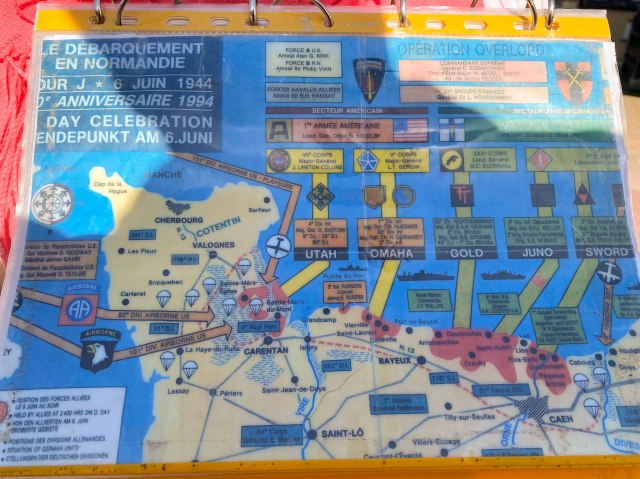
After several years, it was time to make a return visit to the D-Day Beaches in Normandy, France. (The earlier visit can be found at https://egmagicbustour.com/2022/10/02/normandy-d-day-beaches/). Wanting to focus on an area not explored before, the US Airborne sector centered at Sainte-Mere-Eglise was targeted. This is where the 82nd and 101st Airborne Divisions made their landing in order to clear the area for the troops to land at Utah Beach.
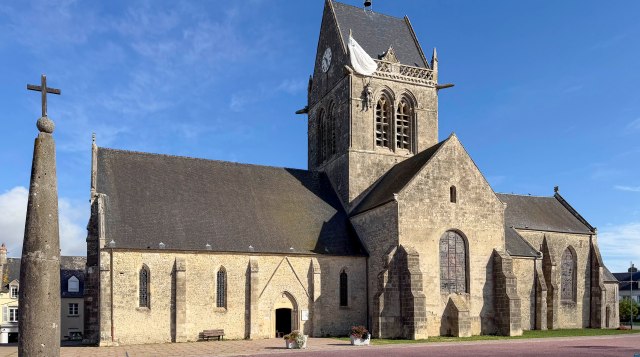
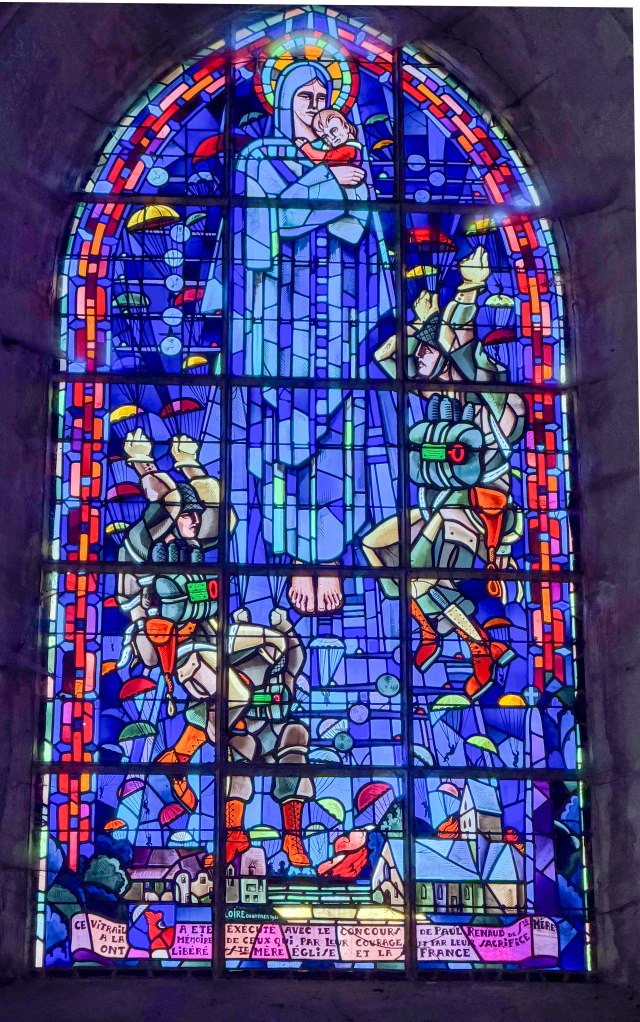
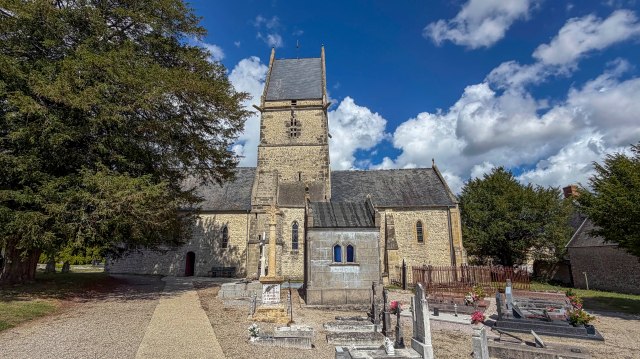
The Church of Our Lady of the Assumption in Sainte-Mère-Église, played a prominent role in the landing and, as such, was highlighted in the 1962 film The Longest Day. The parachute and figure hanging from the bell tower of the church commemorates American paratrooper Pvt. John Steele of the 82nd Airborne Division, who was actually ‘hung-up’ on the church spire during his landing attempt and was made ‘famous’ by the film – much of which was shot here on location. It is quite amazing how grateful the French are to this day for what the Americans did for them. Over and over again there are tributes to the Americans’ acts of bravery such as this tribute to Pvt. Steele and the remaking of stained glass windows in their churches to honor their acts. Truly humbling and gratifying.
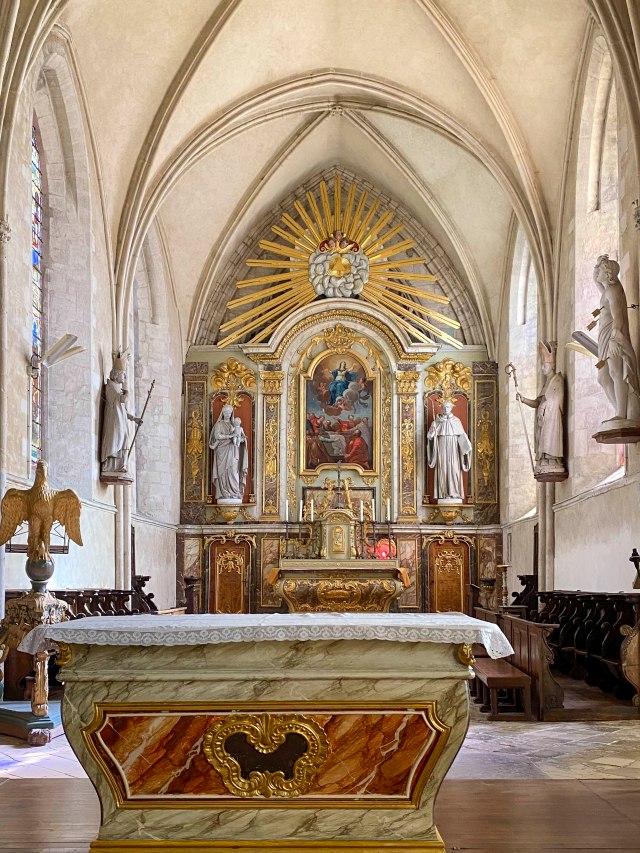
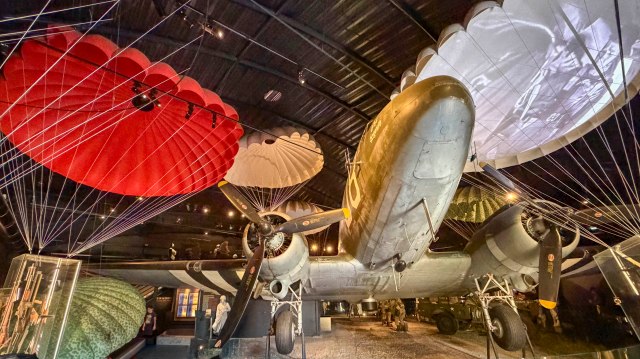
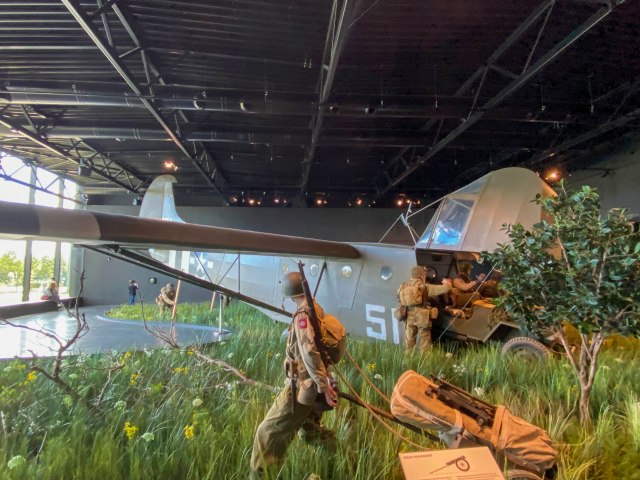
The Airborne Museum sits just across the square from the church and is devoted primarily to the American 82nd and 101st Airborne Divisions and their preparation for, and operations during, the night of June 5–6, 1944. For those interested in the airborne operations around Utah Beach, this museum is particularly worthwhile because its focus is quite specific rather than trying to tell the entire D-Day story.
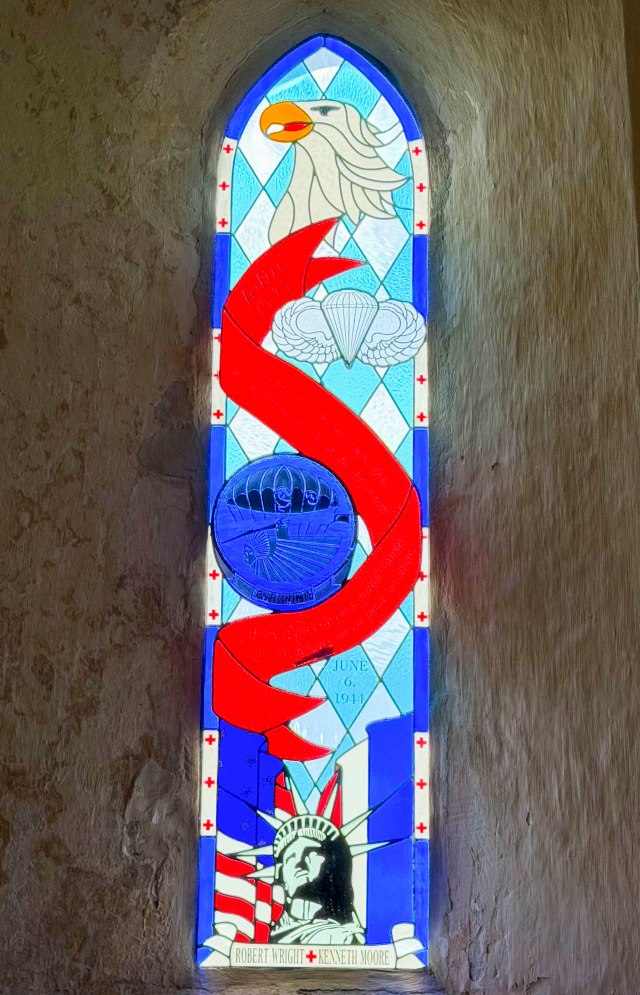
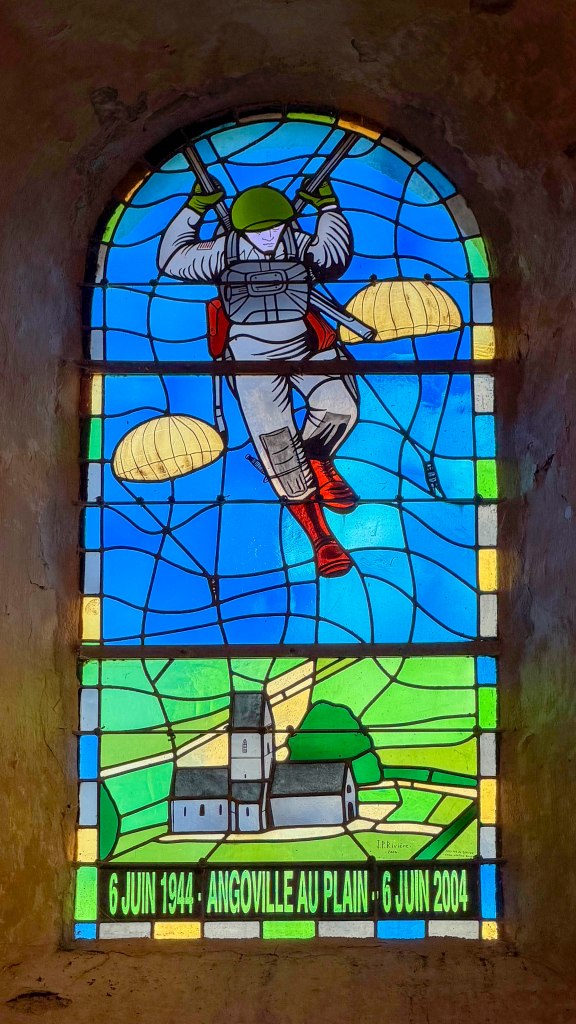
The Eglise Saint-Côme et Saint-Damien d’Angoville au Plain is a small medieval church not far from Sainte-Mere-Eglise. On D-Day, Pvts. Robert E. Wright and Kenneth J. Moore, medics with the 2nd Battalion, 501st Parachute Infantry Regiment, 101st Airborne Division, established an improvised aid station inside the church. They brought casualties into the church and laid many of them directly on the still blood stained wooden pews – American and German alike, as well as local children. Contemporary commemorations generally credit them with caring for about 80 combatants. At different points the village changed hands with German soldiers entering the church. When it was discovered that German wounded were being cared for alongside Americans heads were turned and the aid station was allowed to continue operating.
The modern stained glass is particularly unusual for a medieval French church and once again honors the Americans.
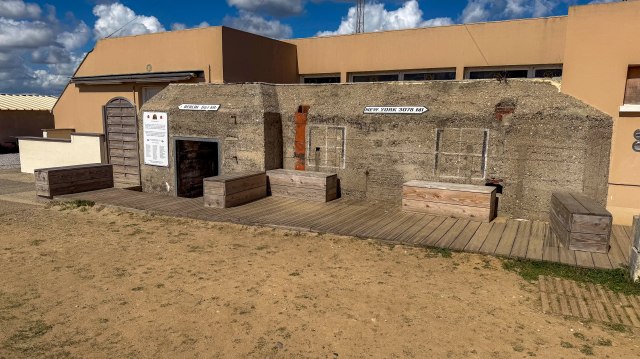
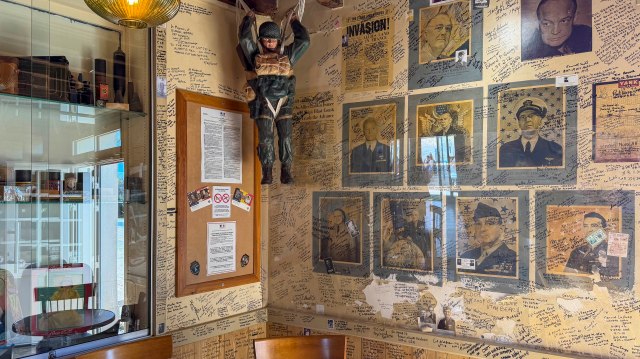
Part of the German Atlantic Wall defenses at La Madeleine/La Grande Dune (Utah Beach) on June 6, 1944 was a concrete bunker built right next to an establishment now known as Le Roosevelt Café. The cafe existed at the time of the landings and was operated by the Théodore family. Following the capture of Utah Beach, American troops used the building, and it became closely associated with the U.S. forces operating from the beachhead. The café has subsequently become a small piece of living D-Day history. Its interior contains signatures, photographs, insignia and messages left by American veterans who returned to Utah Beach since the war.
Although a prior visit had been made to the American cemetery at Omaha Beach, it didn’t seem right to leave the area without another visit.
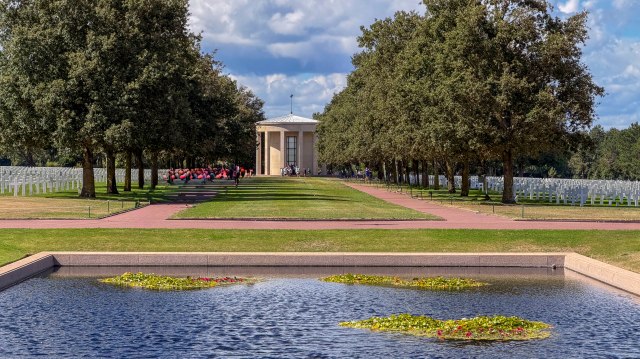
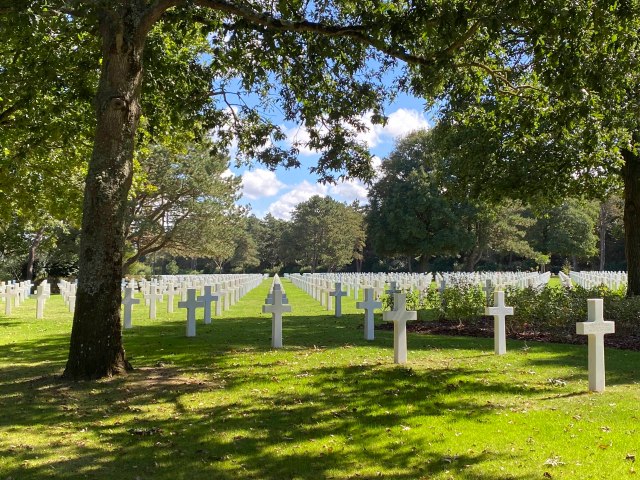
Another enlightening visit and reminder of what those before us fought for and how much they sacrificed.
E & G – wishing peace to all

