Poseidon’s Temple and Monemvasia

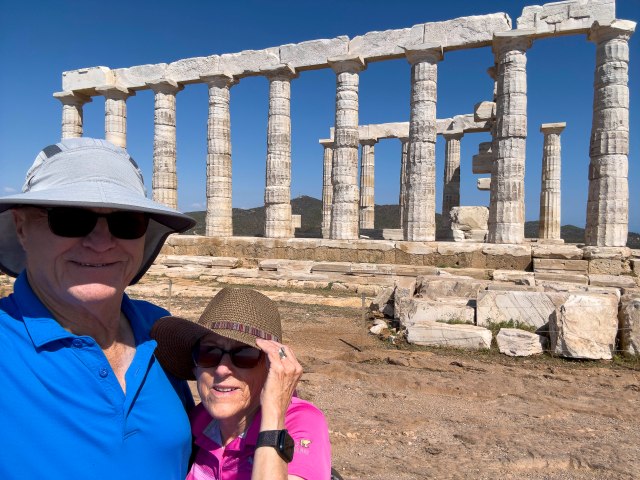
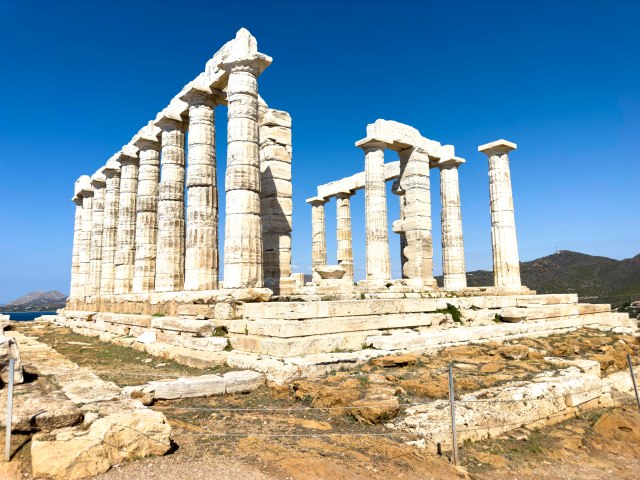
If one finds themselves with extra time in Athens, an interesting side trip is to Poseidon’s Temple.  Located about 30 miles (an hour+ drive) southeast of Athens – guarding the entrance to Piraeus – the temple stands high above the sea as Poseidon (Olympian God of the Sea) might have wanted it.  While there is evidence of sanctuaries on the cape from as early as the 11th century BC, the Temples of Athena and Poseidon were built around 400-450 BC.  As is true of all the sites around Greece, these temples went thru many iterations and periods of destruction by the latest conqueror.  Still a sight to see – and great views – –


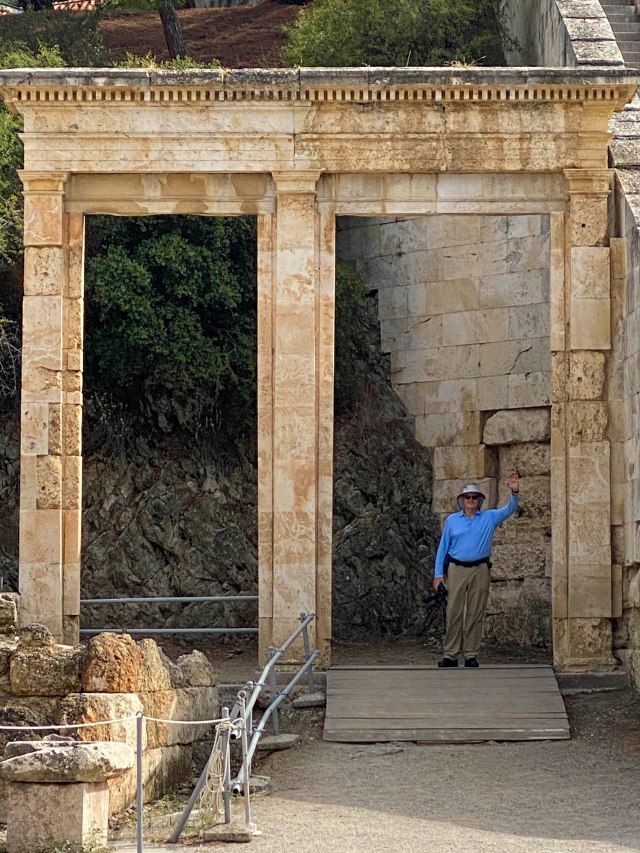
Remains of Poseiden’s Temple.

.

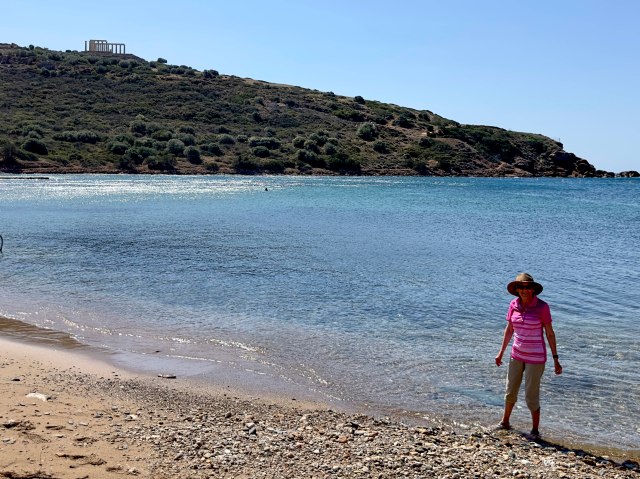
E finally got the opportunity to test the water during lunch with Poseidon’s Temple in the background.

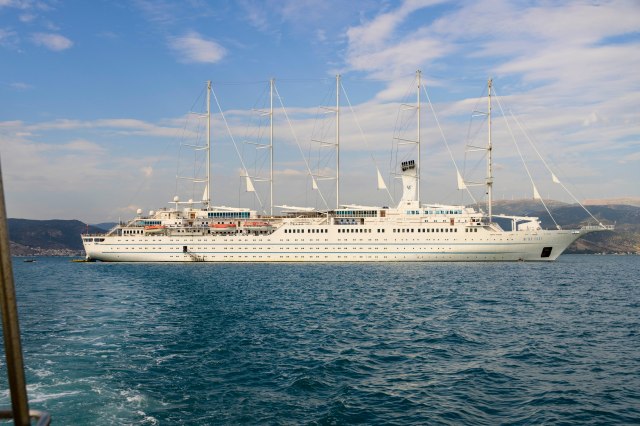
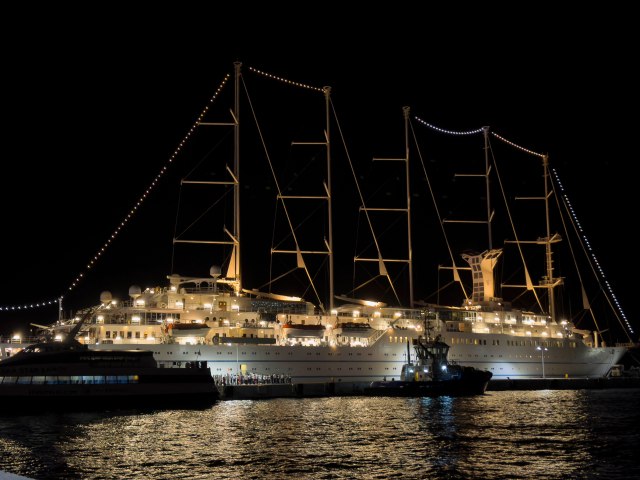
After a full day away from the ship – and historic Athens – the Wind Surf pulled away to begin the second portion of the cruise.

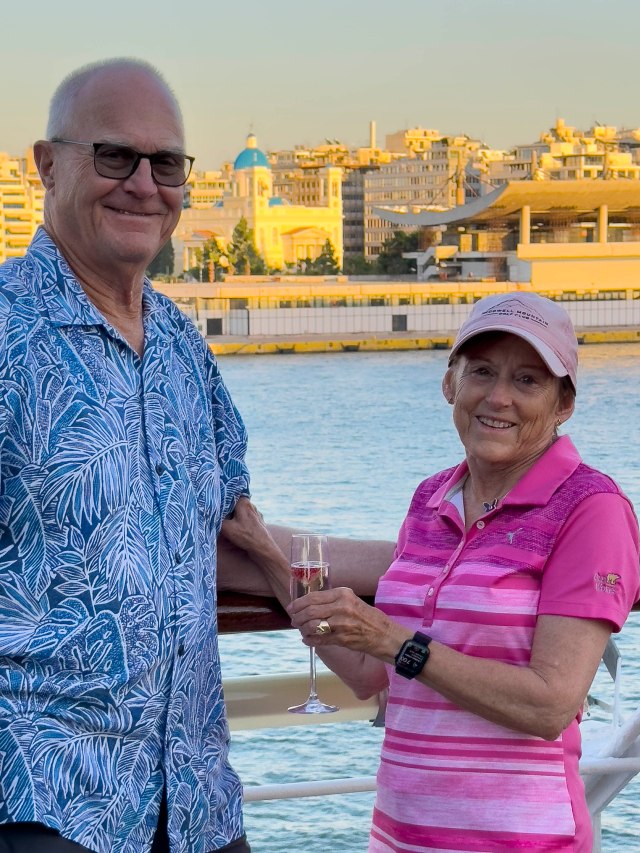
Bye bye Athen’s Port Piraeus – one more time.

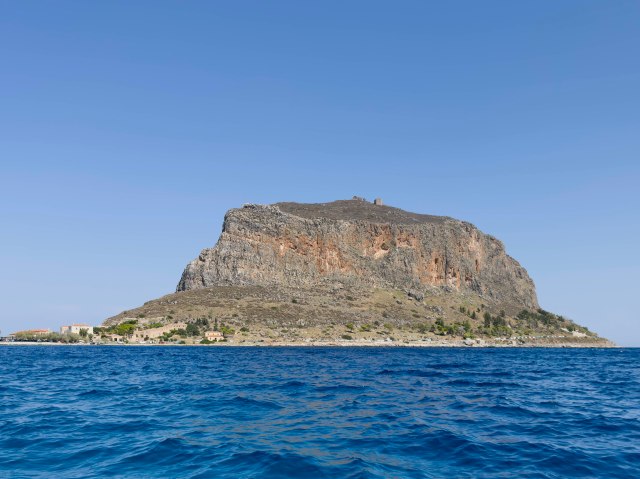
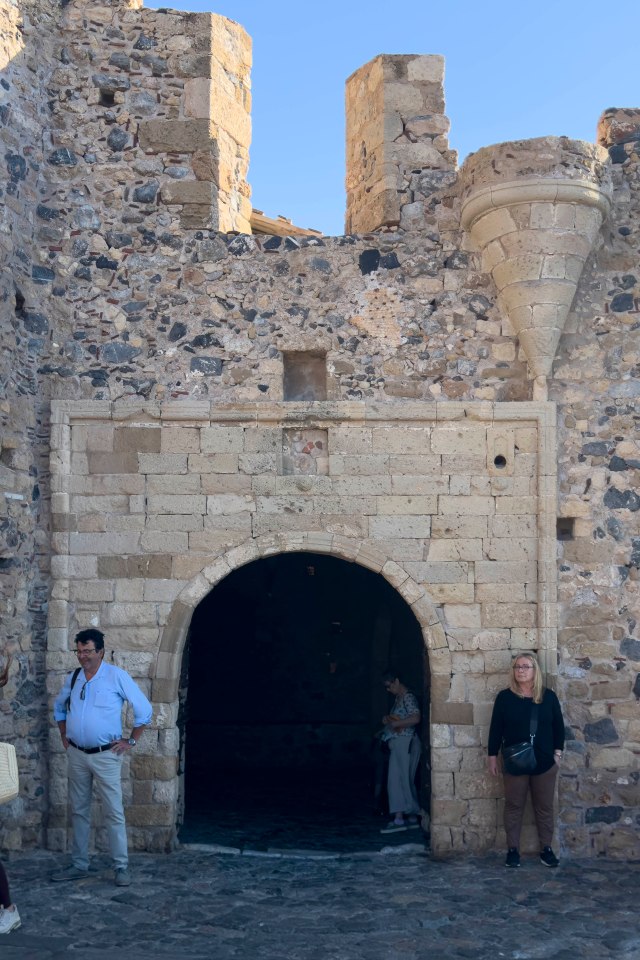
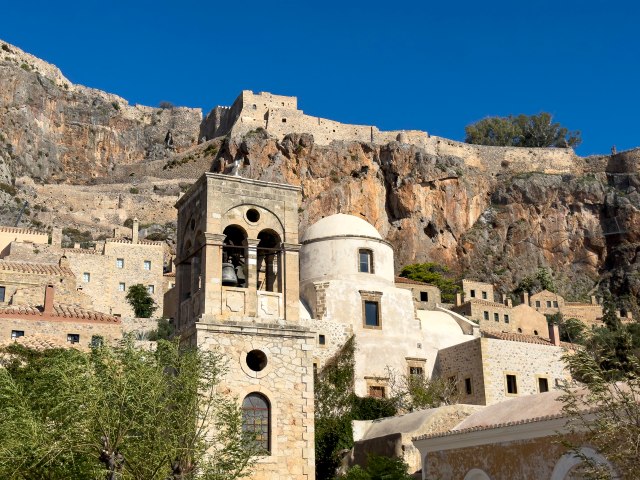
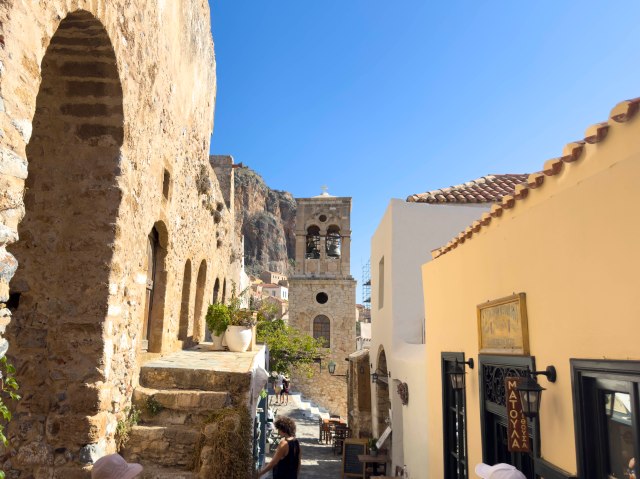
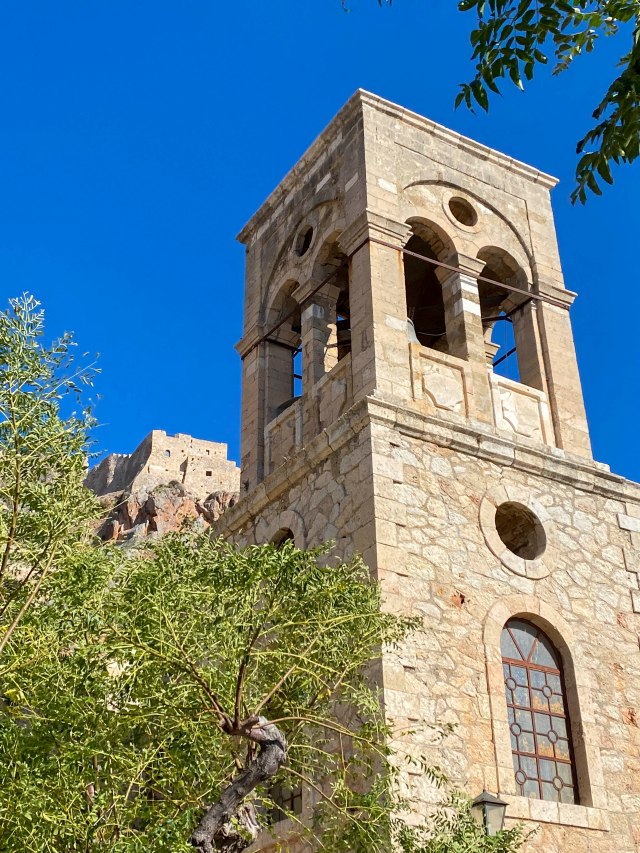
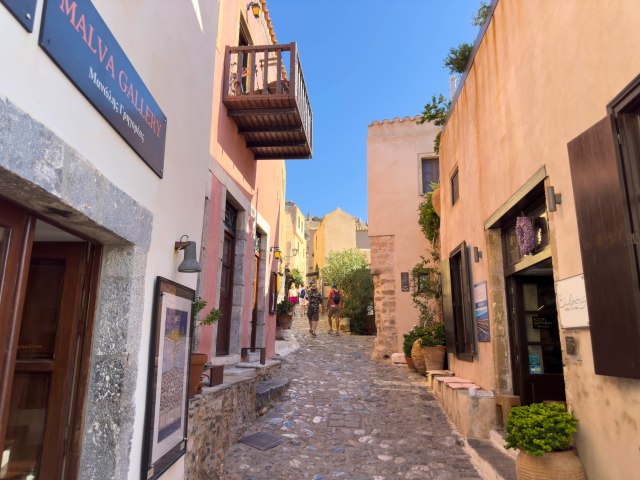
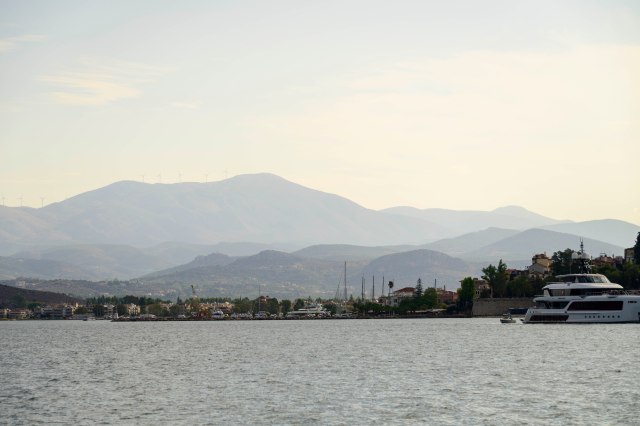
First stop on the second leg of this journey – Monemvasia.  This medieval city is built entirely on a rock that appears to be barren when seen from the mainland and difficult to see from the sea as it is built entirely of rock that blends into its foundation.  There was/is one entrance into the city – via the gateway one enters today – making entry easily regulated.  The city sits mid-way up the rock, making it impossible to access from the sea up the steep sides 100’s of feet.  Today – a very quaint little retreat from the world in a beautiful, 13th century setting.

Why do we want to see this rock…wait ’til you see the other side.

One way in or out.

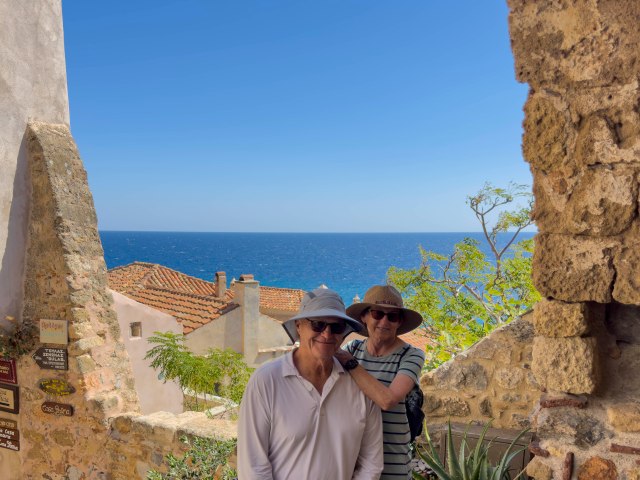
The town sits right on the ocean.

The 13th century city mid-way up the cliffs to the ancient site on top of the cliffs.

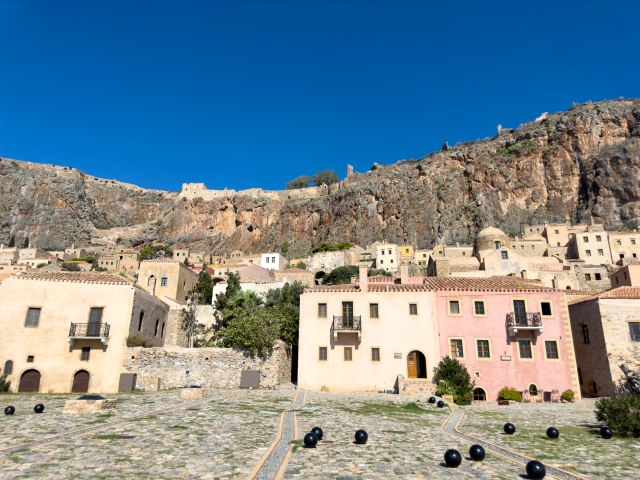
To one’s back in this plaza is the sheer wall that leads down several hundred feet to the sea.

.

.

.

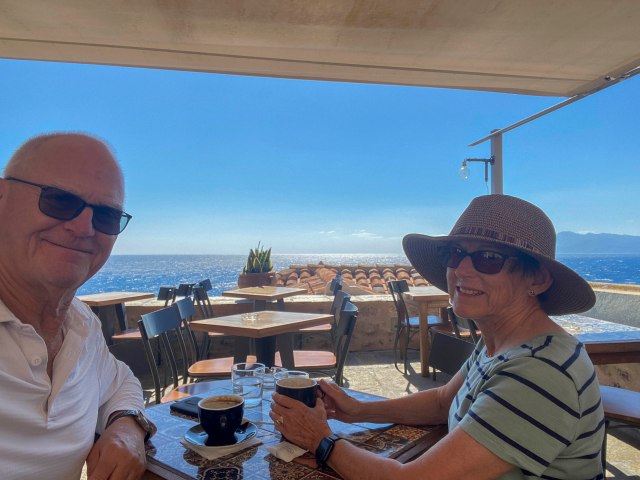
A quick snack to get us to lunch.

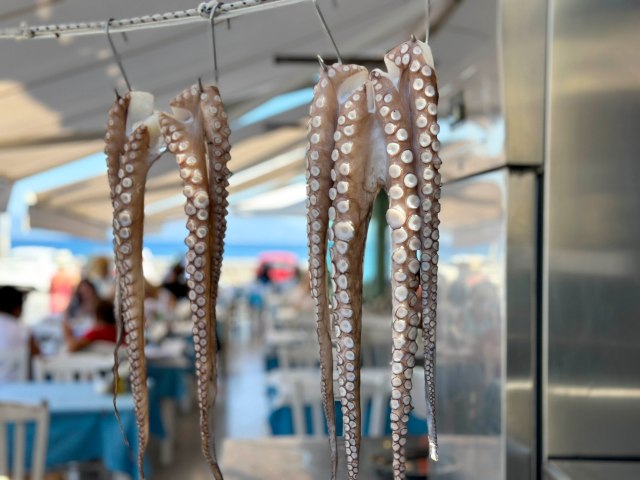
After a walk about the town, a terrific lunch and a bit of shopping it was time to return to our anchored ship in Gytheio.  An ATM and ice tea were sorely needed – so there was a quick stop at a little taverna on the dock where octopus could be seen being prepared for dinner – –

This local delicacy is lost on the two of us.

As quick as that, the day was over and it was on to Katakolon, the port city for Olympia!!  Can’t wait for this outing.

Another beautiful dinner view.

E & G – off to another adventure


Finally – One’s Picture of the Greek Isles;-)

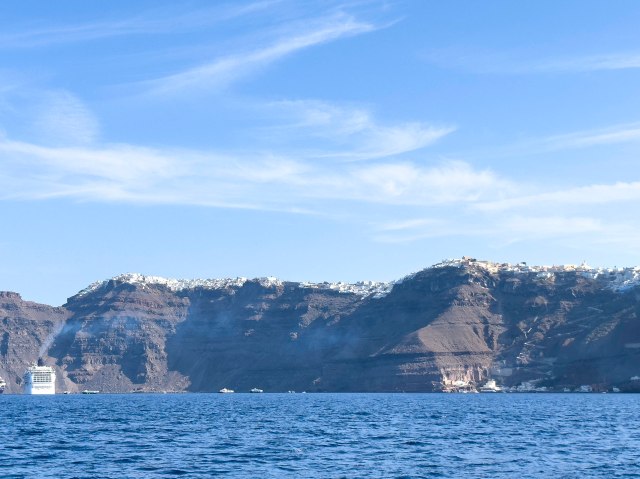
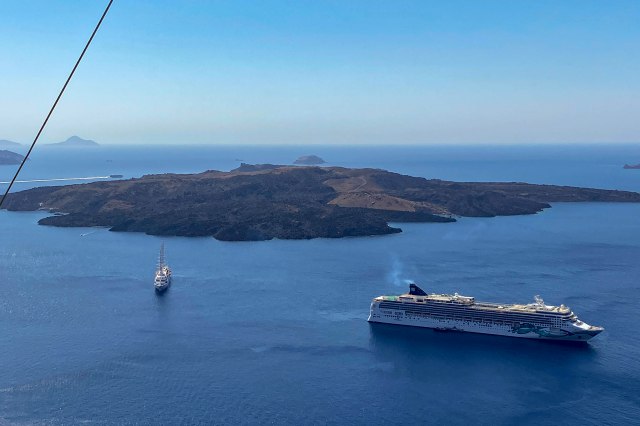
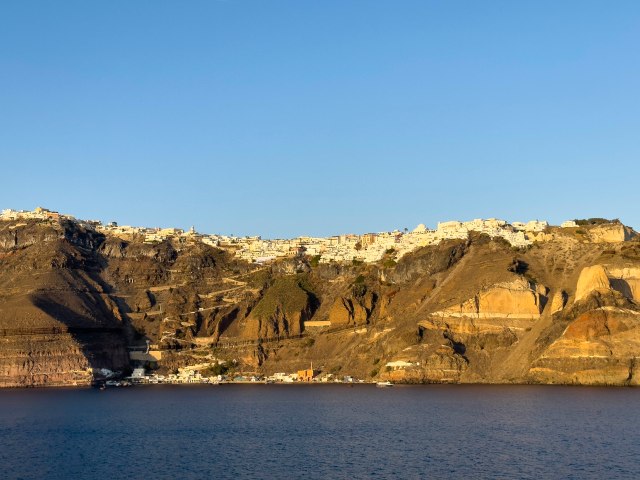
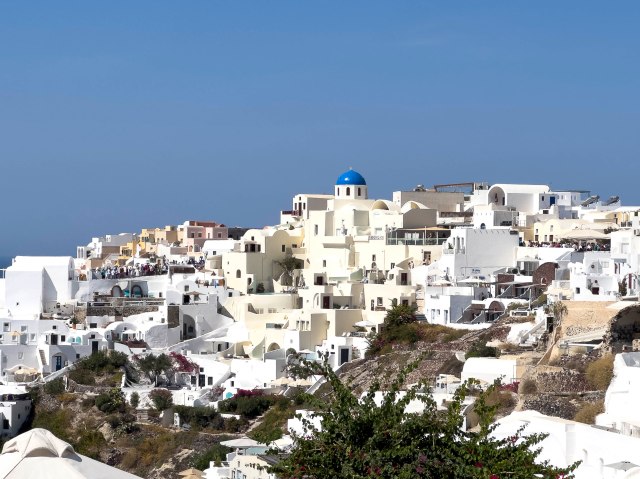
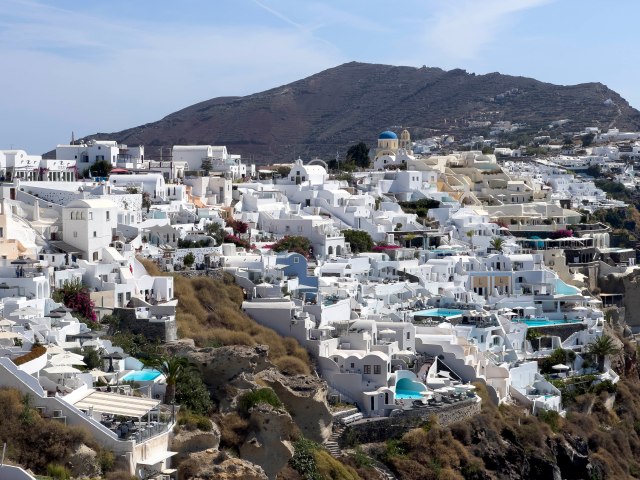
Santorini!  The world famous island located in the most southern part of the Cyclades group of islands in the Aegean Sea in Greece.  Traditional villages are built on the tall cliffs over a former volcanic crater now collapsed and submerged by about 1,000′ of the sea.  Looking at the island from the west one sees the dramatic long, steep, colorfully striped arc of cliffs thrusting up from the caldera (collapsed crater) with the towns on top.  First thought is – “those cliffs are snowcapped!”  Then you realize those are all the white buildings!!  And, when you get to the top and look down you realize and understand that the water is the center of the volcano and you are standing on the rim.


Approaching the Island of Santorino with its snowcapped hills;-)!  Above the Old Port is Fira.


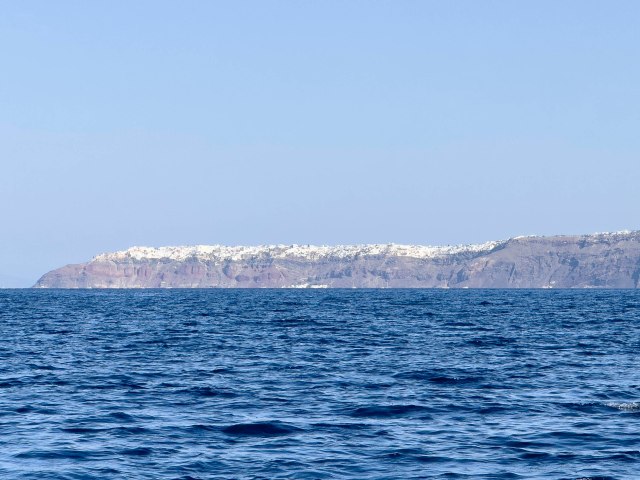
On the northern part of the island is the wonderful town of Oia.


Our ship on the left in the center of the caldera.

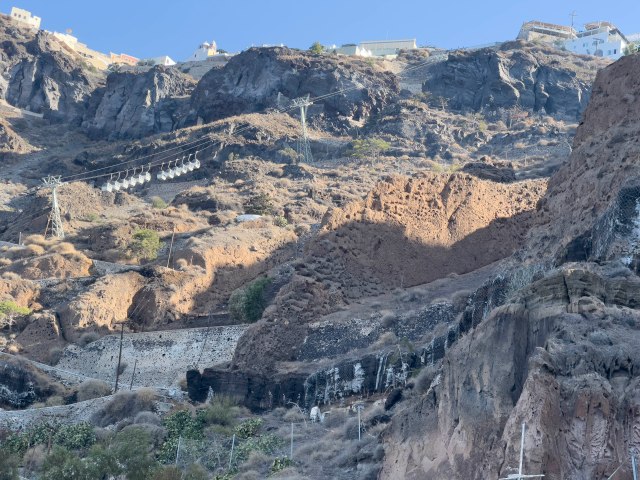
Up you go.  One of three ways – take a cable car, walk or ride a donkey.  Enjoy – –

Cable cars for the less energetic.


A walk up that path cut into the rock (587 steps) following the donkeys – or on a donkey.

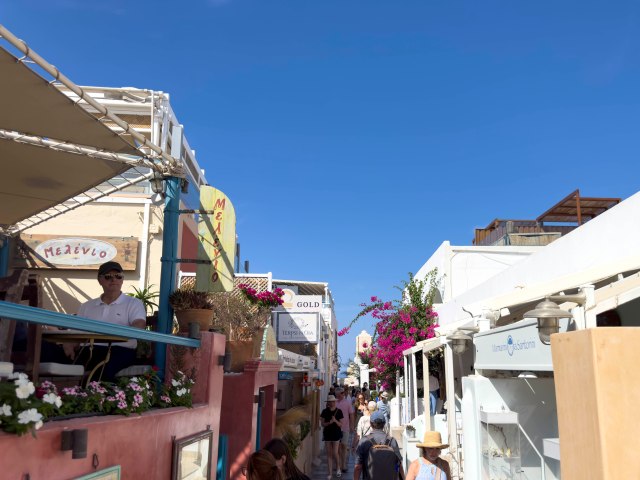
Attempting to leave the crowds behind – head to Oia.  It is a little less crowded, since it is a bit away from the cruise docks, very charming and has a more upscale section on the south end that is even less crowded.  AND – has wonderful places to eat;-)

One of the many narrow streets of the town of Oia.

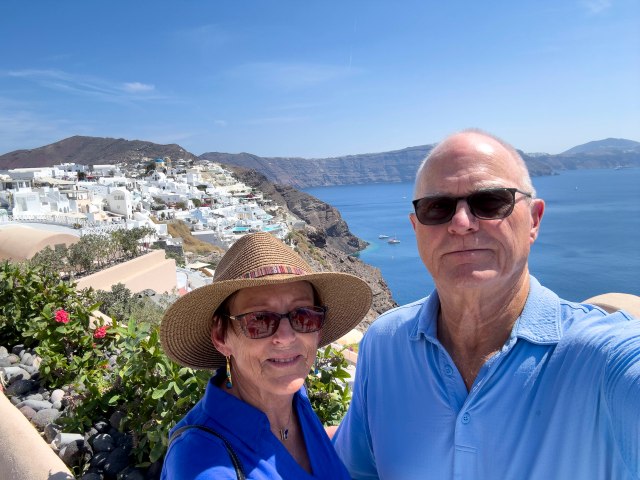
Several views of the iconic Oia.

.

A couple of fellow travelers recommended a fabulous place for lunch – 218 – where there were fantastic views, perfect service and outstanding food!  What more could anyone ask for?!?

Lunch views.

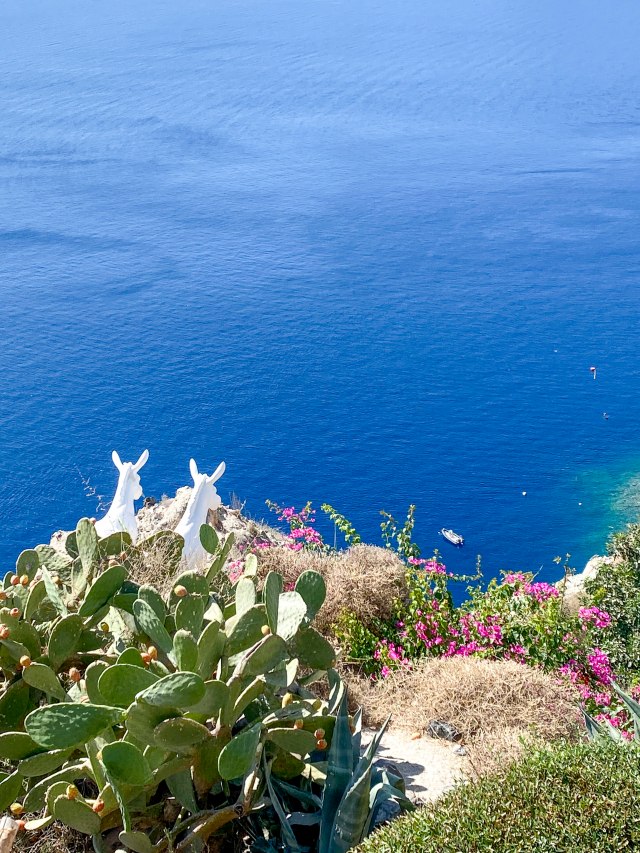
Another view from our lunch spot – a tribute to the donkeys and felt like home with prickly pear and bougainvillea .

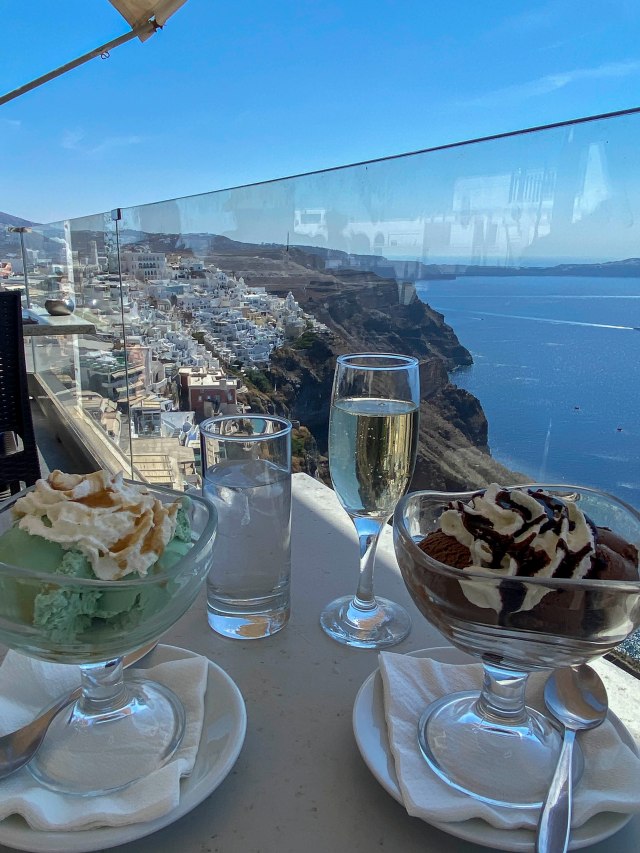
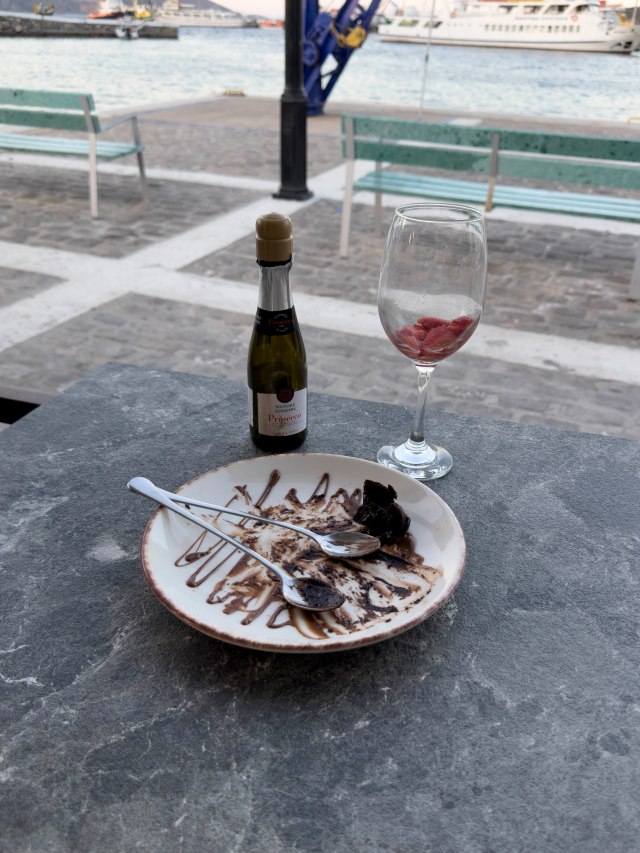
A brief walk thru Fira is required since that is where the cable car comes and goes from.  It was a very hot day, so before the ride down a little ice cream – again with a view – seemed in order.  And, maybe there was a prosecco to go with that ice cream;-)

A final stop for refreshments before heading back to the ship.

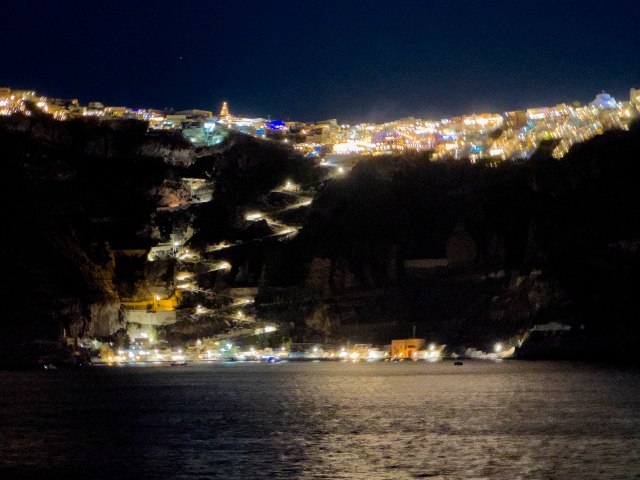
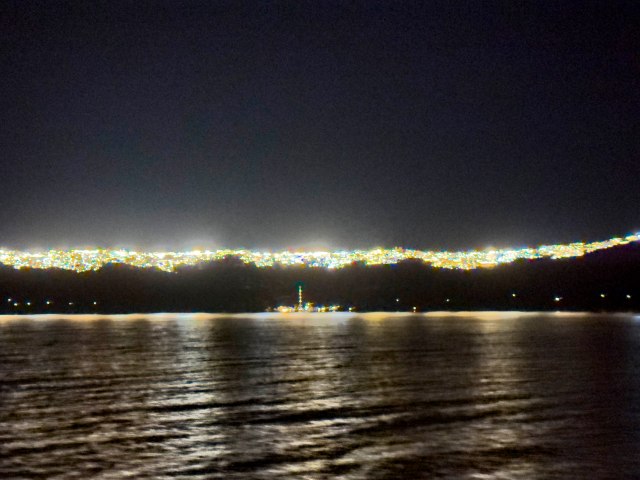
Tonight Windstar had another special event – a Signature Deck BBQ late into the night with incredible nighttime views of Santorini.  A really special sight!

As the sun sets the island lights up.

What a sail away.  No more words are necessary – the pictures say it all.

E & G – quite happy;-)


Rhodes and Crete or Palace of the Grand Masters and Knossos

Another day – more UNESCO World Heritage sites;-)


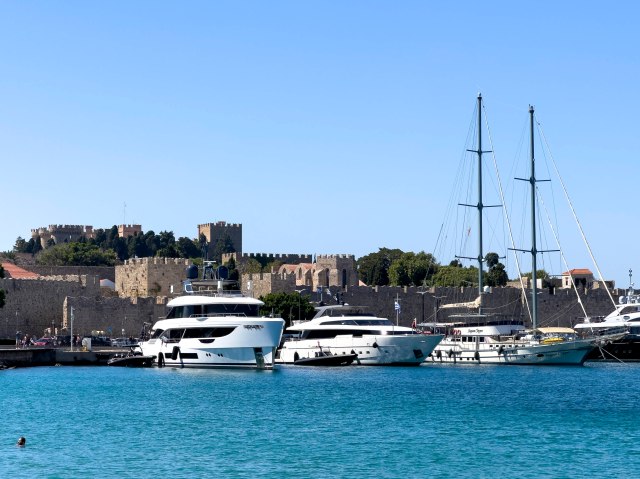
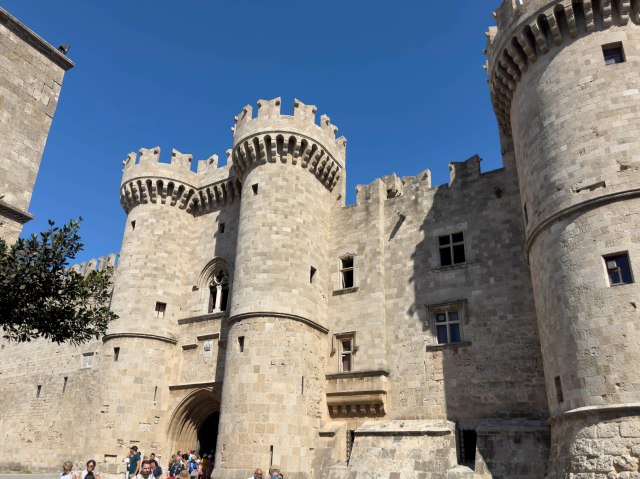
Rhodes is the eastern point of Greece and, therefore, where the sun first shines on the Greek world.  This led them to the belief that Rhodes was the home of the sun god – Helios – to whom they built the famous Colossus of Rhodes.  This was a 100′ tall statue that took 12 years to build AND lasted just 56 years until destroyed by an earthquake.  So – no Colossus of Rhodes to see.  Instead, a fortress started during the Byzantine ages and modified throughout Rhodes’ varied history.  In the 14th century, the Knights of St. John added on creating a residence and political headquarters for their leader, the Grand Master (thus the name).  The Ottomans made their mark and the Italians in the early 20th century elaborately restored it as an island retreat for their king and later for Mussolini.  One must wander the main shopping street – Sokratous – in order to get to the Palace.  It is very similar to the Turkish bazaar in Kusadasi but without the harassment of the vendors;-(


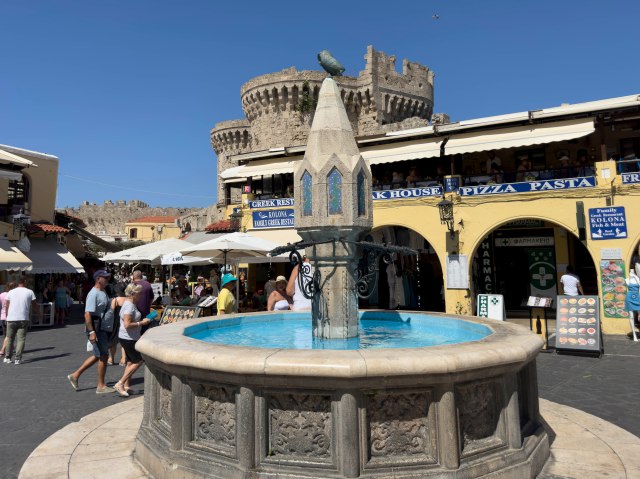
Welcome to Rhodes.  Just enter the walled city through St. Mary’s Gate!

Owl of Greece atop the fountain with the Castle of the Master in the background.

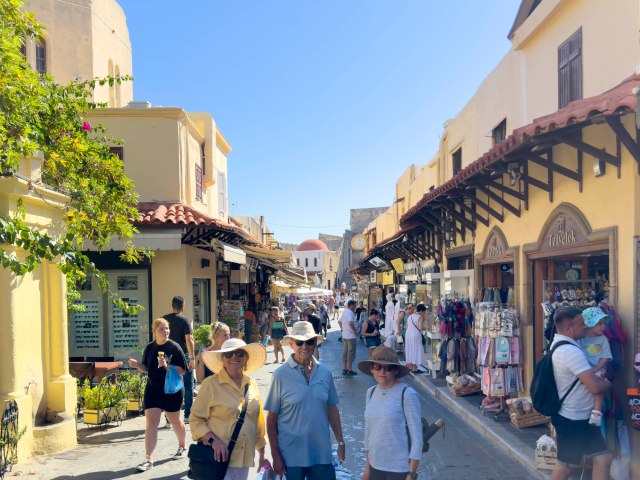
Quaint, actually fun shopping streets with fabulous places for lunch!

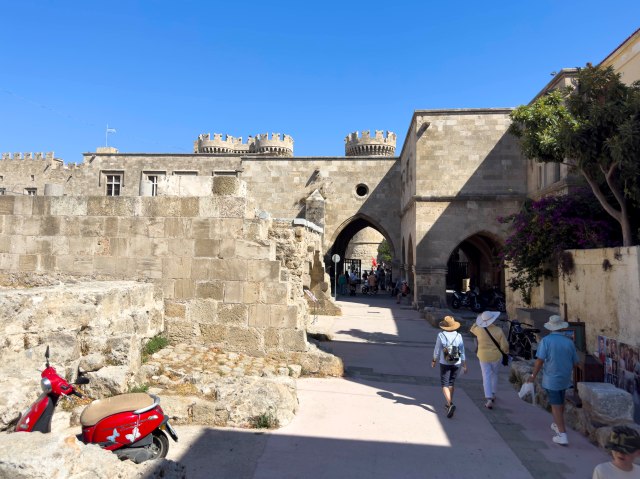
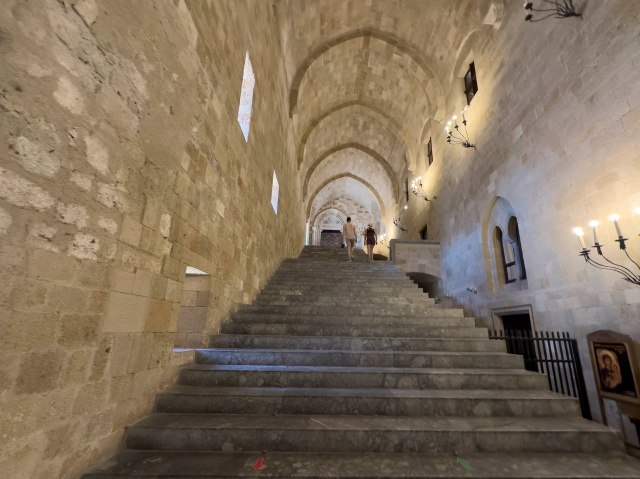
Approaching the Palace of the Grand Master of the Knights of Rhodes.

.

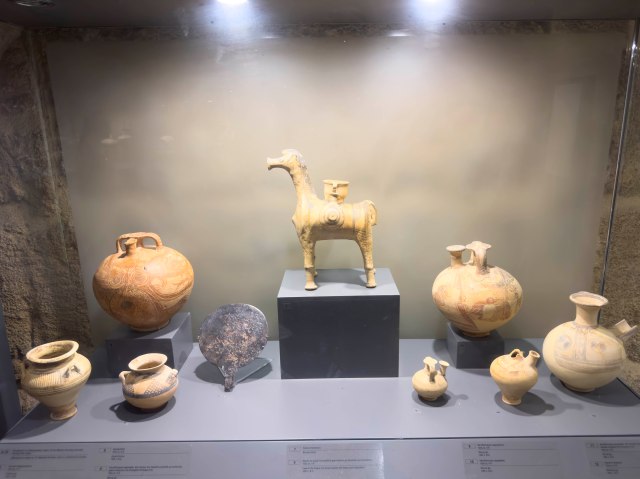
Artifacts from 1200 BC.

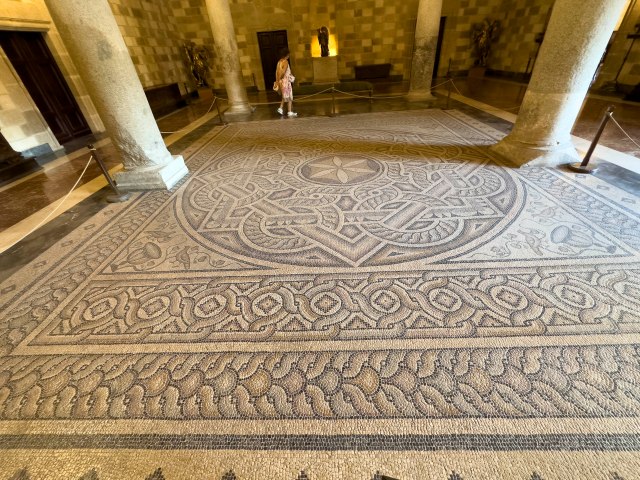
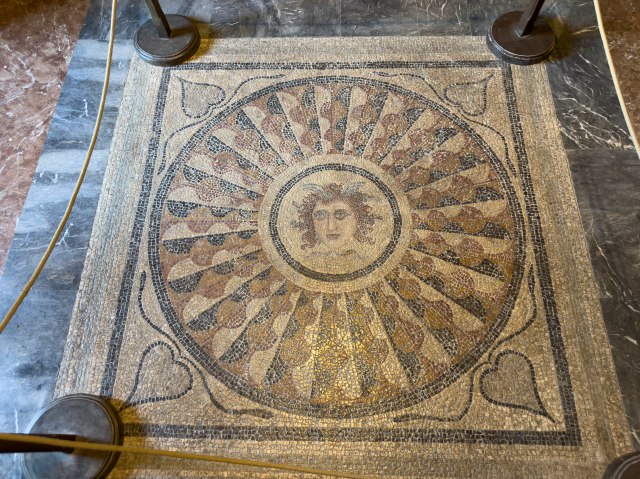
The Turkish/Ottoman influence, as well as the Italian is seen throughout the Palace.  While the first floor houses many antiquity treasures found in the area, the second floor houses fantastically detailed floor mosaics.  These tiles were actually discovered not too far away on the isle of Kos where they were put together like a jigsaw puzzle and somewhat recently transported to this Palace and reconstructed (again) here.  There were rooms and rooms of these mosaics – just a couple here – –

.

.

Medusa is the centerpiece here.

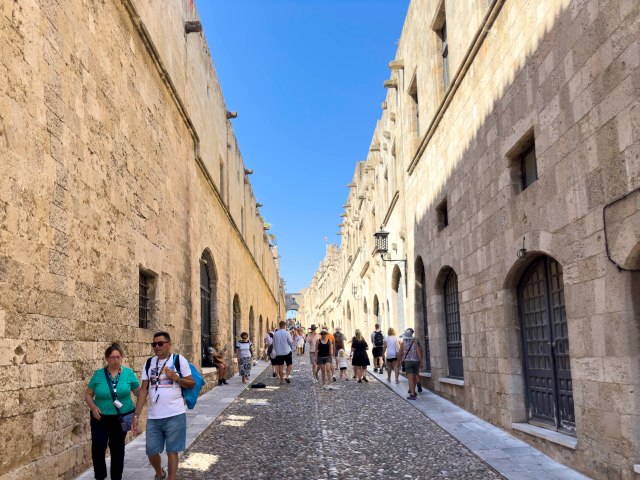
Exiting the Palace, one finds themselves on the Avenue of the Knights.  This is a VERY cobbled lane displaying a microcosm of medieval Europe.  The Knights of St. John were divided into seven separate language groups, each one assigned to defending a different section of the town wall.  Each group lived in an inn that re-created the home they’d left behind.  Many still look like a slice of Spain or a German fort, etc!

The Avenue of the Knights.

A little lunch, a little shopping and time to return to the ship.  Because – another fascinating tale awaits.

Crete is Greece’s biggest, most populous island and the southernmost point in Europe.  Historically, Crete was home to the Minoans – Europe’s first advanced civilization peaking around 1950 BC!!!  Knossos Palace (more like a ‘development’ or city) was the main ‘home’ of the Minoans.  It was a vast maze like series of interconnected rooms – likely the inspiration for the tales of the labyrinth.  Labyrinth comes from the Greek ‘labrys’, a double-headed axe, which is seen throughout the ruins and in artifacts found there.

The Minoans were peaceful, entrepreneurs and very advanced.  There were NO fortified walls around their cities, they had impressively advanced terra-cotta pipes that carried drinking water into Knossos from a spring miles away and they had canals that carried sewage away from the palace/city!!  1950BC!  They were very sports minded, as exemplified by their detailed frescoes, and there was relative equality between rich and poor as well as between the sexes.  Unfortunately, about 1450BC, the Minoan civilization suddenly collapsed and their progress lost.  Thankfully, some of their civilization survived – –

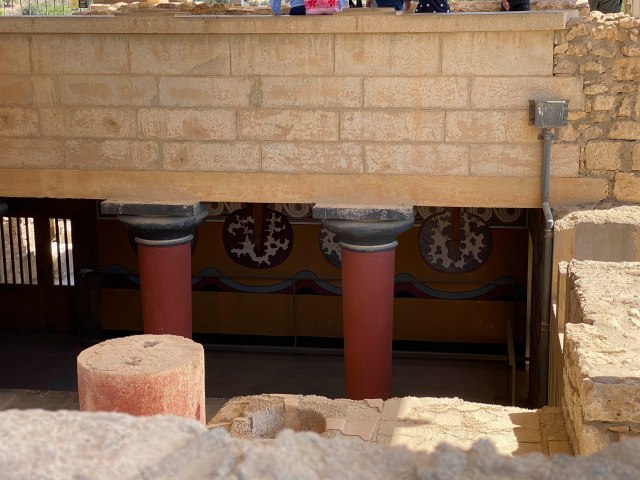
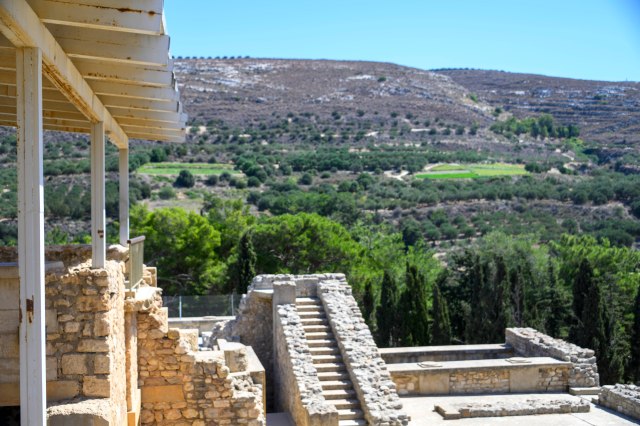
The Knossos Palace (Labyrinth) looking across where the ‘town’ would have been.  It remains buried.

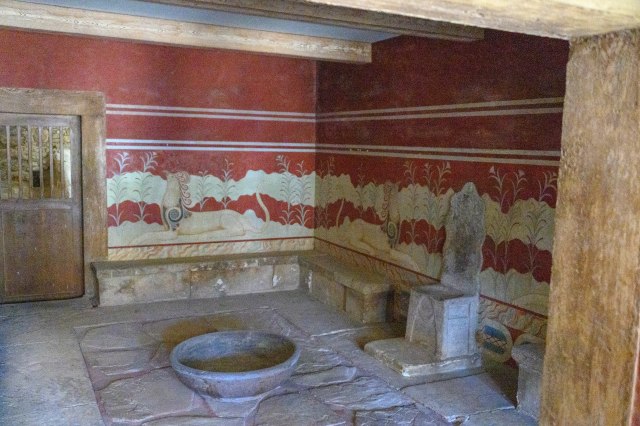
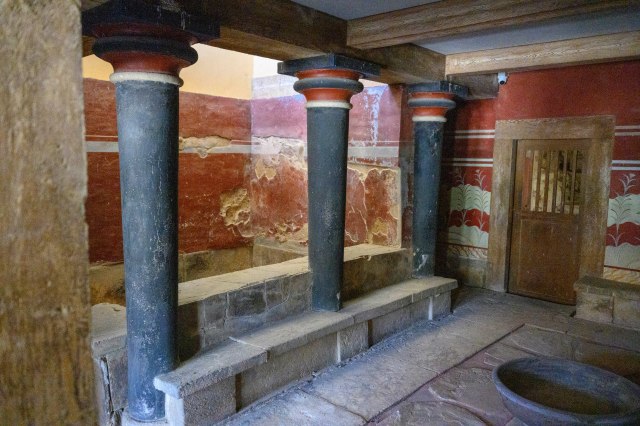
The Throne Room with an ergonomically correct ‘throne’ – out of stone!

The bath area of the Throne Room.

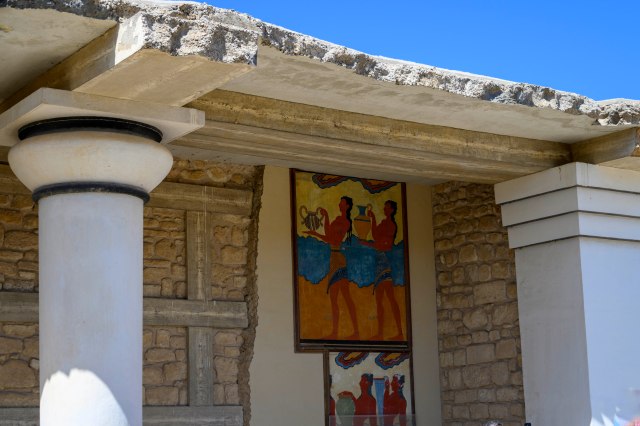
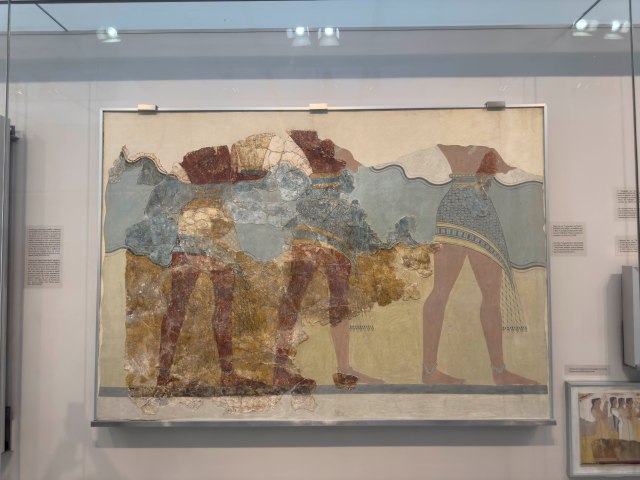
Recreations of the 4000+ year old wall friezes. The originals are in the Archaeological Museum.

The Kings room (with recreated paintings).

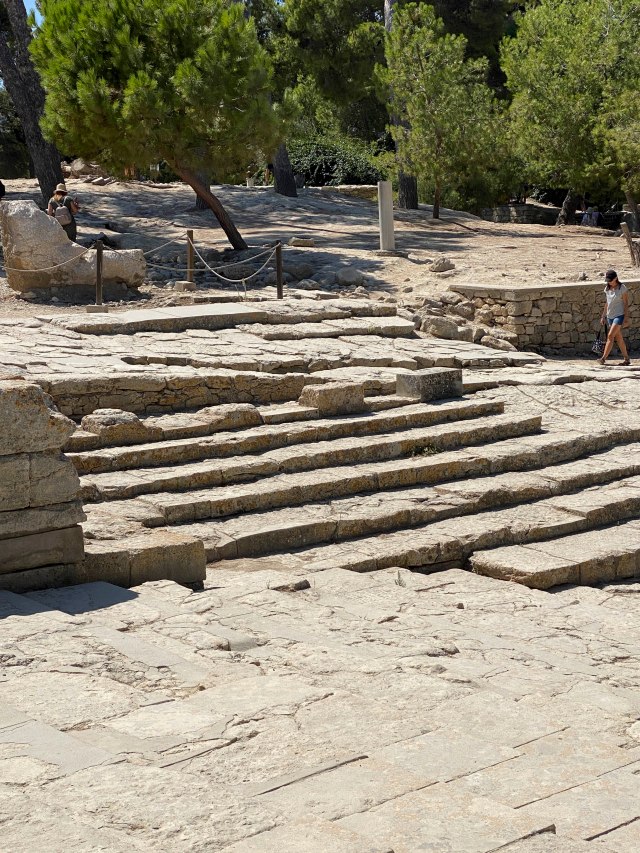
The first known theatre!

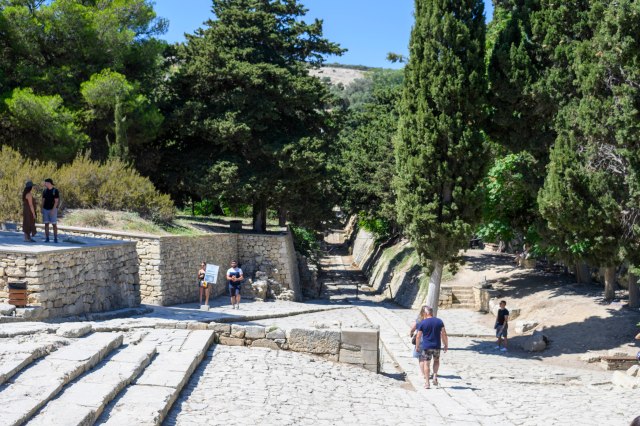
The original main road into the castle. Purportedly the oldest paved road (2500 BC) in the world.

To think that we were walking on stones trod by sandal-clad feet 4,000 years ago was mind blowing (in a good way).  Back to the present day and the town of Heraklion.  This is a typical big city, where one does not need to spend a lot of time except for lunch and the Heraklion Archaeological Museum.  As is true of the other museums of ancient sites, the original antiquities found are housed here and replicas/reconstructions are at the site themselves.  And some of the findings and what they say about this civilization and their life 4,000 years ago is truly amazing!

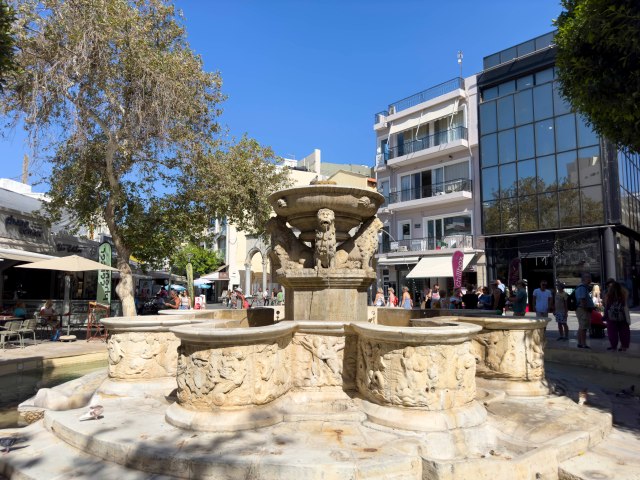
The Moronzoni Fountain (1629).

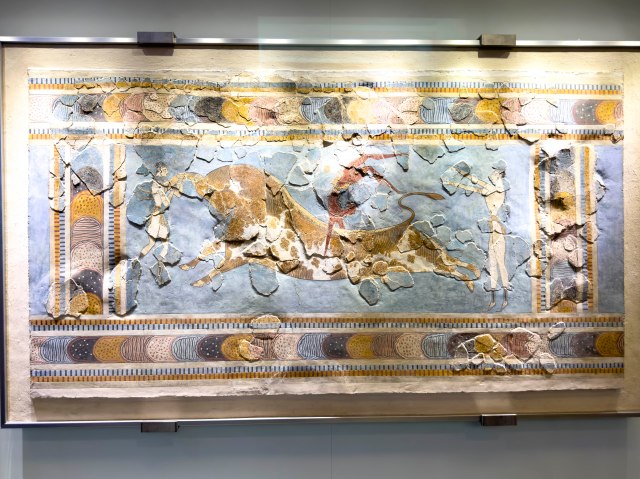
The Bull Leaper (17-15 century BC) illustrating the popular pastime of vaulting over a bull!  (What appears to be ‘elevated’ pieces are pieces of the found fresco displayed on a drawing of the full piece.


.


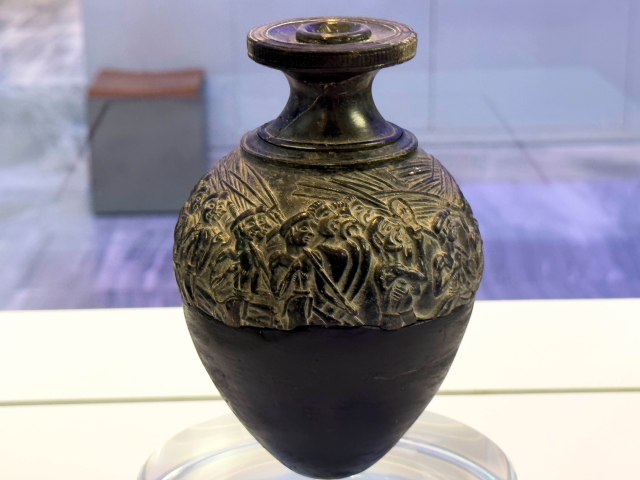
The intricacies of the carving on this stone vase were amazing for 4000 years ago.


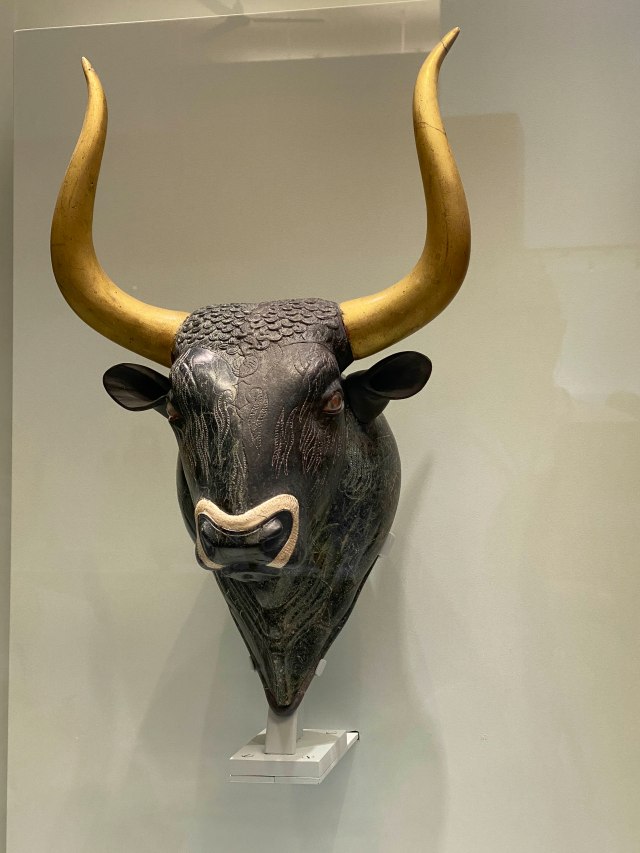
The right side of this bull’s head are original – the left reconstructed. The snout is outlined in white shell, the eyes are jeweled and the horns are golden. The bull was revered.

Discovering this civilization was an enlightenment and we walked away in awe that such knowledge existed so long ago.  One wonders – where did it go through the years???

Back to the little port city of Agios Nikolaos (St. Nicholas) for a quick bite (and maybe a little drink) before a stroll through the pedestrian only streets and a return to the ship.

What a great way to end such an enlightening day – good food, good drink and great view!

Another couple of very interesting days with lots of learning about civilizations and places unknown.

Newly enlightened E & G


The Ancient City of Ephesus

Welcome to Kusadasi, the port city for an adventure to Ephesus.  It appeared that the city wanted to be sure one knew where they were and took a page right out of ‘Hollywood’s” tourist manual;-)
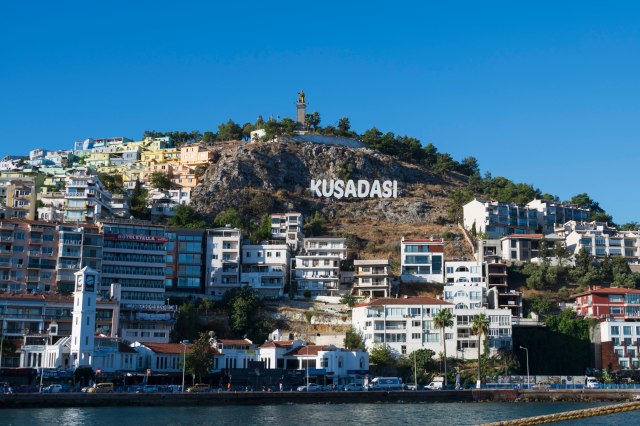
The Port City of Kusadasi, gateway to Ephesus.

It was an early wake-up call today, as Ephesus was a VERY large area to explore.  After all, it was a city of 250,000 at one point and spanned almost 3,000 years of inhabitants!

Ancient Ephesus, a UNESCO World Heritage Site, is one of the greatest outdoor museums in the world.  Although now in ruins, it is a HUGE archeological site putting together the pieces of it’s 3,000 years of existence.  Many of the components/pieces unearthed have been placed where originally constructed, are inventoried and placed for future placement or are in the process of being reconstructed like a huge jigsaw puzzle.  These sites are also part of the days adventure.
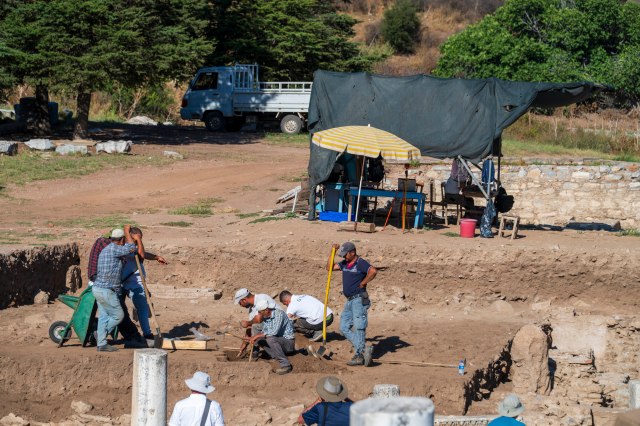
 

One of many ongoing archeological digs.

Ephesus was a major commercial center having an international trade port located by the Aegean Sea.  It was at the western tip of Asia and – the last point on  the Silk Road trading route.  Therefore, Eastern merchants used the Port of Ephesus to export their goods to the West and vice versa.  It was during the Roman rule that the city reached its glory and the population swelled to over 250,000.

At this time, shiny white marble streets – with adjoining porticos decorated with intricate mosaics to entice shoppers – were evident.
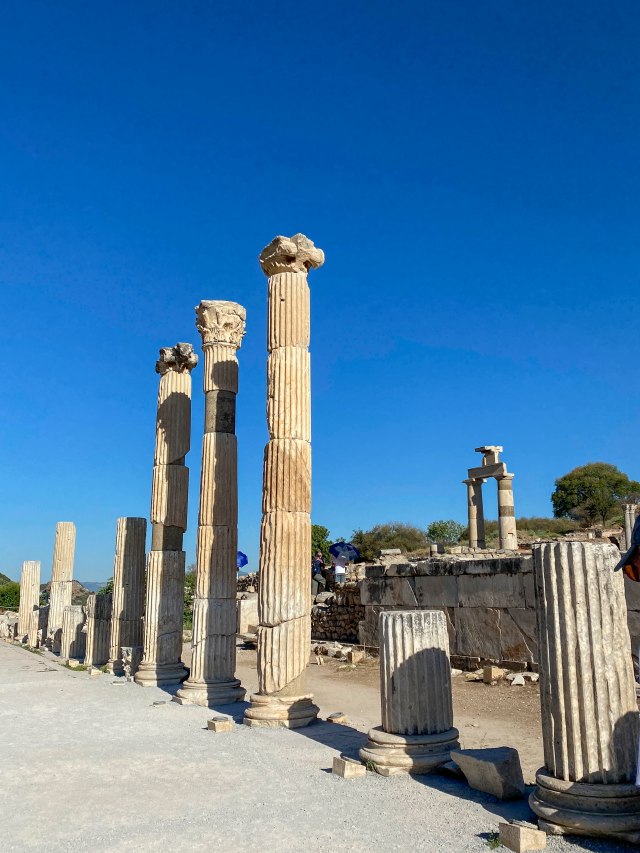
This street led down to the port.  The space behind the columns was a portico to protect the shoppers.
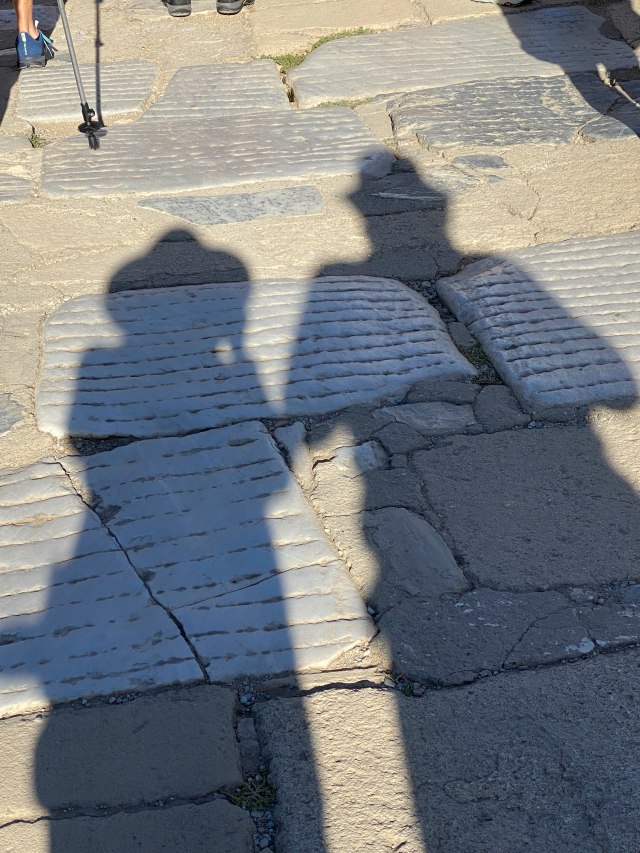
The marble streets were quite slippery – so the marble was ‘scored’.
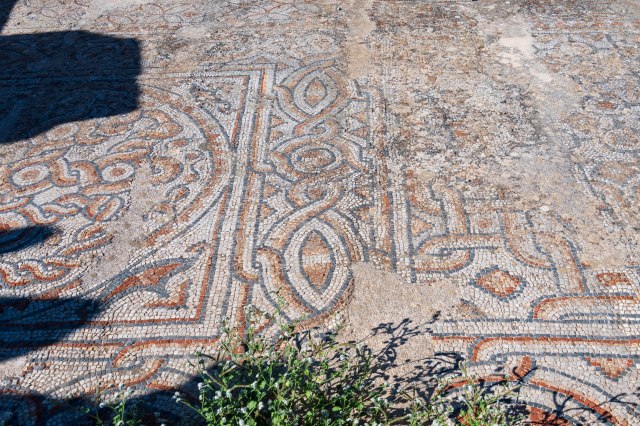
The uncovered mosaic pathways are beautiful.

In 29BC, Ephesus became the capital city of Asia province of the Roman Empire.  As such, it had many governmental buildings such as this Parliament House (which would have had a roof).
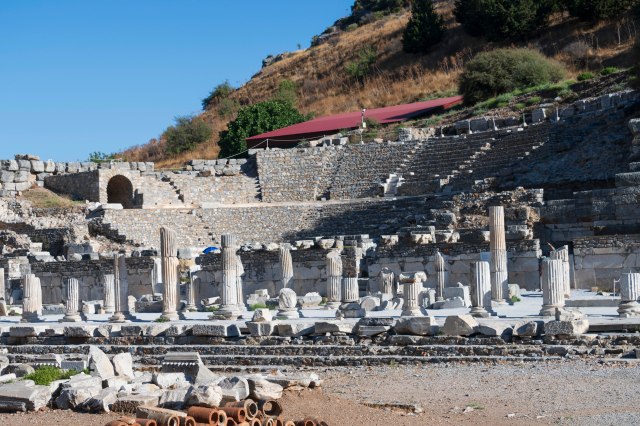
The Parliament House for political gatherings.

There was also a hospital, or medical facility, marked by this familiar sign –
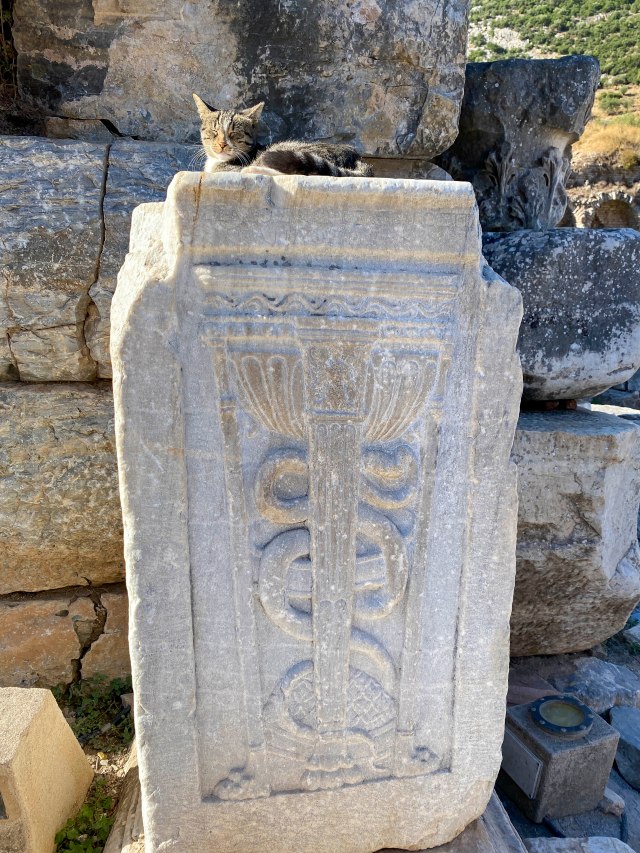
Medical staff with serpent – and a visitor on top.


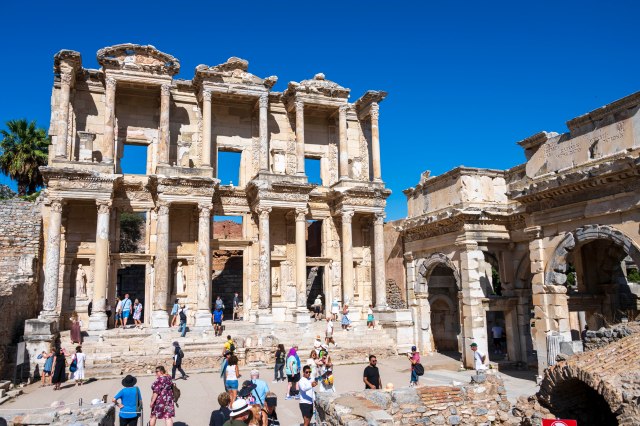
At the port entrance to the city, the street angles and passes by the Temple of Hadrian, terrace houses owned by the wealthy and influential citizens, huge bath complexes and public toilets and more shops and porticos on its way to the fascinating Library of Celsus.  Again, all of these are in the process of reconstruction utilizing artifacts and remnants  that are known to come from the specific place.  In some instances where pieces are missing, a replacement part may have been created to fill in.  These can be known by the very white coloring.
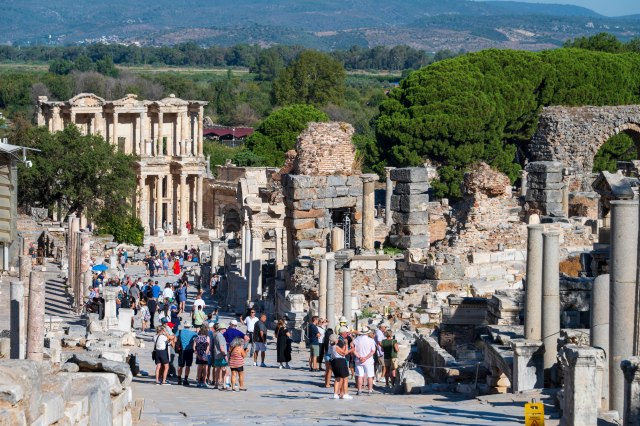
A view of the library from above.
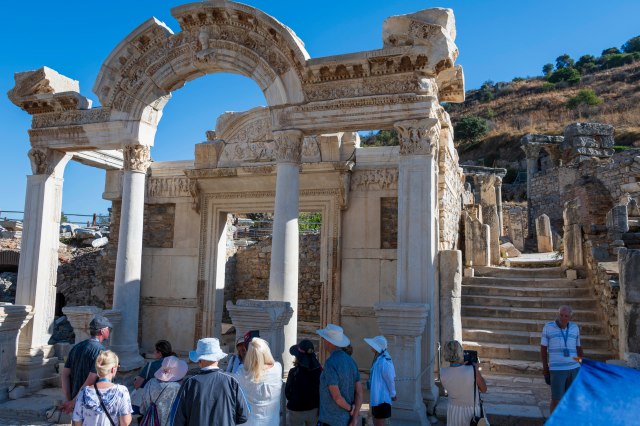
The Temple of Hadrian.
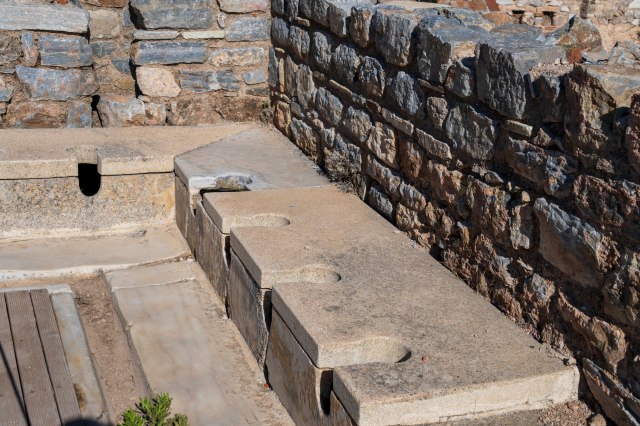
The public toilets brought back vivid memories of Gary’s barracks latrine in Okinawa.
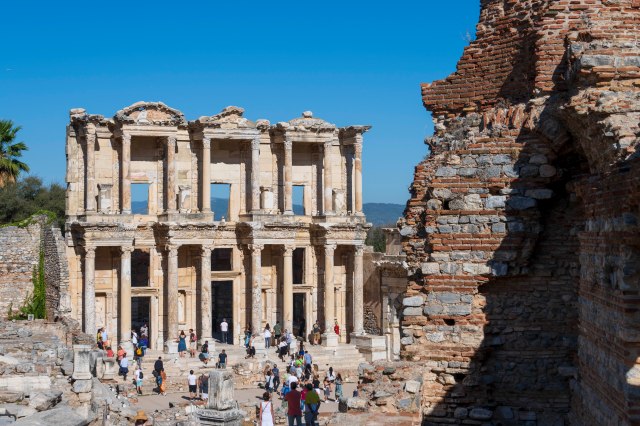
The Library of Celcus.


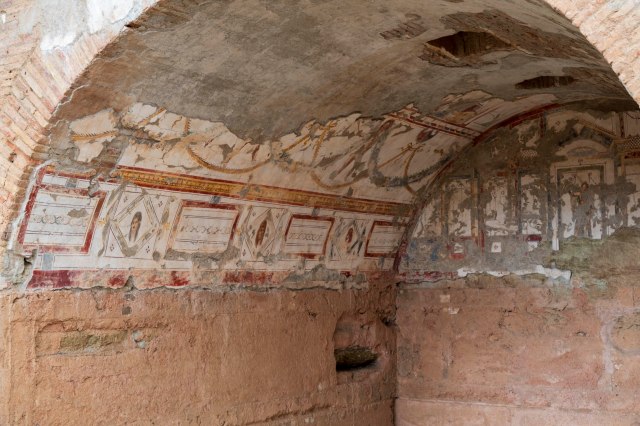
The Terrace Houses are luxury Roman Villas located on a slope opposite the Hadrian Temple.  There are 6 houses in the style of townhouses – 2 side by side and three high with the floor of the lower creating the terrace of the unit above.  Excavation on these units began in the 1960’s, heavily financed by the Austrians as compensation for all the artifacts they have in their museums!

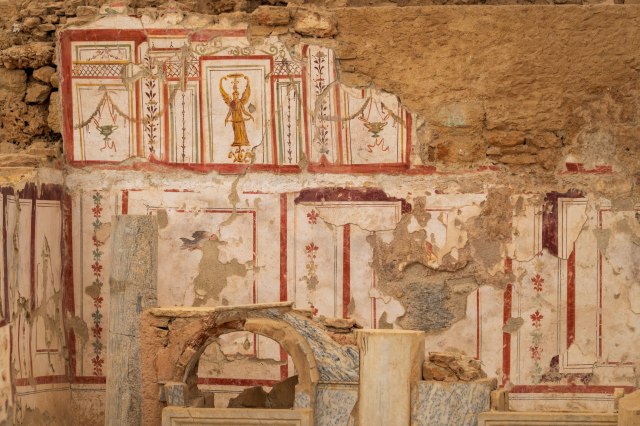
The design and decoration of these living spaces give a wonderful, fascinating insight into ancient life.  They typically had a courtyard, which made the residential area and the utility rooms accessible.  Water supply and drainage was provided by wells and apparent adequate drainage pipes!  The reception halls were richly decorated whereas the utility rooms, such as toilets and kitchens, were simply furnished.  A series of earthquakes in the 3rd century AD put a sudden end to these dwellings.
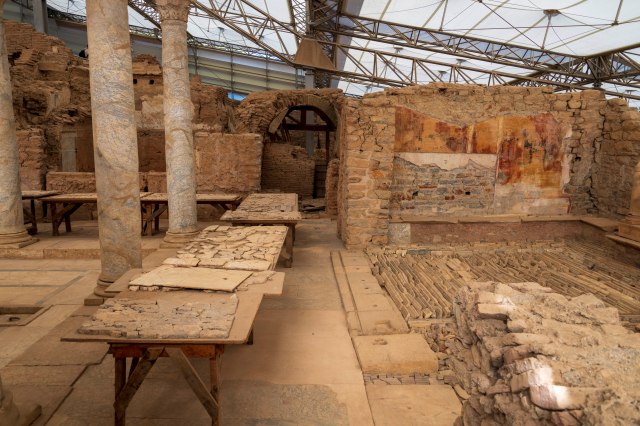
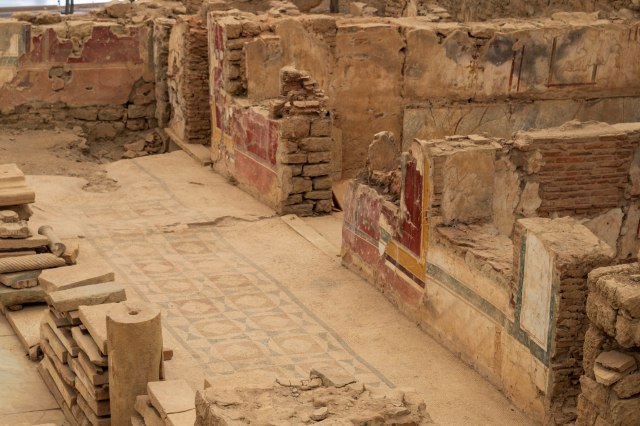
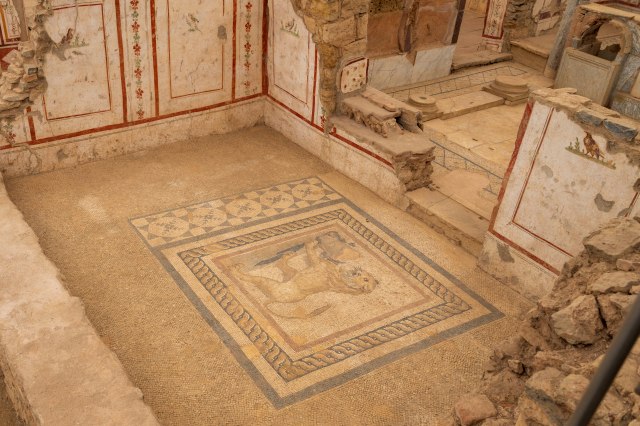
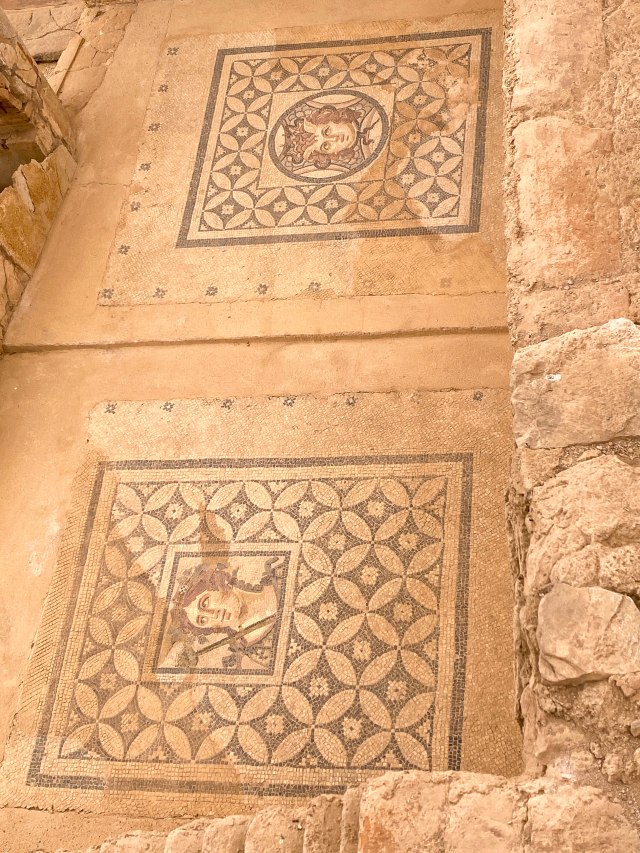
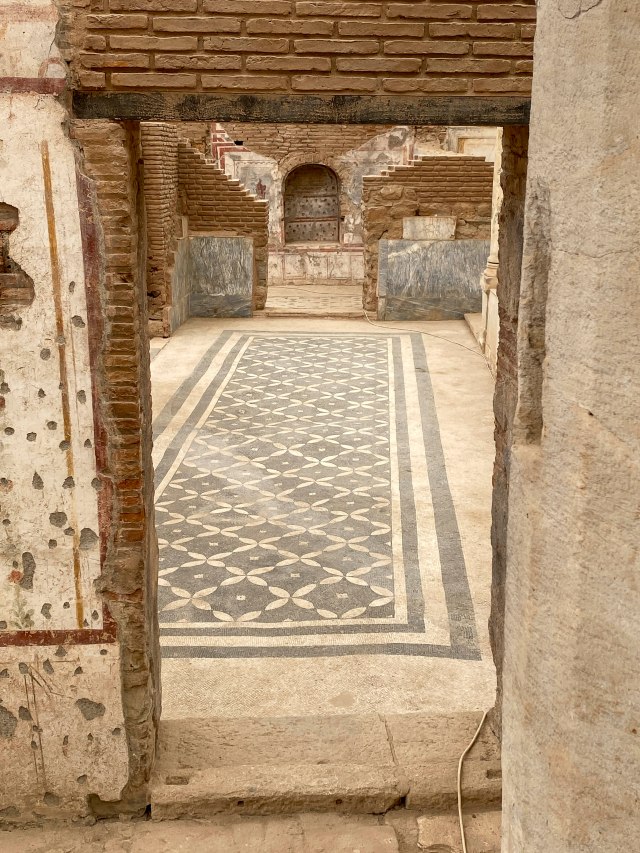
Several views inside the partially unearthed, reassembled and restored ancient houses.
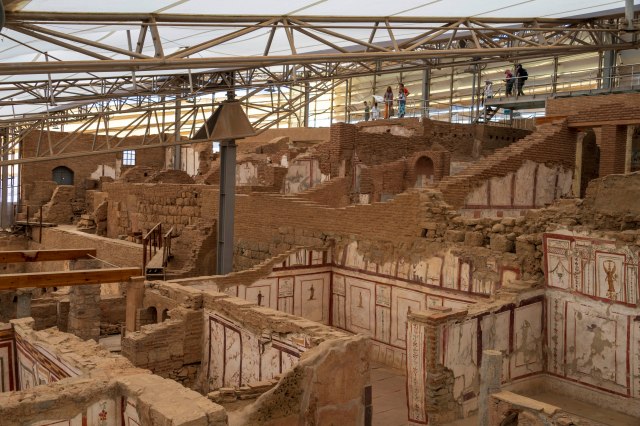
Perhaps bedrooms – beautiful paintings.
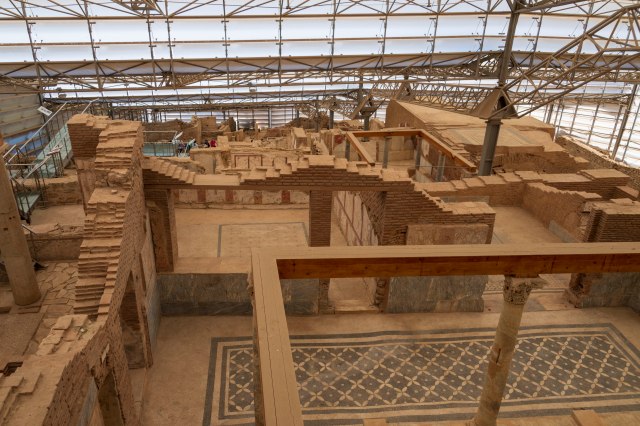
Mosaic ‘runners’ would be in places that might have rugs today.
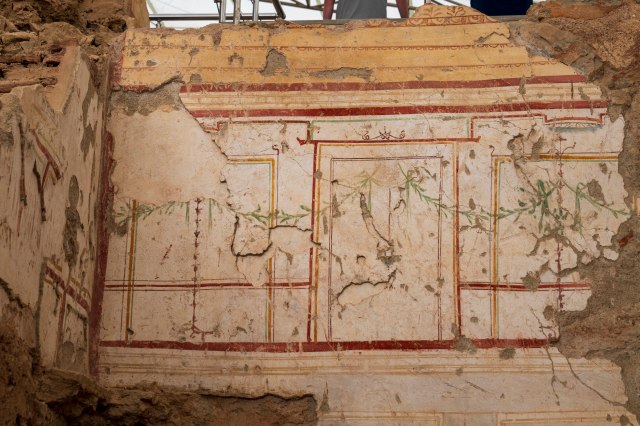
.
.
.
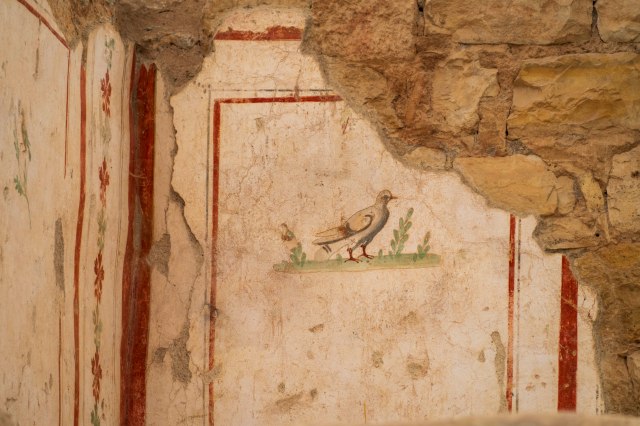
Loved this painting – so simple but elegant.
.
.
.
.

It is easy to see why the Terrace Houses were built where they were.  Fabulous views as we exited from the very top of the upper most residence!  One looks down the Marble Road with the Celcus Library in the foreground on the left to the theater past the hill on the right (where the road turns left onto the Arcadian Street).  Just past the Library is a second Agora – this the commercial marketplace.   This section of road – as well as where it turns left in the distance – would have been used by the chariots and horses!
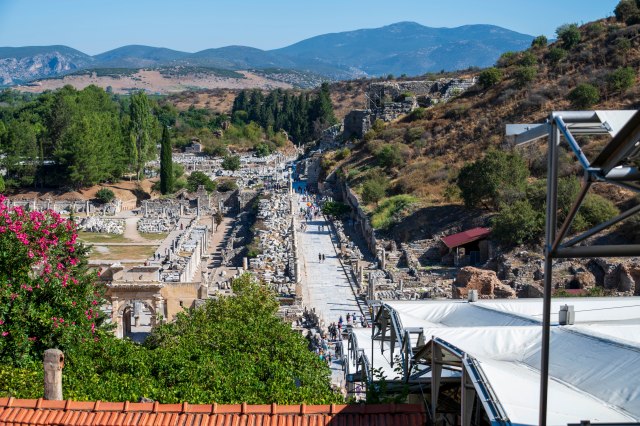
Couldn’t help but wonder how many Terrace Houses are buried on that hill on the right???

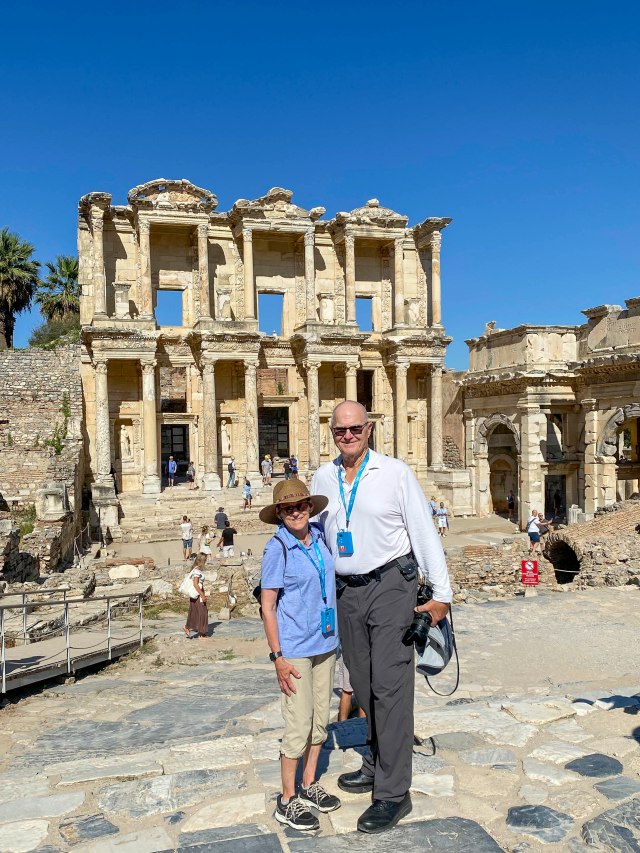
At this point, only the facade of the Library has been reconstructed with many ‘substitute’ recreations (the whiter portions).
.
.
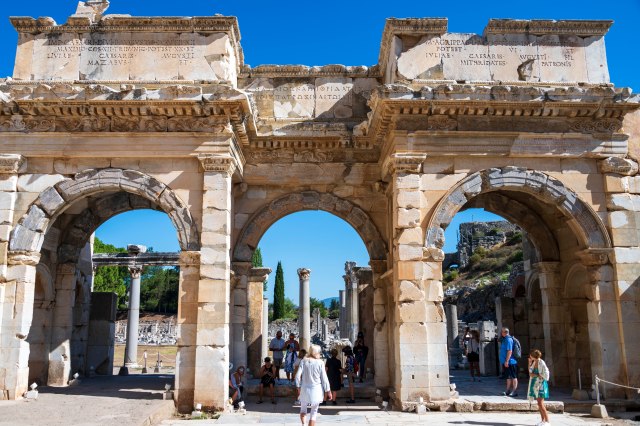
The Gate of Augustus adjacent to the library.
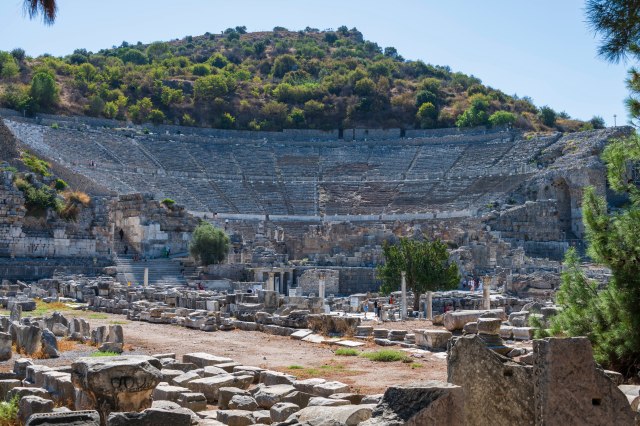
The large theatre held approximately 25,000 people.

To finish off the tour a little humor was added by a brief re-enactment by Caesar and Cleopatra and their servants and ‘fighters’ – –
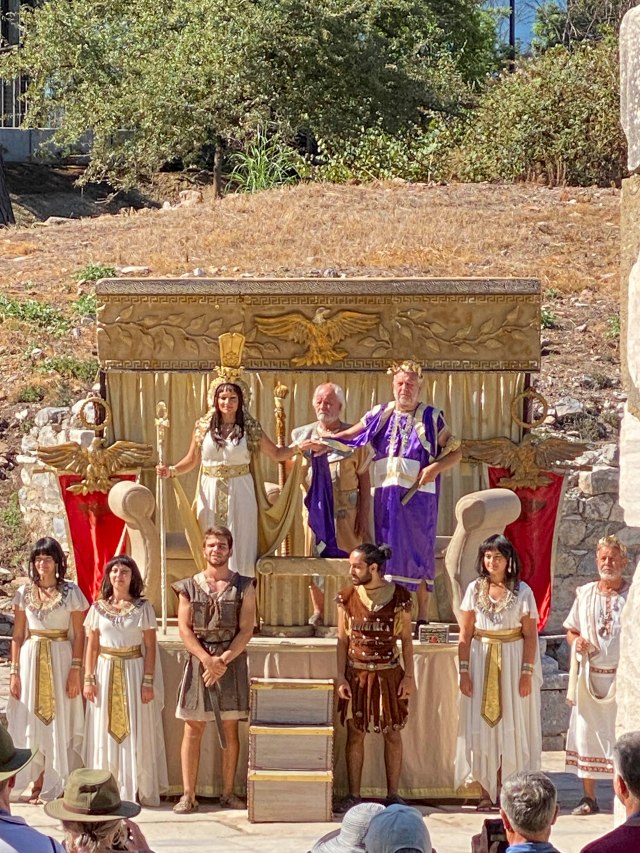
A reenactment of Caesar and his underlings.

Unfortunately, the city of Kusadasi was not a favorite.  There was an interesting carpet weaving demonstration and the sharing of Turkish tea – but, perhaps the sign will say it all –
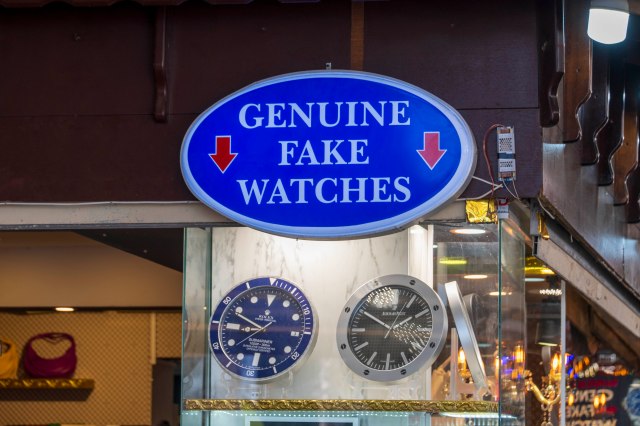
Self explanatory😂

Perhaps the highlight of this Windstar cruise was the dinner at Ephesus.  With 250 of our closest friends we made the 30 minute trip back to these fabulous ruins for an outstanding dinner under the lights.  It was a beautiful sight and completely different than the daytime view.  The details of the site have already been given – so just enjoy the views – –
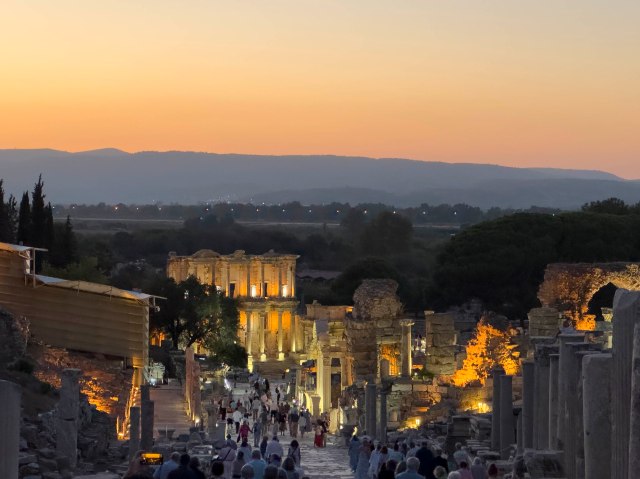
Ephesus at night.
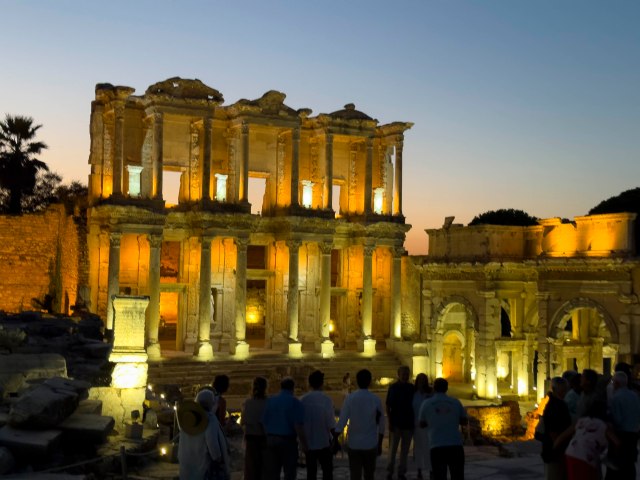
.
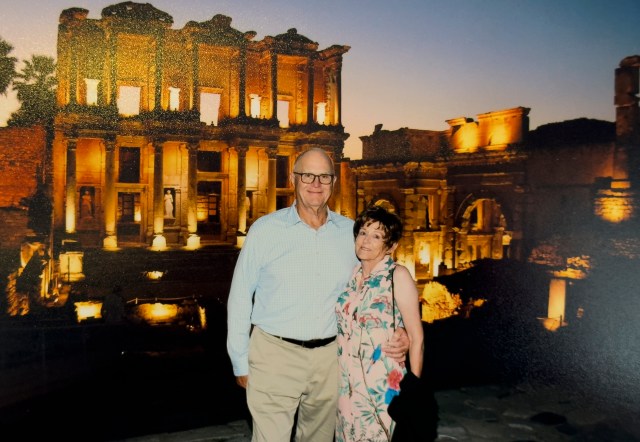
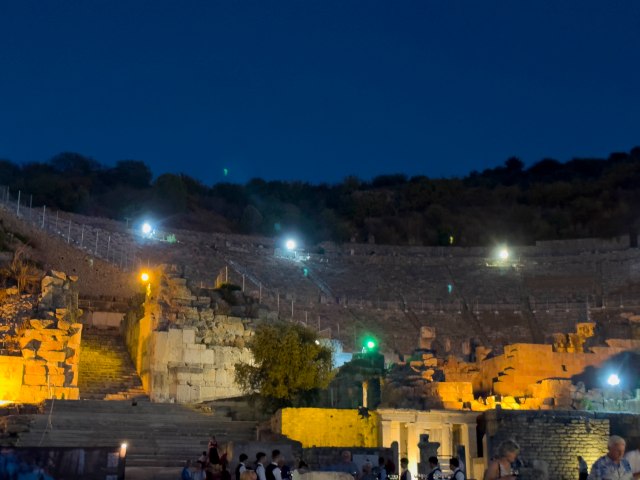
.

Tonight, we walked the Marble Road from the Library to the Arcadian Street, which was constructed in the 1st century BC and later repaired by Roman Emperor Arcadius and made into a true ceremonial street.  According to an inscription found during excavations the street was illuminated by fifty lamps at night.  This night was pretty close to that;-)
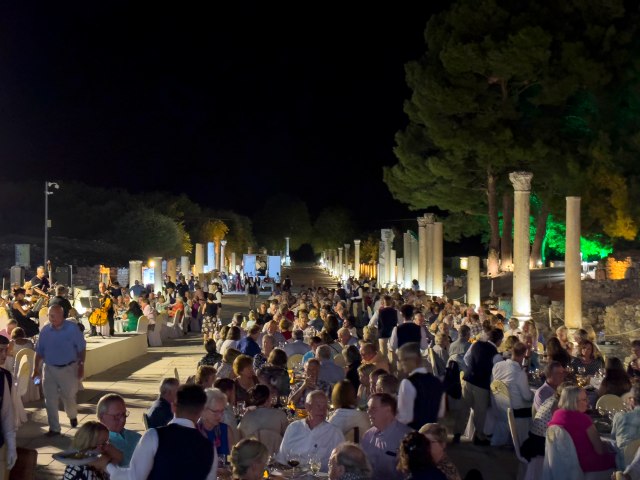
.
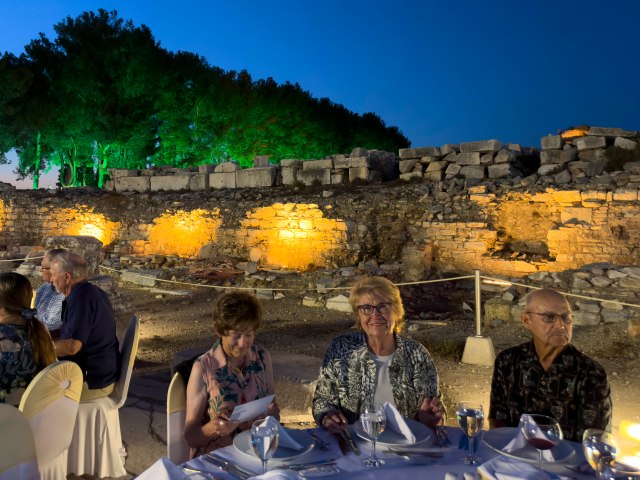
.
The end of a beautiful evening.

The stay in Kusadasi – and most important the tour of Ephesus – was excellent.  There is so much history and fabulous sites showing that civilization’s needs, wants and desires have changed very little over thousands of years.  It might be the desire for a comfortable place to live – adorned as one can afford – or a theater for all to enjoy because the arts are so important to the well-being of individuals.  It just doesn’t change!

E & G – wowed by Ephesus
The First Capitol of Greece and Minor Adjustments;-)

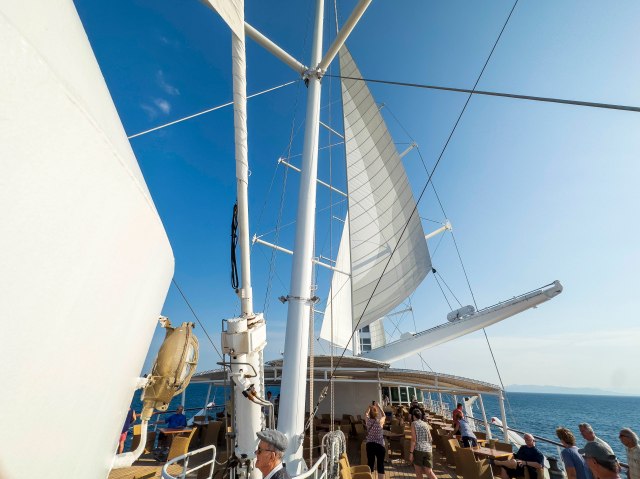
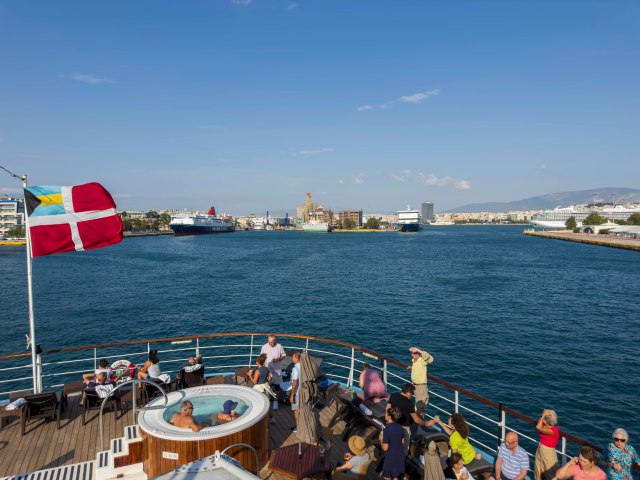
Four days of rain behind us, along with several UNESCO World Heritage Sites in the historically significant Athens, blue skies dominated the “Signature Sail Away”!  Wind Surf gathers all on the aft deck to raise a toast as they raise the sails and head off to the next adventure.  Yes, we did actually sail away from Athens, although it may have been short lived.

Setting sail on the Wind Surf from Athen’s Port of Piraeus.

Off on a new adventure.

The first stop on the itinerary was Nafplio, the first capitol of the Greek state (1823-1834), in the eastern Peloponnese.

Our mooring off the coast of Nafplio.

Tendering in to the Nafplio port.

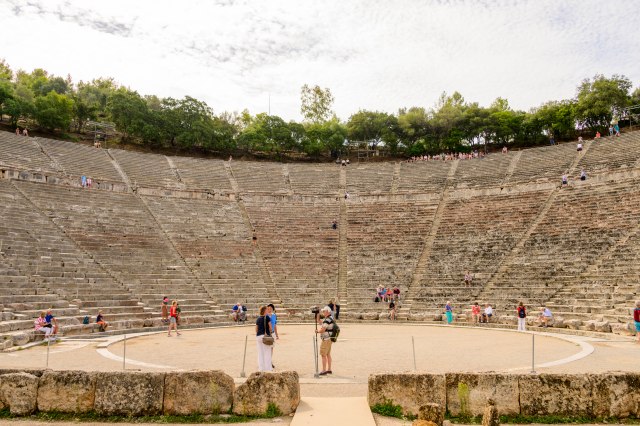
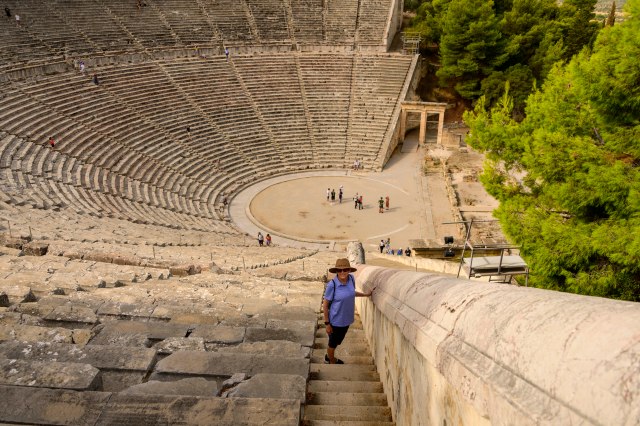
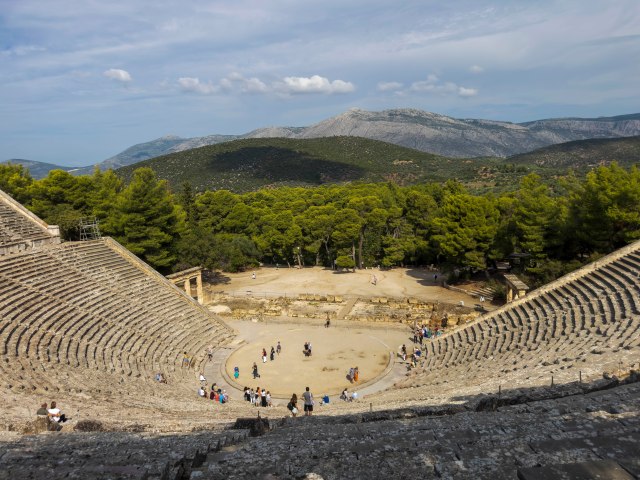
High on our agenda was Epidauros (another UNESCO World Heritage Site) – a most important healing center in the entire Greek and Roman world.  Built during the 4th century BC, the theater of Epidauros is the most perfect and renowned monument of its kind, combining superb acoustics, elegance and symmetrical proportions.  The importance of music and the arts for the body, soul and healing was recognized by the Ancient Greeks who encouraged patients to watch theatrical performances.  The architect who designed and built the theater was one of the best architects in Greece and designed this theater with acoustics so good one can be sitting in the last row and hear a coin drop on the stage.  It’s true!!  As a result, the theater is still used in the summer months for concerts.

Entering the Ancient Theatre of Epidauros, near Nafplio.

Still perfect.

Seats approximately 12,000 people.

The beautiful setting is used each summer for concerts and plays.

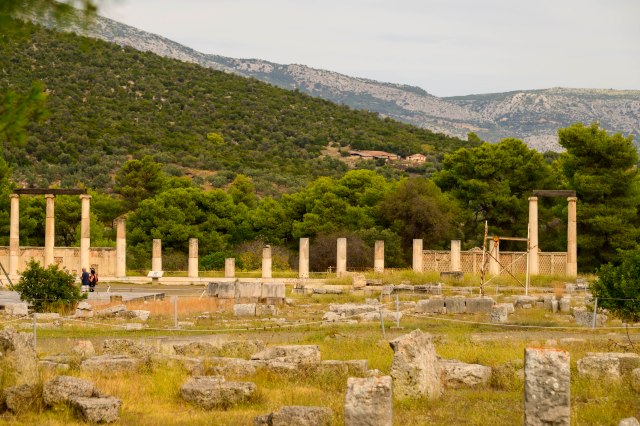
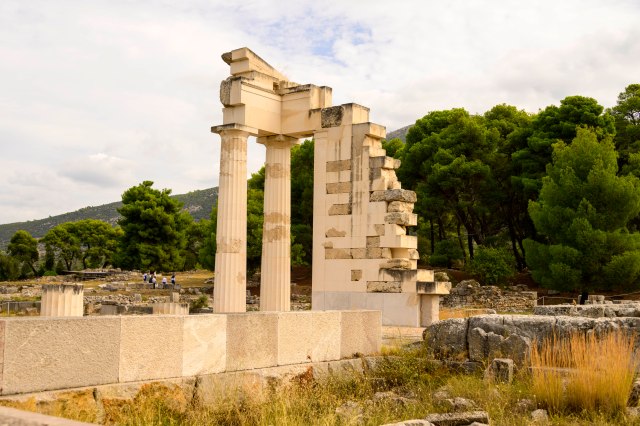
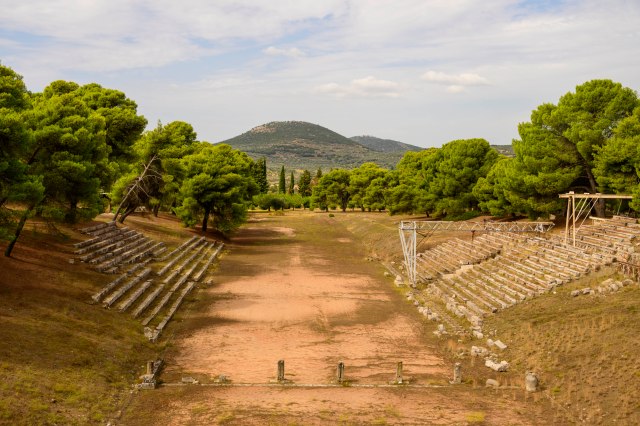
The theater was adjacent to the sanctuary-hospital of Asclepius, the ancient Greek God of Healing.  Also on the site is a museum, housing many of the antiquities found on the grounds, the temple of Asclepius, a small odeon, a stadium and the remains of many other buildings.

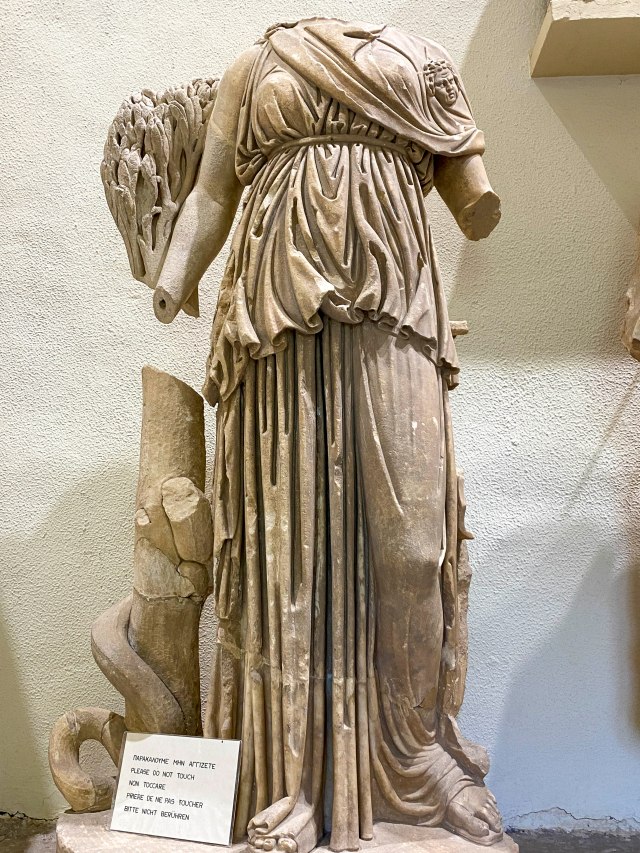
Statue of Athena – One of many statues found during the excavations of the historical site.

Remnants of the Sanctuary of Asclepius, in Epidauros.

Remnants of the Sanctuary of Asclepius.

.

Athletic stadium used way back when.

The trip to Epidauros is not to be missed.  But, there is much more to discover in Nafplio – so back to town to wander along the promenade and find a nice taverna for lunch.

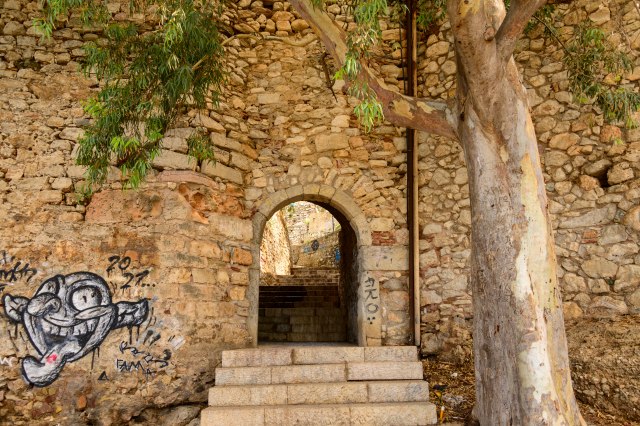
An ancient entrance to the walled city with more modern art forms on display.

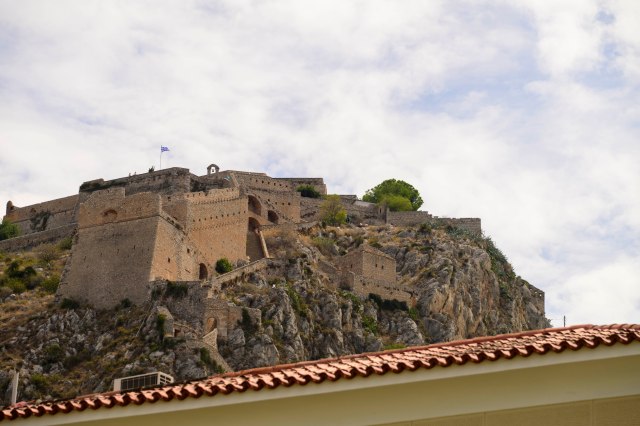
The Castle of Palamidi stands proudly over Nafplio.  It is one of the most important and best preserved castles in Greece – although built by the Venetians in the 18th century.  Today, the 999 steps were NOT on the agenda so it was viewed from our lunch spot below;-)

The Fortress of Palamidi sits above the city.

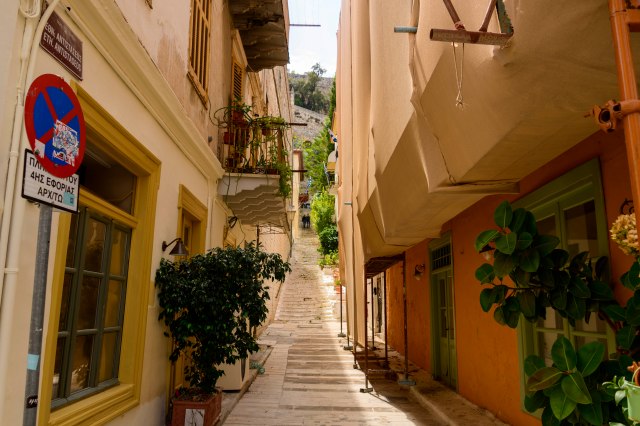
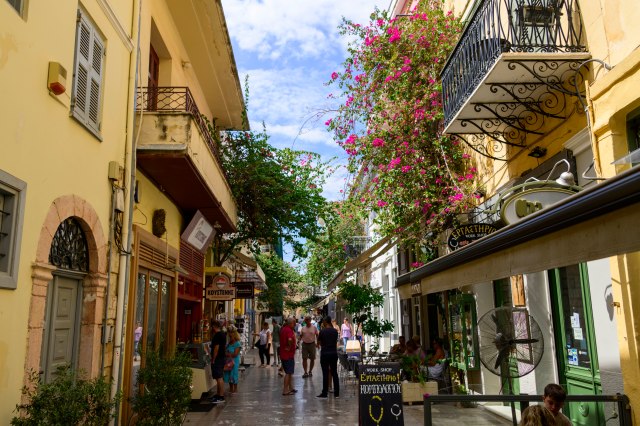
After lunch it is time to stroll the alleys of Psaromachals (the oldest neighborhood in Nafplio) and enjoy the scenery, architecture and perhaps a gelato from Antica Gelateria di Roma.

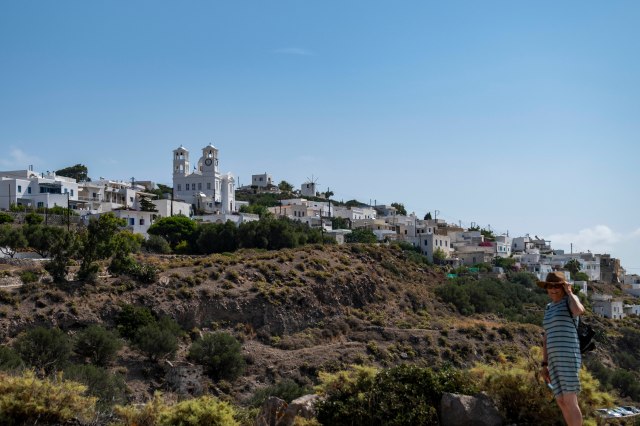
Scenes of old Napflio.

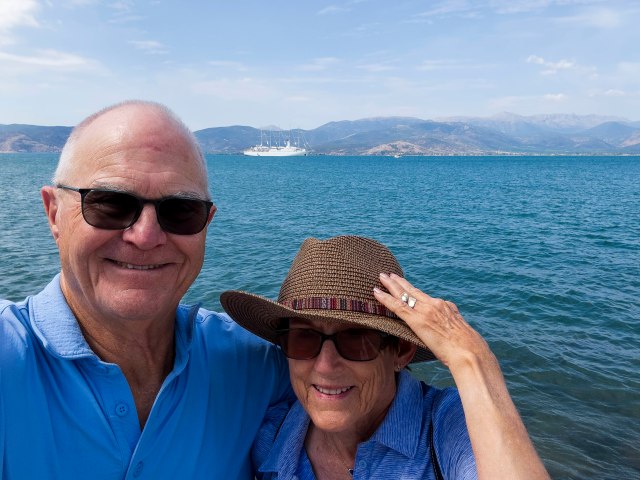
Trying not to lose our hats to the wind.

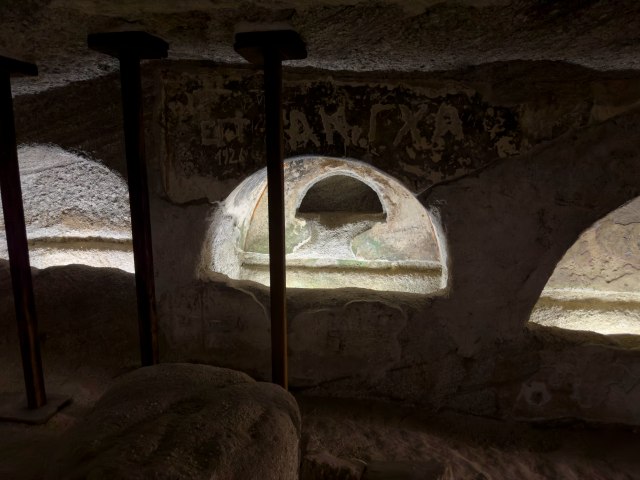
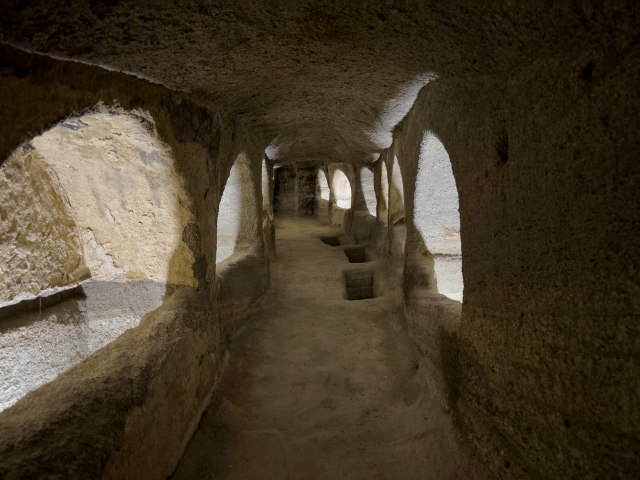
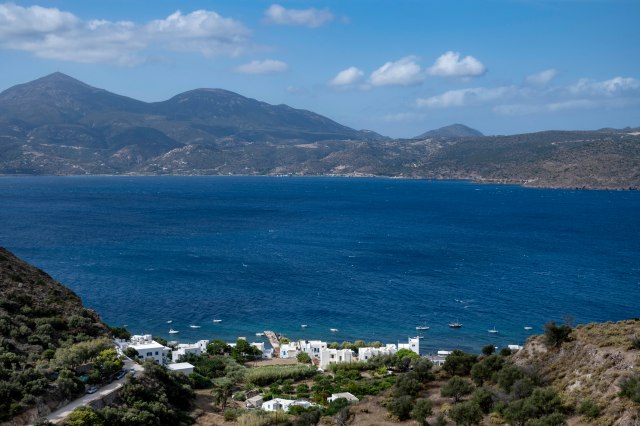
Next on the itinerary was Mykonos – – or not!  With the smaller ship and non-agreeable weather, the next port was changed to Milos.  It was learned quickly that one must be adaptable because several changes were upon us.  Milos has beautiful  beaches, but given the turbulent seas (and last minute redirection) it was not possible to see many of them.  Instead, excursions on the island were the order of the day.  The Christian Catacombs, the largest in Greece, may have ‘housed’ up to 2,000 bodies.

The Catacombs of Milos. This crypt contained space for a small child above the adult.

The cleaned up, lighted displays did not convey the damp dirty depths we expected in catacombs.

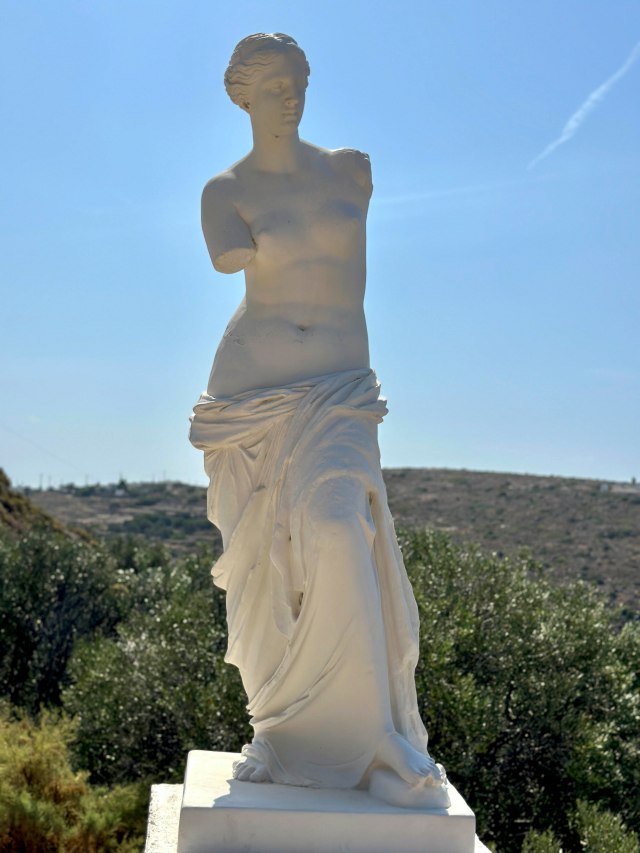
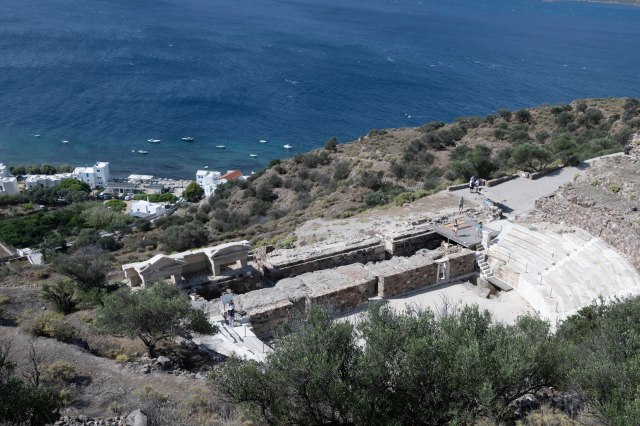
Perhaps the best claim to fame for Milos is the discovery here of the famous Venus (of Milos) di Milo now residing in the Louvre in Paris.  It was discovered in 1820 and is believed that the missing arms may have also been at the site but taken by ‘hunters’.  Her discovery spot was near their theater and was probably an adornment there.

This recent replica of the Venus de Milo erected near the discovery site – we did NOT take a side trip to Paris!

The ancient theatre of Milos sits above the small village of Klima.

.

The town of Triovasalos.

Sightseeing does work up an appetite, so back to the port town of Adamantas to find a nice little Taverna for lunch.

A beautiful view of the port city of Adamantas, Milos.


It has been a couple of interesting days as there was a redirection, an unscheduled day at sea due to the redirection and lots of rocking and rolling on the ship;-)!!  But all is well – sights so far have been fun and intriguing and we are doing well.  We believe the next stop is Kusadasi and Ephesus;-)


E & G with sea legs!!


Athens in the Rain

The tale of a long awaited trip to Greece and her isles follows.  If you are not into Greek mythology, enjoy the pictures;-)

While the world is flat and shrinking, beaming oneself to a far away place has not yet been perfected.  Therefore, it was close to 24 hours of travel by the time Athens was reached – and the stomach was growling!  So, the taverna across the street from our hotel was calling even though it was 10PM!  And, as you can see, the tavern was hopping (even with families with young children) as the typical dinner hour for the Greeks is 10!  By the way, this became a ‘go to’ over the next four days as they had excellent lemon chicken and the best pasta with xinomizithrol cheese (can’t wait to try to find this cheese in AZ!).

The best little restaurant – the food was delicious, inexpensive and there was great people watching opportunities.

As the title of this post implies – there was a lot of rain the four days in Athens.  So – when it rains head inside to a museum, and Athens has the fabulous Acropolis Museum.  The greeter here is the Owl – the sacred bird of Athena, symbol of the Goddess and emblem of Athens.  This sculpture was dedicated on the Acropolis in the early 5th century BC.

One of the first pieces spotted in the Acropolis Museum was this owl.

The museum sits at the base of the Acropolis facing the south side of the Parthenon so that as one views the artifiacts they can be envisioned on the hill in their original home.

Our lunch view of the Parthenon from the museum cafe.

The highlight of the museum is on the top floor where a life-size replica of the frieze that wrapped all the way around the outside of the Parthenon has been created.  The relief panels depict the Great Panathenaic, the procession held every four years in which citizens climbed up to the Parthenon to celebrate the birth of their city.  The original marble panels owned by the museum are displayed in the exact place where they would have originally been.  Replicas are displayed for those panels recovered but on display in other museums (the British Museum, Paris Louvre and in Copenhagen).  Blank spaces represent panels that are forever lost;-(  Here one will also find a fabulous film detailing the building of the Parthenon, its many uses over the years and the many attempts at bombing and destroying the structure.

Men on horseback, gods, chariots, musicians, warriors and much more are all part of the grand parade.

Now – Greek mythology on Nike!  In Greek literature Nike is described as both an attribute and attendant to the Gods Zeus and Athena.  Nike as an attendant was a goddess who personified victory in any field including art, music, war and athletics.  She was often portrayed winged – perhaps with a swoosh on her sandal;-)!!!

Nike adjusting her sandal and making sure the swoosh is showing!!

The museum sits atop more ruins, which can be viewed from both inside the museum and wandering below.

On going excavations below the museum.

Another day of rain made a decision to head to Delphi instead of a tour of the Acropolis.  A 2 hour drive north into the mountains for more lessons.  The archaeological site of Delphi is a UNESCO World Heritage Site preserving where the oracle of Apollo spoke and where he declared the site to be “the navel of the world”.  Delphi in the 6th century BC was indeed the religious center and symbol of unity of the ancient Greek world.


View from our lunch spot Near Delphi with the Gulf of Corinth in the background.

The area was inhabited from 1500-1100BC, with remains of the period in the museum.  The development of the sanctuary and oracle began in the 8th century BC.  The fame and prestige spread throughout the then known world and pilgrims came to the site to receive an oracle from the priestess of Apollo.  There are many religious thoughts and myths about the site and there are remnants of many buildings.  After viewing artifacts in the museum one can walk through the Temple of Apollo, the marketplace, the theater and the athletic stadium.  So hard to believe these structures have been here for 4,000 years!

This large sculpture would originally been mounted atop a column with the Delphi complex.

Depiction of wealthy patrons of the Temple of Apollo would have been mounted on the temple structure.

The color in these shields are still visible because this piece was buried since BC times.

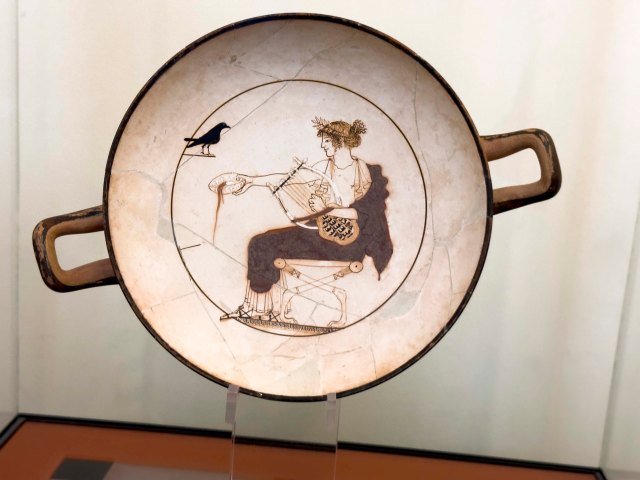
A two thousand year old vessel used for sipping warm beverages.

Small sculpture of flutist missing one of his two flutes.

The Charioteer.

Remnants of the marketplace.

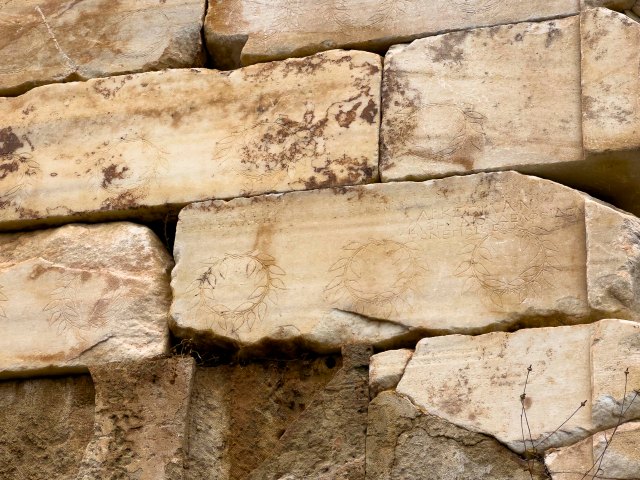
Many of these scripted stones within the site.

Note the two olive branch crowns, used to signify athletic victory, etched in the stone.

Remaining columns in the Temple of Apollo.

Theatre seating.

View from the top of the theatre.

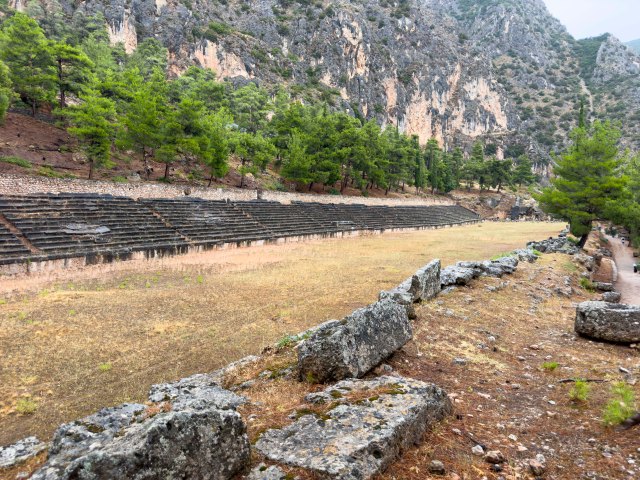
The athletic stadium.

The Athenian Treasury.

Finally, what one comes to Athens for – the Acropolis (high city).  The most important ancient site in the Western world is built atop a hill overlooking modern Athens.  Here, the Athenian ruler Pericles spared no expense transforming the site into a complex of lavishly decorated temples to honor he city’s patron goddess, Athena.  The Parthenon, the Erechtheion, Propylaea and Temple of Athena Nike survive in remarkably good condition.  In addition, the Odeon of Herodes Atticus and Theater of Dionysus can be viewed on the way up the hill and fantastic views of the city of Athens and many other sites can be viewed from the ‘high city’.
 

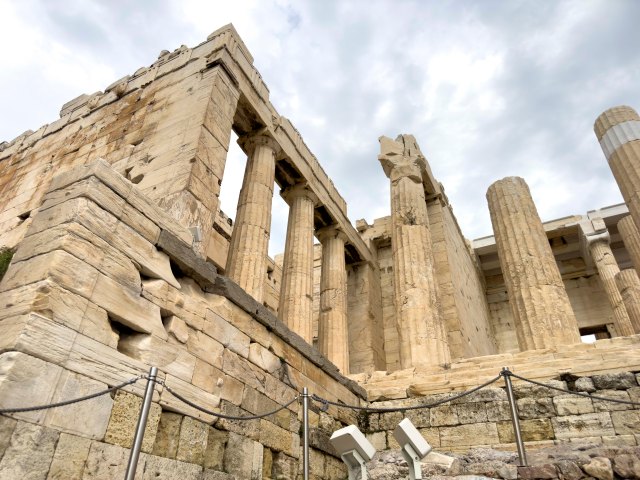
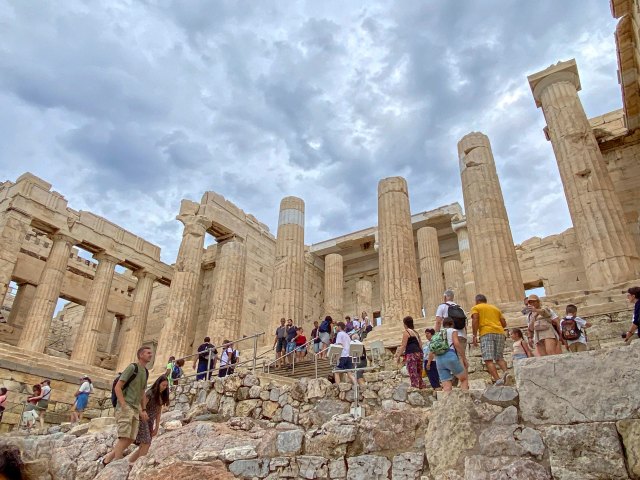
One enters through The Monumental Entrance.

The north face of the Parthenon.

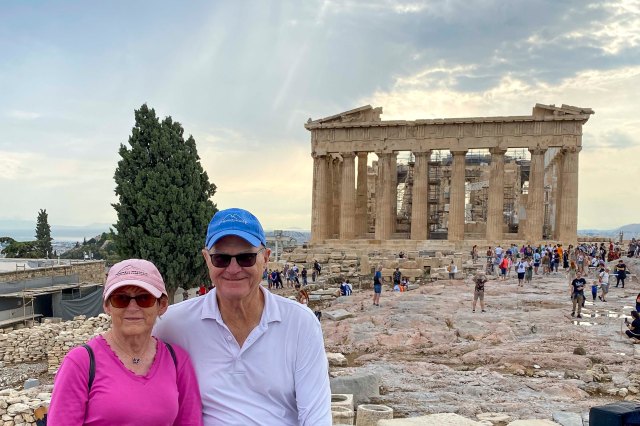
The East face and most important.  Something older than us!

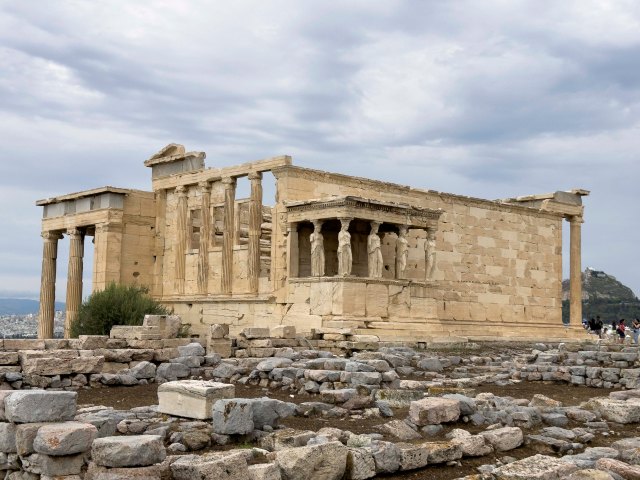
The Erechtheum.

The Six Virgin Sisters.

The Temple of Athena Nike.

Our traveling companions, Rheta and Tom, above the Odeon.

There are so many more sights to see in and around Athens.  At the Syntagma Square (in front of the Parliament) there is the changing of the guard at the tomb of the unknown soldier, there is a walk thru the Plaka and the ancient agora and wonderful old churches, tavernas for lunches and drinks and general sights.


Changing of the Guard at Parliament House.


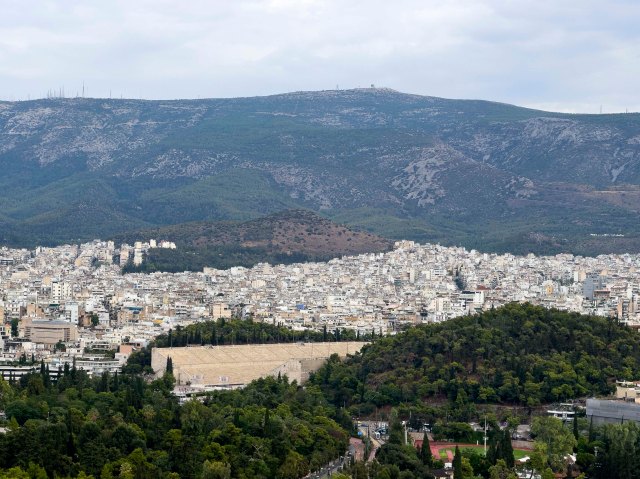
The Olympic Stadium was built in 1896 for the rebirth of the Olympic Games.

A musical interlude in the Plaza.

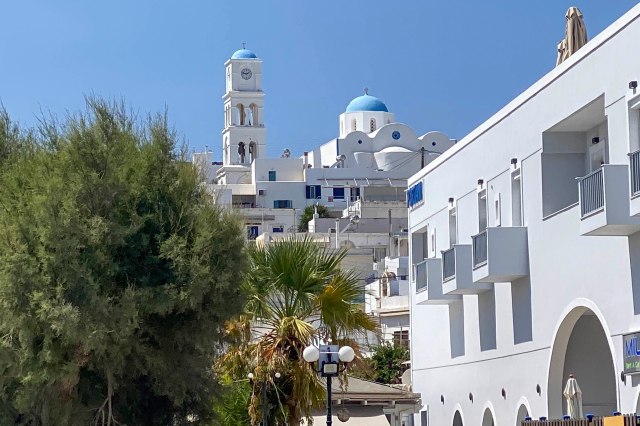
Lovely old, historic church

Time to board our cruise and leave Athens in all its glory and history behind.

Having a great time – E&G trying to get dry

Summer Fun – With Friends and Wildlife

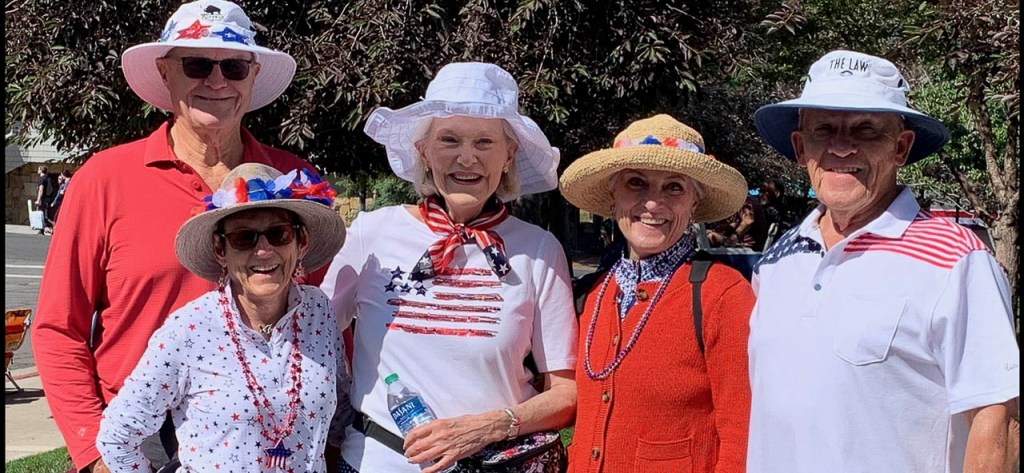
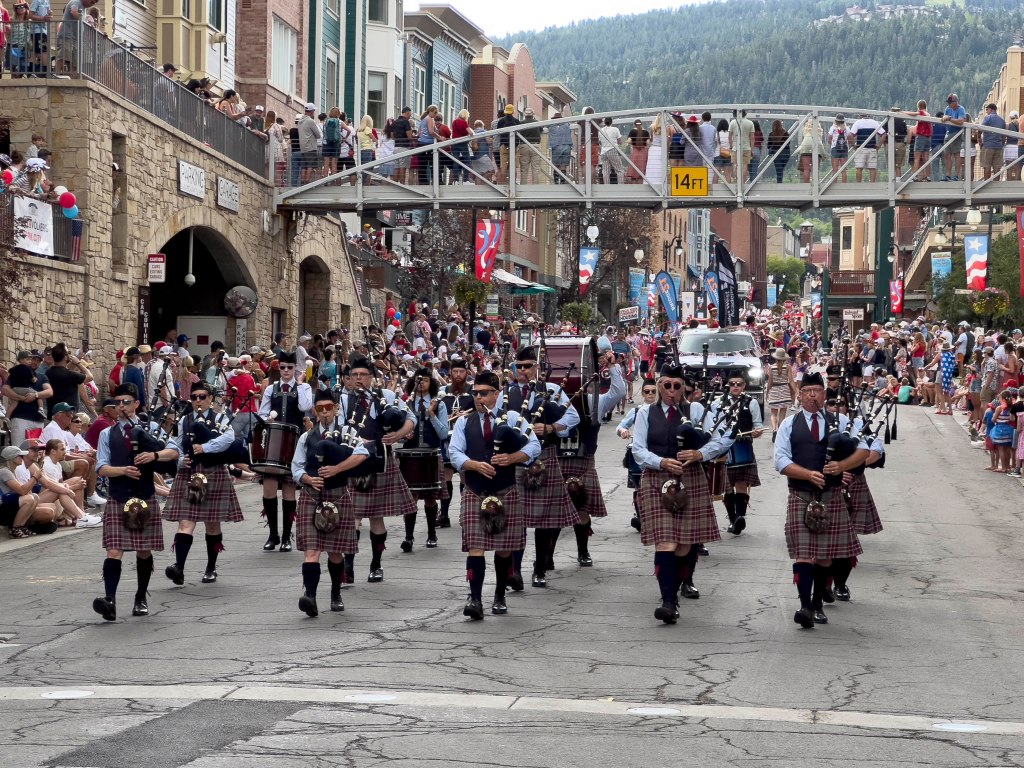
With a fantastic trip to Alaska behind us, the van was loaded and headed to Park City for the next two and a half months. It seems that many of our Senior Community residents – and friends – have decided that heading north for the summer is a good idea and are now joining us for some of their summers. For those who have been there, they know how much fun the 4th of July is! And is even better sharing with friends;-) So this year we had lots of company – –
All decked out and ready to go – so let’s get this parade started….
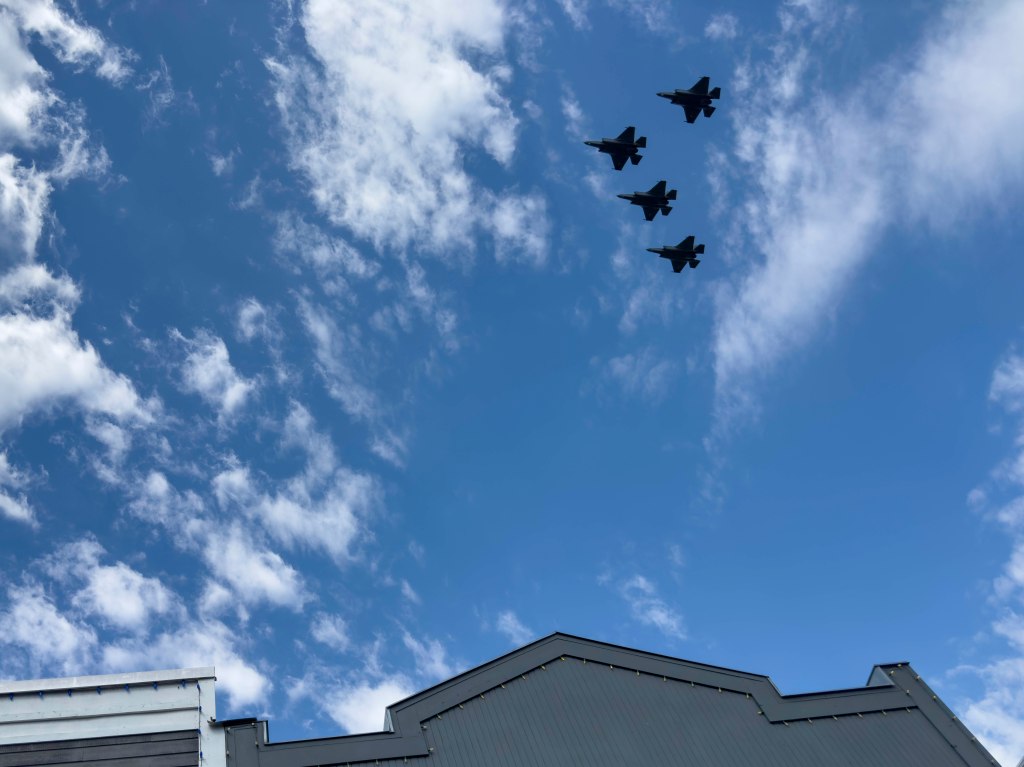
…nothing says “GO” like a flyover…
…and here we go for the 4th of July parade in Park City!!

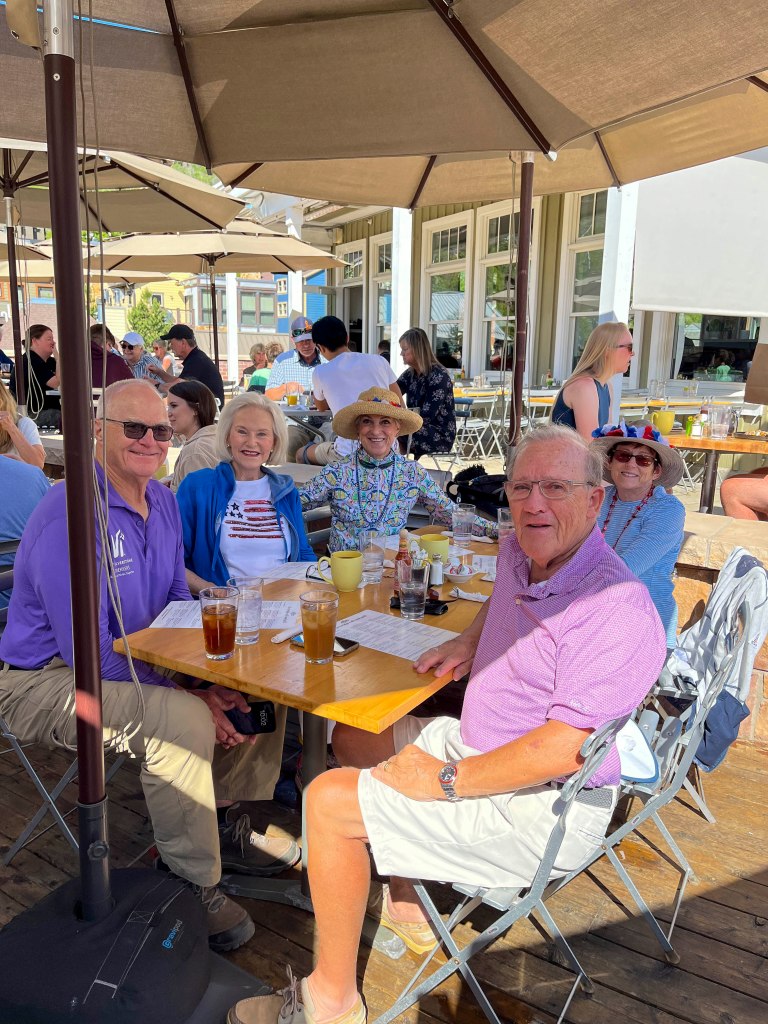
Sunday brings the Park Silly Market, which is a lot more fun to wander after breakfast at The Bridge – –

The whole gang gathered for breakfast.

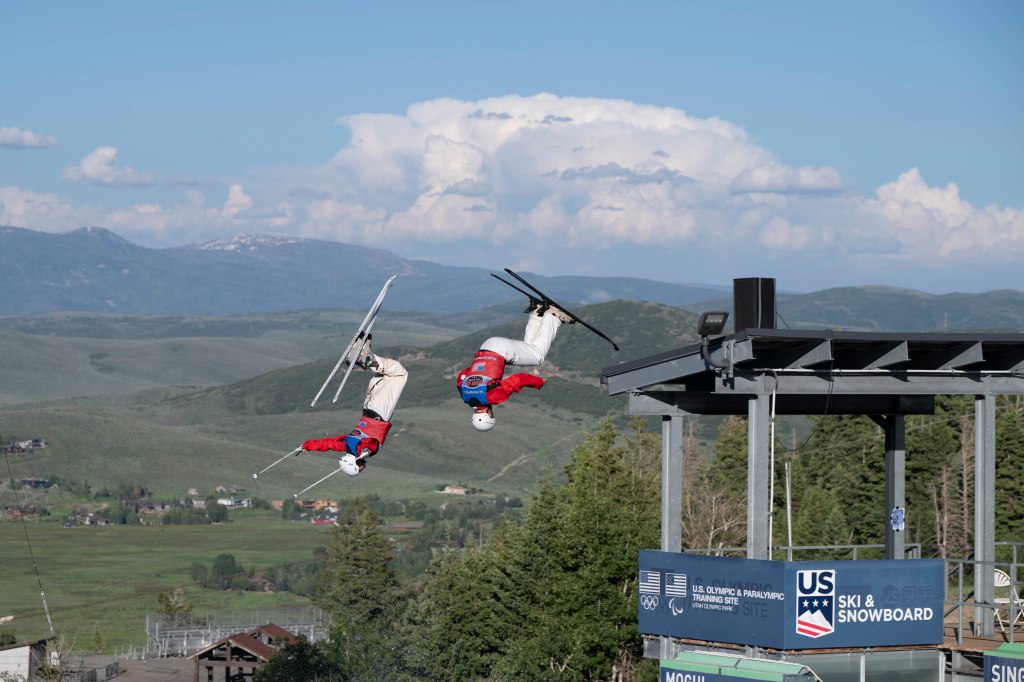
There is so much to do in Park City, but a real favorite is the demonstration at the Olympic Park where Olympic free style jumpers put on a show jumping into the pool. The Olympic Park is a year round training facility for several winter sports disciplines including bobsled, luge, nordic jumping and the free style jumping. Salt Lake has done an incredible job of maintaining the 2002 Olympic venues, which makes it ready for an encore. Hoping that comes true in 2030 or 2034!! We were quite lucky to see two gold medal Olympians from the recent Beijing Olympics in the show we attended.

The demonstration of acrobatics at the US Olympic training Site is always jaw dropingly good.
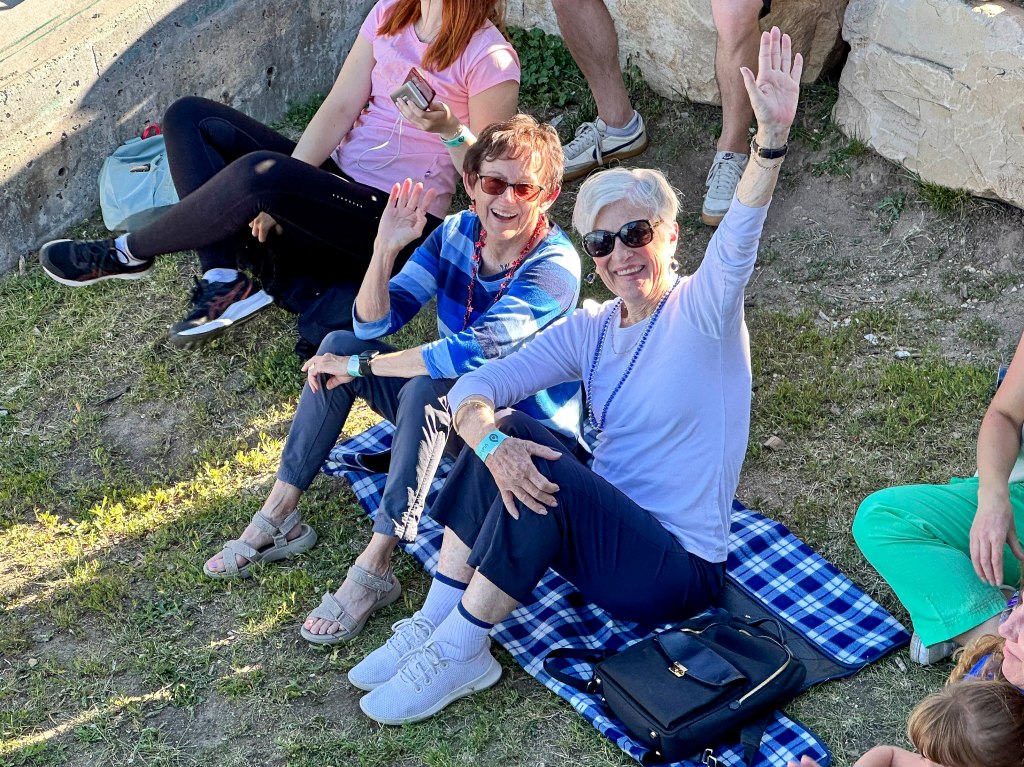
And fun was had by all.

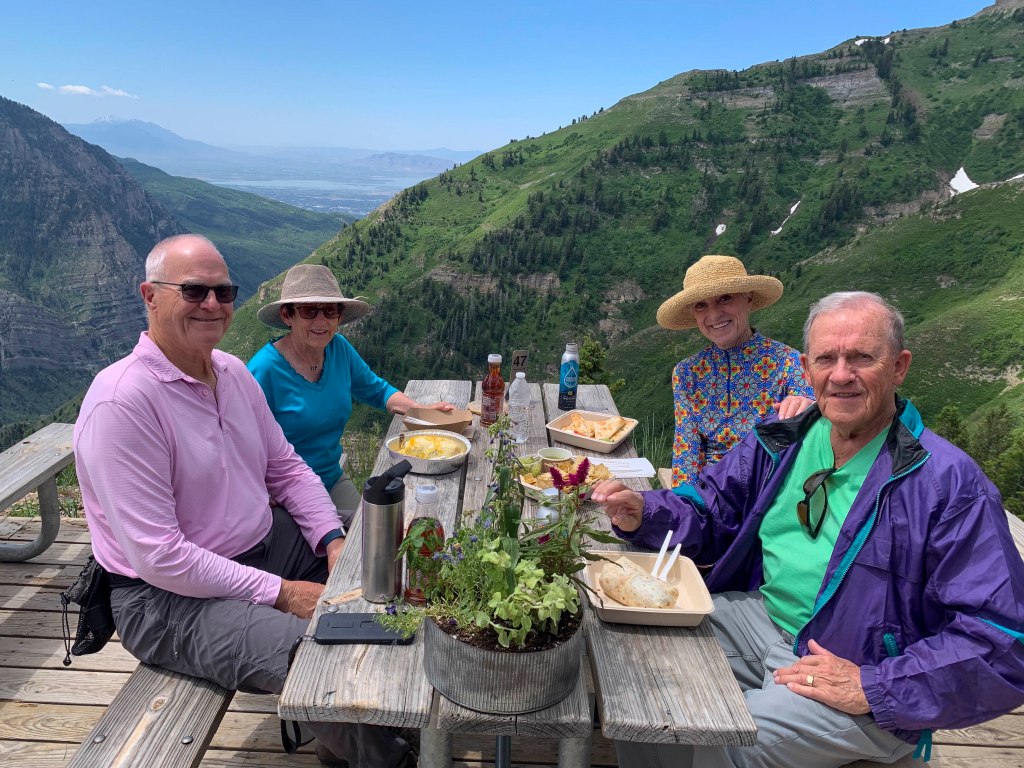
Another very fun adventure is to head over to the Sundance Resort and enjoy all it has to offer, as the grounds are just beautiful. Last year they opened the Bearclaw Cabin at the top of the mountain for lunch. AND, it has the best smothered chicken burritos EVER!! It also has the most incredible views;-) So – hop on the lifts (it takes three to get there) and enjoy the ride and the scenery. There’s nothing better – except the burritos.

Yes – that is Utah Lake in the background and off the other side is Deer Creek Reservoir.

When one is done with lunch and back at the base of the resort, don’t miss the reflecting pond with the sculpture and the artist gallery. They have fantastic blown glass items;-)

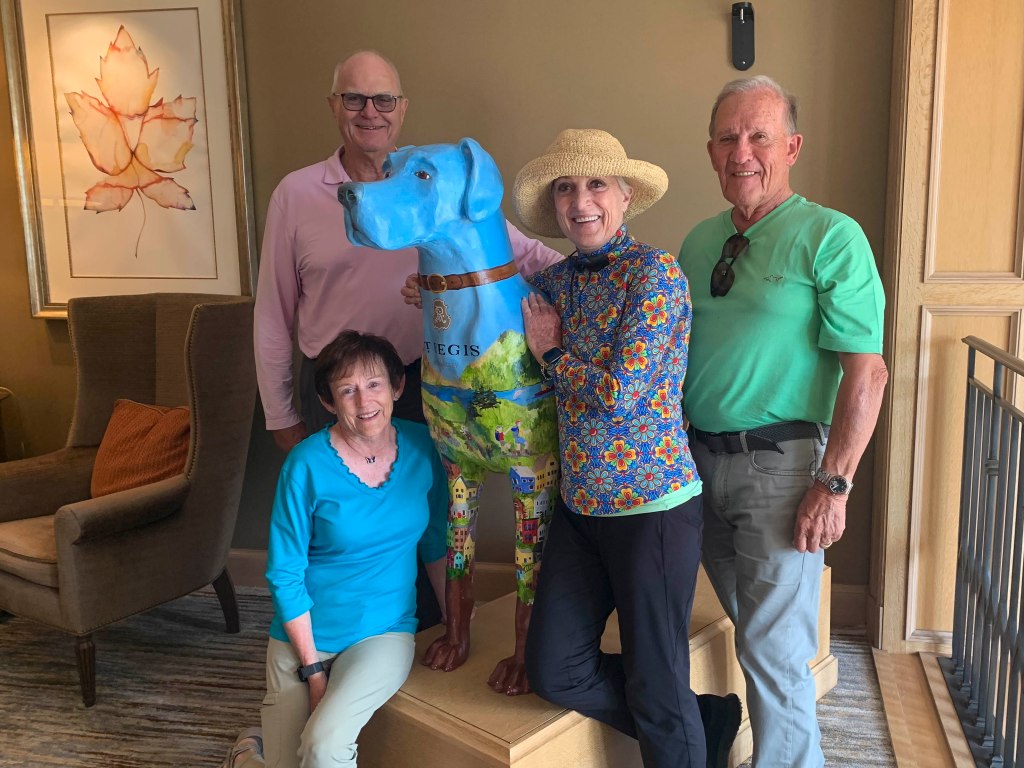
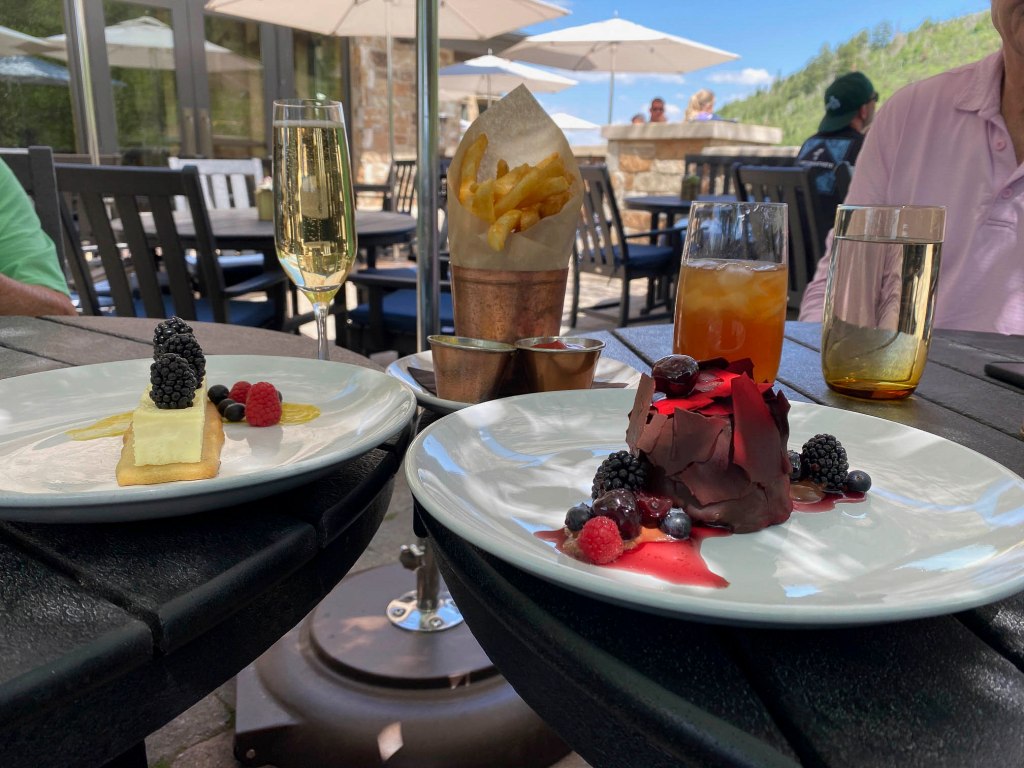
A really fun stop on the way back to Park City is the St. Regis for an afternoon dessert and drink on their lovely patio. Be sure to say ‘hello’ to the St. Regis dog on your way to the funicular- –

Then off to the St. Regis Hotel to pet the dog…
…and enjoy snacks, drinks and dessert on their patio. How good does that look?!!!!!?!

Like I said – Bearclaw Cabin is a favorite so another trip was on the agenda when more friends arrived – –

More chicken burritos, views of Deer Creek this time and a beautiful day;-)

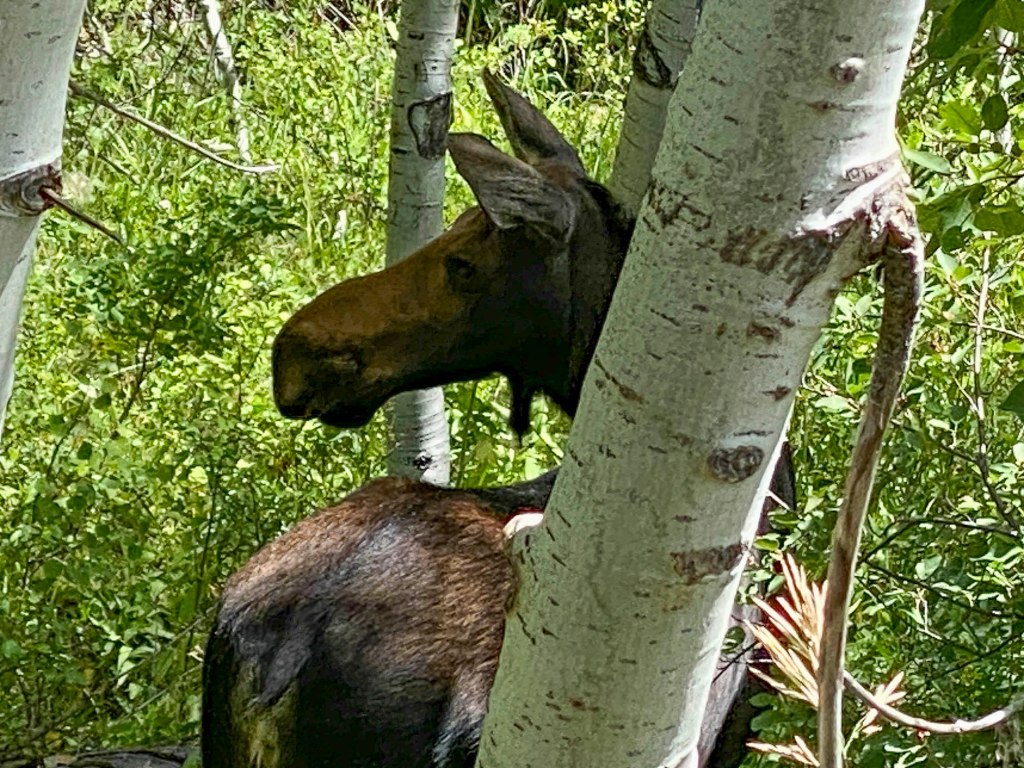
The usual road for the return trip appeared to be backed up with an accident, so we ventured into Aspen Grove and took the Cascade Springs Rd home over the mountain. A good alternative as we happened on this Cow moose and her calf – always a treat – –

Mom looking for her calf, who is off playing.

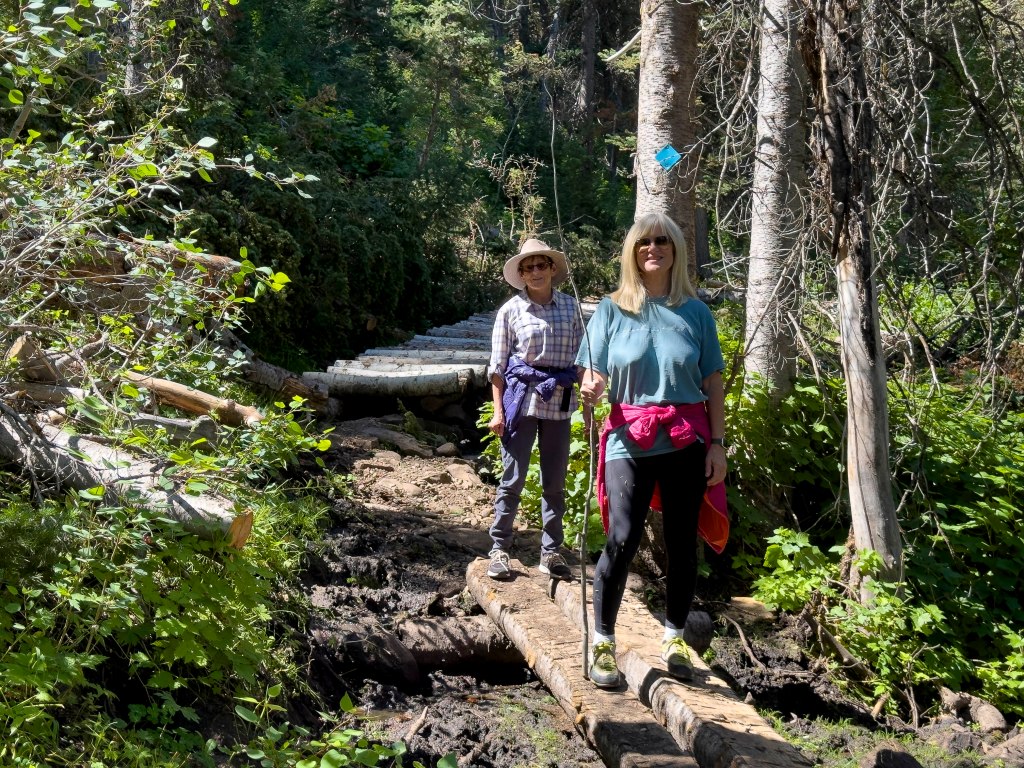
Of course the summer is also filled with plenty of golf and hiking. This year there was a hike around Mirror Lake up in the Uinta’s and a hike along Daniels Creek out state route 40 toward Strawberry. We conned friend Sally into joining us for that one – –
We headed in the direction of Strawberry Lake for a hike – very interesting.

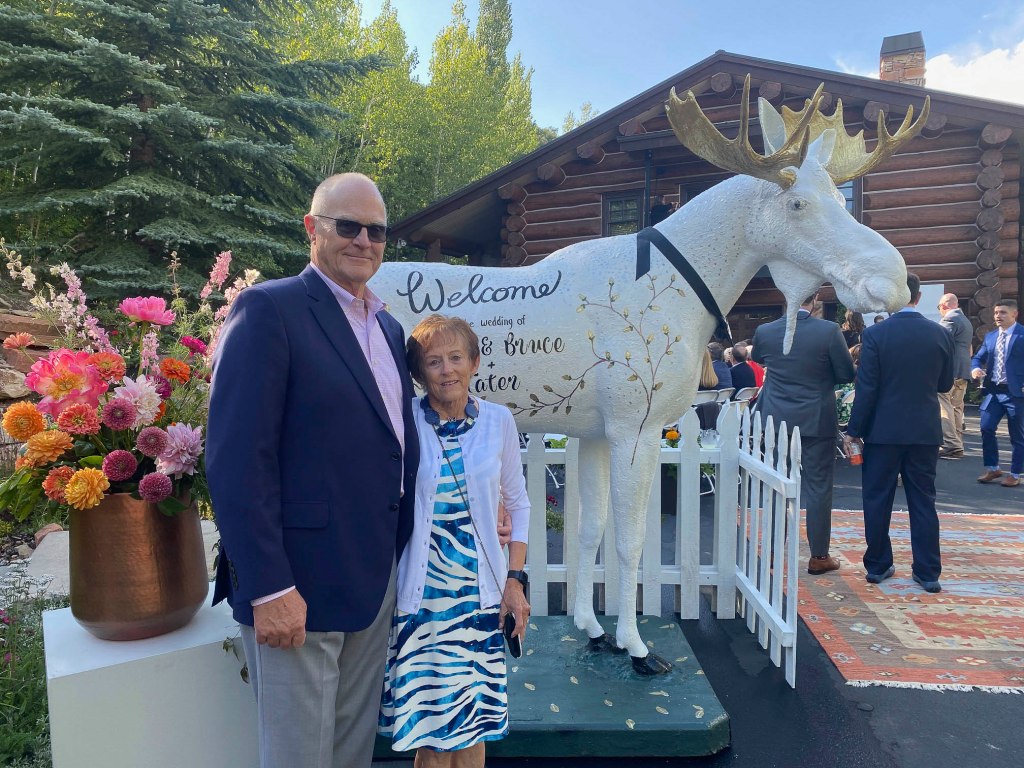
The end to our summer was quite beautiful and spent with lots of good friends, as the daughter of friends was married at their home up in one of the canyons. As you can see – they went all out even calling in the wedding moose – –

A beautiful evening;-)

We are so attracted to animals and taking pictures of them, this blog post would not be complete without an array of this summers critters. So here they are – –

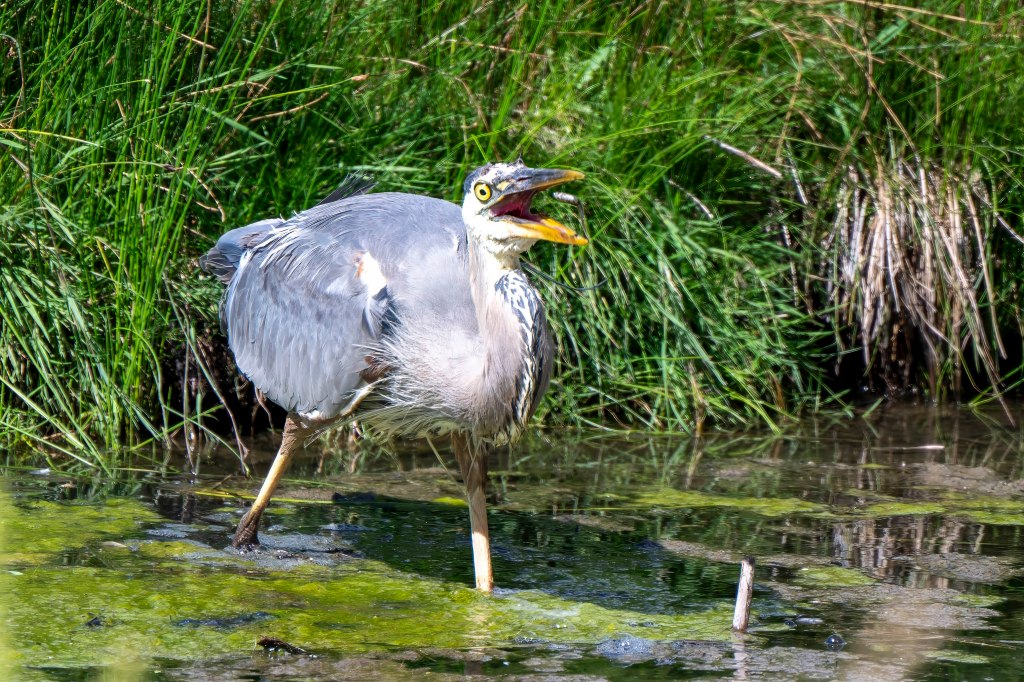
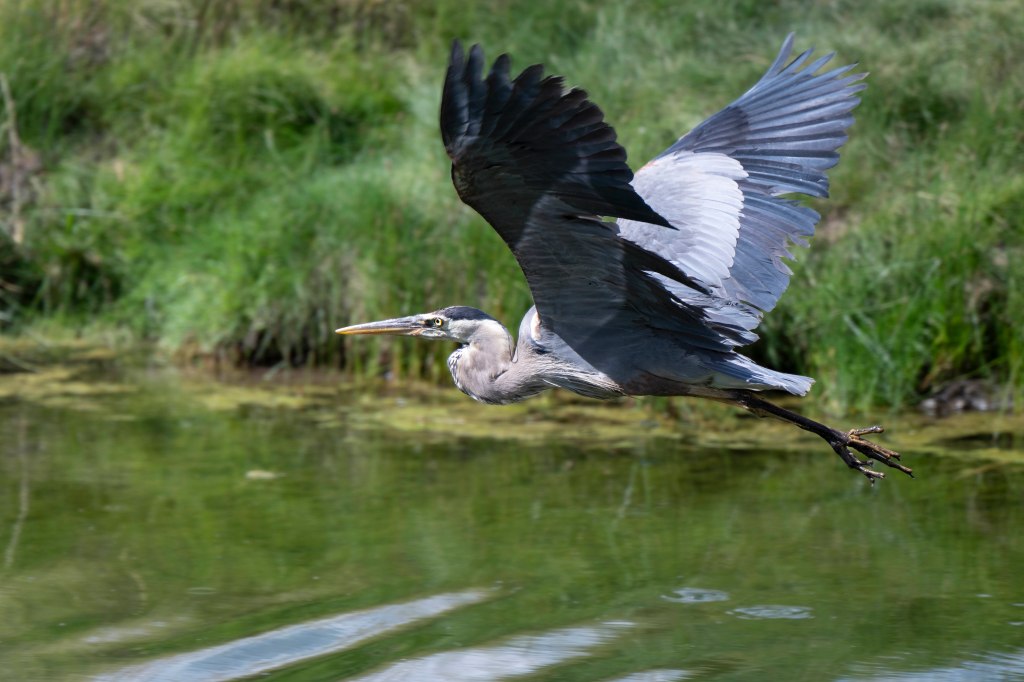
This blue heron was chowing down on the contents of the golf course water hazard.
After cleaning out this end of the pond it took off for the other end.
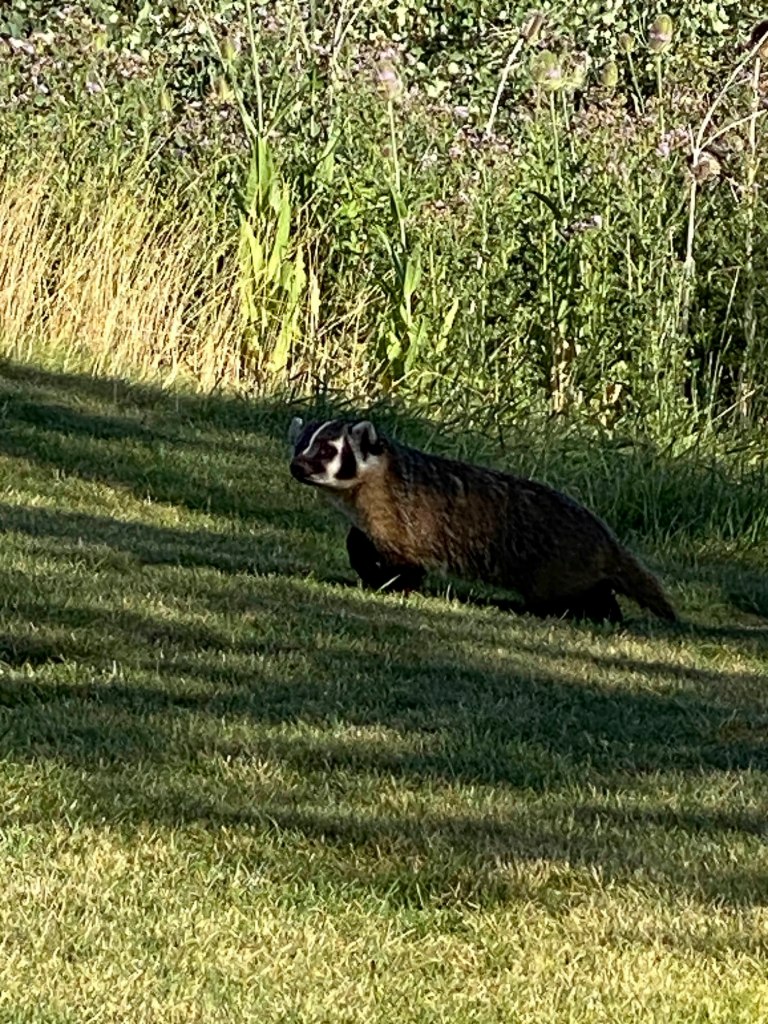
In all our years in Park City this was our first time to see badgers – three within a couple of weeks.
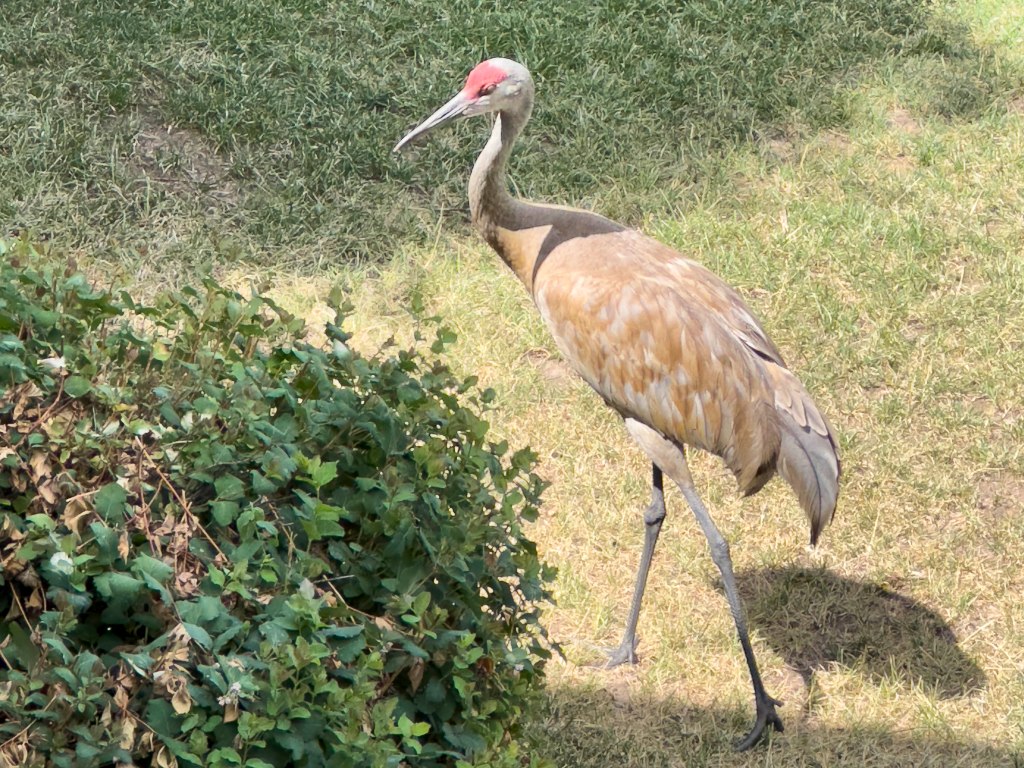
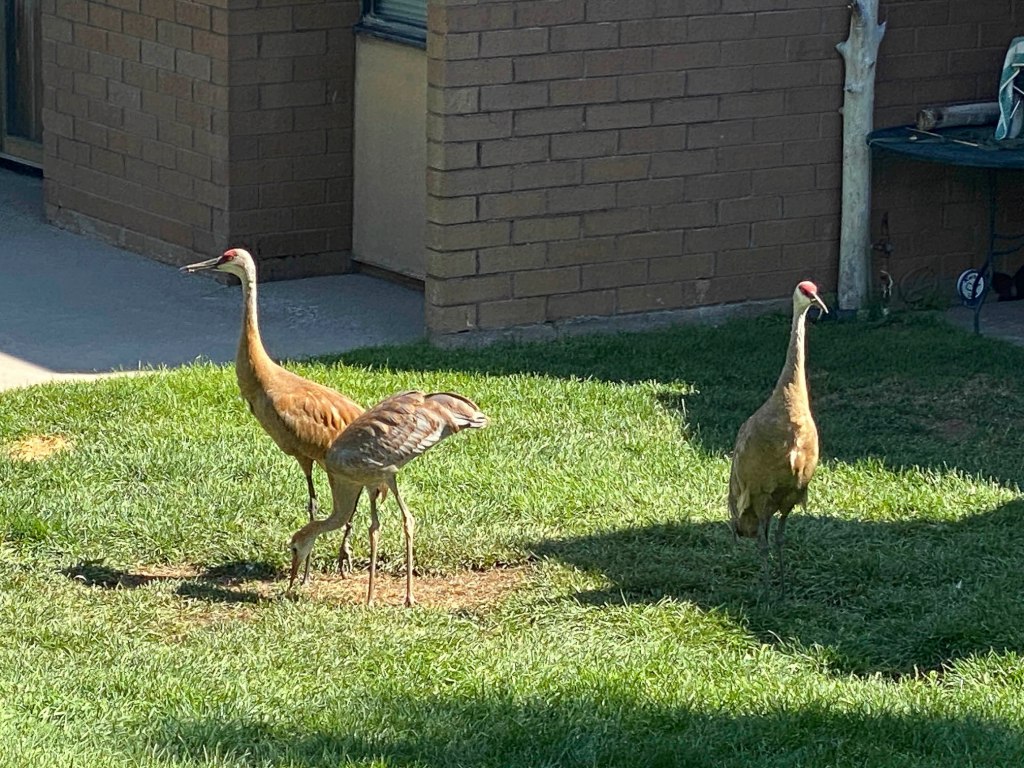
Next to moose, sand hill cranes are a fav. This one wandered up to our patio deck.
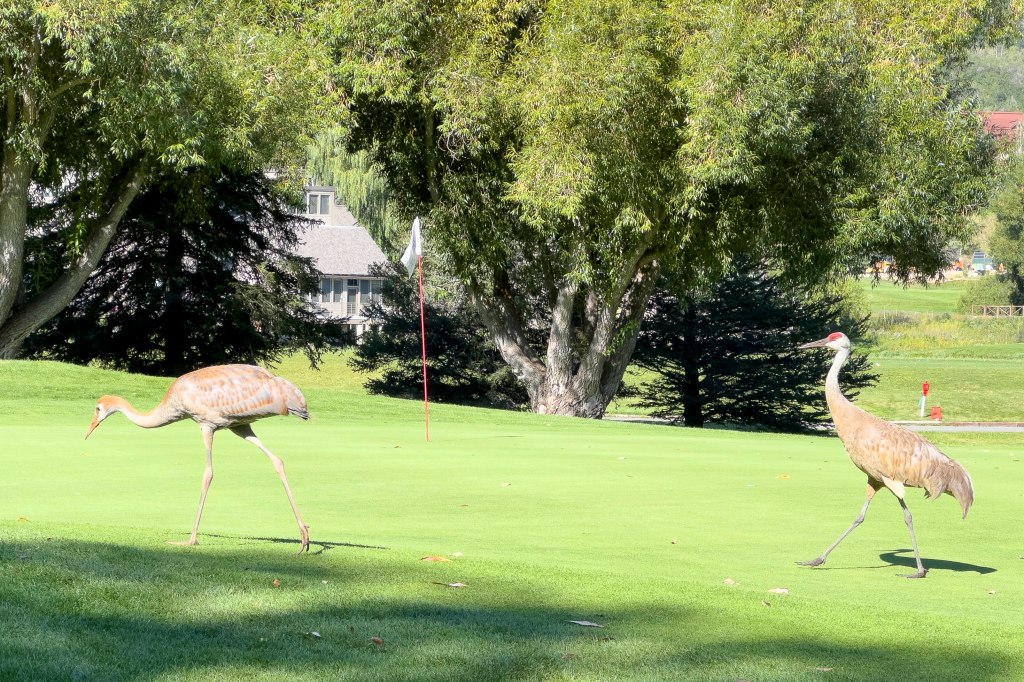
This parent and youngster served as our gallery for several holes…
…until they reconnected with the other adult.
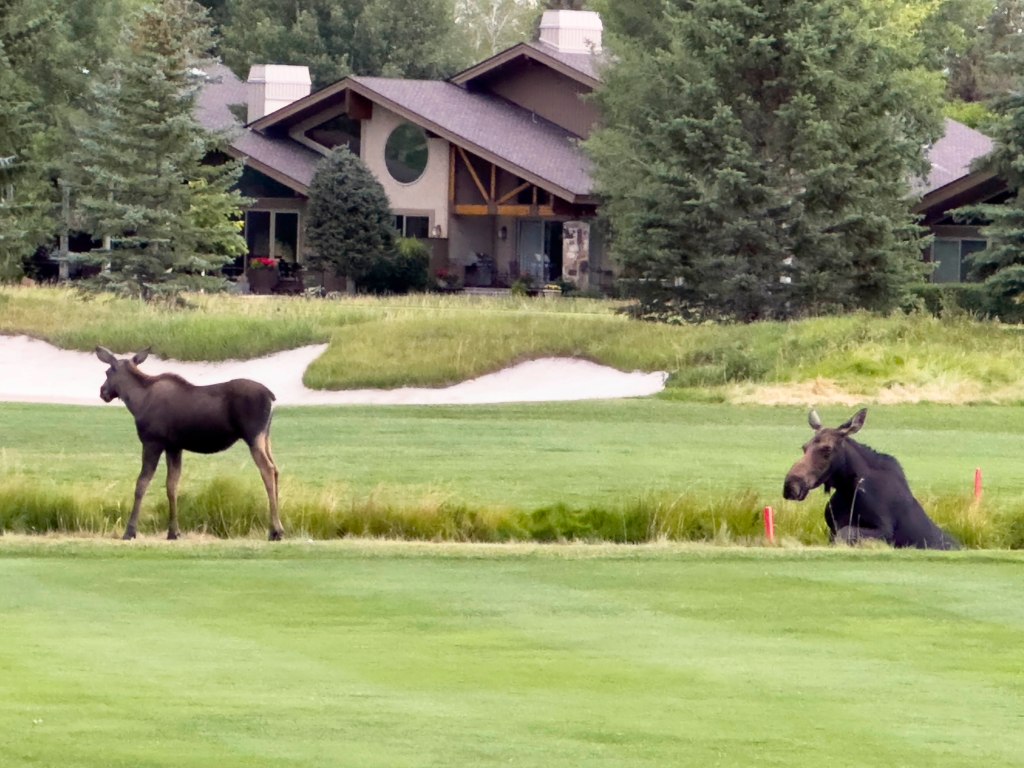
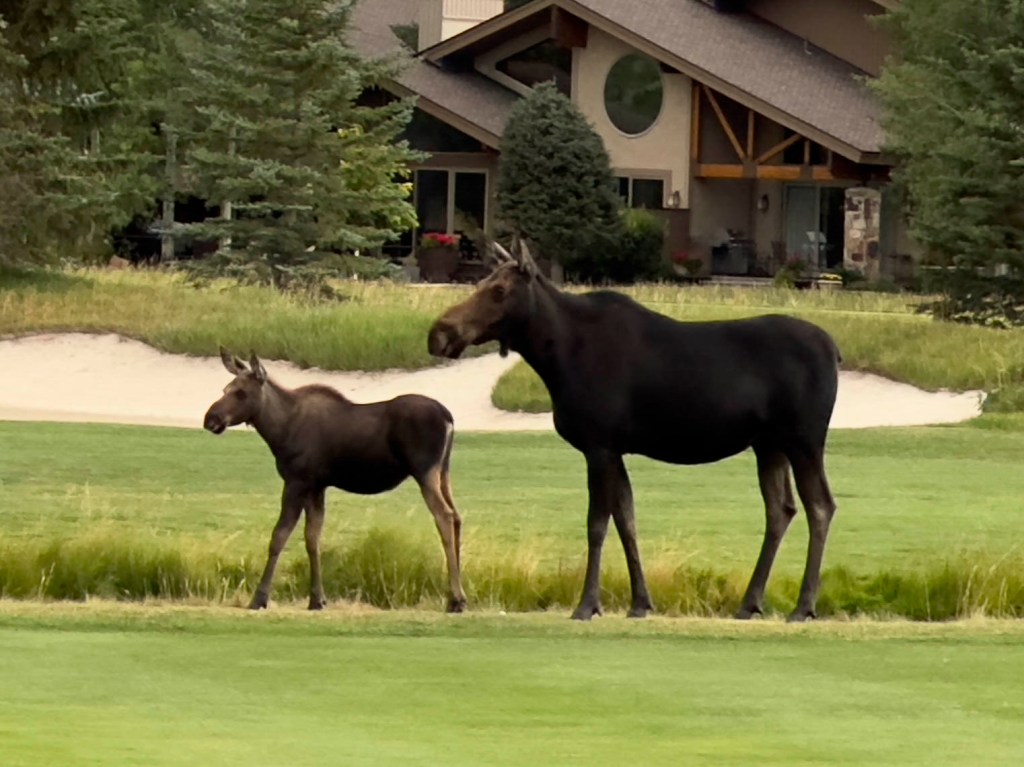
Moose cow and calf went for a dip in the 15th hole water hazard near our rented condo.
Funny – that is our old Four Lakes condo in the background;-)
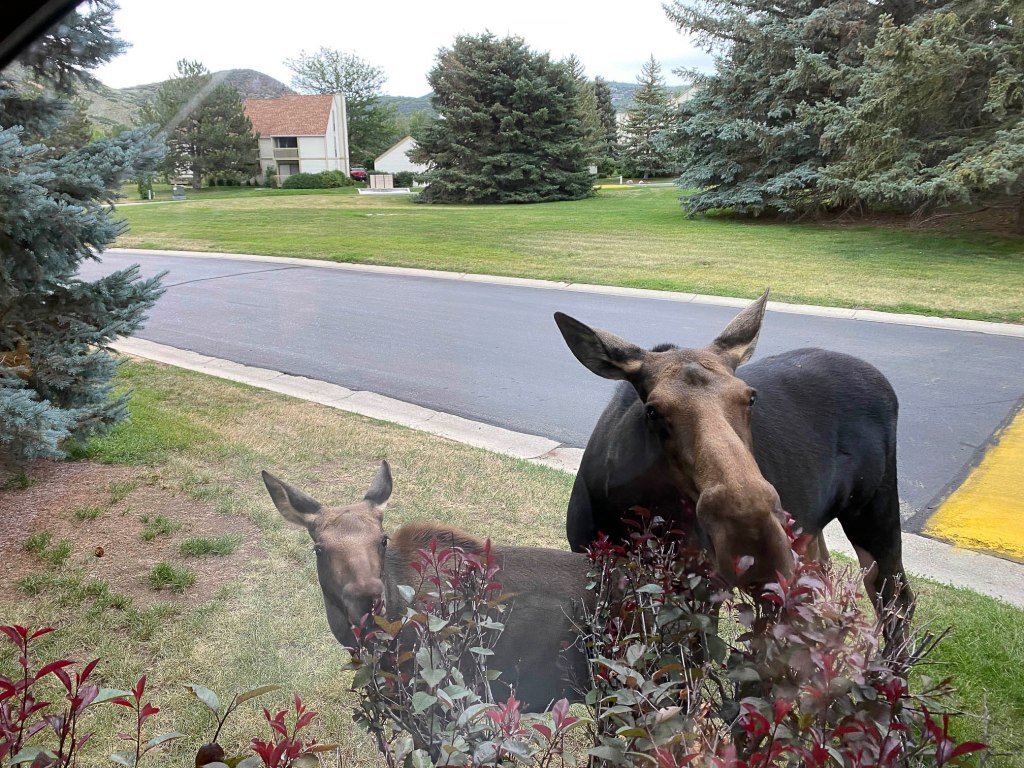
They sauntered over to dine on the bushes around our condo.
We got up close and personal;-)

It was a fabulous summer and much cooler than Scottsdale. In fact this year the weather pattern was like the really old days with the monsoon storm almost every night. There was so much rain this year the yards never did get brown – green all summer! How fantastic is that?!?

But, everything comes to an end. And – a cruise is waiting! So home for a couple of days to repack and on the way to Greece. See you again soon –

E & G – Sending hugs to all;-)

Seward & the Kenai Fjords Nat’l Park

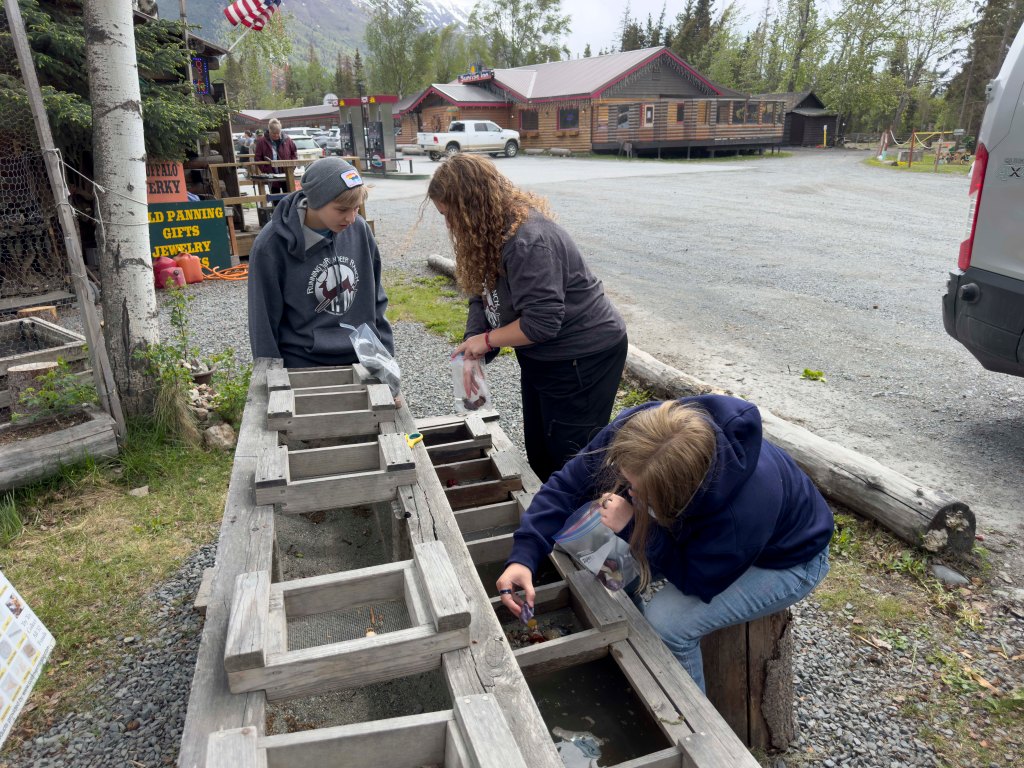
As they say – ‘it’s the journey not the destination’. So diversions and stops along the way are always good. While the morning’s destination was Seward, there were stops in Cooper’s Landing for gem panning, lunch and bear ‘hunting’. All objectives were accomplished – but the two bears were fleet of foot and pictures are not available;-)

A little lunch and gem panning at Prospector John’s.

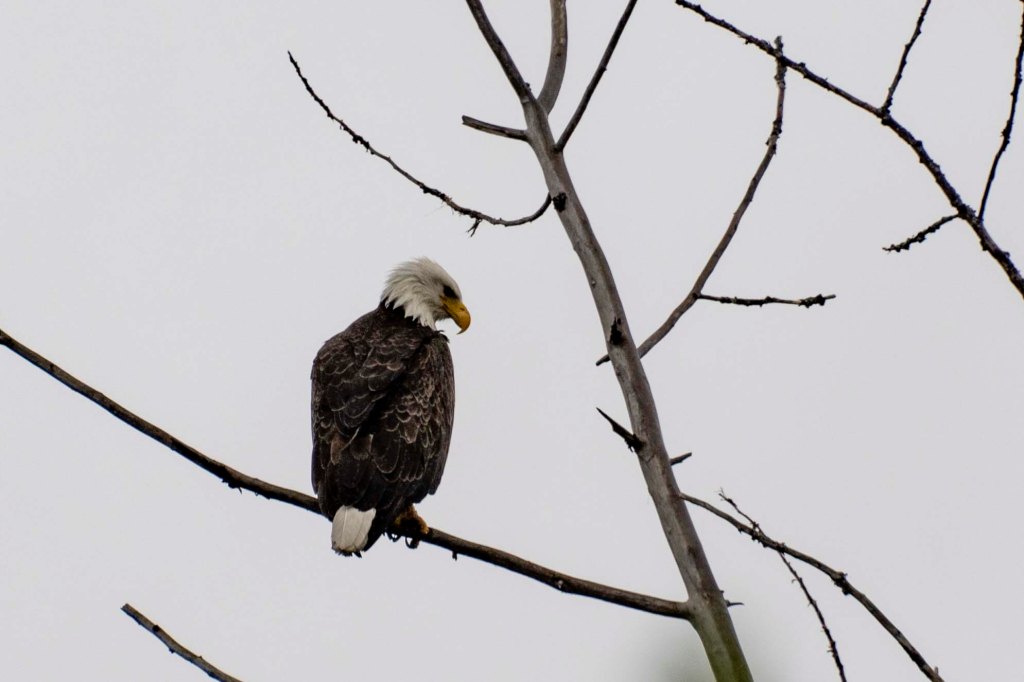
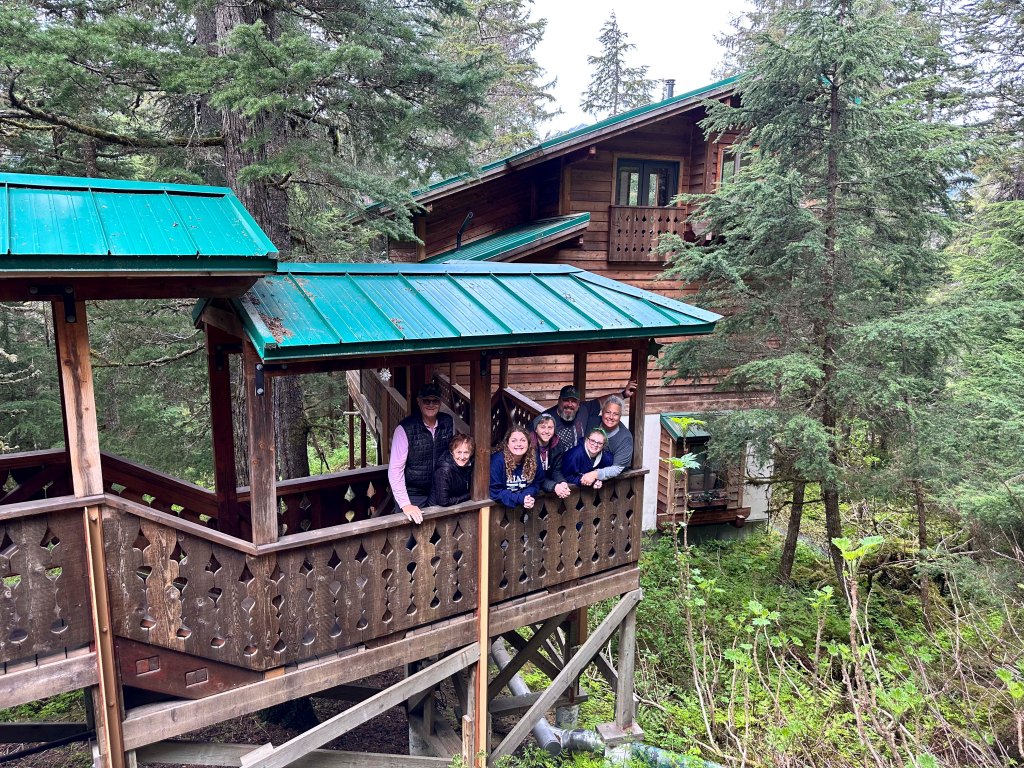
Next stop, our new ‘home’ for two nights – Sourdough Sunrise B&B in Seward (and one of our favorites). Not only were the accommodations great, Richard & Sue (the owners) made sourdough pancakes every morning and were full of local information. The greeters on the way into Seward were a couple of Bald Eagles. Little did we know, an Eagle would be waiting for us at the B&B, too – –

Bald eagle checking us out and hoping the rain would make us move on.
Lovely little B&B. Three rooms. We had it all to ourselves for two nights.

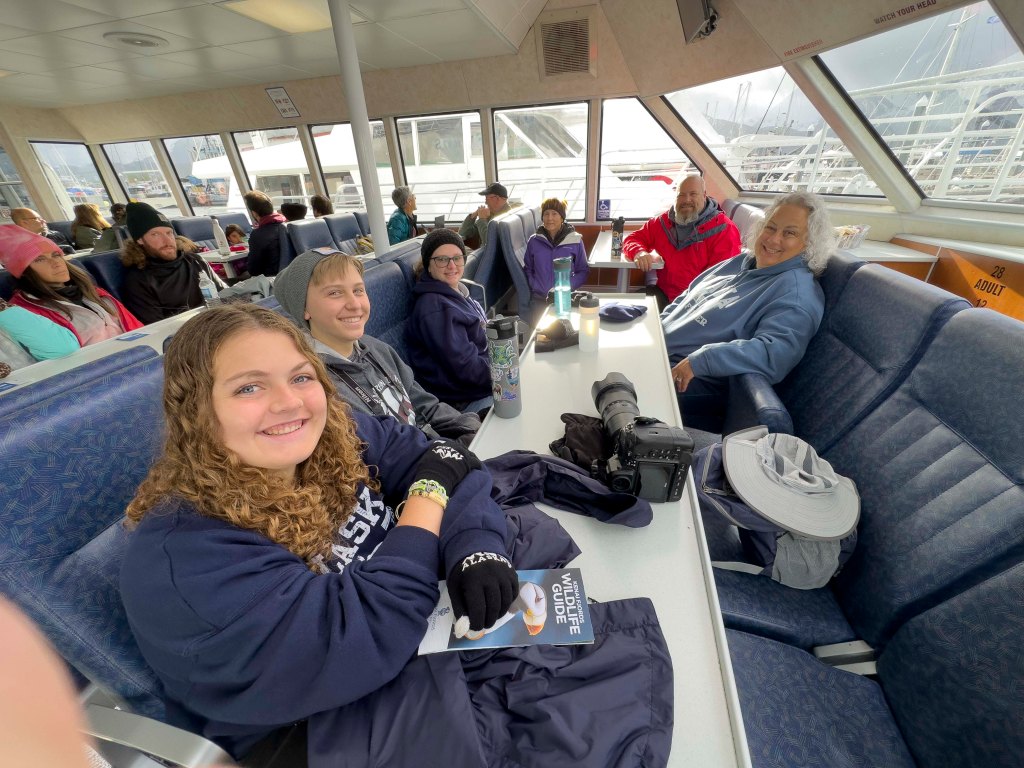
The major event here was the Kenai Fjords tour into the Kenai Fjords NP – one more NP under the belt! The trip was iffy, due to weather, but came off perfectly. It was another cold, rainy day but none of the animals seemed to mind and the glacier calving was superb. The boats are quite comfortable with plenty of cozy room inside, bathrooms and food. Departure time was 8AM – and we were off for a 6 hour tour.

Away we go.
Stormy weather kept some folks away for the day so there was plenty of room to spread out.
Olivia trying to keep warm and dry.

Kenai Fjords NP sits at the edge of the North Pacific Ocean and is a land dominated by at least 38 glaciers – massive rivers of ice that flow out from the Harding Icefield. The types of glaciers include valley, alpine and tidewater glaciers. The aim of this tour is to see tidewater glaciers, those that flow into the ocean, break off and crash into the water – calving. The NP is also home to whales, many birds and a variety of seals, otters, sea lions and porpoise. Let’s see how much we can see.

Leaving Resurrection Bay, the boat traveled into the ocean (where the storm surges rocked the boat like an E-ticket ride at Disneyland!) and into Aialik Bay to the tidewater glacier – Aialik Glacier.

From the protected Resurrection Bay into the ocean. Yee-haw!!
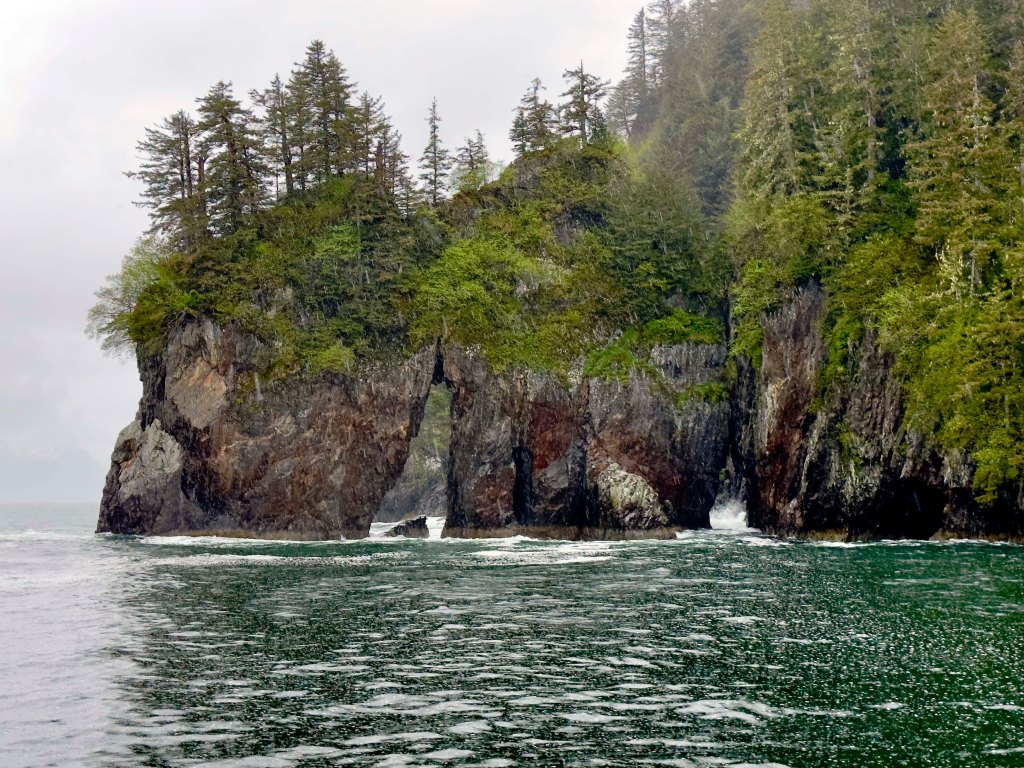
The islands were beautifully rough-hewn.
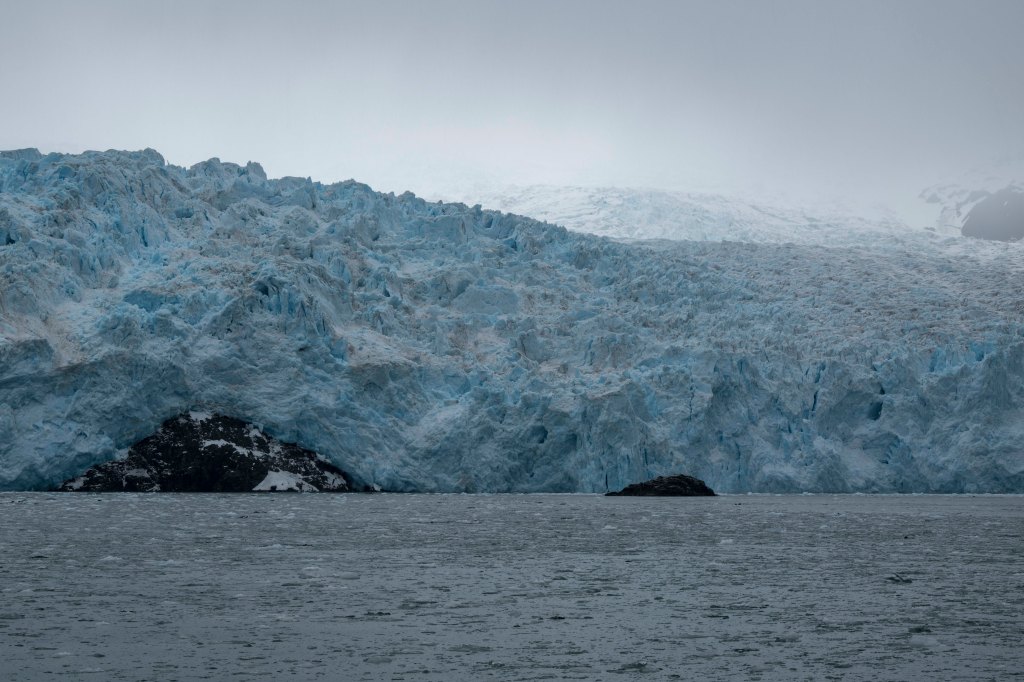
The Aialik Glacier from a quarter mile away. It rises about 650 feet above the waterline.

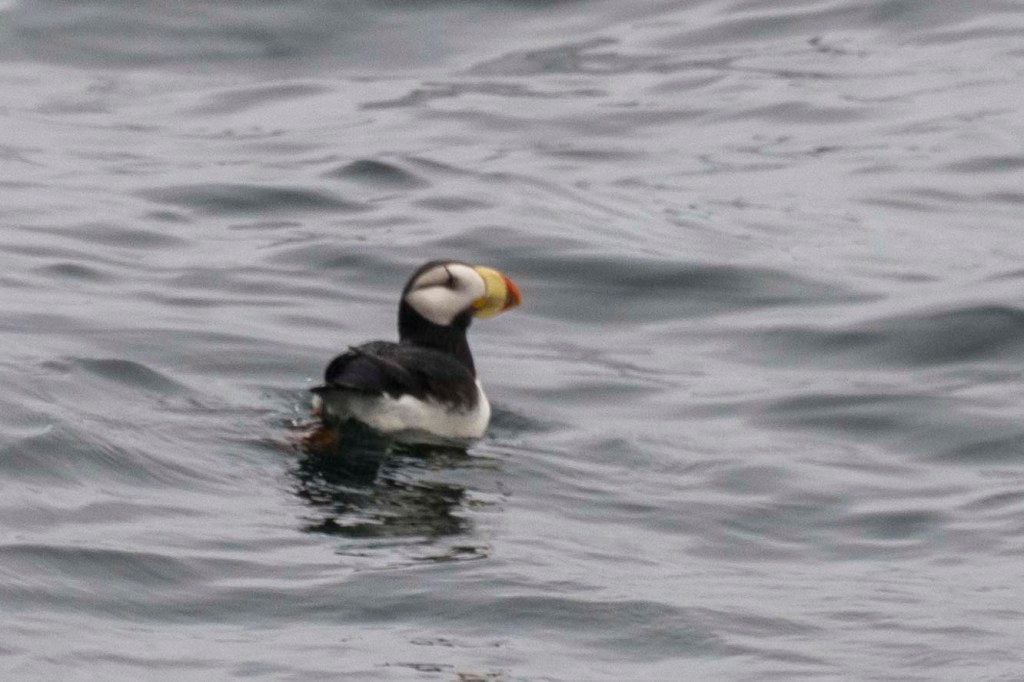
After watching the main attraction of the glacier calving for some time, it was time to look for wildlife. Too many birds were seen to include, but Puffins are the cutest. The real attraction was the Orca whale, of which a couple of different groups were seen.

A horned puffin. The picture doesn’t do it justice. Long distance shot on a bucking boat.
A pod of orcas paid us a visit.
Followed by a second pod a few miles away.

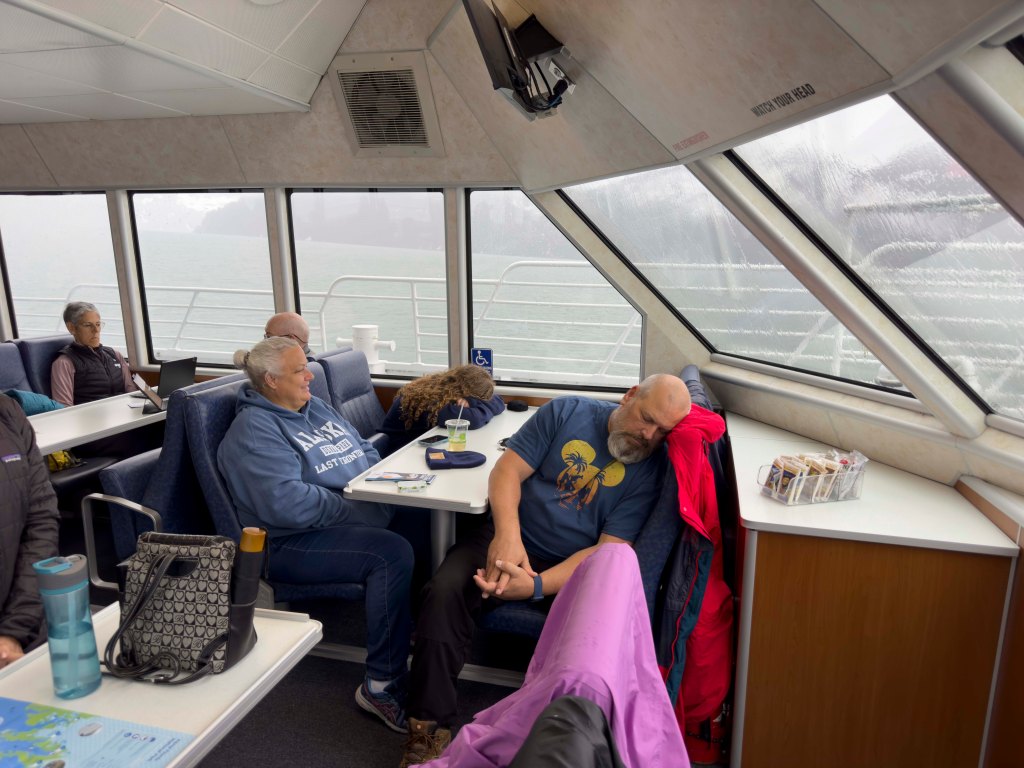
These were awesome to see!! All this excitement wore out our little pod of people;-)

Trying to stay on your feet was exhausting….
….for several in our group.

Richard’s recommendation of The Clam Bake for dinner was just what was needed after such a cold day. They serve “Cheap Beer and Lousy Food”;-) AND, they were right next door to the B&B.

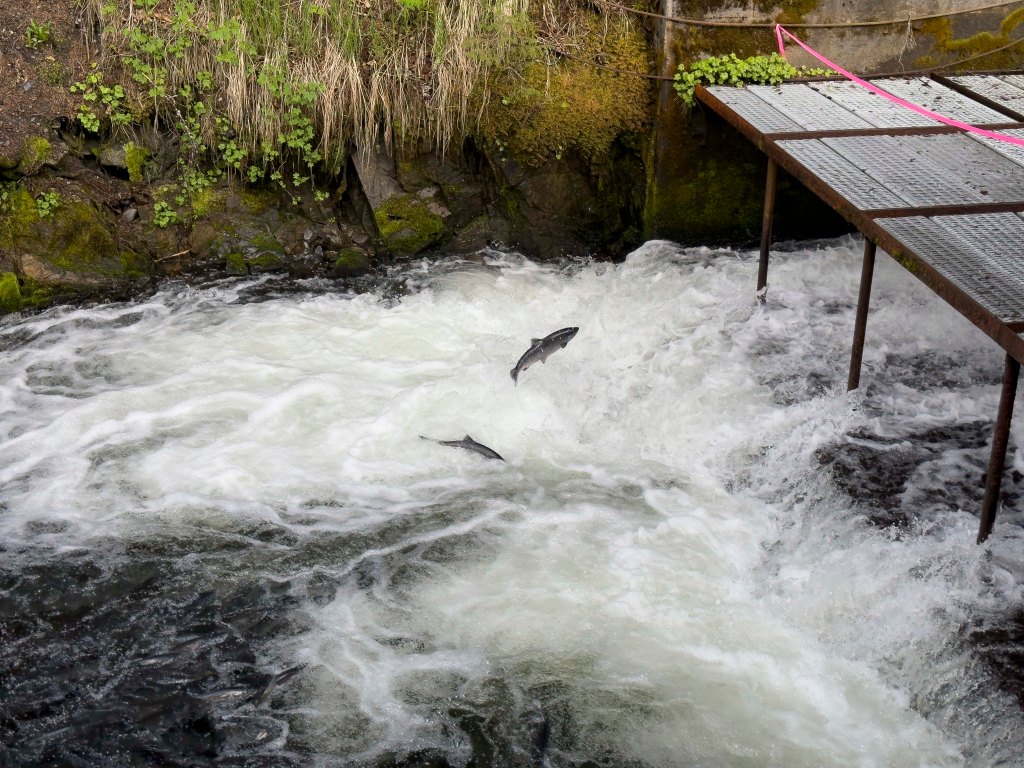
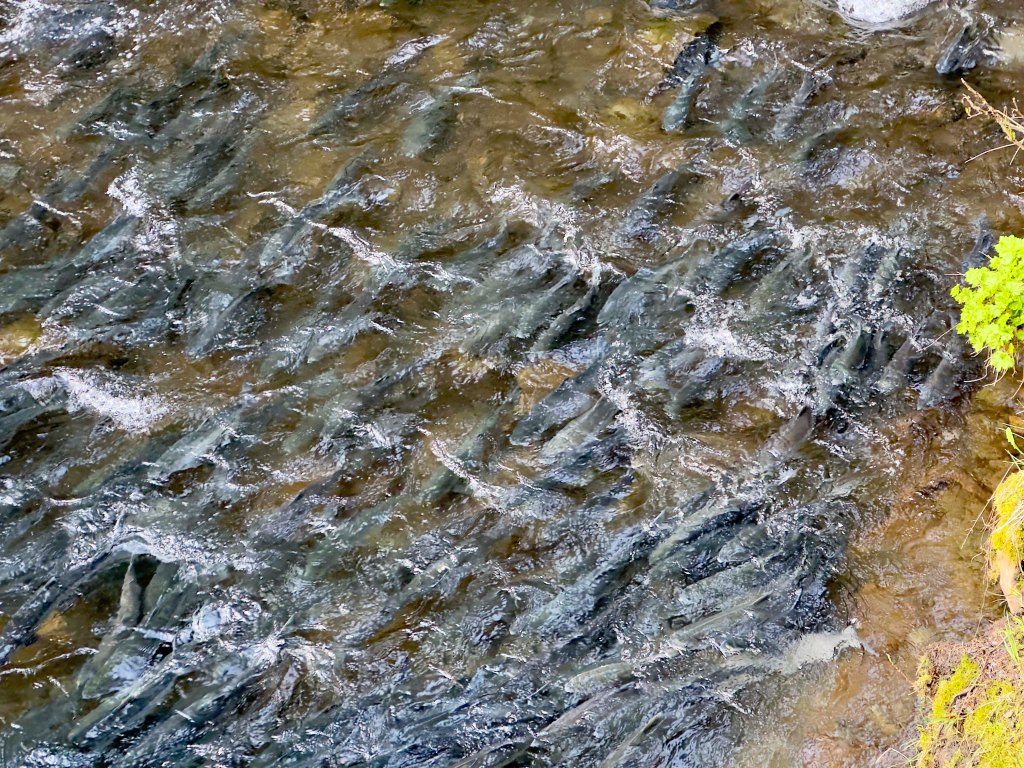
It was a sad farewell at breakfast the last morning – because we had to leave and it was the last breakfast of the great sourdough pancakes;-( One last tidbit of information for the way out – head over to Bear Lake and take a look at the hundreds of salmon now making their way upstream to spawn. Unbelievable – –

Salmon working their way upstream to spawn.
Lots of salmon line up for the jump.

Seward was a nice end to a fantastic 13 days in Alaska. Three new National Parks for the Grands, several National Forests and many wonderful experiences we hope they will remember for a lifetime;-)

E&G – Grateful for the opportunity to share

Girdwood – What a Blast!

St. Moritz House in Girdwood – here we are! Loved the new housing with lots of bedroom space, in-law quarters for E&G and a good table for Quiddler and Five Crowns (somehow Kai always got the winning seat!).

Welcome to Girdwood

The BIG adventure here was the Spencer Glacier/Iceberg and Placer River float trip (provided by Chugach Adventures), which begins at the Portage Train Depot just across from the Alaska Wildlife Conservation Center (AWCC). This allows for a visit at this wonderful AWCC, which is a sanctuary dedicated to preserving Alaska’s wildlife through conservation, education, research and quality animal care. Some of the animals here were injured and due to those injuries will never be able to be released back into the wild. Others are being bred to be reintroduced into preserve areas. It was a cold, rainy day but quite fun to see the various animals here – from rescued bears and wolves to bison and musk ox being bred for reintroduction.

A chance to see a black bear up close. We counted this as seeing bears!
Lots of young bison calves – “red dogs”.
Musk ox – very shaggy characters.
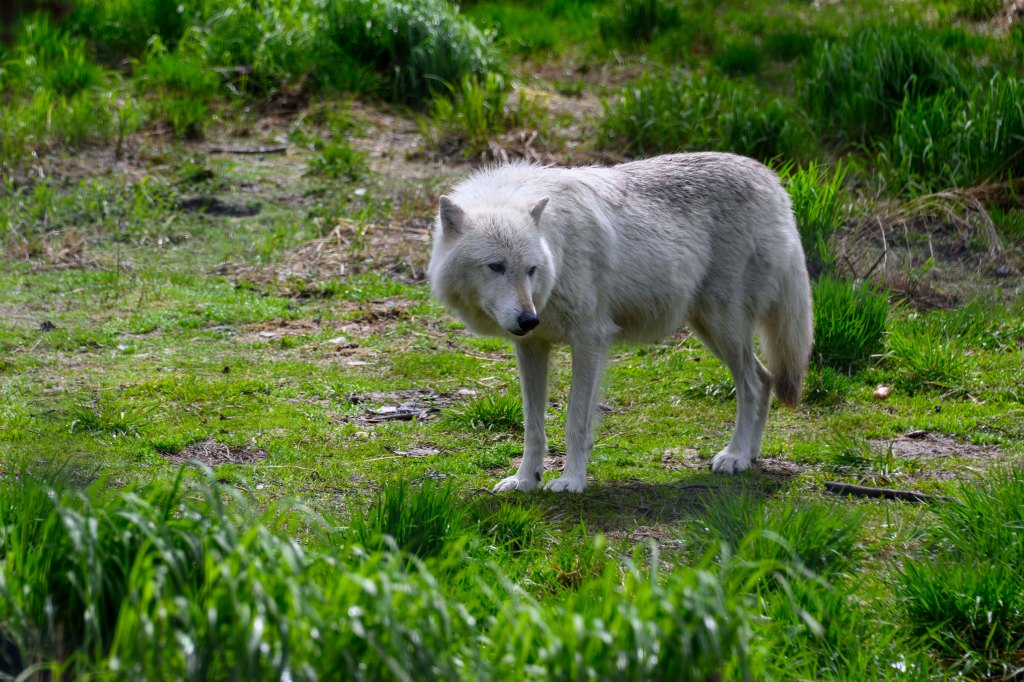
A beautiful rescued wolf.
This youngster spent its day spinning this tree like it was a baton and kept us captivated & laughing;-)

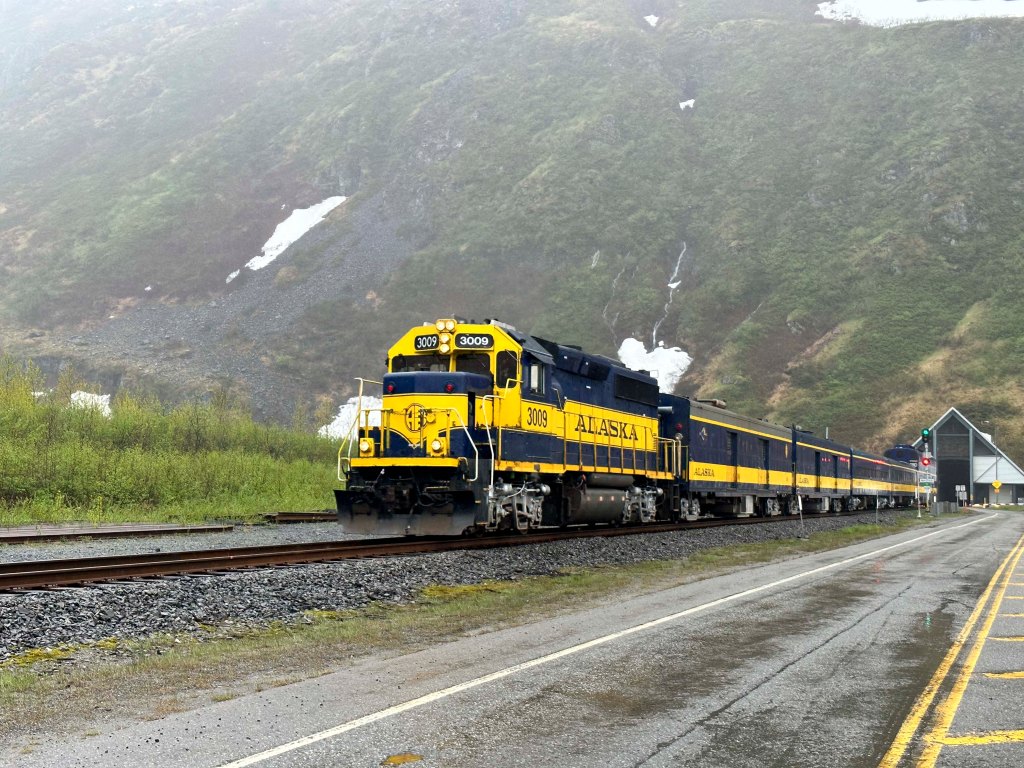
At the appointed hour, we were at the Portage Train Depot getting suited up for the float trip and awaiting the Alaska Railroad’s Glacier Discovery Train to take us to the Spencer Glacier Whistle Stop in the Chugach National Forest (not a NP, but close). Oh – what an adventure awaits – –

Getting ready for our glacier float and river raft experience. One size does NOT fit all;-)
Today is rafts, trains and automobiles!
All aboard!
Almost there.

The boots were only the beginning. Next is a Personal Flotation Device and instruction of what to do if one falls out of the raft. Since the water is a mere 34 degrees the instruction was “do NOT fall out of the raft – but if you do, go to your happy place until rescued!?!” With that – hop into your raft!

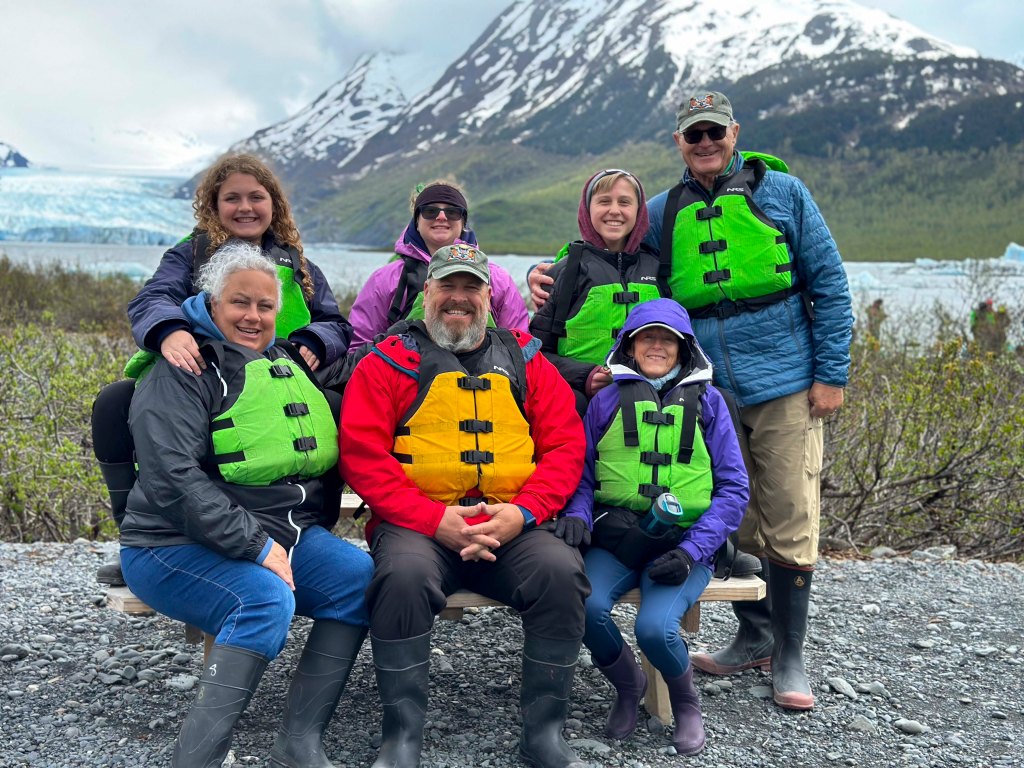
All suited up and ready to go with a GREAT shot of Spencer Glacier in the background.
The gang’s all here including our magnificent guide, Ryan. He’s the BEST!
Spencer glacier about 1 mile away. Lots of icebergs.
Out of the lake and onto the river. Notice the little bit of blue sky? It stopped raining just for the float.
Approaching our takeout point seven miles later.

This was a blast! Everyone returned with HUGE smiles and we even had hot chocolate and snacks on the raft. Couldn’t have been better.

Next day was a van trip to Whittier. In order to get to Whittier, one must drive through the Anton Anderson Memorial Tunnel. This is the longest (2.5 miles) highway tunnel in North America and is a combined vehicle-railroad tunnel. The passage was constructed by the military during WWII to act as Alaska’s main supply route for goods arriving in the protected deep-water port in Whittier. It is designed for -40 Fahrenheit temps and 150 mph winds. Cars/trucks/RV’s go one direction on the hour in the opposite direction on the 1/2 hour and trains go in-between. FUN!!

Must wait for the train to pass before entering the narrow tunnel to Whittier.
The Port of Whittier with a cruise ship at its dock.

On the return trip, a stop at the Portage Glacier Visitor Center is well worth it. Not only can you get a picture with Smokey, there is a great museum discussing the area, wildlife and glaciers.

Communing with Smokey at the Portage Glacier Visitors Center.

And with that happy sight, it is time to once again pack up, leave this wonderful accommodation and little village of Girdwood and head to one more stop with another NP – Seward.

E & G – Still trying to get dry and warm from the AWCC and the float trip;-)

Denali & Talkeetna, AK

A new location and new lodging. Carlo Creek House just south of the park entrance to Denali was one of the best. Especially since they paid the moose to show up (you’ll see in a minute!).

Welcome to Denali. One of our favorite accommodations on the trip.

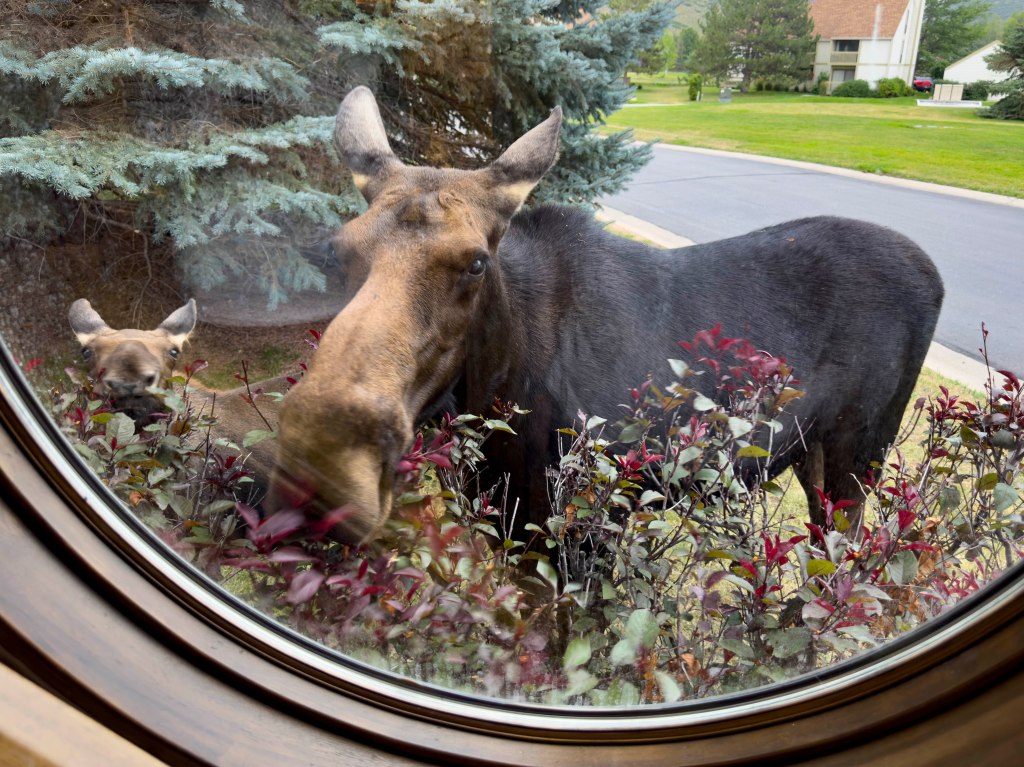
After settling in, the van headed to Denali NP as it was a beautiful, clear day and there were hopes of actually seeing the great mountain. Denali NP and Preserve is six million acres of wild land bisected by only one ribbon of road. Traveling this road one sees the relatively low elevation taiga forest, which gives way to high alpine tundra and snowy mountains, culminating in North America’s tallest peak – Denali, standing 20,310′ tall. Most of the park is viewed via park buses, but today the visitor center and Denali view spot are the objective – which is only about 11 miles into the park and a distance passenger cars are allowed. No more than out of the drive way did we come upon Moose’s 2 and 3 of our trip – –

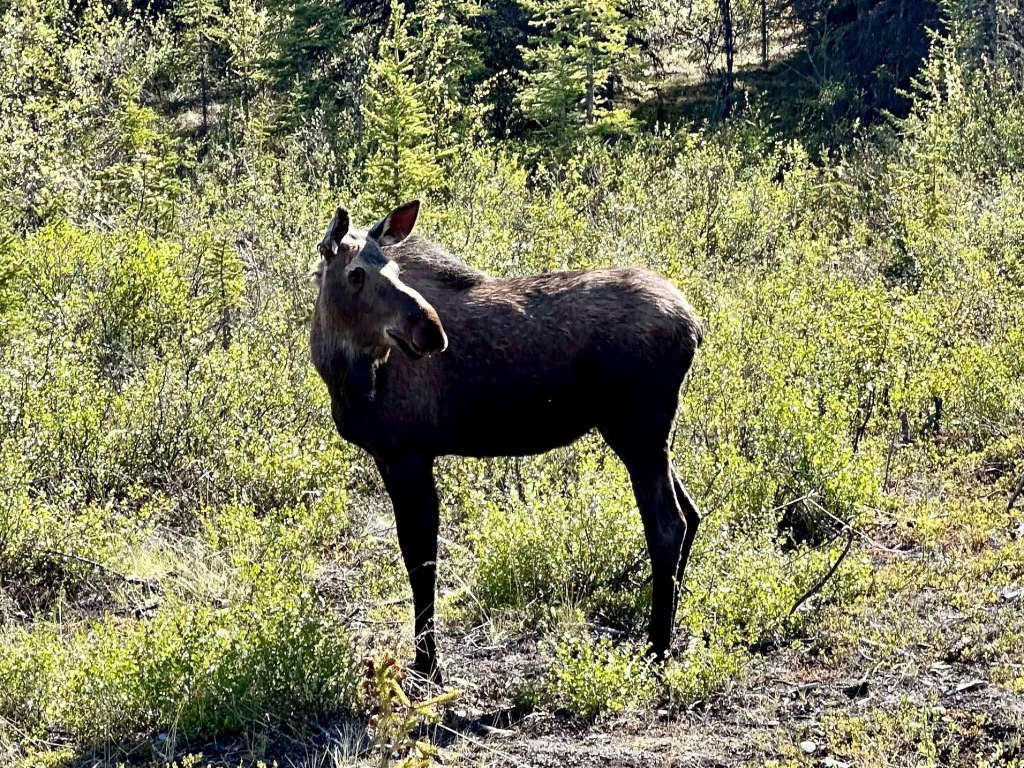
Spotted a yearling calf…
…and its mom along side the highway.

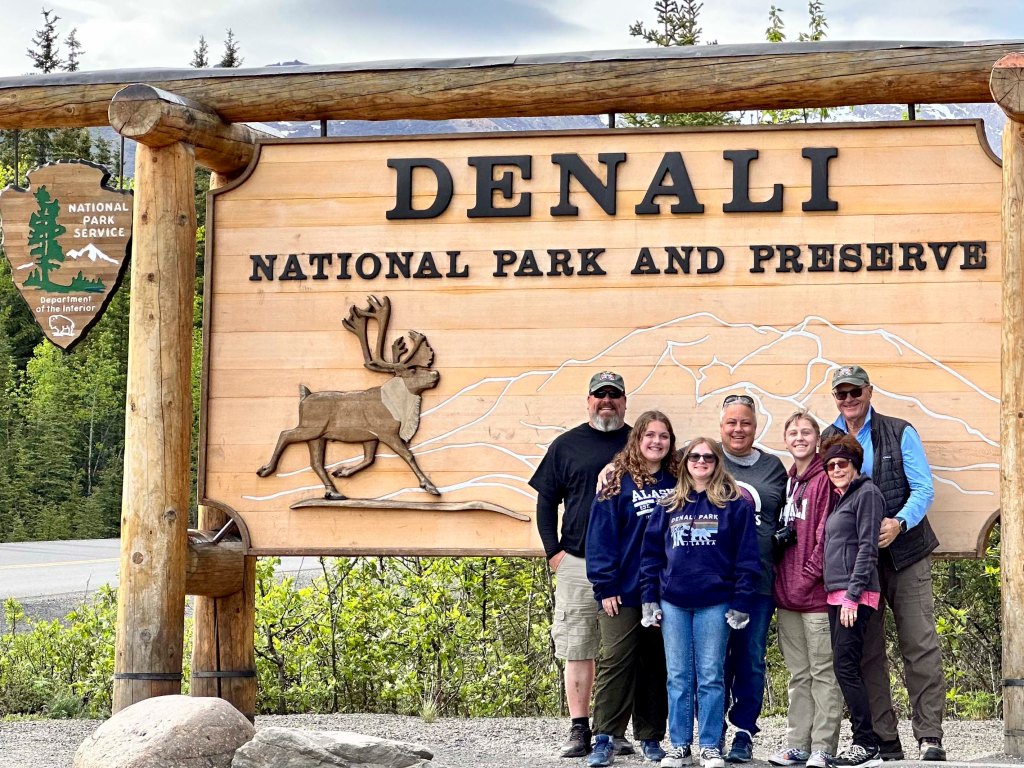
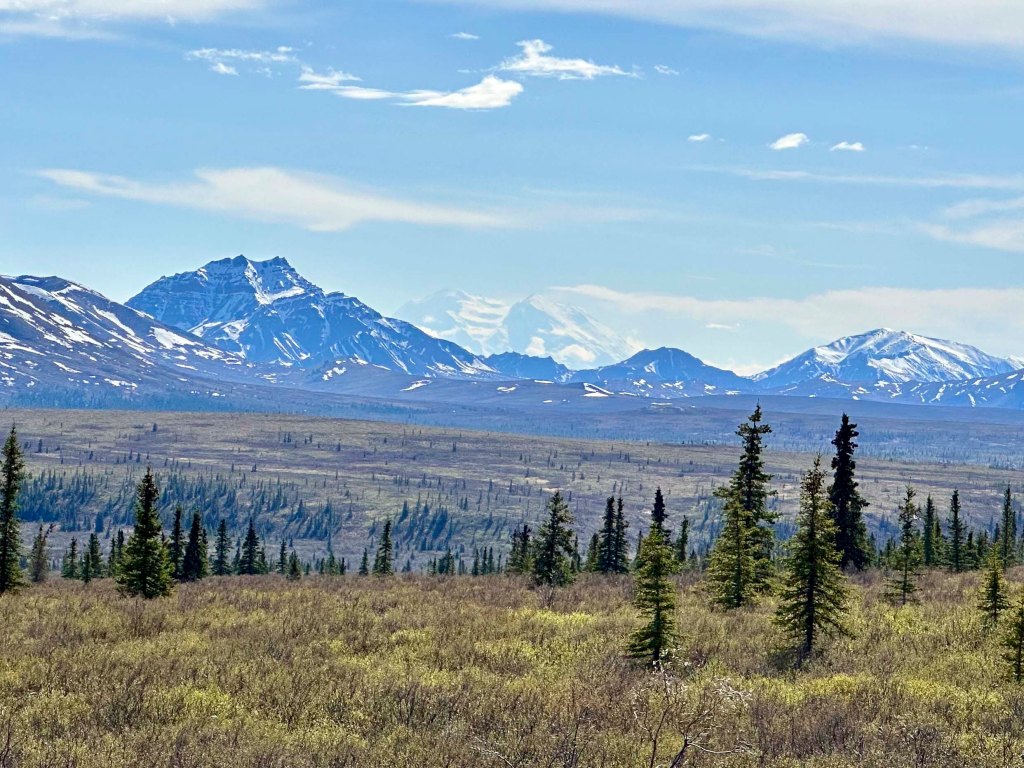
Once finally pulling ourselves away from these magnificent animals, the destination was again the Visitor Center and viewing spot for Denali. And – what a view! There she was in all her glory. Pretty much the entire mountain was visible – a sight only seen by about 30% of the visitors to the park. Another mission accomplished for the “Grands”.

The family was able to join the 30% of visitors who actually see Mt. Denali;-)

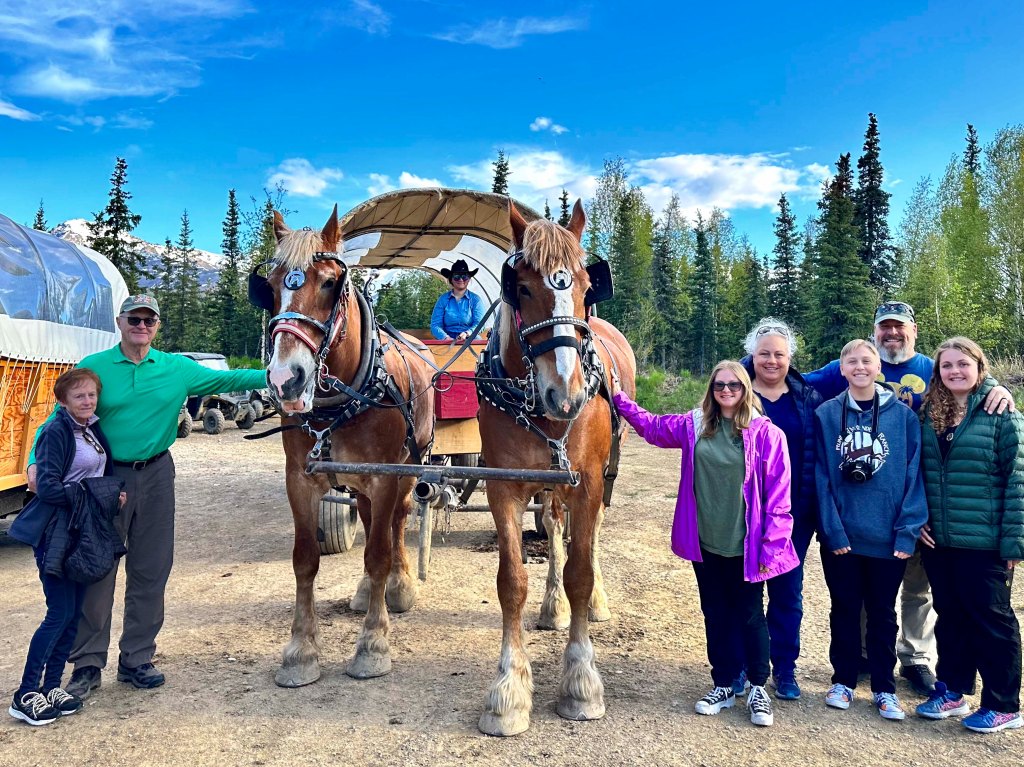
So much excitement can work up an appetite and a Black Diamond Chuck Wagon dinner might help with that. One of the “Grands” is particularly interested in horses (perhaps in some way a profession), so this was an amazing experience for her. After loading up the wagons, we were on our way to dinner.

Off on a covered wagon ride for dinner.
Can you tell how much Olivia is enjoying?!?

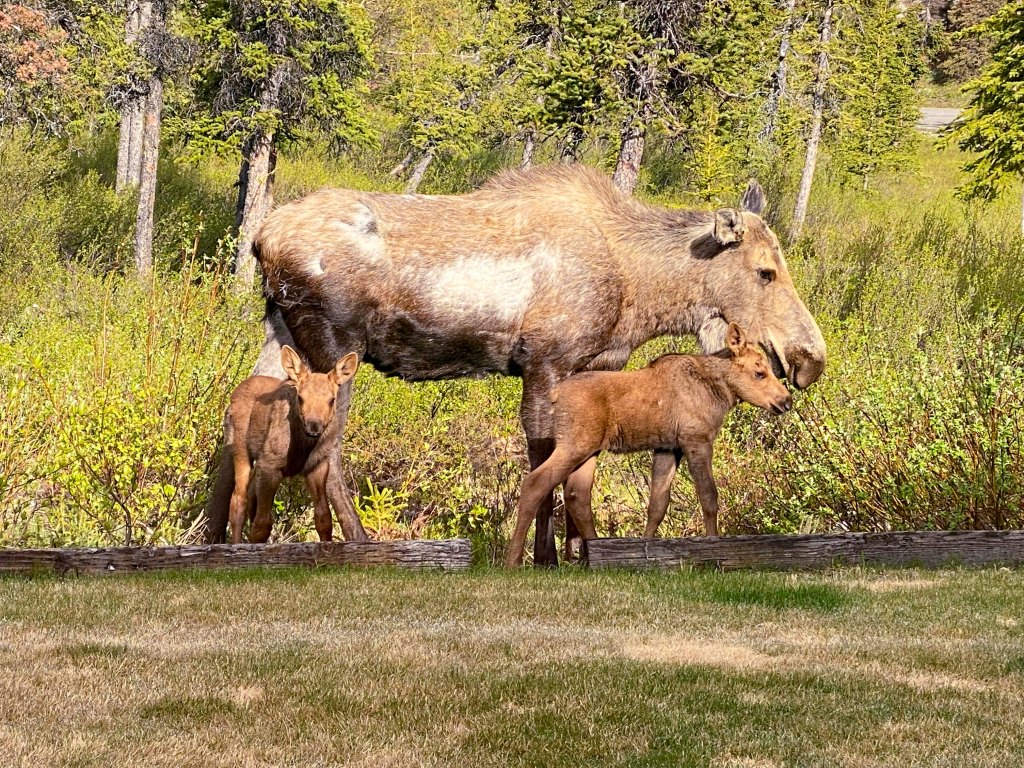
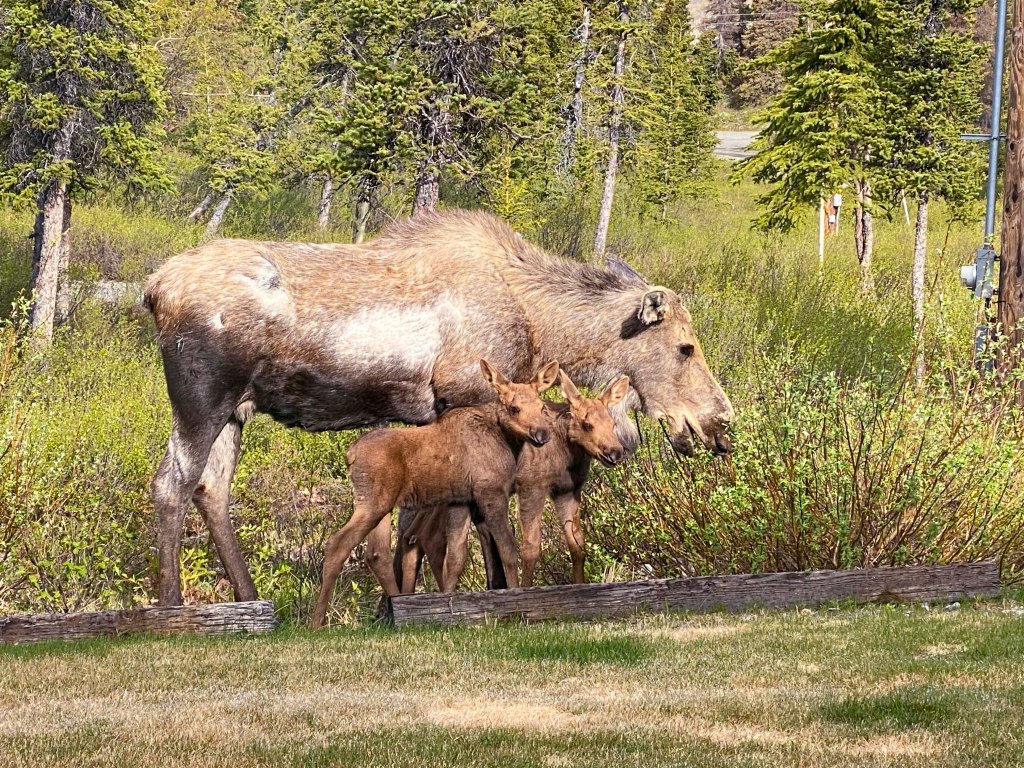
A good night sleep in our happy home was needed before a VERY early wake-up call for the bus into the park. Morning called with Mama Moose and her two calves RIGHT OUTSIDE OUR WINDOW. How perfect was that!?! According to the information on the park ride, females had just dropped their calves within the last two weeks – so these two must have been 10-14 days old.

Are these cute or what???
The calves are approximately 2 weeks old.

It was finally time to head for the NP bus and venture the 43 miles into the park. The hope is to see the BIG 5 – moose, bear, wolves, caribou and dall sheep and of course Denali herself. Right off was another good view of Denali – even better this time with G’s long camera lens;-)

Denali in its more normal condition of at least partially, if not fully shrouded by clouds.

Caribou were soon to follow. Many were sighted, but often at quite a distance. The same was true of the Dall sheep. Saw several groups of the females with their little ones and then the rams on the other side of the road.

On the Denali Park bus tour we spotted caribou,
Dall sheep ewes & lambs,
and the males off on their own.

Moose were also sighted, but nothing could match the viewing outside the bedroom window. Unfortunately, there were no sightings of bear or wolves;-( But, the views of Denali and the moose made everything worth while in Denali.

Next stop was a brief stay in the enchanting town of Talkeetna, where we stayed at the Meandering Moose. Don’t stay here. It was a bed for a night and that’s all we were in town for.

Our least favorite accommodation of the trip. Didn’t even warrant a group picture.

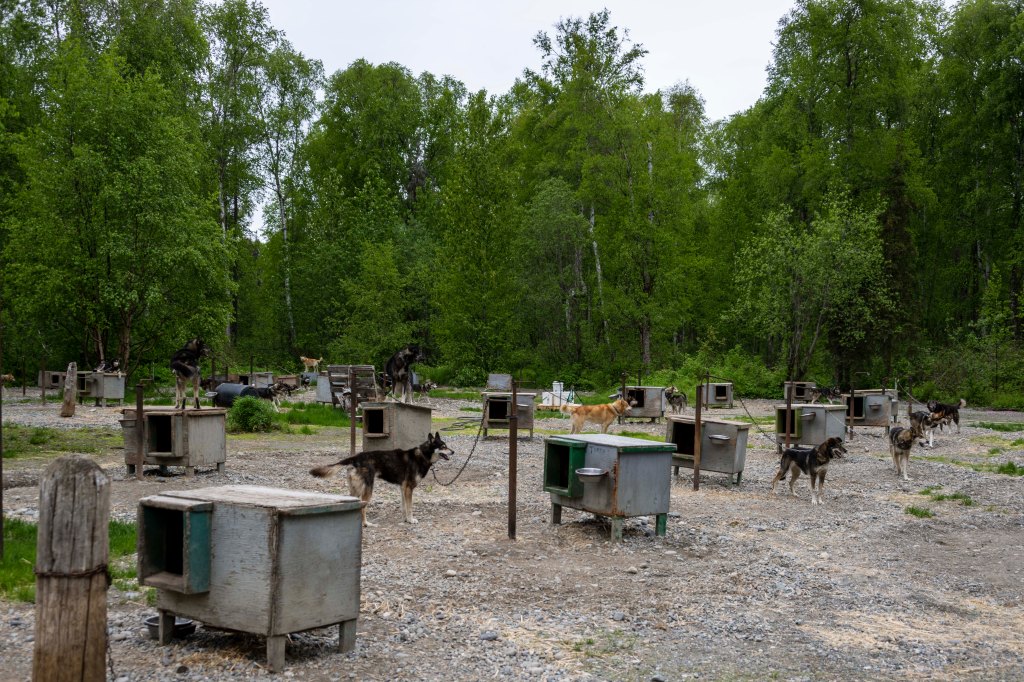
We did have a lot of fun here visiting a dog sled training facility and riding in the ATV that is used to train the dogs for the Iditarod. The driver was from the lower 48 and had just moved up to Alaska with his dogs to train for the race – perhaps in a year or two. While preparing, he was working for a current racer and working with his dogs to understand all the training methods. After the dogs were hooked up, we boarded our ‘sled’ and were on our way.

Next we went to the dogs.
Sled dog training regimen includes towing a bunch of tourists in an ATV.
They loved the water. Helped cool them off.
When do I get my turn?
Post training hugs and scratches.

Just like that, it was time to pack up the van again and head to Girdwood, which would be ‘home’ base for the next few days.

So happy to see Denali and the moose – E & G with more to come